
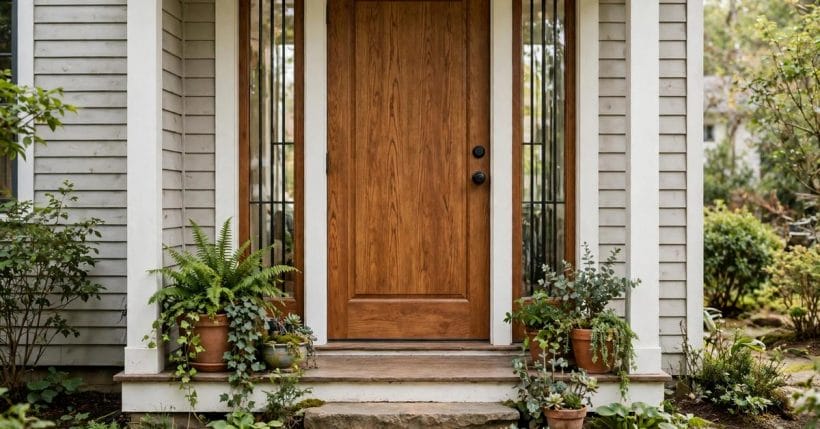
A front entry door does a great deal of quiet work. It is the first thing visitors see, the last thing you close behind you, and the surface you touch every time you come home. A fiberglass entry door is one common choice for that job, and it is worth understanding before you order one. Fiberglass doors are made with a moulded outer skin over an inner core, and the skin can carry a wood-grain pattern, a smooth painted finish, or a panelled design. The result can look much like a traditional timber door while behaving like a manufactured product, and that combination is part of the appeal for many households.
This guide walks through the checks that matter when you are considering a fiberglass front entry door: the material itself, the finish, the glazing, the fit, the hardware, the seals, and daily life with the door once it is in place. Nothing here recommends one maker over another, and nothing here rates one product against another. The aim is simpler than that: to help you look at a door with informed eyes, ask useful questions, and decide whether a fiberglass door suits your home, your porch, and the way your household actually lives. For the wider picture of small-home design, this tiny house design guide sets the scene for how an entry fits into a compact home.
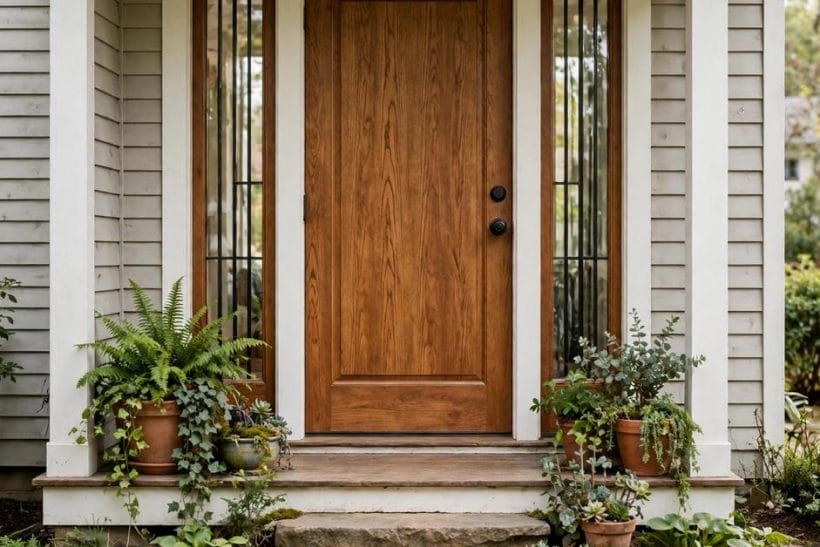
It helps to begin with the setting rather than the door alone. A front door never stands by itself. It sits in a porch, beside a path, under a roof overhang or open sky, facing a street or a garden. Sunlight, rain, wind, and shade all reach it, and the hall behind it shapes how much light and air it needs to let through. A door that suits a sheltered porch may not suit an exposed frontage, and a door that suits a bright hall may not suit a dark one. Keeping the whole entrance in mind, rather than judging a door in isolation, makes every later check easier.
1. What a Fiberglass Entry Door Is
A fiberglass entry door is built around a moulded skin. The skin is formed to carry a pattern, often a wood grain or a set of raised panels, and it is bonded over an inner core that gives the door its body and weight. The edges, the stiles, and the rails are finished to match, and the whole unit is usually supplied with a frame, so the door, the frame, and the seals arrive as a matched set. That matched character matters, because a door that is checked as a complete unit behaves differently from a door leaf judged on its own.
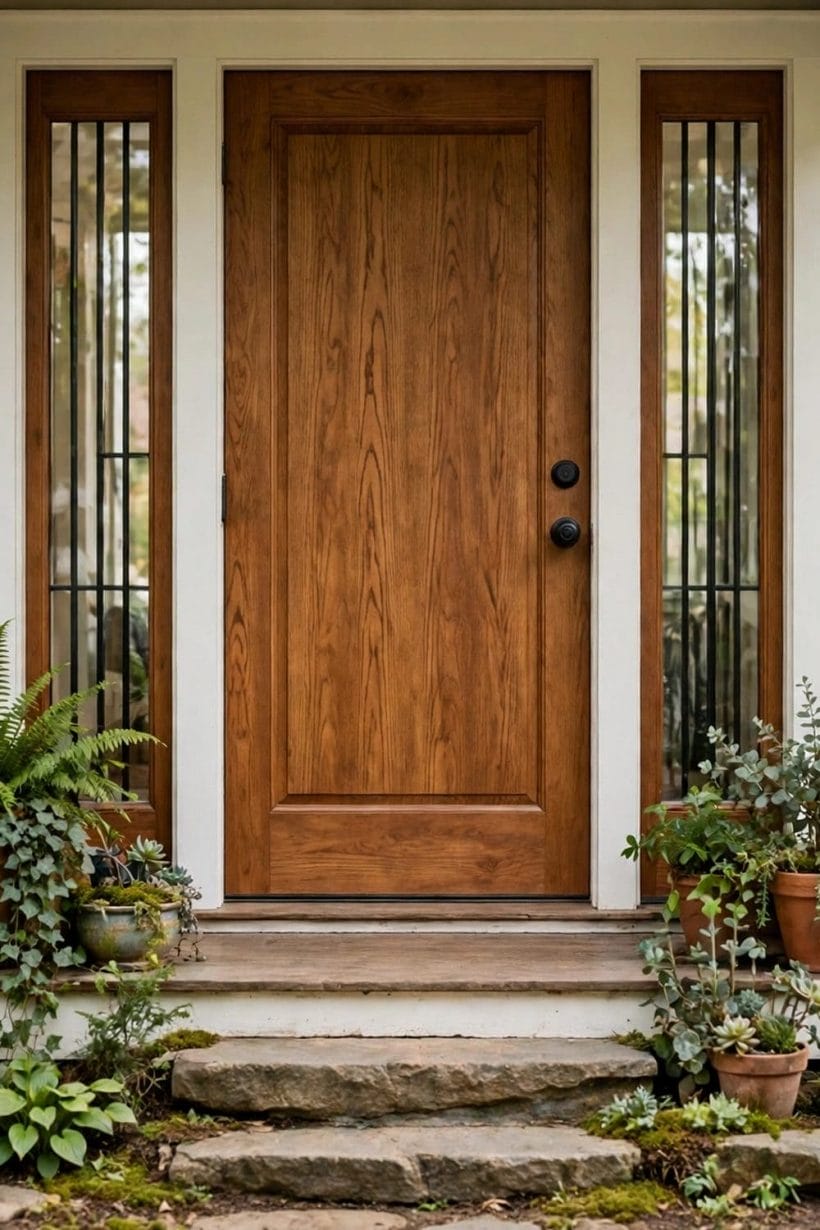
The moulded skin is what gives a fiberglass door its look. A wood-grain skin carries the lines and texture of timber, while a smooth skin takes paint cleanly and suits a plainer frontage. Neither appearance is better in itself. The question is which one suits your house, your porch, and your taste, and whether the finish still pleases you when you see it in your own daylight rather than under showroom lighting. A generous sample, or a door seen in place, tells you far more than a small photograph, because daylight, wall colour, and porch shade all change how warm or dark a finish appears.
It is also worth asking what sits inside the door, in general terms, and what the maker says about the unit as a whole. Ask how the skin, the core, and the frame are put together, what finish the maker recommends for the skin, and what care the maker suggests over time. Maker guidance is the right source for these questions, because the details vary from one product range to another, and general advice cannot replace the guidance written for the door you are actually considering.
2. The Skin and the Finish
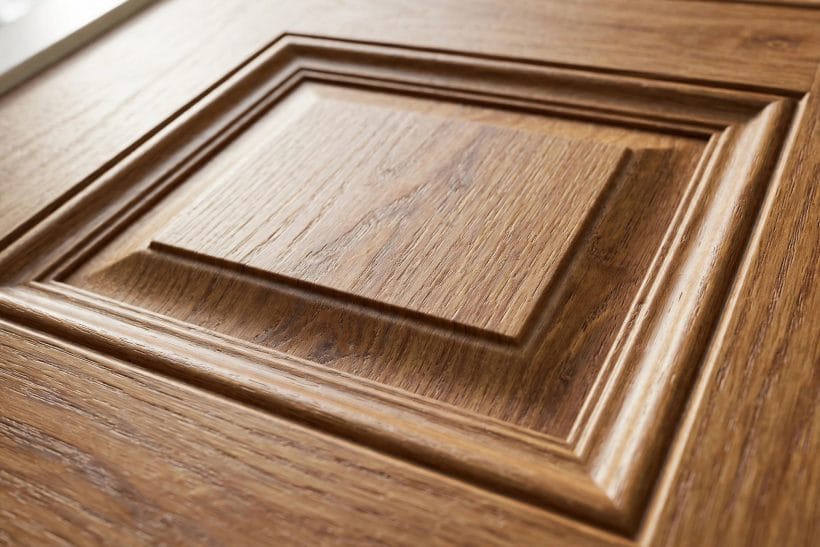
The skin is the first thing to look at closely. Run your eye along the grain pattern and check whether it reads as natural timber or as a repeated moulding. Some skins carry a deep, varied grain, while others carry a softer, more even pattern. Look at the door from a normal standing distance, then closer, and then from an angle, because a pattern that looks convincing from one viewpoint can look flat from another. The corners and the edges deserve the same attention, since a moulded pattern can soften or sharpen where the skin turns.
Finish is the second half of the same check. A stained finish shows the grain and lets the colour of the skin come through, while a painted finish covers the grain and gives a flat, even colour. Stained finishes ask you to think about tone: warm, mid, or dark, and how that tone sits beside your brick, siding, trim, and porch floor. Painted finishes ask a different question: whether the colour suits the house in all lights, from morning sun to evening shade. Either way, the finish should look even across the whole door, with no thin patches, no dull areas, and no change in tone where one panel meets another.
Care follows finish. Ask what the maker recommends for cleaning, what the maker says about recoating or repainting, and how often that care is expected. A door that is simple to wipe clean and simple to refresh will age more gracefully than a door whose finish needs unusual attention, especially on a porch that catches weather. Keep the maker guidance with the house papers, so the care routine is easy to follow years later rather than guessed at.
3. Panel Style and Colour
Panel style sets the character of the door. A door with a few large raised panels reads as traditional, while a door with long, plain panels or a single glazed panel reads as more contemporary. The style should sit comfortably with the house around it: a panelled door suits a cottage porch, a plainer door suits a modern frontage, and a door that fights its surroundings will draw the eye for the wrong reason. Look at the proportions too, because a panel that suits a tall door can look cramped on a shorter one, and a glazed section that suits a wide door can overwhelm a narrow one.
Colour deserves the same slow look as style. Hold a colour sample against the house in daylight, and view it beside the trim, the porch floor, and the path. A colour that looks rich in a showroom can look dark on a shaded porch, and a colour that looks pale indoors can look bright in full sun. The surrounding tiny house exterior ideas can help you picture how a door colour sits within a whole frontage rather than on its own. Take your time with this check, because the door is seen every day, and a colour you enjoy in passing is worth more than a colour that merely photographs well.
It also helps to think about how the colour will age. Sunlight, rain, and general wear change a finish over time, and some colours show that change more plainly than others. Ask the maker what to expect from the finish over the years, and what care keeps it looking good. A door chosen with ageing in mind will still please you long after the newness has worn off, while a door chosen for its first impression alone may disappoint sooner.
4. Glazing and Privacy
Glazing is the glass in the door, and it shapes both light and privacy. A door with clear glass lets daylight deep into the hall and lets you see who is at the door, but it also lets passers-by see in. A door with frosted or textured glass still lets light through while softening the view, and a door with decorative glass adds pattern and colour to the light itself. Small glazed sections near the top of the door give light while keeping the lower part private, while larger glazed sections give a brighter hall at the cost of more exposure.
The right balance depends on your frontage. A door that faces a quiet garden can carry more clear glass than a door that faces a busy street, and a hall that already has a window may need less glass in the door than a hall with no other daylight. Stand inside the hall and imagine the door in place: where does the light fall, what can be seen from the path, and does the hall feel open or exposed? Those questions matter more than any general rule, because every frontage and every household is different.
Glazing also asks practical questions. Ask how the glass is held in the door, whether the glazed section can be cleaned from inside, and what the maker says about the glass and its framing. If the door carries decorative glass, look at the pattern in daylight and check that it pleases you when lit from outside as well as from inside. A glazed door is a long-term choice, so the pattern, the privacy, and the light should all suit you, not just one of the three.
5. Sidelights and Transoms
Many front entries carry glass beside or above the door. Sidelights are narrow glazed panels on one or both sides of the door, and a transom is a glazed panel above it. Both bring extra daylight into the hall, and both widen the entrance visually, so a narrow hall can feel more generous. They also change the privacy balance, because glass beside the door can reveal the hall just as glass in the door can, and a transom above the door can throw light deep into the house while keeping the view at eye level private.
Whether sidelights or a transom suit your home depends on the width of the opening, the layout of the hall, and the outlook from the street. A wide opening carries sidelights gracefully, while a narrow opening may feel crowded with them. A transom suits a tall hall and a high ceiling, while a low porch roof may leave little room above the door. For a closer look at glazed entries, this entry doors with sidelights guide covers the companion angle in more detail. The key check is proportion: the door, the sidelights, and the transom should read as one composed entrance, not as pieces added without a plan.
Fitting is also part of this check, and it belongs to a professional. A wider entrance with sidelights or a transom involves a larger frame, more seals, and more careful alignment than a single door alone, and the whole unit must sit square and true for the door to close cleanly. Ask a qualified professional to assess the opening, confirm what the structure allows, and carry out the fitting. This guide gives no fitting instructions, and none should be attempted without professional advice, because the frame, the seals, and the surrounding structure all work together.
6. Fit, Frame and the Way It Closes
Fit is the check that decides whether a door feels right every day. A well-fitted door closes with a quiet, even action, sits evenly in its frame, and leaves a consistent gap all round. A door that sticks, rattles, or needs a push to latch will annoy you daily, and it will also let draughts and weather in around the edges. When you look at a fitted door, watch it close: does it meet the frame evenly, does the latch catch without force, and does the door stay put when left ajar rather than swinging on its own?
The frame deserves as much attention as the door leaf. Check that the frame is square, that the hinges sit firmly, and that the threshold meets the floor cleanly. The threshold is the strip at the foot of the door, and it shapes how easily you step through, how well the door seals at the bottom, and how rainwater is kept out. Ask what the maker says about the threshold height and the seal beneath it, and ask a professional to confirm that the frame, the threshold, and the floor work together in your opening.
Installation is professional-only work throughout this guide, and this section is no exception. Measuring, levelling, fixing, and sealing a front entry door affect the structure, the weatherproofing, and the security of the entrance, and mistakes can be costly to undo. Ask a qualified professional to measure the opening, assess the surrounding structure, and carry out the fitting, and ask what guarantees or aftercare the fitter and the maker each provide. A door fitted by a professional, with the frame square and the seals seated, will serve you far better than a door fitted in haste.
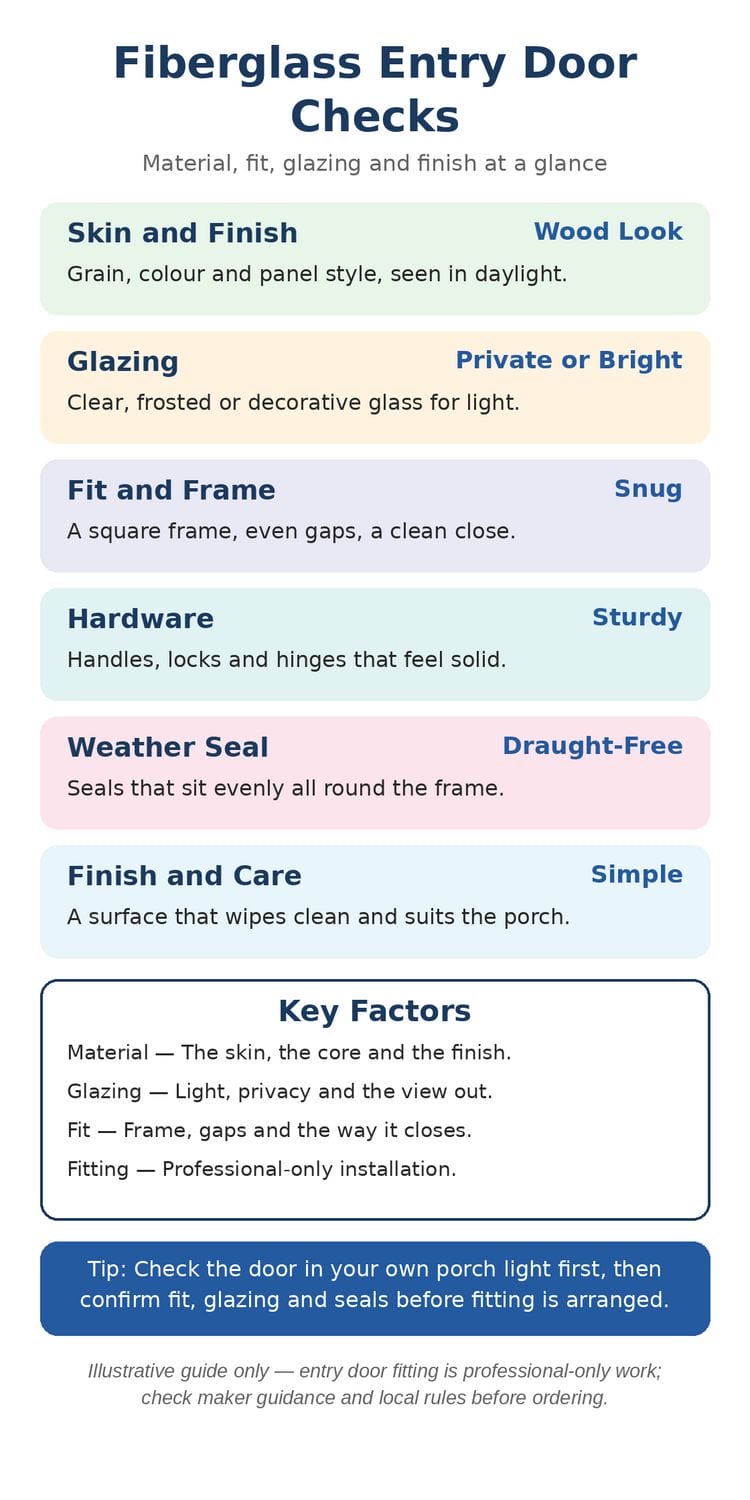
It is worth adding one more thought on fit: doors move with the seasons. Timber frames, masonry, and the door itself respond to changes in temperature and moisture, so a small change in how a door closes over the year is not unusual. What matters is whether the door still closes cleanly, latches without force, and seals evenly when the weather changes. If it does not, ask a professional to look at the hinges, the frame, and the seals rather than forcing the door or adjusting it yourself.
7. Hardware That Feels Right
Hardware means the handle, the lock, the hinges, and any additional fittings, and it is the part of the door you touch most. A handle should feel comfortable in the hand, turn or press smoothly, and sit at a height that suits everyone who uses the door. A lock should operate cleanly, without stiffness or slack, and the key or turn should move without catching. Hinges should hold the door firmly, without sag or play, and they should look as if they belong with the door rather than as an afterthought.
Finish matters for hardware as much as for the door. A bright finish, a brushed finish, and a dark finish each read differently against the door colour, and the hardware finish should sit comfortably with the porch light, the house numbers, and any other metalwork nearby. Look at the hardware in daylight, and check that the finish is even and free of marks. Hardware is also the part of the door that shows wear soonest, because it is touched daily, so ask the maker what care the finish needs and what to expect from it over time.
Security is a question to ask rather than a claim to assume. Ask the maker and a professional what locking options suit the door, how the lock and the frame work together, and what the maker says about the hardware as a complete set. This guide makes no security claims and recommends no particular lock, because the right arrangement depends on the door, the frame, and the house. The useful check is simpler: does the hardware feel solid, operate smoothly, and sit well with the door, and does a professional confirm that the whole set works together?
8. Seals and Weather Protection
Seals are the strips that sit between the door and the frame, and they keep draughts, rain, and dust out of the hall. Look at the seals all round the frame and check that they sit evenly, meet cleanly at the corners, and press gently against the door when it closes. A seal that is twisted, gapped, or flattened will let air and weather through, and it will also make the door harder to close. Ask what the maker says about the seal material, how it should be cared for, and how it can be replaced when it eventually wears.
Weather protection is wider than the seals alone. The porch roof, the overhang, the threshold, and the drainage around the step all shape how much weather reaches the door. A sheltered porch protects the finish and the seals, while an exposed frontage asks more of both. Look at the step and the path: does rainwater run away from the threshold, or does it gather against it? Does the porch roof throw water clear of the door, or does it drip onto the finish? These surroundings matter, because even a well-made door will age faster when weather stands against it.
Care for the seals is simple but worth building into a routine. Keep the seals clean, check them when the seasons change, and ask a professional to look at them if the door begins to draught or stick. Replacing a worn seal is a small job beside replacing a door, and catching wear early keeps the hall comfortable and the door closing cleanly. As with fitting, any work on the frame or the seals that affects the structure or the weatherproofing belongs to a qualified professional.
9. Living With the Door Day to Day
Daily life is the test that matters most, and it is worth imagining before you order. Think about how the door is used on an ordinary day: coats and shoes by the entrance, bags set down while keys are found, children and visitors coming and going, deliveries left at the step. A door that opens easily, closes quietly, and leaves room for the life around it will serve you better than a door that looks fine in a photograph but fights the daily routine. The hall layout shapes this more than the door alone, and a tiny house floor plans guide can help you picture how an entry, a hall, and the rooms beyond work together.
Light is part of daily life too. A glazed door or sidelights can throw morning light into the hall and make a small home feel larger, and that light can spill into the rooms beyond the hall. If your living room sits near the entry, the tiny living room ideas may help you picture how entry light and living space relate. At the same time, a bright hall at night can feel exposed, so think about evening privacy as well as morning light. Curtains, blinds, or a frosted section can soften the evening view without losing the daytime brightness, and the choice is worth settling before the door is ordered.
Cleaning and care round out the daily picture. A fiberglass skin is generally wiped clean with ordinary household care, following the maker guidance, and the glazed sections need the same attention as any window. Keep the threshold clear, keep the seals clean, and keep an eye on the finish where hands touch the door most. A small routine, done often, keeps the entrance welcoming and the door working well, and it avoids the build-up of grime that makes a door look tired before its time.
One more daily check is sound. A front door is also a barrier between the street and the hall, and a door that seals well will soften the sounds of the street. Stand inside with the door closed and listen: does traffic or conversation from outside come through plainly, or is it muted? The answer depends on the door, the frame, the seals, and the hall itself, so it is worth asking a professional what to expect rather than assuming a particular result. A quiet hall is a comfort, and it is one more reason to take fit and seals seriously.
10. Questions to Ask Before Ordering
Before ordering, it helps to gather your questions in one place. Ask the maker about the skin and the finish, and what care each one needs. Ask about the glazing options, and how each one balances light and privacy. Ask about the frame, the threshold, and the seals, and what the maker says about each one. Ask about the hardware, and whether it is supplied as a complete set with the door. And ask about the guarantees: what the maker covers, what the fitter covers, and how aftercare works if something needs attention later.
Ask a professional about the opening itself. Is the opening square, is the surrounding structure sound, and does anything about the porch or the step affect the fitting? Ask what the fitting involves in general terms, how long it is expected to take, and what preparation the household should make. Ask what happens to the old door and frame, and whether any making-good is needed afterwards. These questions cost nothing to ask, and the answers will tell you a great deal about both the door and the people fitting it.
Finally, ask yourself whether the door suits the house you actually live in. Does the style sit well with the frontage, does the colour please you in your own daylight, does the glazing suit your privacy, and does the door open and close in a way that suits daily life? A door that answers yes to those questions is a good choice for your home, whatever anyone else might choose. The checks in this guide are there to help you reach that answer with confidence, not to push you toward any particular product.
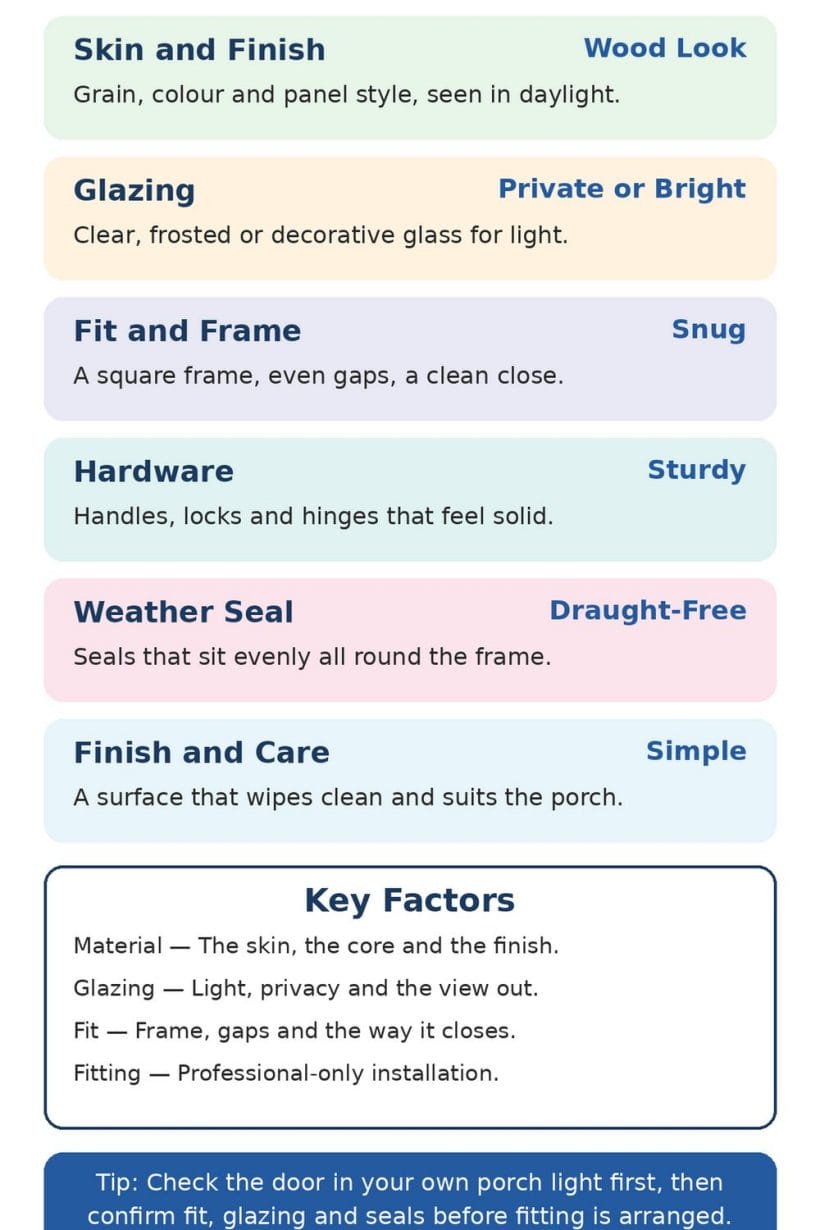
Final Considerations
A fiberglass front entry door is a long-term part of your home, and it deserves a slow decision. Look at the skin and the finish in daylight, weigh the glazing against your privacy, check the fit and the frame, handle the hardware, and think about the seals and the weather. Each check on its own is small, but together they build a clear picture of whether a particular door suits your porch, your hall, and your household.
Remember the boundaries of this guide. It describes what to look at and what to ask, and it deliberately gives no fitting instructions, because entry door installation is professional-only work. Measuring, levelling, fixing, and sealing affect the structure and the weatherproofing of the entrance, and they belong to a qualified professional. The same applies to any work on the frame, the threshold, or the surrounding structure. Ask a professional, follow maker guidance, and keep the paperwork for the door, the fitting, and the aftercare together.
The entrance is more than a door. It is the place where coats are hung, shoes are left, and bags are set down, and a little storage by the door makes daily life smoother. This tiny house storage ideas guide offers ways to keep an entry tidy without crowding it. And where the hall meets the kitchen, the tiny kitchen ideas guide can help you picture how the entrance, the cooking space, and the rest of a small home flow together. A door chosen with its surroundings in mind will serve the whole home, not just the opening it fills.
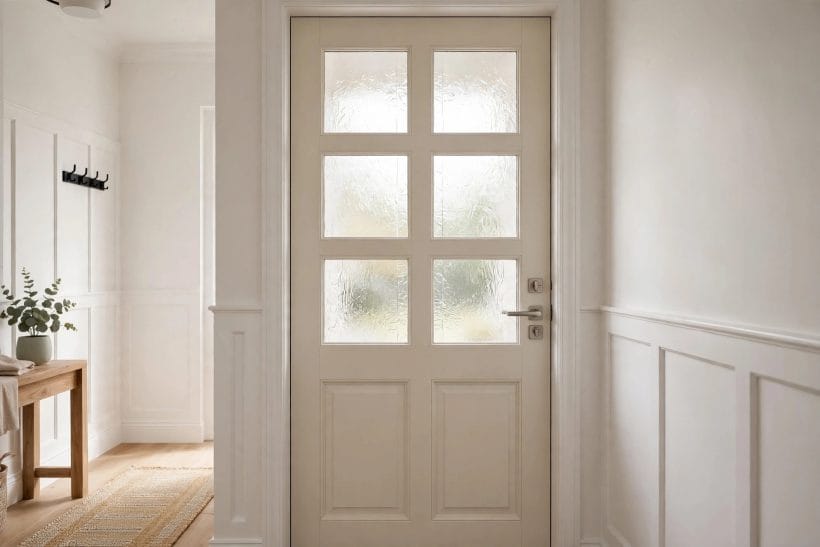
Take your time, see the door in your own light, and ask the questions that matter to you. A front entry door that fits well, seals well, and pleases you every time you come home is worth the care it takes to choose. When the checks are done and a professional has confirmed the fitting, you can order with confidence and look forward to an entrance that welcomes you, day after day.
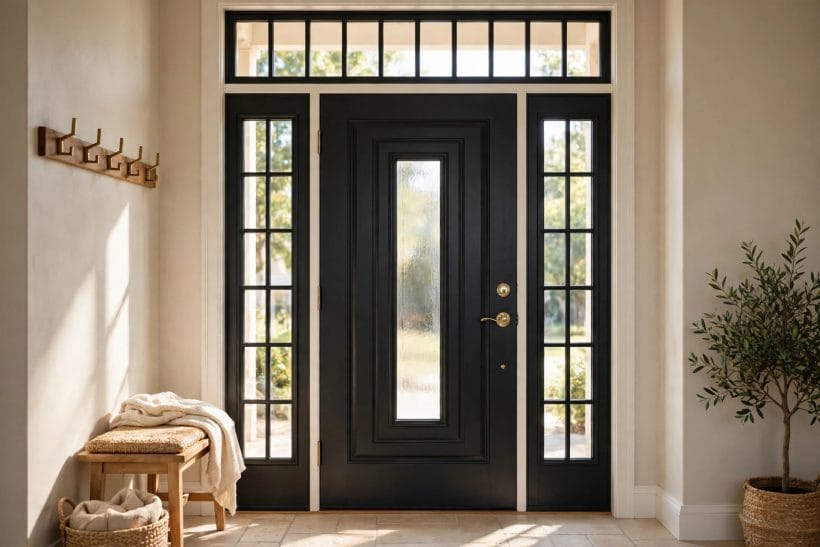
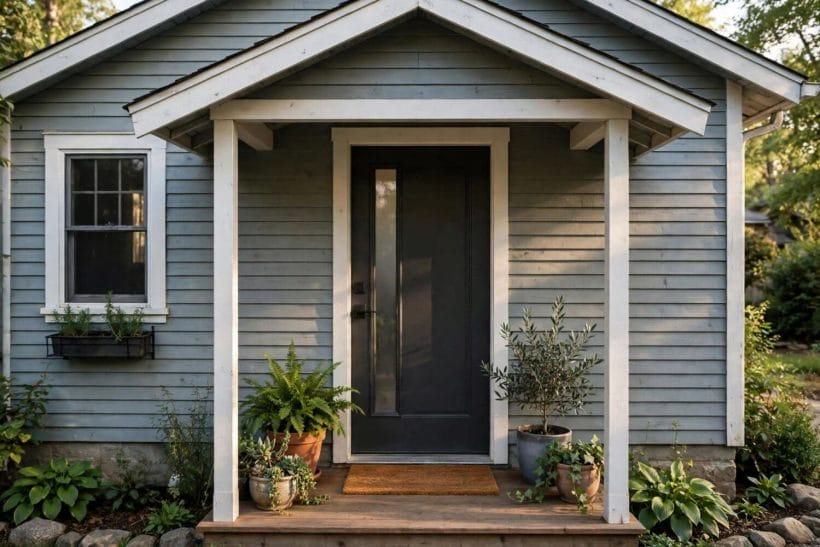
The photographs in this guide show fiberglass-style entries in a range of settings, from wood-grain porches to dark glazed halls, so you can compare styles side by side. Use them as a starting point for your own looking, not as a substitute for seeing a door in place. Your porch light, your hall, and your frontage will each change how a door appears, and the final judgement belongs to your eyes, in your home, with a professional confirming the practical details.
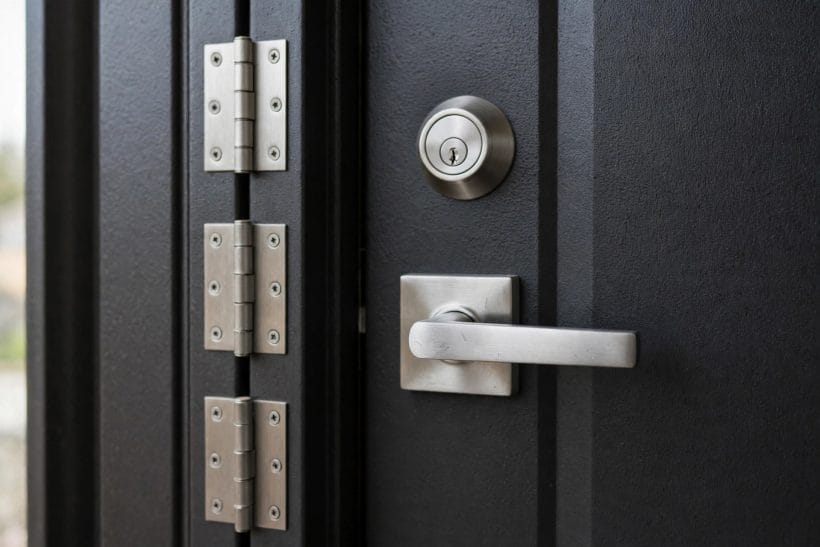
One last thought: keep this guide with your notes when you visit a showroom or speak to a supplier. The sections follow the order of a sensible viewing, from skin and finish through glazing, fit, hardware, seals, and daily life, so you can work through them one by one and note the answers you receive. A door chosen this way is chosen on evidence, not on impulse, and that is a sound foundation for an entrance you will enjoy for years.
When the door is finally in place, give it a first week of attention. Notice how it closes, how the seals sit, how the light falls through the glazing, and how the hardware feels after daily use. If anything feels stiff, draughty, or uneven, ask the fitter or a professional to look at it promptly rather than waiting for the problem to settle. Early attention keeps small adjustments small, and it protects the fit and finish you chose so carefully.
An entrance that works well becomes part of the background of home life, noticed only when it pleases you: the colour in morning light, the quiet close behind you, the bright hall on a winter afternoon. That is the reward for choosing carefully, and it is why the checks in this guide are worth the time they take. Choose slowly, ask widely, and let a professional handle the fitting, and your front entry door will repay the care for years to come.



0 Comments