
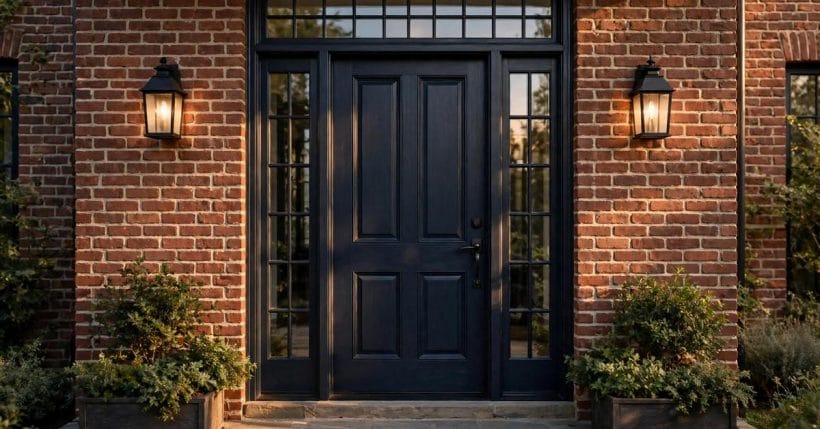
A front door flanked by sidelights does two jobs at once: it makes an entrance look generous, and it pours daylight into the one room that never has enough of it — the hall. The narrow glazed panels on one or both sides of the door are a small architectural move with an outsized effect, which is why the configuration keeps returning on house fronts of every age.
These seventy-five ideas cover the sidelight configuration end to end: how the panels are arranged, the glass choices that balance light against privacy, door styles and materials, colour, hardware and security stated plainly, and the fitting and weatherproofing that decide whether an entry stays beautiful. The door family splits cleanly across the site: the front door post is the generic entry-door survey of types and materials, the double front doors post owns the double configuration, the front door ideas survey gathers the wider inspiration — and this post owns the sidelight configuration alone.
1. Entry Doors With Sidelights at a Glance
A sidelight — also written sidelite — is a narrow glazed panel fixed in the same frame as the door, on one side or both. It does not open; it exists to admit light, widen the entry’s presence, and let the household see who is calling. In the generic survey, sidelights appear briefly as one glazing option among many; here they are the whole subject, because the configuration raises its own questions — how many panels, how private, how secure. Costs are handled as drivers only, and the door installation cost guide treats the fitting side in full.
| Question | Short answer |
|---|---|
| What is a sidelight, exactly? | A fixed glazed panel in the door’s frame, beside the door leaf — it brings light and a view of callers, and it does not open |
| One sidelight or two? | One suits narrower openings and cottage fronts; two give symmetry and the grandest light, and need the wider structural opening to match |
| Do sidelights compromise privacy? | Only if the glass is chosen carelessly — textured, frosted and patterned glazing admits nearly all the light while revealing almost nothing |
| Are they secure? | A sidelight built to modern standards — laminated or toughened glazing, sound frames, quality locks — is a designed component, not a weak point; the detail sections explain what to check |
2. The Configuration: One Sidelight, Two, and the Full Frame
Everything starts with the frame. Door and sidelights are made and fitted as one unit in one structural opening, so the configuration — how many panels, how wide, whether a transom joins them — is decided by the opening the house can offer.
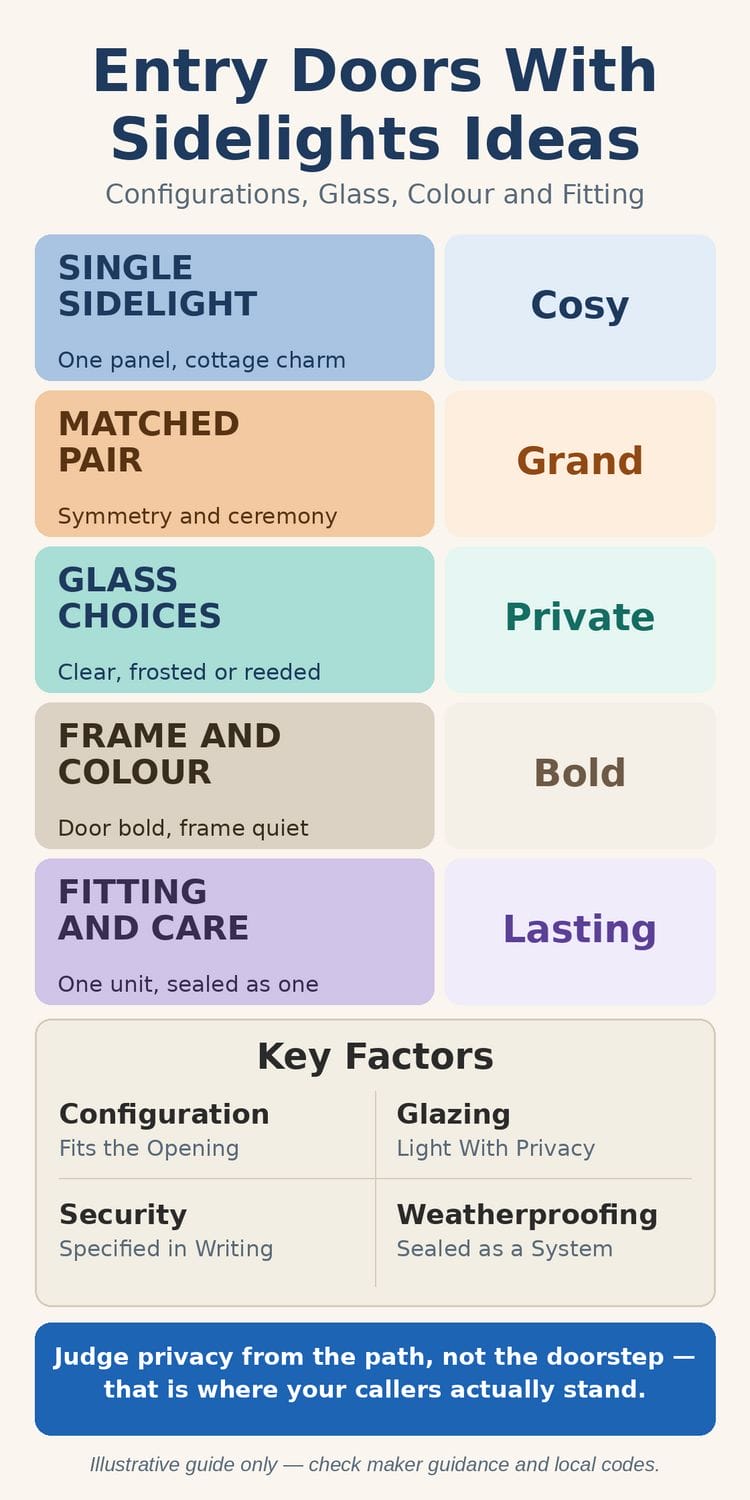
1. The single sidelight
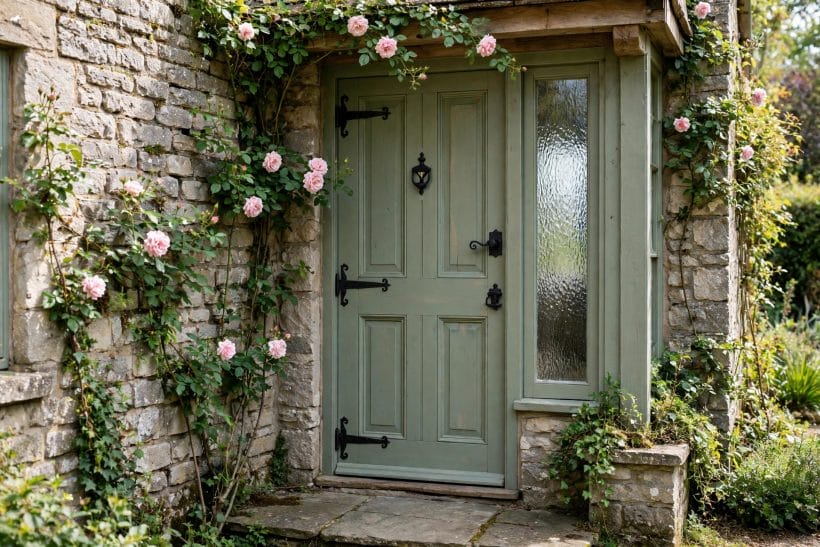
One panel beside the door is the configuration for most houses: it fits a modest opening, keeps the door visually in charge, and still transforms a dark hall. Asymmetry is its charm — the front reads cottage-honest rather than formal.
2. The symmetrical pair
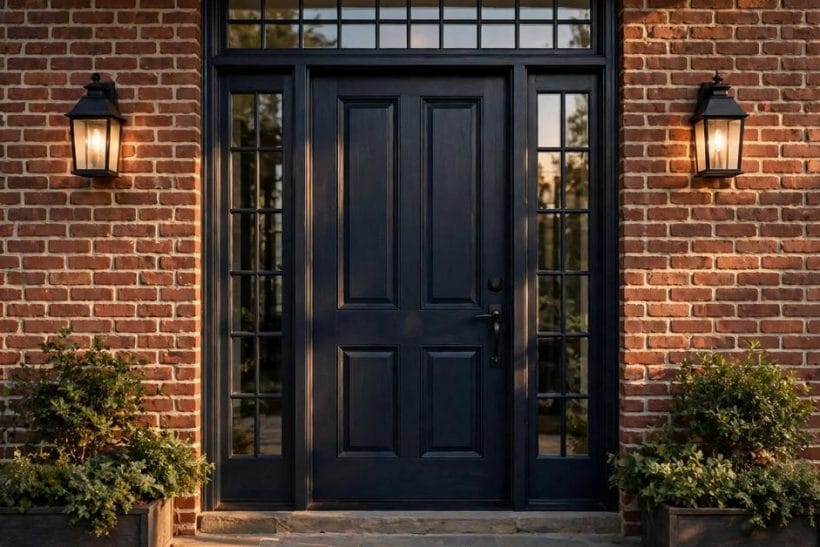
Sidelights both sides make the classic composed entrance: balanced, formal, generous with light. The pair asks for a wider opening and a front with the width to carry it; on a narrow facade it can squeeze the door it means to celebrate.
3. Full-height sidelights
Panels running the door’s full height give the strongest modern effect — a wall of entry glass with a door in it. They maximise the hall’s daylight and ask the most of the glazing specification, privacy treatment and budget.
4. Half-height and panelled-below designs
Traditional frames often panel the sidelight’s lower half and glaze only the top, matching the door’s own panel layout. The look is period-true, the glass area is modest, and the lower panel adds a measure of robustness at kicking height.
5. Sidelights with a transom above
A glazed transom over door and sidelights alike ties the configuration into one composition and throws light deep into the hall — the finishing move on tall entrances and period fronts.
6. The door offset within its frame
Not every entry centres its door: an offset leaf with one wide sidelight is a deliberate contemporary composition, and it can suit openings where a centred door would waste width the glass uses better.
7. Widening an opening for sidelights
Adding sidelights to a door-only opening means structural work — lintels, supports, building control in most places. It is done often and well, but it belongs to professionals, and the design sections that follow assume the opening question is answered first.
8. Sidelights in a porch enclosure
Where a porch wraps the entry, glazed porch sides do the same light-bringing work one step earlier. Design the two together so the house avoids glass competing against glass.
3. Glass Choices: Clear, Frosted, Textured and Leaded
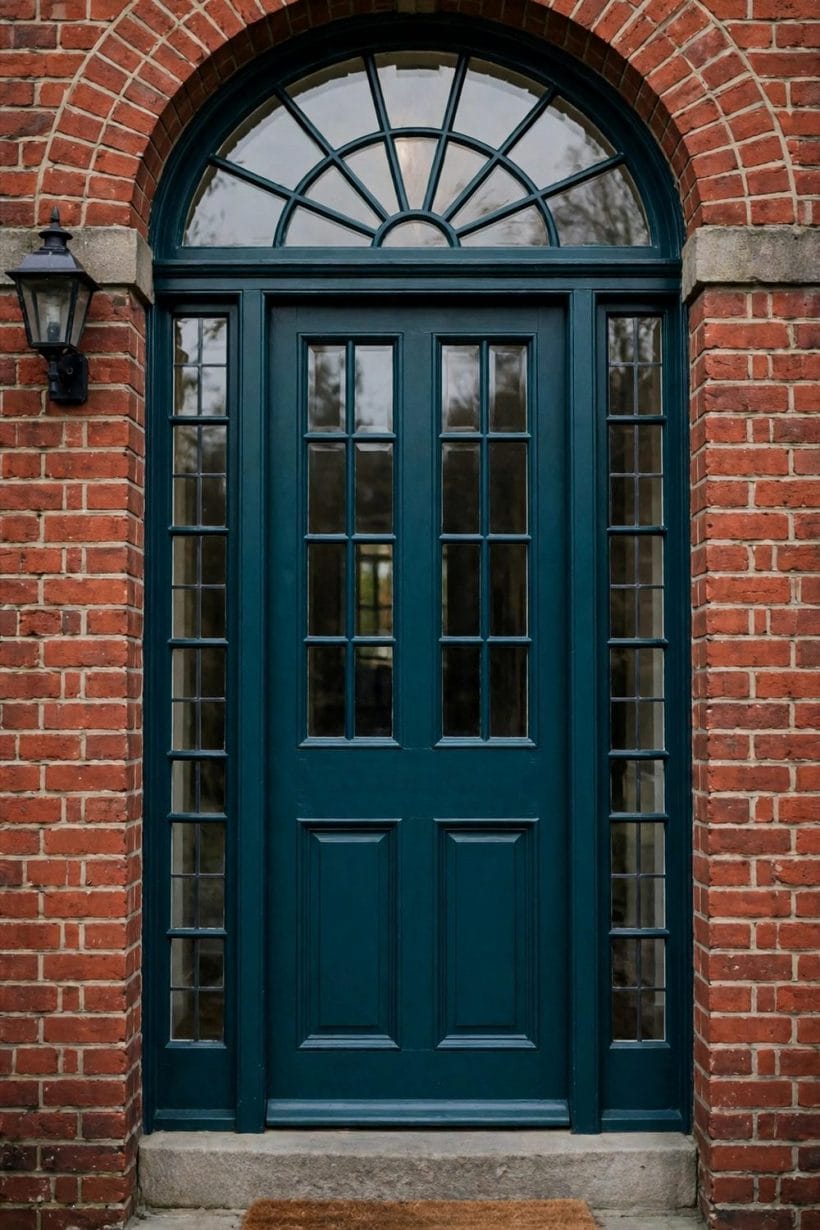
The glass is where a sidelight is truly specified. The same frame can hold a clear window onto the street or a glowing panel that reveals nothing, and the choice — made once, at ordering — decides privacy, light quality and the entry’s whole character for decades.
9. Clear glass for open fronts
Where the front garden gives distance and the household likes the connection, clear glass keeps the view both ways and the hall brightest. It is the confident choice for set-back houses and quiet streets.
10. Frosted glass for full privacy
Acid-etched or filmed frosting turns the sidelight into a lantern: light pours in, shapes blur to nothing. It is the default answer for doors close to the pavement, and it flatters contemporary and cottage fronts alike.
11. Textured and patterned glass
Reeded, fluted, hammered and pebbled textures break up the view while keeping a sense of depth and movement in the light. Patterns also carry period character — a textured sidelight can date-match a house more faithfully than plain glass ever will.
12. Leaded and stained accents
A border, a simple geometric lead pattern or a single stained motif in each sidelight gives a traditional front its jewellery. Keep the design quiet; the door should wear the accent, not compete with it.
13. Obscure glass graded by depth
Obscuration comes in degrees, from a light misting to near-opaque. Judge samples at the actual distance callers stand — privacy that works from the path may dissolve from the doorstep.
14. Laminated and toughened safety glazing
Glazing beside a door is a safety zone: it should be safety glass as a matter of course, and laminated construction adds a security layer by holding together when struck. Ask for the specification in writing; it is the sidelight’s most important invisible feature.
15. Sealed units and thermal performance
Modern sidelights are glazed as sealed insulated units like any good window, and their thermal behaviour is a specification to check rather than a fear to nurse — the frame sections return to cold and condensation with practical answers.
16. Matching glass across door and sidelights
If the door leaf itself is glazed, its glass and the sidelights’ should be specified together — same tint, same texture family, same obscuration logic — or the entry reads as two purchases instead of one design.
4. Privacy and Light: The Balance Every Sidelight Strikes
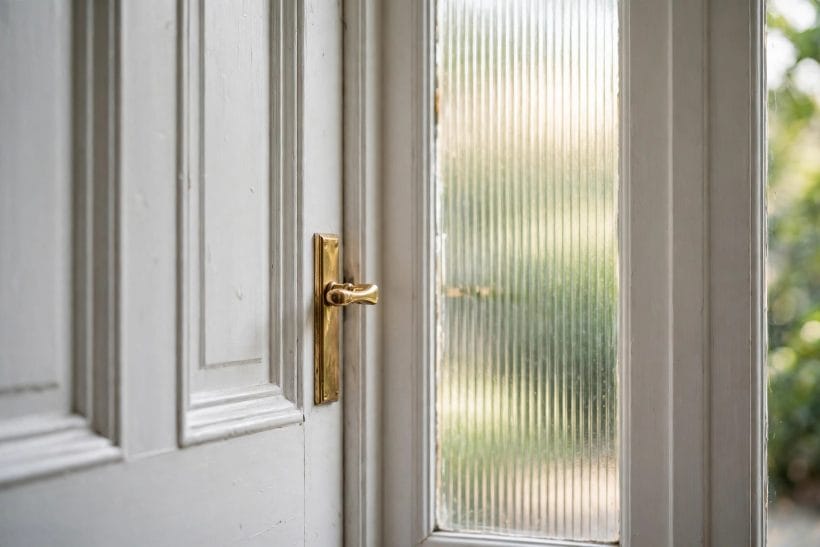
Every sidelight is a negotiation between two goods: a bright hall and a private one. The good news is that the negotiation is mostly won at the glass counter; the rest is handled by layout, planting and the small courtesies of design below.
17. Light without a view
The core trick bears repeating because it surprises people: obscured glass loses very little daylight. A frosted sidelight delivers nearly the clear panel’s brightness to the hall while surrendering none of the household’s privacy to the street.
18. Sight lines from the street
Stand where callers stand and look in: what is visible is what the glass choice must govern. Halls that turn a corner, or stairs that rise out of the direct line, forgive clearer glass than a hall that runs straight to a lit kitchen door.
19. Seeing the caller, kindly
A sidelight’s oldest job is the preview: knowing who is at the door before opening it. A small clear zone, a peep-friendly texture gradient, or simply the frosted panel’s honest silhouette all serve it without surrendering the room.
20. Blinds and films as the adjustable layer
Where glass is already clear, privacy can still be tuned: discreet blinds, shutters or applied films give a day-night adjustment the fixed glass cannot — the pragmatic answer for existing entries.
21. Planting as a soft screen
A shrub, a small tree or tall grasses between path and door filter views and soften the facade at once. Planting placed with the sight lines in mind does privacy work no product can, and it flatters the entry while doing it.
22. Hall lighting that rests by day
A sidelight-fed hall needs its artificial light planned for evening only — which saves energy and, less obviously, privacy: a hall blazing at noon advertises its contents through even good glass. Let the daylight do the day shift.
23. Numbers, post and the glazed panel
Deliveries and callers need the door findable: house numbers on or beside it, and thought for where parcels land. Small logistics, designed once.
24. The glow from the street at night
After dark the negotiation reverses: the lit sidelights glow outward as the house’s welcome. Warm hall light through textured glass is the prettiest night face an entry can have — one more reason the glass choice deserves its care.
5. Door Styles With Sidelights
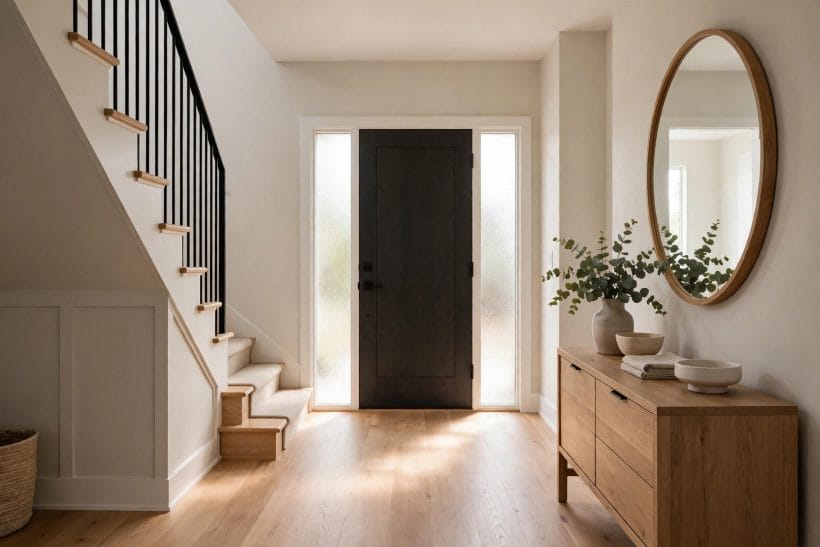
The door leaf and its sidelights are read together as one composition, so style is a matching exercise: the door’s period, panels and proportions should rhyme with its frame, and the sidelights should look born beside it, not adopted.
25. The panelled classic
Raised-and-fielded panels, a fanlight or transom overhead and sidelights panelled below and glazed above: the Georgian-Victorian composition that still defines the formal entry. It suits brick and render fronts of any century that keep their manners.
26. The cottage door with one sidelight
A ledged or stable-style door, a single textured sidelight and iron hardware: the informal classic. Its charm is proportion — everything slightly narrow, slightly irregular, and warm in timber or a soft colour.
27. The contemporary slab composition
A flush or finely grooved slab door between full-height sidelights, in aluminium or painted composite, is the modern statement: the entry as a lit glass wall with a door-shaped interruption. Restraint everywhere else lets it sing.
28. The craftsman arrangement
A sturdy door with a glazed upper panel, sidelights echoing its small panes, and honest hardware in dark metal: the craftsman entry values craft over size, and its sidelights often carry the same divided-light rhythm as the door.
29. The glazed door with glazed sidelights
Half-glazed and fully glazed doors extend the sidelight idea into the leaf itself, making the entire frame a light source — unmatched for dark halls, with privacy and security specifications answered well.
30. The arched and shaped frame
Where the opening is arched, the sidelights follow its curve and the entry gains a period grandeur no rectangle matches. Shaped frames are specialist work; their glass and seals deserve the security and safety questions asked twice.
31. Double doors are a different answer
Where an opening is very wide, the household chooses between a door with two sidelights and the double-leaf configuration — the sibling post covers that road in full. The sidelight answer keeps one working leaf and spends the rest of the width on light, which many halls prefer.
32. Restraint in applied decoration
Mock leading and fussy glass patterns date an entry faster than plain proportions ever will. The composed sidelight entry ages by standing still: simple panels, honest materials, one idea.
6. Materials and Finishes
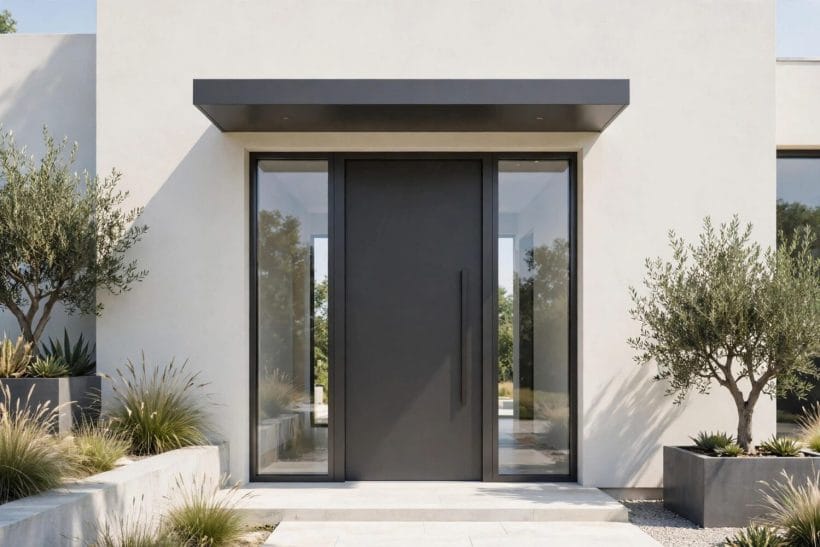
Door and frame materials decide how an entry ages: how often it wants paint, how it handles weather on the sidelights’ sills, and how solid it feels at the handle. All the mainstream materials can be had with sidelights; their characters differ.
33. Timber: the traditional warmth
Hardwood and engineered timber give the deepest, most repairable entry — sandable, repaintable, endlessly refinishable. Their price is maintenance: a timber sidelight frame asks for its finish renewed on schedule, and rewards it with decades.
34. Composite: the low-care all-rounder
Composite doors with matching sidelight frames are the pragmatic favourite: timber looks, moulded or smooth skins, little upkeep and strong thermal manners. Judge them by the frame’s finish match — door and sidelights must read as one material.
35. Aluminium: slim frames, big glass
Aluminium’s strength allows the slimmest sidelight frames and the largest glass areas, which is why contemporary compositions choose it. Its finishes are durable and its lines exact; its feel at the handle is precise rather than warm.
36. Steel and uPVC in their places
Steel entries bring a security-first character and fine industrial lines; uPVC remains the budget route to a glazed entry, best kept in simple profiles and colours where its chunkier sections sit quietly. Both deserve the same glazing and hardware questions as the premium materials.
37. One material across the whole frame
Door, sidelights and transom should come from one system in one finish. Mixed purchases are where colour mismatch, seal failure and warranty gaps breed.
38. Finishes: factory colour, honestly judged
Factory finishes on composite and aluminium outlast site painting and carry the maker’s warranty; site-finished timber offers any colour and future changes. Judge samples outdoors against the house’s brick or render, in morning and evening light.
39. Sills and thresholds take the weather
The sidelight frame’s sill lives at splash height and earns the entry’s hardest weather. Check how it is profiled to shed water, what it is made of, and how it meets the door’s threshold — the detail sections return to the consequences of getting it wrong.
40. The interior face matters too
An entry is seen from inside all day. Frames finished both sides — or deliberately two-toned — keep the hall’s side as considered as the street’s.
7. Colour: Door, Frame and Trim
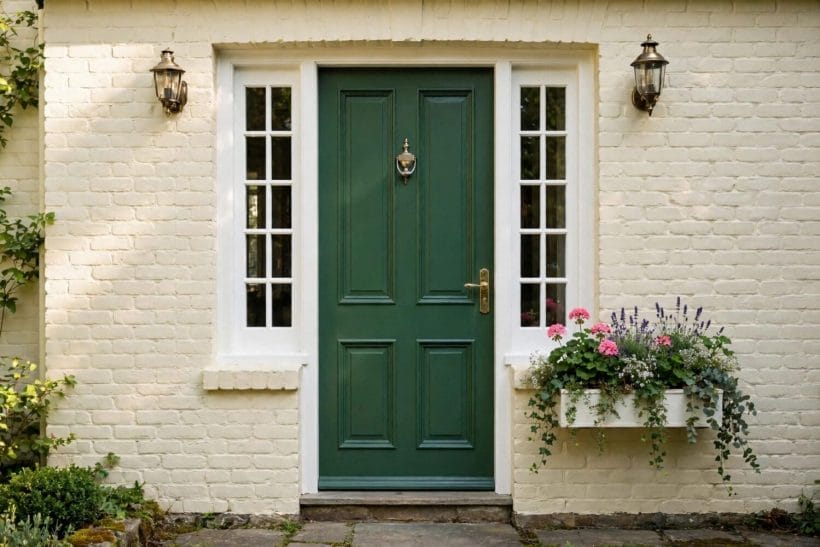
Sidelights change the colour maths of a front door: the door is now one panel in a wider composition, and its colour plays against frame, glass and facade across a much larger canvas. The modern gate design post makes the same point at the plot’s edge — the entrance sequence reads as one design from gate to door.
41. Door bold, frame quiet
The classic distribution: the leaf takes the colour, the sidelight frames take the trim tone. It keeps the door the hero, the glass calm, and the composition legible from the street.
42. The whole frame in one colour
Door, sidelights and transom in a single deep colour reads architectural and modern, and flatters pale render and light brick. It asks for confidence and rewards it with the strongest street presence in this post.
43. Dark frames, pale door — handle with care
Reversing the usual distribution can work, particularly with a timber door inside dark frames, but it fragments easily. Try it in samples first; the composition must look intentional from every distance.
44. Colours that flatter glass
Deep greens, inky blues, oxblood and charcoal make glazed panels look jewel-like. Very pale doors beside large sidelights can wash out at noon; give them a frame with more depth.
45. The hall side of the colour
A dark front door often backs onto a dark hall face, which can feel heavy from inside. Two-tone finishing — colour out, light within — is a legitimate, common solution; agree it with the maker before manufacture, not on the doorstep.
46. Hardware colour as the full stop
Handles, letter plates and knockers punctuate the colour scheme: aged brass warms dark doors, black iron suits cottage and craftsman compositions, bright metal belongs to the contemporary frame. One metal, everywhere on the entry, no exceptions.
47. Seasonal dressing against the colour
A wreath, planters and a doormat are the entry’s changeable layer. Choose door colours that welcome them — most deep and mid tones do — and let the sidelights’ glow finish what the planting starts.
48. Repaintability as a colour feature
Timber and some composite systems allow future colour changes; foil and factory aluminium finishes largely do not. Choosing a colour you can change in a decade is itself a design decision, and worth one line in the buying notes.
8. Hardware, Locks and Security Stated Plainly
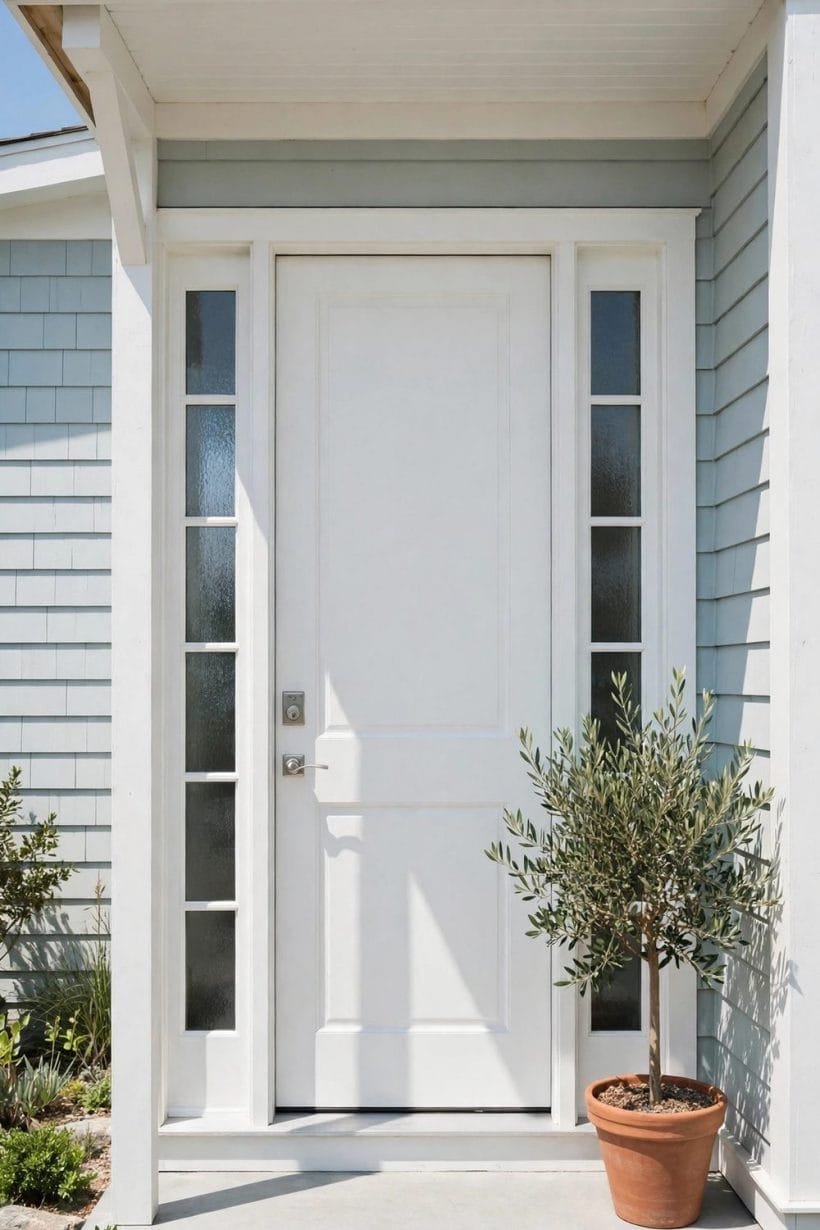
Security talk around glazed entries is often either alarmist or evasive. The plain version: a sidelight entry is a designed system whose safety depends on the glazing specification, the frame’s construction and the lock hardware — all checkable before purchase, none a matter of luck. Local standards and insurer requirements govern the details; what follows is what to ask, in general terms.
49. Glazing is the first security layer
Laminated glass holds together under attack in a way ordinary panes do not, and safety glazing beside doors is required practice in any case — the two specifications together are the sidelight’s honest answer. Ask which is fitted, and where.
50. Multi-point locking on the leaf
Modern entry doors lock at several points along the frame with one handle motion. The sidelight frame, being part of that frame, shares its rigidity; confirm the whole unit — door and sidelights — carries the maker’s tested rating as one assembly.
51. Hinges, keeps and the frame’s fixing
Security lives in fixings as much as in locks: how the frame is anchored to the structure, how the hinges are protected, how the keeps are seated. A well-fitted ordinary door outperforms a neglected premium one, which is why fitting quality appears again in the last section.
52. Letter plates and the reach question
The old worry — a hand through the letter plate reaching a thumb-turn — is designed out by internal covers, plate positioning and modern lock choices. Raise it with the maker explicitly; a considered answer exists for every standard configuration.
53. Hardware that suits the hand
Lever handles, centre knobs and pull handles each suit different households and different door weights. Try the actual hardware on a display door if you can; the entry is the house’s handshake, used thousands of times a year.
54. Knockers, bells and numbers
The caller’s furniture matters more with sidelights, because the household sees callers arrive: a findable bell, a readable number. Small civilities, designed in.
55. Smart locks and viewers, cautiously
Electronic locks and camera bells integrate with most modern entry systems; agree compatibility with the door maker so warranties stay intact. With sidelights already providing the caller’s preview, buy the technology for convenience, not for fear.
56. The hall side: egress first
Whatever the locking, the household must always be able to leave quickly without a key hunt — the non-negotiable rule that outranks every security feature in this section. Check the internal operation before anything is finalised.
9. Porches, Canopies and the Composed Entry
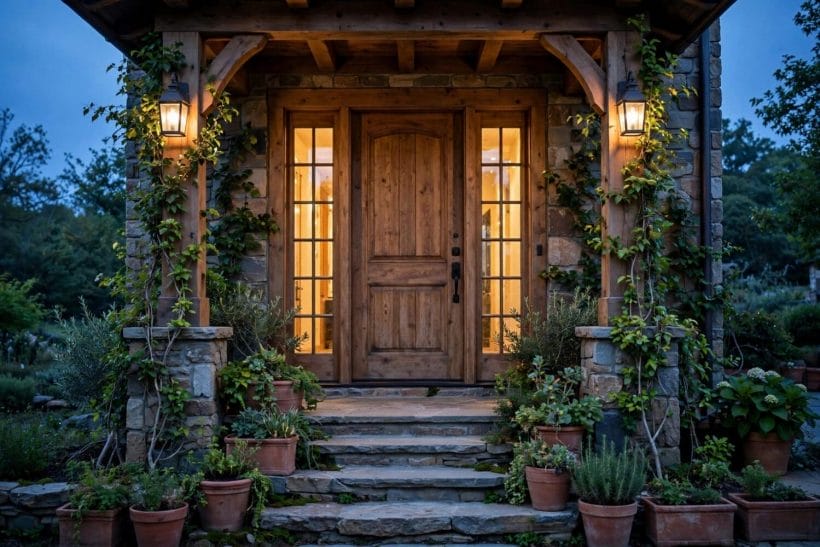
A sidelight entry rarely stands alone: porch, canopy, steps, path and planting compose the approach, and the front porch railing ideas post shows how the American porch tradition frames an entrance. These ideas treat the entry as one composition whose brightest element is the glazed door at its heart.
57. A canopy that shelters the glass
A modest canopy or porch roof over a sidelight entry keeps driving rain off the frame’s seals and gives callers shelter. Scale it to the composition — the wider the glazed front, the more it earns its roof.
58. Steps and thresholds in one material
Steps that match the path and a threshold that matches the frame make the approach read as one gesture. Changes of material at every stride fragment an entry that the sidelights are trying to unify.
59. Lanterns flanking the composition
A light each side of a two-sidelight front completes the symmetry. With one sidelight, a single lantern on the panel side balances the composition just as well.
60. Planters that frame, not crowd
A pair of planters at the frame’s outer edges underlines the entry’s width; tall planting softens its corners. Keep the door’s swing and the sidelights’ sight lines clear — the composition needs air around it.
61. The doormat as a design line
A mat the width of door plus sidelights is a small, transformative correctness: it underlines the whole composition and does its dirt-trapping duty across the full span people actually cross.
62. House numbers on the glass or beside it
Numbers applied to a transom or sidelight in a calm typeface are a contemporary classic; traditional fronts keep them on the door or wall. Either way, size them to be read from the path.
63. A bench or boot space that respects the view
Porch furniture earns its place by not blocking the glass: a low bench to one side, boots beneath, the sidelights’ light unobstructed.
64. Seasonal light in the sidelights
Candles or a small lamp in the hall, seen through textured sidelights, dress the entry for winter evenings without a single outdoor decoration. It is the configuration’s quiet party trick.
65. The approach in one photograph
Stand at the gate and take the photograph a visitor’s eye takes: path, steps, canopy, planters, glowing sidelights, door. If one element argues with the rest, the photograph finds it — fix the argument, and the entry is composed.
10. Fitting, Weatherproofing and Care
The last ideas are the unglamorous ones that decide whether a beautiful entry is still beautiful in ten winters: correct fitting, honest sealing, a small rhythm of care. Anything structural belongs to professionals under local rules; what follows is the owner’s part.
66. One unit, professionally fitted
Door and sidelights arrive as a single frame and should be fitted as one, levelled, squared and fixed to the structure as the system intends. Most entry problems blamed on products are born in this half-day of work.
67. Sealing is a system, not a bead
External sealing, internal airtightness and the drainage paths in the frame’s profile work together. Ask the fitter how the unit sheds water at the sidelights’ sills — a clear answer is a good fitter’s signature.
68. Draughts are diagnosed, not endured
A new entry that whistles has a findable cause: a seal mis-seated, a keep unadjusted, a threshold out of level. Report it promptly under warranty; glazed entries in good order are notably draught-free.
69. Condensation tells the truth
Mist between the panes means a failed sealed unit — a warranty matter. Mist on the room-side surface is the house’s humidity speaking, answered by ventilation and heating balance rather than by blaming the glass.
70. Cleaning glass that stays beautiful
Sidelights double the entry’s glass area; a squeegee routine and non-abrasive cleaners keep textured and frosted glass even. Leaded designs want soft brushes and patience around the cames.
71. Finish care by material
Timber asks for inspection and renewal of its coating on the maker’s rhythm; composite and aluminium ask mainly for washing and hinge oil. All of it is cheaper than neglect, particularly at the sills.
72. Hardware’s annual ten minutes
A drop of lubricant in the lock, hinges checked, keeps tightened, handles re-seated: ten minutes a year keeps the entry’s action as good as its looks, and keeps small misalignments from becoming call-outs.
73. Weather bars and seals age first
The consumables of an entry — brush seals, weather bars, gaskets — are replaceable by design. Knowing yours are spares, not structure, turns their eventual renewal from a worry into a maintenance line.
74. Keep the paperwork with the house
Guarantees, glazing specifications, finish codes and the maker’s details should live with the house papers. A future repair — one broken sidelight pane — is faster and cheaper with the specification to hand.
75. Judge the entry at night, from the hall
The final test of a sidelight entry is not the street photograph but the hall at dusk: light borrowed all day, privacy intact, the door’s furniture pleasant in the hand, the glow composed. Entries that pass from inside serve their houses for decades.
Final Considerations
An entry door with sidelights is a system decision disguised as a style choice: one frame, one glazing specification, one colour composition, fitted as a unit and cared for as a unit. Get the configuration right for the opening, choose glass that wins light without surrendering privacy, specify safety and security glazing without drama, and let the porch, planting and lighting compose the approach around it. The splits hold the family together — the generic survey owns door types broadly, the double-door post owns its configuration, and this post owns the sidelights: their arrangement, their glass and their glow in the hall. Choose once, choose as a system, and the brightest room in the house will be the one that used to be dark.

0 Comments