

Two names dominate the fiberglass entry door shelf, and they arrived there by different roads: Masonite, one of the largest door manufacturers in the world, and Therma-Tru, the company that built its name on fiberglass doors in the first place.
This head-to-head compares their fiberglass exterior doors — including Therma-Tru’s Benchmark line — on construction, finishes, glass, systems and buying checks, with no invented prices or scores, ending with who should pick which.
1. Masonite vs Therma-Tru Benchmark at a Glance
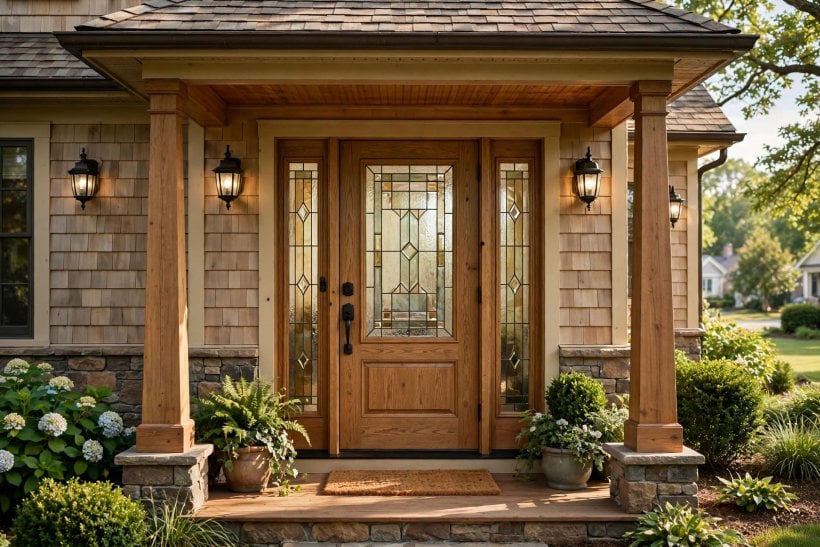
The comparison is between two established manufacturers’ fiberglass entry doors: Masonite’s fiberglass ranges, sold broadly through home centres and dealers, and Therma-Tru’s fiberglass lines, including the Benchmark series made for the home-centre channel. The entity under comparison is the fiberglass entry door itself — a moulded fiberglass skin over an insulated core, hung in a frame with weatherstripping — and the attributes that separate brands are the skin’s texture and finish options, the completeness of the door system around the slab, glass options, warranty terms as written, and the buying experience in each channel. This guide works through those attributes one by one, in the same spirit as the exterior detailing covered in this comparison of exterior trim materials: the visible surface is only half of what you are buying.
| What is each brand, in one line? | Masonite is a giant, broad-range door maker for whom fiberglass is one material among several. Therma-Tru is the fiberglass specialist — the name most associated with bringing fiberglass entry doors to the mainstream market. |
| What is Benchmark? | Therma-Tru’s Benchmark line is its range produced for sale through a major home-centre retailer — Therma-Tru engineering packaged for that channel’s shelves and price points. |
| What actually differs between them? | Finish and grain realism, the system components included (frame, sill, weatherstripping as a tested unit), glass ranges, and how each is sold and supported — more than the basic fiberglass construction, which is similar in principle. |
| Is fiberglass the right material at all? | For most front doors, it is the balanced choice: it does not rust like steel, does not demand wood’s upkeep, insulates well with its foam core, and takes paint or stain-look finishes. |
| How should I decide? | By the door as a system and the written warranty, not by the slab alone — and by which range your channel stocks in the size, handing and glass pattern your opening needs. |
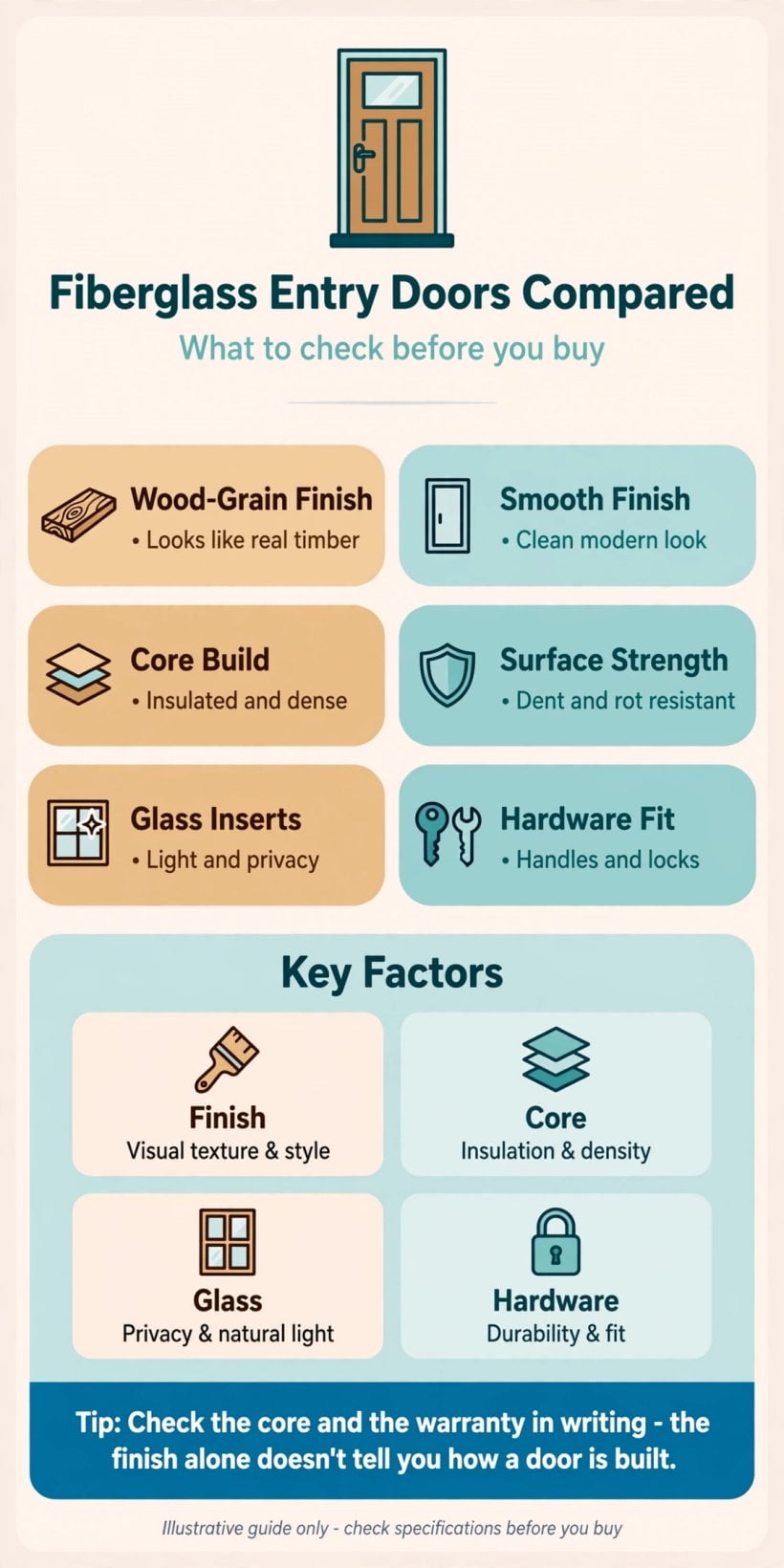
At a glance: both are genuine fiberglass doors from established makers — the real differences are finish, system completeness, glass and channel, so compare those, in writing.
2. The Two Makers and Where Their Doors Are Sold
Masonite is one of the world’s largest manufacturers of doors, full stop — interior and exterior, in wood, steel, MDF and fiberglass, sold through home centres, dealers and builders everywhere. Its fiberglass entry ranges sit inside that broad catalogue, which gives them two practical characteristics: wide availability, and a range structured in clear tiers from straightforward smooth-skin doors to more elaborate grained and glassed designs. When a homeowner reads masonite exterior doors reviews, they are usually reading about that breadth — many doors, many price points, one badge.
Therma-Tru’s identity is narrower and deeper: it is the company credited with pioneering the fiberglass entry door as a mainstream product, and fiberglass remains its core business. Its named ranges are sold through dealers and home centres, and the Benchmark line exists specifically for the home-centre shelf — an engineered subset of the Therma-Tru approach at that channel’s specification. The practical consequence of both structures is the same advice: compare specific ranges, not badges. A maker’s top tier and entry tier differ more from each other than the two makers’ equivalent tiers differ between themselves, and the checks in the rest of this guide are written to be run range against range.
3. Construction: Skins, Cores and What “Fiberglass” Really Means
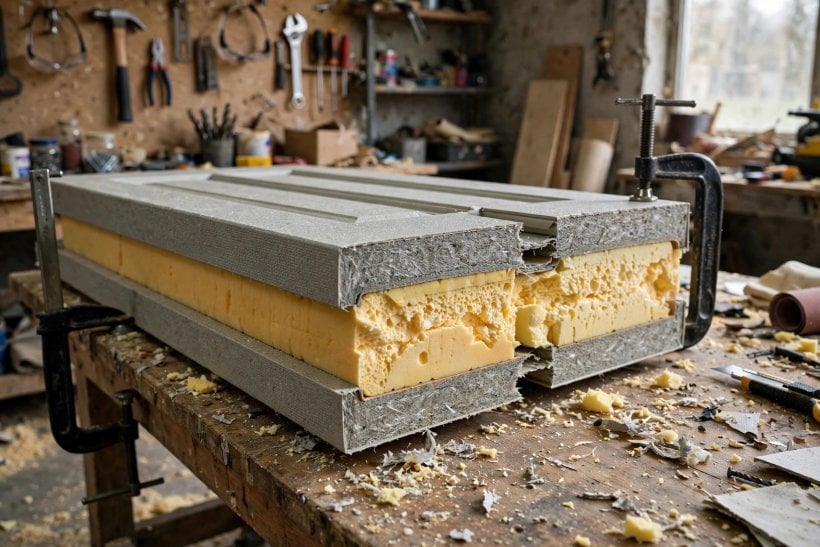
A fiberglass entry door is a sandwich: two moulded fiberglass skins — the moulding is what carries the panel detail and any wood-grain texture — bonded to a frame and filled with an insulating foam core. Both makers build this way, because it is what the material is. The construction attributes worth comparing are the ones the sandwich hides: the skin’s thickness and impact resistance as specified, the reinforcement where lock hardware mounts (a door is only as secure as the material its deadbolt bites into), the edge construction — some ranges use full-length engineered stiles to resist water and warping where a door is trimmed or exposed — and the bottom rail’s water management.
Why fiberglass at all is worth one honest paragraph, because it frames every later section. Against steel, fiberglass does not dent the same way and cannot rust through its skin; its moulded grain reads far closer to wood at touching distance. Against real wood, it asks almost nothing in maintenance, holds its finish longer, and insulates in the same class while resisting the warping and splitting that chase exterior timber — the maintenance reality set out in this guide to paint vs stain for exterior wood. Its weaknesses are shared across brands rather than brand-specific: it can be damaged by the wrong solvents and abrasives, dark colours on sun-baked exposures stress any door material, and a poorly fitted fiberglass door leaks air exactly as efficiently as a poorly fitted wooden one — which is why the system sections matter more than the slab sections.
4. Finishes and Wood-Grain Realism
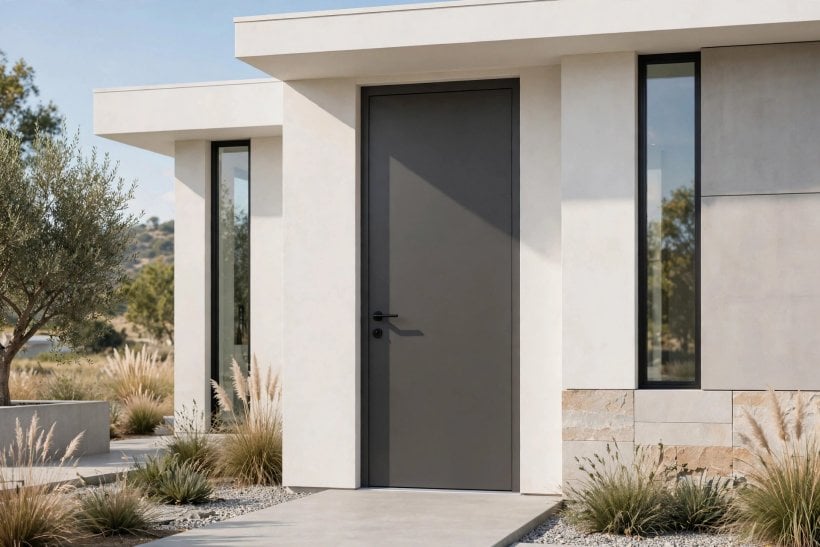
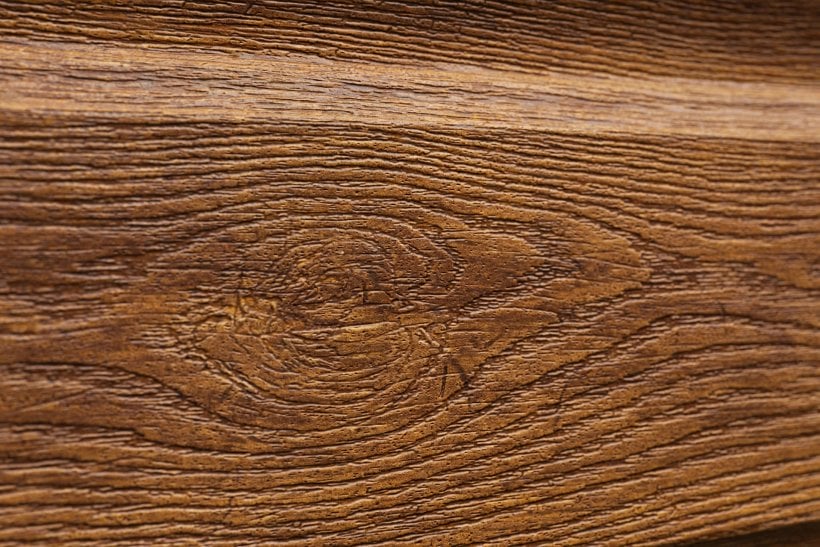
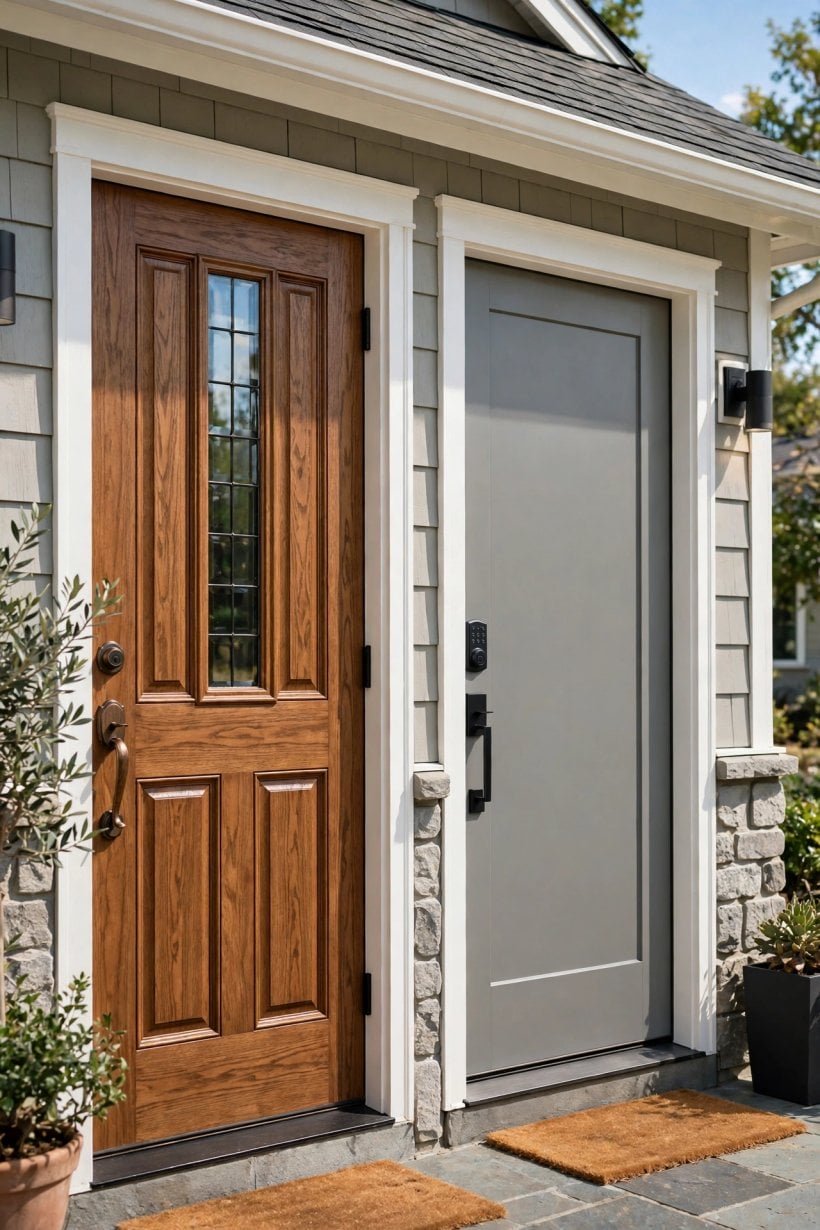
Finish is where the two ranges most visibly diverge, because it is where each maker spends its moulding budget. Smooth-skin fiberglass, offered by both, is the paint-grade option: a clean, modern face that takes any colour and suits contemporary and painted-traditional houses equally. Grained skins are the wood impersonators — moulded with grain texture and finished with stain systems designed to read as oak, mahogany or fir at conversational distance. Therma-Tru built much of its reputation on grain realism and factory finish systems; Masonite’s grained ranges compete in the same space with their own textures and stain options, and at equivalent tiers the honest verdict is that both convince at the kerb and reveal themselves at the knuckle — which is to say, like every good impersonation, they pass where it matters.
Three finish checks protect buyers of either badge. First, finishing responsibility: confirm whether the door arrives factory-finished or requires finishing on site, and if on site, exactly which stain or paint systems the maker approves — using an unapproved finish is the classic route to a voided finish warranty. Second, exposure: a dark stain or paint on a door baked by afternoon sun, especially behind a storm door, stresses finishes and can be restricted in warranty terms — read the exposure clauses before falling for the colour. Third, completeness: sidelites, transom and slab should finish as one system, so confirm the glass frames and any matching components take the same finish. The door’s place in the whole elevation — how its colour and glass sit against cladding, trim and porch — is worth planning with the breadth of this guide to new home exterior design ideas in mind.
5. Glass: Lites, Privacy and Decorative Options
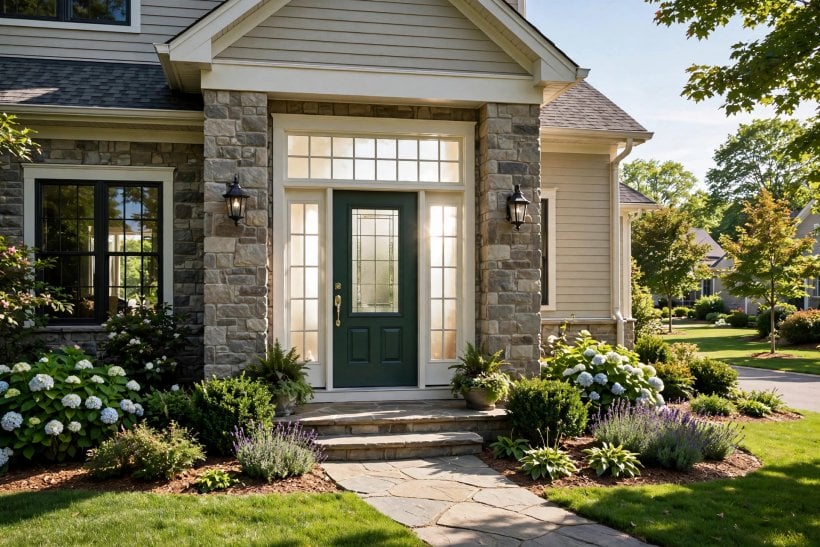
Glass is the second great differentiator, and both makers catalogue it deeply: plain clear and textured privacy glass, decorative leaded-style and camed designs, blinds enclosed between glass panes, and the full grammar of sidelites and transoms around the slab. The comparison method is to fix your requirements first — how much light the hall needs, how much privacy the street demands, whether enclosed blinds solve a real problem for you — and then check which ranges offer that exact configuration in your door size, because glass options are where ranges most often fail to overlap: the design you want may exist in one maker’s tier and not the other’s.
Two technical checks apply to any glassed door. Energy and safety specifications: door glass should be tempered safety glass, and glazed units in doors are typically insulated units whose performance forms part of the door’s overall energy rating — compare the whole-door rating, not the slab’s, when energy matters to you. And the frame around the glass: the lite frame’s material and finish, how it is sealed, and whether it can be replaced if a unit fails are long-life questions, because glass units can mist or crack decades before the slab is tired. A door is bought for a generation; its glass should be specified with the same horizon, and both makers’ catalogues support that conversation when the buyer knows to have it.
6. The Door as a System: Frames, Sills and Weatherstripping
Here the specialist’s heritage shows most clearly, and here Masonite answers with its own prehung offerings — because the modern way to buy an entry door from either maker is as a system: slab, frame, sill, hinges and weatherstripping assembled and, in the better ranges, tested as a unit. A system buys you compatibility that a slab in a legacy frame cannot: the weatherstripping is profiled for the slab’s edges, the sill is designed to shed water away from the subfloor, and the whole assembly carries whatever performance rating the maker claims for it as a combination.
The checks are concrete. Look at the frame material and its rot resistance — composite and treated components at the frame’s foot, where splashback lives, are worth more than any catalogue adjective. Look at the sill: adjustable sills forgive small settling movements; the threshold’s shape decides whether water runs out or in. Look at the weatherstripping’s replacement path — it is a consumable, and a system whose seals can be renewed in ten years beats one whose cannot. And look at the corners of the whole installation: most entry-door failures are installation failures, of any brand — the weatherproofing discipline in this guide to sealing and weatherproofing applies around a front door exactly as around a sill plate. Compare systems as systems, and much of the brand gap narrows to price, finish and glass — which is where it honestly lives.
7. Energy, Security and the Ratings That Matter
Both makers publish energy performance for their door systems through the standard rating programmes, and the foam core gives fiberglass doors a structural advantage over the materials they replace — the slab itself is rarely the weak point. The weak points are universal: glass area trades insulation for light, and air leakage at the perimeter dwarfs conduction through the slab, which is why whole-system ratings and installation quality outrank slab specifications in any honest energy comparison. Where energy certification matters for rebates or code, compare the exact configuration’s rating label, because the same range’s rating changes with its glass.
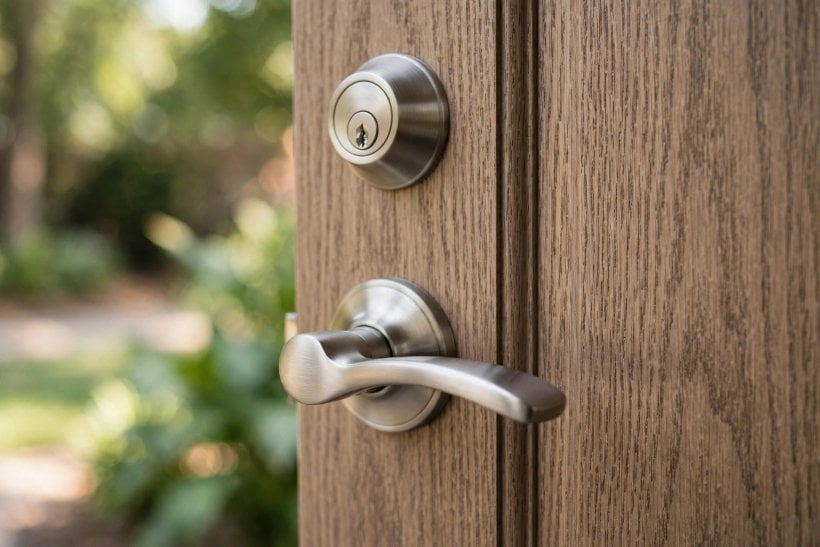
Security follows the same pattern. A fiberglass slab with proper lock-block reinforcement, a quality deadbolt, long screws into the frame’s stud at hinges and strike, and — where offered — multi-point locking hardware makes a genuinely resistant door; the brand badge contributes less than the hardware schedule and the installer’s screws. Forced-entry resistance is a property of the assembly in the wall, and both manufacturers’ systems can be specified to a sensible residential standard. For houses where the entry door is also a design statement — the charming alternative in this guide to Dutch doors for tiny houses makes the contrast nicely — the fiberglass systems win on weather performance and lose on split-door character, and knowing which you value is the real specification work.
8. Warranties and What to Read Before Believing Them
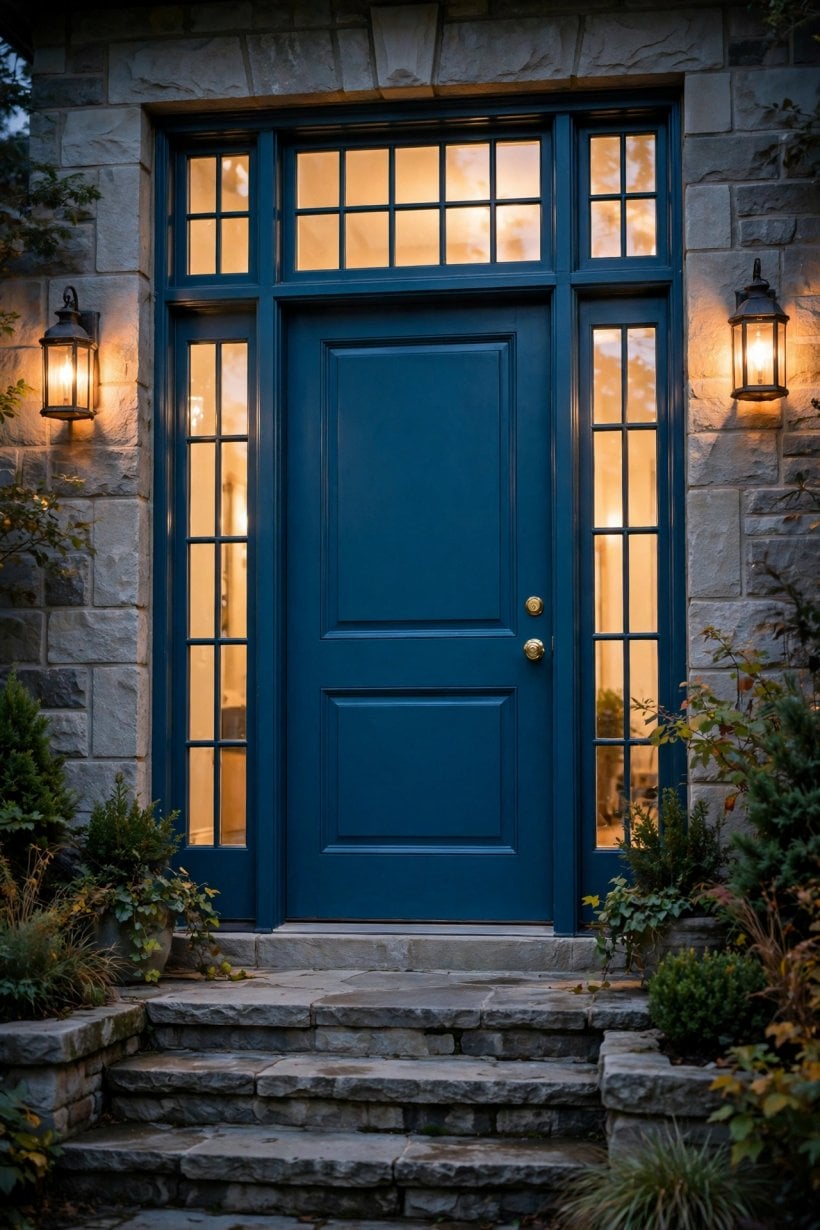
Warranty comparison is where buyers should spend their scepticism, because headline terms conceal the structure that matters. Read four things in each maker’s actual warranty document for the exact range you are buying. What is covered: the slab’s construction, the finish (often a separate, shorter term), the glass unit, and the system components may each carry different cover. What voids it: unapproved finishes, storm-door heat build-up, trimming beyond stated limits, and water exposure from missing flashing are the classic exclusions in this product class. Who performs: whether remedy is repair, replacement product, or refund of the purchase price — and whether labour is included, which it often is not. And the transferability and duration as they apply to a homeowner who may sell: a warranty that transfers reads well in a listing.
Therma-Tru has historically marketed strong warranty terms as part of its premium positioning, and Masonite’s terms are competitive within each tier — but tiers are the operative word, and a review that declares a brand-level winner on warranty without naming ranges is not doing its job. Do the unglamorous thing: download both PDFs for your two shortlisted configurations, read the exclusions side by side, and let that document comparison — not showroom patter — settle this attribute. Keep the documents with the house papers afterward; a warranty you cannot find is a warranty you do not have.
9. The Buying Experience: Channels, Lead Times and Total Cost
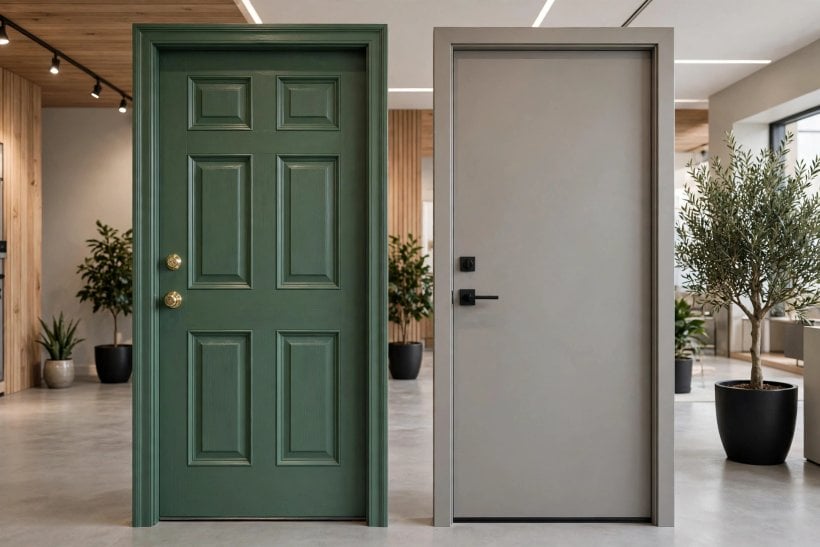
Channel shapes experience. Masonite’s breadth means its fiberglass doors are stocked and orderable through almost every channel a homeowner uses, with deep stock sizes in the common configurations. Therma-Tru’s dealer network offers the fuller design consultation and its complete range; the Benchmark line puts a Therma-Tru product on the home-centre shelf for buyers who shop there, at that channel’s configurations. Neither structure is better in the abstract — they reward different shoppers, which the verdict section prices in.
Total cost must be counted as a system and an installation, never as a slab. The honest ledger for either brand: door system, finishing if not factory-applied, hardware, delivery, installation (including disposal of the old unit and any frame repair the opening reveals), and the flashing and trim work that makes the installation weather-tight. Reviews that quote a door’s shelf price against another’s installed price mislead in whichever direction flatters their conclusion; build both quotes on the same scope, from suppliers who have seen the opening’s measurements — measured twice, handing confirmed, swing and threshold agreed — before treating any price difference as a brand difference. Most “brand problems” at installation are measurement problems wearing a badge, for these two makers as for everyone.
10. What Reviews Can and Cannot Tell You
A final methodological section, because this keyword is a reviews keyword and the genre deserves a warning label. Individual reviews of entry doors mostly record three things: the reviewer’s installer, their exposure (a door facing a storm porch lives a different life from one under a deep veranda), and their finishing choices — with the brand collecting the credit or blame for all three. A door that “failed in five years” is, on inspection, usually a finish-exposure story or an installation story. A door that is “perfect after a decade” is usually a sheltered, well-installed one. The slab’s own contribution is real but smaller than the story around it.
So use reviews for what they can actually evidence: patterns. Recurring reports about a specific range’s finish in harsh sun, a specific system’s weatherstrip wearing early, or a channel’s ordering accuracy are signal. Star averages across unlike ranges are noise. And weight the documents this guide has pointed to — specifications, system composition, warranty PDFs, whole-door ratings — over any number of anecdotes, including the enthusiastic ones. That discipline, plus the checks above, turns a comparison between two good makers from a coin-flip of loyalties into a specification exercise with a right answer for a particular house: which is the only kind of answer a front door ever has. Sliding and glazed entries face the same evidence problem, as the discussion in this guide to sliding glass doors shows — hardware and installation first, badge second.
Final Considerations
Neither maker wins this comparison outright, because both build genuine fiberglass systems and the differences live in the ranges, not the badges. Pick Therma-Tru — including its Benchmark line — if finish realism, fiberglass specialisation and system completeness are your priorities and its ranges offer your exact glass and size. Pick Masonite if breadth of availability, tier choice and channel convenience matter most, and its equivalent tier matches the specification you need.
Whichever name is on the crate, decide as a system buyer: configuration and glass fixed first, whole-door rating checked, finishing responsibility and warranty exclusions read in the actual documents, and the installation measured and quoted on the same scope for both. A fiberglass door chosen that way — from either of these makers — will very likely still be doing its quiet work when the house changes hands.



0 Comments