

The surround is the frame that turns a firebox into the heart of a room, and its material sets the tone for everything around it. Choosing between fireplace facing materials is mostly about look, touch and upkeep, rather than numbers.
This guide compares eleven popular options in plain, qualitative terms, so you can match a material to your room, your routine and the way you actually live with a fire.
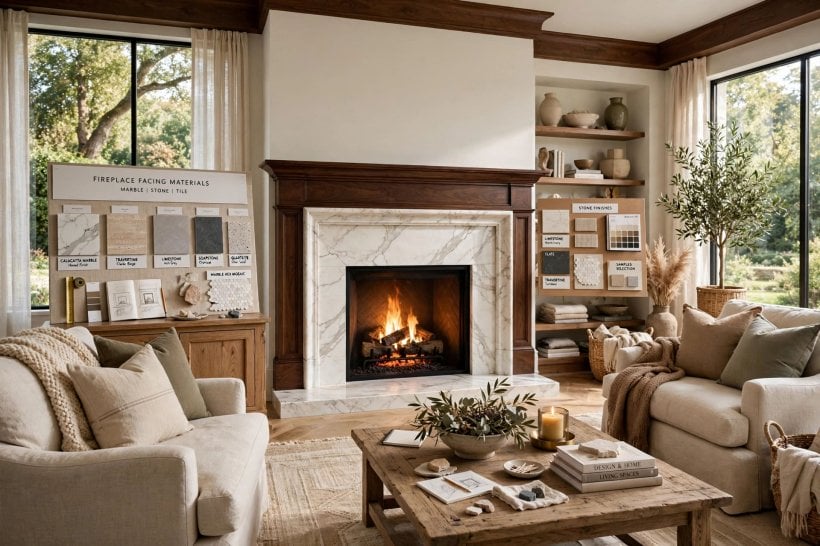
1. At a Glance: Eleven Materials Compared
A fireplace surround has to do several jobs at once. It frames the flame, suits the architecture of the room, copes with warmth and the occasional soot, and still looks good on the many days when no fire is lit. Some materials feel rustic and textured, others smooth and formal; some ask for gentle regular care, others are practically wipe-and-forget. The table below compares all eleven options in this guide at a glance, in everyday language, before the sections that follow look at each one in turn.
| Material | Character | Care in brief |
|---|---|---|
| Natural stone | Rustic, textured, one of a kind | Dust and brush; sealing is a periodic consideration |
| Marble | Elegant, cool, softly veined | Gentle cleaning; treat marks promptly |
| Granite | Polished, dense, quietly dramatic | Simple wiping; very forgiving day to day |
| Slate | Matte, layered, earthy | Brush and wipe; colour deepens with age |
| Brick | Warm, traditional, full of texture | Brush dust from the texture; paint can refresh it |
| Ceramic and porcelain tile | Endlessly varied in colour and pattern | Wipe clean; grout needs the most attention |
| Concrete and cast stone | Smooth, modern, sculptural | Wipe; fine marks can show on pale finishes |
| Soapstone | Soft-toned, smooth, naturally matte | Very forgiving; optional oiling deepens the tone |
| Metal | Sleek, reflective or softly brushed | Fingerprints show on polished finishes |
| Plaster and limewash | Soft, seamless, chalky and calm | Marks are part of the charm; refresh by recoating |
| Wood mantel and surround | Warm, classic, furniture-like | Dust and polish; placement follows professional guidance |
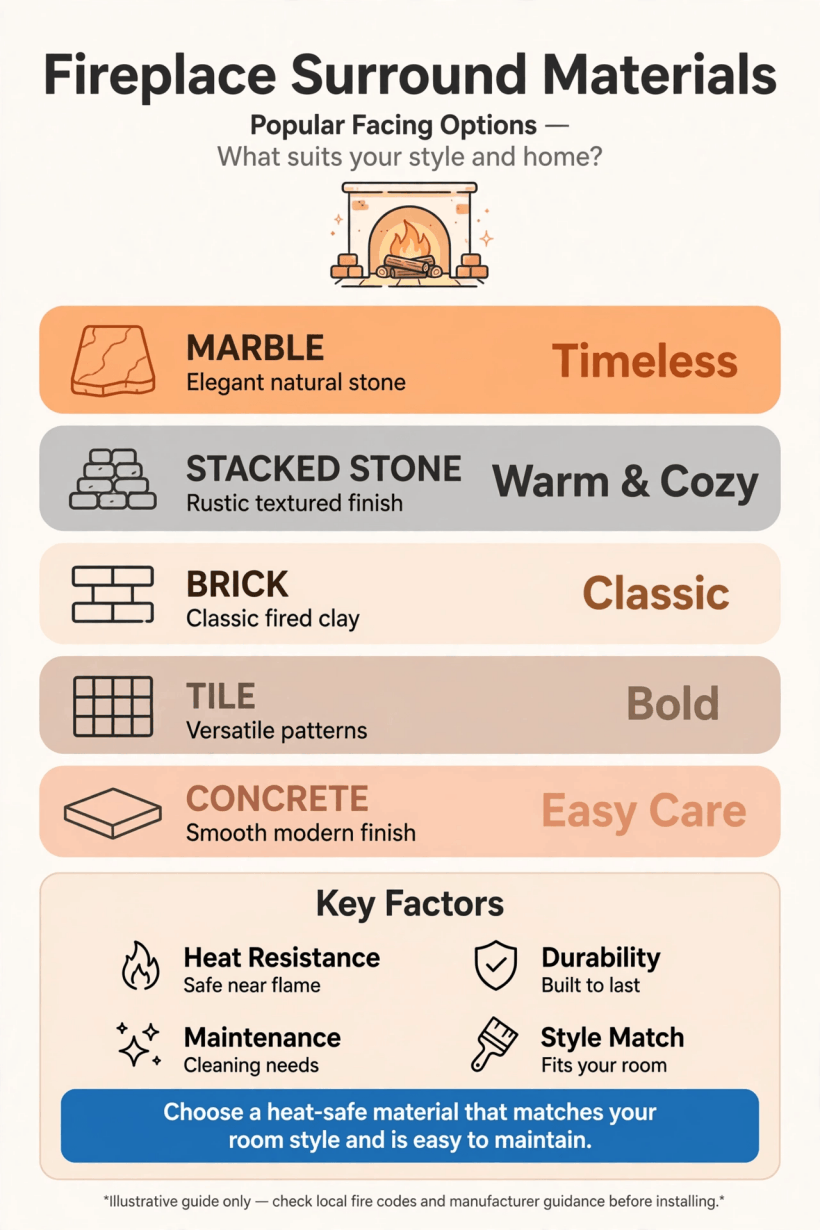
A quick visual comparison of eleven surround materials, their characters and the kind of care each one enjoys.
A fireplace rarely sits alone in a room, so it helps to plan it alongside the rest of the space. Our living room ideas for a tiny house show how one strong feature, scaled kindly, can anchor a whole room without overwhelming it.
2. Material 1: Natural Stone, and Material 2: Marble
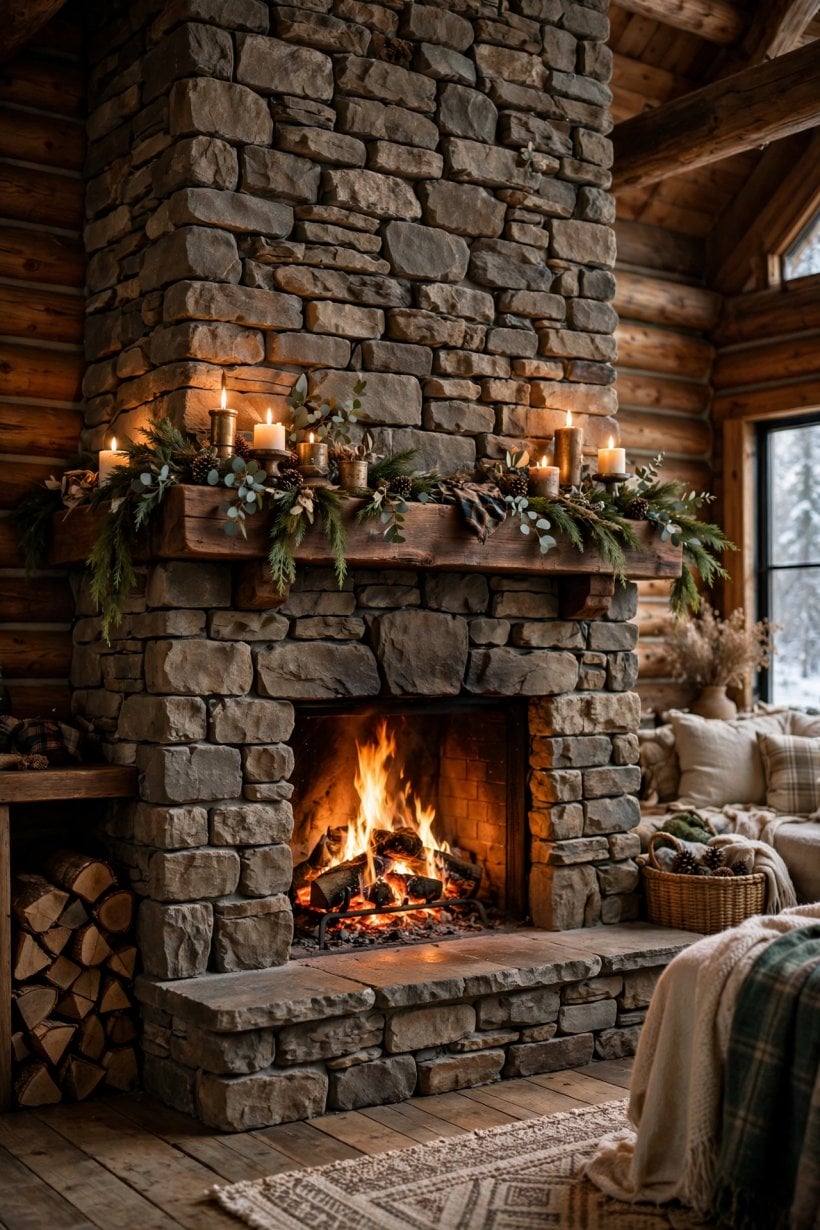
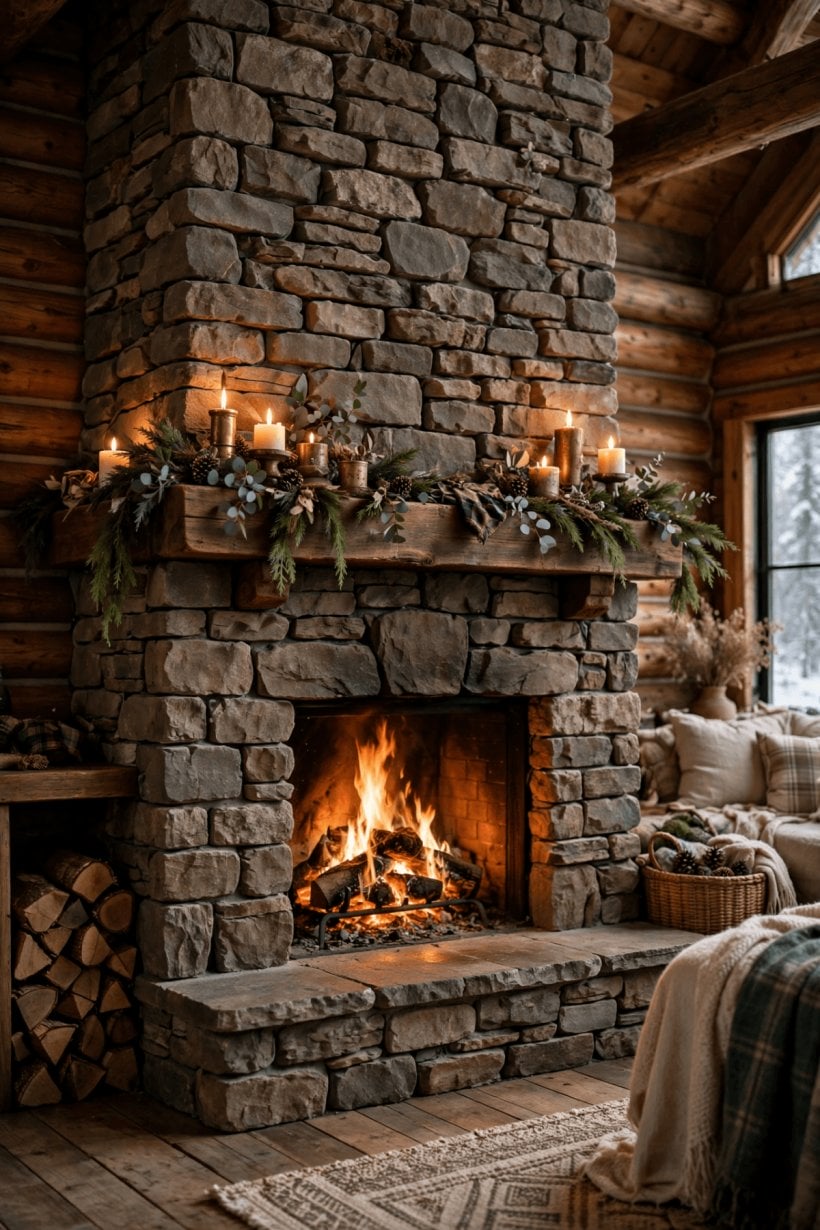
Material 1: Natural stone. Fieldstone, ledgestone and river rock surrounds bring the outdoors in. Every stone differs in tone and contour, so the finished surround is genuinely one of a kind, full of shadow, texture and quiet drama. Stone suits cottages, lodges and any room that leans rustic or relaxed, and it pairs naturally with timber mantels and woven textiles. The trade-offs are visual weight and texture: a heavily textured surround can dominate a small room, and its uneven surface gathers dust in the crevices, so a soft brush becomes part of the routine. Many people find that part of the charm, because stone looks better, not worse, with a little lived-in softness.
Material 2: Marble. Marble is the classic formal choice, cool to the touch and softly veined, turning a fireplace into something closer to a piece of sculpture. Polished marble reflects firelight beautifully and suits traditional rooms, elegant townhouses and calm modern spaces that use it in large, simple slabs. Its personality is refined rather than rustic. In return it asks for a gentle hand: marble is a natural, somewhat delicate surface that can mark, and owners usually wipe spills and soot promptly and use mild cleaners. For many households that small ritual is worth it, because nothing else gives quite the same quiet sense of occasion.
3. Material 3: Granite, the Polished All-Rounder
Material 3: Granite. Granite sits between marble’s formality and stone’s ruggedness. It is a dense natural stone with a speckled, crystalline pattern that hides everyday marks kindly, and in polished form it has a deep, glassy shine; in honed form it looks softer and more contemporary. Dark granites feel dramatic and ground a pale room, while lighter granites keep a surround feeling bright. Because the pattern is busy at close range, granite often works best in simple shapes, letting the material itself provide the decoration.
Day to day, granite is one of the most forgiving options in this guide. It wipes clean easily, shrugs off the dust and ash that drift around a hearth, and rarely shows the small scuffs of family life. It suits busy living rooms, homes with pets and anyone who wants a natural stone without a delicate routine. Stylistically it bridges traditional and modern: a polished granite surround with a simple mantel shelf looks at home in both. If you like the idea of stone but worry about upkeep, granite is the calm compromise our home interior design ideas for a tiny house would point you toward for hard-working surfaces generally.
4. Material 4: Slate, and Material 5: Brick
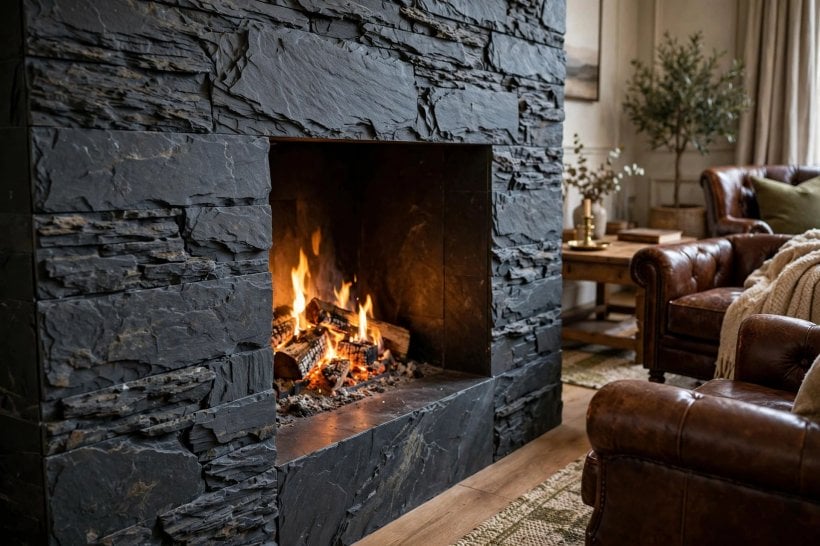
Material 4: Slate. Slate offers a matte, layered look in charcoal, sage, rust and blue-grey tones that shift gently with the light. Its natural cleft texture feels earthy and calm, and large slate tiles can make a surround look modern and architectural, while smaller pieces feel cottage-like. Slate does not shout; it grounds a room. It is pleasant to live with, needing little more than brushing and wiping, and its colour tends to deepen and enrich over the years. Because the surface is naturally uneven in a subtle way, it forgives the odd mark far better than a glossy finish would.
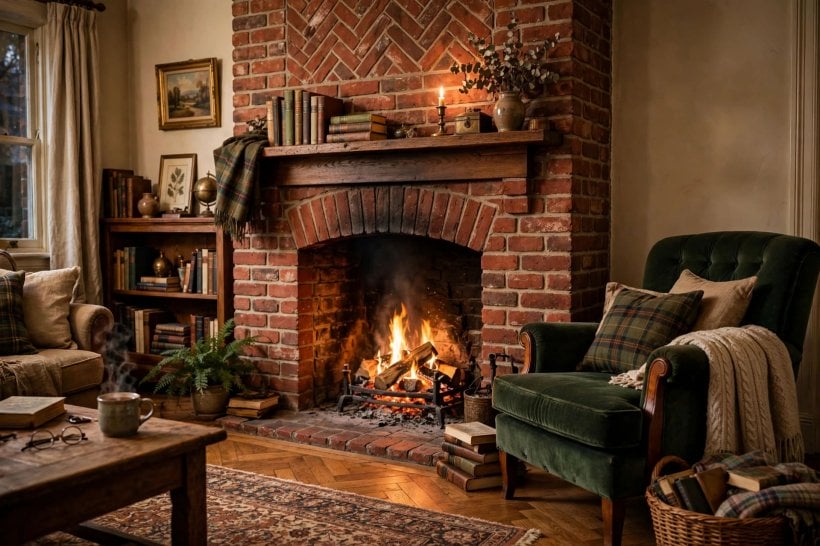
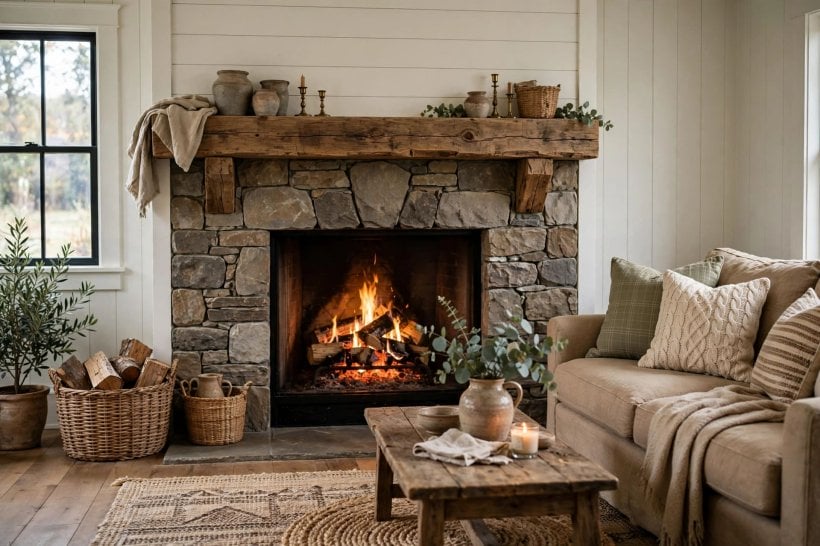
Material 5: Brick. Brick is the warmth of tradition: regular courses, soft mortar lines and tones from pale clay to deep red. A brick surround feels honest and welcoming, suits farmhouse, industrial and classic rooms, and can be left natural, limewashed for softness or painted for a cleaner, more unified look. Many older homes already have brick beneath later finishes, so a surround can sometimes be a restoration rather than a replacement. The texture collects dust more than a smooth surface, and the mortar lines ask for a brush now and then, but brick rewards that small effort with a character no manufactured finish quite repeats. See our home designing ideas for a tiny house for more ways texture warms a small room.
5. Material 6: Ceramic and Porcelain Tile
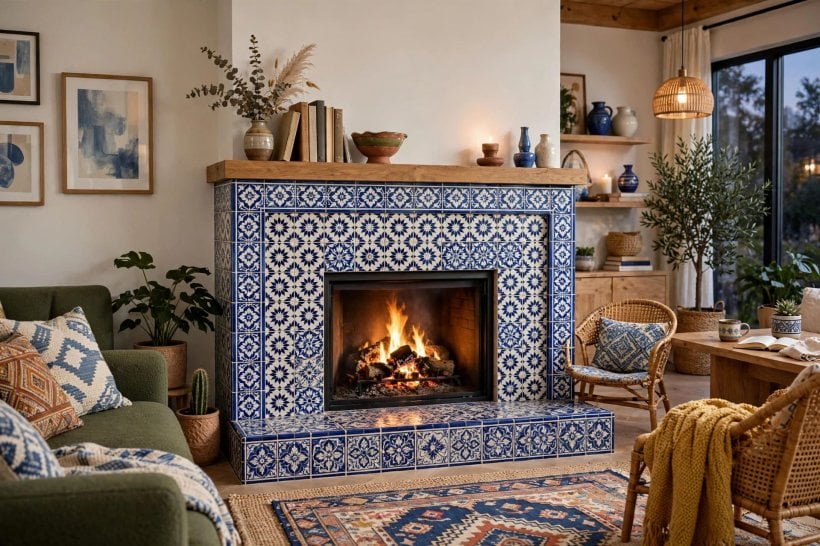
Material 6: Ceramic and porcelain tile. Tile is the great shapeshifter of this list. It can imitate marble, stone, concrete or timber, or be unapologetically itself in glossy colour, handmade-look ripples or bold pattern. That range makes tile the easiest material to match to an existing room: a soft sage tile for a calm cottage, a deep green gloss for drama, a quiet stone-look porcelain for a modern scheme. Tile also suits smaller surrounds and hearths where large slabs would be cut into awkward pieces, and it is a friendly route when a surround is being refreshed rather than rebuilt.
The living-with side is equally appealing. Tile wipes clean, and most everyday soot and dust lift off without fuss; the grout lines are the part that need the most attention over time, and keeping them pale or deliberately dark is a design choice worth making early. Pattern deserves the same gentle hand as anywhere: one patterned surround is a focal point, while pattern everywhere can overwhelm. Because tile comes in so many sizes, it can run in neat stacks for a modern feel or in classic brick-like offsets that echo a traditional hearth. Versatility, more than any single look, is tile’s real strength.
6. Material 7: Concrete and Cast Stone, and Material 8: Soapstone
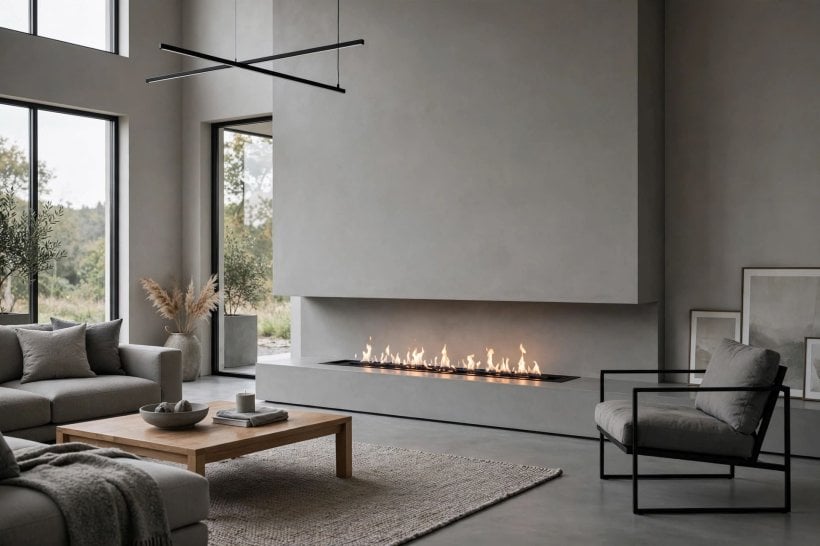
Material 7: Concrete and cast stone. Concrete surrounds are smooth, sculptural and calm, often cast as one clean shape that wraps the firebox with almost no visible joins. Cast stone offers a similar smoothness with a slightly softer, more traditional profile, including mantels with gentle moulding. Both suit minimalist and contemporary rooms, and both take colour quietly, from pale grey to deep charcoal. Their honesty is their appeal: there is no pattern to tire of, so the flame and the room’s furnishings become the decoration. On the care side, smooth pale finishes can show fine marks, so a soft cloth rather than anything abrasive is the household habit to build.
Material 8: Soapstone. Soapstone is the quiet introvert of fireplace materials: soft grey-green tones, a smooth almost silky feel and a completely matte finish that never glares in firelight. It has a long tradition around stoves and hearths, and it suits Scandinavian, rustic and calm contemporary rooms equally well. Many owners leave it natural; some deepen the tone with an occasional application of a suitable oil, which is a matter of taste rather than necessity. Soapstone is notably forgiving in daily life, shrugging off marks and blending small scuffs into its gentle, varied surface. If you want a surround that feels peaceful rather than polished, soapstone deserves a close look.
7. Material 9: Metal Surrounds in Steel and Iron
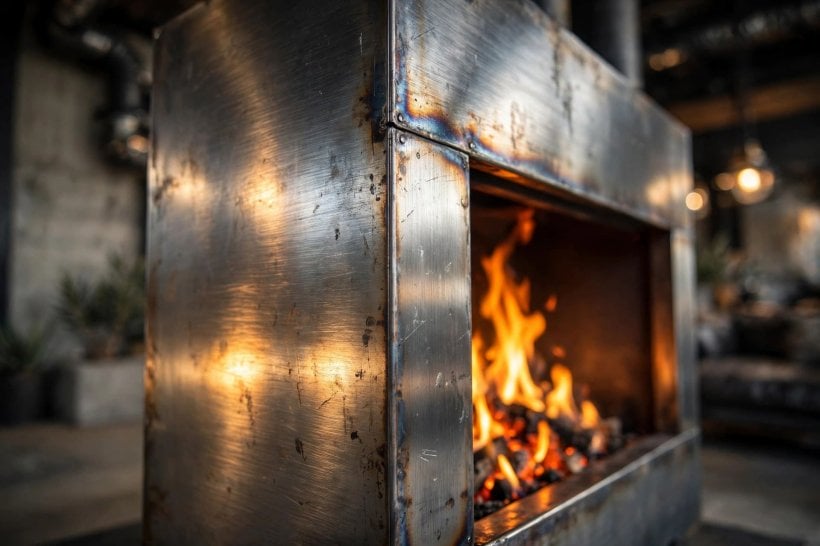
Material 9: Metal. Steel, iron and other metal surrounds bring a crisp, tailored edge to a fireplace. Brushed finishes feel modern and soft, blackened steel feels moody and architectural, and polished metal reflects the flame in a lively way. Metal suits contemporary rooms, lofts and any space where the fireplace is meant to read as a clean, deliberate object rather than a rustic feature. Because panels can be slim, metal can also be a kind choice where wall depth is limited, giving a finished surround without a bulky build-out.
Living with metal is mostly about fingerprints and dust, which show more readily on polished and dark surfaces; a microfibre cloth kept nearby solves most of it. Metal pairs beautifully with timber and stone elsewhere in the room, because its smoothness sets off their texture. A metal surround with a simple wooden mantel shelf is a particularly balanced combination, modern but warm. Keep the shapes simple and the fixings honest, and metal looks considered for years. Our tiny house kitchen design ideas use metal in the same spirit: sparingly, smoothly and where its clean lines help a small space feel uncluttered.
8. Material 10: Plaster and Limewash Finishes
Material 10: Plaster and limewash. A plastered surround is soft, seamless and quietly sculptural, often shaped with a gentle curve or a simple stepped profile and finished in warm white or a chalky colour. Limewash adds subtle movement and depth to that surface, so the surround changes gently through the day as the light moves. This is the material of Mediterranean, wabi-sabi and calm minimalist rooms, and of anyone who wants the fireplace to feel like part of the wall itself rather than an applied decoration.
The care story is refreshingly honest: plaster and limewash can pick up marks, and the traditional answer is simply to recoat, which is a straightforward decorating task rather than a repair. Many people find the soft, lived-in character grows more beautiful with time. Because the finish is matte and light in feel, it suits small rooms especially well, and it lets a beautiful mantel, artwork or a simple stack of logs provide the contrast. If your taste runs to soft edges and quiet surfaces, this gentle option may be the one that feels most like home. For a similar softness elsewhere, see our beachy interior design ideas for tiny houses.
9. Material 11: Wood Mantels and Surrounds
Material 11: Wood. Timber brings furniture-like warmth to a fireplace, most often as a mantel shelf or beam above a non-combustible facing, and in traditional designs as a crafted surround used at a proper distance from the firebox. Oak feels classic, reclaimed timber feels storied, and painted wood can tie a surround to the room’s joinery for a calm, unified look. Wood is also the natural partner to almost every other material in this guide: a stone, tile or plaster facing finished with a wooden mantel rarely looks wrong.
Because wood and fire need thoughtful placement, clearances and detailing should always follow local requirements and a qualified professional’s advice; this guide compares looks and living qualities only, and leaves those specifications to the experts on site. In daily life, a wooden mantel asks for nothing more than dusting and the occasional polish, and it earns its keep as the room’s display shelf for candles, plants and photographs. If warmth is the quality your room lacks most, wood, used wisely and professionally, is the material that supplies it most naturally. Our guide to bathroom interior design ideas for tiny houses shows the same warmth at work in timber vanities.
10. Comparing and Choosing: Matching Material to Room and Routine
With all eleven compared, the choice usually comes down to three honest questions. First, what should the room feel like: rustic and textured points to natural stone, brick or soapstone; formal and elegant points to marble or granite; calm and modern points to concrete, metal, tile or plaster. Second, how do you live: busy households often love granite, tile and soapstone for their forgiveness, while people who enjoy a small ritual of care can happily choose marble or polished metal. Third, what is already in the room: the best surround echoes a tone or texture that exists in the floor, the furniture or the architecture, so the fireplace feels inevitable rather than imported.
It also helps to view samples in place, beside the firebox, in morning and evening light, because firelight flatters some finishes and flattens others. Consider the mantel and the hearth at the same time as the facing, since the three read as one object. And remember that a surround is a long-term backdrop: trends will pass across it in the form of paint, textiles and artwork, so the calmest material you love is usually the right one. The comparisons in this guide are deliberately qualitative, because the right choice is about character and care far more than about numbers on a chart.
Final Considerations
Whichever of these fireplace facing materials you choose, have the work planned and installed by qualified professionals who can confirm the details, clearances and local requirements for your particular fireplace, and keep the manufacturer’s guidance for your fire at the centre of every decision. Then style the finished surround simply: a mantel with a few loved objects, logs stacked neatly if your setup suits it, and seating turned gently toward the flame. A well-chosen surround asks for little and gives a great deal: a focal point in winter, a calm piece of architecture in summer, and a room that gathers people naturally, all year round.

0 Comments