

A boulder wall turns a slope into structure and a plain garden into a place with presence. Planned well, a boulder retaining wall patio pairing gives you level ground for sitting, planting that softens the stone and a feature that looks settled from day one.
This guide covers layouts, colours, honest cost factors and the practical details that help a boulder wall look natural, drain kindly and age gracefully in a small garden or a generous one.
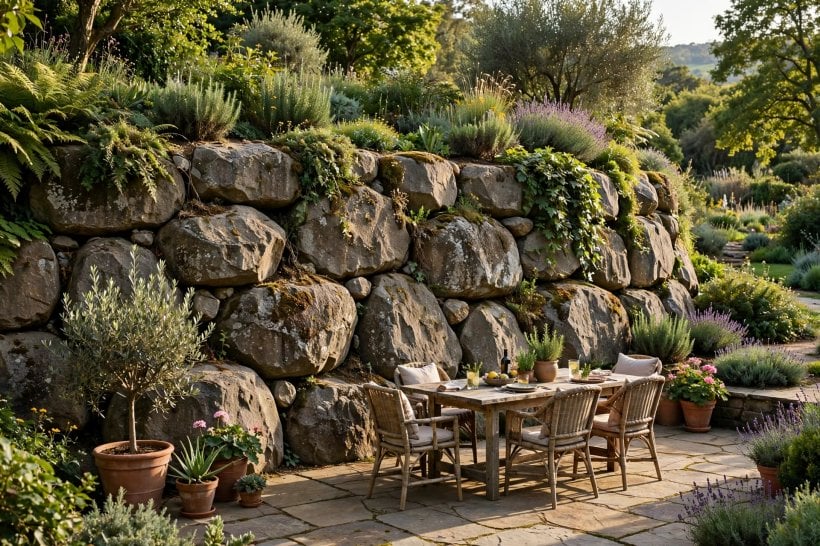
1. At a Glance: Boulder Walls in a Garden
A boulder retaining wall holds back soil on a slope using large natural stones, stacked and interlocked so their weight and friction do the work. Unlike neat block walls, a boulder wall looks like it belongs to the landscape, which is exactly why it suits patios, terraces and informal gardens so well. The stones vary in size and tone, the line can curve gently, and plants can tuck into the gaps. The table below sums up the character of the approach before the sections that follow explore layouts, colours, costs and practicalities in turn.
| Aspect | What to expect |
|---|---|
| Look | Natural, rugged and unique to your stone and its placement |
| Best for | Slopes, terraces, garden rooms and patio edges |
| Layout style | Straight runs, gentle curves or stepped tiers |
| Colour range | Greys, browns, buffs and mixed local tones |
| Cost shape | Driven by stone supply, access, wall size and groundwork |
| Long-term care | Occasional checks, weeding and refreshing planting |
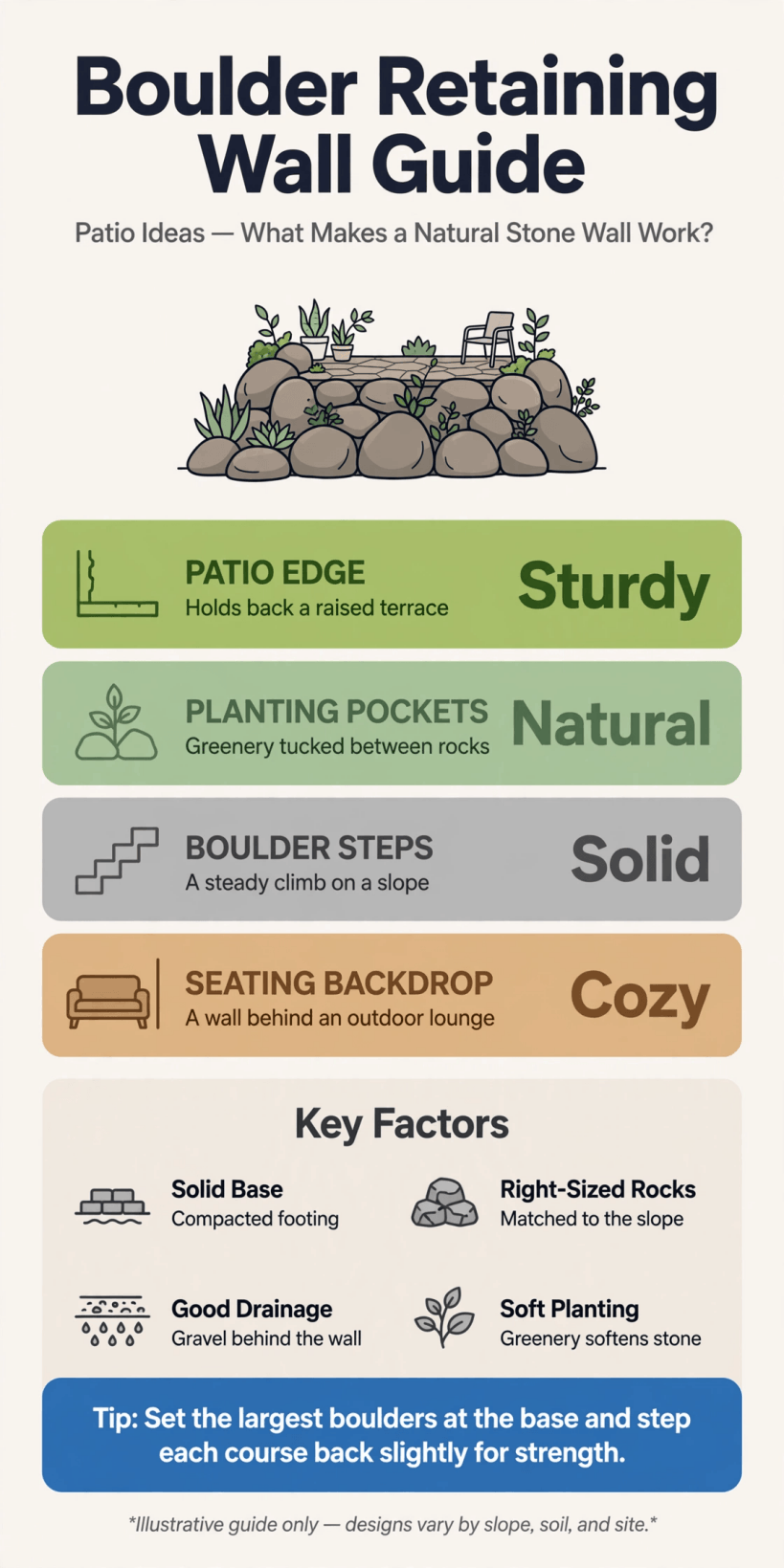
A quick visual summary of boulder wall layouts, colour families and the practical points to plan before the first stone arrives.
A wall is only one part of an outdoor room. If the space above the wall will hold seating and shade, our guide to living room ideas for a tiny house is a useful reminder of how zoning and scale work, and the same thinking applies outdoors.
2. Layouts: Straight Runs, Curves and Tiered Terraces
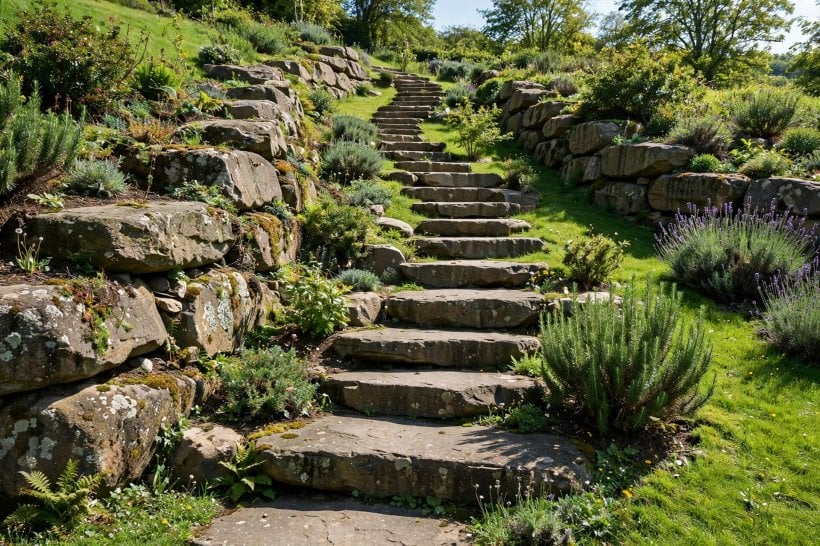
The layout begins with the slope itself. A single wall suits a short, gentle change of level: one calm line of boulders, a level terrace above it and planting along the top or toe. Where the slope is longer, two or three lower tiers usually look better than one tall wall, because each tier can hold its own planting bed and the whole arrangement reads as a hillside garden rather than a barrier. Tiers also spread the visual weight, so even a small garden can carry boulders without feeling overwhelmed by them.
Curves are the boulder wall’s natural gift. A gently curving wall can follow a patio’s edge, wrap a seating area or lead the eye toward a view, and the irregular stones make curves look effortless where cut blocks might look forced. Straight runs suit boundaries and modern gardens, especially when the stones are chosen in a tighter colour range. Whichever shape you choose, sketch the line from where you will actually sit and stand, not just on paper: a wall is seen most from the patio below it and from the windows above it, and both views deserve a say in the plan.
3. Choosing Boulders: Sizes, Shapes and Settled Placement
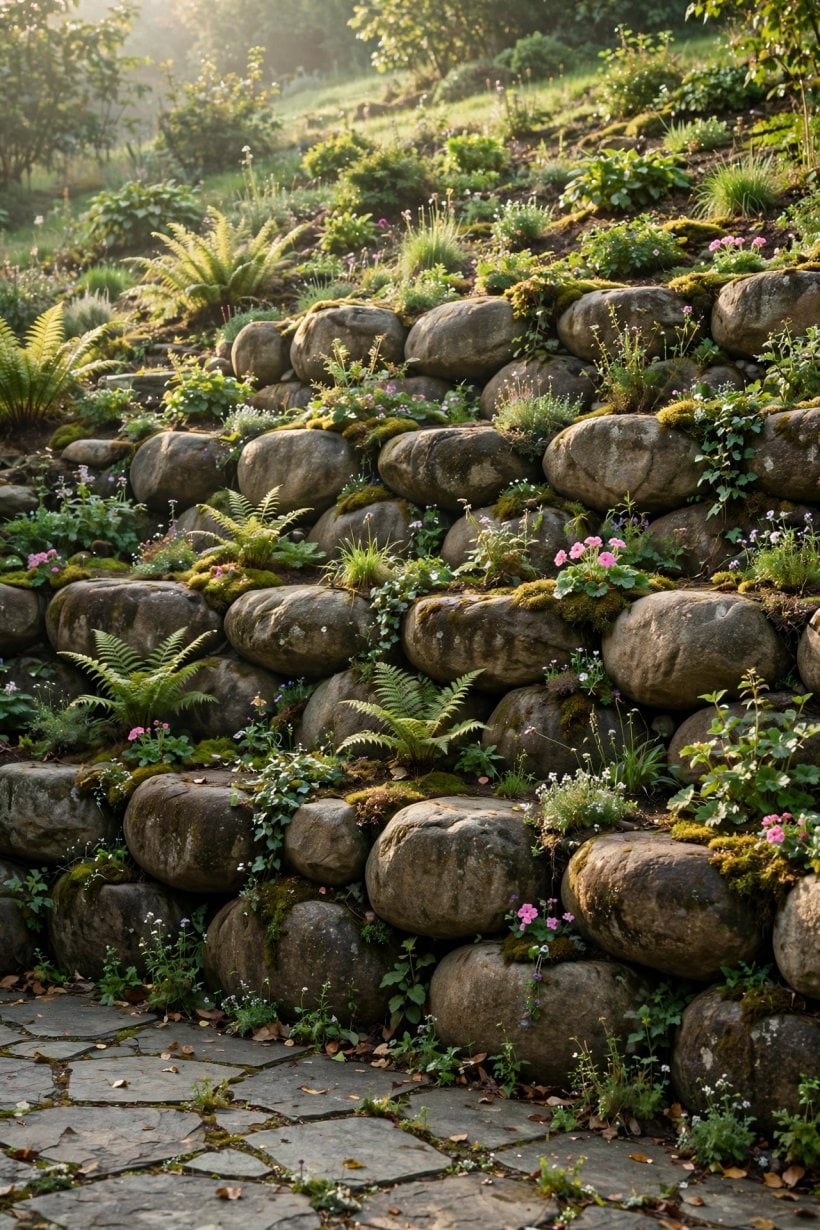
Boulders are usually a mix: larger anchor stones that carry the wall’s presence, medium stones that fill the main courses and smaller pieces that chink gaps and finish the top. Rounded river-worn boulders give a soft, established look, while more angular stone reads crisper and suits contemporary gardens. A good wall mixes sizes the way a natural outcrop does, avoiding both a uniform row of identical stones and a jumble with no rhythm. Ask to see the actual stone, or clear photographs of it, before committing, because colour and character vary from load to load.
Placement is a craft. Stones are typically nestled into the slope and into each other, with their longest dimension reaching into the bank where the design calls for it, so the wall reads as grown rather than balanced. The top course matters most to the eye: a line of well-chosen cap-like stones, slightly varied but calm, finishes the wall the way a mantel finishes a fireplace. This is skilled, physical work, and experienced installers place stones with machinery and patience in equal measure. Watching a good crew set boulders is a reminder that the apparent simplicity of the finished wall is earned, stone by stone.
4. Colours: Greys, Browns, Buffs and Blending with the House
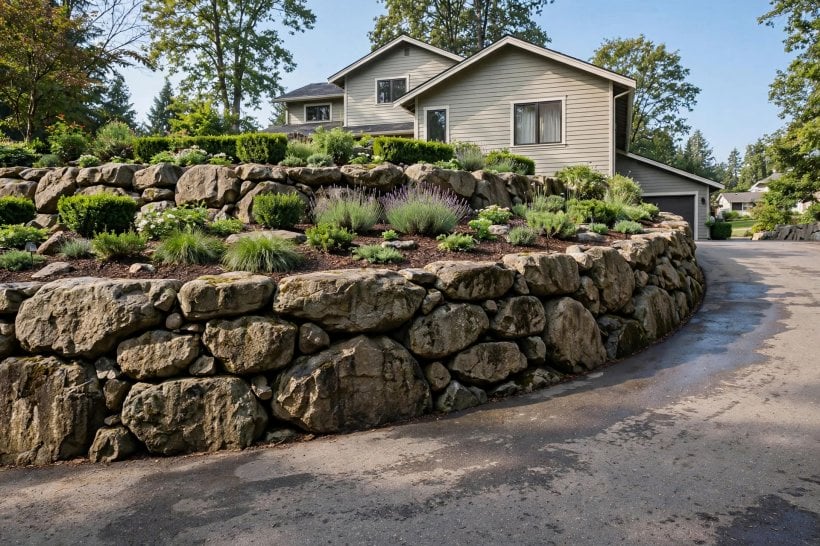
Stone colour does more for the finished garden than any other single choice. Cool greys feel calm and modern, pairing happily with pale paving, grasses and silver foliage. Warm browns and buffs feel earthy and welcoming, echoing timber, terracotta and autumn planting. Many natural boulders blend several tones in one stone, which is a gift: a mixed load forgives changing light and changing planting, and rarely clashes with anything. If your house has brick, render or stone of its own, hold a sample stone near it; a wall that rhymes with the house looks intentional from the first day.
Colour also changes with weather and age. Wet stone deepens and glows, dry stone pales and mattifies, and over the seasons a wall gathers the soft patina of its setting. Moss and tiny plants in shaded crevices are part of that natural story for many gardeners, though they can be discouraged where a crisper look is wanted. Think about the view in winter as well as summer: when the planting rests, the stone is the garden’s colour, so choose tones you will enjoy in the quiet months too. For more on how warm natural tones behave in a whole scheme, see our beachy interior design ideas for tiny houses.
5. Practical Details: Groundwork, Drainage and Building Well
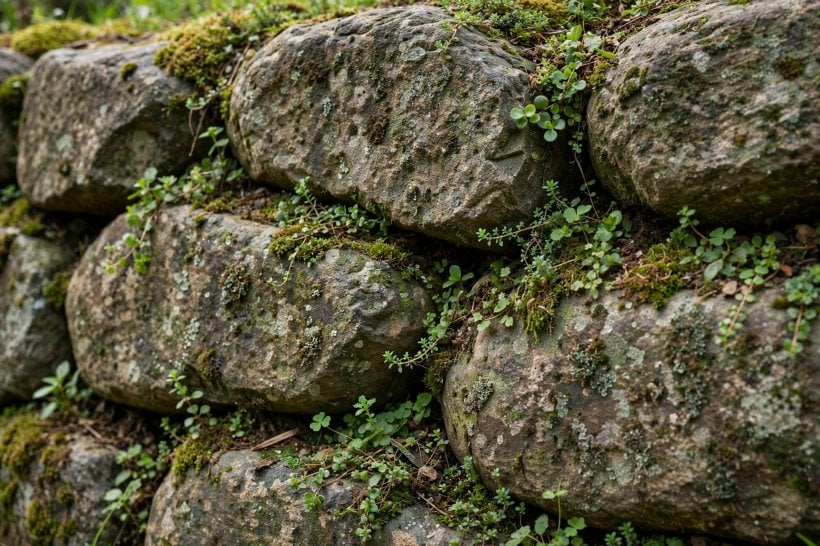
What you cannot see decides how a wall ages. A sound boulder wall starts with prepared ground: the slope is cut back, the base stones sit on a firm footing of compacted material, and the wall leans very slightly into the bank it holds, in line with the installer’s design. Behind the stones, free-draining gravel and, where the design calls for it, a drainage pipe give rainwater somewhere to go, because water held behind any retaining wall is weight the wall was never meant to carry alone. These unglamorous details are where good installers earn their reputation, and they are worth asking about in plain terms before work begins.
Height brings rules with it. Taller walls, walls near boundaries, buildings or public paths, and walls holding up anything more than a garden slope can require professional design and may fall under local permits or codes, which vary from place to place. This guide discusses looks and general practice only; for anything beyond a low garden wall, a qualified local professional should assess the slope, the soil and the water, and confirm what approvals apply. That advice protects the wall, the garden and the neighbours, and it is money spent in the right order: structure first, styling second, always.
6. Boulder Walls with Patios and Terraces
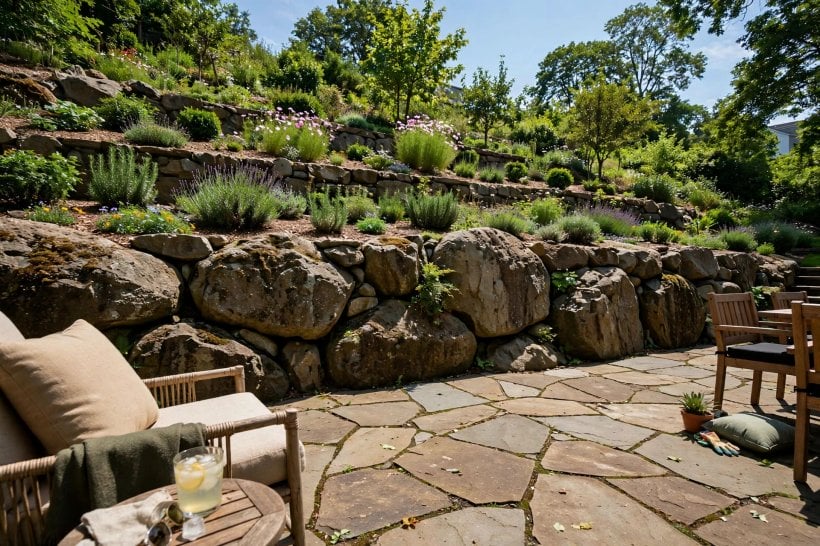
A patio and a boulder wall are natural partners. The wall creates the level ground the patio needs, and the patio gives the wall a purpose and a viewing platform. A low wall at the patio’s edge can double as casual seating, a place to set a drink or a perch for plant pots, especially when a few flatter stones are chosen for the top course along the seating stretch. Leave comfortable room between the wall and dining chairs, and think about where the sun falls on the stone: a sun-warmed boulder at the edge of an evening patio is one of the garden’s small luxuries.
Terraces above the wall extend the living space. A sunny upper terrace might hold herbs and a bench, while the main patio below holds dining and shade. Steps matter here: wide, shallow steps set into or beside the wall, in stone that matches or calmly complements the boulders, make the levels feel like one garden rather than two. Lighting tucked near steps and along the wall’s base, kept warm and low, lets the arrangement work after dark. Our home designing ideas for a tiny house make the same point indoors: connect the levels well, and a small footprint feels twice its size.
7. Steps, Seating and Features Built from Boulders
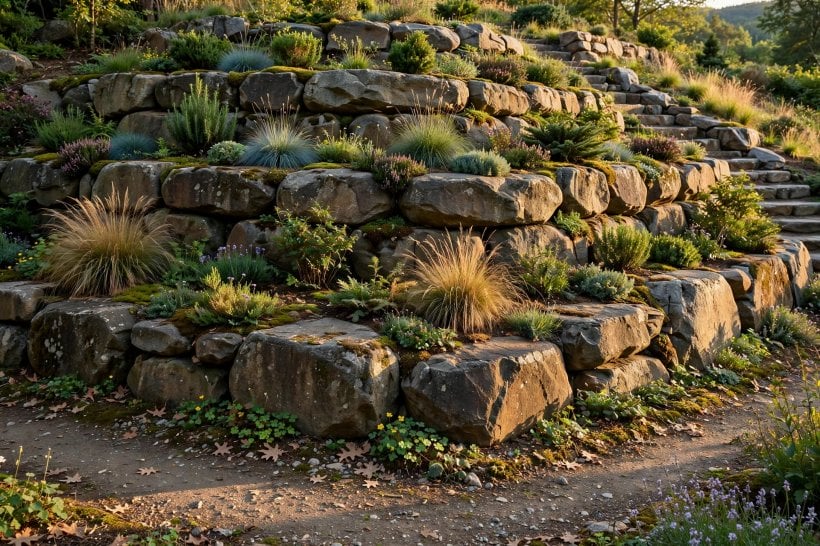
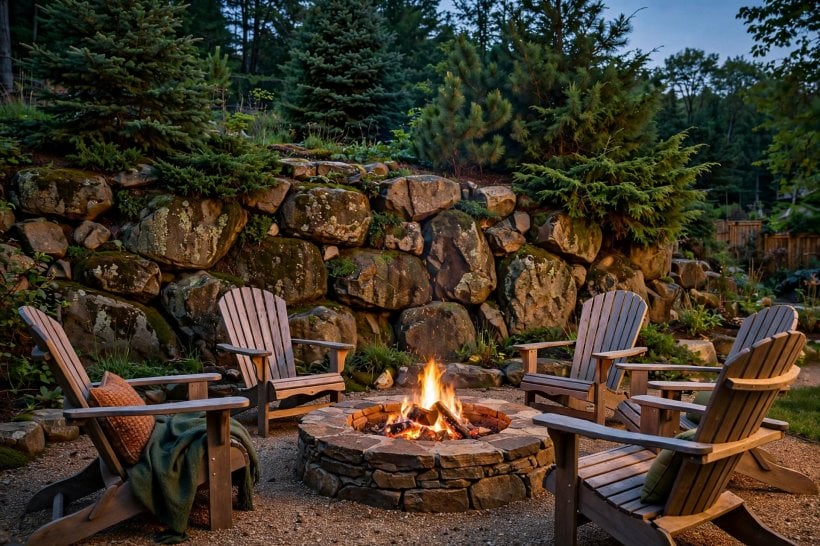
Once boulders are on site, a few extra pieces can give the garden features it would otherwise lack. A single broad, flat-topped boulder makes a bench with more character than anything manufactured, and a cluster of stones can frame a small pond edge, a fire bowl area or the base of a favourite tree. Boulder steps, chosen for flatness and set with care, feel generous and unhurried, suiting the wall far better than a narrow stair. Keep feature stones in the same family as the wall stone, so the garden reads as one landscape rather than a collection of deliveries.
Children tend to claim boulders as climbing country, and many families quietly love that; rounded stones at the garden’s social edges have a way of gathering people. If climbing is not welcome, planting at the toe and top of the wall gently discourages it without a single sign. A specimen boulder standing alone in gravel or lawn, chosen for a beautiful shape, can also serve as the garden’s sculpture, lit softly at night. These touches cost little compared with the wall itself, because the stone, the machinery and the skill are already there; they simply ask to be planned before the crew leaves, not after.
8. Planting That Softens Stone
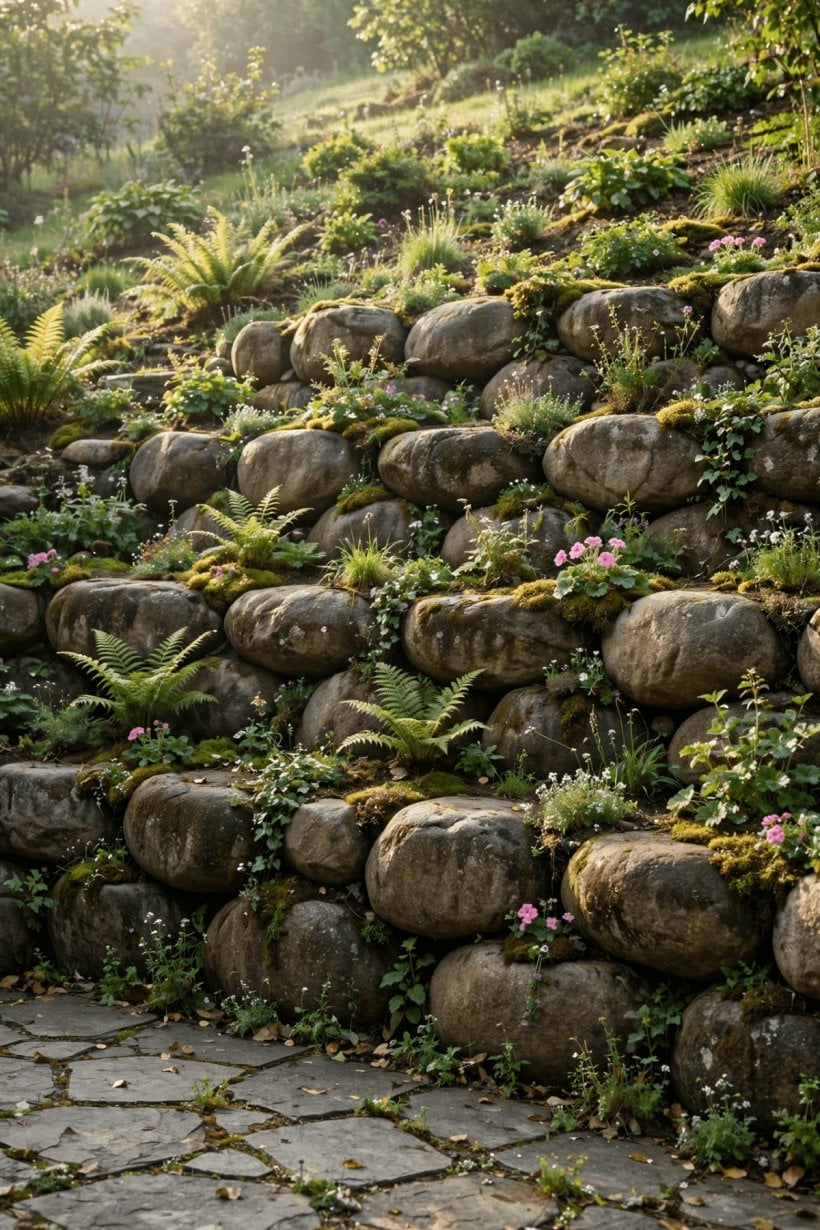
Planting is what turns a well-built wall into a garden. Along the top, grasses, lavender-style mounds and trailing plants spill gently over the stones and blur the line between wall and bed. At the toe, a simple band of planting hides the junction with the lawn or patio and gives the wall a settled base. In the crevices, small drought-tolerant plants that enjoy sharp drainage can root happily where the design leaves pockets of soil, creating the speckled, natural look that makes boulder walls so loved in photographs and in real gardens alike.
Choose plants for the conditions the wall creates: sun-baked stone above, cooler shade at the base, and thin soil in between. Repeating a few plants in drifts looks calmer than one of everything, and evergreen structure at the top keeps the wall handsome in winter. Leave the stone its share of the picture; a wall smothered in planting loses the very texture you chose it for. Over a season or two the balance finds itself, with a little editing from you. For planting-minded small-space thinking, our home interior design ideas for a tiny house and tiny house kitchen design ideas share the same edit-patiently philosophy in other settings.
9. Costs: What Drives the Budget, in Typical Terms
Boulder walls are usually priced as a complete project rather than by the stone, and the total varies widely with circumstances, so treat any single figure you hear with caution until your own site has been assessed. In typical terms, the main drivers are the wall’s length and height, the quantity and size of stone, how far that stone travels from its source, and access: a garden that machinery can reach easily is a very different project from one where every stone must come through a narrow side gate. Groundwork, drainage material and soil removal all add their share, as does finishing work such as steps, coping-style top stones and planting.
As a broad pattern, boulders themselves can compare kindly with manufactured walling where suitable stone is available locally, while the machinery and skilled labour to place them form a large part of the budget wherever you live. Taller or engineered walls cost more than low garden walls, because the design, groundwork and care involved all grow. The sensible approach is to gather written quotes from experienced local installers who have visited the site, confirm exactly what each quote includes, and keep a contingency for what the ground reveals once digging starts. A wall is a permanent structure; choosing on experience and clarity rather than the lowest number usually proves the economical decision over time.
10. Looking After a Boulder Wall Over the Years
A well-built boulder wall asks for very little, but a little attention keeps it at its best. Walk the line once or twice a year and look for stones that have shifted, soil washing through a gap, or drainage outlets that have clogged with leaves; small things noticed early are small things fixed. Keep vigorous climbers and tree roots from working into the wall’s joints where they could prise stones apart over time, and refresh the planting at the top and toe as it matures, since healthy roots and ground cover help the slope stay settled and tidy.
Cleaning is mostly a matter of taste. Rain keeps exposed stone fresh, and a gentle brush handles fallen leaves and soil splash at the base. Most owners find the wall improves with age, as stone and planting knit together into something that looks inevitable, as if the garden had always been arranged this way. If you ever extend the wall or add a terrace, matching the original stone family keeps the story consistent. A boulder wall is one of the few garden structures that can genuinely outlast the trends around it, quietly holding the garden together while everything softer changes with the seasons and the years.
Final Considerations
Start with the slope, the water and the view, and let the stones answer all three. Choose a colour family that rhymes with your house, a layout that gives you the level ground you actually need, and an installer whose previous walls you can visit and admire. A boulder retaining wall patio arrangement succeeds when the structure is honest, the planting is patient and the details, from drainage to the top course, were decided before the first stone was set. Get those things right, and you will have a wall that feels less like a project and more like a piece of the landscape, holding a garden you will use and love for a very long time.

0 Comments