

Some gardens impress with colour; the gentlest ones impress with touch. fluffy plants — soft grasses, feathery plumes and velvety leaves — take the hard edges off paths, fences and walls, and make a garden feel calmer the moment you walk into it.
Here are the most rewarding soft-textured plants to grow, where to put them, and how to keep them looking plush rather than scruffy.
1. Soft Texture at a Glance
Fluff in a garden comes from three sources: grass plumes and seed heads, feathery flower clusters, and downy leaves. Most of the plants below are long-established, widely grown ornamentals that any good garden centre will know, and nearly all of them ask for the same simple conditions — sun, drainage and room to move. Think of them as the soft furnishings of the planting plan, and place them the way the wider design in these tiny house landscaping ideas suggests: where paths, seating and sightlines will meet them every day.
| Plant | Where the softness is | Best season | Character |
|---|---|---|---|
| Pampas grass | Tall, silky plumes | Late summer into winter | Bold, architectural, needs space |
| Fountain grass | Bottlebrush flower heads | Summer to autumn | Graceful mound, lovely in pots |
| Pink muhly grass | Clouds of fine pink flowers | Autumn | Airy haze at knee height |
| Maiden grass (miscanthus) | Feathery plumes over arching leaves | Late summer to winter | Screening with movement |
| Bunny tails | Small oval seed heads | Spring to summer | Playful edging, children love it |
| Lamb’s ear | Velvety silver leaves | Spring to autumn | Ground-hugging softness to stroke |
| Astilbe | Feathery flower plumes | Summer | Soft colour for part shade |
| Dusty miller | Silvery, felted foliage | Spring to autumn | Bright foil for flowers and pots |
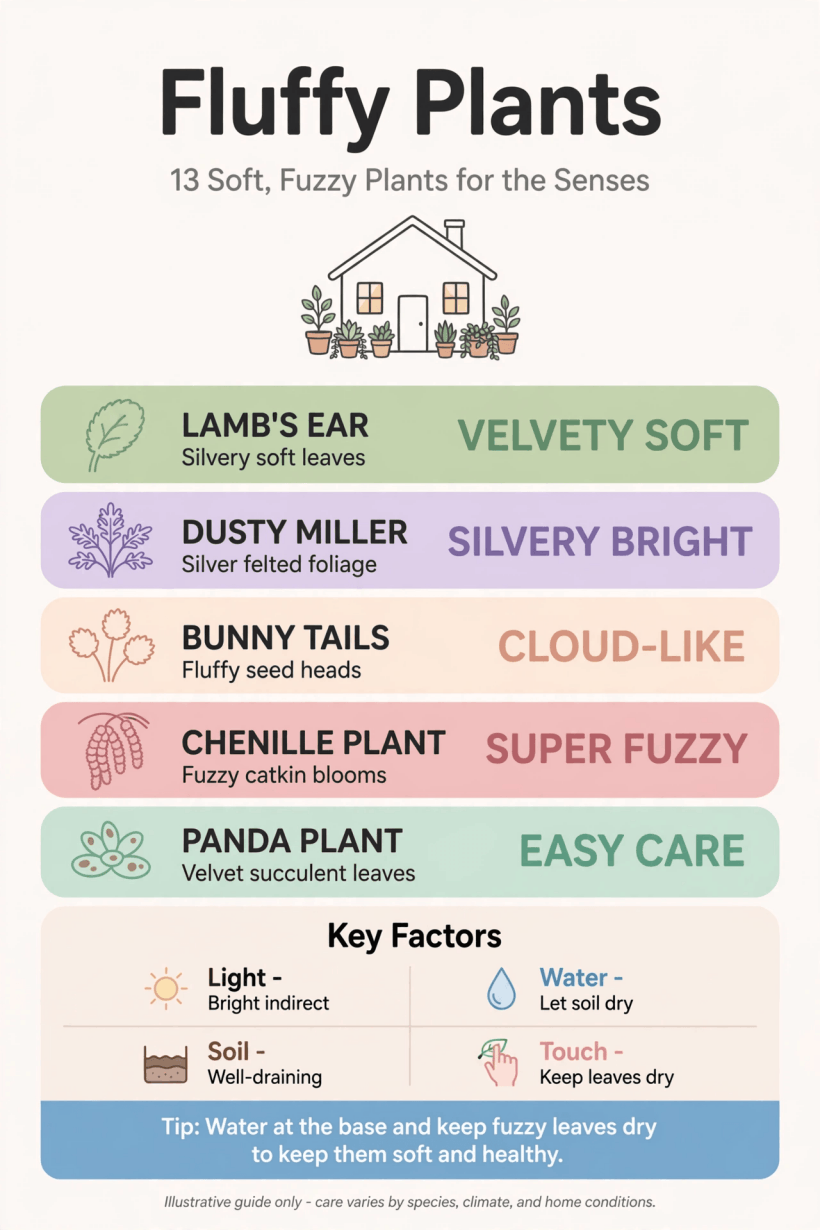
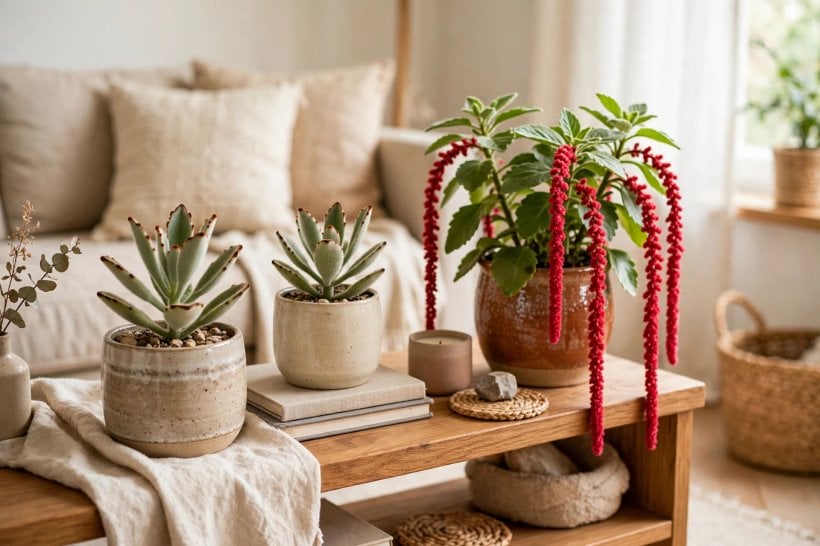
The soft-textured favourites in one picture — plumes, feathery flowers and velvety leaves to mix through a border.
2. Why Soft Textures Change a Garden
Hard landscaping does a garden’s heavy lifting — walls retain, paths direct, fences divide — but straight lines and flat surfaces can leave a space feeling severe. Soft planting is the counterweight. A drift of grass plumes against a fence breaks the line without hiding it; feathery flowers blur the edge of a border so the eye travels gently; velvety leaves at the front of a bed invite you closer. Texture also works when flowers finish: a garden built on foliage and seed heads stays interesting in the quiet months, when colour-led planting has little left to say.
Movement is the other gift. Grasses sway, tremble and catch low light in a way no shrub can, and that motion makes even a small garden feel alive on a still day. Sound comes with it — the dry whisper of grasses in a breeze is one of gardening’s underrated pleasures. When you plan a scheme, treat soft plants as structural, not decorative extras: give them the path edges, the corners of seating areas and the view from the kitchen window, the same priority the best schemes in these tiny house interior design ideas give to the textures you touch indoors.
3. Pampas Grass and the Tall Plumes
Pampas grass is the headline act: great fountains of arching leaves topped, from late summer, by tall silky plumes that hold their looks deep into winter. It is also the plant on this list that most demands honesty about space. A mature clump is wide as well as tall, and jammed into a small bed it will bully its neighbours and lean over paths with leaves that can be sharp-edged. Give it a corner of its own, a gravel garden, or the end of a long border where its scale reads as drama rather than crowding, and cut the old plumes and foliage back hard in spring before new growth starts — wearing gloves, because those leaf edges earn respect.
Maiden grass, the miscanthus grown in gardens everywhere, offers a similar plume effect with a finer, more upright habit, and makes a handsome seasonal screen along a boundary or behind a pond. Both grasses share one golden rule: they are warm-season growers, slow to start in spring and glorious from midsummer on, so pair them with spring bulbs and early perennials that hand over the stage as the grasses wake. In wetter or colder districts, check locally which types are reliably hardy, and where pampas in particular is discouraged near wild land, choose the miscanthus instead — a good garden centre will know the local guidance.
4. Fountain Grass, Muhly and the Middle Layer
If pampas is the headline, fountain grass is the workhorse. Its neat mounds of narrow leaves carry a long season of soft, bottlebrush flower heads that beg to be run through a hand, and it fits the middle of a border, the edge of a path or a large pot with equal ease. Plant it in groups of three or five rather than singly — soft texture reads as a drift, not a dot — and give it sun and drainage. In cold areas it may be short-lived, but it grows so fast that many gardeners simply treat it as a glorious annual and replant each spring.
Pink muhly grass is the autumn special effect: a green mound that, as the season turns, covers itself in a haze of fine pink flowers until the whole plant looks like a soft cloud resting on the border. It needs warmth and sharp drainage to perform, and it is at its best planted in a sweep where the low sun can shine through it. Backlit at the end of the day, few planting moments beat it. Keep the middle layer varied in height by a step or two — plumes at knee height, muhly haze below, taller grasses behind — and the border gains the layered softness that makes people slow down as they pass.
5. Bunny Tails and Small-Scale Softness
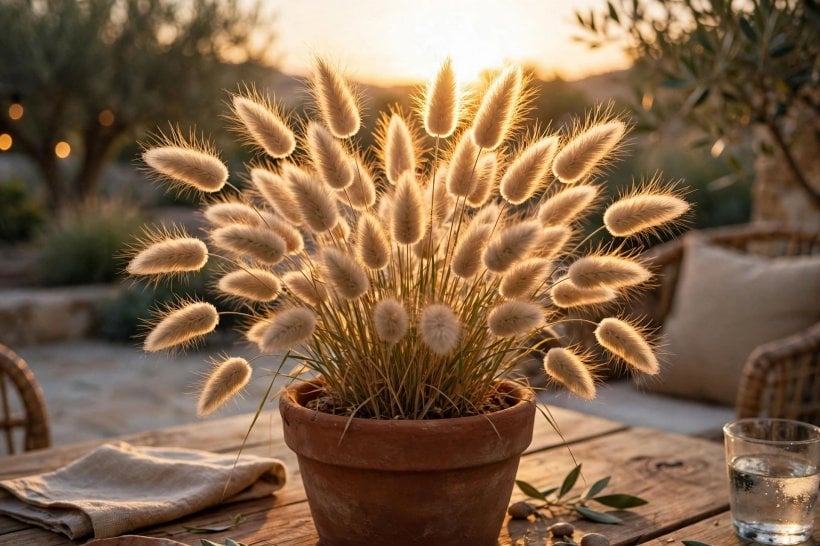
Not every soft plant is a giant. Bunny tails — also sold as hare’s tail grass — is a small annual grass grown for its oval, silky seed heads, which appear in spring and early summer and are exactly as strokeable as the name promises. Sow it where children walk, along the front of a border or in pots by a door, and expect it to self-seed lightly into gaps if the soil suits it. It dries beautifully, too: cut a handful just as the heads mature and they will keep their shape in a vase for months.
Small-scale softness is what makes the front of a border feel finished. Low, fine-textured grasses, creeping thymes at path edges and the soft domes of artemisia all do the same job at ankle height: they cushion the transition from path to planting. Repeat one or two of them along the whole edge rather than mixing many, and the garden gains rhythm. This is also the friendliest layer for beginners — small plants are inexpensive, quick to establish, and easy to move if the arrangement is not working, which makes experimenting genuinely low-risk.
6. Lamb’s Ear, Dusty Miller and Velvet Leaves
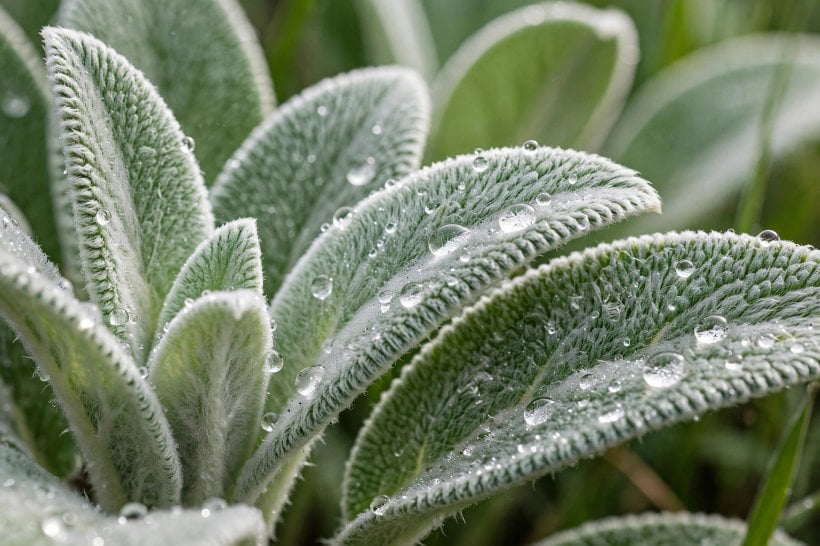
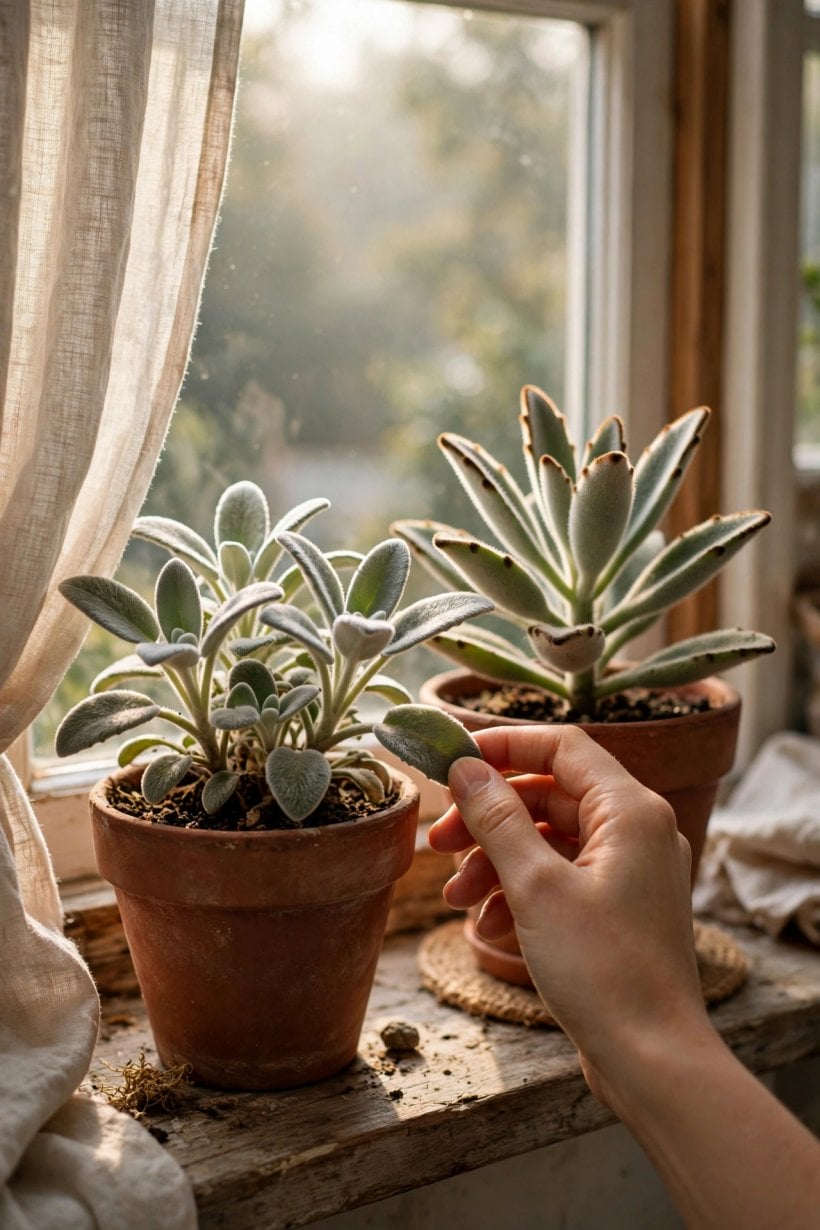
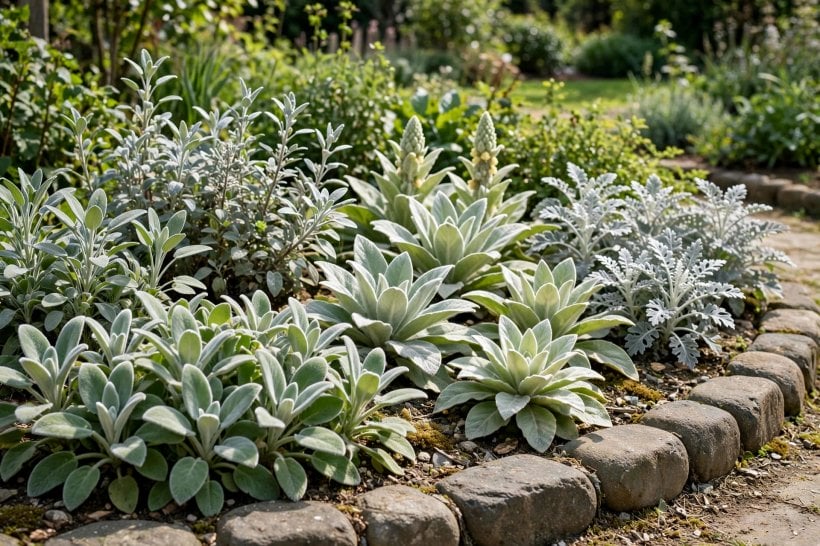
Some softness you feel with your eyes closed. Lamb’s ear spreads its rosettes of thick, silver-felted leaves as an edging or ground cover, and no child — or adult — walks past a good patch without touching it. It loves sun and poor, dry soil, sulks in wet winter ground, and rewards a spring tidy: pull away the tired leaves, and the fresh rosettes follow quickly. Let a few flower spikes rise in summer if you like; many gardeners remove them to keep the foliage carpet dense, and either choice is respectable.
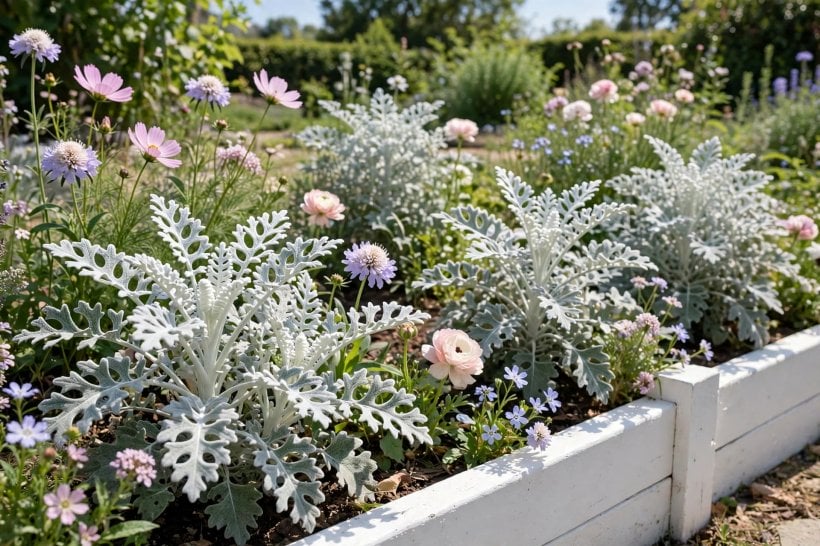
Dusty miller plays a different role: silvery, finely cut, felted foliage grown as a foil. It brightens shady corners without a single flower, sets off pink, purple and white blooms beautifully, and is a mainstay of pots and window boxes for exactly that reason. Artemisia adds a softer, feathery silver mound for the front of sunny borders. Use silver foliage as the peacemaker in planting schemes — it sits happily between clashing colours and cools hot ones — in the same way that the palettes in these colourful tiny house interior ideas use pale neutrals to let stronger colours sing indoors.
7. Astilbe and Feathery Flowers for Shade
Every plant so far has wanted sun; astilbe is the soft option for the shadier half of the garden. Its feathery plumes — in white, pinks and reds — rise over mounds of divided foliage in summer, bringing the same plush texture to damp, part-shaded borders that grasses bring to sunny ones. It is the classic partner for ferns and hostas beside ponds and in woodland-style planting, and it asks mainly for soil that does not dry out: mulch it, water it in dry spells, and it will thicken into generous clumps you can divide every few years.
Astilbe’s plumes dry on the plant into soft tan seed heads that carry texture into autumn, and cut fresh they make lovely, airy vase fillers. Nearby relations in spirit include meadowsweet for damp ground and the soft, fuzzy flower spikes of pussy willow in spring — bare branches covered in silver-grey catkins that are among the most stroked objects in any garden that has them. A small pussy willow, pollarded to keep it compact, gives a tiny garden a spring moment out of all proportion to its size, and its cut stems are a florist’s staple for good reason.
8. Planting for Softness: Drifts, Layers and Backlight
Soft plants fail in ones and twos. A single grass in a mixed border reads as an accident; seven of them read as a decision. Plant in drifts and repeated groups, keep the palette of textures small — two grasses, one velvet foliage plant, one feathery flower — and repeat that short list around the garden so the whole space hums the same soft tune. Leave room: most of these plants are wider than their pots suggest, and crowding kills the outline that makes them beautiful. A mulch of gravel or bark between young plants keeps the composition calm while they fill in.
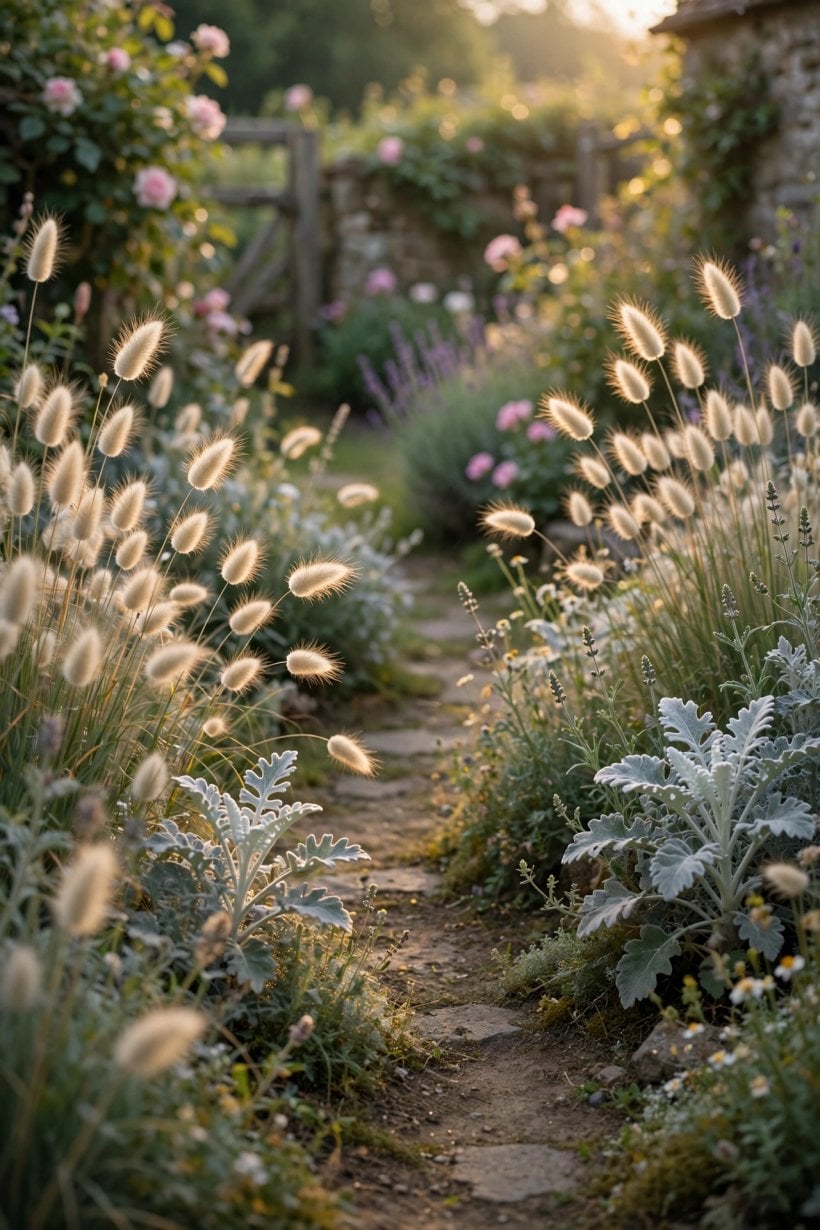
Then plant for the light. Plumes and fine flower heads are translucent, and they are at their most magical with the sun behind them — morning light across a bed you see from the house, evening light behind the grasses around a seat. Walk the garden at different times before you commit the big grasses to the ground, pots and all, and let the sun cast the deciding vote. The staging instinct is the same one these tiny house decorating ideas apply indoors: arrange the soft things where daily life and daily light actually meet them.
9. Care Through the Seasons
The yearly rhythm of soft planting is simple. Spring is for cutting back: last year’s grass foliage and plumes come off in one go before new growth threads through them, perennial clumps get tidied, and divisions can be made from any plant that has outgrown its welcome. Summer is mostly watching — plus water for new plants and for astilbe in dry spells, and the occasional removal of a flopped stem. Resist the urge to feed richly; most grasses and silver foliage plants grow lush and floppy on rich soil, and are tighter, prettier and longer-lived on a leaner diet.
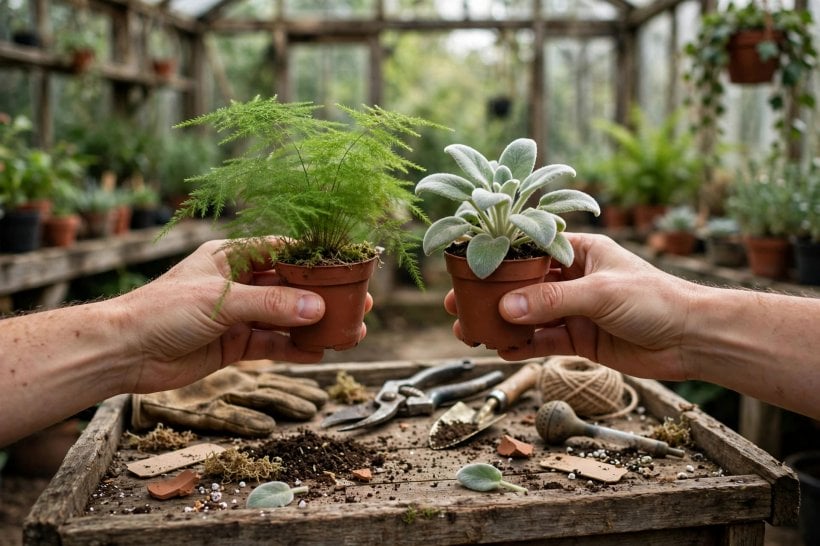
Autumn and winter are when these plants earn their keep twice over: plumes and seed heads stand through frost, rimed and beautiful, feeding the garden’s structure when borders are bare and giving small birds seeds and shelter. That is the practical reason to delay the cut-back until spring, whatever the tidier instinct says. One honest caution: some grasses self-seed freely in mild climates and gravel. If seedlings appear where they are not wanted, they are shallow-rooted and quick to pull — a five-minute job in spring, and a fair exchange for a winter of plumes.
10. Soft Plants in Pots and Small Gardens
Small spaces suit fluffy plants beautifully, because texture scales down better than bold architecture does. A single fountain grass in a large pot by a door softens a whole entrance; bunny tails and dusty miller fill a window box with touchable texture; a compact astilbe lights a shady balcony corner. Pots need the usual care — a free-draining mix, water in dry weather, and a size up when roots fill the space — and grasses in pots appreciate division every couple of years to keep them vigorous.
On a small plot, layer the heights against walls and fences: low lamb’s ear at the front, fountain grass and astilbe in the middle, one tall grass as the exclamation mark at the back. The layering logic is exactly that of this tiny house and small-space interior design guide turned outward — in a small space, everything earns its place, and softness is what stops economy from feeling like austerity. Even a single well-grown pot of grass beside a bench can change how a whole courtyard feels at the end of the day.
Final Considerations
Start with the plants that suit your soil and light rather than the ones in the prettiest photograph; soft texture is forgiving, but sun-lovers in shade and moisture-lovers in dust will never look plush. Buy fewer kinds and more of each, plant them where the light and your daily routes will meet them, and let the seed heads stand for winter. Do that, and fluffy plants will repay you in every season — with movement in summer, structure in winter, and a garden that people instinctively reach out to touch. For the plot around them, the complete guide to building your own tiny house shows how the same gentleness, applied at house scale, makes small living feel generous.

0 Comments