

An eames chair replica can bring the famous lounge-chair silhouette within reach — but quality varies enormously, and the differences hide in the shell, the cushions and the base.
This guide explains, in plain what-to-check terms, how to judge materials, build and comfort before you commit to any replica lounge chair and ottoman.
1. First Questions: The Quick-Answer Table
Start by being honest about what you are buying. A replica is a copy of a mid-century design, made by an unrelated manufacturer, and it should be sold and priced as exactly that — never as an original. The checks below apply to any example you are considering, from any seller, at any price point. If you love the wider style, the context in these mid-century modern tiny house design ideas shows how the lounge chair sits within the look it helped to define.
| Question | What to check |
|---|---|
| Is it honestly described? | The listing should clearly say replica or style — walk away from anything implying it is a licensed original when it is not. |
| What matters most? | Shell construction, cushion filling, upholstery material and base stability, in that order. |
| Can I judge it from photos? | Partly — photos show shape and stitching, but comfort, creaks and cushion resilience need an in-person sit or a solid returns policy. |
| What should the description include? | Shell material and ply count if stated, upholstery type, foam or filling type, base material, dimensions and weight. |
| Biggest warning sign? | Vague materials, stock photos only, no dimensions, and no clear returns or warranty information. |
| Best single test? | Sit in it for ten minutes, get up and down several times, swivel, and listen and feel for flex, noise and wobble. |
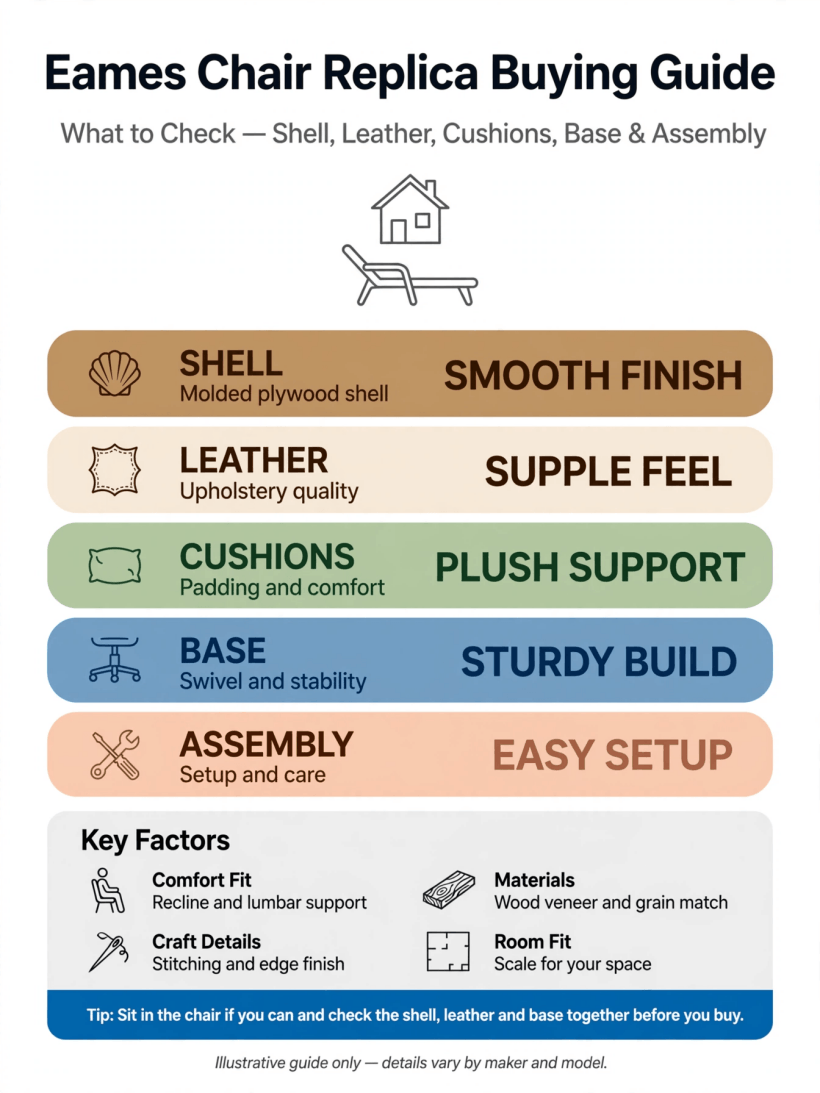
A quick visual summary of the main checks — honesty, shell, cushions, upholstery, base and comfort — covered in this guide.
2. The Silhouette: Proportions and Shape Checks
The design works because of its proportions: a low, wide seat, a back that supports the shoulders without pushing the head, and an ottoman that meets the chair at a comfortable angle. On a good replica those relationships survive. On a poor one the back is too upright, the seat too shallow, or the whole chair sits oddly tall, and it will look wrong long before it feels wrong.

Stand back and compare the profile with reference images of the design in books or museum collections: three shell sections on the chair — headrest, back and seat — with visible gaps and hardware between them, curved arms that flow from the back, and a five-star base. Check that the ottoman echoes the chair’s curves rather than being a generic rectangular stool, and that the chair reclines visually even though the back angle is fixed; the tilt is built into the frame, so if a replica looks bolt-upright, its geometry has drifted. In a small room, the chair’s footprint matters as much as its looks, so measure the full swivel circle before ordering — a point these tiny house living room ideas make about every statement chair, not just this one.
3. The Shell: Plywood, Veneer and Construction
The shell is the soul of the piece: moulded plywood, bent into compound curves, carrying the cushions. Ask what the shell is actually made of. Better replicas use multiple plies of real wood with a figured veneer outer face; weaker ones may use thinner shells, printed grain effects, or moulded plastic made to look like timber. Run a hand over the edges — you should be able to see and feel the layered plies, and the veneer should wrap the curves without bubbles, lifting or visible filler.
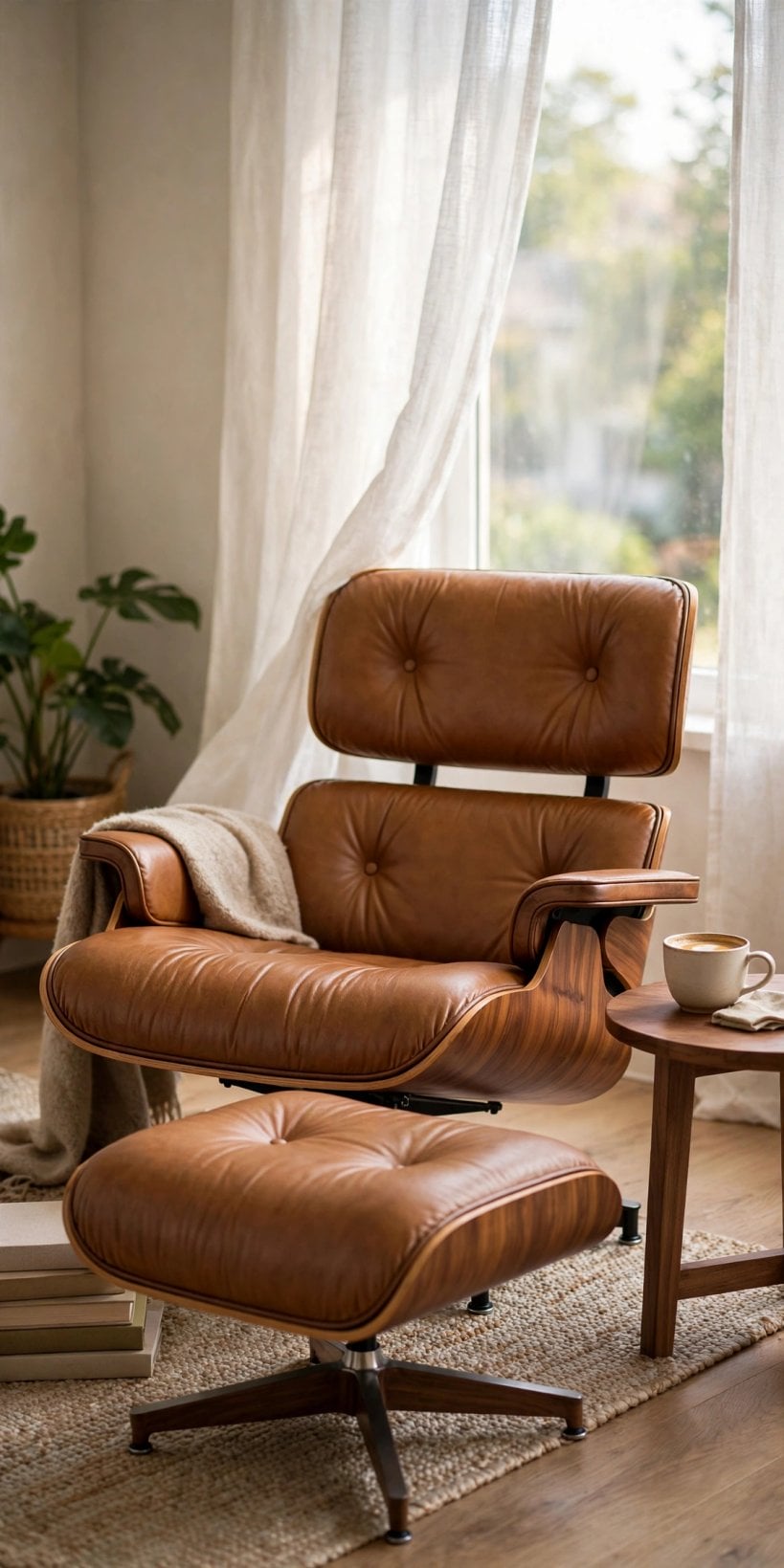
Check the shell from behind, where shortcuts show first. The finish should be consistent, the cushion fixings secure, and there should be no cracks around the mounting points where the shell meets the frame — this is the highest-stress area of the whole chair. Flex the chair gently by the arms: a small amount of give is part of the design’s comfort, but grinding, creaking or one side moving more than the other suggests tired or poorly made shock mounts, the rubber connectors that join shell to frame. Replacements for those mounts exist generically, but a chair that needs them on day one is telling you something about its maker.
4. Cushions: Filling, Shape and the Ten-Minute Sit
Cushions decide whether the chair is a daily pleasure or an expensive sculpture. The original concept used plump, deeply buttoned cushions that you sink into slightly while still being supported. Replica fillings vary from soft, quick-flattening foam to firmer, more resilient constructions, and descriptions may mention foam density, feather or fibre blends — treat the specifics as claims to test, not facts to trust. Press a thumb hard into the seat cushion: it should push back promptly and evenly, not stay dented or feel hollow at the edges.
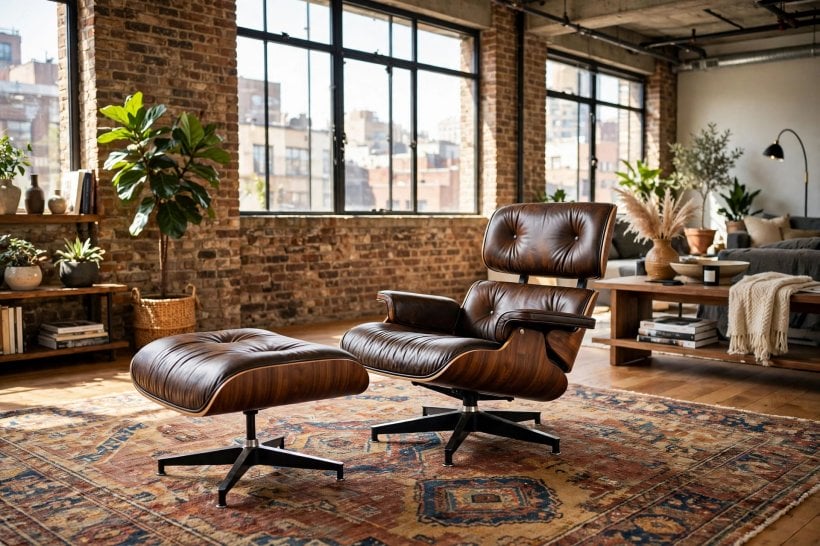
Then sit properly, for longer than feels polite in a shop. Ten minutes reveals what ten seconds hides: whether the seat depth suits your legs, whether the headrest lands where your head actually rests, whether the lumbar curve supports or digs, and whether the ottoman height lets your calves rest without pressure behind the knees. Get up and sit down several times — the chair should feel stable, not tippy or noisy. If you are buying unseen, this is the section to re-read when the chair arrives, during the returns window, rather than after it closes. Comfort judgement is personal in exactly the way described in these tiny house interior design ideas: the right chair is the one that fits your body and your room, not the one with the longest specification list.
5. Upholstery: Leather, Fabric and Honest Descriptions
Upholstery is where marketing language works hardest, so learn the vocabulary. Descriptions may say genuine leather, top-grain, corrected grain, bonded leather or leather-look — these are not interchangeable, and a careful seller will state plainly which parts are covered in what. It is common for the seat-facing surfaces and the cushion backs to be different materials; that is acceptable when disclosed and disappointing when discovered. Whatever the material, check the standard of making: seams should run straight, piping should be even, buttons should sit at consistent depth, and the upholstery should be smooth over the cushion curves without wrinkles that suggest loose cutting.
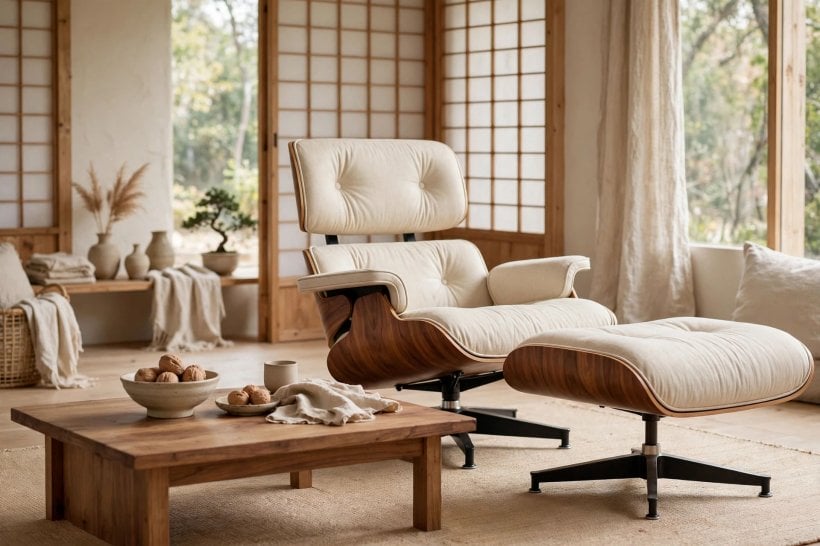
Smell and touch tell you more than labels. Real leather has a characteristic feel and scent and develops a patina; synthetic coverings have improved enormously and can be the practical choice in homes with pets, children or strong sunlight, provided they are sold honestly as synthetic. Ask how the covering is cleaned, whether cushion covers can be removed, and whether replacement covers are available — a chair you can re-cover in ten years is a very different purchase from one you cannot. In bright rooms, remember that all coverings fade; rotate the chair occasionally and keep it out of the harshest direct sun where you can.
6. The Base, Swivel and Ottoman
The five-star base carries everything, and its quality is easy to test. The metal should feel substantial, with clean edges and an even finish — polished, powder-coated or chrome-style finishes are all cosmetic choices, but flaking, bubbles or sharp casting seams are not. Sit and swivel slowly through a full circle: the action should be smooth and silent, without a grinding patch or a point where the chair tips or sticks. Stand and rock gently side to side; a sound base stays planted, while a worn or lightweight one will chatter against the floor.
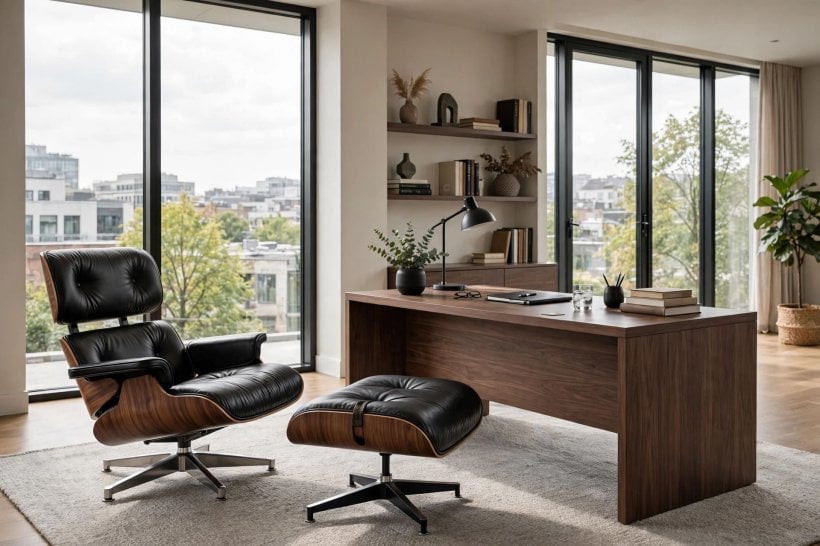
The ottoman deserves the same attention. Its base should match the chair’s in finish and stability, its cushion should be the same filling and covering, and its height should meet the seat so your legs rest level rather than angled down or propped up. Check the glide pads under both bases — they protect floors and their absence, or cheap hard plastic substitutes, will mark timber and tile. On hard floors you may add felt pads; on deep carpet the star base can feel less steady, which is worth knowing before the chair goes into its final spot. The join between chair shell and base column, like the veneer finishes discussed in these tiny house interior paint colours in the context of wood tones, is a place where honest materials quietly announce themselves.
7. Dimensions, Fit and Room Placement
Replica makers do not all copy the same measurements, so never assume dimensions — ask for them and compare with the space you have. You need the chair’s width, depth and height, the seat height and depth, and the ottoman’s footprint, plus the turning circle of the swivel and clearance behind for the reclined line of the back. A chair that fits the floor plan but blocks a door swing or a radiator’s warmth has not really fitted at all.
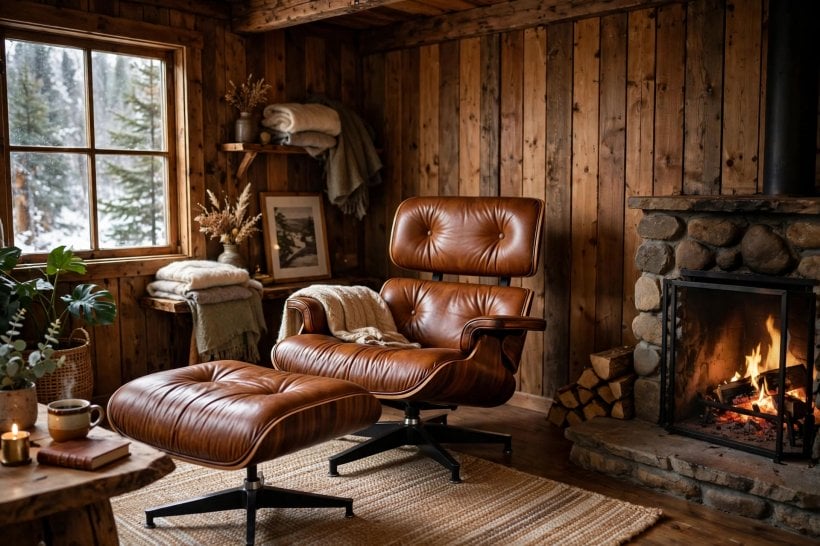
In smaller homes, think of the chair as a room within the room: a reading corner with a floor lamp behind the shoulder, a small side table within reach, and a rug large enough to hold both chair and ottoman so the pair reads as one composition. The planning logic mirrors this tiny house and small-space interior design guide — measure the whole arrangement, walk the routes around it, and leave breathing space so a generous chair feels chosen rather than squeezed. Also check delivery practicalities before ordering: packaged dimensions, whether the chair arrives assembled or in parts, and whether it will pass your doors, stairs and any tight landing turns.
8. Price Talk: What Money Does and Does Not Buy
Prices for replicas span a very wide range, and the honest way to think about them is qualitative. At the lower end, expect thinner shells, simpler fillings, synthetic coverings and lighter bases — a chair that gives the look for lighter use. Spending more generally buys thicker, better-finished shells, more resilient cushion constructions, higher-grade coverings, smoother swivel actions and better packaging and aftercare. What money does not buy, at any point, is authenticity: no replica becomes an original by being expensive, and any seller blurring that line should lose your trust entirely.
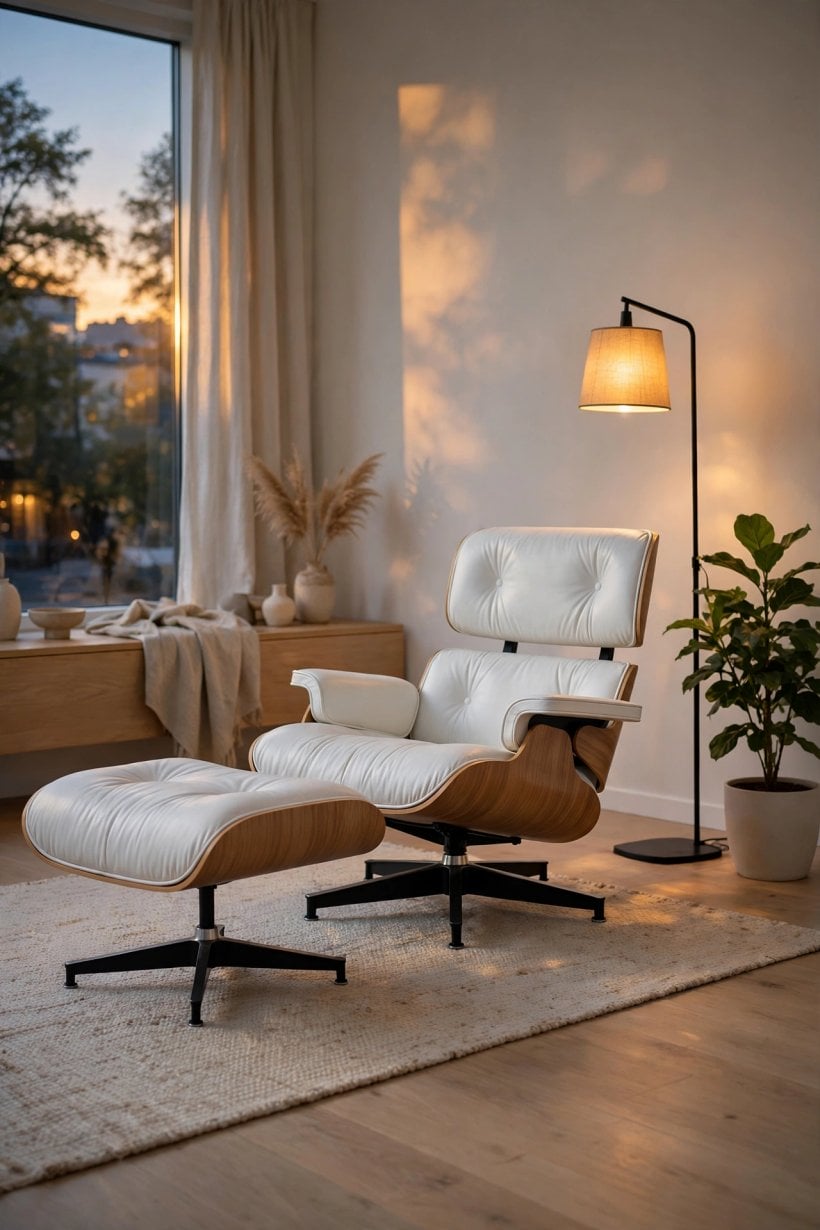
Judge value by cost per year of comfortable use, not by ticket. A well-made replica sat in daily for a decade is better value than a flimsy one replaced twice, and better value than a chair so precious it is never used. Factor in the unglamorous extras when comparing listings: delivery, assembly, packaging removal, returns cost if it is not right, and the price of any floor protection or care products you will realistically buy. And keep the wider room in mind — sometimes the wiser spend is a mid-priced chair plus the lamp, rug and side table that make it a place you actually sit, an approach these colourful tiny house interior ideas take to whole-room budgeting as well.
9. Buying Channels, Returns and Red Flags
Where you buy changes what protection you have. Established retailers, whether physical or online, should offer clear specifications, a named returns window, and warranty terms you can read before paying. Marketplace and auction listings demand extra care: confirm exactly which chair is for sale, ask for photographs of the actual item rather than catalogue images, and clarify who pays return shipping on something this bulky if it disappoints. Keep all correspondence and the original listing description until the returns window closes.
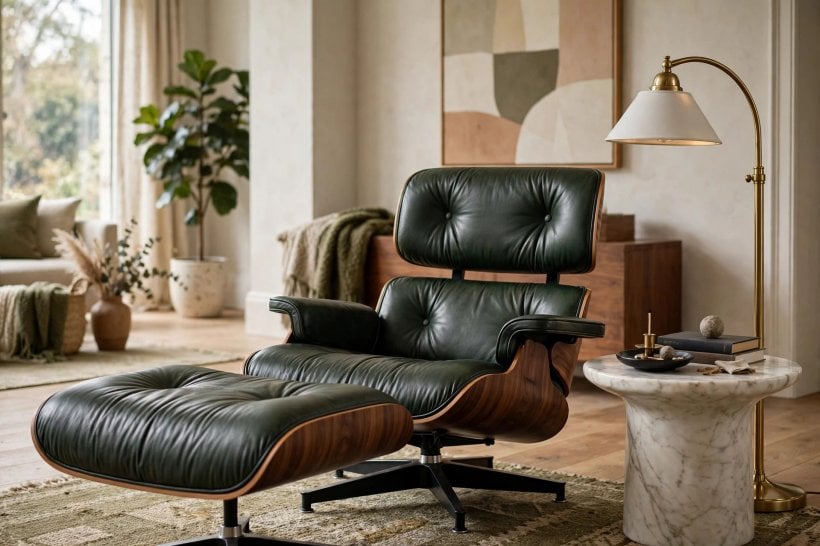
The red flags are consistent. Listings that use the designers’ names or a famous brand’s name as if the chair were genuine; materials described only with adjectives; dimensions missing or given for the box rather than the chair; a returns policy that excludes opened or assembled items; reviews that all read the same — each is a reason to slow down. Conversely, sellers who publish full specifications, show the chair from behind and underneath, describe coverings precisely and answer awkward questions are showing you their standards. The same calm checklist habit serves all home purchases, as these tiny house decorating ideas suggest when weighing any statement piece: verify first, fall in love second.
10. Care, Longevity and Living With It
A well-chosen eames chair replica should age gracefully with ordinary care. Dust the shell with a soft cloth, keep wood finishes out of prolonged direct sunlight, and condition leather only with products the seller recommends for that specific covering — synthetics need different care, usually just a damp cloth. Vacuum cushion seams where dust collects, rotate and plump cushions so wear spreads evenly, and check the base fixings and shock mounts once a year, tightening nothing you do not understand and replacing perished rubber mounts promptly, because they protect the shell from stress it was never meant to take directly.
Expect the chair to change character a little: leather softens and gains sheen where hands and heads rest, veneer deepens in tone, and the cushion that felt firm in the shop becomes familiar. None of that is failure — it is the difference between furniture and furnishing. What should not change is stability, silence and support. If creaks develop, find them early; a single loose fixing fixed in a week is maintenance, while the same creak ignored for a year becomes damage. Treat the ottoman identically — it takes more abuse as a footrest, extra seat and occasional table than its quiet design suggests.
Final Considerations
Buy the silhouette for love, but choose the individual chair by evidence: an honest description, a properly made shell, resilient cushions, truthful upholstery, a steady base and a sit that suits your body for a full ten minutes. Keep the paperwork, use the returns window actively rather than hopefully, and place the chair where it will be used daily rather than admired occasionally. Do that, and a replica stops being a compromise and becomes what it should be — a comfortable, handsome piece of everyday furniture in the spirit of a great design. For the room around it, the complete guide to building your own tiny house is a reminder that every good interior, large or small, is built one well-chosen piece at a time.




0 Comments