

Patio season should feel easy, not like a second job.
This list keeps things simple: clear layouts, honest shade, furniture that earns its space and small details that make evenings linger. Pick a few ideas, live with them for a week, then keep what works.
1. Layout First: Zones, Paths and Proportions
A modern patio works best when every corner has a job. Decide where people will sit, eat, cook and pass through before you buy anything, then let furniture follow that plan rather than leading it. If you are shaping the wider garden too, Tiny House Landscaping Ideas: 25 Small-Space Outdoor Designs is a helpful companion read.
| At a Glance | What to Aim For |
|---|---|
| Best for | Everyday sitting, dining and relaxed hosting |
| Start with | One clear seating zone and one clear route through |
| Shade | Cover the seats you use at midday, not the whole space |
| Surfaces | Level, drained and easy to sweep clean |
| Lighting | Low, warm and aimed down, never glaring |
| Planting | A few large pots rather than many small ones |
| Budget note | Spend first on layout, shade and seating comfort |
| First check | Measure the space and check where water runs after rain |
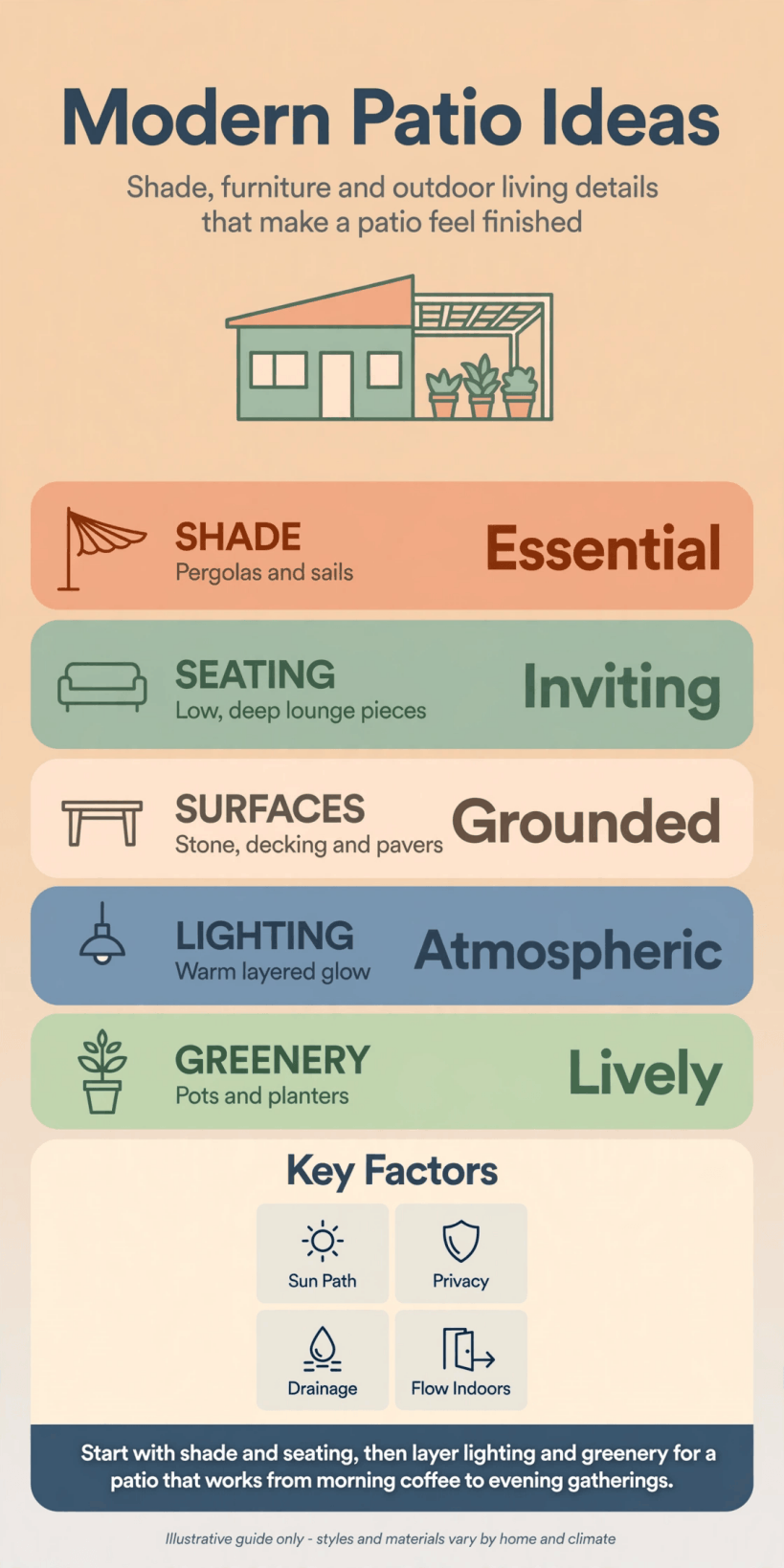
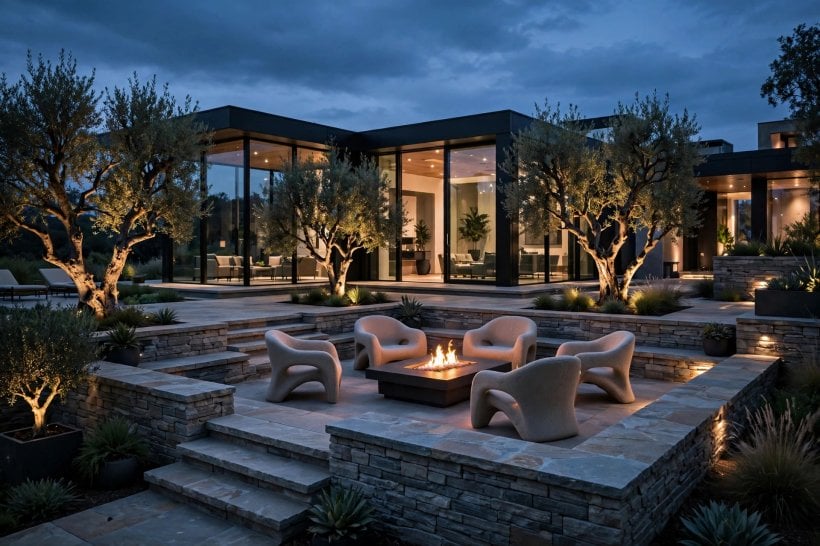
At a glance: zones, shade, seating and planting working together in one calm outdoor room.
1. Mark the zones with tape. Lay masking tape or a garden hose on the ground to outline seating, dining and walking routes. Live with the outline for a day and adjust it before anything permanent is built or bought.
2. Keep one straight, clear path. A single obvious route from the door to the garden stops guests weaving between chairs. Keep it wide enough for two people, a tray, or a wheelbarrow on working days.
3. Put seating where the view is kindest. Face chairs towards planting, sky or a fence you have softened, not towards a blank wall or bins. A small turn of the whole arrangement can change the feel completely.
4. Anchor the main zone with an outdoor rug. A rug defines the sitting area, softens hard paving and quiets the space. Choose a flat, quick-drying weave and size it so front chair legs rest on it.
5. Leave breathing room at the edges. Pull furniture slightly away from walls and fences. A narrow gap reads as calm and deliberate, while pieces jammed into corners always look accidental and cramped.
6. Plan the dining spot near the kitchen door. Every extra metre is another trip with hot dishes. The closest level area to the door is usually the best dining place, even if it is not the sunniest.
7. Create one flexible corner. Keep a small open patch for a lounger, a kids’ game, yoga, or a work bench. Flexible space is what lets the same area serve weekdays and weekends equally well.
8. Check the sunset before you commit. Spend one evening watching where the light lands and where glare hurts your eyes. The best seat in the garden is often the one that catches the last gentle light.
2. Flooring and Surfaces That Set the Tone
The surface underfoot decides whether the space feels calm, busy, hot or welcoming, so choose it before you fall for furniture. Keep transitions to the house smooth and take design cues from Tiny House Interior Design Ideas: 25 Timeless Styles and Trends so inside and outside feel like one home.
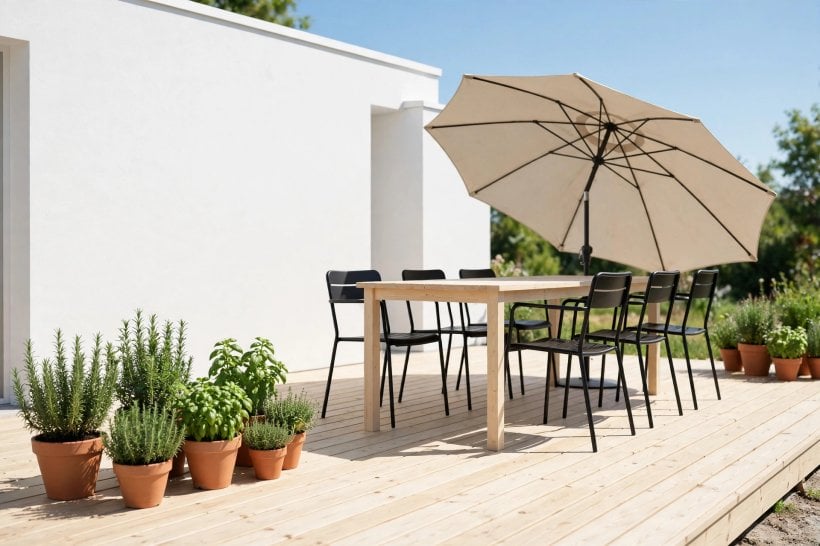
9. Choose large-format pavers for a calmer look. Bigger slabs mean fewer joints, less visual noise and faster cleaning. Lay them on a properly prepared, level base so edges stay even and chairs never wobble or rock.
10. Break a big slab area with gravel strips. Narrow gravel bands between paving add texture, help drainage and soften the look. Choose angular gravel that locks together rather than round pebbles that wander everywhere.
11. Run decking boards away from the house. Boards pointing outwards draw the eye to the garden and make a narrow space feel longer. Leave the small expansion gaps the supplier recommends and keep them swept clear.
12. Test barefoot comfort before you buy. Some dark surfaces become uncomfortably hot in strong sun, and some pale ones glare. Ask for samples, leave them outside for a sunny day, then walk on them at midday.
13. Add a border course in a second tone. A simple edge in a slightly deeper shade frames the whole area like a picture mount. It also hides small cutting imperfections along walls, steps and planting beds.
14. Keep a fall for rainwater. Every hard surface needs a gentle slope away from the house so puddles never sit against the walls. Check with a level and a bucket of water before furniture arrives.
15. Choose a rug that can live outside. Outdoor rugs add the softness of a living room without the worry. Shake and hose them down regularly, and lift them in winter so the surface beneath can dry fully.
16. Mix two materials, not five. One main surface plus one accent is plenty: paving with decking, or concrete with gravel. More than that starts to look like a showroom of samples rather than one garden.
3. Shade, Shelter and Privacy
Shade is what turns a pretty space into a usable one for most of the day. Aim to cover the seats, not everything, and layer fixed cover with something you can move as the sun moves.
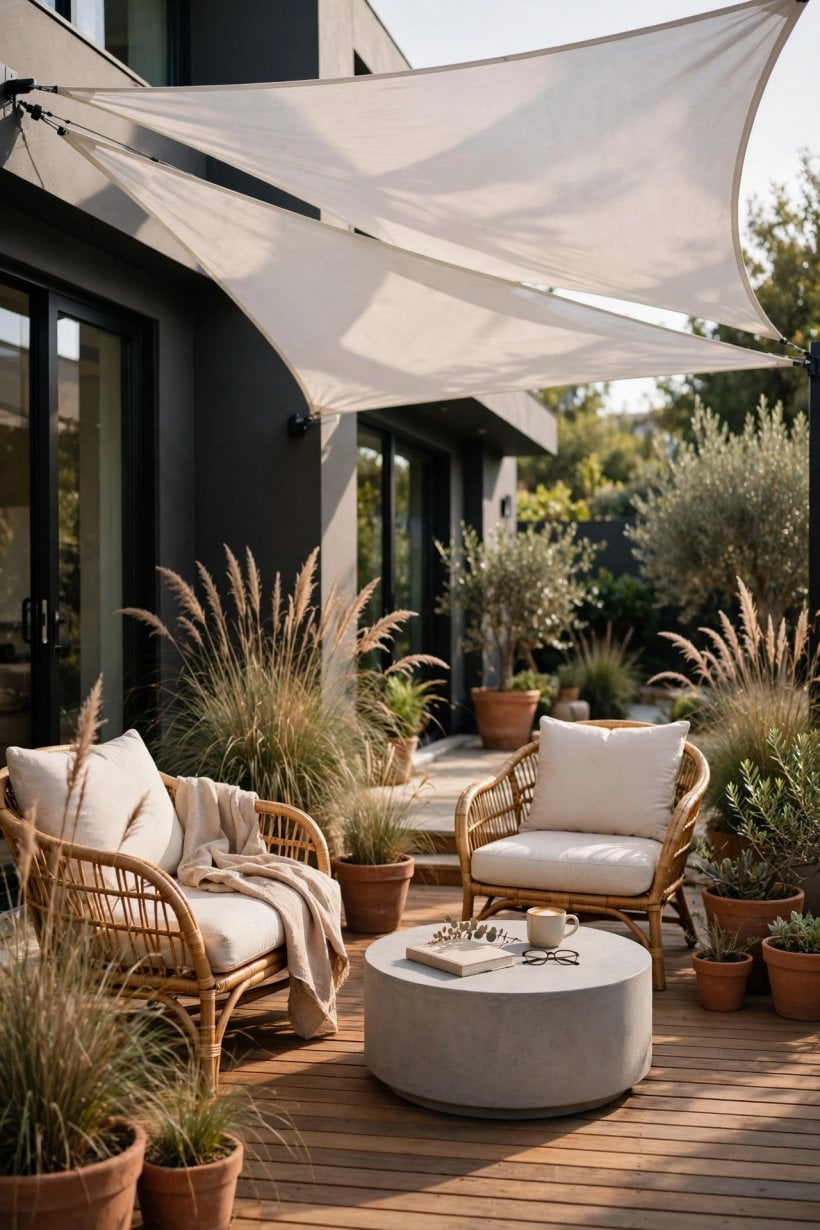
17. Start with one generous parasol. A single large parasol over the main seats is the fastest, cheapest shade you can add. Choose a tilting canopy and a heavy base, and check local rules if it overhangs a boundary.
18. Try a shade sail for a light, airy cover. Sails feel open because air moves through and around them. Fix them to strong points with a slight slope so rain runs off, and take them down in stormy weather.
19. Grow a small tree in a large pot. A potted tree gives dappled shade, privacy and a sense of height all at once. Pick a size the pot can honestly support and water it more often than in-ground plants.
20. Add a pergola only where you sit most. A pergola over the whole space can feel heavy; over one zone it feels like a room. Check with your city or county whether a permit is needed before you build.
21. Use outdoor curtains for low evening sun. Sheer outdoor curtains on one side soften glare and add privacy without blocking the breeze. Hang them from a simple rail so they can be tied back in seconds.
22. Screen the overlooked corner first. Walk the space and note exactly where neighbours can see in. Often one tall planter or panel in the right spot solves the whole privacy problem at once.
23. Plant a loose hedge in long planters. Evergreen shrubs in a row of planters make a soft screen that moves with you if you rent. Keep the planters wide and heavy so they stay stable in wind.
24. Keep one sunny patch on purpose. Total shade can feel cold in spring and autumn. Leave an uncovered corner for morning coffee, drying cushions and the plants that genuinely love full sun.
4. Seating and Furniture That Earns Its Space
Comfort is the whole point, so sit in everything before you buy it and measure twice. Think of the seating zone as a living room without a roof, an approach that Tiny House Living Room Ideas explores for small indoor spaces too.
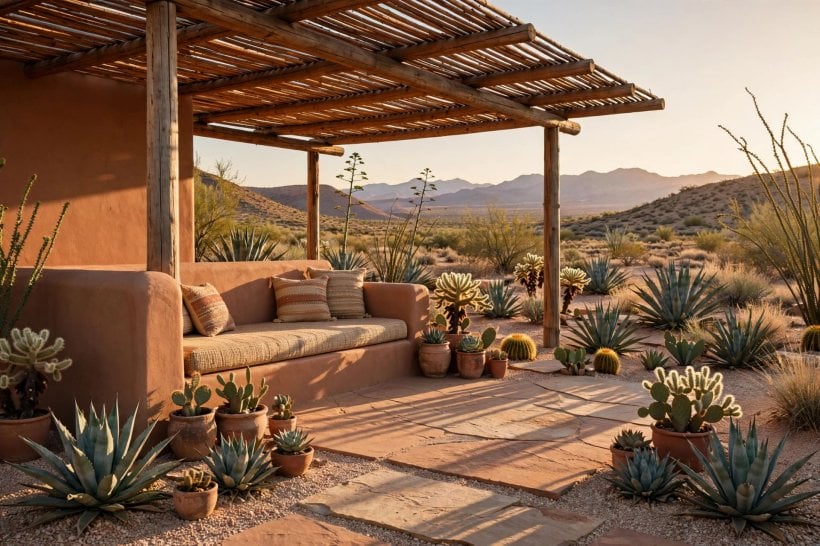
25. Choose a low, deep sofa for the main zone. Low seating feels relaxed and keeps sightlines open across the garden. Add cushions made for outdoor use and store them under cover so they stay fresh between uses.
26. Mix fixed seats with two movable chairs. A bench or sofa anchors the layout, while light chairs can follow the sun or join the dining table. Movable pieces are what make a small space flexible.
27. Add a bench along the emptiest wall. A simple bench turns a dead edge into seats for three. Lift it on blocks in winter, and use the space beneath for a watering can and small tools.
28. Pick a table height that suits how you eat. Low lounge tables suit drinks and books; dining height suits long meals. If you mostly eat outside in summer, choose dining height and relax in chairs afterwards.
29. Use stacking or folding extras for guests. Two folding chairs in the shed solve the guest problem without cluttering daily life. Hang them on hooks so they stay clean, dry and easy to grab.
30. Keep side tables within arm’s reach. Every seat needs a spot for a cup or a book, or drinks end up on the ground. Small sturdy stools double as extra seats when friends arrive.
31. Choose cushions in one calm palette. One colour family, with a single patterned cushion per seat, looks pulled together without effort. Keep a spare set of covers so laundry day never empties the garden.
32. Try a hanging chair in the quiet corner. A single hanging or swinging seat becomes everyone’s favourite place to read. Fix it only to a structure that can honestly take the weight, and check fixings each spring.
5. Dining Outside Without the Fuss
Outdoor meals go smoothly when the table, the shade and the route from the kitchen were planned together. For compact cooking and prep inspiration indoors, see Tiny House Kitchen Design: 22 Stunning Interior Ideas.
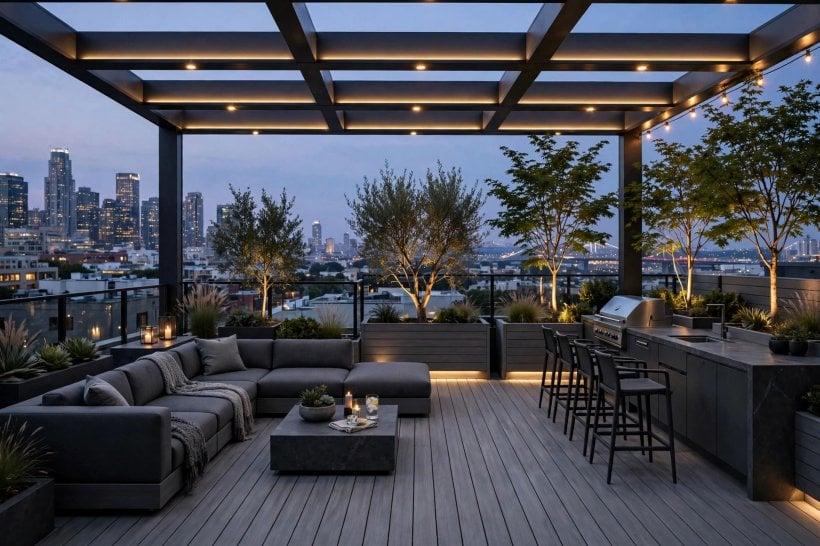
33. Size the table for everyday, not for parties. A table for four to six covers most meals; a folding extension handles the big days. Oversized tables squeeze circulation and make small gardens feel like storage yards.
34. Leave serving space at one end. Keep the end of the table nearest the kitchen free for serving dishes and a water jug. Guests stay seated, and the cook makes fewer trips back and forth.
35. Add a slim serving trolley or sideboard. A narrow outdoor sideboard holds spare glasses, sauces and a bin for scraps. It keeps the table for people and plates, which is what makes meals feel calm.
36. Light the table, not the whole garden. A low pendant, lanterns or candles at table height make faces glow and food look good. Bright floodlights flatten everything and invite every moth in the neighbourhood.
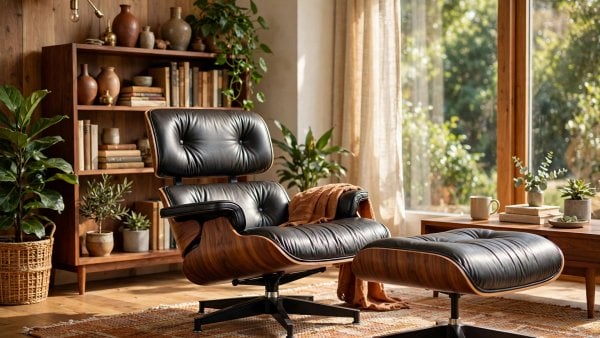
37. Keep a herbs pot within snipping reach. A pot of hardy herbs beside the table is useful and smells wonderful when brushed. It also gives last-minute cooking a small sense of ceremony everyone enjoys.
38. Choose chairs you can sit in for two hours. Test dining chairs properly: sit, lean back, cross your legs. A slightly shaped seat and a back that meets your shoulders matter more than a fashionable silhouette.
39. Store a table cover and weights in a bench box. A light cover stops dust and bird messages between meals, and simple weights stop it flapping. Keeping them beside the table means they actually get used every time.
6. Lighting for Long Evenings
Good evening light is low, warm and layered, and it should guide feet without glaring into eyes. Borrow colour confidence from Tiny House Interior Paint Colors: Shades That Make Small Feel Big when you choose painted walls and fences around the space.
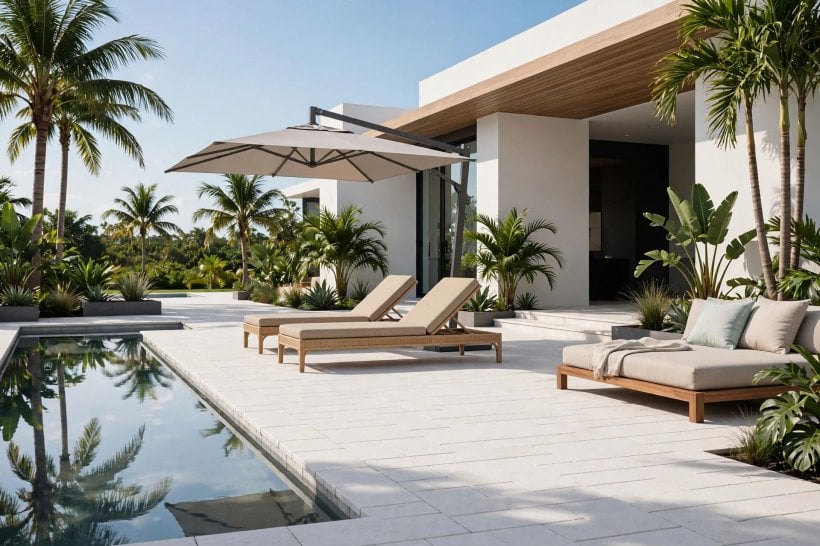
40. String festoon lights over the seating zone. A simple catenary of warm bulbs gives instant atmosphere for very little money. Use outdoor-rated sets, support the cable properly, and switch them from inside the house.
41. Add low lights along the path. Small lights at ankle height mark the route to the door and the steps. Space them by need: brightest at changes of level, gentlest along straight runs.
42. Uplight one plant or tree. A single soft uplight under a shapely plant creates theatre without any fuss. Keep the fitting hidden in the pot and the beam gentle, never aimed at windows.
43. Keep lanterns for the table and steps. Portable lanterns go where light is needed tonight, not where a cable dictated last year. Choose rechargeable ones and keep a charging spot by the back door.
44. Put every light on a timer or smart plug. Lights that switch themselves on at dusk make the garden feel welcoming before you step out. Set them to turn off late evening to rest neighbours and wildlife.
45. Avoid cool white bulbs outdoors. Harsh blue-white light makes skin, food and plants look tired. Warm tones flatter everything and match candlelight, so mixed sources still feel like one scheme.
46. Light the house wall softly. A gentle wash on the wall behind seating adds depth and stops the garden feeling like a black hole. Use a shielded fitting so the glow, not the bulb, is visible.
47. Plan sockets before you need them. One weatherproof socket in the right place beats extension leads across wet paving. Ask an electrician about local requirements and keep sockets off the ground where water pools.
7. Planting, Pots and Green Edges
Planting softens every hard edge and gives the space its scent and movement. A few generous pots, repeated, look calmer than a crowd of small ones, and styling them is easier with the ideas in Tiny House Decorating Ideas.
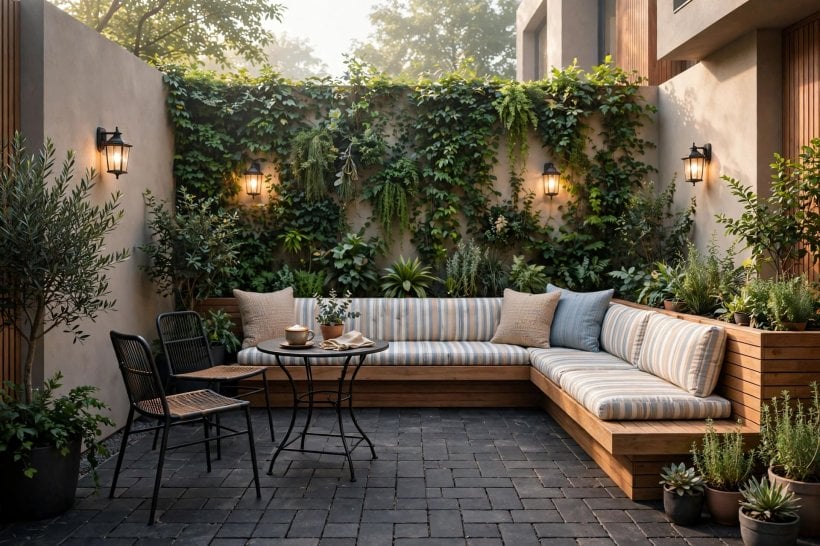
48. Choose three big planters as anchors. Place large pots at the corners of the seating zone to hold the arrangement together. One sculptural plant per pot reads clearly and is far easier to water well.
49. Repeat one plant for a designed feel. Repetition is the cheapest design trick there is. Three grasses, or a row of the same shrub, look intentional even when everything else is simple and inexpensive.
50. Add one scented plant near the seats. Lavender, jasmine or a scented shrub beside the main chairs rewards anyone who sits down. Keep strong scents away from the dining table where they fight with food.
51. Grow climbers on wires for green walls. Slim wires on a fence train climbers flat, giving a green backdrop for almost no floor space. Tie new growth in little and often so it never becomes a wrestling match.
52. Keep a small edible corner. A pot of tomatoes, a trough of salad leaves or a single chilli plant makes the space useful as well as pretty. Edibles near the door get watered because they get seen.
53. Use grasses for movement and soft sound. Ornamental grasses sway, catch evening light and soften the corners of hard paving. Cut them back once a year as local guidance for your variety suggests.
54. Hide the ugly bits with planting first. Bins, meters and pipes disappear behind a tall pot far more gracefully than behind a screen. Leave access space behind the plants so nothing becomes a struggle later.
55. Group pots by water needs. Thirsty plants together and drought-tolerant plants together makes watering simple and honest. You will water more faithfully when one round with the can finishes the whole job.
8. Fire, Heat and Cosy Corners
A little warmth stretches the season by months and gives evenings a natural centre. Treat these corners like the restful spots celebrated in Tiny House Bedroom Ideas: layered, soft and unhurried.
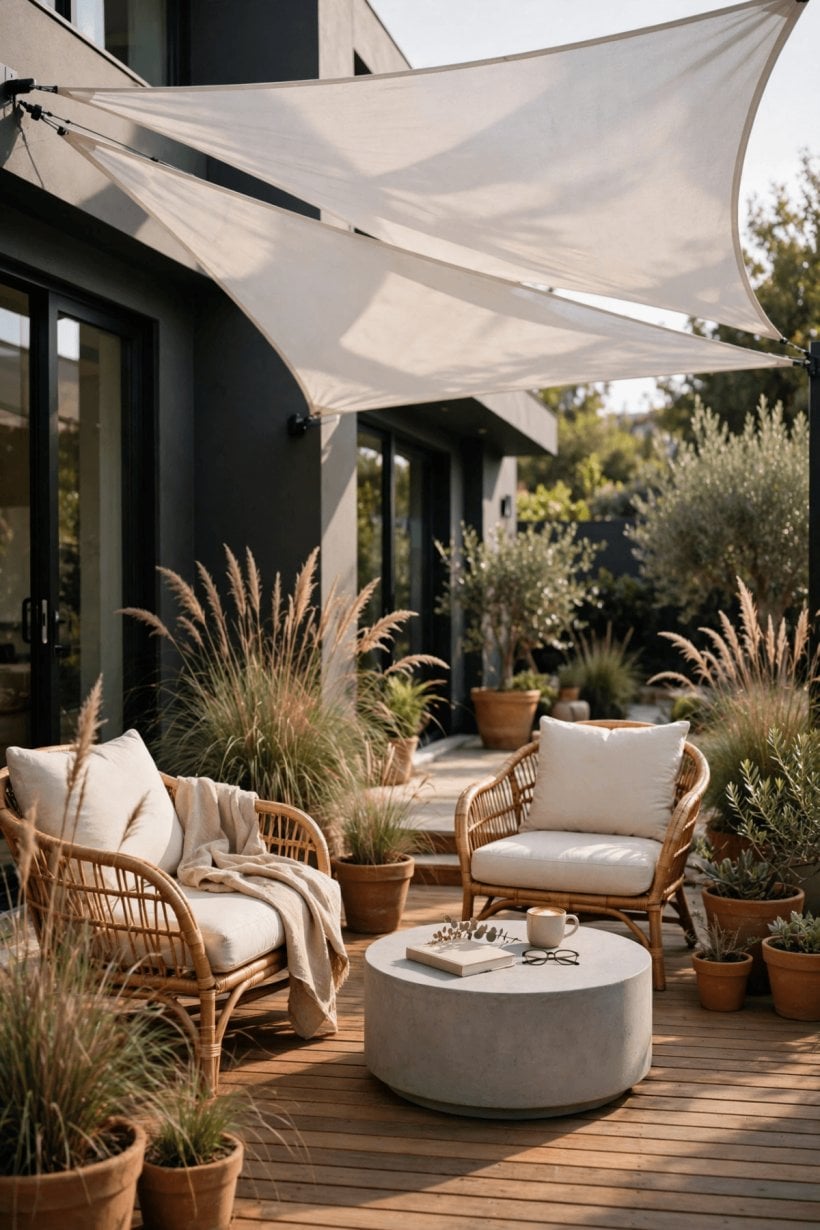
56. Add a compact fire bowl on a safe base. A small fire bowl gives real flame without building anything permanent. Set it on a non-flammable surface, keep it away from fences and fabrics, and follow local rules on open fires.
57. Keep a basket of throws by the door. Washable blankets in a basket turn a cool evening into a long one. Shake them out after use and store them dry so they always smell of fresh air, not shed.
58. Try a tabletop heater for small spaces. Where a floor heater would crowd the route, a tabletop option warms the people at the table. Read the maker’s clearances carefully and never leave it running unattended.
59. Make one corner the reading corner. One good chair, a side table, a lantern and a cushion is a complete retreat. Corners that have a purpose get used daily, while leftover corners collect clutter.
60. Add an outdoor cushion store that doubles as a seat. A lidded box keeps cushions dry and gives overflow seating at gatherings. Check the lid seals properly, because a damp cushion store is worse than no store at all.
61. Use candles in tall jars for wind-proof glow. Tall glass keeps flames steady on breezy evenings and looks simple and elegant. Place jars where they cannot be knocked, and blow them out before you go inside.
62. Keep fire tools together in one bucket. Matches, a small brush and firelighters in one metal bucket means no hunting in the dark. Store the bucket under cover, close to where the fire actually happens.
9. Small Details, Storage and Finishing Touches
The last layer is what guests remember: a hook where you need it, a surface that is clean, a corner that smells good. If a work-from-home corner shares the space, Home Office Design Ideas for Tiny Houses and Small Spaces shows how little room a tidy desk really needs.
63. Hang tools on one rail by the door. A broom, a hand brush and a watering can on one rail ends the daily hunt. Everything visible is everything returned, which is how tidy outdoor spaces stay tidy.
64. Add a boot tray and a mat that works. A tray for muddy shoes and a mat that actually scrapes keeps paving cleaner for longer. Hose both down weekly and they quietly save you hours of sweeping.
65. Keep a small outdoor cleaning kit. A bucket with a cloth, a brush and a gentle cleaner under the sideboard makes spills a two-minute job. Small messes cleaned now never become weekend projects.
66. Use trays to corral tabletop clutter. Candles, a plant and a jug on one tray look like a display; scattered, they look like mess. Trays also make clearing the table one trip instead of four.
67. Number the cushion covers for easy pairing. A tiny label inside each cover matches it to its insert in seconds after washing. It sounds fussy until the first spring day when everything goes back outside.
68. Add one piece of outdoor art. A weatherproof print, a simple sculpture or a painted panel gives the eye a resting place. Choose one piece you love rather than several small novelties competing for attention.
69. Finish edges with a crisp line. A straight edge between paving and planting makes everything look deliberate, even in a relaxed garden. Re-cut or re-lay that line once a season and the whole space lifts.
10. Costs, Checks and a Simple Plan
Do the free and cheap things first, live with them, and only then spend on the permanent layer. Prices vary widely by region and material, so treat every figure you hear as a prompt to get local quotes rather than a promise.
70. Spend first on the surface and shade. Floors and shade are hardest to change later and affect every visit. Paint, plants and accessories can all evolve cheaply once the bones of the space are right.
71. Price the whole job, not the headline item. A pergola also needs fixings, footings and finish; a paved area needs a base and edging. Ask suppliers what else a project needs so the true cost is clear early.
72. Check drainage and levels before ordering. Standing water and wobbly tables come from skipped groundwork, not bad luck. An hour with a level and a hose before ordering saves rework that costs far more.
73. Ask your city or county about permits early. Structures, fires and work near boundaries can all have local rules, and they differ from place to place. A quick check with the local office beats discovering a rule halfway through.
74. Buy the best chairs you can, slowly. You touch chairs every visit, so comfort and weather resistance are worth prioritising. One good pair bought now beats a full set that peels, rusts or sags within two summers.
75. Photograph the space each season. A quick photo from the same spot four times a year shows what thrived, what crowded and what nobody used. Next year’s plan then writes itself from evidence, not guesswork.
Final Considerations
Start with layout, shade and seating, in that order, and let everything else arrive gradually. A modern patio does not need to be finished in a month; it needs to be used every week. Keep the path clear, the seats comfortable and the light warm, and the smallest outdoor space will quietly become the room everyone chooses first.


0 Comments