
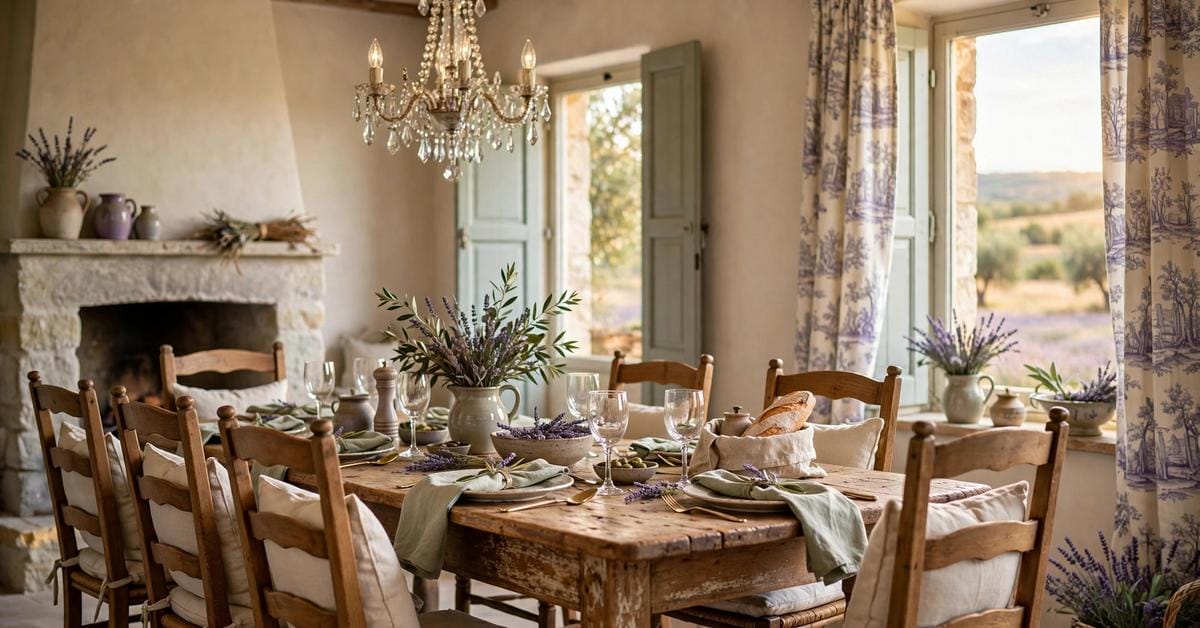
There is a kind of dining room that never hurries anyone: the cloth is linen, the table is scarred by decades of dinners, and lunch has been known to last until the light changes.
These seventy-five ideas build that room — the French country farmhouse dining room of long timber tables, gathered chairs and limewashed calm, planned here from the table outward.
1. French Country Dining Room Ideas at a Glance
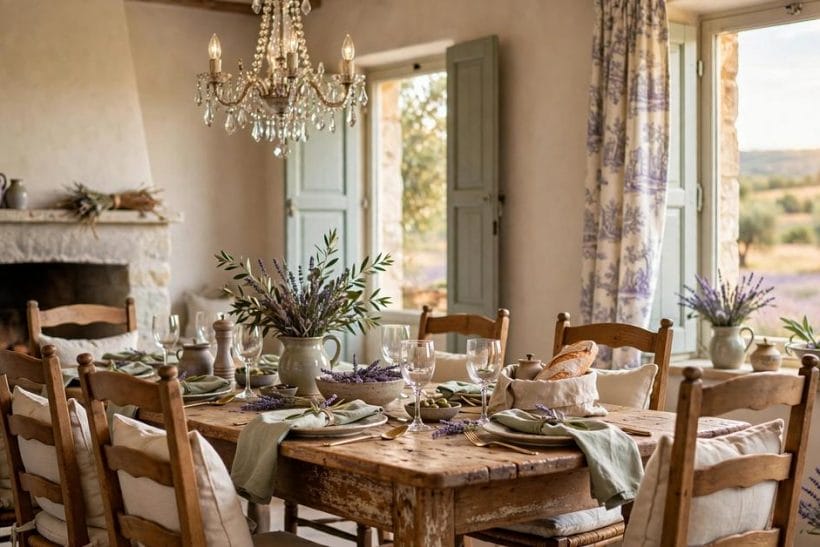
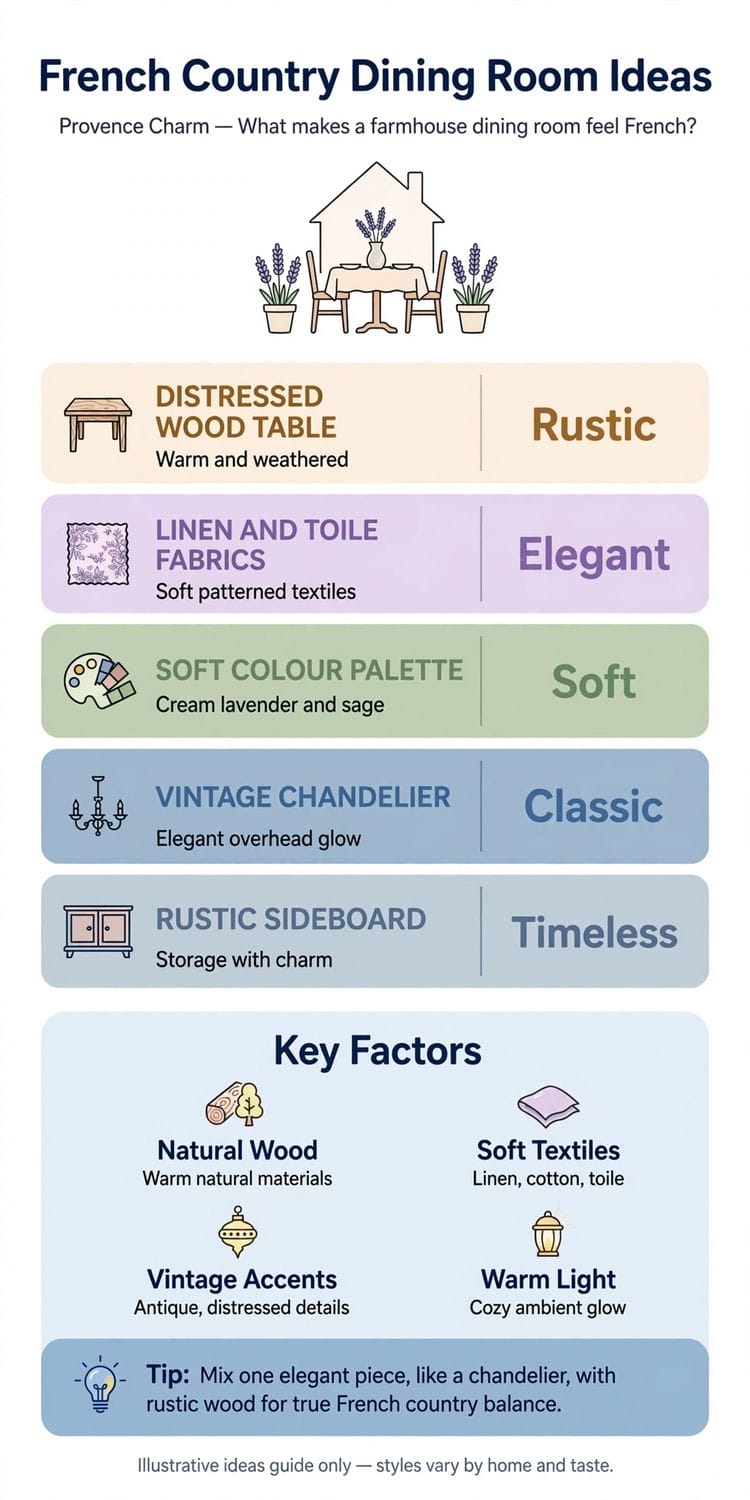
A French country farmhouse dining room is a dining space in the provincial French manner: a generous timber table, mixed and comfortable seating, open storage in hutches and armoires, and a palette of warm whites, stone tones and greyed colours carried on natural materials — linen, rush, iron, stone and wood. Its defining quality is gathered ease: nothing matches perfectly, everything is used daily, and the room is dressed for hospitality rather than display. It ranges from the rustic farm kitchen-diner to the refined château register, and it adapts to open plans and small rooms by scaling its generous pieces honestly. The table is always its centre; every other decision in the room is taken in the table’s service.
| Question | Short answer |
|---|---|
| What defines French country dining? | A long timber table, mixed seating, open storage and a soft, greyed palette |
| Must the chairs match? | No — gathered chairs of one family are the authentic set |
| What colours belong? | Warm whites, stone tones, sage, faded blue and natural timber |
| Can a small room carry it? | Yes — scale the pieces down and keep the palette pale |
| What is the biggest mistake? | Buying a matched showroom look instead of gathering the room slowly |
2. The Table: Farmhouse Timber, Pedestals and Painted Finishes
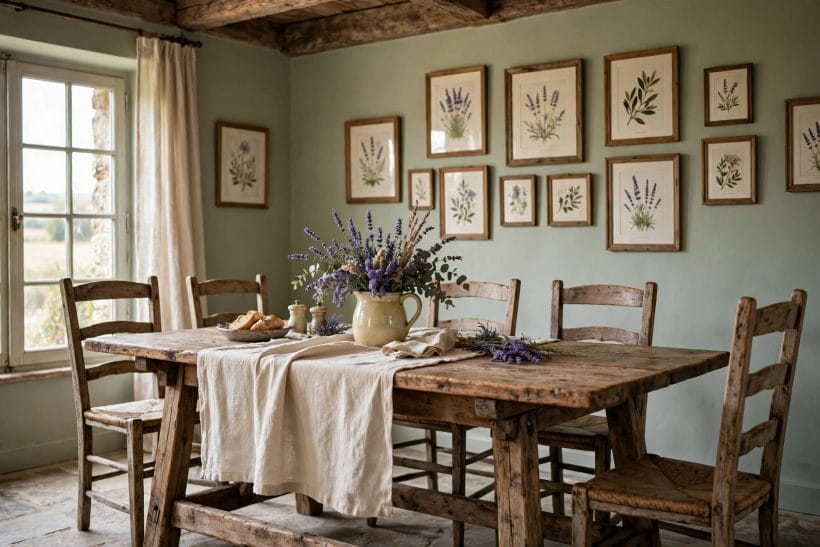
Every French country dining room is built around its table, and the table is chosen for gathering rather than for show. The wider dining family is planned in dining room ideas; here the subject is the provincial table itself — long, sturdy and improved by every meal it hosts.
1. A long farmhouse table in honeyed timber
The canonical choice: thick planks on sturdy legs, finished warm and left to gather the marks of family life. A French country table should look better after a decade of dinners than it did in the shop, and honest timber does.
2. A pedestal table for legroom and grace
A single pedestal — turned, carved or trestle-based — frees every seat from table legs and softens the room’s geometry. Pedestal tables suit round and oval tops, and round tables suit conversation.
3. A draw-leaf table that grows for guests
Leaves stored within the table itself, drawn out when the family multiplies: the French country answer to the feast day. A draw-leaf table lives small and dines large without a spare room for spare furniture.
4. A painted table in chalky white or sage
Paint softens a heavy table for a lighter room: chalky whites, pale greys and sages over timber, worn at the edges by use rather than distressed by design. Painted tables pair naturally with natural timber chairs, and a painted finish forgives the knocks of a family room more kindly than polished wood ever will.
5. A trestle table for the rustic register
Trestle ends and a stretcher bar — the medieval farmhouse’s own design — give the longest, sturdiest tables in this list. Trestles suit rustic rooms and seat the ends without a leg in anyone’s way.
6. A round table for a square room
Where the room is small or square, a round provincial table centres the space and lets everyone see everyone: no head, no foot, and chairs pulled up in any number the circumference allows.
7. A refectory table against the wall
One long side against the wall in daily life, pulled out and dressed for company: the refectory arrangement that lets a narrow room dine beyond its width on feast days.
8. A table with a stone or tiled top
A cool stone or tiled top on a timber base brings the farmhouse kitchen’s practicality to the dining room: hot dishes land anywhere, and summer lunches feel cooler for the stone beneath the plates.
9. An antique-look table with honest wear
Whether genuinely old or faithfully made, a table whose surface carries a soft sheen of use is the room’s soul. French country style never fears a ring mark; it fears a room too precious to eat in.
10. A two-tone table: painted base, natural top
The base painted, the top left in warm timber: the two-tone table bridges painted and natural furniture in one piece, and it is the easiest way to marry mismatched chairs around it.
11. A narrow table for a galley dining space
Provincial style scales down gracefully: a slimmer table, chairs on one side and a bench on the other, and a narrow room dines in the full French country manner at two-thirds the width.
3. Seating: Ladderbacks, Cross-Backs, Benches and Upholstery
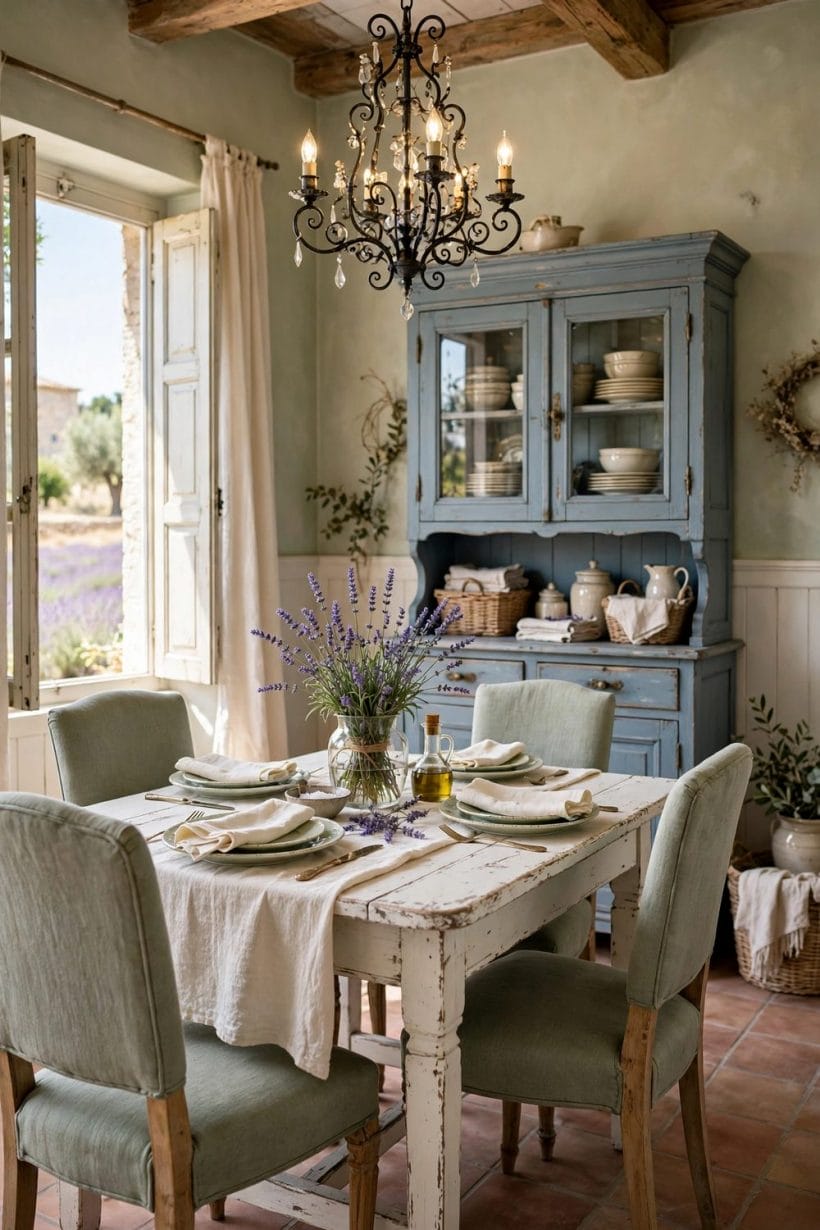
Provincial seating is mixed by tradition — chairs gathered over years rather than bought as a set — and it is always kinder to sit in than to look at. The farmhouse current that runs through this seating is traced at whole-house scale in farmhouse home design ideas; the seats below are its dining-room voices.
12. Ladderback chairs with rush seats
The farmhouse classic: curved ladder slats to lean on, a woven rush seat with give in it. Ladderbacks are light to move, honest to look at and comfortable for the length of a real dinner.
13. Cross-back chairs in bent timber
The bistro-born cross-back — two curved slats forming an X — brings the café’s ease to the country table. Cross-backs stack, lighten a heavy table and suit every register from rustic to refined.
14. A bench along one side
The bench seats the children, the crowd and the elbows-on-the-table conversations; tucked under when not wanted, it is also the small room’s space-saver. A bench on one side and chairs on the other is the provincial compromise.
15. Upholstered host chairs at the ends
Two generous upholstered chairs at the table’s heads give the hosts their thrones and the room its softness. In linen or a faded floral, they carry the French country palette on their backs.
16. Windsor chairs for a lighter country note
Spindled Windsors bring an airy, cottage grace that suits paler rooms and smaller tables. Their see-through backs keep a small dining room feeling open even when every seat is filled.
17. Cane-seat chairs for summer lightness
Woven cane seats and backs breathe in warm rooms and lighten the furniture’s silhouette. Cane belongs to the refined end of provincial style — the château’s country cousin rather than the farm’s.
18. Mismatched chairs gathered over time
The authentic provincial set is no set at all: chairs of one family — timber, similar heights, kindred tones — gathered piece by piece. Unity comes from material and scale, never from a catalogue match — the gathered set is the one that looks as though the room has been loved for years, because gathering takes years.
19. Slipcovered chairs for softness and washing
Loose linen covers over plain chairs: softness, washability and a dressed look that can change with the season’s cloth. Slipcovers are how French country rooms stay relaxed and clean at once.
20. A settle bench with a high back
The old settle — a bench with a tall panelled back — against the wall gives the room its anchor and its draught-proof seat. Settles suit rustic rooms and long walls, and they hold cushions beautifully.
21. Stools for the overflow and the children
A pair of sturdy stools lives against the wall and joins the table when the gathering grows: provincial hospitality assumes extra mouths, and the furniture plans for them.
22. Carver chairs with arms for long dinners
Armed chairs at the places of honour reward the long meal: arms for the talk between courses, in timber that matches nothing and suits everything.
4. Colours and Walls: Limewash, Stone Tones and Soft Neutrals
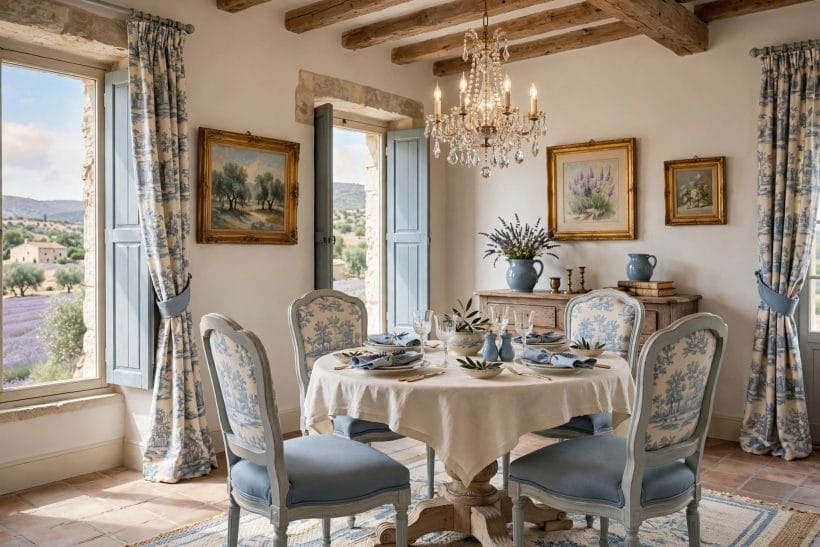
French country colour is daylight remembered: whites gone creamy, blues gone grey, greens gone sage. Nothing in the palette is fresh from the tin, and everything in it flatters timber, linen and food.
23. Warm white and cream as the ground
The provincial ground colour is never a blue-white: it is cream, ivory and old lace — whites warmed by sun and age. Warm white walls make timber glow and keep northern light kind.
24. Limewash for breathing, chalky walls
Limewash gives walls their soft, cloudy depth — colour that shifts with the light and never looks flat. It suits old plaster and new rooms alike, and its matte bloom is the style’s signature finish.
25. Stone tones: greige, taupe and pale clay
The colours of the farmhouse’s own masonry — warm greys, mushroom, pale clay — ground a room that dresses itself in timber and textiles. Stone tones are the neutrals that never feel cold.
26. Sage and soft olive greens
The garden brought indoors: sage on a hutch or a wall panel, olive in the textiles. Provincial greens are always greyed, always quiet, and they flatter every timber tone in this list.
27. Faded blues: chambray, slate and grey-blue
The blue of old shutters and workwear — faded, greyed and gentle. Blue in a French country dining room lives on doors, china and cloth more often than on whole walls.
28. Exposed stone or brick on one wall
Where the house honestly has it, one wall of stone or old brick is the room’s finest decoration. Where it does not, a limewashed wall carries the same softness without pretending to be a ruin.
29. Beams and timber left natural
Ceiling beams, a timber lintel, the table’s own top: the room’s browns come from its structure, not its paint tin. Natural timber against limewash is the style’s oldest colour scheme.
30. A painted ceiling in the palest tint
A ceiling washed in the wall colour’s palest relation — or a breath of blue, as old porches were painted — lifts the room without a contrast line at the coving.
31. Toile and faded florals in small doses
The classic provincial prints — toile scenes, faded roses — belong in cushions, a curtain or a chair seat, not on every surface. A little pattern goes a long way in a room built on texture.
32. Floors in wide timber or worn stone
Underfoot the palette continues: honeyed boards, terracotta or pale stone tiles. Floors in a French country dining room should look walked on for a century and good for another.
33. Black iron as the punctuation
A hinge, a handle, a chandelier, a curtain pole: small notes of blackened iron punctuate the pale palette and keep it from sweetness. Iron is the style’s full stop.
5. Storage and Dressing: Armoires, Hutches and Sideboards
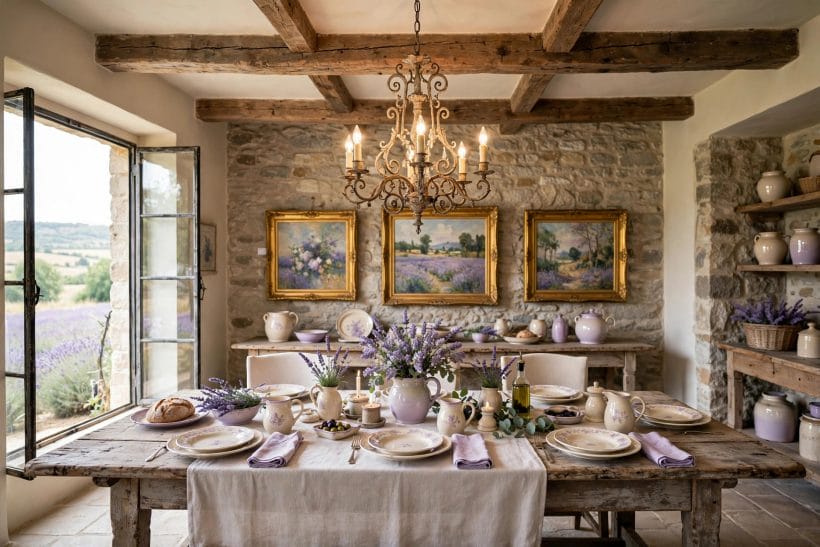
A French country dining room stores its treasures in the open: the hutch is a gallery, the sideboard a stage. Seating built into the architecture — the banquette’s provincial cousin — is planned in built-in banquette seating; the freestanding pieces below are the room’s traditional furniture of display.
34. A hutch dresser stacked with stoneware
The room’s emblem: open shelves of cream stoneware, platters and jugs above cupboards that hold the linen. A hutch should look used daily, because in a real French country room it is.
35. An armoire for the table linen
The great cupboard — often the room’s oldest piece — keeps cloths, candles and the good glass. An armoire’s carved or panelled doors give a plain room its architecture in furniture form.
36. A low sideboard for serving
A long low cupboard along the wall takes the serving dishes, the bread and the wine, and its top becomes the buffet at feasts. Sideboards earn their wall in every dinner they serve.
37. A plate rack on the wall
The old plate rack displays the everyday dishes and keeps them in reach: storage as decoration, in the provincial manner, and a kindness to the cook who sets the table nightly.
38. Open shelves with baskets and jars
Where a hutch will not fit, two timber shelves with baskets, preserving jars and stacked bowls give the same open-storage charm at a fraction of the footprint.
39. A glazed cabinet for the good pieces
Glass doors keep the dust off the inherited china while the eye enjoys it daily: the glazed cabinet is the hutch’s more refined sister, suited to the château end of the style.
40. A baker’s rack in iron and timber
An iron-framed rack with timber shelves holds platters, plants and the bread board: light in structure, strong in character, and easy to move when the room changes its mind.
41. A wine rack or cellarette in the corner
A modest rack for the household’s bottles, kept in the room’s cool corner: provincial dining assumes wine at table, and its storage is furniture, not appliance.
42. A serving trolley for feast days
A two-tier trolley carries the courses and clears them without a dozen journeys: parked by the sideboard between meals, it holds a plant or the fruit bowl like any other table.
43. Baskets under the bench and shelves
Woven baskets take the tablecloths, the napkins and the children’s colouring books: the soft storage that suits a soft room, and costs almost nothing to add.
44. A corner cabinet for an awkward angle
The triangular cupboard turns the room’s dead corner into display and storage at once — an old provincial trick for rooms that were never planned on paper.
6. Lighting, Textiles and Table Dressing
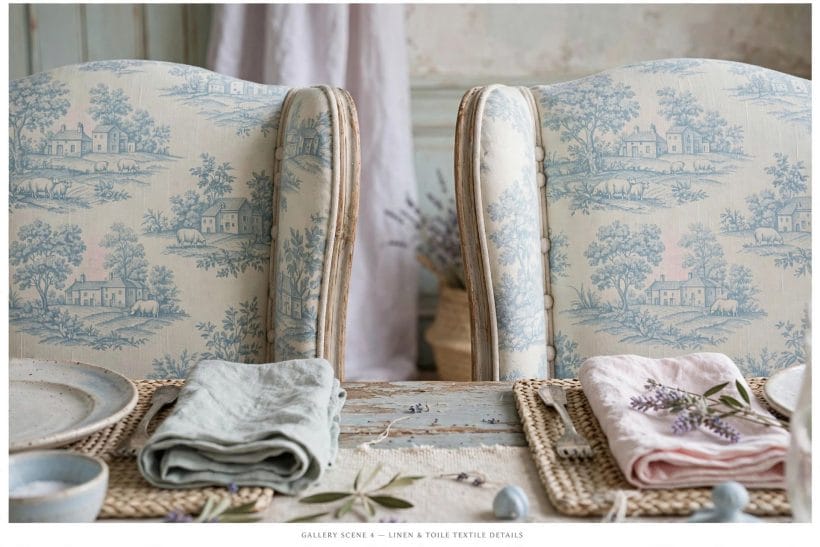
The dressed table is where French country style stops being furniture and becomes hospitality. The seaside register of this same dressing is shown in coastal dining room ideas; here the cloth is linen, the light is candle-warm and the centrepiece comes from the garden.
45. An iron chandelier with candle bulbs
The room’s crown: a blackened-iron chandelier, simply scrolled, hung low over the table’s centre. Candle-shaped bulbs at a warm glow give the flattering light every dinner deserves.
46. A linen tablecloth, softly creased
Natural linen, washed soft and never ironed to a shine: the provincial table’s everyday dress. Its creases are not a failure of housekeeping; they are the style’s signature of ease.
47. A runner over bare timber
For daily meals the cloth gives way to a runner down the table’s spine: the timber shows, the places are marked, and the room feels dressed without ceremony.
48. Napkins in washed cotton and stripes
Generous cloth napkins — checked, striped or plain — knotted or simply folded: the small luxury that makes a Tuesday dinner feel considered.
49. Stoneware and cream china
Heavy cream stoneware, slightly irregular, mixed with older pieces: the provincial table never matches perfectly, and its charm is precisely the gathering of near-relations.
50. Cut crystal’s humbler cousins: simple glass
Plain, sturdy glassware with a little weight in the hand suits the style better than fine crystal: French country luxury is comfort, not fragility.
51. A centrepiece from the garden
A bowl of fruit, a jug of whatever is flowering, a gathering of herbs in pots: the centrepiece is seasonal, edible or alive — never a permanent arrangement gathering dust between feasts.
52. Candles in storm glasses down the table
Candles at several heights, shielded in glass, give the long table its evening light: the chandelier dims, the candles carry, and faces look kind across the boards.
53. Curtains in natural linen at the windows
Unlined linen curtains that move with the breeze and filter the sun to a glow: the window dressing of the whole style, and the reason its rooms photograph like late afternoons.
54. A woven rug under the table
A flatweave or jute rug in natural tones anchors the table, warms the floor’s sound and catches the crumbs’ first fall. Provincial rugs are chosen for endurance dressed as simplicity.
55. Seat cushions in faded checks and florals
Tie-on cushions in the room’s prints soften rush and cane seats and bring the pattern quota to the table level: small, washable and changed with the seasons.
7. Layouts for Long Rooms, Open Plans and Small Spaces
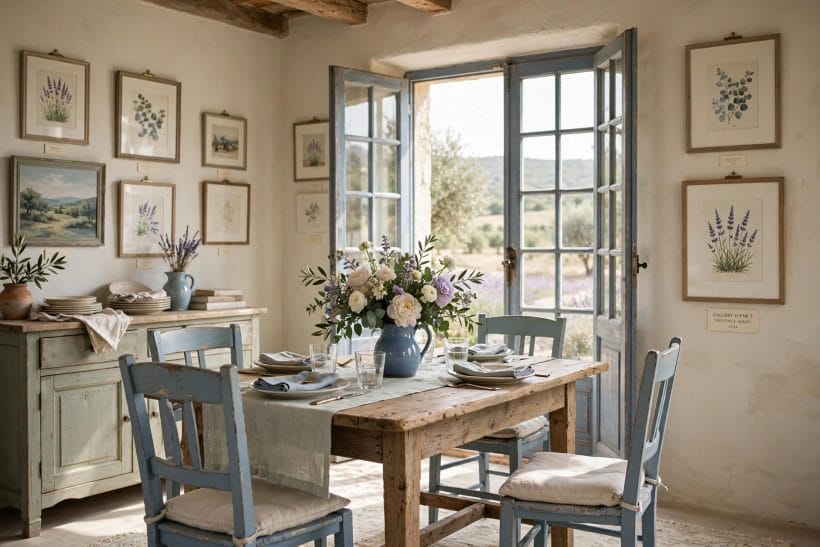
Provincial rooms were rarely built for dining alone — they were the farmhouse’s living heart — so the style adapts to awkward plans with unusual grace. The compact end of the dining family is worked out in small dining room ideas, and its smallest rooms in tiny dining room ideas; the layouts below keep the French country manner at every size.
56. The classic long-room arrangement
Table centred on the room’s axis, hutch on the long wall, sideboard on the short: the arrangement a thousand farmhouses agree on, because it serves the meal and the eye in one plan.
57. Dining at one end of an open plan
The table claims the window end of a shared space, a rug names its territory, and the hutch stands as the room-divider that also stores: open plan, provincially zoned.
58. A round table in a square small room
Centred under the light with chairs in every direction the circumference allows: the small square room’s best plan, sociable and with no wasted corners of table.
59. The table under the window
A table set across a low window dines in daylight and garden view: keep the sill clear, hang the linen curtains wide, and breakfast becomes the room’s finest hour.
60. A banquette along the wall for tight plans
A built-in bench along one wall, chairs opposite: the tight room gains seats without the chairs’ pull-back space on both sides, and gains storage inside the bench as a bonus.
61. Dining in a wide hallway or gallery
A long, wide passage with a narrow table and a plate rack can dine beautifully: provincial style forgives unconventional rooms, because its own rooms were kitchens, halls and barns first.
62. The kitchen-diner in farmhouse manner
Table in the kitchen’s heart, dresser against the wall, cooking and dining in one warm room: the original French country plan, and still the most lived-in layout in this list.
63. A corner arrangement for an L-shaped room
The table turns the corner’s angle into its setting: hutch in the crook, seats on the two open sides, and the awkward L becomes the room’s character.
64. Two small tables that join for feasts
A pair of matching small tables lives apart — one dining, one working — and pushes together when the family descends: flexibility in the provincial spirit of using what the house has.
65. A formal axis: table, chandelier, mirror
Table centred, chandelier above, a gilt mirror on the end wall doubling the candlelight: the refined provincial arrangement, for rooms that dine formally in the country manner.
8. Styles Within the Style: Rustic, Refined and Modern Blends
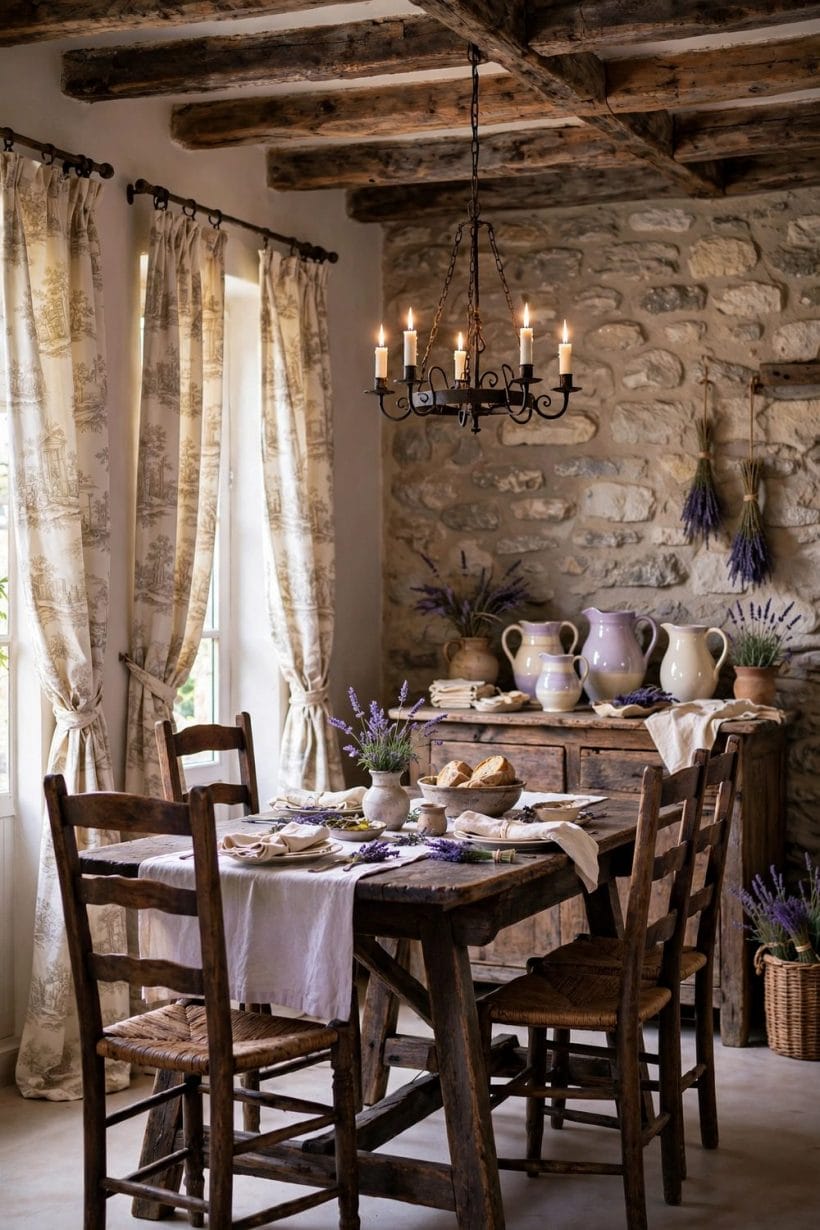
French country is a family, not a formula: the farm’s roughness, the château’s polish and the modern blend all speak its language with different accents. What follows is a tour of the registers, so the room you build argues with itself in one voice.
66. Rustic farmhouse: rough timber and stone
The deepest register: heavy beams, a trestle table, ladderbacks, stone on the wall and iron in the hand. Rustic French country is warm, sturdy and unembarrassed by wear.
67. Refined provincial: the château’s country manners
Carved legs, cane seats, glazed cabinets and toile in the cushions: the polished end of the style, where the farmhouse’s shapes are kept and its roughness is planed away.
68. The pale Scandinavian blend
French country shapes in a northern palette — paler paint, lighter timber, white linen: the blend that suits bright, small and modern rooms best.
69. The Mediterranean cousin: warmer and deeper
Terracotta underfoot, deeper blues and olives, a tiled table top: the style turned toward Provence’s hotter light, keeping the shapes and warming the colours.
70. Modern farmhouse: provincial shapes, cleaner lines
The farmhouse table and ladderbacks kept, the carving and clutter edited out: modern farmhouse is French country’s grandchild, and the easiest version to live with in a new house.
71. Cottage country: smaller, softer, floral
Everything scaled down and softened — painted furniture, faded roses, a dropleaf table: the cottage register, made for small rooms and gentle light.
72. The collected look: antiques across centuries
A room gathered rather than decorated: a table from one century, an armoire from another, chairs from a third. The collected register is the most authentic of all, because it is how the originals actually formed.
73. Garden-room dining: the style moves outside in
Plants on the hutch, a garden bench at the table, herbs as the centrepiece and linen the colour of canvas: the dining room dressed as the garden’s indoor chapter.
74. A monochrome version in whites and timber
The whole palette reduced to warm whites and natural wood, pattern carried by texture alone — linen, rush, grain, limewash: the quietest French country, and the most restful.
75. The festive register: the room dressed for the feast
Everyday provincial bones with the feast-day layer added — the long cloth, the candles multiplied, the hutch’s best stoneware down and dressed: the style at its most generous, which is its natural state.
9. Checks and Mistakes: Before the First Purchase or the First Fitting
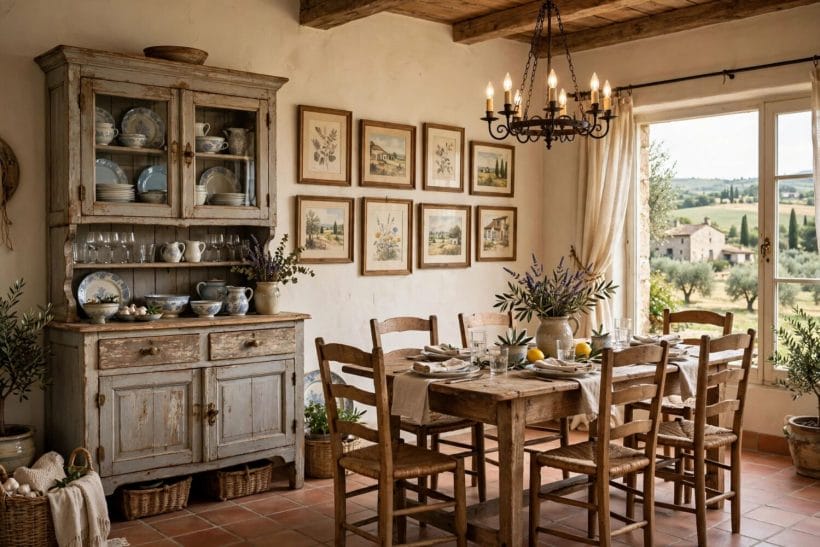
Begin with the room’s own facts: its light, its proportions and the furniture you already own. French country style is an accumulation, not a purchase — the commonest mistake is buying a matched ‘look’ in one weekend, which produces a showroom where a gathered room should be. Start with the table and the best chairs you can manage, and let the rest arrive over seasons.
Mind the scale honestly. Provincial furniture is generous — armoires and hutches are tall, farmhouse tables are long — and a small room filled at farmhouse scale becomes a warehouse. Measure doors as well as walls: the armoire that fits the room must first fit through its entrance.
Texture does the work that pattern should not. Rooms that feel ‘too much’ usually carry the prints at every level — curtains, cushions, cloth and china all talking at once. Keep the prints to two voices and let linen, rush, timber grain and limewash carry the rest.
Care is part of the style’s honesty: rush seats wear and are re-woven, linen softens with washing, timber tables gather marks and are oiled rather than hidden. Choose pieces whose ageing you will enjoy, because in this style everything ages in full view.
10. Costs and Pulling It Together
Costs follow the table and the storage pieces, which are the room’s capital. Antique and solid-timber pieces are the expensive end and the durable one; painted and gathered furniture builds the same room more slowly and more cheaply, and often more charmingly.
The drivers in order: the table first, then seating, then the hutch or armoire, then lighting and textiles, then the tableware that dresses it all. Textiles and stoneware are where a small budget makes the largest visible difference.
Pull the room together by fixing the palette — warm whites, stone tones, one greyed colour — and letting every later purchase answer to it, whether it arrives from an antique market or a modern shop.
Final Considerations
A French country dining room is not really a style of furniture; it is a style of welcome — a room that assumes people will stay long at the table, and dresses itself accordingly.
Begin with the table, gather the rest slowly, and let these seventy-five ideas stock the room that your dinners deserve.

0 Comments