

Every household has one piece of furniture that hears everything — the arguments, the announcements, the jokes that only work at home. It is rarely the sofa.
These 75 dining room ideas build the room around that table in order — table and seating first, layout and light second, colour and small-room discipline last — so the finished room gathers people as it should.
1. Dining Room Ideas at a Glance
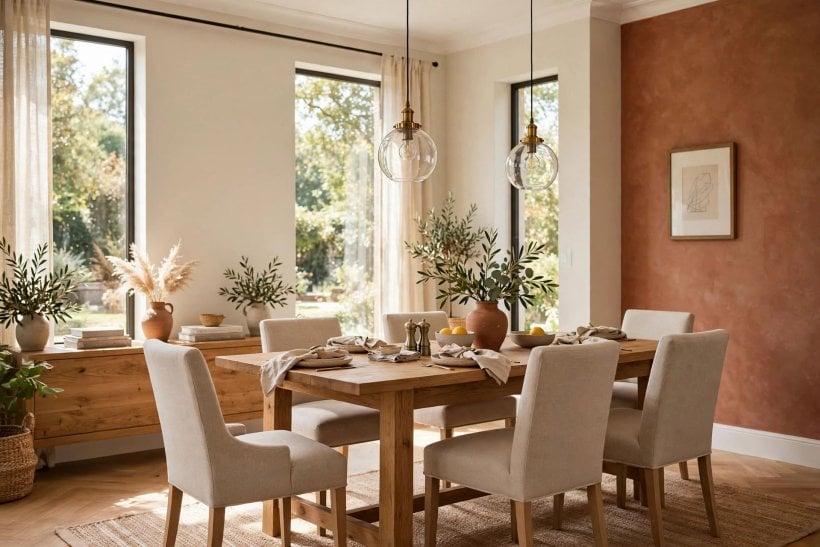
The central entity is the dining room: the house’s gathering room, built around a table and defined by its attributes — the table itself, the seating, the circulation around both, the light above, the storage behind, and the backdrop of colour and floor beneath. The first governs all the rest: a dining room succeeds or fails at the table, and everything else is arranged in the order a good room is built.
| What size table do we need? | One honest place per regular diner — elbows, plate, glass — plus an extending or spare-seat answer for guests. A table that fits daily life beats a banquet board the room must apologise for. |
| Which shape works best? | The shape the room suggests: round softens small rooms, rectangular serves gatherings, oval eases tight circulation. |
| How should a dining room be lit? | In layers aimed at faces: a pendant centred over the table, dimmable, hung low enough to pool light, with candlelight softening the edges. |
| Can a small home have a real dining room? | Yes — as a deliberate zone, not a leftover corner: a drop-leaf or folding table, slim tuck-away chairs, and a pendant hung low to declare the room. |
| What is the biggest mistake? | Buying the suite before measuring the room: a table and chairs that fit the floor plan but leave no walking room, no serving route and no space to pull a chair out in comfort. |
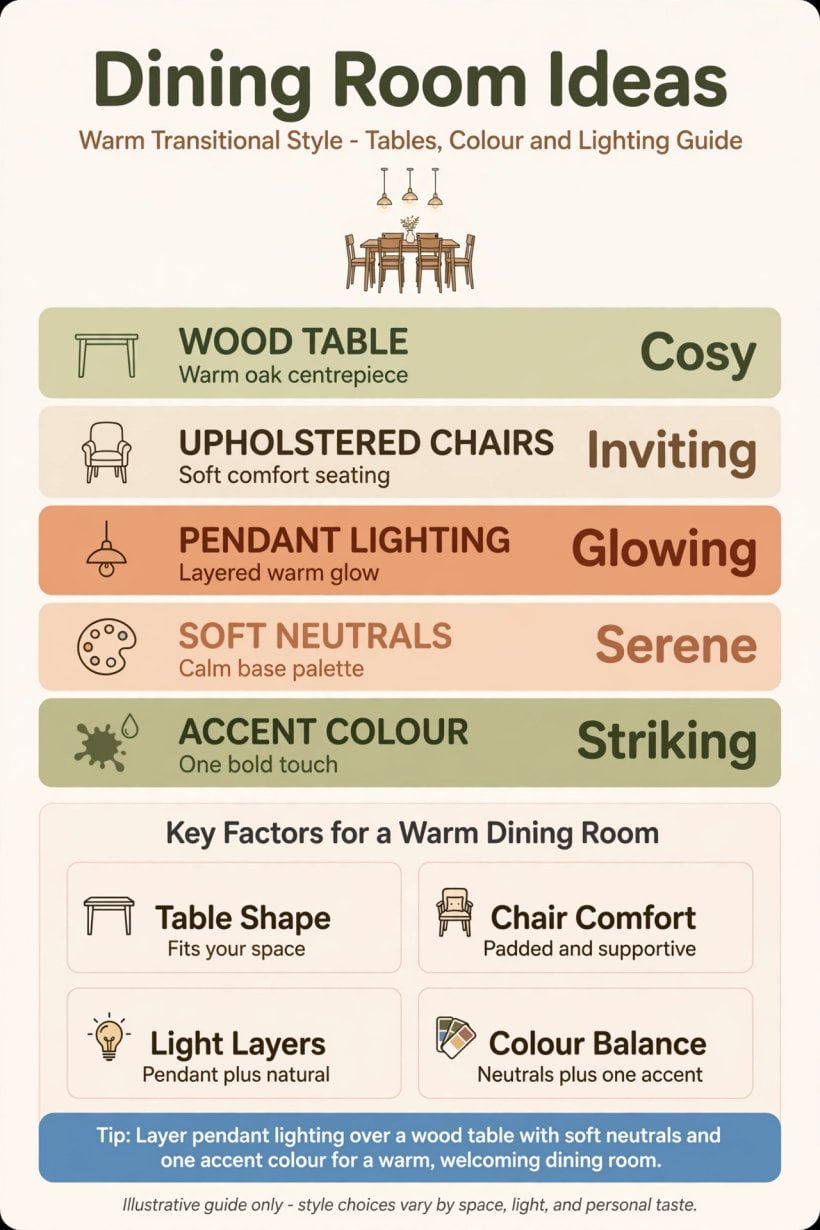
At a glance: start with the table, seat people for long evenings, keep the routes around them clear, light their faces warmly, and let colour serve the gathering.
2. The Table First: Shape, Size and Place
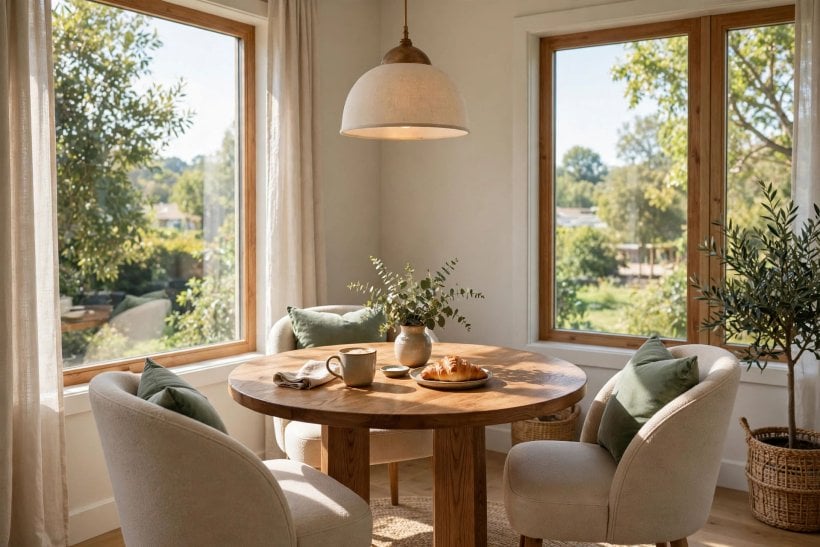
The dining-specific layouts in these dining room interior design ideas for tiny houses make the same point at small scale: the table is chosen first, honestly sized, and the room is arranged around it — never the other way round.
1. Start With the Table, Not the Chairs
The table is the room’s fixed point; chairs, lights and storage take their measurements from it. Choose it first, tape its footprint on the floor for a day, and let every decision answer to it.
2. Give Every Diner an Honest Place
Each regular diner needs a place wide enough for elbows, a plate and a glass without negotiation. Size the table for the household’s real evenings, not its rarest feast.
3. Choose the Shape the Room Suggests
Long rooms take long tables; square rooms forgive round ones; narrow rooms want slim rectangles or ovals. The right shape is the one the architecture has been hinting at all along.
4. Let a Round Table Soften a Small Room
A round table has no corners to catch hips and no head to honour, so conversation runs evenly around it. In a small room it seats more goodwill per square foot than any other shape.
5. Keep a Rectangular Table for Gatherings
The rectangle is the gathering shape: a clear centre for serving dishes, ends for hosts, and sides that extend gracefully. Where family dinners run long and guests run many, it remains the honest default.
6. Use an Oval Where Corners Crowd
An oval keeps the rectangle’s length and loses its corners, easing the squeeze past chair backs in a tight room. It suits narrow dining rooms and open-plan zones where the walking route passes close.
7. Bench One Side, Chair the Other
A bench along one side seats children and crowds cheerfully, and tucks under the table afterwards. Chairs opposite keep the grown-up side of the table comfortable and upright.
8. Extend for Guests, Shrink for Tuesdays
An extending table is two honest sizes in one footprint: easy for ordinary evenings, opened out for feasts. Choose a mechanism you can work alone.
9. Set the Table’s Height and Legs for Comfort
Standard height suits standard chairs; what matters is the apron beneath the top and the legs at the corners. Check knees, chair arms and frame agree before buying.
10. Place the Table Where the Light Falls
A table under the room’s best window dines by daylight and gathers the household at breakfast as surely as at dinner. Where light is poor, the pendant must do the sun’s work.
11. Leave Walking Room on Every Side
Chairs need room to slide, diners to rise, and servers a route clear of shoulders and hot dishes. Walking room is the table’s invisible place setting — lay it first.
3. Chairs and Seating: Comfort for Long Evenings
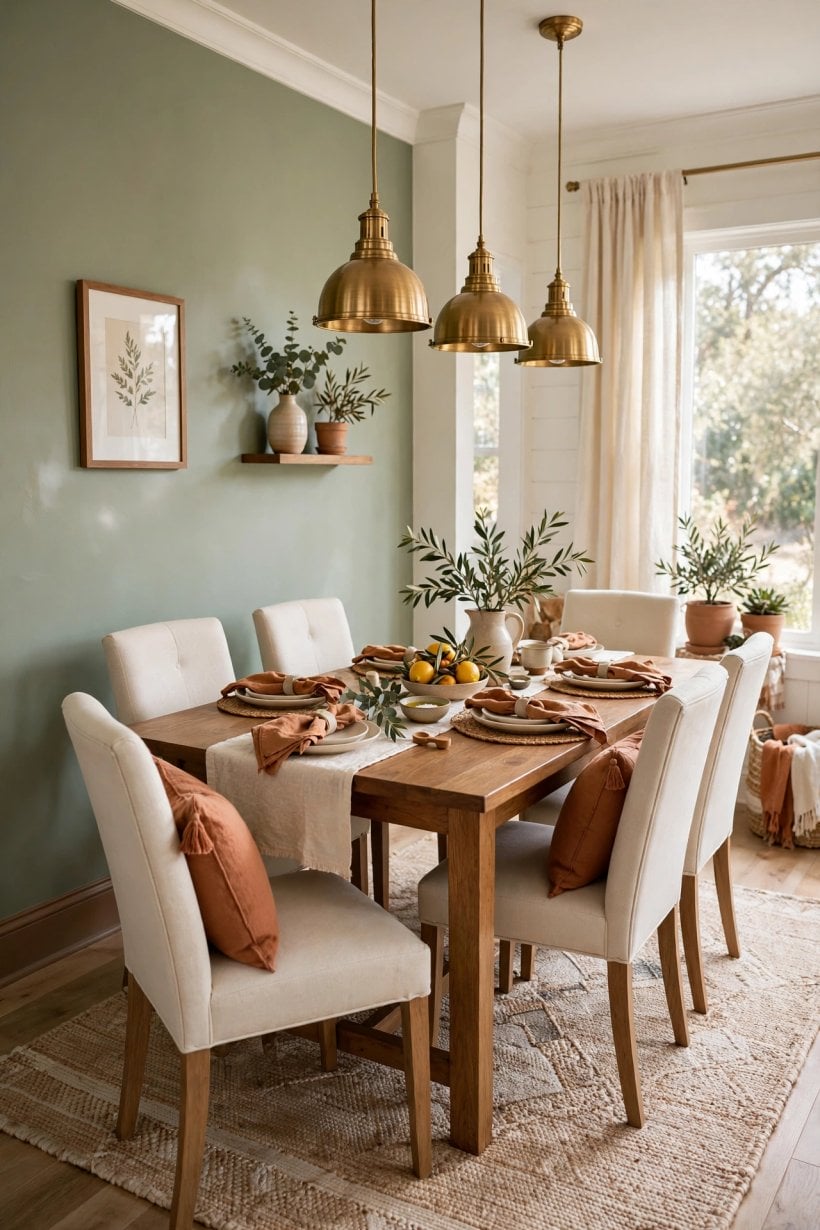
A dining chair is judged at the second hour, not the first sitting. The seats below are chosen for the meal that lingers — the conversation after the plates.
12. Match Chair Height to the Table’s Apron
The quiet failure of many dining sets is a chair whose arms will not pass under the table’s apron, leaving diners perched too far from their plates. Measure the apron, then buy the chair.
13. Choose Arms Where the Table Allows
Arms at the table ends give hosts a throne’s ease and long dinners a resting place. Keep sides armless where space is tight; the mix reads deliberate.
14. Mix Chairs for a Gathered Look
A gathered room rarely matches perfectly, and it need not: chairs united by timber tone, height or upholstery colour feel collected rather than confused. Mismatched by accident is a failure; mismatched by rule is a style.
15. Upholster the Seats That Linger
Padded seats earn their keep on the evenings that run long. Keep upholstery to the seat pad where children and red wine are regular guests — comfort where it counts, forgiveness where it spills.
16. Keep a Spare Pair Ready to Pull Up
Two spare chairs, living useful lives elsewhere in the house, turn a table for six into a table for eight without drama. The dining room that cannot grow by two is a room that fears guests.
17. Let One Bench Serve Children and Crowds
Children sit closer, spill more and mind less; a bench absorbs all three truths happily. It seats the unexpected cousin without a furniture expedition, and slides away afterwards.
18. Pick Finishes That Forgive Crumbs and Wine
Dining finishes are tested nightly by gravy, wax and the occasional flood. Wipeable leather, washable covers and timber that takes a ring mark as patina outlast any fabric that must be feared.
19. Test the Sit Before You Buy the Set
Sit in the chair at a table, at dining height, for longer than feels polite in the shop. Backs, seat depth and the angle of repose only confess themselves to a patient sitter.
20. Give the Hosts the Room’s Best Seats
The seats facing the room and the kitchen door belong to whoever is hosting. A host with their back to the evening spends dinner turning around.
21. Store Extra Seating in Plain Sight
Stacking chairs in a corner, a bench that doubles as a hall seat, stools that serve as side tables: seating hidden in the open keeps the room ready without a storage expedition.
22. Retire the Wobble Before It Retires Dinner
One wobbling chair taxes every meal it attends. Tighten, glue or retire it before the feast — guests forgive plain furniture long before furniture that spills them.
4. Layout and Circulation: Room Around the Table
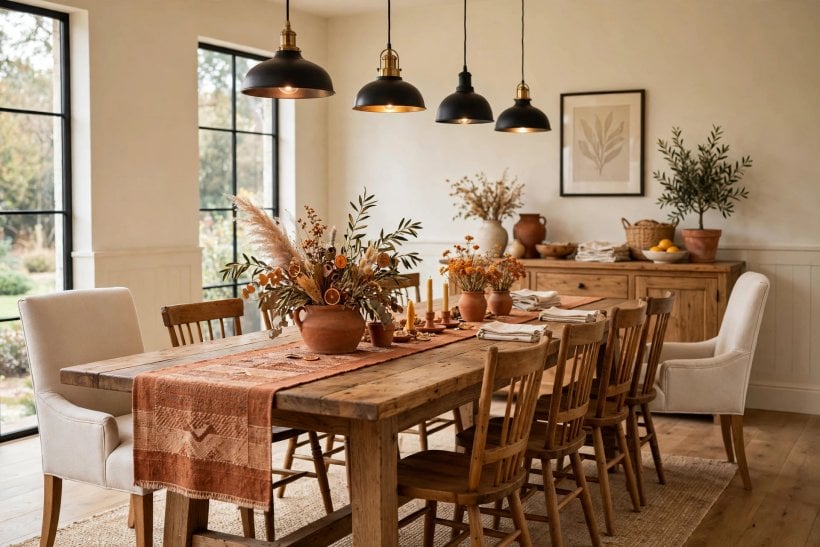
Layout is the choreography of serving, sitting and rising. In open-plan homes the dining zone borrows its logic from these kitchen ideas and is often drawn alongside these tiny house floor plans — the route from hob to table should be short and straight.
23. Centre the Table Under the Light
The pendant and the table are a pair; off-centre, both look apologetic. Set the table where the light hangs, or move the light — and settle it before decorating.
24. Keep Serving Routes Clear of Chair Backs
The route from kitchen to table is walked with full hands and hot dishes. Keep it clear of chair backs, rug edges and the family dog’s favourite lying place, and dinner arrives calm.
25. Let the Room Breathe at Its Edges
A dining room crammed wall to wall makes every meal feel like a negotiation. Leave the edges breathing — a margin of floor at the walls — and even a modest room dines generously.
26. Anchor the Table on a Rug That Fits All Legs
If a rug sits under the table, it must take every chair leg with the chairs pulled out, or it becomes a nightly trip hazard. Otherwise, let the floor speak.
27. Place the Sideboard on the Serving Side
The sideboard belongs where serving happens — on the kitchen side of the room, within a few steps of the table. Placed across the room, it becomes scenery; placed on the route, it becomes staff.
28. Keep Doors and Drawers Out of the Swing
Chair backs, opening doors and sideboard drawers all claim the same air. Walk the room’s swings before the furniture is final; let nothing collide with a seated diner.
29. Borrow Space From the Room Next Door
A dining room that opens to the sitting room can borrow ceremony from it on feast days: aligned doors, a shared palette, a table that extends toward the company.
30. Define the Dining Zone in an Open Plan
Without walls, the dining zone is declared by its pendant, its rug and the table’s own gravity. Give the zone all three signals and guests will find their seats as surely as in a walled room.
31. Keep a Clear Line From Kitchen to Table
Cook and diners are one household in two places; the line between them should be visible and walkable. A clear line means help, dishes and conversation can cross the divide.
32. Turn a Bay or Alcove Into the Dining Place
A bay window is a dining room waiting for its table: light on three sides, a natural centre, and the rest of the room left free. Alcoves take a bench along the wall and dine like booths.
33. Give the Corners Honest Work
Dining-room corners earn their keep with the bar cart, the plant stand, the spare-chair stack or the tall dresser. A corner with a job keeps the centre clear for the table.
5. Light Over the Table: Pendants, Candles and Dimming
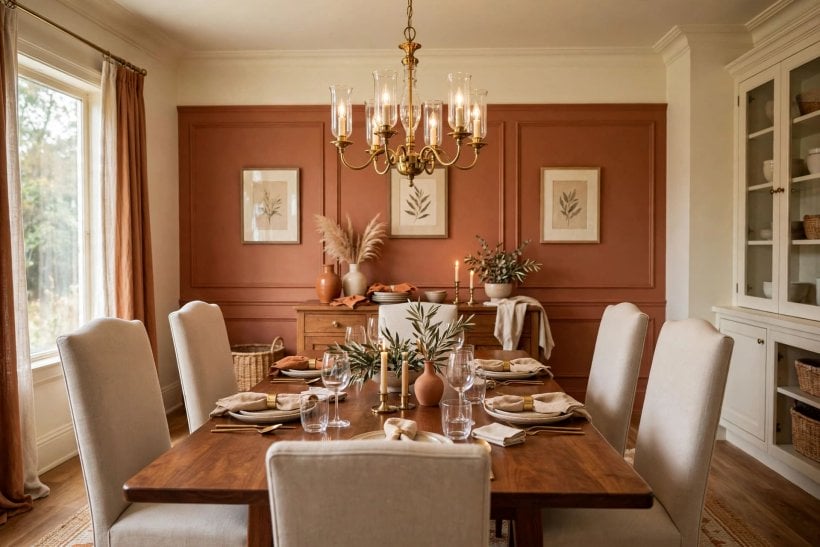
Dining light is aimed at faces. Its job is flattery and warmth — making everyone at the table look like the evening is going well.
34. Hang One Pendant as the Room’s Anchor
A single pendant centred over the table declares the room’s purpose from the doorway. Choose it as you would choose the table — first, and at a scale the room notices.
35. Pair Pendants Over a Long Table
Long tables take two smaller pendants better than one giant: the light spreads evenly, both ends dine in the glow, and the ceiling gains a rhythm to suit the table.
36. Set the Shade Height for Faces, Not Glare
The pendant should hang low enough to pool light on the table and high enough to see the faces opposite. Sit at the table, adjust, and judge by the eyes across from you.
37. Put the Light on a Dimmer
Breakfast wants brightness; dinner wants a glow. A dimmer is the dining room’s cheapest transformation, turning one fitting into a whole range of moods — fit it first.
38. Layer Candlelight Over Electric Light
Candles do what no bulb imitates: they move. A few flames soften every face and forgive every dish — the oldest dining light remains the best dressed.
39. Add Wall Light for the Room’s Edges
A pendant alone leaves the walls in darkness and the room feeling smaller than it is. Gentle wall light at the edges returns the room’s size and gives the gathering a backdrop.
40. Use the Window’s Daylight Honestly
Daytime dining lives on window light; keep the glass clean, the dressings light, and the table within the sun’s reach. A room that dines well at noon rarely fails at night.
41. Choose Bulbs for Warmth at the Table
Warm-toned bulbs flatter food and faces alike; cold, blue light belongs in surgeries. Where fittings take several bulbs, match their warmth exactly.
42. Keep a Lamp on the Sideboard for Evenings
A low lamp on the sideboard gives the room a second, softer centre after the meal, when chairs turn and talk slows.
43. Let Metal and Glass Catch the Glow
Brass, glass and polished timber return the light they are given, multiplying candlelight around the room. A little shine at the table is not vanity; it is lighting by other means.
44. Darken the Ceiling, Brighten the Table
A ceiling painted a shade deeper than daylight expects makes the pendant’s pool of light feel intentional and intimate. The contrast turns an ordinary fitting into an occasion.
6. Storage and Serving: Sideboards, Dressers and Bars
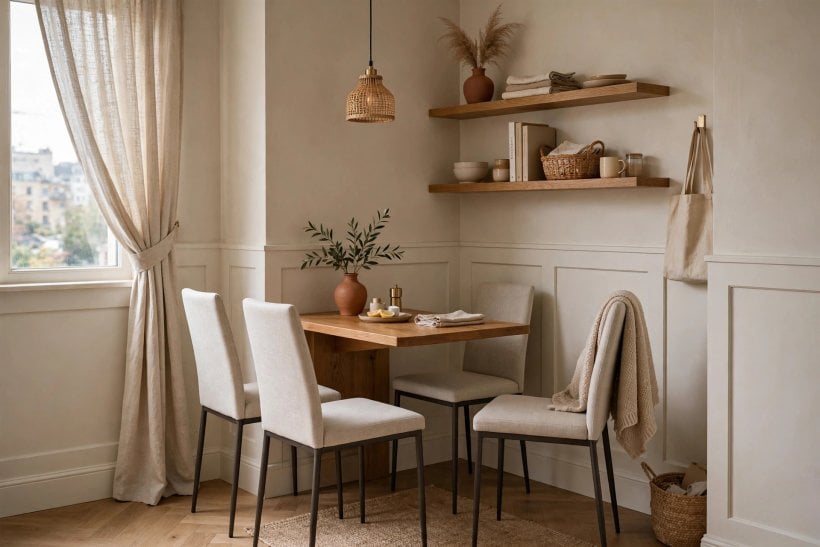
The dining room’s storage works in public, serving the meal and displaying the household’s better objects at once. The clean display discipline in these modern tiny house interior design ideas — one collection shown, the rest put away — suits dining storage exactly.
45. Give the Room a Sideboard With a Job
A sideboard is the dining room’s second staff member: serving surface on top, equipment within. Choose it for storage that matches what the table uses, not for looks alone.
46. Store the Table’s Linen Where It Is Used
Table linen stored in another room is linen that stays in another room. A sideboard drawer for cloths, napkins and runners puts the dressed table within one reach of the bare one.
47. Keep Everyday Crockery in the Dining Room
The plates used nightly should live where they are used nightly. Storing it in the dining room shortens every setting and clearing, and frees the kitchen’s counters.
48. Add a Serving Surface Near the Kitchen Door
Dishes arrive in waves and need a landing strip by the kitchen door — sideboard end, console or trolley — keeping the table for diners.
49. Let a Bar Cart Earn Its Corner
A bar cart is a small ceremony on wheels: glasses, bottles and the evening’s ritual in one footprint. Where a built bar is impossible, the cart keeps hospitality mobile.
50. Display One Collection, Hide the Rest
One shelf of the good glasses or the inherited plates gives the room its story; everything else belongs behind doors. Display is editing — the sideboard that shows everything shows nothing.
51. Use a Dresser for the Tall and Awkward
Serving platters, tall jugs and the vase that fits nowhere: a dresser’s height takes the awkward pieces upright and visible. Keep the heaviest low and the precious behind glass.
52. Keep Table Leaves Where They Belong
Extending leaves stored in a distant attic are leaves that never extend. A flat space in the sideboard, under the bed nearby or behind the dresser keeps the bigger table one decision away.
53. Make Room for the High Chair and the Booster
Young diners are diners. Plan for the high chair’s footprint and a booster in the cupboard, and the whole family is welcomed without a furniture reshuffle.
54. Hide the Chargers, Cords and Clutter
Modern dining rooms accumulate chargers, laptops and post. One drawer or basket, designated and ruthless, keeps the table a table and the meal free of the day’s administration.
55. Leave One Empty Surface for Serving
The most useful surface in the room is the empty one. Resist dressing every top; a clear stretch of sideboard is what makes serving six people calm instead of theatrical.
7. Colour, Walls and Floors: The Room’s Backdrop
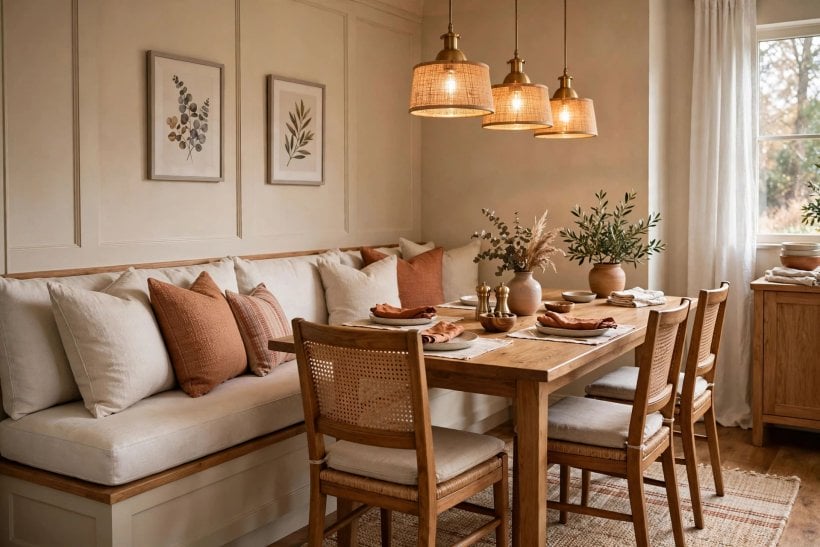
Dining rooms are evening rooms, and their colour should be tested at the hour they are used. The behaviour of colour in small, lamplit spaces runs through these tiny house interior paint colours — test on the wall, at dinner time, before committing the room.
56. Paint the Room for Evening Light
Judge every dining-room colour after dark, under the pendant’s own light. Shades that charm at noon can turn cold or muddy by candlelight; the evening is this room’s working shift.
57. Use Deep Colour Where Candles Gather
Deep greens, inky blues and warm clays make candlelit rooms feel close and generous. A dining room used mostly at night can carry a darkness that would oppress a day room — and glow for it.
58. Keep Pale Walls for Daytime Dining
Where the table works breakfast and lunch as hard as dinner, pale walls keep the room honest at every hour. Save the drama for curtains, art and the table’s own dressing.
59. Let One Wall Carry the Room’s Story
A single wall of art, plates or family photographs gives diners something to rest their eyes on between courses.
60. Choose Flooring That Forgives Dropped Cutlery
Dining floors meet dropped forks, dragged chairs and the occasional glass of red. Timber, stone-look tile and honest boards forgive; pale grout and high-pile carpet keep the score forever.
61. Layer a Rug for Warmth and Quiet
A rug under the table softens the room’s acoustics — dining rooms echo — and warms bare feet at breakfast. Choose a flat weave that chairs can slide on and spills can leave.
62. Repeat the Table’s Timber in the Room
One repeated material ties a mixed room together: the table’s oak echoed in sideboard, frames or floor. Repetition, not matching, is what makes gathered furniture feel chosen.
63. Dress the Windows for Dinner Hour
Curtains or blinds that close at dinner turn a glass wall back into a room and keep winter evenings in. Dress the dining windows for privacy and warmth, not only for the daylight view.
64. Keep One Living Green at the Table
A plant on the sideboard, herbs at the window, a branch in a tall vase: one living green thing keeps the room from feeling staged.
65. Keep the Ceiling Quiet
The pendant is the ceiling’s performance; the paint around it should stay quiet. A calm ceiling lets the light fitting and the table below carry the room’s whole drama undisturbed.
8. Dining in Small Homes and Tiny Houses
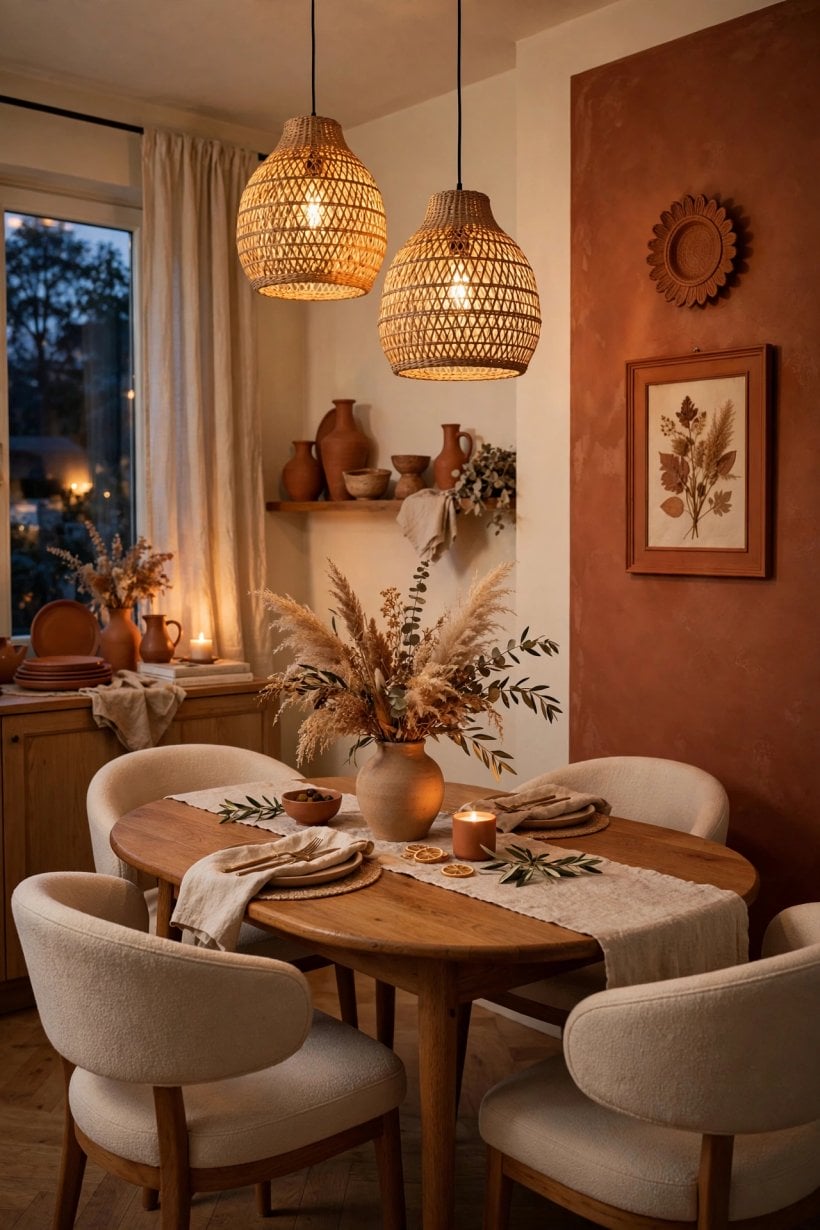
Small homes do not need smaller hospitality — they need dining that folds, tucks and doubles. The discipline behind these apartment interior design ideas for tiny houses applies whole: every piece earns its place twice, and the dining place is declared by light, not walls — the same art practised throughout these notes on how to live in a tiny apartment.
66. Fold the Table to the Wall on Weekdays
A wall-folding table gives a small home a full dining place that vanishes after breakfast. Hinged honestly and latched well, it seats four at dinner and returns the floor by morning.
67. Let a Drop-Leaf Earn Its Keep
The drop-leaf is the small room’s extending table: leaves down for two, one up for four, both up for the feast.
68. Dine at the Kitchen Counter, Properly Dressed
A counter becomes a dining place when it is treated as one: real chairs or stools with backs, a runner, the good glasses. Dressed deliberately, counter dining loses its apology and keeps its convenience.
69. Use the Window Seat as Dining Seating
A window seat along one side of the table seats three where chairs seat two, stores blankets in its belly, and gives the dining place the best light in the home for free.
70. Choose Slim Chairs That Tuck Away
Small dining lives or dies on chair footprint. Slim, armless chairs that tuck fully under the table return the room’s floor after every meal — measure the tuck before the style.
71. Hang the Pendant Low to Make a Room of Light
In an open plan, a pendant hung low over the table builds a ceiling of light at dining height. The gathering place appears when the light dims, walls or no walls.
72. Share the Dining Table With Work and School
The small home’s table works three shifts: desk, homework bench, dining table. Keep a tray or box that clears the day shift in one motion, so dinner never negotiates with paperwork.
73. Take Dining Outside When the Season Allows
A small home’s largest dining room is its garden, terrace or balcony. A folding outdoor set extends the table’s guest list all summer and asks only a dry evening in payment.
74. Keep a Tray for Dining Anywhere
The tray is the tiny home’s dining room in exile: the garden step, the sofa, the bed on a slow Sunday. Keep one good tray dressed and ready, and smallness never cancels a proper meal.
75. Make Small Dining Deliberate, Not Apologetic
A small dining place set with intention — light, cloth, the good plates — out-dines a large room set with indifference. Scale is circumstance; ceremony is a decision, and it is available at every size.
9. Checks and Mistakes: Before the Furniture Arrives
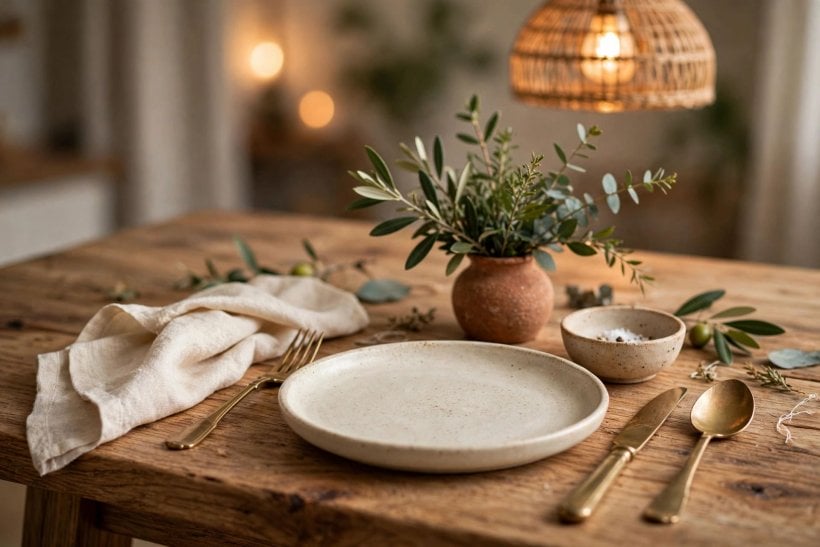
The dining room’s expensive mistakes are made on paper and in showrooms: a suite bought by photograph that leaves no walking room; chairs whose arms fight the table’s apron; a pendant centred on the ceiling instead of the table; and a rug sized for the catalogue shot that catches every chair leg. Every one is a measuring error wearing a delivery note.
Run the checks in order: the table’s footprint taped on the floor and walked around for a day; chairs tested at a real table, arms against apron; the pendant’s position settled with the table, not the ceiling rose; the serving route from kitchen walked with full hands; and colour judged on the wall at dinner time. A dining room is a machine for gathering; the checks are its fitting.
10. Costs and Pulling It Together
Dining-room money divides into three bands. The table-and-chairs band takes the great majority and is effectively permanent, so it earns the budget’s patience — honest timber and a sit that stays comfortable for a decade. The light-and-storage band — pendant, dimmer, sideboard — is mid-priced and decides how the room feels every evening. The dressing band — linen, candles, crockery, art — is the cheapest and the most changeable, and can grow feast by feast as the household learns its room.
Pull the dining room together in the order this guide opened: table, seats, routes, light, backdrop. Resist the showroom’s invitation to buy the matching suite in a single afternoon. Build the room piece by honest piece and it becomes the place the household gathers and lingers, one dinner at a time.
Final Considerations
A dining room is measured by the second hour of dinner: whether anyone wants to leave the table. Everything in this guide — the table’s size, the chairs’ patience, the light’s warmth — serves that single measurement.
Start with the table, seat people for long evenings, keep the routes clear and the light kind, and let the room’s colour serve the gathering after dark. Do that, and these ideas stop being a list and become the room the household chooses, night after night, without ever quite deciding to.

0 Comments