

Privacy in a garden is rarely about a higher fence. It is about putting the right screen in the right sight line — a panel of slats, a wall of leaves, a trellis of green — exactly where the neighbour’s window meets your favourite chair.
These 25 garden screen ideas cover panels, living screens, slatted designs and planting tricks, with the placement, fixing and upkeep checks that make a screen work in every season.
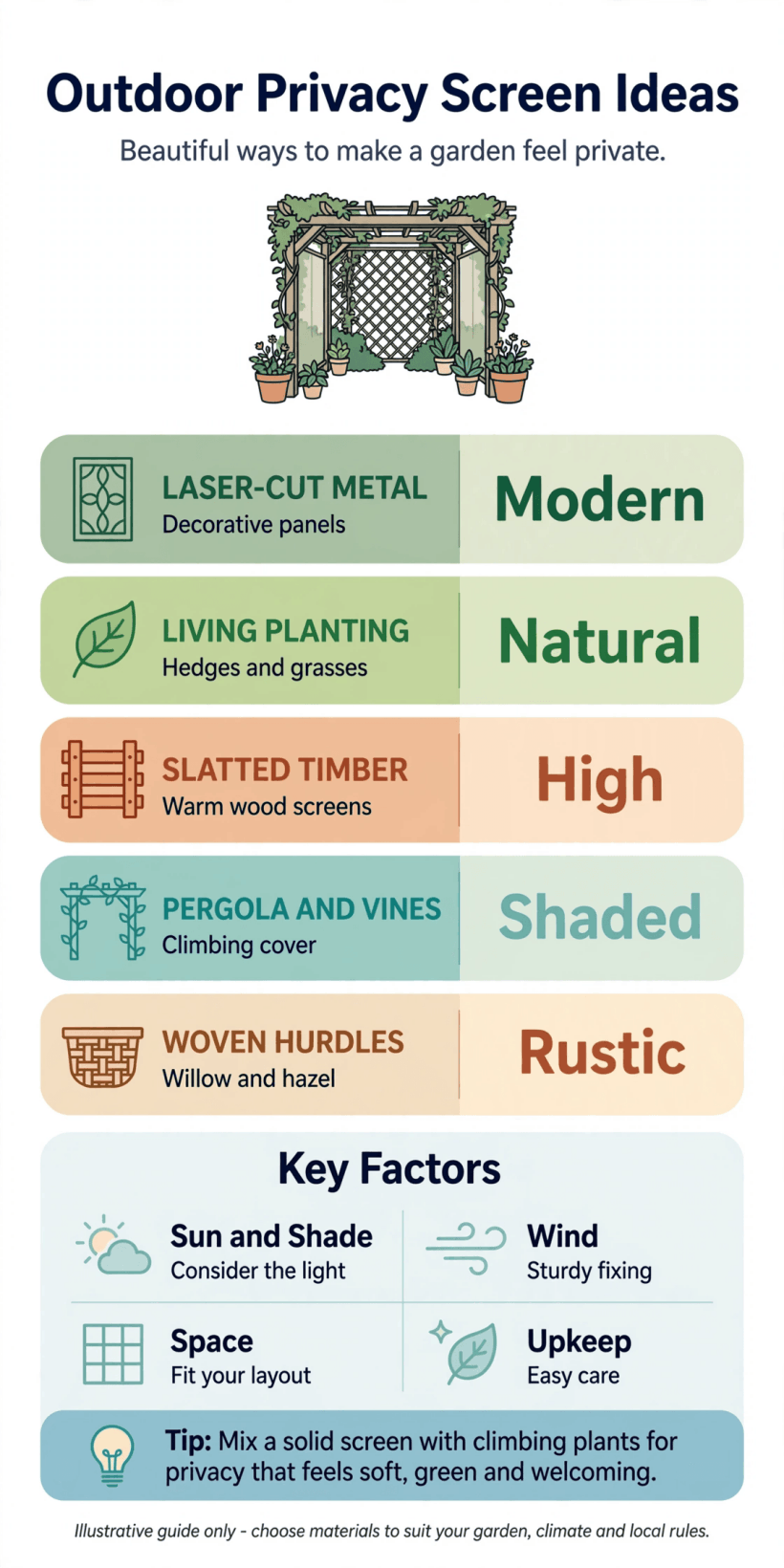
Garden Screen Ideas at a Glance
| Screen Type | Privacy | Speed | Upkeep |
|---|---|---|---|
| Slatted timber panels | High | Instant | Low |
| Trellis with climbers | Medium, rising | 1–2 seasons | Medium |
| Hedges and living walls | High | 2–4 years | High |
| Pleached trees | High above fence line | Immediate structure | Medium–High |
| Metal and composite screens | High | Instant | Very low |
| Grasses and bamboo in planters | Medium | One season | Medium |
1. What a Garden Screen Actually Does
A screen differs from a fence in one essential way: it is placed for a sight line, not a boundary. Before choosing anything, work through these checks.
1. Screen the sight line, not the boundary.
Sit in the seat you want to protect and note exactly where eyes meet — a window, a raised deck, a trampoline vantage point. A 1.8-metre screen three metres from your chair blocks more than a taller fence at the boundary, because it sits inside the cone of vision. Sketch the line from their window to your seat and put the screen anywhere along it that suits the garden.
2. Match opacity to the job.
Full privacy needs near-solid screening; filtered screening, like slats or grasses, breaks up outlines and feels lighter while still hiding activity. Bathing and dining areas want solid; a reading corner often only needs the sense of enclosure that filter screening gives. Mixing the two — solid low, filtered high — solves most plots elegantly.
3. Mind planning and height rules.
In many places fences and screens near boundaries cap at around two metres without permission, and front gardens are stricter. Rules vary, so check yours, and remember that living screens grow — a hedge planted legally can still become a neighbour dispute at four metres.
2. Panel and Trellis Screens
Built screens give privacy today, not in three seasons. The checks here are about quality and fixing.
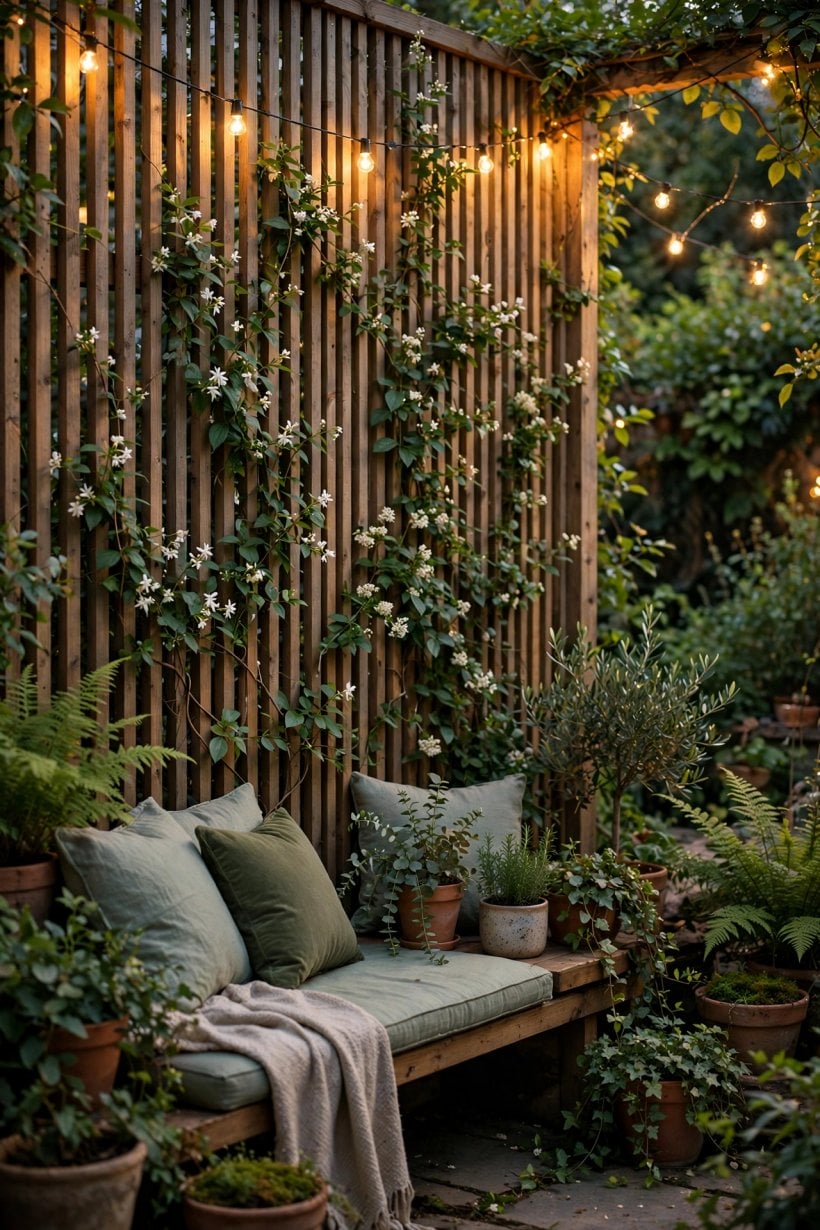
4. Slatted timber panels for the modern backdrop.
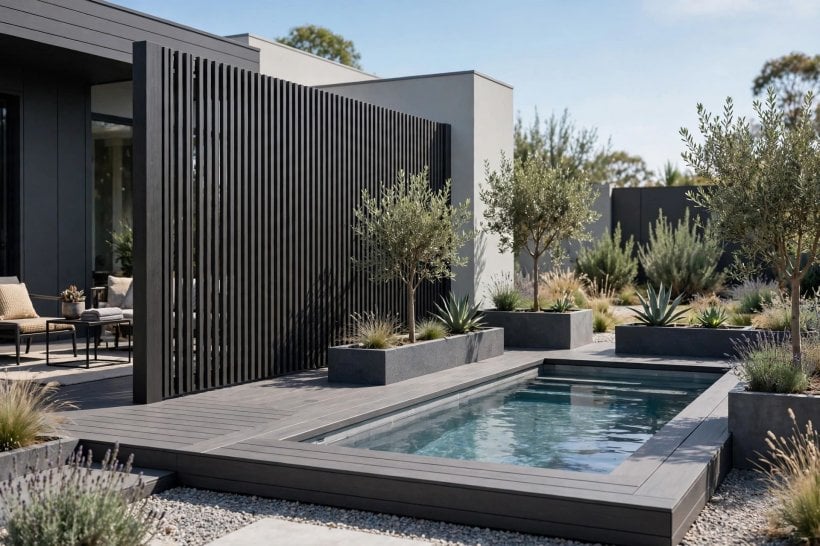
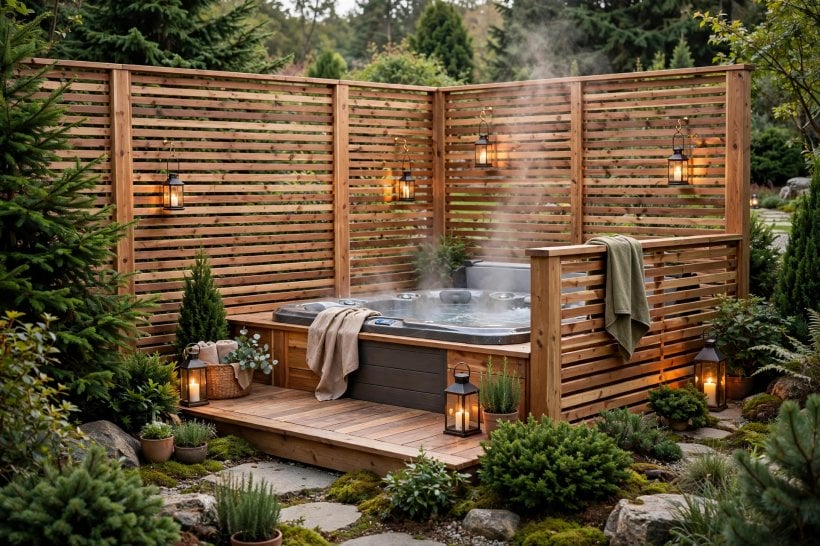
Narrow horizontal or vertical slats with shadow gaps read contemporary and block sight lines while letting air through. Choose pressure-treated or naturally durable timber, and check slat thickness — thin slats warp and telegraph cheapness within a year. Run slats continuously across posts for the expensive look.
5. Traditional trellis panels as instant height.
A trellis panel on top of an existing fence lifts screening cheaply and legally in many areas, since its open structure is often treated more leniently. Even bare, its lattice blurs views; clothed in climbers it disappears. Fix battens properly — a rattling trellis in wind is the sound of false economy.
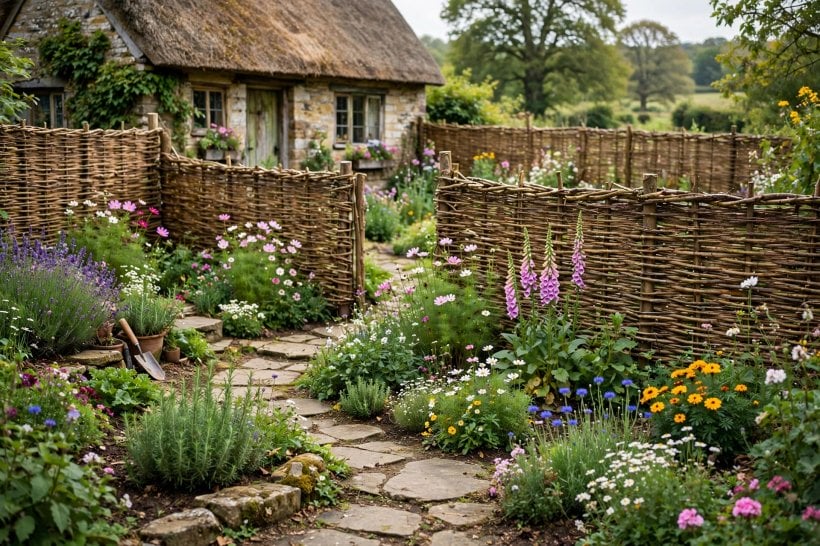
6. Woven willow and hazel hurdles for softness.
Hurdles bring instant, rustic, genuinely private screening that suits cottage and wildlife gardens. Expect a five-to-seven-year life, and check weave density before buying — the loosest weaves are cheaper and less private. They flex rather than fight the wind, which makes them survivors on exposed plots.
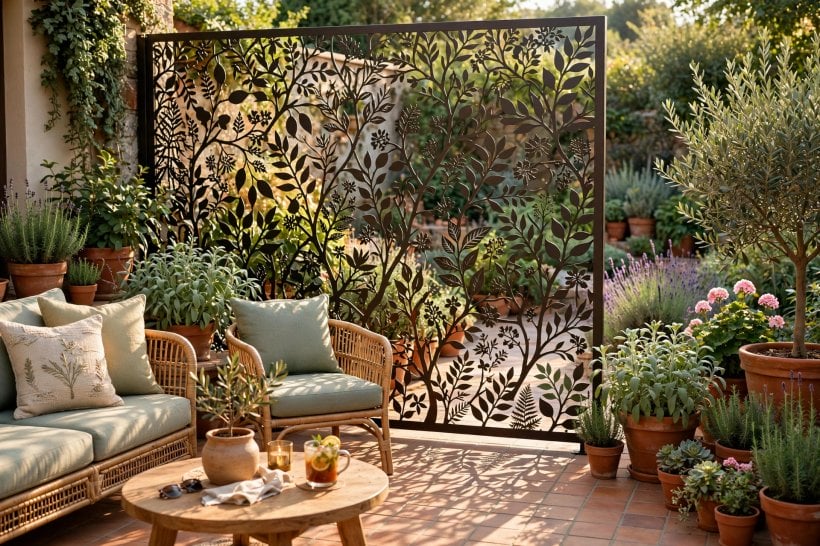
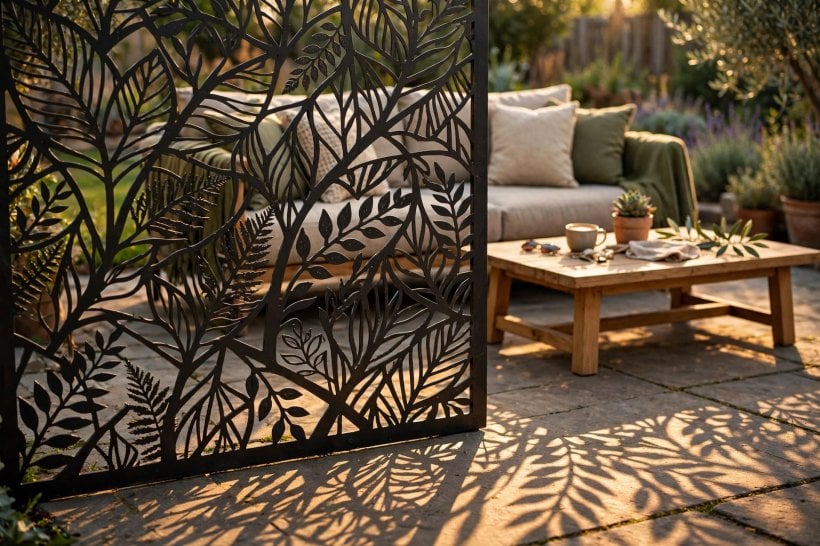
7. Metal and laser-cut panels as garden art.
Powder-coated steel and aluminium panels, plain or patterned, give slim, durable, zero-maintenance screens that double as focal points. Patterns filter rather than block, so check the actual openness percentage against your privacy need. They are the premium option and look it.
3. Living Screens
Plants screen with a softness no panel matches — and they ask for patience and pruning in return. A screened corner also becomes habitat; the planting approach in our wildlife-friendly garden guide on Togaze pairs naturally with everything in this section.
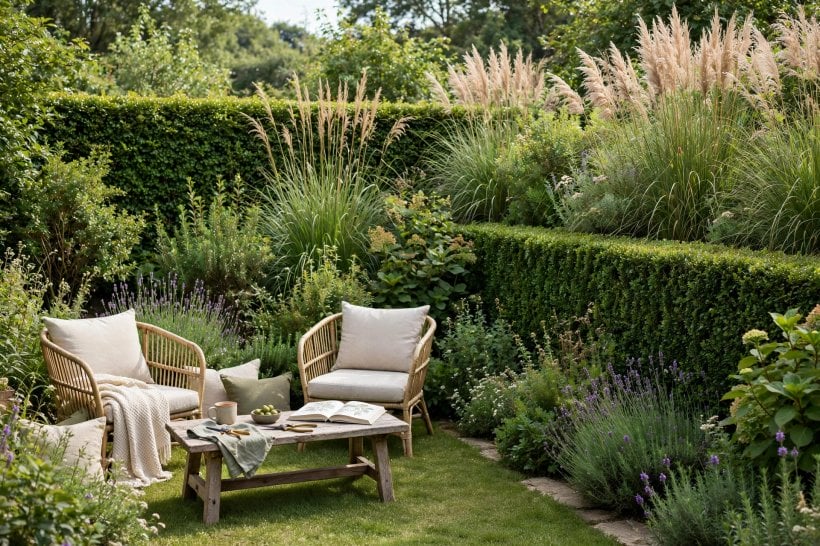
8. The evergreen hedge as the benchmark.
Yew, laurel, holly and privet give year-round, sound-softening privacy, and nothing built matches their depth. The check is time and trimming: budget two to four years to full effect and two cuts a year thereafter. Plant at the right spacing — crowding for speed costs plants later.
9. Pleached trees for privacy above the fence.
Pleaching trains trees on frames into raised hedges on stilts, screening upper windows while leaving the ground level open — the classic answer to being overlooked from above. Hornbeam and lime are the usual choices. It is skilled, premium screening, with annual tying-in and pruning as the price.
10. Climbers on trellis for the green wall.
Evergreen clematis, jasmine, ivy and honeysuckle turn a cheap trellis into a living wall within a couple of seasons. Match the climber to the aspect — ivy forgives shade, jasmine wants sun — and install the support first, generously. Self-clingers on house walls need caution; on a free-standing screen they are free to romp.
11. Bamboo, contained and clumping.
Bamboo is the fastest living screen of all, and running types are also the most likely to visit the neighbours. Choose clumping varieties or plant runners only with a proper root barrier, and check ultimate height — some reach six metres. In large planters it makes a superb movable screen for terraces.
4. Slatted and Contemporary Screens
12. Venetian-style slats that angle the view away.
Angled slats block the view from one direction while keeping light and air, like a garden-scale louvre. They shine on overlooked seating where total solidity would feel like a cell. Fix the angle by testing with a friend on the other side before committing the run.
13. Composite screening for zero upkeep.
Wood-plastic composite slats and panels need no staining, shrug off weather and keep a crisp modern line. Check colour stability and warranty length, and expect a higher ticket than timber. For rental properties and busy households it is often the rational choice.
14. Gabion and stone for mass and texture.
Wire baskets of stone make narrow, weighty, totally private screens with real acoustic benefit near roads. They need a proper footing and are effectively permanent, so place with conviction. Planted pockets soften the face over time.
5. Screens for Small Gardens, Patios and Balconies
Small spaces need screens that earn their footprint. The same thinking that drives the layouts in our tiny-house landscaping ideas on Togaze applies here: every element should do two jobs.
15. A single well-placed panel beats a perimeter.
In a small garden, one panel behind the main seat creates the private moment without boxing the plot. Angle it slightly and plant its base, and it reads as design rather than defence. This is the highest-value move in this entire guide for most small gardens.
16. Planter screens that move with the season.
Tall troughs planted with grasses, bamboo or small shrubs screen patios and can be repositioned as the sun and use shift. Choose planters with reservoir watering for holidays, and check weight on balconies and roof terraces before soil goes in.
17. Balcony screening with fabric and reed.
Woven balcony fabric and reed matting fix to railings in an hour and transform an exposed balcony. Check building or tenancy rules, choose UV-stable material, and fix at close intervals so it does not drum in the wind. It is renter-friendly and fully reversible.
6. Screening the Unsightly
Screens hide as well as shelter. The storage pieces from our garden shed ideas on Togaze are the usual neighbours of these screens.
18. A screen for bins, meters and oil tanks.
A small slatted or hurdle enclosure transforms the utility corner. Leave working clearance, a gate you can open fully and air flow for anything that heats or vents. It is a weekend build with an outsized effect on how finished a garden feels.
19. Hide the shed and the compost corner.
A living screen or panel in front of the working end of the garden keeps the view from the house composed. Plant a climber over it and the disguise completes itself. Keep paths wide enough for barrows — screens that fight the work lose.
7. Materials, Fixings and Longevity Checks
20. Posts and fixings decide the lifespan.
Screens fail at the post, not the panel. Set posts in concrete or on proper ground screws, use stainless or coated fixings with timber, and keep panel bottoms clear of soil. A galvanised post system outlives two generations of panels and is worth it on permanent runs.
21. Wind is the load that matters.
A solid screen is a sail. On exposed sites, choose semi-permeable designs — slats, hurdles, planting — that bleed wind, or engineer solid runs with closer posts. More gardens lose screens to one November storm than to a decade of weather.
22. Treat, stain and maintain on a rhythm.
Timber screens want preservative on a two-to-three-year rhythm; end grain and the bottom rail matter most. Living screens want their cuts on schedule. Set the rhythm when you install, not when problems show.
8. Planting With Screens
23. Soften the base so the screen belongs.
A screen rising straight from paving always looks imposed. A planted strip at its foot — grasses, shade-tolerant perennials, a low hedge — settles it into the garden. The planting palette in our container garden ideas on Togaze suits the narrow beds screens usually get.
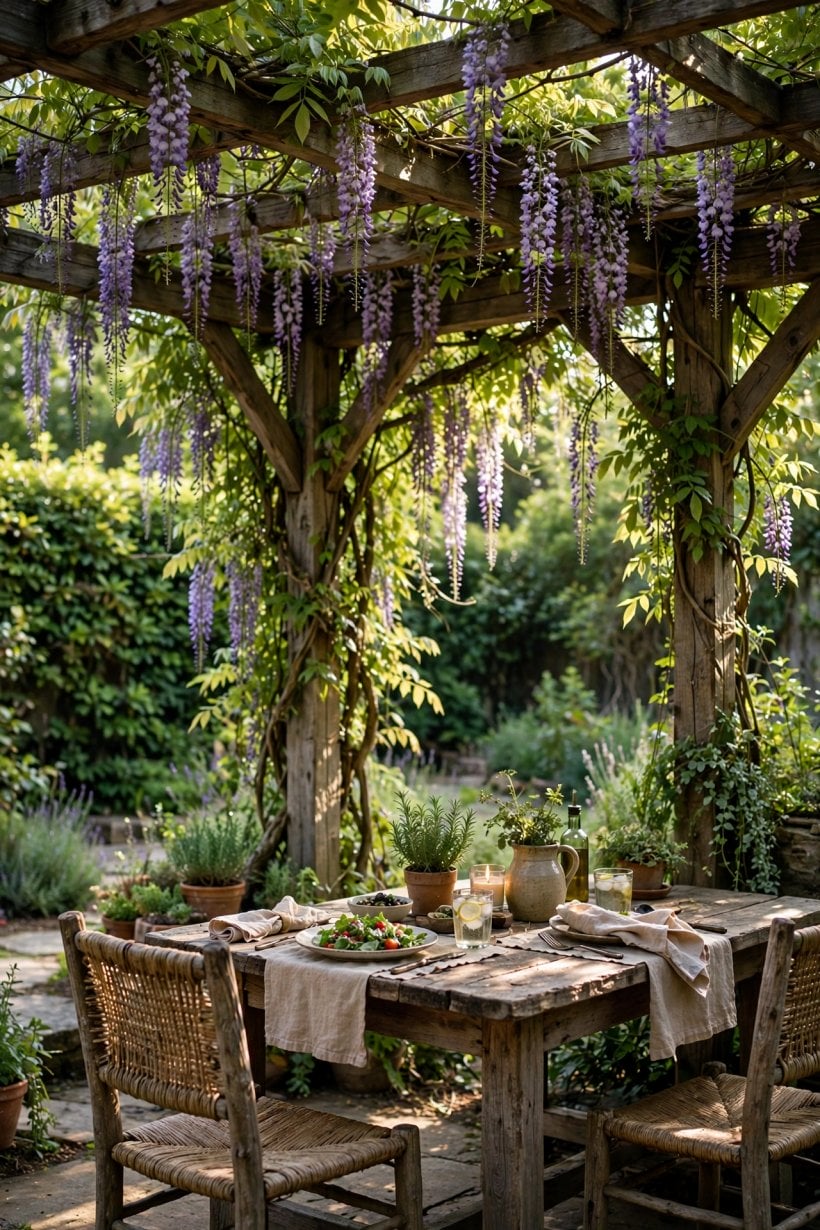
24. Light the screen, extend the evening.
Uplighting a slatted or living screen turns the privacy you built for the day into the backdrop of the evening garden, and a lit boundary feels deeper than a dark one. Keep fittings warm-toned, shielded and few — this is a glow, not a floodlight.
9. Costs and Checks Before You Commit
25. Price the run, then phase it if needed.
Prices swing wildly, so measure the run and price per metre: hurdles and trellis at the modest end, quality slatted timber and hedges mid-range, pleaching and laser-cut metal at the top. If budget bites, phase it — solid screen at the seat this year, living screen growing meanwhile. And run the basic checks before any money moves: sight line walked, rules checked, wind considered, upkeep honestly counted.
Final Considerations
The garden screen that works is the one placed by the sight line and chosen for the life you actually lead — panels for the impatient, plants for the patient, and something semi-permeable wherever the wind has a say. If one idea carries this guide, it is the single panel in exactly the right place: walk the sight line, sit in the seat, and put the screen exactly there. Everything else — materials, planting, lighting — is refinement of that one well-aimed decision. The best screen is the one you stop noticing once you sit down — place it, sit in the seat it protects, and adjust it from there before fixing anything permanently. One more habit separates screens that age well from screens that quietly disappoint: judge them in the worst month, not the best. Walk the garden in winter, when the leaves are down and the sight lines reopen, and you will find the gaps that summer planting hides — a panel that seemed generous in June can look oddly placed in January, and evergreen structure earns its keep precisely then. Judge height the same honest way: a screen that protects a seated view may do nothing against an upstairs window, so check every sight line from the position it is actually seen from, not from the fence line. Remember, too, that a screen works in both directions — the panel that hides the neighbour’s window also hides your garden from the street, which is why screens near an entrance deserve the same care as the seating corner. Where a screen meets a gate, a path or a change of level, finish the junction deliberately: a post, a planted break or a step reads as design, while a screen that simply stops reads as an afterthought. And buy for the garden you will have in five years, not the one in the photograph: climbers mature, hedges thicken, timber weathers, and the screen chosen to grow into its role will out-serve the one that arrives looking finished. A screen is never only a screen, either — it is shade at one hour, wind shelter at another, and the backdrop to nearly every photograph the garden appears in, so it deserves choosing as carefully as the planting it frames.

0 Comments