
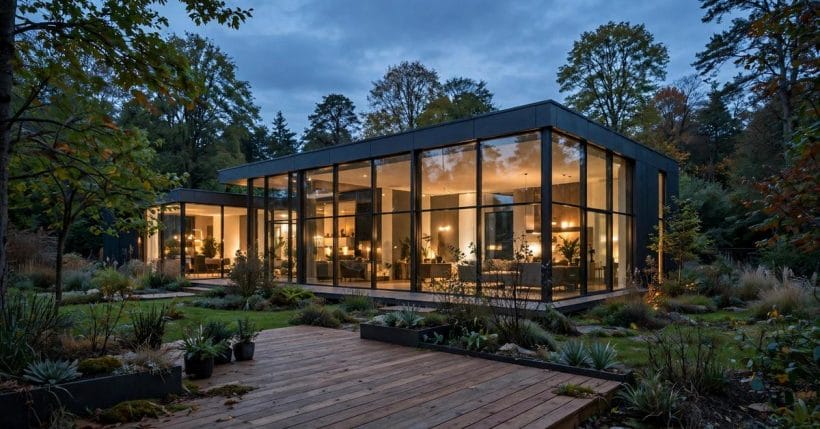
A glass exterior changes a house from the outside in. Walls of glazing turn the facade into a frame for the rooms inside, pull daylight deep into the plan, and make the garden, the sky and the changing light part of the everyday view. This gallery gathers seventy-five glass exterior home ideas, grouped by form, material pairing and way of living, so you can compare full glass walls with glazed corners, dark frames with timber ones, and houses that open fully to a terrace with houses that keep their glass sheltered and calm.
Every idea below is about houses whose exteriors are dominated by glass, rather than houses that simply have large windows. Look for the shape of the glazing, the way the frame meets the roof and the ground, and how much of the interior shows from outside, because those three choices decide whether a glass house feels open, exposed, dramatic or serene. Structural glazing work should always be planned and fitted by qualified professionals, and local rules should be checked before any building work begins.
1. Full-Height Glass Walls
| Item | What it is |
|---|---|
| A Living Room Wall of Glass | A single wall of full-height glass turns the main living room into a room with a view in every direction it faces. |
| Glass Walls on Two Sides | Glazing two adjoining sides of a room opens it to two different outlooks at once, perhaps a garden on one side and a terrace on the other. |
| A Glass Wall Behind the Dining Table | Placing the dining table against a glass wall makes everyday meals feel like occasions, with the garden as a backdrop that changes with the seasons. |
| Glass Walls That Frame a View | Where a house faces a view worth keeping, a full-height glass wall frames it like a picture that changes with the weather. |
| A Glass Wall in a Gabled House | A traditional gabled shape can carry a glass wall at one end, where the glazing fills the whole gable from floor to ridge. |
| Glass Walls Around a Courtyard | Glazing the walls that face an internal courtyard gives a house daylight and greenery without opening it to the street. |
| A Glass Wall for a Home Office | A home office with a glass wall gains daylight and a view that makes long working days easier, while the rest of the house stays separate. |
| Glass Walls in a Single-Storey House | In a low, single-storey house, full-height glass walls give every room the same generous connection to the garden. |
| A Corner Where Two Glass Walls Meet | A glazed corner removes the solid corner post and lets two glass walls meet almost invisibly, so the room opens diagonally to the garden. |
| Wraparound Glass on a Living Wing | Wrapping glass around three sides of a living wing creates a room that feels almost outdoors, with daylight from morning to evening. |
| A Glass Corner for a Reading Seat | A glazed corner with a low seat or daybed becomes a favourite reading spot, with light from two sides and a view in two directions. |
| Glass Corners on an Upper Level | An upper-level glazed corner gives a bedroom or study a sweeping outlook and a sense of floating above the garden. |
| A Corner Window Seat in Glass | Building a window seat into a glazed corner creates a place to sit within the glass itself, surrounded by the garden on two sides. |
| Wraparound Glass Above a Solid Base | Setting wraparound glass above a solid stone or rendered base gives a glass house weight at ground level and lightness above. |
| A Glass Corner Beside a Fireplace | Pairing a glazed corner with a fireplace wall balances openness with warmth, giving a living room both a view and a hearth. |
| Curved Glass at a Corner | A gently curved glass corner softens the outline of a house and gives a room a panoramic sweep of view. |
| A Glass Front That Welcomes Visitors | A fully glazed front gives a house an open, welcoming face, with the entrance hall visible through the glass and daylight flooding the rooms behind it. |
| Glass Beside a Solid Entrance | Keeping the entrance itself solid while glazing the rooms beside it gives a house a clear front door and bright rooms in one composition. |
| A Glass Facade With a Deep Overhang | A deep roof overhang above a glass facade shades the glazing in summer and shelters the entrance and terrace below. |
| Glass and a Covered Porch | Combining a glass facade with a covered porch creates a threshold space between outside and inside, where visitors can pause under cover. |
| A Symmetrical Glass Front | A symmetrical glass front, with glazing balanced on either side of a central entrance, gives a glass house a calm and formal street presence. |
| Glass Fronts on a Narrow Plot | On a narrow plot, a glass front can make a slim house feel far more generous, because the main rooms gain daylight from the front as well as the garden side. |
| A Glass Front Behind a Garden Screen | Setting a glass front behind a planted screen or a slatted fence gives a house privacy without losing daylight. |
| Glass Fronts That Glow After Dark | A glass front lit from within after dark gives a house a warm and welcoming presence in the street, with the interior becoming the decoration of the facade. |
| Glass With Warm Timber Cladding | Pairing glass walls with warm timber cladding gives a glass house a natural, tactile quality that pure glass and metal can lack. |
| Glass With a Stone Base | A stone base beneath glass walls gives a house a sense of permanence and roots it in its landscape. |
| Glass and Brick in One Facade | Combining a brick section with a glass section lets a house belong to a brick streetscape while still gaining the light of a glass wall. |
| Glass With Dark Metal Frames | Slim dark metal frames give glass walls a crisp outline and a contemporary character, with the glazing reading as a series of dark-lined panels. |
| Glass With Pale Timber Frames | Pale timber frames soften a glass facade and give it a warm, Scandinavian feeling, with the wood grain visible against the glass. |
| Glass Set Into a Rendered Wall | Setting large glass panels into a smooth rendered wall creates a facade of solid and void, where the glass reads as a deliberate opening rather than a whole wall. |
| Glass With a Living Green Wall Beside It | Placing a planted green wall beside a glass facade brings nature right up to the glazing, with leaves reflected in the glass and framing the view from inside. |
| Glass and Concrete in a Bold Pairing | Glass walls beside board-marked or smooth concrete give a house a bold, architectural character, with the heavy concrete and light glass in deliberate contrast. |
| A Double-Height Glass Wall | A glass wall that rises through two levels gives a house a dramatic vertical space, with a gallery or landing looking down into the room below. |
| Glass Around a Staircase | Glazing the wall beside a staircase turns the journey between levels into a light-filled experience, with views changing as you climb. |
| A Glass Balustrade on a Gallery | A glass balustrade on an upper gallery keeps the double-height space open, so the view across the void and out through the glass wall stays uninterrupted. |
| Glass Walls in a Split-Level House | In a split-level house, glass walls at each level can follow the stepping plan, giving every level its own outlook and daylight. |
| A Glass Wall Behind a Mezzanine | A mezzanine set against a tall glass wall gains a sweeping view and generous daylight, while staying connected to the room below. |
| Tall Glass in a Narrow House | Tall glass walls in a narrow house bring daylight deep into a plan that might otherwise feel dark in the middle. |
| Glass Walls Around an Atrium | Glazing the walls around an internal atrium gives a house a light-filled heart, with rooms on every side borrowing daylight from the central space. |
| A Glass Tower Element | A glazed tower element, rising above the main body of a house, gives one room a panoramic outlook and gives the house a distinctive silhouette. |
| Sliding Glass Walls Onto a Terrace | A sliding glass wall that opens fully onto a terrace removes the barrier between living room and garden in warm weather. |
| Glass Walls That Open on Two Sides | Opening glass walls on two sides of a corner room creates a pavilion that is open to the garden in two directions at once. |
| A Glass Room as a Garden Pavilion | A separate glass pavilion in the garden can serve as a studio, a dining room or a quiet retreat, connected to the house by a path or a covered walkway. |
| Glass Walls Beside an Outdoor Kitchen | Glazing the wall beside an outdoor kitchen keeps the cook connected to the house while working outside, with the interior visible through the glass. |
| A Glass Wall That Frames a Pool Terrace | A glass wall facing a pool terrace gives swimmers and loungers a view into the house and gives the living rooms a view of the water. |
| Glass Walls Around a Covered Outdoor Room | A covered outdoor room with glass walls on one or two sides gives sheltered outdoor living with a view, protected from wind and rain while staying connected to the garden. |
| A Glass Link Between House and Garden Room | A glazed link between the main house and a garden room creates a light-filled passage that makes the journey between the two feel like part of the garden. |
| Glass Walls for an Outdoor Dining Room | An outdoor dining room enclosed on one side by a glass wall of the house gains shelter and a view into the lit interior after dark. |
| A Small Glass Cabin | A small glass cabin in a woodland clearing proves that glass exteriors are not only for large houses. |
| Glass Walls in a Tiny House | A tiny house with a glass wall gains daylight and outlook that belie its size, with the garden becoming an extension of the single main room. |
| A Glass House Among Trees | A glass house set among trees enjoys dappled light and shifting reflections, with the canopy mirrored in the glazing. |
| Glass Walls for a Forest Retreat | A forest retreat with glass walls lets its occupants watch wildlife and weather from indoors, with the forest changing through the day and the seasons. |
| A Glass Cabin With a Pitched Glass Roof | A cabin with a pitched section of glass roof gains daylight from above as well as from the walls, with the sky visible from the main room. |
| Glass Walls in a Hillside House | A hillside house with glass walls on its downhill side gains a sweeping view over the land below, while the uphill side stays solid and grounded. |
| A Glass House on a Quiet Lane | A glass house on a quiet lane can open to its garden at the rear while keeping a calmer, more solid face to the lane itself. |
| Glass Walls for a Weekend House | A weekend house with glass walls makes the most of short stays, with every visit feeling like an escape into the landscape. |
| A Glass House Beside a Lake | A glass house beside a lake enjoys reflections twice over, with the water mirrored in the glazing and the house mirrored in the water. |
| Glass Walls Overlooking a River | A house with glass walls overlooking a river gains a living view that changes with the water level, the light and the seasons. |
| A Glass House With a Garden Pond | A glass house beside a garden pond enjoys a miniature waterside setting, with the pond reflected in the glazing and wildlife visiting close to the house. |
| Glass Walls Around a Courtyard Garden | Glass walls around a courtyard garden give a house a private green heart, with every room looking onto planting rather than onto neighbours. |
| A Glass House in a Formal Garden | A glass house in a formal garden gains a structured outlook, with hedges, paths and flower beds composed like a picture beyond the glass. |
| Glass Walls Facing a Wildflower Meadow | Glass walls facing a wildflower meadow give a house a soft, changing outlook, with grasses and flowers moving in the wind beyond the glazing. |
| A Glass House With a Roof Garden | A glass house topped with a roof garden gains a green crown that softens its outline and gives the upper rooms a planted outlook. |
| Slim Frames for a Minimal Look | Slim frames give a glass facade a minimal look, with the glazing reading as almost uninterrupted glass. |
| Bold Frames as a Design Feature | Bold, chunky frames can become a design feature in their own right, dividing a glass wall into a grid that gives the facade rhythm and structure. |
| Black Frames Against Pale Walls | Black frames against pale rendered walls give a glass facade a crisp, graphic quality, with the dark lines of the frame standing out clearly. |
| Bronze Frames for a Warm Tone | Bronze-toned frames give a glass facade a warm, metallic glow that suits houses with timber, stone or warm render. |
| White Frames for a Light Facade | White frames give a glass facade a light, fresh character, with the glazing blending into pale walls and bright interiors. |
| Timber Frames With a Natural Finish | Timber frames with a natural finish bring the warmth of wood to a glass facade, with the grain of the timber visible beside the glass. |
| Coloured Frames as an Accent | Coloured frames, in a muted green, blue or grey, can give a glass facade a distinctive accent without overwhelming the glass itself. |
| Privacy With Curtains and Blinds | Curtains and blinds give a glass house flexible privacy, with sheer layers for daytime and heavier layers for evening. |
| Shade for Summer Comfort | External shade, from overhangs, louvres or planting, keeps a glass house comfortable in summer by blocking high sun before it reaches the glass. |
| Cleaning Tall Glass Panels | Tall glass panels need a cleaning plan, with safe access to both sides and a method that does not risk the glass or the person cleaning it. |
| Glare and Reflections | Glare from low sun and reflections from neighbouring glass can affect comfort inside a glass house, and both should be considered when placing the glazing. |
| Living With Glass Through the Seasons | A glass house changes with the seasons, gaining long light in summer, low sun in winter, and a front-row seat for storms and snow. |
1. A Living Room Wall of Glass
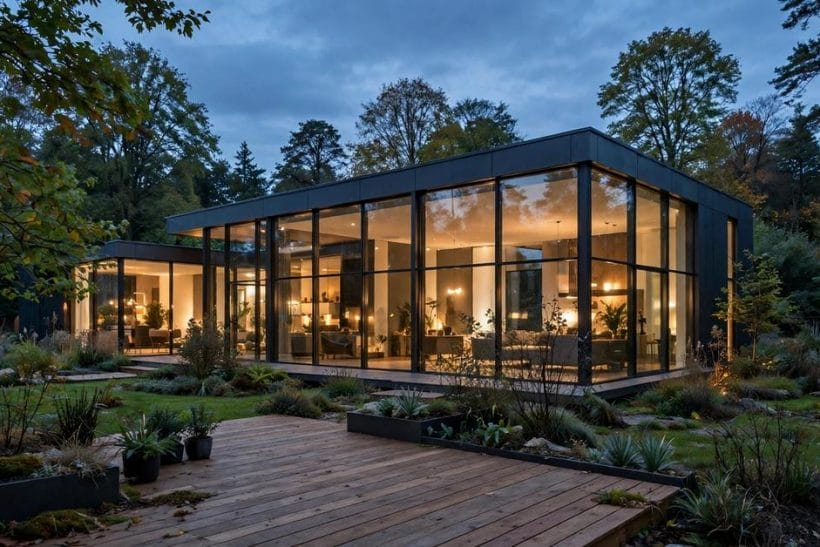
A single wall of full-height glass turns the main living room into a room with a view in every direction it faces. Furniture sits against the solid walls, leaving the glazed wall clear, so the eye travels straight outside and the room feels larger than its footprint suggests. At dusk the same wall glows from within, and the house reads as a lantern in the garden.
2. Glass Walls on Two Sides
Glazing two adjoining sides of a room opens it to two different outlooks at once, perhaps a garden on one side and a terrace on the other. The corner where the two walls meet becomes the focus of the room, and daylight arrives from more than one direction through the day. This arrangement suits corner plots and houses set within generous gardens.
3. A Glass Wall Behind the Dining Table
Placing the dining table against a glass wall makes everyday meals feel like occasions, with the garden as a backdrop that changes with the seasons. The table stays clear of the glass so chairs can move freely, and a pendant light above the table gives the room a centre after dark. It is a simple move that changes how a dining room is used.
4. Glass Walls That Frame a View
Where a house faces a view worth keeping, a full-height glass wall frames it like a picture that changes with the weather. Keeping the frame slim and the glass in large panes reduces interruption, while the solid parts of the house hold the rooms that need enclosure. The result is a house that looks outward without feeling exposed from every angle.
5. A Glass Wall in a Gabled House
A traditional gabled shape can carry a glass wall at one end, where the glazing fills the whole gable from floor to ridge. The familiar roofline keeps the house grounded in its setting, while the glass end gives the main room height and light. This pairing works well where a house should feel both traditional in outline and open in character.
6. Glass Walls Around a Courtyard
Glazing the walls that face an internal courtyard gives a house daylight and greenery without opening it to the street. The courtyard becomes a private outdoor room, and the glass walls around it connect every adjoining room to the same planted space. This idea suits houses on overlooked plots, where privacy matters as much as light.
7. A Glass Wall for a Home Office
A home office with a glass wall gains daylight and a view that makes long working days easier, while the rest of the house stays separate. A desk facing the glass keeps the outlook in sight, and a simple blind or curtain gives privacy when calls or focused work need it. The glass should sit where glare will not fall directly across the desk.
8. Glass Walls in a Single-Storey House
In a low, single-storey house, full-height glass walls give every room the same generous connection to the garden. The roofline stays low and calm, while the glazing brings the outside in at eye level throughout the plan. This is one of the most restful ways to live with glass, because the house never towers over its setting.
2. Glazed Corners and Wraparound Glass
Glazed corners take the glass wall a step further, wrapping light around the plan. Readers comparing window shapes may also enjoy the clerestory window layouts gallery, which shows how high glazing changes a room.
9. A Corner Where Two Glass Walls Meet
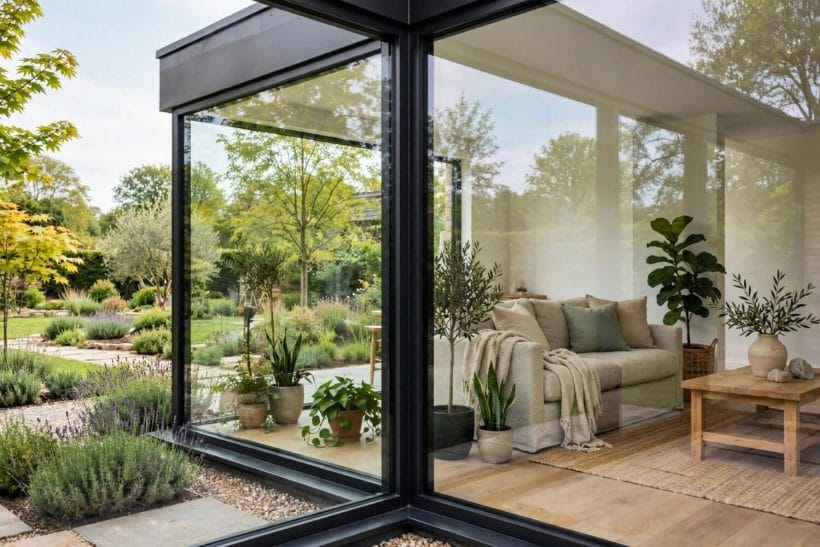
A glazed corner removes the solid corner post and lets two glass walls meet almost invisibly, so the room opens diagonally to the garden. The effect is most striking where the corner faces the best outlook, and it suits living rooms that are meant to feel open on more than one side. Careful detailing at the corner keeps the junction weather-tight and clean.
10. Wraparound Glass on a Living Wing
Wrapping glass around three sides of a living wing creates a room that feels almost outdoors, with daylight from morning to evening. The wing reads as a light pavilion attached to a more solid house, and the contrast between the two parts gives the whole house its character. Furniture should stay low near the glass so views remain uninterrupted.
11. A Glass Corner for a Reading Seat
A glazed corner with a low seat or daybed becomes a favourite reading spot, with light from two sides and a view in two directions. Cushions and a throw make the seat inviting, while a small side table holds books and a drink. This is a modest idea with an outsized effect on how a room is enjoyed.
12. Glass Corners on an Upper Level
An upper-level glazed corner gives a bedroom or study a sweeping outlook and a sense of floating above the garden. The glass should be balanced with solid wall elsewhere in the room, so the space still feels restful and easy to furnish. A glazed corner upstairs also changes the outside of the house, giving it a light upper storey.
13. A Corner Window Seat in Glass
Building a window seat into a glazed corner creates a place to sit within the glass itself, surrounded by the garden on two sides. The seat base can hold storage, and the view becomes the decoration of the room. This idea works in living rooms, bedrooms and even wide hallways with a garden outlook.
14. Wraparound Glass Above a Solid Base
Setting wraparound glass above a solid stone or rendered base gives a glass house weight at ground level and lightness above. The base anchors the house visually and protects the glazing from garden wear, while the glass above keeps rooms bright. This combination is a good answer where a fully glazed ground floor would feel too exposed.
15. A Glass Corner Beside a Fireplace
Pairing a glazed corner with a fireplace wall balances openness with warmth, giving a living room both a view and a hearth. The fire becomes the solid anchor of the room, while the glass corner opens it to the garden. Seating arranged between the two enjoys warmth and outlook at the same time.
16. Curved Glass at a Corner
A gently curved glass corner softens the outline of a house and gives a room a panoramic sweep of view. The curve removes the hard junction of two flat walls and makes the glass feel continuous around the room. This is a distinctive choice that suits houses with rounded garden paths and soft landscaping.
3. Glass Fronts and Street Faces
The street face of a glass house deserves as much thought as its garden side. For the wider picture, see the tiny house exterior ideas collection, and for a related house form, the coastal farmhouse ideas gallery.
17. A Glass Front That Welcomes Visitors
A fully glazed front gives a house an open, welcoming face, with the entrance hall visible through the glass and daylight flooding the rooms behind it. The approach path becomes part of the experience, and planting beside the path softens the transition from street to door. Privacy can be managed with planting, screens or a set-back from the street.
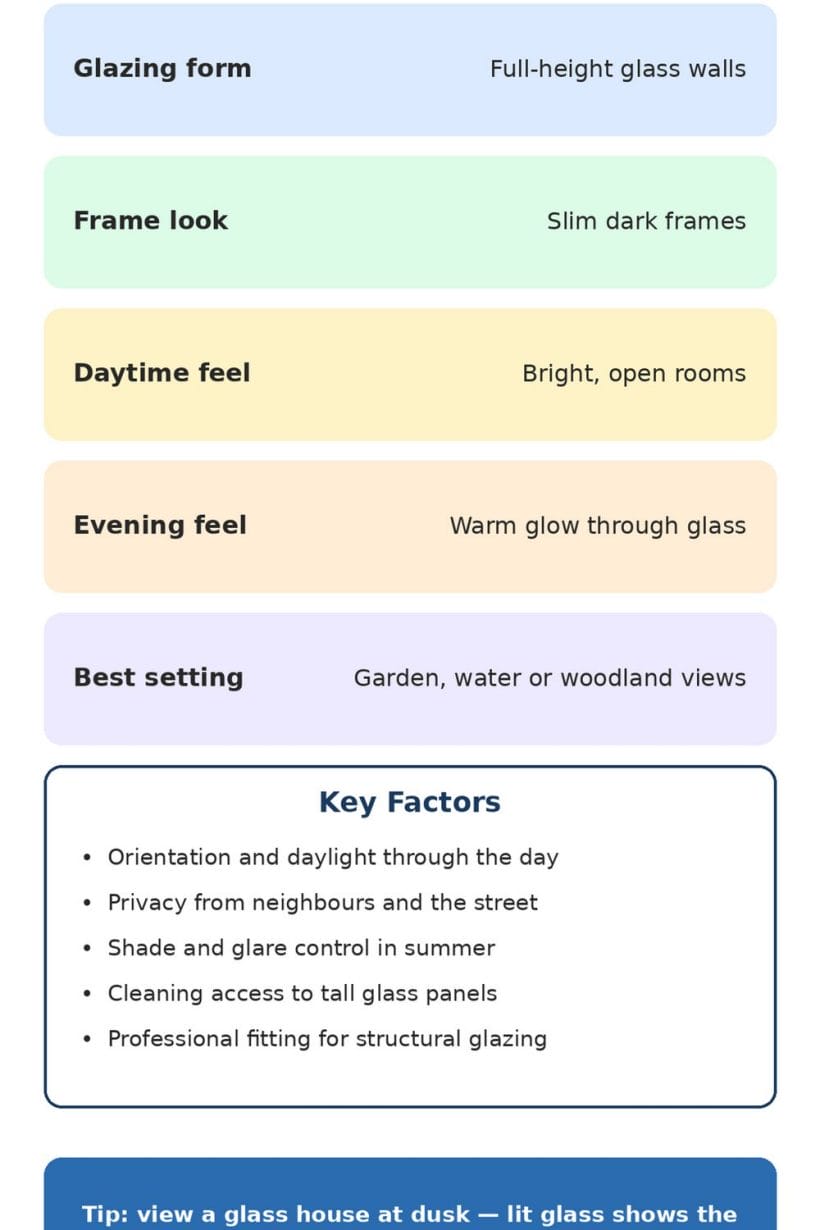
18. Glass Beside a Solid Entrance
Keeping the entrance itself solid while glazing the rooms beside it gives a house a clear front door and bright rooms in one composition. The solid entrance reads as the anchor of the facade, while the glass beside it shows the living spaces within. This balance suits houses that should feel both open and private from the street.
19. A Glass Facade With a Deep Overhang
A deep roof overhang above a glass facade shades the glazing in summer and shelters the entrance and terrace below. The overhang gives the facade a strong horizontal line and protects the glass from driving rain, while the rooms behind stay bright. This is a practical pairing in sunny climates and rainy ones alike.
20. Glass and a Covered Porch
Combining a glass facade with a covered porch creates a threshold space between outside and inside, where visitors can pause under cover. The porch roof frames the glass behind it, and the porch itself becomes a place to sit in mild weather. This idea brings a traditional porch gesture to a thoroughly modern glass house.
21. A Symmetrical Glass Front
A symmetrical glass front, with glazing balanced on either side of a central entrance, gives a glass house a calm and formal street presence. The symmetry suits houses with a straight approach and a level garden, and it lets the interior layout read clearly from outside. Furniture and lighting should mirror the balance of the facade.
22. Glass Fronts on a Narrow Plot
On a narrow plot, a glass front can make a slim house feel far more generous, because the main rooms gain daylight from the front as well as the garden side. The facade should be composed with care, since it is seen at close quarters, and the entrance should stay clearly legible. This idea turns a tight site into an advantage.
23. A Glass Front Behind a Garden Screen
Setting a glass front behind a planted screen or a slatted fence gives a house privacy without losing daylight. The screen filters the view in both directions, so the rooms behind the glass feel sheltered while the facade keeps its open character. Climbing plants can soften the screen further over time.
24. Glass Fronts That Glow After Dark
A glass front lit from within after dark gives a house a warm and welcoming presence in the street, with the interior becoming the decoration of the facade. Lighting should be layered, with low lights and lamps rather than a single harsh source, so the glow feels domestic rather than commercial. This is one of the quiet pleasures of living with glass.
4. Glass, Wood and Stone Combinations
25. Glass With Warm Timber Cladding
Pairing glass walls with warm timber cladding gives a glass house a natural, tactile quality that pure glass and metal can lack. The timber boards bring warmth to the facade and age gracefully, while the glass keeps the rooms bright and open. This combination suits woodland and rural settings especially well.
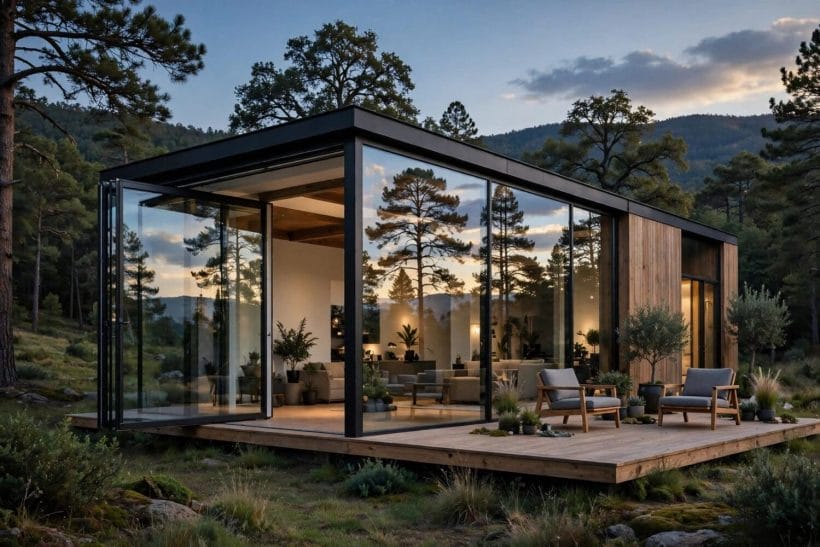
26. Glass With a Stone Base
A stone base beneath glass walls gives a house a sense of permanence and roots it in its landscape. The stone can echo local walls or outcrops, while the glass above feels light and contemporary. This pairing is a good way to make a modern glass house sit comfortably in an older landscape.
27. Glass and Brick in One Facade
Combining a brick section with a glass section lets a house belong to a brick streetscape while still gaining the light of a glass wall. The brick part can hold bedrooms or service rooms, while the glass part holds the living spaces. This split suits infill plots and houses that must respect neighbouring buildings.
28. Glass With Dark Metal Frames
Slim dark metal frames give glass walls a crisp outline and a contemporary character, with the glazing reading as a series of dark-lined panels. The dark frames also recede visually against the garden, so the glass itself dominates the facade. This is the classic frame choice for modern glass houses.
29. Glass With Pale Timber Frames
Pale timber frames soften a glass facade and give it a warm, Scandinavian feeling, with the wood grain visible against the glass. The frames suit houses with light interiors and natural materials throughout, and they weather gently over time. This pairing keeps a glass house feeling domestic rather than corporate.
30. Glass Set Into a Rendered Wall
Setting large glass panels into a smooth rendered wall creates a facade of solid and void, where the glass reads as a deliberate opening rather than a whole wall. The render can be coloured to suit the setting, and the glass panels can be sized to suit each room behind them. This is a flexible idea for houses that want glass without going fully glazed.
31. Glass With a Living Green Wall Beside It
Placing a planted green wall beside a glass facade brings nature right up to the glazing, with leaves reflected in the glass and framing the view from inside. The planting softens the hard lines of glass and frame, and the combination changes with the seasons. Irrigation and maintenance access should be planned from the start.
32. Glass and Concrete in a Bold Pairing
Glass walls beside board-marked or smooth concrete give a house a bold, architectural character, with the heavy concrete and light glass in deliberate contrast. The concrete holds the structure and the service rooms, while the glass opens the living spaces to the garden. This pairing suits houses with a strong modern design ambition.
5. Double-Height Glass and Open Levels
Tall glass brings drama to a house, and it pairs naturally with contemporary plans. The modern house plans collection shows how modern layouts use height and light in the same spirit.
33. A Double-Height Glass Wall
A glass wall that rises through two levels gives a house a dramatic vertical space, with a gallery or landing looking down into the room below. The tall glazing brings daylight to both levels at once, and the room beneath it feels grand without needing a large footprint. This is the most theatrical glass idea in this gallery.
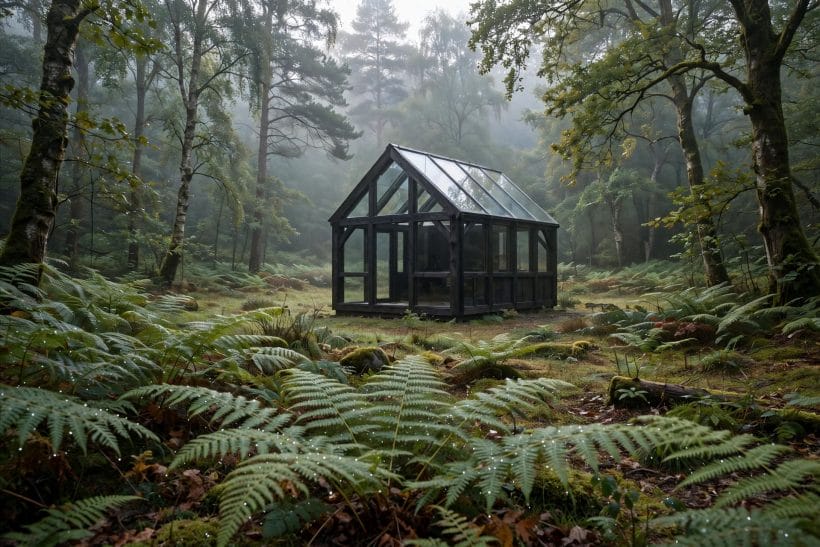
34. Glass Around a Staircase
Glazing the wall beside a staircase turns the journey between levels into a light-filled experience, with views changing as you climb. The stair itself becomes a feature of the facade, visible through the glass from outside, and the landing gains daylight that would otherwise be lost. This idea suits houses where the stair sits on an outside wall.
35. A Glass Balustrade on a Gallery
A glass balustrade on an upper gallery keeps the double-height space open, so the view across the void and out through the glass wall stays uninterrupted. The gallery feels like a bridge within the house, and the rooms below keep their connection to the tall glazing. This detail completes a double-height glass room.
36. Glass Walls in a Split-Level House
In a split-level house, glass walls at each level can follow the stepping plan, giving every level its own outlook and daylight. The staggered floors create a varied facade, with glass at different heights that reflects the life inside. This arrangement suits sloping sites, where the house can step down with the land.
37. A Glass Wall Behind a Mezzanine
A mezzanine set against a tall glass wall gains a sweeping view and generous daylight, while staying connected to the room below. The mezzanine can serve as a study, a library or a quiet sitting area, and the glass wall gives it a purpose beyond extra floor space. A simple guard keeps the mezzanine safe without blocking the view.
38. Tall Glass in a Narrow House
Tall glass walls in a narrow house bring daylight deep into a plan that might otherwise feel dark in the middle. A tall glazed end or a tall side panel can light a stairwell or a double-height living space, and the vertical emphasis makes the house feel taller than it is. This idea is valuable on tight urban plots.
39. Glass Walls Around an Atrium
Glazing the walls around an internal atrium gives a house a light-filled heart, with rooms on every side borrowing daylight from the central space. The atrium can be open to the sky or covered with glass, and it becomes the orienting space of the house. This is a grand idea that suits larger houses with a central plan.
40. A Glass Tower Element
A glazed tower element, rising above the main body of a house, gives one room a panoramic outlook and gives the house a distinctive silhouette. The tower can hold a study, a bedroom or a sitting room, and its glass walls make it feel separate from the rest of the house. This is a bold move that should be used sparingly.
6. Glass Rooms That Open Outdoors
Glass earns its keep when it opens, and these ideas focus on rooms that connect directly with terraces and gardens. The tiny house patio ideas gallery and the sunroom window treatments guide both explore that indoor-outdoor boundary further.
41. Sliding Glass Walls Onto a Terrace
A sliding glass wall that opens fully onto a terrace removes the barrier between living room and garden in warm weather. The terrace becomes an extension of the room, with the same floor running through if the detailing allows, and the house gains a second, outdoor living space. This is the most popular way to live with glass in mild climates.
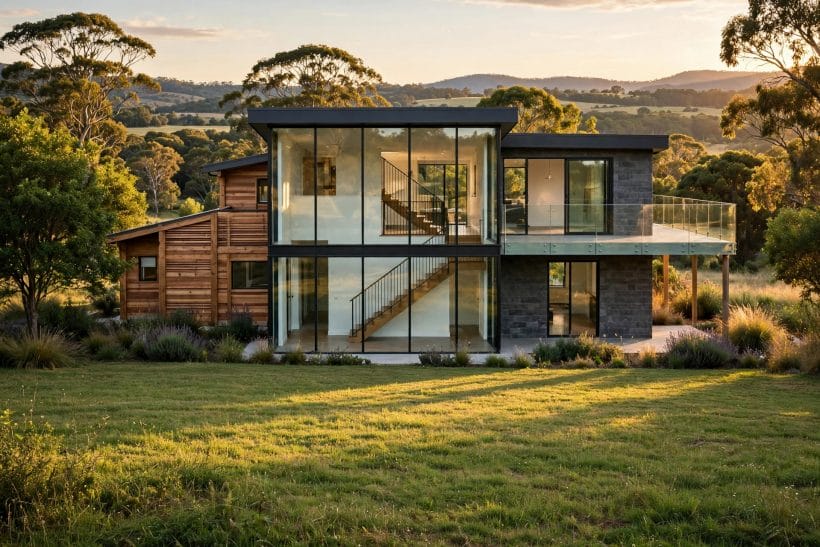
42. Glass Walls That Open on Two Sides
Opening glass walls on two sides of a corner room creates a pavilion that is open to the garden in two directions at once. Breezes pass through the room, and the boundary between inside and outside almost disappears. This arrangement suits houses in warm climates and gardens designed for outdoor living.
43. A Glass Room as a Garden Pavilion
A separate glass pavilion in the garden can serve as a studio, a dining room or a quiet retreat, connected to the house by a path or a covered walkway. The pavilion enjoys the garden from within, and the main house keeps its own character. This idea adds a glass room without rebuilding the whole house.
44. Glass Walls Beside an Outdoor Kitchen
Glazing the wall beside an outdoor kitchen keeps the cook connected to the house while working outside, with the interior visible through the glass. The outdoor kitchen gains shelter from the house wall, and the glass reflects the garden around it. This pairing suits houses where entertaining happens outdoors.
45. A Glass Wall That Frames a Pool Terrace
A glass wall facing a pool terrace gives swimmers and loungers a view into the house and gives the living rooms a view of the water. The reflections of water on glass add movement to the facade, and the terrace becomes a shared space between house and pool. Privacy and safety around the pool should be planned carefully.
46. Glass Walls Around a Covered Outdoor Room
A covered outdoor room with glass walls on one or two sides gives sheltered outdoor living with a view, protected from wind and rain while staying connected to the garden. The glass can slide or fold away in fine weather, so the room adapts to the season. This is a flexible idea for changeable climates.
47. A Glass Link Between House and Garden Room
A glazed link between the main house and a garden room creates a light-filled passage that makes the journey between the two feel like part of the garden. The link can be narrow and simple, with glass on both sides, and it gives the garden room its own sense of arrival. This idea suits houses with a separate studio or annexe.
48. Glass Walls for an Outdoor Dining Room
An outdoor dining room enclosed on one side by a glass wall of the house gains shelter and a view into the lit interior after dark. The dining table sits between garden and house, and the glass wall reflects candlelight and lamplight in the evening. This arrangement makes outdoor dining possible in more seasons.
7. Glass in Small and Woodland Houses
49. A Small Glass Cabin
A small glass cabin in a woodland clearing proves that glass exteriors are not only for large houses. A compact plan with glass on two or three sides gives a tiny house a huge sense of space, with the forest as its wallpaper. The small footprint also means the glass is easy to keep clean and comfortable.
50. Glass Walls in a Tiny House
A tiny house with a glass wall gains daylight and outlook that belie its size, with the garden becoming an extension of the single main room. The glass should be placed where the view is best and privacy is least compromised, and the rest of the tiny house can stay solid and cosy. This is one of the most effective tricks for small houses.
51. A Glass House Among Trees
A glass house set among trees enjoys dappled light and shifting reflections, with the canopy mirrored in the glazing. The house should sit lightly on its site, with minimal clearing, so the trees remain the dominant feature of the setting. This idea suits woodland plots where the house is a guest in the landscape.
52. Glass Walls for a Forest Retreat
A forest retreat with glass walls lets its occupants watch wildlife and weather from indoors, with the forest changing through the day and the seasons. The retreat should be simple in plan, with the glass facing the most interesting part of the forest and the solid walls holding beds and storage. This is a house designed for looking outward.
53. A Glass Cabin With a Pitched Glass Roof
A cabin with a pitched section of glass roof gains daylight from above as well as from the walls, with the sky visible from the main room. The pitched glass echoes a traditional cabin roof while giving the interior a distinctive quality of light. This idea suits cabins where the roof is part of the character of the house.
54. Glass Walls in a Hillside House
A hillside house with glass walls on its downhill side gains a sweeping view over the land below, while the uphill side stays solid and grounded. The glass should follow the slope, with the main rooms placed where the view is widest. This arrangement turns a difficult site into the best seat in the house.
55. A Glass House on a Quiet Lane
A glass house on a quiet lane can open to its garden at the rear while keeping a calmer, more solid face to the lane itself. The glass is concentrated where it matters most, on the private side, and the street side stays discreet. This is a considerate way to build a glass house among neighbours.
56. Glass Walls for a Weekend House
A weekend house with glass walls makes the most of short stays, with every visit feeling like an escape into the landscape. The glass brings the setting inside from the moment of arrival, and the house needs little decoration beyond the view itself. This idea suits houses that are used for rest and renewal.
8. Glass Beside Water and in Gardens
57. A Glass House Beside a Lake
A glass house beside a lake enjoys reflections twice over, with the water mirrored in the glazing and the house mirrored in the water. The main rooms should face the water, with the glass kept clear of clutter so the view dominates. This is one of the most serene settings for a glass exterior.
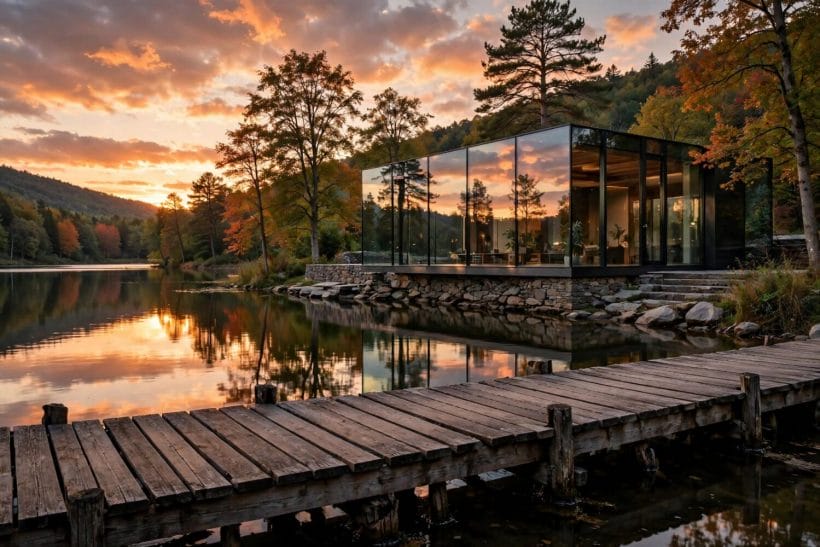
58. Glass Walls Overlooking a River
A house with glass walls overlooking a river gains a living view that changes with the water level, the light and the seasons. The glass should be placed where the river is visible from the main living spaces, and the rooms behind it should stay simple so the river remains the focus. This idea suits riverside plots with a clear outlook.
59. A Glass House With a Garden Pond
A glass house beside a garden pond enjoys a miniature waterside setting, with the pond reflected in the glazing and wildlife visiting close to the house. The pond should sit where it is visible from the main glass wall, and the planting around it should frame rather than block the view. This is a garden-scale version of the lakeside idea.
60. Glass Walls Around a Courtyard Garden
Glass walls around a courtyard garden give a house a private green heart, with every room looking onto planting rather than onto neighbours. The courtyard garden can be simple, with a tree, gravel and a few shrubs, and the glass walls make it feel like part of the interior. This idea suits urban houses with limited garden space.
61. A Glass House in a Formal Garden
A glass house in a formal garden gains a structured outlook, with hedges, paths and flower beds composed like a picture beyond the glass. The formality of the garden balances the modernity of the glass, and the house becomes a pavilion within a designed landscape. This pairing suits houses with a strong garden design tradition.
62. Glass Walls Facing a Wildflower Meadow
Glass walls facing a wildflower meadow give a house a soft, changing outlook, with grasses and flowers moving in the wind beyond the glazing. The meadow needs little maintenance and supports wildlife, while the glass brings its colour and movement indoors. This is a gentle, nature-led way to live with glass.
63. A Glass House With a Roof Garden
A glass house topped with a roof garden gains a green crown that softens its outline and gives the upper rooms a planted outlook. The roof garden also helps the house sit within its landscape, with the glass walls below reflecting the planting around it. Access and waterproofing for the roof garden should be planned by professionals.
9. Frames, Colour and Detailing
64. Slim Frames for a Minimal Look
Slim frames give a glass facade a minimal look, with the glazing reading as almost uninterrupted glass. The frames should be strong enough to carry the glass and resist weather, while staying as narrow as the design allows. This is the frame choice for houses where the glass itself should dominate.
65. Bold Frames as a Design Feature
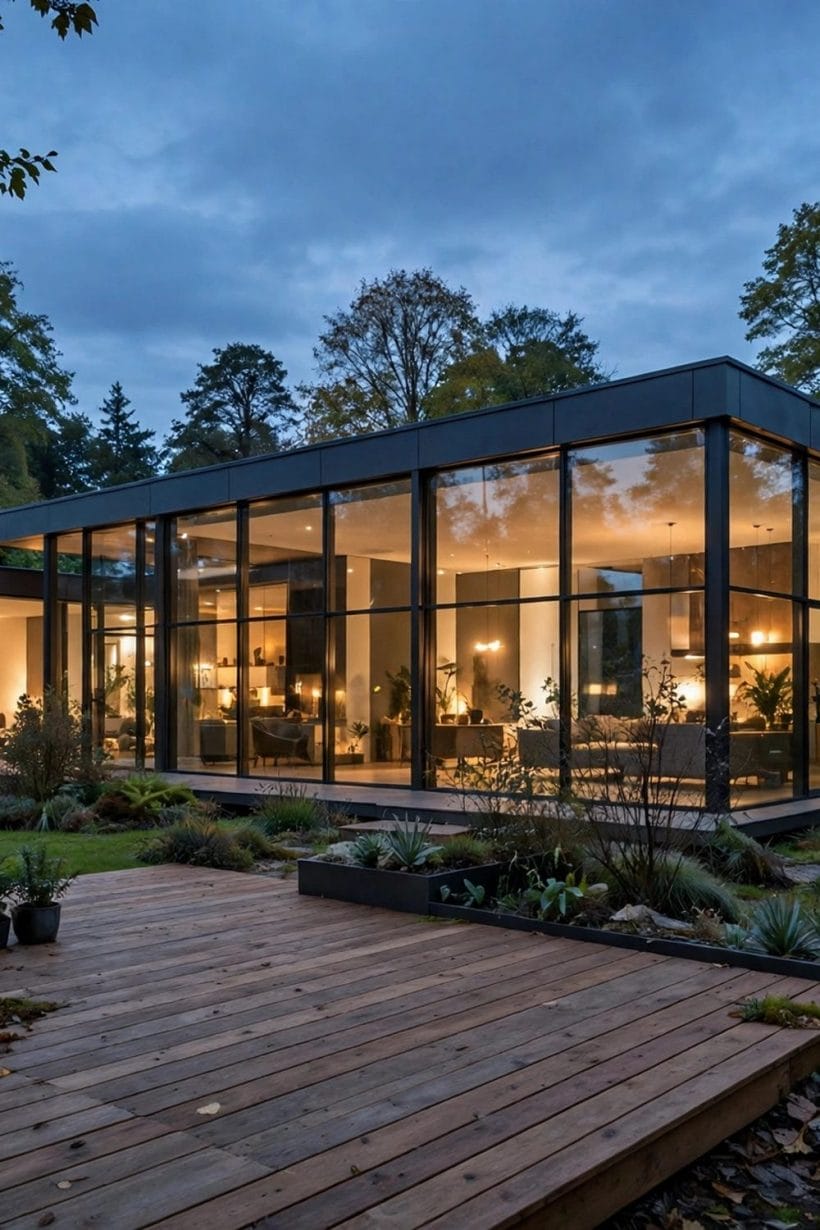
Bold, chunky frames can become a design feature in their own right, dividing a glass wall into a grid that gives the facade rhythm and structure. The grid can echo the layout of the rooms behind it, and the frames can be coloured to contrast with the glass. This idea suits houses with a strong geometric character.
66. Black Frames Against Pale Walls
Black frames against pale rendered walls give a glass facade a crisp, graphic quality, with the dark lines of the frame standing out clearly. The contrast makes the glazing legible from a distance, and the pale walls keep the house feeling light. This is a classic modern combination that suits many settings.
67. Bronze Frames for a Warm Tone
Bronze-toned frames give a glass facade a warm, metallic glow that suits houses with timber, stone or warm render. The bronze softens the contrast between glass and wall, and it ages with a patina that adds character over time. This frame colour is a good alternative to black where warmth is wanted.
68. White Frames for a Light Facade
White frames give a glass facade a light, fresh character, with the glazing blending into pale walls and bright interiors. The white frames suit coastal houses and houses with a light, airy interior style, and they reflect heat rather than absorbing it. This is a gentle frame choice for sunny settings.
69. Timber Frames With a Natural Finish
Timber frames with a natural finish bring the warmth of wood to a glass facade, with the grain of the timber visible beside the glass. The timber should be chosen and finished for exterior use, and it will need periodic care to keep its appearance. This pairing suits houses with a natural material palette throughout.
70. Coloured Frames as an Accent
Coloured frames, in a muted green, blue or grey, can give a glass facade a distinctive accent without overwhelming the glass itself. The colour should be chosen to suit the landscape and the other materials of the house, and it should be used consistently across the facade. This is a playful idea that still needs restraint.
10. Living With Glass Day to Day
Finally, the practical side: privacy, shade, cleaning and glare decide whether a glass house is a pleasure every day. For the glazing itself, the impact windows and sliding doors guide explains what drives the choice of windows and sliding doors.
71. Privacy With Curtains and Blinds
Curtains and blinds give a glass house flexible privacy, with sheer layers for daytime and heavier layers for evening. The window treatments should be planned with the glass wall, so tracks and headings sit neatly within the frame. This is the simplest way to make a glass house comfortable at all hours.
72. Shade for Summer Comfort
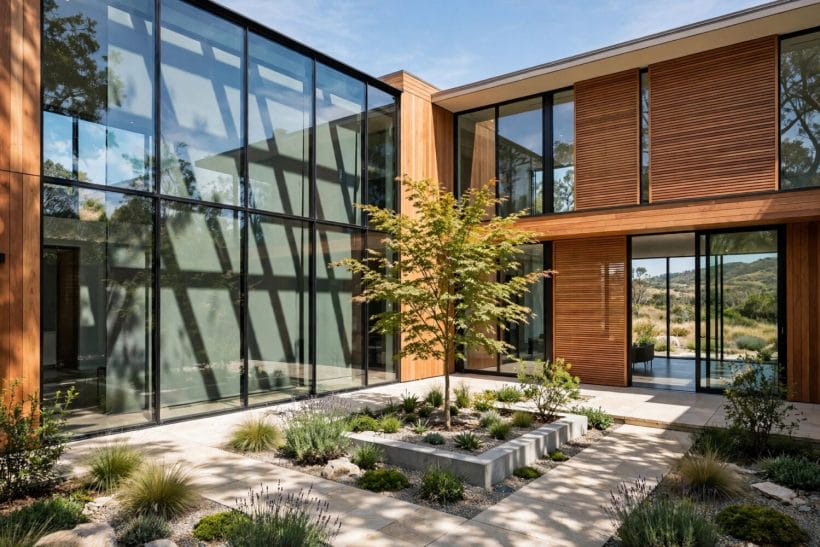
External shade, from overhangs, louvres or planting, keeps a glass house comfortable in summer by blocking high sun before it reaches the glass. Internal blinds alone are less effective, since heat has already entered the room, so shade should be considered from outside first. This is one of the most important practical details of living with glass.
73. Cleaning Tall Glass Panels
Tall glass panels need a cleaning plan, with safe access to both sides and a method that does not risk the glass or the person cleaning it. Long-handled tools can reach modest heights, while taller panels may need professional cleaners with proper equipment. This practical point should be settled before a glass house is built, not after.
74. Glare and Reflections
Glare from low sun and reflections from neighbouring glass can affect comfort inside a glass house, and both should be considered when placing the glazing. Orientation, shade and the choice of glass can all reduce glare, and planting can break up reflections from outside. A glass house that manages glare well feels calm rather than dazzling.
75. Living With Glass Through the Seasons
A glass house changes with the seasons, gaining long light in summer, low sun in winter, and a front-row seat for storms and snow. The house should be designed for all four seasons, with shade for summer, warmth for winter, and views that reward attention in every month. This seasonal variety is one of the great pleasures of living with glass, and it is worth designing for deliberately.
Final Considerations
Choosing a glass exterior is really choosing how much of the outside world you want in your daily life. Full-height walls give the most light and the most exposure, glazed corners give views in two directions, and combinations with timber, stone or brick let a glass house sit comfortably in its setting. Work through the ideas above with your own plot, outlook and privacy in mind, and shortlist the forms that suit your house rather than the ones that simply photograph well.
Before building, talk to qualified professionals about structure, glazing specification, shading, ventilation and cleaning access, and check local rules for your area. A glass house rewards careful planning more than most house forms, because its best qualities, light, view and openness, depend on details that are hard to change later. Get those details right, and a glass exterior gives a house a character that lasts through every season.

0 Comments