

Gravel is the patio surface of the Mediterranean hill town and the English gravel garden alike: cheap, beautiful, kind to rain and endlessly re-shapeable — and dismissed, usually, by people who have only met it badly laid.
This collection lays a gravel patio properly, in the order the work actually runs: the layout first, then the stone itself, the edges and base beneath it, shade and shelter above it, the furniture that sits on it, the planting through it, and the light weekly care that keeps it handsome.
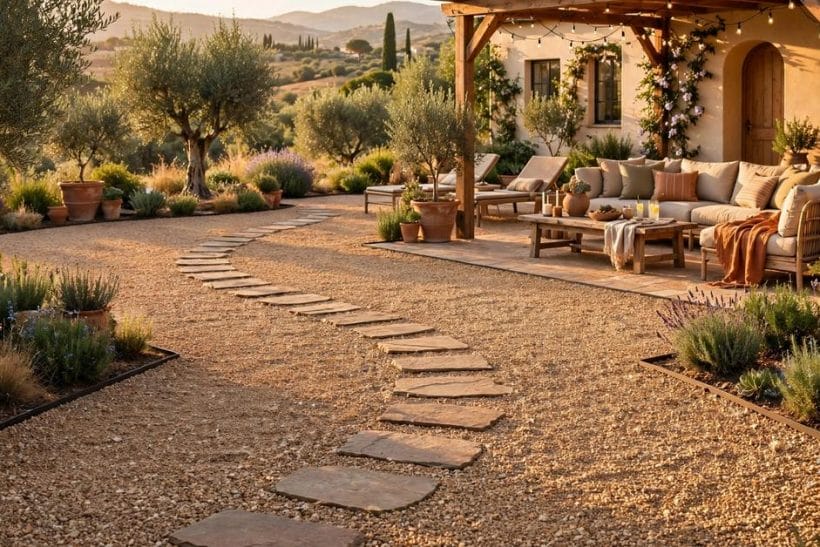
1. Gravel Patio Ideas at a Glance
The gravel patio is the loose-stone member of this collection’s patio ideas family: a sitting terrace surfaced in compacted angular gravel over a firm base, edged on every side, and planted through at its margins. It owns the generic gravel topic in the plan — the earlier pea-gravel post keeps its narrower, rounded-stone territory — and it splits from its laid-stone siblings by surface alone: same garden rooms, answered in loose stone instead of flags.
| Question | Short answer |
|---|---|
| Why choose gravel over paving? | Price, drainage and forgiveness: it lays fast, drinks rain where it falls, takes any shape, and can be re-levelled or re-shaped in a weekend. |
| Which gravel is best for a patio? | Angular crushed stone in a middle grade — it knits firm underfoot, unlike rounded pea shingle, which rolls and migrates. |
| Does furniture wobble on gravel? | On the sitting island, no: the dining set stands on slabs or deck within the gravel court, and sled-based furniture sits happily on the stone itself. |
| What stops the gravel escaping? | An edge on every side — steel, stone, brick or timber — plus a firm threshold strip at the house wall. |
| How much care does it need? | Little and often: a weekly rake in season, seedlings hoed small, thin spots topped up from reserve bags. |
| Is gravel suitable for every household? | Mostly — but wheels and unsteady feet need the firm paths planned in from the start, not apologised for later. |
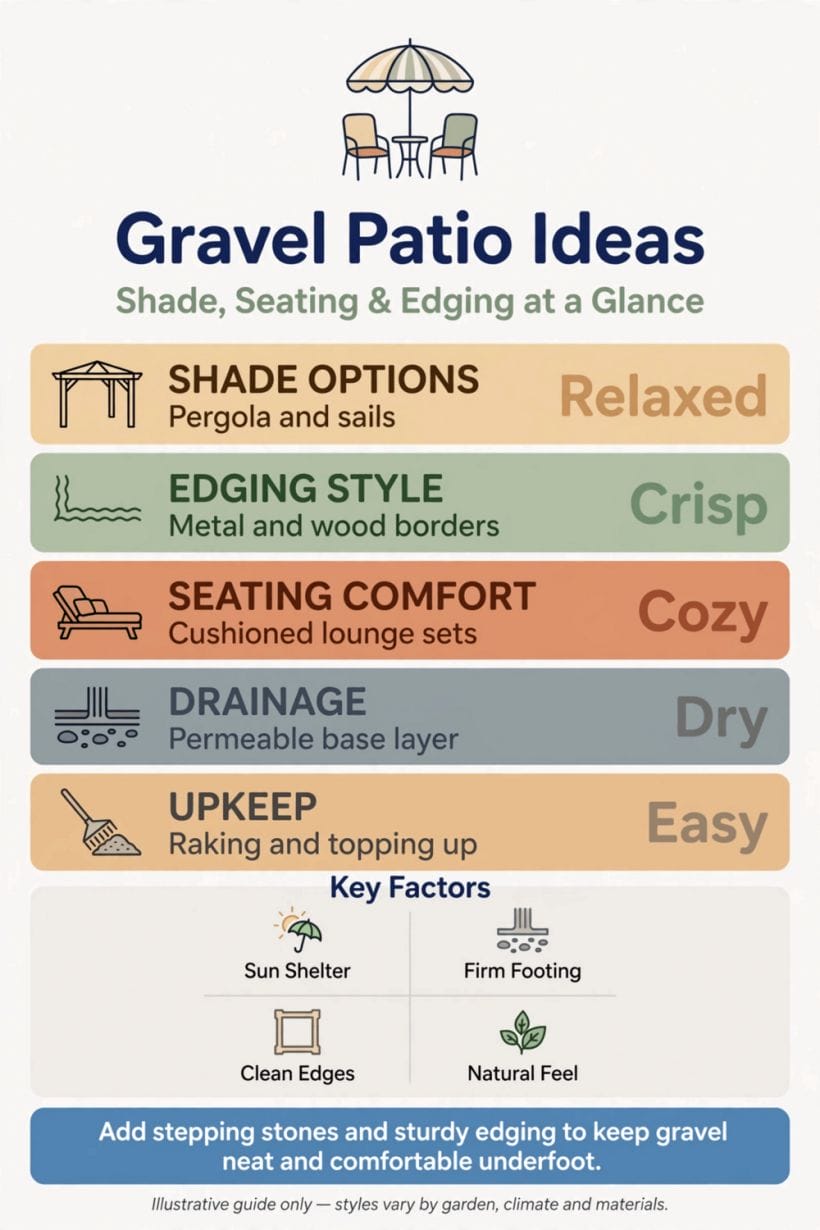
2. Layouts: Shaping a Gravel Patio
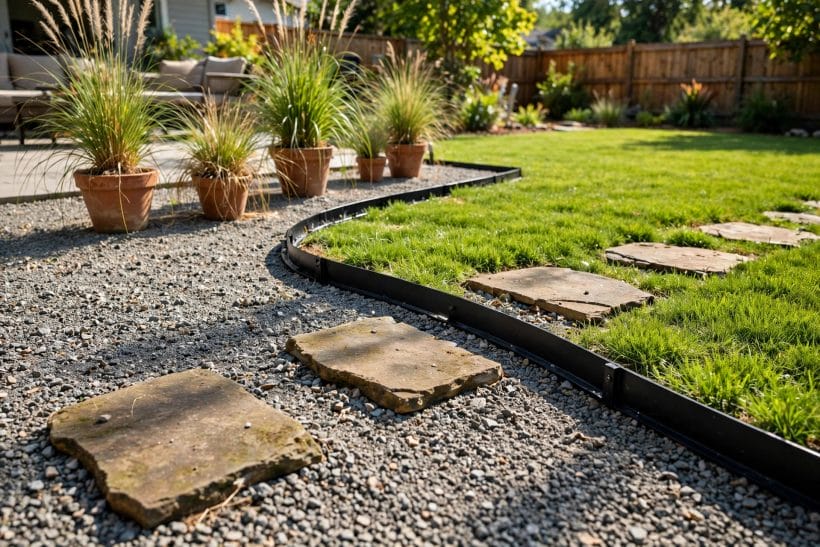
Gravel is the most forgiving patio surface ever spread: it takes any shape, drains as it lies, and asks for no saw cuts or mortar. The layout game is therefore about shapes and edges — drawing a room outdoors in a material that will happily blur unless it is framed.
1. Draw the patio as a room, not a leftover
Give the gravel a deliberate shape — a rectangle aligned with the house, a circle around a tree, a broad L following the garden’s turn.
2. Size it for the furniture, then add walking room
Lay out the table and chairs on the plan, then allow a generous margin on every side for chairs pushed back and people passing.
3. Anchor the plan on the patio ideas pillar’s first rule
This collection’s patio hub puts the sitting zone where the day’s best light and the house’s easiest door meet.
4. Give the table its own firm island
A rectangle of slabs, a timber deck panel or a stone platform under the dining set keeps chair legs out of the gravel while the rest stays loose.
5. Curve the outline where the garden is informal
Gravel takes curves that paving charges dearly for. A sweeping edge against lawn or planting suits cottage and country gardens, and the steel or stone edge will hold the line the gravel itself cannot.
6. Step the patio down a slope in terraces
On a slope, two or three shallow gravel terraces held by timber or stone risers beat one tilted plane. Each level becomes its own small room — dining above, lounging below — and the gravel stays where it was spread.
7. Run a gravel court to the garden door
In small gardens, one gravel court from the back door to the garden’s end unifies everything and swallows the path problem entirely. Furniture groups mark the zones; the stone is the floor of the whole outdoor house.
8. Keep a firm path through the gravel
A line of stepping slabs from door to gate saves bare feet and wheelie bins alike. Gravel is pleasant underfoot in shoes and honest punishment barefoot; a firm route through it is kindness, not compromise.
9. Place the lounging zone at the sun’s last stand
Evening sun decides where the last hour of the day is spent. Put the loungers or the fire bowl where the light lingers longest, and the dining table can take the midday shade instead.
10. Frame the outlook with the patio’s edge
Align the patio’s long edge with the garden’s best view and the sitting zone composes itself around it.
11. Leave a working margin at the house wall
A firm strip — slabs or a drainage channel — between gravel and house wall keeps splashes off the render and gives ladders and bins a standing place.
3. The Gravel Itself: Stone, Size and Colour
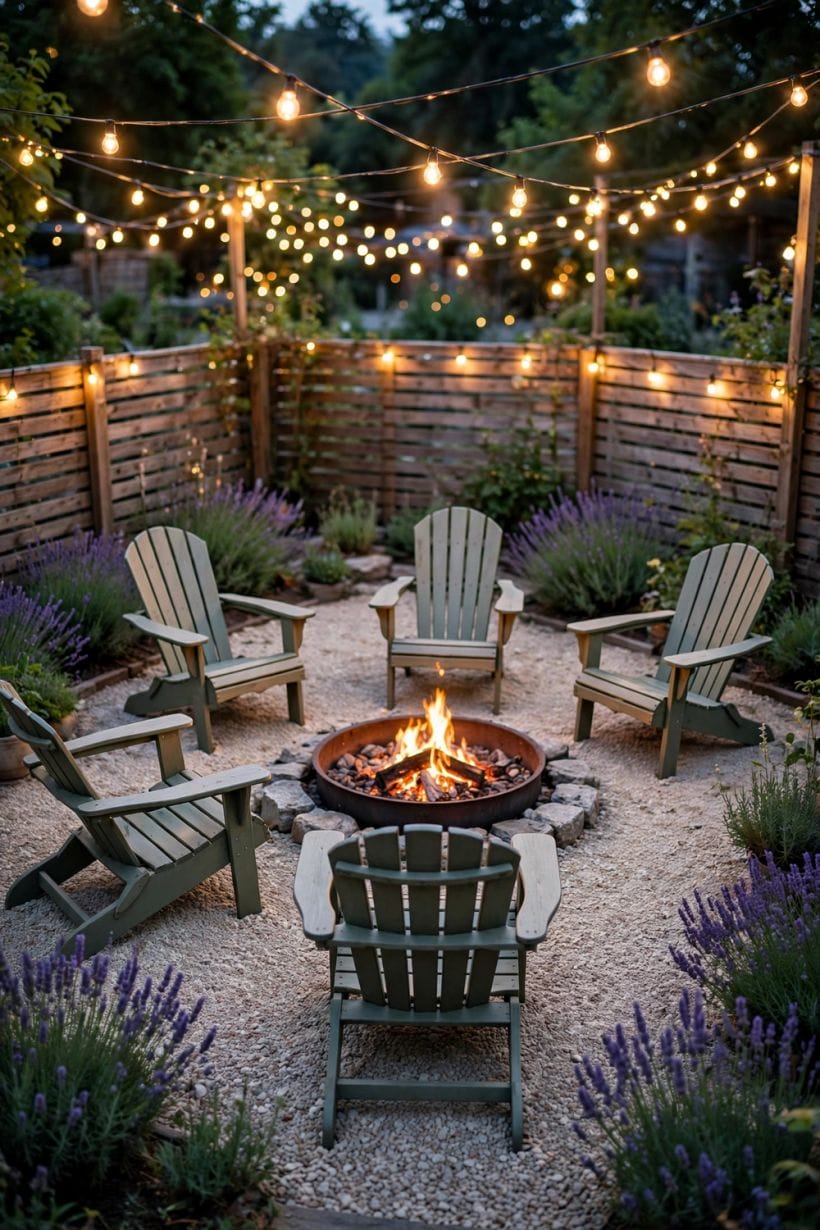
Not all gravel is equal under a chair leg. The choice of stone — angular or rounded, small or coarse, pale or dark — decides whether the patio crunches pleasantly, holds furniture steady, and flatters the garden around it.
12. Choose angular gravel that knits together
Crushed, angular stone locks into a firm, walkable surface once compacted; rounded pea shingle rolls underfoot and migrates forever.
13. Keep the pea-gravel distinction honest
This collection’s earlier pea-gravel post covers the small rounded stone’s own territory — paths, planting mulch, informal edges.
14. Pick a middle grade for sitting areas
Very fine gravel sticks to shoes and migrates indoors; very coarse stone rocks under chair legs. The middle grades give the patio its crunch without its wobble, and they rake back smooth in seconds.
15. Let the stone’s colour set the garden’s temperature
Pale gravel — Cotswold buff, silver-grey, warm limestone — brightens a shaded garden and cools a hot one visually. Dark basalt and slate tones drink the light and look superb against green planting and pale furniture.
16. Match the gravel to the house’s own materials
Stone that echoes the house wall, the garden wall or the local geology settles the patio into its place as if it had always been there. Imported colours that appear nowhere else in the garden look imported forever.
17. Buy from one batch, and keep a reserve
Gravel colour varies between loads more than catalogues admit. Order the whole patio from one batch, and keep a few bags back for topping up thin spots — a later load will never match exactly.
18. Spread it at the depth the stone needs
Too shallow and the base shows through; too deep and the surface turns to a beach that swallows chair legs.
19. Test a square metre before committing
Spread a sample area, set a chair on it, walk it in the household’s real shoes, and look at it wet and dry.
20. Consider stabilising grids under the busiest zones
Honeycomb stabilisation panels under the gravel hold the surface firm at doors, paths and the dining island while staying invisible. They are the difference between a patio that needs weekly raking and one that needs it monthly.
21. Screen the dust out of economy loads
Cheap gravel can arrive heavy with dust and fines that muddy the surface and stain pale stone. A quick wash or a screened grade costs little and keeps the patio’s colour true through its first winter.
22. Plan the crunch as part of the welcome
The sound of gravel underfoot is one of the material’s pleasures — arrivals announce themselves, and the garden feels attended.
4. Edges, Bases and the Ground Beneath
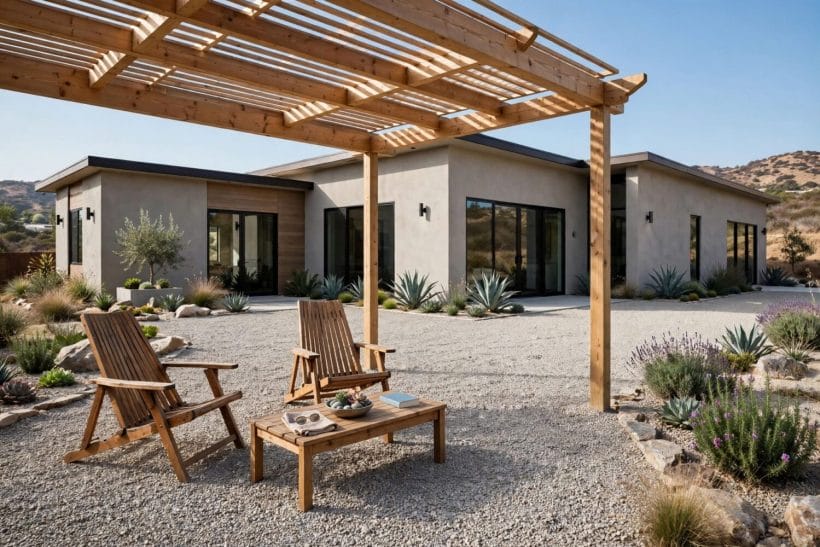
A gravel patio is only ever as good as what holds it in and what lies under it. Edges stop the migration, the base stops the sinking, and the membrane question — to lay one or not — deserves an honest answer rather than a sales pitch.
23. Edge everything, without exception
Steel strip, stone setts, brick on edge, sleepers: the material is negotiable, the edge is not.
24. Build the base like a driveway’s poorer cousin
A compacted hardcore base under a gravel patio keeps it level, drained and free of the dips that collect puddles and chair-rocking hollows. Skipping the base saves a weekend and costs the patio its firmness for life.
25. Lay a membrane where weeds are the enemy
A permeable landscape membrane under the gravel suppresses weeds pushing up from the soil while letting rain through.
26. Compare honestly with the laid-stone alternative
The flagstone patio ideas in this collection lay the same garden room in solid stone: firmer, dearer, permanent. Gravel answers with price, drainage and forgiveness. Many fine gardens use both — flags where the chairs are, gravel everywhere the feet merely pass.
27. Fall the surface gently away from the house
Even a surface that drains through itself should shed its storm water politely. A slight fall away from the walls, toward a border or a drainage channel, keeps the base dry and the house’s footings unbothered.
28. Keep gravel out of the drains
Fit guards where gravel meets gullies and channel drains, and sweep strays back weekly. More gravel patios fail their owners through blocked drains and stone in the mower than through any fault of the stone itself.
29. Use the border as the patio’s overflow garden
A planted margin at the gravel’s edge catches stray stones, softens the line and gives the patio its seasonal change. Low, tough plants that forgive the odd stone — lavender, thyme, hardy geraniums — are the right tenants.
30. Treat tree roots with respect and depth
Where roots run under the patio, build the base up rather than digging through them, and accept a gentler compaction. A patio can be re-levelled in an afternoon; a mature tree cannot be replaced in a decade.
31. Make the threshold step firm and level
The step from house to gravel is the patio’s most-used square foot.
32. Borrow the path-builders’ tricks for the edges
The edging and border craft in this collection’s gravel path and rock borders post applies unchanged to patio margins: stone borders contain loose gravel best where feet and mowers pass most.
33. Leave one corner unpaved for the future
Gardens change: a cold frame, a store, a child’s pool. Keeping one corner of the patio lightly based and simply gravelled leaves the household an honest place to change its mind without breaking up hard landscaping.
5. Shade and Shelter Over Gravel
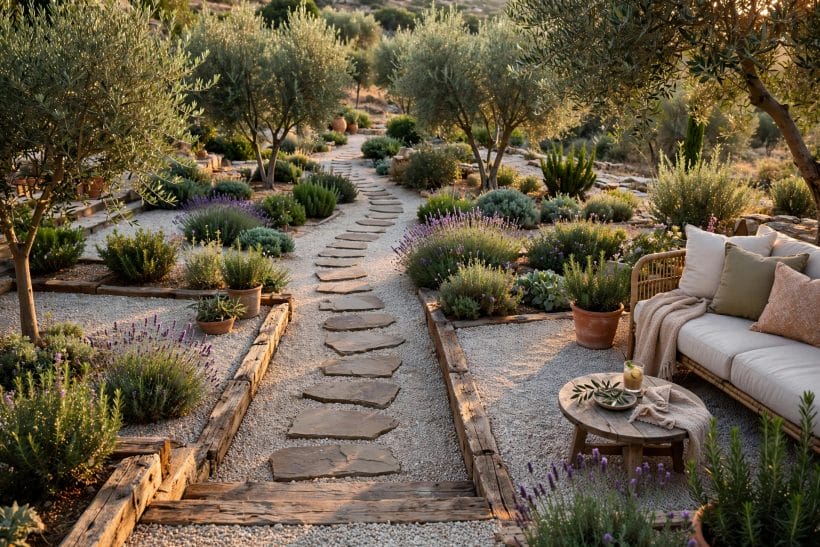
A gravel patio earns a particular kind of shade: structures planted straight into the stone, sails and canopies that move with the seasons, and planting that throws shadow without dropping the mess that paving would show and gravel forgives.
34. Plant a parasol where the table lives
A generous parasol over the dining island is the gravel patio’s fastest shade — movable, storable, and happy with its base buried discreetly under the stone. Weight the base for wind; gravel hides a multitude of ballast.
35. Build a pergola straight from the gravel
Pergola posts stand on pads dug through the gravel, and the structure then belongs to the patio rather than sitting on it.
36. Distinguish the gazebo’s offer from the pergola’s
Where the wish is a roofed destination rather than a shaded corner, the patio with a gazebo ideas in this collection set a whole small building on the patio’s edge — gravel runs kindly right up to its posts and forgives the drip line as paving never does.
37. Stretch a shade sail for the modern garden
A taut sail over part of the gravel gives clean, architectural shade and comes down for winter. It suits gravel’s informality set against a contemporary house, where a rustic pergola might argue with the architecture.
38. Grow a tree through the gravel
A small multi-stem tree planted in a gravel pit — amelanchier, olive in warm districts, a crab apple — gives living shade that deepens yearly. Gravel is the tree-friendly patio surface par excellence: no cuts, no cracks, rain straight through.
39. Screen one side against the prevailing wind
A gravel patio in a wind funnel is a crunch under a gale. A hedge, a slatted screen or a loose stone wall on the weather side turns the court into a room the evening can actually be spent in.
40. Add a sail or awning from the house wall
Where the patio hugs the house, a wall-mounted awning shades the strip that gets the fiercest sun and shelters the door. Retracted, it leaves the gravel court open to the sky for the evening.
41. Use tall planting as the soft parasol
Ornamental grasses, bamboos in pots and airy small trees at the patio’s sunny edge filter light rather than blocking it. Their movement and sound suit gravel’s looseness better than any solid roof.
42. Keep a fire bowl for the unshaded hours
Evening on gravel needs no shade but wants warmth: a fire bowl on a firm slab at the court’s centre extends the patio’s day into the dark, and its ash and sparks fall on the one surface that does not mind them.
43. Mind the mess budget of overhanging trees
Blossom, fruit and autumn leaves all land on a patio; on gravel they rake up in minutes and the stone forgives the staining that would mark pale paving. Choose the tree for its shade and its litter alike.
44. Plan lighting into the shade structures
Festoon lights along a pergola beam, a lantern hung from the parasol, low lights at the edge: the shade-givers double as the evening’s light-bearers, and gravel’s pale stone throws their glow back kindly.
6. Furniture That Sits Well on Gravel
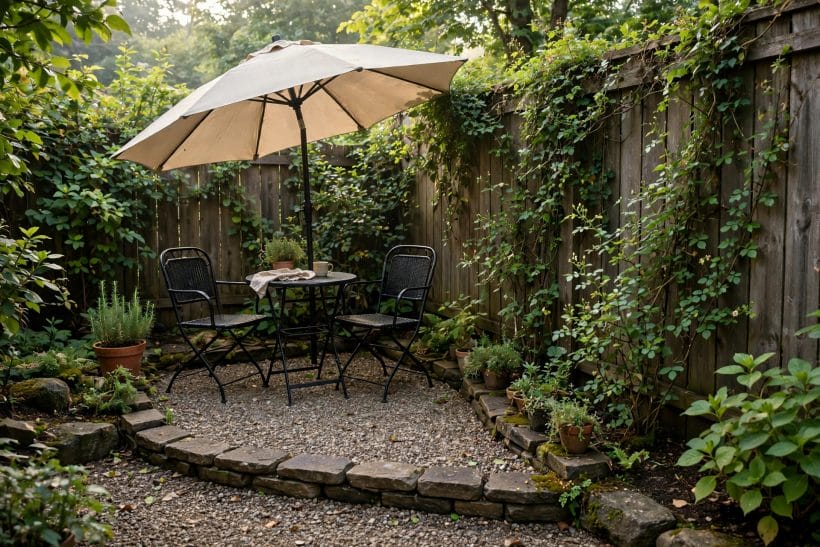
Loose stone is a floor with opinions about furniture: it loves sled bases and broad feet, tolerates most chairs on the firm island, and quietly rejects spindly legs and castors. Choosing furniture that suits gravel is the difference between a charming terrace and a daily wobble.
45. Favour sled bases and wide feet
Chairs and loungers on sled runners or broad flat feet spread their load across the stone instead of drilling into it. The furniture sits level, stays level, and moves with a scrape rather than a struggle.
46. Put the dining set on the firm island
However good the gravel, dining chairs get pushed back a hundred times a meal. The slab or deck island under the table is where they belong; the gravel keeps the surrounding court and the loungers.
47. Choose metal and hardwood that weather outdoors
Powder-coated aluminium, iron and teak or acacia take gravel-side life in their stride and their weight helps them sit still. Light plastic furniture skitters on loose stone and looks lost on it.
48. Use benches along the patio’s edge
A bench against the house wall or the border seats many, stores cushions beneath a hinged top, and defines the patio’s edge with furniture instead of fencing. On gravel it asks only for level feet.
49. Keep cushions in a store that lives outside
A cushion box on the patio’s firm strip saves the nightly pilgrimage through the house. In a gravel garden the store’s position matters more than its looks: near the seats, on the slabs, out of the stone.
50. Let a hammock or swing seat anchor the lounging zone
A freestanding hammock or a swing seat on a frame gives the gravel court its holiday corner. Their frames spread wide, sit firm, and their gentle movement suits the patio’s holiday informality.
51. Pick tables with a lower shelf or stretcher
Tables braced low — a stretcher bar, a lower shelf — resist the rack and wobble that loose stone encourages in tall, lightly built pieces. Test the table with a lean before buying; gravel exaggerates every weakness.
52. Roll nothing: choose movable over wheeled
Wheels and gravel are enemies. Furniture that one person can lift and carry beats furniture that promises to roll and then digs in, and trolleys for drinks should have the widest wheels the garden centre sells.
53. Match the furniture’s colour to the stone’s mood
Pale stone takes dark furniture handsomely and dark stone disappears under black chairs. Let the gravel be the floor of the composition: furniture a tone or two apart from it, cushions supplying the colour.
54. Give the fire bowl its own firm footing
Fire bowls, chimineas and outdoor stoves stand on a slab or a metal plate, never directly in loose gravel where a tilt spills ash and worse. The firm island principle applies to fire most of all.
55. Winter-store the vulnerable pieces under cover
Gravel patios winter easily — the surface asks nothing — so let the furniture have the same mercy: covers on the spot, or a dry store for cushions and timber.
7. Planting In and Around Gravel
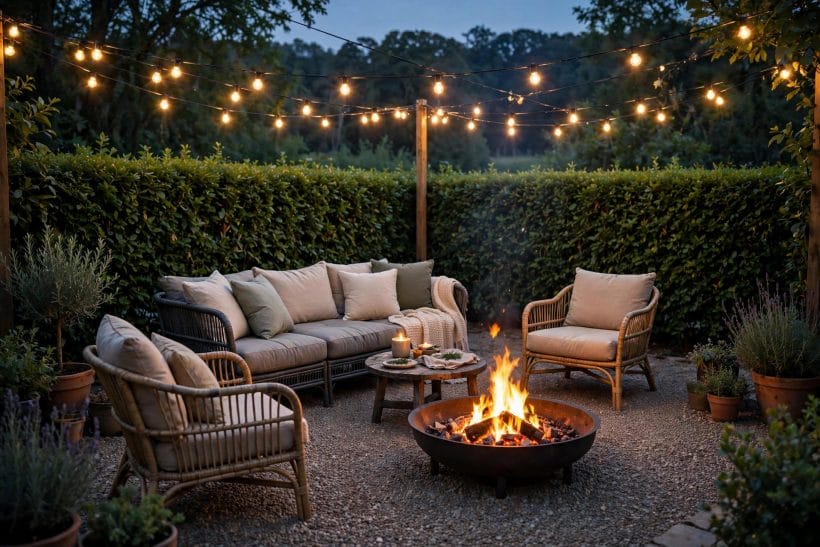
Gravel and planting are old partners: the Mediterranean and gravel-garden traditions grow whole borders in stone mulch, and a patio’s edges are where that partnership shows best. The rule is simple — plant through the gravel at the margins, and keep the sitting stone clear.
56. Plant through the gravel at the edges
Cut the membrane, plant into the soil beneath, and draw the gravel back as a mulch. Plants rooted this way — lavender, rosemary, grasses, hardy geraniums — get the drainage gravel gives and the moisture the soil keeps.
57. Run a Mediterranean border along the sunny edge
Lavender, cistus, santolina and rosemary along a sun-baked gravel margin is the classic composition, scented when brushed and unbothered by reflected heat. It is also the border that asks least water in a dry summer.
58. Let self-seeders colonise the margins
Verbena, Californian poppy, erigeron and thyme seed themselves into gravel edges and make the patio look grown rather than installed. Edit them with a hoe where they wander onto the sitting stone.
59. Use pots to keep the court’s centre green
Large pots on the firm island or the patio’s corners carry the plants that need richer soil or winter shelter. On gravel, pots can be the biggest the household can lift — the surface forgives their weight and their drips.
60. Compare the planted gravel garden with the paved court
The stone patio in this collection plants its softness in borders beyond the flags; the gravel patio can plant through its own edges, which is its quiet advantage — the room and the garden share one continuous stony ground.
61. Grow herbs where the cook can reach them
Thyme underfoot at the edge, rosemary as a low hedge, pots of basil by the door: a gravel patio near a kitchen should smell of dinner. Herbs take the heat gravel reflects and return it as scent.
62. Keep grasses for movement at the corners
Tall ornamental grasses at the patio’s corners move in every breath of wind and catch the evening light. Against still stone and still furniture, their motion is the garden’s clock.
63. Avoid thirsty lawns right up to the edge
A gravel patio beside a lawn means stones in the mower and grass in the stones. A paved or planted margin between them — even a narrow one — saves both surfaces a lifetime of mutual irritation.
64. Mulch the borders to match the patio
Where beds meet the patio, a gravel mulch on the soil ties border and court into one material story and keeps the bed’s weeds down as a kindness. The garden reads as one design, not two materials arguing.
65. Plan for the patio to green with age
Moss in the shady corner, thyme creeping at the sunny edge, a seedling in the step: gravel gardens mature by greening at their margins.
8. Care, Comfort and Living With Gravel
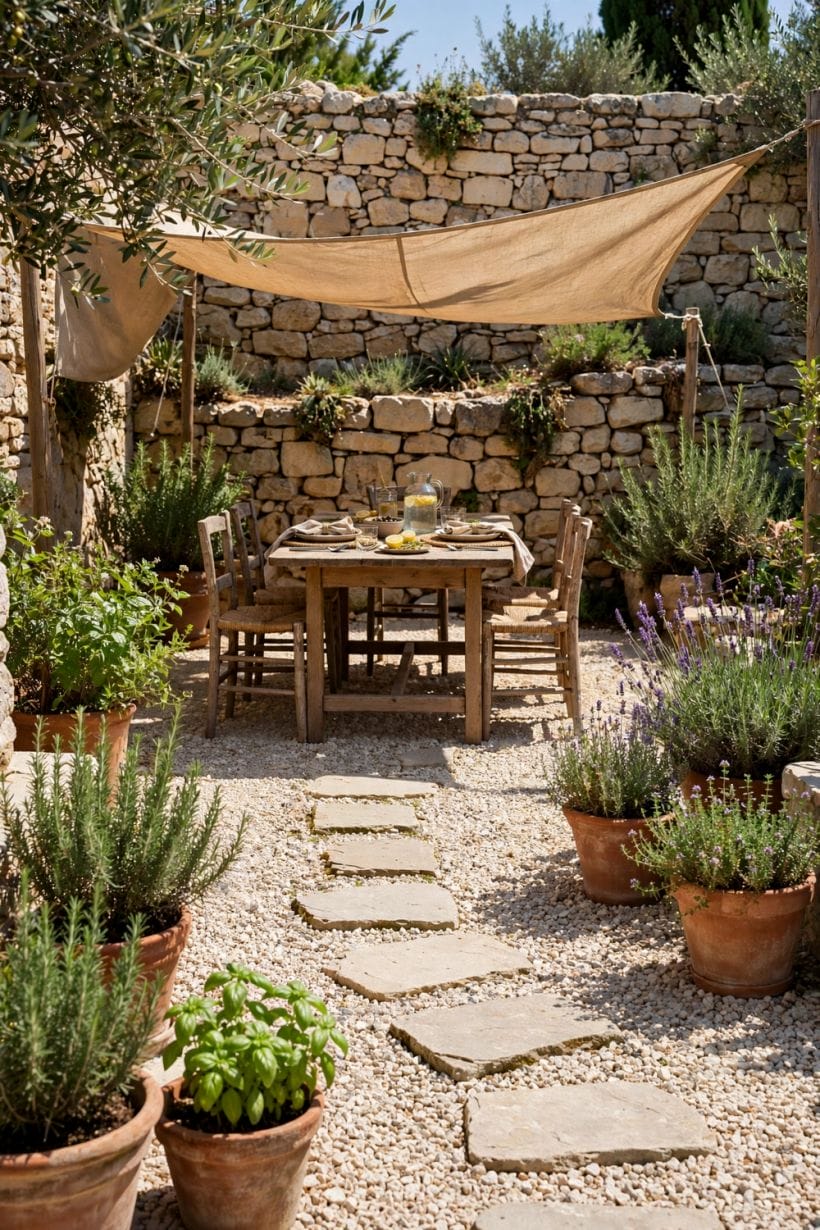
Gravel asks for a different care rhythm than paving: little and often, with a rake rather than a pressure washer. In exchange it never cracks, never stains permanently, and can be re-levelled, topped up or entirely re-shaped in a single weekend.
66. Rake little and often
Five minutes with a rake restores the surface, pulls out seedlings and re-levels the hollows chair legs dig. Left a season, the same jobs take a day; gravel rewards the household that treats raking as sweeping, not as landscaping.
67. Top up thin spots from the reserve bags
High-traffic lines — door to gate, table to kitchen — wear thin first. A bucket of reserve gravel raked in keeps the level true and the base hidden, and takes less time than the kettle.
68. Weed by hand and hoe, never by neglect
Seedlings rooting in the gravel’s dust lift out easily when small and become citizens when left. A weekly pass in the growing season is the whole secret; membrane or none, gravel is a surface you garden lightly forever.
69. Keep shoes that suit the surface by the door
Garden shoes or sandals with a real sole live by the back door in gravel households. The arrangement sounds fussy for a week and then becomes as natural as a doormat.
70. Sweep the threshold, save the floors
A stiff brush and a boot scraper at the door stop the daily migration of stones onto indoor floors. The household that keeps both spends its gravel budget on the patio, not on scratched boards.
71. Refresh the whole surface every few years
In time, dust and soil work into the gravel and dull it.
72. Mind wheelchairs, prams and unsteady feet
Loose gravel is hard going for wheels and uncertain feet. The firm island and the slab path are not luxuries in a household that needs them; plan the accessible routes first and let the gravel fill the rest.
73. Let children and dogs vote with their feet
Gravel courts survive football, digging dogs and paddling pools with a rake and a shrug. Households with all three often conclude that the surface’s forgiveness outweighs its crunch — the patio that cannot be ruined cannot be worried over.
74. Store the outdoor life at the patio’s edge
A bench-store, a small shed on the firm strip, hooks on the house wall: gravel patios work when the cushions, games and tools live where they are used. The court stays clear because everything has a near home.
75. Enjoy the surface in every season
Frost patterns on pale stone, the first warm day’s lunch outside, autumn leaves that rake away clean, winter’s quiet crunch: the gravel patio is a four-season floor.
9. Checks and Mistakes: Before the First Purchase or the First Fitting
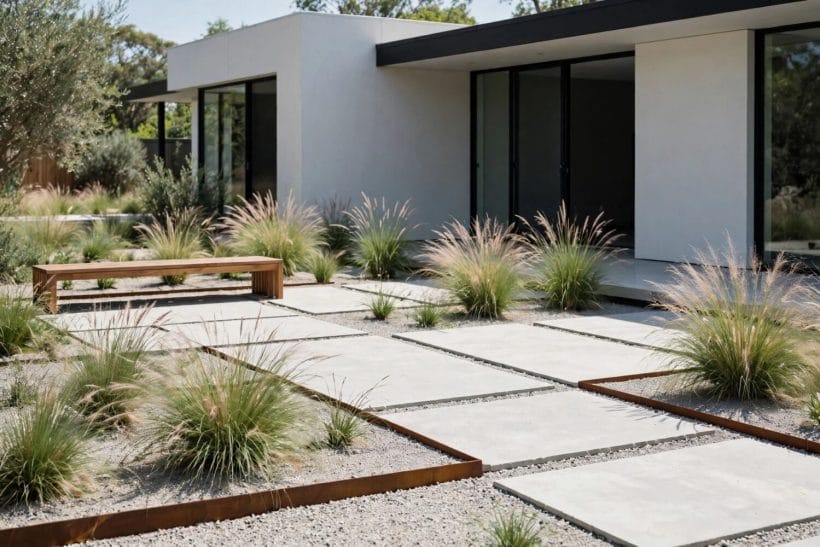
Before spreading a single bag, walk the finished design on the ground: hose the outline, place the furniture, sit in the chairs at the day’s different hours. Gravel’s great gift is that the plan can be tested for the price of moving it.
Check the unglamorous build in writing: base depth and compaction, the fall away from the house, drain guards fitted, edges continuous. A gravel patio fails from beneath or from its borders, never from its middle.
Resist the two classic economies — skipping the edge and skipping the base. They save a weekend between them and tax the patio’s owners a small labour every week thereafter.
10. Costs and Pulling It Together
Costs in a gravel patio follow the ground, not the stone: excavation and base first, edging second, membrane and stone third, with the firm island and the furniture the last and most flexible spend. Stone itself is the cheapest layer of the whole build, which is precisely why the layers beneath it deserve the budget.
Finish with the reserve bags, the rake and the cushion store — the small kit of weekly care. From the home design ideas hub, the same ground-first discipline serves every other outdoor room in the plan.
Final Considerations
A gravel patio is a garden room with a floor that crunches, drains, forgives and changes its mind as easily as its owners do — the least precious surface a patio can have, and for many gardens the most loved.
Lay it on a firm base, edge it without exception, plant its margins and rake it lightly, and it will return the care with decades of unhurried outdoor life.



0 Comments