

A flagstone patio looks inevitable, as if the garden had simply decided to be flat and beautiful in that one place: great irregular slabs, joints soft with moss or gravel, a table standing as if it had always stood there. That inevitability is built, slab by heavy slab — and it lasts for generations.
This page works the flagstone surface in depth, as the natural-stone lane of the patio ideas survey: the stone itself and its colours, the base it stands on, the patterns and joints, the rooms it hosts, its paths and steps, its behaviour around water and shade, and the honest keeping of a patio that improves every year it is lived on.
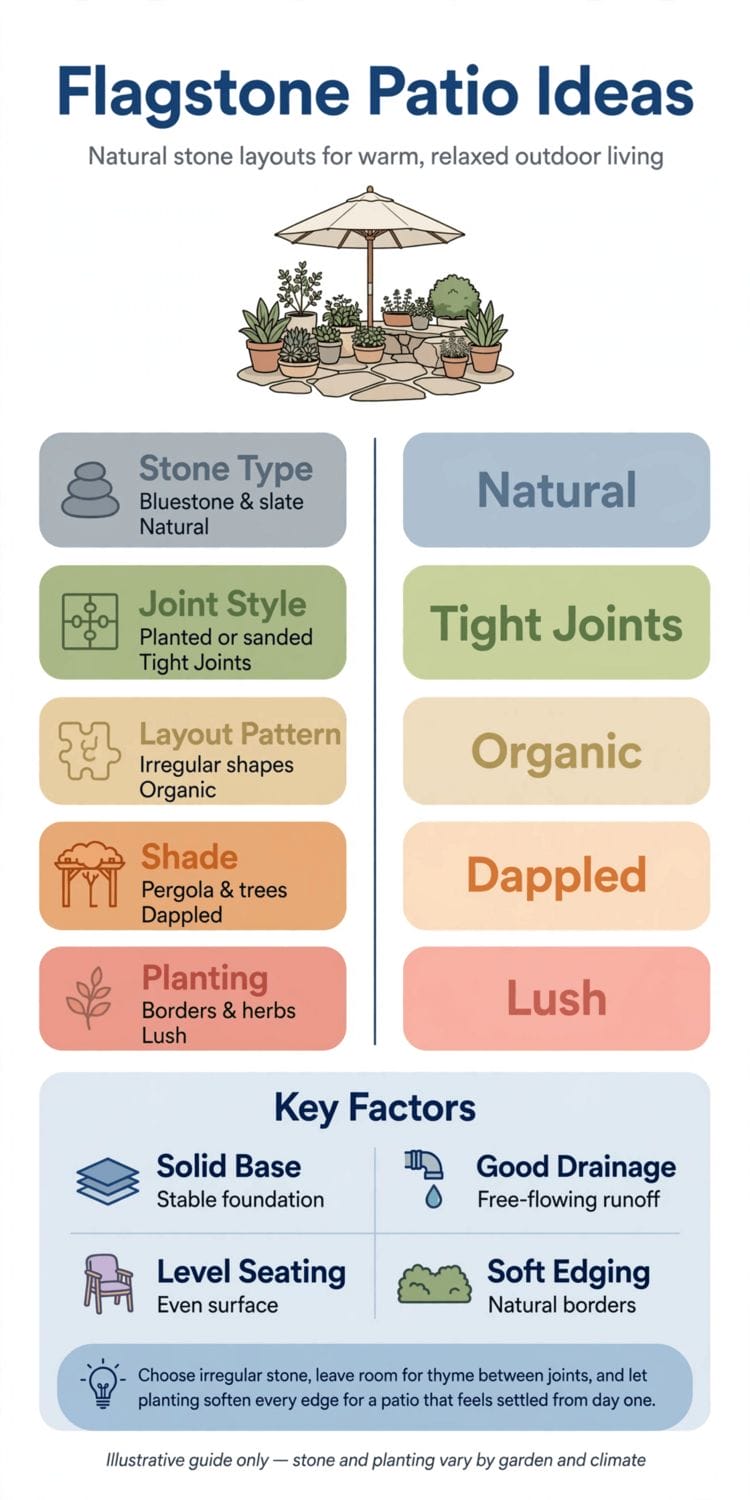
1. Flagstone Patio Ideas at a Glance
A flagstone patio is an outdoor floor of large, flat, irregularly shaped natural stone slabs — sandstone, slate, limestone, bluestone or local stone — laid on a prepared base with joints of gravel, sand, mortar or living groundcover. Unlike cut pavers, flagstone’s pieces are cleft from the rock in natural planes, so every slab differs in outline, tone and texture; the craft lies in choosing, placing and bedding them so the irregularity composes into a calm, level, durable surface. It is among the oldest patio materials in the world and among the longest-lived: a flagstone floor well laid will outlast the house it serves.
| Question | Short answer |
|---|---|
| What base does a flagstone patio need? | A proper one: excavated ground, a compacted crushed-stone base that drains, and the slabs bedded level on sand, grit or mortar as the design and climate require — the exact build belongs to your installer’s practice and local conditions. What is universal is that the base, invisible forever after, decides everything: patios fail from beneath, not from above. |
| Dry-laid or mortared — which is better? | Dry-laid slabs on a compacted base can be lifted, re-levelled and replanted between, drain freely and suit most gardens; mortared work gives a firmer, more formal floor and resists movement on steps and edges, at the price of harder repairs and a need for proper drainage planning. Neither is superior — they are different floors for different households, and the choice should be made with the site’s drainage and the owner’s appetite for upkeep in view. |
| Is flagstone slippery or hard to walk on? | Cleft natural stone has a textured face that grips well in most weathers, though algae in permanent shade and certain smooth stones in ice deserve respect and prompt cleaning. Evenness is the walker’s real question: a patio laid to a true level with tight, filled joints is comfortable barefoot and safe for chairs, while a lazily laid one trips its owners for decades. |
| What is the biggest flagstone mistake? | Buying the stone before designing the floor — thin, undersized or mixed remnants laid on an unprepared base, in a pattern nobody composed. The second is drainage ignored: a beautiful patio that sheds its water against the house wall or pools under the table. Flagstone forgives almost everything except a bad base and a thoughtless fall. |
2. The Stone Itself: Types, Colour and Character
Flagstone is a family, not a product: each rock brings its own palette, temper and price of effort. This section chooses the stone — the decision every later detail merely serves.
1. Choose sandstone for warmth and welcome
Sandstone flags in buff, gold, rose and grey are the patio’s classic: warm underfoot in colour, kind to cut and shape, and gentle in the garden’s company.
2. Choose slate for depth and drama
Slate’s blue-grey, green and plum depths give a patio a cool, watery elegance that flatters planting and modern planting schemes alike.
3. Choose limestone for pale, calm formality
Limestone flags in cream and pale grey make the quietest, most architectural flagstone floors, cooling a hot garden visually and suiting formal layouts.
4. Choose bluestone where the tradition is American
Bluestone’s blue-grey range, available in both irregular and cut forms, is the flagstone of the American Northeast’s gardens — hard, handsome and at home with brick and timber houses.
5. Choose the local stone when the plot offers the argument
Stone quarried near the garden ties the patio to the region’s walls, cliffs and older floors, and usually travels cheapest to the site.
6. Judge thickness as structure, not specification
Thin flags flex, rock and crack under chair legs and frost; substantial slabs sit like geology.
7. Read the stone’s face before ordering a yard of it
Visit full slabs, wet them, walk on them, and look at them in the garden’s own light at the hour the patio will be used.
8. Mix two stones only with a composer’s hand
A border of one stone against a field of another, or steps in a harder rock than the floor, can compose beautifully.
9. Accept the stone’s variation as the point
No two flags match, and the patio’s beauty is the chord of its differences.
10. Ask where the stone comes from and how it is won
Quarried stone carries an environmental story in its cutting and its transport miles; local and reclaimed flags carry the lightest. Reclaimed street and yard stone, where available, brings a century of weathering as a free finish.
11. Save the offcuts a purpose
The build will leave broken and spare pieces: keep them for step treads, edging, a stepping-stone path or the fire pit’s apron.
3. Groundwork: Base, Drainage and the Honest Fall
Every flagstone failure was decided underground. This section works the invisible build — the groundwork discipline shared with the concrete patio ideas lane, translated to natural stone.
12. Excavate to honest depth
Topsoil and soft ground must leave; the base must stand on firm subsoil that will not settle under a table’s decade.
13. Compact the crushed-stone base in layers
Angular crushed stone, laid and compacted in stages, locks into a draining, load-spreading mattress for the slabs. Each layer compacted properly is the difference between a floor and a slow landslide of gravel with stones on top.
14. Give the patio its fall away from the house
The finished floor must shed water gently and certainly — away from walls, doors and the table’s feet, towards a drain, a bed or the lawn.
15. Bed each slab to the level of its neighbours
Whether on grit, sand or mortar, each flag is seated, tapped and checked against its fellows until the surface reads as one calm plane.
16. Edge the patio so it cannot walk away
Restraint at the perimeter — buried edging, a soldier course, a stone kerb or a planted bank — keeps the outer slabs from creeping outward under use. A patio without edges unravels politely from its borders inward.
17. Plan drainage where the ground delivers water
Downpipes, slopes and neighbouring ground all send water to the patio’s meeting places; give it channels, gullies or a gravel margin where it can leave without crossing the dining floor.
18. Keep tree roots in the conversation
Great trees near a new patio will keep growing, and their roots will lift the nearest slabs in time.
19. Lay a membrane only where it helps
A separating fabric under the base can keep fines from migrating and weeds from rising, where the installer judges it useful.
20. Respect the house’s damp defences
The patio’s level against the house wall must respect the building’s damp-proofing and air bricks, keeping stone and its splashes below the lines the house depends on.
21. Build steps and thresholds as part of the floor
Where the patio meets doors and garden levels, steps in the same stone, generously proportioned and evenly risered, make the transitions feel inevitable.
22. Walk the base before a single slab is laid
The moment before laying is the last cheap moment: drainage falls, edge lines, the table’s position, the path’s route all verified on the ground itself.
4. Patterns and Joints: Composing the Irregular
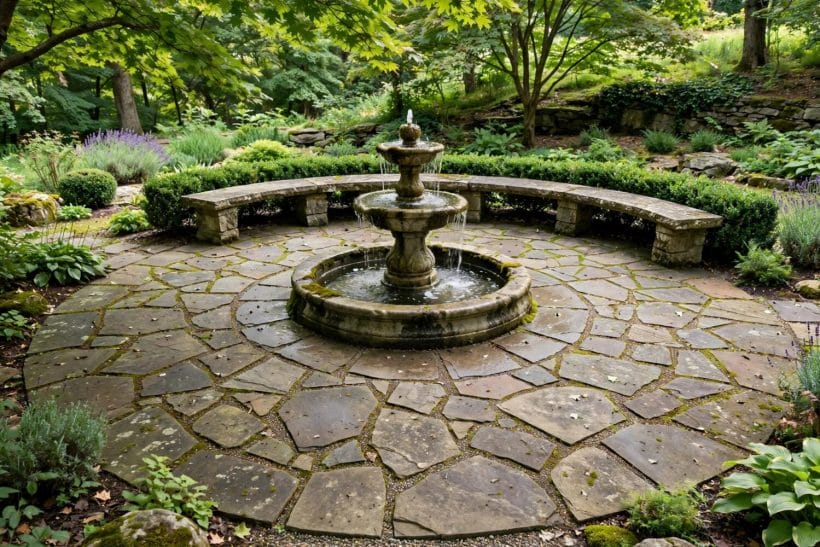
Irregular stone composes like a puzzle whose picture is calm. This section works the laying patterns and the joints between — the patio’s visible craft, kin to the pattern thinking in the backyard patio ideas survey.
23. Lay the classic random pattern with a composer’s eye
Large slabs first, spaced like islands, then medium pieces, then the small fillers: the traditional method composes the floor from big to little.
24. Keep joints even in their unevenness
The eye reads the joints as the pattern’s lines: gaps kept within a consistent family of widths make irregular stone look deliberate.
25. Fill joints with gravel for the dry garden look
Fine gravel or grit in the joints drains freely, locks the slabs and gives the crisp, raked finish of the driest, most modern flagstone floors.
26. Mortar the joints for the formal floor
Pointed mortar joints make the patio a single, firm, sweepable surface suited to formal gardens, heavy furniture and steps.
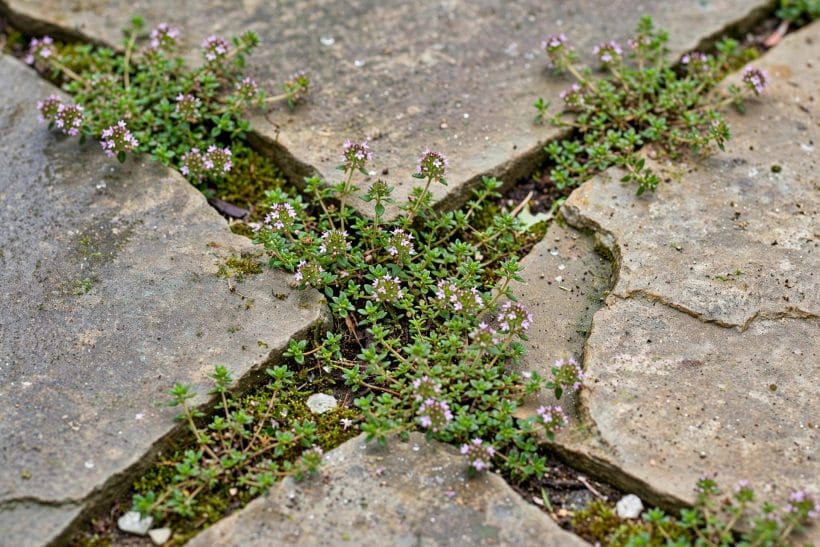
27. Plant the joints for the living floor
Low, tough groundcovers and creeping herbs between wide-spaced slabs soften the stone into the garden and scent the walk to the table.
28. Run a cut-stone border around an irregular field
A frame of sawn stone or setts around the random field gives the patio tailored edges and the eye a resting line.
29. Align a hidden order beneath the randomness
Let the field’s slabs loosely honour one direction — the house’s axis, the view’s line — so the floor’s energy flows one way.
30. Use the largest slabs at the thresholds and table
The best flags earn the honoured positions: one great slab at the door, the steadiest pieces under the table and chairs. Rocking is unforgivable exactly where people sit and step, so the floor’s aristocracy is assigned by function first.
31. Break the field with a medallion only in grand rooms
A single composed feature — a stone rose, a contrasting panel — can crown a very large patio, as a rug crowns a hall.
32. Step the pattern across level changes
Where the patio terraces, let the pattern pause at each step and resume below, rather than forcing slabs across the break, with each terrace edged in the terrace stone.
33. Number and photograph a treasured floor before repairs
If a laid floor must ever be lifted — for a drain, a root, a service — a photographed, chalk-numbered plan lets it return exactly as it was.
5. The Patio as a Room: Dining, Lounging and Firelight
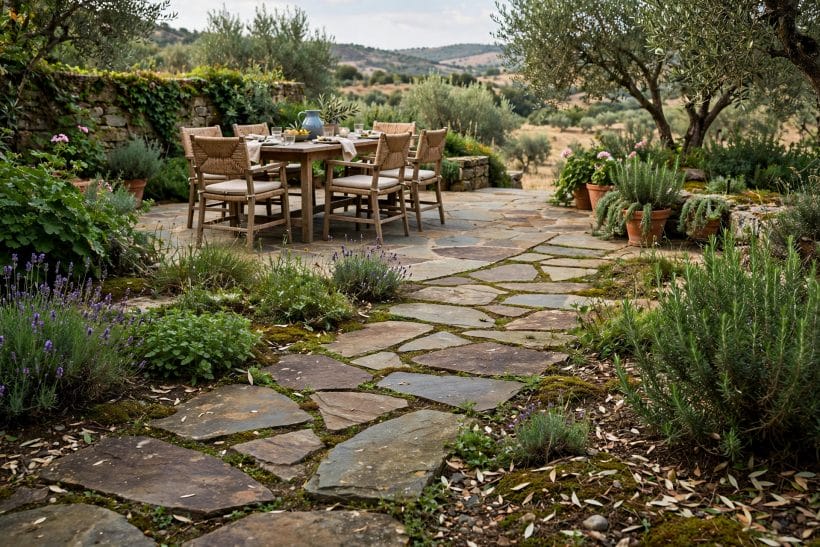
Stone is the floor; life is the furnishing. This section rooms the patio for eating, resting and evenings — with fire used carefully and furniture chosen for a floor that deserves it.
34. Anchor the dining set on the steadiest ground
The table’s floor should be the patio’s most level territory, tested with the actual chairs before guests test it with wine.
35. Give the lounge corner the garden’s best view
Loungers and low chairs belong where the patio looks at the garden’s longest picture, their backs to the house’s wall of doors.
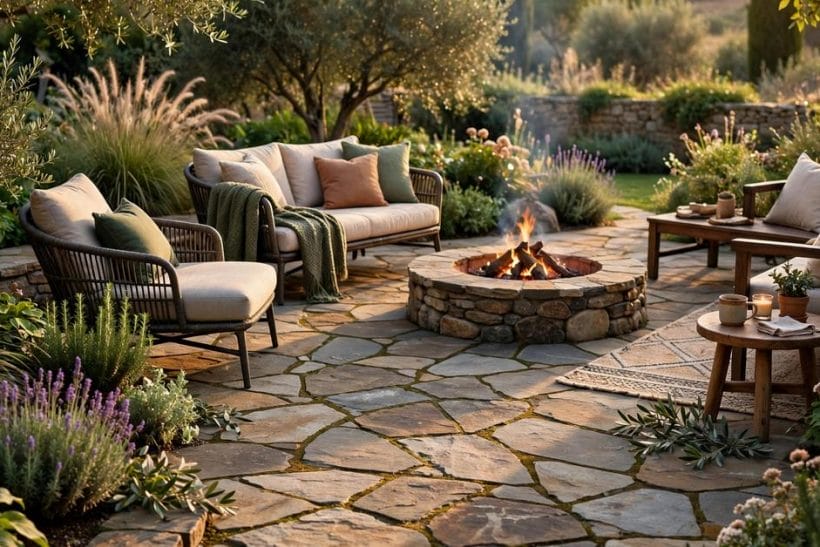
36. Build a fire pit or place a fire bowl with clearance
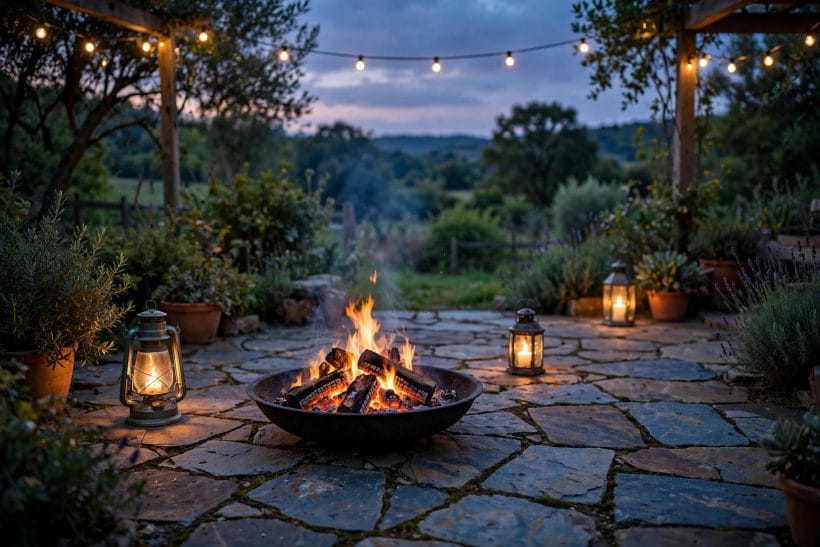
Fire on flagstone is ancient and right — the stone is the safe floor for it — with the pit or bowl placed clear of joints’ planting, furniture and overhanging green, and makers’ guidance followed.
37. Shade the table with a structure that suits stone
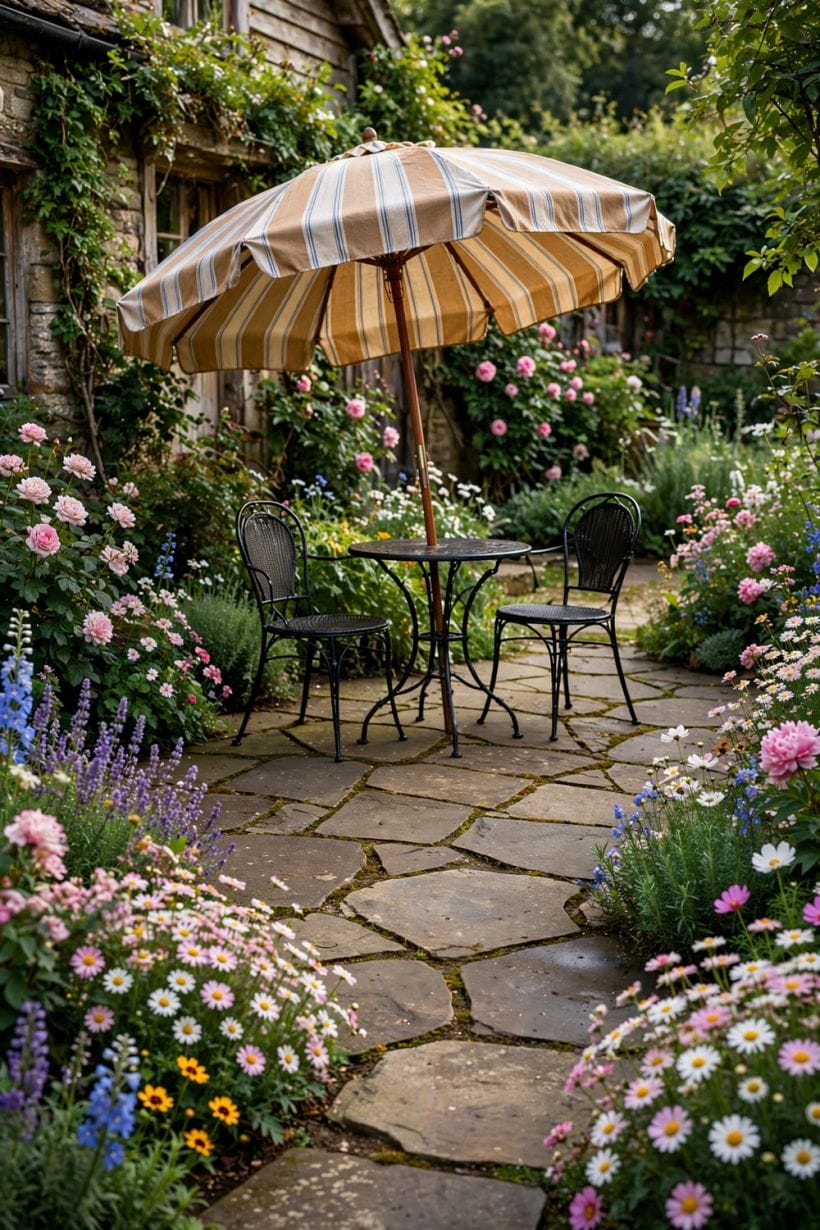
A pergola on the patio’s edge, a sail, or a great umbrella: shade machinery should look as permanent as the floor deserves. Where a pergola is chosen, its posts want their own footings beside or through the patio, planned before the slabs are laid — the ground-level application of the pergola ideas pillar’s shade craft.
38. Light the stone low and warm
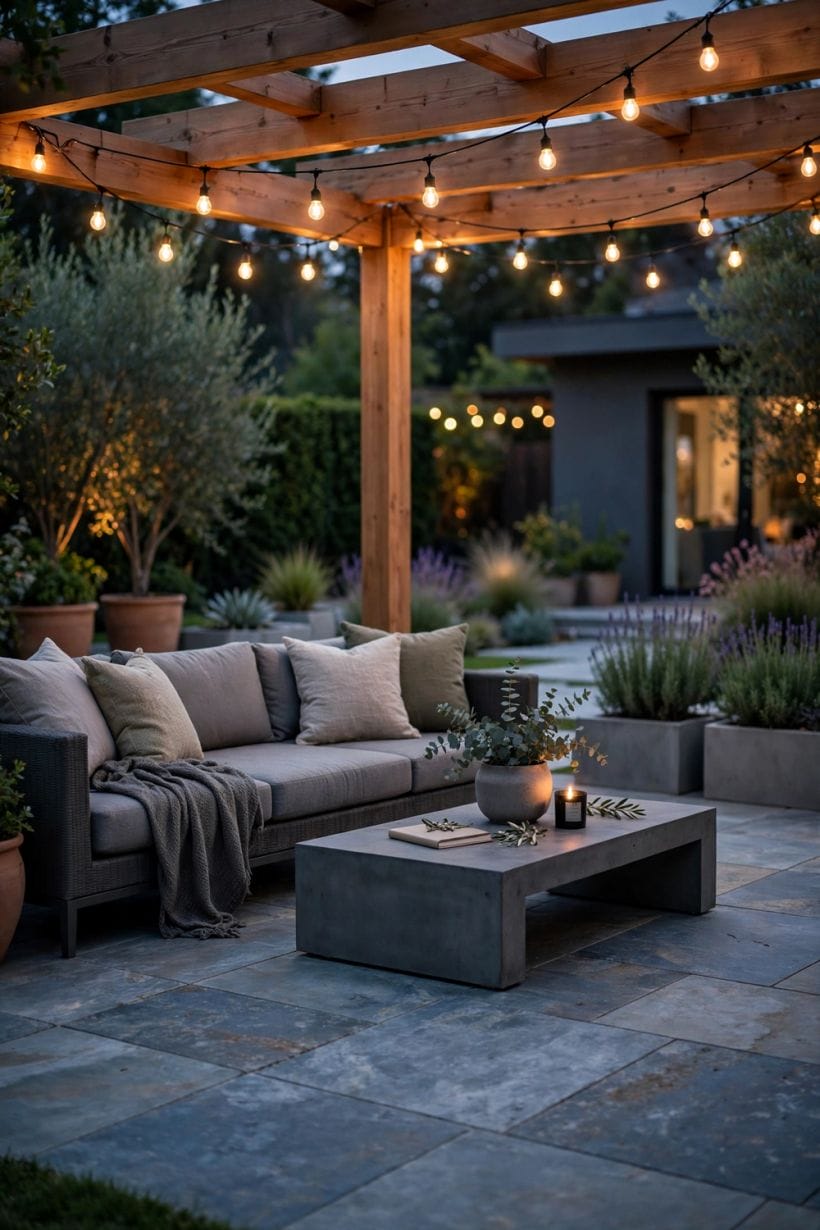
Low lanterns, wall lights on the house and candles on the table flatter flagstone’s texture, which grazing light reveals beautifully.
39. Choose furniture with feet the floor forgives
Wide feet and glides protect both furniture and joints; thin heels and sharp metal legs dig at gravel joints and chip slab edges.
40. Add an outdoor rug only where it can dry
A rug under the lounge group softens the stone for bare feet and children, on the patio’s sunniest, quickest-drying territory.
41. Serve from a stone-topped station
A serving counter or a great spare slab on a base near the door shortens the kitchen commute and gives the barbecue its landing strip.
42. Keep a herb and scent edge at the table’s elbow
Pots or a planted joint-line of herbs beside the dining zone put scent and garnish within reach of the cook’s hand.
43. Plan the winter patio as a picture
Cleared of its summer furniture or keeping one bench and the fire pit, the flagstone floor in frost and low sun is the garden’s winter room, viewed from the warm windows.
44. Let the room grow a tradition
The same corner for morning coffee, the fire pit’s ring for birthdays, the table’s place unchanged for a decade: a stone patio’s permanence invites ritual.
6. Paths, Steps and Garden Rooms: Flagstone Beyond the Patio
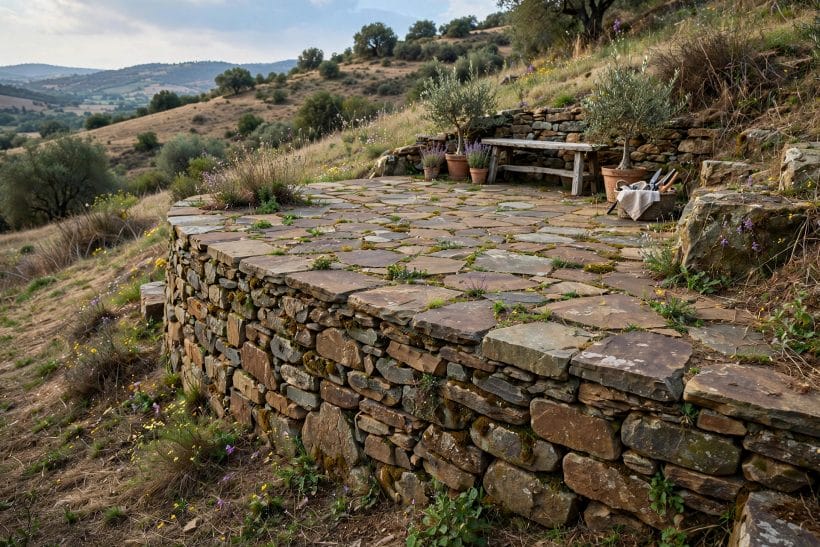
The patio is the stone’s capital; its provinces are the paths and steps that carry the garden. This section extends the floor into the landscape — linking out to the front yard landscaping ideas and hillside landscaping ideas lanes where the ground takes over.
45. Run a flagstone path in the patio’s own stone
A path of the same slabs, laid as stepping flags in gravel or lawn, ties the house’s terrace to the garden’s far rooms with one material voice.
46. Build garden steps wide and shallow
Stone steps in a garden should invite, not mountaineer: broad treads, gentle rises, each step a small landing for the eye.
47. Make a second, smaller terrace where the garden turns
A satellite circle or square of flagstone at the garden’s far end — for a bench, a brazier, a morning chair — doubles the garden’s living space for a fraction of the main patio’s cost.
48. Floor the shade garden’s sitting place
Under trees, where grass sulks, a small flagstone floor with a bench makes the woodland corner usable and keeps feet out of the mud.
49. Edge beds with flagstone set on edge
Offcuts and narrow flags set vertically make a crisp, permanent bed edging that echoes the patio and ends the lawn’s creep. It is the reclaimed pieces’ finest employment and the garden’s tidiest detail per hour spent.
50. Give the greenhouse and potting corner a stone floor
Working corners deserve the patio’s virtues in miniature: a level, sweepable, free-draining flag floor where pots are shuffled and compost spilled. The utility floor in good stone lifts the whole garden’s sense of being made, not accumulated.
51. Meet the lawn with a mowing margin of stone
A flush band of flags at the patio’s grass edge lets the mower’s wheel run true and ends the ragged border between floor and lawn. It is a small, unglamorous detail that keeps both surfaces looking intentional for years.
52. Carry the stone to the gate and the street
Where the front garden allows, a flagstone walk from gate to door in the same stone gives the house a single, composed approach.
53. Use stepping stones across water and bog
Across a pond’s margin, a damp hollow or a stream’s ford, great flags make the driest and most beautiful crossing a garden can offer.
54. Let terraces hold the slope in stone
On sloping ground, flagstone terraces retained by stone walls are the hillside’s oldest architecture, each level a room with its own use. Drainage behind every wall is the unglamorous law; terraces fail wet, never dry.
55. Give the compost corner and the wood store their stone pads
The working corners behind the scenes — bins, compost, the log store — sit tidier and work drier on small flag pads of their own.
7. Water, Shade and Small Gardens: Flagstone in Special Conditions
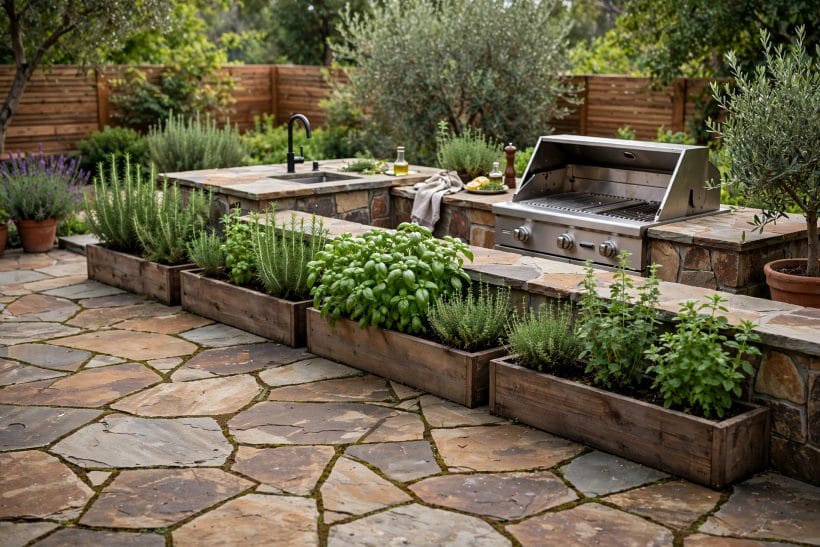
Stone meets the garden’s particulars: pools and ponds, deep shade, tiny plots and hot climates. This section fits the patio to its conditions, closing the survey before the keeping of it.
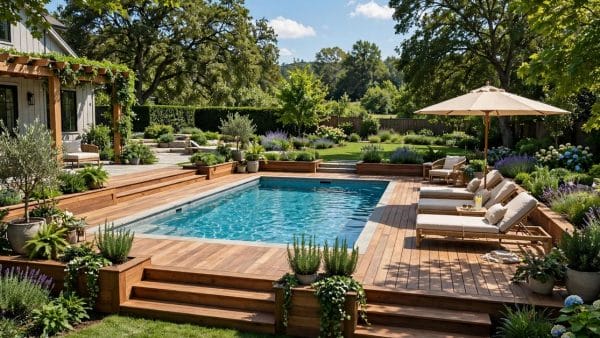
56. Border a pool with stone chosen for wet feet
Around water, the flag’s grip when wet, its heat in sun and its tolerance of pool water decide the choice — test with a wet bare foot before committing the surround.
57. Let the patio meet a pond with a stone shore
Flags descending gently to a pond’s edge, their joints unplanted near the water, make the shore a place to sit with feet near the surface.
58. In deep shade, design for the green patina honestly
Shade and stone grow algae and moss; the choice is a swept, grippy floor with the patina accepted at its edges, or a different material.
59. In small gardens, let the patio be the garden’s floor
A tiny plot floored largely in flagstone, with planting in beds, pots and joints, gains a room where a lawn would give a corridor.
60. In hot climates, choose pale stone and planted joints
Pale flags reflect the day’s heat, and planted or gravel joints cool the floor’s edges; midday shade over the dining zone is a necessity, not a luxury.
61. In cold climates, respect the freeze and thaw
Stone choice, base drainage and jointing must all survive water freezing in the floor’s body; local installers know which local stones thrive and which spall.
62. On a roof terrace, flagstone is usually the wrong glory
Weight is the roof’s law: great stone slabs and their base can exceed what a roof structure should carry, and any such project is an engineer’s first and a gardener’s second.
63. At the coast, let salt and wind choose the details
Coastal patios want stones unbothered by salt air, joints that drain storm water fast, and furniture that cannot sail. The patio’s composition — low, heavy, grounded — is already the coast’s own architecture speaking.
64. Where children play, the floor’s evenness is the feature
Ride-on toys, first bicycles and running feet audit a patio more strictly than any guest: choose the level field, tight joints and the clear space for the audit to happen.
65. Combine flagstone with decking at the levels’ meeting
Where a raised deck meets the ground, a flagstone landing at the stair’s foot marries the two floors and gives the steps a dignified arrival.
8. The Keeping of a Flagstone Patio: Cleaning, Repairs and Time
Stone asks little and repays the little with centuries. This section keeps the patio — sweeping, washing, re-jointing and the occasional lifted slab — as the last of its crafts.
66. Sweep as the standing habit
A weekly sweep keeps grit from grinding the stone’s face, leaves from staining it and seeds from colonising the joints. Five minutes with a stiff brush is the entire secret of most beautiful old patios — regularity, not chemistry.
67. Wash gently, and rarely reach for force
Water, a brush and patience clean most flagstone; aggressive pressure washing can blast the face, open joints and drive water into the base.
68. Re-fill gravel joints as they settle
Dry joints settle and travel in their first seasons; a bag of the same grit and an hour’s raking restores them. Topping up is the dry-laid patio’s whole maintenance contract — small, cheap and finished before it becomes movement.
69. Repoint mortared joints at the first honest crack
A cracked joint is water’s invitation into the base and frost’s lever under the slab. Rake out, repoint properly and the floor is sealed again for years; ignored, one crack becomes a rocking slab and then a lifted corner.
70. Lift and re-bed a rocking slab without drama
The dry-laid floor’s great mercy: one slab can be lifted, its bed re-made and the stone returned in an hour, indistinguishable from its neighbours.
71. Manage moss and algae by zone, not by war
Accept the green in the quiet joints and the shade’s edge as patina; keep the dining floor, the steps and the paths swept, drained and grippy.
72. Feed planted joints like the garden they are
Creepers in the joints need the same water, thinning and occasional feeding as any border, and replacing when a patch fails.
73. Protect the stone during other works
Scaffolding, skips, cement mixing and bonfire ash all wound flagstone in an afternoon. Boards under loads, mixing kept off the floor and ash swept before rain are the whole protection plan — cheap during the works, impossible afterwards.
74. Keep spare stone against the future
A small stack of the same flags, stored at the garden’s back, insures the floor against the one slab that cracks in a hard winter or a dropped load.
75. Let the patio age in public
Do not chase the first year’s brightness: flagstone’s beauty is cumulative, each season’s light use polishing the traffic lines and softening the joints.
9. Checks and Mistakes: Before the First Purchase or the First Stone
Drainage and the house’s damp defences are this project’s standing safety rules: the patio’s fall runs away from the house, its level respects damp-proof courses and air bricks, and downpipe water is given somewhere deliberate to go. These are not refinements — a beautiful floor that wets the house wall is a liability with good photography. Walk the whole water story with a hose before the slabs are finally bedded, and again in the first heavy rain.
Check the stone itself with wet hands and bare feet before ordering: grip, heat, colour when wet, and the face’s texture vary more between stones than any brochure admits. Reject any slab selection made from a single dry sample in a yard — the patio will be lived on in rain, frost, noon sun and lamplight, and it should be chosen in as many of those as the yard allows.
Beware the two false economies: undersized, thin stone that cannot sit still, and a shallow, uncompacted base that cannot stay level. Both are invisible in the finished photographs for exactly one season. Flagstone is a generational material bought once; the savings that shorten its life from a century to a decade are the most expensive money in the garden.
Finally, keep the laying honest: if the pattern, the joints or the level would embarrass you in a photograph taken for a stranger, it will not improve with furniture on it. The time to lift and re-bed a slab is during the build, with the installer standing there — afterwards, the same correction costs ten times the patience.
10. Costs and Pulling It Together
Costs in flagstone follow the stone and the ground: the material itself ranges from modest local sandstone to premium cut imports, transport of great weight is a real line in every quote, and the groundwork — excavation, base, drainage — is skilled labour that should never be value-engineered away. Against those costs stands the material’s ledger: no replacement cycle, repairs by the single slab, and a floor that is worth more, aesthetically and literally, in its twentieth year than in its first.
Pull the project together in the order the craft demands: choose the stone in the garden’s own light, design the floor’s pattern and falls on the ground, build the base as if it were the visible work, and lay the slabs as a composition, not a delivery. A flagstone patio made in that order becomes what its photographs promise — the garden’s calm centre, improving underfoot for as long as the house stands.
Final Considerations
Flagstone is the patio for people who think in decades. It asks for weight, patience and a proper base, and it repays them with a floor that no fashion can date and no season can ruin — a floor that was old in principle before the house was drawn and will be young in service long after its furniture is forgotten. Gardens change around it; the stone abides, and gives every new planting and every new family its calm, level stage.
Lay it once, lay it honestly, and then live on it at full strength: dine on it, light fires on it, let the children learn to ride on it and the moss soften its quietest joints. That is not wear. That is a flagstone patio becoming what it was always meant to be — the ground itself, persuaded to be beautiful, exactly where the house meets the garden.


0 Comments