

A groin vault ceiling changes a room before a single piece of furniture enters it. Two barrel vaults cross, their intersection forming arched ribs that draw the eye upward and outward at once, and a flat ceiling suddenly feels like architecture. Groin vaults belong to halls, churches and grand houses of the past, but the form translates honestly into modern homes too: in a living room, a hallway, a kitchen or an entry, a groin vault gives height without adding a storey and rhythm without adding clutter.
This post stays with one vault form only. A groin vault is not a dome, not a barrel vault and not a coffered ceiling, and it should not be confused with any of them. What follows is the form itself — how it reads, where it works, what it asks of the room beneath it — stated in general terms. Structural work belongs to qualified professionals, and any real vault in a real house needs their assessment before anything is built or altered.
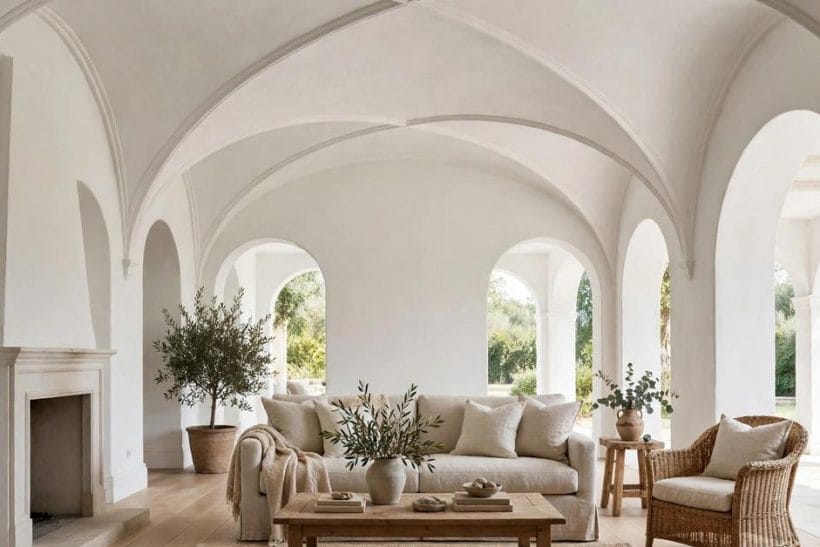
1. The Form: Two Vaults Crossing
A groin vault is born where two barrel vaults meet at right angles. Each barrel is a continuous arch extended along a line; where they intersect, the crossing creates groins — the sharp arched ridges that run diagonally across the ceiling. Those ridges are the vault’s signature. They divide the ceiling into bays, give it direction, and carry the eye from wall to wall in a way a flat ceiling never does.
The beauty of the form is its honesty. Nothing is hidden: the geometry is the decoration. Plaster, stone or timber can all carry it, and each material changes the mood. Plaster reads soft and classical, stone reads weighty and old, timber reads warm and crafted. The choice of material is also a choice of character, and it should match the house rather than fight it.
Simple crown molding ideas show the opposite end of ceiling craft — trim applied to a flat ceiling — and the contrast is instructive: molding decorates a surface, while a groin vault reshapes the room itself.
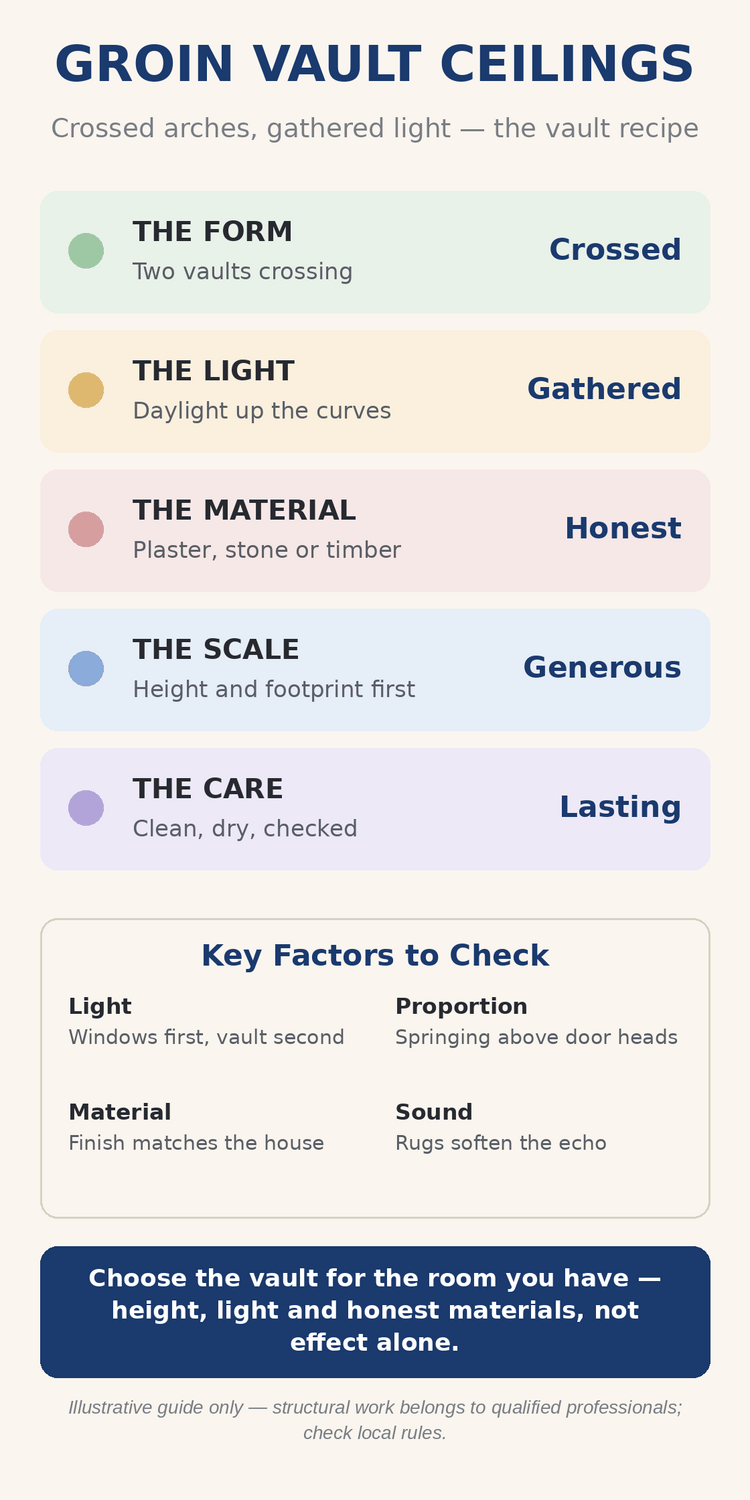
The infographic above summarises the five things that make a groin vault work: the crossing form, the light it gathers, the material it wears, the scale it needs, and the care it repays.
2. The Light: What a Vault Does to Daylight
A vaulted ceiling gathers light differently from a flat one. Daylight entering through windows or arched openings washes up the curved surfaces and spreads, softening shadows and making the room feel taller than its walls suggest. The effect is strongest where the vault meets a window wall: the curve catches the light and returns it into the room in a gentle gradient rather than a hard line.
This is also why groin vaults suit rooms with generous openings. A vault over a dark, windowless room can feel heavy rather than uplifting, because the geometry needs light to reveal it. When planning a vaulted room, think about the windows first and the ceiling second — the two work as a pair, and the vault rewards every opening it is given.

The vault and the view belong together, because a groin vault frames whatever lies beyond its arches. Where a vaulted room opens to a garden, a valley or a distant hillside, the arches act as a series of frames, each one composing the view a little differently as you move through the room. Keep furniture low near those openings so nothing interrupts the sightline, and let the vault do the work of turning an ordinary window into a composed picture. A vault without a view is still beautiful, but a vault with one is unforgettable, and the pairing costs nothing beyond the decision to leave the sightline clear.
3. The Scale: Rooms That Can Carry a Vault
Not every room wants a groin vault. The form needs both height and footprint: a low ceiling cannot host a vault without feeling cramped, and a tiny room can be overwhelmed by geometry meant for a hall. Living rooms, entries, dining rooms and generous hallways are the natural homes of groin vaults, because they offer the volume the form needs to breathe.
Scale is also about proportion. A vault that springs too low feels oppressive; one that springs too high in a modest room feels theatrical. The springing line — where the curve leaves the wall — should sit comfortably above door heads and window tops, so the room reads as one composed space rather than a ceiling imposed on walls. Proportions are best judged in the room itself, with the help of a professional, rather than from a photograph.
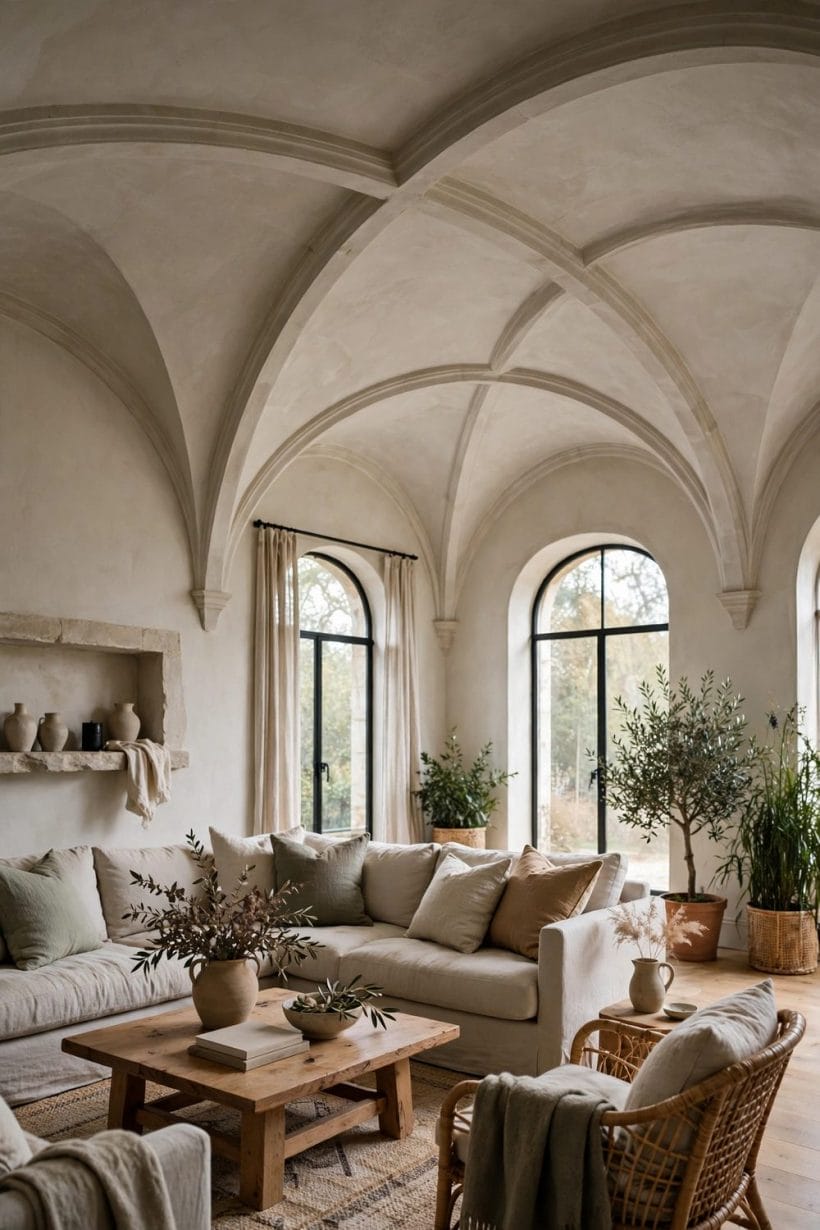
4. The Material: Plaster, Stone and Timber
Plaster is the most forgiving vault material for a modern home. It takes curves smoothly, accepts paint and limewash, and can be repaired without specialist masonry skills. A plaster groin vault reads classical and calm, and it suits houses where the architecture is already soft and light.
Stone vaults belong to older and grander buildings, and they carry real structural weight that must be assessed by engineers, not assumed. Timber vaults — ribs and boards rather than solid masonry — offer a lighter, warmer interpretation, and they suit rustic and craftsman interiors where wood is already the dominant material. Whatever the material, the finish should be honest: a vault pretending to be stone when it is plaster fools nobody and ages badly.
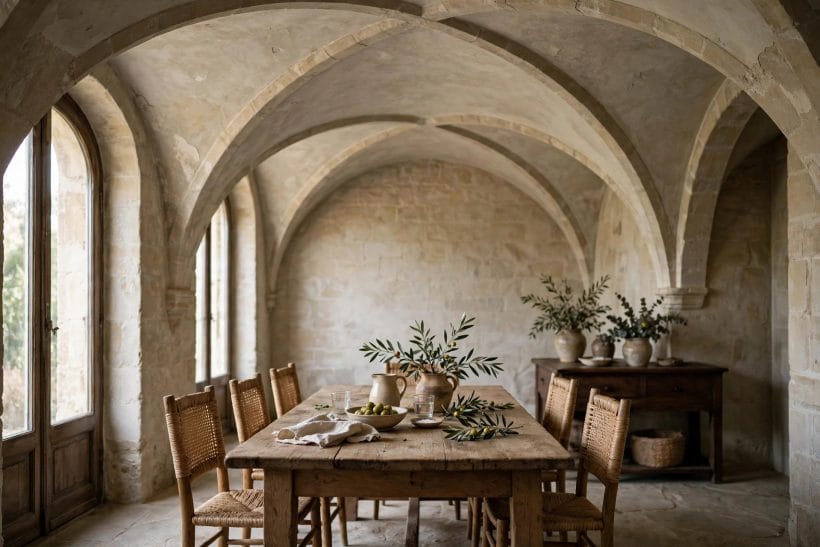
5. The Rooms: Where Groin Vaults Work Best
The living room is the classic groin-vault room, because it is where a house shows its generosity. A vault over the main seating area gives gatherings a sense of occasion without any extra decoration, and it pairs naturally with a fireplace wall or a window wall as the room’s anchor.
Hallways and entries are the surprise candidates. A groin-vaulted entry turns arrival into an experience, and a vaulted hallway makes a passage feel like a place rather than a corridor. Kitchens and dining rooms can carry vaults too, provided the height is there and the services — lighting, ventilation, extraction — are planned into the curves rather than bolted onto them afterwards.
Whitewashing knotty pine walls shows how a single finish change can lighten a room, and a groin vault does similar work at a larger scale: both transform how a room feels by changing its surfaces, not its footprint.
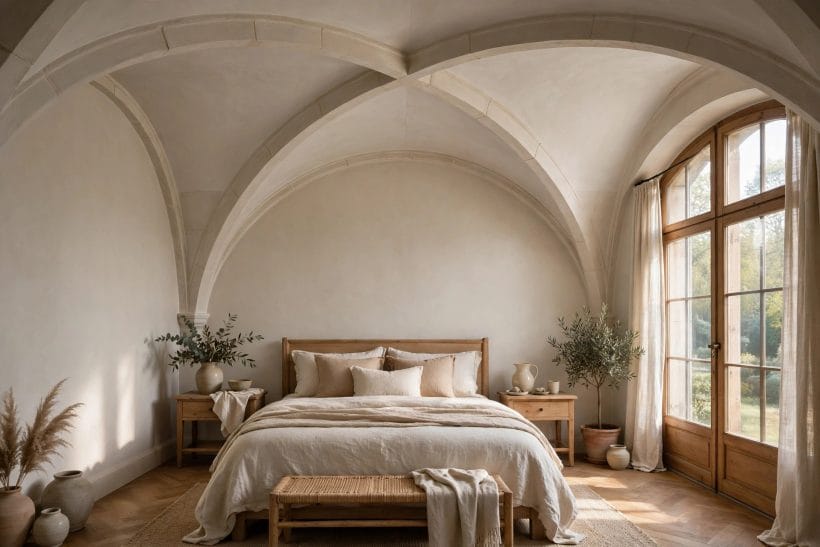
A vaulted room changes with the seasons, and the change is part of its charm. In summer, the height of the vault lets warm air rise away from the seating level, and the room feels cooler than its thermometer suggests, especially where windows at the vault’s springing can be opened to let heat escape. In winter, the same height can feel draughty unless the room is well insulated and heated thoughtfully, with radiators or underfloor warmth at floor level rather than heaters fighting the ceiling. Plan for both seasons when you plan the vault, and the room will reward you all year.
6. The Details: Ribs, Bays and Springing Lines
The details of a groin vault are few, which is why each one matters. The ribs — the groins themselves — can be left crisp or softened, emphasised with a change of colour or left in the same finish as the rest of the ceiling. Crisp ribs read architectural and precise; soft ribs read older and more organic. Neither is better; the choice should follow the house.
Bays matter too. A single bay suits a small room; a sequence of bays suits a long hall or a large living space, giving rhythm as the ceiling repeats its crossing pattern down the room. The springing line, where curve meets wall, deserves a clean detail — a simple cornice or a plain junction both work, but a fussy one fights the geometry it is meant to finish.
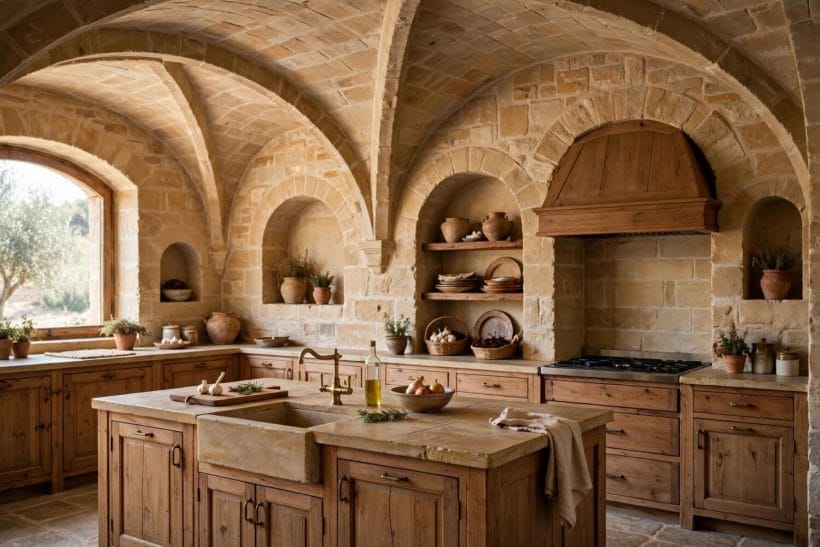
7. The Pairings: What Sits Well Beneath a Vault
Furniture beneath a groin vault should stay low and calm. Tall bookcases and high cabinets fight the ceiling for attention and can make the room feel crowded at the edges. Low seating, long tables and horizontal lines let the vault own the vertical dimension while the furniture owns the floor.
Materials pair best when they echo the vault rather than compete with it. Plaster vaults suit linen, pale wood and stone; timber vaults suit leather, dark wood and wool. Colour should stay restrained — the vault is already the room’s main event, and a loud palette underneath it creates two focal points where one would do.
Bookcase ideas offer the low, horizontal storage a vaulted room rewards, keeping walls calm so the ceiling can carry the room’s drama.
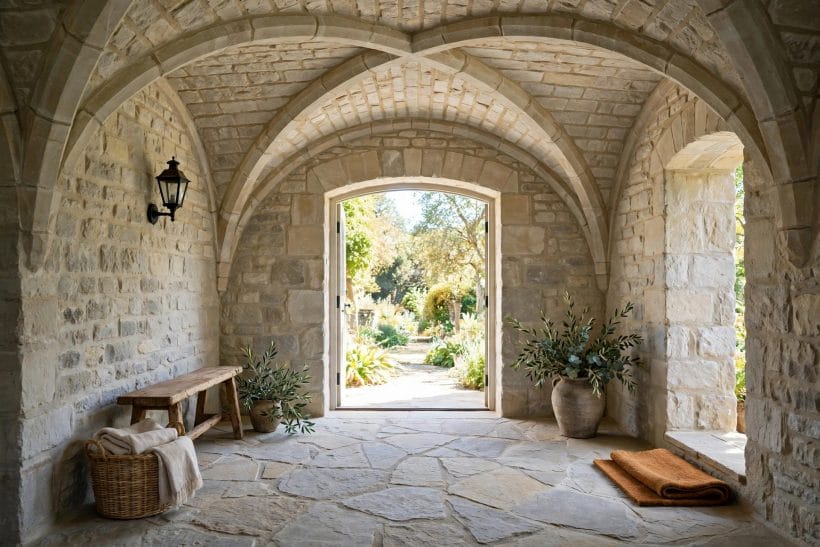
8. The Practicalities: Sound, Heat and Upkeep
Vaulted ceilings change a room’s acoustics. Hard curved surfaces reflect sound, so a groin-vaulted room can feel lively or echoing, especially with hard floors. Rugs, upholstery, curtains and bookshelves all soften the effect, and they should be part of the plan rather than an afterthought. A vaulted room furnished sparsely will sound as empty as it looks.
Heat rises, and a vault gives it somewhere to go. In warm climates that is a gift; in cold ones it asks for sensible heating and insulation planning, with a professional’s input. Upkeep is straightforward — plaster and paint need the same care as any ceiling — but repairs to a curved surface take more skill than patching a flat one, so keep the name of a good plasterer.
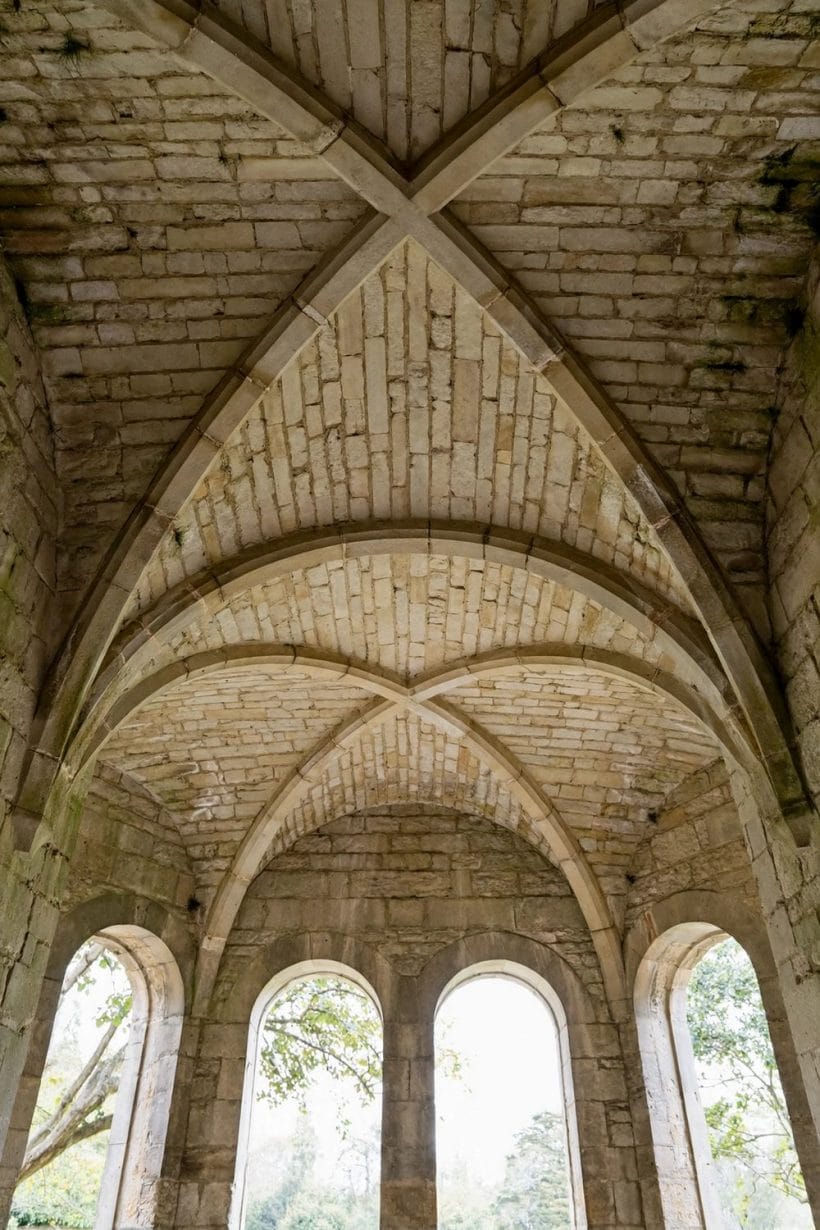
Evenings transform a groin-vaulted room more than any other kind of ceiling, because the curves catch lamplight in a way flat ceilings cannot. A single warm lamp aimed upward will wash the vault with a soft glow that changes as you move, and two or three low lights will give the room a layered warmth that overhead fittings alone never achieve. Avoid harsh downlights sunk into the vault itself, which flatten the curves they should celebrate, and let the light come from the room’s edges and furniture level instead. The vault at night should feel like a canopy, not a ceiling.
9. The History: A Form With a Long Memory
Groin vaults have roofed Roman baths, Romanesque churches and Renaissance halls, and that long memory is part of their appeal. The form carries associations of permanence and craft that a flat ceiling cannot borrow, and it suits houses that want to feel rooted rather than merely new.
History is also a warning against pastiche. A groin vault in a house with no other classical language can feel like a costume, while the same vault in a house with arched openings, solid walls and natural materials feels inevitable. The vault should belong to the house’s story, not sit on top of it as a quotation.

10. The Decision: Is a Groin Vault Right for Your Room
Ask three questions before committing. First, does the room have the height and footprint the form needs, or would the vault have to be squeezed in? Second, does the house’s existing language — its openings, materials and proportions — welcome a vault, or would it stand out as an import? Third, is the budget and the professional team equal to curved work, which costs more in skill than flat work?
If the answers are yes, a groin vault is one of the most rewarding ceilings a house can have: it gives light, rhythm and a sense of permanence that no applied decoration can match. If any answer is no, the honest alternatives — a coved ceiling, a simple vault, or beautiful flat plaster with good molding — will serve the room better than a vault forced into the wrong place.
Interior design ideas and kitchen ideas both show how ceiling choices sit within whole-room design, and a groin vault should always be chosen as part of that larger picture, never alone.
A groin vault is also a gift to the next owner of the house, because it is the kind of architecture that survives redecoration, refurnishing and changing taste. Paint colours change, furniture comes and goes, but a well-built vault remains, and every subsequent household will arrange its life beneath it a little differently. That longevity is worth weighing against the cost and disruption of building one: a vault is not a fashion choice but a permanent decision, and permanent decisions deserve the slowest, most careful version of the question. If the answer is still yes after a season of thinking, it will stay yes for decades.
Before committing to a groin vault, spend time in a vaulted room if you can, at different hours and in different weather. Notice how the light moves across the curves through the day, how sound behaves when the room is full and when it is empty, and how the height feels after an hour rather than a minute. A vault that still delights at the end of a long visit is a vault worth building, and the visit costs nothing but attention.
Final Considerations
A groin vault is geometry made visible: two arches crossing, light gathered along curves, a room given height and rhythm without a single added object. It asks for volume, light and honest materials, and it repays those with a ceiling that never tires the eye. Chosen for the right room, in the right house, with professional guidance on structure, it is a decision a homeowner lives happily beneath for decades. Chosen for effect alone, it is a reminder that architecture rewards restraint as much as ambition. Tiny house designs show the same ceiling-and-room thinking at a smaller scale, where every inch of height matters even more.



0 Comments