

Vinyl plank flooring looks simple in a photograph: wood-like boards, clean joints, a floor that seems to solve every room at once. The reality is more layered. Vinyl planks vary enormously in construction, and two floors that look identical in a picture can behave very differently under feet, water, sunlight, and furniture. This guide names no maker, no product, and no price, because those vary by range and shop. What follows is what to check before buying: the wear layer, the core, the surface, the locking, and the ground beneath.
The checks below apply to vinyl plank flooring as a category, not to any particular range. Every claim about a specific product belongs to its maker’s specification, and the specification — not the photograph, not the sample board, not the sales description — is the document that matters. Read it before ordering, and keep it with the floor’s paperwork afterwards.

1. The Wear Layer: The Coat That Takes the Traffic
The wear layer is the clear protective coat on top of a vinyl plank, and it is the part of the floor that actually meets daily life: shoes, paws, chair legs, dragged furniture, and spilled drinks. A thicker, harder wear layer resists scratches and scuffs longer. A thinner one shows wear sooner, especially in hallways and kitchens where traffic concentrates. The wear layer’s quality matters more than the photograph underneath it, because the photograph never wears out but the coat does.
Ask what the wear layer is and how it is specified, and compare that specification across ranges rather than comparing photographs. A floor whose wear layer suits a bedroom may not suit a hallway, and a floor marketed for heavy use should carry a specification that supports that claim. If the specification is vague, treat the claim as unproven.
LVT underlayment checks cover the layer beneath the plank, which works with the wear layer above: the floor’s durability is a system, not a single coat.
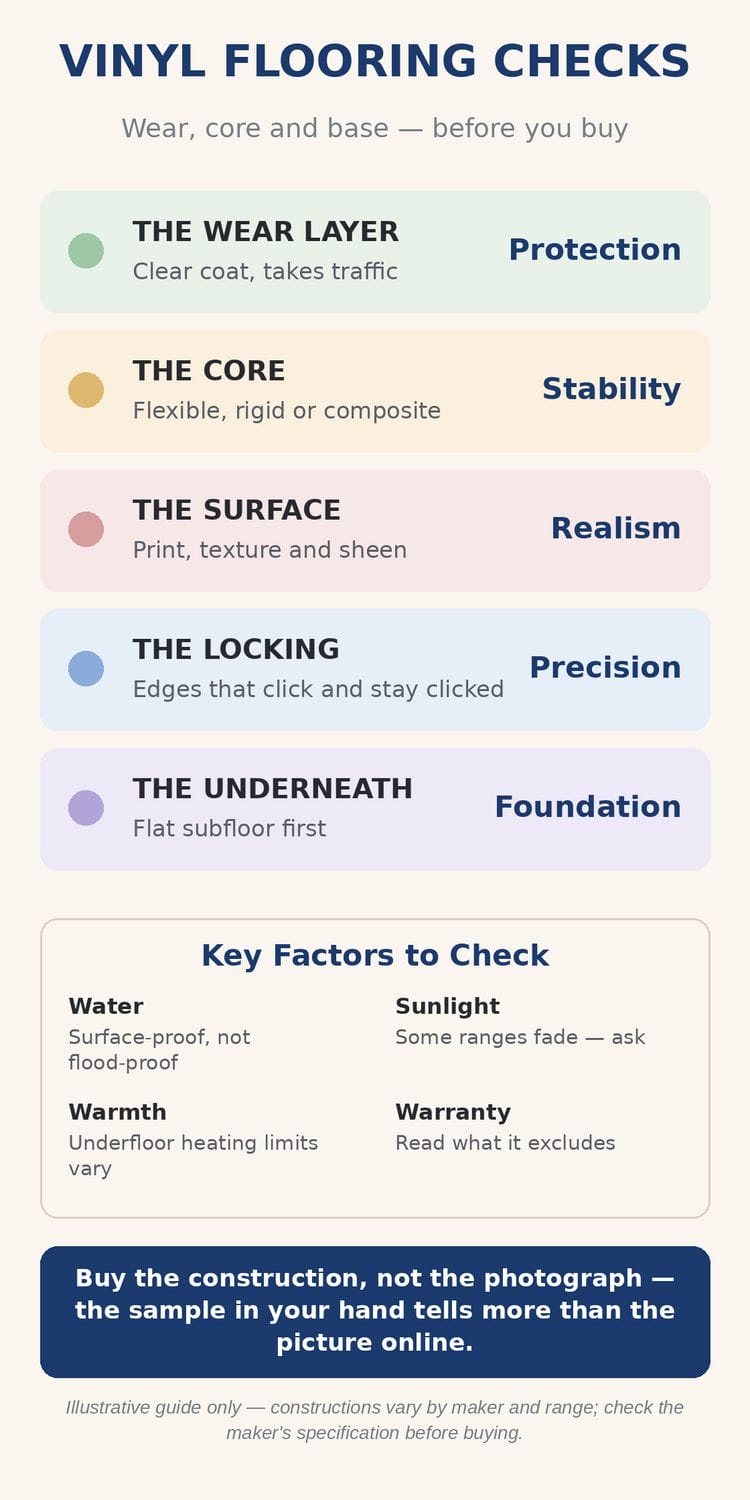
The infographic above summarises the five checks at a glance: wear layer for protection, core for stability, surface for realism, locking for precision, and the underneath for foundation.
2. The Core: Flexible, Rigid or Composite
Beneath the wear layer and the printed surface sits the core, and cores differ fundamentally. Flexible cores bend with the subfloor and feel softer underfoot. Rigid cores resist bending and bridge small subfloor imperfections better. Composite cores combine materials to balance those qualities. No core type is best in every room, and the right choice depends on the subfloor, the room’s temperature swings, and how the floor will be used.
Core behaviour shows up over time. A core that expands and contracts significantly with temperature needs proper expansion gaps at walls and transitions, or it will buckle or gap. A core that stays stable across temperature ranges is more forgiving in sunny rooms and rooms with underfloor heating. Ask how the core behaves across temperature, and check that the maker’s guidance covers the rooms you actually have.
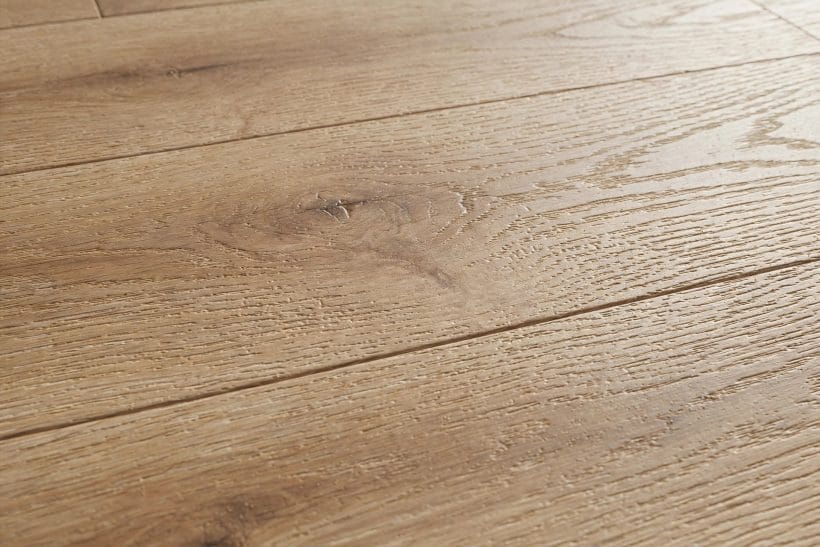
Close-up, as above, the surface looks convincing. But the surface is only the top of the plank. The core beneath it decides how the floor behaves over years, and the core cannot be judged from a photograph.
3. The Surface: Print, Texture and Sheen
The visible surface of a vinyl plank is a printed image, usually of wood or stone, with a texture embossed over it. Good surfaces align print and texture so the grain you see matches the grain you feel. Weaker surfaces show a convincing print with a flat or mismatched texture, and the eye notices the discrepancy even when it cannot name it. Run a hand across a sample: the texture should follow the visual grain, not fight it.
Sheen matters too. A high-gloss surface shows scratches and dust readily, while a matte or low-sheen surface hides them better and looks more like real wood. Sheen also changes with light: a floor that looks calm in a showroom can look shiny in a sunny room. View samples in the room’s actual light, at different times of day, before deciding.
Luxury vinyl plank problems describe what happens when surface, core, and installation do not agree, and the patterns there are worth knowing before buying rather than after.

Large windows, as above, test a vinyl floor’s surface in the hardest way: direct light reveals sheen, texture, and print quality that dim showroom light hides.
4. Locking: Edges That Click and Stay Clicked
Most vinyl planks join with a click-locking edge system, and the quality of that system decides whether the floor stays flat or develops gaps, lifting edges, and creaks. A good locking system clicks together firmly, holds under foot traffic, and allows a damaged plank to be replaced without disturbing the whole floor. A weak system loosens over time, especially in rooms with temperature swings or heavy furniture.
Test the locking on samples: join two planks, flex the joint gently, and see whether it holds or separates. Ask how a single damaged plank is replaced, because replacement difficulty varies enormously between systems. A floor that cannot be repaired plank by plank is a floor that must be replaced wholesale after one accident.
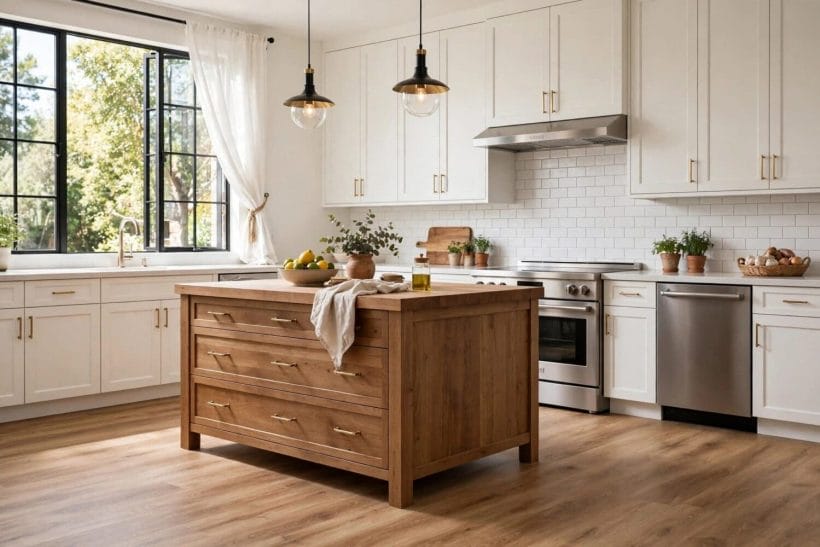
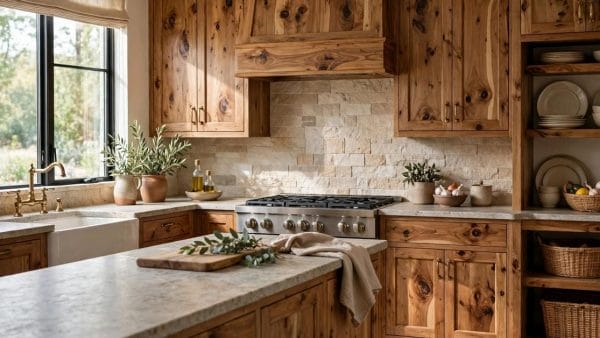
The kitchen above is the room that tests locking hardest: temperature swings from cooking, water from sinks, and constant traffic across the same paths.
5. The Underneath: Subfloor and Underlayment
The floor beneath the floor matters as much as the planks themselves. Vinyl plank needs a flat, clean, dry subfloor, because the planks follow the surface beneath them: bumps telegraph through, dips create hollow sounds, and moisture from below damages cores and locking systems alike. Preparation of the subfloor is not optional work. It is the foundation the whole floor depends on.
Underlayment — the layer between subfloor and planks — adds sound absorption, comfort, and sometimes moisture protection, but it must suit the plank system. Some planks carry attached underlayment and need none added. Others require a specific type. Adding the wrong underlayment can void a warranty or damage the locking system, so the maker’s guidance on underlayment is not a suggestion. It is part of the specification.
Underlayment guidance goes deeper than any single paragraph can cover, and it is worth reading alongside this guide before any vinyl plank order.
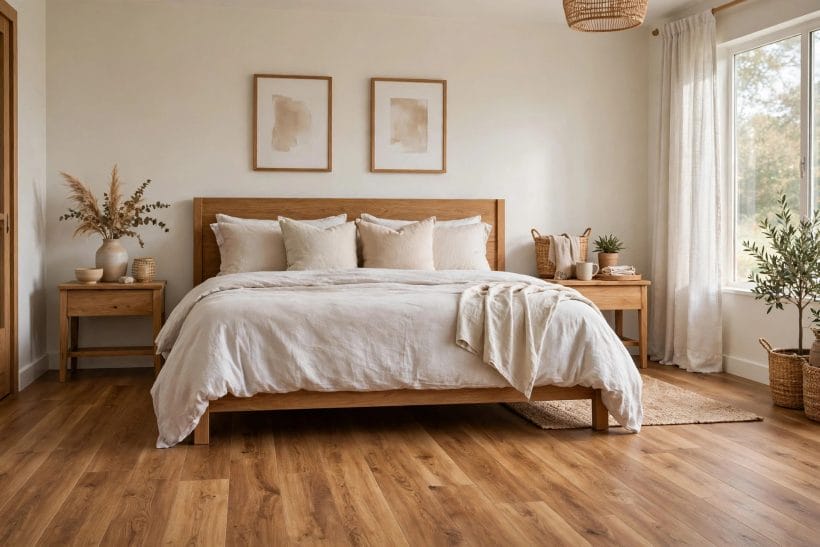
Bedrooms, as above, are forgiving rooms for vinyl plank: low traffic, stable temperatures, and soft use. If a floor struggles in a bedroom, it will struggle everywhere else too.
Another check that belongs in this section is transitions: the strips and thresholds where vinyl plank meets tile, carpet, or another floor. Transitions take more abuse than any other part of a floor, because every footstep crosses them and every cleaning tool catches them. Ask what transition pieces the system offers, how they are fixed, and whether they can be replaced individually. A floor with well-designed transitions stays neat at its edges for years, while a floor with improvised transitions starts to look tired at every doorway.
6. Water: What Waterproof Really Means
Vinyl plank is often described as waterproof, and that description needs careful reading. The plank material itself may resist water, but water still finds joints, edges, and transitions, and it still damages subfloors and underlayment beneath a nominally waterproof surface. A floor that survives a spill is not the same as a floor that survives a flood, and marketing language rarely makes that distinction.
For wet rooms — bathrooms, laundry rooms, and kitchens — ask specifically how the system handles water at joints and edges, what the maker recommends for wet areas, and what happens to the warranty if water reaches the subfloor. If the answers are vague, choose a floor whose wet-room guidance is explicit, or choose a different material for the wettest rooms.
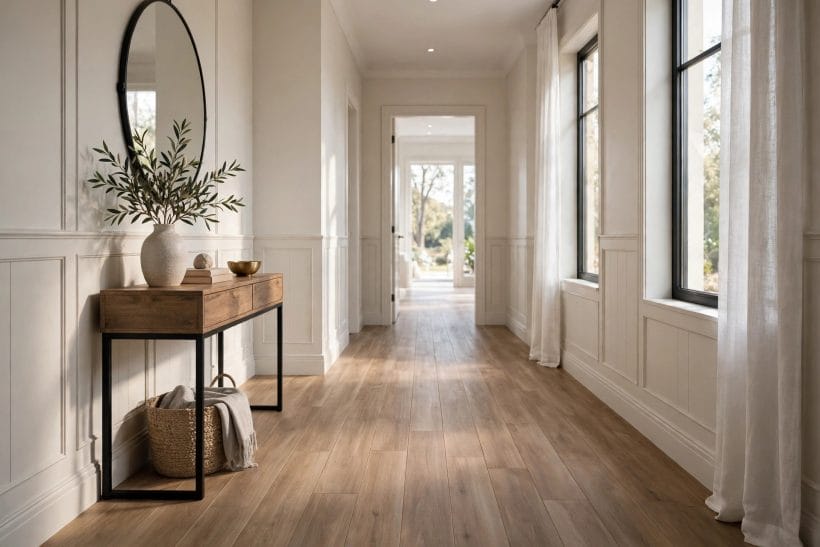
Hallways, as above, combine the floor’s hardest tests: concentrated traffic, dirt from outside, and long sightlines that reveal every gap and uneven joint.
7. Sunlight, Warmth and Temperature
Sunlight affects vinyl plank in two ways: it fades some prints and textures over time, and it heats the floor, which expands cores and stresses locking systems. A floor in a sunny conservatory faces different conditions from the same floor in a shaded bedroom, and the maker’s guidance should address sun exposure explicitly. If it does not, assume the floor was not designed for strong, sustained sunlight.
Underfloor heating adds another variable. Some vinyl plank systems suit heated floors and some do not, and the limits involve temperature caps, heating ramp rates, and the type of heating system. Never lay vinyl plank over underfloor heating without confirming compatibility in the maker’s specification, because the wrong combination damages both the floor and the heating system.
Furniture quality checks apply the same discipline to another household purchase: the specification, not the showroom impression, is what a buyer should trust.
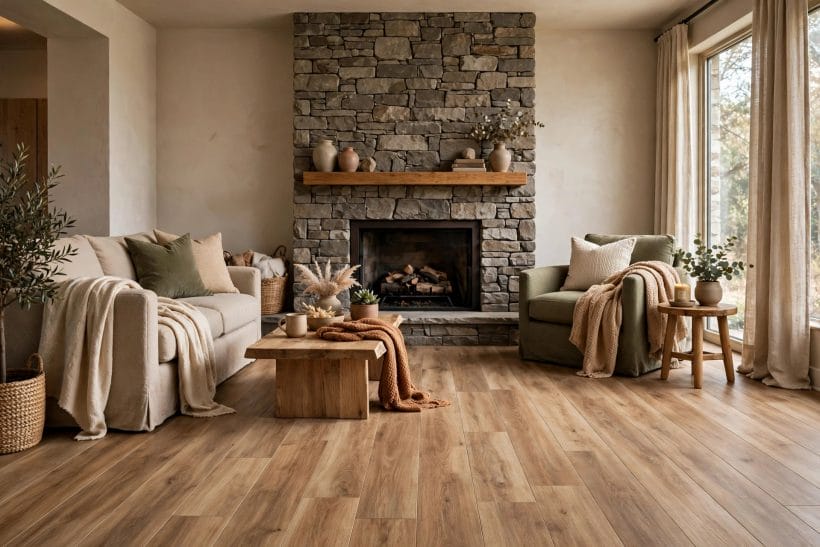
Living areas with fireplaces, as above, add their own temperature variation: warmth near the fire, coolness elsewhere, and a floor that must handle the gradient without gapping.
8. Samples, Rooms and the Honest Test
Order samples, and test them honestly. Lay a sample in the room where the floor will go, walk on it in shoes, spill a little water and wipe it up, drag a chair leg across it, and look at it in morning and evening light. A sample tested this way tells more than any brochure, because it tests the floor against the room’s actual conditions.
Order enough samples to compare ranges side by side, and keep the samples after ordering so the delivered floor can be checked against them. Deliveries occasionally differ from samples in tone or texture, and a kept sample is the evidence that settles the question quickly. Photograph the samples in the room as well, so the record survives even if the samples do not.
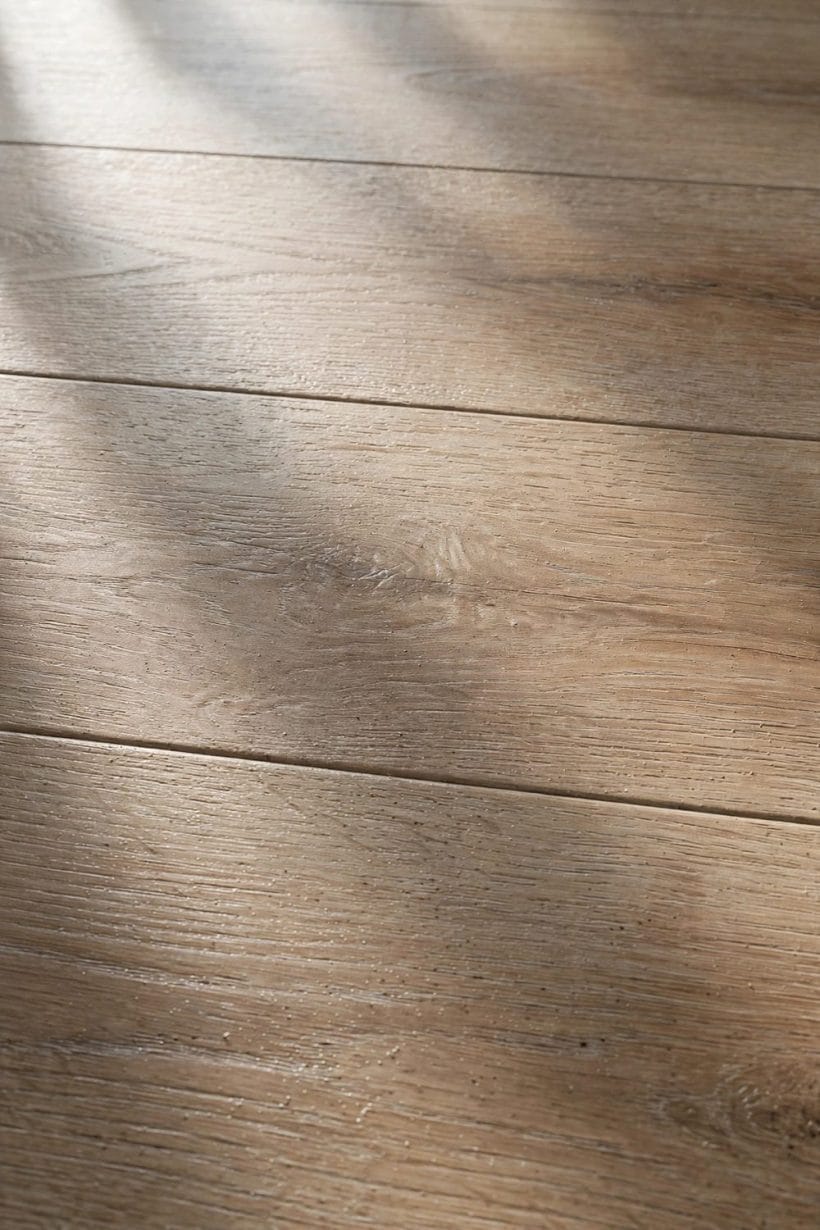
Soft window light, as above, is the most honest light for judging a vinyl surface: it reveals texture and sheen without the flattery of bright showroom lighting.
9. Installation: Who, How and What Can Go Wrong
Vinyl plank installation looks straightforward, and that appearance misleads people. The work requires a flat subfloor, correct expansion gaps, proper joint technique, and attention to transitions between rooms and materials. Poor installation causes more vinyl plank failures than poor product, and the difference between a good installation and a bad one is often invisible until months later.
Consider professional installation for large areas, rooms with complex shapes, or any floor over underfloor heating or a questionable subfloor. If installing yourself, follow the maker’s guidance exactly, including acclimatisation time, gap sizes, and underlayment rules. Skipping acclimatisation — letting planks adjust to the room’s temperature and humidity before laying — is one of the commonest causes of later gapping.
Interior design ideas show vinyl plank inside complete rooms, where the floor’s role is to support the room quietly rather than to draw attention to itself.
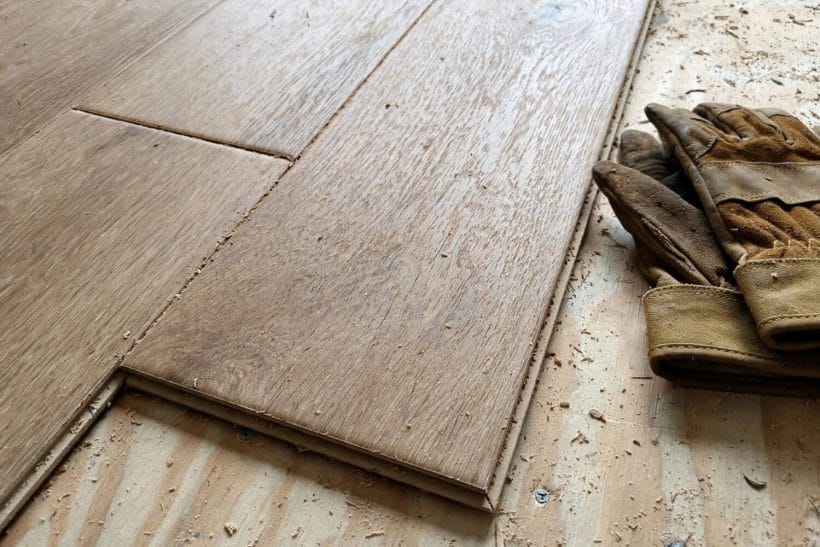
Fitting, as above, is where preparation pays off: a flat, clean subfloor and careful joint work produce a floor that stays flat and quiet for years.
Spare planks deserve emphasis, because they are the cheapest insurance a vinyl floor can have. Order extra planks from the same batch at the time of purchase, enough to cover a room’s most vulnerable areas, and store them flat indoors. Colour and texture drift between production batches, so a spare from the original batch repairs invisibly while a later batch may show as a patch. The cost of a few spare planks is small beside the cost of a visible repair or a partial refloor.
10. Warranty, Care and the Long View
Read the warranty before buying, not after a problem. Warranties vary in what they cover, how long they last, and what voids them: wrong underlayment, wrong cleaning products, installation outside the guidance, and water damage are common exclusions. A long warranty with many exclusions protects less than a shorter warranty with clear, fair terms. The warranty’s exclusions tell you what the maker actually expects to go wrong.
Care is straightforward: sweep regularly, mop with the cleaning method the maker specifies, wipe spills promptly, and use felt pads under furniture. Avoid steam mops and harsh cleaners unless the maker explicitly allows them, because both damage wear layers and locking systems. Keep spare planks from the original batch for repairs, because later batches may differ in tone.
Kitchen ideas and Craftsman living room ideas both show vinyl plank used as a quiet, practical floor beneath rooms with stronger features, which is exactly the role it plays best.
Keep a simple record of the floor after installation: the range, the batch, the installer’s details, and the maker’s care guidance. That record turns warranty questions and future repairs from guesswork into straightforward enquiries, and it costs nothing to keep.
Final Considerations
Vinyl plank flooring rewards buyers who check construction rather than photographs. Compare wear layers, understand the core, test the surface in real light, check the locking, prepare the subfloor properly, and read the maker’s specification on water, sunlight, heating, and warranty. Order samples, test them honestly, and keep them for comparison with the delivery.
Scandinavian bedroom shows a pale vinyl floor used to brighten a calm room, and that quiet competence is the right ambition for any vinyl plank purchase: a floor that serves the room without demanding attention.



0 Comments