

A she shed is a small garden building given a single purpose: a room of one’s own, steps from the house, for reading, making, resting, or simply being alone without leaving home. The idea has grown from garden sheds into something more deliberate — a retreat designed around one good habit, whether that habit is painting, writing, gardening, or quiet mornings with tea. The best she sheds are not the biggest or the most decorated. They are the ones whose use was decided before the decor.
No dimensions, costs, or building claims appear here, because plots, rules, and structures vary enormously. What follows is a design and use guide: the shell, the uses, the light, the garden connection, and the practical questions — power, storage, comfort, and permissions — that turn a shed into a room worth walking to every day.
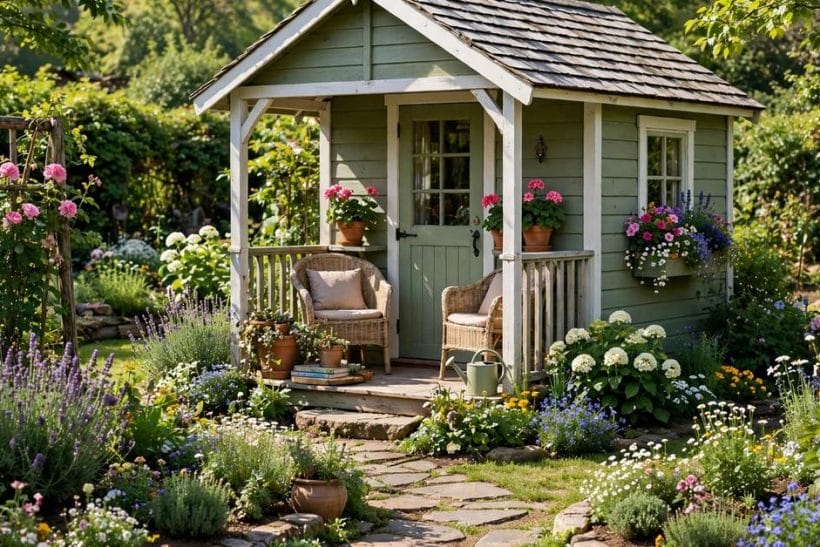
1. The Shell: Small, Weather-Tight, Yours
A she shed starts with a sound shell: a small building that keeps weather out, holds its temperature reasonably, and feels like a room rather than a storage box. The shell does not need to be large. In fact, smaller shells often work better, because a small room is easier to heat, easier to furnish, and easier to keep tidy. A shed that feels like a room needs a proper door, windows that open, and a floor that feels good underfoot.
The shell’s character comes from its details: a small porch, a painted door, window boxes, a path of stone or gravel. These details cost little and change everything, because they signal that the building is a destination, not an afterthought. A shed with a porch invites lingering. A shed without one invites hurrying.
Asian landscaping ideas show how a garden building and its planting work as one composition, and a she shed benefits from the same thinking: the building and the garden around it are a single design.
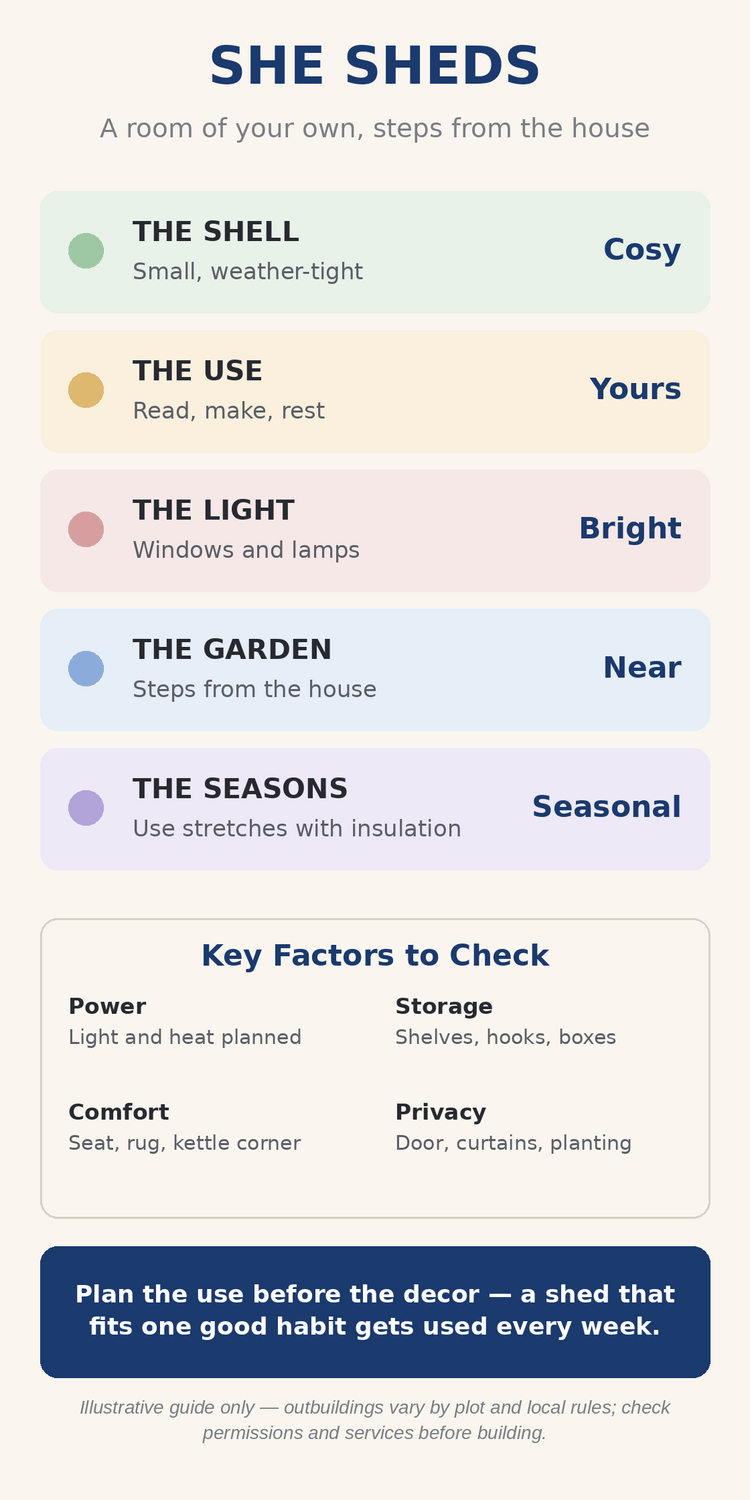
The infographic above summarises the she shed at a glance: a cosy shell, a chosen use, good light, a garden connection, and seasons that stretch with insulation and planning.
2. Choosing the One Use
The most important she shed decision is also the simplest: choose one use. A shed designed for reading needs a chair, a lamp, and shelves. A shed designed for painting needs light, washable surfaces, and storage for supplies. A shed designed for rest needs comfort, quiet, and nothing that demands attention. A shed designed for everything ends up serving nothing well, because each use pulls the furnishing in a different direction.
One use does not mean one activity forever. A reading shed can become a writing shed, and a craft shed can become a potting shed, as seasons and interests change. But at any one time, the shed should have a clear purpose that shapes its furniture, its light, and its storage. When the purpose is clear, every later decision gets easier.
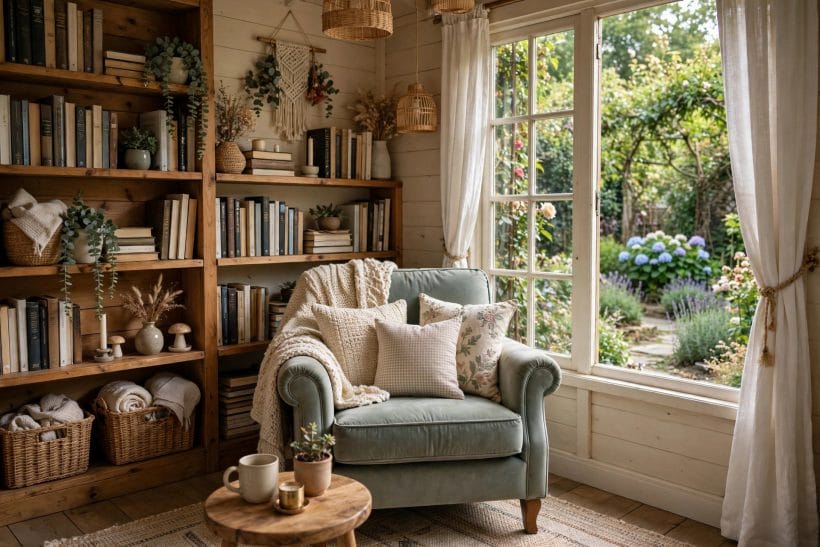
The reading nook above shows one use done well: a chair positioned for light, shelves within reach, and nothing in the room that does not serve reading.
3. Reading Nooks and Quiet Rooms
Reading is the most popular she shed use, and the simplest to get right. It needs a comfortable chair with good support, a reading lamp positioned over the shoulder, shelves or a small case for current books, and a surface for tea. The room should be quiet, which means a door that closes well and a location away from the noisiest part of the garden.
Reading sheds benefit from softness: a rug underfoot, a throw on the chair, curtains that filter light without blocking it. The goal is a room that invites long sitting, where the body forgets the chair and the mind stays with the book. Test the chair before committing to it, because a beautiful chair that hurts after an hour is a failed reading room.
Tiny house porch ideas show the same small-room comfort outdoors, where a chair, a light, and a view make a porch into a room of its own.
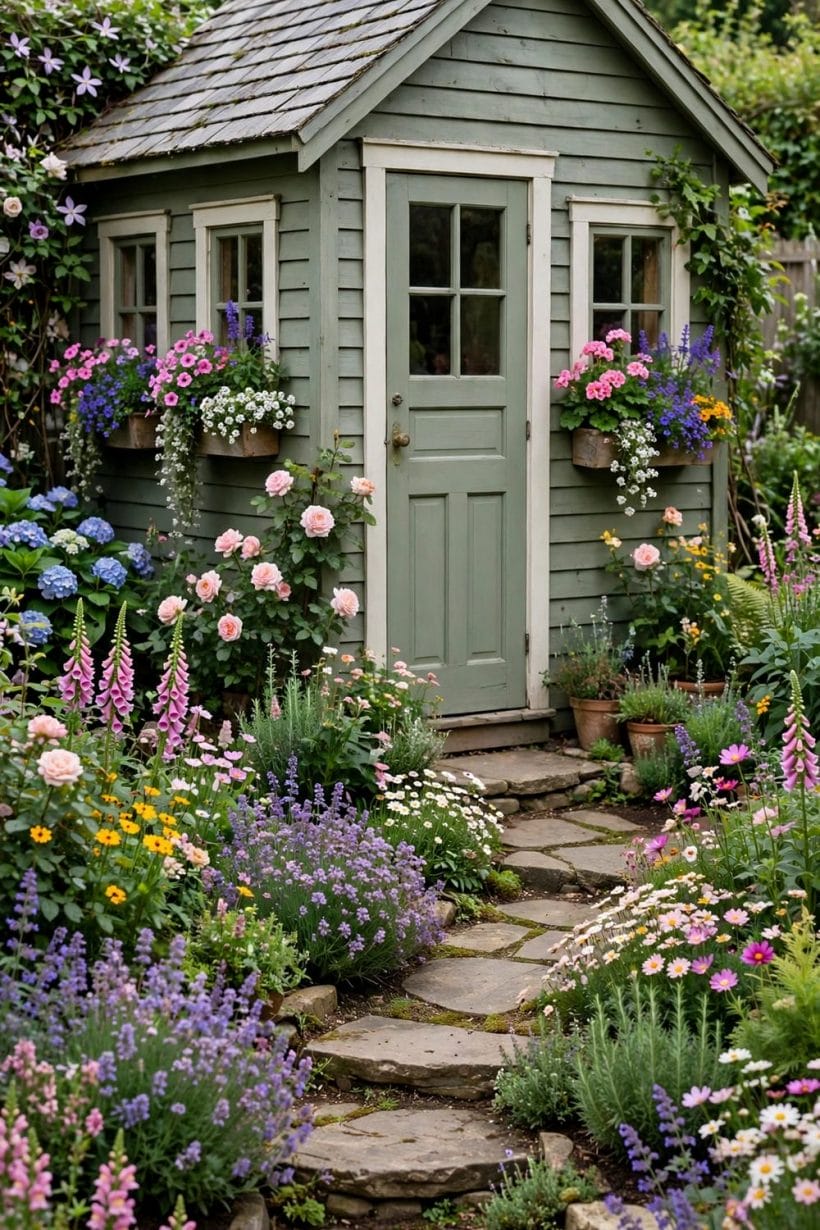
The flower-filled front garden above is part of the reading shed’s design: the walk to the shed, through planting, is the transition that makes the room feel separate from the house.
4. Studios and Craft Rooms
A studio she shed serves making: painting, sewing, pottery, writing, or any craft that benefits from a dedicated space. Studios need different things from reading rooms: work surfaces at the right height, storage that keeps supplies visible and reachable, good task lighting, and floors that tolerate mess. A studio that is too precious to make a mess in is a studio that will not get used.
Storage makes or breaks a studio shed. Open shelves for frequently used supplies, closed storage for the rest, and a clear work surface that stays clear because everything has a home. Plan storage before furnishing, because a studio furnished first and stored second ends up with supplies on every surface and no room to work.
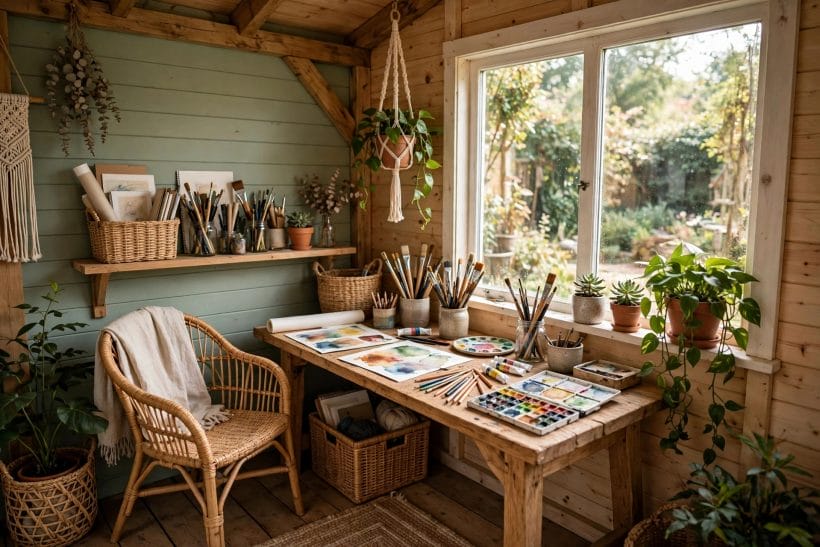
The studio above balances work and beauty: a desk by the window for light, supplies organised within reach, and plants that soften the working room without cluttering it.
5. Light: Windows, Lamps and Seasons
Light is the soul of a she shed. Windows on more than one side give changing light through the day and prevent the room from feeling like a box. A window facing the garden connects the room to its setting, while a window facing the sky or a tree canopy gives a sense of seclusion. Large windows suit studios and reading rooms alike, but they also lose heat, so the balance between glass and insulation deserves thought.
Artificial light matters just as much, because a shed used in the evening needs lamps that flatter rather than flatten. A mix of a task lamp for work and a soft ambient lamp for atmosphere covers most uses. String lights on a porch extend the room’s welcome into the garden after dark, and they cost almost nothing.
Exterior entryway ideas show how light and planting shape the approach to a building, and a she shed’s windows and porch lights do the same work for a garden room.
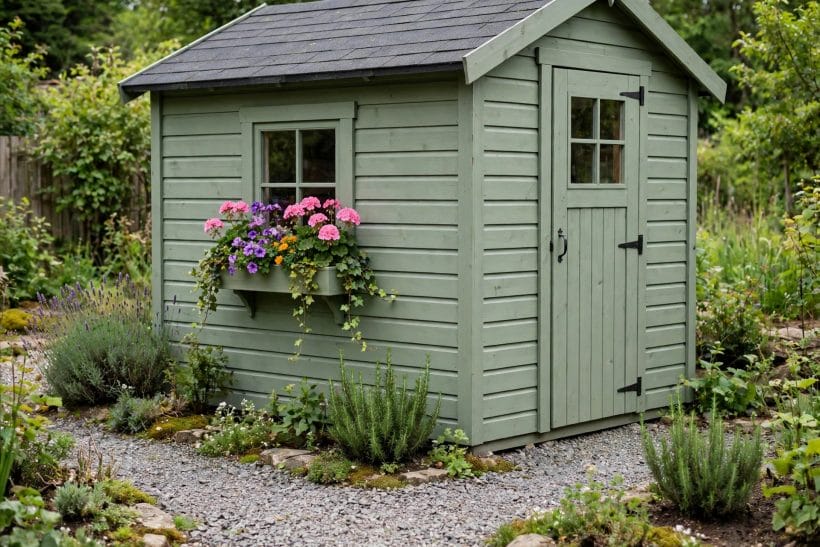
Window boxes, as above, are a small detail with a large effect: they make the shed’s windows part of the garden, and the garden part of the shed.
Think about the approach as a sequence, not a single path. The walk from the back door to the shed is a small ritual: a gate or arch to pass through, planting to brush past, a change of surface underfoot from patio to gravel or stone. Each step of that sequence helps the mind leave the house behind, which is exactly what a retreat room needs. A shed reached by a straight concrete path from the back door feels like an outbuilding. A shed reached by a winding planted path feels like a destination.
6. The Garden Connection
A she shed lives or dies by its garden connection. A shed reached by a muddy path through long grass feels remote in the wrong way, while a shed reached by a clear path through planting feels like a destination. The path, the planting around the shed, and the view from its windows are part of the design, not afterthoughts.
Planting around a she shed should frame it without overwhelming it: climbers on a trellis, flower beds along the path, a small seating area outside the door for fine days. Keep planting clear of the walls and roof, because damp and overgrowth damage any garden building over time. A shed that breathes lasts longer than one smothered in planting.
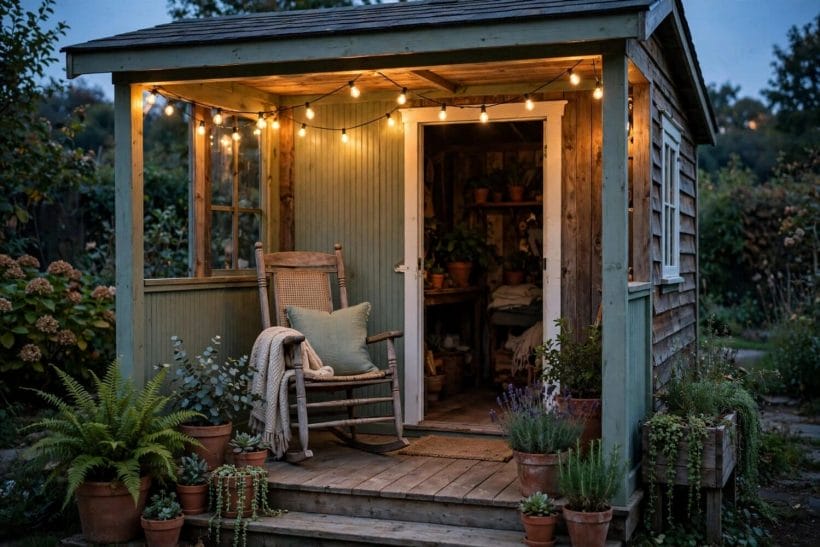
The porch above extends the shed into the garden: a chair, string lights, and pots create an outdoor room that doubles the shed’s usable space in good weather.
7. Power, Storage and Practical Comfort
Practical questions decide whether a she shed gets used weekly or abandoned. Power is first: a shed used for reading needs light, a studio may need more, and any shed used in cold weather needs a safe heating plan. Power supply to a garden building involves electrical work that belongs to qualified professionals, not to improvisation. Plan the supply properly, and size it for the shed’s actual uses.
Storage is second: a shed needs places for its own supplies plus the things that migrate from the house — extra cushions, blankets, books, and tools. Shelves, hooks, and boxes keep the room usable, and a small outdoor storage box can hold garden tools so the shed itself stays a room rather than a store. Comfort is third: seating that suits the use, a rug that warms the floor, and ventilation for warm days.
Fence gates show the garden’s boundaries and thresholds, and a she shed’s path and gate are the threshold that makes the garden room feel separate and special.
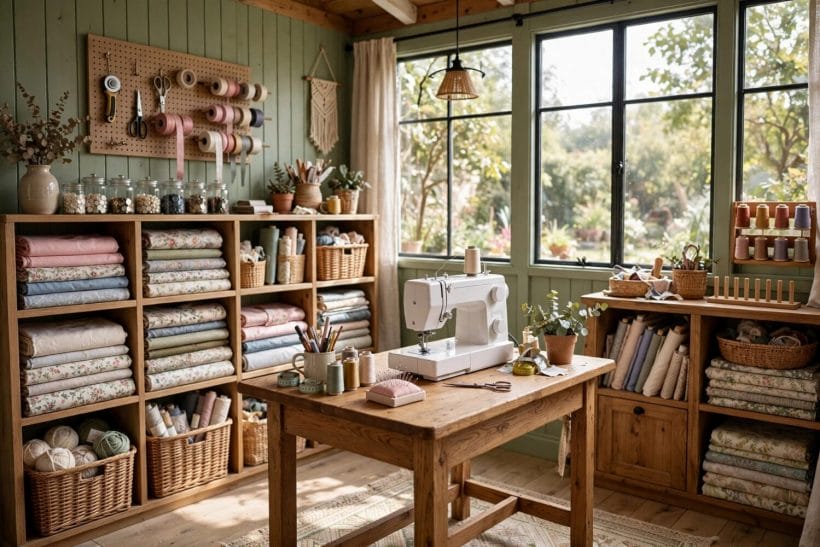
The craft room above shows practical comfort done well: bright windows, storage that keeps fabric visible and reachable, and a work table positioned for light.
8. Privacy, Boundaries and Neighbours
A she shed is a private room, and privacy deserves deliberate design: planting that screens the shed from neighbours, curtains or blinds for the windows, and a door that closes and locks. Privacy is not about hiding. It is about the feeling of being undisturbed, which is the whole point of a room of one’s own.
Boundaries also mean neighbours. A shed near a boundary, a shed that overlooks a neighbour’s garden, or a shed built without checking local rules can create friction that no amount of decoration fixes. Check permissions and local rules before building, talk to neighbours about plans that affect shared boundaries, and keep the shed’s scale neighbourly. A shed that respects its setting keeps its welcome.
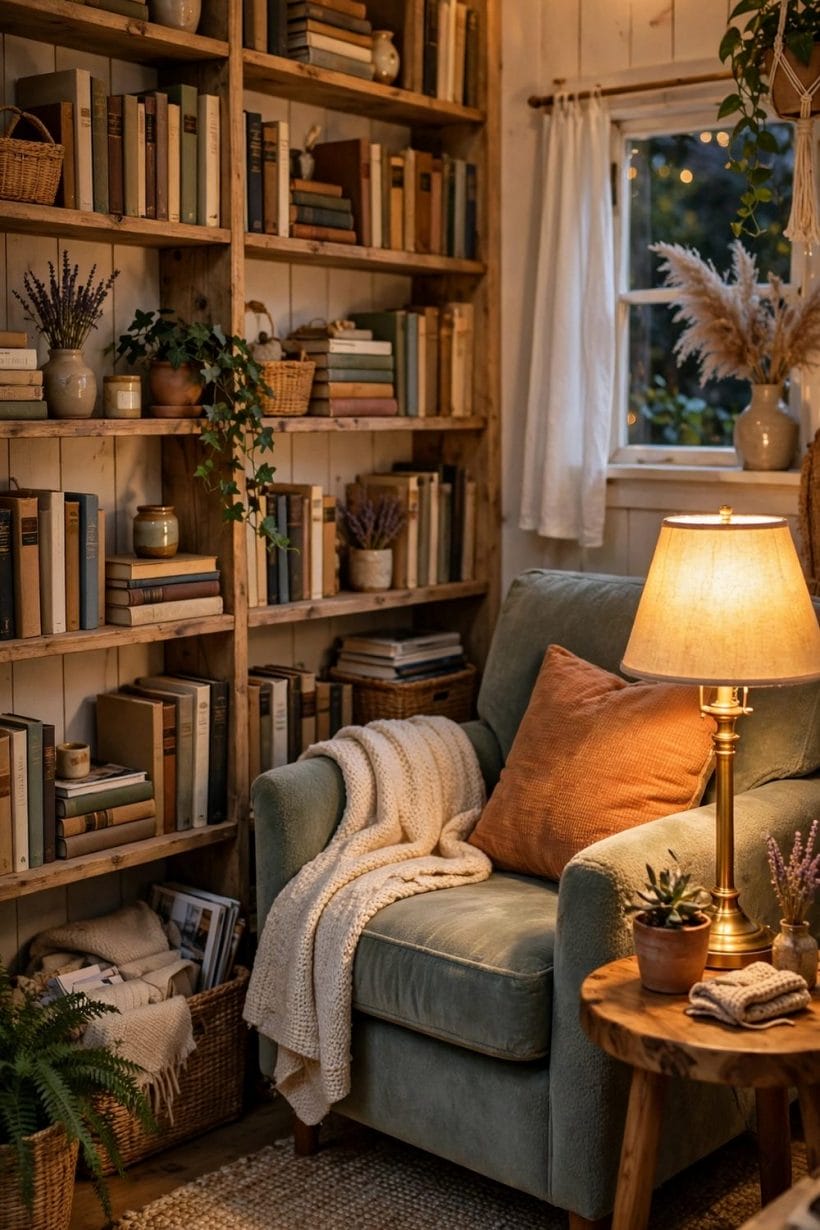
Warm lamp light and bookshelves, as above, create privacy from within: a room that feels enclosed and calm regardless of what lies beyond its walls.
9. Seasons: Stretching the Shed’s Year
A she shed’s year stretches with insulation, heating, and planning. An uninsulated shed is a fair-weather room, lovely from spring to autumn and cold in winter. Insulation, draught-proofing, and a safe heating plan extend the season considerably, turning a summer room into a nearly year-round retreat. The investment in insulation pays back in every extra month of use.
Seasonal use also means seasonal care: clearing gutters and roofs in autumn, checking for damp in winter, refreshing planting in spring, and airing the room after wet weather. A shed that is maintained seasonally lasts decades. A shed that is ignored for a year can deteriorate surprisingly fast.
Interior design ideas show how small rooms adapt through seasons with textiles and light, and a she shed adapts the same way: heavier textiles in winter, lighter ones in summer, and plants that change with the year.
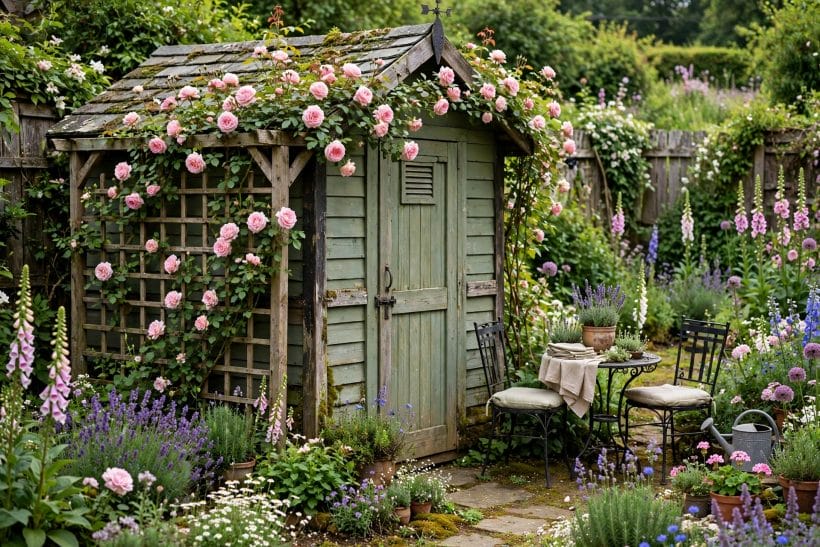
A climbing rose trellis, as above, gives a shed its seasonal rhythm: bare structure in winter, green growth in spring, flowers in summer, and colour again in autumn.
Sound deserves a thought too. A garden room should feel acoustically separate from the house: rain on the roof, birdsong through an open window, and quiet within. Soft furnishings absorb echo, a rug quiets footsteps, and a door that seals well keeps household noise out. The quiet of a she shed is one of its greatest luxuries, and it costs nothing to protect once the shell is sound and the furnishings are soft.
10. Decorating Without Losing the Room
Decorating a she shed is tempting, and over-decorating is the commonest mistake. A shed filled with ornaments, signs, and collections leaves no room for its actual use, and the room becomes a display rather than a retreat. Decorate lightly: a few objects that mean something, textiles that add comfort, and colour that flatters the light. Let the garden provide most of the decoration through the windows.
Colour deserves care. Pale walls keep a small shed bright, while a single accent wall or a painted door adds personality without closing the room in. Natural materials — wood, linen, wool, clay — suit a garden room better than shiny or synthetic finishes, because they age with the building and feel right against the garden outside.
Tiny house designs show the same restraint in small rooms: every object earns its place, and the room stays usable because it stays uncluttered.
One last practical note: keep the shed’s paperwork with the house’s records. Permissions, electrical work, warranties, and care guidance for the building and its fittings are easy to lose and hard to reconstruct. A single folder, kept indoors, turns every future question about the shed into a quick lookup rather than a search.
Final Considerations
A she shed succeeds when its use is chosen first, its shell is sound, its light is generous, and its garden connection is designed rather than accidental. Power, storage, and comfort decide whether it gets used weekly. Permissions and neighbours decide whether it keeps its welcome. Seasons stretch with insulation and care, and decoration should stay light enough that the room remains a room.
Patio furniture checks help furnish the outdoor seating that extends a she shed, and the two together — a garden room and its outdoor seat — make a garden feel complete.

0 Comments