

Hardwood is the floor people price twice: once with their heart, at the sample board, and once with their head, when the quote arrives carrying four other costs they never saw coming.
This guide is the head’s version: a hardwood flooring cost calculator you run with a tape measure and an envelope — hardwood only, every line named, no figure invented — sitting under the all-materials flooring installation cost overview, which compares timber against its rivals.
1. Hardwood Flooring Cost at a Glance
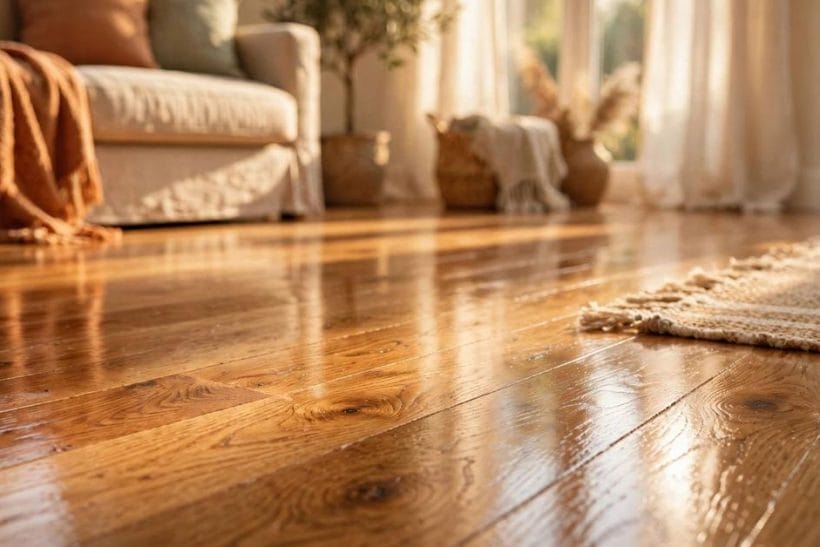
The cost of a hardwood floor is not a price per room; it is a small stack of separate lines that a quote assembles — the timber itself, sold by the pack against an honestly measured area; the layers beneath and around it, from underlay and moisture protection to acclimatisation time; the fitting, by a method the timber dictates; the preparation of what lies beneath, including removing the old floor; and the finishing — thresholds, skirting decisions and the last beads and trims. A calculator, in the honest sense used here, is the method of measuring your own room and pricing each line separately so that any fitter’s total can be checked line by line. This guide owns that method for hardwood only: the all-materials overview linked above owns the comparison across floor families, and the laminate survey owns laminate’s own lines in depth.
| Question | Short answer |
|---|---|
| Why is there no calculator with numbers on this page? | Because an honest figure belongs to your measured room, your chosen timber and a named fitter’s written quote — not to a generic page. What this guide gives is the calculator as a method: the lines, the measuring and the questions, so the numbers you are quoted can be tested instead of merely accepted. |
| What is the biggest line in a hardwood bill? | Usually the timber itself — which is why its grade, width and species choices move the total more than any other decision. The fitting is the second gravity well, and preparation is the line that grows when the subfloor has secrets. |
| Solid or engineered — which costs less to own? | They price differently at every line: purchase, fitting method, sanding future and repair. Engineered boards widen where solid may be laid and simplify some fittings; solid timber repays with refinishability across decades. The comparison is a whole-guide question, answered in the timber section below — honestly, without a universal winner. |
| Can I fit hardwood myself and save the fitting line? | Some engineered floors are within a careful amateur’s reach; nailed or glued solid timber is a professional’s craft with expensive mistakes. The DIY line is drawn in the fitting section — and a badly fitted hardwood floor costs more to rescue than the fitting ever saved. |
2. The Lines of Every Hardwood Bill
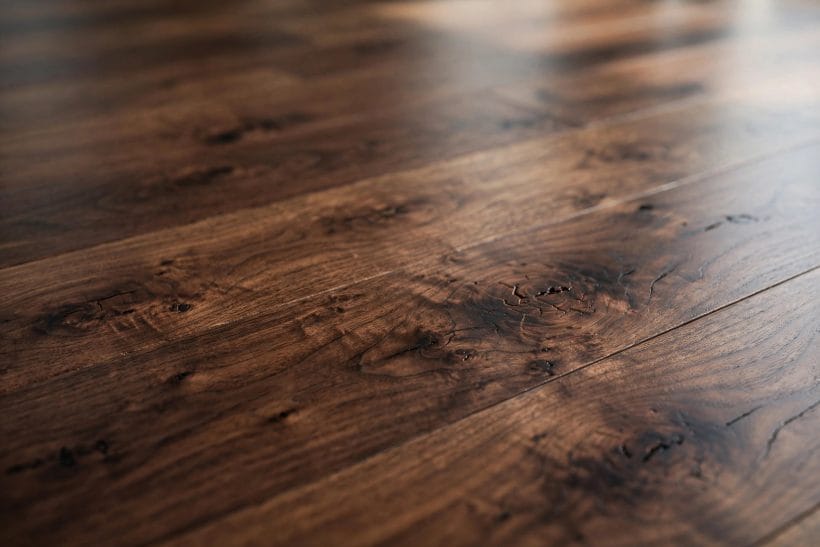
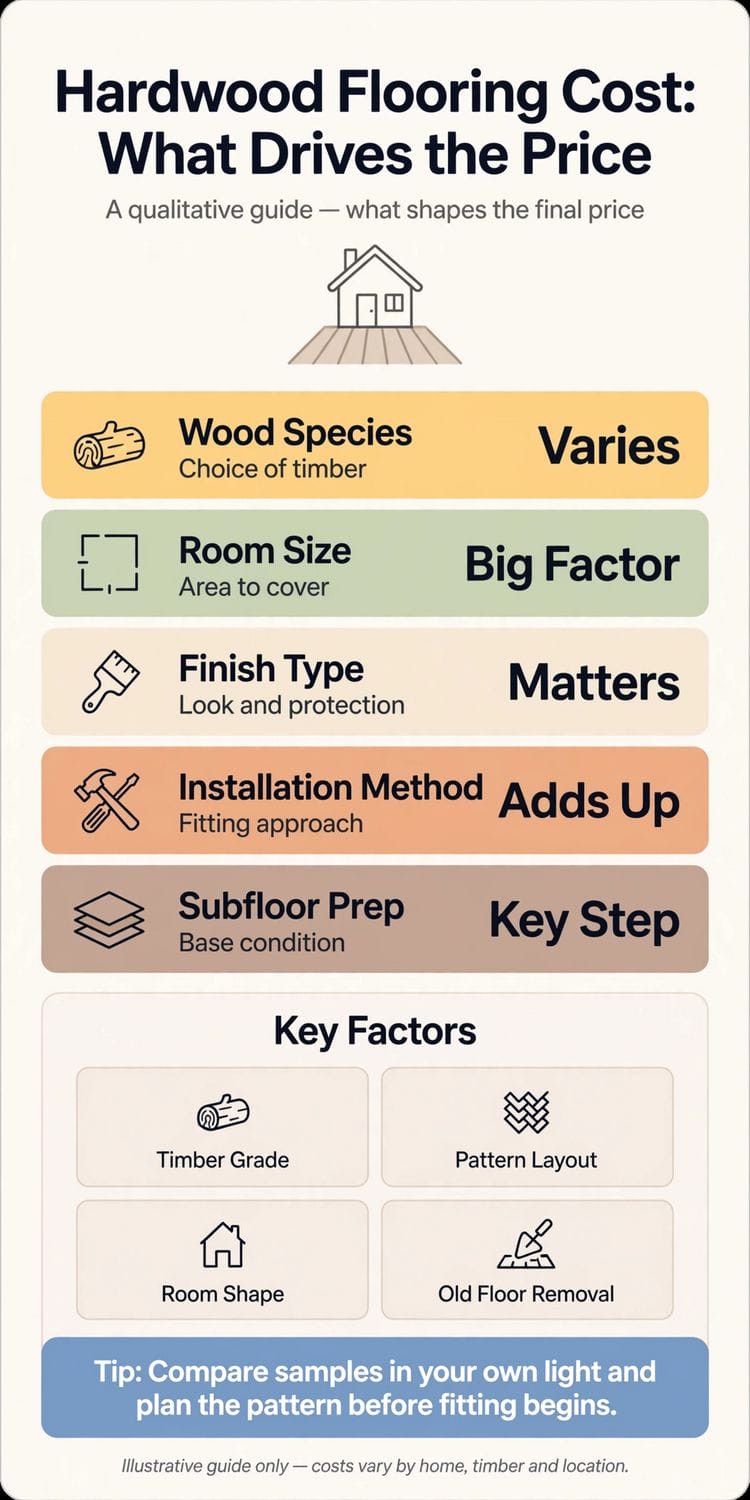
Read any hardwood quote as a stack of lines and it stops being weather and becomes arithmetic. The timber line buys boards by the pack against your measured area, plus the allowance for cuts and the spare boards every wise household keeps. The layers line buys what the timber lies on and breathes over. The fitting line buys the method and the days. The preparation line buys the old floor’s removal, the subfloor’s honesty and the disposal afterwards. The finishing line buys thresholds, skirting choices and trims — small money that decides whether the floor looks fitted or abandoned at its edges.
A quote that arrives as one round total hides which line is fat and which is thin, and hides it from comparison with the next quote. The discipline of this whole guide — learned from the wider flooring overview linked in the hook — is to price each line separately, in writing, before comparing any two totals. Fitters who work this way welcome it; it is how they quote each other.
The line nobody quotes until it is too late
Preparation is the bill’s honest surprise: lifting the old floor, levelling a subfloor that waves, easing doors the new floor’s height will catch. None of it is visible in the finished room, and all of it decides how the finished room feels underfoot. A contingency held for preparation is not pessimism; it is the calculator’s most grown-up feature.
3. The Timber Itself: Solid and Engineered, Grades and Widths
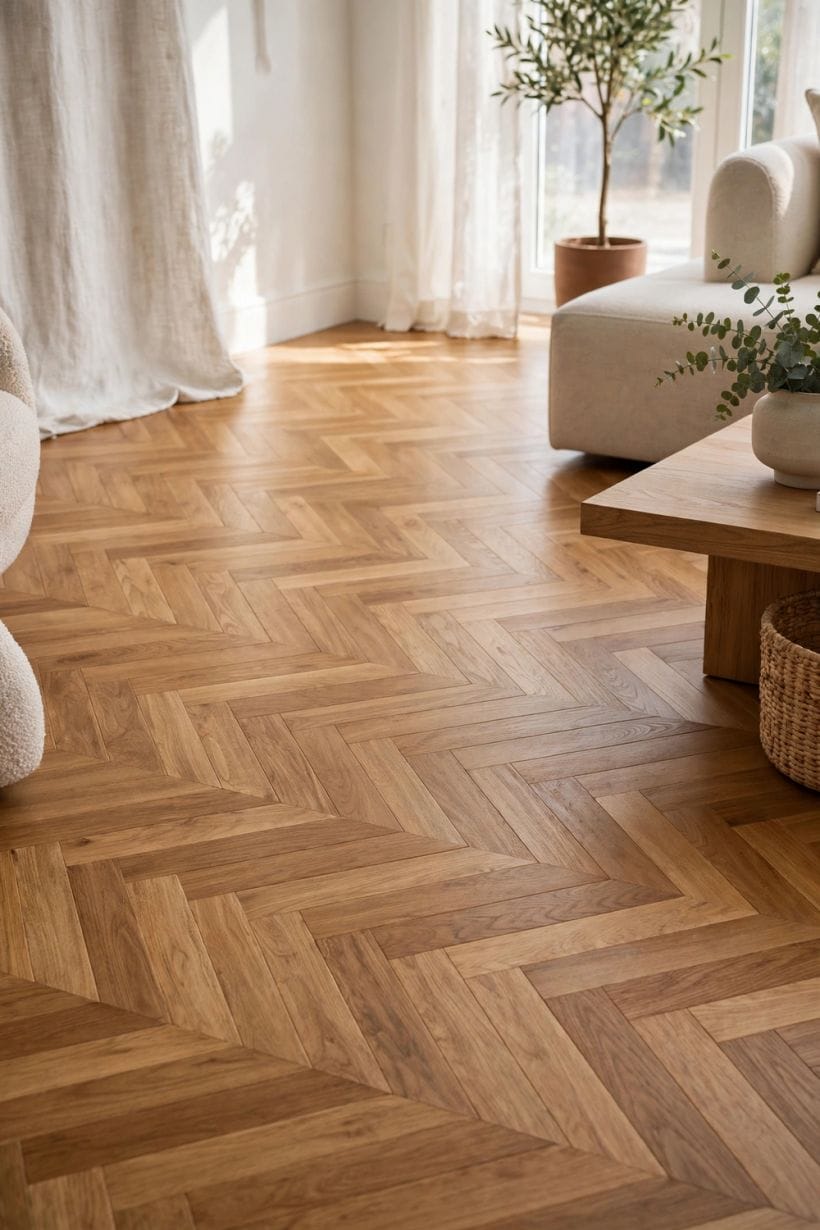
Hardwood’s own line splits first by construction. Solid timber is one piece of wood through its whole thickness: it can be sanded and refinished across a long life, it dislikes moisture’s swings, and it is fitted by nailing or gluing with a craftsman’s patience. Engineered timber bonds a real-wood wear layer to a stable layered base: it tolerates underfloor heating and wider rooms more calmly, fits by more methods, and its refinishing future depends on the wear layer’s depth, which the maker states and the buyer checks.
Within either construction, the price moves with species, grade and width in predictable directions. Common species in plentiful supply price kindly; slow-grown, fashionable or wide boards price dearly. Grades run from clean and uniform — few knots, even colour, the expensive calm — to characterful and varied, where knots and grain movement are the beauty and, often, the saving. Neither end of that scale is the right answer; the room’s light, furniture and honesty decide.
Widths, lengths and the pack arithmetic
Boards are sold by the pack, and packs do not divide by your room. Wider boards cover ground with fewer pieces and show more of the tree; narrower boards suit small rooms and busy light. The calculator’s timber line is always whole packs against measured area plus allowance — and the leftover boards are stored, labelled, against the day a pipe bursts or a heel wins, because matching a discontinued board years later is the expensive errand this habit prevents.
Where laminate’s shallower lines tempt a comparison, resist pricing them as rivals inside this guide: the laminate floor’s own calculator treatment lives in the laminate flooring cost survey, and hardwood is priced here on its own terms, against other hardwood quotes — like for like, which is the only comparison that has ever saved anyone money.
4. Underlay, Membranes and Acclimatisation: The Layers Around the Wood
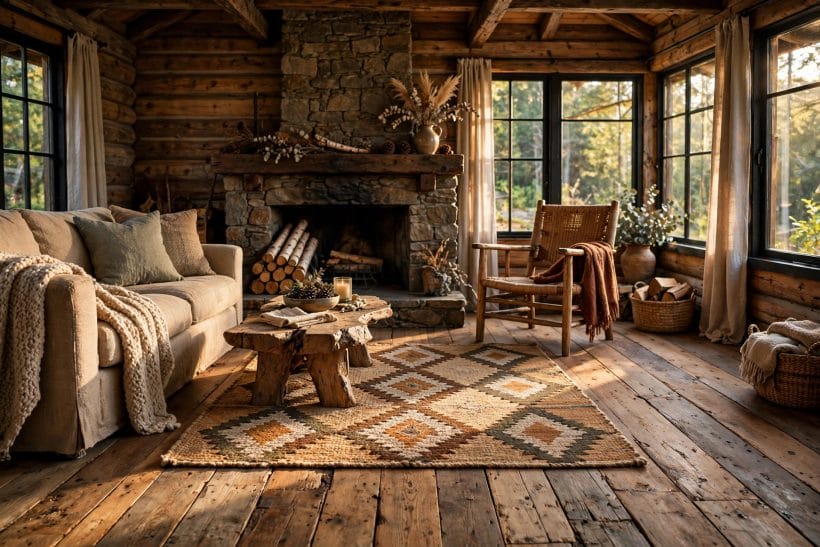
Timber does not lie on the subfloor; it lies on a decision. Floating engineered floors ride on underlay chosen for the room — cushioning, acoustic quiet, or moisture protection where the subfloor is concrete. Nailed and glued floors meet their own preparations: membranes where damp is a risk, plywood overlays where boards need a sound, level field to fix to. Each layer is a line in the bill, and skipping one to save its line is how floors come to sound hollow, feel cold or move when the seasons turn.
Acclimatisation: the cost that is really time
Hardwood is a living material long after it is cut, swelling and shrinking with the room’s humidity. Boards are therefore rested in the room they will serve, stacked with air around them, until they have settled to the house’s own climate — a period the maker and fitter specify. It costs no materials and a great deal of impatience, and skipping it is the classic cause of gaps in winter and cupping in summer. The calculator writes this line in days, not money, and protects it from the schedule’s pressure.
Moisture is tested, not guessed: the subfloor’s damp is measured with a meter by whoever takes responsibility for the floor, and the readings decide membranes, timing and sometimes the verdict that a room is not ready for timber yet. Floors laid over unmeasured damp do not fail politely. The professional’s meter is part of what the fitting line buys, and a quote silent on moisture is a quote to query.
5. Fitting: Nailed, Glued, Floated — and the DIY Line
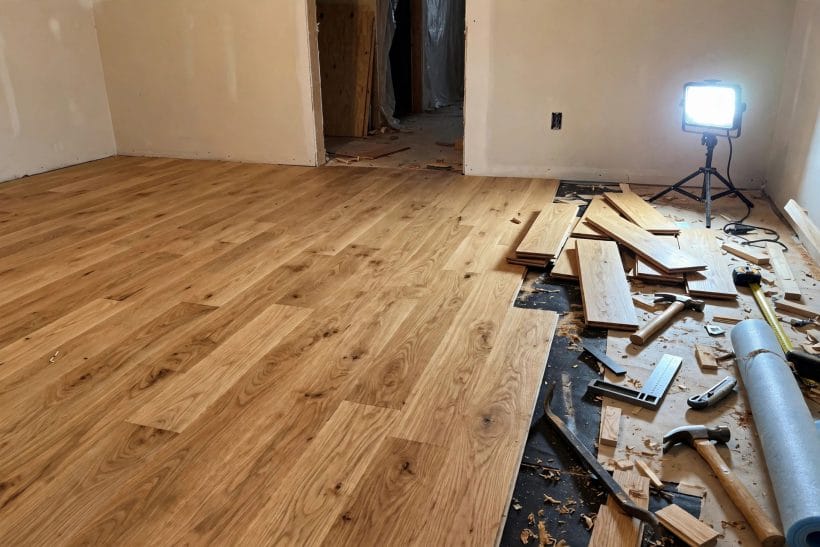
The fitting method follows the timber and the subfloor, and each prices its own labour. Nailing suits solid boards over timber subfloors, with secret fixings and a rhythm learned over years. Gluing suits solid and engineered boards over sound, level bases, buying silence and solidity with adhesive and time. Floating suits engineered boards on underlay, the fastest and most forgiving method — and the only one whose edges, expansion gaps and thresholds demand the amateur’s closest reading.
Labour is priced by the room’s difficulty as much as by its size: alcoves, fireplaces, stairs at the door, radiators and their pipes all multiply cuts and care. A square, empty room is the quote’s best case; every household should hear which case its own rooms are, in the fitter’s words, before the day is booked.
Where the DIY line honestly falls
A careful owner with time, tools and a forgiving engineered floor can fit a simple room well, and this guide’s calculator method will serve them exactly as it serves a quote-checker. Solid timber, glued work, stairs, herringbone patterns and any room whose subfloor is in doubt belong to professionals — not by snobbery but by consequence, because hardwood’s mistakes are measured in boards that cannot be uncut. The honest saving is in preparation and finishing done well by the household, under the fitter’s agreement, never in the craft lines.
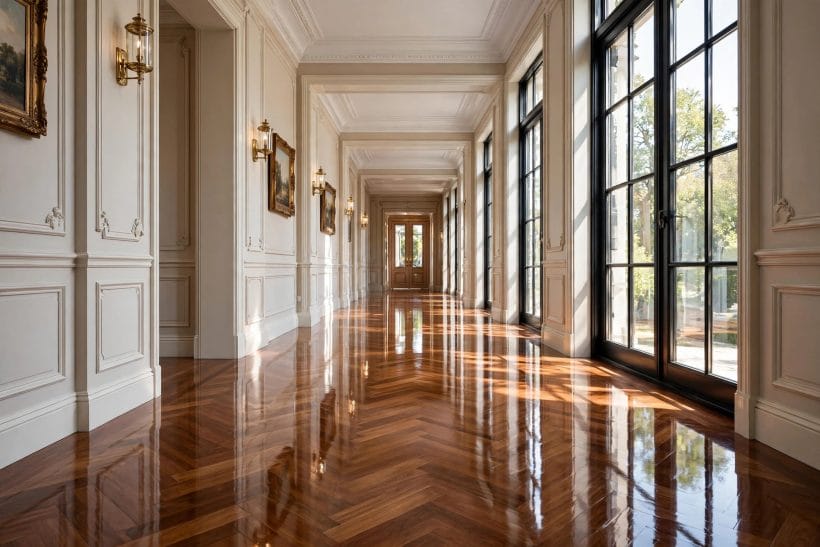
Herringbone and chevron deserve their own sentence in any quote: patterned hardwood multiplies labour, waste and time, beautifully and expensively. If the pattern is the dream, price it as its own line and compare it across fitters, because it is the line where quotes diverge widest.
6. Before the Floor Goes Down: Removal, Disposal and the Subfloor
The old floor leaves before the new one arrives, and its leaving is priced like everything else: lifting carpet is one errand; lifting tile, old boards or a bonded floor is another and dustier one. Disposal is a line too — skips, bags and the local rules for each — and a quote that forgets it remembers it later, on the day, at the door.
Beneath, the subfloor is judged on three counts: level, sound and dry. Level is checked with a long straight edge, because hardwood shows every wave the eye forgives in carpet. Sound means boards and joists firm, squeaks hunted and fixed while the floor is open — the one cheap moment in a floor’s life to silence it. Dry is the moisture reading from the layers section, repeated here because it gates everything.
Doors, skirting and the height the new floor steals
A new floor has thickness, and thickness has consequences: doors that swing today may bind tomorrow, appliances may lodge under worktops, and the last step of the stairs may change its height by exactly the amount a tired foot will find at midnight. The preparation line includes easing doors and planning thresholds, and skirting is either removed and refitted over the new floor or left with a bead to cover the expansion gap — a choice of look and money made in advance, not discovered on fitting day.
7. The Calculator Method: Measuring and Multiplying Your Own Room

Here is the calculator, and it fits on an envelope. Sketch the room as rectangles — the main floor, the alcove, the bay, the hall’s dogleg — and measure each rectangle’s length and width in the units your supplier prices in. Multiply each pair, add the rectangles together, and you hold the room’s honest area. Then add the allowance: for cuts, for the boards that arrive flawed, for the spare pack kept against the future. Your fitter and supplier will name the allowance their method needs; the calculator’s rule is only that it is added openly, as its own figure, never smuggled into the area.
Price the stack, line by line, against that area. Timber: whole packs to cover area plus allowance. Layers: underlay, membrane or overlays by the same area. Fitting: by the area and the method, with the room’s difficulty named. Preparation: as its own list — removal, levelling, disposal, doors. Finishing: counted, not measured — thresholds by the doorway, skirting by the wall’s run, trims by the edge that needs them. Add a contingency to the preparation lines, where floors keep their surprises, and the envelope now holds a total you built yourself.
Worked in words: one imaginary room
Picture a plain rectangular sitting room with one alcove. Its area is the rectangle’s length times its width, plus the alcove’s smaller product. Its timber is that area plus allowance, rounded up to whole packs. Its fitting is the area at the method’s rate, with the alcove’s extra cuts acknowledged. Its preparation is the old carpet’s lifting, one wavy corner’s levelling, and the disposal. Its finishing is two thresholds and the skirting’s return. No figure in that paragraph is a price — it is a shape, and any real quote for a real room should have exactly that shape, line for line, before its numbers are even read.
The method travels: it prices the hall from the sitting room’s numbers, tests a second timber against the first without re-measuring, and exposes the quote whose timber line is honest but whose preparation has quietly doubled. Buying the boards yourself follows the discipline of the online flooring guide — samples first, batches checked, delivery planned — with the calculator’s area written on the order where everyone can see it.
8. What Pushes the Total Up — and What Brings It Down
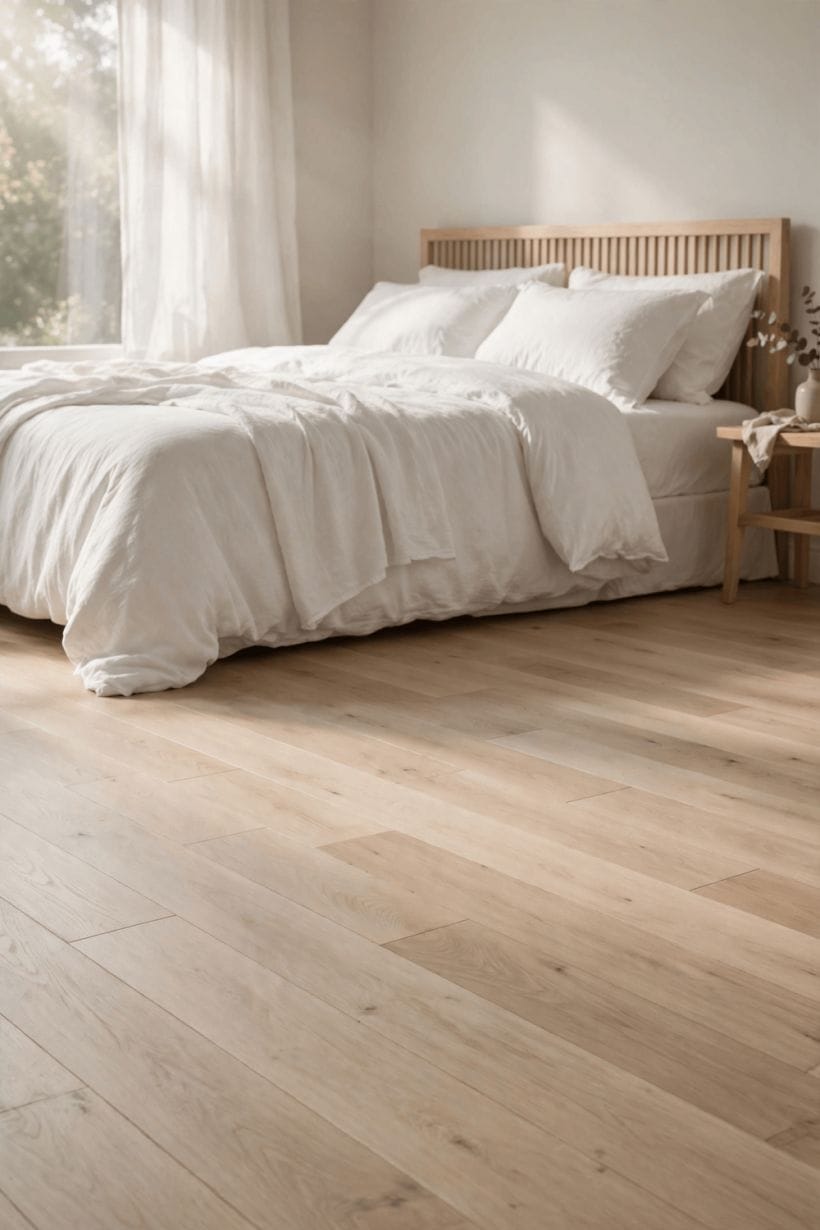
Up, reliably: wider and longer boards; cleaner grades; patterned laying; glued and nailed methods; rooms with many cuts; subfloors needing levelling, overlays or drying time; stairs, thresholds and levels between rooms; and haste, which pays for itself in every trade’s diary. None of these is foolish — several are the floor’s whole beauty — but each should arrive in the bill as a named line the household chose, not a surprise it funded.
Down, honestly: character grades with their knots welcomed; narrower boards in plentiful species; straight laying in one direction; rooms emptied and prepared by the household in advance, where the fitter agrees it helps; skirting kept with a bead instead of lifted and refitted; and timing a fitting to the trade’s quieter weeks, asked about politely. Down never comes from skipping acclimatisation, moisture testing or the allowance — those savings are loans the floor collects with interest.
The false economies, named
Cheap underlay under dear timber; boards bought without the spare pack; the contingency spent on wider boards before the subfloor was opened; the fitter chosen as the only quote never itemised. Each reads as thrift in the planning week and as the bill’s largest line in the year after. The calculator exists to catch them while they are still sentences, not yet invoices.
9. Quotes Like for Like: Comparing Fitters and Choosing Well
Send every fitter the same envelope: the measured areas, the chosen timber or its specification, the method, the preparation list, the finishing count. Quotes then return as stacks of the same lines, and comparison becomes reading rather than divination. Where a line is missing, ask for it; where a line is swollen, ask what it carries. The fitter who answers plainly, in writing, with the moisture test and the acclimatisation named, is telling you how the work will be run.
Beyond the lines, judge the evidence a household can check: references from floors old enough to have lived through seasons, memberships and guarantees stated in the paperwork, and a willingness to write the start date after the timber’s rest, not before it. The cheapest total is occasionally the right choice; the unexplained total never is. Other rooms’ bills calibrate the eye the same way — the method behind the bathroom remodel cost guide is this guide’s own method wearing a different room’s clothes.
The questions that finish the calculator
What does the timber line assume about my measured area? What allowance is carried, and whose are the spare boards? What did the moisture reading say, and what happens if the subfloor fails its test on the day? How long will the boards rest, and who decides they are ready? What is not in this quote that another trade will bill me for? A household that can ask those five, envelope in hand, no longer needs a website’s calculator — which is, quietly, the point of this one.
10. Costs and Pulling It Together
Pull the total together the way the calculator built it: timber in whole packs against a measured area plus an open allowance; layers suited to the subfloor and its moisture reading; fitting by the method the timber dictates, priced with the room’s difficulty named; preparation itemised with its contingency intact; finishing counted doorway by doorway and wall by wall. A hardwood total assembled that way can be defended to a partner, a bank manager or a sceptical fitter, line by line — and it can be compared, which is where its real power lives.
Costs stay qualitative throughout this guide by deliberate policy: hardwood prices move with species, harvests, widths and regions faster than any page can honestly chase, and a figure printed here would be a rumour by the time it was read. What does not move is the shape of the bill and the method of testing it. Take the envelope to the timber yard and the fitters, fill its lines with their real numbers, and the calculator has done its work. The rooms it serves best are the lived-in ones — the living room ideas survey shows the floors these lines buy, in rooms arranged around them.
Final Considerations
A hardwood floor is bought three times: as boards, as fitting, and as the decades it will be walked on. The calculator’s job is only to make the first two purchases honest, so the third can be enjoyed without an asterisk.
Measure carefully, price the lines separately, let the timber rest, and choose the fitter whose quote reads like this guide — itemised, moisture-tested and calm. Then put the envelope away and enjoy the floor, which was the point of counting it. More home projects are planned from the same first principles across the home design ideas collection.




0 Comments