

A fence you can see through, that still keeps everything where it belongs — that is the whole charm of hog wire, and it starts with a panel of welded grid in a honest timber frame.
This post gathers seventy-five hog wire fence ideas end to end: frames and posts, panels and wire, garden and livestock runs, deck railings, gates, finishes, slopes, planting, and the safety, care and cost drivers that decide whether the fence still looks right in five years.
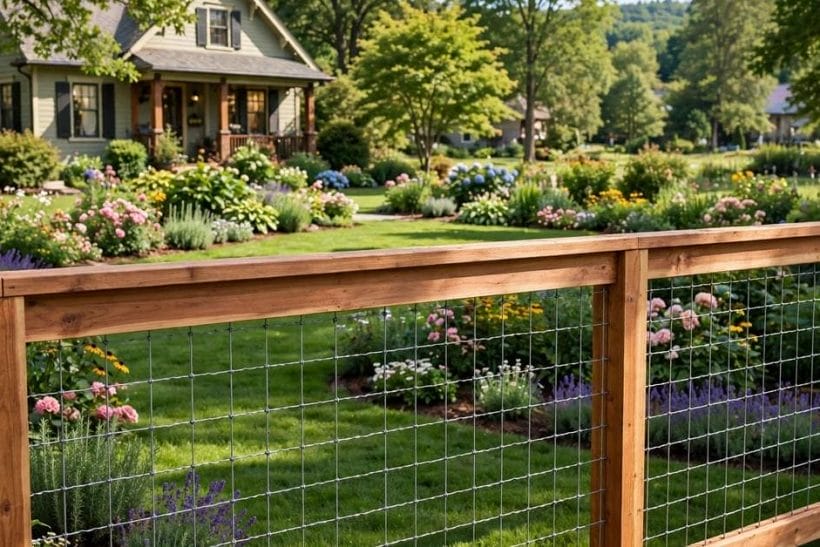
1. Hog Wire Fence Ideas at a Glance
A hog wire fence is built from rigid welded-wire panels — a regular grid of stout wire, made originally for containing livestock — set inside a frame of posts and rails, most often timber. The grid does the containing; the frame does the looking. Because the panel is see-through, the fence marks a boundary, keeps children, dogs and stock on the right side of it, and still lets the garden, the view and the light pass through, which is why the same construction has travelled from farm pens to front gardens and deck railings. This post stays with hog wire panels alone: their frames, uses, finishes and care. The wider boundary family lives elsewhere on the site — the survey in gate ideas covers the openings in fences generally, and later posts in this series take privacy fencing and chain link in their own turns — so nothing here needs to pretend one fence does every job.
| Question | Short answer |
|---|---|
| What is a hog wire fence? | Rigid welded-wire grid panels held in a post-and-rail frame, most often timber, sometimes metal |
| What is it best at? | Keeping animals and children in (or out) while keeping views, light and planting visible |
| What decides how it looks? | The frame — its timber, proportions and finish — far more than the wire itself |
| Is it a privacy fence? | No — it is an open fence; privacy must come from planting or a different fence type |
| What needs checking first? | Local fence rules and heights, boundary lines, and any railing codes where the panels guard a drop |
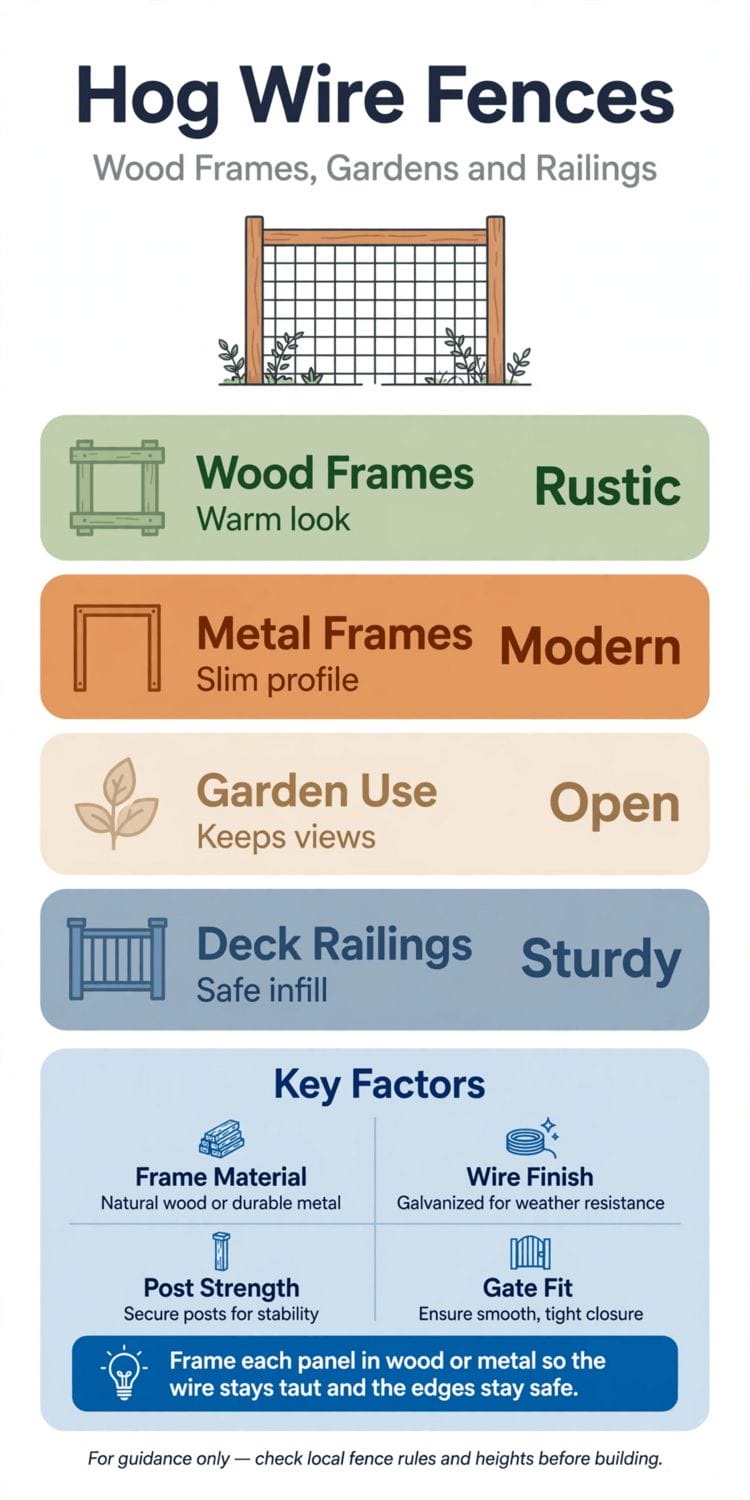
2. Frames and Posts: The Fence’s Real Face
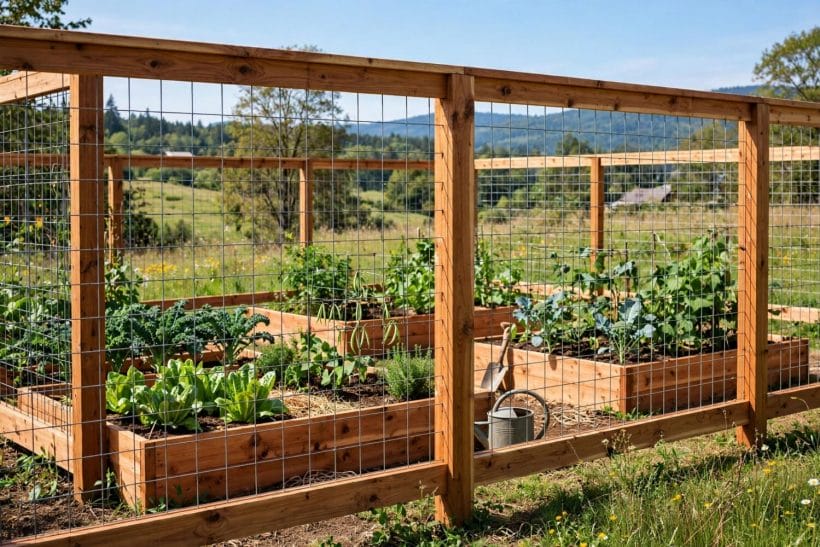
1. Square timber posts with a capped top rail
The classic frame: substantial posts, a continuous top rail that caps and protects them, and the panel held between. The cap rail is not decoration — it sheds water off the post tops and gives the whole run its finished, deliberate line.
2. A chunky farm frame in rough-sawn timber
Rough-sawn posts and rails keep the fence’s agricultural honesty. The texture suits country gardens, vegetable plots and any boundary where a too-polished fence would look lost against grass, soil and weather.
3. Slim metal posts for a modern line
Powder-finished metal posts slim the frame to a drawing of itself, letting the grid and the garden beyond carry the picture. The look suits contemporary houses and paved terraces where timber would feel heavy.
4. Posts set proud of the panels
Letting each post stand slightly proud of the wire gives the run a rhythm of bays and a craftsman solidity. It also makes individual panels easy to lift out and replace without disturbing their neighbours.
5. A double top rail that frames the view
Two rails at the top, with the panel finishing below the upper one, create a deliberate picture-frame band along the fence — a small carpentry decision that makes a long boundary look designed rather than merely built.
6. Corner posts doubled for strength
Corners take the strain of two directions at once. Doubled or braced corner posts keep the run true, keep gates honest, and stop the slow lean that makes an ageing fence look tired before its time.
7. A low frame for garden divisions
Inside the garden, the same construction at knee height divides lawn from beds, path from planting, without casting shade or stealing the view. Low internal fences are the cheapest way to make a garden feel organised.
8. A tall frame where the boundary needs it
Where the job is keeping deer out of the vegetables or a large dog in, the frame grows taller and the posts grow stouter. Height should come from the frame’s proportions, never from stretching a small panel beyond its stiffness.
9. Stone or brick piers with wire between
Masonry piers at intervals, with framed wire panels between them, give a front boundary permanence and street manners. The wire keeps the wall’s cost and weight down while the piers carry the architecture.
3. Panels and Wire: Choosing the Grid
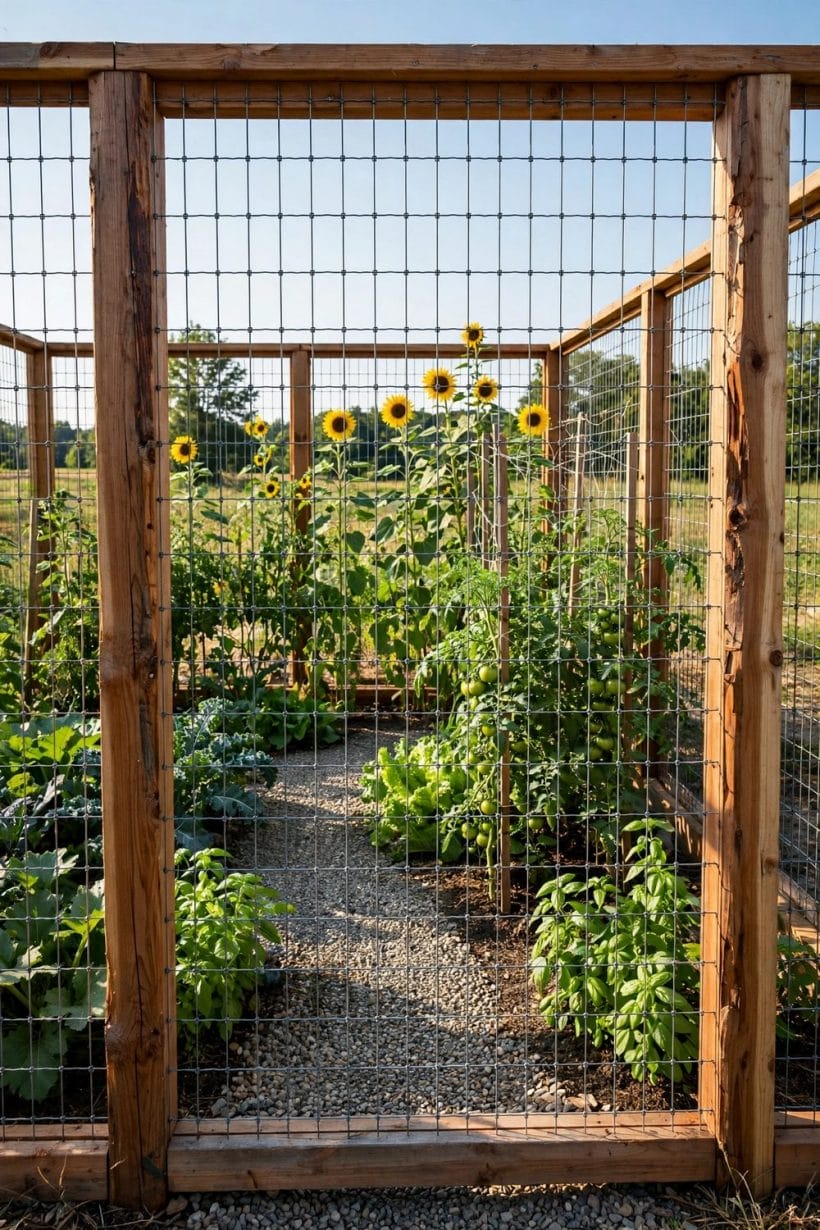
10. The classic square grid
The regular square mesh is the fence’s signature — regular, calm and equally happy in a cottage garden or a modern plot. Its even rhythm is what lets the eye travel through the fence to whatever grows beyond it.
11. A finer grid for small animals
Where the job is keeping rabbits out of the lettuce or small dogs in the garden, a tighter mesh at least along the lower part of the panel does the work. Match the grid to the smallest creature the fence is honestly meant to manage.
12. Galvanised wire for weather
The infographic’s advice is plain: a galvanised finish is the wire’s weather armour. In wet or coastal air it is the difference between a panel that silvers gently and one that freckles with rust at every weld within a few seasons.
13. Black-finished wire that disappears
A dark finish makes the grid nearly vanish against planting and shadow, so the garden reads as unfenced from a distance. It is the disappearing trick behind many of the prettiest photographs of this fence type.
14. Panels tensioned and framed on all four sides
A panel held only top and bottom will eventually bow and drum in the wind. Framing on all four sides — the infographic’s central tip — keeps the wire taut, the edges safe and the whole bay silent in a gale.
15. Cut edges folded and covered
Every cut wire end is a small barb. Folding, filing or covering cut edges inside the frame’s channel is the unglamorous detail that keeps hands, sleeves and dog noses safe along the whole run.
16. Stepped panels on a slope
On sloping ground, level panels stepped bay by bay keep the fence tidy and the gaps honest. The steps should follow the frame’s rhythm, with each bay’s bottom rail following its own stretch of ground.
17. One long panel look from joined bays
Aligning the grid pattern across bays makes a run of separate panels read as one continuous sheet of mesh — a quiet visual trick that costs nothing but care at the setting-out stage.
18. A solid kick board along the bottom
A timber board at ground level stops mulch washing through, keeps strimmer line off the wire, and gives digging animals a first honest obstacle. It also hides the one gap every fence on real ground honestly has.
4. Gardens, Vegetables and Livestock
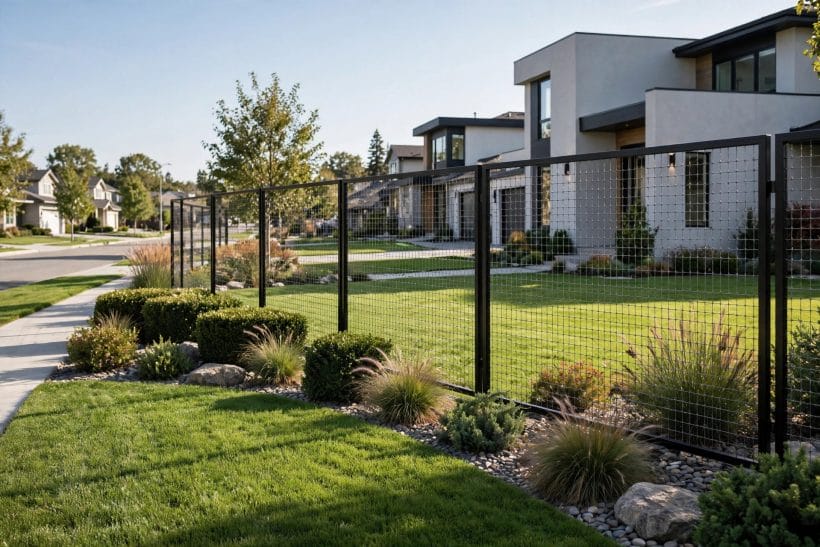
19. The vegetable-garden enclosure
The fence’s original home turf, updated: a framed wire enclosure keeps rabbits, dogs and chickens out of the beds while letting the gardener see, reach and admire everything inside. Add a gate wide enough for a wheelbarrow.
20. A fruit-cage frame with a garden face
Run the panels around a fruit patch and the fence becomes the cage — birds kept off the berries, the crop visible for picking, and none of the sagging netting that makes fruit corners look apologetic.
21. A chicken run with a view
Hens behind hog wire get light, air and a view of the garden, and the household gets a run that looks built rather than improvised. The finer lower mesh matters here; predators and chicks both test the bottom first.
22. A dog run that keeps the view open
A framed wire run gives dogs a real boundary without the kennel feeling of solid panels — they can see the household, the household can see them, and the garden keeps its sightlines. Height and latches should be chosen for the actual dog, honestly assessed.
23. A goat and small-livestock pen
For small livestock the fence returns to its first job. Stout posts, a braced frame and panels fixed to take rubbing and leaning are the whole recipe; goats in particular will test every fixing the builder was tempted to skimp.
24. A compost-corner screen that breathes
Wire panels around the compost corner contain the heap while letting air do its work, and a climbing plant over the frame turns the garden’s hardest-working corner into one of its prettiest.
25. A pool-surround fence, checked against local rules
Where local rules allow a climb-resistant open fence around water, framed wire keeps sightlines to the pool open — a genuine safety virtue, since children in water should always be visible. The rules where you live decide the height, the gate and the latch, and they are not optional reading.
26. Trellis duty: panels as plant support
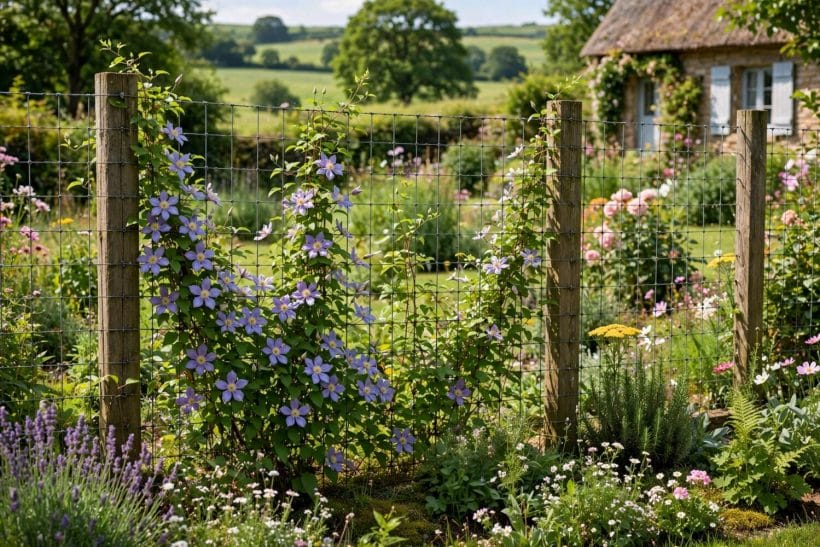
The grid is a ready-made trellis. Sweet peas, beans, clematis and light roses all climb it gladly, turning a boundary into a flowering wall by midsummer — the fence earns its keep twice, once as barrier and once as support.
27. A kitchen-garden room within the garden
Fence the productive patch as its own room, gate and all, and the whole garden gains structure: lawn and flowers outside, ordered beds inside, in the spirit of the planned layouts in tiny house garden ideas, scaled to any plot.
5. Deck, Porch and Railing Uses
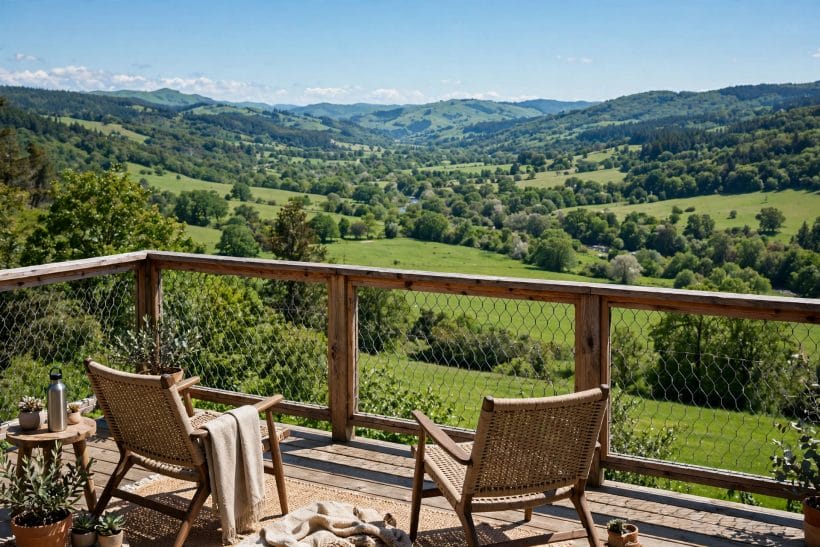
28. Deck railing infill that keeps the view
The infographic names deck railings as a headline use, and this is why: wire infill guards the edge while the view — the entire point of the deck — passes straight through. Timber posts and rails keep the railing in the house’s material family.
29. A porch railing in the same language
Carrying the panel-and-frame construction onto the porch unifies house and garden boundaries in one material sentence. It is also a kind guard for small children and dogs that still lets the porch feel open.
30. Stair-rail panels, angled with care
Short wire panels can infill a stair rail, but angled runs are the fence’s hardest detail: the grid must stay true and the gaps honest, and the local rules for rails guarding a drop decide what is allowed. Where meeting them gets complicated, a professional railing is the honest answer.
31. A balcony guard with a garden below
On a raised terrace or balcony, wire infill keeps pots, pets and people on the right side while planting below stays visible. The frame finish should match the house’s other metalwork or timber so the guard reads as architecture.
32. A ramp and steps enclosure for the garden
Where garden levels change, low framed panels along ramps and steps give hands something honest nearby and keep wheeled traffic — barrows, mowers, mobility aids — on the path and off the beds.
33. Railings around a raised vegetable deck
Decking given over to raised beds takes wire railings beautifully: the panels guard the edge, support the climbers at the deck’s sunny side, and keep the whole productive platform feeling like one designed room, as the projects around garden shed ideas so often show.
34. A hot-tub surround that stays airy
Framed wire contains a hot-tub terrace without the steamy box that solid screening makes of it. Air moves, views stay, and the boundary still tells visiting children exactly where their territory ends.
35. Matching the deck’s own timber
Build the railing frames from the deck’s board timber, or its close cousin, and the railing looks grown from the deck rather than added to it. One timber family, repeated, is the cheapest form of design coherence there is.
36. Panels as balustrade on a garden bridge
A small bridge over a pond or a dry stream takes wire-panel sides gracefully — the water and planting stay visible through the guard, and the bridge keeps its lightness instead of becoming a walled causeway.
6. Gates and Openings
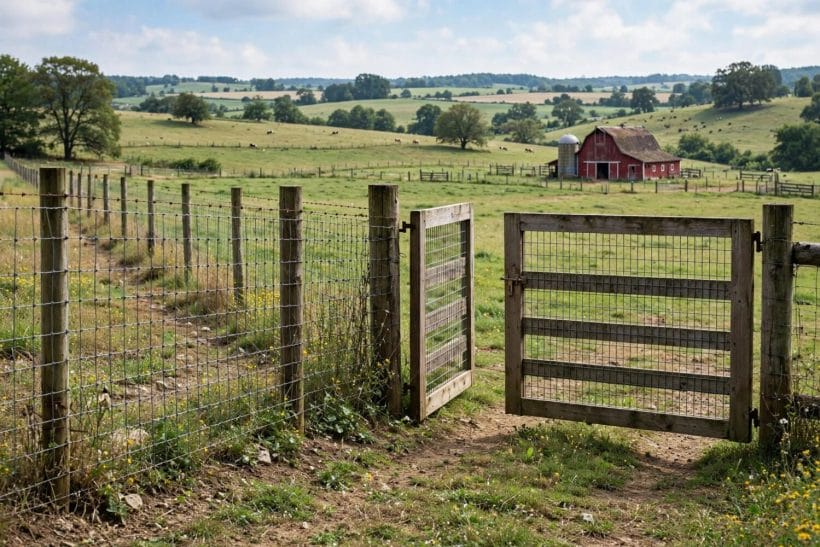
37. A single gate framed like a panel
The honest gate is simply a panel with hinges: same frame, same grid, hung on a post stout enough for the swinging weight. The infographic’s gate factor — a smooth, tight closure — is the standard to build to.
38. A wide double gate for mowers and barrows
Garden gates fail by being narrower than the machines that must pass them. A double gate in the run, braced and latched at the centre, serves the mower, the barrow and the occasional bulky delivery without a struggle.
39. An arched-top gate as the garden’s welcome
One shaped gate in a straight run gives the boundary its moment of ceremony. Keep the arch gentle and the frame honest, and let the planting either side do the rest of the welcoming.
40. A self-closing latch where children or stock are involved
Where the fence’s job is containment, the gate is its weakest hour. A self-closing hinge and a latch small hands and clever muzzles cannot work are general safety sense — fitted properly and checked as part of the fence’s regular care, alongside the wider gate survey in garden gates.
41. A field gate in the fence’s own language
At the garden’s working end, a broad timber-and-wire field gate keeps the style while serving trailers and livestock. Its posts want doubling and its hinges want sizing for the gate’s true, wet-timber weight.
42. A side-passage gate that keeps the style
The narrow passage between house and boundary deserves the fence’s own construction, not a leftover door. A tall framed wire gate there keeps bins and bikes contained while light still reaches the passage.
43. Diagonal bracing that actually braces
A gate stays square because its brace runs the right way — from the low hinge side toward the high latch side. It is the oldest carpentry rule on the farm, and every sagging gate in every garden is a small monument to ignoring it.
44. A gate in a contrasting finish
Paint or stain the gate alone — deep green, charcoal, oxblood — and the opening announces itself kindly to visitors and children alike. One coloured element in a natural run is emphasis; the whole fence coloured would be noise.
45. Hardware in one metal, repeated
Hinges, latch and handle in a single finish, sized generously, make the gate feel built rather than assembled. The traditional metalwork surveyed in wrought iron gates shows how much of a gate’s character is simply its ironmongery, honestly chosen.
7. Styles, Colours and Finishes
46. Natural cedar tones, left to silver
Untreated warm timber weathers to a soft silver that sits kindly with the galvanised grid. It is the lowest-effort finish of all, provided the household honestly likes silvered wood before committing the whole boundary to it.
47. A dark-stained frame for contrast
Deep-stained posts and rails sharpen the fence’s geometry against green planting and pale houses. The dark frame is also the most forgiving of mixed timber, since the stain unifies what nature varied.
48. An all-black modern fence
Black frame, black wire: the grid all but disappears and the fence becomes a shadow-line the garden shows through. It is the contemporary standard for view boundaries, and the hardest-working trick in this whole list.
49. A painted white frame for cottage gardens
White-painted frames against flowers give the fence a picket’s charm with none of a picket’s blocked view. The paint asks for renewal on a honest cycle, which the cottage gardener usually counts as part of the pleasure.
50. Rustic pole-and-panel construction
Round poles as posts, with framed panels between, take the fence back toward the ranch. The irregularity is the charm; the panels still want framing true, or rustic slides into merely rough.
51. A sleek metal frame in a paved courtyard
In a hard-landscaped courtyard, slim metal frames and a dark grid make a boundary that reads as architecture. Planters against it soften the geometry without hiding the fence’s clean intent.
52. Two-tone: natural posts, dark wire
Warm timber posts with black-finished wire split the difference between rustic and modern — the frame reads crafted, the grid reads invisible, and the combination flatters almost every house style between the two.
53. A fence stained to match the deck
Carrying the deck’s stain onto the boundary fence ties the garden’s two biggest timber structures into one scheme, in the same spirit as the matched railings among tiny house deck ideas. Buy the stain for both jobs in one decision.
54. The galvanised grid left honestly silver
Sometimes the right finish is none: bright galvanised wire in a pale timber frame has a Scandinavian clarity that suits simple houses and seaside gardens, and it asks for nothing but an occasional wash.
8. Slopes, Corners and Long Runs
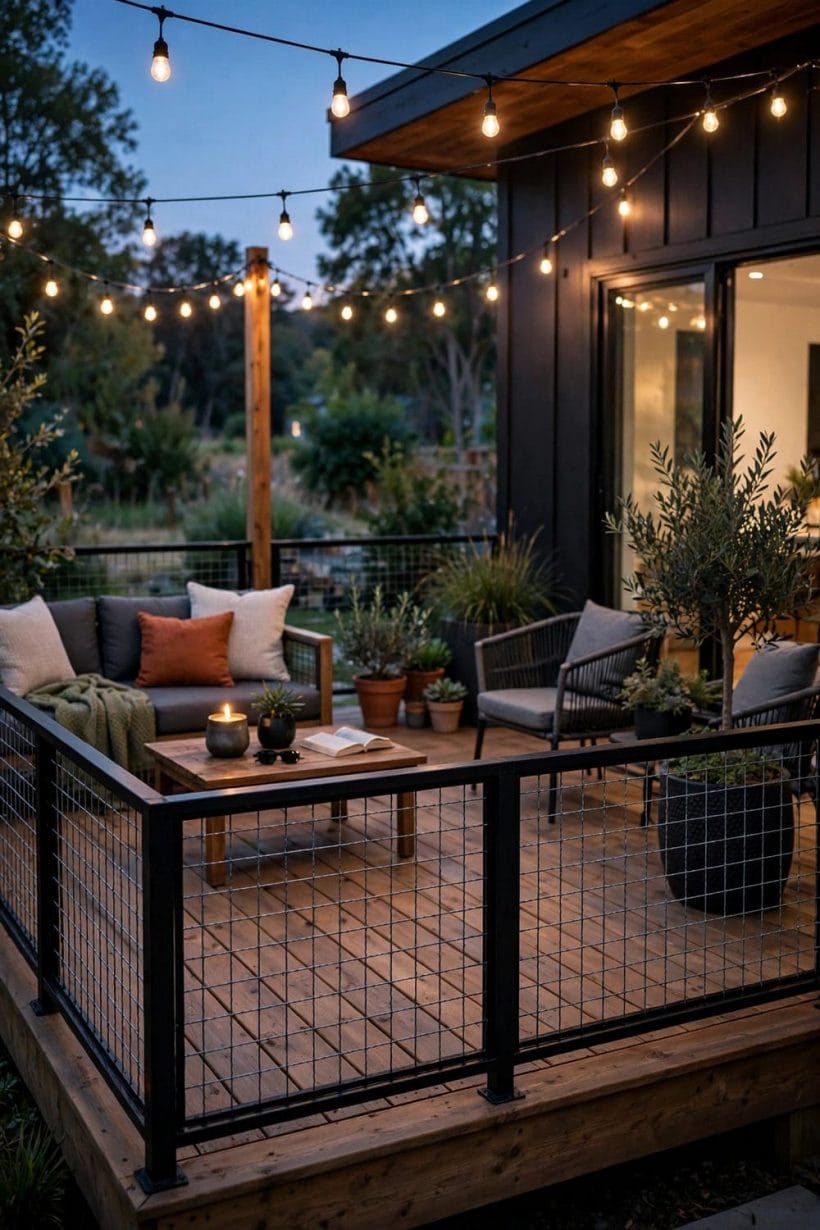
55. Stepped bays down a garden slope
Stepping keeps every panel level, every frame joint simple and every gap deliberate. The rhythm of the steps becomes part of the fence’s look, especially where planting is tucked into each step’s corner.
56. A raked panel where the ground is gentle
On a soft, even slope a raked panel — its frame cut to follow the ground — gives the smoother line. It asks for more careful carpentry per bay, so it earns its place on short, visible runs rather than long field boundaries.
57. Corners planted, not hidden
A shrub or a small tree at the corner post turns the fence’s necessary geometry into a garden feature. Planting a corner also protects it: traffic, hooves and mower wheels all give a planted corner a wider berth.
58. A curved impression from short bays
Short bays angled gently at each post can walk a fence around a soft curve — around a tree, a pond or a sweeping lawn edge — while every panel stays flat, framed and honest.
59. A long run broken by a tree or a bench
Boundaries longer than the eye enjoys should be given events: a tree kept inside the line, a bench bay, a gate, a change of planting. The fence stays one construction; the garden reads as a journey rather than a corridor.
60. A ha-ha effect at a view’s edge
Where a garden falls toward a view, a wire fence at the drop’s top contains stock and children while the eye travels on uninterrupted — the modern, honest cousin of the old sunken wall.
61. Meeting a hedge, a wall or an older fence
Real boundaries change material where they change history. A framed panel butted neatly to a hedge, a stone wall or an older fence — with the post shared and the junction planted — looks intentional where a forced match would look strained.
62. A return fence that closes a side garden
The short return between house and boundary is where escapes honestly happen. Build it in the fence’s own panels, gate it if the bins live there, and the side garden becomes a room instead of a gap.
63. Panels lifted clear of wet ground
Where ground stays wet, raising the panel’s bottom rail and letting the kick board take the damp keeps both wire and timber out of the rot zone. Air beneath a fence is as kind as air beneath a deck.
9. Planting and Softening the Boundary
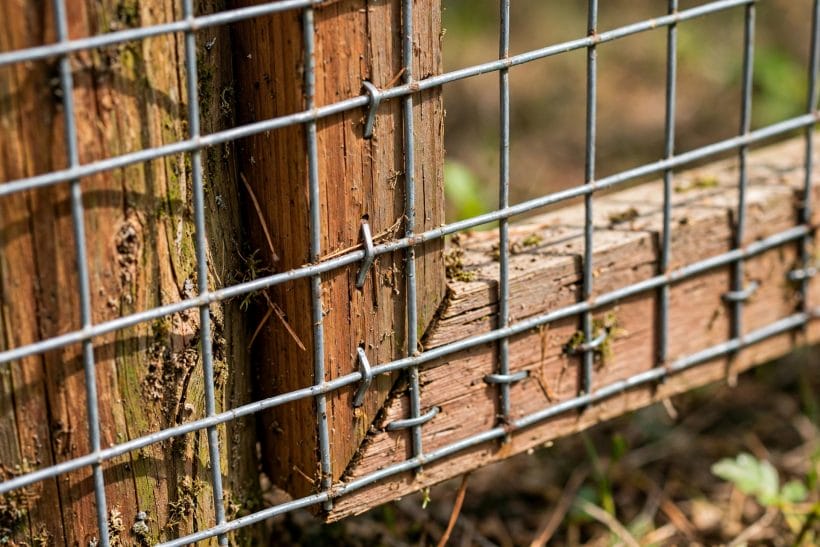
64. Climbers woven through the grid
Clematis, jasmine and light roses thread the grid without overwhelming it, giving flowers at eye level along the whole boundary. Choose climbers whose mature weight a framed panel can honestly carry.
65. A flower border against the fence
The feature photograph’s arrangement — a deep flower border inside a wire fence — works because the fence disappears behind the planting while still guarding it from the lawn’s traffic and the household’s dogs.
66. Espalier fruit against the panels
Trained fruit trees flat against wire panels borrow the grid as their support and turn a boundary into an orchard wall. The panels want stout framing for this duty; the harvest makes the case for it.
67. A herb hedge along the kitchen-garden fence
Rosemary, lavender and sage planted thick along the inside of a kitchen-garden fence give scent every time the gate opens, and a soft evergreen base that hides the fence’s working bottom rail kindly.
68. Grasses for a meadow edge
Ornamental grasses against a dark wire fence give movement and a late-season glow, and their airy habit is the perfect weight against an open grid — present everywhere, hiding nothing.
69. Privacy added by planting, not panels
Where a stretch of boundary wants screening, plant it: a loose shrub or a small tree inside the wire gives privacy that grows, shades kindly and never turns the fence into the wall it was chosen not to be.
70. A wildflower strip outside the fence
Sow the outside of a country boundary with wildflowers and the fence becomes the frame of a meadow picture for every passer-by — and a working corridor for the insects the garden depends on.
71. Seasonal bulbs at the posts
A drift of bulbs at each post base marks the fence’s rhythm in spring before the climbers wake. It is a small, cheap kindness that makes the whole run feel planted rather than installed.
10. Costs, Safety and Care
Costs for this fence are honestly discussed as drivers only — panel and timber choices, the length and difficulty of the run, gates and hardware, ground conditions and local labour move the total far more than any single figure could say, so check local suppliers and quotes for the real number where you live.
72. What drives the cost, stated plainly
The frame is the budget: timber species and section, post numbers, gates and their ironmongery, and the finishing of the wire. The mesh itself is the modest part. Sloping, rocky or overgrown boundaries add labour honestly, and removing an old fence is a real cost that early quotes sometimes forget.
73. Safety, stated generally
Cover or fold every cut wire end, keep panels taut so nothing flexes into a trap, and fit gates that close reliably where children or animals depend on them. Railings guarding a drop, and any fence around water, must meet the rules where you live — check them before building, not after. Boundaries near roads and shared paths deserve the same check, since fence heights there are commonly regulated.
74. Caring for timber, wire and fixings
An annual walk of the line finds most troubles young: a post beginning to rock, a fixing loosening, a panel’s first rust freckle at a damaged weld. Wash the grid when green film gathers, re-tension or re-fix a panel before it drums, and keep soil and mulch from burying the bottom rail, where damp does its quiet work.
75. The order to choose things in
First the rules and the boundary line, then the fence’s true job — containment, division or guarding — then the frame’s material and finish, then the grid’s gauge and colour, and only then gates and hardware. Chosen in that order, the fence arrives as one decision made well, and the ideas above become a matter of taste rather than rescue.
Final Considerations
A hog wire fence succeeds by being two things at once: a real barrier, honestly framed and safely finished, and a near-absence — a boundary the garden, the view and the light pass straight through.
Choose the frame as carefully as furniture, frame every panel on all four sides, let planting do the softening, and the result is the rare fence that neighbours admire from their side as much as its owners do from theirs.


0 Comments