

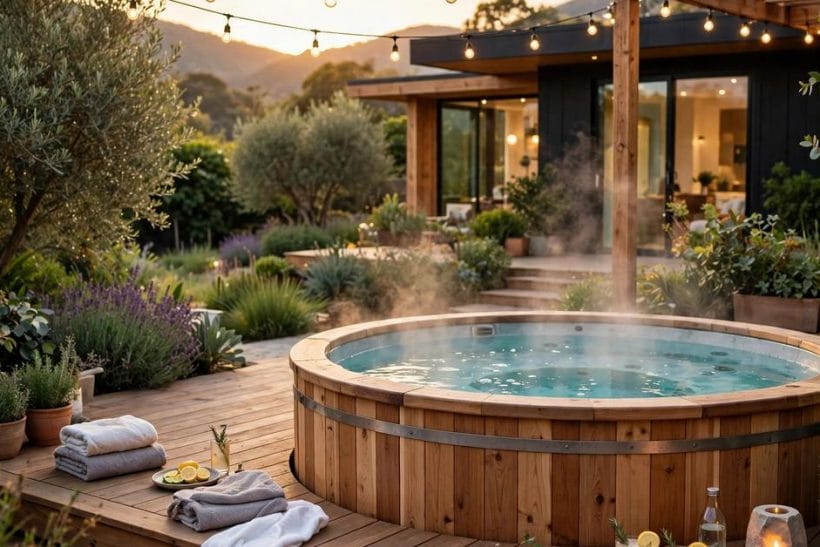
Steam rising into cold evening air, shoulders finally down, the garden gone quiet around you — a hot tub earns its place in a garden the way a fire earns its place in a room.
This survey collects the outdoor and spa lane whole: choosing the tub, placing it, screening it, lighting it and living with it — with the pool lanes linked as their own, never absorbed.
1. Hot Tub Ideas at a Glance
A hot tub is a self-contained body of heated, jetted water, plumbed and powered as one appliance, set into a garden, deck, patio or suitable indoor room. Its attributes are the shell and seating layout, the water care it demands, the filled weight it places on whatever carries it, the electrical supply it requires, and the setting — screening, shelter, planting and light — that turns an appliance into a place. Those engineering attributes are stated generally throughout this survey: filled weight, structure, drainage and electrical work belong to makers, qualified installers and local rules, and no figure here should be read as a specification. For the water’s bigger cousins, the pool ideas pillar owns swimming water whole; this post owns the soak.
| Question | Short answer |
|---|---|
| Where does a hot tub want to live? | Close to the house, on a firm and level base that a qualified installer approves for the filled weight, within honest reach of its services, and inside a setting — screen, shelter, planting — that gives the soak privacy and shelter from the prevailing wind. |
| Portable, in-ground or swim spa? | Portable tubs arrive as one appliance and can move with a household; in-ground and sunken tubs read as architecture and ask building work; swim spas stretch the idea toward exercise. Each is covered in its own section, and none is the universal answer. |
| What does ownership actually involve? | Water care on a regular rhythm, a cover kept in good order, energy for heating, and periodic servicing by the maker’s route. The tub that is easy to reach, easy to uncover and easy to test is the tub that gets used — placement is a maintenance decision. |
| Is a hot tub a small pool? | No — different water, different rules, different lane. Pools, plunge pools and their modern styling live in the pool cluster linked through this survey; the hot tub’s lane is heated soaking, in a vessel sized for sitting, talking and unwinding. |
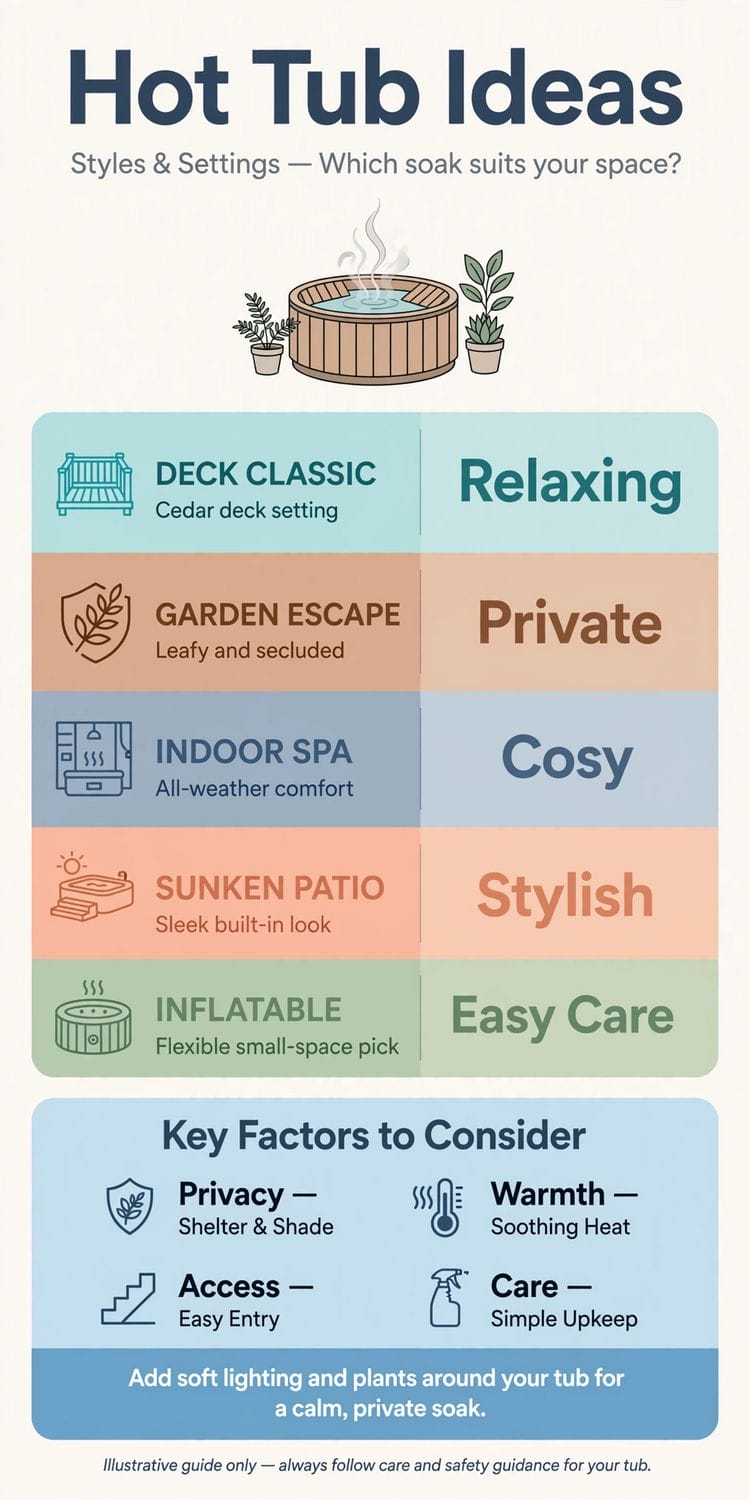
2. Choosing the Tub: Shells, Seats and the Soak Itself
Begin with the vessel, not the garden: the shell’s shape, the seating’s honesty and the jets’ purpose decide every soak for years. The wider water survey in the backyard pool ideas post shows how a garden holds water at swimming scale; this section stays at sitting scale.
1. The classic round tub
Round wooden or moulded tubs give the soak its oldest form: everyone facing everyone, conversation the main event. Round shells suit sociable households and simple settings, and their symmetry makes decking and screening around them an easy drawing.
2. Square shells with corner seats
Square and rectangular tubs use a garden corner efficiently and seat bathers along their sides with proper back support. Their straight edges meet decks, steps and covers cleanly, which is why they dominate the modern garden — order suits small plots.
3. The lounger question
One seat in many tubs reclines its bather nearly flat. Loungers are glorious for one and divisive for households: they take two seats’ room and suit soakers, not chatters. Decide by how the household actually bathes, not by the showroom’s first impression.
4. Deep soaking tubs
Japanese-inspired deep tubs trade sprawl for depth: a compact footprint, water to the shoulders, and a small garden’s worth of presence.
5. Portable plug-and-settle tubs
The portable route arrives as one finished appliance, set on its prepared base and connected by qualified hands where its supply requires it.
6. In-ground and sunken settings
Sinking a tub into deck or terrace makes it architecture: step in rather than climb in, and the garden keeps its sightlines.
7. Swim spas at the lane’s edge
A swim spa stretches the vessel until a bather can swim against a current, then soak at the far end.
8. Inflatable honesty
Inflatable tubs are the honest first step: modest, movable and forgiving, they teach a household whether the soaking habit is real before the garden is rebuilt around it. Many grand tubs in this survey began life as exactly this experiment.
9. Jets with a purpose
Judge jets by placement, not count: a jet behind the shoulders and one at the lower back outrank a constellation of sparkle. Adjustable, sensibly grouped jets serve real muscles; the rest is theatre, and theatre is fine only once comfort is secured.
10. Covers are part of the tub
The insulated cover decides heat loss, safety discipline and the tub’s whole look when closed — which is most of its life.
11. Second-hand sense
A used tub can be a bargain or a plumbing mystery; have it inspected and run before money moves, and expect seals, covers and controls to need attention.
3. Placement: Decks, Patios and the Ground It Stands On
A filled tub is heavy, warm and used in bare feet in the dark — its placement is a structural, practical and humane drawing at once. Loads, bases and drainage are stated generally here and belong to qualified installers and local rules; the designer’s work is choosing the spot those professionals will approve.
12. On the deck, honestly supported
A deck tub looks effortless and must never be assumed: the filled weight belongs over support designed for it, verified by a qualified builder or engineer before the tub arrives.
13. The patio slab setting
A ground-level patio gives the tub its simplest home: a firm, level, properly prepared base, a short barefoot route from the door, and drainage that takes splashes away from the house.
14. Sunken into the terrace
Dropping the tub until its rim meets the terrace turns entry into a step across and gives the garden a calm, built-in water plane. Access panels for servicing must survive the design — an installer’s non-negotiable, designed in from the first sketch.
15. Half-sunk compromise
Half-sinking splits the difference: a seat-height rim to sit on while entering, less excavation, and a perch edge the garden can use. It suits sloped plots and older knees alike, and reads as furniture rather than machinery from the house.
16. Steps and entry grace
However the tub sits, entry is designed, not improvised: a broad, stable step at the right height, a handhold where a wet hand needs one, and a non-slip route underfoot. Graceful entry is safety wearing its good clothes, throughout this survey.
17. Near the house, by design
The most-used tubs live a few steps from a door — close for winter dashes, towels and drinks, far enough for the garden to feel like a destination.
18. The view from the water
Sit where the tub will sit, at soaking height, before anything is built: the view from inside — sky, planting, a lit tree — is the experience being bought.
19. Wind and weather reading
A tub in the wind’s corridor steams its heat away and chills wet shoulders; a sheltered corner keeps both. Read the garden’s prevailing weather like a sailor, place the tub in the lee, and let shelter planting confirm what the corner began.
20. Sun for day, shade for noon
Morning sun warms a breakfast soak and afternoon shade saves a summer one; a tub placed at a garden’s east or west edge can have both across a day. Pergolas and sails, covered later in this survey, fine-tune what placement starts.
21. Away from the bedroom windows
Pumps hum and happy bathers talk: give sleeping rooms, your own and the neighbours’, an honest distance and a screen’s muffling. Courtesy is a placement attribute, and the quietest tub in this survey is the one nobody had to complain about.
22. Servicing access kept sacred
Whatever the setting, the tub’s equipment side must stay reachable for the technician’s whole visit, not a contortion. Panels, pumps and controls all fail eventually; the design that admits it, gracefully and in advance, is the design that ages well.
4. Garden Settings: Planting the Soak Into the Landscape
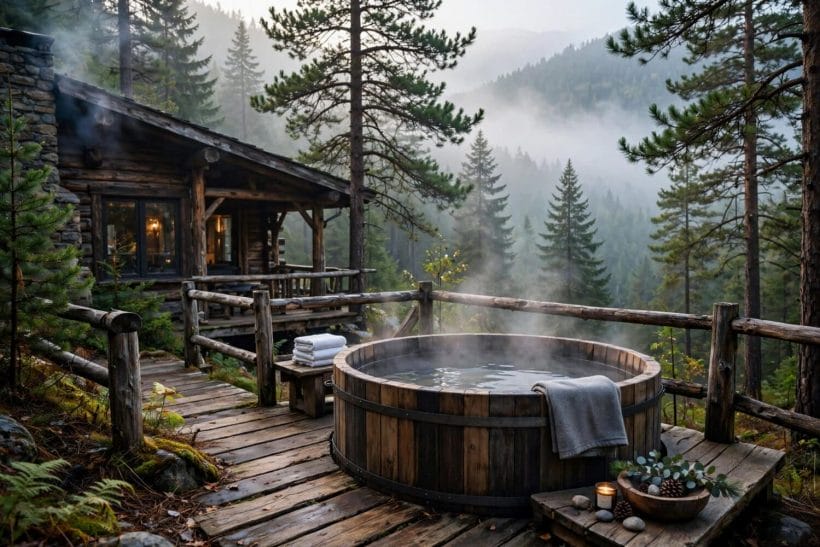
A tub placed is not yet a tub settled: planting, paths and materials marry the appliance to the garden it joined. This section borrows the landscape sense of the modern landscaping survey and applies it at steaming-water scale.
23. Evergreen bones around the tub
A frame of evergreen planting keeps the tub’s setting composed in winter, when it is used most and gardens show least. Choose plants that tolerate warmth and splashes near the shell, and give roots their respectful distance from bases and services.
24. Grasses for steam and movement
Ornamental grasses around a tub move in the breeze, soften hard edges and look wonderful backlit through rising steam.
25. The Japanese corner
Stone, gravel, a maple, bamboo screening and a deep soaking tub compose the garden’s most complete spa sentence. Keep the palette disciplined and the materials honest, and a small corner can hold more calm than the rest of the garden combined.
26. Coastal and deck gardens
Where the garden is mostly deck — a rooftop, a courtyard, a seaside plot — the tub becomes its hearth: plant in big containers, screen with slats, and let weatherproof everything be the rule.
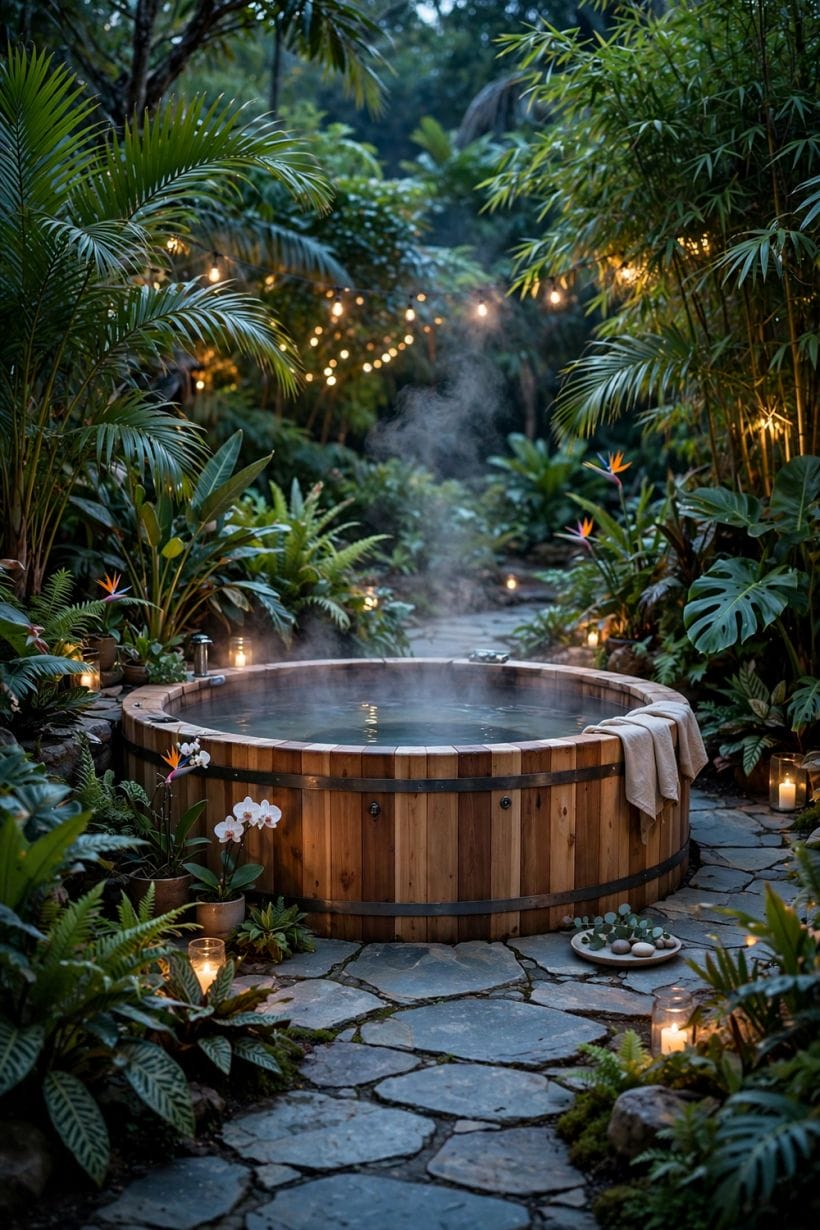
27. Tropical planting, temperate tub
Big leaves and bold planting around a tub fake the resort in a temperate garden for the soaking season.
28. A lawn’s edge setting
Set at a lawn’s edge on its own paved apron, a tub overlooks the garden’s green room like a box at the theatre.
29. Stone and boulder settings
Natural stone around a sunken tub — boulder edging, stone steps, a gravel margin — makes the water feel found rather than installed. Stone stays honest in wet service, ages without complaint, and gives wet feet the grip that polished surfaces deny.
30. The woodland soak
Under trees, a tub gains shade, leaf-dapple and birdsong — and a cover discipline against falling debris. A simple pergola or sail above keeps the water cleaner and the soakers happier, and the forest spa feeling needs nothing else at all.
31. Herb and scent planting
Plant the tub’s margin for the nose: lavender, rosemary and scented geraniums at hand height release their perfume to a passing wet hand.
32. Lighting the planted setting
Low, warm light in the planting — never in the eyes — turns the evening soak into the garden’s best hour.
33. Wildlife manners
Warm water and shelter attract garden life; keep covers disciplined, chemicals stored securely away from curious anything, and planting choices kind to the pollinators that share the garden. The spa that sits gently in its ecology is the one that stays lovely.
5. Screening, Shelter and Privacy: The Room Without Walls
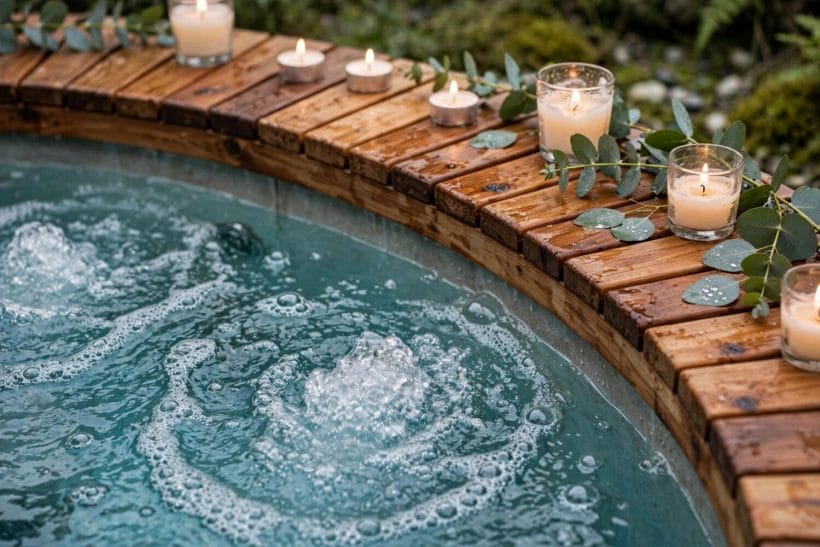
Soaking asks a feeling of enclosure that gardens rarely provide by accident. Screens, planting and overhead shelter build the tub its outdoor room — the territory this section shares politely with the pool house ideas lane, where a building can do the same work solidly.
34. Slatted timber screens
Horizontal slats screen a tub with modern manners: privacy held, breeze admitted, light striped decoratively across the steam. Set the slats’ height by sitting in the tub’s position and checking sightlines honestly — privacy is measured from soaking height, not standing.
35. Living screens of bamboo and hedge
Clumping bamboo, pleached trees or a clipped hedge grow the screen rather than build it, softening the tub’s presence for the whole garden.
36. The pergola roof
A pergola over the tub frames the sky, carries shade cloth or planting, and gives rain a partial answer.
37. Sails and retractable shade
A shade sail angles the summer sun off the midday soak and lifts away for winter’s weak light.
38. Gazebo and pavilion settings
A tub under a small gazebo gains a roof, a destination and a garden folly in one move. Ventilation for steam, honest structure and the building’s own permissions are professionals’ and local rules’ territory — the romance, though, is entirely the owner’s.
39. Frosted and fluted glass
Where a boundary is tight, frosted or fluted glass panels screen without stealing light — the courtyard tub’s best friend.
40. The sunken screen trick
Sinking the tub itself is screening: bathers sit below the garden’s sightlines while planting at the rim finishes the job. It is the elegant answer for overlooked plots, bought with the excavation and drainage care the placement section already described.
41. Curtain and fabric softness
Outdoor curtains on a pergola’s sides give the soak theatre and adjust privacy by the handful — drawn for bathing, open for the garden party.
42. Neighbour-first screening
Screen for the neighbours’ comfort as much as your own: their upstairs windows, their quiet evenings, their view of your steam. A setting that gives generously in both directions prevents the only conversations a hot tub should never start.
43. Sound as privacy
A small water feature, rustling grasses or the tub’s own gentle jets mask voices and are masked by nothing — sound screening works where sightlines cannot be closed. It is the overlooked layer of spa privacy, and the cheapest to add late.
44. The changing perch
Every screened setting needs its dry corner: a bench or perch for robes, towels and the phone that must stay dry. Build it into the screen’s design, roofed if the pergola allows, and the outdoor room gains its dressing room in miniature.
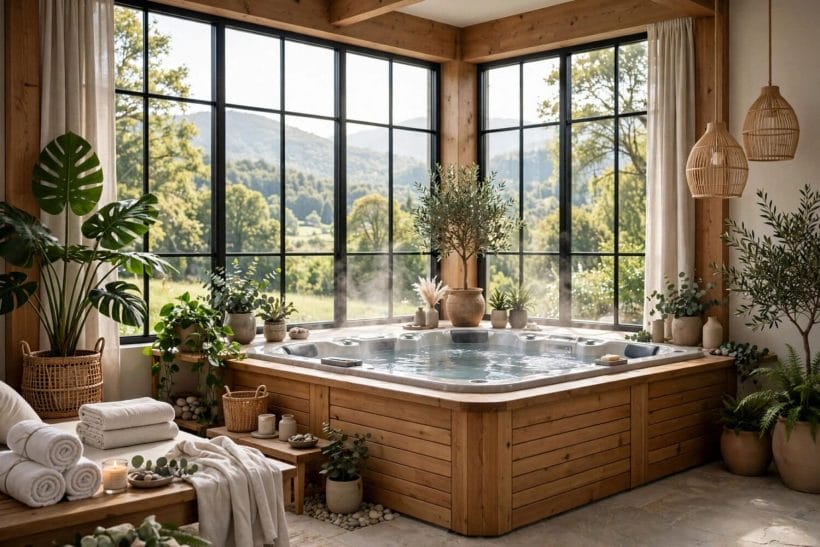
6. Indoor and Under-Cover Soaks: Sunrooms, Studios and Bathhouses
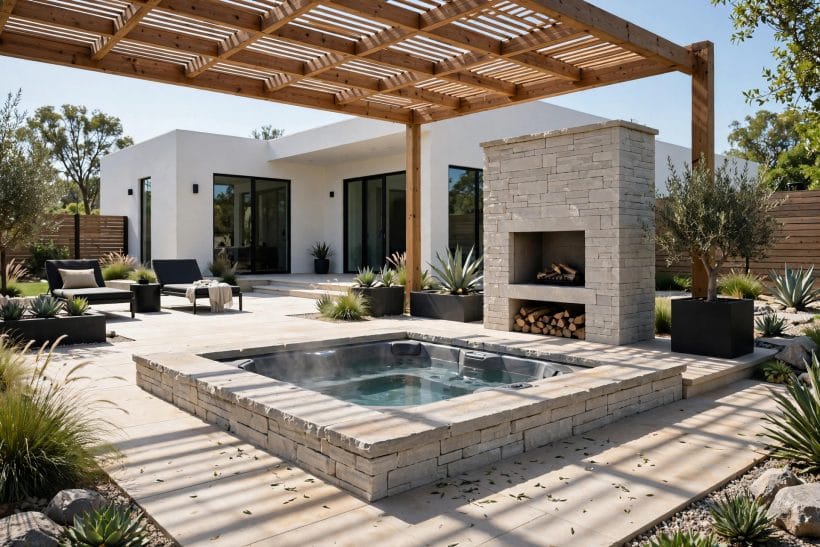
Indoor soaking trades the sky for certainty: a tub under cover works in any weather and asks its room for moisture discipline in return. Ventilation, structure and electrical work indoors are qualified trades’ territory under local rules, stated generally throughout this section.
45. The sunroom soak
A glazed sunroom holds a tub in garden light with indoor manners — the favourite compromise in this survey.
46. Garage and studio conversions
A sound outbuilding converts into a private bathhouse with the tub as its hearth.
47. The bathhouse shed
Build the tub its own small pavilion — part shed, part spa — with a changing bench, hooks, and a window framing one good view.
48. Basement cautions
Basements tempt with warmth and privacy and answer with the survey’s sternest cautions: filled weight on the structure, water’s escape routes, steam against the house’s fabric, and carrying the vessel in at all. Many are unsuitable; a professional’s survey decides, never optimism.
49. Indoor planting and calm
Indoor tubs earn spa manners from their planting: moisture-loving greens in generous pots, natural materials, and clutter banished to a cupboard.
50. Windows that steam kindly
Glazing near an indoor tub will mist; plan the view for the clear hours and the ventilation for the steamy ones. A high window band keeps privacy while flooding the room with sky, and its opening sections do the steam-clearing work gracefully.
51. The hotel-bathroom lesson
Generous primary bathrooms sometimes hold a jetted soaking tub as their centrepiece — the indoor idea at its most domestic. That lane belongs to bathroom design proper; this survey notes it only to return outdoors, where its own eleven sections live.
52. Sauna pairings
Cold-climate gardens pair the tub with a small sauna, heat beside heat, the plunge of cold air between.
53. Lighting indoors
Dim, warm and layered light makes an indoor soak; a single ceiling glare destroys it.
54. Floor finishes that forgive
Around any indoor tub the floor will be walked on wet: choose finishes made for it, detailed by their fitters, with drainage thought through before the first splash. Forgiveness underfoot is the indoor setting’s whole foundation, literally.
55. The all-weather verdict
Indoor and covered tubs win on certainty and lose a little sky.
7. Evenings, Light and Atmosphere: The Soak After Dark
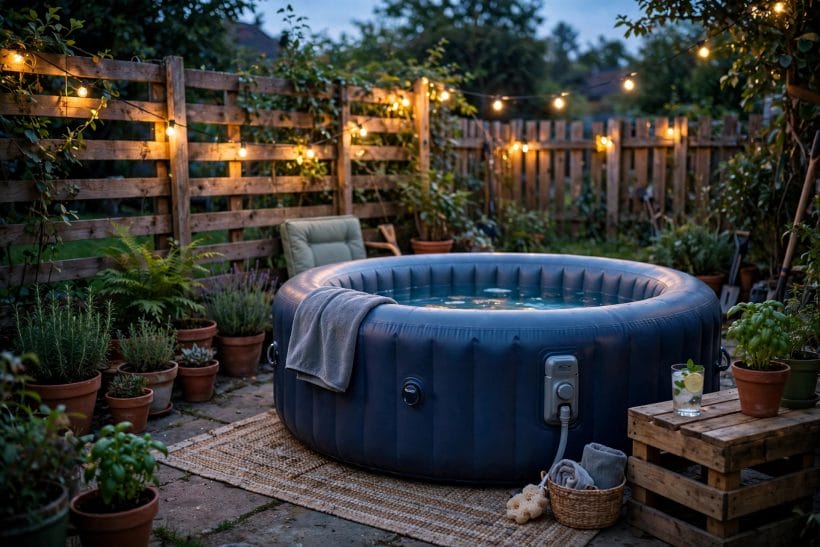
Most hot tub hours are evening hours. This section collects the atmosphere that turns warm water into a ritual — light, warmth around the water, and the small comforts staged within arm’s reach of the rim.
56. Underwater light, gently
The tub’s own underwater light, set low and warm or colour-changing for the playful, is the evening soak’s hearth glow. Keep it flattering rather than theatrical for nightly use; the party settings will still be there when the party is.
57. Lanterns and candlelight
Real or battery lanterns around the setting give the flicker no fitting imitates. Keep flame honest and attended, set where towels and hair cannot reach, and let the old technology do what it has done beside bathing water for centuries.
58. The fire nearby
A fire bowl or small outdoor fireplace near — never over — the tub doubles the garden’s winter heart.
59. Robes, towels and warmth staging
Hang the robes where the exit dash is shortest, warm the towels if the house allows, and stage slippers on a dry board. These thirty-second kindnesses decide whether winter soaking is a ritual or an ordeal, and they cost almost nothing to arrange.
60. Drinks at the rim
A stable shelf or side table at rim height — for water, tea or something celebratory — keeps glasses out of the water and hands out of the cold air.
61. Music at garden volume
Sound for soaking stays low, warm and slower than the day was. A small weatherproof speaker at the setting’s edge serves better than the house system blasted across the garden — the neighbours’ evening is an atmosphere this section also protects.
62. Star-gazing settings
Where skies are dark, arrange the whole setting for looking up: reclined seating in the tub, screens low enough to keep the sky, lights dim enough to keep the stars. Some gardens in this survey are observatories that happen to hold warm water.
63. Winter rituals
Snow on the cover, breath and steam mingling, the dash across a frosted path made safe and lit — winter is the hot tub’s high season in cold countries.
64. Summer cool-downs
In heat, the tub turns down its temperature and becomes the evening’s cool plunge — a different pleasure from the same vessel. Shade from this survey’s shelter section earns its keep twice over, and the soak becomes siesta rather than sauna.
65. The quiet hour rule
End the evening setting with its manners: voices lower as the garden darkens, pumps and people both respecting the street’s sleep. Atmosphere includes the atmosphere you give away — the mark of every well-kept setting in this survey.
8. Small Plots, Care and Living With the Water
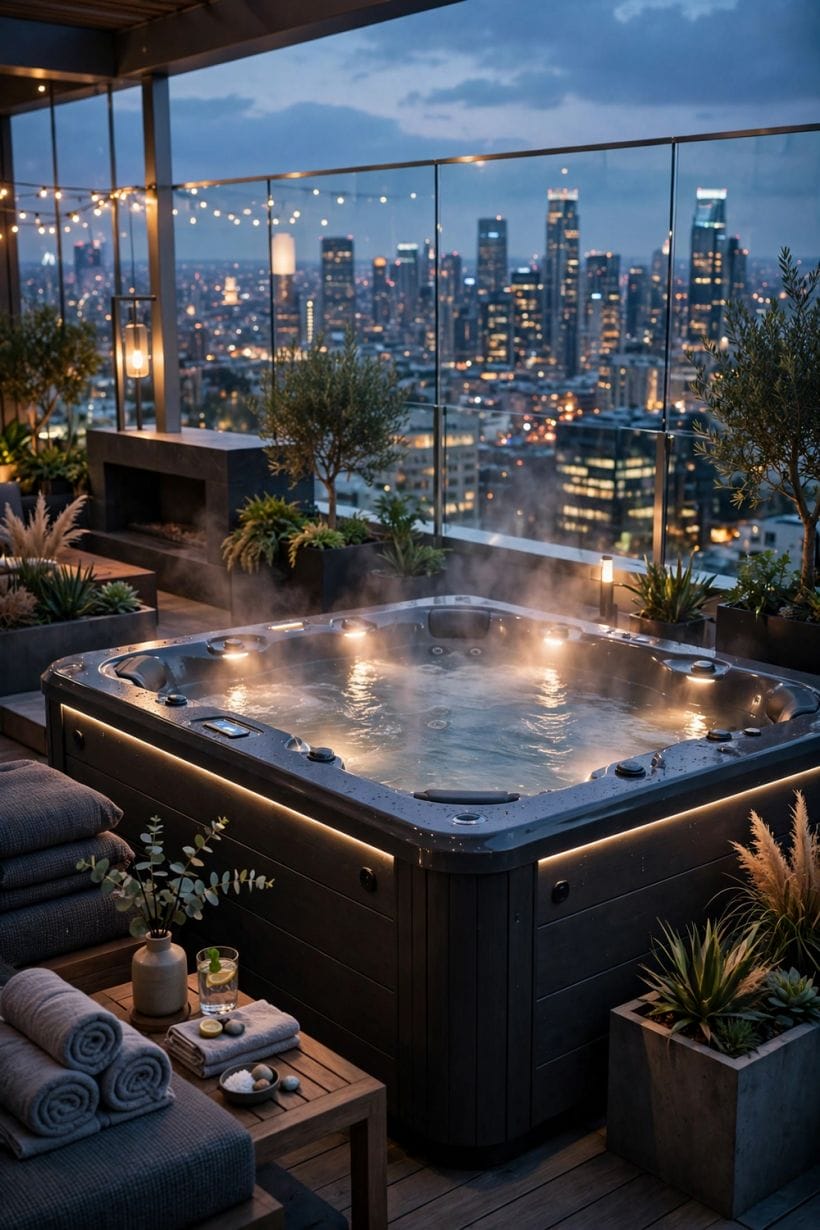
The survey closes at small scale and long term: tubs for tight plots and tiny houses, and the care rhythm that keeps any tub loved rather than resented. Water care is described in general terms only — products, doses and schedules belong to makers’ instructions and suppliers’ advice.
66. Courtyard tubs
A paved courtyard takes a compact tub beautifully: walls give the screening, the house gives the shelter, and a single tree in a pot gives the green.
67. Tiny-house soaking
For a tiny house, a deep soaking tub on its small deck can serve as bath, spa and evening room in one compact vessel — the tiny house landscaping ideas survey shows the plots such tubs grace. Weight, services and access are professionals’ checks, as everywhere in this post.
68. The test-before-you-soak habit
Water care begins with testing: a simple, regular check of the water’s condition, following the tub maker’s guidance, decides what the water needs.
69. Covers, cleaned and kept
The cover works daily — insulating, guarding, shedding leaves — and asks a regular clean and an honest retirement when its insulation tires. A cared cover halves the tub’s running mood; a neglected one taxes every soak before it starts.
70. Filters and the rinse rhythm
Filters are the water’s lungs: rinsed on the maker’s rhythm, cleaned properly in turn, and replaced when their service is done.
71. Draining days planned kindly
Periodic draining and refilling refresh the water wholly: plan the day, the water’s destination under local rules, and the clean the empty shell deserves. It is the tub’s spring clean, and a household that diarises it never dreads it.
72. Energy sense without figures
Heat kept is money kept: a sound cover, a sheltered setting, and a thermostat treated with respect all serve the bill without a single number needing print. Makers and energy suppliers own the specifics; this survey owns only the household habits.
73. Guest manners and house rules
Showering before a soak, keeping glass away from the water, and respecting the household’s bathing rules keep water cleaner and friendships warmer. A tub shared under kind, clear rules stays a pleasure; the rules are the host’s gift, not their apology.
74. Children and the firmest rules
Where children are anywhere near a hot tub, supervision is constant, covers and access are secured, and the household’s rules are absolute and known.
75. The used-weekly test
Judge every idea in this survey by one question: does it make a Tuesday-evening soak easier, warmer or more likely?
9. Checks and Mistakes: Before the First Purchase or the First Stone
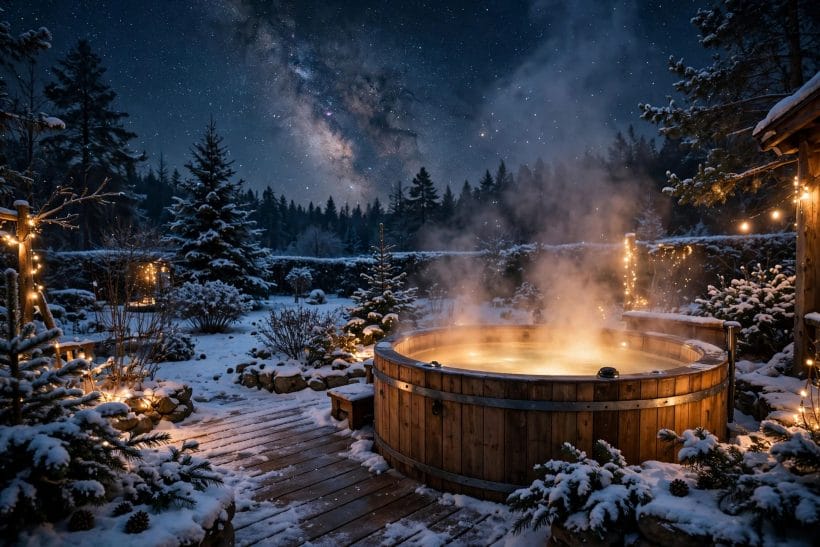
Check the ground before the tub: the base, the filled weight it must carry, and the drainage that will serve the setting are a qualified installer’s assessment, stated generally in this survey because they must be specific in life. A tub set on optimism settles, cracks and disappoints; a tub set on a verified base disappears into the garden’s pleasures.
Check the supply with equal honesty: electrical work for a hot tub belongs to qualified electricians under local rules, full stop, and water care follows the maker’s instructions and a supplier’s advice rather than any webpage’s figures. This survey has deliberately printed no loads, doses or temperatures — those numbers live with the professionals who carry responsibility for them.
Mistakes repeat in a familiar order: the tub placed for the photograph instead of the February dash; servicing access designed away; screens measured from standing height; a lounger bought for a household of chatters; and water care treated as an afterthought until the water argues back. Every section above exists to retire one of those mistakes in advance.
Keep the cluster’s lanes clean: swimming water belongs to the pool pillar and its backyard and modern lanes, buildings to the pool-house lane, and this post to the heated soak. A garden may hold several of them, as many in this survey do — each designed on its own terms, each better for not impersonating the others.
10. Costs and Pulling It Together
Costs stay qualitative throughout this survey: a hot tub’s price is its vessel, its base and installation, its electrical and any building work, its cover and steps, and then its running — energy, water care and servicing across the years. Those figures belong to makers, installers and suppliers quoting a real garden, and any total printed here would be a rumour by the time it was read.
Pull the purchase together in the survey’s own order: choose the vessel for the household’s real soaking, place it where professionals approve and February approves, plant and screen it into a room, light it for the evening, and keep its care rhythm kindly. Do those five things and the tub stops being an appliance in the garden and becomes the garden’s warm heart.
Final Considerations
A hot tub is a small body of water with an outsized gift: it gives a garden a warm destination in every season and a household a daily excuse to go outside, sit down and talk. The ideas in this survey are all, in the end, ways of protecting that gift.
Choose honestly, place carefully, and keep the water kind — then the steam rising over the screen on a cold evening will do the rest of the persuading, for years. The wider home design ideas collection holds the rest of the garden such evenings deserve.

0 Comments