
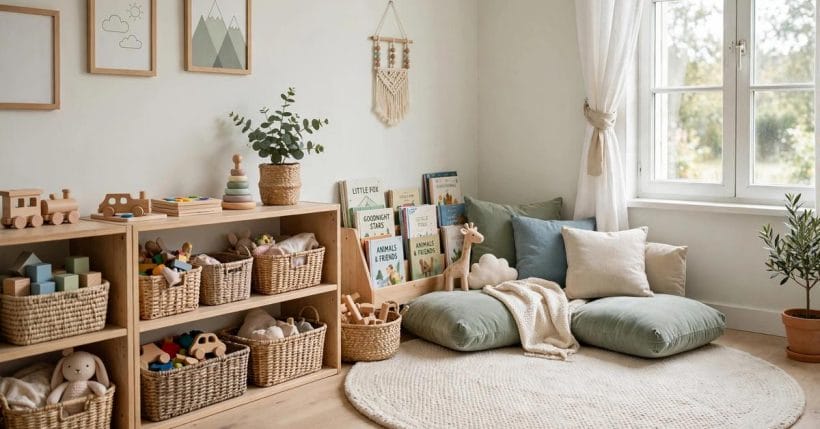
A playroom earns its keep when children can find what they want, use it without asking for help at every step, and put it away again without a long negotiation. The best rooms are rarely the grandest: a low shelf at the right height, a rug that marks the building zone, a table that can take paint and glue, and a quiet corner for reading often matter more than a room full of new toys. These playroom ideas gather seventy-five ways to shape such a room, from layouts and colour to storage, small rooms, themed corners and the practical details that keep the room working week after week.
Before moving furniture, it helps to watch how the room is actually used. One child may build for an hour in the same spot, while another flits between drawing, dressing up and reading in quick succession. Notice where toys pile up, where reading happens naturally, and which corners sit empty, because those patterns point to what the room needs: more floor space here, a defined table zone there, or a calmer corner away from the busiest route through the house. The notes on costs below stay general, because the main drivers are the size of the room, the amount of storage and furniture, the finishes chosen, and whether any joinery, flooring or electrical work is needed, with local quotes the sensible next step before committing to a larger change.
1. Layouts That Grow With Children
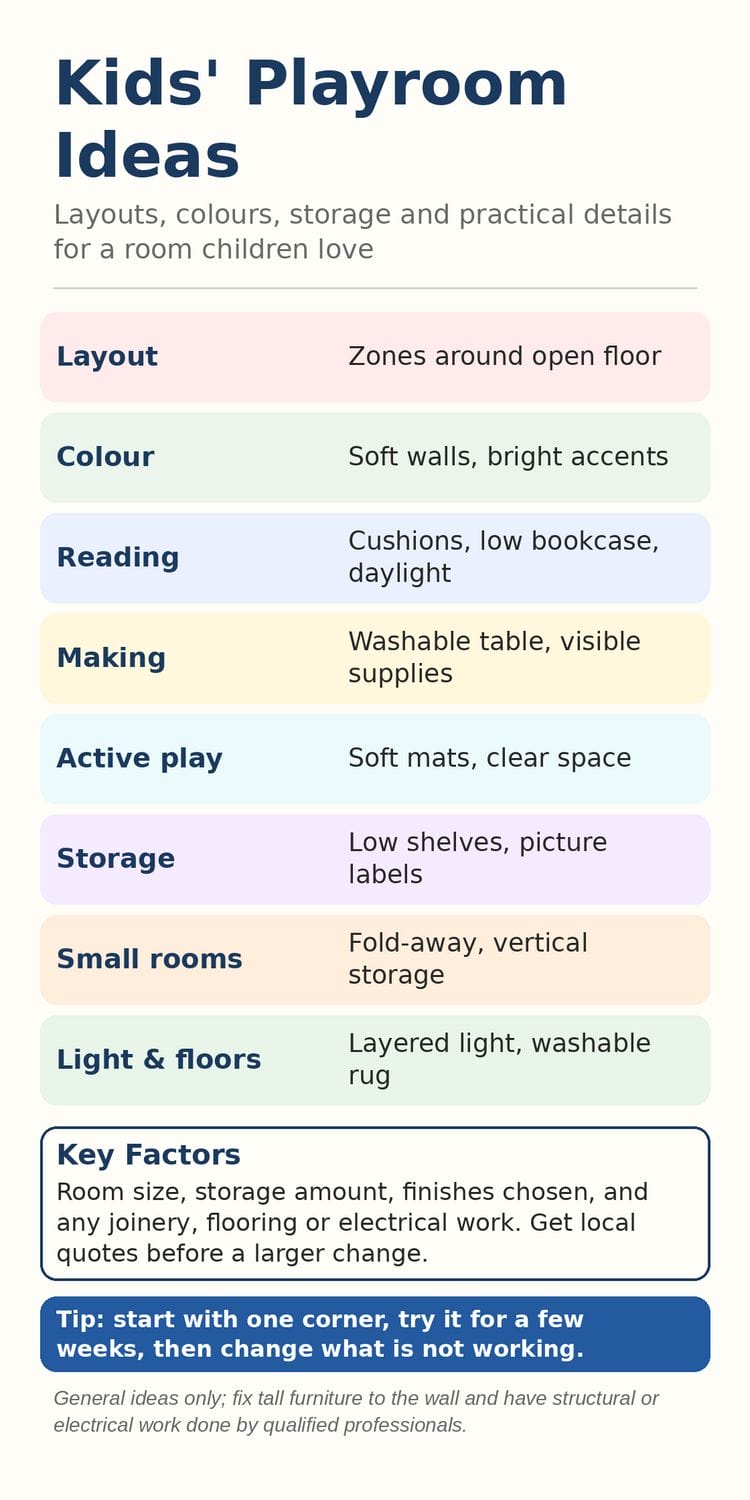
A layout works when each kind of play has a home, yet nothing is fixed so firmly that the room cannot change as children grow. The layouts below all leave open floor in the middle, keep the busiest zones away from the door, and let furniture move as interests shift from blocks to board games to homework.
| Item | What it is |
|---|---|
| Open Floor in the Middle | Keeping the centre of the room clear gives building, dancing and floor games somewhere to happen without furniture getting in the way. |
| Zones Around the Walls | Arranging zones around the edges leaves the middle free while giving each activity a recognisable place. |
| A Low Room Divider | A low shelf or a short bookcase can divide a larger room into two calmer areas without blocking light or sightlines. |
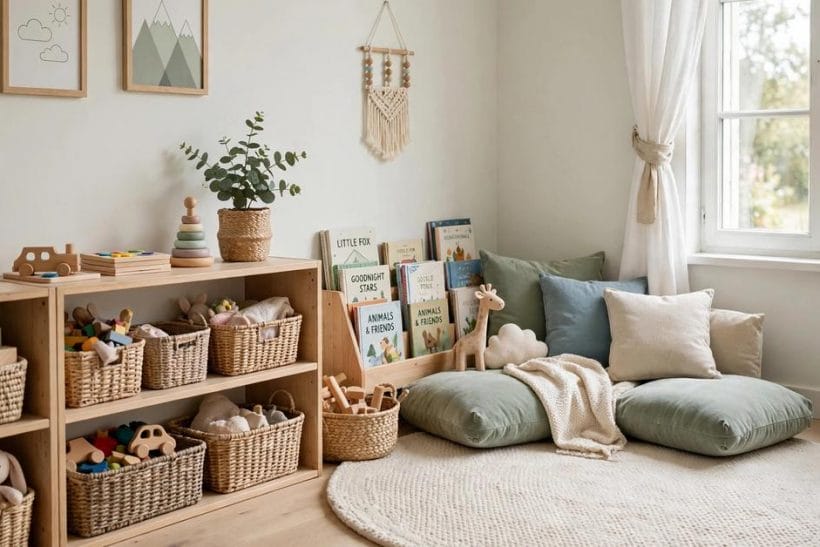
| Reading Corner by the Window | Natural light makes a reading corner inviting, and a window seat or a pair of floor cushions can turn an overlooked corner into the most popular seat in the room. |
| Building Zone on a Rug | A sturdy, flat rug gives building play a defined patch that is kinder to knees and quieter underfoot than bare floor. |
| Table Zone Near the Door | Placing the art and puzzle table near the door keeps messier play close to where cleaning supplies live and away from soft furnishings. |
| Dressing-Up Corner With a Mirror | A dressing-up corner needs little more than a low rail, a basket of costumes and a mirror fixed safely to the wall. |
| Flexible Furniture on Castors | Light furniture that can be moved lets the room change shape for different play, from a wide-open dance floor to a snug den. |
| Soft White Walls, Colourful Accents | Soft white or pale warm walls keep a small playroom bright and let toys, books and pictures supply the colour. |
| One Bold Accent Wall | A single accent wall in a deeper shade can anchor a room and give a reading or building zone a clear identity. |
| Pastel Palette for Calm Play | Pastel shades of blue, green, pink and yellow can make a playroom feel gentle and restful, especially in a room used before bedtime. |
| Warm Neutrals With Wood Tones | Warm neutrals with wood tones suit a playroom that shares space with the rest of the house, since the room still feels like part of the home. |
| Chalkboard Wall for Drawing | A chalkboard wall gives children a large, ever-changing canvas and saves paper for smaller drawings. |
| Picture Ledge Gallery | Picture ledges let children's artwork and favourite prints be swapped often without new holes in the wall. |
| Removable Wall Stickers | Removable wall stickers add trees, stars, animals or letters without paint or commitment, which suits rented homes and rooms that change often. |
| Colour-Coded Zones | Using a different soft colour for each zone helps children find their way around the room and remember where things belong. |
| Floor Cushion Reading Nest | A nest of large floor cushions invites children to settle with a book without needing a chair that fits them exactly. |
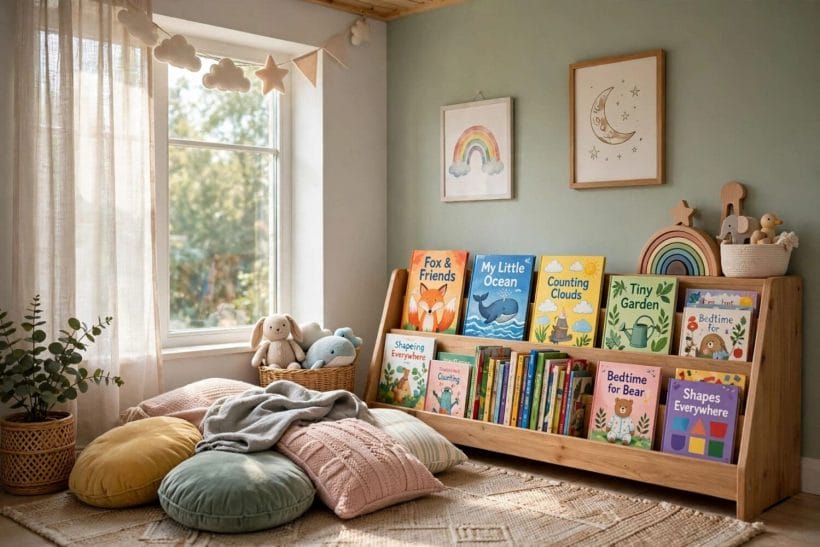
| Low Bookcase With Forward-Facing Books | Forward-facing book displays let younger children choose by cover picture rather than by spine, which encourages independent reading. |
| Window Seat With Book Storage | A window seat combines seating and storage, with books tucked into cubbies beneath the cushion. |
| Canopy Corner for Calm Time | A fabric canopy hung from the ceiling creates a small, sheltered corner that feels separate without closing a child off. |
| Puzzle Table by Good Light | Puzzles deserve a table that can be left undisturbed, so a half-finished puzzle is not cleared away at tidying time. |
| Listening Corner With Audio Stories | A listening corner gives children a screen-free way to enjoy stories, with a small player and a basket of audio books or story cards. |
| Writing Nook for Older Children | Older children benefit from a small writing nook with a desk, a chair at the right height, and space for notebooks and pens. |
| Quiet Tent for Rest Breaks | A small indoor tent offers a retreat when play gets overexciting or a child simply needs a break. |
| Low Craft Table With Washable Top | A low craft table with a washable top takes paint, glue and marker without worry, which frees children to experiment. |
| Art Supply Caddy on the Table | A portable caddy keeps pens, crayons, scissors and glue together and moves from table to floor as needed. |
| Building Block Table | A dedicated block table with a raised edge stops pieces rolling onto the floor and gives large constructions a stable base. |
| Train Track Corner | A train track corner works best on a low table or a flat rug where the layout can stay out for days. |
| Dollhouse and Small-World Shelf | Small-world play needs a shelf at child height where a dollhouse or a set of figures can live permanently. |
| Construction Corner With Large Blocks | Large foam or wooden blocks suit a floor corner where children can build towers, walls and dens big enough to climb inside. |
| Science and Discovery Table | A discovery table with magnifiers, natural objects, shells and simple measuring tools invites curiosity without needing a formal lesson. |
| Drying Line for Artwork | A simple drying line strung across a corner lets wet paintings dry without covering the craft table. |
| Soft Play Mats for Tumbling | Interlocking soft mats create a tumbling area that cushions falls and defines where active play happens. |
| Indoor Climbing Arch | A small climbing arch gives children a safe way to climb, balance and hang indoors, and it folds flat for storage in many designs. |
| Balance Beam at Floor Level | A balance beam set flat on the floor lets children practise balance without height or risk. |
| Ball Pit in a Corner | A small ball pit in a corner gives younger children a contained place for energetic play. |
| Dance Space With a Mirror | A clear stretch of floor with a safely fixed mirror invites dancing, dressing up and movement games. |
| Mini Sports Corner | A mini sports corner with soft balls, a small hoop or a target game channels throwing and aiming indoors. |
| Obstacle Course Path | An obstacle course path made from cushions, mats, tunnels and low hurdles turns the whole room into a game. |
| Swing or Hammock Chair | A hanging swing or hammock chair fixed securely to a suitable ceiling joist gives gentle movement that many children find calming. |
| Low Open Shelving | Low open shelves put toys where children can see and choose them, which reduces the habit of emptying every box to find one thing. |
| Baskets for Toy Groups | Baskets sorted by toy group, such as animals, vehicles or building sets, make tidying a simple sorting game. |
| Picture Labels on Boxes | Picture labels showing what belongs in each box help children who cannot yet read to tidy independently. |
| Rolling Storage Under a Bench | Rolling boxes that slide under a bench or a window seat hide bulky toys while keeping them easy to pull out. |
| Wall Pockets for Small Toys | Hanging wall pockets with clear or fabric pouches give small toys, figures and craft supplies a home that takes no floor space. |
| Book Bin for Picture Books | A book bin lets picture books stand upright with covers visible, which encourages browsing in a way a tall shelf does not. |
| Dress-Up Rail at Child Height | A low rail for dressing-up clothes keeps costumes visible and reachable, so children can choose and put away their own outfits. |
| Tidy-Up Basket by the Door | A single basket by the door catches stray toys at the end of play, so tidying starts with one easy step. |
| Play Corner in a Bedroom | A bedroom play corner works when play storage doubles as bedroom furniture, such as a toy chest at the foot of the bed or shelves above a desk, an approach that sits well alongside these tiny bedroom ideas . |
| Shared Sibling Playroom | A shared playroom needs a zone for each child as well as space for playing together, so neither child feels crowded out. |
| Fold-Away Table for Small Rooms | A fold-away table gives a small room a craft and puzzle surface that disappears when floor play takes over. |
| Vertical Storage to Free the Floor | Using wall height for storage frees precious floor in a small room. |
| Playroom in a Living Room Corner | A living-room play corner succeeds when it looks intentional rather than improvised, with matching baskets, a rug and a low shelf that suit the room's style. |
| Under-Stairs Play Nook | The space under a staircase can become a snug play nook with cushions, a low shelf and a small light. |
| Loft Bed With Play Space Below | A loft bed frees the floor beneath for a desk, a reading corner or a small play zone, which suits shared bedrooms, and the sleeping level itself can borrow from these tiny house loft ideas . |
| Room Divider Curtain for Shared Rooms | A curtain on a ceiling track can divide a shared room into a play side and a sleep side without building work. |
| Space Corner With Star Stickers | Star stickers, a dark blue rug and a cardboard rocket can make a space corner from pieces that cost little and change easily. |
| Woodland Den Corner | A woodland den corner uses greens and browns, a fabric canopy, and soft toy animals to suggest a forest without painting a mural. |
| Seaside Corner With Blue Accents | Blue cushions, a striped rug and a basket of shells can suggest the seaside in a corner that otherwise stays neutral. |
| Castle Corner With a Play Tent | A play tent with castle-style flags turns a corner into a fortress, a palace or a hideout depending on the day's game. |
| Shop and Kitchen Corner | A small play kitchen or a shop counter with baskets of play food invites role play that builds language and counting. |
| Art Gallery Wall Theme | Turning one wall into a gallery, with frames at child height and a rotating display, makes children's own work the theme of the room. |
| Dinosaur Corner With a Rug Landscape | A green rug with a simple road or river pattern becomes a landscape for dinosaur figures and small-world play. |
| Layered Lighting for Day and Evening | Layered lighting combines daylight, a main ceiling light and a softer lamp for reading corners, so the room suits both lively play and quiet evenings. |
| Washable Rug Over Hard Floor | A washable rug over a hard floor gives the best of both worlds: a soft surface for play and a floor that can be mopped after paint or snack accidents. |
| Soft Flooring for Active Zones | Soft flooring, such as foam mats or a thick rug, belongs under climbing and tumbling zones where falls are likely. |
| Furniture Fixed to the Wall | Tall shelves, bookcases and chests of drawers should be fixed to the wall so they cannot tip if a child climbs them. |
| Cordless Window Coverings | Cordless blinds or shutters remove the strangulation risk that looped cords can pose, and they are simpler for children to use. |
| Rounded Corners and Soft Edges | Rounded table corners, soft edge guards and furniture without sharp points reduce bumps in a room where children run and tumble. |
| Weekly Toy Rotation | Rotating toys weekly keeps play fresh without buying anything new, since a toy put away for a while feels new on its return. |
| End-of-Day Tidy Routine | A short tidy routine at the end of the day, with music or a simple game, makes clearing up part of play rather than a punishment. |
| Seasonal Clear-Out Together | A seasonal clear-out, done together, teaches children to let go of broken or outgrown toys and to value what remains. |
| Repair Basket for Broken Toys | A repair basket collects toys that need a battery, a glued joint or a sewn seam, so broken items do not drift back onto shelves. |
| Display That Changes With Interests | A display that changes with interests, from artwork to collections to school projects, keeps the room feeling current. |
| Room That Grows Up Gracefully | The most successful playrooms are planned to grow up, with neutral walls, good storage and furniture that can move into a study or a teenage room. |
1. Open Floor in the Middle
Keeping the centre of the room clear gives building, dancing and floor games somewhere to happen without furniture getting in the way. Push larger pieces to the walls, choose a rug that marks the open zone without fencing it in, and resist filling every gap. A clear middle also makes tidying faster, because there is somewhere to gather toys before they go back to their shelves.
2. Zones Around the Walls
Arranging zones around the edges leaves the middle free while giving each activity a recognisable place. Reading can sit in one corner, building along a wall, and art near a table that is easy to wipe. Children learn where things belong more quickly when each zone looks different, whether through a rug, a shelf or a change in colour.
3. A Low Room Divider
A low shelf or a short bookcase can divide a larger room into two calmer areas without blocking light or sightlines. One side might hold quiet play while the other takes livelier games, and an adult can still see across the whole room. Keep the divider low and stable, with heavier items at the bottom so it cannot tip easily.
4. Reading Corner by the Window
Natural light makes a reading corner inviting, and a window seat or a pair of floor cushions can turn an overlooked corner into the most popular seat in the room. Add a small bookcase or a forward-facing book shelf nearby so covers, rather than spines, catch the eye. A soft throw and a cushion or two complete a corner children return to on their own.
5. Building Zone on a Rug
A sturdy, flat rug gives building play a defined patch that is kinder to knees and quieter underfoot than bare floor. Blocks stay visible on a plain rug, and a low tray at the edge can hold small pieces that would otherwise scatter. Choose a rug that can be shaken out or washed, since building zones collect dust and stray pieces.
6. Table Zone Near the Door
Placing the art and puzzle table near the door keeps messier play close to where cleaning supplies live and away from soft furnishings. A washable tabletop, a wipeable floor mat underneath, and a nearby shelf for paper and pens make the zone self-contained. Children can settle straight to work when they come in, and the rest of the room stays calmer.
7. Dressing-Up Corner With a Mirror
A dressing-up corner needs little more than a low rail, a basket of costumes and a mirror fixed safely to the wall. Hanging costumes where children can reach them encourages independent play, while a small rug marks the stage area. Keep the rail sturdy and the costumes washable, and the corner will see daily use without much upkeep.
8. Flexible Furniture on Castors
Light furniture that can be moved lets the room change shape for different play, from a wide-open dance floor to a snug den. Small tables, stools and storage boxes that slide easily give children a say in how the room is arranged. Check that anything on wheels can be locked or steadied, so it stays put during lively play.
2. Colour Palettes and Wall Ideas
Colour sets the mood of a playroom before a single toy comes out. Soft, calm walls let colourful toys and artwork shine, while one stronger accent wall can give the room character without overwhelming it. The palettes below favour finishes that can be wiped clean and colours that still feel right as children grow.
9. Soft White Walls, Colourful Accents
Soft white or pale warm walls keep a small playroom bright and let toys, books and pictures supply the colour. Accents can come from cushions, a rug, storage baskets and framed pictures, all of which can change without repainting. This approach suits rooms that double as guest rooms or homework spaces, since the base stays calm.
10. One Bold Accent Wall
A single accent wall in a deeper shade can anchor a room and give a reading or building zone a clear identity. Keep the other walls pale so the room does not feel closed in, and repeat the accent colour in small touches elsewhere, such as a cushion or a storage box. The effect is strongest when the accent wall is the one seen first on entering.
11. Pastel Palette for Calm Play
Pastel shades of blue, green, pink and yellow can make a playroom feel gentle and restful, especially in a room used before bedtime. Pair pastels with natural wood and cream rather than with more bright colour, so the room stays soft. A pastel palette also photographs well and ages gracefully as a child grows older.
12. Warm Neutrals With Wood Tones
Warm neutrals with wood tones suit a playroom that shares space with the rest of the house, since the room still feels like part of the home. Timber shelves, a wooden table and a woven rug bring warmth without strong colour, while toys provide the brighter notes. This palette is forgiving about marks and easy to refresh with new accessories.
13. Chalkboard Wall for Drawing
A chalkboard wall gives children a large, ever-changing canvas and saves paper for smaller drawings. Fix the board securely, keep chalks and an eraser in a nearby pot, and choose a wall away from beds and soft furnishings to limit dust. The wall can also carry the day’s plan, a shopping list for craft supplies, or a welcome message for visitors.
14. Picture Ledge Gallery
Picture ledges let children’s artwork and favourite prints be swapped often without new holes in the wall. A row of narrow ledges at child height turns display into part of play, since children can choose what goes up. Rotate the pictures with the seasons or with school projects, and keep frames light and secure.
15. Removable Wall Stickers
Removable wall stickers add trees, stars, animals or letters without paint or commitment, which suits rented homes and rooms that change often. Apply them to a clean, smooth wall and smooth out air bubbles as you go. When interests change, the stickers can come down and the wall is ready for the next theme.
16. Colour-Coded Zones
Using a different soft colour for each zone helps children find their way around the room and remember where things belong. A reading corner might carry a calm blue, while the art zone takes a warm yellow, with the colours repeated in matching baskets or cushions. Keep the colours muted and related, so the room feels planned rather than patched together.
3. Reading Corners and Quiet Play
Every lively playroom benefits from a quiet corner where a child can read, puzzle or simply rest. These corners work best away from the main traffic route, with soft seating, good light and everything needed within arm’s reach, so quiet play becomes a choice rather than a chore.
17. Floor Cushion Reading Nest
A nest of large floor cushions invites children to settle with a book without needing a chair that fits them exactly. Layer two or three cushions in washable covers, add a small basket of books beside them, and keep the nest near a shelf so books can be swapped easily. The cushions can be stacked against a wall when the floor is needed for other play.
18. Low Bookcase With Forward-Facing Books
Forward-facing book displays let younger children choose by cover picture rather than by spine, which encourages independent reading. A low bookcase with a few sloped shelves holds a rotating selection, while the rest of the collection stays on a taller shelf nearby. Change the displayed books regularly to keep the choice feeling fresh.
19. Window Seat With Book Storage
A window seat combines seating and storage, with books tucked into cubbies beneath the cushion. Daylight makes the seat appealing, and a view outside gives daydreaming somewhere to go between pages. Keep the cushion firm and the seat depth comfortable, so the spot suits reading rather than just perching.
20. Canopy Corner for Calm Time
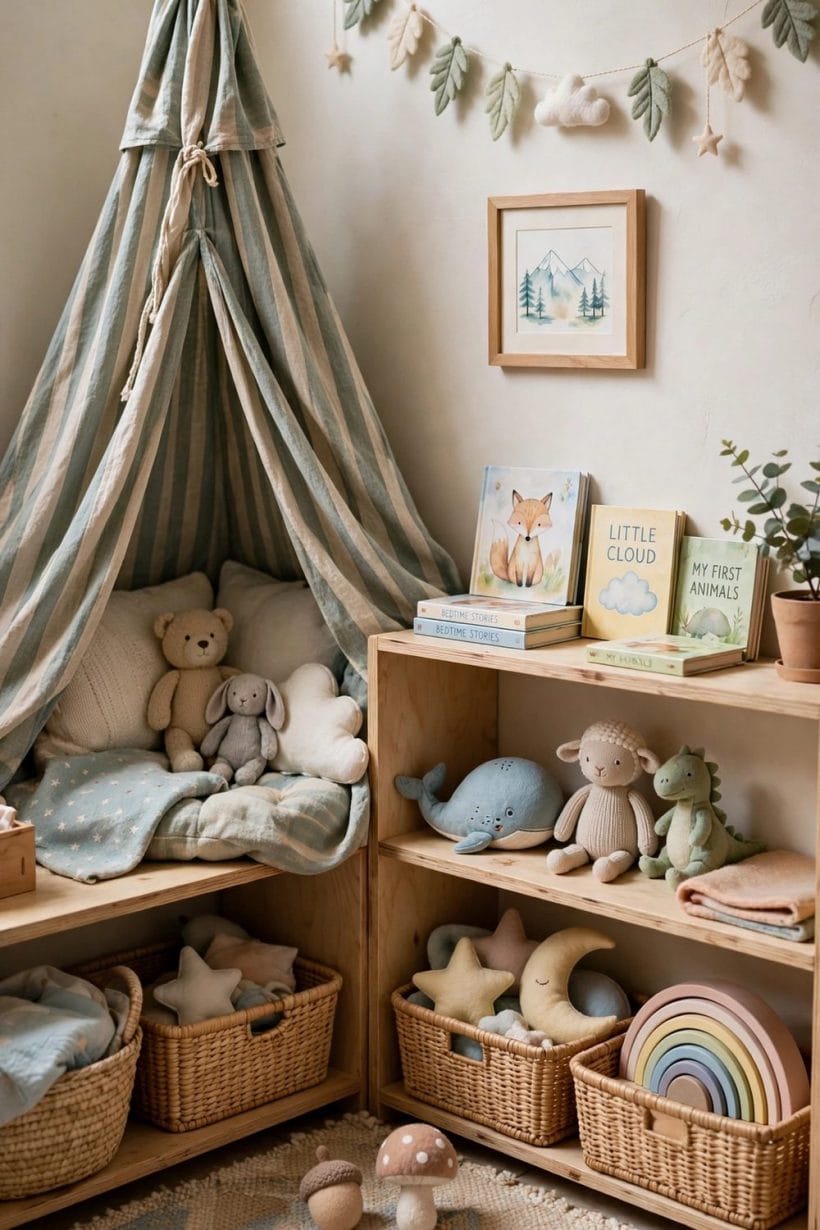
A fabric canopy hung from the ceiling creates a small, sheltered corner that feels separate without closing a child off. Inside, a cushion, a blanket and a basket of quiet toys make a retreat for reading or resting. Hang the canopy securely and keep it away from heaters and lamps, so the corner stays safe as well as cosy.
21. Puzzle Table by Good Light
Puzzles deserve a table that can be left undisturbed, so a half-finished puzzle is not cleared away at tidying time. Place the table near a window or under a good lamp, with puzzle boxes stored on a nearby shelf. A tray underneath can hold pieces in progress, and a felt mat keeps pieces from sliding.
22. Listening Corner With Audio Stories
A listening corner gives children a screen-free way to enjoy stories, with a small player and a basket of audio books or story cards. A comfortable chair or beanbag, a pair of headphones for shared rooms, and a shelf for the collection keep the corner self-contained. Listening also suits winding-down time before bed or after active play.
23. Writing Nook for Older Children
Older children benefit from a small writing nook with a desk, a chair at the right height, and space for notebooks and pens. Keep the nook away from the noisiest play zones and give it its own lamp, so homework and writing feel distinct from play. A pinboard above the desk can hold timetables, drawings and reminders.
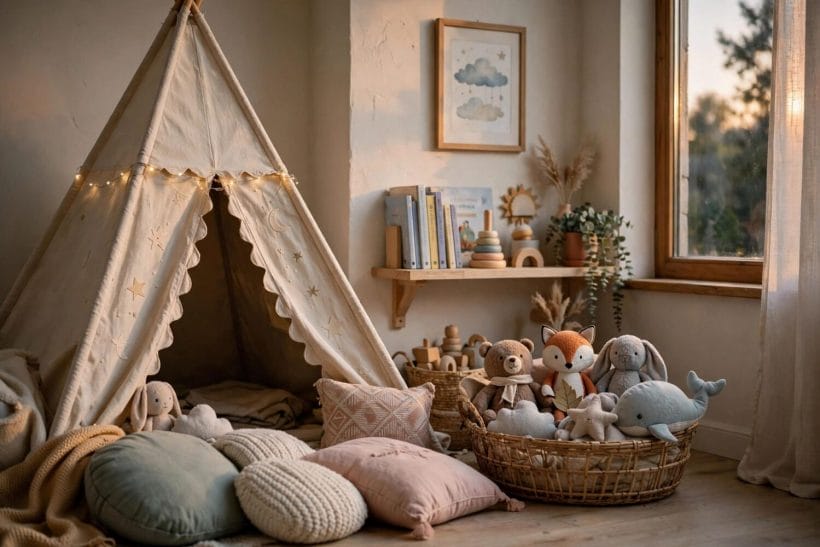
24. Quiet Tent for Rest Breaks
A small indoor tent offers a retreat when play gets overexciting or a child simply needs a break. Furnish it lightly with a cushion and a blanket, and keep the entrance open so air flows freely and adults can see inside. A tent that folds flat can be stored when the room is needed for larger games.
4. Building, Making and Craft Zones
Making zones thrive on surfaces that can be wiped, supplies that are visible, and storage that children can manage themselves. The zones below keep creative play contained without making it feel restricted, so children can start a project and return to it later.
25. Low Craft Table With Washable Top
A low craft table with a washable top takes paint, glue and marker without worry, which frees children to experiment. Pair it with chairs at a matching height and a wipeable mat underneath, and keep a cloth nearby so spills are dealt with straight away. A table that is easy to clean gets used far more than a precious one.
26. Art Supply Caddy on the Table
A portable caddy keeps pens, crayons, scissors and glue together and moves from table to floor as needed. Sorting supplies into separate pots inside the caddy helps children find what they want and put it back. Restock the caddy at the end of the day, so the next project starts without hunting for missing pieces.
27. Building Block Table
A dedicated block table with a raised edge stops pieces rolling onto the floor and gives large constructions a stable base. Store blocks in open trays sorted loosely by type, so children can see what is available. A table at a height that suits kneeling or sitting keeps building comfortable for longer sessions.
28. Train Track Corner
A train track corner works best on a low table or a flat rug where the layout can stay out for days. Keep tracks, trains and small buildings in a nearby basket, and let children rebuild the layout rather than fixing one permanent design. A corner layout leaves the middle of the room free while the railway grows.
29. Dollhouse and Small-World Shelf
Small-world play needs a shelf at child height where a dollhouse or a set of figures can live permanently. Keeping the scene set up invites children to drop into play for a few minutes, rather than needing a long setup each time. A tray underneath catches small accessories, and a basket nearby holds extra figures and furniture.
30. Construction Corner With Large Blocks
Large foam or wooden blocks suit a floor corner where children can build towers, walls and dens big enough to climb inside. A plain wall behind the corner protects paintwork, and a basket for smaller pieces keeps the area tidy. Large-block play builds coordination and planning, and the structures themselves become part of the room’s landscape.
31. Science and Discovery Table
A discovery table with magnifiers, natural objects, shells and simple measuring tools invites curiosity without needing a formal lesson. Change the objects with the seasons or with a child’s interests, and keep a notebook nearby for drawings and questions. Supervise small objects with younger children, and keep the table’s contents age-appropriate.
32. Drying Line for Artwork
A simple drying line strung across a corner lets wet paintings dry without covering the craft table. Peg paintings along the line and move them to the display ledge once dry, which keeps the workflow moving. A line near a window dries work faster, and a tray below catches any drips.
5. Active Play Indoors
Active play indoors needs clear space, soft landings and a few well-chosen pieces rather than a room full of equipment. The ideas below channel energy safely, protect floors and walls, and still leave room for quieter play alongside.
33. Soft Play Mats for Tumbling
Interlocking soft mats create a tumbling area that cushions falls and defines where active play happens. Lay the mats in a corner away from shelves and windows, and choose mats that wipe clean and lock together firmly. The mats can be stacked when the room is needed for calmer activities.
34. Indoor Climbing Arch
A small climbing arch gives children a safe way to climb, balance and hang indoors, and it folds flat for storage in many designs. Place it on a soft mat with clear space around it, away from furniture edges. Climbing builds strength and confidence, and an arch that can be turned into a bridge or a den earns its floor space twice over.
35. Balance Beam at Floor Level
A balance beam set flat on the floor lets children practise balance without height or risk. A low beam can sit along a wall when not in use, and cushions at either end soften any step-offs. Balance play suits rainy days and small rooms alike, since it needs a line of floor rather than a whole area.
36. Ball Pit in a Corner
A small ball pit in a corner gives younger children a contained place for energetic play. Choose a pit with soft sides, keep the ball count modest so balls stay inside, and place a mat underneath for stray balls. Empty and wipe the pit regularly, since it collects dust and small toys.
37. Dance Space With a Mirror
A clear stretch of floor with a safely fixed mirror invites dancing, dressing up and movement games. Keep the dance space away from the reading corner so music and movement do not disturb quiet play. A small speaker or music player nearby completes the zone, with volume kept at a level the whole household can live with.
38. Mini Sports Corner
A mini sports corner with soft balls, a small hoop or a target game channels throwing and aiming indoors. Use soft, lightweight equipment and a clear throwing line marked by tape or a rug edge, with a wall that can take a stray ball. Keeping sports equipment in one basket makes the corner easy to start and easy to clear away.
39. Obstacle Course Path
An obstacle course path made from cushions, mats, tunnels and low hurdles turns the whole room into a game. Lay the course around the edges so the middle stays passable, and change the route often to keep it challenging. Obstacle courses suit siblings of different ages, since each child can tackle the course at their own pace.
40. Swing or Hammock Chair
A hanging swing or hammock chair fixed securely to a suitable ceiling joist gives gentle movement that many children find calming. Check the fixing with a qualified professional, keep clear space around the swing, and choose a seat that supports a child comfortably. A swing suits both active play and quiet reading, depending on the mood of the moment.
6. Storage That Children Can Use
Storage works when children can reach it, see what is inside, and return things without help. Open baskets, low shelves and clear labels by picture rather than by word all make tidying a habit children can manage, which keeps the room usable between adult tidy-ups. The same principles shape these tiny house interior storage ideas, where every basket and shelf must earn its place.
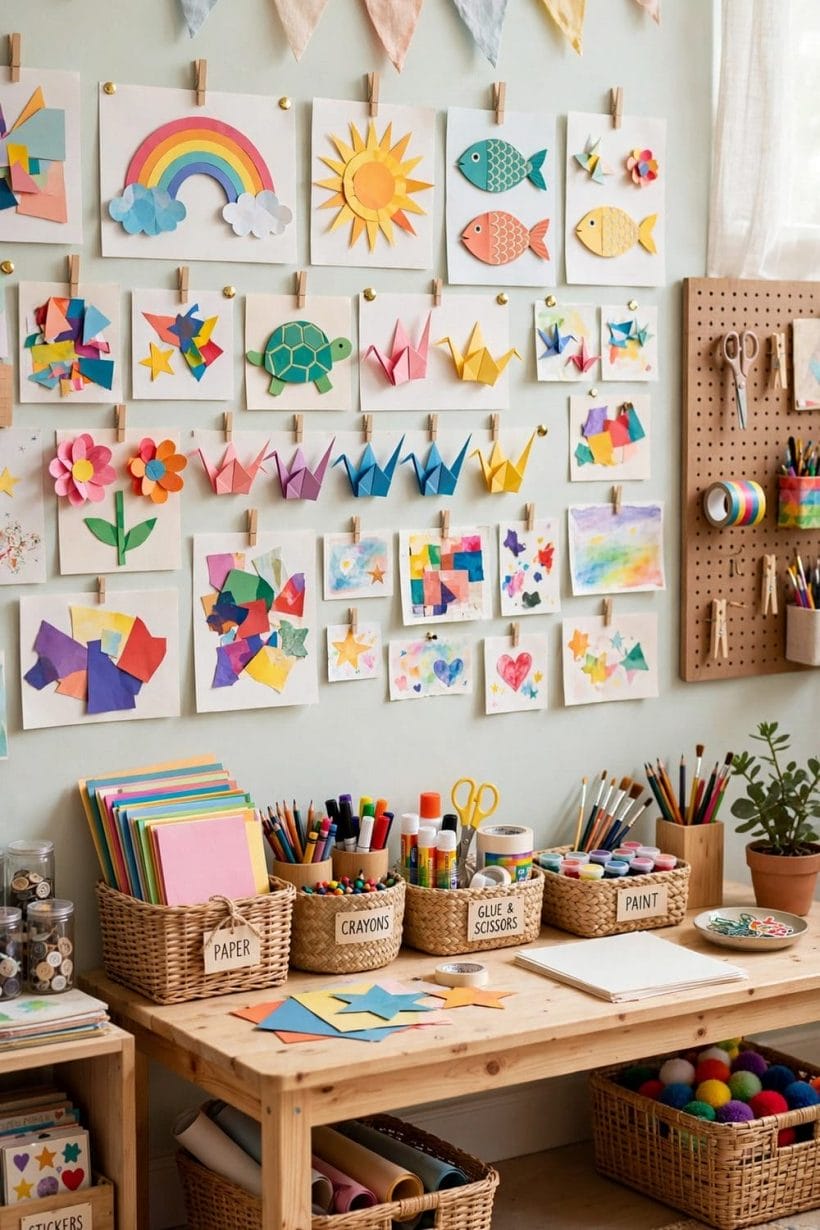
41. Low Open Shelving
Low open shelves put toys where children can see and choose them, which reduces the habit of emptying every box to find one thing. Keep the shelves at a height children can reach safely, with heavier items low down. Rotate the toys on display so the shelves stay inviting rather than overloaded.
42. Baskets for Toy Groups
Baskets sorted by toy group, such as animals, vehicles or building sets, make tidying a simple sorting game. Choose baskets children can lift and carry, with handles that suit small hands. A basket that is only three-quarters full is easier to use than one packed tight, so leave room for play.
43. Picture Labels on Boxes
Picture labels showing what belongs in each box help children who cannot yet read to tidy independently. Photograph or draw the contents, fix the picture to the front of the box, and keep the system consistent across the room. Children take pride in matching toys to pictures, and the room stays tidier for it.
44. Rolling Storage Under a Bench
Rolling boxes that slide under a bench or a window seat hide bulky toys while keeping them easy to pull out. Label each box with a picture, and keep the heaviest boxes lowest so they roll smoothly. Under-bench storage suits rooms where open shelves would feel cluttered.
45. Wall Pockets for Small Toys
Hanging wall pockets with clear or fabric pouches give small toys, figures and craft supplies a home that takes no floor space. Fix the pockets at child height on a sturdy rail, and sort the contents loosely so children can find things quickly. Wall pockets suit narrow rooms and the space beside a desk or a reading corner.
46. Book Bin for Picture Books
A book bin lets picture books stand upright with covers visible, which encourages browsing in a way a tall shelf does not. Keep the bin near the reading corner and rotate its contents from the main collection. A bin that is easy to carry can move to wherever reading happens, from a cushion nest to a window seat.
47. Dress-Up Rail at Child Height
A low rail for dressing-up clothes keeps costumes visible and reachable, so children can choose and put away their own outfits. Use sturdy hangers and a rail fixed firmly to the wall, with a basket below for hats, wigs and accessories. A rail that children can manage themselves turns dressing up into independent play.
48. Tidy-Up Basket by the Door
A single basket by the door catches stray toys at the end of play, so tidying starts with one easy step. Children can carry the basket around the room, gathering toys before sorting them into their proper places. The basket also stops toys migrating into hallways and other rooms.
7. Small Rooms and Shared Spaces
A playroom does not need a dedicated room. A corner of a bedroom, a slice of a living room, or a shared sibling room can all work when zones are clear, storage is compact, and the play area can be tidied quickly back into a shared space. Families fitting play into a small home can find a kindred approach in these living in a tiny house with kids notes, while rooms for the very youngest have their own needs, covered in these tiny house nursery ideas.
49. Play Corner in a Bedroom
A bedroom play corner works when play storage doubles as bedroom furniture, such as a toy chest at the foot of the bed or shelves above a desk, an approach that sits well alongside these tiny bedroom ideas. Keep the play zone to one wall so sleep and play feel distinct, and use a rug to mark where play happens. A corner that can be tidied in minutes keeps bedtime calm.
50. Shared Sibling Playroom
A shared playroom needs a zone for each child as well as space for playing together, so neither child feels crowded out. Give each child a shelf or a basket of their own, keep shared toys in the middle, and agree simple rules about borrowing. Shared rooms teach negotiation, and clear personal zones make it easier.
51. Fold-Away Table for Small Rooms
A fold-away table gives a small room a craft and puzzle surface that disappears when floor play takes over. Fix the table securely to the wall, fold it down for use, and store chairs flat nearby. Fold-away furniture suits rooms that must switch between play, homework and sleeping.
52. Vertical Storage to Free the Floor
Using wall height for storage frees precious floor in a small room. Tall, narrow shelves, wall pockets and hooks take toys and supplies upward, while the floor stays clear for play. Keep everyday items low and seasonal or less-used items higher, so children can still reach what they use daily.
53. Playroom in a Living Room Corner
A living-room play corner succeeds when it looks intentional rather than improvised, with matching baskets, a rug and a low shelf that suit the room’s style. Choose storage that closes, so the corner can be tidied into a calm living space in the evening. A corner that adults find pleasant is one children will be allowed to keep.
54. Under-Stairs Play Nook
The space under a staircase can become a snug play nook with cushions, a low shelf and a small light. Keep the nook ventilated and well lit, with a clear entrance so children do not feel enclosed. An under-stairs nook suits quiet play and reading, and it turns otherwise wasted space into a favourite spot.
55. Loft Bed With Play Space Below
A loft bed frees the floor beneath for a desk, a reading corner or a small play zone, which suits shared bedrooms, and the sleeping level itself can borrow from these tiny house loft ideas. Check the bed’s fixings and ladder with care, keep the space below well lit, and agree that the area under the bed is for calm play rather than climbing. The arrangement works best for older children who can manage a ladder safely.
56. Room Divider Curtain for Shared Rooms
A curtain on a ceiling track can divide a shared room into a play side and a sleep side without building work. Draw the curtain for play, open it to make the room feel larger, and choose a washable fabric in a colour that suits both sides. A curtain divider is a low-cost way to test a layout before committing to furniture.
8. Themed Corners Without a Full Redecoration
A theme can come from a few well-chosen pieces rather than a whole redecoration, which keeps the room flexible when interests change. Bedding, wall stickers, a rug and a handful of props carry most of a theme, and they can all be swapped without paint or new furniture.
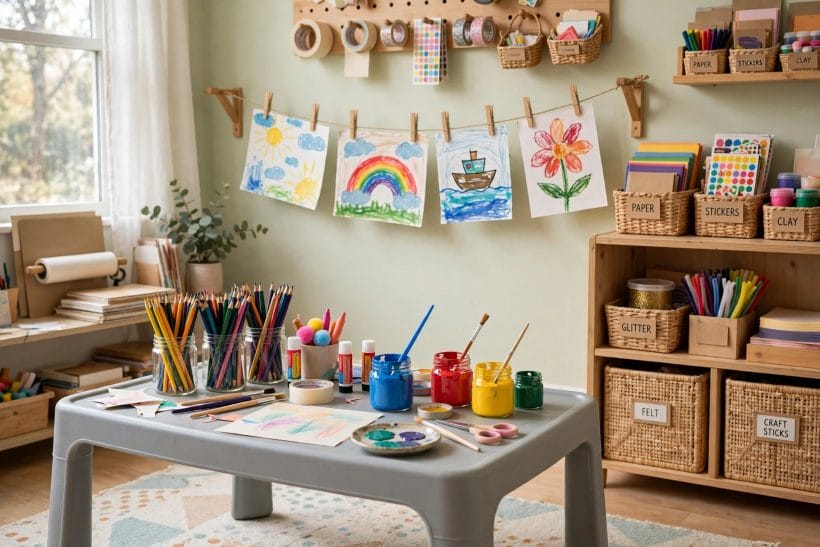
57. Space Corner With Star Stickers
Star stickers, a dark blue rug and a cardboard rocket can make a space corner from pieces that cost little and change easily. Add books about planets and a basket of building sets for spacecraft, and the corner invites both quiet reading and imaginative play. When the space phase passes, the stickers come down and the corner is ready for its next theme.
58. Woodland Den Corner
A woodland den corner uses greens and browns, a fabric canopy, and soft toy animals to suggest a forest without painting a mural. A basket of natural objects, such as pine cones and smooth stones, adds texture for small-world play. Keep the palette natural and the pieces washable, so the den stays inviting rather than dusty.
59. Seaside Corner With Blue Accents
Blue cushions, a striped rug and a basket of shells can suggest the seaside in a corner that otherwise stays neutral. Books about the sea and a small boat or two complete the theme, while the rest of the room remains unchanged. A seaside corner suits summer play and can be packed away when the season changes.
60. Castle Corner With a Play Tent
A play tent with castle-style flags turns a corner into a fortress, a palace or a hideout depending on the day’s game. Add a crown or two, a shield made from card, and a rug as the castle floor, and children will supply the rest of the story. A tent that folds flat keeps the theme optional rather than permanent.
61. Shop and Kitchen Corner
A small play kitchen or a shop counter with baskets of play food invites role play that builds language and counting. Keep the corner near the main play area so shop games can spill into the wider room, and store play food in baskets that children can carry. Role-play corners see long, sociable games that suit siblings and visitors.
62. Art Gallery Wall Theme
Turning one wall into a gallery, with frames at child height and a rotating display, makes children’s own work the theme of the room. Change the display often, add a small bench or cushion for viewing, and let children curate what goes up. A gallery wall celebrates making and gives the room a focus that costs almost nothing.
63. Dinosaur Corner With a Rug Landscape
A green rug with a simple road or river pattern becomes a landscape for dinosaur figures and small-world play. Add a basket of figures, a few cardboard hills, and books about dinosaurs, and the corner supports long, story-driven games. The rug itself does most of the thematic work, so the rest of the room stays neutral.
9. Practical Details: Light, Floors and Safety
Practical details decide whether a playroom is pleasant to use every day. Good light, a floor that can take spills, and safety checks that become habit all matter more than any single piece of furniture, and they are worth settling before adding more toys.
64. Layered Lighting for Day and Evening
Layered lighting combines daylight, a main ceiling light and a softer lamp for reading corners, so the room suits both lively play and quiet evenings. Keep lamp cords tucked away and switches within reach, and choose warm-toned bulbs for the reading lamp. Good lighting also makes the room feel larger and more welcoming.
65. Washable Rug Over Hard Floor
A washable rug over a hard floor gives the best of both worlds: a soft surface for play and a floor that can be mopped after paint or snack accidents. Choose a rug large enough to define a zone but light enough to lift for washing. A rug pad underneath stops slipping and adds a little extra cushioning.
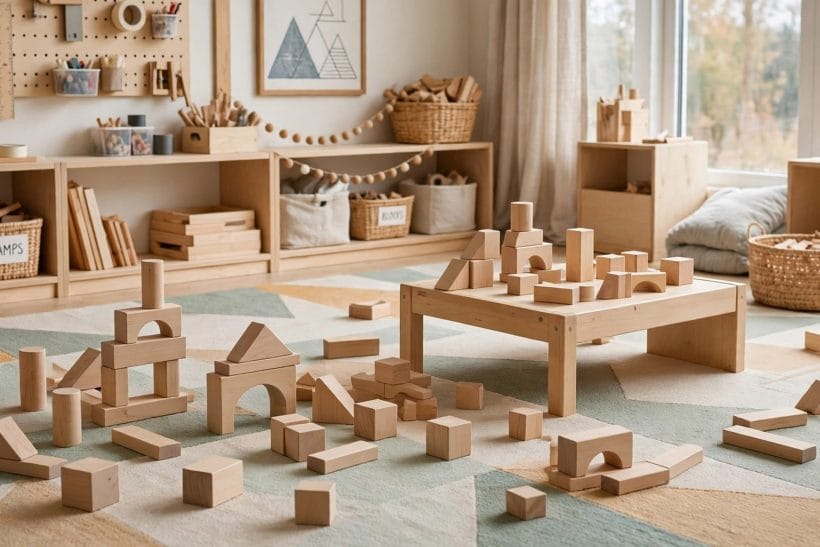
66. Soft Flooring for Active Zones
Soft flooring, such as foam mats or a thick rug, belongs under climbing and tumbling zones where falls are likely. Lay the soft surface wall to wall in that zone so there are no hard edges at the boundary, and check regularly that mats stay flat and joined. Soft flooring also dampens noise, which the rest of the household will appreciate.
67. Furniture Fixed to the Wall
Tall shelves, bookcases and chests of drawers should be fixed to the wall so they cannot tip if a child climbs them. Use fixings suited to the wall type, and check them when furniture is moved. Wall fixing is a simple precaution that removes one of the most serious risks in a child’s room.
68. Cordless Window Coverings
Cordless blinds or shutters remove the strangulation risk that looped cords can pose, and they are simpler for children to use. Where cords cannot be avoided, fit cleats high on the wall and keep cots, beds and climbing furniture away from windows. Window safety deserves attention in every room children use, not only in bedrooms.
69. Rounded Corners and Soft Edges
Rounded table corners, soft edge guards and furniture without sharp points reduce bumps in a room where children run and tumble. Choose low tables with rounded edges where possible, and add guards to any sharp corners that remain. Soft edges matter most at head height for toddlers and at knee height for older children.
10. Keeping the Room Working Week After Week
A playroom stays useful when tidying, rotation and small repairs become routine rather than occasional overhauls. The habits below keep the room inviting with a modest weekly effort, and they teach children to care for their own space.
70. Weekly Toy Rotation
Rotating toys weekly keeps play fresh without buying anything new, since a toy put away for a while feels new on its return. Store the out-of-rotation toys in a cupboard or a high shelf, and swap a basket or two each week. Rotation also reveals which toys are genuinely loved and which can be passed on.
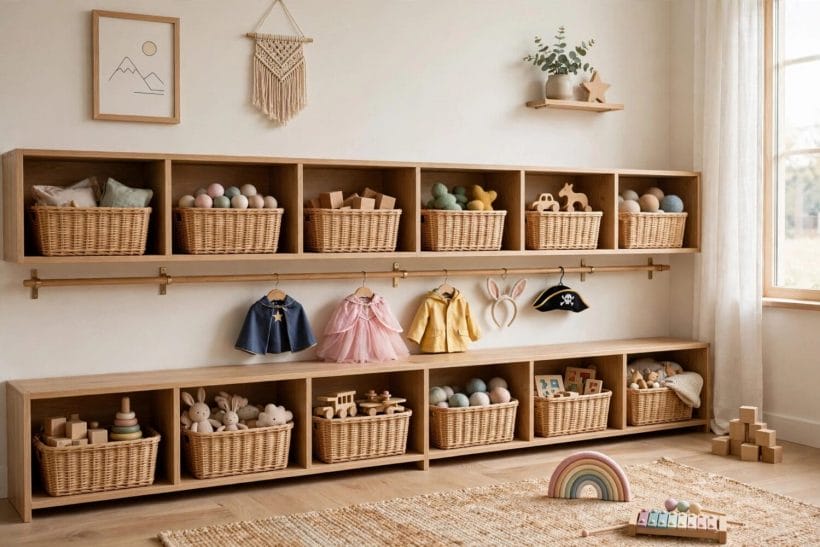
71. End-of-Day Tidy Routine
A short tidy routine at the end of the day, with music or a simple game, makes clearing up part of play rather than a punishment. Give each child a clear job, such as books or blocks, and keep the routine short enough to finish before patience runs out. A room tidied daily never needs a dreaded big clear-out.
72. Seasonal Clear-Out Together
A seasonal clear-out, done together, teaches children to let go of broken or outgrown toys and to value what remains. Sort toys into keep, pass on and recycle piles, and let children decide about their own things with gentle guidance. A clear-out also frees shelf space for new interests as they develop.
73. Repair Basket for Broken Toys
A repair basket collects toys that need a battery, a glued joint or a sewn seam, so broken items do not drift back onto shelves. Work through the basket regularly, fixing what can be fixed and recycling what cannot. Repairing teaches care and resourcefulness, and it keeps the room’s shelves full of toys that actually work.
74. Display That Changes With Interests
A display that changes with interests, from artwork to collections to school projects, keeps the room feeling current. Rotate the picture ledges, swap the books on show, and let children choose what earns a place. A room that reflects its owners is one children care about keeping.
75. Room That Grows Up Gracefully
The most successful playrooms are planned to grow up, with neutral walls, good storage and furniture that can move into a study or a teenage room. As play changes, the craft table becomes a homework desk, the reading nest becomes a lounge corner, and the toy shelves hold books and collections. Planning for change from the start saves repeated redecoration.
Final Considerations
Choosing a playroom layout is, in the end, about matching the room to the children who use it: open floor where building and movement happen, quiet corners for reading and rest, storage children can manage themselves, and practical details that keep the room safe and easy to clean. Start with one corner rather than the whole room, try it for a few weeks, and notice what gets used before changing anything else. The main cost drivers to weigh are the room’s size, the amount of storage and furniture, the finishes chosen, and whether any joinery, flooring or electrical work is needed, with local quotes the sensible step before a larger change. These playroom ideas are a starting point, not a fixed plan, and the best room is the one children actually enjoy using day after day.
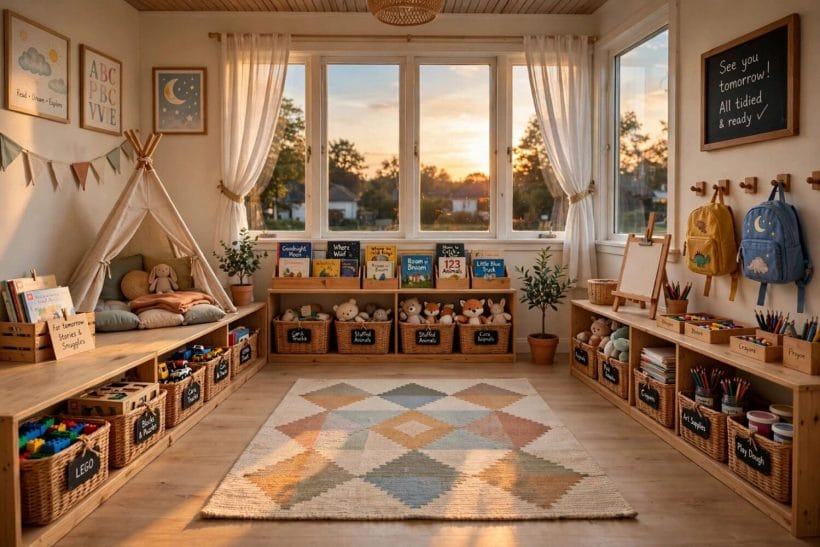
Care, too, is part of the design: a weekly rotation, a short end-of-day tidy and a seasonal clear-out will keep most playrooms feeling fresh without constant spending, and the room will sit more happily within the wider home when it echoes the household’s broader interior design ideas. Toys will change, interests will move on, and a flexible room can change with them, since a rug can move, a shelf can be restocked, and a corner can take on a new theme in an afternoon. Begin small, notice what your children enjoy using, and let the room grow with them rather than fixing every detail at once.

0 Comments