
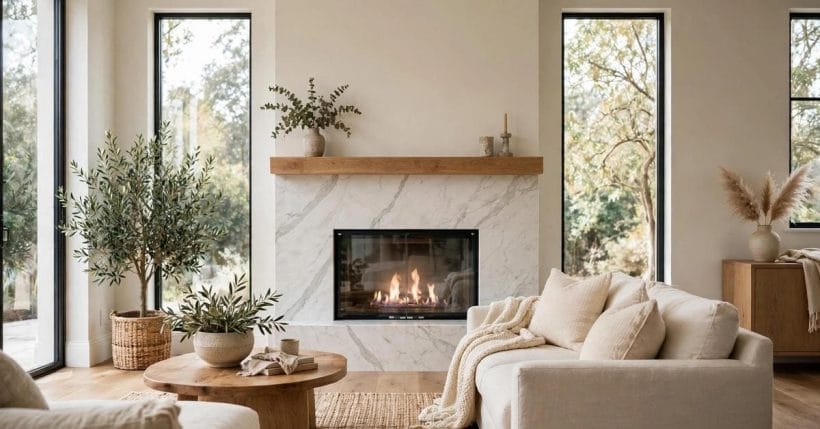
A gas fire changes how a living room feels, and the surround decides how it looks. The fire itself sits behind glass, neat and controlled, so the eye travels outward to the frame around it: the stone or tile or timber that carries the room from wall to flame. Choose that frame well and the whole wall settles into place. Choose it badly and even a handsome room feels unresolved, with a fire that looks pasted onto a wall rather than belonging to it. This guide looks at gas fireplace surrounds as a materials survey only, one material at a time, so you can weigh the look, the feel and the everyday care of each choice before anything is fitted.
Two cautions run through everything that follows. Gas work, firebox work and chimney work belong to qualified professionals, full stop, and the fireplace maker’s guidance and local rules decide what may sit near the fire and how far away it must stand. Nothing here is a fitting guide, and no clearance or heat figure is quoted, because those details belong to the appliance and the installer, not to a general guide. What this guide can do is help you recognise the materials, picture them in a real room, and walk into a conversation with a professional knowing which look you actually want.
1. Start With the Fire You Have
Every surround starts from the fire it frames, and gas fires vary in shape more than many people expect. Some are wide and low, stretching across a wall like a line of light. Some are tall and narrow, suited to a smaller wall or a corner. Some sit as a traditional opening with a familiar frame, while others are built into a wall so only the glass and the flame show. The surround must suit the shape in front of it, not fight it. A wide fire wants a surround with enough breadth to balance it, while a small fire can disappear inside a surround that is too grand for it. Stand back and picture the whole wall, not just the fire, before falling for any single material.
The glass front matters too, because it changes the relationship between fire and room. A gas fire behind glass gives a clean, contained glow, with no ash and no open flame to tend. That tidiness suits smooth, pale surrounds that would show every mark beside an open fire, and it also suits dark surrounds that make the flame stand out like a picture in a frame. Think about how the fire will look when it is off as well as when it is lit. An unlit gas fire is a dark rectangle, and the surround carries the wall in those hours. A material with some colour or texture of its own keeps the wall interesting even when the fire is cold.
Finally, think about the room around the fire before choosing anything. A surround is not a sample on a board; it is a large, permanent surface in the middle of the room you live in. The light in that room, the colour of the floor, the height of the ceiling and the furniture that faces the fire all change how a material reads. A stone that looks warm under showroom lights can look cold in a shaded room, and a pale marble that looks crisp in a bright room can glare where sunlight falls directly on it. Bring samples home, look at them morning and evening, and judge them against your own walls and your own light.
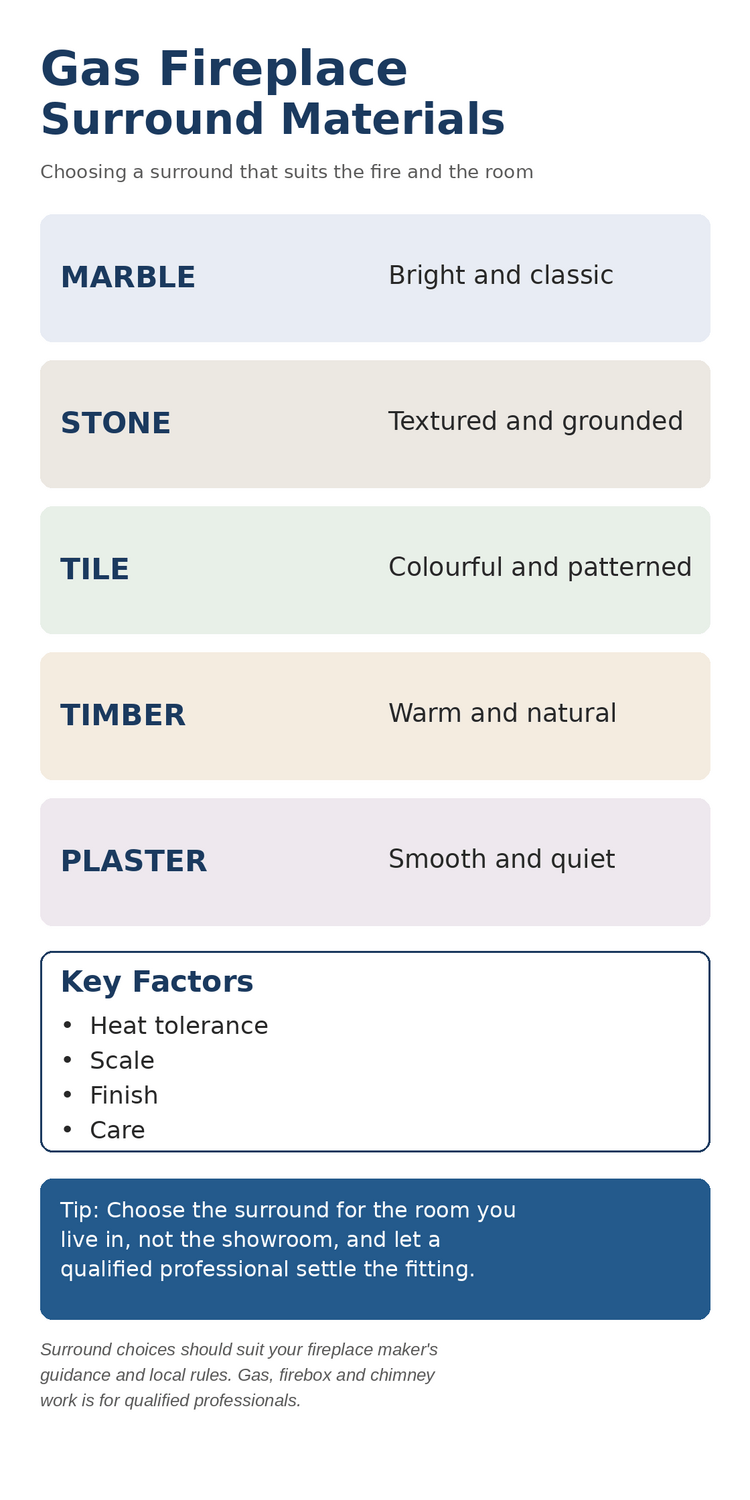
2. Marble: Bright and Classic
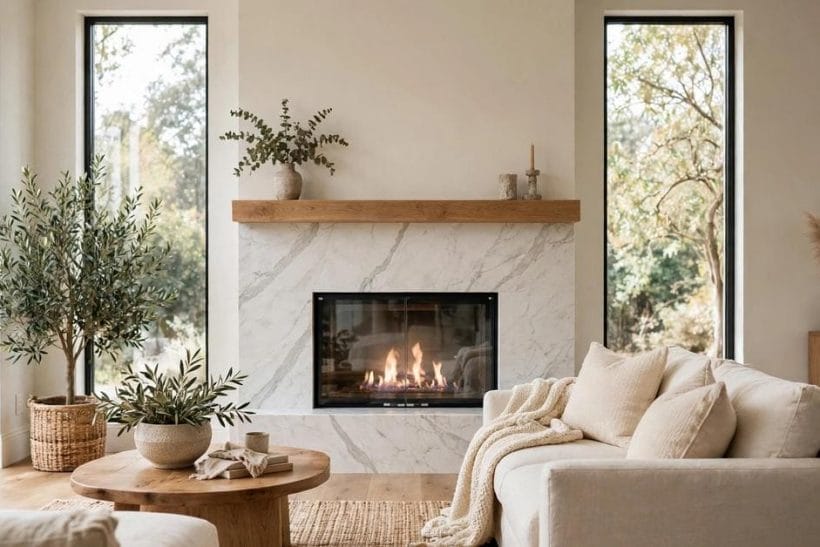
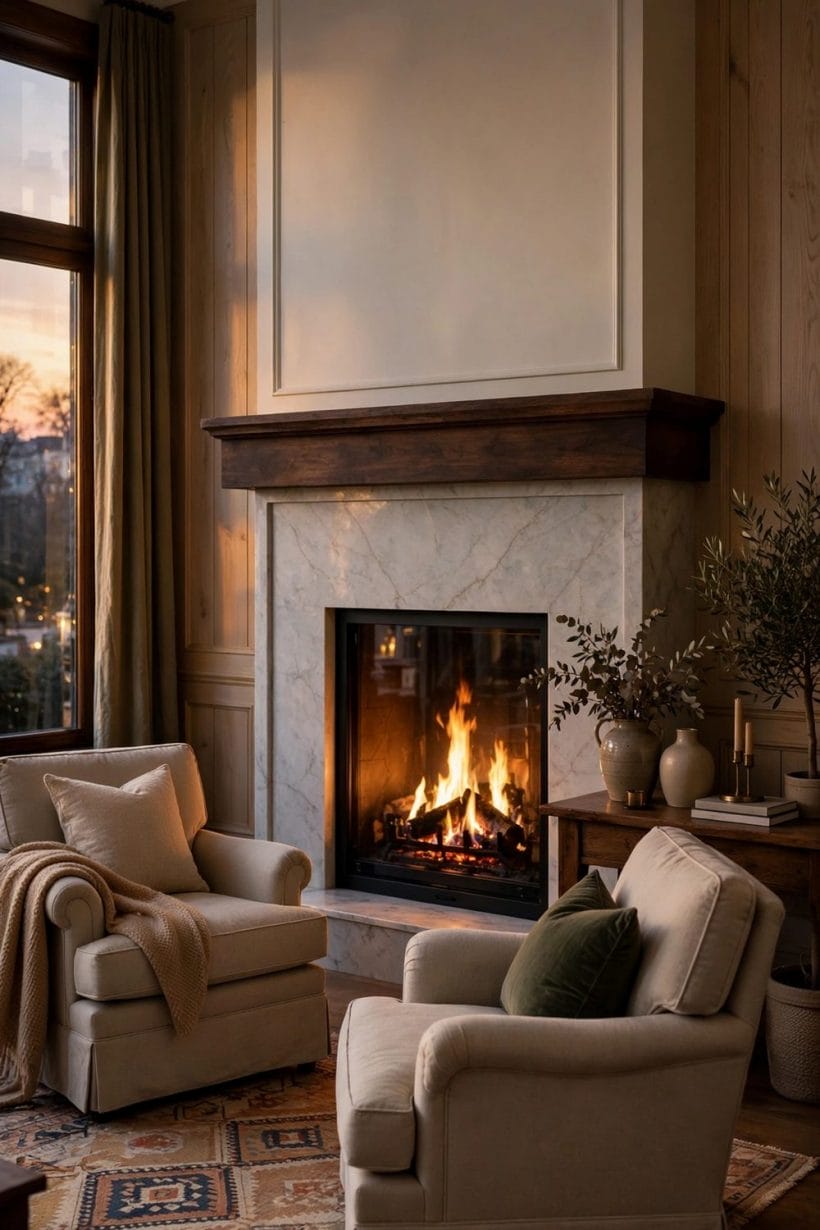
Marble is the classic surround material, and it earns that place honestly. A pale marble with soft veining brightens a wall, lifts a dark room, and gives a gas fire a calm, finished frame that suits almost any style of furniture. It reads as timeless rather than fashionable, which matters for something as permanent as a fireplace. A white or cream marble surround with a simple timber mantel, like the room pictured at the top of this guide, feels settled and generous without shouting about itself. If your taste runs traditional, marble is rarely the wrong answer.
The veining is where the character lives, and it is worth looking at closely. Some marble is quiet, with faint grey threads across a pale ground, while other pieces carry bold, dramatic veins that become the main event of the wall. Quiet veining suits a room that already has pattern elsewhere, in rugs or curtains or art, while bold veining suits a calm room where the fireplace is meant to be the centrepiece. Because every slab differs, ask to see the actual piece where possible rather than judging from a small sample, since a vein that looks charming in miniature can dominate a full surround.
Marble asks for gentle everyday care. It is a natural stone with a soft, porous surface, so spills and marks show more readily than on a glazed tile, and harsh cleaners have no place near it. In practice that means a soft cloth, mild care, and a habit of wiping marks promptly rather than leaving them. Many households find that trade easy to accept, because the look repays the attention. Related stone surrounds, including granite, are covered in the companion guide to granite fireplace surrounds, which is useful reading if you want a harder, more speckled stone beside this paler classic.
3. Stone: Texture and Weight
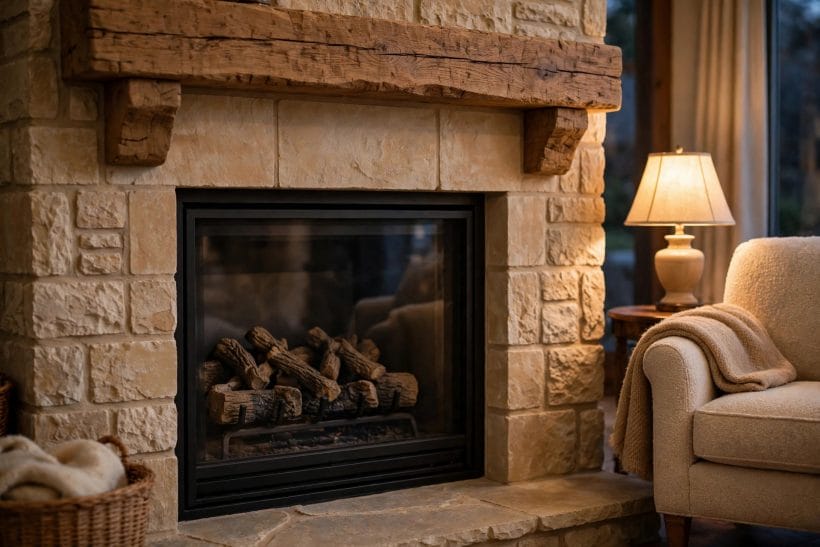
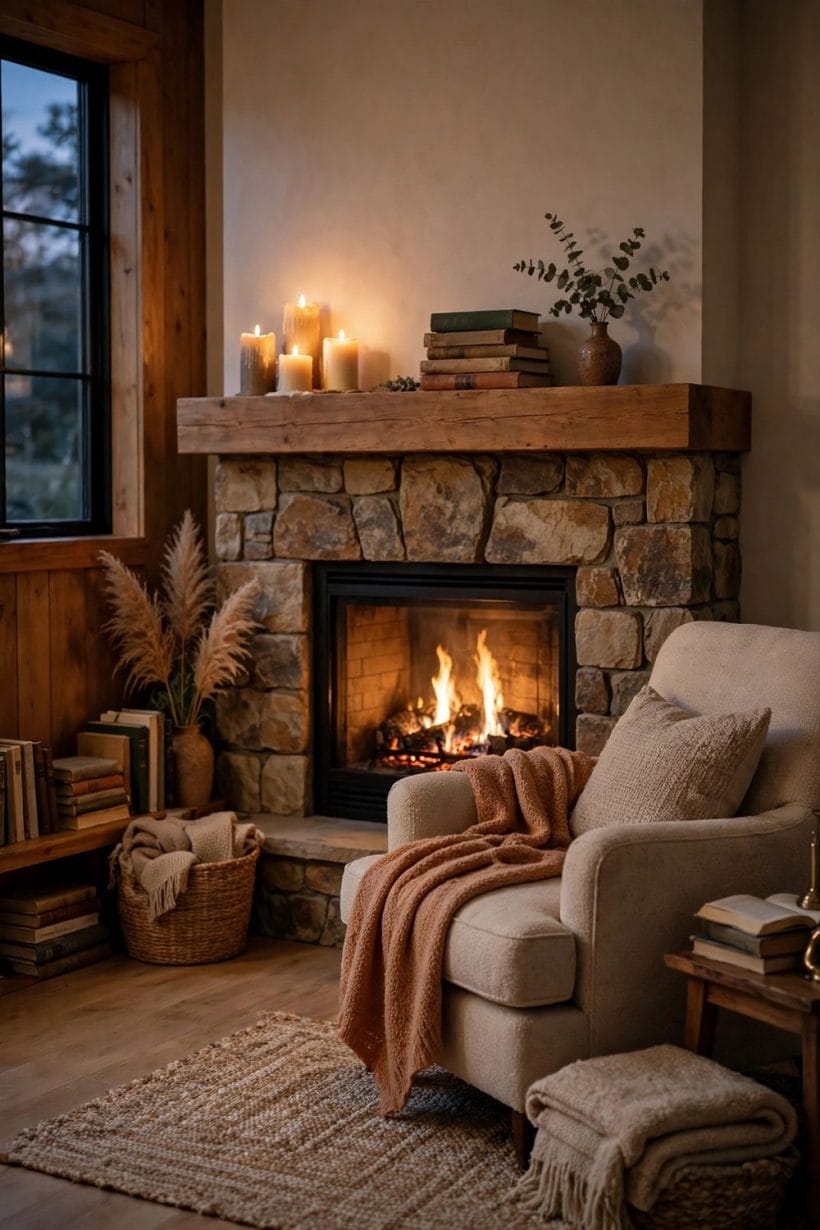
Stone gives a surround a sense of weight and permanence that no other material quite matches. A rough natural stone wall around a gas fire feels grounded and sheltering, the kind of fireplace that makes a room feel like a refuge on a dark evening. It suits cabins and country rooms naturally, but it also works in a modern room where a single textured wall stops the space feeling flat. The irregular surface catches light and shadow in a way smooth materials cannot, so the surround changes through the day as the light moves.
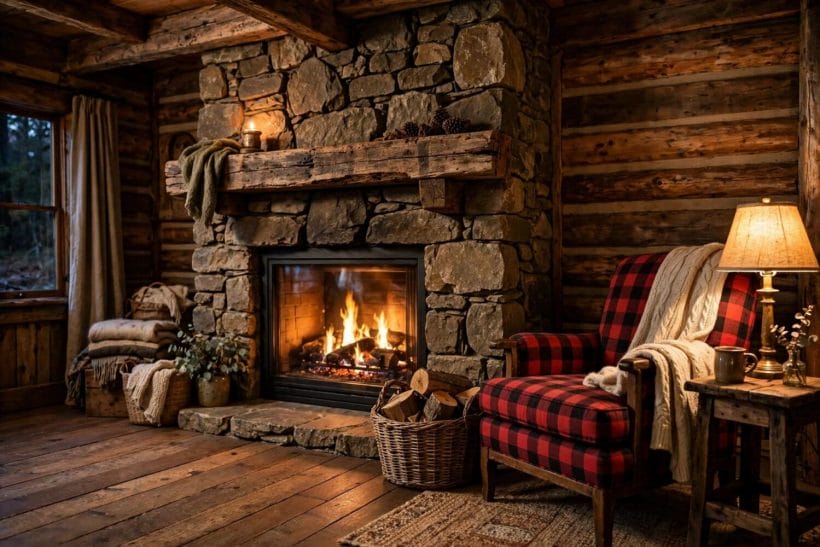
The choice within stone is wide, and the finish matters as much as the stone itself. Rough, split faces feel rustic and bold, while smooth, honed stone feels calmer and more tailored. Limestone sits at the warm, soft end of the family, with gentle tones that suit pale rooms, while darker stone gives a moodier, more dramatic wall. Think about the scale of the pieces too. Large blocks suit a broad wall and a big room, while smaller stones suit a tighter space where a heavy wall could overwhelm the furniture. The room pictured later in this guide, a cabin fire in rough stone with a reclaimed timber mantel, shows how far texture alone can carry a wall.
Stone also brings practical questions worth settling early. A stone surround is heavy, and the wall behind it and the floor beneath it must be able to carry it, which is a matter for the installer and any structural advice they call on. Dust can settle into rough surfaces, so a stone surround suits a household happy with an occasional brush down rather than a quick wipe. If you love the look but not the weight, a stone-look tile can give much of the texture with far less bulk, and tile gets its own section below. For rooms where the fire shares a wall with seating, the broader guide to small living room ideas helps with placing chairs and rugs so the stone wall feels welcoming rather than looming.
4. Tile: Colour and Pattern
Tile is the most playful surround material, and the most forgiving for anyone who loves colour. A tiled surround can be pale and quiet, deep and glossy, or patterned enough to be the room’s main decoration, and it can change the whole mood of a wall without changing anything else in the room. Handmade tiles with slight variation in tone give a soft, crafted feel, while large, flat tiles give a clean, modern face. Because tiles come in small units, they also suit awkward shapes and narrow spaces where a single slab of stone would be hard to handle.
Pattern is where tile earns its keep. A stacked vertical layout feels tall and modern, a herringbone layout feels busy and decorative, and a simple grid feels calm and orderly. Colour works the same way. A cream or pale grey tile keeps the wall light and lets the flame do the talking, while a deep green or navy tile turns the fireplace into a jewel of colour in an otherwise quiet room. Glossy glazes reflect the flame and the room light, which can be lovely in the evening, while matte glazes stay soft and chalky and suit a relaxed room. Look at tiles beside your own wall colour, since a tile that sings on a sample board can clash with paint you already live with.
Tile is also one of the easiest surrounds to live with day to day. A glazed surface wipes clean with a soft cloth, and a damaged tile can usually be replaced without disturbing the whole surround, which is a comfort in a busy household. The grout lines need a little more attention than the tiles themselves, since they can dull over time, but regular gentle cleaning keeps them fresh. If your surround will be painted or refreshed rather than tiled, the companion guide to a painted fireplace covers painted surrounds and mantels in their own right, and the two approaches pair well as reading before you decide.
5. Timber: Warmth With Clearances
Timber brings a warmth that stone and tile cannot imitate. A wooden mantel or a timber-clad surround softens a wall instantly, and it suits rooms where everything else is already soft: rugs, linen, books and lamplight. Oak is the familiar choice, with a grain that reads honest and sturdy, while darker woods give a smarter, more formal frame. Reclaimed timber adds knots and weathered marks that suit a rustic room, while smooth, pale timber suits a light, Scandinavian-feeling space. Timber also photographs beautifully beside a flame, which is why so many fireside rooms lean on it.
With timber, the professional conversation matters more than with any other material here. Wood near a heat source must stand at distances and behind protections that the fireplace maker and local rules set, and those details are not for guesswork or for this guide. A qualified installer will say what can sit where, and a timber surround should never be improvised around a fire by anyone without that guidance. In practice this means timber often appears as a mantel shelf above the fire, or as cladding kept well clear of the heat, rather than as the surface closest to the flame. That arrangement still gives the room its warmth, with the safety settled by someone qualified.
Timber also ages in a way worth loving. It deepens in colour, picks up small marks of use, and grows more characterful rather than more worn, provided it is kept clean and dry. A quick dust and an occasional wipe with a soft cloth is usually enough, and harsh treatments have no place near a fireside. If your room leans farmhouse, with natural wood elsewhere and a relaxed mix of furniture, the guide to farmhouse living room ideas shows how a timber mantel sits within that wider style, so the fireplace feels part of the room rather than an afterthought.
6. Plaster: Smooth and Quiet
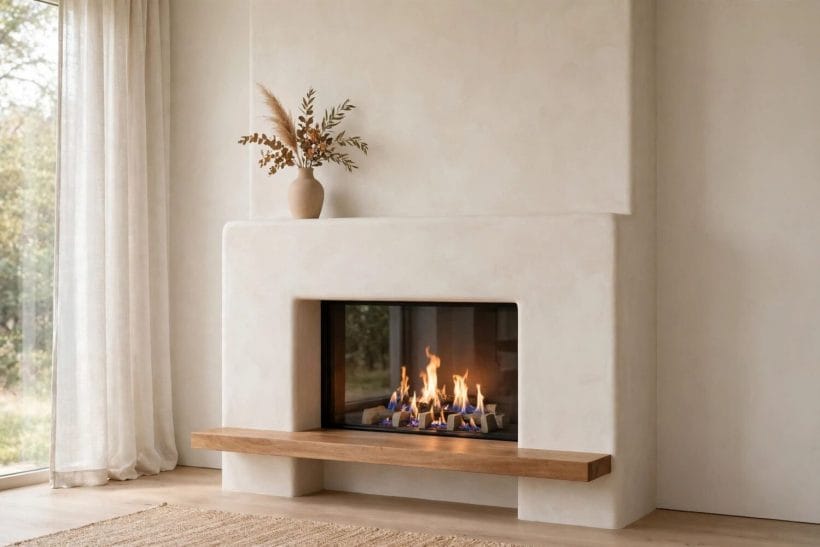
Plaster is the quiet achiever of surround materials. A smooth plaster surround, painted or left in a soft natural tone, gives a gas fire a clean, architectural frame with no joints, no veining and no pattern to compete with the flame. It suits modern rooms, small rooms and rooms where the furniture and art already carry plenty of interest. A plaster wall that flows straight into the surrounding wall can make a fireplace feel built into the architecture rather than added to it, which is a calm, confident look.
The finish can be tuned more than many people realise. A perfectly smooth, painted plaster surround feels crisp and contemporary, while a slightly textured, limewashed finish feels softer and more organic, with a gentle movement that catches the light. Colour is the other lever. Warm white keeps the wall bright, a pale grey gives a cooler, more urban feel, and a soft earth tone can tie the fireplace to wooden floors and natural fabrics. Because plaster is painted, it is also the easiest surround to refresh when a room changes colour, which suits households that redecorate often.
Plaster asks for a little patience at the start and little care afterwards. It must be properly prepared and fully settled before it is finished, and any cracking or marking should be left to someone who understands plaster and fireplaces rather than patched over casually. Once done, it wipes clean gently and can be repainted when the room changes. In a compact home, where the fire wall must work hard without dominating, the guide to tiny living room ideas is a helpful companion, since it deals with exactly that balance of presence and restraint.
7. Metal: Slim and Contemporary
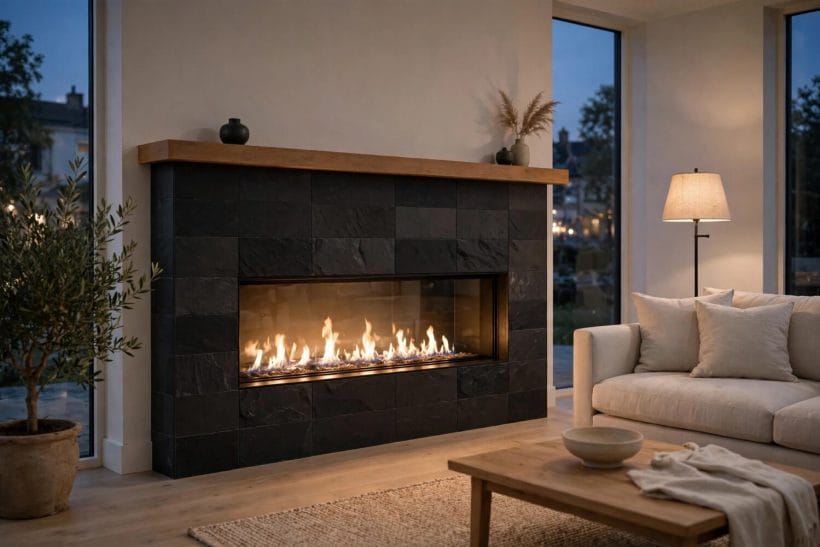
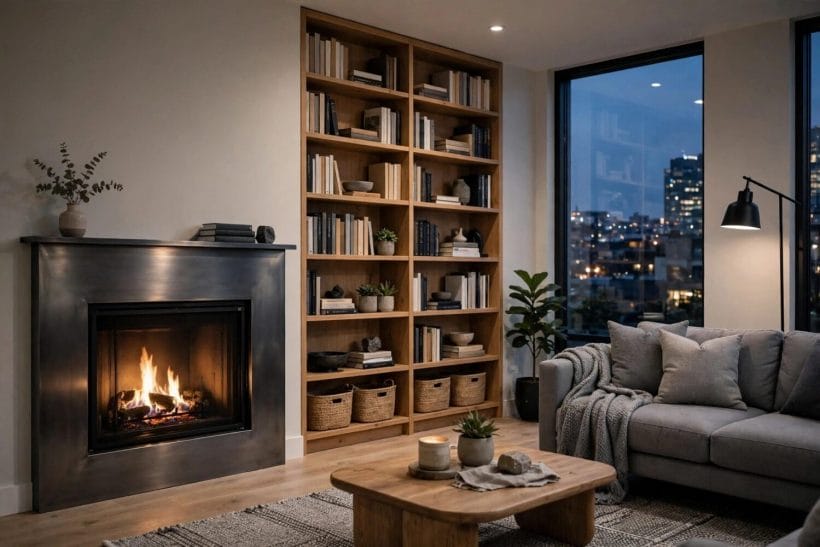
Metal surrounds suit rooms that favour clean lines and a contemporary edge. A brushed steel or dark metal frame gives a gas fire a sharp, tailored outline, and it pairs naturally with glass, pale walls and low furniture. Where stone adds weight and timber adds warmth, metal adds precision. A slim metal surround can make a wide, linear fire look even longer and lower, which suits modern living rooms where the fireplace is one horizontal element among others rather than a towering centrepiece.
The finish changes the effect a great deal. Brushed metal stays soft and muted, catching the light without glare, while a darkened or blackened metal gives a bolder frame that makes the flame leap out by contrast. Polished metal, by contrast, reflects the whole room and can feel busy beside a fire, so it suits a calm room better than a cluttered one. Fingerprints and dust show on metal more readily than on stone, so a metal surround suits a household content with a quick wipe to keep it looking sharp. Like every material here, metal near a fire must be chosen and fitted under the fireplace maker’s guidance, since heat behaviour differs by material and by appliance.
Metal also mixes well with other materials, which is part of its charm. A metal firebox trim beside a timber shelf, or a metal surround set into a plaster wall, gives a room two textures to enjoy without either dominating. That mixed approach suits rooms that already blend materials elsewhere, in kitchens or shelving or lighting. Keep the combination restrained, with one material leading and the other supporting, and the wall will feel designed rather than assembled from leftovers.
8. The Mantel Shelf and the Hearth
The surround is only part of the wall. The mantel shelf above it and the hearth beneath it complete the picture, and both deserve the same care as the material itself. A mantel shelf gives the eye a horizontal line to rest on, a place for a vase or a pair of candles, and a visual lid that stops the surround feeling unfinished. A chunky timber beam suits stone and rustic rooms, a slim shelf suits modern and tiled surrounds, and a painted mantel suits plaster and traditional rooms. The shelf should feel proportionate to the fire below it: wide enough to balance the surround, but not so deep or heavy that it crowds the wall.
The hearth grounds the whole arrangement. A stone hearth that extends a little into the room gives the fire a base and protects the floor, while a flush finish, where the surround meets the floor without a step, feels more modern and more open underfoot. The right choice depends on the room, the floor and the appliance, and on the guidance that comes with the fire, so treat the hearth as part of the professional conversation rather than a styling afterthought. A hearth that is easy to keep clean, in a material that matches or quietly contrasts with the surround, will look better for longer than a fussy one.
What sits on the mantel matters as much as the mantel itself. A few well-chosen pieces, a vase, a stack of books, a pair of candlesticks, give the wall life without cluttering it, while a crowded mantel fights the fire for attention. Anything placed near a fire must respect the maker’s guidance on heat and clearances, and nothing flammable should ever be dressed close to the heat. For ideas on dressing the wall above the fire once the surround is settled, the guide to fireplace mantel ideas covers mantel styling in its own right, and pairs naturally with the materials surveyed here.

9. Colour, Light and the Rest of the Room
A surround never sits alone, so judge it against the room it will live in. Wall colour is the first companion. A pale surround on a pale wall can disappear, which suits a room where the fire should whisper rather than shout, while a dark surround on a pale wall becomes a clear focal point. A surround that picks up a tone already in the room, the floor, a rug, a curtain, feels connected, while one that introduces a brand-new colour needs something else in the room to answer it, a cushion or a throw or a piece of art, or it will look stranded.
Light is the second companion, and it changes everything. Daylight shows a material honestly, evening lamplight warms it, and firelight adds a moving glow that flatters texture. A rough stone surround comes alive in firelight in a way a flat painted wall never will, while a glossy tile reflects the flame and doubles its sparkle. Visit a material in different lights where possible, and picture it on a winter evening with the fire lit and the lamps on, since that is when a fireplace earns its place. If the room is dark, a pale surround will lift it; if the room is bright, a darker surround will anchor it.
Furniture placement completes the picture. Chairs angled towards the fire, a rug that grounds the seating, and a coffee table at a comfortable distance all make the surround feel like part of a living arrangement rather than a display. Leave enough breathing room around the fire for the wall to be seen, and avoid pushing tall furniture hard against the surround, which crowds it and hides the material you chose with such care. The art and objects above the fire deserve the same restraint, and the companion guide to artwork above a fireplace deals with hanging and leaning art over a mantel, including the practical cautions that belong with any fireside display.
10. Care, Heat Marks and Everyday Living
Every surround material ages, and knowing how it ages helps you choose honestly. Marble can mark, stone can gather dust in its texture, tile grout can dull, timber can deepen in colour, plaster can scuff, and metal can show fingerprints. None of these is a flaw in itself; each is the character of the material, and the right choice is the one whose ageing you will enjoy rather than resent. A busy family room may suit tile or metal, which wipe clean quickly, while a quieter room may suit marble or timber, which reward gentle attention.
Heat leaves its own traces over time, and the best defence is the professional fitting that this guide keeps returning to. A surround chosen and fitted under the fireplace maker’s guidance, with the right materials in the right places, will live far better beside a fire than one chosen on looks alone. If marks, cracks or changes appear near a fire, have them looked at by someone qualified rather than covered up or repaired casually, since the wall around a fire is not an ordinary wall. Soot and dust should be cleaned gently and regularly, with soft cloths and mild care, and harsh chemicals kept away from every surround material alike.
Finally, think about the seasons. A fireplace wall works hardest in the colder months, when the fire is lit most evenings and the room gathers around it, and it rests through the warmer months, when it must still look good cold. A surround with some colour, texture or pattern of its own carries those quiet months far better than a blank frame that only makes sense when the flame is on. Choose for the whole year, not just for the first evening, and the wall will repay you every day.
Final Considerations
If one thought should stay with you, it is this: the best surround is the one that suits your fire, your room and your way of living, all three at once. Marble suits a bright, classic room. Stone suits a room that wants weight and shelter. Tile suits a room that wants colour and easy care. Timber suits a room that wants warmth, with the professional cautions honoured. Plaster suits a room that wants quiet architecture. Metal suits a room that wants clean, contemporary lines. No material wins in the abstract; each wins in the right room.
Before you commit, gather samples, look at them in your own light, and talk to a qualified professional about what your fire allows and what your wall can carry. Settle the surround, the mantel and the hearth as one composition rather than three separate decisions, and keep the dressing on the mantel simple enough that the fire remains the heart of the wall. Done that way, a survey of gas fireplace surrounds becomes something better than a shopping list: it becomes the wall your room gathers around, winter after winter, looking as settled cold as it does lit.

0 Comments