
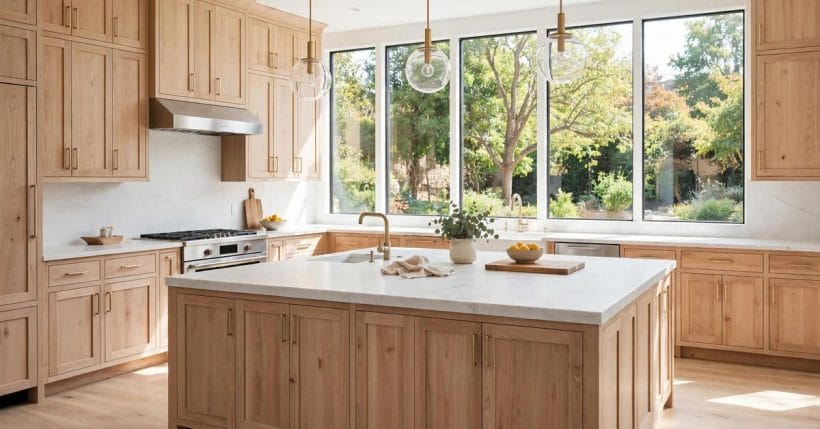
Oak never really left the kitchen — it just waited out the grey years in farmhouses and old rectories, and now it is back, paler, flatter and calmer than the honey-toned ancestor everyone remembers.
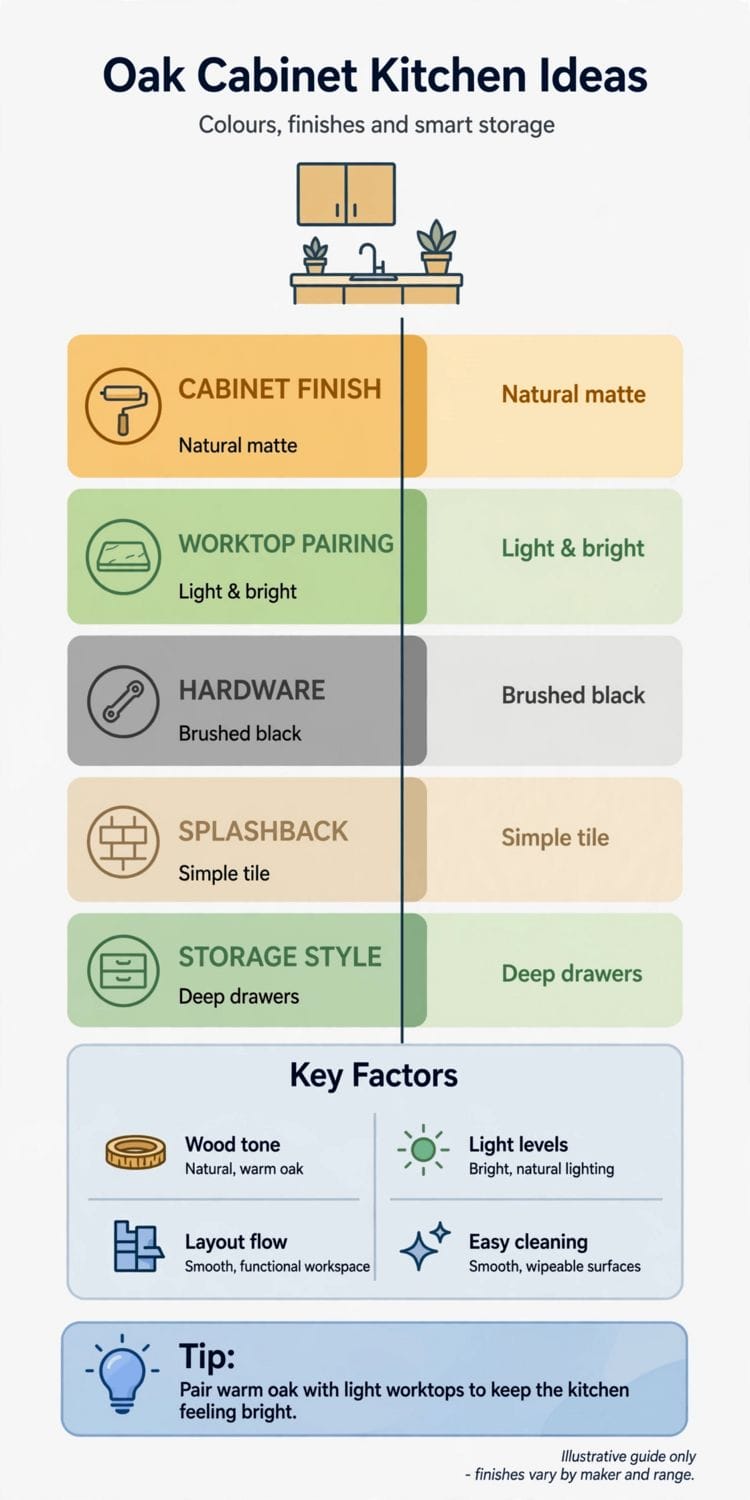
These seventy-five ideas cover the timber itself, the layouts that flatter it, its worktop partnerships, the colours around it, the modern look, storage and long-term care — the complete oak-cabinet attribute map.
1. Kitchens With Oak Cabinets at a Glance
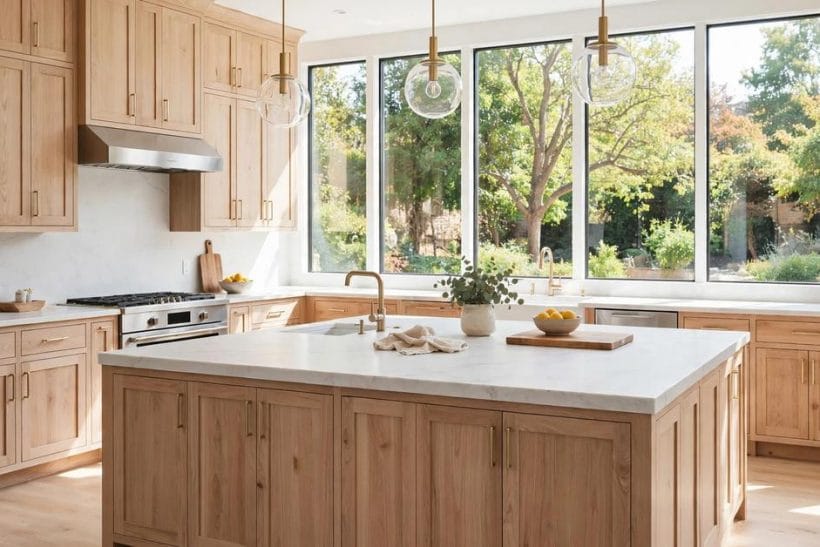
A kitchen with oak cabinets is a kitchen whose central material entity — solid or veneered oak cabinetry — supplies the room’s warmth, grain and durability, with every other attribute in service to it: layout that balances timber’s visual weight, worktops and splashbacks that set its period, surrounding colours that tune its temperature, storage that makes it work daily, and finishes that can be maintained for decades. It is one room in the wider family gathered under the site’s home design ideas hub, distinct from painted and handleless fashions precisely because its decoration is grown, not applied.
| Question | Short answer |
|---|---|
| Which oak is best for a modern kitchen? | White oak in a straight rift or quartered cut with a natural, barely-there finish. The calm grain and pale colour are what separate the modern oak kitchen from the traditional one. |
| Do oak cabinets date a kitchen? | The finish dates it, not the timber. Honey and orange stains read traditional; pale, matte, natural finishes read current — and a sound oak kitchen can be refinished or painted instead of replaced. |
| What worktop pairs best with oak? | Quiet stone for the contemporary look, dark worktops for definition, steel where the cooking is serious. The rule is three materials in total, oak included, and no two patterns competing. |
| Can oak work in a small kitchen? | Yes, with the finish kept pale and tall runs kept off the window wall. Pale oak in a galley or compact room reads as warm joinery, not enclosure. |
| How much maintenance does oak need? | Gentle cleaning, respect at the wet doors, and periodic renewal of oiled finishes. Less than its reputation suggests — and almost everything it needs can be done by the owner. |
| What colours go with oak cabinets? | Warm whites, sage, deep blue or charcoal as a single accent, and one consistent warm metal. The palette’s job is to tune the timber’s warmth up or down, never to fight it. |
2. Oak Itself: Species, Grain and Finishes
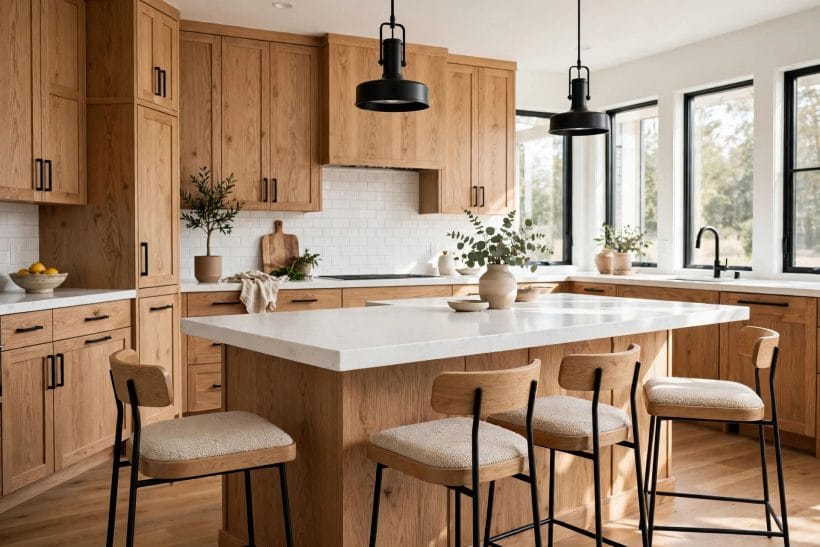
Oak earns its kitchen place honestly: it is hard, repairable, and its grain forgives the knocks of daily cooking better than any painted finish. Start with the timber itself — its species, its cut and its finish decide everything the later sections build on.
1. Know the difference between red and white oak
White oak runs cooler and browner, red oak warmer and pinker, and the difference survives most stains.
2. Read the grain: rift, quartered and plain-sawn
How the log is cut decides the cabinet’s face: plain-sawn shows oak’s cathedral arches, rift and quartered cuts run straight and quiet.
3. Choose a natural or lightly stained finish for the modern look
The current oak kitchen is barely coloured at all — a clear or whisper-pale finish that lets the grain be the decoration.
4. Match the finish to the room’s light, not the sample board
Oak darkens in dim rooms and glows in bright ones. A finish chosen under showroom light can arrive home looking a shade moodier; always judge samples in the kitchen’s own daylight and evening light before ordering a roomful of doors.
5. Consider cerused and limed finishes for grain emphasis
Liming settles pale pigment into oak’s open grain, giving a soft, coastal-modern character that photographs beautifully. It suits coastal and Scandinavian directions especially, and it lightens dark timber without painting over its identity.
6. Keep some doors solid oak and some veneered, knowingly
Wide cabinet doors in solid oak can move with the seasons; quality veneer on a stable core stays flat and true.
7. Decide the sheen: matte hides a working kitchen’s life
High-gloss oak shows every fingerprint and steam mark; matte and satin finishes forgive them and suit the modern mood.
8. Ask how the finish can be repaired in ten years
Oiled and hardwax finishes can be spot-repaired by the homeowner; lacquers usually cannot. A kitchen is a long commitment, and the finish that can be renewed in an afternoon ages more gracefully than the one that needs a workshop.
9. Let one run of cabinets show the best grain
Book-matched or carefully sequenced doors on the room’s main run turn timber into art. Cabinet makers can select and order the finest boards for the elevation the room actually looks at, and keep the ordinary grain for the hidden runs.
10. Respect oak’s movement: gaps, seasons and acclimatisation
Timber breathes with the house’s humidity, expanding and settling across the year. Doors need their designed clearances and timber needs time to acclimatise before fitting — a good maker plans both, and a wise owner expects the first season’s small adjustments.
11. Test stain samples on offcuts of the actual batch
Oak varies board to board more than almost any kitchen timber. Staining offcuts from the same batch as the doors — not the showroom’s reference panel — is the only honest preview of the kitchen you will actually receive.
3. Layouts That Let Oak Lead
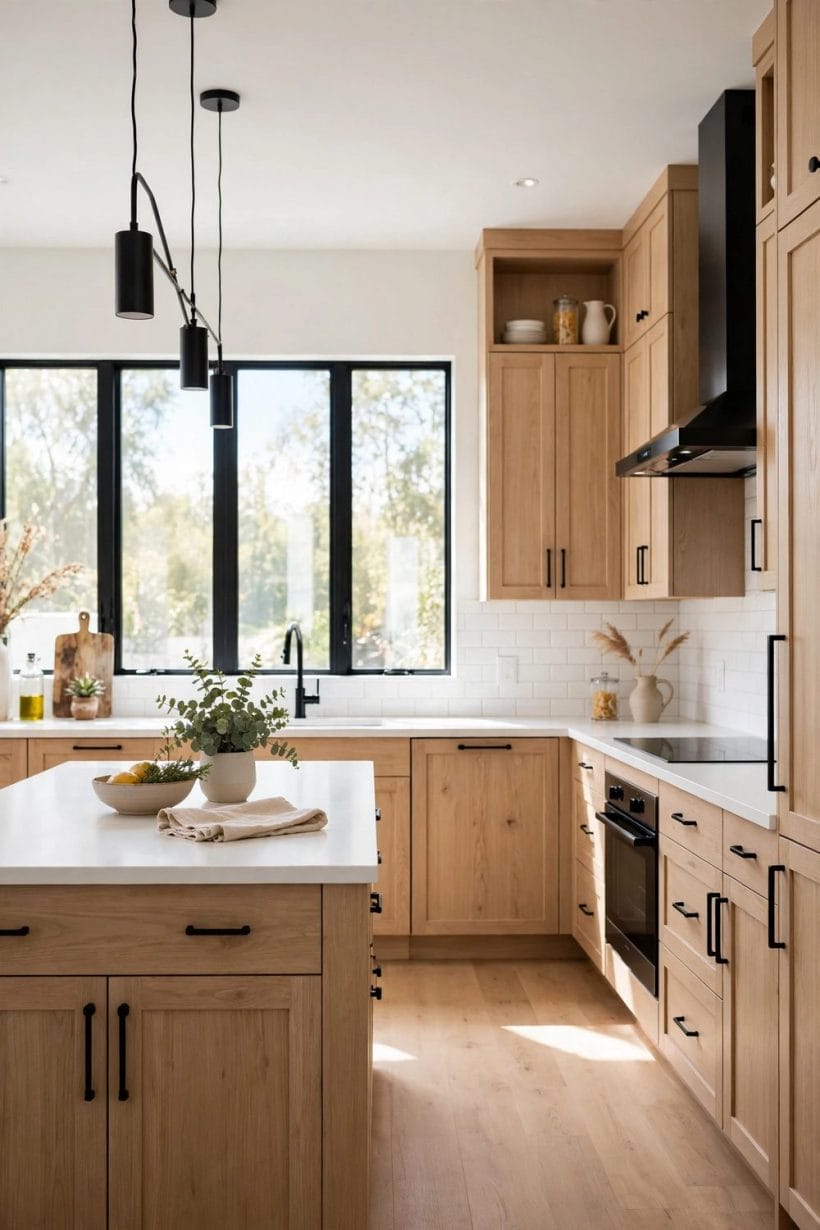
Oak is a strong visual material: a wall of it can warm a kitchen or overwhelm it, depending on how the layout shares the stage. These layouts give the timber the lead role while keeping the room balanced, borrowing the planning discipline of the kitchen ideas pillar throughout.
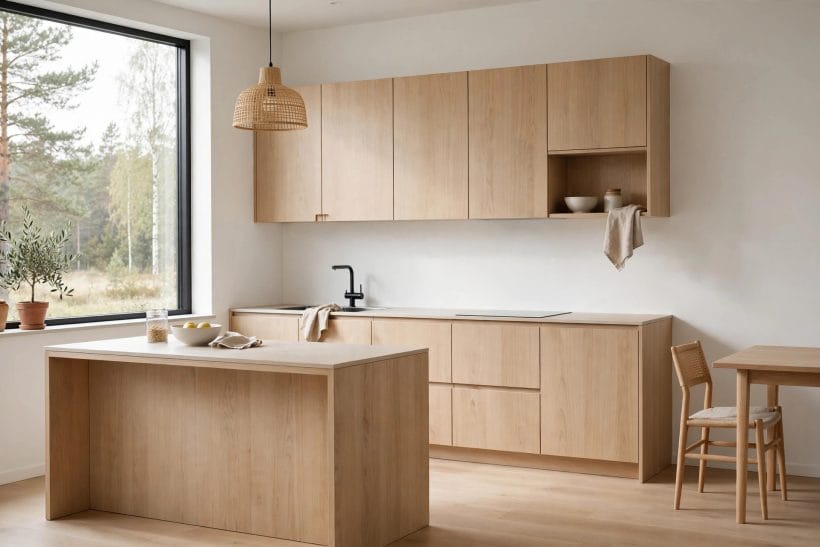
12. Run oak on the base cabinets and keep the walls light
The classic modern balance: oak below the worktop, where hands and eyes linger, and pale or open walls above.
13. Take oak floor-to-ceiling on one wall only
A single tall wall of oak — housing ovens, larders and the fridge behind matching fronts — reads as furniture architecture.
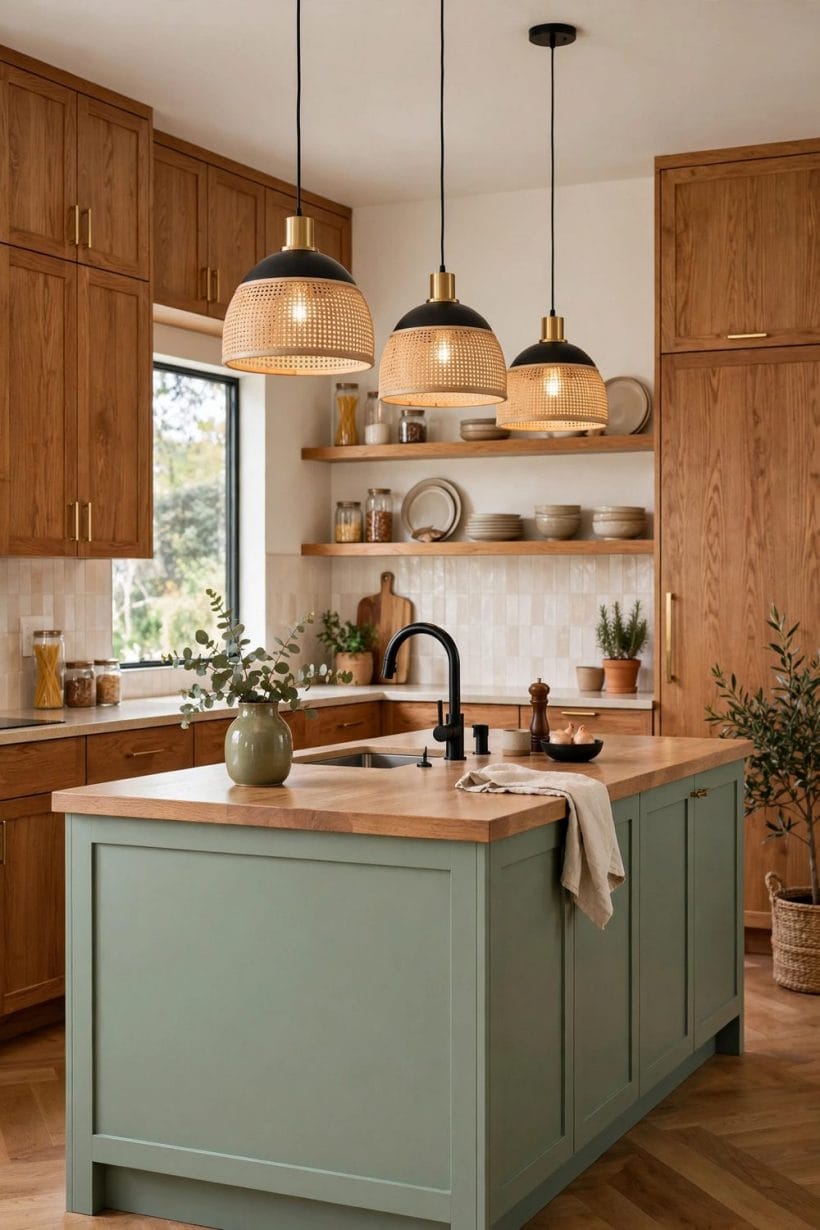
14. Put the island in oak and the perimeter in a quiet painted colour
The island is the kitchen’s stage, and oak dresses it beautifully while painted perimeter cabinets recede. The arrangement also confines the expensive timber to the piece that earns it, which budgets and eyes both appreciate.
15. Reverse it: painted island, oak perimeter
Where the island carries seating, stools and daily traffic, a durable painted finish may serve it better, with oak’s warmth wrapping the room’s edges instead.
16. Use open oak shelving to break a long cabinet run
Two or three open shelves in matching oak interrupt a wall of doors with air and display.
17. Let a galley kitchen wear oak on both sides, lightly finished
Narrow kitchens fear dark timber, but pale-finished oak on both sides of a galley can feel like the inside of a well-made boat — compact, warm, everything in reach.
18. House appliances behind oak fronts for a furniture room
Integrated appliances behind matching oak panels turn the kitchen toward a living-space mood, especially in open plans. The dishwasher and fridge disappear; what remains is a room of timber furniture that happens to cook beautifully.
19. Give the larder its own oak moment
A walk-in or cabinet larder lined in oak, with oak shelving and a timber worktop, is a small room of pure pleasure.
20. Plan the dining end in oak to join kitchen to table
Where the kitchen opens to eating space, carrying oak into a sideboard, shelving or the table itself stitches the zones together. The site’s breakfast nook ideas and its built-in banquette seating show the same trick at smaller scale: one material, repeated, makes two rooms one.
21. Keep tall oak runs off the window wall
Full-height cabinets against the light wall steal the room’s daylight and silhouette against the window. Keep tall units on the blind walls and let the window elevation stay low and bright, with oak working below the sill.
22. Let the layout breathe at the room’s entrance
The first elevation seen from the door sets the kitchen’s impression. A composed run — oak, a break of open shelf, the hob’s calm backdrop — at the entrance sells the whole room before a single close look is taken.
4. Pairing Oak with Worktops and Splashbacks
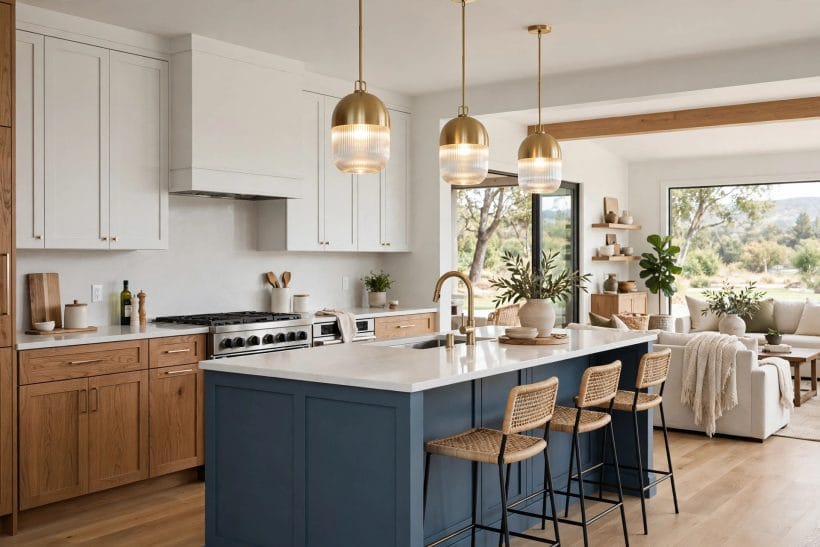
Oak’s partners decide its period. Stone, steel, tile and timber each pull the cabinet toward a different decade; choose the pairing by the room you want, not by habit — the what-to-check discipline of vintage kitchens applies, because most dated kitchens are pairings that stopped agreeing.
23. Pair pale oak with white stone for the calm contemporary
White or near-white stone worktops lift pale oak into the light, Scandinavian register that defines the modern oak kitchen.
24. Set dark worktops against mid-oak for definition
Charcoal, black or deep green worktops give mid-toned oak its outline and a tailored, masculine edge. The pairing suits north-facing rooms that can carry depth, and it hides the working day’s crumbs with unusual grace.
25. Run a timber worktop only where water does not live
Wood on wood is beautiful and high-maintenance around sinks. If timber worktops are loved, confine them to the island or the dry preparation run, keep stone at the sink and hob, and oil the timber like you mean it.
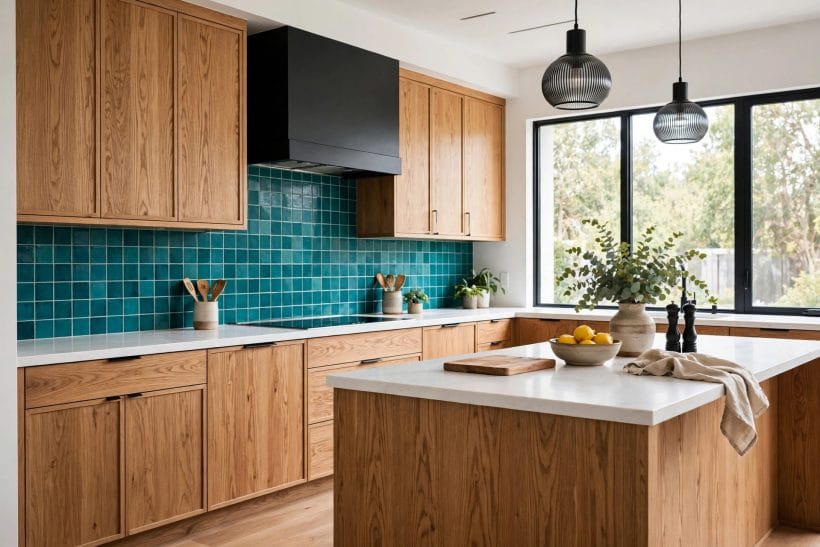
26. Choose a tiled splashback to add pattern without noise
A handmade-look tile in a soft neutral gives oak a crafted backdrop and catches light unevenly, the way good kitchens should.
27. Take the worktop material up the wall for a seamless line
A stone upstand or full-height splashback in the worktop’s own material gives oak cabinets a clean, architectural frame. It is the pairing modern joiners reach for when a kitchen must feel calm at family scale.
28. Use stainless steel where the kitchen works hardest
A steel run at the hob or sink brings a professional note that oak warms into friendliness. The combination — timber’s welcome, steel’s honesty — is the working heart of many chef-loved home kitchens.
29. Match grout and metal tones to the oak’s temperature
Warm oak wants warm grout and brushed warm metals; cool grey grout against honey oak is a small dissonance the eye never stops noticing.
30. Let the island’s worktop differ from the perimeter’s
Two worktop materials divide the kitchen’s labour elegantly: stone where heat and water live, timber or a softer finish where people gather and eat.
31. Avoid matching oak floors to oak cabinets exactly
Floor and cabinets in the identical tone merge into a timber fog. Offset them deliberately — floor paler or darker, a rug or a change of material between — so the cabinets read as furniture standing in a room, not as the room itself.
32. Bring black in through the splashback for a graphic edge
A deep, near-black splashback behind pale oak makes the grain glow and the whole elevation read designed. It is a bold pairing that stays tasteful because the colours are few and the materials are honest.
33. Keep the pairing rule: three materials, no more
Oak plus two partners — say stone and steel, or tile and timber — is a kitchen. Oak plus five is a showroom argument.
5. Colour Around Oak: Walls, Floors and Metals
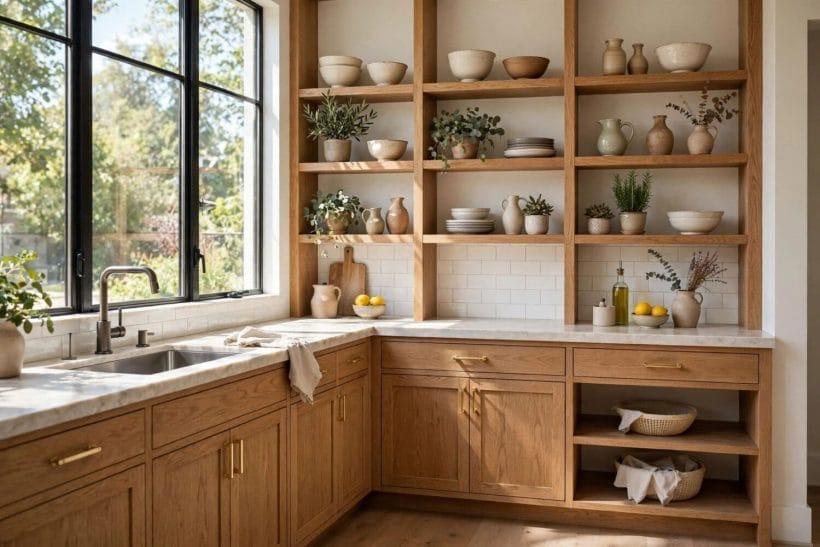
Oak supplies the kitchen’s mid-tone; everything else must decide whether to contrast it, echo it or leave it alone. The goal is a room where the timber looks intentional from every doorway.
34. Paint walls warm white to let oak be the colour
In most modern oak kitchens the walls retire: a warm, soft white that lets the grain carry the room’s colour.
35. Use sage and soft green where the garden shows
Green is oak’s oldest companion, and a muted sage on walls or an island flatters the timber while connecting the kitchen to the garden beyond the glass.
36. Try deep blue or charcoal on one element for contrast
A single deep element — the island, a dresser, the range’s backdrop — gives pale oak its shadow and the room its punctuation.
37. Choose flooring a clear step away in tone
Stone, tile or timber floors should sit visibly lighter or darker than the cabinets, with the contrast doing the separation work.
38. Carry the metal finish through handles, taps and lights
One metal family, consistently applied, makes oak look expensive; three metals make it look assembled. Brushed brass warms it, black sharpens it, steel professionalises it — choose the verb you want and repeat it.
39. Let textiles carry the accent colour cheaply
Linen curtains, a runner, seat cushions and towels can hold the room’s accent — rust, indigo, ochre — at a price that allows regret.
40. Mind the ceiling: pale, always, in an oak room
Oak draws the eye down and across; a pale ceiling returns the height the timber borrows.
41. Use lighting temperature to tune the oak’s warmth
Warm bulbs deepen oak toward honey; neutral daylight bulbs keep it pale and modern. The same cabinets can read traditional or contemporary depending on the light fitted, which makes lighting the cheapest period-switch in the room.
42. Bring the dining furniture into the palette deliberately
Where kitchen meets dining, the table and chairs enter the colour scheme whether invited or not. Echoing the cabinet oak in the table, or contrasting it cleanly, joins the rooms; ignoring it leaves two palettes arguing across an open plan — the joined-up approach in dining room ideas shows the stitching done well.
43. Keep window treatments quiet against timber
Oak’s grain is the room’s pattern; curtains and blinds should be plain, textural and calm beside it. A busy floral at the window and a busy grain on the doors is a quarrel neither wins.
44. Save one surprise for inside the cabinets
A painted interior — deep green, warm ochre — inside a larder or glass-fronted cabinet delights daily and disturbs nothing.
6. Modern Oak: Keeping It Light and Current
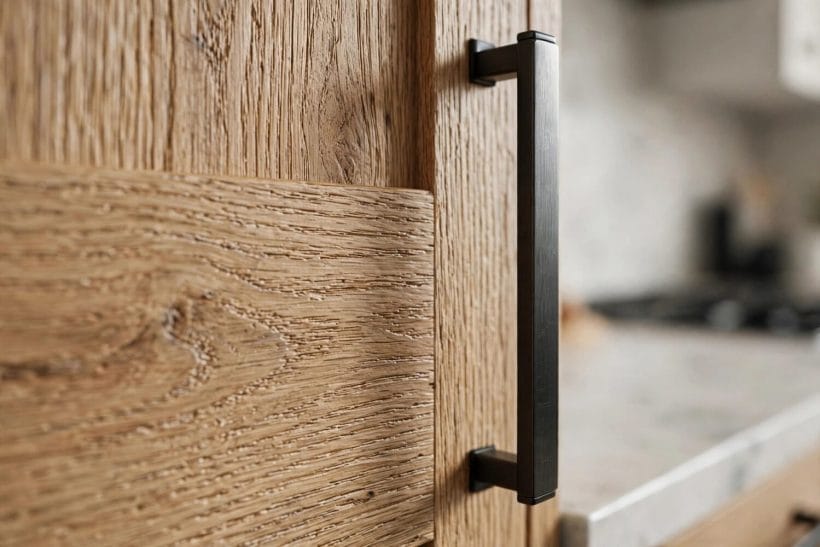
The modern oak kitchen is a discipline of subtraction: flat fronts, hidden handles, pale finishes and air around the timber. It borrows the farmhouse’s warmth and declines its clutter — and it is where most of the kitchens in this post are heading.
45. Choose flat slab fronts for the contemporary silhouette
Slab doors let the grain be the only ornament, which is the modern oak kitchen’s whole argument.
46. Hide the handles or make them a thin shadow line
Integrated pulls, push-to-open fronts and slim edge profiles keep the oak elevation unbroken. Where handles are wanted, choose a fine, architectural line in the room’s single metal and repeat it without variation.
47. Keep the finish pale: natural, limed or barely smoked
Modern oak is light oak. Finishes that add amber push the kitchen backward in time; the pale, matte, almost-raw look is what separates the current kitchen from its honey-toned ancestors in every photograph.
48. Let the island be a monolith
An island wrapped in oak on all faces, with a thin stone top and no visible clutter, reads as a piece of sculpture the family cooks around.
49. Open the upper walls: shelves or nothing
Modern oak kitchens often delete wall cabinets entirely, replacing them with a short run of open oak shelf or a bare, calm wall.
50. Integrate appliances until the room stops looking like a machine
Hidden fridges, flush ovens and a downdraft or ceiling extractor keep the modern oak room in furniture territory. The fewer black glass rectangles, the more the timber’s warmth governs the room’s mood.
51. Use vertical grain direction to lift the room
Grain running vertically on tall doors draws the eye up and makes ceilings feel higher; on wide drawers, a horizontal run can widen a narrow elevation.
52. Pair oak with micro-cement or plaster tones for softness
A soft, matte plaster-look wall or floor finish gives modern oak a gallery calm and a Mediterranean ease. The pairing is forgiving to live with and remarkably resistant to dating, since neither material is shouting.
53. Keep display ruthlessly edited on every surface
The modern oak surface holds a board, a bowl, a plant — three things, chosen. This is not minimalism for its own sake: the timber is busy enough visually, and clutter on oak reads twice as messy as clutter on paint.
54. Light the room in layers the timber can glow under
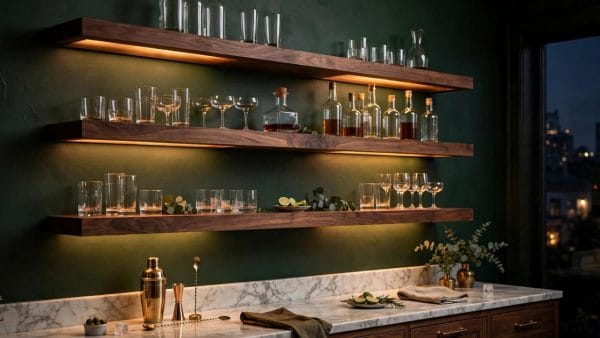
Under-shelf strips, a pendant line over the island, and dimmable ambient light let oak shift from workbench brightness to evening glow.
55. Let one heritage piece break the modern line
An old dresser, a farmhouse table, a single vintage stool — one inherited piece inside a modern oak kitchen keeps it human.
7. Storage and the Working Kitchen
Oak cabinets are opened a thousand times a year, and their insides decide whether the kitchen is loved or merely admired. Storage planning is where this post gets practical — the timber is the face, but the drawers are the biography.
56. Specify deep drawers where cupboards used to be
Drawers beat cupboards below the worktop almost everywhere: pans, crockery and machines all present themselves instead of hiding at the back.
57. Give the larder a full, planned interior
The oak larder should be designed shelf by shelf: shallow shelves for jars, deep ones for machines, a cool shelf low down, spice racks on the door.
58. Plan the corner honestly: carousel, pull-out or accepted loss
Corners are where kitchen storage goes to be forgotten. A quality pull-out makes the corner earn; failing that, store the rarely-used there knowingly.
59. Keep a charging and paper drawer to save the worktops
Phones, post, keys and chargers colonise worktops unless a drawer is assigned to them. One shallow oak drawer with power inside keeps the modern surface empty and the family’s admin out of the cooking light.
60. Build the bin and recycling into the run, generously sized
Sorting waste at a too-small bin is a daily small misery. A full-width pull-out with room for the household’s real streams, placed between sink and prep zone, is unglamorous and transformative in equal measure.
61. Use internal drawer organisers in timber to match
Cutlery and utensil inserts in oak or matching timber keep drawers calm and quiet — no rattling plastic in a room built for warmth.
62. Store boards and trays vertically in a divided slot
A narrow, divided cabinet near the oven for trays, boards and racks ends the clattering horizontal stack. It costs a hand’s width of run and returns order every single day the kitchen is used.
63. Put everyday crockery in a drawer, glasses near the dishwasher
Storage should follow the dishwasher’s unloading path: crockery low in a deep drawer, glasses in the nearest wall cabinet, cutlery in the drawer above its insert. Steps saved daily are the kitchen’s real luxury metric.
64. Reserve one cabinet for the tall and awkward
Vases, the big stockpot, the holiday platter — every kitchen owns objects no standard shelf fits.
65. Label nothing, but zone everything
A well-zoned kitchen teaches itself: baking by the oven, prep by the sink, breakfast by the kettle.
8. Care, Refreshing and Living with Oak
Oak’s great promise is that it can be kept: cleaned gently, repaired locally, and refreshed without demolition when tastes move. This closing section is the owner’s manual the showroom forgets to give.
66. Clean with the least that works
Warm water, a soft cloth and the mildest cleaner the maker allows — that is oak’s whole cleaning regime.
67. Re-oil oiled finishes before they look thirsty
An oiled oak surface announces its need quietly, by looking dry at the sink run and the hob’s side.
68. Expect the colour to settle in the first years
Oak mellows: fresh timber’s paleness warms slightly with light and time, and doors sheltered behind tall items may lag their neighbours.
69. Refresh the kitchen with handles and light before paint
When an oak kitchen feels tired, the honest refresh order is: lighting, handles, textiles, then the walls. The cabinets themselves are usually innocent; the room around them has simply drifted out of agreement with them.
70. Paint tired oak without guilt when the time truly comes
A sound oak kitchen whose colour has dated can be painted — properly prepared, it takes paint beautifully and keeps its joinery quality for decades more.
71. Keep spare boards and the finish recipe recorded
A labelled offcut, the stain’s name and the finish product, stored with the house papers, are gifts to your future self. Repairs and extensions in ten years become matches instead of approximations.
72. Watch the sink and dishwasher doors for water’s slow work
Steam and splashes attack the doors at the sink and dishwasher first. Wipe them as a habit, check their edges yearly, and reseal where the finish thins — the two doors that will ever trouble you are the two that get wet.
73. Let small dents be the kitchen’s diary
Oak records its life: the drawer front that met the stool, the door that caught a ring.
74. Plan extensions in the same species and cut
Adding a run years later succeeds when species, cut and finish are matched from records and samples, and fails when guessed from memory.
75. Pass the kitchen on with its instructions
When the house is sold, leave the oak’s care notes and finish details behind. A kitchen that arrives with its biography gets kept as it deserves — and the timber outlasts another family’s fashions, which was always oak’s promise.
9. Checks and Mistakes: Before the First Purchase or the First Fitting
Check the timber’s provenance claims as you would any material claim: ask the maker plainly what is solid, what is veneer, and over what core — the answer determines price, repairability and how the doors will age, and a good maker answers without flinching.
Check samples in your own kitchen’s light, morning and evening, before ordering: oak’s colour is unusually light-sensitive, and the showroom’s version of your chosen finish is not the version your north-facing room will deliver.
The commonest oak mistake is the total timber room — cabinets, floor, table and worktops all in near-matching oak. Offset at least two of the four and the kitchen composes; match them all and no single piece can be seen.
The second commonest is ordering the finish from a photograph. Screens lie about amber more than about any other tone; the offcut test in the first section exists because of expensive, orange surprises.
Check water’s routes before the pretty decisions: the doors at the sink and dishwasher, the worktop’s seal at the wall, the floor’s finish at the fridge. Oak forgives a great deal, but standing water is not on the list.
Finally, keep the records — species, cut, stain, finish, maker — with the house papers. An oak kitchen is a decades-long asset, and its paperwork is what lets future repairs match instead of approximate.
10. Costs and Pulling It Together
Oak kitchen costs gather in the cabinetry itself first — species, construction and finish — then in the worktops, the integrated appliances and the maker’s fitting. Stated generally, the durable pattern is that oak sits where quality painted joinery sits rather than where flat-pack sits, and its whole economic argument is longevity: a kitchen that can be refinished, repaired and repainted across decades asks to be paid for once, not three times.
Pulling it together: choose white oak in a calm cut and a pale finish, balance its weight in the layout, pair it with two materials at most, tune the room’s colours to its warmth, and plan the storage as carefully as the show wall.
Do that and the kitchen stops following fashion’s calendar entirely. Oak does not trend; it waits, warms and outlasts — which is why every generation rediscovers it and calls the rediscovery new.
Final Considerations
An oak-cabinet kitchen is a bet on material over fashion, and it is one of the safer bets a home offers: the timber can be lightened, darkened, painted or left to mellow, and it will out-work and out-last nearly everything installed beside it.
Choose the grain carefully, keep the finish honest and the palette quiet, and the room will feel current in the only sense that matters — fitted to its house, its light and the people who cook in it daily.


0 Comments