

Steam on the mirror, a towel already warm, water deep enough to float the day off your shoulders. A spa bathroom is not bought in a showroom — it is arranged, one calm decision at a time.
These seventy-five spa bathroom ideas cover layout, soaking, showers, materials, colour, storage and the finishing touches — the full attribute map of the room, with the clutter rules stated as firmly as the fixture ones.
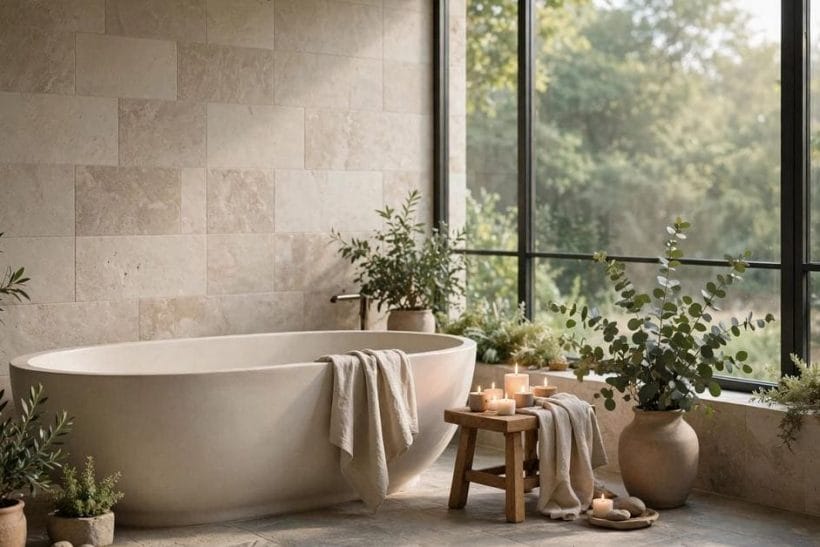
1. Spa Bathroom Ideas at a Glance
A spa bathroom is a bathroom designed around the bathing ritual rather than around throughput: its central entity is the soak-and-shower experience, and its attributes are a calm layout, deep water, warm materials, rested colour, edited storage and sensory finish. It sits inside the wider bathroom family tree under the bathroom ideas pillar, distinct from the luxury master bathroom’s scale and from the marble bathroom’s material statement — the spa’s luxury is behavioural: time, warmth and quiet, deliberately arranged.
| Question | Short answer |
|---|---|
| What makes a bathroom feel like a spa? | Calm layout, deep warm water, natural materials, rested colour, hidden clutter and layered warm light. The feeling is a system, not a single expensive fixture. |
| Does a spa bathroom need a big room? | No. Depth of water, edited storage and warm light matter more than floor area; a compact room arranged for one unhurried bather outperforms a large room arranged for speed. |
| Tub or shower — which is the spa essential? | The soak is the signature, but a steam-friendly shower with a bench runs it close. Most spa rooms do both modestly rather than one extravagantly. |
| Which materials suit a spa bathroom best? | Wood tones, stone, matte finishes and natural textiles — chosen for how they behave in steam and water, and kept consistent across the room. |
| How do I keep it looking like a spa? | Decant products, give clutter a closed home, quota the display surfaces and reset the room nightly. Spa calm is maintained, not installed. |
| What should I avoid? | Visible cleaning kits, cold light, echoing hard surfaces and five fragrances at once. Each is a small thing; together they are the difference between a bathroom and a retreat. |
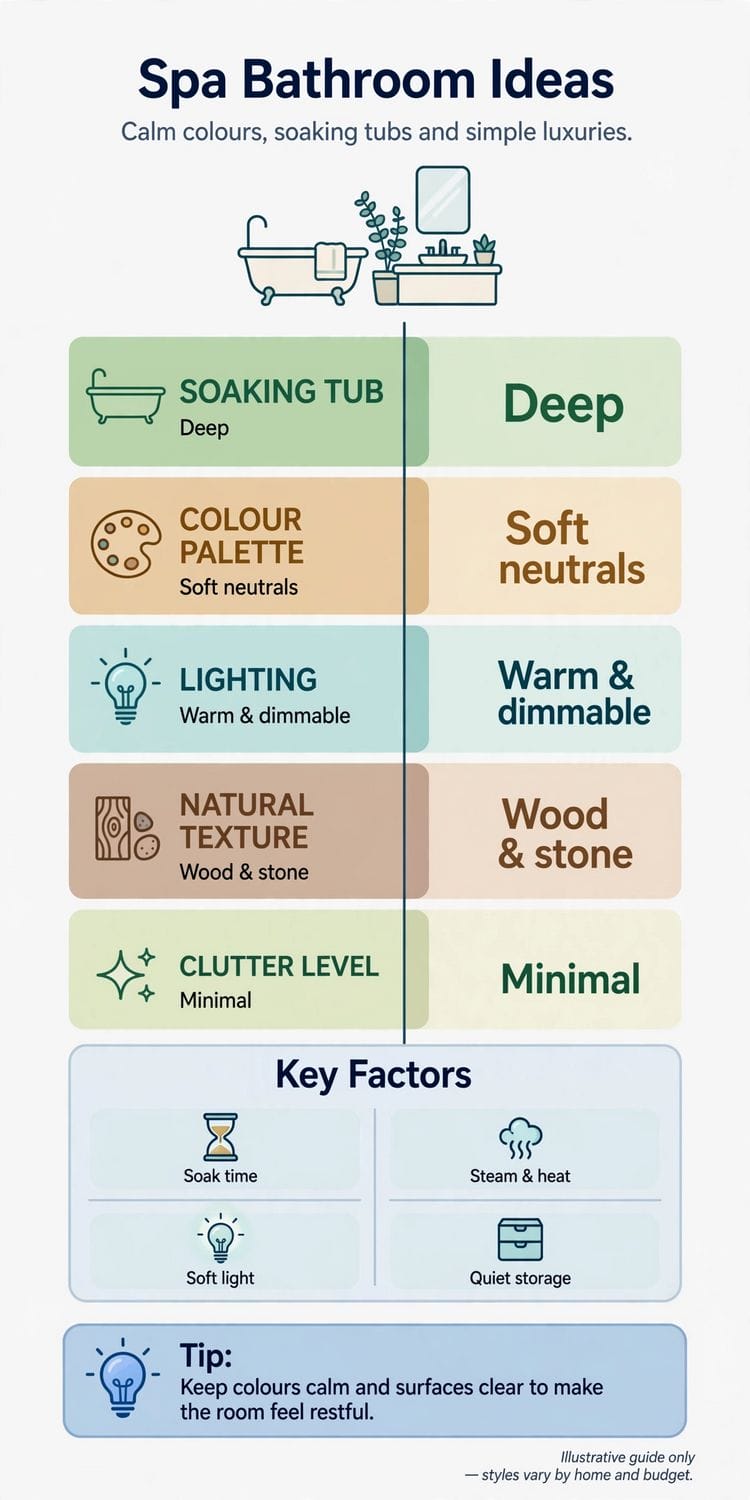
2. The Spa Layout: Space, Calm and Flow
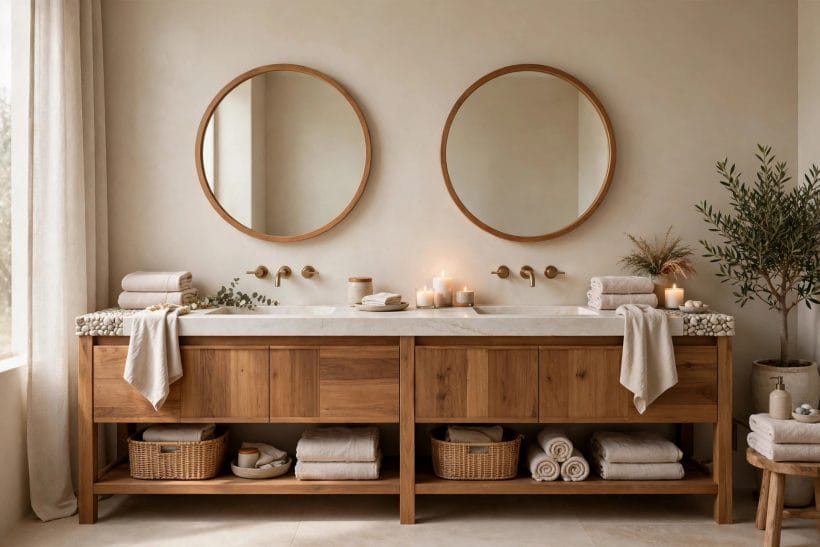
A spa bathroom is a layout decision before it is a shopping list: one calm room, fixtures placed for ritual rather than throughput, and nothing in the bather’s path that hurries them. The expert grounding in bathroom design tips applies throughout — spa is a discipline of space and light, not a price bracket.
1. Give the tub the room’s best position
In a spa layout the tub takes the place of honour — under the window, centred on a wall, or angled into the light.
2. Separate the wet zone from the dry zone
Spa calm collapses when towels, robes and toiletries live in the splash zone. A gentle division — a half wall, a change of floor, a step of level — keeps the dry side serene and the wet side honest about its job.
3. Keep circulation slow and obvious
The route from door to tub to shower should read at a glance, with no squeezing past vanities or stepping over thresholds.
4. Borrow the luxury layout’s best idea: breathing room
The lesson of luxury master bathroom ideas is not marble — it is space around each fixture. Even a modest spa bathroom can steal the trick: fewer pieces, generously placed, each given air on every side.
5. Place a bench or stool where dressing actually happens
Somewhere to sit while towelling, dressing or simply pausing is the spa fixture nobody lists and everybody uses.
6. Let one wall stay completely empty
An unbroken wall — no mirror, no cabinet, no art competing for attention — rests the eye the way silence rests the ear.
7. Plan twin basins only if the room truly serves two
A double vanity suits couples on the same clock; a single, wider basin with counter space either side serves one bather better and keeps the room’s lines calmer. Choose for the life actually lived, not the brochure.
8. Hide the WC or give it its own quiet corner
Spa atmosphere and the water closet are uneasy neighbours. A separate cubicle is ideal; failing that, a screened corner or a placement out of the tub’s sightline keeps the ritual half of the room undisturbed.
9. Use a level, walk-in floor where structure allows
A floor that flows without steps or shower trays feels instantly more spacious and more serene, and it is kinder to every age of bather.
10. Decide the door’s story: privacy without apology
A spa bathroom door should close softly, lock simply and never rattle. Sound privacy matters as much as the visual kind — the room cannot promise retreat if the household’s noise walks straight through it.
11. Leave floor visible: rugs small, mats washable
Bare floor reads as space; wall-to-wall bath carpets read as clutter. One washable mat at the tub and one at the basin, in natural fibres, keeps the spa line while staying honest about wet feet.
3. Tubs and Soaking: The Centre of the Ritual
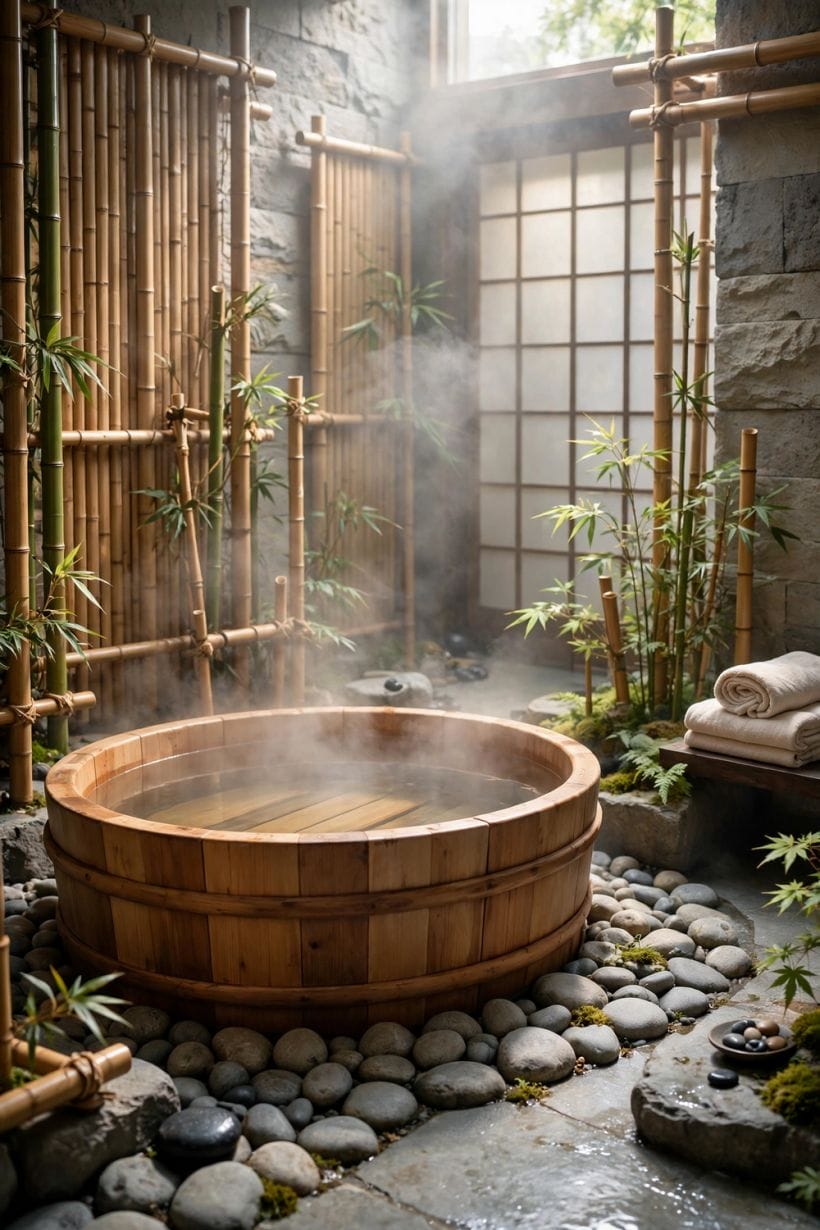
Everything in a spa bathroom orbits the soak. Depth, warmth, position and the small ceremonies around the tub — candles kept safe, a shelf for the book, water that stays hot — matter more than the badge on the brassware.
12. Choose depth over length for a true soak
A soaking tub is judged by how much of the body the water covers, and depth delivers that better than length.
13. Freestanding tubs earn their place by sculpture
A freestanding tub is furniture as much as plumbing: it gives the room a centrepiece and makes the floor visible all around it.
14. Set a back-to-wall tub where the room is narrow
Where width is scarce, a back-to-wall design keeps the freestanding silhouette while standing sensibly against the wall. It is the pragmatic spa shape for most real bathrooms — the ritual intact, the mopping possible.
15. Add a wooden bath caddy and keep it uncluttered
A simple caddy across the tub — book, glass, nothing more — is the spa’s smallest signature.
16. Think about how the tub fills and how long it takes
A vast tub on a modest water system fills slowly and cools as it fills. Match tub volume to the home’s hot water reality, stated generally with your installer, so the soak begins at the temperature the bather actually wanted.
17. Place candles safely or choose their electric stand-ins
Candlelight flatters every spa bathroom and forgives every finish. Keep real flames on stable, non-combustible surfaces away from towels and timber, or use good warm-white flameless candles — the glow matters more than the combustion.
18. Give bathers a warm place for the towel
A heated rail within arm’s reach of the tub ends the soak properly — nobody’s calm survives a cold dash across tiles.
19. Consider a Japanese-style soaking corner
A deep, compact soaking tub with a bench beside it borrows the oldest bathing ritual of all: wash first, then soak clean and unhurried. It suits small rooms surprisingly well, trading length for depth and ceremony.
20. Keep bath salts and oils in beautiful, closed containers
The spa shelf should look like a still life, not a supermarket. Decant the soaking supplies into a few closed jars and bottles, keep the rest in a cupboard, and the tub’s edge stays worthy of the ritual performed in it.
21. Let the tub face something worth looking at
A soak lasts longer than a shower, and the bather’s view matters: a window’s greenery, a calm stretch of wall, a plant on a stool.
22. Sound matters: a quiet fill and a solid floor
A tub that drums as it fills and a floor that creaks underfoot both break the spell. Solid fixing, sensible water pressure and a room with some soft surfaces keep the soak’s soundtrack to water and quiet.
4. Showers That Steam, Rain and Restore
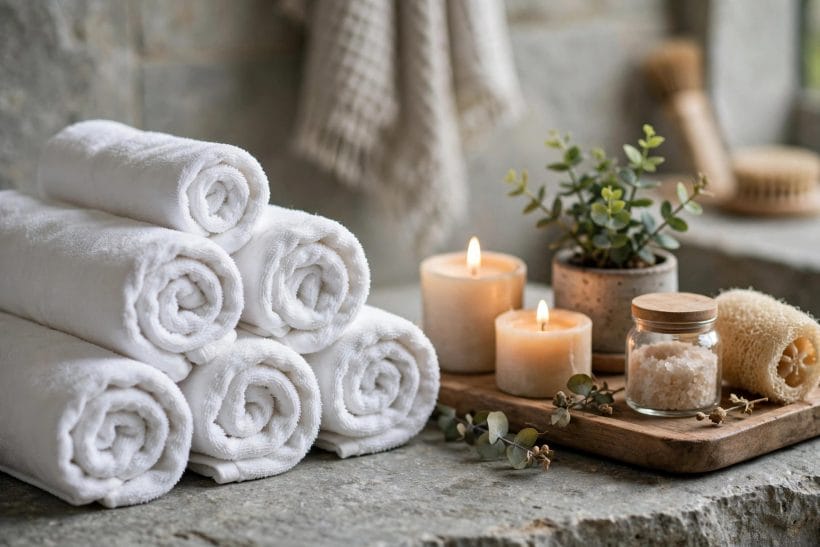
The spa shower is warmth delivered three ways: water from above like rain, steam held gently in the air, and heat kept in the room after both have stopped. It is the tub’s partner, not its rival.
23. Fit a generous rain head and keep a hand shower beside it
Rainfall water is the spa shower’s signature, but the hand shower does the real work — rinsing hair, washing down tiles, bathing children and dogs.
24. Build a bench into the shower if space allows
A seat inside the shower changes it from a washing place to a resting place: somewhere to sit under warm water, to shave legs safely, to let the steam do its slow work.
25. Let steam in gently, with ventilation that respects it
A steam-friendly shower has a door or screen that contains warmth and an extractor that clears it afterwards without draughts during. The balance is the craft — steam during the ritual, dry air after it, mould never.
26. Use thermostatic controls and set them once
Spa calm dies when the temperature hunts. A good thermostatic valve holds the chosen warmth through every flush and tap elsewhere in the house, so the shower stays a constant climate rather than a negotiation.
27. House bottles in a niche, never on the floor
A tiled niche at hand height keeps soaps and shampoos off the floor and out of the corners where they gather grime.
28. Choose large tiles or slabs for calmer walls
Fewer grout lines mean a quieter visual field and less scrubbing; large-format tiles or stone slabs give shower walls the spa’s signature stillness.
29. Warm the floor and the room forgives everything
Underfloor warmth — or simply a well-heated room — removes the spa shower’s last enemy: the cold step out.
30. Keep glass clear and frameless where possible
Frameless glass keeps the shower visually inside the room, so the space reads larger and calmer.
31. Add a second shower head only for a genuine second bather
Twin showers photograph beautifully and crowd honestly: two bathers need width, drainage and hot water to match. Fit the second head for a real routine, not a fantasy, and size everything else to serve it.
32. Light the shower warmly and simply
One warm, dimmable light inside the shower area beats a grid of downlights. Steam, warm water and low warm light together are the spa’s oldest recipe; bright white glare is the office’s, and it can stay there.
33. Finish with hooks and rails within the dry reach
The shower’s edge is a choreography: towel on its hook before the water stops, robe within one dry step.
5. Natural Materials: Wood, Stone and Texture
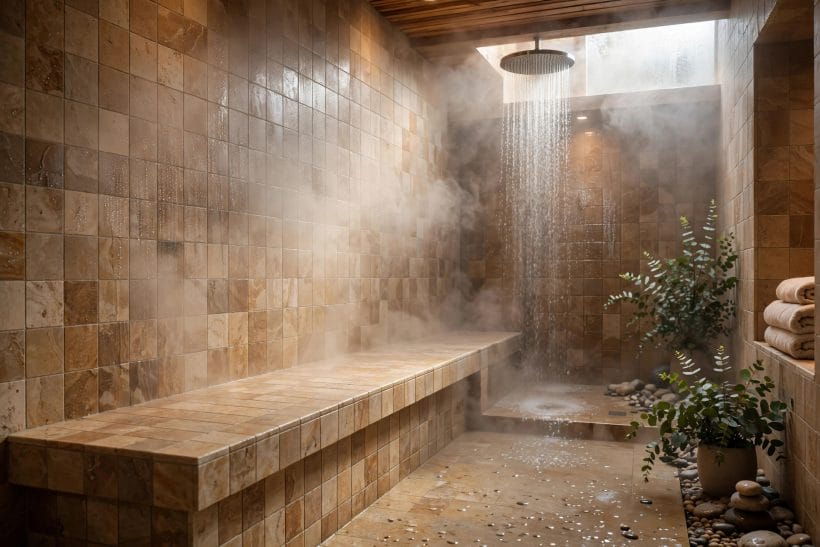
Spa style is mostly materials honesty: wood that warms, stone that cools, woven things that soften. Chosen for how they age in steam and water, they give the room its calm far more than any single fixture does.
34. Bring wood in through teak, bamboo and cedar tones
Wood is the spa’s warmth made visible. Naturally resilient species and wood-look finishes bring it to benches, bath caddies, stools and duckboards; keep real timber ventilated and oiled, and it will age gracefully rather than grey with neglect.
35. Use real stone where touch matters most
Stone underfoot and at the hand’s reach — a basin surround, a shower floor, a shelf — carries a cool, weighty calm no print fully imitates.
36. Let textured plaster or limewash calm the walls
A softly textured, mineral wall finish absorbs light instead of bouncing it, which is half the spa’s tranquillity explained. In wet zones it needs the right specification — take the installer’s advice for your room’s humidity.
37. Choose woven and natural textiles over synthetics
Linen-look towels, a cotton robe, a woven basket for spares: natural fibres feel right against skin and look right against stone and wood. They also wash and wear honestly, softening with age instead of shining with it.
38. Bring one large plant into the room’s damp light
A single generous plant — a fern, a peace lily, a trailing pothos in good light — is the spa’s living signature.
39. Keep metals warm and consistent
Brushed brass, bronze and warm nickel tones keep the spa palette cohesive; chrome reads cooler and more clinical. Whichever family you choose, carry it through taps, rails and handles so the room speaks one metallic language.
40. Use pebble and river-stone textures underfoot in the shower
A pebble shower floor massages the feet, drains willingly around its stones and looks like a stream bed doing quiet work.
41. Let the vanity be furniture, not a cabinet
A vanity with legs, a timber top and space beneath reads as furniture and keeps the floor — and the room — feeling open. The storage discipline it demands is covered in master bathroom ideas: spa storage is always edited storage.
42. Add one woven or rattan piece for softness
A rattan stool, a woven laundry basket or a bamboo ladder for towels breaks the room’s hard surfaces with hand-made irregularity.
43. Prefer matte finishes everywhere the hand lands
Gloss reflects, sparkles and shows every water mark; matte absorbs light and forgives the room’s daily steam. Matte tiles, honed stone and satin metal together give the spa its characteristic hush.
44. Let scent be a material too
Eucalyptus at the shower head, a cedar block in the towel cupboard, one candle scent kept as the room’s signature — scent is the spa layer guests remember longest.
6. Colour and Light for a Restful Room
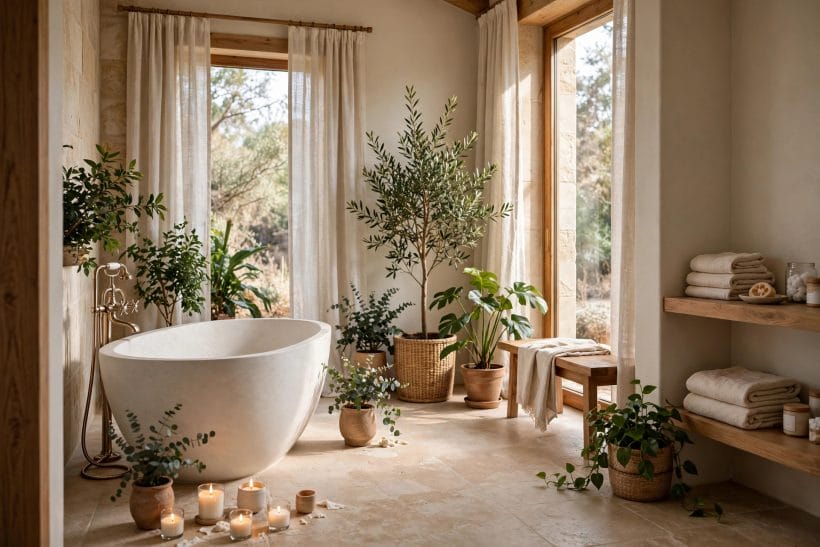
Spa colour is a short palette kept faithfully: warm whites, stone greys, clay and sage, lit warmly and dimmably. The seaside version of the same calm appears in coastal bathroom ideas — different accent, identical discipline.
45. Start with a warm white and build down in tone
Warm white walls with slightly deeper tones in textiles and timber give the spa its layered calm without a single jarring contrast.
46. Use sage and eucalyptus greens as the living accent
Muted green is the spa’s natural accent colour — it flatters skin, suits plants and timber, and never shouts.
47. Try clay, sand and stone neutrals for warmth without colour
Where green feels like a commitment, the earth neutrals deliver warmth in a quieter voice. Clay-toned towels, sand-coloured tiles and stone-grey grout build a palette that photographs calmly and ages without dating.
48. Keep one darker note for depth
A single deep note — a charcoal bath mat, a dark timber stool, a slate shelf — stops the pale palette from floating away.
49. Light in layers and make every layer dimmable
Ambient light for cleaning, low light for soaking, a candle-grade glow for evening: the spa room needs all three and a dimmer is how it gets them. Bright white light should be available, never compulsory.
50. Put the mirror’s light at face height, from the sides
Light from above carves shadows into faces; light from the sides at face level flatters and functions. Twin wall lights beside the mirror are the spa’s kindest fitting and the one every bather will thank daily.
51. Guard natural light’s privacy without killing it
Frosted glass, a high window, a sheer blind or planting outside the glass — the spa bather wants daylight without an audience.
52. Match bulb warmth across the whole room
One cool bulb among warm ones makes the room feel broken. Warm-white throughout, matched deliberately, keeps the spa’s evening glow coherent from the doorway to the depths of the shower.
53. Let black appear only as punctuation
A black tap, a thin black frame, a single dark accessory — punctuation sharpens a pale spa palette the way it sharpens a sentence.
54. Test colours in the room’s real light before committing
Spa palettes live or die by the window’s direction and the evening’s bulbs. Paint boards and tile samples should be judged in the room at morning and at night; the calm you are buying exists only in that specific light.
55. Keep the ceiling pale and the floor grounded
A pale ceiling lifts the room’s air; a floor a tone or two deeper anchors it.
7. Vanities, Storage and the Clutter-Free Rule
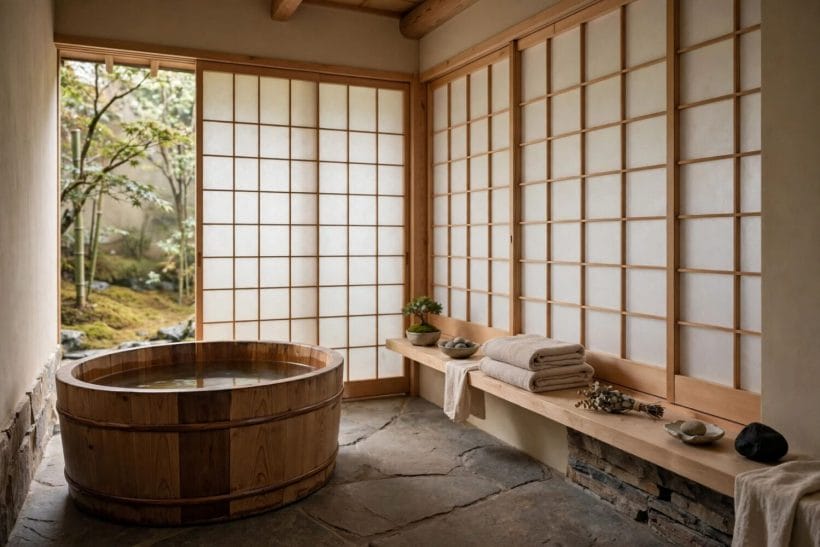
The spa’s hardest rule is invisible: nothing on show that is not beautiful. Storage exists to enforce it — a home for everything, decided by how often it is used, as modern bathroom ideas also insists in a different accent.
56. Decant daily products into uniform containers
Five mismatched bottles are clutter; the same products in three plain dispensers are a composition. This single, cheap edit does more for spa calm than most renovations, and it makes the cleaning wipe-down faster too.
57. Give every bather one drawer or basket of their own
Shared surfaces breed shared mess. A personal drawer, basket or shelf per bather keeps private clutter private, and the vanity top returns to its proper population: soap, a plant, nothing else.
58. Store cleaning things outside the ritual space
Bleach bottles and scrubbing brushes have no spa in them. Keep the cleaning kit in a hallway cupboard or a closed cabinet, so the bathroom’s visible world contains only what bathing needs.
59. Use the double-sink lesson: counter space is storage too
Double-basin layouts show how quickly sinks eat counters. In a spa room, protect clear counter at all costs — it is where towels fold, candles stand and the eye rests.
60. Hang robes and towels on hooks, not over doors
Hooks placed deliberately — warm wall, right height, enough for every bather — keep textiles aired, tidy and part of the room’s softness. The over-door tangle is the spa’s most common small defeat.
61. Keep a lidded basket for laundry and one for spares
Two baskets, both lidded or lined: one receives the day’s laundry, one holds rolled spare towels like a hotel shelf. The system is prettier than a hamper pile and kinder to the room’s air.
62. Choose a mirrored cabinet over a bare mirror
The cabinet hides the medicine shelf’s honest chaos behind the same glass the bather uses. In a spa room, where visible clutter is the enemy, storage behind the mirror is the hardest-working decision in the plan.
63. Keep the windowsill and tub edge under a strict quota
One plant, one candle, nothing else — a quota on the room’s display surfaces keeps them compositions rather than shelves. When something new arrives, something else leaves; the spa is edited, not accumulated.
64. Build a small stool-side table habit instead of ledges everywhere
One movable stool beside the tub serves book, glass and candle, then returns to its corner. A single servant beats a room ringed with ledges, each collecting its own permanent exhibition of bottles.
65. Audit the room monthly with spa eyes
Clutter returns by millimetres: a gifted candle, a second shampoo, a child’s bath toy fleet. A short monthly audit — what here would a spa not display?
8. Finishing Touches: Scent, Plants and Quiet Detail
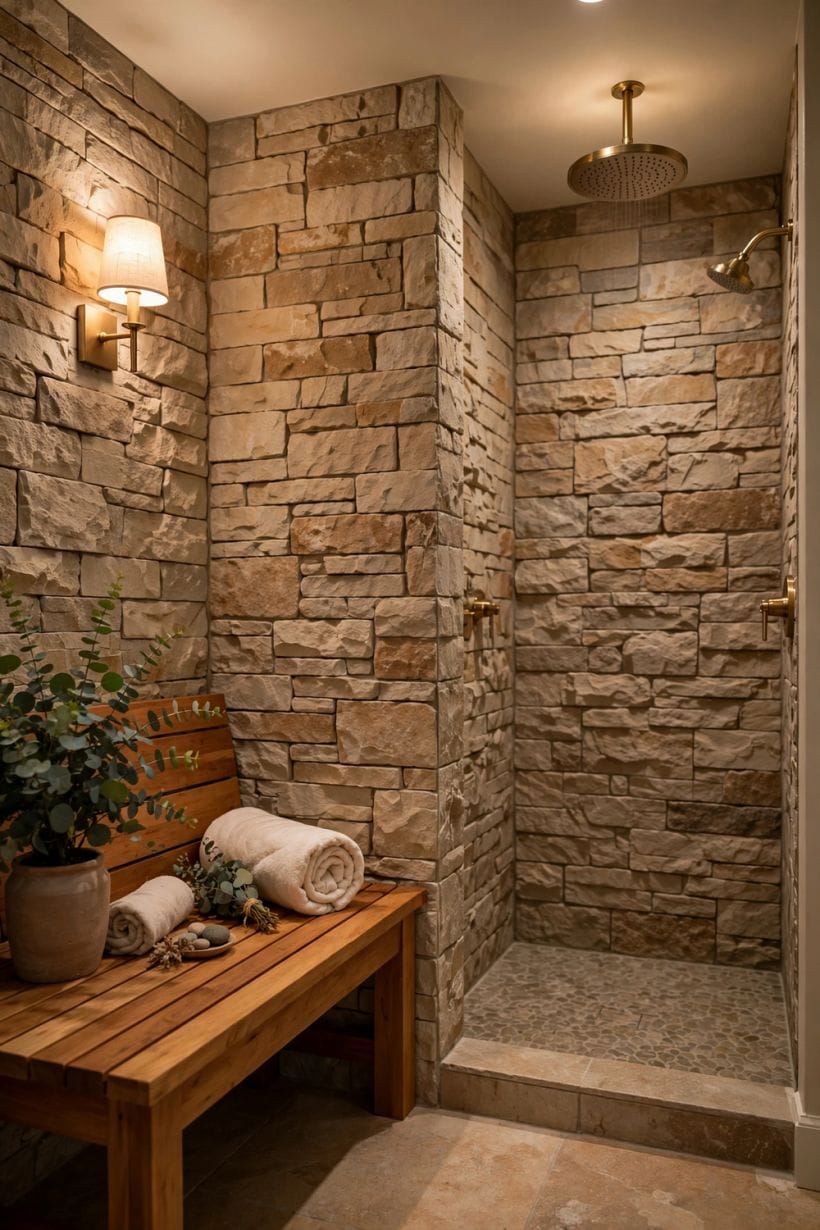
The last layer is the one bathers remember: warmth on entry, a living green note, water sounds softened, and small kindnesses placed where the ritual needs them. It is detail, but detail is the whole product.
66. Warm the towels, chill nothing
A heated rail is the finishing touch bathers feel in their bones. Combined with a room that never greets bare feet with cold tiles, it makes the spa promise physical: in this room, comfort is premeditated.
67. Hang eucalyptus at the shower head
A bunch of eucalyptus tied where the steam rises releases its scent exactly when wanted and asks nothing but replacing when it fades. It is the spa’s easiest ritual object — cheap, natural and unmistakably deliberate.
68. Add a waterproof speaker or none at all
Music or quiet nature sounds suit long soaks for many bathers; for others, silence is the luxury.
69. Keep a carafe and glass by the tub
Hydration is part of the bathing ritual’s honesty — long hot soaks ask for water. A simple carafe on the stool or caddy is a small, civilised provision that proper spas never forget and homes rarely do.
70. Choose bath linens in one colour family
Towels, robes and mats in a single tonal family make the room read as composed even mid-use. Mixed colours are the visual equivalent of several conversations at once; the spa speaks in one voice.
71. Place a plant where it will be seen from the tub
The bather’s long view deserves a living thing: a fern on a stool, a trailing plant on a high shelf.
72. Soften the room’s sounds
Hard rooms echo; spas absorb. Towels on rails, a mat underfoot, a timber bench and a door that closes softly together hush the room’s acoustics, so water sounds arrive gentle instead of bouncing.
73. Keep a small tray for jewellery and watches
Rings and watches come off at the basin and deserve a designated, safe landing — a small ceramic tray by the mirror. Rituals run on such tiny kindnesses, and lost rings are the opposite of calm.
74. End the day with the room reset
The spa’s final touch is a habit, not an object: bottles niches, towels hung, the mat shaken, the candle out.
75. Let one personal object carry the room’s heart
A stone from a beach, a wooden bowl, a framed print of somewhere loved — one object with a story keeps the spa from feeling like a hotel.
9. Checks and Mistakes: Before the First Purchase or the First Fitting
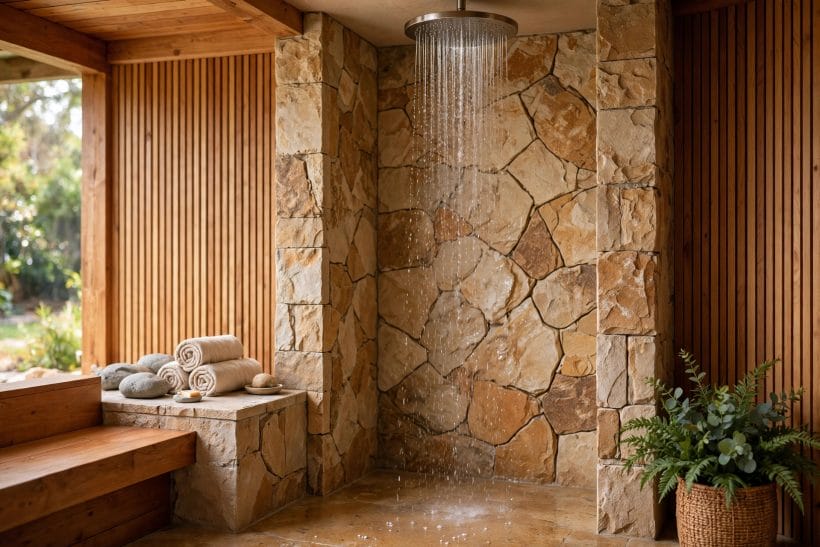
Check water and steam behaviour before aesthetics: a steam-friendly shower in a room whose ventilation cannot clear it will grow mould in the grout and peel the paint within a season. Ventilation sized and installed properly comes first; the ritual comes second.
Check hot water capacity against the tub you are dreaming of, with your installer, in general terms: a deep soaking tub is a large draw, and a system that cannot fill it hot turns the spa’s centrepiece into a lukewarm compromise.
Never place real candles where towels, timber or bathers’ elbows can reach them, and never leave them burning in an empty room — flameless candles give the same glow with none of the risk.
The commonest spa mistake is buying the fixtures and skipping the system: the tub arrives, but the storage, light and warmth that make it a spa never do. Budget the invisible layers first — they are cheaper and they are the point.
The second commonest is clutter creep: one visible bottle becomes five, and the room reverts to bathroom. The monthly audit in the storage section is not housekeeping fussiness; it is how the design survives contact with real life.
Finally, check anything structural or electrical — wet-room floors, moved plumbing, new circuits — with qualified trades and local rules. Spa serenity built on a leaking floor former is a short-lived serenity.
10. Costs and Pulling It Together
Spa bathroom costs gather where the senses notice: the water system and its capacity, the tub and shower fittings, the floor’s warmth, ventilation, and the materials the hand touches daily. Stated generally, the pattern from the site’s wider bathroom work — including the material-led marble bathroom — is that money spent on warmth, water and storage outperforms money spent on spectacle, and the cheapest spa upgrades of all are edits: decanting, decluttering and dimming.
Pulling it together: arrange the layout for one unhurried ritual, put deep warm water at its centre, wrap it in natural materials and rested colour, hide everything that is not beautiful, and finish with scent, green life and warmth at the towel rail.
Do that and the room stops being where the day is washed off and becomes where it is set down — which is all any spa, at any scale, has ever really sold.
Final Considerations
A spa bathroom is the most achievable luxury in the home because so much of it is arrangement rather than expenditure: space around the tub, bottles behind a door, light that can sink to a glow. The seventy-five ideas above build that system piece by piece.
Start with the soak, edit everything else, and let warmth — of water, of light, of welcome — be the room’s signature. The ritual is waiting at the end of every ordinary day.

0 Comments