
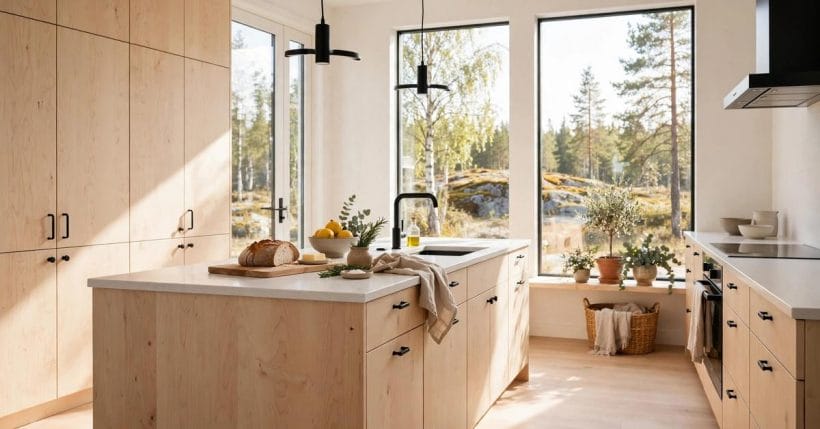
Pale wood, flat fronts, no fuss. A natural maple slab kitchen is the quiet answer to years of grey paint and ornate joinery: the timber itself — light, fine-grained, faintly honeyed — does all the decorating, and the flat slab door refuses to compete with it.
These 75 ideas work through natural maple slab cabinets properly: the finish, the layouts, the counters and hardware that suit them, and the care they need — with costs kept to honest drivers, stated generally.
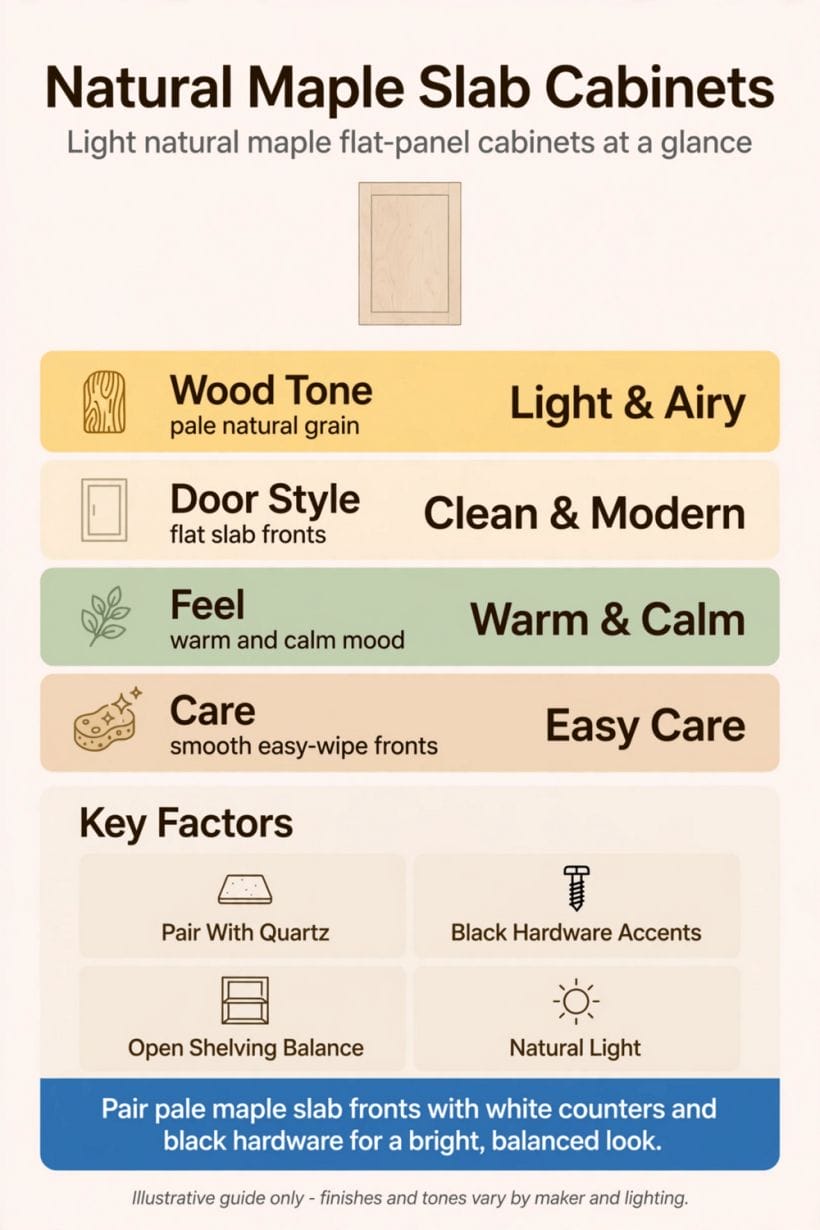
1. Natural Maple Slab Cabinets at a Glance
Scope first. This post owns one cabinet specification: natural-finish maple with flat slab fronts, in kitchen settings. The neighbouring reading lives elsewhere on the site: kitchen ideas for the room as a whole, the kitchen cabinet quality guide for how any cabinet is built, cabinet pricing for what drives a quote, dark cabinets with dark floors for the opposite colour gamble, laundry room cabinets for the same decisions in the utility room, and bathroom countertops for counter materials in depth. Here, everything is pale maple and flat fronts.
One rule governs the whole post: maple is a light wood that deepens slowly with age, so every choice below — counters, hardware, light — is made for the kitchen it will be in five years, not just the day it is fitted.
| Aspect | Character | What it means |
|---|---|---|
| Wood Tone | Light & Airy | Pale natural grain that brightens the room |
| Door Style | Clean & Modern | Flat slab fronts with no raised panels |
| Feel | Warm & Calm | Warmth without visual weight |
| Care | Easy Care | Smooth, easy-wipe fronts with no dust ledges |
2. The Pale Natural Finish
1. Clear-coat natural maple, nothing added
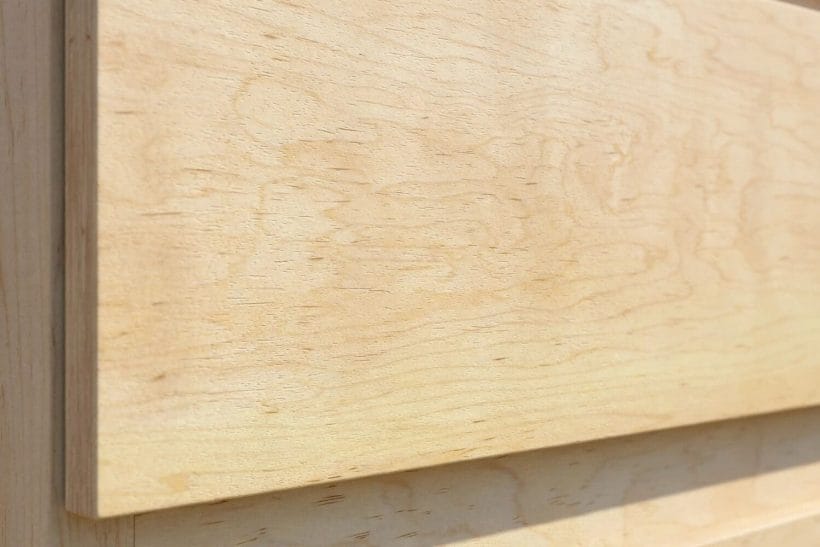
The purest version: maple sealed with a clear finish so the grain shows exactly as it was sawn — pale cream sapwood, the odd darker streak, a calm surface that asks for nothing beside it. Choose boards from the same batch so the tone runs evenly across the room.
2. A whisper of whitewash over maple
A heavily diluted white wash knocks back the honey tone and keeps a maple kitchen reading cool in strong southern sun. It is a finish to sample on offcuts first — the same wash sits differently on every board — and to agree with the maker before a full run is coated.
3. Matte finishes for a modern calm
Low-sheen lacquers suit slab fronts best, because a flat door has no moulding to catch the light and a gloss would show every fingerprint instead. Matte also keeps pale maple looking like timber rather than plastic, which is the whole point of choosing a real wood.
4. Letting the wood deepen with age
Maple mellows towards a warm amber over the years, darkening fastest where daylight strikes it. Plan for the deeper tone when you choose floors and paint, and rotate nothing — the change is gradual, even and, to most eyes, an improvement on the day-one pallor.
5. Grain matched across a run of fronts
On slab doors the grain is the pattern, so ask for fronts cut in sequence from the same flitch and hung in order. The grain then flows from door to drawer like a single sheet of timber, and the kitchen reads as crafted rather than assembled.
6. Subtle figuring: bird’s-eye and curly maple
Some maple carries figure — tiny bird’s-eye knots or a rippling curly grain that shifts in the light. Used across a whole kitchen it can shimmer too much; used on one run, an island or a larder bank, it becomes the room’s quiet jewellery.
7. Two tones of maple in one kitchen
Natural maple below and a slightly deeper stained maple above — or the reverse — gives a tall room structure without introducing a foreign colour. Keep the split at a natural break, such as the counter line, and repeat it nowhere else.
8. Maple with the island in a deeper stain
A single stained island anchors a pale room and gives the eye a resting place. Choose a stain that stays inside maple’s own family of honey and amber tones, so the island reads as the same wood grown darker rather than a stranger.
9. Sample boards in your own light
Pale woods are chameleons: northern light cools them, evening sun warms them, and LED colour temperature shifts them again. Live with large sample boards for a few days, against your floor and walls, before committing a whole kitchen to a finish.
3. Slab Fronts and Clean Lines
10. Full-overlay slab doors, minimal gaps
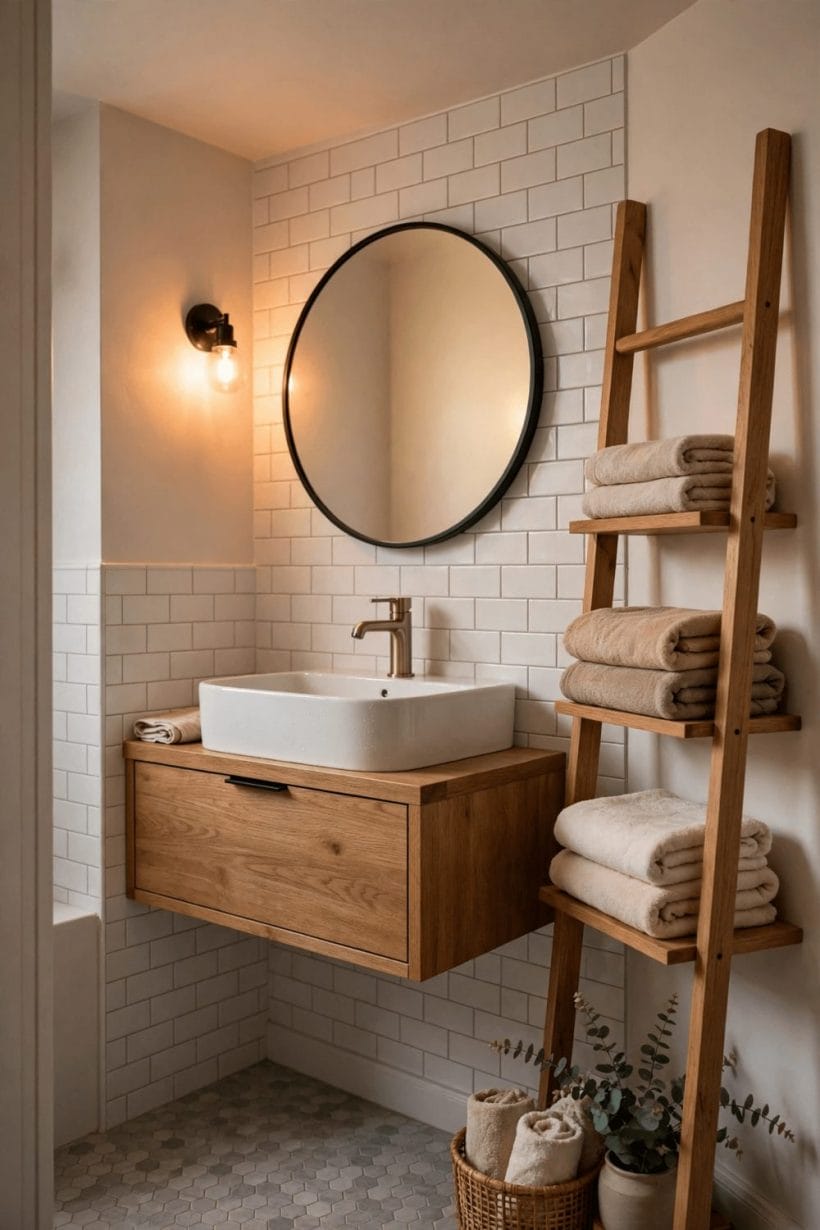
Slab fronts look best fitted full-overlay with tight, even gaps, so the run reads as one timber surface broken by shadow lines. That precision is the style’s whole ornament — budget for careful fitting rather than decorative extras.
11. Handleless slabs with a bevelled edge
A machined finger pull along the top edge of each front keeps the surface completely unbroken. It suits pale maple beautifully, though the bevel collects kitchen grease where fingers land and needs a wipe-down habit to stay crisp.
12. Push-to-open fronts for a seamless wall
On a tall larder wall, push latches remove handles entirely and the cupboards read as panelling. Keep one handled run for the working core of the kitchen — push mechanisms on every door can tire where hands are wet or full.
13. Long bar handles on wide drawers
Wide pan drawers in maple take a long, slim bar handle well: the horizontal line echoes the grain and gives a proper grip for a heavy drawer. Match the handle length to the drawer width so the proportions look deliberate.
14. Slab fronts on integrated appliances
Continuing maple slabs across the fridge and dishwasher fronts keeps the timber run unbroken and the room calm. Confirm the appliance models accept a furniture door of the right weight, and keep the grain direction consistent with the neighbouring units.
15. Drawer banks instead of cupboards
Deep drawers under the counter store more and show it all at a glance; in slab maple they also draw three clean horizontal lines across the room. Put the drawer bank where the pans and crockery live, beside the hob and dishwasher.
16. A slab-front larder wall
Floor-to-ceiling slab doors in pale maple turn storage into architecture: one warm timber wall, everything behind it. Break the run with a single open niche or a contrasting interior so the wall does not read as a corridor of doors.
17. Frameless cabinets for the fullest timber face
Frameless (European-style) construction shows the maximum door surface and the minimum carcass, which is exactly what a slab design wants. It also gains a little internal width in every unit — worth having in a small kitchen.
18. Edgebanding that disappears
A slab door’s edge is always visible, so the edging matters: real maple veneer edging, well applied, reads as solid timber, while a mismatched plastic edge cheapens the whole run. Inspect a sample door’s edge before you order the kitchen.
4. Layouts That Suit Pale Maple
19. The galley kitchen in one pale run
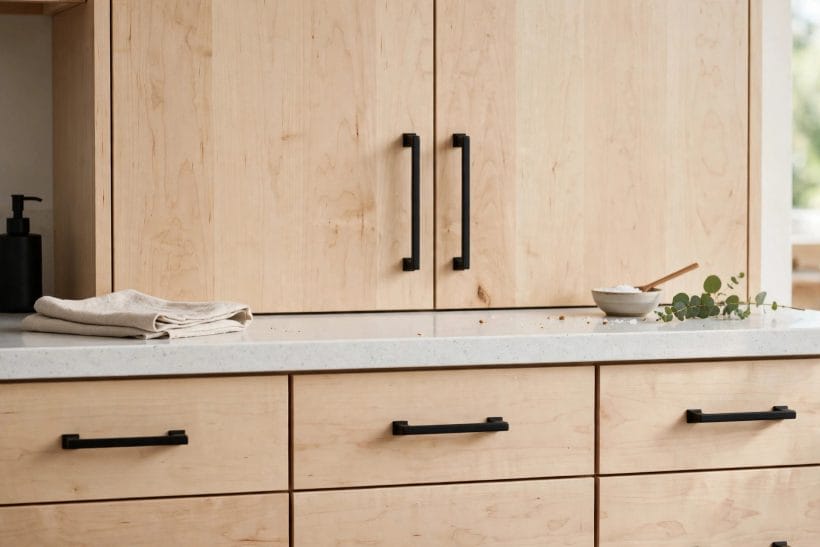
A galley in natural maple feels wider than it is, because the light timber bounces daylight down the corridor. Run the tall units on one side only, keep the opposite run low, and the passage stays airy rather than tunnel-like.
20. L-shaped maple with a corner larder
The L-shape is maple’s home ground: two calm runs and a corner that earns its keep as a walk-in or carousel larder. Keep the corner solution simple — the best corner unit is the one whose contents you can actually reach.
21. A maple island as the room’s centre
An island wrapped in slab maple gives the kitchen a single block of warm timber to gather around. Waterfall ends, where the counter material drops to the floor, suit stone; a timber island is better finished with a simple shadow gap.
22. U-shaped maple for the keen cook
Three runs of pale maple enclose the cook without darkening the room — a layout where a heavier wood could feel oppressive. Watch the two corners: plan one for storage hardware and leave the other as simple shelving.
23. A single-wall kitchen in a small flat
One wall of slab maple, tall units at one end and the sink under the window, is the small-space classic. The flat fronts and pale tone keep the room’s living side feeling un-kitchened when the cooking is done.
24. Peninsula instead of an island
Where a full island will not fit, a peninsula of maple gives the same extra counter and seating with one side against the wall. It also zones an open-plan room gently — a timber edge between kitchen and sitting space.
25. A tall bank against the short wall
Grouping oven housing, fridge and larder on the shortest wall leaves the long walls low and light. In slab maple the tall bank reads as one furniture piece, and the room’s sightlines stay open above counter height.
26. Maple in an open-plan room
Open-plan living is where pale slab maple earns its keep: it is the kitchen finish least likely to shout across a shared room. Repeat one maple element — a sideboard, a shelf — in the living zone to tie the two halves together.
27. A breakfast counter in matching maple
A raised counter or overhang in the same maple, on the island’s outer face, seats two without a separate table. Keep the seating side’s slab fronts dummy — storage there is knee-deep and rarely worth the hardware.
5. Pairing Counters and Backsplashes
28. White quartz for the classic pairing
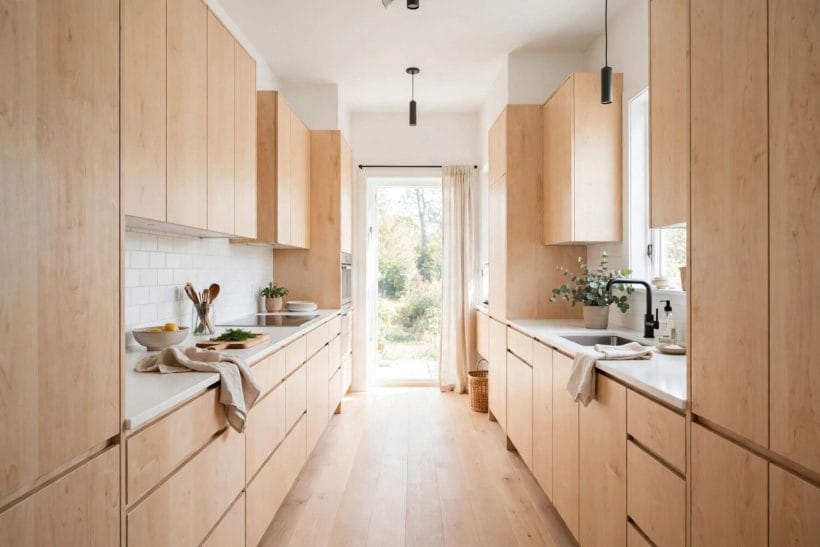
Plain white or faintly veined quartz is the proven partner: cool against maple’s warmth, practical, and quiet enough to let the timber lead. It is the pairing the infographic recommends, and the one that dates slowest.
29. Pale stone with soft grey veining
A light natural stone with gentle grey movement adds pattern without colour — useful in a big, plain run of maple where everything risks reading flat. Seal stone properly and accept its gentle upkeep as part of the bargain.
30. Butcher block on the island only
Timber on timber works if the tones differ: a deeper oiled block on the island against pale maple fronts gives warmth with contrast. Keep stone or quartz at the wet and hot zones, where wood counters ask for more care.
31. Honed black counters for contrast
A matte black counter flips the scheme: pale cabinets, dark work surface, and the grain suddenly looks richer. It shows crumbs and watermarks more honestly than white does — choose it with your eyes open and a cloth nearby.
32. Stainless steel at the working run
A steel counter along the hob and sink run brings a professional note and shrugs off heat and water. Against maple it reads Scandinavian-industrial; keep the rest of the room soft so the steel does not chill it.
33. A simple white tile backsplash
Plain white tiles in a brick pattern, with a mid-grey grout, are the budget classic behind maple. The grout colour does the styling: pale grout disappears, darker grout draws a grid that echoes the slab fronts’ shadow gaps.
34. A full-height stone splashback
Running the counter material up the wall gives one continuous, wipeable surface and a calm backdrop for pale wood. It is the expensive option per metre, but the wall behind a hob is exactly where the money shows.
35. Maple-toned splashback for a seamless look
A timber or timber-effect splashback continues the maple field up the wall — beautiful behind a sink run, risky behind a hob, where heat and splashes demand a non-combustible, cleanable surface. Follow the hob maker’s clearances.
36. Zellige-style tiles for gentle texture
Handmade-look tiles with uneven glaze give a plain maple kitchen its texture in reflected light rather than colour. Choose a warm white or oat tone so the tiles sit inside maple’s palette instead of fighting it.
6. Hardware and Fixtures
37. Black hardware, the proven accent
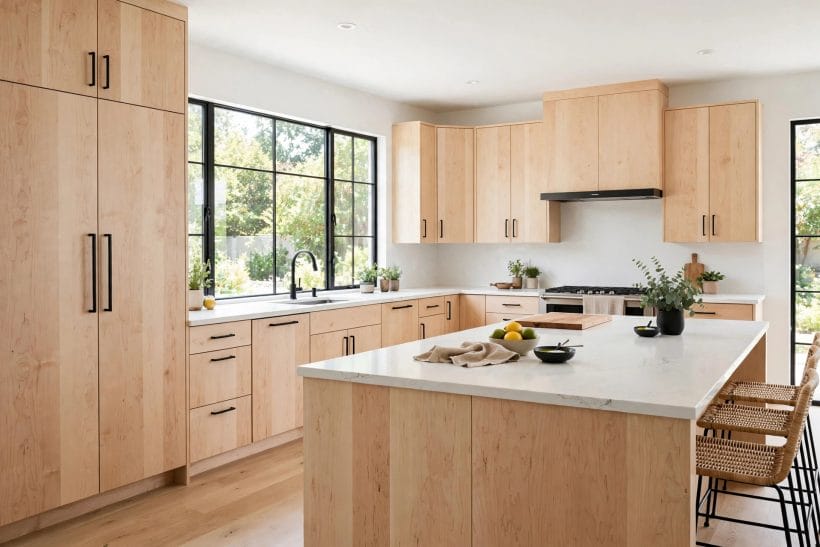
Matte black handles and taps are the standard accent against pale maple: the contrast is crisp, the black picks up nothing in the wood, and it never dates. It is the second half of the infographic’s pairing advice, and it earns the place.
38. Brushed brass for warmth on warmth
Unlacquered or brushed brass warms an already warm kitchen into something golden — lovely in evening light, risky in a north-facing room where it can turn the palette muddy. Live with a sample handle against the door before deciding.
39. Stainless handles to match the appliances
Where appliances are on show, handles in the same steel finish tie the room together quietly. It is the least decorative option and the easiest to live with, though it lacks the punctuation that black provides.
40. Wooden knobs for a cottage reading
Turned maple or beech knobs soften slab fronts towards the cottage end of the spectrum. The look suits a country house; in a city flat it can read as indecision between modern and traditional, so commit or abstain.
41. A black tap to anchor the sink
One black tap over a white sink, in a sea of pale wood, is the single most effective fixture choice in a maple kitchen. It marks the wet zone, repeats the handle finish, and costs no more than chrome.
42. Integrated handles in a routed channel
A channel routed into the top of each front, sometimes lined in a darker timber or metal, gives a grip with no applied hardware at all. It is a maker’s detail — confirm the maker offers it before designing around it.
43. Cup pulls on the drawer bank
Half-moon cup pulls suit wide drawers and a slightly traditional leaning, and they are kind to hands. In black or aged brass they bridge the gap between slab modernity and farmhouse comfort better than most handles.
44. Matching the hinge and runner finish
Hardware you glimpse — hinge plates, drawer sides, cutlery inserts — should not jar. Pale maple interiors with light grey or timber inserts keep the illusion complete when a drawer is opened in front of guests.
45. One statement pendant over the island
A single oversized pendant, or a run of black ones, gives a pale kitchen its exclamation mark. Hang lighting decisions after the cabinets are chosen: the fixture should answer the timber, not lead it.
7. Open Shelving and Glass Balance
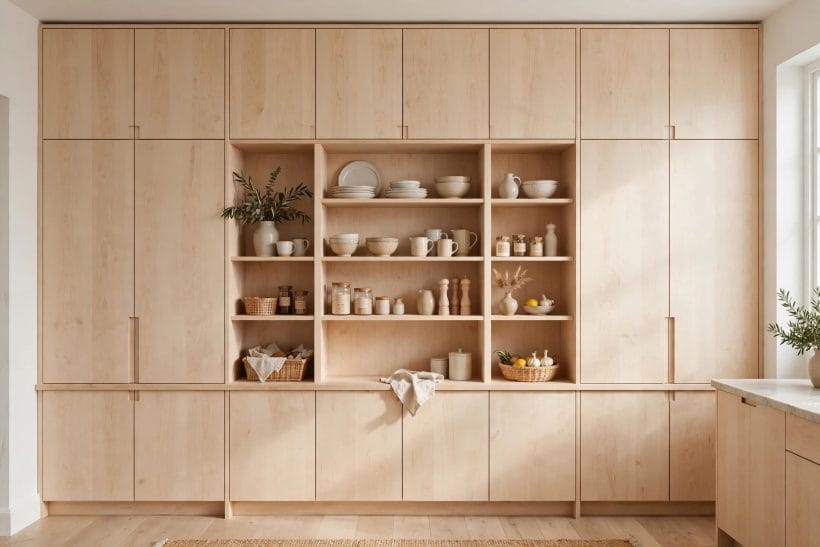
46. One run of open maple shelves
Replacing one wall cabinet with two open shelves in the same maple keeps the material story while breaking the boxiness. Put the everyday crockery there — shelves earn their keep by being used, not styled.
47. A single shelf over the sink
The wall over a sink is splash territory and awkward for cupboards; one maple shelf for glasses and a plant is the practical answer. Keep it shallow so nothing crowds the tap’s swing.
48. Glass-fronted cabinets in a maple frame
Two glass doors in a long maple run add depth and display without open-shelf dust. Fluted glass hides the jumble while showing the shapes — the forgiving option for real kitchens with real contents.
49. A plate rack in matching maple
An open plate rack over the dishwasher zone is old-fashioned in the best way: plates drain, store and display in one move. In slab maple it must be custom-made, which makes it a deliberate splurge, not an accident.
50. Open shelving at the breakfast end
Shelves near the table end of the kitchen, holding bowls, mugs and cookbooks, turn storage into the room’s casual face. Keep the cooking end closed and calm; the contrast between the two zones is the design.
51. A maple-lined niche in the tall bank
One open niche — for the coffee station, the fruit bowl, the radio — humanises a tall wall of slab doors. Line it in the same maple, light it simply, and resist filling it beyond its one job.
52. Shelves instead of wall cabinets throughout
The boldest version: no wall cabinets at all, just maple shelves on a tiled or plastered wall. It makes a small kitchen feel twice the size and demands tidy habits; the pale wood keeps it looking serene rather than sparse.
53. Corner shelves that turn the L
Open shelves wrap a corner more gracefully than a corner cabinet and lose nothing to the dark at the back of a cupboard. Round the shelf ends if small people pass at head height.
54. A bookshelf end on the island
The island’s outer end, built as open maple shelves, holds cookbooks where they are used and faces the room with something friendlier than a blank panel. Keep the lowest shelf for heavy books and boards.
8. Light, Small Kitchens and Storage Sense
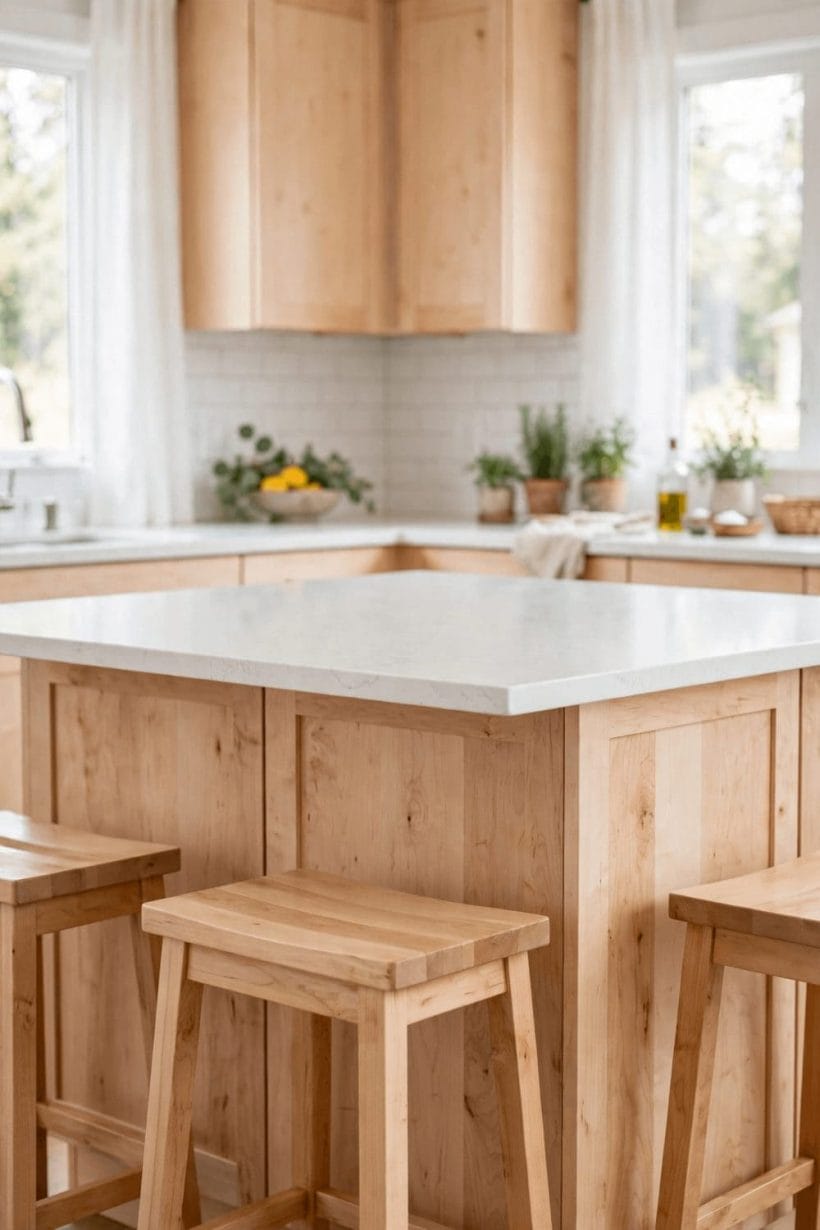
55. Maple where the window light lands
Pale maple is at its best in daylight, glowing where the sun reaches it. If the kitchen has one good window, put the long maple run in its light and the appliances in the shade — the reverse of the usual instinct, and the better room for it.
56. Under-cabinet lighting to keep it bright
Wall cabinets shadow the counter; slim LED strips under them restore the working light and warm the maple’s tone in the evening. Choose a warm-white colour temperature so the wood does not turn grey under its own lights.
57. Small kitchens: slab maple is the cheat code
Flat fronts, pale colour, no visual clutter: a small kitchen in natural maple borrows light from every surface. Keep handles minimal, counters pale and the floor only a shade or two deeper than the cabinets.
58. A tiny kitchen with tall maple units
In a very small room, taking slab units to the ceiling in pale maple gains a shelf’s worth of storage and, because the colour is light, costs no sense of space. The top shelf is for the seasonal and the seldom-used.
59. Pull-out larders behind slab fronts
A tall pull-out behind one maple front stores a week’s dry goods in a footprint a hand’s breadth wide. The mechanism is the cost; the convenience, in a small kitchen without a pantry, is close to priceless.
60. Drawers with maple-fronted inserts
Timber cutlery inserts and pegged drawer organisers in a matching pale wood keep the inside story consistent. They are the kind of detail guests notice once and remember — the signature of a considered kitchen.
61. A maple kitchen in a rental-friendly spec
Where the cabinets are the landlord’s, the maple effect can still be borrowed: pale wood accessories, a maple chopping block station and light textiles. The ideas in this post scale down as gracefully as they scale up.
62. Bin and recycling drawers, hidden in slab
The least glamorous drawer is the most used: a wide, deep bin drawer beside the sink, behind an unmarked maple slab. Plan it at the start — retrofitting bin storage into a finished run is disproportionately awkward.
63. Lighting the grain with a picture window
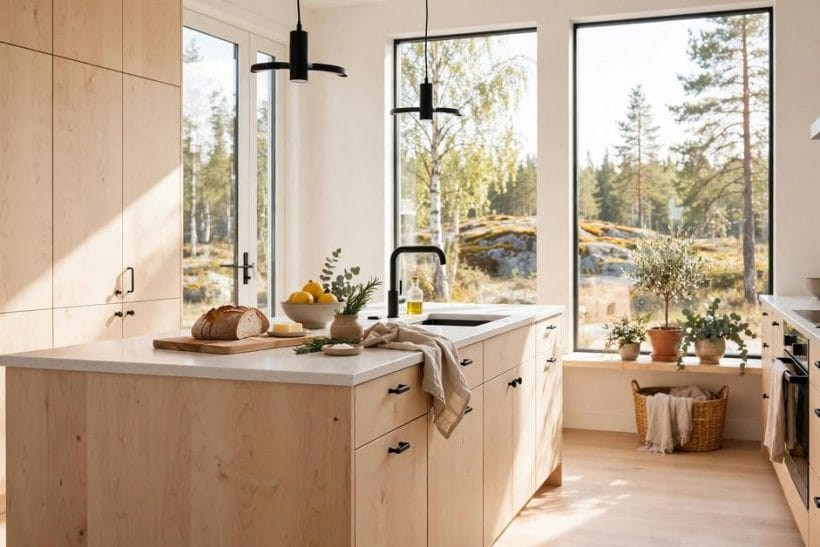
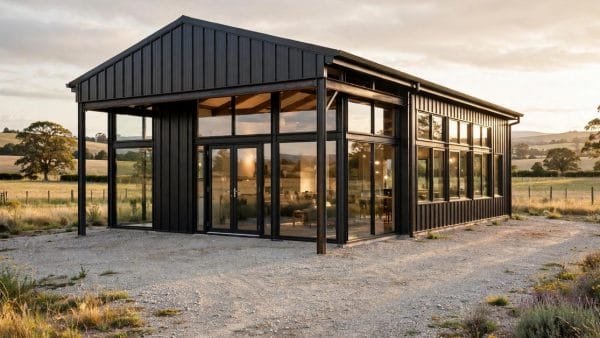
A big window or glazed door at the end of a maple run — as in this post’s feature photograph — turns the cabinets into the view’s frame. If you are choosing where money goes, glass at the garden end repays it daily.
9. Colour Companions and Styling
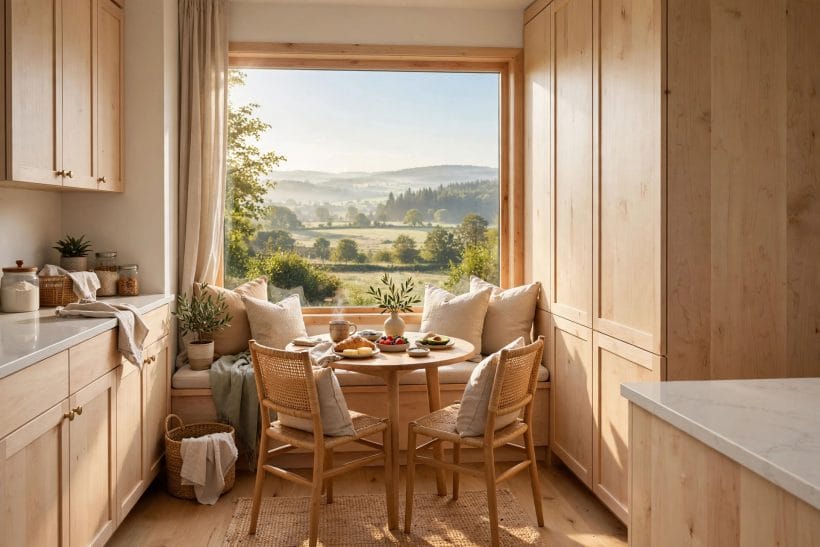
64. Soft white walls, the safe companion
Walls in a warm, soft white let maple be the room’s colour. Avoid blue-whites, which make pale maple look yellow by comparison; the paint cluster on this site — starting with the white-paint comparisons — covers the undertones in depth.
65. Sage green as the accent colour
A muted sage — on a island stool, a blind, a painted dresser — is maple’s most sympathetic colour partner, green against honey like a woodland floor. Keep it to accents; a full green wall can swallow the timber’s delicacy.
66. Black-framed windows and doors
Steel-look black glazing repeats the hardware at architectural scale and sharpens a soft scheme. It is the combination in most of this post’s photographs, because it works: pale wood, white surfaces, black lines.
67. A deeper wood floor for grounding
Maple cabinets over a floor only slightly deeper in tone — a mid oak, a smoked pine — ground the room without contrast drama. Match undertones, not colours: warm floor with warm maple, never a grey-washed floor under honey wood.
68. Terracotta and clay accents
Pots, tiles and textiles in clay colours warm a maple kitchen towards the Mediterranean without touching the cabinets. They also forgive the wood’s slow ambering, since the whole palette drifts warm together.
69. Plants against pale timber
Green foliage is the cheapest styling a maple kitchen can get: herbs on the sill, a trailing plant on the tall unit. The pale wood is the perfect foil — every leaf shows against it.
70. Ceramics and linen in natural tones
Stoneware, unbleached linen and woven baskets continue the material story at tabletop scale. A maple kitchen styled in plastic brights looks confused; styled in its own family of naturals, it looks inevitable.
71. One vintage piece for contrast
A single dark antique — a dresser, a stool, a clock — gives a pale new kitchen its history and stops it reading as a showroom. The contrast flatters both pieces, and the rule is strictly one.
72. Keeping the styling quiet
Maple slab kitchens are calm by design; styling should whisper. Few objects, natural materials, clear counters — the room’s luxury is its emptiness, and every added object should have to argue its way in.
10. Costs, Care and Final Checks
Costs, stated as drivers only: solid maple fronts cost more than veneered ones, and veneer more than a timber-effect foil — all three exist in slab form, and the honest differences are edge durability and repairability rather than looks on day one. Frameless construction, grain-matching, tall units and hardware mechanisms move a quote more than the choice of maple itself. The cabinet pricing guide breaks those drivers down; the construction details behind them are in the cabinet quality guide.
73. Cost drivers, stated generally
The doors are the visible money: solid maple, then veneer, then foil, in descending order of price and repairability. Mechanisms — soft-close runners, pull-outs, latches — are the invisible money. Decide which matters more to you before the quotes arrive, because every maker prices the balance differently.
74. Care: what natural maple asks of you
Wipe spills promptly, keep standing water off the fronts, and clean with a soft cloth and mild detergent — slab doors have no ledges, so a full wipe-down takes minutes. Expect the tone to deepen gently; protect the most sun-struck fronts from harsh direct light if an even tone matters to you.
75. The maple kitchen that lasts
The specification that endures is a boring one: sound carcasses, honest fronts, hardware you can replace, a finish you can maintain. Natural maple slab cabinets reward that plainness — they are a twenty-year choice wearing a minimalist face, and the rooms in this post are the proof.
Final Considerations
Natural maple slab cabinets succeed on restraint: one pale timber, one flat front, and the discipline to let hardware, counters and light do the talking. Choose the finish in your own light, match the grain across the run, and pair the wood with white surfaces and black lines — the formula is simple because the material is doing the work.
If your kitchen is small, dark or short on storage, this is one of the few specifications that helps with all three at once. Light in colour, flat in profile and warm in character, natural maple is the rare modern choice that also feels like home.

0 Comments