

Ask what an acre costs and the honest answer is a question back: where? Land is the one part of a tiny house project that cannot be standardised, shipped or negotiated down by choosing a different model, because every acre is a specific place with a specific road, slope, soil and set of rules attached. That is why the land cost tiny house buyers actually pay is rarely the figure on the listing. It is the listing plus everything the listing quietly assumes: access that works, utilities within reach, ground that can be cleared and levelled, and paperwork that allows a home to sit there at all.
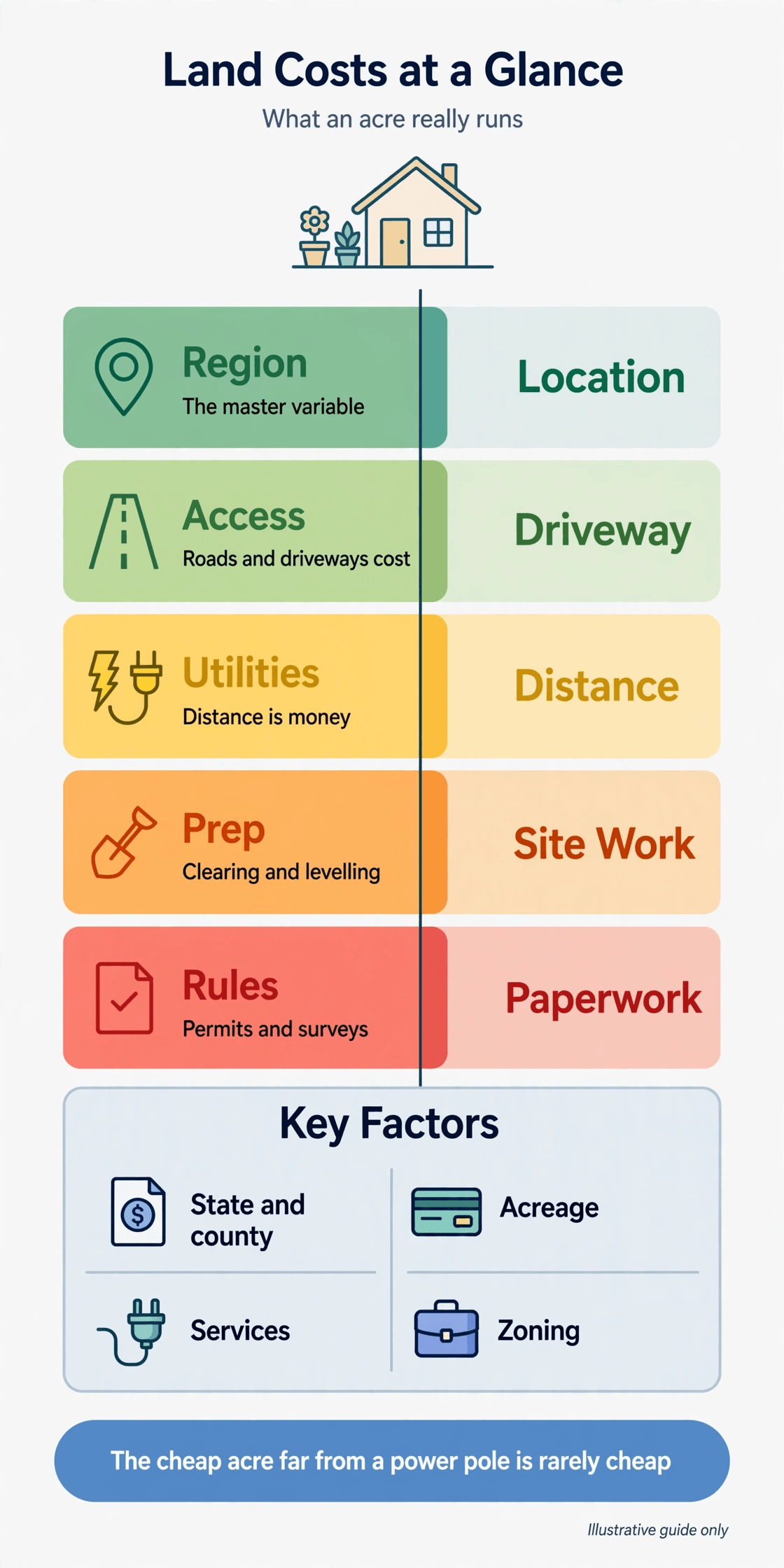
This guide prices an acre the way a buyer experiences it, in layers. First the ground itself, where region decides almost everything. Then the work and connections that turn ground into a homesite: a driveway, power and water at the right distance, clearing and levelling, permits and surveys. It invents no prices, because acre prices swing too wildly by place to fake, but it names every driver, so any listing you meet can be priced properly, including the seductive cheap ones, which section 8 takes apart piece by piece.
Land Cost Tiny House at a Glance
The table below answers the questions buyers ask at the viewing, usually while standing on the cheapest acre they have found. Each short answer points to the section that unpacks it.
| Question | Short Answer |
|---|---|
| What decides an acre’s price most? | Region and proximity. Land near towns, work and services in desirable areas carries a premium that no feature of the acre itself can explain or remove. |
| Does the price include access? | Not always. Some acres are effectively landlocked or served by a track, and a legal, all-weather access route can be a major cost of its own. |
| How much do utilities add? | It depends on distance. Services at the boundary are one thing; running power, water or waste solutions deep into a plot is a project priced by the metre and the trench. |
| Is clearing a minor job? | On open, level ground, yes. On wooded, sloping or wet ground, clearing, levelling and drainage can rival the price of the acre itself. |
| What paperwork is unavoidable? | Surveys, searches and permissions: boundaries confirmed, rules checked, and approval for siting a dwelling, each with fees and waiting time attached. |
| Why are some acres so cheap? | Usually for a reason the listing understates: access, water, slope, flood, restrictions or distance from everything. Section 8 is the full anatomy. |
| Is renting land a safer first step? | Often. Leasing or community land converts a giant irreversible purchase into a testable arrangement, at the price of security and control. |
1. Region: The Master Variable Behind Every Acre
Every land conversation starts and nearly ends with place. The same acre, same soil, same view roughly, can be priced as a modest rural purchase in one region and as a lifestyle asset in another, because land value is mostly not about the land. It is about what surrounds it: employment within commuting range, towns with services, schools, scenery people compete for, and planning scarcity that limits how many homesites exist. Buyers who compare acre prices across regions without adjusting for this are comparing different products and wondering why the numbers refuse to behave.
Region also sets the rules and the running costs that follow the purchase. Areas hungry for residents may welcome a small home and process permissions kindly; areas protecting their character may restrict, condition or refuse, and a refused acre is expensive at any price. Climate writes its part too, in drainage, frost, fire risk and access through winter. Price the region first, on visits at different times and in honest weather, and treat the acre itself as the second question. Most land mistakes are region mistakes wearing a bargain’s clothes.
2. What an Acre Includes and What It Never Does
An acre is a measurement, not a homesite. What the purchase includes is the ground within its boundaries and whatever rights the title actually carries: access rights, water rights, mineral or timber provisions, easements that grant others passage or services across it. What it never includes, unless separately built and priced, is everything a home needs from that ground: a standing, a driveway, connections, drainage, and legal permission to live there. Reading a listing means separating the poetry of the description from the schedule of what legally transfers.
Boundaries deserve particular suspicion, because the acre you are shown and the acre on the title are not always the same shape. Fences wander, tracks drift, and a neighbour’s use can harden into a right. This is why the survey in section 6 is not bureaucracy but the purchase itself, defining the thing you are buying. Until boundaries, rights and restrictions are confirmed in documents, an acre is a photograph with a price. After them, it is an asset you can plan on, build a budget on, and one day sell with the same clarity you bought it with.
3. Access and Driveways: Getting a House Onto the Land
A tiny house is delivered, not teleported, and access is where many cheap acres confess. Legal access comes first: a right to reach the plot from a public road, in writing, that survives a change of neighbours. Physical access follows: a route a delivery vehicle can actually travel, with width, turning space, gradients and surfaces that survive rain. A track that works for a car in August may refuse a loaded truck in November, and the house, the materials and every future delivery have to use that route for as long as you live there.
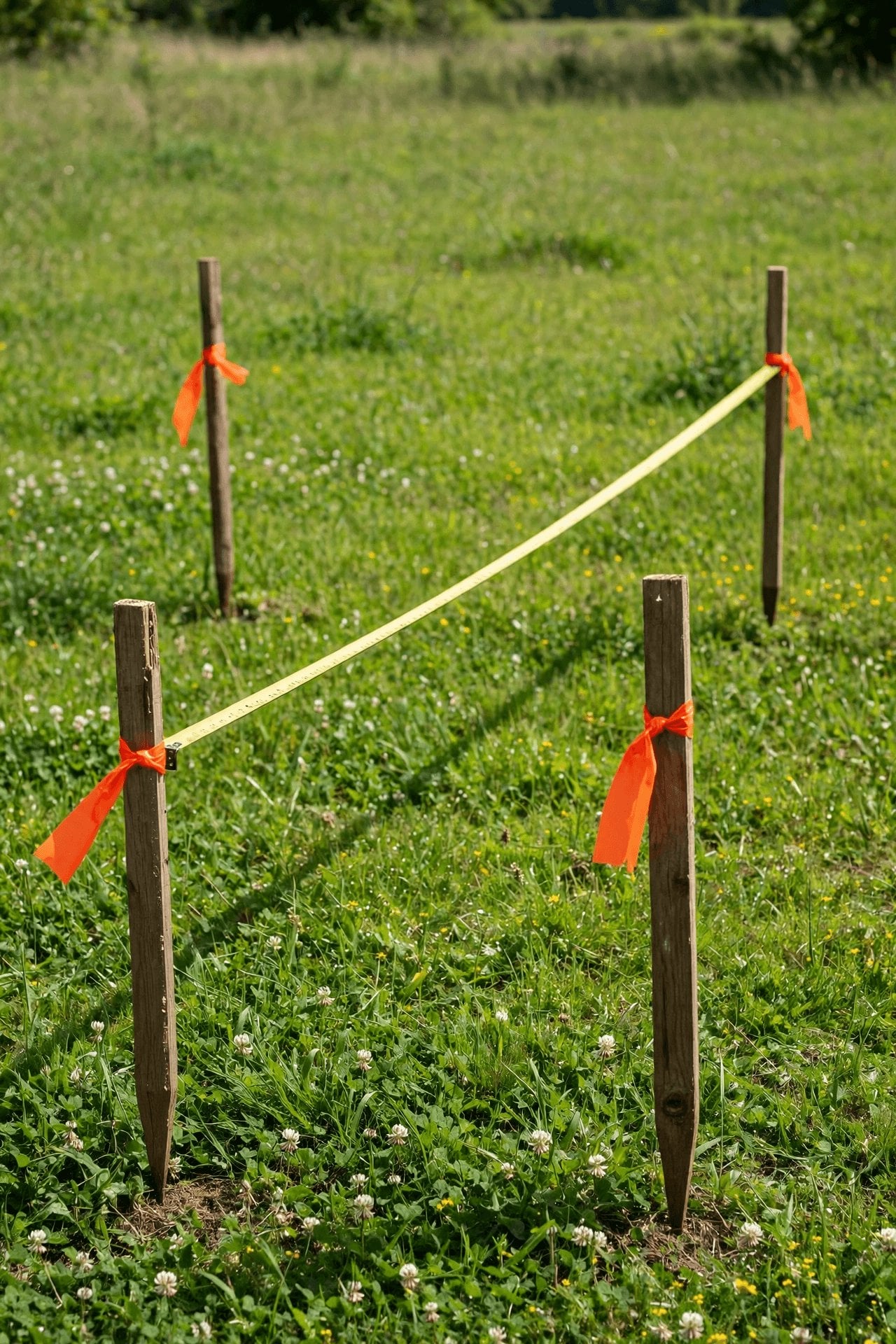
Building that access, a proper driveway with drainage and a hard standing at the end of it, is earthworks: excavation, stone, culverts where water crosses, and gates or fencing where stock or security demand. The running gear that travels it matters too, and the guidance in how to choose trailer axles rated at 14,000 lbs for a tiny house is a reminder that delivery is a heavy event the land must be built to receive. Price access before you fall for the view at the end of it, because improving a bad approach after purchase is paying for the acre twice, once in money and once in mud.
4. Utility Distance: Power, Water and Waste From the Boundary
Utilities charge by distance, and rural acres maximise distance. Power at the boundary is a connection; power at the far side of a field is poles, trenches or both, priced by the stretch between. Water behaves the same way, from a mains connection where one exists, to a well where it does not, each with its own works and testing. Waste is the quiet third service: a sewer within reach is a fee and a trench, while no sewer means an on-site system that must be designed, approved and installed before the home is habitable in any practical sense.
The cheapest way to think about utility distance is in metres and obstacles: every metre of trench, every road or rock crossing, every pump needed where gravity refuses to help. Inside the home, those choices continue, and tiny house plumbing layout and DWV design shows how layout decides whether connections are short and maintainable or long and troublesome. When viewing land, walk the line services would take, from boundary to standing, and cost it in your head as a road of money laid underground. Acres with services close are not luckier. They are simply pre-paid, and their prices say so.
5. Clearing, Levelling and Ground Preparation
Between the acre and the home stands the groundwork, and its price is written by what is growing, sloping and soaking into the plot. Open, level, dry ground asks little: a scrape, a pad or piers, drainage that keeps the standing out of the wet. Wooded ground asks for felling, stump work and dealing with what the trees were holding together. Sloping ground asks for cut and fill, retaining edges and serious drainage. Wet ground asks questions about water tables and flood that no amount of gravel answers cheaply, and each of these transformations is machinery, material and days.
Preparation is also protection, bought once and enjoyed for decades. A standing that drains, a home skirted and insulated beneath, of the kind described in tiny house skirting options for pipes and insulation, and ground shaped so water flows away from the structure rather than under it: these are the difference between a homesite and a parking spot. Get groundworks quoted by someone who has walked the plot, in the wet season if you possibly can, and hold a contingency for what excavation reveals. Soil keeps secrets professionally, and every builder’s contingency exists because of something a spade found that a viewing did not.
6. Permits, Surveys and Legal Groundwork
Paperwork is the smallest layer of an acre’s price and the one that can void all the others. The survey confirms boundaries and levels. Searches reveal restrictions, easements, flood designations and planning history. Permissions, where they are needed to site and live in a dwelling, decide whether the acre can be a home at all, and they arrive on official timescales, not yours. Each item carries fees, and together they carry something worth more: certainty, the knowledge that the ground beneath your home is legally yours to live on in the way you intend.
The expensive version of this section is always retrospective. Regularising an unauthorised siting, resolving a boundary a neighbour disputes, or discovering at resale that a restriction was missed: these are the legal costs that dwarf the original fees. Do the paperwork in sequence, before purchase where possible and before building always, and keep the documents with the same care as the home’s own records. An acre with clean, complete paperwork is worth more than the identical acre without it, and the difference is not fussiness. It is the price of sleeping legally.
7. Wells, Septic and Off-Grid Alternatives on Raw Land
Where services do not reach, the acre asks you to become the utility. A well or borehole replaces the water main, with drilling, testing and treatment where the ground demands it. An on-site waste system replaces the sewer, designed for the soil’s ability to receive it. Power goes off grid entirely: generation, storage and the management of both, sized for winter rather than for the brochure. None of these are reasons to reject raw land. They are capital projects with prices, and they belong in the acre’s true total from the first viewing, not in a later chapter of surprises.
The choices interlock, which is where thoughtful buyers save. Heating and hot water decided early shape the power system you must buy, and the comparison in propane vs electric for tiny houses, with tank sizing shows how a delivered fuel can shrink the electrical system a raw acre needs. Portable and modular equipment, covered in the best off-grid power stations from Jackery, Bluetti and EcoFlow, can stage the investment, powering a build and a modest life while larger systems are planned. Priced honestly, off-grid acres reward the methodical. Priced by optimism, they punish in instalments, each one delivered by a specialist with a drill.
8. The Cheap-Acre Trap: When Low Price Means High Cost
Every land market has its sirens: acres priced far below their neighbours, photographed in good weather, described with feeling. Sometimes the discount is innocent, a motivated seller or an unfashionable corner. Far more often, the price is information. The acre is cheap because access is contested, water is absent or undrinkable, the slope defeats building, the soil defeats waste systems, flooding visits, restrictions forbid dwelling, or the distance to work, supplies and help quietly taxes every week of life lived there. The listing price is low because the total price is not.
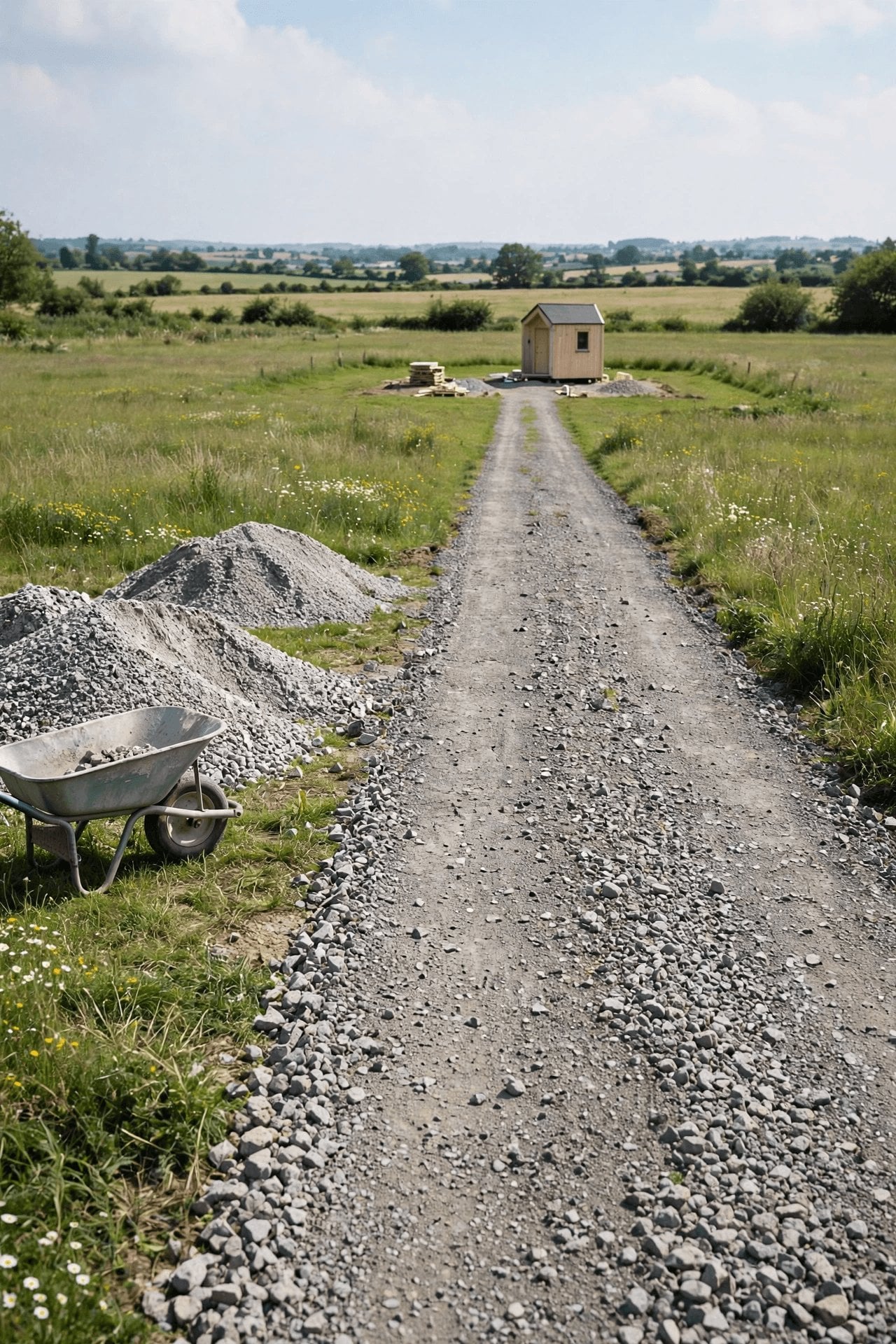
The defence is arithmetic, not cynicism. Take the cheap acre and price the whole project on it: access built, utilities solved at their real distances, ground prepared, paperwork completed, and the home delivered. Then take the dearer acre nearby and price the same project, where half those layers are already solved by position. The gap narrows, vanishes, or inverts, and it does so reliably enough that experienced buyers shop for discounts in the total, not the listing. A cheap acre with every problem solved cheaply does exist, occasionally. It is found by buyers who priced the problems, not by buyers who hoped there were none.
9. Renting, Leasing and Community Land: The Other Route
Buying is not the only way onto land, and for a first tiny home it is often not the wisest. Leasing a plot, renting a pitch, or joining a community scheme converts the largest, least reversible cost of the project into a monthly line you can leave. The trade is security and control: the land is not yours, the rules are not yours, and the arrangement can end in ways an owned acre cannot. But the learning is real and cheap at the price. A year on rented ground teaches you what your home, your systems and your tolerance for distance actually are, before capital commits you to answers.
Shared arrangements also change the facilities equation. Community and site living often trades private ground for shared infrastructure, laundry, social space, sometimes workshop or garden facilities, and the compact equipment logic in the best compact kitchen appliances for tiny houses applies in mirror image: what the site provides well, your home may not need to duplicate at all. Compare arrangements on total life cost, rent plus travel plus what the site replaces, and on the quality of the agreement in writing. A good lease is a platform. A vague one is a countdown, and the difference is visible before you sign, if you read for it.
10. Pricing an Acre Properly: A Buyer’s Walk-Through
Assemble everything into one walk, in this order, before money moves. Start at the road: confirm legal access and drive the physical route as a delivery would. Stand where the home would sit and check slope, drainage and the view in bad weather if you can arrange it. Walk the utility lines, boundary to standing, and note distances and obstacles as costs. Read the ground for clearing and levelling work, honestly, including what grows back. Then leave the plot and do the paper half: title, boundaries, restrictions, permissions, and quotes for every layer the plot still needs.
Total it as a single figure, land plus layers, and compare only totals with other acres’ totals. That discipline dissolves most land illusions, because listings compete on the one number they control while totals compete on the truth. Keep the contingency. Land projects reward it the way sea voyages reward lifeboats, uneventfully when well chosen and absolutely when not. The right acre is rarely the cheapest or the prettiest. It is the one whose total you have seen whole, whose problems are priced rather than discovered, and whose ground, once your home stands on it, asks for nothing you have not already agreed to pay.
Final Considerations
What an acre really runs is the listing plus the layers: access, utilities at their distances, ground prepared, paperwork completed, and the region’s rules and prices woven through all of it. That is not a counsel of despair. It is the same honesty this whole series of guides applies to kits, builds and budgets, that a price is only meaningful when it names the finished thing, and a finished homesite is a piece of infrastructure as much as a piece of earth. Buyers who price the infrastructure buy well, in cheap regions and dear ones alike.
So walk the land like a builder, read it like a lawyer, and total it like an accountant, then let yourself love it like a future resident only after those three have approved. The acre that survives that process is not a trap dressed as a bargain or a dream dressed as a field. It is the foundation of the entire tiny house project in the most literal sense, the ground everything else stands on, and it deserves to be bought with the clearest eyes and the fullest numbers you own.


0 Comments