

Line up twenty tiny house kits from across the market and a pattern appears long before the prices do: the kits are not twenty versions of the same product. They are four different products wearing one name. Some are little more than a weather-tight shell. Some arrive as finished wall panels. Some are precision-cut lumber with the thinking done. And a few arrive nearly complete, needing a site and a signature more than a toolbox. Comparing a tiny house kit cost fairly means comparing those categories first, because the number on the listing is only ever the price of whatever stage that kit stops at.
This guide compares kits the honest way: by type, by what each type includes, by what it pointedly excludes, and by the labour, delivery and site costs that wait behind the headline figure. It does not invent prices or name twenty products, because kit pricing shifts with size, materials, region and the month you ask, and a fabricated league table would mislead exactly the buyers it claimed to help. What does not shift is the structure below. Learn it, and any twenty listings you open afterwards will sort themselves, and their real totals will stop hiding.
Tiny House Kit Cost at a Glance
The questions below are the ones buyers ask when two kits look identical online and differ wildly on the invoice. The short answers point to the sections that unpack each one.
| Question | Short Answer |
|---|---|
| Why do kits at the same size differ so much in price? | Because they stop at different stages. A shell, a panel set, a pre-cut frame and a near-complete home are four products, and the gaps between them are labour and materials you still owe. |
| Is the trailer included? | Often not. Many kits assume a trailer you supply or buy separately, and it must be rated for the finished weight, not the kit weight. |
| Are plumbing and electrical systems included? | Usually not in shell, panel or pre-cut kits. Systems are commonly a separate package or entirely the buyer’s problem, with certified work still to pay for. |
| Which kit type is cheapest overall? | The one matching your skills. A cheap kit plus hired labour for everything can cost more finished than a dearer kit that needed less labour. |
| What is the most underestimated extra? | Delivery and siting. Large components travel expensively, need access and lifting, and land on ground you have paid to prepare. |
| Does a kit save money versus building from scratch? | It can, in design time, cutting waste and purchasing. It saves least when the buyer hires out every task the kit assumed they would do themselves. |
| How should twenty kits be compared? | On a like-for-like checklist: same finished stage, same inclusions, delivery and site counted. Section 9 gives the method. |
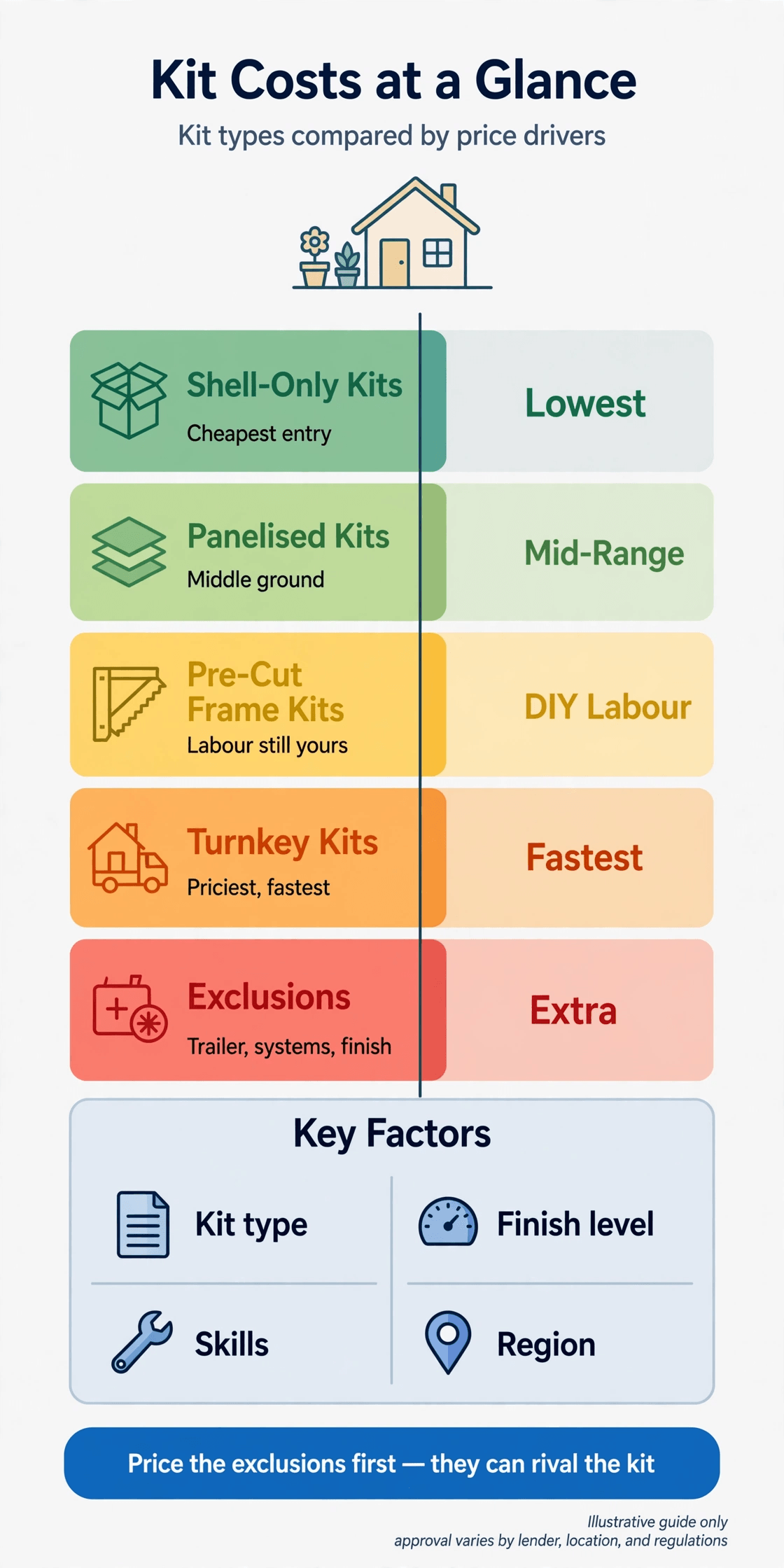
1. The Four Kit Types: Shell-Only, Panelised, Pre-Cut and Turnkey
Start with the taxonomy, because every comparison error flows from skipping it. A shell-only kit delivers the structural envelope: frame, cladding, roof and usually openings cut, a house-shaped weather-tight box with an unfinished interior. A panelised kit delivers wall, floor and roof panels built in a factory, flat-packed for assembly, often with insulation and sometimes wiring channels already inside. A pre-cut kit delivers the lumber and sheet goods for the structure, every piece cut to the plan and labelled, for you to assemble piece by piece. A turnkey kit, at the far end, arrives assembled or nearly so, finished or close to finished inside.
Price climbs along that spectrum for a simple reason: each step transfers work from you to the seller. The shell leaves the most work with the buyer and carries the lowest headline. The turnkey carries the highest headline because the seller has already paid for the labour the other kits leave unpaid. Neither end is a bargain or a rip-off in itself. The only meaningful figure is the finished cost, kit plus everything still owed, and that figure can easily invert the order of the headlines, which is why this guide prices stages, not stickers.
2. Shell-Only Kits: The Cheapest Entry, the Longest Road
The shell is the seductive one. It photographs like a house, it can be standing and weather-tight remarkably fast, and its price is the number most often quoted when people say kits are cheap. What it actually buys is the skeleton and the skin: structure, exterior finish, roof, and the openings where windows and doors go, with those units included or excluded depending on the seller, a detail worth reading twice. Inside, you own everything: insulation if not fitted, lining, systems, kitchen, bathroom and every finish.
A shell also still needs something to stand on, and for a house on wheels that foundation is a serious purchase in its own right. The trailer beneath it must be rated for the finished home, a point spelled out in how to choose trailer axles rated at 14,000 lbs for a tiny house, and rated for the home you will have after the interior goes in, not the light shell that arrives. Buy the shell because you have the time and skill to finish an interior well, and it can be the best value of the four. Buy it because the headline was low, and it is simply the first instalment of a price nobody showed you.
3. Panelised Kits: Walls That Arrive Ready to Stand
Panelised kits move the fiddliest part of building, making walls straight, square and insulated, into a factory. Panels arrive as finished sandwiches of structure, insulation and sometimes internal lining or service channels, and a shell that might take weeks of framing can stand in days. The price sits above a shell-only or pre-cut equivalent, and what the premium buys is precision and speed: fewer cutting errors, less weather exposure during the build, and insulation performance that does not depend on how carefully a first-time builder fitted batts on a windy weekend.
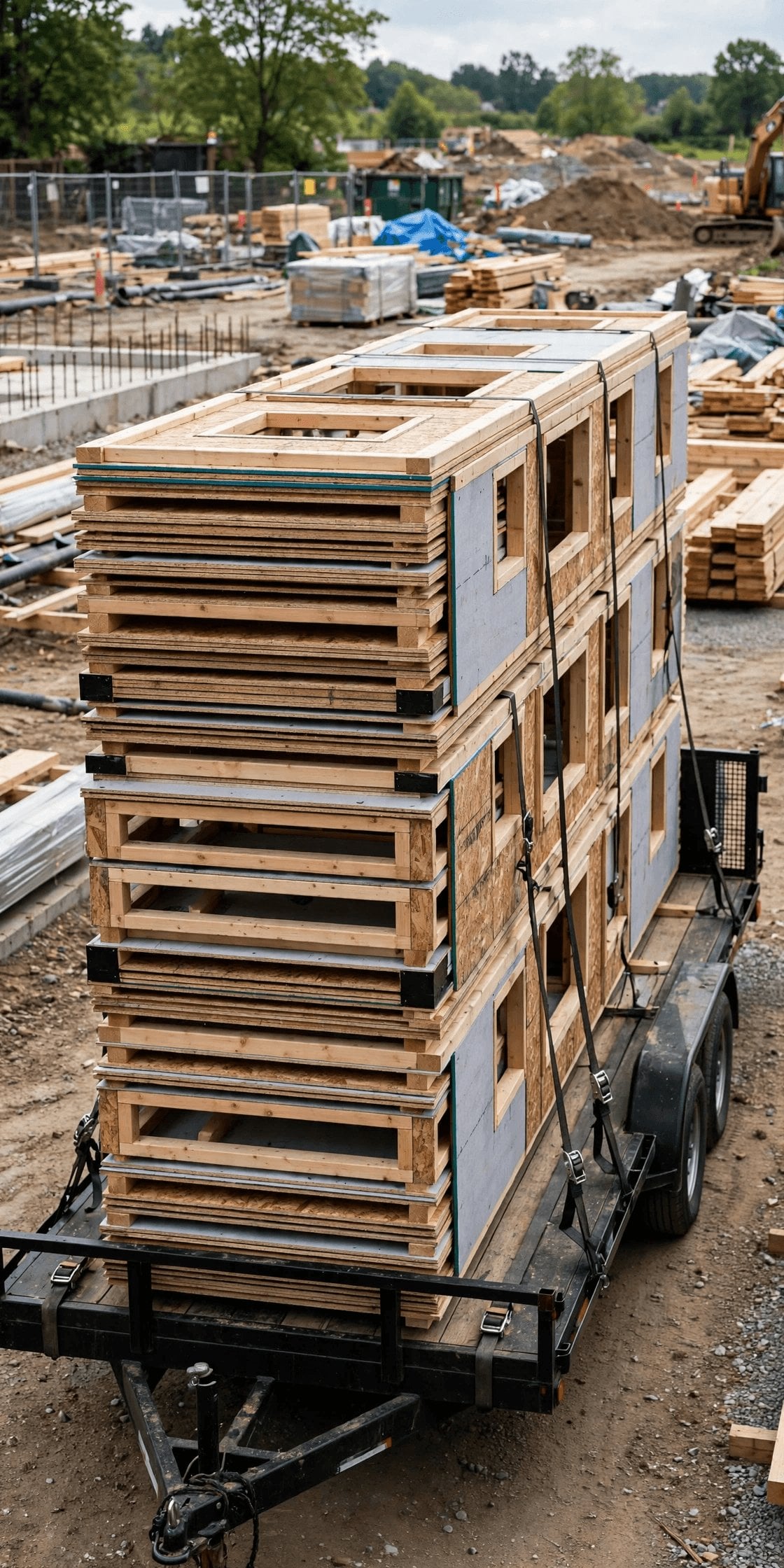
The trade-offs are logistics and flexibility. Panels are large, heavy and unforgiving of poor access: they need transport that can reach the site, space to store flat, and hands or lifting help on assembly day. Late changes are also harder, because a window moved in a factory panel is a factory problem, not a saw-and-adjust moment. For buyers building on a schedule, on an exposed site, or with more money than weekends, panelised is often the sweet spot of the four types. For tinkerers who expect to improvise, its rigidity chafes.
4. Pre-Cut Kits: A Lumber Puzzle With the Cutting Done
The pre-cut kit is the purest form of the kit idea: a design, translated into parts. Every stud, plate and sheet arrives cut to length, angled where the plan angles, and labelled to a sequence, with fixings and instructions. You supply assembly, in full, but the measuring errors, the wasted boards and the weekend lost to a borrowed saw are largely designed out. Pricing typically sits below panelised, because the factory has cut rather than constructed, and above a raw materials list, because design and precision are never free.
What pre-cut quietly demands is a competent, patient assembler and a realistic calendar. Hundreds of correct pieces still have to become a house in the right order, in weather, at height, and the kit cannot help you lift. Interior finish is entirely yours, which is where surface choices start to matter for both weight and money: the range in lightweight interior wall finishes for tiny houses shows how lining decisions move cost and towing weight together. Choose pre-cut if you genuinely enjoy building and want the thinking done, not the building.
5. Turnkey Kits: Closest to a Finished Home
At the top of the spectrum, turnkey kits collapse the distance between delivery and living. The home arrives assembled or is assembled and finished by the seller’s team: systems in, kitchen and bathroom fitted, finishes done. The headline is by far the highest of the four types, and comparing it with a shell headline is the single most common error in kit shopping, because the turnkey figure includes thousands of hours and purchases that the shell figure has not met yet. Judged finished-against-finished, the gap narrows dramatically, and can close entirely for buyers who would have hired every trade.
Turnkey’s real costs hide elsewhere: in reduced choice, in delivery of a complete house rather than parts, and in the specification you accept rather than choose. Fit-out quality varies, and the appliances and finishes included are chosen to a price, so read the schedule of inclusions the way you would a contract, because it is one. The logic in the best compact kitchen appliances for tiny houses, standard sizes, available parts, nothing irreplaceable, is the test to apply to any turnkey fit-out list before signing: a finished home full of orphan appliances is finished only until something fails.
6. What Kits Exclude: Trailer, Systems and Finish
Read any kit listing for its exclusions before its inclusions, because the exclusions are where budgets are born. The trailer is the classic one: many kits are designed for a trailer they do not supply. Systems run it close. Plumbing, electrical and heating are frequently excluded entirely, offered as a separate package, or included only as rough-in, and each of those phrases means a different amount of certified labour still to buy. The layout thinking in tiny house plumbing layout and DWV design is not optional decoration on a build; it is work someone must do and someone must pay for, kit or no kit.
Finish is the third exclusion, and the most elastic. Insulation, interior lining, flooring, kitchen, bathroom, appliances and paint can together rival the structure in cost, and they are precisely the items shell, panel and pre-cut kits leave open. Fuel and heating choices sit inside this gap too: the trade-offs in propane vs electric for tiny houses, with tank sizing have to be decided and funded by somebody, and with most kits that somebody is you. A useful rule: assume everything is excluded unless the listing names it in writing, then price the exclusions before falling for the inclusion photograph.
7. Labour Still Owed: The Work No Kit Does for You
Every kit price is partly a labour price, specifically the labour the seller has not done. Shell, panel and pre-cut kits convert money into your weekends at different exchange rates, and the honest comparison asks what those weekends are worth and whether they exist. A buyer with building skills and free time holds an asset no listing can price. A buyer with neither will hire the difference, at trade rates, and should add that figure to the headline before comparing anything with anything. Kits do not remove labour from a build. They relocate it, and the invoice follows it.
Some of the owed labour is also not yours to give. Electrical and gas work commonly requires certified hands and sign-off, whatever your enthusiasm, and connections, inspections and any foundation or groundworks sit outside the kit entirely. Plan the build as two budgets from the start: the kit, and the crew, whether the crew is you, your friends, or professionals for the parts the law and physics reserve for them. The kits that look cheapest are usually the ones whose second budget is largest, and there is no shame in that, as long as it is written down before the deposit rather than discovered after it.
8. Delivery, Site and Setup Costs Beyond the Kit
A kit has to travel, and large, heavy, awkward things travel expensively. Delivery pricing turns on distance, load size and how the components are packed: flat panels and cut lumber ride cheaper than an assembled shell or a finished home, which may need specialist transport, route planning and lifting equipment at the far end. Access decides the rest. A site a large vehicle cannot reach, or cannot turn on, converts a delivery line into a problem-solving project, and storage matters too, because components that arrive before you are ready for them still have to live somewhere dry.
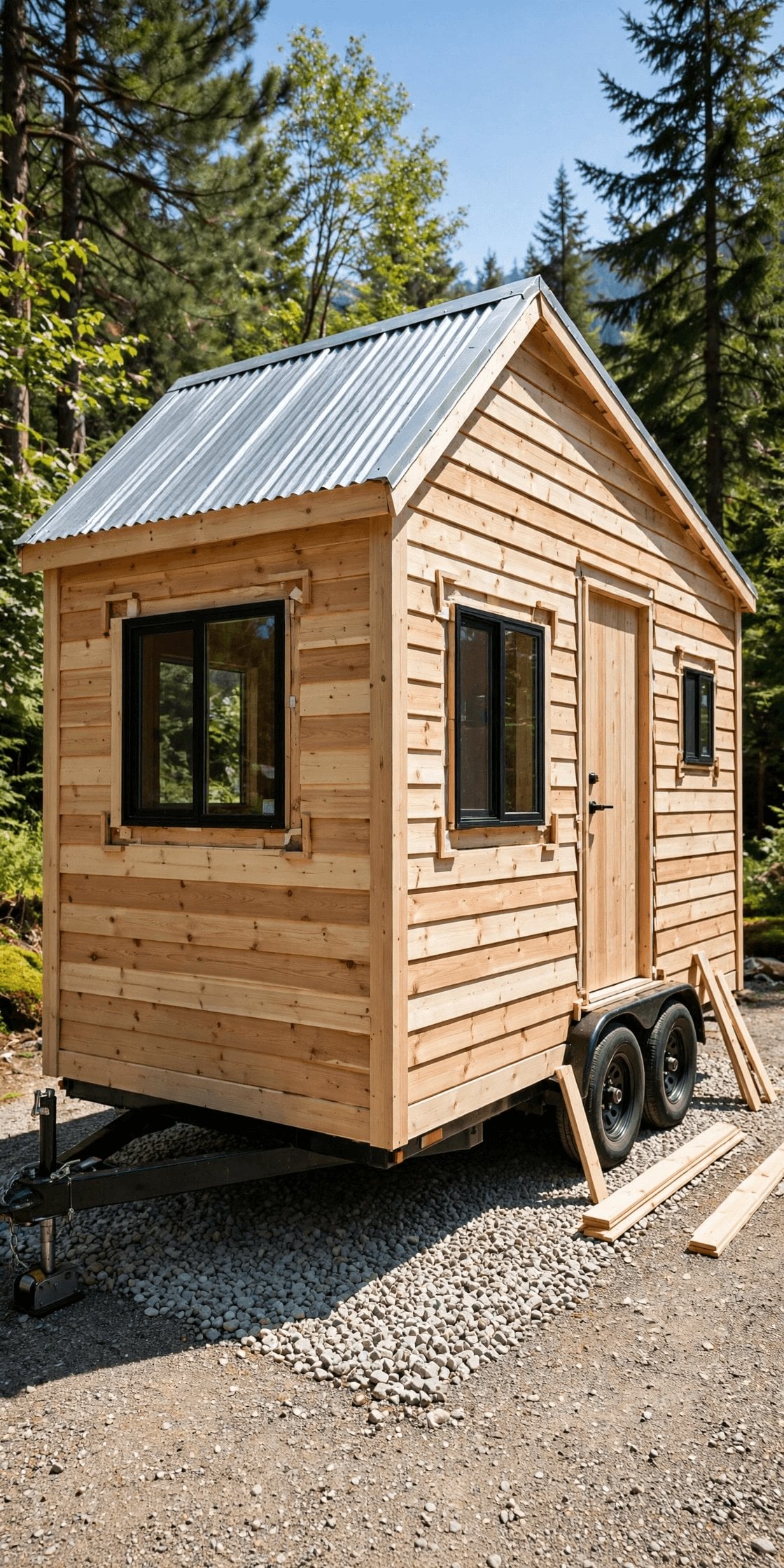
Then the kit lands on ground you have prepared at your own expense: a level, drained standing, hookups or off-grid provision, and the small infrastructure of living once the building stops moving. Even the underside earns a line in this section, where tiny house skirting options for pipes and insulation protect the new home’s plumbing and warmth from its first winter. None of these costs appear in kit listings, and together they can rival a cheaper kit’s headline. Price the site with the same care as the structure, in the same spreadsheet, before choosing either.
9. Comparing Twenty Kits Fairly: A Like-for-Like Checklist
Now the twenty listings can be compared, on a grid that forces honesty. For each kit, record the type, the finished stage it reaches, and three columns the listings will not fill in for you: inclusions named in writing, exclusions you must fund, and delivery plus site costs to your actual address. Add the labour column, priced at trade rates for the tasks you will not personally do, and a line for the systems the kit omits. The kit with the lowest total in that grid is the cheapest kit for you, which is the only cheapest that exists.
Systems deserve a hard look inside the grid, because they are the exclusion most likely to be disguised as a feature. A kit boasting off-grid readiness may mean roof access for panels, or a full installed system, and those are different purchases entirely; the range of real equipment in the best off-grid power stations from Jackery, Bluetti and EcoFlow shows how widely capability and price can spread behind one phrase. Apply the same suspicion to windows, doors, insulation and trailers: named, specified and counted, or assumed excluded. Twenty kits compared this way stop being twenty advertisements and become twenty budgets, and budgets can actually be chosen between.
10. Choosing the Kit Type That Matches Your Skills and Time
The right kit is the one whose unpaid labour matches the labour you can genuinely supply. Confident builders with time extract remarkable value from pre-cut and shell kits, because their weekends are the discount. Practical beginners often do best with panelised kits, where the precision is bought in and the assembly is achievable, supervised and fast. Buyers with funds, deadlines or no appetite for a build site should compare turnkey finished totals against the fully-loaded totals of the other types, and will sometimes find the honest gap surprisingly small.
Whichever type you choose, choose it with the exclusions priced, the site prepared on paper, and the schedule written for the builder you actually are on a wet Sunday in month three, not the one in the brochure. A kit is a way of buying a house in stages, with the stages split between a factory, a delivery truck and yourself. Price all three, and the type that wins for your neighbour may lose for you, correctly. That is not a failure of comparison. That is comparison finally working, on the only terms that ever mattered: finished, sited, and lived in.
Final Considerations
Kits are a genuinely good idea sold with a genuinely misleading number. The idea, that design, cutting and purchasing are wasteful to repeat house by house, is sound, and every type in this guide exists because it serves a real buyer well. The number misleads because it prices a stage while implying a home, and the distance between the stage and the home is filled with trailers, systems, finishes, labour, delivery and site work that the buyer funds either way. None of that is hidden, exactly. It is simply in the part of the listing nobody enlarges.
Enlarge it. Sort listings by type before price, read exclusions before photographs, and build the like-for-like grid before any deposit moves. The kit that survives that process is very likely the right one, bought at a price you understand, for a total you have already seen. And the totals, honestly compared, are the whole subject: not which kit is cheapest on a screen, but which finished home, on your ground, built with your hands counted fairly, costs what you can actually pay.


0 Comments