

There is a particular silence in a well-made bathroom — no dripping tap, no clanging bin, no clatter of bottles — and it is not an accident of budget. It is what happens when space, water, light and storage are each given their proper place.
This collection builds a luxury master bathroom in ranked order: the layout first, then the furniture of the room, the bathing, the surfaces, the fittings, and finally the small disciplines that keep it serene on an ordinary Tuesday.
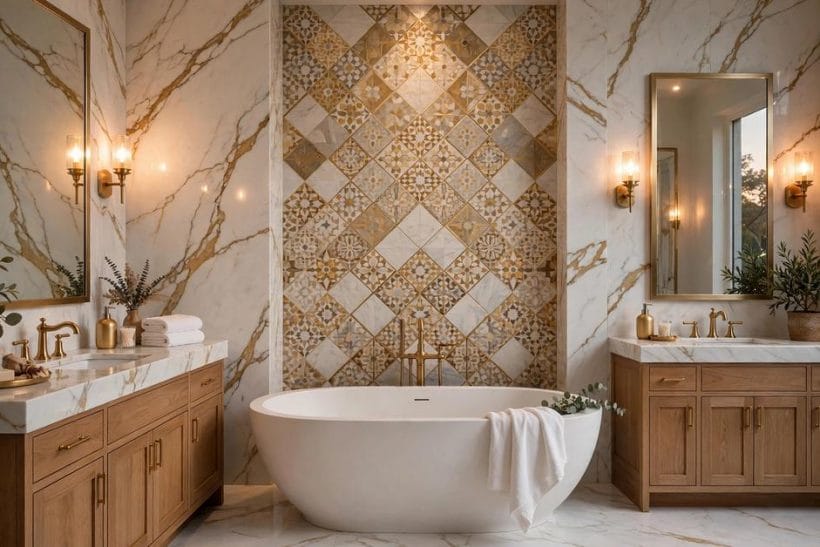
1. Luxury Master Bathroom Ideas at a Glance
The luxury master bathroom is the spa-grade room of the bathroom ideas pillar in this collection: a master suite’s bathing room where layout, vanities, tub and shower, surfaces, fittings and light are each resolved before the next is chosen. Its sibling rooms split the same topic by material and format — the master bathroom ideas cover the standard suite layout, and the modern bathroom ideas take the contemporary style slice — while this post owns the luxury layer across all of them.
| Question | Short answer |
|---|---|
| What makes a bathroom feel luxurious? | Space around fixtures, one calm surface palette, layered light and nothing left out on the counter. |
| Where should the money go first? | The shower and the layout — the things used daily and hardest to change later. |
| Freestanding tub or built-in? | Freestanding for the composed view, built-in for small rooms and easier cleaning around the rim. |
| How many materials should the room use? | Two surface families, one metal finish — restraint is the luxury signal. |
| Is marble worth it? | For beauty, yes; for peace of mind, the best porcelain matches the look without the upkeep. |
| What do owners forget most? | Storage for real bottles, power inside drawers, and a night light for the small hours. |
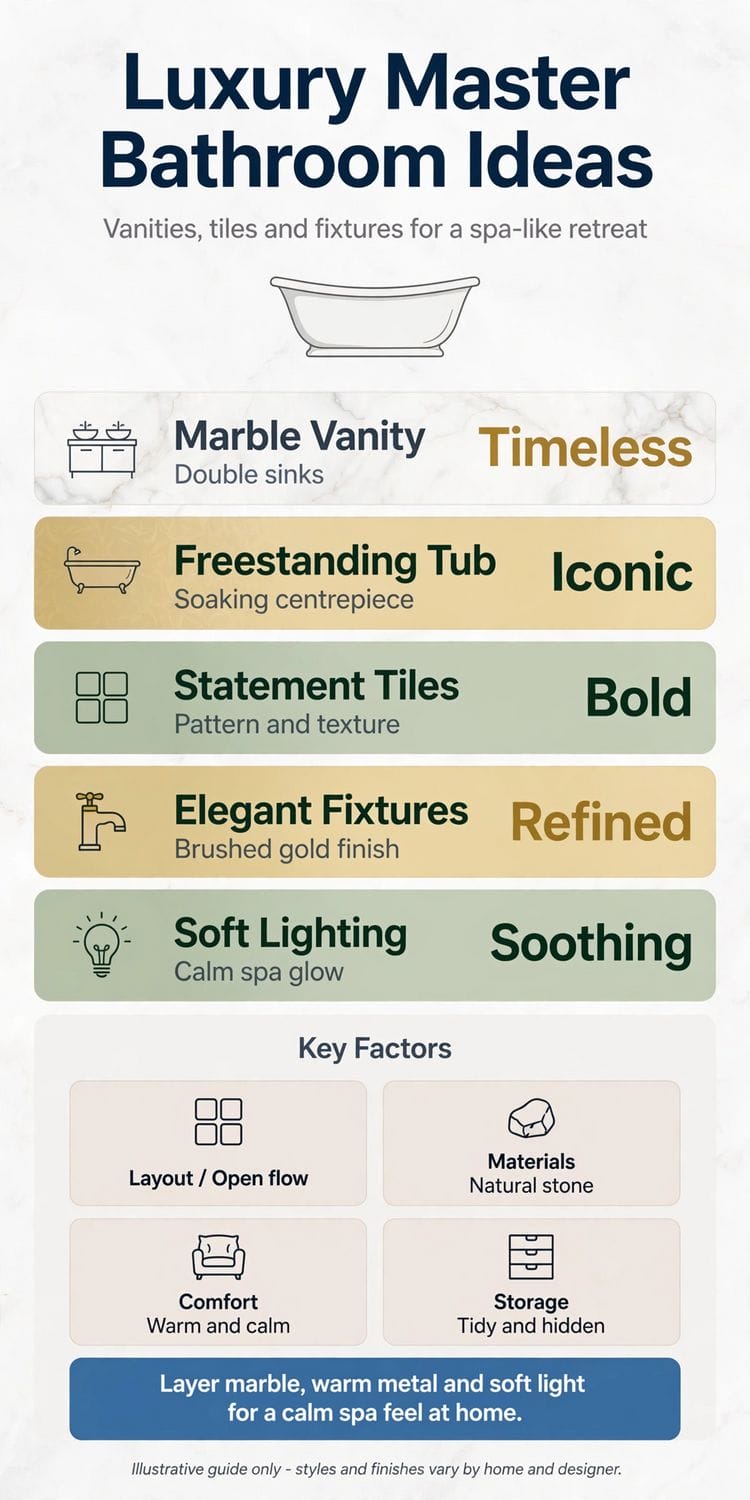
2. Layouts That Earn the Word Luxury
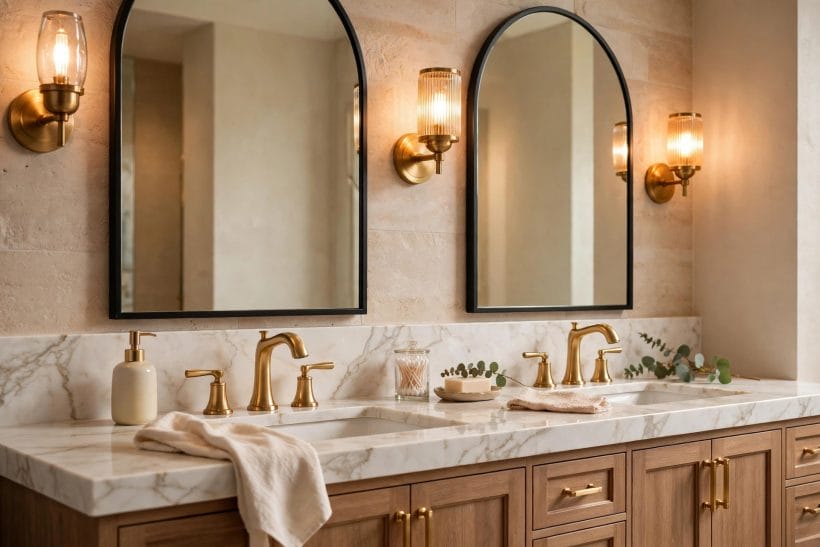
Luxury in a master bathroom is rarely a product; it is the feeling that nothing in the room fights anything else. That feeling is planned, in the layout, long before a single fitting is chosen — in clear routes, uncramped fixtures and space left deliberately empty.
1. Give every fixture its own breathing room
Crowding is the enemy of luxury.
2. Separate the wet zone from the dry zone
Group tub, shower and water closet at one end and keep vanity, dressing and linen at the other.
3. Plan a water closet with a door, always
A closed water closet is the single layout decision couples thank themselves for most. It frees the rest of the room while one person uses it and keeps the least glamorous fixture out of the sightline from the door.
4. Run one clear route from door to window
A straight, unobstructed path through the room makes it feel larger and calmer than the same floor area chopped by angled fixtures. Walk the route on the plan before approving it; luxury is partly the absence of sidesteps.
5. Centre the tub on something worth looking at
A freestanding tub earns its floor space when it is composed — centred on a window, a tiled feature wall or a garden view.
6. Build the shower as a room, not a cubicle
A walk-in shower with a bench, a ledge and no door to wipe reads as a small spa chamber rather than an appliance.
7. Keep the vanity run unbroken
One long vanity with two basins beats two separate units for calm: a single counter line, shared storage below and a mirror run above.
8. Steal a dressing corner if the footprint allows
A stool, a small counter and good light in one corner turn the bathroom into a dressing room as well. It is a modest claim on space that changes the morning routine from queuing to settling.
9. Hide the laundry and the bins in the plan
Luxury rooms fail on small sights: a laundry basket in the corner, a bin beside the vanity. Plan a lidded hamper inside a cabinet and a pull-out bin under the counter, and the room stays composed between cleans.
10. Leave one wall deliberately empty
A wall with nothing on it — no cabinet, no art, no rail — gives the eye a rest and makes the fitted walls feel intentional.
11. Light the layout in layers from the start
Decide in the plan where task light, ambient light and low evening light will sit, because retrofitting layers into a finished luxury bathroom is disruptive.
3. Vanities and Storage: The Furniture of the Room
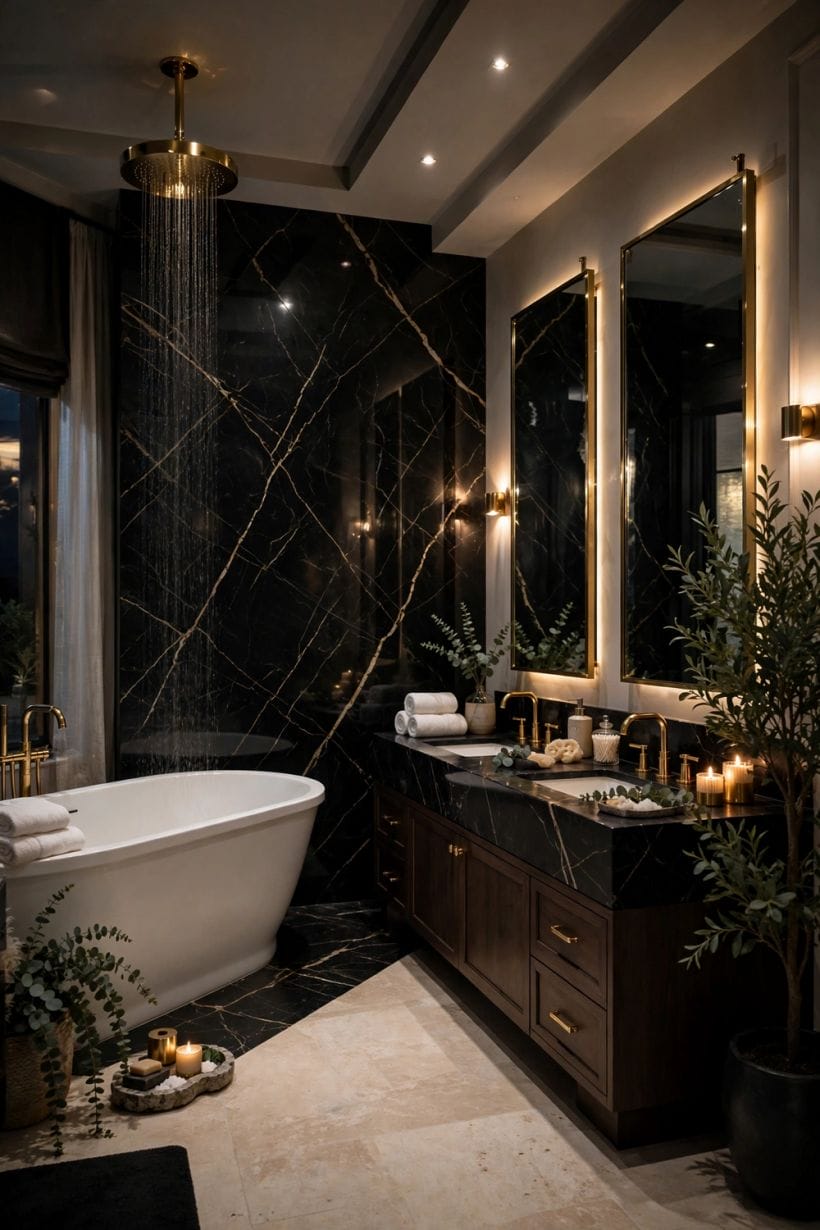
In a luxury master bathroom the vanity is furniture, not plumbing with doors. It carries the room’s materials, hides the room’s clutter and sets the standard every other piece is judged against — which is why this section comes before tubs and tiles.
12. Choose a double vanity with truly separate storage
Two basins on one counter only work as luxury when each person also gets drawers and a cabinet of their own. Shared central storage breeds the counter clutter the whole design exists to banish.
13. Prefer drawers over cupboards under the basins
Deep drawers with cut-outs around the waste bring everything to you; cupboards make you kneel and reach into the dark. In daily use the drawer vanity feels like the expensive one even at the same price.
14. Float the vanity to lighten a heavy room
A wall-hung vanity shows floor beneath it, which makes the room feel larger and cleaning simpler. It also lets under-vanity lighting wash the floor at night — a small detail guests always notice.
15. Or ground it: a furniture-style vanity on legs
The opposite move also works: a vanity built like a chest of drawers, on legs, in painted timber or oak. It suits traditional luxury and hides less plumbing access, so plan the access panel before it is built.
16. Run stone up: a full-height splashback
Carrying the counter material up the wall to the mirror — or the whole wall in slab — removes the grout line and the visual fuss at the exact height the eye rests.
17. Divide the counter into his, hers and shared
A shallow tray or raised section in the middle of a long counter marks shared items — soap, a plant, a candle — and keeps personal kit at each end.
18. Put power inside the drawers
Charging points inside a drawer or a mirrored cabinet keep dryers, brushes and shavers plugged in yet invisible. Cables across a stone counter undo the calm faster than any other single sight.
19. Add a tall linen cabinet in matching material
Towels stored in the room, behind a door that matches the vanity, keep the space self-sufficient. Open shelving for towels looks lovely in photographs and dusty in life; closed storage is the luxury choice.
20. Mirror storage, sized honestly
Recessed mirrored cabinets swallow the small bottles that otherwise colonise the counter. Choose depth for real bottles, not showroom ones, and light the cabinet interior if the budget allows — rummaging is not luxury.
21. Warm the vanity zone underfoot
The few steps between bed and basin are where underfloor heating is felt most. Zoning the heat so the vanity and shower areas warm first is cheaper than heating the whole floor and feels like the whole floor.
22. Finish the vanity with hardware that matches the taps
Handles are touched every day, so their weight and finish register constantly. Match them to the tapware metal, and the vanity reads as one designed piece rather than an assembly.
4. Tubs and Showers: Where the Investment Shows
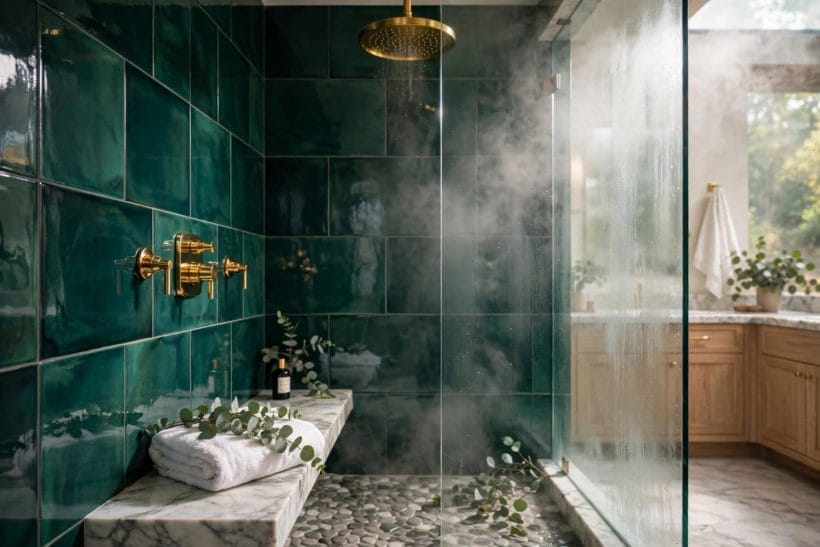
Ask owners which part of a luxury bathroom they would fund again and the answer is almost always the bathing itself. The walk-in shower ideas in this collection cover the open format in depth; here the focus is the luxury layer — depth, heat, water delivery and the tub as sculpture.
23. Choose a deep soaking tub over a jetted one
Depth is the luxury in a tub: water to the shoulders, a sloped back, room to stretch. Jetted systems add noise, cleaning burden and failure points; a plain, deep, well-shaped bath outlasts them in satisfaction.
24. Place the tub where the bather sees the best view
The person in the water is stationary and looking outward for half an hour. Compose that view — garden, sky, a lit niche — and the tub becomes the room’s retreat rather than its largest object.
25. Fit a floor-standing filler with a hand shower
A tall floor-standing tap beside a freestanding tub is both sculpture and tool; the hand shower makes rinsing and cleaning effortless. Wall-mounted fillers on a freestanding tub always look like a compromise arrived late.
26. Build a bench into the shower, in the warm zone
A bench under or beside the water — for sitting, shaving legs, resting a foot — turns a shower into a place to linger. Site it where the spray reaches it warmly, not in the cold corner beyond the jets.
27. Use a thermostatic control you can set blind
Luxury is stepping into water at exactly your temperature, every time. Thermostatic valves with a memorised setting and controls reachable before you enter the spray deliver that; twin wobbling taps never quite do.
28. Add a rain head and a separate hand shower
The overhead rain head is the indulgence; the hand shower is the workhorse for rinsing hair, children and the glass. Plumb both on a diverter and neither has to pretend to do the other’s job.
29. Consider a steam function only with a sealed ceiling
Steam showers need a fully enclosed, vapour-proofed box with a sloped ceiling so condensate runs off instead of dripping cold on shoulders. Half-sealed steam is a disappointment bought at full price.
30. Keep the shower glass frameless and treated
Frameless glass disappears, which is the point, and a factory-applied protective coating keeps it that way with a squeegee rather than chemicals. Frames and tracks collect the grime that luxury rooms are defined against.
31. Niche the bottles into the wall
A tiled niche at hand height in the shower and beside the tub removes the wire racks and bottle rows from view. Size it for the tallest bottle you actually buy, and light it if the wall allows.
32. Heat the shower walls in a cold climate
In genuinely cold houses, heated wall panels behind the shower tile take the chill off the enclosure itself. It is an invisible luxury — noticed only as the absence of the flinch when a shoulder brushes tile.
33. Give the tub its own small surface
A stool, a narrow ledge or a bath caddy within reach holds the book, the glass and the towel. Without it, everything migrates to the floor or the rim, and the sculptural tub ends up dressed in clutter.
5. Tile, Stone and Surface Choices
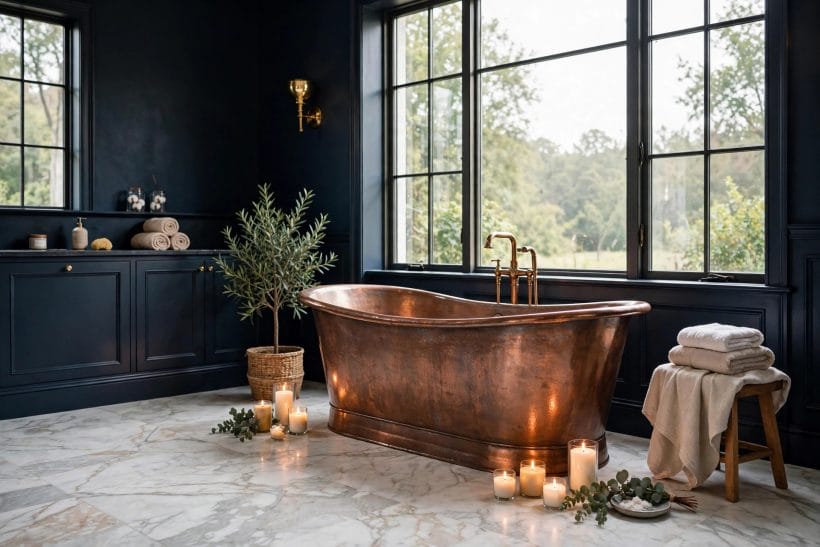
Surfaces cover more of a luxury bathroom than everything else combined, so they set its temperature — visual and literal. The test applied throughout this section is simple: would this surface still look calm after ten years of mornings?
34. Limit the room to two surface families
One tile or stone for the wet surfaces and one for the rest is the discipline behind most serene luxury bathrooms. A third material can join as an accent; a fourth turns the room into a showroom sampler.
35. Use large-format tile to quiet the grout
Big tiles mean few grout lines, and few grout lines mean calm — and less scrubbing. On floors they also make a modest room read larger. Reserve small formats for the shower floor, where grip and falls need them.
36. Carry one stone from floor to shower wall
Running the same material underfoot and up the shower walls wraps the wet zone in a single gesture. The continuity feels expensive because it is composed, not because the stone itself must be rare.
37. Choose marble for beauty, porcelain for peace of mind
Real marble brings unmatched movement and a lifetime of sealing and care; today’s best porcelain reproduces the look with none of the anxiety. Honest luxury is choosing the one your household will actually enjoy living with.
38. Slab a feature wall behind the tub or vanity
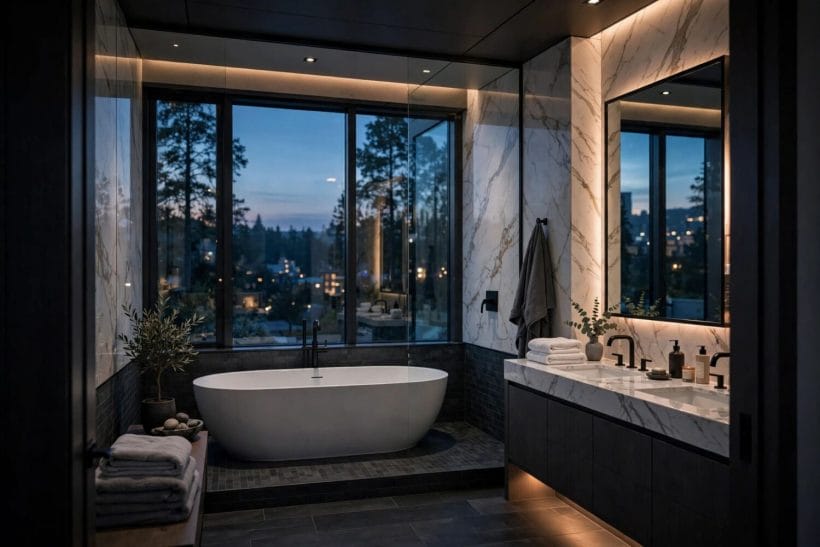
One wall in book-matched slab or large panel is the classic luxury focus — a single picture in stone. It works hardest behind a freestanding tub or across the vanity wall, lit by a wash of light.
39. Keep grout lines aligned across planes
Where floor tile meets wall tile, aligned joints signal craftsmanship louder than any fitting. Ask the tiler to plan the set-out from the room’s centre lines before the first tile is cut.
40. Warm pale schemes with texture, not colour
An all-white luxury bathroom stays interesting through texture: honed against polished, ribbed against smooth, matte ceramics against glass. Colour is the easy lever; texture is the lasting one.
41. Use wood where it is protected, honestly
Timber vanities, stools and bath caddies bring warmth no tile can. Keep structural wood out of the direct splash zone or choose engineered and sealed pieces made for wet rooms, and it will age gracefully.
42. Pick a shower floor for grip first
Small mosaic or textured stone on the shower floor is a safety decision dressed as a style one: more grout lines mean more grip. It is also the one place a pattern can play without overwhelming the room.
43. Test every surface wet before committing
Tiles change colour and slipperiness when wet, and a bathroom is a wet room. Take samples home, soak them, stand on them in socks. The luxury choice is the one that behaves beautifully in use, not only in the showroom.
44. Finish edges like they matter — they do
Mitred corners, metal trims that match the tapware, silicone lines in the tile’s own colour: edges are where a bathroom’s budget shows.
6. Fixtures, Fittings and the Metal Story
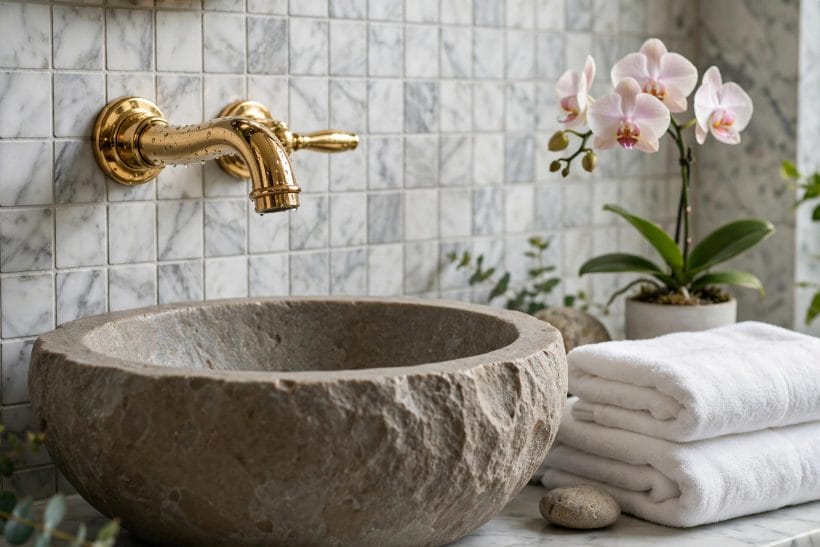
Tapware is the jewellery of the bathroom, and like jewellery it works when it is one considered set. This section keeps to a single rule: choose one metal, one finish, and let scale and shape — not variety — make the impression.
45. Choose one metal finish and hold the line
Brushed brass, polished chrome, matte black, brushed nickel — any can anchor a luxury room; two competing in one room cannot. If a piece cannot be had in the chosen finish, change the piece, not the finish.
46. Let the taps be the boldest objects in the room
With surfaces calm, the fittings carry the design. A sculptural floor-standing filler or an elegant wall spout earns its prominence when everything around it is quiet.
47. Wall-mount the basin taps to free the counter
Spouts rising from the wall leave the whole counter clear for use and cleaning, and let the basin sit closer to the mirror. The plumbing hides in the wall, so plan it before tiling, not after.
48. Upgrade the flush plate, of all things
A concealed cistern’s flush plate is touched daily and seen at eye level; the upgrade from plastic to metal in the room’s finish is small money for a constant signal of quality.
49. Choose a soft-close, rimless water closet
Rimless bowls clean faster and look cleaner; soft-close seats end the midnight clang. In a luxury room these quiet mechanics matter more than the silhouette of the pan.
50. Match the accessories: rails, hooks and holders
Towel rails, robe hooks, the toilet-roll holder and the brush should arrive from the same family as the taps. Mismatched small metal is the most common way an expensive bathroom quietly cheapens itself.
51. Heat the towel rail, on a timer
A warm towel at the end of a shower is a small daily ceremony. A timer so the rail runs for the morning and evening windows keeps the luxury without heating towels for an empty house all day.
52. Hide the shower drain in the design
Linear drains along the wall, or tile-insert drains that vanish into the floor pattern, keep the shower floor a single calm plane. The standard chrome grate in the centre is a full stop in the middle of the sentence.
53. Fit water-efficient fittings that do not feel it
Modern aerated taps and well-designed shower heads deliver a full feel on less water. Luxury that wastes conspicuously dates quickly; the quiet engineering is the point.
54. Give the room one scent and light source: a candle shelf
A small protected niche or shelf for a candle near the tub is a fitting too — planned, safe and permanent, instead of a candle balanced on the rim.
55. Count the controls before you plumb them
Every extra body jet and diverter adds a control to learn and a seal to maintain. Two or three water deliveries, perfectly placed, feel more luxurious than six competing for pressure and attention.
7. Light, Heat and the Senses
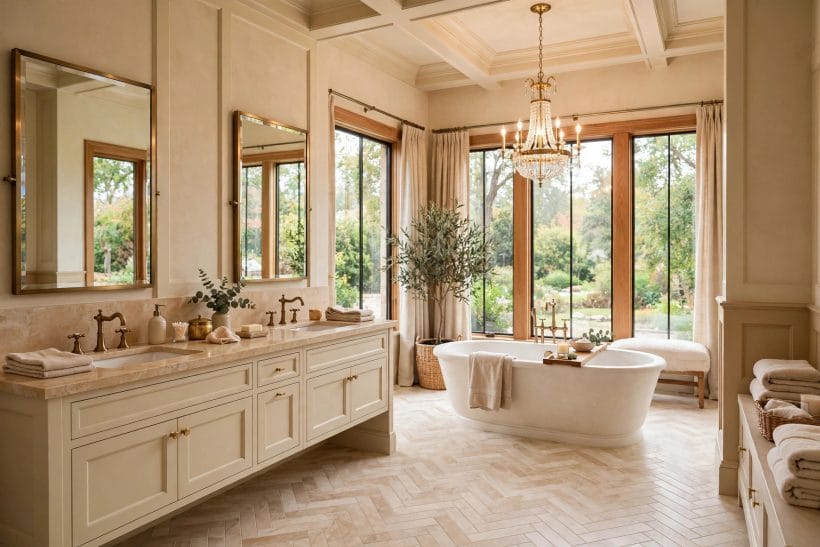
Luxury is felt before it is seen: warm floor underfoot, light that flatters at the mirror, air that clears quietly. The marble bathroom in this collection shows the material-led version; this section is the comfort layer that makes any material scheme feel expensive.
56. Light faces from both sides of the mirror
Light from above alone carves shadows into every face. Vertical lights at both sides of the mirror — or a lit mirror itself — give the even, shadowless light that makes grooming easy and faces kind.
57. Add a low, warm night light circuit
A dim amber guide light near the floor, on its own switch or a sensor, serves the small-hours visit without waking the room. It is the detail hotel bathrooms get right and houses forget.
58. Put every light on dimmers, in zones
Bright for cleaning, mid for mornings, low for bathing: three moods from the same fittings with zoned dimming. One switch, one brightness, is a corridor solution, not a luxury one.
59. Heat the floor, and zone it honestly
Warm tile underfoot is the signature luxury sensation. Zone the mat or pipes to where feet actually land — vanity, shower exit, tub side — rather than paying to heat beneath cabinets and the bath.
60. Ventilate silently and on a humidity sensor
A fan you can hear is a fan that gets switched off, and then mirrors steam and grout suffers. A quiet extractor that wakes itself when humidity rises keeps the room fresh without being asked.
61. Mirror that demists itself
Heated demister pads behind the mirror keep a clear oval in the steam exactly where you stand. After a month of use, wiping a mirror with a towel feels like a chore from another era.
62. Plan a place to sit that is not the tub edge
A stool, an upholstered chair in a dry corner, or a built-in seat gives the room a pause point — for dressing, for nails, for supervising small bathers. Rooms you can sit in feel larger and kinder.
63. Soften the acoustics with textiles
Bathrooms are echo chambers of hard surfaces; thick towels on warm rails, a bath mat with body, a curtain or upholstered stool absorb the ring. Quiet is a luxury material.
64. Keep one living thing in the room
A humidity-loving plant in good light brings the only irregular, growing shape in a room of grids and straight lines. It also testifies that the air in the room is healthy.
65. Scent the room at one fixed point
A diffuser or candle kept always in the same place becomes the room’s signature — noticed on entry, never hunted for. Rotating scents and scattered sources read as effort; one constant reads as identity.
8. Finishing Touches: Order, Textiles and Calm
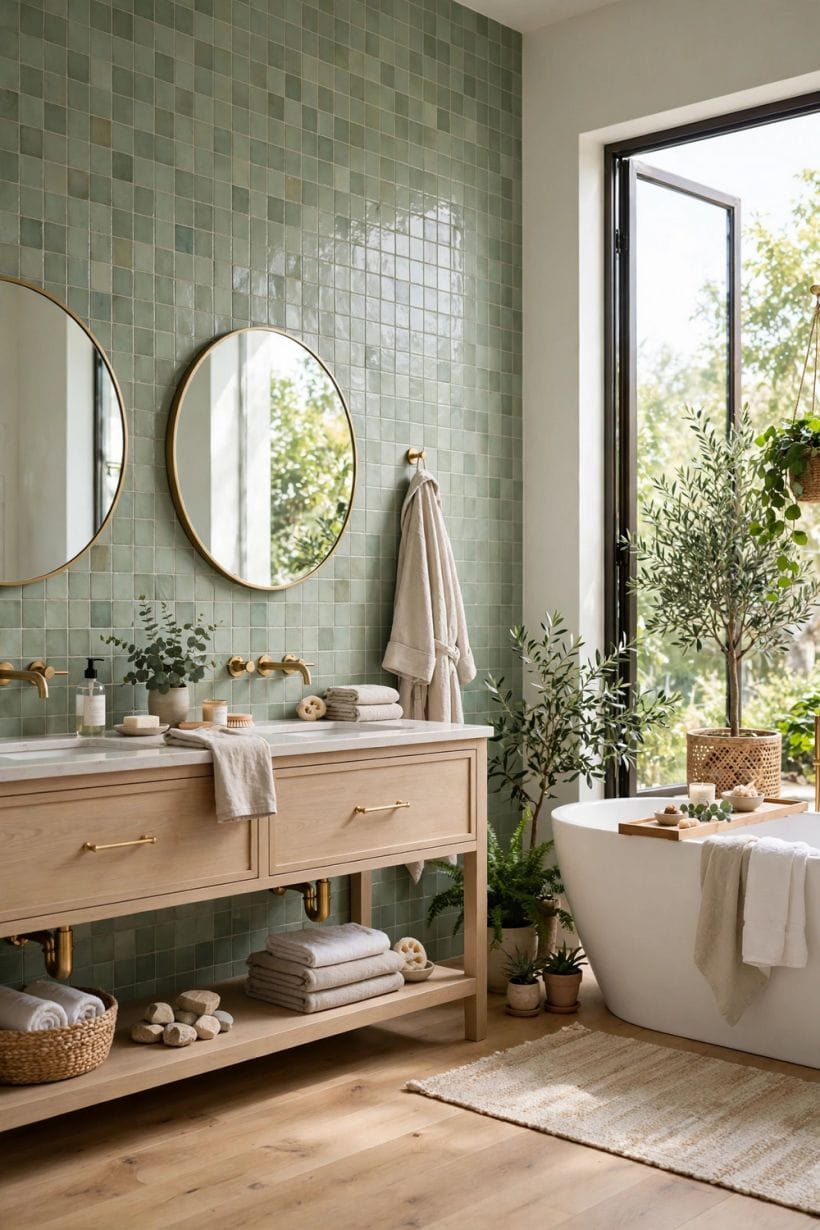
The last layer is the cheapest and the most visible: what sits out, what is hidden, and whether the room looks the same on a wet Tuesday as it did in the photographs. These closing ideas protect every investment made above them.
66. Decant the everyday bottles into matching dispensers
Shampoo and soap in one family of dispensers removes a dozen clashing labels from the shower and counter. It takes ten minutes, costs little, and changes the room’s finish more than most upgrades.
67. Choose towels in one colour and one generous size
A single towel colour — white for the hotel signal, or the room’s deepest tone for mood — in oversized bath sheets makes the rail look composed and the drying luxurious. Retire the rainbow gradually, top drawer first.
68. Add a bath caddy or stool in the room’s wood tone
The piece that holds the book and the glass should belong to the room’s palette, not the supermarket’s. A simple teak or oak stool beside the tub is both furniture and instrument.
69. Keep the counter to a rule of three
Three objects maximum on the vanity counter — perhaps a tray with soap, a plant, one personal item. Everything else has a drawer or cabinet already planned in this collection; the rule keeps it there.
70. Hang art that can take the steam
Framed prints behind glass, photography, or a small oil in a sealed frame handle bathroom humidity; precious paper does not. One considered picture beats a gallery of steam-curled posters.
71. Mirror the room’s calm in its robe and slippers
A hook with two good robes by the door extends the room’s promise — the bathroom as a place to linger, decently dressed. It is theatre, but theatre is part of what luxury means.
72. Store cleaning kit inside the room, invisibly
A squeegee in the shower, cloths in the vanity: cleaning that takes ninety seconds happens; cleaning that needs a trip to a cupboard downstairs does not. Luxury rooms stay luxurious because upkeep is effortless.
73. Refresh one small thing seasonally
A new hand towel colour, a different candle, a fresh plant — one small change per season keeps the room feeling curated rather than frozen, and costs almost nothing against the build.
74. Leave the room each night as the photographs found it
The luxury habit that costs nothing: counters cleared, towels hung straight, bottles in the niche. Two minutes nightly is the entire maintenance regime of the composed look.
75. End with the door: hardware and a soft close
The last touch is the door itself — a handle that matches the room’s metal, hinges that do not squeak, a close that lands softly. The room’s quality is judged at its threshold, coming and going.
9. Checks and Mistakes: Before the First Purchase or the First Fitting
Walk the finished design on paper once more before ordering: enter, undress, shower, dry, dress, groom. Every luxury failure is a moment in that sequence where something is missing, out of reach or in the way.
Check the unglamorous specifications in writing: waterproofing system, falls to the drains, access to every valve, and the weight of a full tub on the floor structure. Luxury that leaks is a very expensive ordinary bathroom.
Resist the late addition. The extra feature proposed mid-build — one more jet, one more finish, one more gadget — is how calm rooms become busy ones. The design’s restraint is its value; protect it.
10. Costs and Pulling It Together
Costs in a luxury master bathroom follow attention more than taste: layout changes and plumbing moves lead, then the shower build, surfaces, the tub, the vanity and fittings, with lighting and ventilation the best value in the whole budget. Spend in that order and the room feels expensive at every stage, even if it is finished in phases.
Hold back a finishing allowance for the last layer — towels, dispensers, a stool, one picture — because the room is judged on it daily. And keep the rule that built it: two surfaces, one metal, nothing on the counter. From the home design ideas hub you can follow the same discipline into every other room of the house.
Final Considerations
A luxury master bathroom is not a catalogue of expensive objects; it is a room where nothing jars — where the water arrives at your temperature, the floor is warm, the light is kind and every bottle has a home you cannot see.
Build it in the order this collection follows and the luxury takes care of itself, because each decision was made by the part of the room it belongs to: space first, then water, then surfaces, then light, then order.

0 Comments