
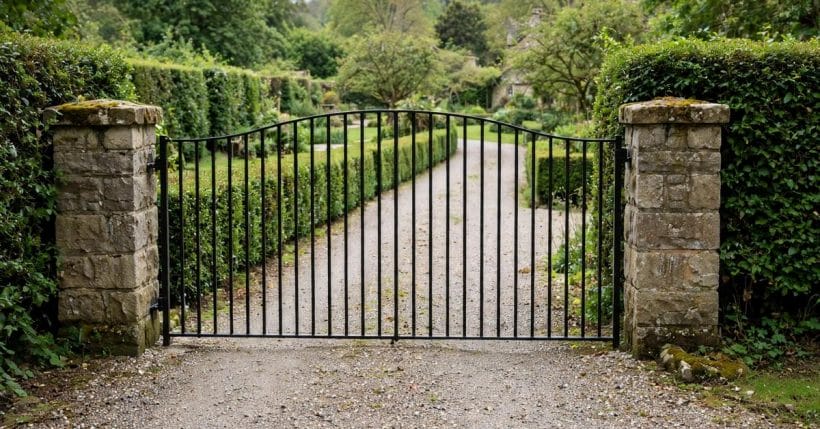
A metal gate does more than close an opening. It sets the tone of the entrance, frames the first view of the house, and shapes how a garden, a drive and a path are used every day. The same material can look formal or relaxed, bold or almost invisible, depending on the pattern of the bars, the shape of the top rail, the colour of the finish and the way the gate sits between its posts. This gallery looks at metal gates on their own terms, comparing driveway gates with pedestrian gates, open barwork with solid panels, and decorative scrollwork with clean contemporary lines, so you can see which combination suits your entrance, your house and the way you come and go.
Throughout, the focus stays on the gate itself: its form, its pattern, its finish and its fittings. Where a gate carries real weight or where posts must stand firm in the ground, planning and fitting belong to qualified professionals, and local rules should be checked before any work begins. Look for the details that matter in daily use, such as how a gate swings, how its latch feels in the hand, and how much of the garden shows through it, because those small choices decide whether a gate is a pleasure to use or a daily frustration.
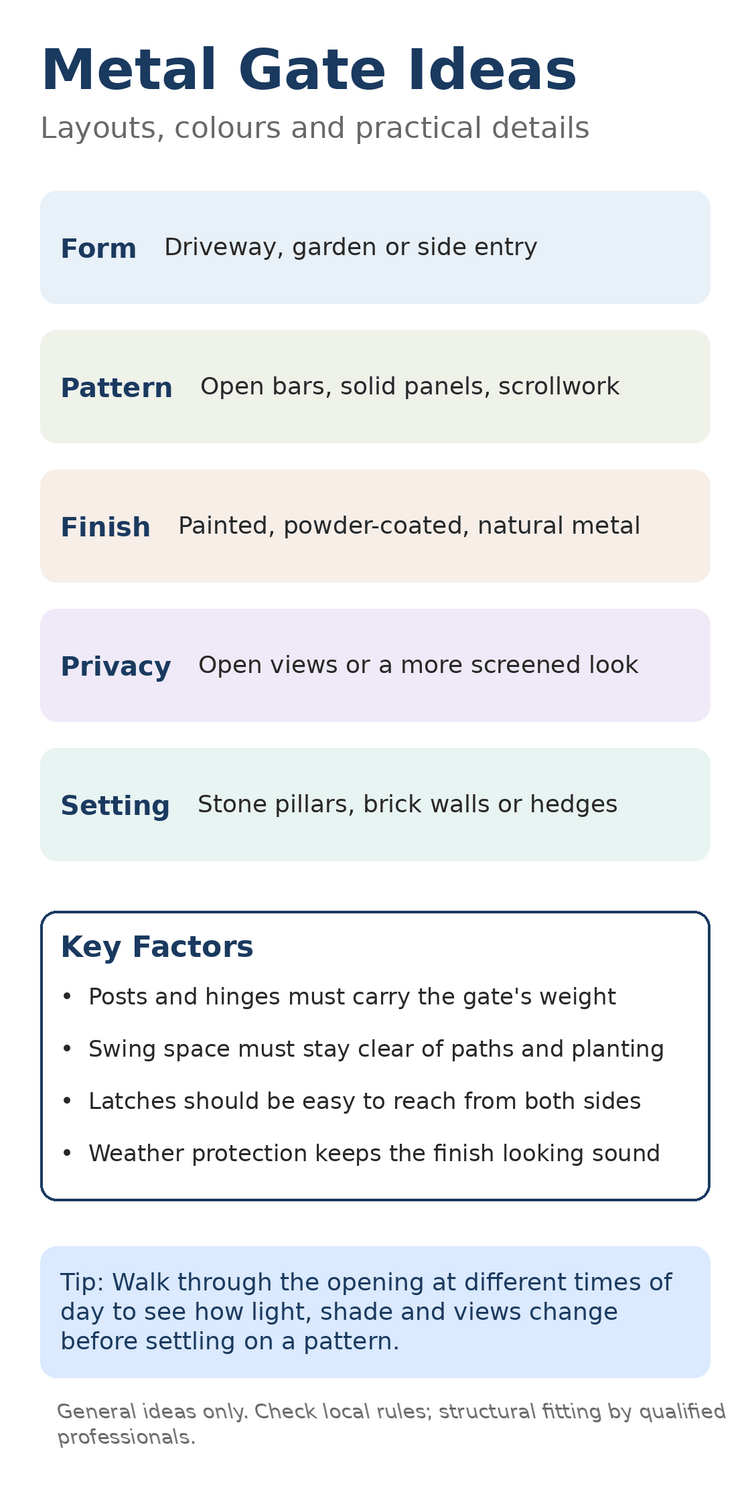
| Item | What it is |
|---|---|
| Driveway Gates That Frame the Entrance | A driveway gate is the widest gesture a house entrance can make, and its pattern decides how the whole frontage reads from the street. |
| Pedestrian Gates for Everyday Coming and Going | While a driveway gate makes the grand statement, a pedestrian gate does the everyday work, and it deserves just as much thought. |
| Scrollwork and Decorative Patterns | Scrollwork is the most decorative side of metal gate design, and it suits gardens where ornament is already part of the character, such as cottage gardens, period houses and planting-led frontages. |
| Horizontal Bars and Contemporary Lines | At the opposite end of the range sit gates built from horizontal bars, where the whole character comes from repetition, spacing and proportion rather than ornament. |
| Solid Panels for a More Screened Look | Not every entrance wants to be open. |
| Arched Tops and Shaped Silhouettes | The top edge of a gate is where its silhouette is decided, and an arch changes the whole feeling of an entrance. |
| Colours and Finishes That Suit the House | Colour is the quickest way to change the character of a metal gate, and the right choice usually comes from the house rather than from fashion. |
| Posts, Hinges and Latches That Carry Daily Use | A gate is only as good as its fittings, and posts, hinges and latches decide whether it swings smoothly or drags, sticks and sags. |
| Gates That Sit Well With Stone, Brick and Planting | A metal gate never stands alone, and its setting decides much of its success. |
| Light, Views and Privacy Through Open Metalwork | Open metalwork is the one material choice that lets a gate manage light, views and privacy all at once, and the balance between them is set by the spacing and pattern of the bars. |
1. Driveway Gates That Frame the Entrance
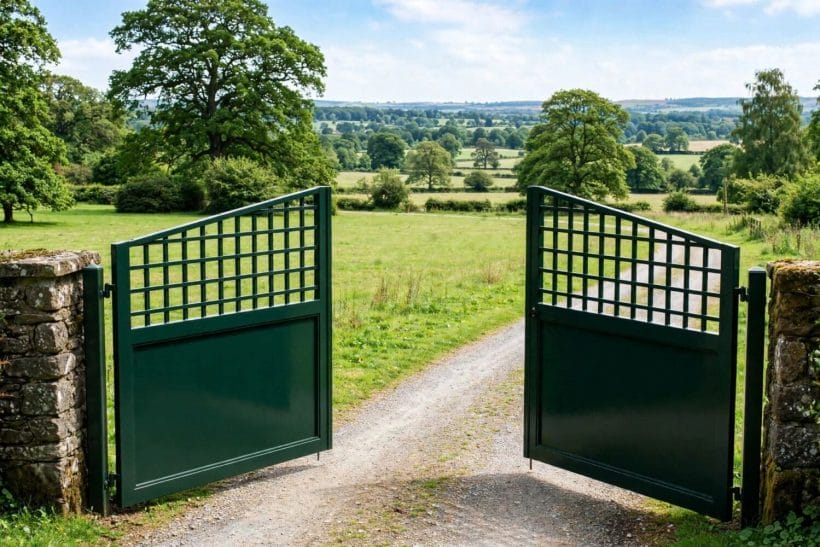
A driveway gate is the widest gesture a house entrance can make, and its pattern decides how the whole frontage reads from the street. Open vertical bars keep the house and garden visible, so the entrance feels welcoming and the drive reads as part of the garden rather than a barrier across it. A pair of gates that meet in the middle suits a broad opening, while a single wide gate suits a narrower drive, and in both cases the top rail sets the character, whether it runs straight and level or rises into a gentle arch.
Stone pillars give a driveway gate a sense of permanence and weight, and they also give the hinges something solid to hang from, which matters because a driveway gate is used often and must swing true season after season. Planting softens the hard lines of metal and stone, with hedges or climbers beside the pillars rather than crowding the swing of the gate itself. The approach matters too: a clear, level run up to the gate makes arrival feel easy, and a gate that opens inward keeps the street clear. Pair the gate with the wider house exterior in mind, so the metalwork, the pillars and the facade read as one composition rather than separate decisions.
2. Pedestrian Gates for Everyday Coming and Going
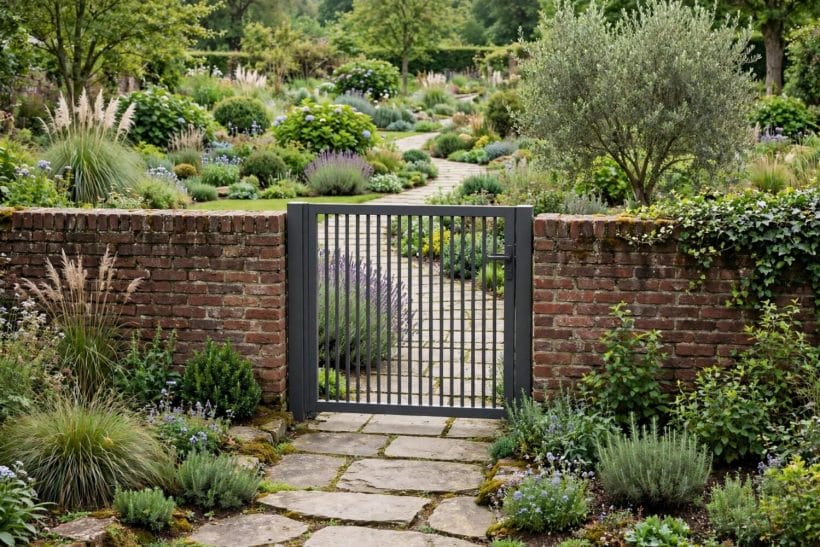
While a driveway gate makes the grand statement, a pedestrian gate does the everyday work, and it deserves just as much thought. This is the gate used on foot, often several times a day, so its latch should be easy to reach, its swing should feel light and balanced, and its opening should sit naturally on the path from the street to the front door. A slim flat-bar design in dark grey, set into a brick wall, shows how a pedestrian gate can be quietly handsome without drawing attention away from the planting around it.
Position is everything for a pedestrian gate. Set it where the path already wants to go, rather than asking visitors to step sideways across a lawn or a bed, and keep the ground on both sides level and clear so the gate can swing fully without catching. A gate that lines up with the front door gives the entrance a clear axis, while a gate set slightly to one side can suit a garden where the path curves. Think about how the gate looks from inside the garden as well as from the street, because a pedestrian gate is seen from both sides every day, and a design that pleases from both directions earns its place twice over.
3. Scrollwork and Decorative Patterns
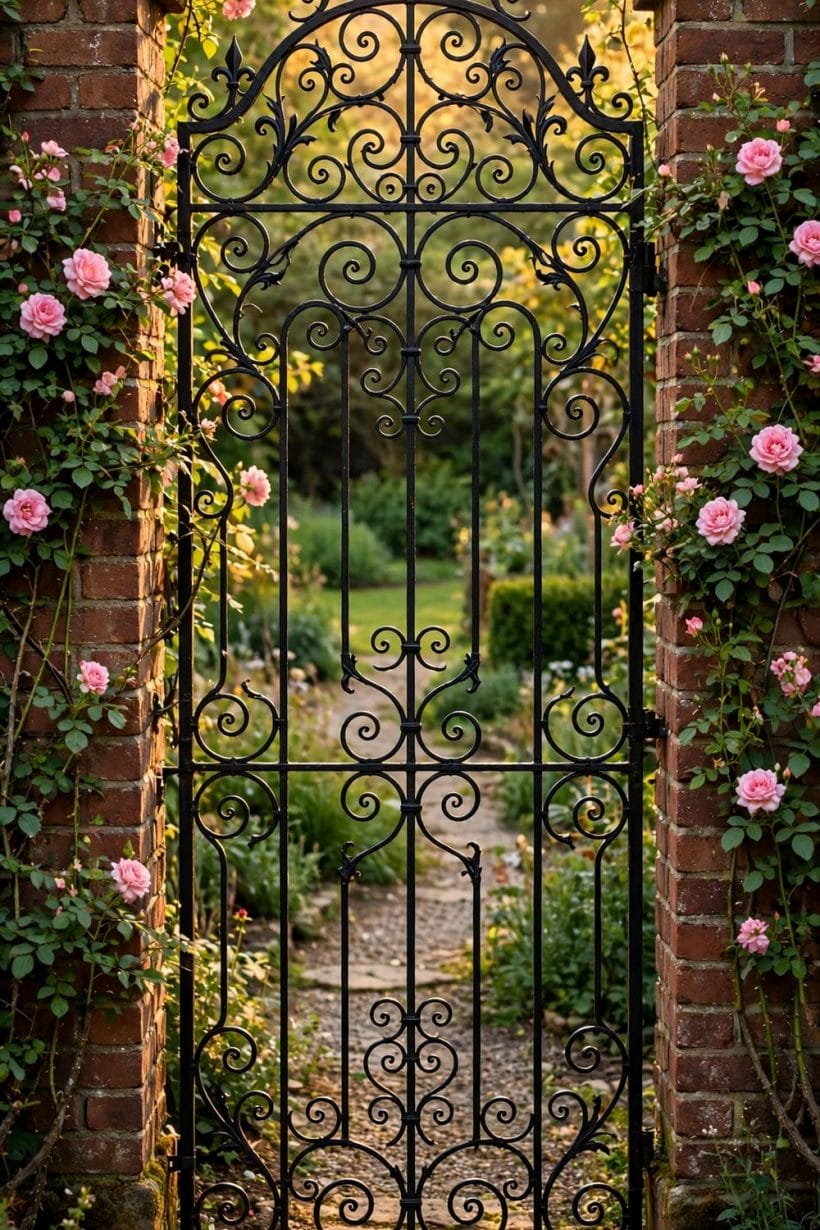
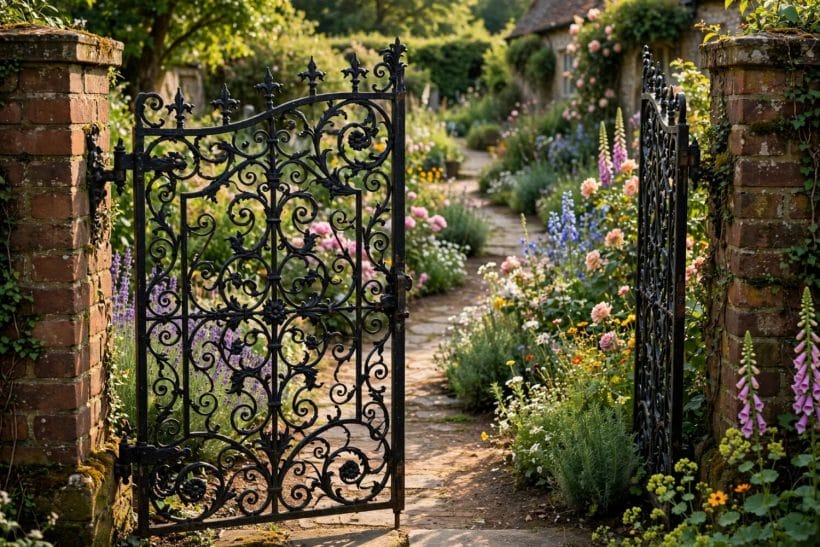
Scrollwork is the most decorative side of metal gate design, and it suits gardens where ornament is already part of the character, such as cottage gardens, period houses and planting-led frontages. Curves, spirals and leaf-like flourishes turn a simple barrier into a piece of garden craft, and the play of light through the open pattern changes through the day, casting shifting shadows on the path. A scrollwork gate works best where it can be seen properly, framed by pillars or a wall, rather than hidden behind dense planting that covers its detail.
Decorative does not have to mean delicate. A well-made scrollwork gate has a solid frame behind its ornament, and the decorative panels sit within that frame rather than carrying the structure themselves. When choosing a decorative pattern, look at it from a distance as well as close up: from the street, the overall silhouette matters more than any single curl, while close up, the quality of the joints and the smoothness of the finish tell you how the gate will age. Pairing scrollwork with flowering climbers on the pillars gives the gate a soft, romantic setting, but keep climbers trimmed clear of hinges and latches so the gate keeps swinging freely.
4. Horizontal Bars and Contemporary Lines
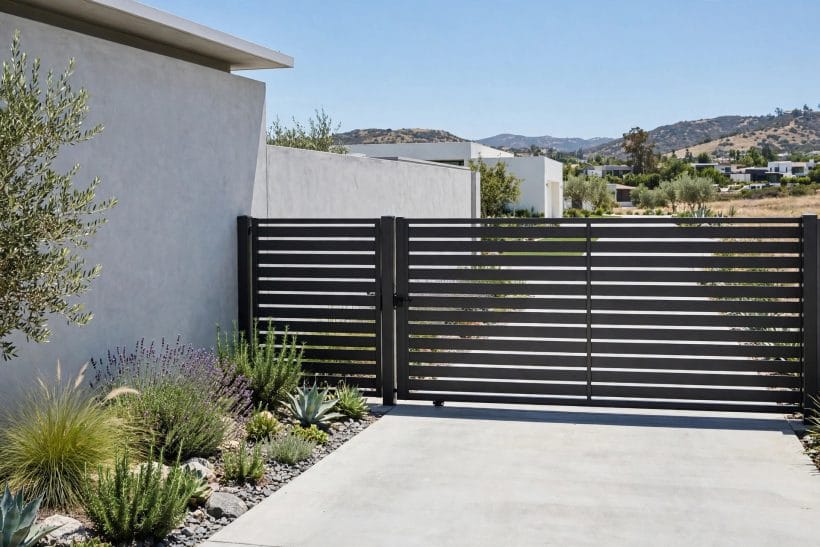
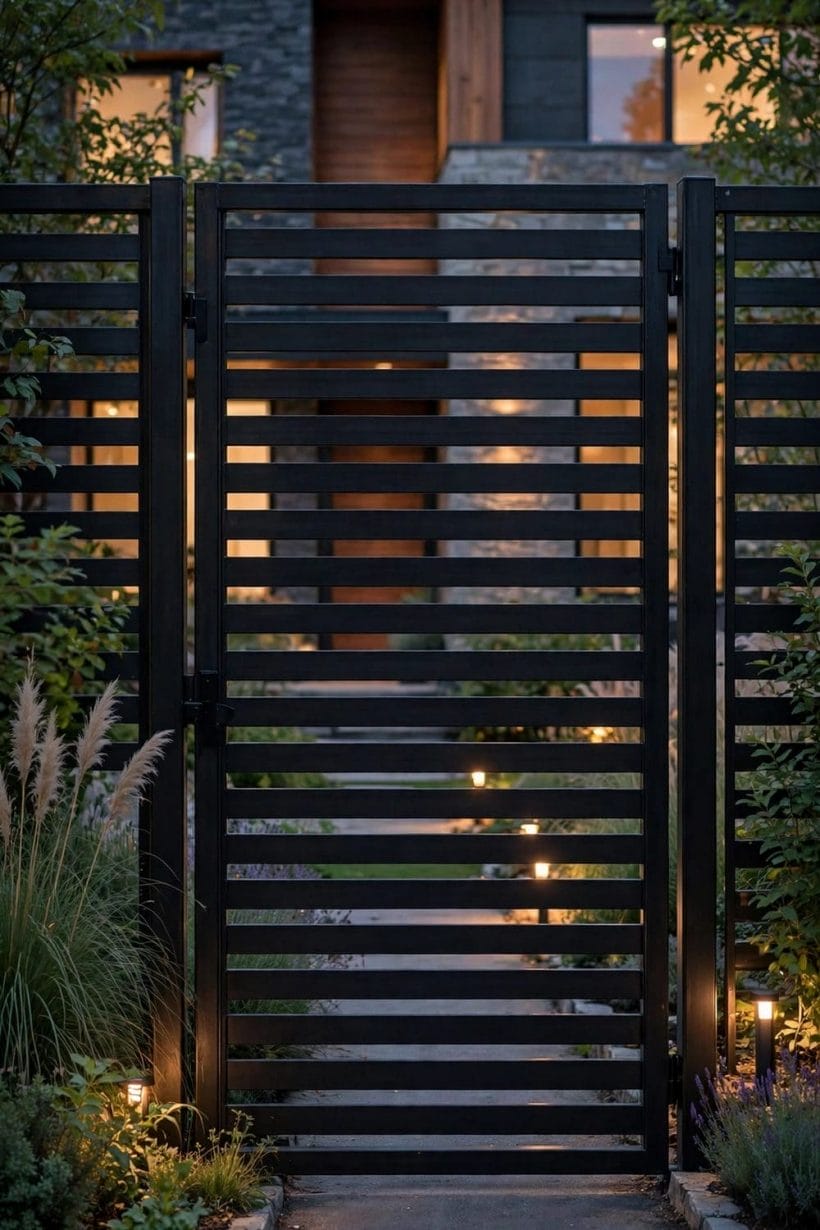
At the opposite end of the range sit gates built from horizontal bars, where the whole character comes from repetition, spacing and proportion rather than ornament. A charcoal gate of evenly spaced horizontal slats reads as calm, modern and architectural, and it suits houses with flat roofs, rendered walls and restrained planting. The eye follows the horizontal lines across the frontage, which can make a narrow entrance feel wider and a long frontage feel composed.
Horizontal designs ask for careful attention to spacing and alignment, because any unevenness shows at once in a regular pattern. The frame should be crisp, the bars should run true, and the gate should sit level within its opening so the horizontal lines continue cleanly from gate to any fixed panels beside it. This is also a style where colour does a lot of work: a dark charcoal or near-black finish keeps the lines quiet and lets the house and planting carry the colour, while a lighter finish makes the gate itself the feature. Readers planning a modern frontage may also enjoy browsing modern house plans to see how gate lines sit within a whole contemporary composition.
5. Solid Panels for a More Screened Look
Not every entrance wants to be open. A solid-panel metal gate screens the garden and the drive from the street, giving a household more privacy and a stronger sense of enclosure, and it suits houses where the front garden is also used as a private outdoor room. Solid panels also change the acoustics of an entrance, softening street sound, and they give a frontage a clean, uninterrupted surface that can look very smart against brick or render.
A solid gate needs its fittings to be right, because its weight is carried on the same hinges and posts as an open gate but with more surface catching the wind. Posts should be properly founded, hinges should be matched to the weight of the gate, and the latch should hold firmly without needing force. Ventilation and light in the garden behind a solid gate deserve thought too: a fully screened entrance can make a small front garden feel shaded, so consider pairing a solid driveway gate with a more open pedestrian gate, giving privacy where it matters and openness where the path runs.
6. Arched Tops and Shaped Silhouettes
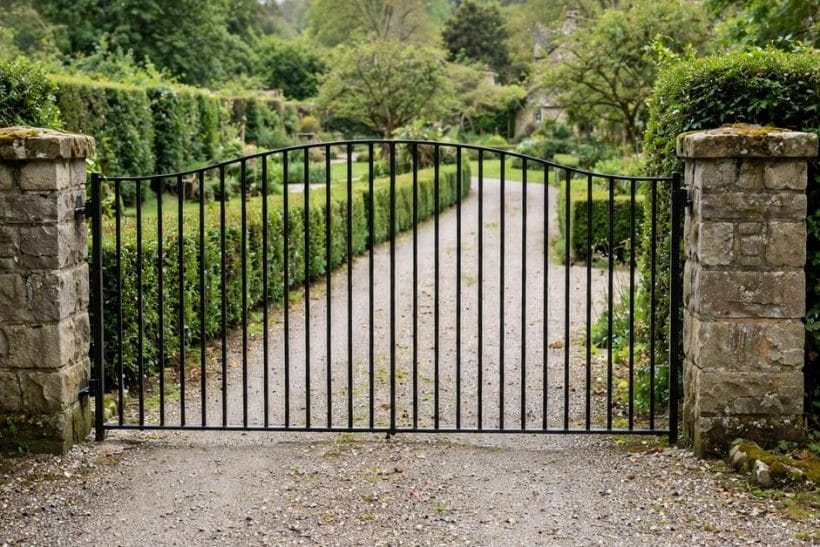
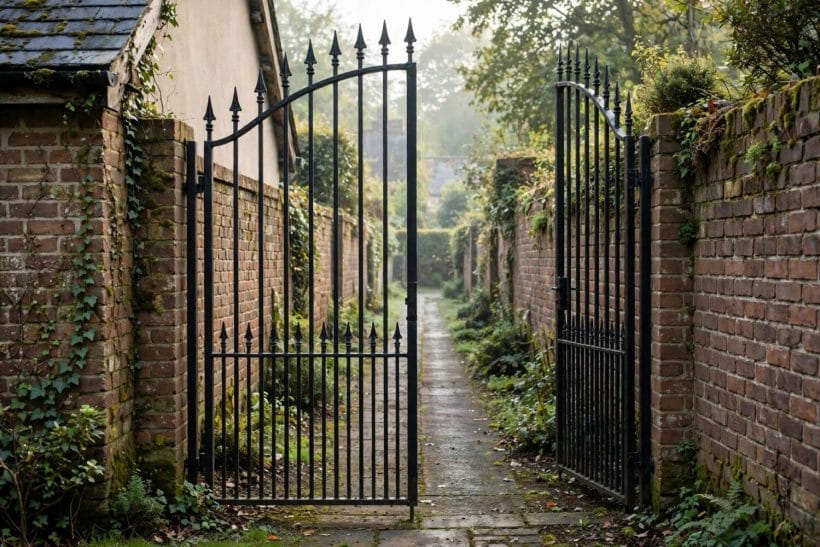
The top edge of a gate is where its silhouette is decided, and an arch changes the whole feeling of an entrance. A gentle arch over a driveway gate softens the formality of straight bars and suits houses with curved garden lines, arched windows or a traditional character. A taller, more pronounced arch over a side gate draws the eye upward and marks a passage between one part of the garden and another, turning a simple side entrance into a small moment of arrival.
Shaped tops also include spear-topped bars, stepped profiles and curved rails that dip and rise, each giving a different rhythm to the frontage. Spear tops add a traditional, slightly defensive note and suit period houses and tall boundary walls, while a stepped or gently curved rail feels more relaxed. Whatever the shape, the top rail should be considered against the pillars and the wall beside it: an arch that echoes the curve of a nearby window or the cap of a pillar ties the entrance together, while a shape that fights its neighbours can look restless. Keep the silhouette simple enough to read at a glance from the street, and let the detail reward a closer look.
7. Colours and Finishes That Suit the House
Colour is the quickest way to change the character of a metal gate, and the right choice usually comes from the house rather than from fashion. Black is the classic choice, and it suits almost every house style because it recedes, letting brick, stone, planting and the facade itself carry the colour. Deep green sits beautifully against lawns and hedges and suits traditional and cottage settings, while dark grey and charcoal suit modern houses and pale rendered walls. Lighter finishes, such as cream or pale grey, make a gate stand out and suit coastal or cottage frontages where a bright entrance is part of the charm.
Finish matters as much as colour. A painted finish can be refreshed over time, a powder-coated finish gives a smooth, even surface that resists weathering, and a natural metal finish, left to develop its own patina, suits rustic and industrial settings where a lived-in look is welcome. Whichever finish is chosen, it should be checked from time to time for wear, especially along the bottom rail and around hinges, where weather and use show first. A gate whose finish is kept sound will hold its colour and its character for years, and a finish chosen to suit the house style, rather than to shout over it, is the one that still looks right when planting and seasons change. For a house style where gate colour works hard, see coastal farmhouse ideas, where light finishes and relaxed frontages go hand in hand.
8. Posts, Hinges and Latches That Carry Daily Use
A gate is only as good as its fittings, and posts, hinges and latches decide whether it swings smoothly or drags, sticks and sags. Posts must stand firm and plumb, because a leaning post throws the whole gate out of true, and hinges must be matched to the weight and width of the gate they carry. A gate that feels heavy or drops on its latch is usually telling you about its hinges or its posts rather than about the gate panel itself, so these fittings deserve attention before the pattern is chosen, not after.
Latches deserve the same care. A latch should be reachable from both sides without stretching or stooping, should close with a reassuring click rather than a slam, and should be simple enough for everyday visitors to use without instruction. Self-closing fittings suit side gates and garden gates where the gate should not stand open, while a simple drop latch suits a garden gate that is opened and closed by hand. Where posts must be set into the ground or fixed to a wall that carries structural loads, the work belongs to qualified professionals, and the same applies to any gate wide enough to need substantial foundations. Good fittings are rarely noticed, and that is exactly the point: a gate that opens, closes and latches without thought has done its job perfectly.
9. Gates That Sit Well With Stone, Brick and Planting
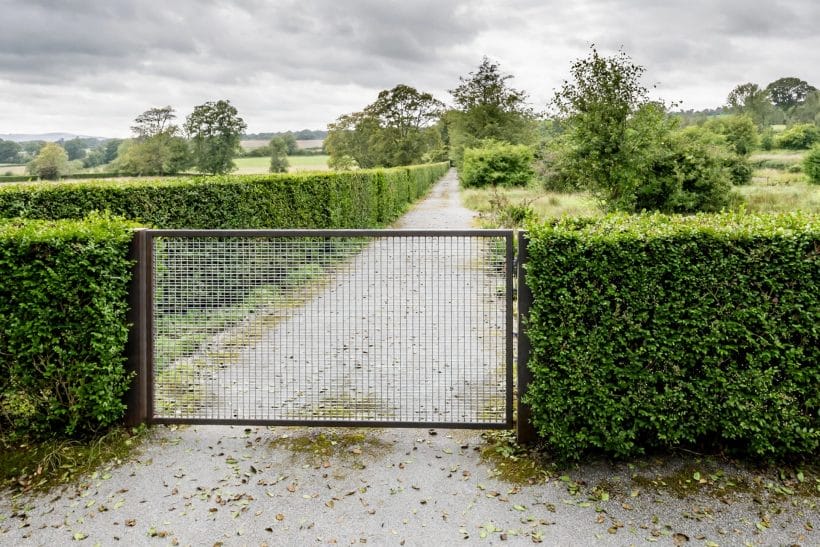
A metal gate never stands alone, and its setting decides much of its success. Stone pillars give weight and formality, brick walls give warmth and a domestic scale, and hedges give softness and a garden-led character, and each setting asks for a different gate. A slim bar gate suits a brick wall because the wall already provides the mass, while a more decorative gate suits stone pillars because the pillars can carry the ornament. A mesh-panel gate set into a hedge boundary shows the opposite approach, where the gate almost disappears into the planting and the garden itself becomes the feature.
Planting around a gate should frame it, not fight it. Climbers on pillars, low shrubs beside the opening and a clear path through the gate all help the entrance feel intentional, while planting that crowds the swing or hides the latch makes daily use harder. Levels matter too: where a garden sits above or below the street, steps, a raised approach or a terraced path may shape how the gate is reached, and ideas for outdoor levels can be found among raised deck ideas, which show how outdoor structures meet the ground gracefully. The best gate settings feel inevitable, as if the gate, the wall and the planting were planned together from the start, because in the most successful entrances, they were.
10. Light, Views and Privacy Through Open Metalwork
Open metalwork is the one material choice that lets a gate manage light, views and privacy all at once, and the balance between them is set by the spacing and pattern of the bars. Closely spaced bars screen more and admit less view, while widely spaced bars open the garden to the street and let daylight pour through the entrance. A lattice top section over a solid lower panel gives the best of both, screening the lower part of the garden while keeping the upper part open to sky and light, and a gate with an open upper section can make a small front garden feel larger because the eye travels beyond it.
Time of day changes everything about an open gate. Morning light rakes across barwork and throws long shadows on the path, midday light makes the pattern almost disappear, and evening light turns the gate into a silhouette against the garden. Walking through the opening at different times of day, and looking back at the gate from inside the garden, shows how light and views really behave, and that walk is worth doing before settling on a pattern. Daylight is a theme that runs through the whole house, and readers interested in how light is shaped indoors may enjoy clerestory window layouts, where high glazing brings light deep into a plan in a similar spirit. A gate that handles light well feels different at every hour, and that changing character is part of its charm.
Final Considerations
Choosing a metal gate comes down to a handful of honest questions: how wide is the opening, how often will the gate be used, how much of the garden should show through it, and what does the house itself suggest in style and colour. Answer those four questions first, and the pattern, the finish and the fittings usually follow naturally. A driveway gate, a pedestrian gate and a side gate may each answer differently, and that is fine: gates within one property do not need to match exactly, but they should share a family resemblance in material, colour or pattern so the whole frontage feels coherent.
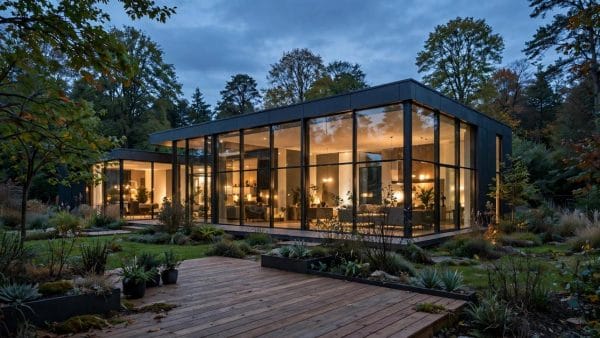
Before any work begins, check local rules for gates and boundaries, and bring in qualified professionals for posts, foundations and any structural fixing, especially where a gate is wide, heavy or set into a load-bearing wall. Once fitted, a metal gate asks for little: a regular look over its finish, hinges kept in good order, latches checked for easy use, and planting kept clear of the swing. A gate chosen this way, fitted well and cared for lightly, becomes part of the daily rhythm of a home, opening and closing without fuss and framing the entrance beautifully for years. For a final pairing idea, see how glazed walls and metalwork sit together in glass exterior home ideas, and how a gate can lead into an outdoor room in tiny house patio ideas, so the entrance, the garden and the house read as one welcoming whole.
Seen together, these metal gate ideas share a simple lesson: the best gate is the one that suits its opening, its house and its daily use, rather than the one that shouts loudest from the street. Whether the choice is open bars or solid panels, scrollwork or straight lines, black or green or grey, the gate that earns its place is the one that swings true, latches easily and looks right from both sides, in every season.

0 Comments