
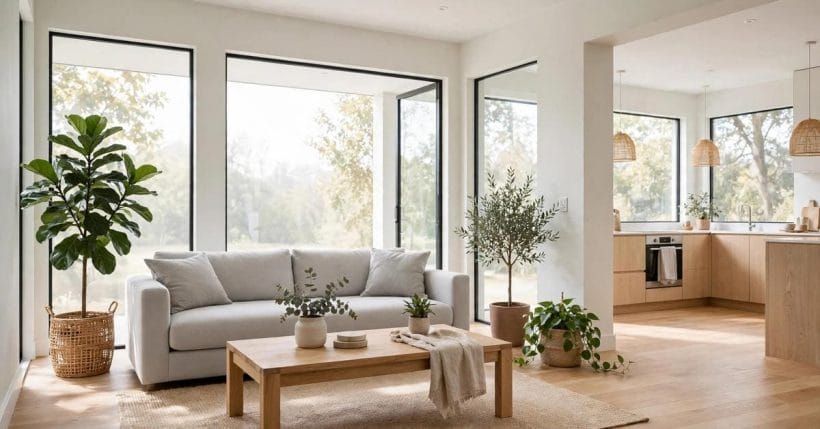
A modern home renovation works best when it is planned as one house, not as a string of separate rooms. The strongest refreshes share the same calm palette, the same timber tones and the same approach to light from the front door to the back garden, so each room feels like part of a whole rather than a fresh start. This gallery gathers renovation ideas room by room, from opening up a layout to finishing the front of the house, with practical details you can carry into your own planning.
Throughout, the same rule applies: painting, decorating and furnishing choices are yours to make, while structural, electrical and plumbing work should always be left to qualified professionals. A renovation that respects that line is easier to live with, easier to finish, and far more likely to look settled once the dust has gone.
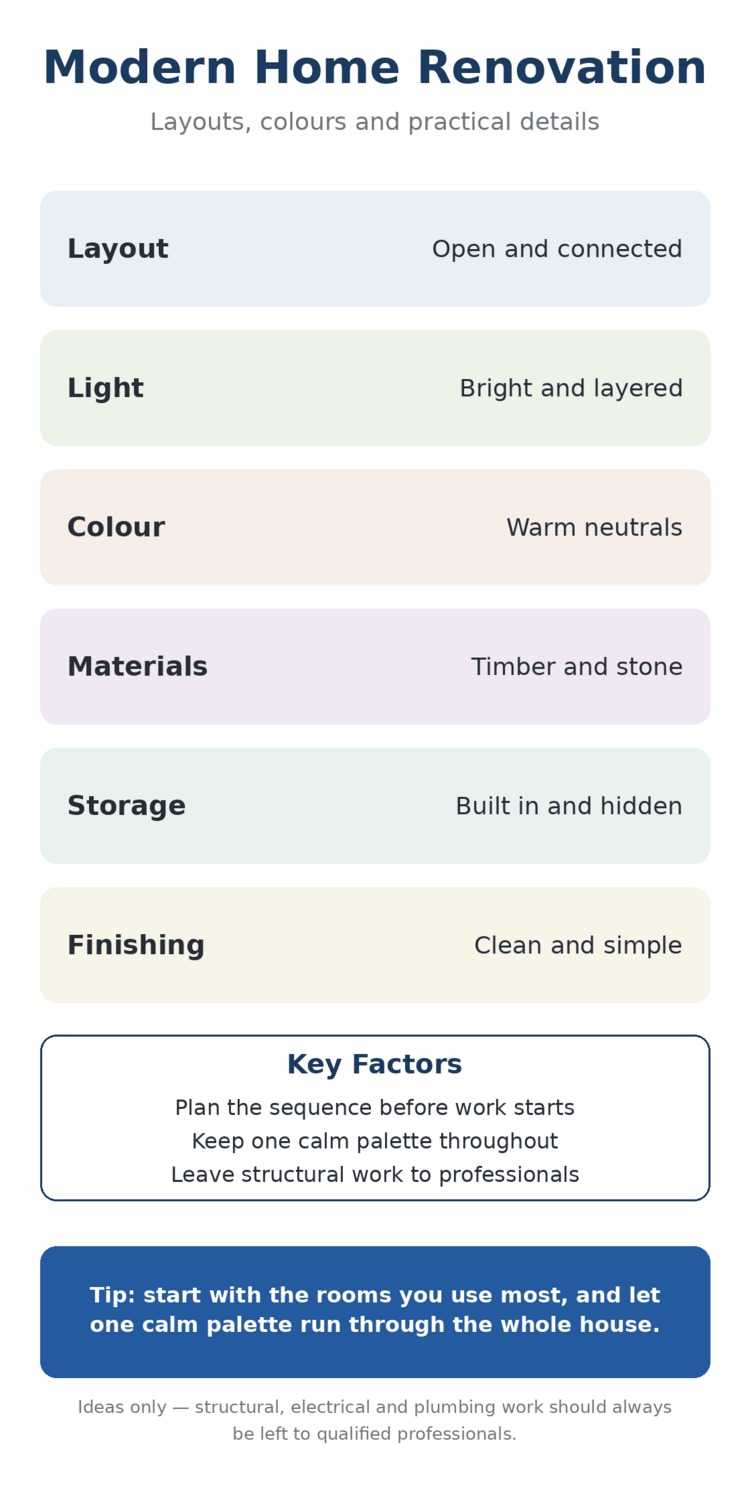
| Item | What it is |
|---|---|
| Open Up the Layout Without Losing the Rooms | The most visible change in many renovations is also the simplest to describe: rooms that once felt boxed in are opened to one another, so daylight and daily life move freely through the house. |
| Kitchens That Work Harder After a Refresh | A kitchen renovation earns its keep in daily routines: cooking, clearing up, packing lunches and gathering at the end of the day. |
| Let Daylight Do the Heavy Lifting | Daylight is the cheapest decorating tool a renovation has, and it flatters everything it touches. |
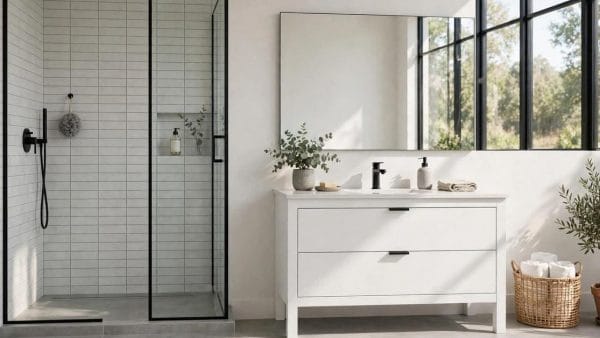
| Bathrooms Made Simpler and Easier to Keep Clean | A renovated bathroom should feel calm the moment you walk in, and that calm usually comes from fewer, better-chosen pieces. |
| Living With the Work While It Happens | Every renovation has a middle stretch when the house is dusty, noisy and half-finished, and planning for that stretch is part of the renovation itself. |
| Open Living and Dining That Still Feel Like Rooms | An opened-up living and dining space works when each zone still has its own character. |
| Bedrooms That Help You Rest | A renovated bedroom should lower the temperature of the whole day. |
| Living Rooms That Welcome Everyone | The living room is where a renovation is judged most, because it is where guests sit and where evenings happen. |
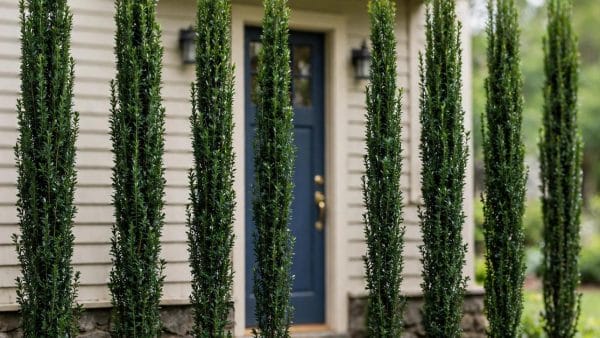
| What to Do With the Front of the House | The front of a renovated house deserves as much thought as the rooms inside, because it is the first thing you see coming home. |
| Details That Make a Renovation Feel Finished | The difference between a renovation that looks done and one that looks nearly done usually lives in the details. |
1. Open Up the Layout Without Losing the Rooms
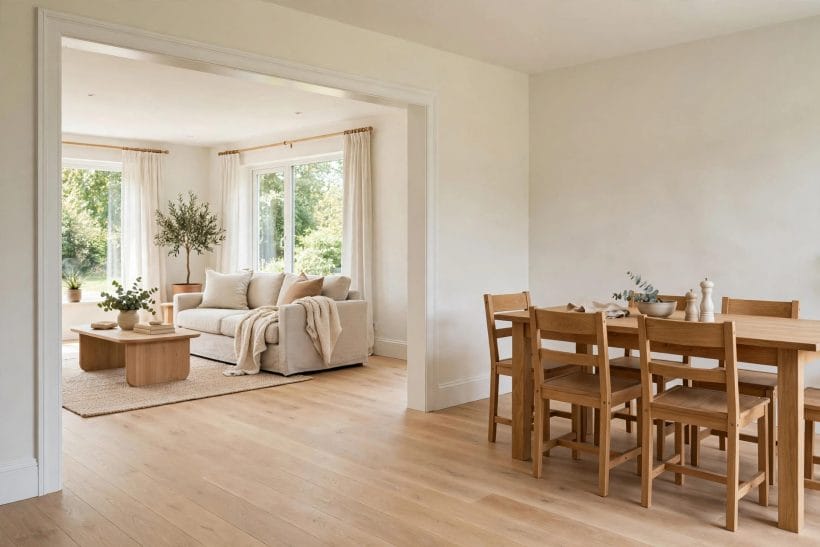
The most visible change in many renovations is also the simplest to describe: rooms that once felt boxed in are opened to one another, so daylight and daily life move freely through the house. A wide cased opening between a living room and a dining room keeps the sense of two distinct places while letting conversation, light and a view of the garden travel between them. Keeping a clear opening, rather than removing every trace of a wall, also leaves somewhere for furniture to sit against and for a room to feel anchored.
Before any wall is touched, the plan needs to settle what each space is for. A living room that doubles as a play space needs tougher fabrics and clearer floor space than a quiet reading corner, and a dining area near the kitchen saves steps every single day. Walking the route from the front door to the kitchen, the table and the sofa in your head, before work starts, shows up awkward corners early, when they are still easy to redraw. Even a small change, such as widening a doorway or squaring off an opening, can make a hallway feel generous without changing the shape of the house at all.
Flooring helps the opened layout read as one space. Running the same timber floor through the living and dining areas, with no change of material at the old wall line, quietly tells the eye that the rooms belong together. Rugs can then mark out zones within the open space: one under the coffee table, one under the dining table, each in a tone that echoes the other. For more ideas on planning compact, connected rooms, see these tiny house designs, where every opening has to earn its place.
2. Kitchens That Work Harder After a Refresh
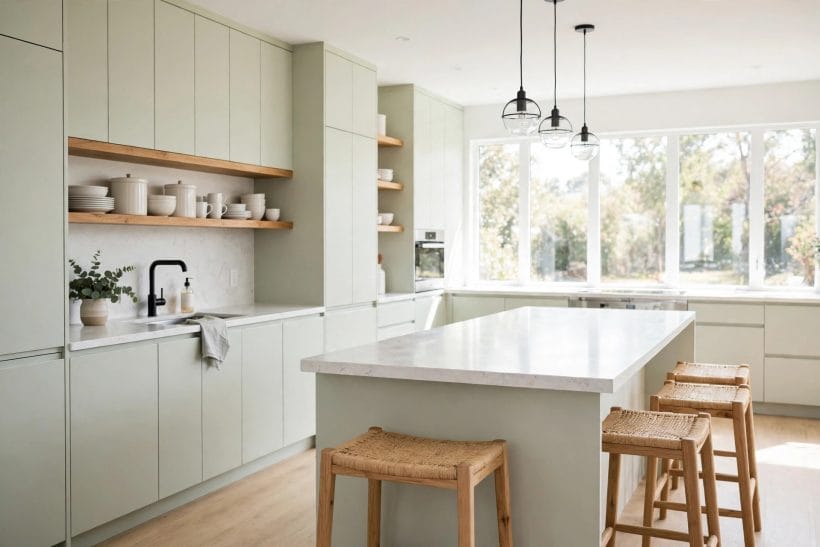
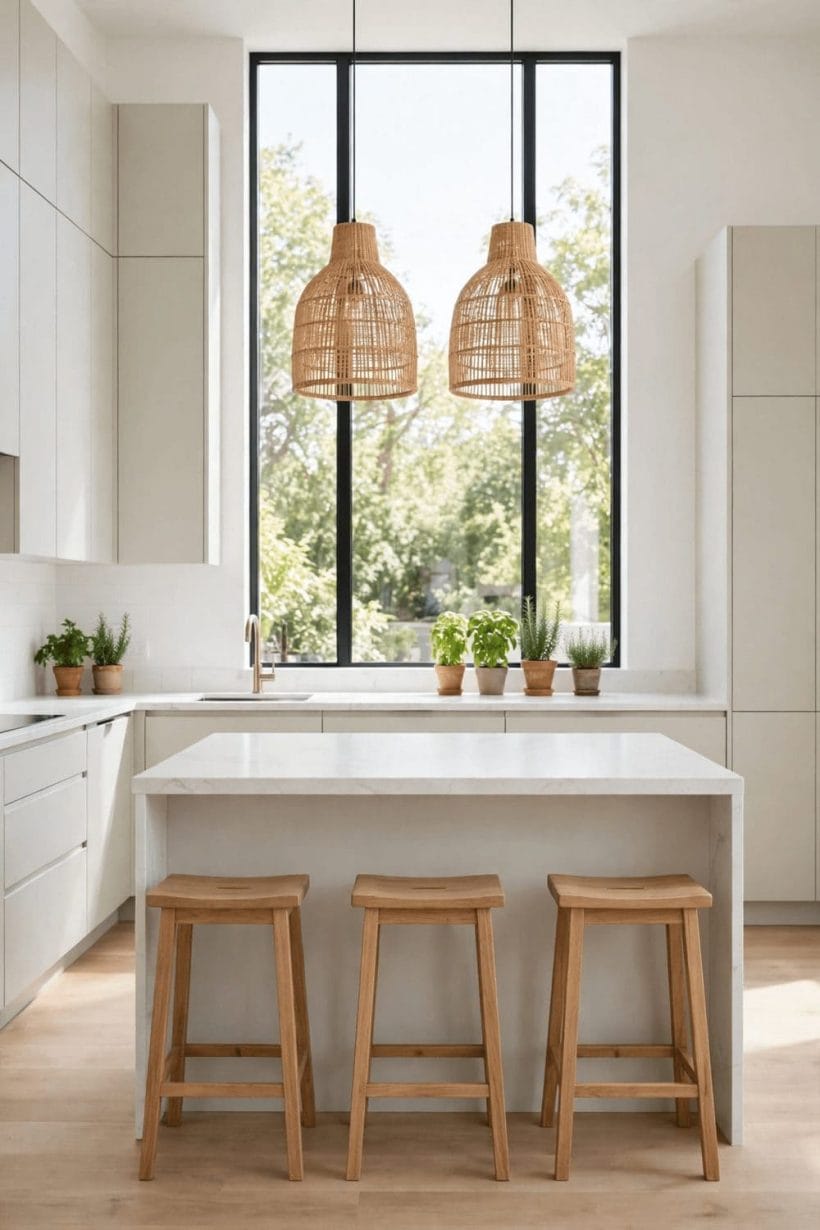
A kitchen renovation earns its keep in daily routines: cooking, clearing up, packing lunches and gathering at the end of the day. Flat-front cabinets in a pale, muted tone give a kitchen a calm backdrop, and a generous island turns the middle of the room into a place for prep, homework and conversation all at once. Open shelving suits the few pieces you reach for every day, while closed cabinets keep the rest out of sight, so the room looks tidy even in the middle of cooking.
Worktops deserve the same calm thinking. A pale stone worktop lifts a room and pairs easily with both timber and painted cabinets, and it gives a clean, uninterrupted surface for rolling, chopping and serving. Stools at the island should tuck away neatly when they are not in use, and a sink placed under a window makes washing up a brighter job. Small choices matter here too: a tap that is easy to clean around, cupboard fronts that wipe down without fuss, and lighting that falls on the worktop rather than into your eyes.
The kitchen also sets the tone for the rest of the house, because it is so often visible from the living areas. Carrying one cabinet colour or one timber tone from the kitchen into the neighbouring rooms keeps the whole ground floor feeling connected. A kitchen that looks calm from the sofa is a kitchen that will keep looking calm for years, and the ideas in these tiny house interiors show how a small, well-planned kitchen can carry a whole home.
3. Let Daylight Do the Heavy Lifting
Daylight is the cheapest decorating tool a renovation has, and it flatters everything it touches. Tall windows, a glazed door to the garden, and pale walls that bounce light around a room can make a familiar space feel newly built. Sheer curtains soften strong sun without shutting it out, and mirrors placed opposite a window borrow light for a darker corner. The aim is a house that feels bright on an ordinary grey morning, not only on a sunny afternoon.
Layered lighting takes over where daylight leaves off. A central pendant over a table, small lamps at sofa height, and a focused light over a worktop each do a different job, and together they let a room change mood from daytime to evening without any rewiring drama. Warm-toned bulbs suit living rooms and bedrooms, where evenings should feel restful, while clearer light suits kitchens and bathrooms, where tasks need to be seen properly. Any new wiring or fitting work belongs to a qualified electrician, and planning the light points before plastering and painting saves reopening finished walls.
Window dressings finish the daylight story. Plain linen or cotton curtains in a pale tone frame a window without competing with the view, and blinds that lift fully clear give a room its whole window back during the day. In a renovated kitchen, a tall window above the sink or beside the island turns an everyday chore into a brighter moment, and the same daylight thinking, carried into every room, is what makes a refreshed house feel coherent rather than patched together.
4. Bathrooms Made Simpler and Easier to Keep Clean
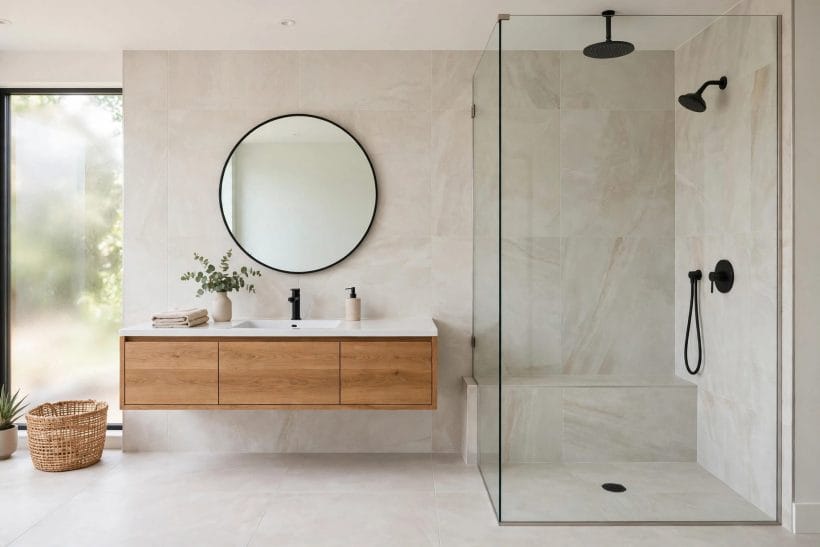
A renovated bathroom should feel calm the moment you walk in, and that calm usually comes from fewer, better-chosen pieces. A walk-in shower with a clear glass panel keeps the room feeling open, large pale tiles reduce visual clutter, and a floating vanity leaves the floor visible, which makes even a modest bathroom feel more spacious. A round mirror softens all the straight lines, and a single timber tone, repeated in the vanity and a small stool or shelf, warms up the pale surfaces.
Practical details matter more in a bathroom than in almost any other room. Tiles that are easy to wipe, a shower floor that drains cleanly, and storage that keeps bottles and brushes out of sight all make the room easier to live with. A recessed shelf inside the shower wall holds shampoo without adding clutter, and a heated rail or a well-placed hook gives towels somewhere sensible to dry. Waterproofing and plumbing changes are professional work, and getting them right before tiling is what keeps a beautiful bathroom beautiful.
Colour in a bathroom works best when it stays quiet. Pale stone tones, soft white and one warm timber note let the room feel fresh without feeling cold, and plants that like humidity add a soft green accent. Keeping the palette close to the rest of the house, rather than treating the bathroom as a separate world, helps the renovation feel like one project, and a bathroom that is simple to clean is a bathroom that will still look renovated years later.
5. Living With the Work While It Happens
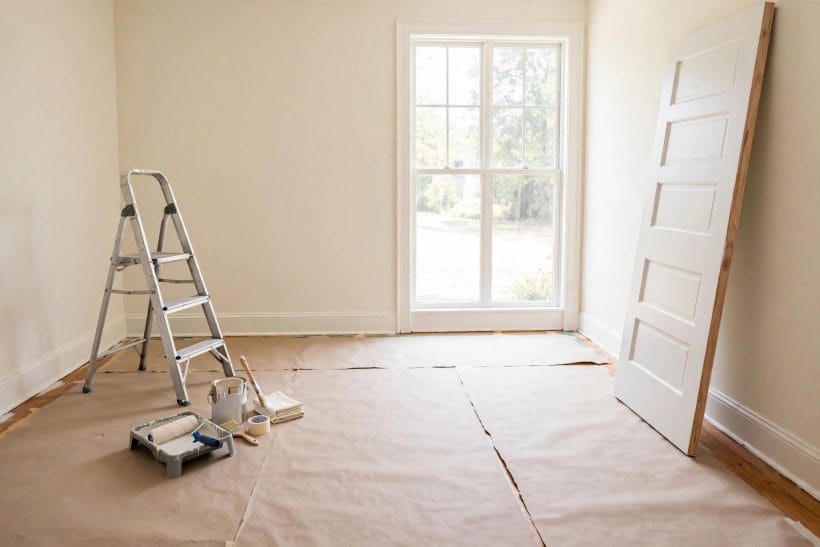
Every renovation has a middle stretch when the house is dusty, noisy and half-finished, and planning for that stretch is part of the renovation itself. Setting aside one room that stays clean and comfortable, even if it is only a bedroom with a kettle and a chair, gives everyone a place to retreat at the end of the day. Protecting finished floors with paper or boards, sealing doorways to rooms that are not being worked on, and agreeing working hours with the people doing the work all keep daily life steadier while the house changes around you.
Sequence matters as much as stamina. Work that creates dust and mess, such as opening walls or replacing floors, is best finished before painting and final fittings, so freshly painted walls are not dulled by later work. Doors, handles and light fittings go on near the end, when they are least likely to be knocked or marked. A simple written list of what happens in which order, agreed before work starts, prevents the common frustration of redoing a finished job because an earlier job was left too late.
Patience pays during this stage. A room with fresh paint, protected floors and a new door waiting to be hung looks unfinished, but it is really a room nearly done. Taking photographs as the work progresses helps you see how far the house has come on the days when it feels like nothing is finished, and it gives you a record of what sits behind walls and under floors. For a fuller look at ordering the work, see this home renovation planning guide, which covers photographing rooms, scoping the work and sequencing the trades.
6. Open Living and Dining That Still Feel Like Rooms
An opened-up living and dining space works when each zone still has its own character. The living side gathers around seating and soft light, with a rug, a low table and lamps that make evening sitting feel inviting. The dining side centres on its table, with chairs that are comfortable enough for long meals and light that falls on the table rather than glaring across it. A wide opening between the two, framed with simple trim, lets the zones share daylight while keeping their separate purposes clear.
The floor running through both zones is the quiet hero of this kind of renovation. One continuous timber floor, laid in the same direction through living and dining areas, makes the whole space feel larger and calmer than two different floors ever could. For ideas on choosing and living with timber underfoot, see these tiny house flooring ideas, which cover the practical side of floors in small, hard-working homes. Rugs, curtains and the colour of the dining chairs can then add warmth without breaking the flow.
Furniture placement finishes the job. A sofa with its back to the dining table can mark the boundary between zones without a wall, and a sideboard or low bookcase against the shared wall gives both rooms somewhere to store the things they use. Plants in large pots soften the corners where zones meet, and a single piece of art, visible from both the sofa and the table, ties the space together. The result is a room that hosts a quiet evening and a full table with equal ease.
7. Bedrooms That Help You Rest
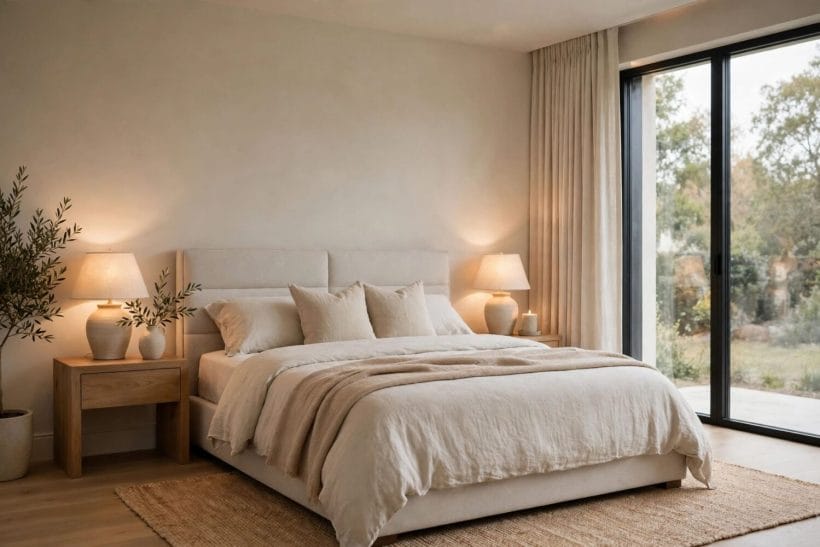
A renovated bedroom should lower the temperature of the whole day. Warm neutral walls, pale linen bedding and soft layered light make a room that feels restful as soon as you enter it, and timber bedside tables add warmth without adding clutter. Curtains that draw fully across a large window give the room proper darkness at night, while a rug beside the bed makes the first step of the morning a soft one.
Storage in a bedroom works best when it disappears. Built-in wardrobes that run wall to wall, painted the same colour as the walls, hold a surprising amount without breaking up the room, and a small shelf or drawer beside the bed keeps the few things you need at night within reach. Keeping the top of the bedside table to a lamp, a book and a glass of water is a small discipline that makes the whole room feel calmer, and a bedroom that feels calm is a bedroom that helps you sleep.
Light deserves care here too. A pair of matching lamps gives the room symmetry and lets each side of the bed have its own light, while a dimmer or a small, warm lamp suits winding down in the evening. For more bedroom thinking, these tiny house bedroom ideas show how a small sleeping space can still feel generous. The same principles, applied to a larger room, leave space for a chair, a plant and a little breathing room around the bed.
8. Living Rooms That Welcome Everyone
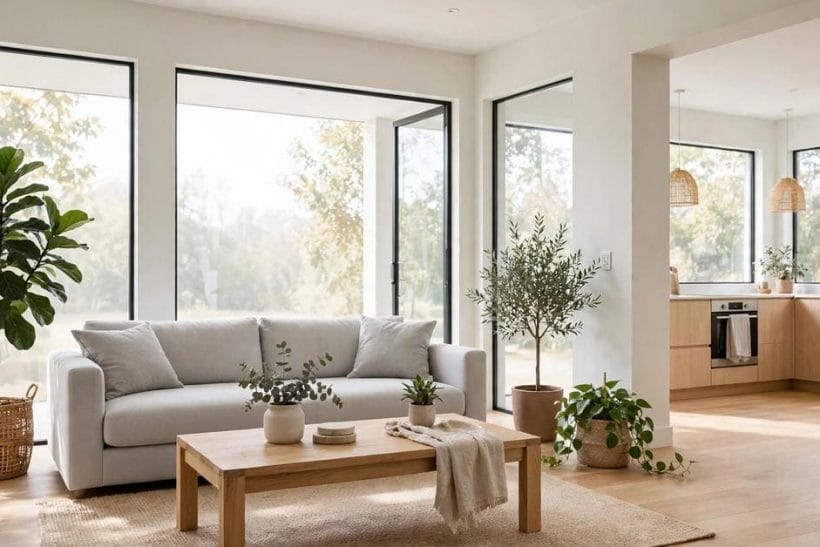
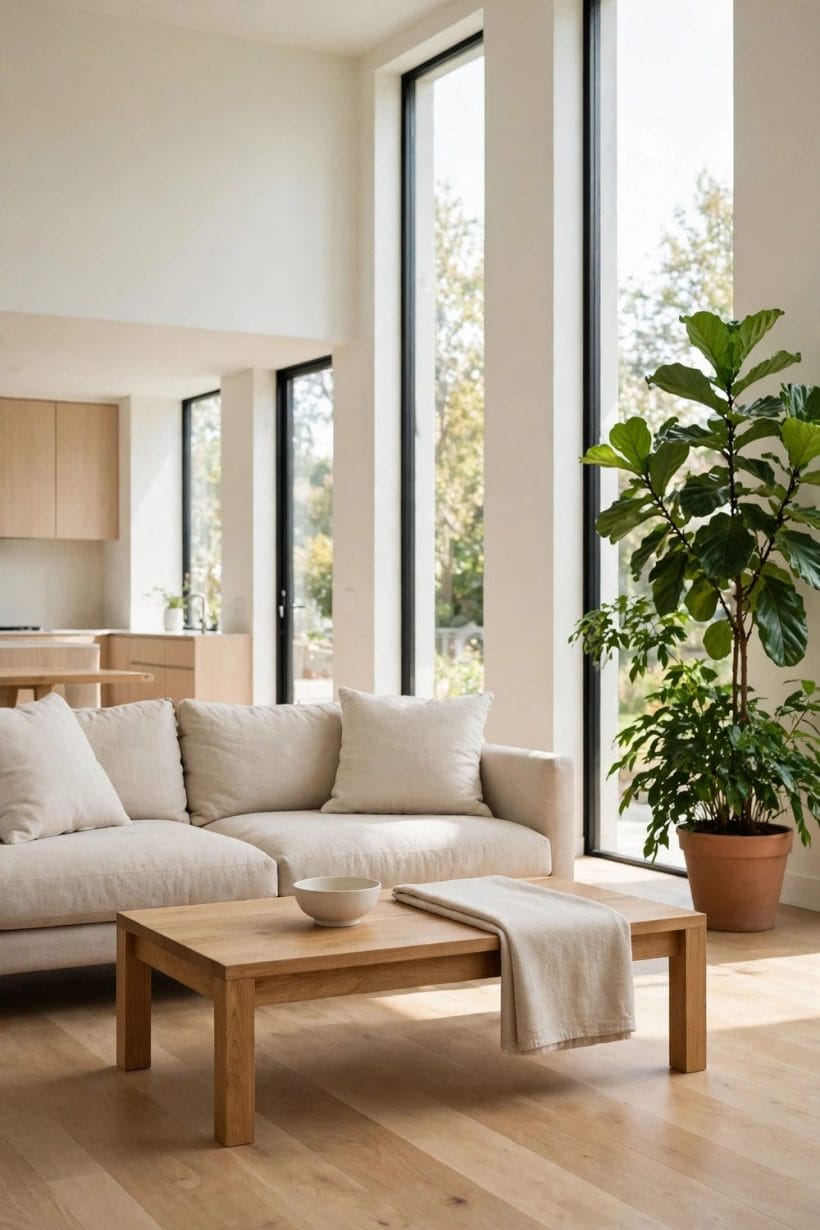
The living room is where a renovation is judged most, because it is where guests sit and where evenings happen. A low, comfortable sofa in a pale, forgiving fabric, a timber coffee table at a height that suits both cups and books, and tall windows that bring the garden into the room are the pieces that matter most. Plants in generous pots add life and soften the straight lines of modern furniture, and a throw over the arm of the sofa invites people to settle in.
Keeping the living room uncluttered is a renovation decision, not just a tidying habit. Closed storage for games, chargers and remote controls, a single shelf for the books you actually read, and a clear surface on the coffee table all make the room feel larger than its measurements. The television, if there is one, sits best where it does not dominate the room, so conversation and the view out of the window still have a chance.
Colour in a living room can stay close to the rest of the house while still having warmth. Pale walls, a natural rug, timber tones and one soft accent, repeated in cushions and a throw, give the room a finished feel without locking it into a single look. When the season changes, swapping the throw and the cushion covers refreshes the room for almost no effort, which is exactly what a well-planned renovation should make possible.
9. What to Do With the Front of the House
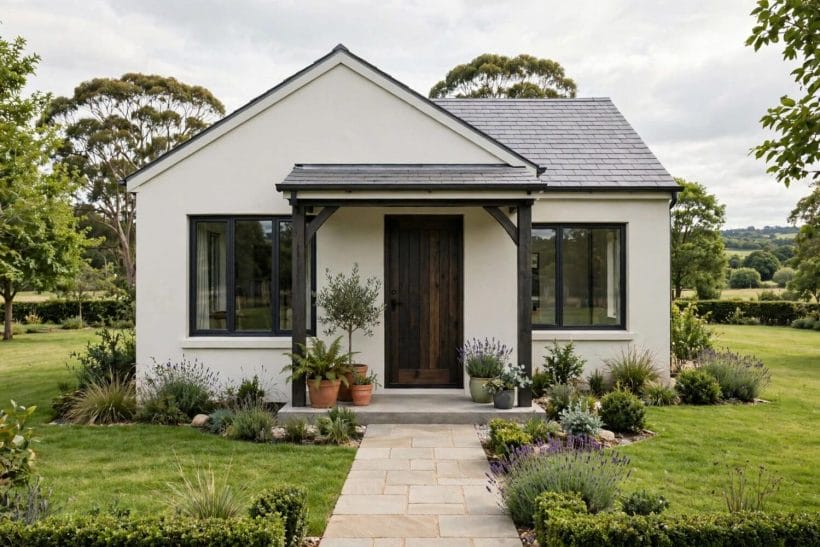
The front of a renovated house deserves as much thought as the rooms inside, because it is the first thing you see coming home. Freshly painted or rendered walls in a pale tone, a new front door in a deep timber shade, and a small porch that shelters the step all make an entrance feel cared for. Potted plants beside the door, a neat path and a tidy lawn finish the picture without needing anything elaborate.
Practical front-door details are worth getting right. A door that closes cleanly, a lock that turns easily, a light that comes on as you approach, and a dry place to leave parcels or muddy shoes all make daily arrivals smoother. House numbers and a doorbell that work properly are small things, but they are the things visitors notice first. Keeping the planting near the door simple, with pots that can be refreshed through the seasons, means the front always looks tended rather than overgrown.
The front also sets expectations for the whole renovation. A house whose outside looks fresh and well kept suggests rooms inside that have had the same care, and a front garden that is easy to maintain will still look good when life gets busy. For a different take on a striking front, these tall house ideas show how height and proportion shape a house from the street. Whatever the shape of the house, a calm, well-finished front is the renovation’s handshake with the world.
10. Details That Make a Renovation Feel Finished
The difference between a renovation that looks done and one that looks nearly done usually lives in the details. Door handles that match from room to room, light switches and sockets that sit level and clean, skirting boards that run neatly into door frames, and paint that stops in a crisp line at every edge all signal care. None of these details is dramatic on its own, but together they are what the eye reads as quality.
Trim and joinery deserve a final walk-through with fresh eyes. Run a hand along a windowsill, check that doors close without catching, and look at each room in daylight and in lamplight before calling the work finished. Small touch-ups are far easier to arrange while the people who did the work are still nearby, and a short written list of snags, dealt with in one visit, saves weeks of noticing the same flaw every day.
Extra rooms, when a renovation reaches them, repay the same attention. A basement or a spare room finished with the same palette and the same timber tones as the rest of the house feels like part of the home rather than an afterthought, and these modern basement ideas show how a lower-level room can be brought into the same calm, modern language. Finishing every room to the same standard, even the ones guests rarely see, is what turns a set of improvements into a home that feels whole.
Final Considerations
A modern home renovation that feels successful usually has three quiet qualities: one palette running through the house, daylight treated as a feature in every room, and details finished to the same standard everywhere. Rooms that share colours and materials feel connected, rooms that welcome daylight feel larger, and details that are finished properly make the whole project feel considered rather than rushed.
Start with the rooms you use most, agree the order of work before it begins, and leave structural, electrical and plumbing work to qualified professionals throughout. Photograph each stage, keep one room comfortable while work goes on elsewhere, and give the final details a proper walk-through before you call the project done. A renovation planned this way does not just look new on the day it finishes; it keeps looking settled, calm and easy to live with long afterwards.

0 Comments