
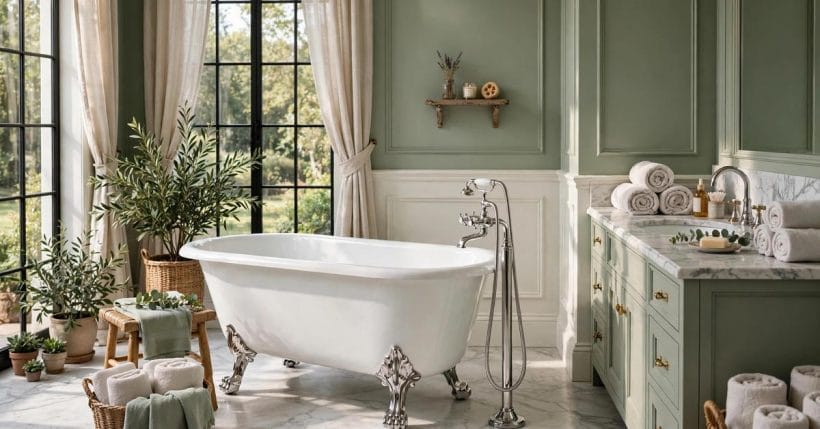
It stands in the middle of the room like furniture, not plumbing — a deep oval shell on four ornate feet, asking to be walked around, admired, and filled to the brim on a slow evening.
These seventy-five claw-foot bathtub ideas cover placing the tub, classic and painted finishes, slipper shapes and feet, taps and shower conversions, floors and walls, colour, light, and the small-bathroom versions — with care and costs as drivers only.
1. Claw-Foot Bathtub Ideas at a Glance
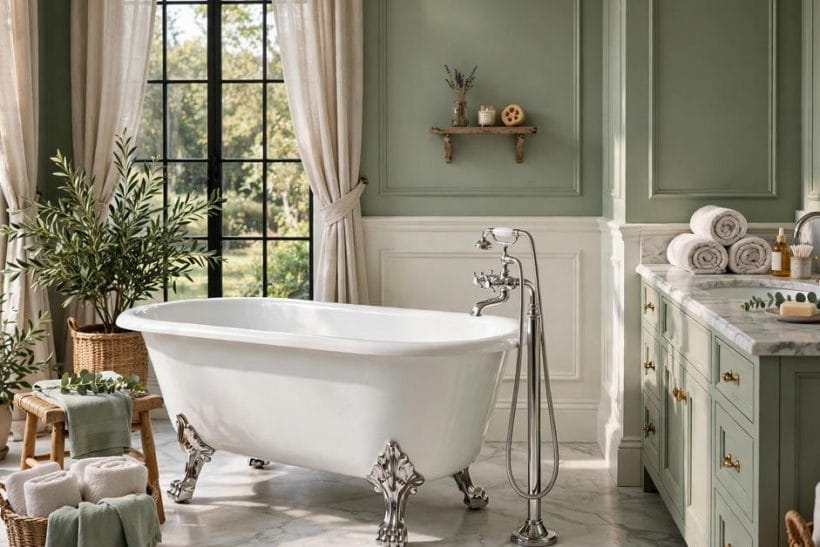
The claw-foot tub is the oldest freestanding form in the bathroom: a deep, rolled-rim shell raised on four cast feet, plumbed from the floor or the wall, and finished in enamel inside with a paintable exterior outside. It belongs to the tub family, not to any bathroom style — the same shell reads period in a Victorian room and sculptural in a plain modern one. Its relatives each have their own posts: the built-in drop-in bathtub for decked surrounds, and the skirted freestanding bathtub ideas for the modern floor-standing forms — this post is the claw-foot type only, end to end. Everything else in the wider bathroom lives in the bathroom ideas pillar; here, the feet do the talking.
| Question | Short answer |
|---|---|
| What defines a claw-foot tub? | A freestanding shell raised on four feet, traditionally cast iron under enamel, with a rolled rim |
| Where does it sit? | Anywhere the floor and plumbing allow — centre room, under a window, angled in a corner |
| Can it have a shower? | Yes — a riser, curtain ring and handset convert many models; the curtain must contain the spray |
| What about the floor? | A filled iron tub is heavy; the floor’s strength is a professional check before anything is ordered |
| Is the outside paintable? | Usually yes — the exterior is the tub’s great colour opportunity, feet included or contrasted |
| Who should avoid one? | Anyone who finds a high step-over difficult; the rim sits higher than a standard inset bath |
2. Layouts: Placing a Tub That Stands Free
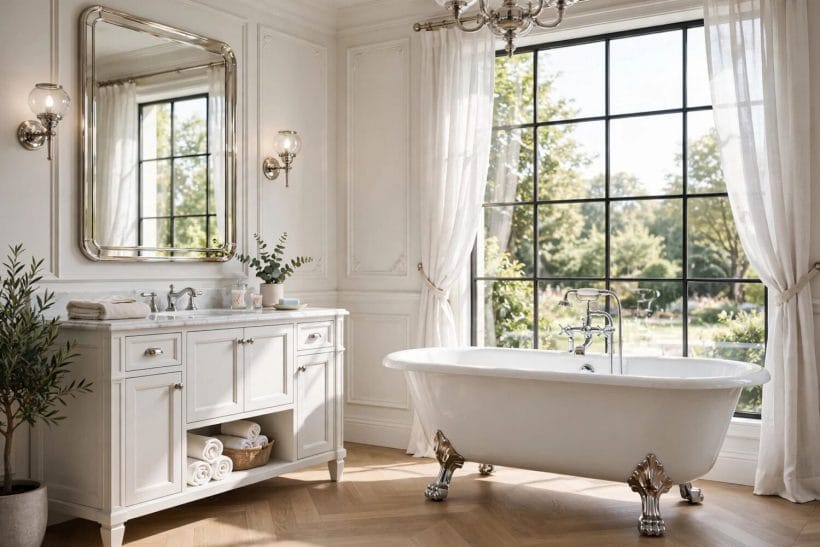
A claw-foot tub has no bad side, which makes placement an exercise in theatre as much as plumbing. Leave room to walk around it, somewhere to put a towel and a drink, and a route to the taps that does not involve climbing — the layouts below are ordered from the grand centrepiece to the practical corner.
1. The centrepiece, centred on the room
Place the tub on the room’s axis, aligned with the door or the window, and let everything else take its cue from the shell. The symmetry is the decoration; keep the vanity and storage quiet so the feet and rim carry the whole composition.
2. Under the window, lengthwise
The classic postcard arrangement: tub parallel to a low window, bather facing the light. Check the sill height against the rim, keep curtains or blinds water-tolerant, and enjoy the one layout where the view is designed into the soak.
3. Angled in the corner
Turning the tub diagonally softens a boxy room and creates a triangular shelf zone behind the high end for candles and bottles. It uses a little more floor than a straight placement, but the corner stops feeling like leftover space.
4. Along the long wall, feet clear
In a narrow room, run the tub lengthwise against the wall but pulled a hand’s width clear, so the freestanding silhouette survives. The gap also lets a mop and a duster reach the floor the feet stand on.
5. Facing the fireplace or stove
Where a bathroom is large enough to hold a small stove or a working fireplace, the tub turns toward the warmth and the bathing becomes an evening event. Clearances and flue rules belong to professionals; the romance belongs to the bather.
6. The alcove conversion
A shorter claw-foot model can take the place of a removed inset bath in an alcove, gaining the raised, airy look without a full remodel. The waste and supplies usually land near their old positions, which keeps the plumbing honest and simpler.
7. Twin tubs, side by side
In a grand shared bathroom, two identical tubs placed in parallel make a calm, symmetrical composition and end all arguments about who bathes first. It is extravagance, plainly — but a coherent one, best in rooms that were always meant to be shared.
8. The tub as room divider
Set the shell across the middle of a long room to separate the washing zone from the dressing zone, with a low stool or trolley serving both. The feet make the division feel like furniture arrangement rather than building work.
9. A landing strip of floor around it
Whatever the layout, reserve a clear border of visible floor on all sides — it is the shadow gap that makes the tub read as freestanding. Crowding the shell against storage or the vanity flattens the very quality the tub was bought for.
3. Classic White and Painted Exteriors
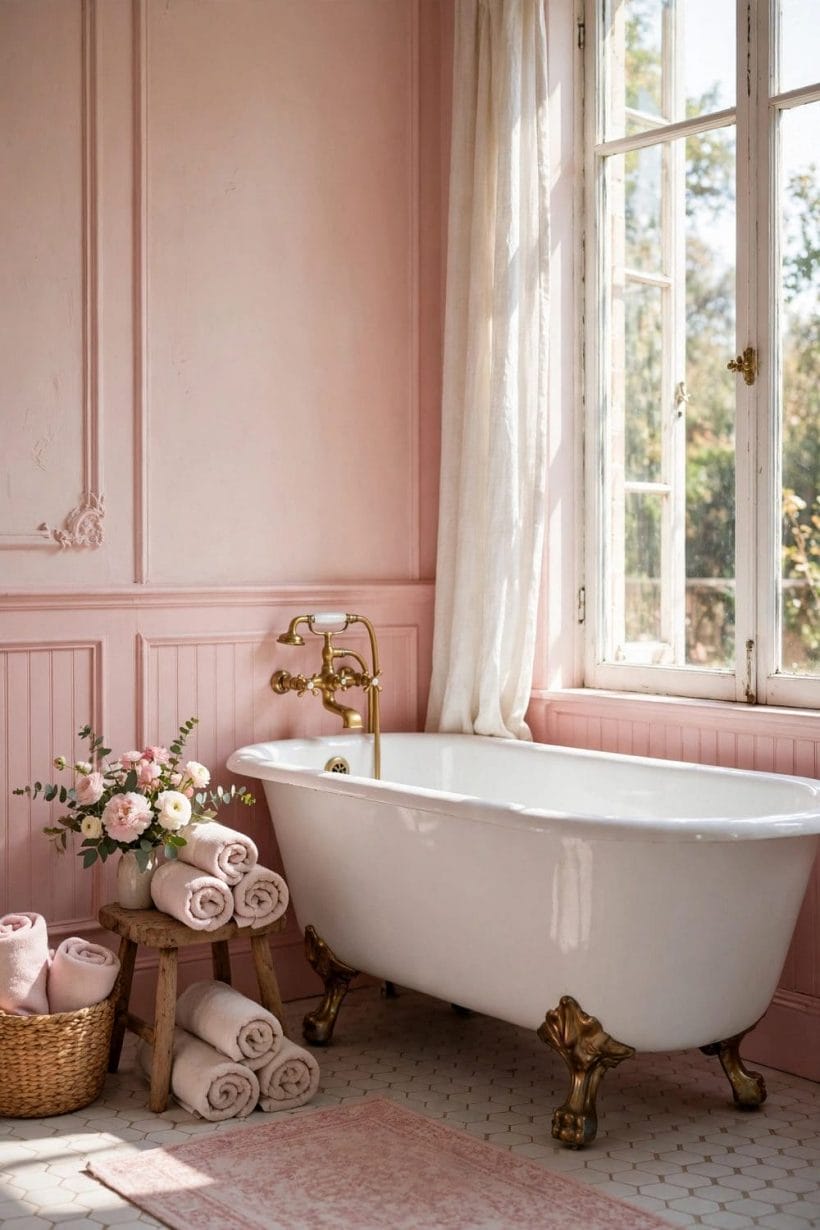
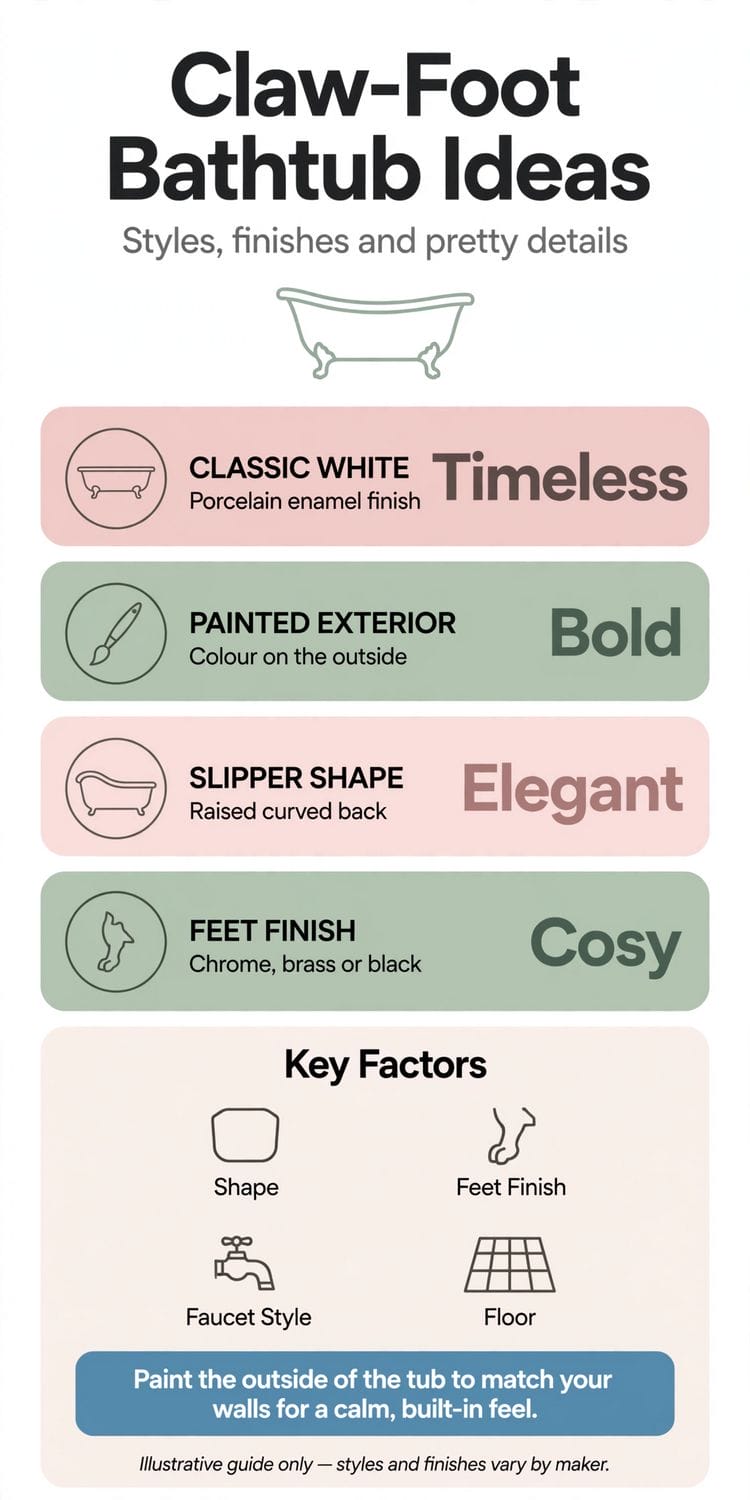
The inside of a claw-foot tub is almost always glossy white enamel; the outside is where personality lives. Traditional shells were painted to match the room or left in deep heritage colours, and modern makers have widened the palette to anything a paint tin holds — the ten ideas here run from purist white to full drama.
10. All white, inside and out
The purist’s tub: white exterior, white feet, chrome fittings. It disappears into a pale bathroom in the best way, reading as sculpture and light rather than object, and it is the easiest finish to touch up over the years.
11. White shell, coloured feet
Paint just the feet — black, brass-tone or a deep green — and the tub gains jewellery without losing its calm. The feet are small, removable in spirit, and simple to repaint when the mood or the room changes.
12. Deep green exterior, garden-room mood
A rich green outside turns the tub into a piece of garden furniture brought indoors, especially against white walls and plants. It flatters brass fittings and makes the white interior glow by contrast when the tub is filled.
13. Black exterior for contrast
Black is the modern classic: dramatic against pale floors, forgiving of marks, and endlessly photographed. Keep the rim’s rolled edge crisp and the fittings metallic — chrome cools it, brass warms it, and both work.
14. Soft grey, the quiet compromise
Grey reads softer than black and richer than white, and it hides the in-between state of a bathroom mid-renovation gracefully. It pairs with marble, with timber and with nearly every metal finish a tap comes in.
15. Heritage red or oxblood
The boldest traditional colour, borrowed from the era when these tubs were new. It demands a calm room around it — pale walls, plain floor — and rewards the bravery every single evening the candles come out.
16. Pastel blue or blush
A washed pastel exterior lightens the tub’s visual weight and suits coastal and cottage rooms beautifully. Pastels show the shell’s curves gently, and they are kind to north-facing bathrooms that need warmth borrowed from colour.
17. Two-tone: colour below the rim line
Some shells carry a natural dividing line where the roll of the rim ends; paint below it and leave the rim band white. The result looks tailored, and the white band ties the exterior back to the enamel inside.
18. A painted exterior matched to the walls
The infographic’s own tip: paint the outside to match the walls and the tub settles into the room like built-in furniture, its shape revealed by shadow rather than contrast. It is the calmest treatment of all, and the most forgiving in small rooms.
4. Slipper Shapes, Roll Tops and Feet
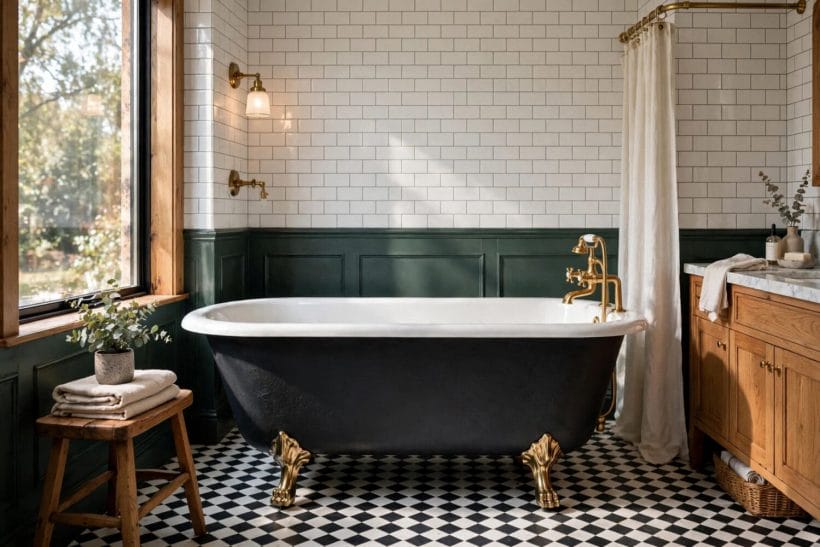
Claw-foot shells come in a small, well-worn vocabulary of shapes, and the shape decides how the bath feels more than any fitting does. Read the profiles below as sitting positions: each one holds the body differently, and the right one is the one that matches how the household actually bathes.
19. The double-ended roll top
Both ends curve identically, the taps sit in the middle of one long side or on a standing filler, and either end is the head end. It is the most sociable and symmetrical shape, and the natural centrepiece for centre-room layouts.
20. The single slipper
One end rises in a high, supportive sweep for the back and shoulders while the other stays low for entry. The slipper is the reader’s and thinker’s tub — the raised end is a built-in backrest that no cushion improves on.
21. The double slipper
Both ends rise, cradling the bather in the middle like a hammock of warm water. It is the deepest-feeling of the shapes and the most sculptural from outside; check the length carefully, since the raised ends shorten the flat floor of the shell.
22. The flat-rim modern interpretation
Some contemporary shells flatten the roll into a slim, crisp edge while keeping the feet — the heritage silhouette with the fuss removed. It suits plain rooms and modern fittings, and wipes clean along the rim more easily.
23. Ball-and-claw feet, the original
The foot that names the type: a taloned claw gripping a ball, ornate and unmistakable. Keep them where the design is period or playful; their detail is the tub’s signature and the first thing guests comment on.
24. Paw and scroll feet
Softer alternatives soften the whole tub: a lion’s paw, a simple scroll, an art-nouveau curve. The vocabulary is wide because the feet were always bought as separate castings — mixing a plain shell with expressive feet is historically true, not a cheat.
25. Feet in a contrasting metal finish
Modern shells often carry feet finished to match the taps — chrome, brushed brass, matte black — instead of paint. The metal foot looks deliberate and engineered, and it shrugs off the knocks that chip painted castings at floor level.
26. Short feet for a lower profile
Where the step-over height is a worry, lower feet bring the rim down while keeping the freestanding gap beneath the shell. The tub keeps its shadow line and its looks; the bather keeps their confidence, which matters more.
27. The raised tub on a low plinth step
In grand period rooms the tub sometimes stands on a shallow tiled step, gaining presence and a place to sit while it fills. The step must be planned with the plumbing and the floor structure together — this is a builder’s detail, not an afterthought.
5. Taps, Fillers and Shower Conversions
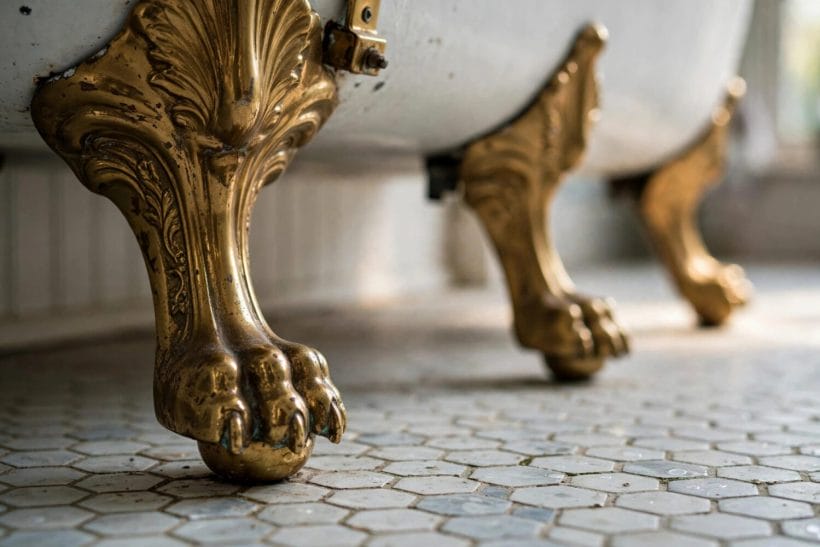
How the water arrives is the claw-foot’s one genuine complication: there is no deck to hide pipes in, so every route is visible and must be beautiful. The fittings below are the standard answers, from the statuesque standing filler to the full shower conversion with its enclosing curtain.
28. The floor-standing filler
A tall, elegant column rises beside the tub carrying taps and spout in one piece of sculpture. It suits centre-room placements where no wall is near, and its exposed pipework is honestly part of the furniture.
29. Wall-mounted taps over the rim
Where the tub stands near a wall, a wall spout and controls keep the shell undrilled and the lines clean. The bather reaches the taps from outside before climbing in — the practical arrangement for daily use.
30. Rim-mounted taps on a drilled shell
Traditional shells were drilled on the rim’s flat at one end for a pair of pillar taps and a waste chain. It is the period-correct look, best kept when an old shell is restored rather than replaced.
31. The telephone handset on a cradle
The hand shower shaped like an old telephone receiver, resting in its cradle on the filler, is the claw-foot’s emblematic fitting. It rinses hair, children and the tub itself, and it makes the bath genuinely more useful.
32. A shower riser and curtain ring
The full conversion: pipework rises from the filler to a fixed head, and an oval or circular rail above carries a curtain that encloses the whole tub. Done well it showers properly; done cheaply it drips and clings — the curtain’s containment is the whole game.
33. Exposed supplies with shut-off valves
Chrome supply pipes rising from the floor to the filler, with small valves at their base, are both decoration and good practice: the tub can be isolated for maintenance without draining the house.
34. Crosshead taps for grip
Crossheads and lever handles are not just period styling; wet, soapy hands turn them easily, which is a safety matter at bath time.
35. A simple chain-and-plug waste
The oldest waste of all — a plug on a chain — remains the most reliable and the easiest to mend.
6. Floors and Walls Around the Tub
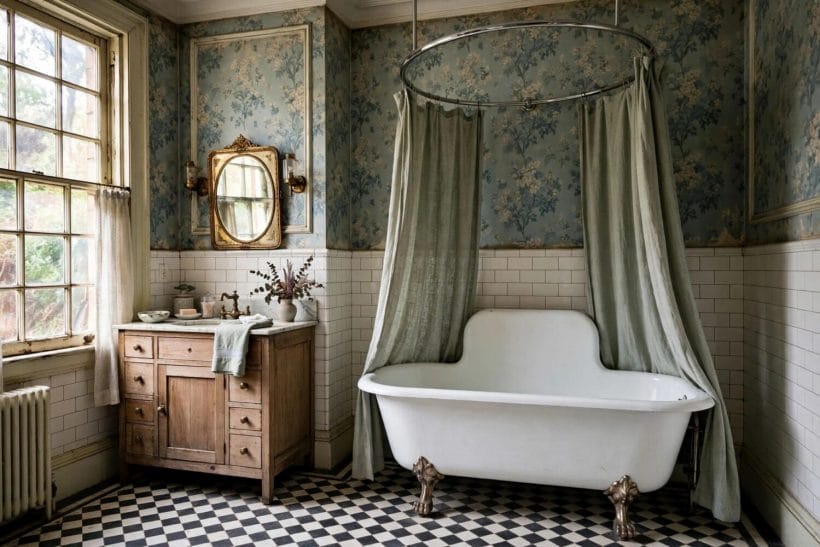
A freestanding tub exposes more floor and wall than any fitted bath, so the room’s surfaces become part of the fixture. The pairings below keep the practicalities first — water, weight and cleaning — and let the prettiness follow, in rooms that range from marble formality to painted boarding. For broader tile thinking the ceramic tile bathroom post covers that material family on its own.
36. Marble or marble-look underfoot
The classic ground for a classic tub: cool, pale and formal, with the shell’s feet standing on stone like a statue’s plinth.
37. Timber boards, sealed and warm
Wood under a claw-foot tub makes the room feel like a bedroom that happens to bathe in — warm to the foot, kind to dropped bottles.
38. Patterned encaustic-look tiles
A patterned floor gives a plain white tub its period frame and hides the everyday dust of a family bathroom between cleans.
39. Wainscot and panelled walls
Panelling to chair-rail height behind the tub protects the wall where splashes land and gives the shell a composed backdrop.
40. A tiled splash zone only
Tile just the wall the filler stands against, or the corner the shower conversion occupies, and paint everywhere else. The wet zone is armoured where it matters and the room stays soft, changeable and inexpensive to redecorate.
41. Dark walls behind a white shell
The photographer’s trick: near-black or deep green walls make a white tub luminous, and the feet disappear into shadow so the shell seems to float.
42. A rug runner beside the tub
A washable runner where feet land adds warmth, colour and grip in one layer, and it catches the first drips off a rising bather.
43. Heating that reaches beneath the shell
The gap under a claw-foot tub collects cool air; gentle floor warmth or a nearby radiator makes the raised shell comfortable in winter.
7. Colour Palettes: Calm, Bold and Period
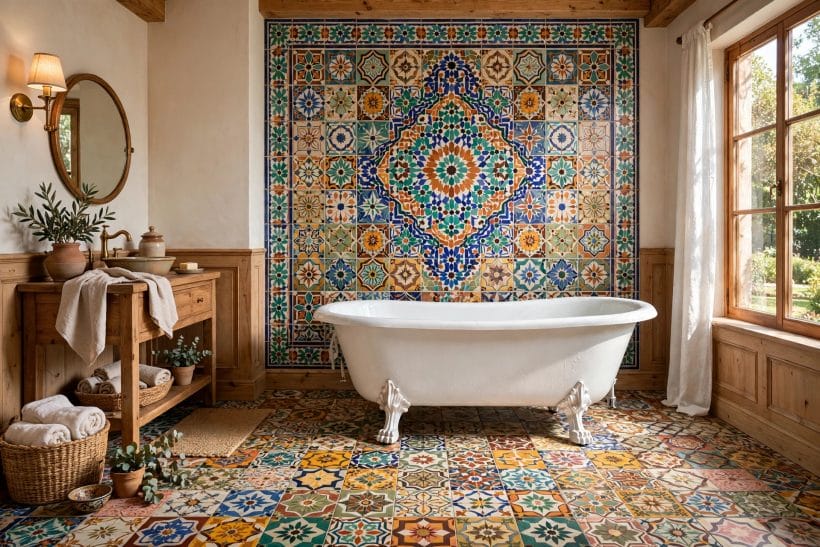
Because the tub’s exterior is paintable, a claw-foot bathroom can change its whole mood with one tin and a weekend. The palettes below move from the calm neutrals most rooms live with to the period schemes that treat the tub as the heirloom it resembles — several of these rooms settle into the same gentle register as the transitional bathroom ideas in the sister post.
44. White on white with warm metals
Pale walls, white shell, brass or gold-tone fittings, timber accents. The palette never shouts and never dates, and the warmth comes from the metals and wood rather than from colour — the safest scheme for a forever bathroom.
45. Sage and cream, the soft heritage pair
Sage on the walls or the tub’s exterior, cream everywhere else, chrome to cool it. It is the colour scheme of the feature photograph and of a thousand calm bathrooms, because green flatters skin, plants and white enamel equally.
46. Navy and white, crisp and nautical
Deep navy walls or exterior against the white interior give the bathroom a tailored, shipshape energy. Brass warms it toward classic; chrome sharpens it toward modern — the same blue carries both, which is its usefulness.
47. Blush and burgundy accents
A blush-painted exterior with deep red towels and a dark floor is romantic without being sweet. Keep the accents few and saturated, and let the tub’s pastel carry the softness alone rather than repeating it everywhere.
48. Charcoal, stone and linen
For a spa-calm room: charcoal exterior, stone-look floor, unbleached linen curtain and towels. Texture does the decorating here — rough, smooth, woven — and the tub’s curves stand out against all that matte quiet.
49. Period primaries, used sparingly
Victorian bathrooms loved strong colour: bottle green, oxblood, royal blue. Use one on the exterior and the wainscot, keep the rest white and bright, and the room reads historically rich rather than historically heavy.
50. The all-pastel room
Pastel exterior, pale walls, light floor: the gentlest scheme, made for small rooms and morning light. It needs one grounding note — dark feet, a black-framed mirror — to keep the sweetness from floating away entirely.
51. Colour matched to the bedroom beyond
Where the bathroom opens off a bedroom, carrying the bedroom’s colour onto the tub’s exterior joins the rooms into a suite.
8. Light, Mirrors and Soft Furnishings
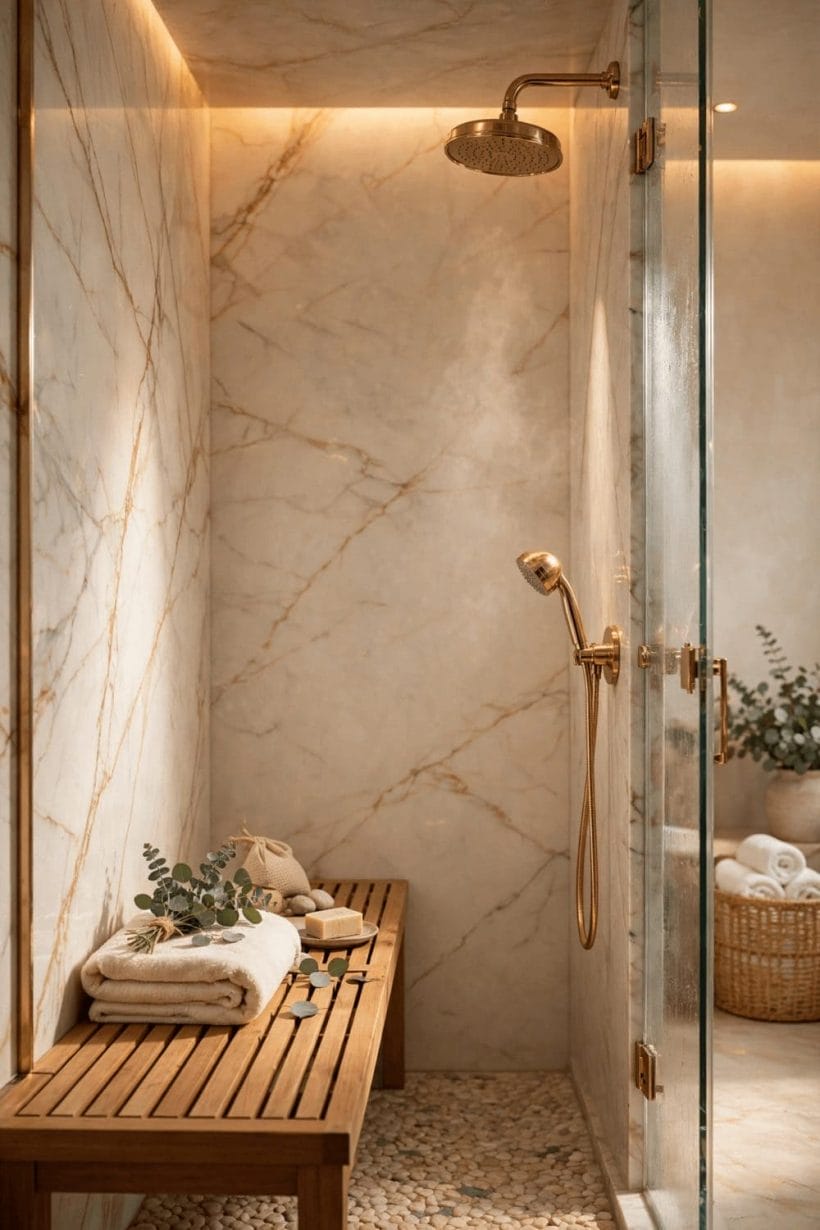
A claw-foot bath is taken slowly, usually in the evening, so this is a room that lives by lamplight and candlelight as much as by the window. The finishing layer below — light, glass, cloth and small furniture — is what turns a plumbed object into a bathing ritual, and it is the cheapest layer to change.
52. A stool or bath caddy within reach
The bather’s side table: a small wooden stool or a caddy across the rim holds the book, the drink and the soap that otherwise migrate to the floor.
53. Candles on safe ledges
Candlelight is the claw-foot’s native lighting, but it belongs on the window sill, a shelf or the stool — never on the rim beside hair and towels.
54. A chandelier or pendant above
A statement light centred over the tub completes the furniture illusion and gives the evening bath its glow. Electrical fittings near baths follow strict zone rules — this is an electrician’s conversation, held before the fitting is bought.
55. Sconces flanking the mirror
Face-level light either side of the mirror serves the morning half of the bathroom’s life. Pair them in the tub’s metal finish so the fittings read as one family across the room, taps to lights.
56. A large mirror to double the shell
Position a generous mirror so the tub reflects in it and the room gains a second, ghostly bathtub of light.
57. Linen curtains and a soft blind
Cloth at the window softens the hard room the porcelain creates. Linen and cotton duck tolerate bathroom air if the room is ventilated, and a simple blind behind them handles privacy without heaviness.
58. A towel ladder or heated rail
Warm towels within arm’s reach of the rim are the difference between a bath and an ordeal in winter. A leaning ladder rail suits the freestanding spirit; a plumbed heated rail suits the household that bathes daily.
59. Plants that drink the steam
Ferns and trailing plants thrive in bath steam and soften the shell’s hard shine with green. Stand them on the stool, the sill or the floor in the corner the angled layout leaves — the tub’s curves and the leaves agree with each other.
9. Small Bathrooms and Tight Landings
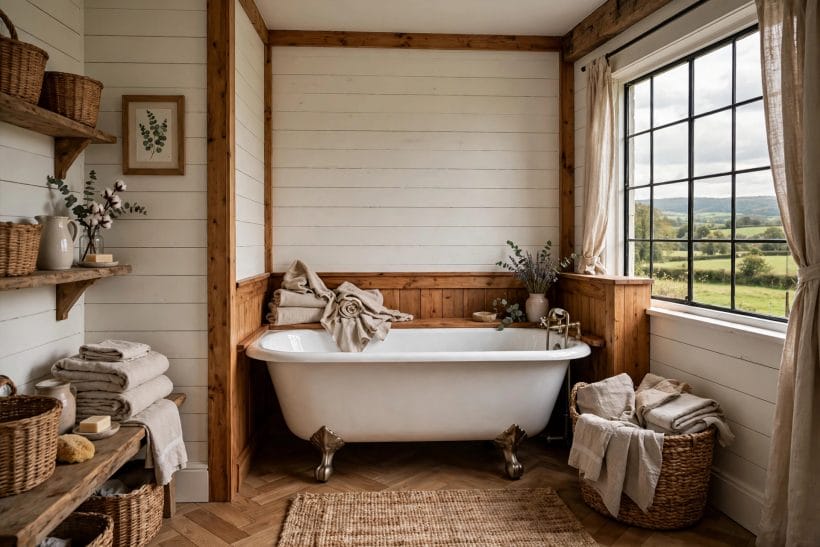
The claw-foot’s reputation says grand rooms, but shorter shells exist and small bathrooms gain something unexpected from them: the visible floor beneath the tub makes the room read larger, not smaller. The ideas below are the small-room discipline — compact shells, honest routes in, and storage that does not crowd the feet. The wider small-room craft lives in tiny bathroom ideas.
60. The short roll-top for compact rooms
Makers offer the classic shapes in shorter lengths for smaller rooms, keeping the depth and the feet while trimming the footprint.
61. Corner placement to free the middle
In a small room, angle the tub into the least useful corner and the centre floor opens up for dressing and drying.
62. The route-in check, measured honestly
Before any small-room plan, measure the whole route: hall, stairs, turns and the bathroom door. A cast shell that cannot make the turn cannot be installed at all — the delivery route is the first design decision, not the last.
63. Lightweight modern shells for upper floors
Contemporary claw-foot shells in lighter materials keep the silhouette while easing both the carrying and the floor-loading questions. The floor still gets its professional check — a filled bath is heavy in any material once the bather climbs in.
64. A shower ring instead of a separate cubicle
In a small bathroom the converted tub can be the only bathing fixture, shower and bath in one footprint. The curtain must enclose fully and the floor must be finished as a wet zone — splash discipline is the price of the saved space.
65. Wall-hung storage to keep the floor clear
Every object hung on the wall is floor the tub’s feet can visually own. Cabinets, hooks and shelves keep the small room’s floor — and the prized shadow gap under the shell — completely clear and cleanable.
66. Pale colours, one metal, no clutter
Small claw-foot rooms work best restricted: pale walls, the exterior matched or white, a single metal finish, and surfaces kept bare.
67. The door swing, checked against the shell
A door that clips the tub’s rim will do it forever. Check the swing against the placed shell on the plan before plumbing is fixed; a rehung or sliding door is a small price for a rim that stays unchipped.
10. Care, Costs and Choosing
The last eight ideas are the ledger: what a claw-foot tub costs to run and to keep, in drivers rather than figures, and how to choose the shell that will still please when the novelty has gone. Prices vary by maker, material and region, so the honest currency here is what pushes a price up or down — and what a careful owner does every week.
68. Enamel care: gentle and regular
Enamel hates grit and strong acids; a soft cloth, mild cleaner and a rinse after bathing keep the gloss for decades.
69. Cleaning beneath and behind
The freestanding gap collects dust and the occasional lost bottle. A slim mop or vacuum nozzle reaches under the shell between the feet; make it a monthly habit and the hidden floor stays as clean as the visible one.
70. Repainting the exterior as renewal
When the room is redecorated, the tub can follow: rub down, prime properly for the shell material, and repaint. It is the cheapest full transformation in the bathroom, and the reason painted exteriors beat fixed finishes for the long term.
71. Cost driver: material and making
Traditional cast shells, hand-finished and heavy, sit at one end of the price range; modern moulded shells at the other.
72. Cost driver: fittings and plumbing moves
The standing filler, the exposed supplies and any floor or waste relocation often rival the shell’s own price. Keeping the tub near existing plumbing positions is the single largest saving available, and it costs nothing in looks.
73. Cost driver: the floor beneath
Strengthening a floor, where the professional check says it is needed, is unglamorous money that protects everything above it. Budget for the check itself on any upstairs installation — certainty about the structure is the purchase, not an extra.
74. Testing the soak before choosing
Sit in the shell dry, in the showroom, in clothes, without embarrassment: check the back angle against your shoulders, the rim height against your knees, the length against your legs.
75. The decade test
Finally, the choosing question that outlasts all others: will this shape, this colour, these feet still please in ten years of mornings?
Final Considerations
A claw-foot bathtub is the bathroom’s oldest furniture and still its most theatrical: a deep shell on four feet, honest plumbing, paintable sides and a soak that no inset bath quite copies. Choose the shape by sitting in it, place it where the floor and the route allow, paint the exterior to the room, and keep the enamel gently. Plan the wider bathroom around it rather than before it — everything else in the room will arrange itself around those four feet anyway.

0 Comments