

A sound concrete floor is a blank canvas hiding in plain sight. Painting it is one of the most affordable ways to give a basement, utility room, kitchen or porch a finished, deliberate look — no new flooring required. This guide covers layouts, colours, cost drivers and the practical details behind painting concrete floors ideas that actually last.
Preparation decides the result, so expect most of the work to happen before the first coat.
1. At-a-Glance: Painted Concrete Floors in Brief
| Question | Practical answer |
|---|---|
| Can any concrete floor be painted? | Most sound, dry interior slabs can. Very smooth power-floated, damp or crumbling concrete needs extra preparation or a different finish. |
| How long does it take? | Allow several days: cleaning, repairs and drying between coats matter more than the painting itself. |
| What paint should I use? | A coating made specifically for concrete or garage floors, used as a system with its recommended primer and sealer. |
| Is it slippery? | Glossy sealed paint can be. Matt or satin finishes and anti-slip additives exist for steps, porches and utility areas. |
| What drives the cost? | Floor area, surface condition, repairs, the number of coats, patterns or stencils, and whether you hire the preparation out. |
| How long will it last? | Well-prepared floors in light-use rooms hold up for years; heavy vehicle or workshop traffic wears any paint faster. |
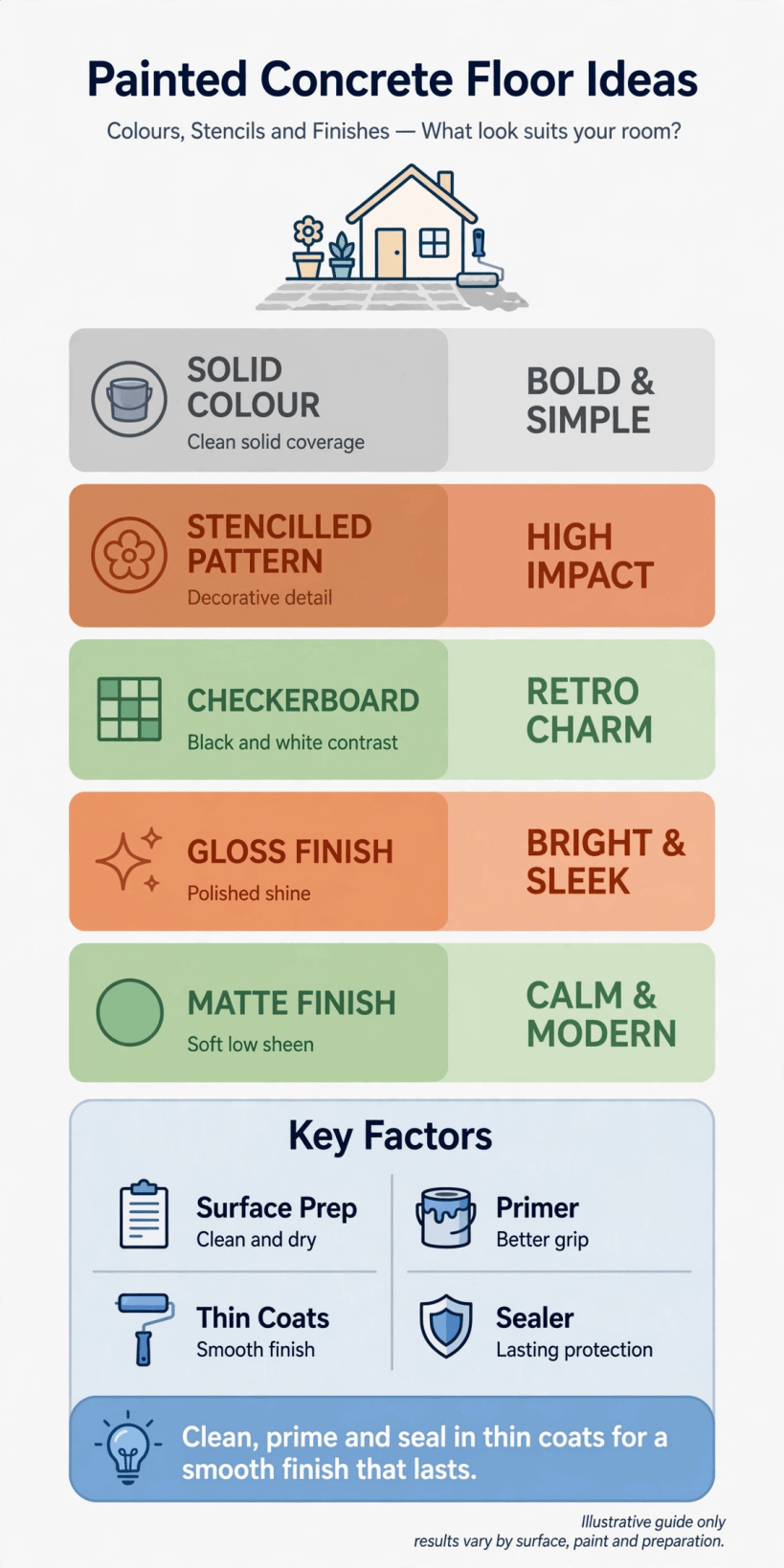
The essentials at a glance — where painted concrete works, how to prepare it, and the choices that decide how it wears.
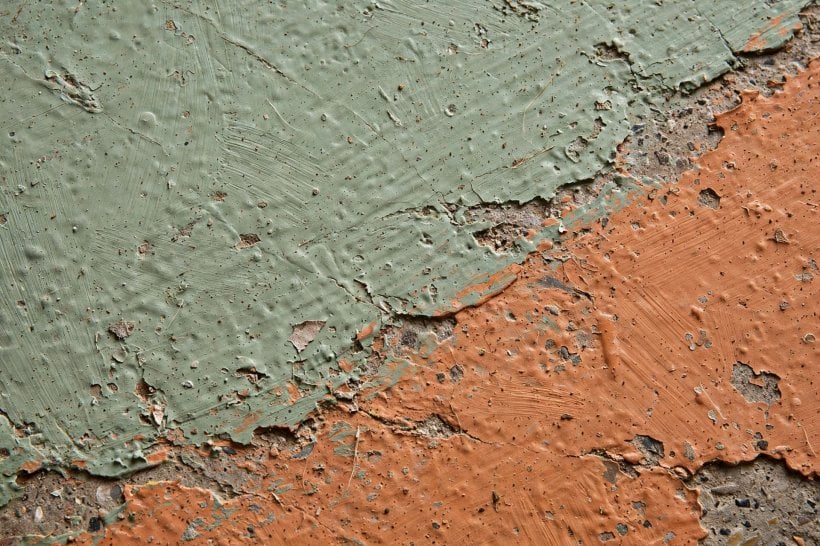
Concrete looks indestructible, which tempts people to treat painting it like painting a wall. It is not. A floor is walked on, dragged across and washed, and the paint film has to grip a surface that may be dusty, slightly damp, contaminated with old oil, or polished smooth by years of use. Every durable painted floor you have ever admired got that way through testing and preparation: checking for moisture, cleaning until the rinse water runs clear, repairing cracks, and giving each coat the drying time its maker specifies. Skip those stages and even excellent paint will peel in sheets.
The reward for doing it properly is large. Paint unifies a patched, stained slab into one intentional surface, brightens dark rooms by reflecting light, and can be renewed in a weekend when it eventually tires — something no glued-down floor covering offers at the same cost.
2. Where Painted Concrete Works Best
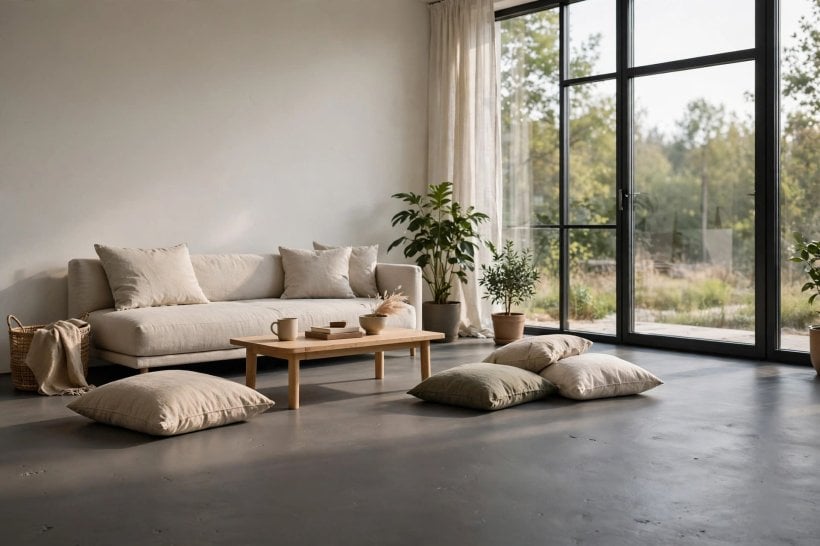
Basements and lower-ground rooms are the classic candidates: the slab is already there, often under tired carpet or lino, and a painted finish shrugs off the occasional damp-day humidity that ruins timber and laminate. Utility and laundry rooms suit it too, because painted concrete tolerates splashes, muddy boots and dragged baskets. Porches, sunrooms and covered patios take paint well where the slab is sheltered from standing water and hard frost, and a painted porch floor with a simple border can look remarkably smart for very little money.
In living spaces, painted concrete reads as a calm, modern backdrop — pale greys and warm off-whites give that gallery feel, while deeper colours make a room feel grounded and cosy. It pairs naturally with rugs, which you can layer for warmth and acoustics and lift for cleaning. If you like the layered approach, our tiny house living room ideas show how hard floors plus textiles balance each other in small rooms. Kitchens and hallways are possible too, but be honest about traffic: chair legs, grit under shoes and constant mopping will test the finish, so choose a floor-rated system and expect to maintain it.
Garages and workshops sit at the demanding end. Painted garage floors look superb, but hot tyres, jacks and dropped tools are hard on standard floor paints; if vehicles are involved, look at coatings marketed for that duty and follow their preparation instructions to the letter.
3. Choosing Colours and Finishes
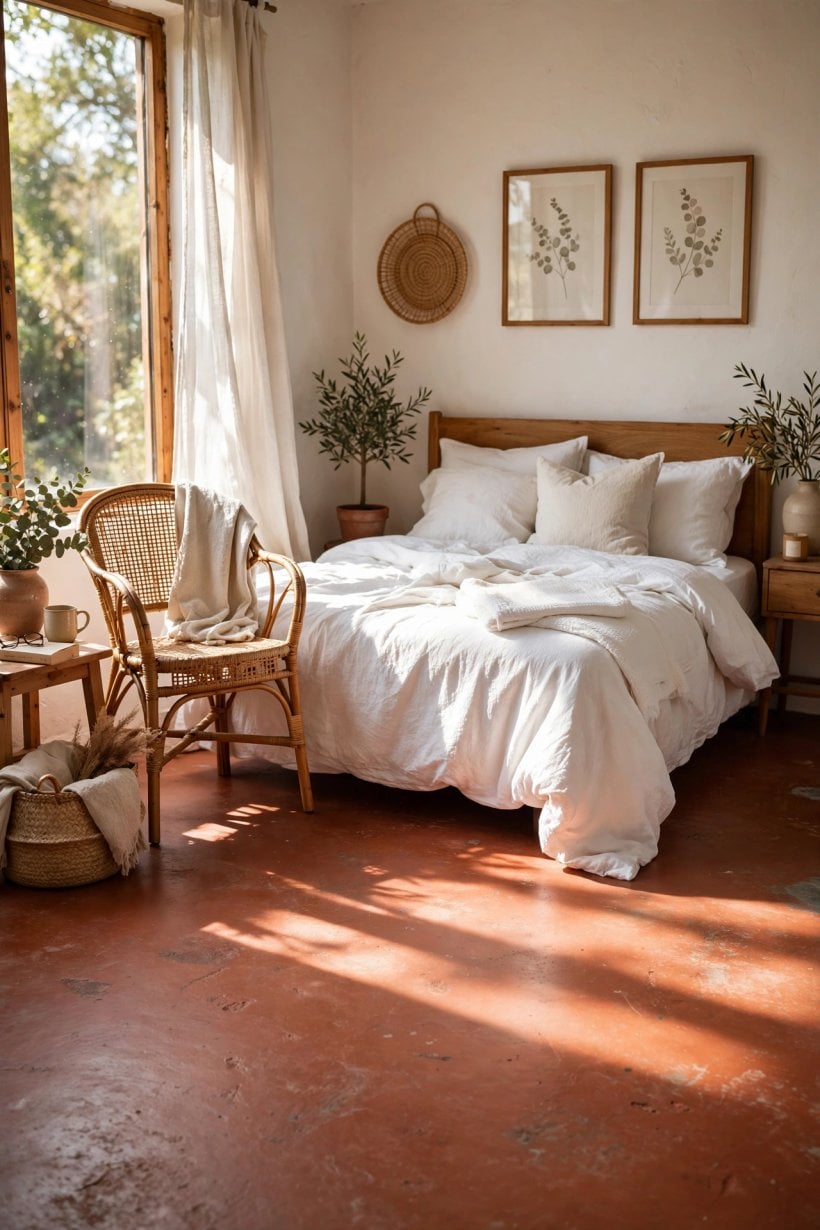
Colour choice starts with light. Pale colours — soft white, warm stone, light grey — bounce light around basements and small rooms and make the floor feel like a deliberate design choice rather than a compromise. The trade-off is honesty: pale floors show dirt, pet hair and scuffs, though on a painted surface most of that wipes away in minutes. Mid greys and greiges are the forgiving middle ground, hiding everyday dust while still lifting a room. Deep colours — charcoal, inky blue, forest, terracotta — create drama and hide almost everything, but they shrink the feel of a room and show pale dust, so they suit larger spaces and confident schemes.
Consider the concrete itself as part of the palette. A semi-transparent stain-style coating lets the slab’s natural variation ghost through, which can look beautiful on a characterful floor; a solid colour gives a cleaner, more uniform result and covers patching and stains. You can also treat the floor as two colours: a field colour with a painted border, or a checkerboard in hallways and kitchens for a classic look that is achieved with tape and patience rather than skill.
Finish matters as much as colour. Matt and satin sheens look contemporary, hide imperfections and are less slippery; glossier sealers deepen the colour and wipe clean easily but highlight every bump in the slab and can be slick when wet, especially on porches and steps. If you are drawn to bolder colour generally, our colourful tiny house interior ideas show how one strong surface works best when everything around it stays calm — exactly the discipline a painted floor rewards.
4. Preparation: Testing, Cleaning and Repairs
Test before you commit. Tape a square of clear plastic flat to the slab, seal its edges, and leave it for a day or so: condensation under the plastic or a darkened patch of concrete afterwards suggests moisture moving through the slab, which is the single biggest cause of paint failure and needs solving — or a different floor finish — before you paint. While you wait, assess the surface. Old paint that is sound can sometimes be overcoated after cleaning and sanding, but flaking areas must come back to firm material. Oil and grease spots in garages need degreasing, sometimes repeatedly. Very smooth, hard-troweled concrete may need etching or mechanical abrasion so the coating can grip; follow the coating maker’s guidance on which method your floor needs.
Cleaning is a process, not a wipe. Sweep and vacuum thoroughly, scrub with a suitable cleaner, rinse, and repeat until the water stays clear and the surface no longer feels dusty when you run a hand over it. Then let the floor dry properly — longer than feels necessary. Moisture trapped under a paint film will push it off from beneath.
Repairs come next: fill cracks and small holes with a filler compatible with your coating system, level any lips or steps that would telegraph through paint, and allow repairs to cure fully. The patience at this stage is identical to good work anywhere water and hard surfaces meet; several habits in our tiny house bathroom ideas guide — test first, dry fully, never trap moisture — apply just as much to a floor as to a shower.
5. Priming and Choosing a Paint System
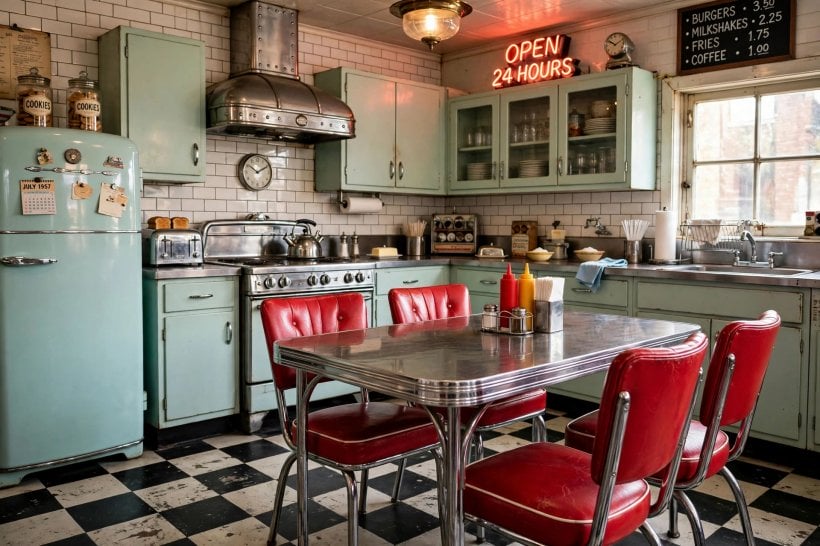
Think in systems, not tins. Floor coatings are designed to work as a family — a primer that bonds to concrete and seals its dustiness, one or more colour coats, and often a clear protective sealer on top. Mixing random products from different ranges is how adhesion problems are born. Read the data sheets for the system you choose: they tell you the surface preparation required, the coverage to expect, recoat times and the conditions — temperature and humidity ranges — in which the products can be applied. Those sheets, not folklore, are your specification.
Primer earns its keep on concrete. It soaks into the surface, binds residual dust that no amount of sweeping fully removes, evens out the absorbency between patched and original areas, and gives the colour coat something reliable to hold. On previously painted or very smooth floors, the system may instead call for sanding to a key, or a bonding primer; on bare porous concrete a thinned first coat sometimes serves as the primer where the maker allows it. What matters is that the first thing to touch the slab is chosen for grip, not colour.
As for the colour coats themselves, water-based floor paints are pleasanter to use indoors, dry faster and clean up easily; solvent-based and two-part products are traditionally the heavy-duty option for garages and workshops, with stronger fumes and stricter ventilation and safety needs. Choose by the duty the room will see, buy enough of the same batch for the whole floor plus a labelled remainder for touch-ups, and do not be tempted by ordinary wall paint — it is not made to be walked on and will wear through in weeks on a busy path.
6. Patterns, Stencils and Borders
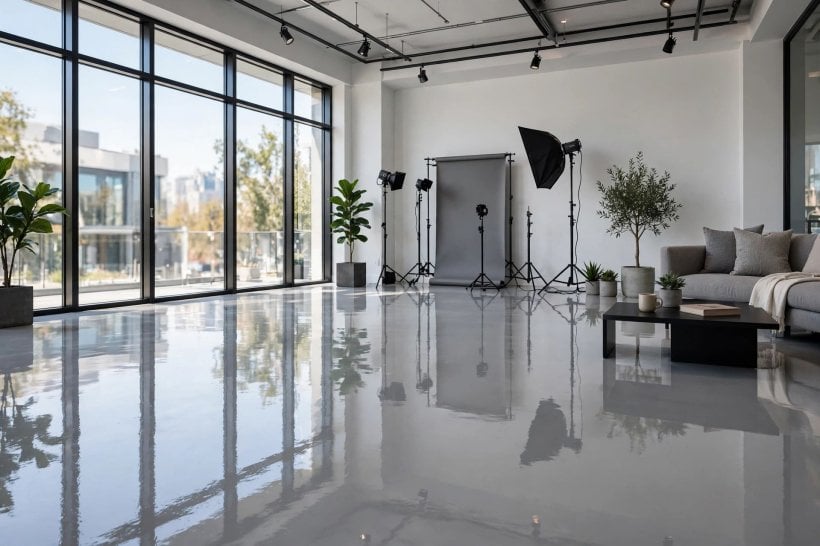
Once the base colour is down, paint gives you decorative options no other budget floor can match. The simplest is the painted border: mask a line a short distance in from the skirting, paint a band in a second colour, and you have framed the room. Checkerboards in black-and-white or two soft tones suit kitchens, halls and porches and are laid out with string lines, a square and low-tack tape. Geometric designs — large diamonds, wide stripes down a hallway, a compass-style medallion in an entrance — cost nothing but time and tape.
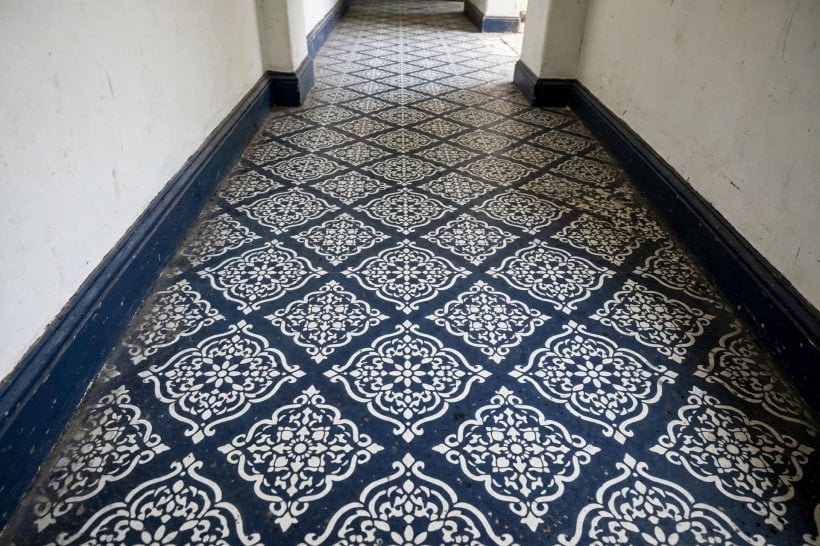
Stencils take the idea further, repeating a motif across the floor to imitate encaustic tiles. Large-format stencils keep the work manageable: align each repeat carefully, use a nearly dry roller or stippling brush so paint does not creep under the stencil, and accept that a slight softness in the pattern looks handcrafted rather than wrong. Work in an order that never traps you in a corner, and keep a small brush for touching in as you go.
Rustic rooms take painted floors beautifully — a distressed edge or a washed, semi-transparent colour over concrete suits the relaxed look in our tiny barn house interior ideas. Whichever pattern you choose, test the full design in an out-of-the-way square metre first: scale that looks right on paper can look frantic or lost on a real floor, and it is far easier to adjust a design than to repaint it.
7. Costs: What Really Drives the Budget
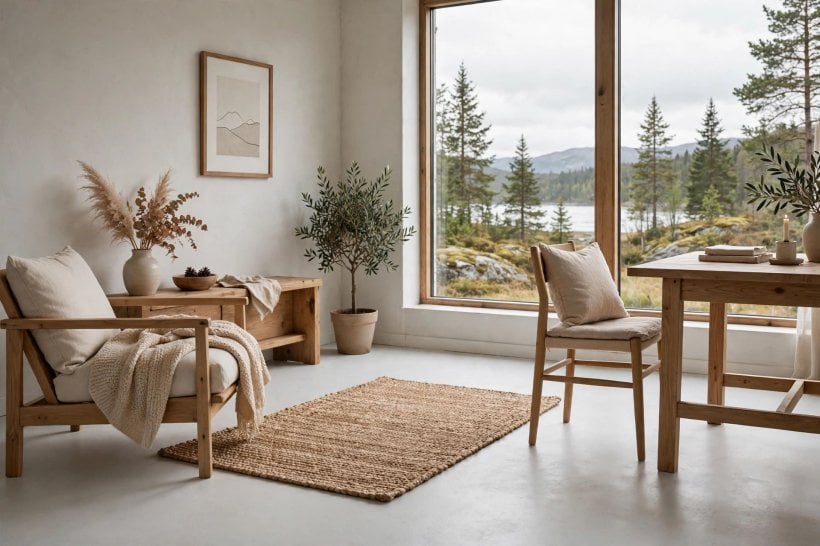
Painted concrete is usually one of the least expensive ways to finish a floor, but the budget is not just a tin of paint. The main cost drivers are the floor’s area, its condition, and the system you choose. Preparation materials add up quietly — cleaners, degreasers, fillers, abrasives or etch, tape and rollers — and floors in poor condition can need hired equipment such as a floor sander or grinder to reach a paintable surface. The coating system itself varies widely in price between a simple one-product floor paint and a primer-plus-colour-plus-sealer build-up, and two-part garage-grade systems sit at the top of the range.
Your design choices move the total too. A single colour across an open room is the cheapest route; borders, checkerboards and stencils need extra paint in second colours and a great deal more of your time. Rooms with many corners, steps, or fitted units to cut around take longer than one clear rectangle. If you are paying a decorator, labour for preparation — the scrubbing, repairs and masking — may exceed the painting labour, and quotes should spell out exactly which stages are included.
Balance the saving against lifespan honestly. Painting is inexpensive because you are applying a relatively thin finish to a floor you already own; in a light-use room that finish can serve for years, while in a heavy-traffic hallway you should budget for refreshing high-wear paths sooner. Keeping leftover paint, labelled with the room and date, turns a refresh into a cheap afternoon rather than a colour-matching problem. As with any room that must earn its keep, the planning mindset in our tiny house bedroom ideas — spend on the surfaces you touch daily, save on the rest — applies underfoot too.
8. Sealing, Curing and Using the Room Again
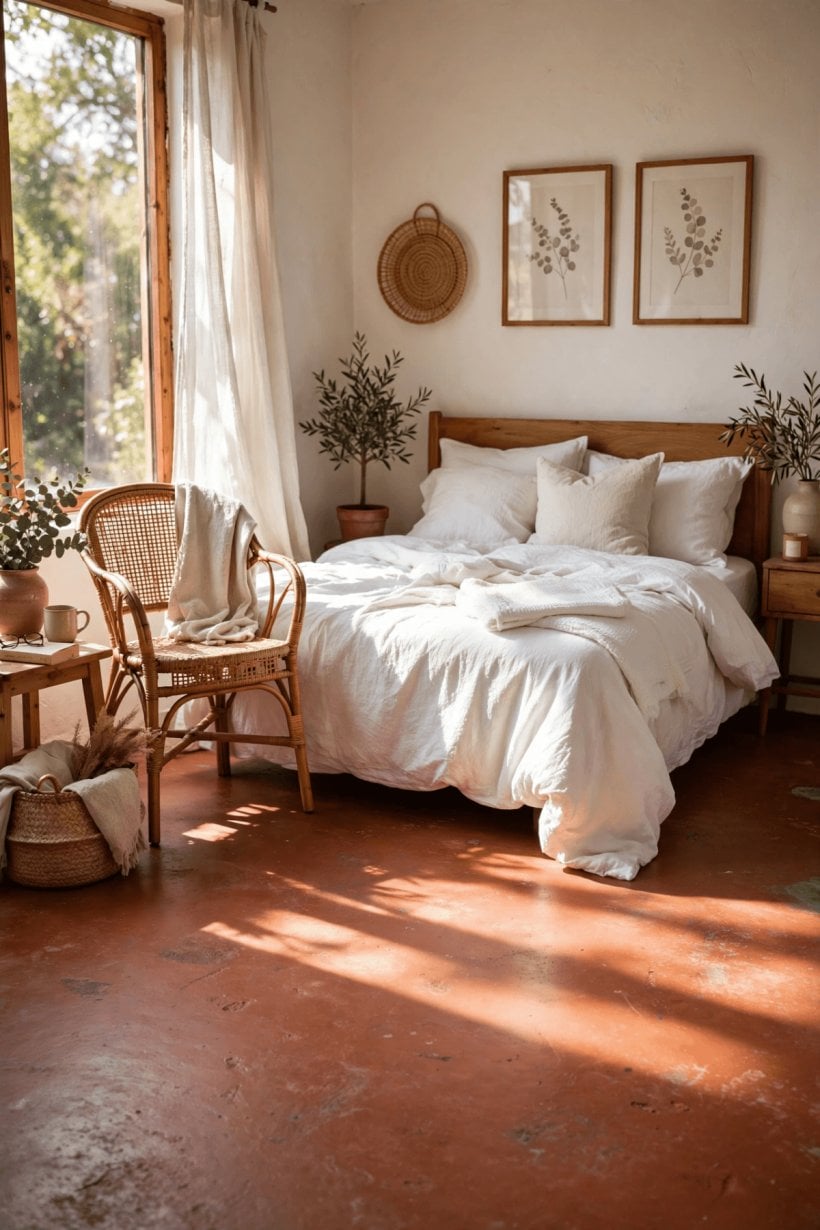
Many systems finish with a clear sealer, and it is worth its modest cost. The sealer takes the wear instead of the colour, adds a consistent sheen across patched and original areas, makes mopping easier, and can carry anti-slip properties where you choose a product with that option for steps or a porch. Apply it in thin, even coats exactly as directed; thick coats can dry cloudy, especially in cool or humid conditions.
Curing is the stage everyone wants to shorten and nobody should. Paint dries to the touch long before it hardens enough for furniture, rugs and normal traffic. Follow the product’s stated times for light foot traffic, for moving furniture back, and before covering the floor with rugs — a rug laid too early can stick, print into the surface, or trap moisture that blushes the finish. Drag nothing during the first days: lift furniture, fit felt pads to every leg and foot before anything goes back, and keep grit swept up while the surface is at its softest.
Ventilation helps everything cure as intended and clears fumes; keep the room aired as the maker directs, and maintain reasonable warmth in cold weather rather than painting in a near-freezing garage and hoping for the best. A floor painted in the right conditions and allowed its full cure will repay the patience every single day afterwards.
9. Painted Concrete in Small Spaces
Small rooms gain the most from a painted slab. A single pale colour running wall to wall, with no thresholds or changes of material, makes a tiny room read as one calm surface and can transform a cramped basement or box room. Run the same floor through a hallway and into the rooms off it and a small home feels larger and more coherent — one of the oldest tricks in small-space design, and one that costs only paint.
Warmth and softness come from what you add on top: a rug where you sit or stand, runners in work zones, curtains and cushions in natural textures. Because the floor itself is waterproof and washable, it suits small multi-purpose rooms — a laundry that doubles as a mudroom, a studio that doubles as a guest room — far better than carpet. Underfoot it will feel cooler than timber in winter, which rugs solve where it matters, and pleasantly cool in summer, which in a sunroom or south-facing kitchen is a genuine pleasure.
Echo the floor colour outdoors and the whole plot feels joined up: a painted porch or a simply treated terrace in a related tone links house and garden, and the layering ideas in our tiny house landscaping ideas guide show how hard surfaces and planting can share one palette.
10. Care, Touch-Ups and Knowing When Not to Paint
Looking after a painted floor is mostly about grit. Grit under shoes and chair legs is sandpaper in slow motion, so door mats, regular sweeping and felt pads do more for the finish than any cleaning product. Wash with a mild cleaner and a well-wrung mop rather than soaking the floor, and wipe spills when they happen — paint is a film, not a slab of stone, and standing water at joints and edges is its enemy. In kitchens and workshops, deal with dropped oil or chemicals promptly, following the coating maker’s advice for anything aggressive.
Touch-ups are the format’s secret advantage. A worn path can be cleaned, lightly sanded, and recoated in an afternoon, and because you kept labelled leftovers, the colour matches. Chips at thresholds and around door swings are the usual first repairs; do them while they are small, because water entering a chip lifts the film around it. When an area eventually wears beyond local repair, the whole floor can be refreshed with one more coat after cleaning and a light key — no removal, no skip, no new floor.
Finally, know the floors not to paint. A slab with active moisture coming through it, rising damp at the walls, or a surface crumbling under a screwdriver will defeat any coating; fix the underlying problem first, or choose a breathable or loose-laid finish instead. Very rough, badly cracked floors may be better ground and sealed as honest concrete, or covered. Choosing not to paint a problem floor is not a failure of the idea — it is the same test-first judgement this guide has recommended all along, and the mindset behind projects of every scale, including the one in our guide on how to build your own tiny house.
Final Considerations
Painted concrete succeeds when preparation is treated as the main event: test for moisture, clean until the water runs clear, repair, prime with the maker’s system, and let every coat cure in its own time. Choose colours for your light, keep patterns simple enough to execute well, seal for the room’s duty, and keep labelled leftovers for touch-ups. Do that, and the humblest slab in the house becomes one of its best-looking, hardest-working surfaces.

0 Comments