
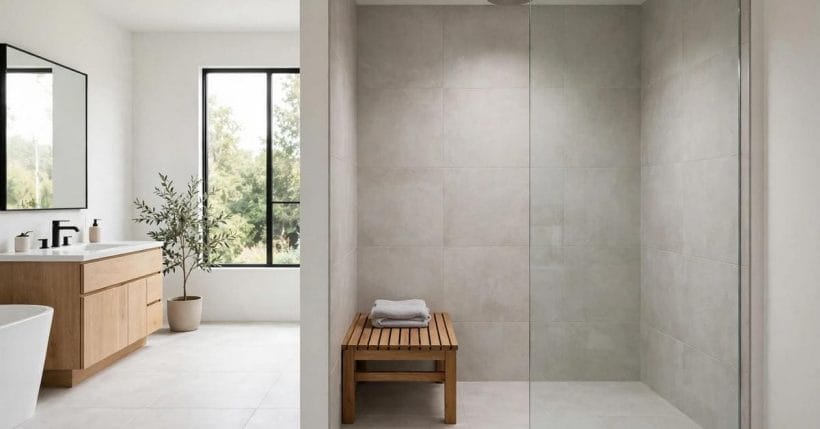
An old shower rarely fails all at once. The grout darkens, the door starts to stick, the valve turns a little further than it used to, and one morning the whole corner of the bathroom simply feels tired. When that moment arrives, the first question most homeowners ask is how much does it cost to replace a shower, and the honest answer is that no single number can cover every bathroom. Two showers that look alike in a photograph can carry very different amounts of work behind the wall, and it is that hidden work, more than the visible finish, that shapes the quote.
This guide explains the drivers behind a shower replacement quote in general terms only. It gives no prices, no ranges and no calculator, because any figure printed here would be wrong for most readers: homes differ, areas differ, and the scope of the job differs even more. What follows is a way to read quotes with confidence, to understand why one quote sits above another, and to ask the right questions before anyone lifts a tile. Plumbing and waterproofing are professional trades throughout this guide, and nothing here is a guide to doing either yourself.
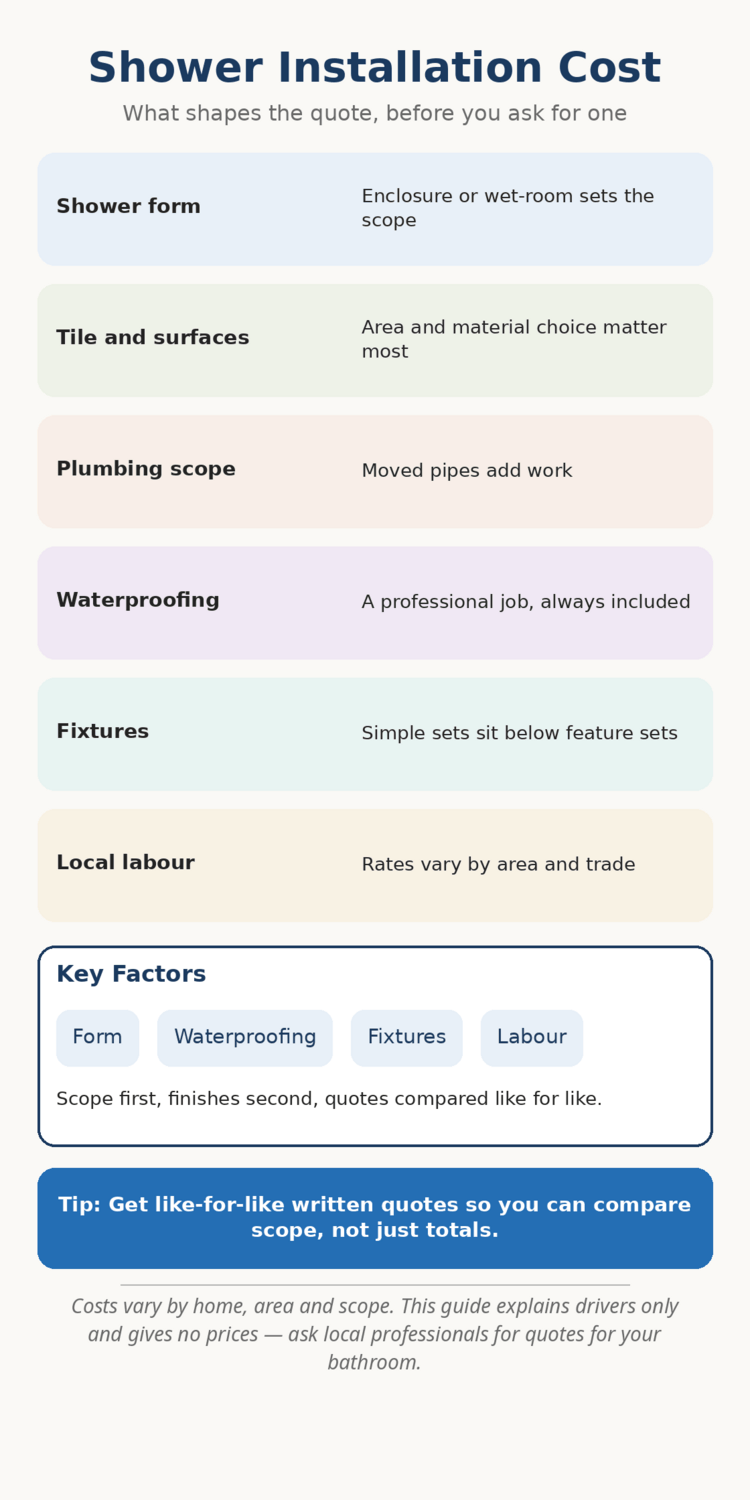
| Item | What it is |
|---|---|
| Start With the Shower Form, Not the Fixture | The single biggest influence on a shower quote is the form of the shower itself. |
| Enclosure or Wet-Room: How the Form Sets the Scope | An enclosed shower is a defined box inside the bathroom: walls or glass on some sides, a tray or a tiled floor, a door that closes. |
| Tile and Surfaces: Where Area Meets Material | After form, the next driver is the surface: how much wall and floor is tiled or panelled, and what material covers it. |
| Plumbing Scope: What Moves and What Stays | Plumbing is the driver most homeowners underestimate, because so little of it is visible once the shower is finished. |
| Waterproofing: The Professional Layer Beneath the Finish | Waterproofing is the least visible part of a shower and the most important one to get right. |
| Fixtures and Fittings: Simple Sets and Feature Sets | Fixtures are the part of the quote most people enjoy choosing, and they are also the part where scope can quietly double. |
| Drainage, Access and the Room Around the Shower | A shower does not sit alone; it sits in a room, in a house, and the room around it shapes the quote. |
| Local Labour: Why Quotes Differ by Area and Trade | Two identical shower specifications can still produce different quotes in different places, and that is not a mystery to solve but a fact to accept. |
| Reading Quotes Like for Like | A useful quote reads like a small inventory of the job. |
| Living With the Job: Timing, Enclosure Styles and the Wider Room | Cost is not only money; it is also disruption, and a shower replacement takes the household's main washing space out of use for a stretch. |
1. Start With the Shower Form, Not the Fixture
The single biggest influence on a shower quote is the form of the shower itself. A like-for-like swap, where a new enclosure goes where the old one stood and the pipes stay where they are, is a smaller job than a change of form, where an enclosed cubicle becomes an open wet room or a bath comes out to make space for a walk-in area. The form decides how much wall comes down, how much floor is reworked, and how much of the room has to be made good afterwards.
That is why the most useful first decision is also the simplest: decide whether the form stays or changes. Keeping the form keeps the scope contained, because the drainage point, the wall positions and the general layout all remain. Changing the form opens up the design, and it can transform a cramped bathroom, but it also pulls in more trades, more materials and more making-good, and the quote will reflect that wider scope rather than any single item on it.
Fixtures matter, and they are covered later in this guide, but they sit downstream of form. A beautiful valve in a badly planned form still leaves a badly planned shower, while a modest fitting in a well-chosen form serves happily for years. Start with the shape of the space, settle that, and let the fixtures follow.
2. Enclosure or Wet-Room: How the Form Sets the Scope
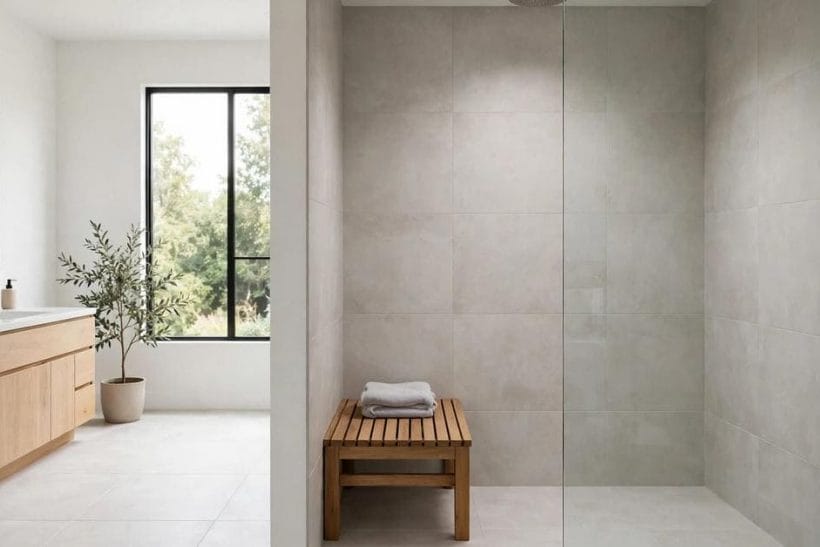
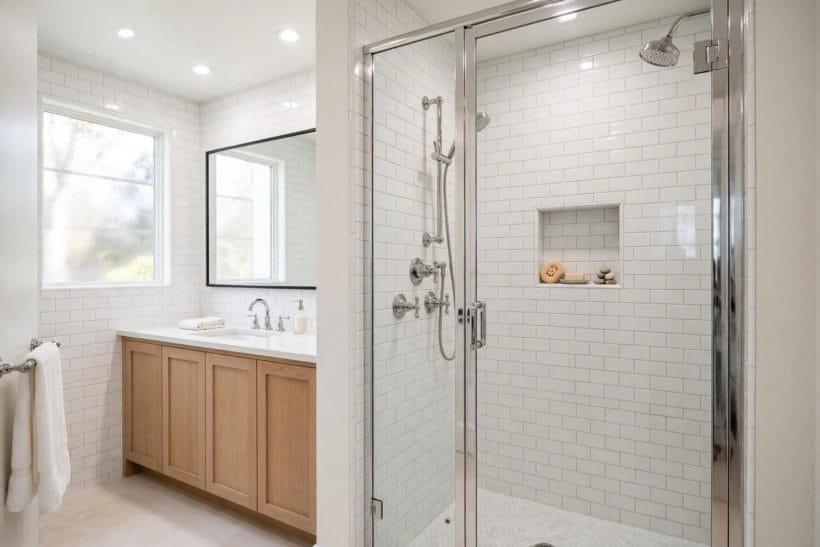
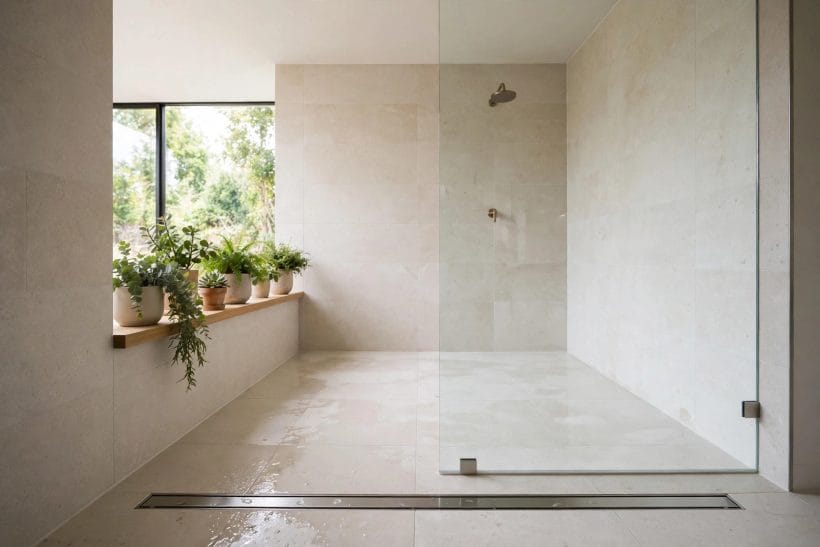
An enclosed shower is a defined box inside the bathroom: walls or glass on some sides, a tray or a tiled floor, a door that closes. A wet room removes much of that box, opening the shower area into the room with a level floor and a drain, often with a single glass screen rather than a full enclosure. Each form suits different rooms, and each carries a different kind of work.
The enclosed form concentrates the work. The waterproofing, the tiling and the drainage all sit inside a known area, and the rest of the bathroom largely stays as it is. The wet-room form spreads the work wider, because the floor across the open area must be prepared to handle water, the falls that guide water to the drain must be formed across a larger surface, and the junction between wet and dry areas needs careful detailing by the people doing the work.
Neither form is inherently the better choice, and neither is inherently the dearer one in every home. The enclosed form can grow costly when the glass is large, custom-sized or heavily framed, while the wet-room form can stay restrained when the room is already well suited to it. What matters for the quote is the amount of floor and wall preparation each form demands in your particular room, so compare forms by scope first and by appearance second.
3. Tile and Surfaces: Where Area Meets Material
After form, the next driver is the surface: how much wall and floor is tiled or panelled, and what material covers it. A shower tiled to full height on every wall uses more material and more labour than one tiled to a lower line with painted or panelled walls above, and a large-format tile behaves differently in the hands of a tiler than a small mosaic, which needs more pieces, more grout and more patience.
Material choice works the same way. Some surfaces are straightforward to cut, fix and finish, while others are heavier, more brittle or more demanding to seal, and that difference shows up in labour as much as in the material itself. A surface that needs careful sealing, or that cannot be cut on site without special care, will ask more of the installer, and a reputable quote will carry that time rather than pretend it away.
Patterns add their own quiet weight. A simple stacked or brick pattern is quicker to set out than a herringbone or a pattern that must line up across a niche, a bench and a window reveal. None of this means simple is always right: a well-set pattern can be the making of a shower. It means that when a quote moves, the surface scope is one of the first places to look for the reason, and a change of pattern is a genuine lever on scope, not just on looks. Readers weighing surface options can find a general survey of shower surface materials useful before they settle on panels, slabs or tile.
4. Plumbing Scope: What Moves and What Stays
Plumbing is the driver most homeowners underestimate, because so little of it is visible once the shower is finished. If the new shower uses the existing pipe positions and the existing drainage point, the plumbing scope stays modest. If the shower moves across the room, or the drain moves, or a new supply has to be run to a new position, the scope grows quickly, and it grows in ways that are hard to see from the finished room.
Moving a drain is the clearest example. A drain that shifts must be connected properly, given the right fall, and tested, and the floor around it must be opened and remade. Moving supplies is similar: new runs, new connections, and new testing, all behind walls and floors that then need finishing. None of this is work to attempt without a qualified plumber, and no part of this guide describes how to do it. The point for the reader is simpler: every move adds scope, and a quote that moves nothing cannot fairly be compared with a quote that moves a great deal.
There is also the condition of what is already there. Older pipework, hidden leaks, or a drainage run that turns out to be damaged can widen the scope once work begins, which is why a careful installer will flag unknowns rather than promise certainty before opening anything up. Ask how the quote treats such discoveries, and whether the price covers making good afterwards, because those two answers separate a clear quote from a vague one.
5. Waterproofing: The Professional Layer Beneath the Finish
Waterproofing is the least visible part of a shower and the most important one to get right. It is the layer, or system of layers, applied by a professional beneath the tile or panels, designed to keep water inside the shower area and out of the structure of the house. When it is done well, nobody thinks about it again. When it is done badly, the damage appears slowly, in walls and floors far from the shower itself, and the repair dwarfs the original job.
Because of that, waterproofing should never be treated as an optional extra or a place to save. A quote that includes full professional waterproofing of the shower area, carried out by someone who does this work routinely, is not padding the job; it is protecting the house. Equally, a quote that barely mentions it, or that leaves the extent of the waterproofed area unclear, deserves a direct question: exactly which walls and how much floor are covered, and who carries out that work?
Waterproofing is also the clearest reason this guide never strays into do-it-yourself territory for the wet trades. Tanking a shower is not a weekend task with a hopeful outcome; it is skilled work whose failure stays hidden until it becomes expensive. Leave it to professionals, ask for their approach in plain terms, and treat a thorough answer as a sign of a careful installer rather than a sales pitch.
6. Fixtures and Fittings: Simple Sets and Feature Sets
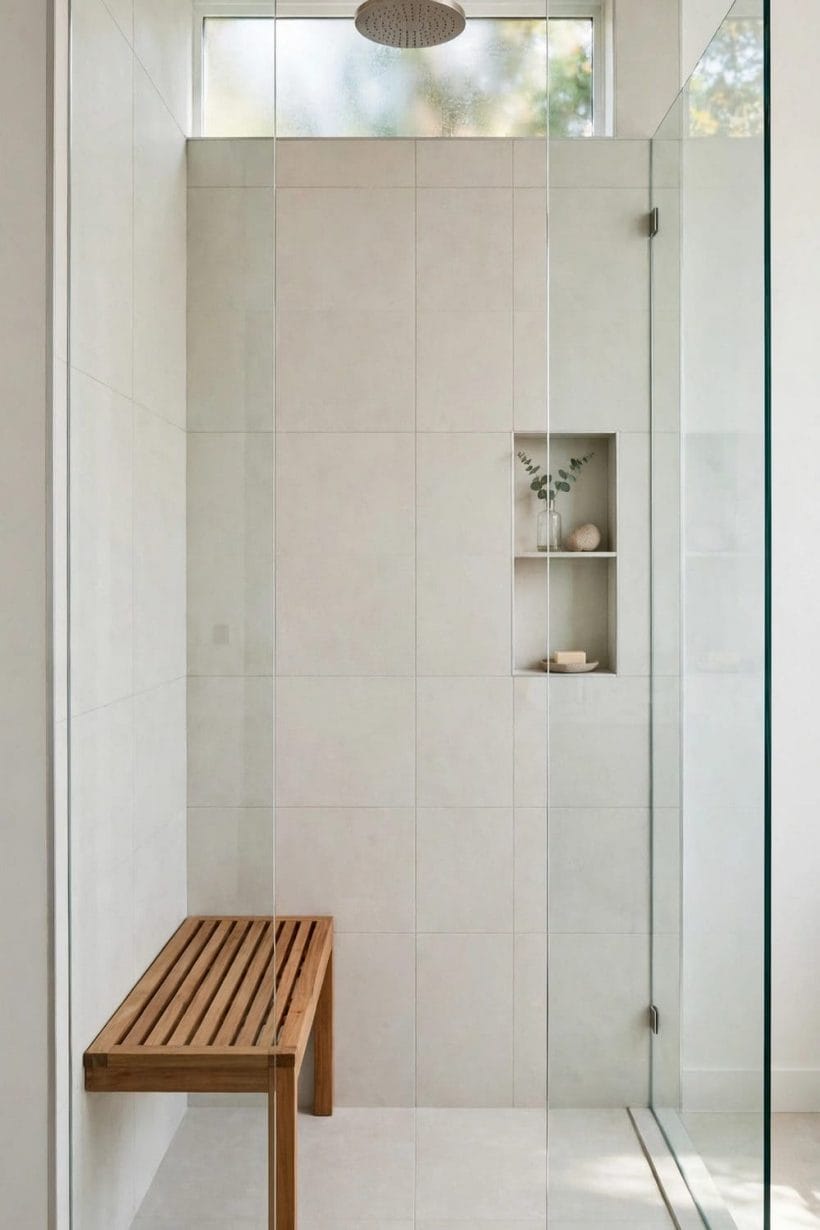
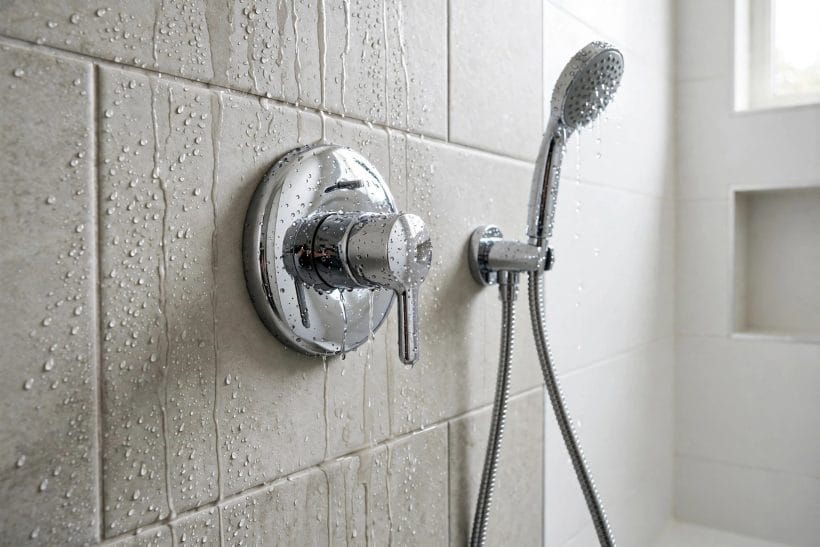
Fixtures are the part of the quote most people enjoy choosing, and they are also the part where scope can quietly double. A simple set, meaning a single shower head, a mixer and a hand shower, asks little of the installer beyond sound fixing and connection. A feature set, with overhead rainfall heads, body jets, multiple outlets or a digital control, asks more: more pipework, more valves, more testing, and sometimes a change to the supply that feeds them.
The fixture itself is only part of that story. The other part is the work its installation demands, and the two do not always move together. A modest-looking fitting that needs a concealed valve body set deep into a wall can demand more labour than a showier fitting that mounts on the surface. When comparing quotes, then, it helps to separate the price of the fitting from the work of fitting it, and to check whether both are included or only one.
Finishes play a smaller but real role. A widely available finish in a standard range is usually simpler to source and to match if a part ever needs replacing, while a rare finish can complicate both. None of this argues against choosing what you love. It argues for choosing it with the installation work in mind, so the fixture you fall for does not arrive with a scope you did not expect.
7. Drainage, Access and the Room Around the Shower
A shower does not sit alone; it sits in a room, in a house, and the room around it shapes the quote. A bathroom with clear access, a straightforward floor structure and room to work in is a simpler job than a bathroom reached through a narrow stair, with a floor that must be opened carefully, or with walls that hide surprises. Access for bringing materials in and waste out matters too, and it matters more in small homes and upper floors.
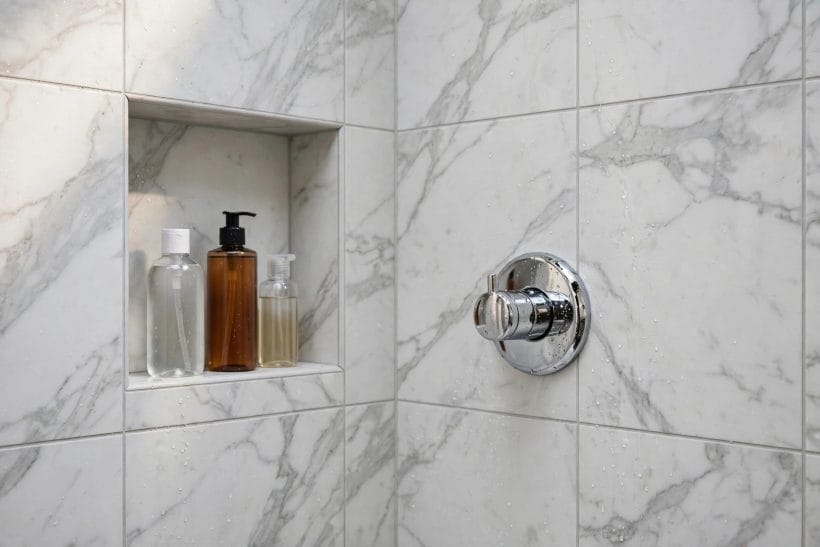
The room itself adds scope in other ways. A tiny bathroom may need clever sequencing simply because there is nowhere to stand while work proceeds, while a larger room may tempt a bigger change of layout that pulls in extra trades. Benches, niches and recessed shelves are similar: each is a modest feature on its own, but each adds setting out, waterproofing detail and finishing, and a shower with several of them carries more scope than the same shower without.
Windows belong in this section too. A window in the shower brings light and air that many homeowners love, and it also brings detailing: the reveal must be finished to handle water, the sill must shed it, and the glass must suit a wet room. Where a window already exists, keeping it in its current position is usually the simpler path; moving it, or adding one where none exists, is a wider job that belongs in the quote as its own line of scope.
8. Local Labour: Why Quotes Differ by Area and Trade
Two identical shower specifications can still produce different quotes in different places, and that is not a mystery to solve but a fact to accept. Labour rates vary by area, by the availability of trades, and by the season, and a small local firm and a larger company carry different overheads. A quote is not only a list of materials; it is a price for skilled time, and skilled time is priced locally.
The mix of trades matters as well. A straightforward replacement may need a plumber and a tiler. A change of form may add a carpenter, an electrician for lighting or heating, and someone to make good walls and ceilings afterwards. Each trade adds a visit, a day or part of one, and coordination between them, and a quote that lists the trades involved is easier to trust than one that hides them inside a single round figure.
This is also why local quotes, gathered in your own area for your own bathroom, are worth more than any general statement about cost, including this guide. Use this guide to understand the drivers, then let local professionals price the actual room. If quotes differ widely, the difference usually sits in scope, in the trades listed, or in what is excluded, and asking about those three things will explain most of the gap.
9. Reading Quotes Like for Like
A useful quote reads like a small inventory of the job. It names the form, the surfaces, the fixtures, the plumbing scope, the waterproofing extent, the trades involved, and what happens to waste and making-good. It states what is included and, just as importantly, what is not. When two quotes differ, laying them side by side against that inventory usually shows whether one is dearer or simply more complete.
Watch for the quiet exclusions. Waste removal, making good of walls and ceilings outside the shower area, new lighting, and the cost of any work discovered once floors are opened are all legitimate items, but they should be named rather than assumed. A quote that excludes them is not necessarily dishonest; it may simply be narrower. The risk lies in comparing a narrow quote with a complete one as though they were the same job.
Written quotes help here more than verbal ones. A written scope can be compared, questioned and kept, and it gives both sides a shared record of what was agreed. Ask for the scope in writing, ask what happens if hidden damage appears, and ask how long the work is expected to take and what the bathroom will be like while it proceeds. Those answers, taken together, are worth more than any single figure at the bottom of the page.
10. Living With the Job: Timing, Enclosure Styles and the Wider Room
Cost is not only money; it is also disruption, and a shower replacement takes the household’s main washing space out of use for a stretch. A like-for-like replacement is usually the shorter job, while a change of form, a moved drain, or extensive tiling extends the period without a working shower. Planning for that stretch matters, especially in a home with a single bathroom, and agreeing working hours, dust handling and the state the bathroom will be left in each evening makes the job far easier to live through.
The sequence of work explains much of the timing. Stripping out comes first, then plumbing and waterproofing, then surfaces, then fixtures, then finishing and testing, and each stage waits on the one before it. A professional will not rush the waterproofing or the drying and curing that some materials need, and a quote that allows proper time for those stages is a healthier sign than one that promises an implausibly fast finish. A calm, well-sequenced job is often the best value of all, even when it is not the cheapest line on the page.
Within the enclosed form, the style of enclosure still shapes the scope. A framed enclosure, with metal profiles around each panel, is a forgiving and widely understood fitting, while a frameless enclosure, with minimal metal and heavier glass, looks lighter and demands more precise setting out, because there is less frame to hide small unevenness in walls and floors. A half-wall shower, where a low wall carries a glass panel above it, sits between the two: part built structure, part glass, and its cost follows the balance between the wall work and the glass work.
Doors and glass matter within each style. A sliding door suits a tight room where a swinging door would strike a basin or a wall, while a pivot or hinged door suits a room with space to open it. Clear glass shows the tilework and shows water marks, while patterned or treated glass softens both, and a large custom panel will always carry more scope than a standard size. As with fixtures, separate the price of the glass from the work of fitting it, and check that both are in the quote.
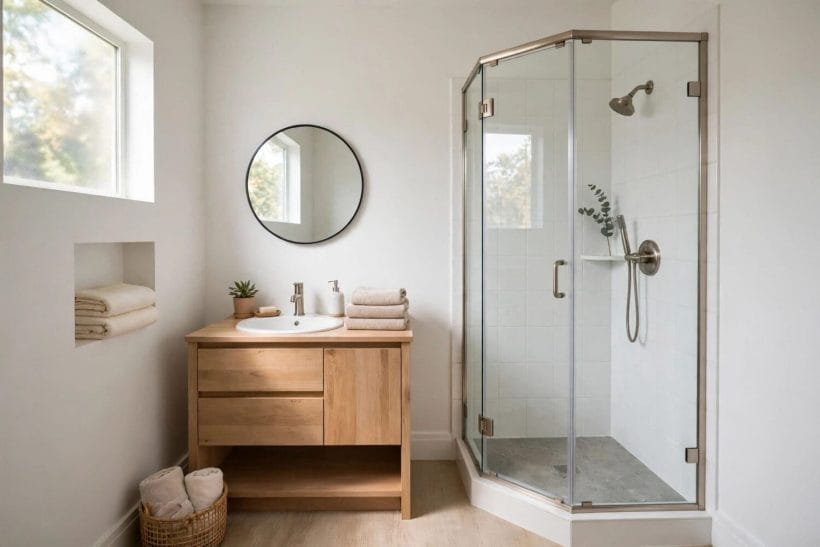
The walk-in shower has become the default wish for many replacements, and it is easy to see why: no door to step over, no threshold to catch a foot, and a room that feels larger for the glass. A walk-in shower in a suitable room is a genuinely good choice, and it suits older occupants and busy family bathrooms alike. It is not, however, automatically the simpler route, and it is worth weighing honestly before committing to it.
The walk-in form asks for a floor that drains reliably across an open area, a screen placed to contain spray without closing the space off, and walls finished to handle water beyond the immediate shower zone. In a room already suited to that, the scope stays contained. In a room where the floor must be rebuilt to create falls, or where spray will reach areas never meant to be wet, the scope widens, and the quote widens with it. Where the room answers yes to those questions, the walk-in form earns its place; where it answers no, an enclosed form may serve the household better for less scope.
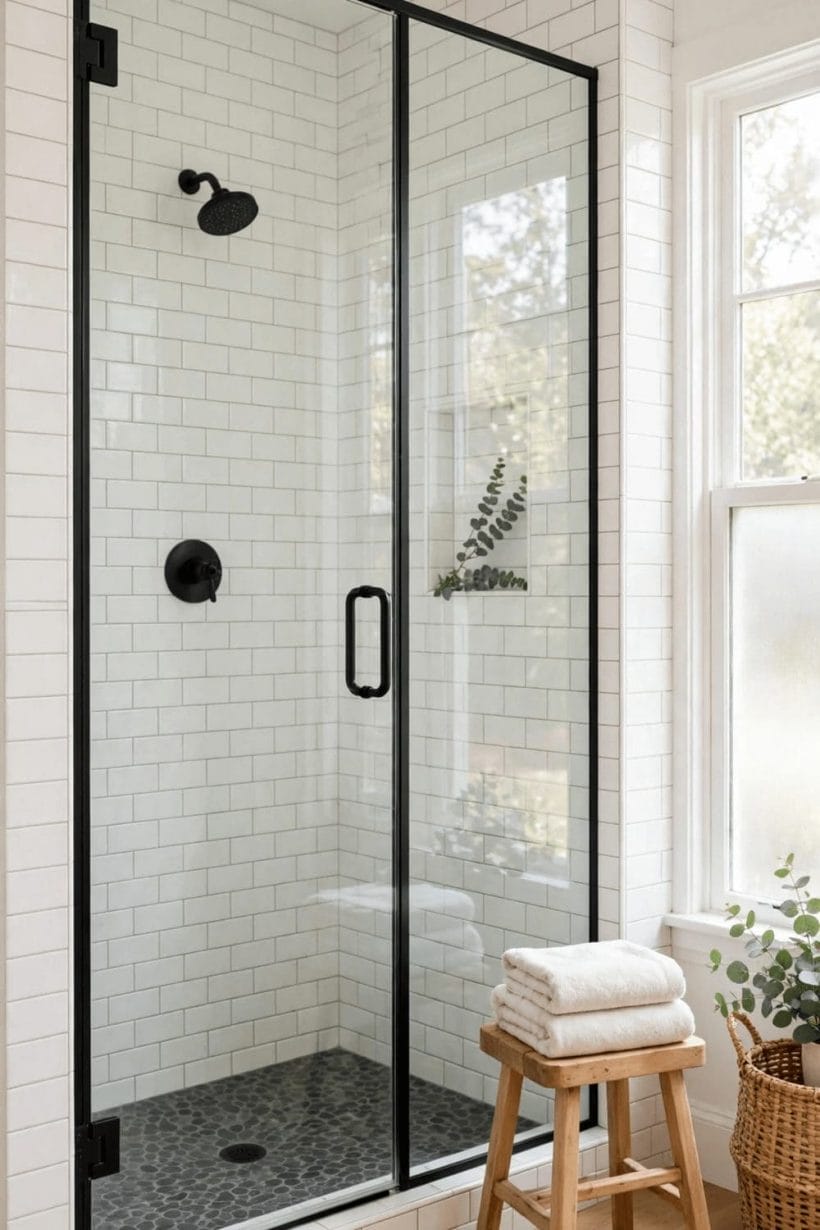
Many shower replacements arrive as part of a wider bathroom refresh, and it helps to keep the two scopes separate in your head even when they share a quote. The shower itself is one job: form, surfaces, plumbing, waterproofing and fixtures. The wider room is another: flooring beyond the shower, a new basin or storage, lighting, heating and decoration. Each has its own drivers, and each can move the total without the other changing at all.
Keeping them separate makes decisions easier, and there is a sequencing benefit too: shower work, especially plumbing and waterproofing, should be settled before surrounding finishes are chosen, because the wet trades set constraints that decoration must respect. A broader bathroom remodel follows the same driver logic as this guide, with scope first and finishes second, and reading the two together can help a homeowner see where the shower ends and the room begins.
Final Considerations
So, how much does it cost to replace a shower? It costs what your form, your surfaces, your plumbing scope, your waterproofing, your fixtures and your local labour add up to, in your room, priced by local professionals who have seen it. That sentence may feel like an evasion, but it is the only honest answer a general guide can give, and it is more useful than any invented figure, because it tells you exactly where to look when quotes arrive.
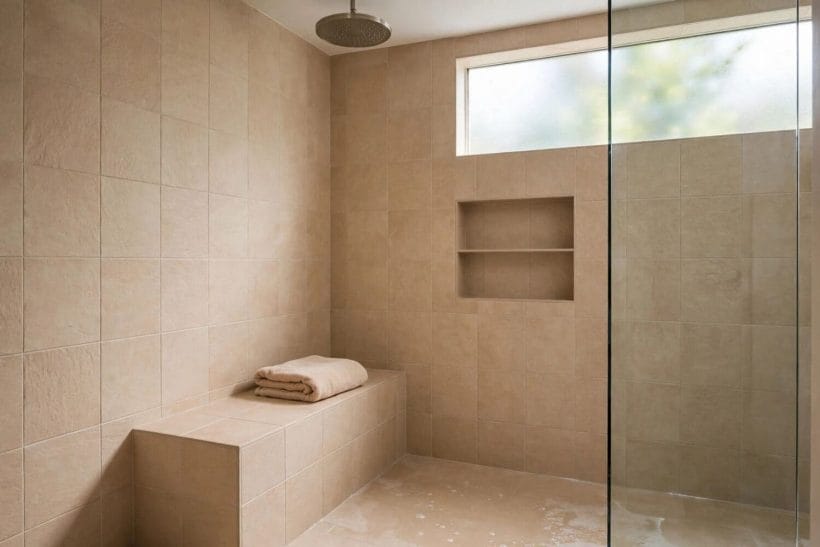
Before you invite quotes, settle the form, note what moves and what stays, and decide which features matter enough to carry extra scope. When quotes arrive, compare them like for like against the inventory in this guide, ask about waterproofing extent and hidden-damage terms, and treat a thorough written scope as a mark of care. A shower room as one open room can be a fine aspiration, but the shower that serves your household best is the one whose scope you understand, whose wet trades are in professional hands, and whose quote you can read without guessing.
Start with scope, compare like for like, and let local professionals price the real room. The shower you end up with will be better for the patience, and the quote you accept will be one you actually understand.



0 Comments