
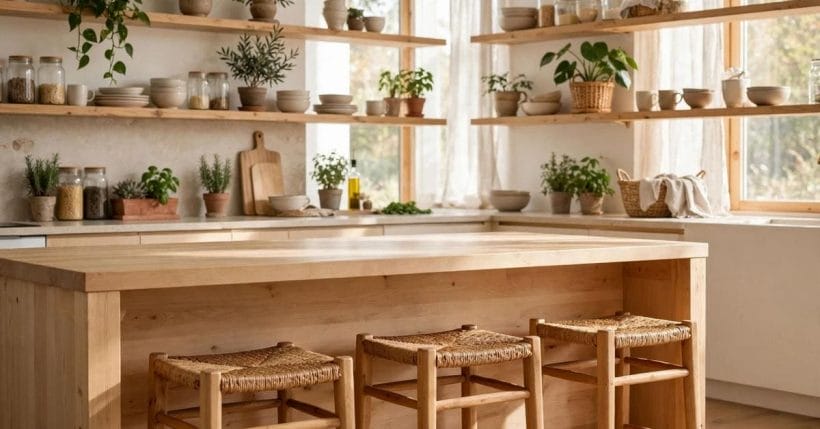
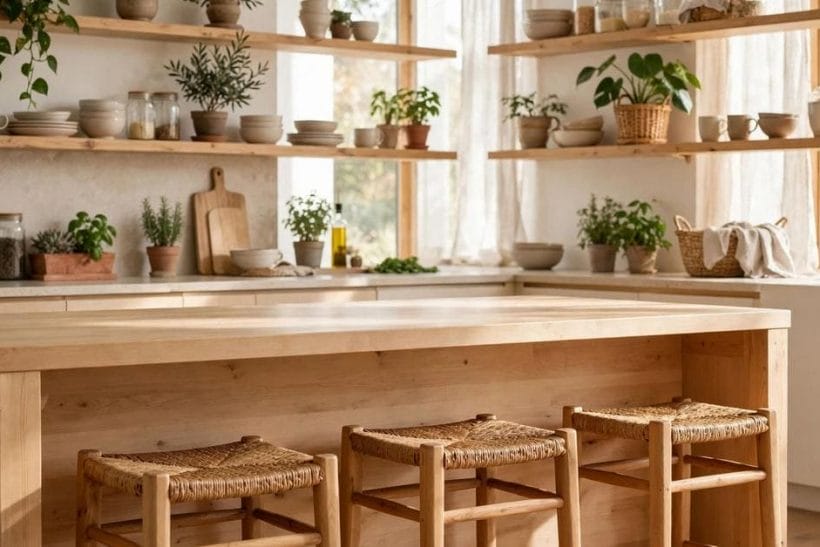
1. Start With the Counter, Not the Stool
A good stool starts with the counter it serves, and this guide covers bar stool style, finish, and size in general terms, so you can judge a stool by how it sits in your room rather than by how it looks alone in a shop. The counter sets the whole relationship: the seat should sit well below the counter top, with a comfortable gap above the knees, so sitting down feels easy and eating, talking, or working at the counter feels natural rather than cramped. When that relationship is right, everything else about the stool becomes easier to choose, because style and finish can then follow the room instead of fighting it.
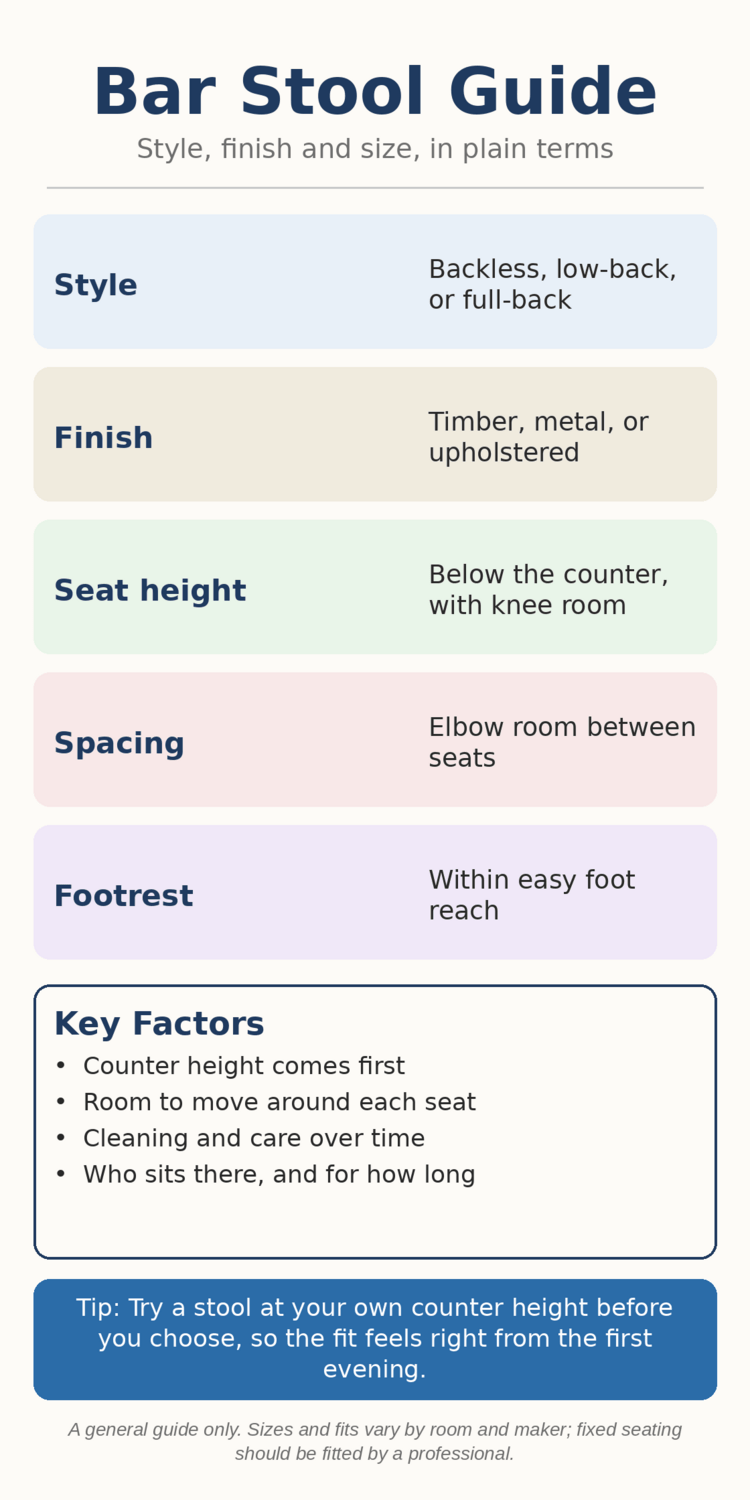
Begin by standing at your own counter and noticing how you use it. A counter where people linger over long meals asks for a different stool from a counter used for a quick morning coffee or for homework while dinner cooks. Think about who sits there, how long they stay, and whether the stool needs to slide away neatly when the counter is needed for cooking or clearing up. Those everyday habits matter more than any single look, and they keep the choice grounded in the life of the room. For a wider sense of how counters sit inside the whole room, browse these kitchen ideas and notice how seating, storage, and work surfaces share the same space.
It also helps to look at the room around the counter before choosing anything. A stool that suits a calm, pale kitchen can feel out of place in a dark, timber-heavy room, and a stool that suits a generous open room can crowd a narrow galley. Light, floor finish, cabinet colour, and the shape of the counter all speak to the stool, and the best choices listen to them. Keep the three questions from the title in mind throughout: what style suits the room, what finish will live well in it, and what size fits the people who will sit there.
2. Backless Stools and the Rooms They Suit
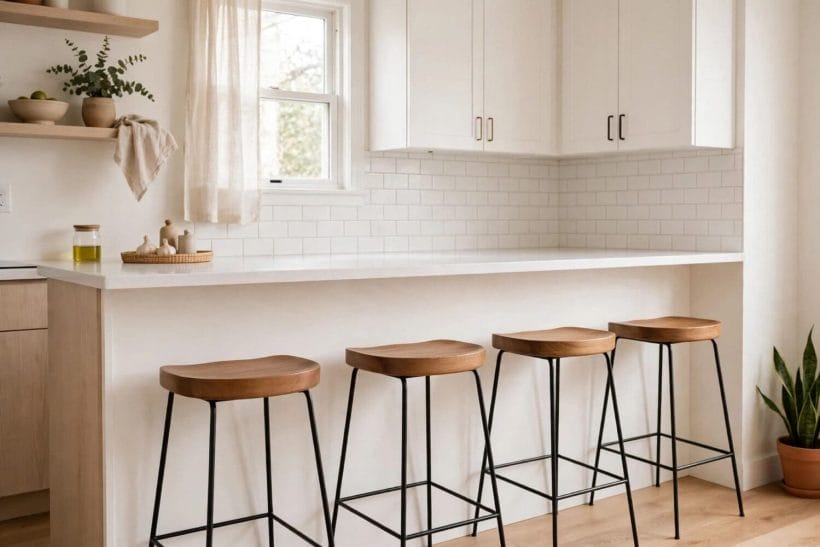
A backless stool is the quietest member of the family. With no back to rise above the counter, it slides fully underneath when not in use, which keeps walkways clear and keeps the counter looking open rather than fenced in. That disappearing act is why backless stools suit small rooms, narrow kitchens, and counters that double as passageways, where every bit of clear floor matters and a row of tall backs would close the room in.
The trade is comfort over time. Without a back to lean against, a backless stool suits shorter sits: a coffee, a chat, a quick meal, or a child doing homework while a parent cooks nearby. For longer evenings, some people miss the support, and that is worth knowing honestly before choosing. A backless seat with a gentle curve or a soft pad can ease the difference, but it does not turn a short-sit stool into a lounge chair, and pretending otherwise leads to disappointment.
Backless stools also pair well with open shelving and light rooms, because nothing interrupts the view across the counter. In a tiny kitchen ideas setting, that openness is a real gift: the eye travels past the counter to the window or the far wall, and the room feels larger than its footprint. If your counter faces a living area, a backless row keeps conversation open too, since no backs stand between the people sitting and the people standing on the other side.
3. Low Backs: A Middle Path
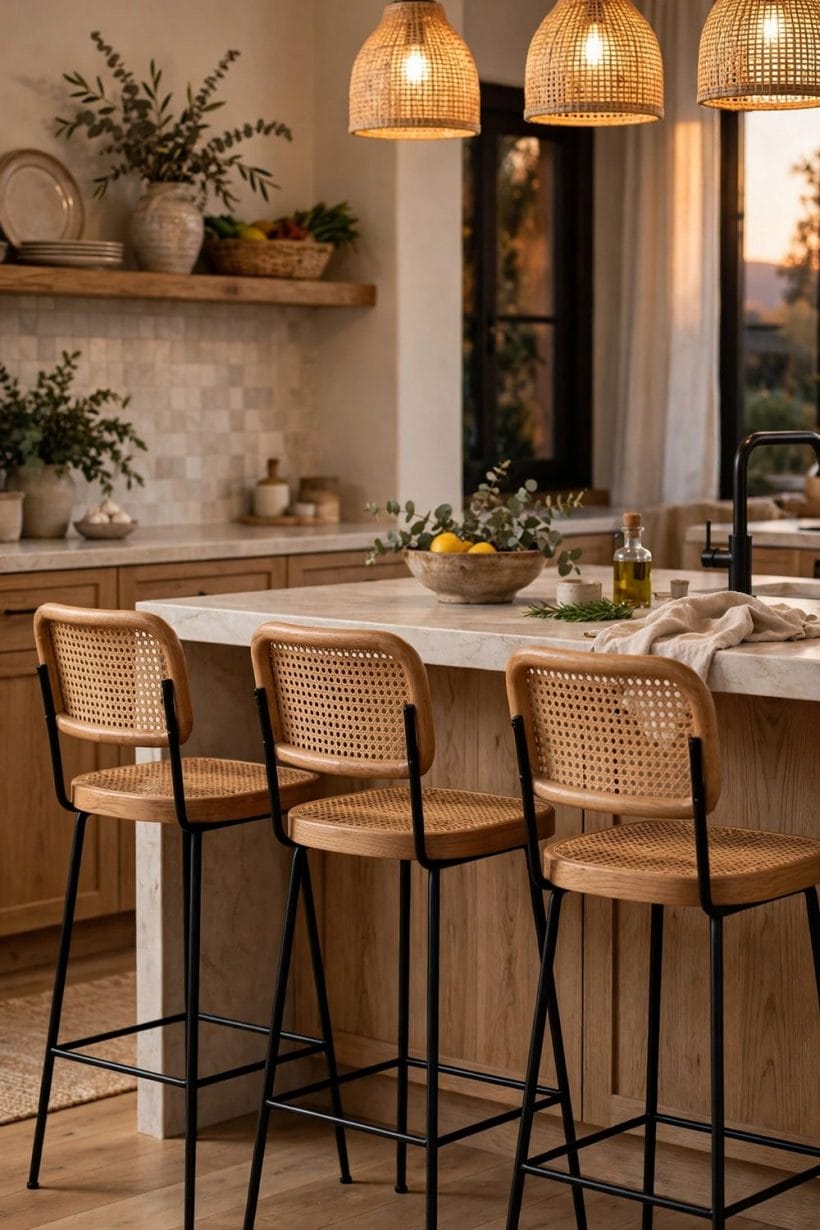
A low back offers a middle path between disappearing entirely and standing tall. It rises just above the seat, enough to give the lower back a resting place without blocking the view across the counter or dominating the room. For many households this is the sweet spot: the stool still tucks away fairly neatly, yet an evening meal feels supported rather than perched, and guests settle in more readily.
Low backs come in many shapes, from a simple curved rail to a small padded panel, and the shape matters as much as the height. A curved rail follows the natural shape of the back, while a flat panel can feel firm and formal. Sit in the shape if you can, lean back gently, and notice whether your shoulders relax or brace. A stool that looks graceful but pushes you forward will not be loved for long, however well it photographs.
Low backs also suit counters that face a room rather than a wall, because they mark the seating side without building a barrier. In a small kitchen ideas layout, that balance is valuable: the stools say where to sit, the room stays open, and the counter keeps its role as a gathering place rather than a dividing line. A low back in a warm timber or woven finish can soften a hard counter edge, while a slim metal low back keeps a modern room crisp.
4. Full Backs for Longer Sits
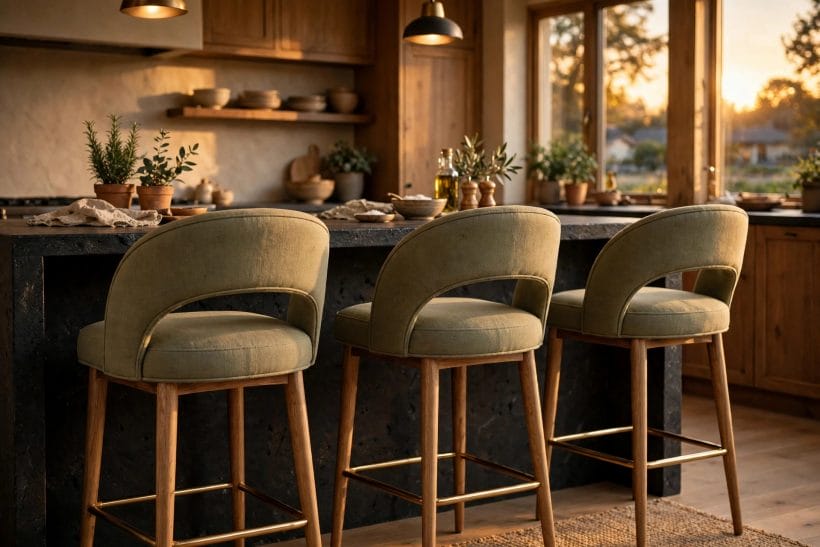
A full back rises well above the seat and supports the whole back, which makes it the natural choice for long, lingering sits. Where the counter is the main dining table, or where family and friends gather for slow evenings, a full back turns a stool from a perch into a proper chair. Arms, where they appear, add to that settled feeling, though they also ask for more room at the sides and more care when sliding the stool in and out.
Full backs need space to breathe. They stand taller than the counter in many rooms, so they become part of the view, and that visibility is both a gift and a responsibility. A handsome full back can anchor a room and give it character, while a clumsy one can crowd a small space and block light. Before choosing, picture the stool from the other side of the room, not only from the seat, because that is the view you will live with most of the day.
Full backs also suit rooms where the counter is a destination in itself, such as a dedicated drinks corner or a generous island that hosts the evening. In a home bar ideas setting, a full-backed stool invites people to stay, to lean back, and to talk, which is exactly what such a corner is for. Upholstery, timber, or woven backs each bring a different mood to that invitation, and the choice should follow the feeling you want the corner to have.
5. Swivel, Fixed, and the Space Around Them
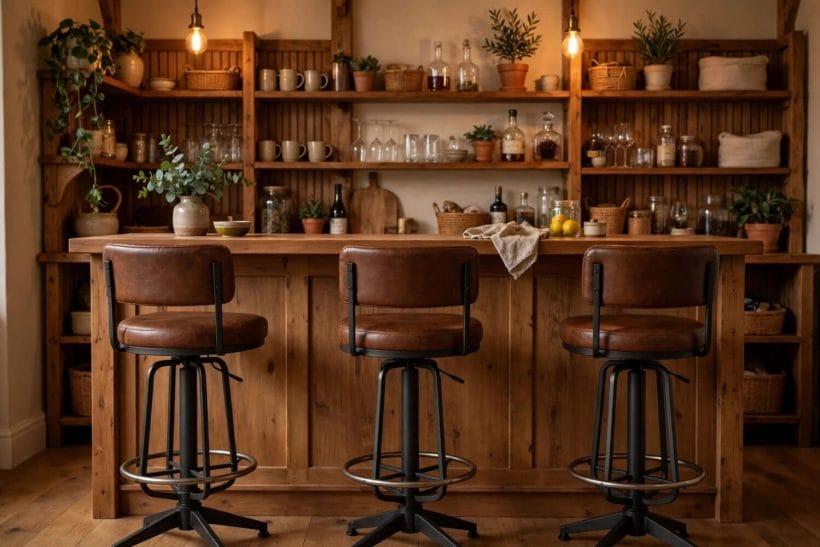
Whether a stool turns matters more than it first seems. A swivel stool lets a person turn toward a conversation, toward the cook, or toward the room without dragging the stool across the floor, which is a kindness in a busy kitchen. It also lets people get on and off more gracefully in a tight row, since the seat can angle out before the person steps away. That ease is why swivel stools suit social counters, where people come and go and talk in several directions at once.
Fixed stools, by contrast, stay where they are put, and that steadiness suits some rooms better. A fixed stool never drifts out of line, never bumps its neighbour, and keeps a formal row looking calm. In a narrow space, a fixed stool can also be easier to predict, since everyone knows exactly where each seat sits and how much room it needs. The choice between turning and staying put is really a choice about how the room moves.
Either way, the space around each stool decides whether the row works. Stools pushed shoulder to shoulder feel cramped even when the seats themselves are comfortable, because elbows collide and people edge away from each other. Give each seat generous elbow room, and leave a clear path behind the row for people to pass without squeezing. In a small home bar ideas corner, that path matters even more, since the corner is small and every movement is shared. A stool that must be dragged to be used will soon be left unused.
6. Finishes That Set the Mood: Timber
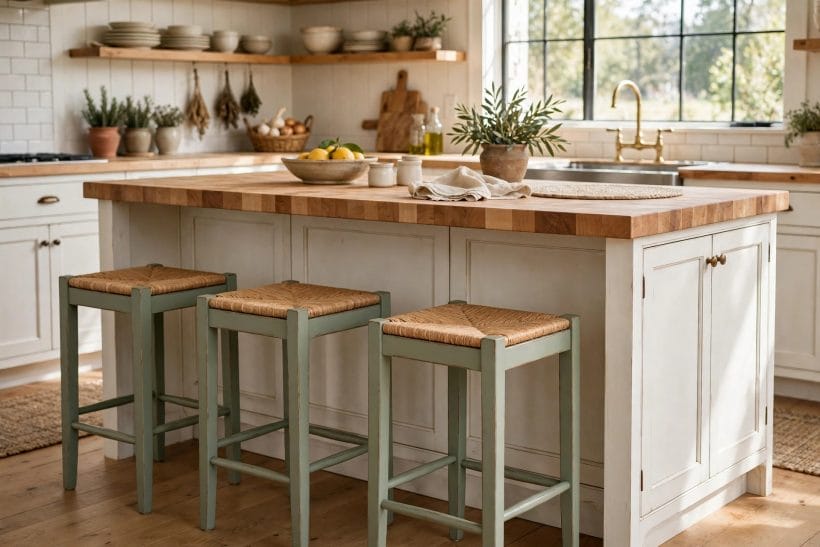
Timber is the warmest of the common stool finishes, and it carries a room toward comfort. A pale timber stool lightens a kitchen and suits airy, coastal, or farmhouse rooms, while a dark timber stool grounds a room and suits richer, moodier spaces. Painted timber adds another layer: a soft painted finish can tie stools to cabinetry or to a favourite colour in the room, and it can refresh older stools without replacing them.
Timber also ages visibly, and that ageing should be welcomed rather than feared. A timber seat gains marks and softening over years of use, and in a family kitchen those marks become part of the story of the room. If a pristine surface matters more than that lived-in warmth, timber may not be the kindest choice, since every spill and scrape will show. A wipe-clean finish helps, but it does not make timber indifferent to daily life.
Timber pairs beautifully with woven, rush, or cane seats, which add texture and breathability, and with metal legs, which add strength without heaviness. In a dry bar ideas corner, where no plumbing complicates the space, a timber stool with a woven seat can make a simple counter feel like a proper gathering place. The combination stays light to the eye, which matters in a corner that relies on styling rather than size to make its impression.
7. Metal, Upholstery, and Mixed Frames
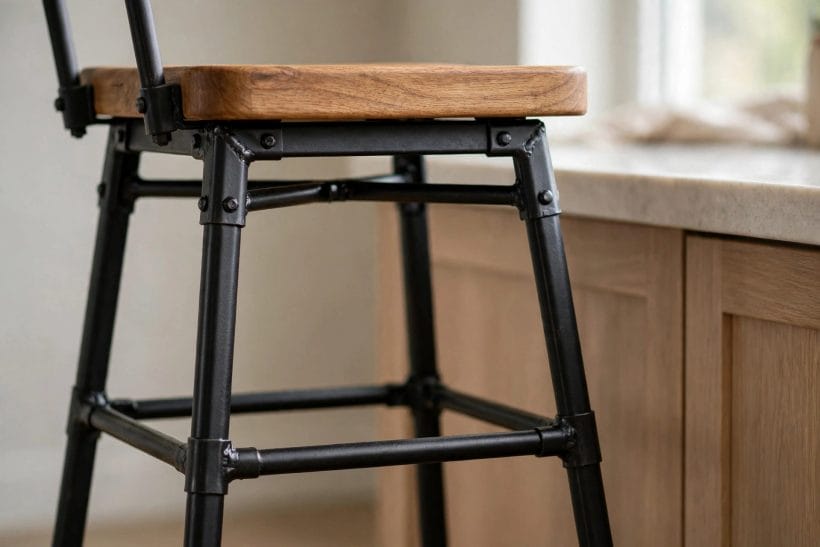
Metal brings a different character to a stool: slim, strong, and easy to wipe down. A metal frame suits modern rooms, industrial rooms, and busy family kitchens, where stools are moved often and cleaned often. Dark metal recedes quietly and lets the seat do the talking, while a brighter metal finish becomes a feature in itself and should be chosen with the same care as any other visible finish in the room.
Upholstery brings softness and colour, and it changes how long a stool invites you to stay. A padded seat forgives a long evening, and a fabric or leather-look back adds warmth to a hard kitchen. The care question follows at once: upholstery near food and drink will meet spills, and some fabrics forgive them while others hold a stain as a memory. Choose with cleaning in mind, not only with colour in mind, and keep removable covers in mind where they are offered.
Mixed frames combine the best of both worlds when they are well made. A metal frame with a timber seat, or a timber frame with an upholstered pad, can balance warmth and strength in a single stool. The join between materials is where quality shows: it should feel solid, with no wobble and no sharp edge, and the stool should sit level on the floor without rocking. In a corner bar nook, where seating is close and every detail is seen at arm’s length, that solidity is noticed daily, even if it is never named.
8. Seat Height and Knee Room, in Plain Terms
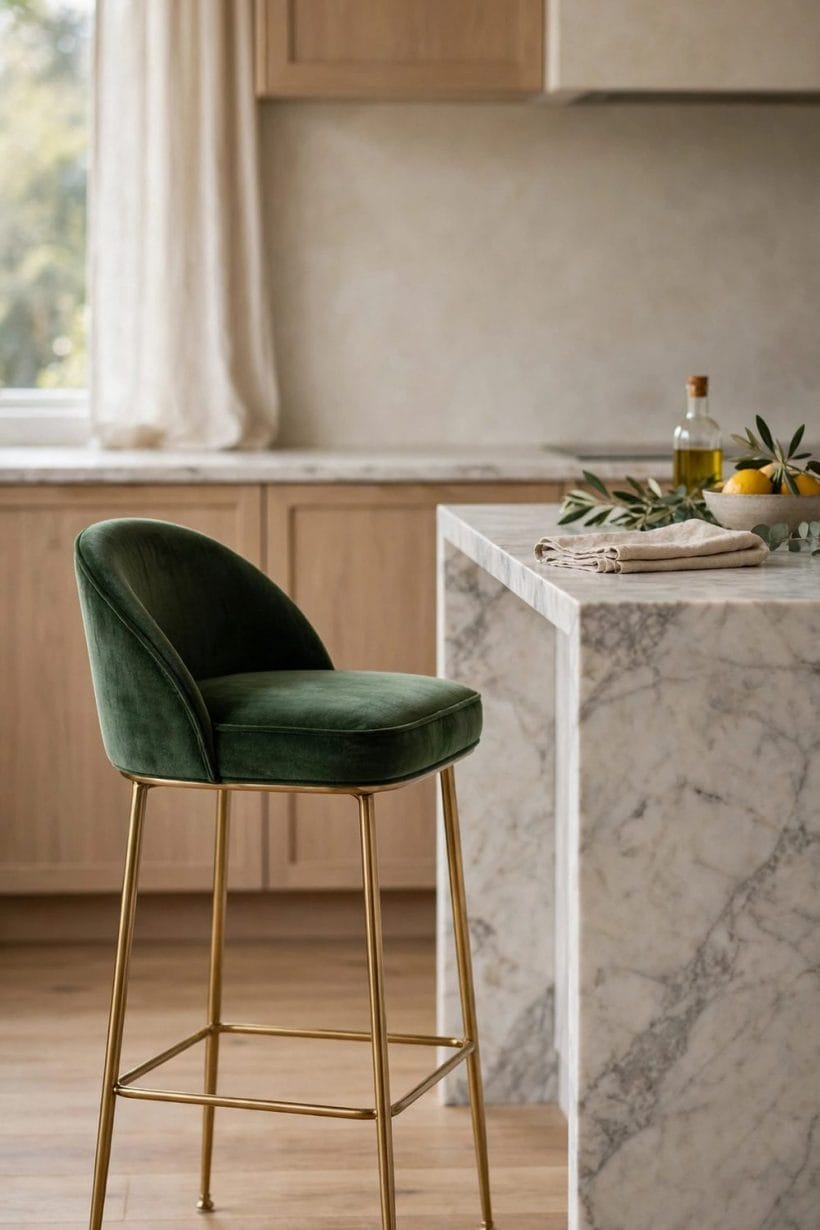
Seat height is the one sizing question that cannot be guessed from a photograph. The seat must sit well below the counter top, leaving a comfortable gap for knees and thighs, so legs slide under the counter without pressing against its underside. Too high, and the counter presses on the legs; too low, and the shoulders hunch over the plate. The right height lets a person sit upright, rest forearms lightly on the counter, and feel at ease rather than folded or stretched.
Counters vary, and so do people, which is why a single ideal height cannot be declared for every home. A counter that suits a tall household may not suit a household with small children, and a stool that suits a breakfast ledge may not suit a tall drinks counter. Adjustable stools ease this puzzle, since the seat can be set to the person using it, but they bring their own moving parts and a less settled look. Fixed stools, by contrast, ask for a careful match at the start and repay it with simplicity thereafter.
The kindest test is the simplest: sit on the stool at your own counter, or at a counter of a similar height, and stay there for a while. Eat, talk, and read, and notice whether knees, back, and shoulders complain or settle. A stool that feels fine for a moment can tire a back over an evening, and a stool that feels generous at first can prove awkward when the counter is used for cooking as well as sitting. Trust that lived test over any description, and remember that fixed seating that must be attached to a floor or a wall is work for a professional, not a casual weekend job.
9. Spacing, Footrests, and Moving Around Them
Spacing decides whether a row of stools feels like a gathering or a queue. Each seat needs elbow room on both sides, so neighbours can eat and talk without negotiating every movement. A row squeezed to fit one more seat often loses more than it gains, since the extra seat goes unused when sitting there feels like an intrusion. It is better to have fewer seats that are genuinely comfortable than a full row that nobody enjoys.
Footrests are easy to overlook and hard to live without. A footrest gives feet a place to rest, takes pressure off the backs of the thighs, and steadies a person getting on and off a tall stool. The rest should sit where feet fall naturally, not so high that knees rise awkwardly and not so low that feet dangle. A ring rest suits a stool that turns, while a bar rest suits a stool that faces one way, and either should feel solid underfoot rather than decorative.
Movement around the stools completes the picture. Leave a clear path behind the row, keep the route to the sink and the cooker free, and make sure a stool pulled out does not block a doorway or a drawer. Children, older guests, and anyone carrying a hot dish all need that clear path, and a room that moves well feels larger and calmer than its measurements suggest. A stool is not only a seat; it is part of the circulation of the room, and it should be judged as such.
10. Small Rooms, Corners, and Breakfast Counters
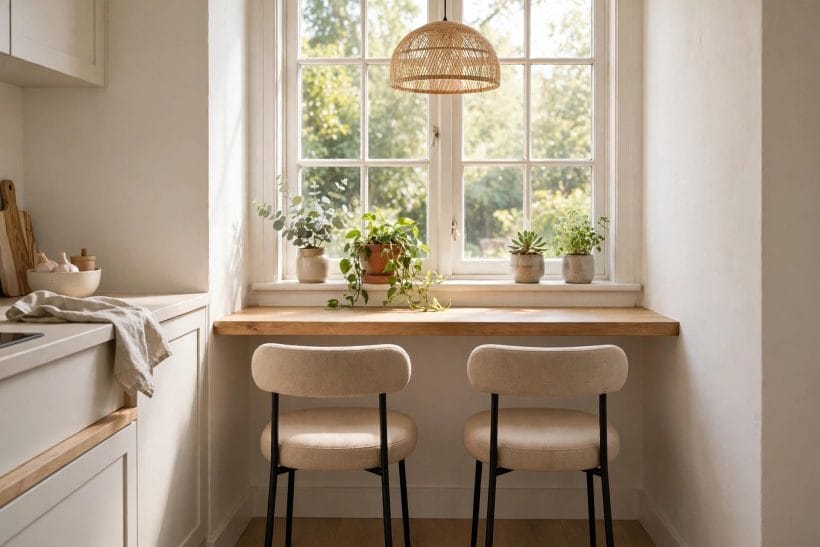
Small rooms reward stools that know their place. A slim backless or low-backed stool that slides fully under the counter gives a small kitchen its floor back when the meal is over, and a light finish keeps the room from feeling weighed down. In a breakfast nook by a window, a pair of rounded stools can make a modest ledge feel like a destination, especially when daylight does most of the decorating and the stools simply keep out of its way.
Corners ask for a different kind of thinking. A corner counter can seat people on two sides, which is sociable, but it can also trap a person at the inner seat if the stools are too deep or too close. Shallower seats and a little extra room at the corner ease that trap, and a stool that turns can help the inner person step out gracefully. Picture the corner in use, not only in plan, and walk the route a seated person would take to leave.
Breakfast counters deserve stools chosen for mornings rather than evenings. Mornings are hurried, hands are full, and stools are pulled out and pushed in without ceremony. A sturdy, wipe-clean stool that slides easily and forgives a bump suits that rush better than a delicate showpiece. Over time, the stools that survive mornings with grace are the ones that get used most, and a small room is best served by seating that is used daily rather than admired from a distance.
Final Considerations
Choosing well comes down to holding the three questions together: bar stool style, finish, and size, judged as one decision rather than three separate purchases. A beautiful style in the wrong size will tire its sitter, a perfect size in a finish that fights the room will look restless, and a lovely finish on a stool that crowds its neighbours will go unused. When style, finish, and size agree with the counter, the room, and the people who sit there, the stools stop being a decision and become simply part of how the home works.
Before settling, revisit the room at different times of day. Morning light, evening lamplight, and a busy cooking hour each show the stools differently, and a choice that charms in one light can crowd in another. Sit, linger, and move around the row as you would on an ordinary day, and let the room vote. If a stool must be fixed in place, or attached to a floor, wall, or counter structure, have that fixing done by a professional, since a seat that carries people must be held securely and safely.
Above all, choose stools for the life you actually live, not the life in a photograph. A home that hosts long, slow evenings needs backs and padding; a home that eats on the run needs slim stools that tuck away; a home with small children needs finishes that forgive and frames that stand steady. Match the stool to that life, and the counter becomes what it should be: a place where people gather easily, sit comfortably, and stay a little longer than they meant to.

0 Comments