
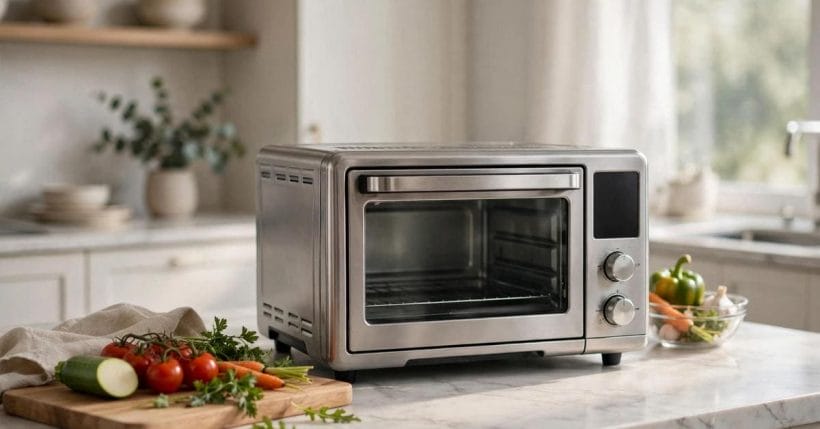
Someone standing in a kitchen shop, or scrolling through a forum thread late at night, eventually lands on the same question: for everyday cooking, is an air fryer or a toaster oven the better fit? The question sounds simple, but it hides a second question underneath it, which is what kind of cooking the kitchen actually does most days. A household that reheats, toasts, and warms things through will judge these two appliances differently from a household that crisps, roasts, and cooks from scratch several nights a week. This air fryer toaster oven comparison stays in general terms on purpose: no named models, no prices, no rankings, and no figures that cannot be honestly stated. What follows is a plain guide to what each appliance does, how they differ, and what to weigh before choosing one, the other, or neither.
Both appliances sit on a countertop, both use electric heat, and both can brown food. That shared ground is exactly why the choice feels confusing. The differences sit in how the heat moves, how much space the food gets, and how the appliance fits into the rhythm of a real kitchen. An air fryer moves hot air quickly around a smaller space. A toaster oven behaves more like a small conventional oven, with heating elements and a roomier cavity. Neither approach is better in the abstract. Each one suits some habits and frustrates others, and the honest way to choose is to match the appliance to the cooking you already do, rather than to the cooking you imagine you might one day do.
| Item | What it is |
|---|---|
| What an Air Fryer Actually Does | An air fryer is a compact countertop appliance built around fast-moving hot air. |
| What a Toaster Oven Actually Does | A toaster oven is, in essence, a small oven that sits on a countertop. |
| Size, Shape and Counter Space | Counter space is where the comparison becomes practical rather than theoretical. |
| What Each One Cooks Well | The two appliances overlap, but their comfort zones differ. |
| Texture and Browning in General Terms | Texture is where cooks notice the difference most clearly. |
| Ease of Use and Everyday Habits | Everyday ease decides whether an appliance becomes a habit or a cupboard ornament. |
| Cleaning and Care, Stated Generally | Cleaning is the chore that most often decides whether an appliance stays in daily use. |
| Kitchen Fit: Small Kitchens and Shared Counters | Small kitchens sharpen every trade-off in this guide. |
| Energy and Running Habits in General Terms | Energy use is often raised in this comparison, and it deserves a careful, general answer rather than invented figures. |
1. What an Air Fryer Actually Does
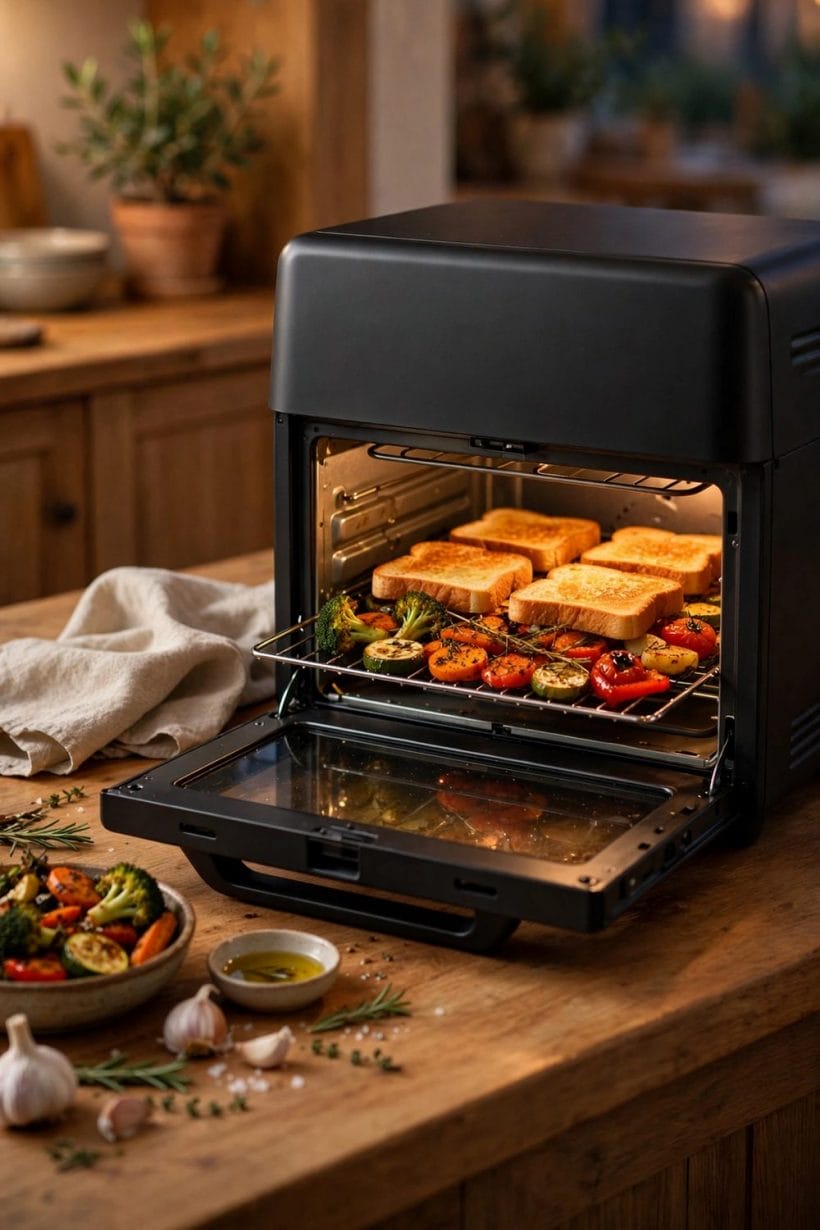
An air fryer is a compact countertop appliance built around fast-moving hot air. A heating element warms the air inside a small cavity, and a fan circulates that air around the food, so heat reaches the surface from many directions at once. Food usually sits in a basket or on a tray with gaps that let air pass underneath as well as over the top. The result, in general terms, is food that browns and crisps on the outside while cooking through inside, without being submerged in oil.
The small cavity is the point. Because there is less space to heat, the appliance generally feels quick to get going, and because the air moves fast, surfaces tend to crisp more readily than they would in still, dry heat. That makes the air fryer a natural fit for foods where a crisp or browned surface matters: items that would otherwise be fried, roasted vegetables, and anything that benefits from hot air reaching all sides. It also means the cooking space is limited. Food cooked in a crowded basket steams more than it crisps, because the air cannot move freely, so cooks generally work in smaller batches or in layers with space between pieces.
It helps to think of the air fryer as a specialist rather than a small oven that does everything. It excels at a particular style of cooking and does it with little fuss. It is less comfortable with foods that need a wide, flat surface, a tall dish, or a long, gentle heat. Keeping that specialist character in mind prevents the most common disappointment, which is buying a compact appliance and then expecting it to behave like a full-sized oven.
2. What a Toaster Oven Actually Does
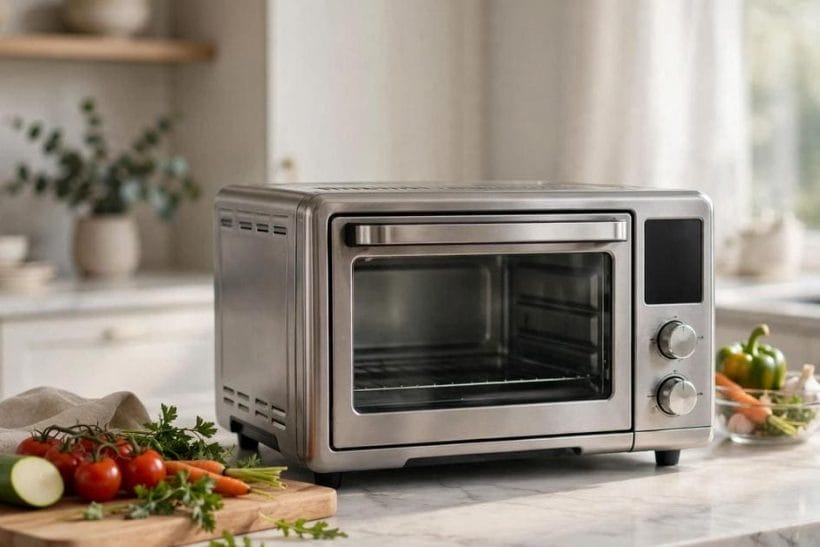
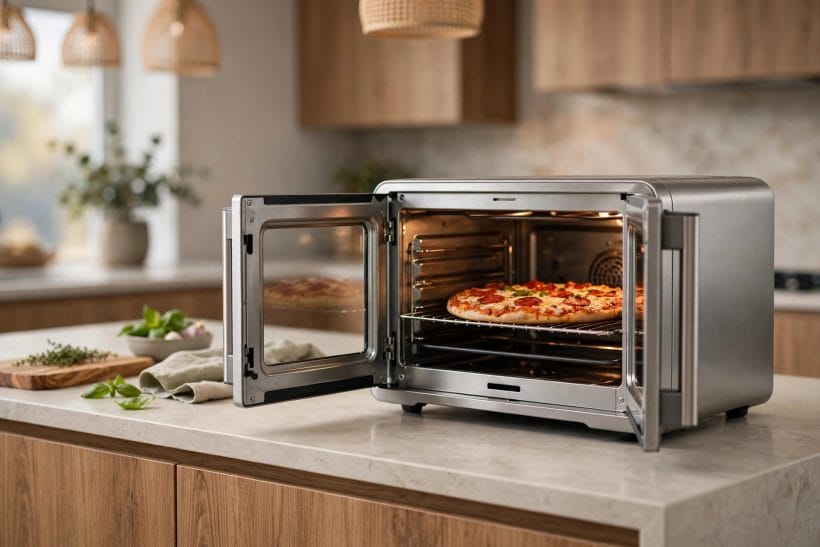
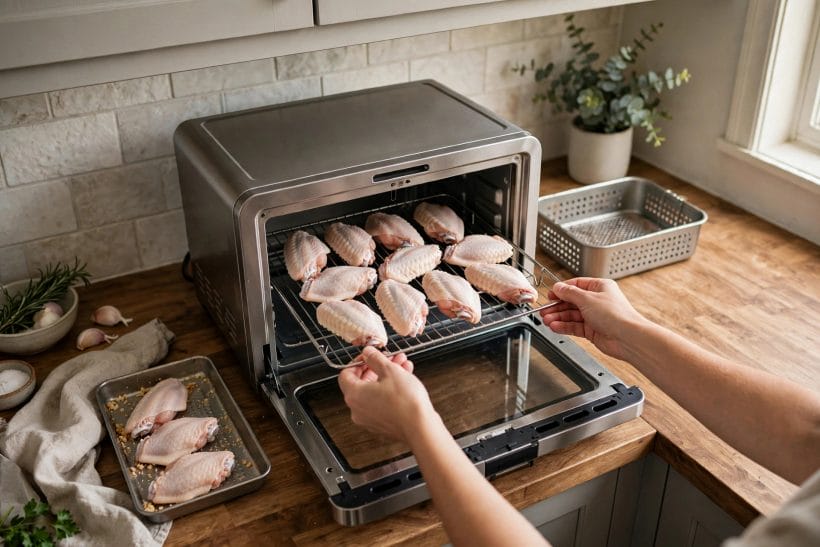
A toaster oven is, in essence, a small oven that sits on a countertop. Heating elements, usually above and below the food, warm a cavity that is roomier than an air fryer’s and shaped more like a conventional oven. Food sits on a rack or a tray, and the door opens at the front, so dishes slide in and out much as they would in a full-sized oven. Many toaster ovens also toast, warm, and bake, which makes them a general-purpose tool rather than a specialist.
That roomier cavity changes what the appliance can hold. A small tray of vegetables, a modest baking dish, or several slices of toast can all fit without crowding, and taller items that would never fit in a basket have room to stand. The trade-off is that heat moves more gently, because the air is not forced around the food in the same way. Browning still happens, and it can be even and attractive, but the crisping effect is generally less intense than in a fast-air appliance, and the cavity takes a little longer to feel fully heated through.
The toaster oven’s strength is flexibility. One appliance can toast in the morning, warm leftovers at lunch, and bake a small dish in the evening, without changing trays or settings in complicated ways. For a household that wants one countertop appliance to cover many small jobs, that flexibility is often the deciding factor. For a household that mainly wants crisping, it can feel like a compromise, because the appliance does many things well without specialising in any single one.
3. Size, Shape and Counter Space
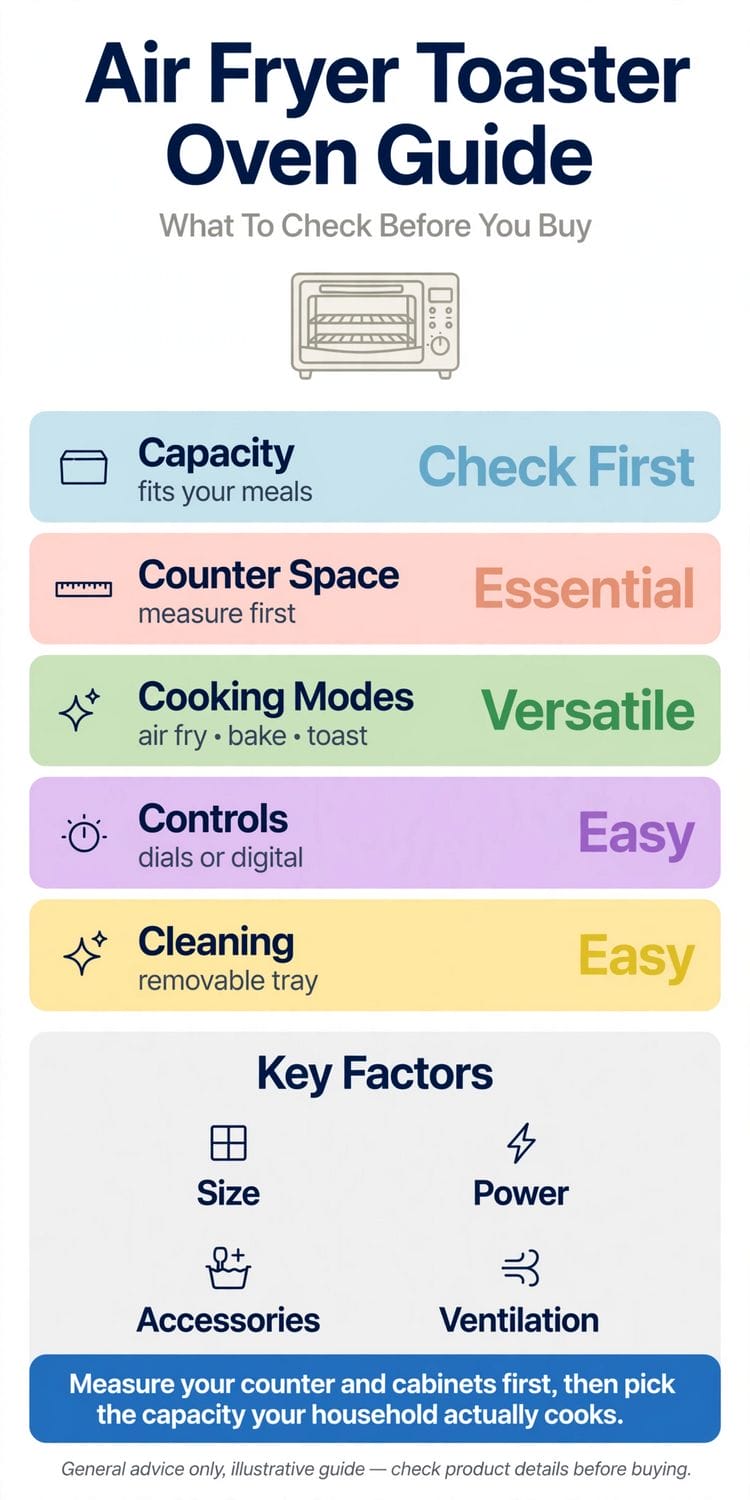
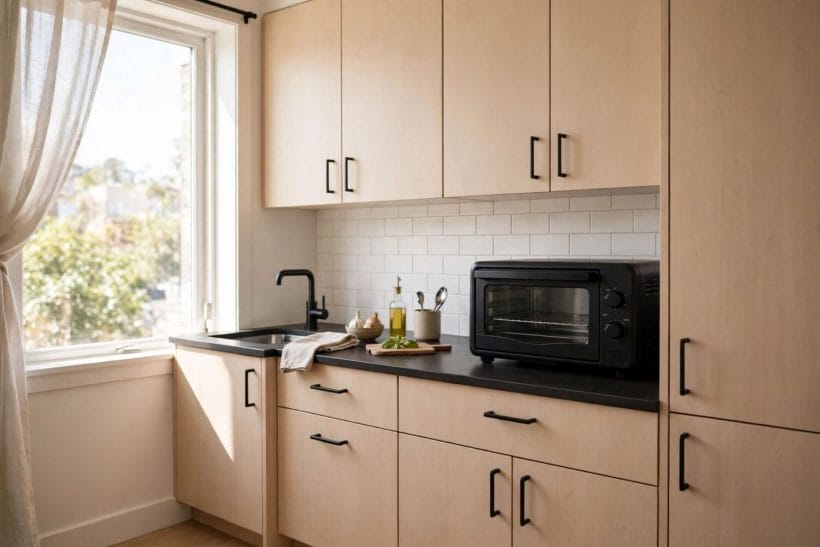
Counter space is where the comparison becomes practical rather than theoretical. An air fryer is usually tall and compact, with a footprint not much larger than a small pot, while a toaster oven is wider and lower, closer in shape to a small box. Which one fits better depends on the counter itself: the depth of the worktop, the height under wall cabinets, and how much clear space remains once everyday items are in place.
Clearance matters as much as footprint. Both appliances give off heat while they run, and both need breathing room around them so heat can escape and nearby items stay safe. A toaster oven’s door swings down or open at the front, so it needs clear space in front as well as on top. An air fryer’s basket pulls out toward the cook, so it needs room in front too, and its vents need space above and behind. Measuring the intended spot, and checking the space around it, is worth more than any description of size in general terms.
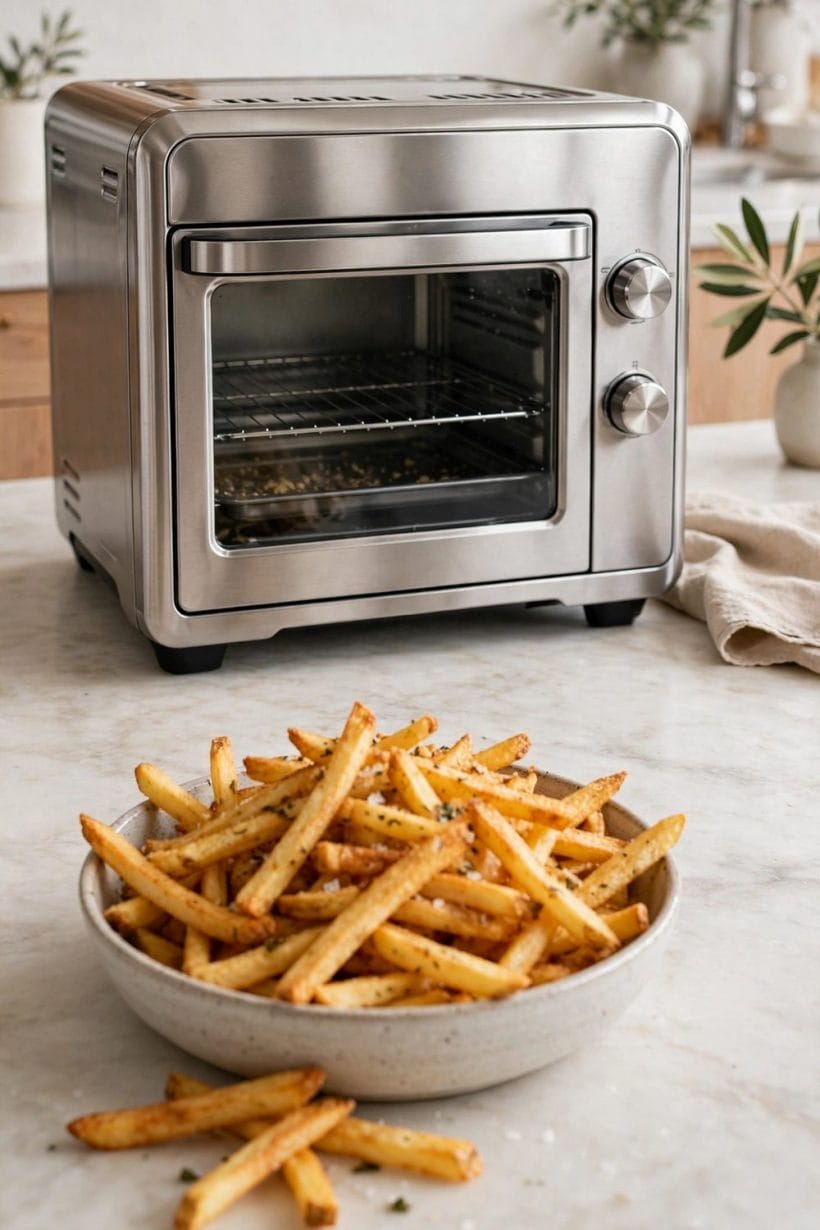
Storage between uses is the other half of the question. An appliance that lives on the counter gets used; an appliance that lives in a high cupboard gets forgotten. If counter space is tight, the smaller footprint usually wins the argument, even when the roomier appliance could do more. If the counter is generous, the wider appliance may earn its place by covering more jobs. The honest test is simple: picture the appliance sitting in its spot on an ordinary Tuesday, with everything else the kitchen already holds around it.
4. What Each One Cooks Well
The two appliances overlap, but their comfort zones differ. An air fryer is at home with foods that benefit from fast, circulating heat and a crisp finish: roasted vegetables, small cuts, items with coatings, and foods that would otherwise be fried. It handles reheating well too, especially for foods that have gone soft and need their surface revived. Where it struggles is with anything that needs a wide tray, a deep dish, or gentle, even heat over a longer time.
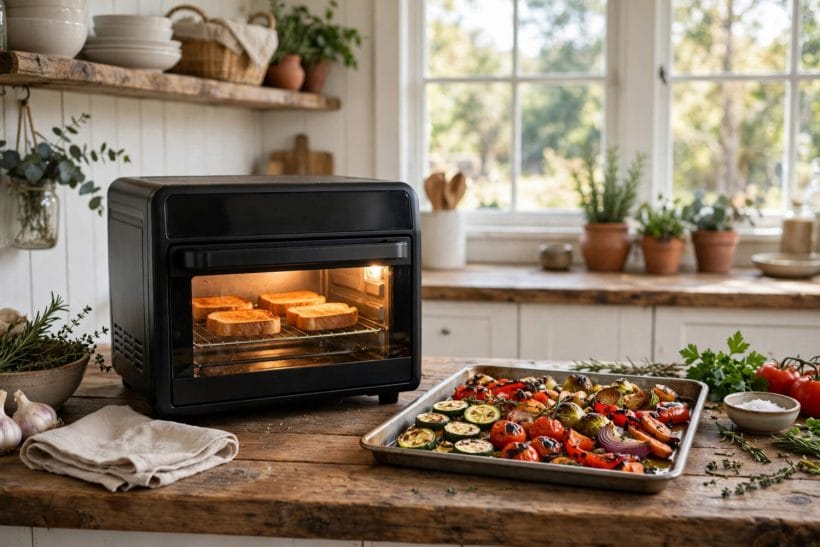
A toaster oven is at home with foods that suit a small oven: toast, warmed bread, baked dishes, roasted trays, and anything that needs room to spread out. It is the better choice for a dish that must sit flat, for several portions cooked at once, and for foods where even, gentle browning matters more than an intense crisp. Where it struggles is with foods that need fast, forceful air to crisp properly, and with cooks who want the quickest possible route to a browned surface.
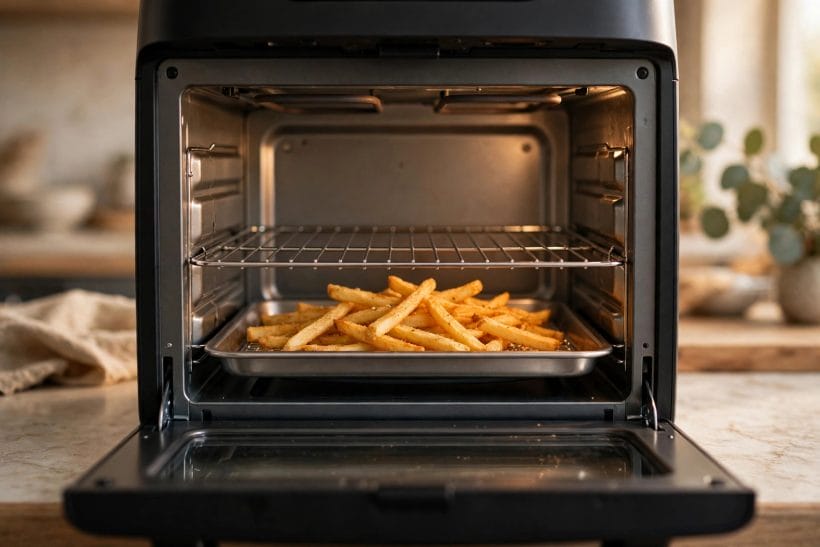
Most kitchens cook a mix of both kinds of food, which is why the choice is rarely obvious. A useful exercise is to list the meals of an ordinary week and mark which ones need crisping and which ones need room. If the list leans heavily one way, the answer usually follows. If it splits evenly, the deciding factor shifts from cooking style to counter space, cleaning, and habit, which the later sections of this guide take up in turn.
5. Texture and Browning in General Terms
Texture is where cooks notice the difference most clearly. Fast-moving hot air tends to dry the surface of food as it cooks, which encourages a crisp, browned exterior. That is the air fryer’s signature effect, and it is why foods that come out of one often feel lighter and crunchier than the same foods baked in still heat. The effect is most obvious on surfaces: coatings, skins, and cut edges.
A toaster oven browns more gently. Heating elements warm the food from above and below, and the air inside moves slowly, so surfaces brown evenly but less aggressively. The result suits foods where a soft interior and a lightly browned top matter more than a hard crunch. Toast is the classic example: a toaster oven toasts evenly across the slice, while an air fryer can brown the edges faster than the centre if the slice sits close to the heat.
Neither texture is right or wrong. Some cooks prefer the pronounced crunch of fast air; others prefer the gentler, more even browning of a small oven. The difference also depends on the food itself: a coated item will crisp in either appliance, while a plain vegetable will show the gap more clearly. Tasting both styles, if a friend or family member owns one of these appliances, tells a cook more than any description, because texture is felt as much as it is explained.
6. Ease of Use and Everyday Habits
Everyday ease decides whether an appliance becomes a habit or a cupboard ornament. An air fryer is generally simple to run: food goes in a basket, a dial or a small panel sets the cooking, and the basket pulls out for checking. That simplicity suits quick meals and single cooks, because there is little to assemble and little to think about. The basket itself, though, needs shaking or turning partway through for even results, which is a small habit to learn.
A toaster oven feels familiar to anyone who has used a conventional oven. Food goes on a rack or tray, the door closes, and the cooking proceeds without interruption. There is no basket to shake, and checking on food means opening the door and looking in, which is a habit most cooks already have. The familiarity is a real advantage for households where several people cook, because nobody needs to learn a new routine.
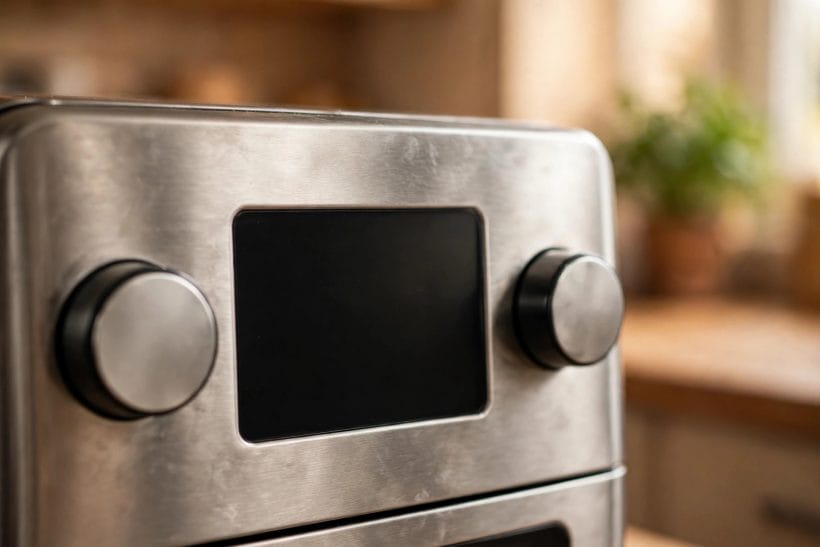
Controls vary widely between appliances, and this is one area where general advice reaches its limit. Some cooks prefer a few plain dials; others prefer preset programmes. The sensible approach is to judge the controls in person where possible, or to read the maker’s own description carefully, and to choose the simplest interface that still covers the cooking the household actually does. Extra programmes that never get used are not a benefit; they are clutter.
7. Cleaning and Care, Stated Generally
Cleaning is the chore that most often decides whether an appliance stays in daily use. An air fryer’s basket and tray are the parts that meet food directly, and they generally lift out for washing. Because the cooking space is small, splashes and crumbs stay contained, but coatings and crevices need attention, since stuck-on food in a small space affects the next meal more quickly. Regular, gentle cleaning after use keeps the appliance pleasant to cook with.
A toaster oven’s rack and tray also lift out, and crumbs fall to a tray at the base that can be emptied. The larger cavity means splashes spread further, and the heating elements need care: they should never be scrubbed harshly or sprayed, and food should never be allowed to sit against them. In both appliances, the maker’s own care instructions are the authority, because materials and coatings differ, and a cleaning method that suits one appliance may damage another.
One safety note belongs in every guide of this kind. If an appliance develops an electrical fault, smells of burning when it should not, or shows damage to its cord or casing, stop using it, unplug it, and have it checked by a qualified professional. Electrical repair is professional-only work: never open the casing, never improvise a fix, and never continue using an appliance that feels unsafe. The same caution applies to any countertop appliance, and it is worth stating plainly rather than leaving it unsaid. For the wider kitchen, care for worktops around hot pans follows the same general principle: heat and surfaces deserve respect, and small habits protect both.
8. Kitchen Fit: Small Kitchens and Shared Counters
Small kitchens sharpen every trade-off in this guide. In a compact kitchen, one appliance must earn its counter space, and the winner is usually the one that covers the most everyday jobs without crowding out everything else. An air fryer’s small footprint helps here, but a toaster oven’s ability to toast, warm, and bake can replace more than one tool, which can save space overall. The right answer depends on what else the kitchen already holds.
Shared counters add another layer. In a household where several people cook, or where the counter also serves as a preparation area, an appliance that is easy for everyone to use and easy to move aside has an advantage. Weight matters here: a lighter appliance can be shifted for cleaning or for a larger cooking session, while a heavier one tends to stay put. Thinking about who cooks, and when, is just as important as thinking about what gets cooked.
Storage for the tools that go with the appliance matters too. Trays, racks, and baskets need a home, and a kitchen that already struggles for storage will feel the extra pieces. This is where wider kitchen planning helps: storage ideas for pots and pans and cabinet storage fixes show the same general lesson, which is that a tidy place for each item makes the whole kitchen easier to cook in. An appliance whose accessories have no home will slowly migrate to the back of a cupboard.
9. Energy and Running Habits in General Terms
Energy use is often raised in this comparison, and it deserves a careful, general answer rather than invented figures. A smaller cavity generally needs less energy to heat than a larger one, which is one reason a countertop appliance can feel economical for a small meal compared with heating a full-sized oven. An air fryer’s compact space follows that logic. A toaster oven’s roomier cavity follows it too, just to a lesser degree, because it still heats far less space than a full oven.
How long the appliance runs matters as much as how much space it heats. A quick task in a small appliance uses energy briefly; a long, gentle bake uses energy for longer, whatever the appliance. The practical conclusion is modest: for small, everyday jobs, either countertop appliance generally uses less energy than a full oven, and between the two, the smaller, faster option generally uses less for the same small job. Beyond that, honest general guidance stops, because real consumption depends on the appliance, the food, and the habit, and no guide should invent numbers for those.
Habit is the quiet part of energy use. An appliance that gets used for quick jobs, switched off promptly, and kept clean will serve a household well. An appliance that runs longer than needed, or heats a large space for a tiny task, wastes energy regardless of its design. Choosing the appliance that matches the size of the job, rather than the largest one available, is the simplest energy habit a kitchen can adopt.
10. Questions to Ask Before You Choose
With the differences laid out, the choice comes down to a short set of questions, and answering them honestly is more useful than any ranking. First, what does the kitchen cook most days: crisped foods, or baked and toasted foods? Second, how much counter space is genuinely free, once clearance and door swing are counted? Third, who cooks, and will everyone find the appliance easy to use? Fourth, how much cleaning is the household willing to do after an ordinary meal? Fifth, what else must share the counter, and where will trays and baskets live?
Two further questions tie the appliance to the wider kitchen. One is about the oven the household already has: if a full-sized oven is available and used often, a specialist crisping appliance may add more than a second small oven would. If there is no full oven, or it is rarely used, a flexible toaster oven may cover more ground. The other is about cookware: checks before buying cookware and cookware checks for different hob types both make the same general point, which is that the pans and trays a household already owns should fit the appliance it buys, not the other way round.
Related kitchen decisions follow the same pattern of matching the tool to the habit. Choosing between oven door styles is a similar exercise in weighing access against space, and where a backsplash starts and stops shows how one placement decision shapes the whole wall above the counter. Each choice is small on its own, and each one repays the same question: what does this kitchen actually do, day after day?
Final Considerations
Neither appliance wins this comparison in general, and that is the honest conclusion. An air fryer suits a kitchen that values crisping, speed for small jobs, and a small footprint. A toaster oven suits a kitchen that values flexibility, room for trays and dishes, and the familiarity of a small oven. A kitchen that cooks both ways may find that counter space, cleaning, and habit settle the matter more than cooking performance does, and a kitchen with very little space may decide that neither appliance earns its place just yet.
For readers still weighing the question, the simplest next step is to watch an ordinary week of cooking and note which style dominates. If crisped foods and quick reheats fill the list, lean toward the air fryer. If toast, baking, and warming fill the list, lean toward the toaster oven. And if the list splits evenly, let the counter decide: the appliance that fits, gets cleaned, and gets used is the one that belongs. This air fryer toaster oven guide has stayed general on purpose, because the right choice is personal, and a guide that invents figures or crowns a winner would only make a personal decision harder.




0 Comments