

Hickory is the extrovert of kitchen woods: bold grain, dramatic shifts between pale sapwood and warm heartwood, and a hardness that shrugs off family life. Stained well, hickory cabinets can look rustic, refined or quietly modern. This guide covers layouts, stain colours, costs and the practical details that help you choose with confidence.
The key is embracing variation rather than fighting it.
1. At-a-Glance: Stained Hickory Cabinets in Brief
| Question | Practical answer |
|---|---|
| What does hickory look like? | Strong, flowing grain with striking contrast between creamy sapwood and reddish-brown heartwood, often with knots and mineral streaks in rustic grades. |
| Is hickory durable? | Yes — it is one of the hardest domestic cabinet woods, resisting dents and wear in busy kitchens. |
| What do stains do to it? | Light stains keep the contrast lively; mid and dark stains calm it and even out the colour while the grain still shows through. |
| Does it suit small kitchens? | Yes, with lighter stains, calm surrounding colours and the busiest boards placed thoughtfully. |
| What drives the cost? | Wood grade, cabinet construction, door style, finish quality, layout complexity and hardware — plus installation. |
| How do I keep it looking good? | Gentle cleaning, prompt attention to water around sinks, and keeping spare finish information for future touch-ups. |
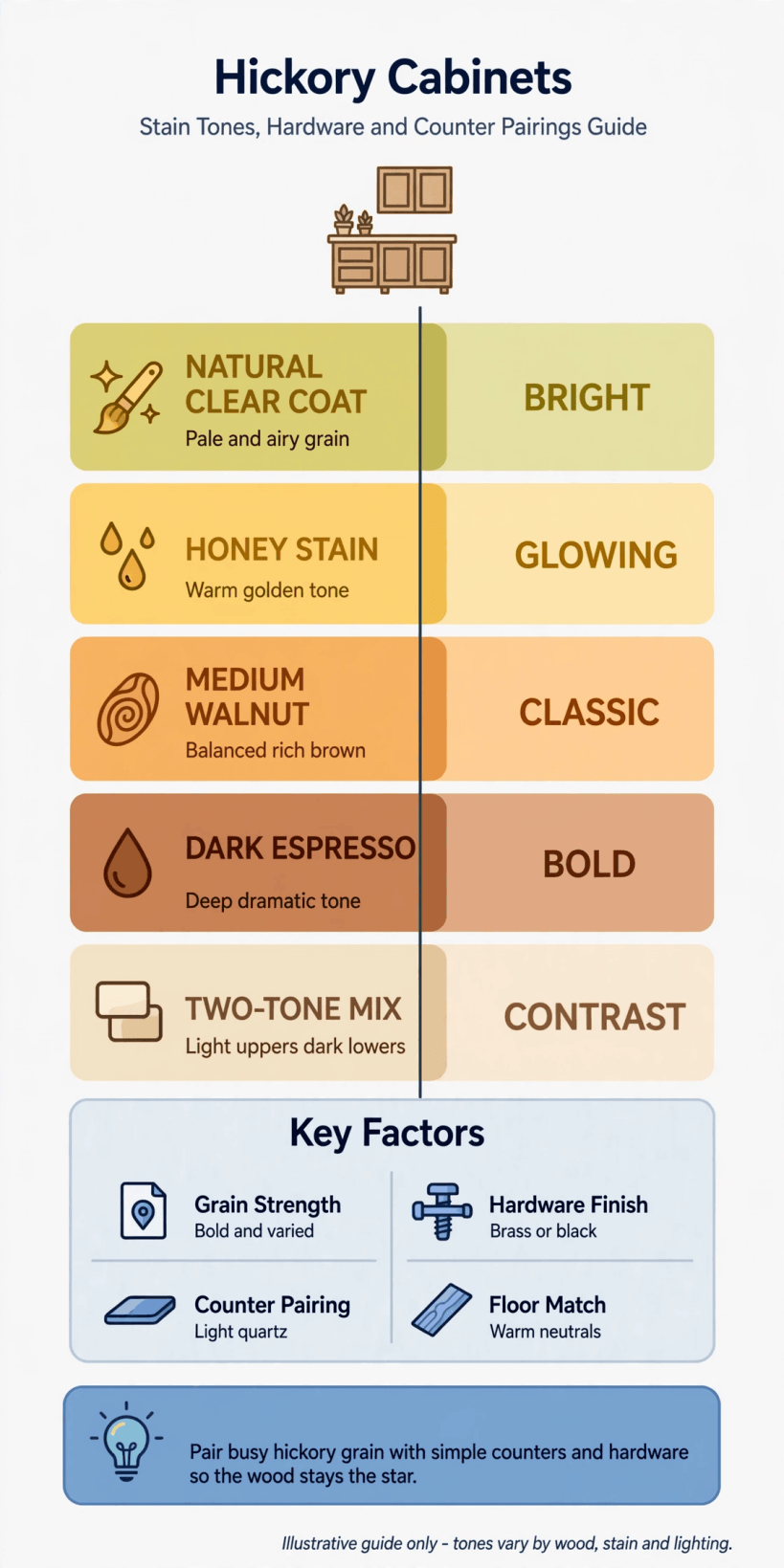
The essentials at a glance — what hickory looks like, how stains change it, and the choices that decide the final kitchen.
Hickory’s personality comes from its two-tone nature. A single door can carry ribbons of near-white sapwood alongside deep, warm heartwood, with the grain swirling between them. That contrast is the whole reason people choose this wood: it gives a kitchen movement and life that uniform timber cannot. It is also why ordering hickory blind is a mistake — the range within one kitchen can be wide, and you should see full doors, not just a palm-sized sample, before committing.
Stain is your volume control. Leave hickory natural or in the palest stains and the contrast shouts; move into mid-tones and it settles into a warm, varied backdrop; go dark and it becomes moody and sophisticated, with the grain reading as texture rather than stripes. None of these is right or wrong — but they suit different rooms, lights and tastes, which is what the following sections unpack.
2. Layouts That Let Hickory Breathe
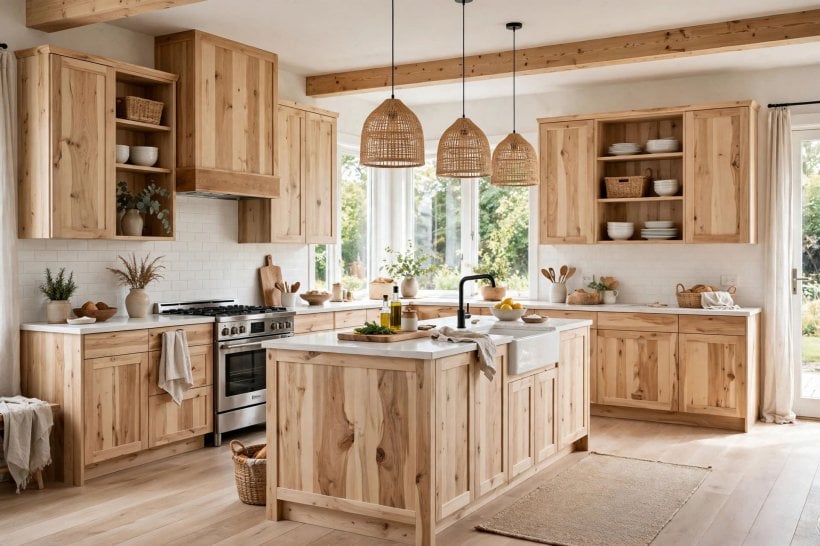
Because hickory is visually busy, layouts with long unbroken runs can overwhelm. The classic ways to give it breathing room are to break the runs: an island in a painted finish or a different material, a section of open shelving, or tall units kept to one wall so the eye rests between cabinet blocks. In an L-shaped or galley kitchen, hickory on the base cabinets with lighter painted uppers keeps the drama at worktop level and the room feeling airy above it.
Islands deserve special thought because they are the most-seen surface in the room. A hickory island under a plain worktop becomes the kitchen’s centrepiece; alternatively, a painted island with hickory around the perimeter spreads the pattern more thinly. Think about where the boldest boards will land: most makers will let you ask for the most dramatic doors on the island or a feature run, and calmer boards on long stretches — worth raising before anything is made.
In open-plan spaces, coordinate the cabinets with the room beyond rather than treating the kitchen as a sealed box. A stain that echoes a timber beam, table or floor tone a few shades away makes the whole space feel designed, and the open-plan layouts in our tiny house living room ideas show how much calmer a joined-up room feels when its woods talk to each other instead of competing.
3. Stain Colours and Finishes
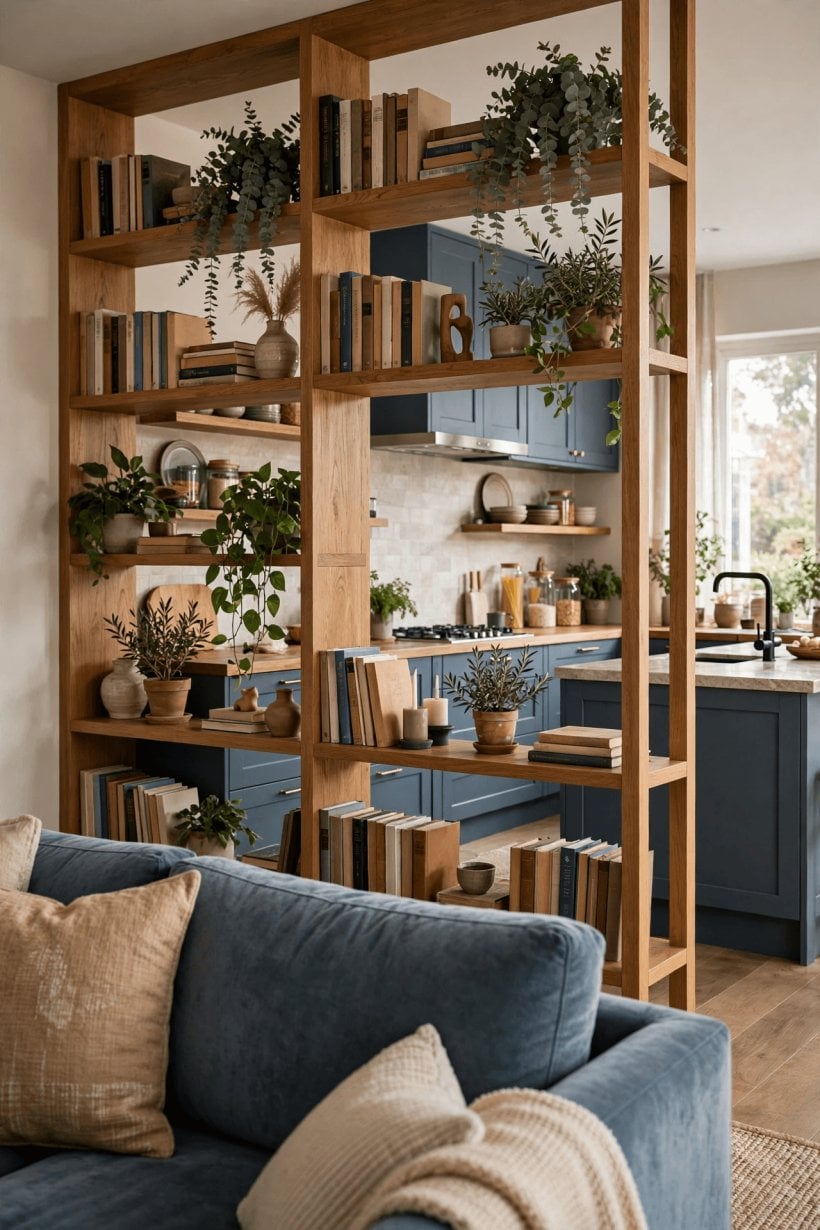
Start with clear and natural finishes, which simply protect the wood and let the sapwood-heartwood contrast speak at full volume. This is the look for farmhouse, rustic and lodge-style kitchens, and it pairs with black hardware, stone-look worktops and plenty of texture. The consideration is honesty: natural hickory will vary from door to door, and if a perfectly matched kitchen is your dream, this is not your wood-finish combination.
Light stains — pale honey, soft wheat, weathered greys with a warm base — tidy the contrast without hiding it, and suit smaller or darker kitchens that need the wood to feel light. Grey-leaning stains on hickory need a sample first: the warm heartwood can push a cool stain muddy, so judge it on the actual wood, in your own light, at different times of day. Mid-tone stains in chestnut, cinnamon and warm walnut territory are the peacemakers — they pull the two tones closer together, keep unmistakable grain, and sit comfortably with most worktops and floors.
Dark stains — espresso, deep walnut, near-black browns — make hickory feel tailored and modern, especially on flat or shaker doors with simple handles. The grain remains as a subtle texture in raking light rather than a pattern. Satin and matt sheens suit hickory best for most homes: they keep the wood looking like wood, whereas high gloss fights the rustic grain and shows every fingerprint. If you enjoy strong colour around wood, the balanced schemes in our colourful tiny house interior ideas show when to let one star perform — with hickory, let the cabinets be the star and keep walls and textiles quieter.
4. Grain, Knots and Choosing a Grade
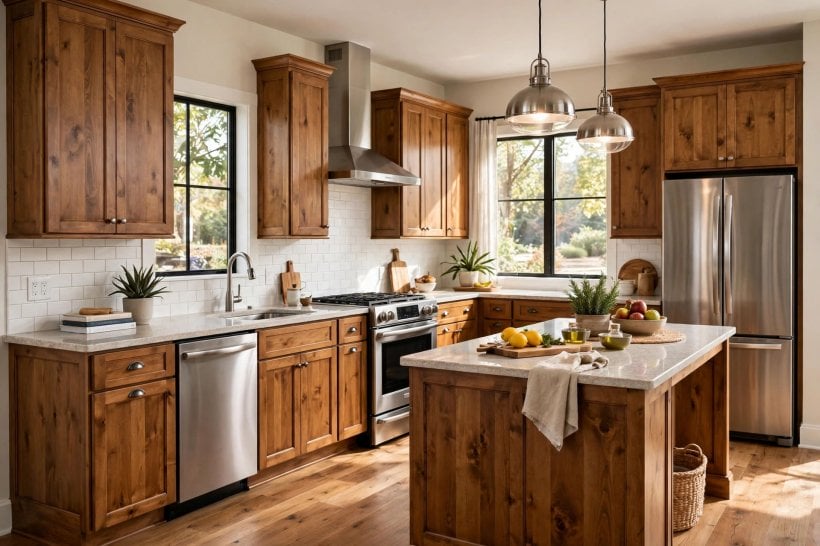
Hickory is sold in different grades, and the names vary by maker, but the idea is consistent: some selections embrace everything the tree offers — knots, streaks, sharp colour change, character marks — while others are chosen for calmer, more uniform grain and colour. Neither is better quality; they are different looks cut from the same species, and the characterful selections are often less expensive because they use more of each tree.
Choosing between them is about the whole room. A character grade in a small, plain kitchen becomes joyful rustic theatre; the same doors across a huge kitchen with patterned worktops and busy tiles can tip into visual noise. A calmer selection keeps hickory’s strength and warmth but behaves more like conventional cabinetry, pairing with more finishes. There is a middle path most good makers offer: character where you want it — island, dresser-style unit, a run of feature doors — and calmer boards elsewhere.
Whichever grade you pick, approve more than a sample chip. Ask to see several doors or a full display kitchen, and look at them in daylight and evening light. Check how the doors you will see most — the ones at eye level and around the hob — will be chosen, and agree expectations in writing with your supplier: what counts as acceptable variation is the single most common source of disappointment with this wood, and it is entirely avoidable with an honest conversation before ordering.
5. Door Styles, Construction and Hardware
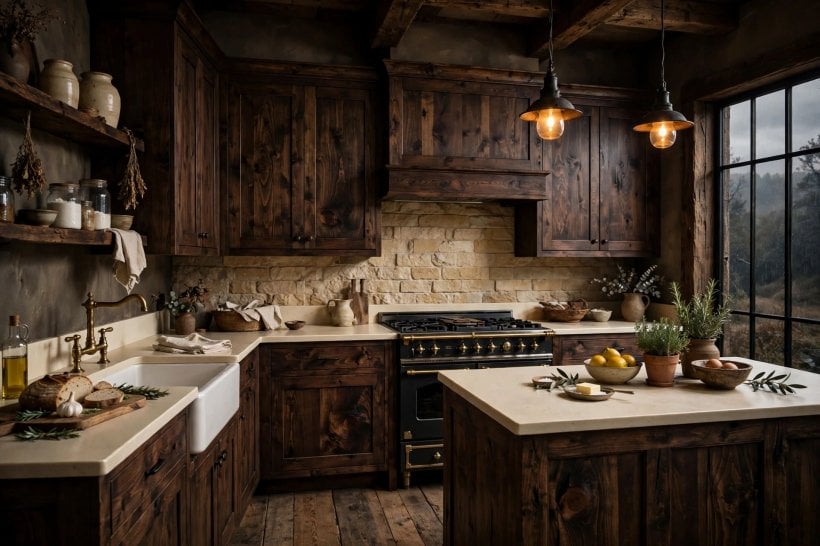
Door style changes hickory’s mood. Shaker doors are the natural partner: the simple frame contains the wild grain in neat panels and suits both rustic and transitional kitchens. Flat slab doors push hickory modern, letting long grain run uninterrupted — striking on tall units and islands, provided the boards are chosen so the pattern flows pleasantly at that scale. Raised-panel and heavily profiled doors add shadow lines on top of busy grain and can feel fussy unless the stain is darker and the kitchen traditional in spirit.
Construction matters more here than in painted kitchens because you see the timber itself. Solid-wood doors with well-matched centre panels, sturdy drawer boxes, and soft-close hardware that suits the weight of a dense hardwood all signal a kitchen built to last. Hickory’s hardness is a genuine advantage in family life — it resists the dents that softer woods collect around handles and corners — but it also means hinges and runners work hard, so hardware quality is money well spent.
Handle choice steers the style: matt black for contrast and a contemporary-rustic edge, aged brass or bronze for warmth, simple steel for a cleaner look. Keep the finish family consistent with taps and appliances. Small rooms and bathrooms using hickory vanity units follow the same rules in miniature — the compact planning in our tiny house bathroom ideas guide shows how one well-chosen material, repeated calmly, makes a small space feel expensive rather than busy.
6. Pairing Worktops, Floors and Walls
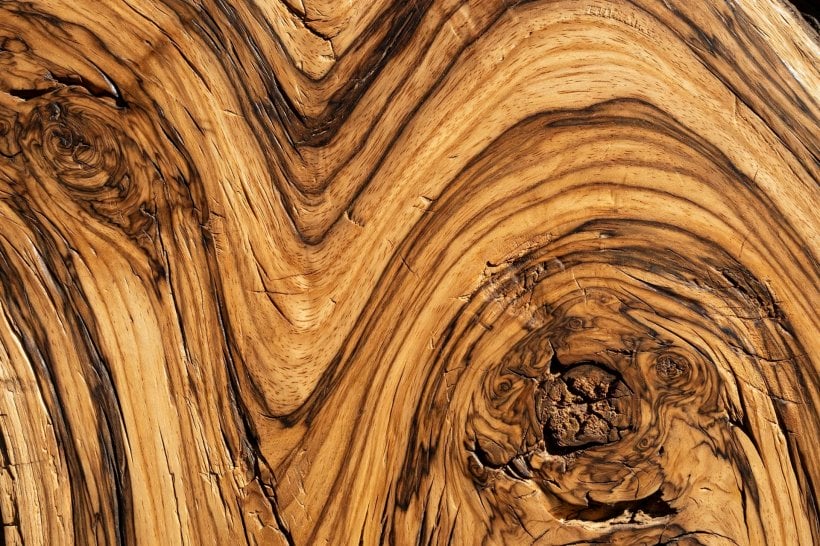
The safest partners for hickory are quiet ones. Pale worktops — soft whites, light stones, gentle greys — give the eye a rest between cabinet runs and bounce light onto the wood so its colour reads rich rather than dark. Butcher-block worktops can work, but keep their tone clearly different from the cabinets: near-matching woods blur into one mass, while a deliberate contrast looks chosen. Dark worktops with mid or light hickory create strong, handsome contrast and hide crumbs admirably; with dark-stained hickory they need good lighting to avoid a cave effect.
Floors follow the same logic of clear separation. A floor either notably lighter or notably darker than the cabinets keeps the room structured; mid-tone-on-mid-tone is where kitchens go muddy. If your floor is a strong wood already, consider painted uppers or a painted island to halve the total timber on show. Walls in warm white, soft cream or a muted colour pulled from the heartwood flatter hickory; cold blue-greys can make the wood look orange by contrast, so test paint beside a door, not on a screen.
Splashbacks are your chance to add the one pattern in the room: simple tiles in a handmade-look finish, plain stone or a sheet material in a calm colour. Save the barn-style layering for textiles and open shelves, as in our tiny barn house interior ideas, rather than competing surfaces.
7. Costs: What Really Drives the Budget
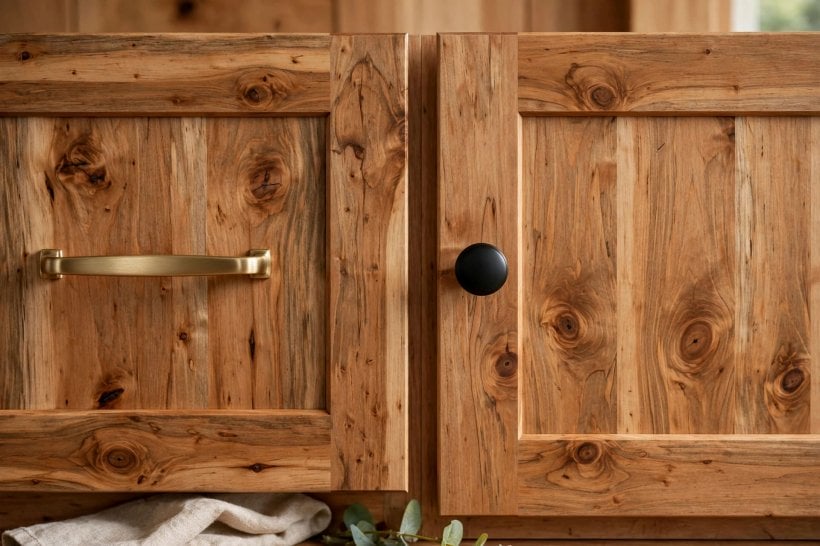
Hickory itself is usually a mid-priced cabinet wood: the tree is plentiful in North America, and the character grades that use more of each log can be gentler on the budget than highly selected timber. Where the money actually goes is the same list as any quality kitchen. Cabinet construction — framed or frameless, plywood or composite boxes, the drawer and hinge hardware — separates budget ranges from premium ones far more than the door wood does. Door style adds cost as profiles get more complex, and a multi-step stained and glazed finish costs more than a simple clear coat.
Layout complexity multiplies everything: corners, tall units, integrated appliances, islands with seating and services, and any non-standard sizes all add units, worktop area and fitting time. Installation is a major line in its own right, especially where floors need levelling, electrics move, or plumbing relocates. Handles, worktops, splashbacks and lighting complete the picture, and they are the places budgets quietly double if chosen after the cabinets are ordered — so price the whole room, not just the units.
To control the total without losing hickory’s charm, spend on the doors and hardware you touch daily, choose character-grade timber where it suits the look, keep the layout’s bones if they work, and let paint carry the island or uppers. Ask every quote to state the wood grade, the finish system and what’s included for fitting, so comparisons are like-for-like. A kitchen specified that clearly rarely produces surprises.
8. Hickory in Small Kitchens
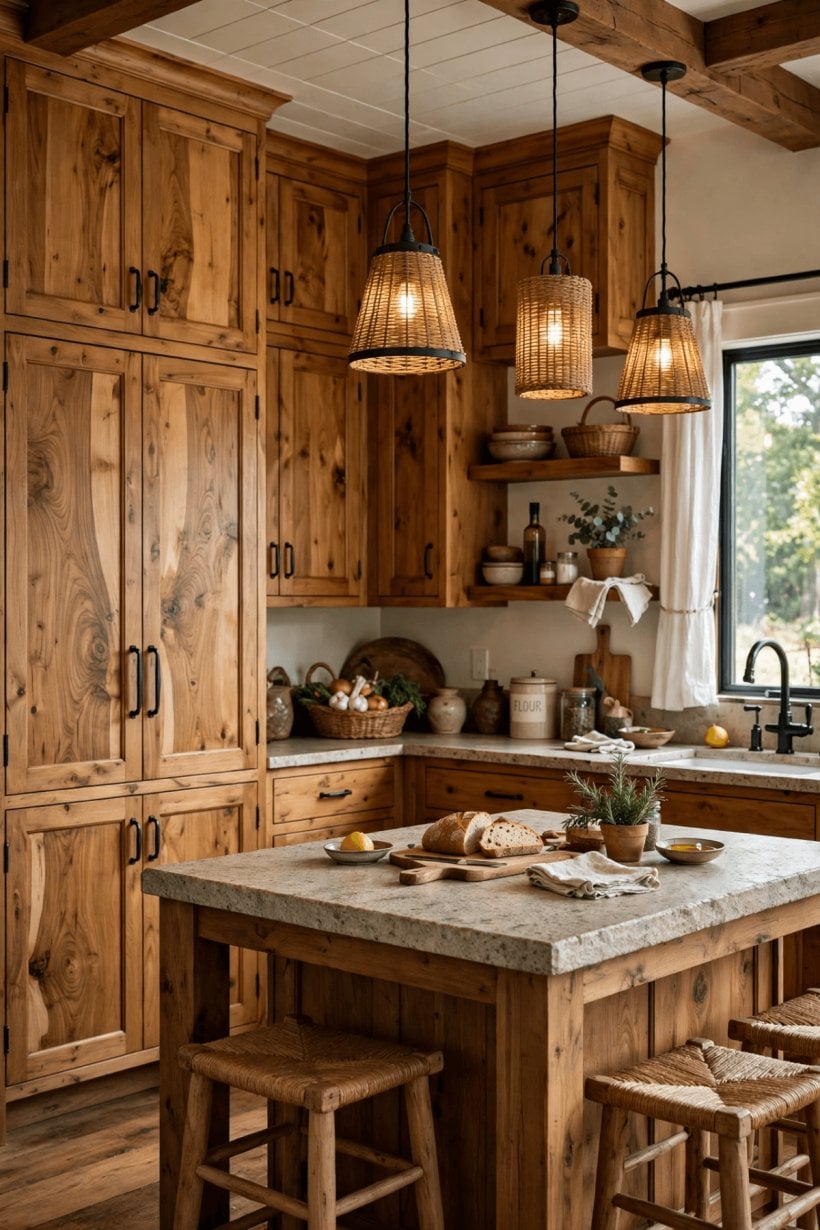
Small kitchens can absolutely carry hickory — the trick is dosage and light. Lighter stains keep the room open, and using hickory for the base cabinets only, with painted or open uppers, stops a small room feeling boxed in by pattern. If you do run hickory to the ceiling, choose calmer boards for the eye-level doors and keep worktops and walls pale and plain.
Layout discipline matters more than size. Tall units grouped on one wall, appliances integrated behind matching doors where the budget allows, and a single run of worktop kept ruthlessly clear will make a compact hickory kitchen feel calm and generous. Under-cabinet lighting earns its place twice over in small spaces: it lights the work and grazes the grain beautifully in the evening.
The small-space mindset throughout this site applies: one strong material, repeated with restraint, beats three competing ones. The same principle that shapes our tiny house bedroom ideas — choose the texture you love, then quieten everything around it — is exactly how a tiny hickory kitchen succeeds.
9. Ordering Well: Samples, Batches and Finish Protection
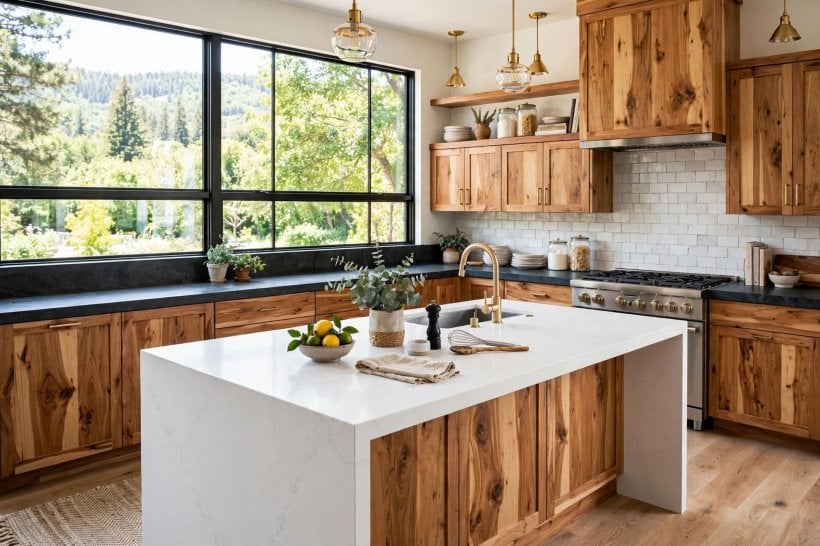
Order with your eyes open. Get the largest samples you can — ideally full doors in the intended stain — and live with them for a few days: propped against the existing kitchen, seen in morning and evening light, beside your floor and worktop samples. Hickory’s variation means one sample is a promise about a range, not a portrait of your kitchen, so ask what the full range looks like and, if possible, view an installed display in the same finish.
Ask how the maker handles colour consistency across a run: whether doors for one kitchen are selected from related boards, and whether a late extra unit ordered months later can be matched (expect honesty here — a close, sympathetic match is realistic; an invisible one on this wood usually is not). Order everything in one go where you can, including any matching end panels, plinths and a spare length for future repairs.
Finally, pin down the finish: what system is used, how many coats, and what it means for care and future touch-ups. A professionally applied, cured finish protects the stain from kitchen moisture and grease; understand whether it can be locally repaired or whether a damaged door goes back to the maker. And confirm lead times and delivery handling — dense hardwood doors are heavy, and a kitchen’s worth arriving in one delivery needs somewhere dry and flat to wait, a detail as easily forgotten here as on the bigger builds described in our how to build your own tiny house guide.
10. Care, Cleaning and Refreshing the Finish
Day-to-day care is simple: wipe spills as they happen, clean with a soft cloth and mild soapy water, dry as you go, and keep standing water away from joints, plinths and the sink run — stained wood dislikes lingering moisture at its edges more than anything else in a kitchen. Avoid steam mops directed at cabinet fronts and harsh chemicals that can cloud a finish; a microfibre cloth handles most of what a kitchen produces.
Hickory’s hardness forgives knocks, but the finish over it still ages. Handles and the areas around bins and dishwashers show wear first. Small marks can often be improved with the maker’s touch-up products — another reason to record your exact stain and finish when the kitchen is new, and to keep any spare samples. Where a door’s finish eventually tires, a professional can usually strip and refinish stained timber in a way painted cabinets cannot match, returning the door to your recorded colour.
Over the years the wood itself may deepen slightly in tone, as most natural materials do in daylight; rotating decorative items and accepting the gentle change as patina keeps it feeling like character rather than damage. Planned that way, hickory cabinets are among the longest-lived, most repairable choices you can make — a kitchen that ages with the house instead of dating against it, and one whose surrounding rooms can echo its tones as suggested in our tiny house landscaping ideas for the view through the kitchen window.
Final Considerations
Choose hickory for its personality and stain it to the volume your room can carry: natural and pale for rustic brightness, mid-tones for warmth with manners, dark for tailored calm. Break up long runs, pair it with quiet worktops and walls, agree the acceptable range of variation before ordering, and spend on construction and hardware. Do that, and hickory cabinets will reward you with a kitchen full of life that works as hard as it looks.

0 Comments