

Every pool has two halves: the water, and the shade you retreat to from it. The cabana is that second half built properly — a small, roofed room at the pool’s edge with a daybed, a curtain to pull, and nowhere else you need to be until the light goes.
This post is about cabanas specifically: their forms, roofs and furnishings, the cooking and changing jobs they can take on, and the siting and rules to check before one lands beside your pool — seventy-five ideas for the shadiest seat in the garden.
1. Pool Cabanas at a Glance
A cabana is a light poolside structure — open or curtained on at least one side, roofed against the sun, furnished for lounging and changing rather than for living. It differs from a pool house in scale and ambition: the pool house is a small building, often with plumbing, a kitchenette and a bathroom; the cabana is a room of shade, closer to a furnished pavilion. The search phrase cabana pool house blurs the two, so this post is careful about its own subject: everything here is cabana-scale — shade, lounging, changing, drinks and towels — while the substantial buildings belong to the pool house ideas survey, and the pool itself, in all its forms, to the pool ideas pillar.
What a cabana must do is simple to say and satisfying to get right: stand where the afternoon shade is wanted, open toward the water, keep its occupants dry-floored and unhurried, and look like it belongs to the garden rather than the leisure centre. The sections take those duties in order — form, shade, food, lounging, style, services, materials, and the practical checks that local rules require.
| Question | Short answer |
|---|---|
| What is a cabana, as distinct from a pool house? | A light, roofed poolside shelter for shade, lounging and changing — a furnished outdoor room, not a small building with full services |
| Where should it stand? | At the pool’s edge with a clear, dry path to the water, oriented for afternoon shade and a view back across the pool |
| What furnishing matters most? | A proper daybed or loungers, curtains or screens for changing privacy, a small table, and somewhere dry for towels |
| What must be checked before building? | Local rules on poolside structures, setbacks and fencing, plus drainage and electrical safety near water — all stated generally here, checked locally in fact |
2. Choosing the Cabana Form
1. The flat-roof pavilion
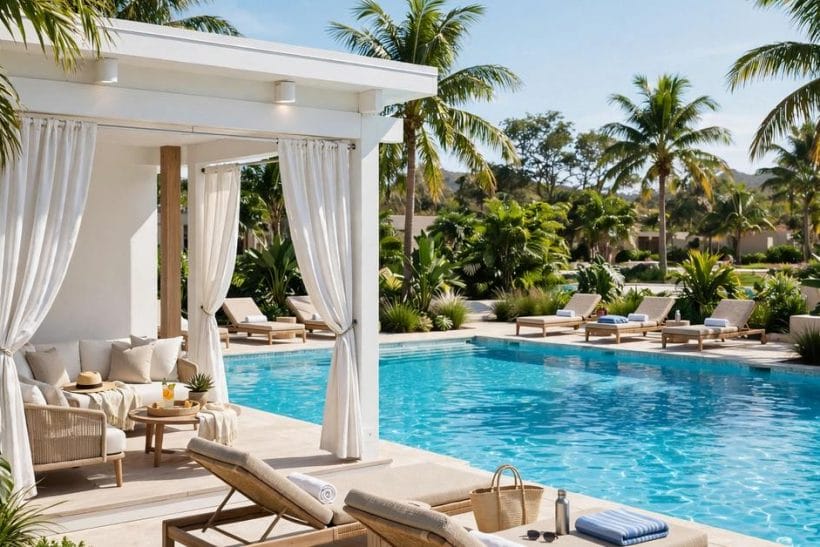
The feature image’s form — four posts, a flat or gently sloped roof, curtains at the sides — is the modern cabana archetype. It reads architectural, sits calmly beside contemporary houses, and its simplicity makes it the easiest form to furnish well.
2. The pergola cabana
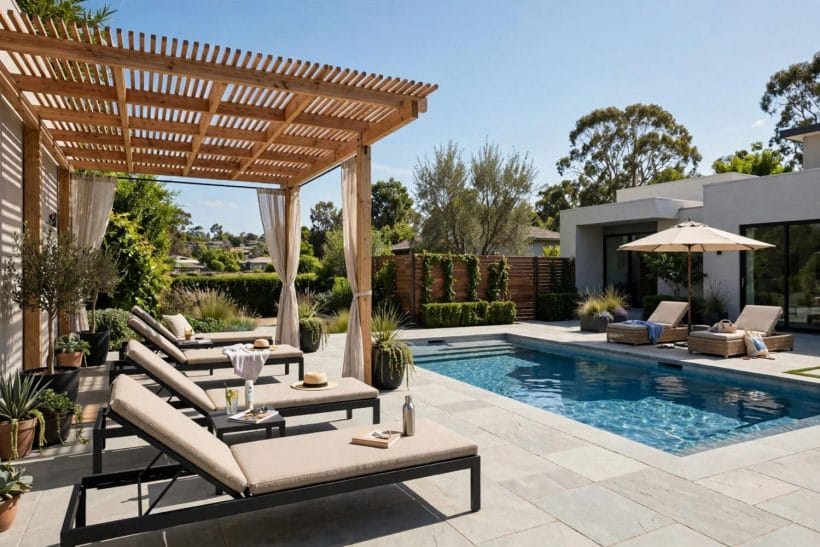
A pergola roof of open slats, as above, trades full shade for dappled light and climbing plants. Choose it where the pool already gets shade for part of the day, or add a retractable canopy so the shade can be summoned when the sun is serious.
3. The thatched cabana
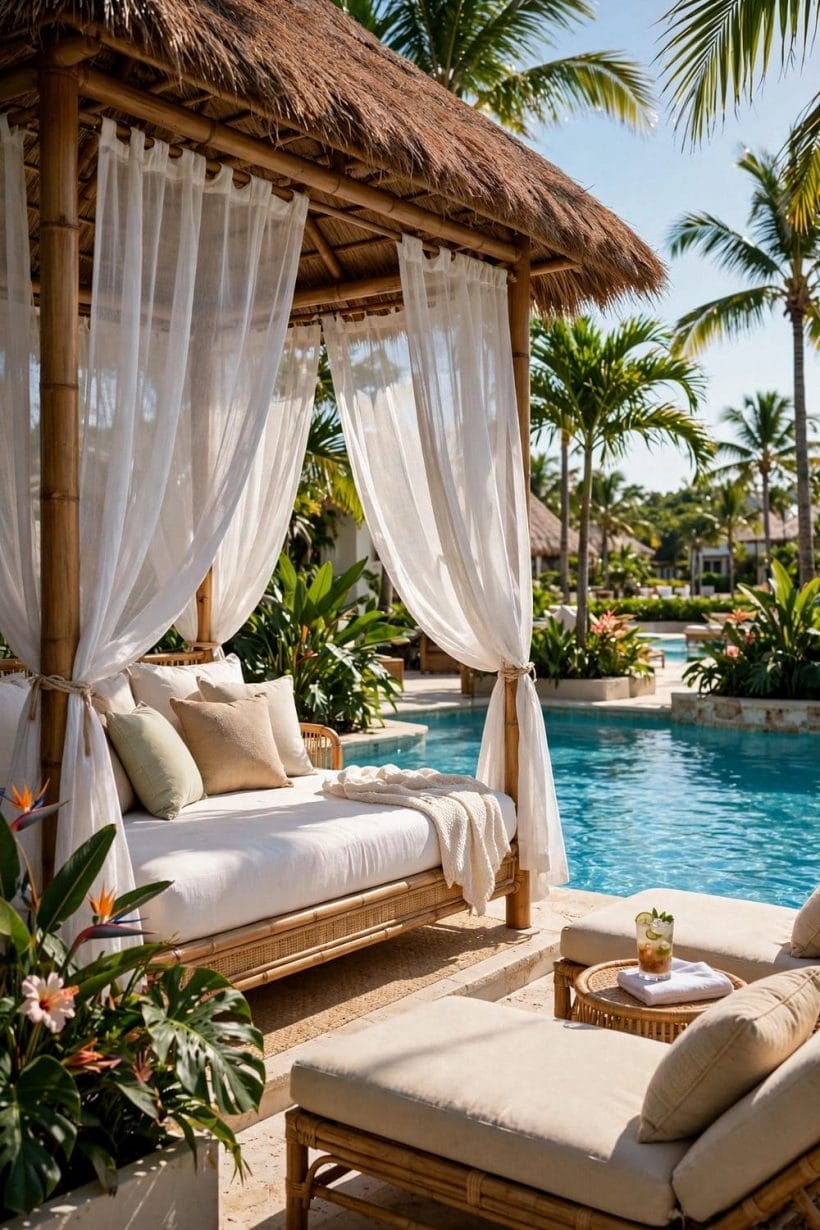
Thatch makes the cabana a destination — the garden’s holiday accent. It is the most atmospheric roof and the most demanding: a specialist material with its own fire, maintenance and local-rule considerations, to be chosen with eyes open and local advice taken.
4. The curtained daybed cabana
Some cabanas are built around a single piece of furniture: a wide daybed under a canopy, curtains all round. It is the smallest true cabana — one or two sleepers’ worth of shade — and the form hotels made famous, translated here to garden scale.
5. The enclosed changing cabana
Add walls or full screens and the cabana gains its second job: a changing room with benches, hooks and a door or curtain that truly closes. Families with heavy pool traffic feel the difference daily — no more towel-clutched dashes to the house.
6. The cabana with a bar back
A counter, shelves and a fridge turn one wall of the cabana into the poolside’s drinks station. Keep it on the cabana’s shaded side, out of the sun’s reach, and the afternoon’s refreshments stop requiring a wet-footed expedition indoors.
7. Twin cabanas
Two small cabanas — one for lounging, one for changing and storage — often sit better in a garden than one large one, and they let a pool’s social and private functions keep their distance. The pair can flank the pool or stand as neighbours at its head.
8. The cabana as the pool’s head building
Placed at the pool’s short end, a cabana closes the composition like a pavilion at the end of a vista: the view from the house reads water, then cabana, then garden. If your pool lacks a focal end, the cabana is the natural candidate.
3. Shade and Shelter: The Cabana’s First Job
9. Follow the afternoon sun
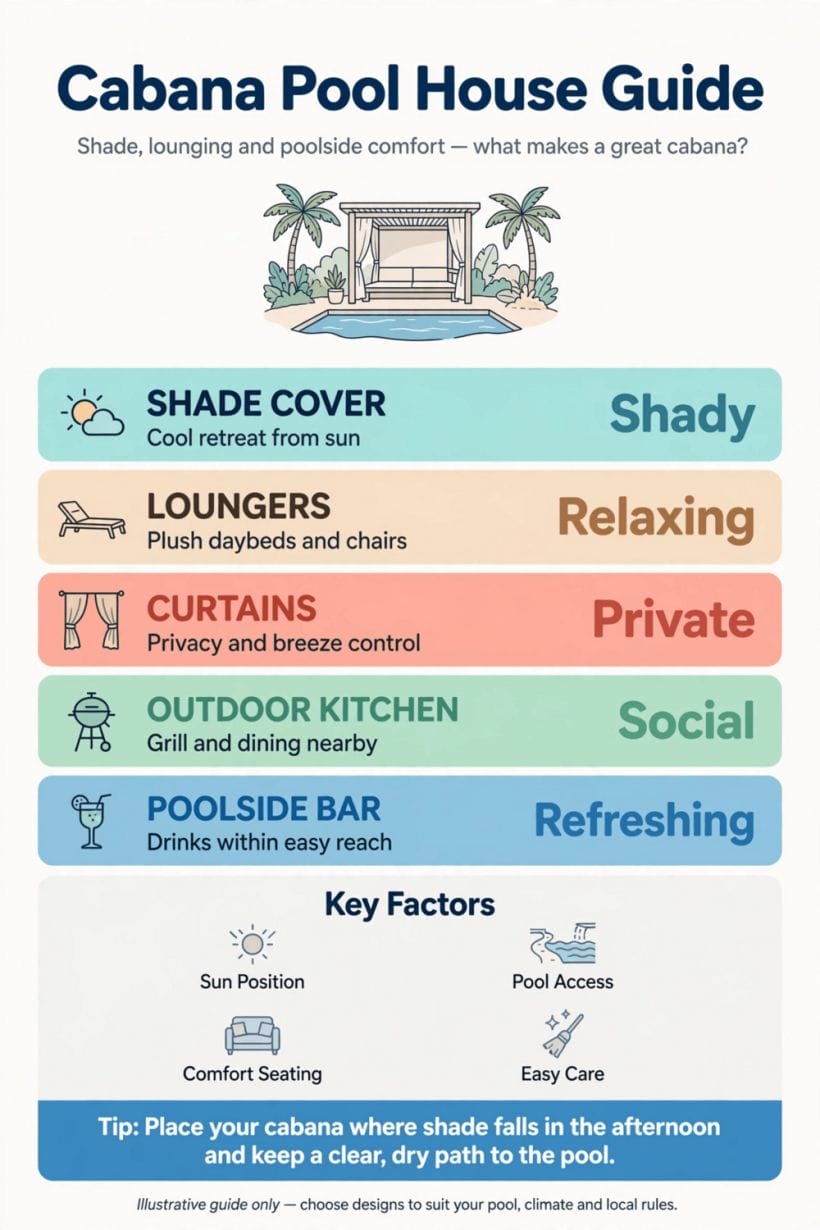
Shade is wanted most in the afternoon, so the cabana’s roof and any solid side should answer the afternoon sun’s direction on your plot. The infographic’s tip says it plainly: place the cabana where shade falls in the afternoon — observe your pool across a whole day before fixing the spot.
10. A roof that sheds weather
Even an open cabana’s roof must throw rain clear of its floor and furniture. A slight fall, a drip edge and a floor that drains are the unglamorous trio that keep cushions dry and the cabana in use through a showery summer.
11. Curtains as adjustable walls
Outdoor curtains are the cabana’s movable architecture: drawn for shade, privacy or a breeze-break; tied back for the view. Choose outdoor-rated fabric, weight the hems against flapping, and plan where the wet curtain will drip.
12. Screens and slats
Timber slats or woven screens filter light rather than blocking it, and they stand up to weather that would bully a curtain. A slatted side toward the prevailing wind gives the cabana a permanent sheltered corner.
13. Shade for the loungers outside
The cabana will cast its own shadow; arrange the free loungers to harvest it through the day. A pool terrace planned around the moving shade — cabana shadow in the afternoon, tree shadow in the morning — needs fewer umbrellas and less furniture-dragging.
14. Ventilation under the roof
A cabana can bake if its roof traps hot air: an open ridge, a raised roof plane or simple height keeps air moving. The best cabanas feel a degree cooler than the garden around them — that coolth is their whole advertisement.
15. Evening shelter
With curtains drawn and a lantern lit, the cabana extends the pool day into the evening: a dry, enclosed-feeling room while the garden cools. Swimmers changing at dusk will bless the enclosed corner more than any midday luxury.
16. Wind, honestly assessed
Pools are often in a garden’s sunniest and windiest quarter. A cabana that catches the wind becomes a sail with furniture; anchor the structure properly, choose curtain systems that can be secured, and let a local builder judge fixings for your exposure.
4. Cooking and Dining at the Cabana
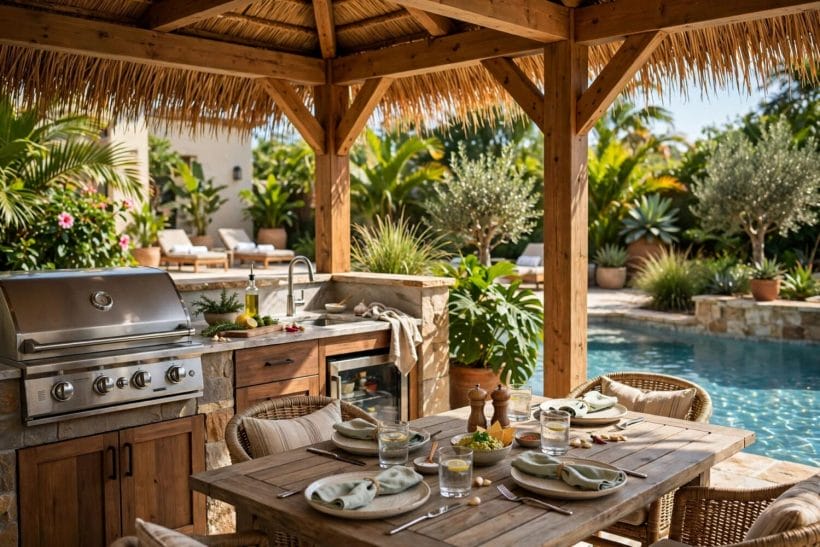
17. The outdoor kitchen corner
The cabana above carries a grill, worktop and dining table under its thatch — the full poolside lunch without a single trip indoors. Keep cooking at the cabana’s open edge, where smoke escapes, and seating between kitchen and water.
18. Heat and thatch keep distance
Grills under roofs demand respect: clearance above and around the cooking area, and particular care where the roof is thatch or timber. This is a matter for the grill maker’s guidance and local fire rules — stated generally here, obeyed specifically at home.
19. A servery between kitchen and pool
A counter facing the water lets the cook hand drinks and plates across to the swimmers’ side. It is the cabana’s most social detail — the poolside equivalent of the kitchen island — and it keeps wet feet out of the cooking zone.
20. Dining in the shade
A table under the cabana roof seats the meal in shade while the view stays sunny — the arrangement every poolside lunch wants. Size the table to the household’s ordinary gathering, not its largest party; rentals and garden tables absorb the overflow.
21. Cold storage close by
A small outdoor-rated fridge in the cabana ends the dripping trek for cold drinks. Its power supply near water is an electrician’s job under local rules — no exceptions, no extension leads across wet paving, ever.
22. Washing up, poolside style
A simple sink or even a lidded bin and a hose point keeps poolside catering tidy. Full plumbing belongs to pool-house territory; the cabana standard is a well-organised tray system between house and cabana, run with good humour.
23. Lighting the evening meal
Warm, shaded light over the table — lanterns, a pendant rated for outdoors — turns the cabana into the garden’s dining room after dark. Keep light off the water’s surface if swimmers are in it, so the pool’s own reflections stay visible.
24. Storage for the feast
A lidded bench or cupboard in the cabana holds the poolside’s tableware, so the cabana kitchen works without a daily migration of trays. Choose storage that sheds water and locks against the garden’s smaller residents.
5. Lounging: Daybeds, Curtains and Comfort
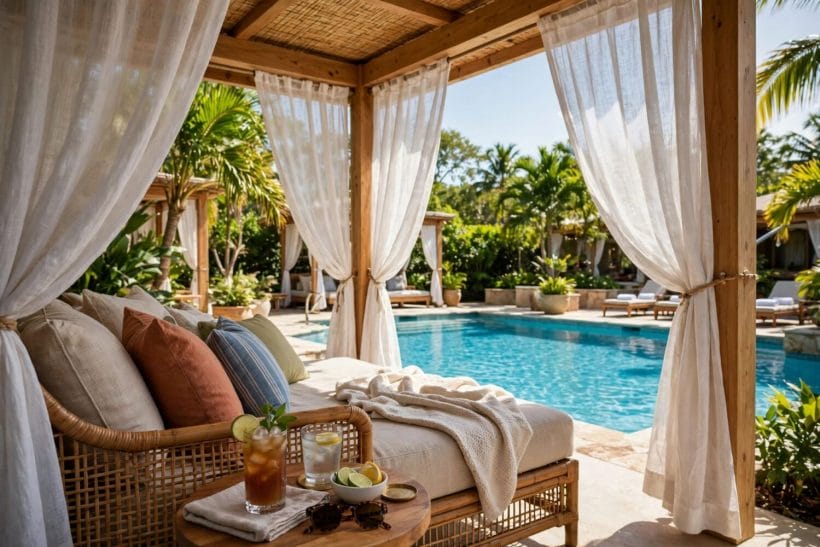
25. The daybed is the throne
Gallery three states the cabana ideal: a wide rattan daybed, cushions deep enough for an afternoon, curtains ready to draw, a drink within reach. If the budget forces a choice, spend on the daybed first — it is what the cabana is for.
26. Loungers that leave the cabana
Chairs and loungers should be light enough to migrate between cabana shade and pool-edge sun as the day moves. Furniture that needs two people and a strategy session to move will simply never be where anyone wants it.
27. Cushions in outdoor cloth
Outdoor-rated fabrics and quick-dry fillings are not marketing garnish at a pool; they are the difference between cushions that serve for years and cushions that mildew by August. Keep spare covers, and store cushions under the cabana’s driest corner or indoors overnight.
28. A side table per seat
The unglamorous law of lounging: every seat needs a surface within arm’s reach for the book, the glass and the sunglasses. A cabana short on tables is a cabana of balanced drinks and regrets.
29. Towel territory
Rails, hooks or a dedicated towel bench inside the cabana keep towels dry, sandy towels separate, and the loungers towel-free for their actual occupants. Wet towels draped on the daybed are the cabana’s commonest small failure.
30. Shade within shade
Inside the cabana, a lighter inner curtain or a woven screen lets one sleeper darken their corner while others read. Layers of shade, like layers of light indoors, are what make a space feel furnished rather than merely roofed.
31. The reading light question
Even outdoors, readers want a lamp by evening: battery lanterns with warm light are the cabana’s simple answer, kept charged in the house. Reading in a curtained cabana at dusk is the feature’s quietest luxury.
32. Colours that stay cool
Whites, naturals and pale stripes — the loungers in gallery six wear them — read cool and suit the water’s palette. Dark fabrics heat in the sun and fade unevenly; save deep colours for cushions that live in the cabana’s shade.
6. Tropical and Resort Styles at Home
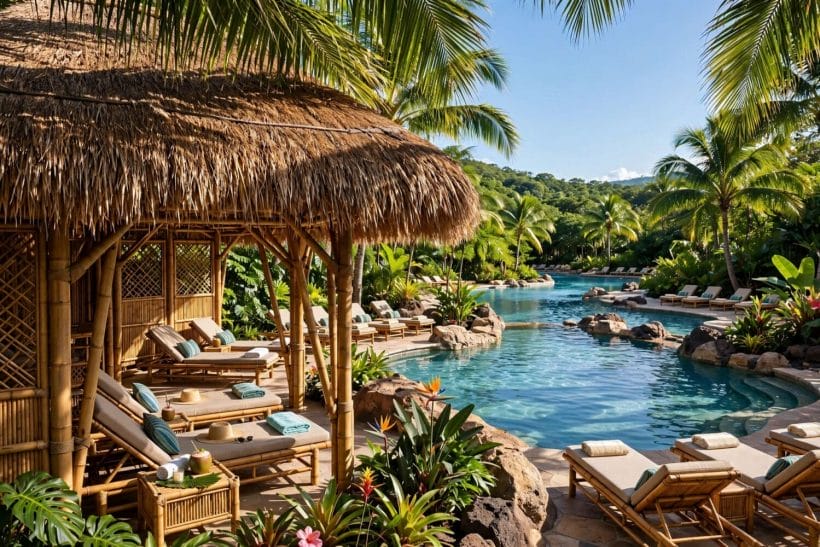
33. The tiki cabana
The thatched, bamboo-accented cabana above is the full resort quotation: lagoon pool, palms, woven furniture. At home it works best where climate and planting support the story — a tiki cabana in a grey northern garden is a costume; in a lush one, a joy.
34. Planting that sells the style
Palms, bananas, cannas and grasses around the cabana do half the tropical work. In cooler climates, hardy lookalikes and big-leafed perennials carry the effect through summer, with the cabana’s own lines staying simple.
35. Rattan, bamboo and woven textures
Woven materials are the tropical cabana’s fabric: they ventilate, they forgive water, and their texture reads as holiday at ten paces. Mix them with plain canvas cushions so the weaving, not the pattern, does the talking.
36. The resort row
A line of identical loungers before a long pool — gallery five’s arrangement at the bar — borrows the resort’s orderliness. At home, even two matching loungers and one cabana achieve the rhythm; symmetry is the style’s engine.
37. Balinese calm
A quieter tropical register: dark timber, stone, white curtains, low daybeds, and ornament kept to almost nothing. It suits households whose holiday taste runs to retreat rather than resort, and it ages the most gracefully of the tropical family.
38. Mediterranean shade
White render, terracotta, a tiled or canvas roof and blue-striped textiles — the cabana as the Mediterranean does it. It pairs with gravel, olives and lavender, and it tolerates hot, dry gardens better than any other style here.
39. Coastal cabanas
Weatherboard, driftwood tones and striped canvas give the beach-club cabana, at home beside plunge pools and in seaside gardens. The modern pool survey in this series shows the water such cabanas serve — clean-lined and architectural — while the cabana itself stays soft.
40. Modern minimal cabanas
Black or white frames, flat roofs, plain curtains: the minimal cabana is architecture first and furniture second. It is the easiest style to keep looking new, since its beauty lives in proportion rather than in perishable detail.
41. How far to take a theme
Choose one style and let the planting and textiles support it, but keep the cabana’s structure neutral enough to survive a change of taste. Themes are cheapest at cushion level and most expensive at roof level; spend accordingly.
7. The Poolside Bar and Social Cabana
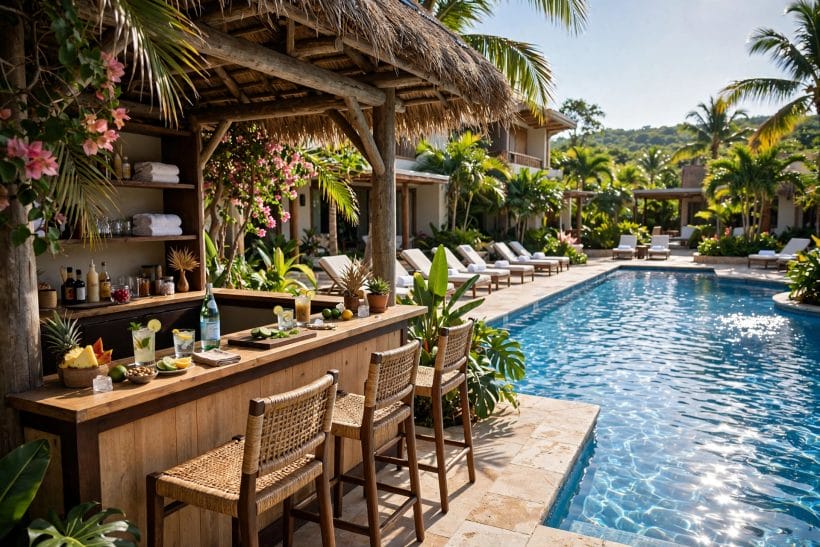
42. The bar counter
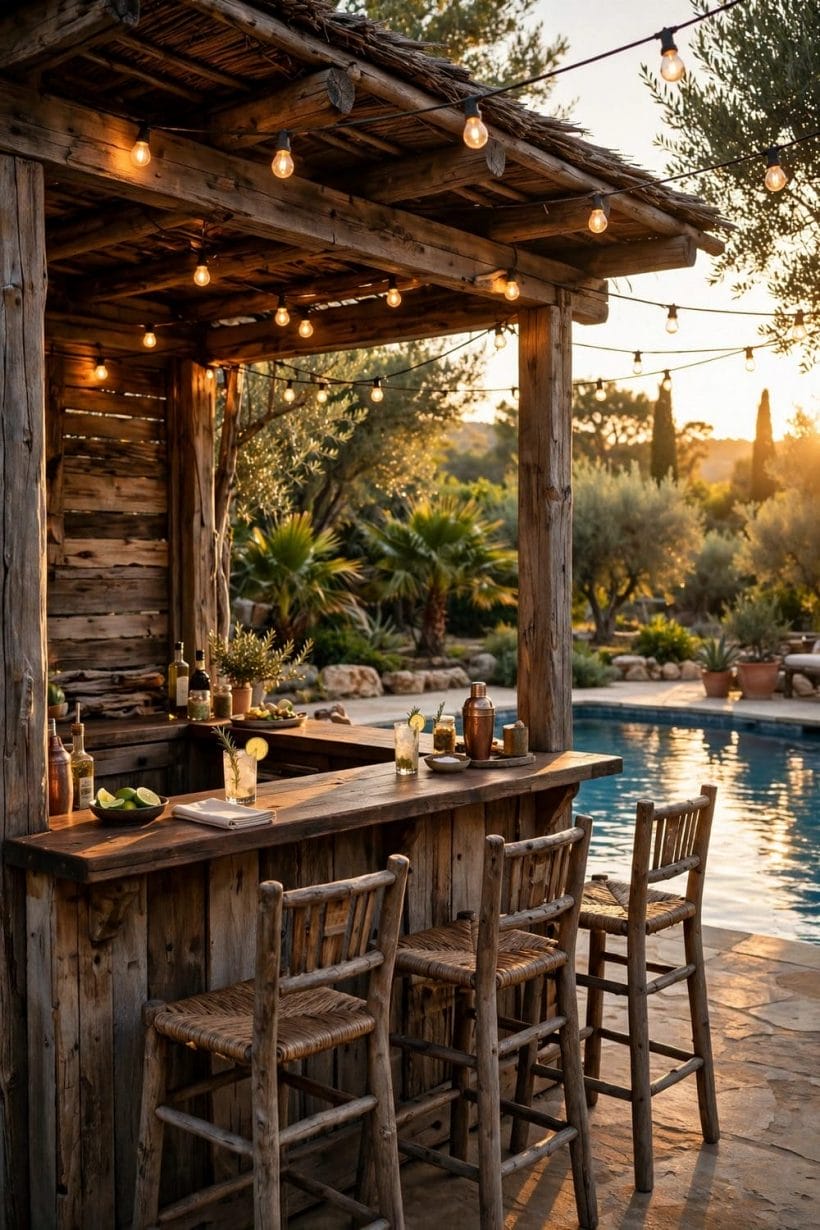
A bar along the cabana’s pool-facing side, as above, is the social engine: swimmers order from the water’s edge, the host performs from the shade. Stools on the dry side, a clear ledge on the wet side, and the afternoon organises itself.
43. Stools that survive weather
Woven, metal or hardwood stools with no upholstery to soak are the bar’s honest seating. Store the cushions, if any, with the daybed’s — one storage habit for the whole cabana keeps it kept.
44. Shelves and shade for bottles
Drinks live best out of direct sun: a shaded back shelf or a lidded box keeps them cool and the bar tidy. Glass near pools argues for care — many households keep poolside drinking to unbreakable ware as a house rule, and it is a wise one.
45. Music and speakers
Outdoor-rated speakers placed in the cabana, aimed at the pool and away from neighbours, keep sound where the party is. Volume courtesy is a local-rules matter in spirit everywhere: the cabana should entertain its own garden first.
46. Games and the long afternoon
A shelf for cards, a lawn game stored in the storage bench, a hook for the pool volleyball net: the cabana as games cupboard is what turns a swim into an afternoon. Small provisions, disproportionate returns.
47. The cabana at a party
For gatherings, the cabana becomes the bar, the shade station and the grandparents’ grandstand in one. Clear its daybed to seating, set the servery, and let the pool do the entertaining; the cabana’s job is comfort infrastructure.
48. Evening drinks by the water
Lanterns on the bar, curtains half-drawn, the pool lit from within: the cabana’s finest hour is arguably after swimming ends. Design the lighting for this hour as deliberately as the shade for noon.
49. Keeping the bar cabana honest
A bar cabana can sprawl in ambition — sinks, ice machines, televisions. Each service drags plumbing, power and maintenance behind it, toward pool-house territory and pool-house budgets. Add services one at a time, living with each before the next.
8. Changing Space, Storage and Showers
50. A changing corner that works
Benches at sitting height, hooks at two heights, a curtain or door that closes fully, and a dry patch of floor: that is the whole specification, and households feel its absence every swim. Put the changing corner at the cabana’s most private side.
51. The outdoor shower
A simple cold-water shower beside the cabana — for the pre-swim rinse and the post-swim wash-down — is the cabana family’s most practical upgrade. Its drainage and supply are plumber’s work under local rules; the shower itself can be as simple as a post, a head and a duckboard.
52. Storage for the pool’s clutter
Inflatables, noodles, floats and toys need a home that is not the cabana’s floor: a ventilated storage section or an adjacent deck box keeps the lounge a lounge. Size the storage honestly — pool clutter breeds.
53. Chemical and equipment separation
Pool chemicals and equipment belong in their own ventilated, lockable store, never in the lounging cabana — a plain safety separation, kept without exception, and one more reason the cabana’s storage should be planned in zones.
54. Hooks, rails and benches
The cabana’s small joinery decides its daily success: enough hooks that towels never compete, a bench that seats a changing child and holds a bag, a rail for wet costumes. Count your household’s swimmers and double the hooks; it will still feel exact.
55. A mirror and a shelf
One mirror and one small shelf turn the changing corner into a dressing space — sunscreen applied properly, hair rescued before lunch. Use a mirror rated for outdoor or bathroom conditions; indoor mirrors cloud and spot by the water.
56. Flooring for wet feet
Inside the cabana, flooring must forgive water: decking with gaps, stone, or outdoor matting that lifts to dry. Whatever the surface, it should not turn slick when wet — test with wet feet before committing, and keep a dry path of it to the pool, as the infographic advises.
57. The guest towel system
A basket of rolled towels in the cabana makes the household a gracious host without a thought. Pair it with a laundry basket for the used ones, and the system runs itself between swims. For how the wider outdoor rooms connect, the ground level deck ideas in this series cover the terraces cabanas so often stand on.
9. Materials, Flooring and Weather Care
58. Timber frames
Timber is the cabana’s friendliest structure: warm, repairable, and at home in gardens. Use durable or treated timber where weather and splash reach, oil or stain it on a rhythm, and it will silver or glow according to your care.
59. Metal frames
Powder-coated aluminium or steel gives slim lines and long service with little upkeep — the minimal cabana’s skeleton. Check fixings and joints seasonally; metal fails at connections long before it fails in members.
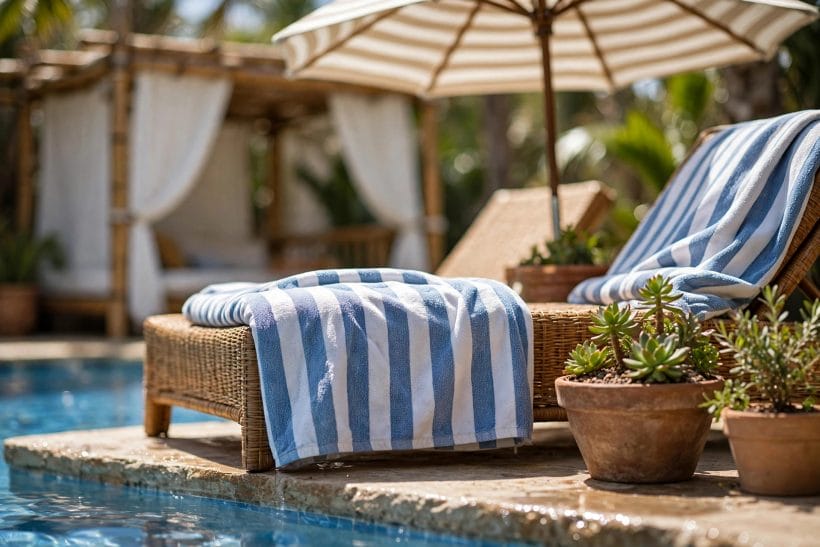
60. Wicker and rattan, real and woven-resin
The lounger above shows woven furniture’s appeal: light, textured, quick to move. Outdoor woven-resin pieces shrug off pool water that would tire natural rattan; natural fibres belong under the cabana’s roof, in its driest shade.
61. Canvas and outdoor fabrics
Solution-dyed outdoor canvas is the curtain and canopy standard: it resists sun and splash and can be hosed down. Keep a winter plan for all fabrics — cleaned, dried and stored — and they will open each season like new.
62. Roof coverings
Canvas, metal sheet, shingles, thatch, tiles: each roof sets the cabana’s style, weight and maintenance. The structure must be specified for the covering’s weight and wind behaviour — a builder’s calculation, not a guess, especially for heavy or sail-like roofs.
63. Bases and fixing down
Cabanas sit on paving, decking or their own small base, and they must be fixed against wind uplift, which poolside gusts take seriously. The base is also where levels and drainage are decided; get it right and everything above it is easy.
64. Winter care
In cold or stormy seasons: fabrics in, curtains down or secured, furniture stacked under the roof or stored, water features drained per their makers’ guidance. An hour’s winterising is the cabana’s insurance premium, paid in time.
65. Salt and chlorine air
Pool water and coastal air corrode and fade: rinse metal fittings, expect fabrics to work harder, and choose fixings rated for the environment. The cabana nearest the water lives the hardest life in the garden; specify it so.
66. Repair in kind
A cabana’s parts are replaceable one by one — a curtain panel, a roof section, a lounger strap. Keep the makers’ names and fabric references in the house file, and mid-life repairs stay simple refreshes rather than archaeology.
10. Siting, Rules and Practical Checks
67. Setbacks and local rules
Poolside structures commonly fall under local rules about distance from boundaries, height, and the pool’s own safety fencing — specifics vary by place and are checked locally before building, never assumed. A cabana inside the pool fence and one outside it can be treated very differently.
68. The clear, dry path
Between cabana and water, keep a path that drains, grips and stays clear of furniture legs and planter trips. It is the route every wet, sleepy, towel-wrapped journey takes; its safety is the siting decision that matters most daily.
69. Sightlines to the water
Seat the cabana so adults lounging in it can see the whole pool — supervision from the daybed is the cabana’s unwritten function in family gardens. If planting or the cabana’s own walls block the view, rearrange before you plant another thing.
70. Electricity near water
Any power at the cabana — lights, a fridge, speakers — is designed and installed by a qualified electrician under the local rules for water-adjacent work. This post states the principle generally and firmly: it is not a DIY topic, and no aesthetic goal outranks it.
71. Drainage of the cabana floor
Splash, rain and shower water must have somewhere to go that is not the cabana’s floor or the garden’s flowerbeds. Falls in the paving, a drain point, and a base detailed to shed water outward are decided at build time, cheaply — and are miserable to retrofit.
72. Neighbours and privacy
A cabana’s height and roofline can overlook or shade a neighbour’s garden; its curtains can also give your own pool the privacy that makes it used. Site with both in view, and discuss with neighbours where the structure is prominent — goodwill is a planning material.
73. Sun, wind and the pool’s microclimate
Pools collect a garden’s weather in one place: reflected glare off the water, wind funnelled by fences. Spend time at the pool across times and days before fixing the cabana — the dock decorations post treats the same waterside judgement for a different shore, and the lesson transfers: water changes every rule of thumb a little.
74. The cabana and the wider garden plan
A cabana is a garden building, and it asks the garden’s questions: what does it terminate, what does it hide, what path serves it, what is planted at its feet. The small sunroom ideas in this series treat the cabana’s glazed cousin — a garden room of glass — and the two share a planning grammar of light, shade and retreat.
75. Start with shade, add slowly
The wisest cabana sequence is a good structure and a great daybed first; curtains, bar and shower as the seasons teach you what your household actually uses. A cabana grown by use fits like a glove; one built all at once often fits like a showroom.
Final Considerations
The cabana is a modest building with an immodest effect: it turns a pool from a place you visit into a place you live beside. Shade at the right hour, a daybed that fits the afternoon, a curtain for changing, a dry path to the water — the seventy-five ideas above are those few duties, furnished properly.
It stays in its lane throughout: cabanas at cabana scale, with the pool houses and pools themselves surveyed in the posts linked at the start. Begin with the afternoon sun and a chair placed where the cabana might stand — sit there at four o’clock, and the site will tell you the rest.


0 Comments