
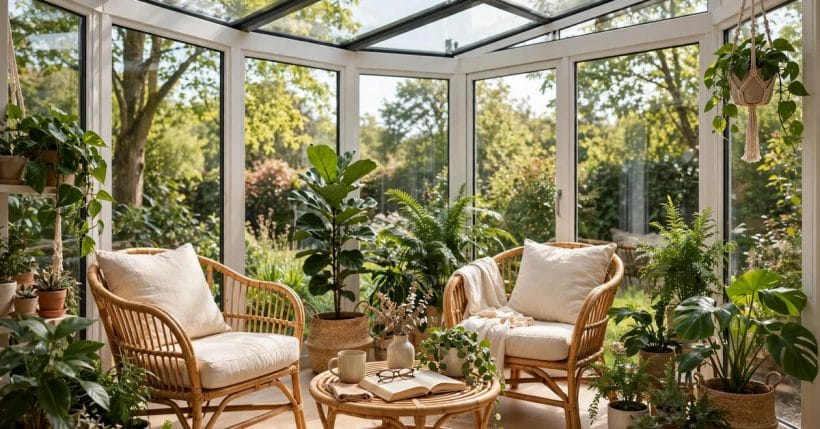
A small sunroom earns its place out of all proportion to its size. It is the brightest seat in the house on a winter morning, the warmest corner on a spring evening, and the room where plants, books and people all seem to thrive at once.
These seventy-five ideas are for sunrooms and sun porches on the modest side — lean-tos, corner glass rooms, enclosed porches and small conservatory-style additions.
1. Small Sunroom Ideas at a Glance
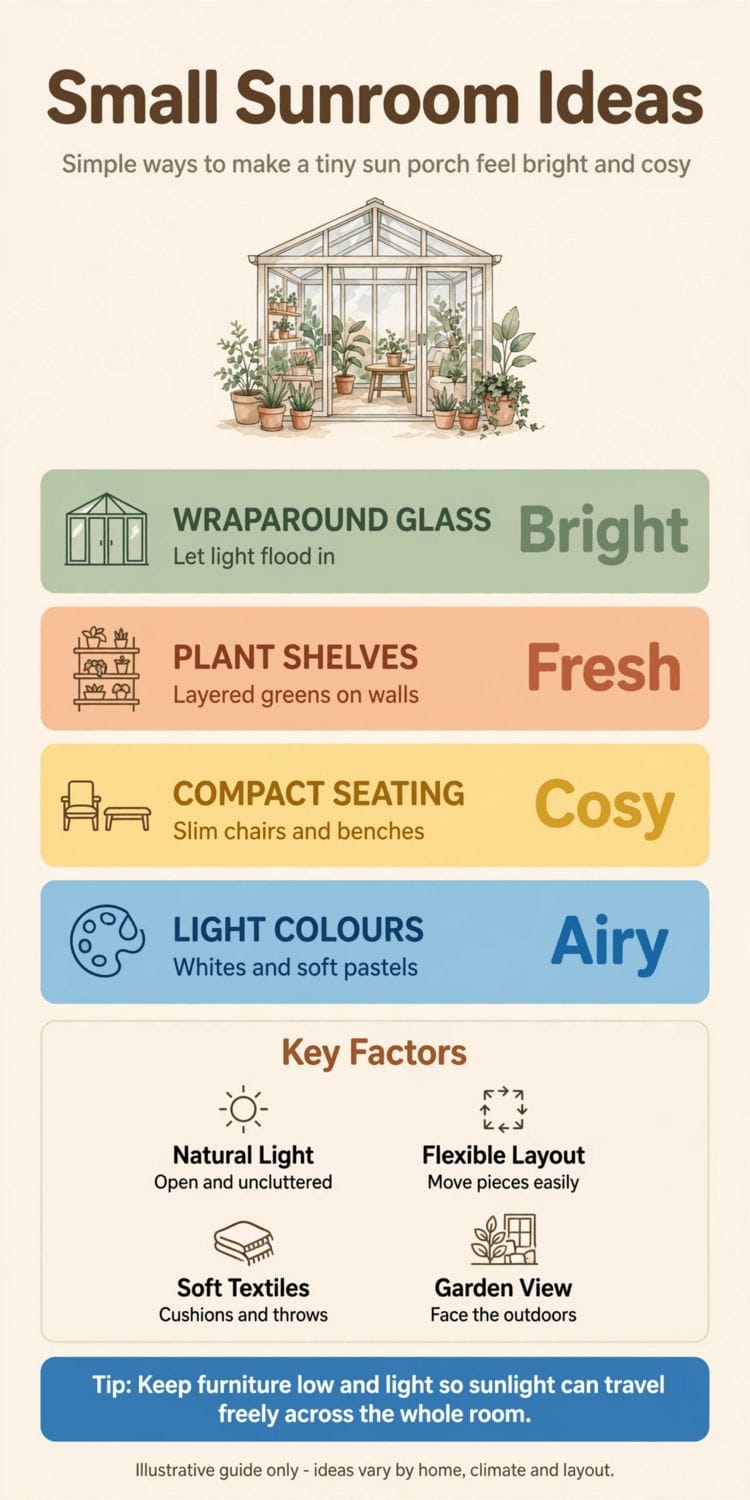
A small sunroom is a bargain between glass and comfort. Glass gives the light and the view; comfort decides whether anyone stays.
The sections that follow move in the order a room comes together: the glass and framing first, then the layout of a small footprint, seating, plants and colour, floors and comfort through the seasons, and finally the corners — desk, dining, reading — that give a sunroom its daily jobs. Splits worth stating plainly: this post is the small sunroom itself; the wider family lives in our sunroom ideas survey, and the open-air cousins are the porch ideas and screened-in porch ideas posts.
| Question | Short answer |
|---|---|
| What matters most in a small sunroom? | Scale — low, light furniture and clear floor in the middle keep a small glass room feeling generous |
| How do I stop it boiling in summer? | Shade the glass (blinds, exterior shade or planting), open vents or windows on opposite sides, and choose plants that thrive in the heat |
| Can it be used in winter? | Often, yes — with decent glazing, a rug, layered textiles and a heat source sized by a local professional; treat three-season use as the honest baseline |
| What is the cheapest transformation? | Light colour, one comfortable seat facing the garden, and plants at three heights — shelf, floor and hanging |
2. Glass and Framing: The Room’s Skeleton
1. Glass on two sides minimum
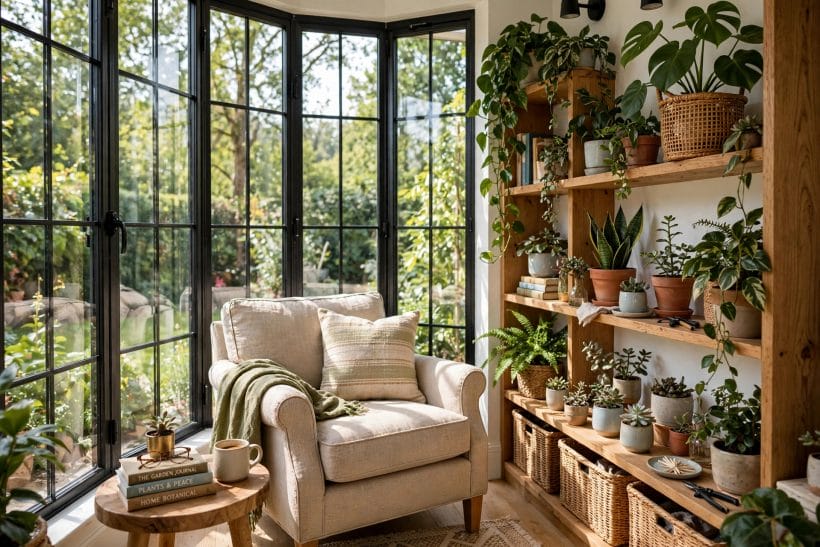
A sunroom lit from one side only feels like a corridor. Glass on two faces — or one face plus a glazed roof — wraps the light around the room and kills the dark back wall.
2. A glazed roof for a deep plan
Where the room runs deep against the house, roof glass does what wall glass cannot: it drops daylight into the middle. Even a modest glazed section overhead transforms the back of the room from shade to the sunniest seat in the house.
3. Frames in a colour that recedes
Frame colour changes how big the room feels. Pale frames blur into the light; dark frames draw the garden’s outlines like a picture frame and suit modern houses. Either works — what fails is a mid-tone that competes with both. Decide by the view, not the brochure.
4. Low sills where you sit
Seated eye level is the sunroom’s natural horizon. Glass that runs low beside the seating keeps the garden in view from the chair rather than from a standing position only. Where structure or privacy forbids it, a raised planter inside the glass restores the green at seated height.
5. Doors that open the room to the garden
French doors, sliders or a single wide door: the opening to the garden decides how the room behaves in summer. On small porches, a door that slides or folds steals less floor than one that swings through the seating, and a level threshold keeps the flow easy.
6. Ventilation you can reach
Opening windows or roof vents, reachable without climbing, are what make a glass room habitable in warm weather. Cross-ventilation — openings on two sides — moves air through; a single opener mostly moves the thermometer. Check what opens before you fall for what shines.
7. Privacy glass only where it is needed
Frosted or screened glass belongs on the neighbour’s side, at the height eyes actually pass. Keep the rest clear and the room stays bright; frost the whole envelope and you have built a pleasant cupboard. Planting outside the glass can do the same job more softly.
8. A solid corner for the tall things
One short stretch of solid wall or a corner column gives the room somewhere for a shelf, a standard lamp or tall plants to stand against. All-glass rooms look limitless in photographs and leave nowhere to put anything in life; a single anchored corner fixes it.
3. Layouts for a Small Footprint
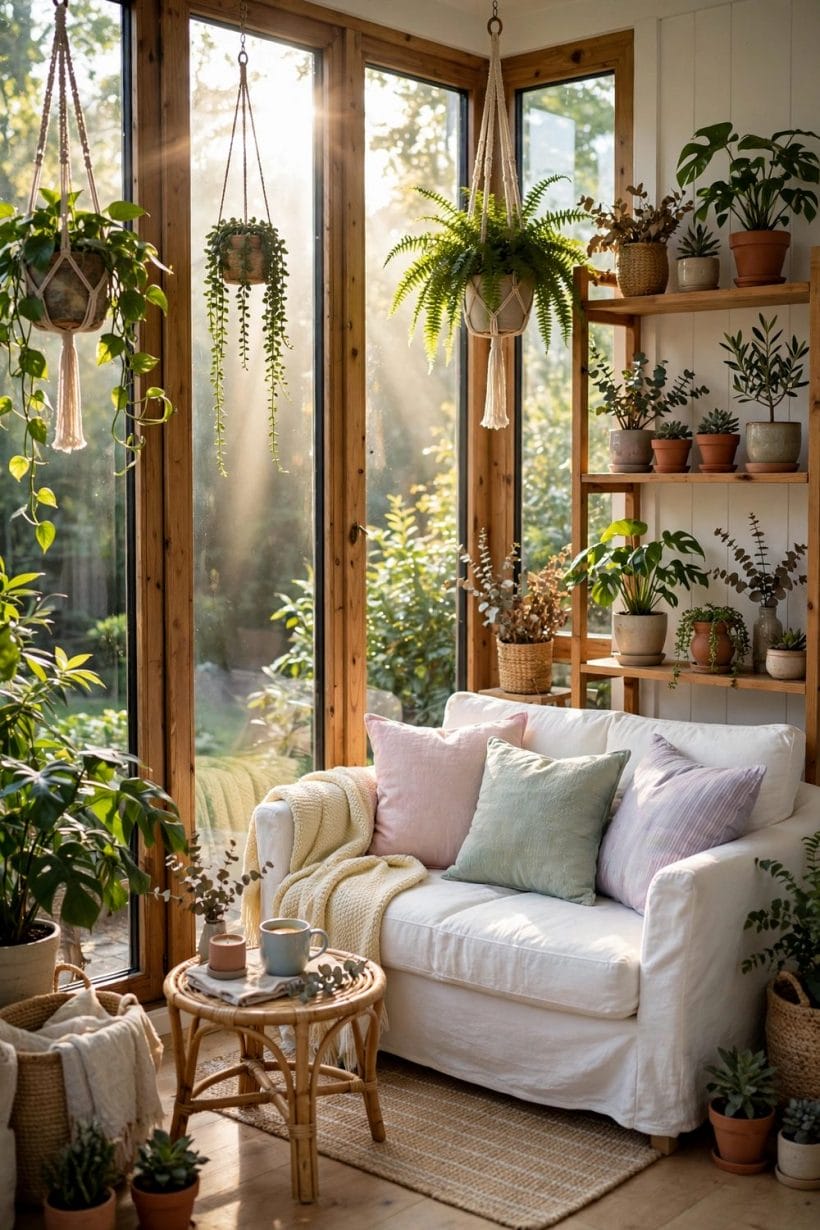
9. Seats facing the garden, not each other
In a view room, the view is the company. Angle the main seats outward toward the garden and the room feels twice as wide; a inward-facing pair of sofas turns the glass into wallpaper. Conversation still happens — shoulders turn more easily than rooms do.
10. The perimeter plan
Keep furniture against the glass and the middle clear. A small sunroom arranged around its edges — bench here, chair there, table in the corner — keeps a dance floor of light in the centre and never feels cluttered, even fully furnished.
11. A bench along the house wall
The wall against the house is the room’s one warm, shaded edge — ideal for a built-in or freestanding bench with storage inside. It seats two or three without a single chair leg in the traffic path, and cushions along it become the room’s colour story.
12. The diagonal trick
One piece placed on the diagonal — usually the rug or a daybed — lengthens a boxy little room by drawing the eye corner to corner. Use it once; a whole room of diagonal furniture looks like an accident rather than a decision.
13. A clear path from house door to garden door
Sunrooms often sit between the kitchen and the garden, and the through-route must survive furnishing. Keep a straight, uncluttered lane between the two doors; everything else arranges itself around that line, and the room never fights the house’s daily traffic.
14. The corner for the tall plant
Every small sunroom deserves one statuesque plant in its brightest corner — it is the room’s tree. Giving it the corner, rather than lining plants along the glass, keeps the view open and the composition calm: one hero, then layers, as the next sections develop.
15. Zones by rug, not by furniture
In a footprint too small for separate groupings, a rug defines the sitting zone and bare floor defines the rest — plants, a desk, the door swing. Zoning by textile keeps the room flexible: roll the rug and the whole room rearranges in an afternoon.
16. Leave the glass its breathing room
Furniture pushed hard against glass traps heat, marks the panes and blocks cleaning. A hand’s breadth of air behind seats and shelves keeps the room fresher and the glass clearer — a small discipline with an outsized effect on how cared-for the space feels.
4. Seating That Fits a Small Glass Room
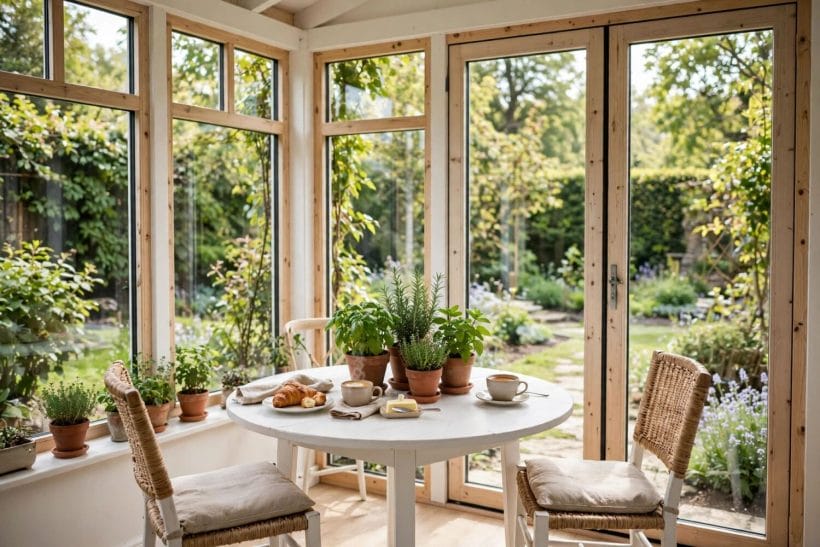
17. Rattan and cane for visual lightness
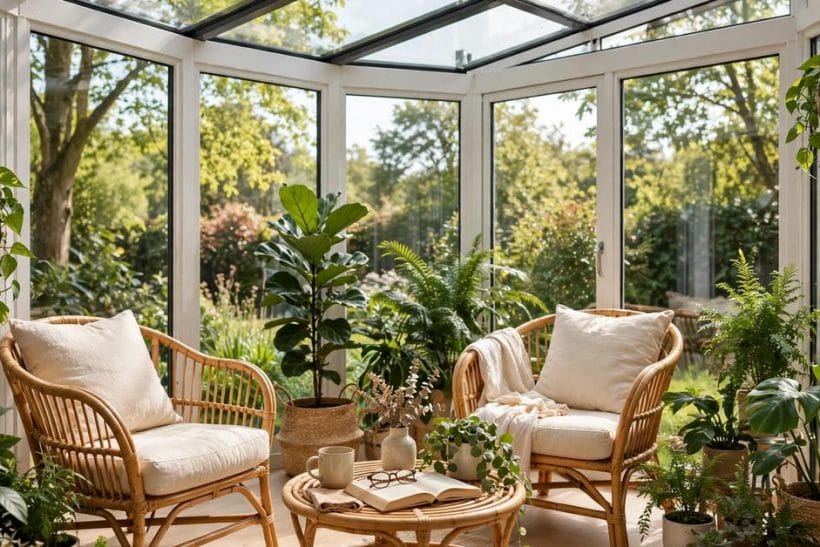
Woven seats let light and air pass through them, so they occupy a small room gently. A pair of cane armchairs with loose cushions gives a sunroom its classic ease and can be lifted aside by one person when the room changes jobs.
18. A daybed for the horizontal hours
If one piece earns a cult in sunrooms, it is the daybed: seat by day, nap platform by afternoon, guest bed in a pinch. In a small room, place it along the house wall where its length helps rather than blocks, and dress it in washable layers.
19. Chairs with arms low and legs visible
Skirted, blocky furniture swallows small rooms. Chairs that show their legs and keep arms below the sill line let the eye travel under and through, which is the whole secret of small-space furnishing — in glass rooms and modern family room ideas alike.
20. A folding chair or two in reserve
Guests arrive in bunches even in small houses. Two decent folding or stacking chairs, stored flat against the solid corner, turn the sunroom into a tea room for six without permanently furnishing it for six.
21. The window seat with storage
A seat built or placed along the low glass, with a hinged top or baskets beneath, is seating, storage and plant shelf in one footprint. It is the single most efficient furnishing a small sunroom can own, and the cat will claim it by the second day.
22. A small round table
Round tables seat conversation without corners to bruise shins in a tight room, and a pedestal base lets chairs tuck close. Breakfast for two, laptop for one, board game for four at a push — the hardest-working shape a small sun porch can hold.
23. Cushions as the colour budget
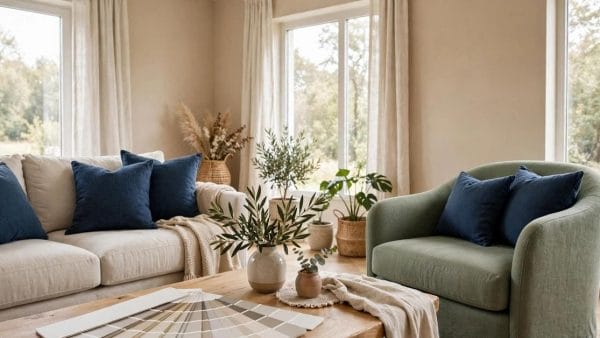
In a room where walls are glass, textiles carry the colour. Spend the decoration budget on cushion covers and throws that can change with the seasons — rust and wool in autumn, linen and stripes for summer — and keep the furniture itself quiet.
24. One seat that is truly comfortable
Resist furnishing entirely with occasional chairs. A small sunroom needs one deep, selfish, read-for-an-hour seat, claimed daily; the rest can be lighter. Comfort is what converts a pretty glass box into the room everyone drifts toward.
5. Plants and Green Layers
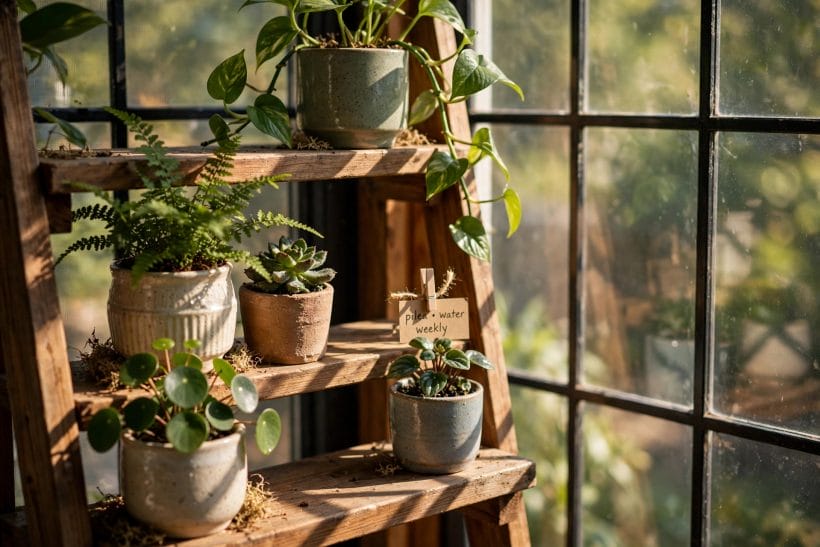
25. Three heights, always
Shelf plants, floor plants and hanging plants: the three-layer rule fills the vertical space without crowding the floor. A small sunroom with greenery at only one height looks like a shop shelf; at three heights it looks like a place.
26. Shelves on the solid corner
Narrow shelves or a ladder shelf against the one solid stretch hold the small pots — herbs, succulents, cuttings — where they can be admired closely. Keep the glass itself for the view; plants silhouetted against light belong at the edges, in moderation.
27. Hanging plants in the dead corners
The upper corners of a glass room are wasted air. A hanging planter or two softens the frame’s geometry and draws the eye up to the roof glass, making a low room feel taller. Trailers that forgive bright light earn their hooks fastest.
28. Herbs within reach of the kitchen
If the sunroom adjoins the kitchen, a herb shelf turns decoration into provisions. Sun-loving herbs in terracotta on the brightest shelf scent the room and shorten the cook’s walk; keep a small watering can living beside them, not in a distant cupboard.
29. One citrus or olive for ceremony
A single small tree in a good pot — citrus, olive, a fig — gives a sunroom its centrepiece and its seasons: blossom, fruit, winter structure. It is the plant equivalent of the truly comfortable chair: one is luxury, five are a nursery business.
30. Group pots in families
Collections read calmer grouped by pot family — all terracotta, all white, all baskets — than as a jumble of souvenirs. In a small room the discipline matters doubly: the plants can be various precisely because the containers agree.
31. Plants that forgive the heat
Sunrooms swing in temperature more than any other room. Choose plants known to forgive bright light and warm days, group the thirsty ones together for easy watering, and accept that the fern of your dreams may prefer the bathroom. Local nursery advice beats any list, including this one.
32. A propagation corner
A small tray or shelf for cuttings, seedlings and rescues gives gardeners a laboratory and the room a story. It also keeps the main shelves looking intentional: experiments live in the corner, the finished compositions hold the stage.
6. Colour, Light and Soft Touches
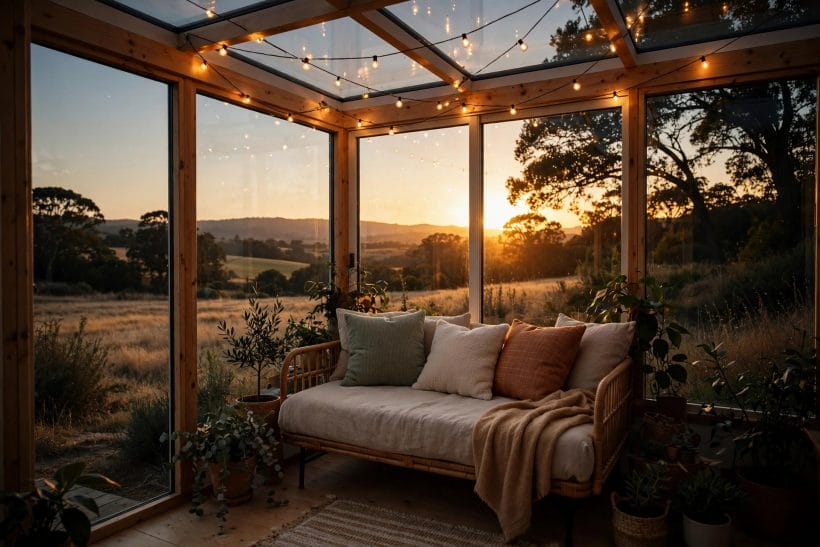
33. A light base palette
Whites, warm off-whites and pale natural tones bounce the daylight deeper into the room and toward the house behind it.
34. Colour from the garden itself
The most reliable sunroom palette is the garden’s: greens first, then the flower colours of the season outside the glass. Cushions and pots that echo what is blooming make the room feel inevitable — the inside of the outside.
35. Natural materials as the neutral
Rattan, timber, linen, jute and terracotta form a neutral scheme with texture doing the work. In strong light, texture reads richer than colour and never fights the view; it is why the classic sunroom look survives every fashion cycle.
36. One painted wall, honestly used
Where the sunroom meets the house, that shared wall can carry the room’s one confident colour — a deep green or warm clay — giving depth behind the bench and a backdrop for plants. One wall, fully committed, beats four walls apologetically tinted.
37. Shade that doubles as softness
Blinds, sheer curtains or woven shades are colour and texture as well as glare control. Pale linens filter light into a glow; timber-toned blinds stripe it. Choose the softening you want at the brightest hour and check it then, not at dusk.
38. Evening light, low and warm
A sunroom after dark lives by its lamps: a standard lamp in the solid corner, a small table lamp, perhaps string lights along a beam for festivity.
39. Metallics in miniature
Small glints — a brass watering can, a metal plant stand, lantern candle-holders — catch sun and lamplight and lift the natural palette from worthy to finished. In a small room, miniatures are the right scale for sparkle.
40. Seasonal swaps, not redecoration
Plan two textile moods — summer linens and stripes, winter wools and deeper tones — and store the off-season set in the bench. The room refreshes twice a year for the price of cushion covers, and the glass does the rest of the redecorating daily.
41. A mirror where the wall allows
On the solid wall or house wall, a mirror doubles a slice of garden and bounces light into the adjoining room.
7. Floors, Rugs and Underfoot Comfort
42. Hard floors that forgive water
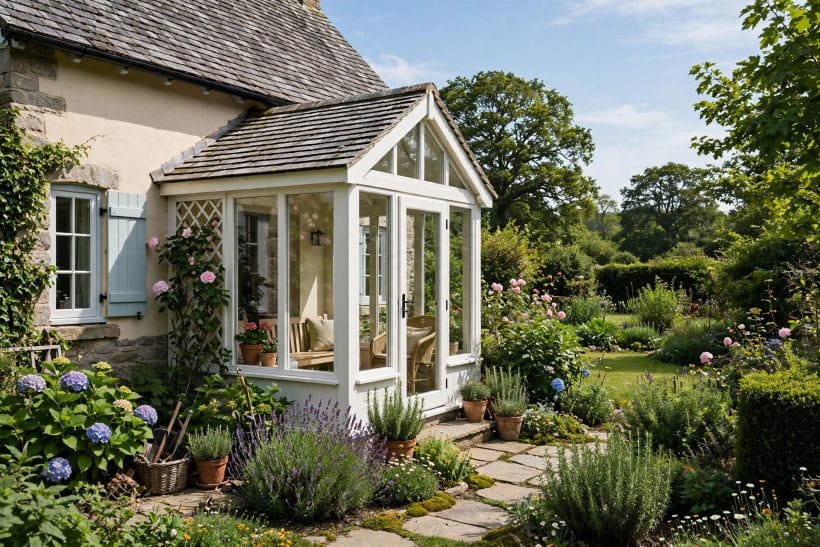
Tile, stone and sealed concrete shrug off watering cans and muddy paws, and they store the day’s warmth into the evening. For most small sunrooms a washable hard floor is the honest foundation; carpets belong to rooms that do not grow plants.
43. A rug to define the sitting zone
Over the hard floor, one rug — flat-weave, washable, sized to the seating — softens sound and marks the sitting territory. In a glass room the rug also anchors furniture that would otherwise drift visually on a sea of reflective floor.
44. Threshold discipline
The step between house and sunroom collects everything the garden sheds. A mat well outside and a washable runner inside, plus a boot tray in wet seasons, keep the room’s floor a pleasure rather than a chore. Layout again: plan the dirty metre deliberately.
45. Underfoot warmth where you sit
Cold floors exile occupants faster than cold air. Rugs under the main seat, a heated option only where a professional advises it suits the build, and slippers-by-the-door honesty in winter all extend the room’s season without pretending it is a parlour.
46. Pale floors for dark plots
Where the garden is shaded or the plot overlooked, a pale floor bounces what light exists up into the room and the plants. Dark floors suit bright, wide glass and cooler climates; in a small northern sunroom they mostly absorb the asset.
47. Pattern that hides the evidence
Between two gardens — the tended one outside and the potted one in — floors show soil, leaves and pollen daily. A patterned tile or a flecked finish hides the evidence between cleanings far better than a flat pale slab, and reads as character rather than compromise.
48. Plant stands off the floor
Stands, stools and a low bench lift pots off the floor, saving finishes from water rings and letting air move beneath. Grouping plants on one stand also turns watering into a single stop and the composition into a deliberate arrangement.
49. A floor the furniture can slide on
Sunroom furniture migrates — toward the sun in spring, toward the shade in summer. Smooth floors and felt pads make the migration a one-person job, which is precisely why hard, forgiving floors beat carpet here: the room is meant to be rearranged with the seasons.
8. Shade, Warmth and Year-Round Comfort
50. Shade the roof glass first
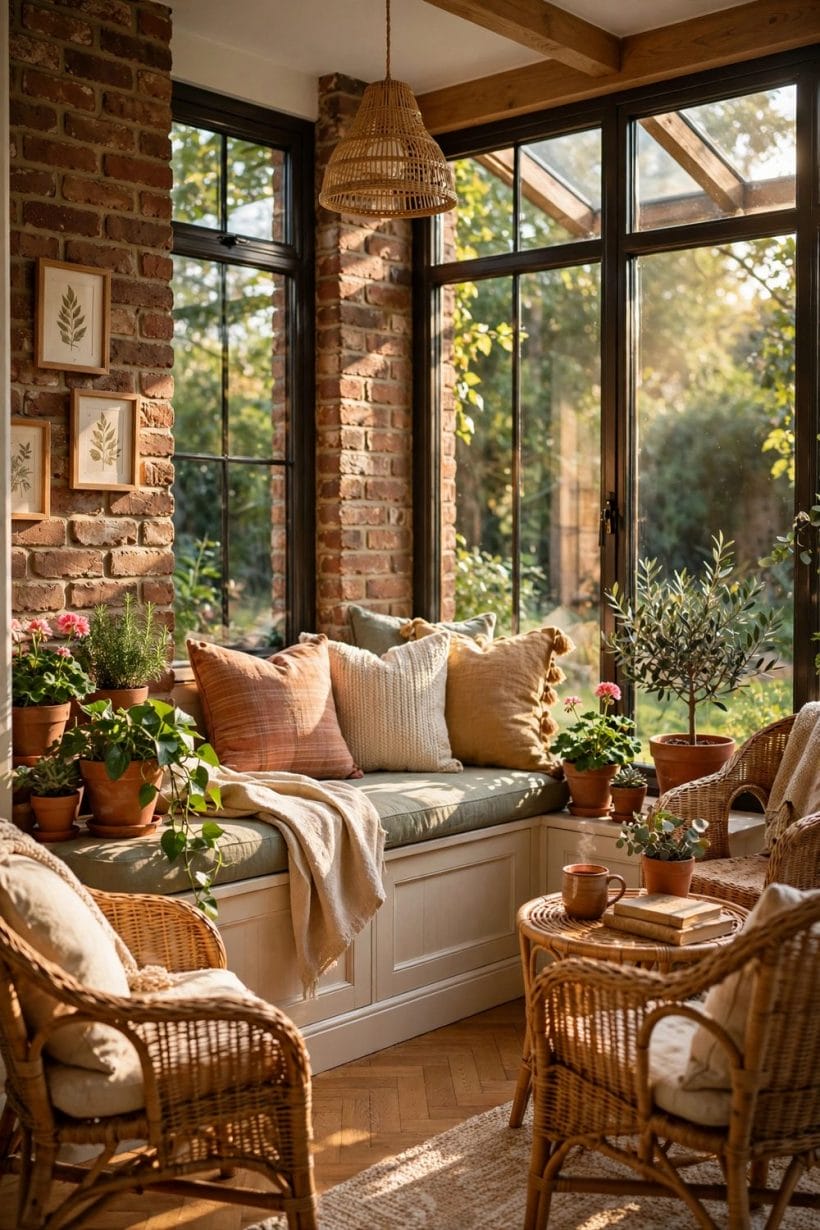
Heat enters from above. Roof blinds, exterior shade or a well-placed deciduous climber over the glass do more than any wall treatment. If budget allows only one shading move in a small sunroom, spend it overhead and the room changes its whole summer character.
51. Blinds you can grade
Adjustable blinds — venetian, pleated or simple rollers in sections — let you shade the strip of glass the sun is striking while leaving the rest open. All-or-nothing shading wastes the room; graded shading keeps it in use through the brightest afternoons.
52. Planting as architecture
A tree, pergola or tall planting outside the sunniest face filters light before it arrives and gives the room a living outlook instead of a blind one. Deciduous shade is the connoisseur’s version: leaves in summer, bare light-admitting branches in winter.
53. Vent before you shade
Hot air rises and escapes high: roof vents and high openers cool a glass room faster than any blind. Use ventilation first and shade second; the combination — moving air plus filtered light — is what makes the difference between a sunroom and a solar oven.
54. Winter honesty
Some small sunrooms are three-season rooms, and pretending otherwise wastes money. Decide the room’s honest season count with local advice about its glazing and the house’s heating, then furnish to that truth: a glorious April-to-October room beats a disappointing all-year one.
55. A heat source that suits the room
Where year-round use is planned, heating belongs in the build conversation — extended house heating, an electric option or a small stove where rules allow — sized and installed by qualified local professionals.
56. Thermal mass in the floor
Dark, dense floors in the sun’s path store warmth and release it into the evening — the principle behind the tiled floors argued for earlier. In a sunny small sunroom the effect is noticeable and free; pale, light floors suit rooms that struggle with heat instead.
57. Textiles as insulation
Rugs, cushions, throws and a curtain across the house door on winter nights soften a glass room’s chill remarkably. The room’s softness budget is climate control in disguise — another reason the textile-led furnishing of the earlier sections earns its keep.
9. Working, Dining and Quiet Corners
58. The desk that faces the garden
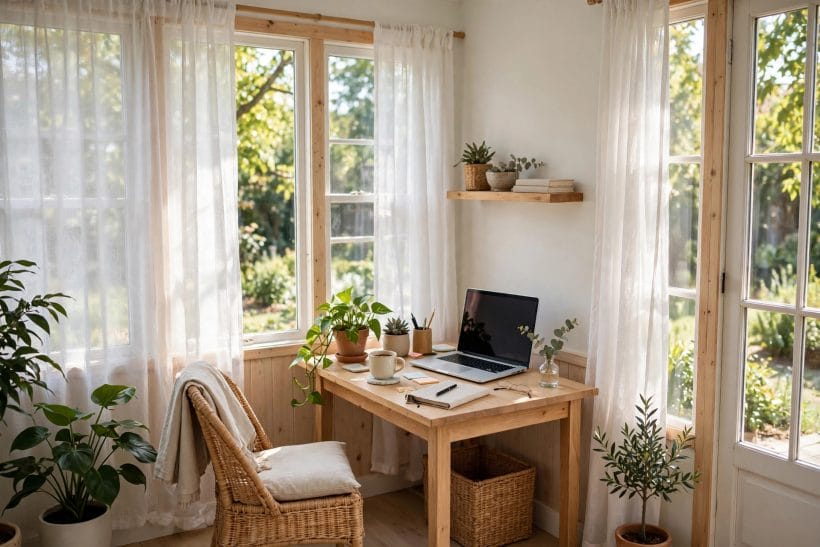
A small desk against the glass, screened from glare by the sheer curtain of idea thirty-seven, is the finest home-office seat most houses can offer. Keep it compact, keep the chair light, and let the view be the decoration the desk does not need.
59. Breakfast for two by the doors
The round table from the seating section earns a second citation beside the garden doors: coffee in the morning sun is the ritual that sells sunrooms. Position it where the first light lands and the room will be used daily, not occasionally.
60. A reading chair with its own light
The truly comfortable chair plus a lamp it owns equals the house’s reading throne. Add a side table that fits a book and a cup and nothing else; small rooms reward single-purpose corners that are complete at miniature scale.
61. Children’s corner in the sun
A low table, a basket of drawing things and a cushion on the floor claim one corner for the smallest residents, in sight of the garden and the kitchen both. Sunrooms supervise beautifully — glass everywhere means nobody is out of view.
62. The hobby bench
Potting, painting, sewing, model-making: bright hobbies belong in bright rooms. A narrow bench along one glass wall, with storage beneath, gives the sunroom a working edge and the house a place where mess is expected rather than apologised for.
63. Yoga and morning stretches
One mat’s worth of clear floor — the perimeter layout provides it — turns the sunroom into the house’s dawn studio. Morning light is the strongest argument any exercise routine can have; keep the centre clear and the mat rolled in the bench.
64. A tea station, not a kitchen
A tray, a kettle’s worth of kit on the bench, cups on the shelf: enough for tea and coffee without plumbing ambitions. Small sunrooms serve best when their ambitions stay portable; the kitchen is steps away and does the heavy work gladly.
65. Music in the glass room
An instrument in the corner — guitar on a stand, a small keyboard — or simply the house’s best seat for listening: glass rooms are lively acoustic spaces. Soft textiles tame the brightness; what remains is a room that flatters unplugged music.
66. The guest-bed improvisation
With the daybed dressed and a screen or curtain for privacy, a sunroom hosts a guest for a night or two in high summer.
10. Finishing Touches and Keeping It Lovely
67. A lantern or two for the hour after sunset
Candle lanterns or their battery equivalents on the table and the step extend the room into the evening at almost no cost. Glass rooms at dusk, lit low, are the best room in the house; it would be a waste not to own the hour.
68. Art that can take the light
Sunlight fades paper and fabric, so hang the robust things: ceramics on the shelf, a metal piece on the solid wall, prints you can reprint. Let the precious art live in the house’s dimmer rooms and the sunroom take its pictures from the garden instead.
69. A scent strategy
Jasmine, citrus blossom, herbs by the door: a sunroom can smell like a garden because it nearly is one. One scented plant near the main seat, renewed with the seasons, does more for the room’s memory than any ornament.
70. The view edited
Step outside and look at what the sunroom’s seats actually face; then plant, screen or move accordingly — the bins, the neighbour’s trampoline, the gap in the hedge. Editing the outlook is interior decoration done in the garden, and small rooms with composed views feel curated.
71. Cleaning little and often
Glass shows neglect quickly, so the routine is small and frequent: a weekly wipe of the inside panes in season, gutters and frames checked with the seasons, plants deadheaded as you pass with coffee. Ten minutes weekly beats a yearly campaign.
72. Spares in the bench
Cushion covers, a throw, the folding chairs’ cushions and a small repair kit live in the bench storage from idea twenty-one. Everything the room needs within the room is the mark of a space that was planned rather than accumulated.
73. One ritual a day
Rooms stay loved when they hold a ritual: morning coffee, the evening watering round, the Sunday paper. Choose the sunroom’s ritual deliberately and arrange the corner for it; use, repeated daily, is the strongest design force there is.
74. Photograph it each season
A small discipline for owners: take the same photograph from the door four times a year. The set teaches you what the room wants — where the light lands, what crowds, what thrives — better than any advice, and it documents a garden room becoming itself.
75. Keep it the brightest promise in the house
Above all, defend the room’s purpose against the house’s gravity: the moment a small sunroom becomes the place where things are stored until further notice, the house loses its best seat. Guard the light, guard the chair, and let the patio ideas next door handle the overflow — the sunroom is for sitting in the light, and it should stay that way. For the step beyond the glass, our ground level deck ideas continue the same indoor-outdoor thinking at grade.
Final Considerations
A beautiful small sunroom is a managed bargain with the weather: glass for light, shade for summer, textiles for winter, and furniture at a scale that respects the footprint.
Start where the family in the wider sunroom ideas survey starts: one comfortable seat facing the garden, plants at three heights, and the middle kept clear. The room will do the rest, one bright morning at a time.


0 Comments