

Purple is the colour living rooms are afraid of — and the one they remember. Paired with silver, it stops being a gamble and becomes a system: violet depth for the walls and fabrics, cool metal light bouncing back off every accent.
Here are 75 purple and silver living room ideas, from a single plum cushion to a full aubergine scheme, with the layouts, sofas, colours and layered lighting that keep the combination elegant rather than theatrical.
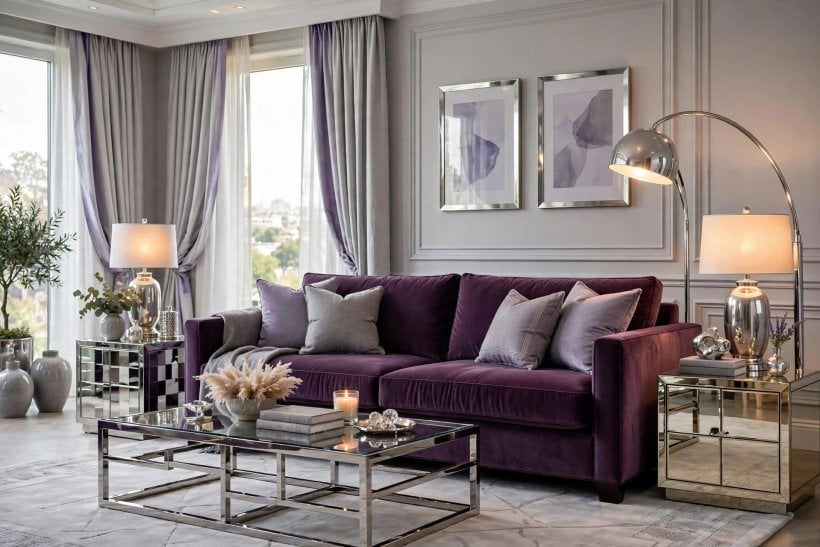
1. Purple and Silver Living Rooms at a Glance
The central entity is a colour pairing: purple — in shades from pale lilac and lavender through violet and plum to deep aubergine — set against silver, the cool metallic family of chrome, nickel, mercury glass and grey-silver fabrics. The pairing works because the two share a cool undertone: purple supplies the mood and the depth, silver supplies the light and the edge. Everything in this guide is an attribute of that pairing — which purple, how much of it, where the silver sits, and how layout, sofas and lighting keep the balance.
| Which purple suits a living room best? | Greyed, muted purples — plum, mauve, dusty violet — for large areas, because they behave almost like neutrals; brighter purples work best in smaller doses on cushions, art and single chairs. |
| Why silver rather than gold? | Silver shares purple’s cool undertone, so the two never fight. Chrome, nickel and silvered glass also bounce light around a colour that can otherwise absorb it. |
| How much purple is too much? | There is no fixed ratio, but one dominant purple note — walls, sofa or rug — with the rest of the room in supporting greys, off-whites and silver reads calmer than purple everywhere. |
| Does the pairing suit small rooms? | Yes, with the values reversed: pale lilac or lavender on walls, deeper purple in the textiles, and plenty of silver and glass to keep the light moving. |
| What lighting does purple need? | Warm, layered light. Cool white light turns purple grey and flat; warm lamps at several heights keep plum and violet rich in the evening. |
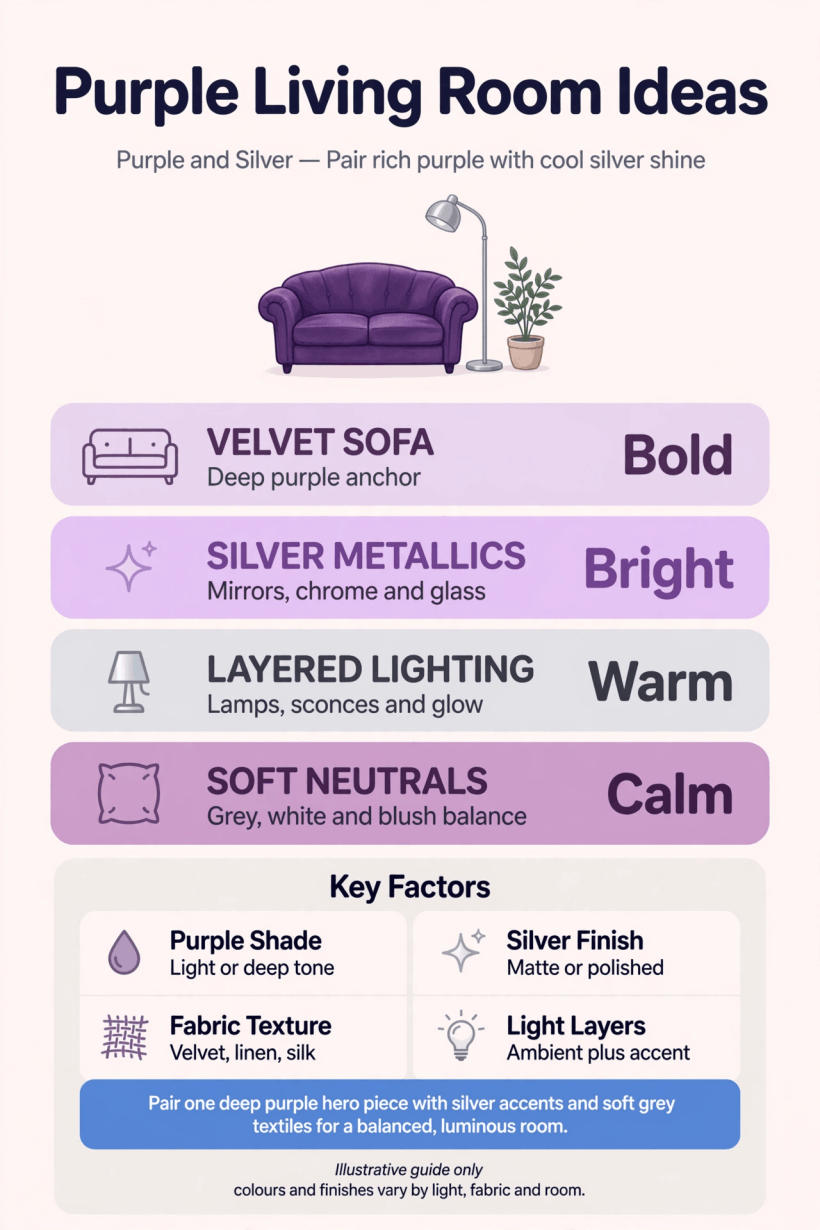
At a glance: one dominant purple note, silver for light and edge, warm layered lighting, and greyed shades for anything that covers a large area.
2. Walls and Colour: Setting the Purple Register
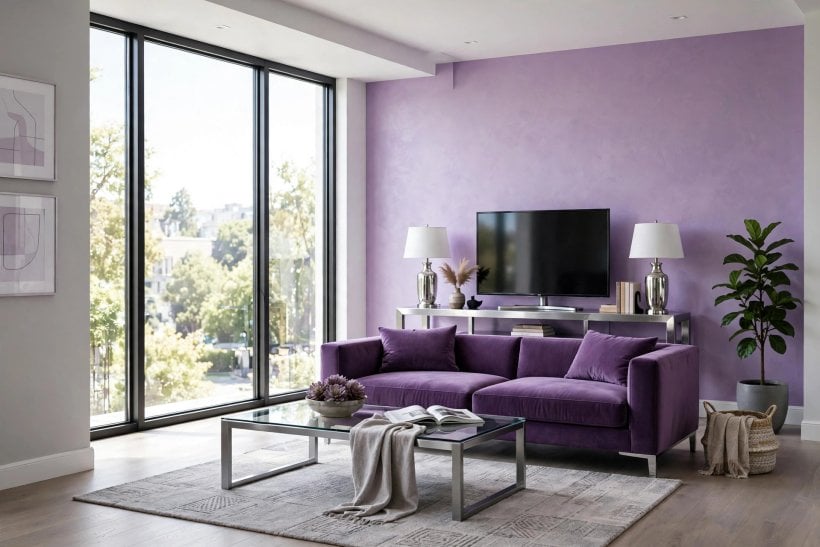
Colour comes first because it decides the scale of everything else. The guidance in this guide to tiny house interior paint colours applies with double force to purple: test it on the wall, in your light, because no colour family shifts more between the tin and the finished room.
1. Paint One Plum Feature Wall
A single deep plum wall behind the sofa gives the room its drama without closing it in. Keep the other walls warm grey or off-white, and let the silver live in the frame, lamp and mirror that hang on or stand against the purple — metal glows against a dark ground.
2. Wash All Four Walls in Dusty Violet
A greyed violet on every wall is softer than it sounds: the grey content lowers the volume so the room feels enveloped rather than decorated. It suits north-facing rooms poorly but rewards bright ones, and it makes white woodwork and silver fittings look freshly minted.
3. Keep Walls Lilac and Go Deep in the Fabrics
The cautious route is also the most flexible: pale lilac walls, then plum, aubergine and violet carried in cushions, throws and curtains. The paint stays calm for years while the textiles — cheap to change — do the expressive work.
4. Try a Two-Tone Wall with a Silver-Grey Lower Half
Divide the wall with a picture rail or a simple painted line: silver-grey below, soft purple above. The grey grounds the scheme and protects the busier lower zone, while the purple floats where the light catches it.
5. Use Aubergine in a Media or Snug Corner
The deepest purples earn their keep in the corner of the room devoted to film and reading. Aubergine absorbs stray light, flatters a screen, and turns a leftover alcove into the seat everyone chooses.
6. Limewash or Colour-Wash for a Cloudy Purple
A washed, uneven purple finish gives large walls movement that flat paint cannot — faint clouds of lighter and darker violet that change through the day. It suits relaxed, textured rooms and hides imperfect plaster gracefully.
7. Pair Purple Walls with a White Ceiling and Silver-Grey Floor
When the walls carry the colour, let the ceiling stay white and the floor pale — light oak, pale grey boards or a silver-grey rug. The room reads as a colour held between two calm surfaces rather than a box closing in.
8. Bring Purple in Through Wallpaper with a Silver Motif
A purple ground with a silvered pattern — damask, trailing leaves, a fine geometric — does colour and metal in a single gesture. Keep it to one wall and let plain silver-grey textiles answer it.
9. Test Purple at Night Before Committing
Paint the largest board you can and judge it at lamplight, not noon. Purple that looks regal at midday can turn muddy under warm bulbs, and a shade that seems dull in daylight often deepens beautifully in the evening.
10. Match the Purple to the Room’s Natural Light
Cool north light greys purple down; warm southern light reddens it. In a dim room choose a purple with more red in it — plum over blue-violet — and in a sun-flooded room a bluer violet stays elegant instead of turning shrill.
11. Keep Trim Silver-Grey for a Crisp Edge
Skirting, architraves and picture rails in a pale silver-grey draw the room’s outline cleanly against purple walls. Pure white trim can look stark against deep shades; the grey bridges wall and woodwork like a frame.
3. Sofas and Seating: The Room’s Anchor
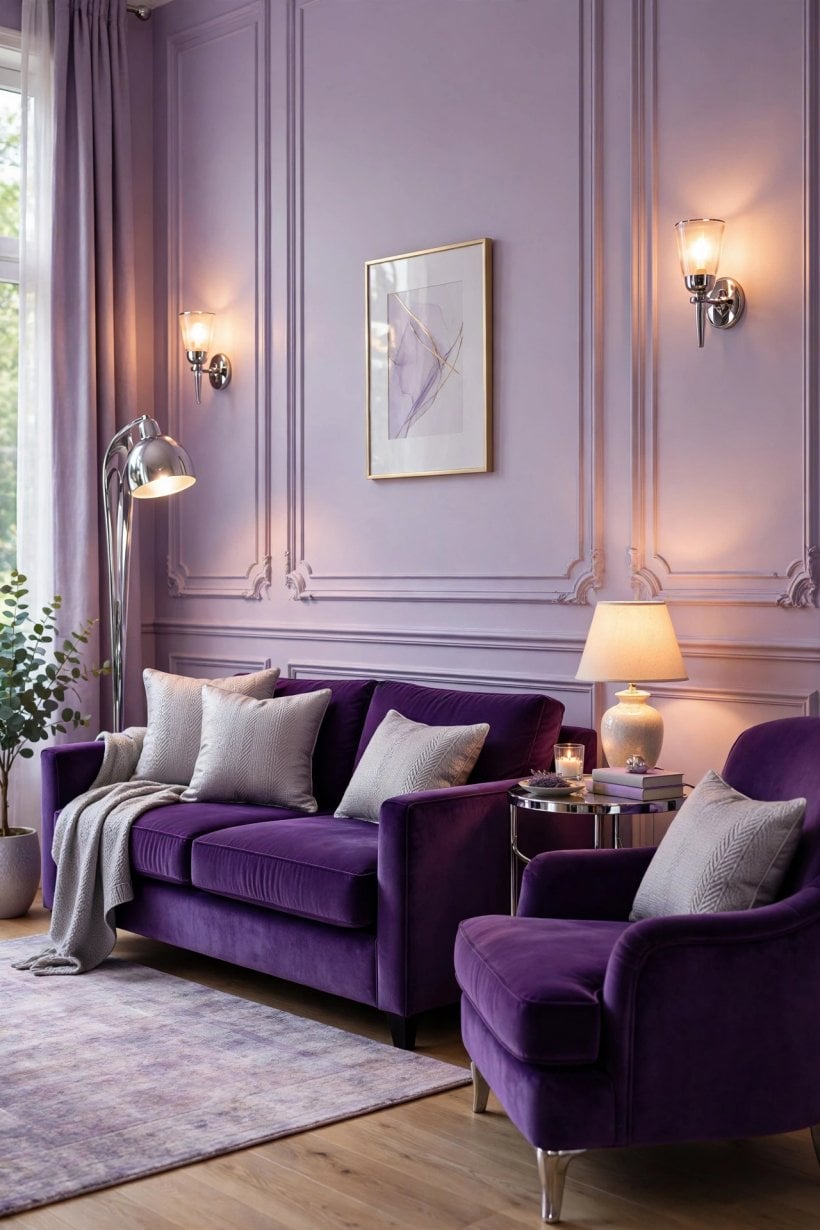
The sofa is the largest single object in most living rooms, so its colour decides whether purple is the room’s subject or its accent. The arrangements in these small living room ideas show the same discipline at compact scale: one confident anchor piece, everything else in support.
12. Anchor the Room with a Velvet Purple Sofa
A violet or plum velvet sofa is the classic centrepiece of this pairing, and velvet is purple’s best fabric — it catches light in folds, so the colour shifts from bright to shadowed across a single cushion. Set it against pale walls and give it silver legs or a chrome-framed side table.
13. Choose a Silver-Grey Sofa and Dress It Purple
The reversible version: a silver-grey sofa — practical, light-reflecting, forgiving — dressed with purple cushions and a throw. The scheme can be re-tuned in an afternoon, which suits renters and the chronically indecisive.
14. Mix a Purple Sofa with Grey Companion Chairs
Rather than a matching suite, pair the purple sofa with two chairs in a mid grey or silvered weave. Mixed seating looks collected rather than showroomed, and the grey chairs give the eye a resting place.
15. Add One Accent Chair in a Contrasting Purple Tone
If the sofa is lilac or pale violet, a single chair in deep aubergine — or the reverse — creates the tonal ladder that makes a scheme look designed. Keep the chair’s shape simple; the colour is the statement.
16. Use a Chaise or Daybed in Mauve for a Reading Corner
A low chaise in dusty mauve, a silver floor lamp arched over it and a small chrome table make a reading corner that works as the room’s second act. It also gives guests a seat that is not the sofa.
17. Slipcover a Sound Sofa in Washable Purple Linen
When the sofa’s bones are good but its fabric is wrong, a loose purple linen cover changes the room for the price of a rug. Linen’s matte texture calms bright purples and the cover washes — a real consideration in working homes.
18. Keep Legs Metal on Purple Upholstery
Chrome, brushed nickel or silvered-wood legs lift a heavy purple sofa visually and literally: the room sees floor beneath it, and the metal threads the silver note through the biggest object in the room.
19. Layer Two Purples on One Sofa
A violet sofa with aubergine cushions, or a plum sofa with lilac ones, reads richer than any single flat shade. Tonal layering is how purple schemes avoid the fancy-dress look.
20. Face Seating Around a Silver-Framed Coffee Table
Arrangement matters as much as colour: seats facing each other across a glass-and-chrome or silver-leaf coffee table make a conversation group, and the reflective tabletop keeps the middle of a purple room light.
21. Add a Window Seat in Pale Violet
A built-in window seat upholstered in pale violet, with silver-grey cushions behind it, uses the room’s best light for the softest seat — and the daylight keeps the pale purple fresh rather than washed out.
22. Keep a Neutral Loveseat as the Scheme’s Safety Valve
One piece in warm off-white or oatmeal — a loveseat, a reading chair — guarantees the room never tips into a purple monoculture. Every strong scheme needs an exit, and this is it.
4. Silver and Metallic Accents: The Light-Bringers
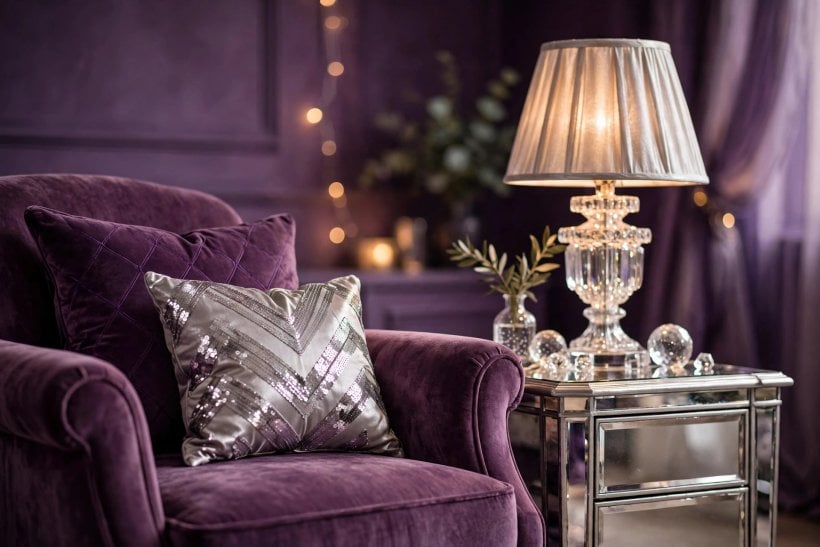
Silver is not decoration in this pairing; it is infrastructure. Purple absorbs light, silver returns it — which is why the metal should be spread through the room at several heights rather than gathered in one shiny cluster.
23. Hang a Large Silver-Framed Mirror
The single hardest-working accent: a big mirror in a silvered frame doubles the room’s light, reflects the purple so the colour travels, and gives plain walls a piece of quiet architecture. Over a mantel or opposite a window is best.
24. Choose Chrome and Glass for Tables
Glass tops on chrome frames keep sightlines open through the middle of the room, so purple walls and sofas do not visually shrink the space. They are also honest modern pieces that never pretend to be antiques.
25. Use Mercury Glass for Soft, Aged Sparkle
Mercury glass — silvered, mottled, candlelit from within — is silver with the glare removed. Vases, candle holders and lamp bases in it suit purple’s moodiness far better than mirror-polish everywhere.
26. Add Silver Leaf to One Piece of Furniture
A silver-leafed sideboard, drinks cabinet or console turns storage into the room’s jewel. One leafed piece is luxury; three is a showroom. Choose the piece that stands against the deepest purple for maximum contrast.
27. Frame Art in Silver
Silver frames unify mixed artwork and carry the metal note up the walls into the purple’s own territory. Keep mats wide and pale; the art itself can bring the room’s small warm accents — ochre, rust, blush.
28. Thread Silver Through Cushion Fabrics
A silver thread, a grey-silver stripe or a metallic-printed cushion on the purple sofa stitches the two halves of the pairing together at the exact point they meet. It is the cheapest unity in the room.
29. Stand a Chrome Arc Lamp Over the Seating
An arched chrome floor lamp is sculpture and lighting in one: it delivers light from above the conversation group without a ceiling fitting, and its curve echoes nicely against straight-lined sofas and shelves.
30. Use Silvered Wood Where Chrome Feels Cold
In traditional rooms, silvered or grey-washed timber — frames, trays, a carved chair — gives the metallic note in a warmer, grain-bearing material. The pairing survives translation into almost any style period.
31. Keep Hardware Consistent Across the Room
Door handles, curtain poles, lamp fittings and cabinet knobs in the same silver family make the metal read as a decision rather than an accumulation. Mixed metals muddy this particular pairing.
32. Add a Silver Rug Underfoot
A pale silver-grey rug — flatweave for modern rooms, a faded traditional pattern for classic ones — cools and lightens the floor plane, and purple furniture stands on it like exhibits.
33. Display Silver Objects in Odd Numbers, Sparingly
Three silver pieces on a shelf — a bowl, a candlestick, a small box — read as a composition; a crowd reads as a shop. Silver’s power in this scheme is scarcity plus shine.
5. Layouts: Arranging a Purple Room So It Breathes
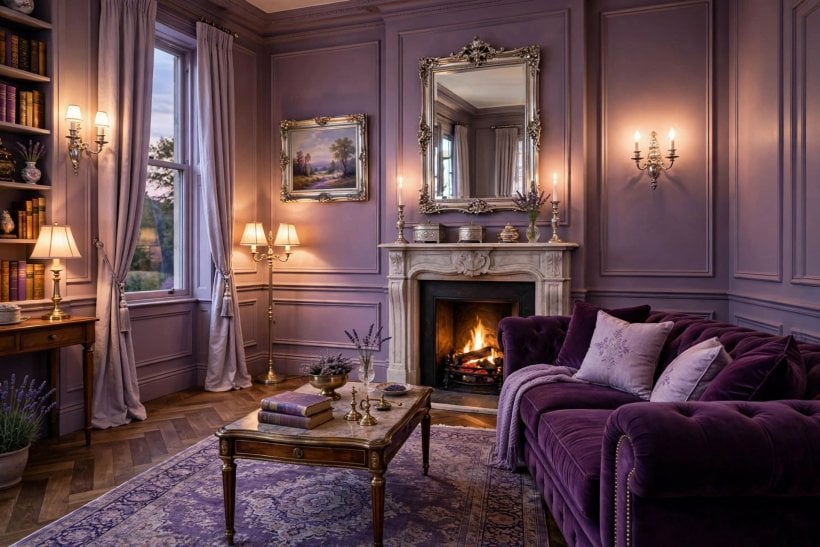
Colour schemes fail on layout more often than on shade. The zoned arrangements in these tiny living room ideas translate directly: define one conversation group, keep the paths around it clear, and let the deepest purple sit where the room naturally settles.
34. Build the Conversation Group First, Decorate Second
Place sofa and chairs around the coffee table at talking distance before any colour decision. A purple scheme laid over a working layout looks inevitable; over a bad one, merely expensive.
35. Float the Sofa off the Wall in Larger Rooms
Pulling a purple sofa into the room, with a silver console behind it, creates a walkway and a display surface at once — and stops a strong colour from simply being pushed to the room’s edges.
36. Zone an Open Plan with a Violet Rug
In an open-plan space, a large violet or aubergine rug under the seating group declares the living zone while the kitchen and dining areas stay neutral. The pairing’s territory is drawn on the floor, not the walls.
37. Put the Deepest Purple at the Room’s Resting End
Eyes travel to dark colour. Place the plum wall, the aubergine chair or the purple media unit at the end of the room where people sit and settle, not beside the door they pass through.
38. Angle One Chair to Break the Grid
A single chair set at an angle — ideally the purple accent chair — loosens a formal arrangement and makes a silver-and-violet scheme feel lived-in rather than staged.
39. Keep Tall Storage in Silver-Grey, Not Purple
Bookcases and tall cabinets in silver-grey or pale grey keep the room’s verticals light; tall purple storage closes a room down. Save purple for the horizontal, seated band of the room.
40. Leave Breathing Space Around the Purple Sofa
Strong colour needs margins. A purple sofa crammed between furniture loses its presence; given a hand’s breadth of air on each side and a pale wall behind, it becomes the portrait it should be.
41. Centre the Scheme on a Fireplace or Media Wall
Every seating group needs a focus. A fireplace with a silver surround and mirror, or a media wall in deep plum, gives the purple a job — framing the thing the room gathers around.
42. Use Symmetry for Formal Purple Rooms
Matching silver lamps, paired chairs and a centred mirror suit purple’s regal register in formal rooms. Symmetry is the fastest way to make a brave colour look deliberate.
43. Use Asymmetry and Layers for Relaxed Ones
In family rooms, let the scheme loosen: cushions mismatched within the palette, throws at angles, silver gathered in a tray rather than a row. The colours hold the room together while the arrangement relaxes.
44. Keep Walkways in the Pale Palette
Routes through the room — door to door, door to seating — should pass through the scheme’s pale zones. Walking through the darkest colour feels like wading; walking past it feels like arriving.
6. Layered Lighting: Keeping Purple Rich After Dark
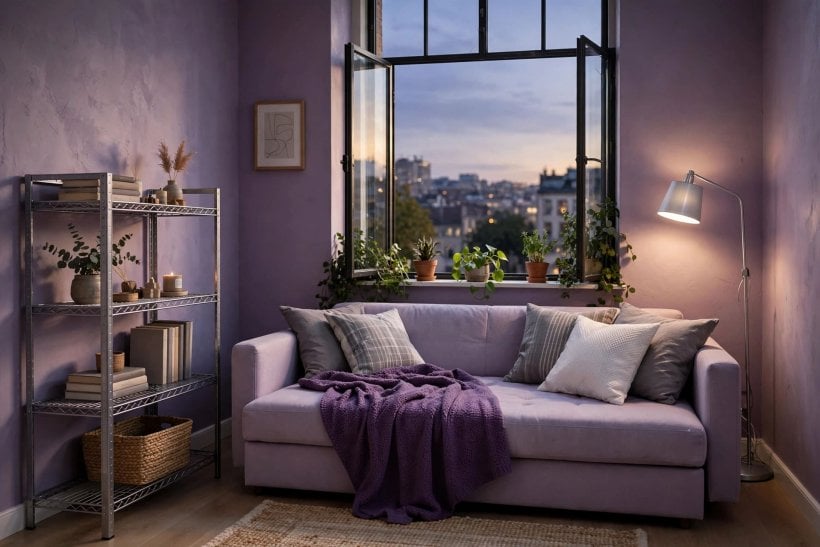
Purple is the most light-dependent colour in the house, which is why this pairing specifies layered lighting rather than a single ceiling pendant. The layered approach matches the room-by-room thinking in these modern living room interior design ideas for tiny houses: ambient, task and accent light, each doing its own job.
45. Build Three Layers: Ambient, Task, Accent
General light to move by, focused light to read by, and low accent light for mood. Purple schemes lit by only the first layer look flat; lit by all three, the colour gains the depth that made you choose it.
46. Choose Warm Bulbs — Cool Light Kills Purple
Warm-toned bulbs keep plum and violet rich; cool, blue-white light greys them and makes silver look clinical. This is the single most consequential technical choice in the whole scheme.
47. Hang a Silver Chandelier or Pendant as the Centrepiece
A silvered pendant — crystal, beaded glass or brushed metal — throws sparkle across purple walls and gives the ceiling a jewel to match the sofa’s velvet. Dim it; it is jewellery, not floodlighting.
48. Pair Silver Table Lamps on Either Side of the Sofa
Two lamps at seated eye height are where living rooms actually live in the evening. Silver bases with pale shades bounce a little of their own light off the metal and pool the rest exactly where people sit.
49. Add Picture Lights or Sconces in Brushed Nickel
Wall lights wash purple walls with a grazing light that shows off texture — limewash, velvet curtains, a silvered frame — and keep the room’s edges alive after dark.
50. Use Candlelight Against Purple Without Shame
Silver candle holders and mercury-glass holders multiply small flames into the scheme’s oldest accent light. Against deep purple, candlelight is not a fallback; it is the colour’s native evening register.
51. Light the Bookcase or Shelving from Within
Small lights inside silver-grey shelving turn storage into a glowing backdrop and stop the room’s corners going dead — the usual failure of dark colour schemes by 9 p.m.
52. Put Dimmers on Every Circuit You Can
A purple room has two personalities — bright and social, low and enveloping — and dimmers are how you own both. At full light the silver sparkles; dimmed, the purple deepens and the metal glows.
53. Reflect Light Deliberately with the Mirror’s Placement
Place the silver mirror where it catches a lamp or a window, not a blank wall. In a colour that absorbs light, the mirror’s job is redistribution, and placement is the whole skill.
54. Add a Floor Lamp Behind the Reading Chair
Task light belongs over the shoulder of the person reading, not across the room. A slim chrome floor lamp behind the accent chair serves the reader and silhouettes the chair’s purple against the wall.
55. Keep One Light Source Low and Warm by the Hearth or Table
A low lamp or a cluster of candles at coffee-table height gives the seating group a hearth-glow even without a fire — the layer that makes guests sink in and stay.
7. Textiles, Curtains and Soft Layers
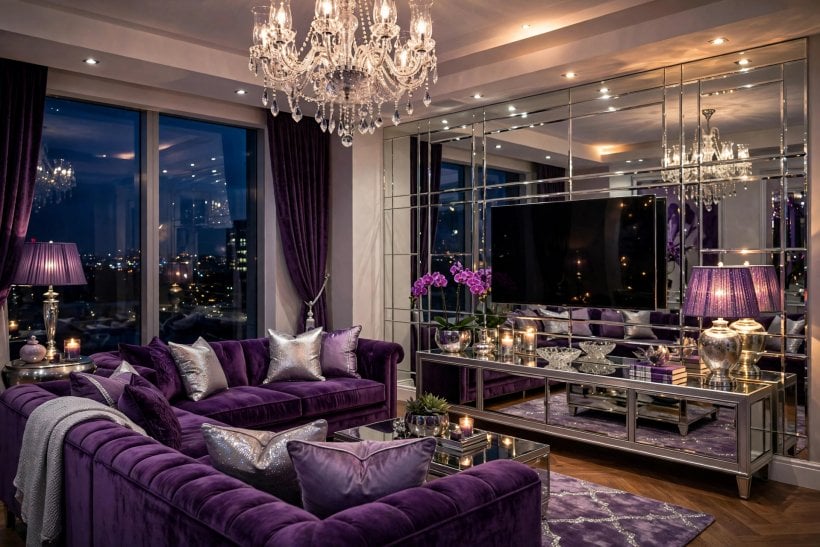
Textiles are where purple schemes are tuned. The fabric layer carries the tonal ladder — lilac to aubergine — and the silver thread that binds it, and it is the layer you can change with the seasons.
56. Hang Velvet Curtains in a Mid Purple
Full-length velvet curtains in violet or plum frame the windows with the scheme’s richest texture, and their folds repeat the sofa’s light-play at the room’s edges. Silver poles and holdbacks finish them.
57. Or Keep Curtains Silver-Grey and Sheer
In small or dim rooms, pale silver-grey curtains — or sheers with a metallic thread — give privacy without stealing the daylight purple needs to stay alive.
58. Layer Cushions in a Tonal Ladder
Arrange cushions from palest lilac to deepest aubergine across the sofa. The gradient reads as one considered gesture and lets every purple in the room find a relative on the main seat.
59. Mix Velvet, Linen and One Metallic Fabric
Texture contrast keeps a single-colour family interesting: matte linen, light-drinking velvet, and one cushion with silver weave or print to catch the lamps.
60. Throw a Silver-Grey Throw over the Purple Sofa’s Arm
The throw is the handshake between sofa and scheme: it lightens the sofa’s mass, repeats the room’s metal note in fabric form, and gets used nightly — decoration that works for a living.
61. Choose a Rug that Contains Both Colours
A rug with violet patterning on a silver-grey ground — or the reverse — is the scheme in miniature underfoot. It also hides the evidence of daily life better than either plain colour could.
62. Upholster an Ottoman in Aubergine as the Room’s Footstool-Jewel
A deep purple ottoman at the centre — footrest, extra seat, tray-table with a silver tray on top — concentrates the darkest note where hands and feet, not walls, deliver it.
63. Add Pattern in Small, Controlled Doses
One patterned element — a cushion pair, a curtain, a single chair — in a purple-and-silver design livens the solids around it. Two patterns in this strong pairing start to quarrel.
64. Rotate Textiles Seasonally
Deepen the textiles in winter — more aubergine, heavier velvet — and lighten them in summer with lilac, lavender and silver-grey linen. The walls and sofa stay; the season changes on the soft layer.
65. Keep One Warm Accent in the Textiles
A single cushion or throw in blush, ochre or rust — purple’s warm neighbours — stops a cool scheme feeling chilly in winter light. One is warmth; three is a new scheme.
8. Small and Tiny Living Rooms: The Pairing at Compact Scale
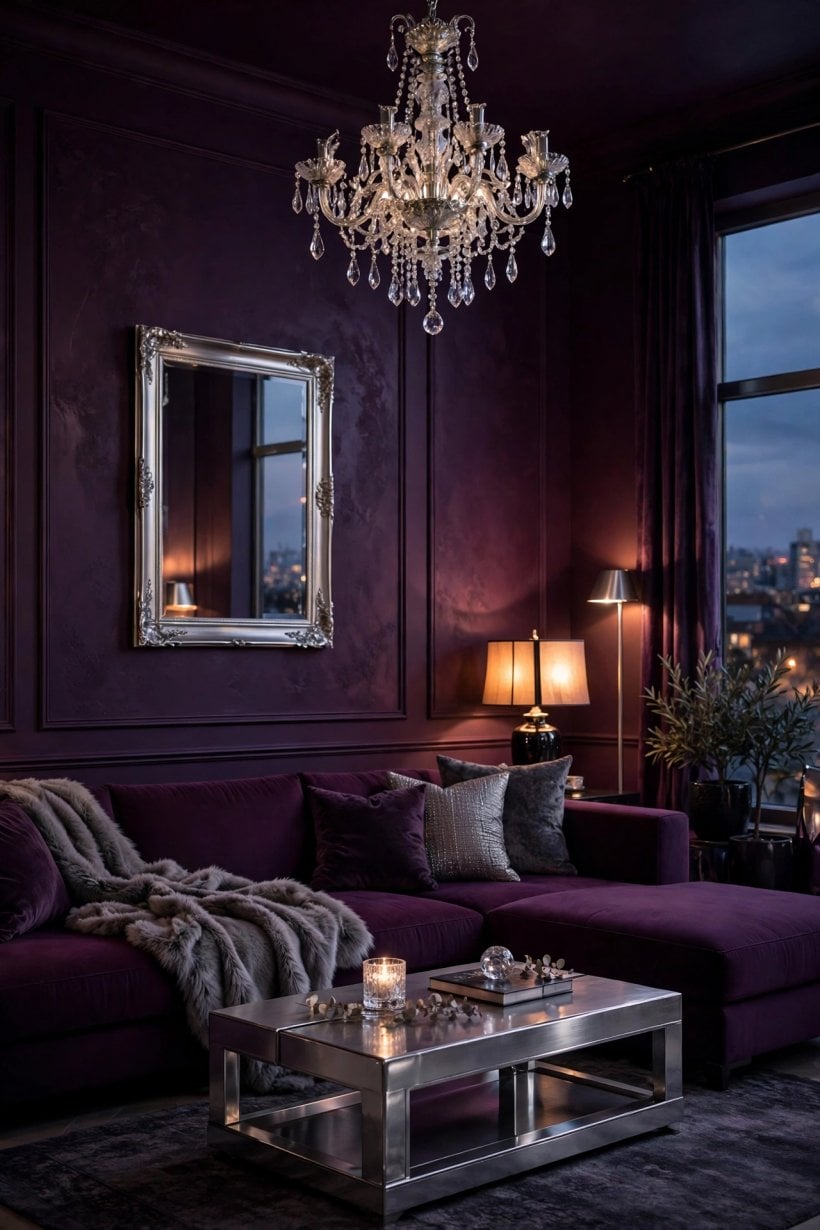
Everything above scales down with the values lightened and the pieces edited. The compact discipline in this guide to how to decorate a tiny living room is the right mindset: fewer, better pieces, and colour doing the work that objects cannot.
66. Reverse the Values: Pale Walls, Deep Accents
In a small room, lavender or lilac walls with aubergine textiles give the pairing’s identity without its darkness. Depth lives in the things you can move; the shell stays light.
67. Pick a Two-Seat Purple Sofa, Not a Corner Unit
A compact violet loveseat with slim arms and metal legs seats two honestly and leaves floor visible around it — the floor is a small room’s most precious fabric.
68. Let the Mirror Do Double Duty
In tiny rooms the silver mirror is not an accent but an appliance: place it to bounce the window’s light into the room’s darkest corner and the purple scheme survives on borrowed daylight.
69. Use a Glass Coffee Table to Keep the Middle Open
Chrome and glass at the centre keeps sightlines to the floor unbroken, which is how small purple rooms avoid the jewellery-box squeeze.
70. Store in Silver-Grey, Display in Purple
Compact storage — boxes, baskets, a low sideboard — in silver-grey keeps the working layer calm; the purple budget is spent on what is seen and sat on.
71. Light in Layers Even at Small Scale
Two lamps beat one ceiling light in any size of room, and in a small purple room the difference is doubled. A lamp on the sideboard and a slim floor lamp give the colour its evening depth.
72. Take Curtains to the Ceiling
Hanging pale curtains from just under the ceiling makes a small room’s walls read taller, and a soft violet sheer adds colour without a single painted surface — a renter’s version of the whole scheme.
73. Keep the Palette to Three Purples Maximum
Small rooms cannot host a crowd of tones. One wall-or-fabric purple, one deep accent and one pale relative, plus silver and grey — that is the whole cast.
74. Use the Hallway or Alcove as the Deep-Colour Moment
If the living room itself must stay pale, paint the alcove, the bookcase back or the connecting hallway in plum. Small rooms adjoining one deep note feel designed; the note is glimpsed, not lived inside.
75. Finish with One Silver Object You Love
End the scheme with a single chosen thing — a silver bowl, a framed print in a silvered frame, a lamp with a beautiful line. In a small room, one loved object carries the metal note further than a set bought to match.
9. Common Mistakes — and the Checks That Prevent Them
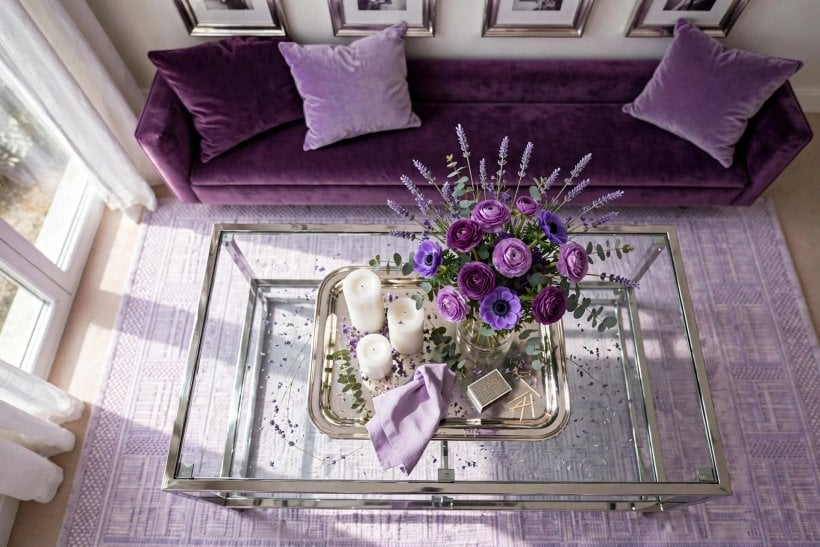
The pairing’s failures are consistent. The first is the purple monoculture: walls, sofa, rug and curtains all in the same mid-violet, which reads as a themed set rather than a room — prevent it with the tonal ladder and one neutral safety-valve piece. The second is cool lighting, which quietly greys every purple in the room; check bulb warmth before blaming the paint. The third is silver overload — chrome, mirror, leaf and metallic fabric competing until the room feels like a gift shop; scarcity is the fix.
Two quieter errors follow. Matching purples across different materials under shop light, then finding they clash at home — always judge samples together, in the room, at night. And forgetting the floor: a warm orange-toned timber floor fights cool purple all day, so either cool the floor down with a silver-grey rug or choose purples with enough red to negotiate. Run the checks in the same spirit as this guide to living room paint for tiny houses: sample honestly, judge in real light, commit once.
10. Costs, Care and Keeping the Scheme Alive
The pairing is unusually kind to budgets because its impact sits in paint and textiles rather than in furniture. The spend ladder runs: paint and cushion covers at the low end, where the whole scheme can change character; curtains, rugs and lamps in the middle; and the sofa or a silver-leafed piece at the top, where the money should go only after the colour and light are proven at the cheaper levels. Get the warm lighting right before judging any purple — many a “wrong” paint colour was a right colour under the wrong bulb.
Care is simple. Velvet wants a soft brush and a clothes steamer rather than washing; silver and chrome want a dry cloth, not abrasive polish, and mercury glass should never be soaked. Purple fabrics fade unevenly in strong sun, so rotate cushions and keep the most saturated textiles out of the window’s direct line. Looked after this way, the scheme ages gracefully — purple deepens in character, silver softens, and the room keeps the quality that made the pairing worth choosing: a living room nobody walks through without noticing.
Final Considerations
Purple and silver work because they divide the labour: purple brings the mood, silver brings the light, and neither has to pretend to do the other’s job. Choose greyed purples for large areas, keep the metal scarce and well placed, light the room warmly and in layers, and let one neutral piece keep the whole scheme honest.
Start cheap and reversible — cushions, a throw, a mirror, warm bulbs — and live with the pairing through a few evenings before painting anything. If the room still makes you pause in the doorway, commit to the wall colour or the velvet sofa with confidence. Few schemes reward that patience as visibly as this one.

0 Comments