

Paint is the fastest transformation in the tiny house — the $50 gallon that changes everything. One weekend, two coats, and the smallest living room feels larger, warmer and new. This guide covers the colors that expand, the one accent wall that deepens, the techniques, finishes and prep behind them — and the painted finish that makes a tiny room feel designed rather than decorated.
Living Room Paint Ideas: At a Glance
Living room paint ideas succeed in a tiny house when paint is treated as design, not decoration: a light, warm field color that expands the room, one restrained accent for depth, finishes matched to each surface, and prep done like it matters — because in a small room, everything shows. This guide follows the work in order: why paint matters most, the colors, the accent, techniques and two-tone zoning, ceiling and trim, finishes and primer, the alternatives, the ten commandments, mistakes and color psychology, and the refresh cycle.
| Topic | What It Covers | Key Fact or Figure |
|---|---|---|
| 1. Why Paint Matters Most | The cheapest, fastest transformation | One $50 gallon changes everything |
| 2. The Best Colors | White, warm white, light gray and greige | The light expands the tiny |
| 3. The Accent Wall | One dark or bold wall for depth | The accent is the one — restrained |
| 4. Techniques and Two-Tone | Limewash, color block, half-wall and zoning | The technique adds the interest |
| 5. The Ceiling and the Trim | The fifth wall, lifted or enveloping; crisp trim | The ceiling is considered, never defaulted |
| 6. Finishes, Sheen and Primer | Eggshell walls, satin trim, flat ceiling | The finish fits the surface |
| 7. Beyond Paint | Wallpaper, shiplap, murals and chalkboard walls | The alternatives accent the paint |
| 8. Commandments, Prep and Application | The ten rules, the 80% prep, two coats | Prep is 80% of the job |
| 9. Mistakes and Color Psychology | The four errors; blue, green and warm moods | The color feels — designed |
| 10. Keeping It Fresh | Seasonal refresh, exterior, touch-ups, the payoff | Repaint every 3–5 years |
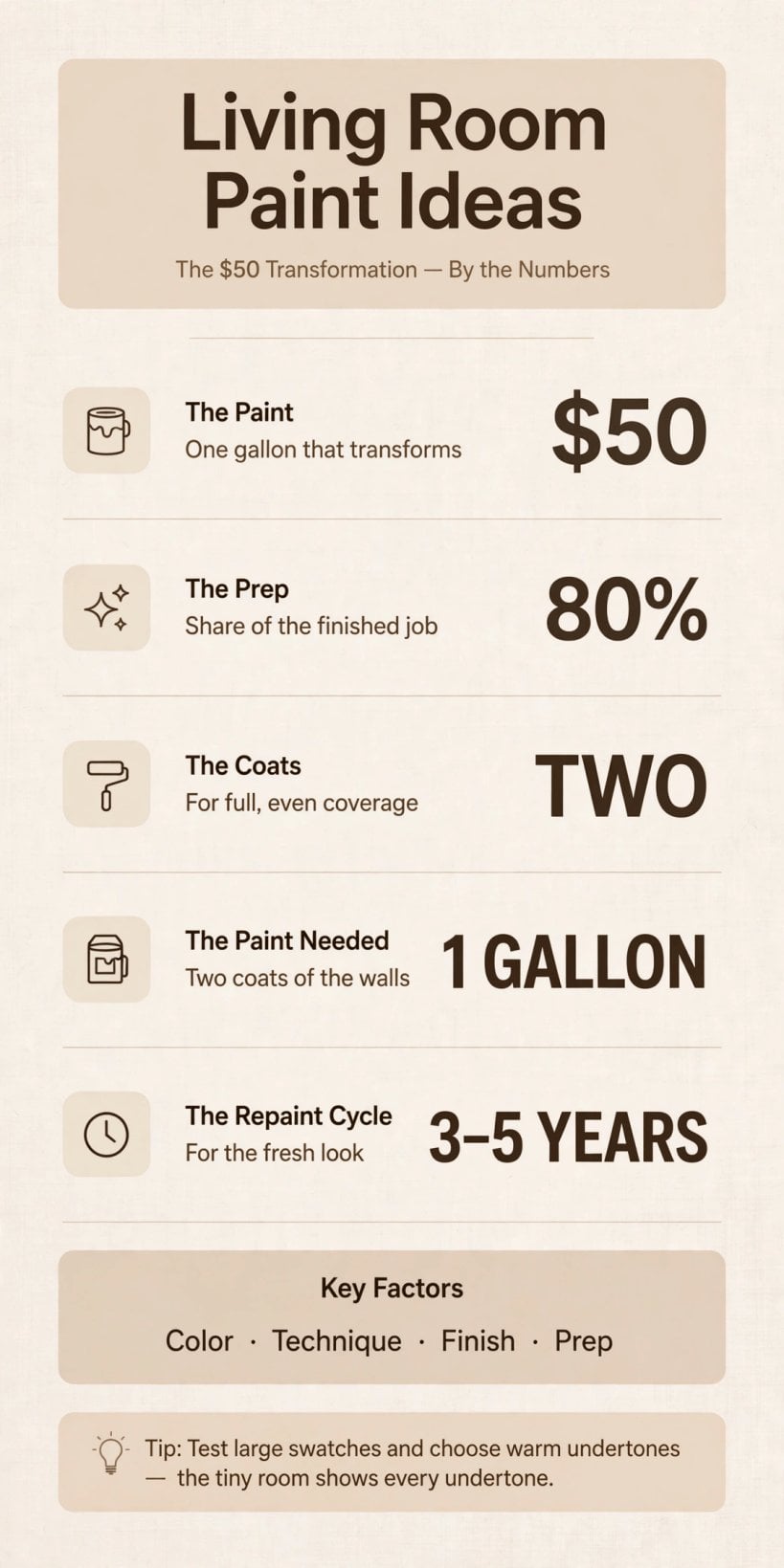
Paint by the numbers: a $50 gallon, prep at 80% of the job, two coats for full coverage, one gallon for the walls — and a 3–5-year repaint cycle that keeps the room fresh.
1. Why Paint Matters Most in the Tiny House
No other change in a tiny house does so much for so little. Paint is the cheap transformation: a single gallon — the $50 gallon — recolors every wall the eye touches. It is the fast transformation: a weekend takes a room from tired to renewed, where other projects take weeks. And it is the total transformation: because a tiny living room is all field and no distance, the color is the room — its size, its mood, its light. The rule the original gives it is the whole guide in one line: paint is the tiny house’s magic, precisely because its impact is disproportionate to its cost.
That disproportion is why paint deserves the same care as layout: in an open tiny plan, the living room’s color is seen from every seat — and alongside the kitchen, the loft and the entryway too — so this guide treats it as whole-home design, the approach set out in our tiny house interior design ideas guide. The sections follow in the job’s real order: color, accent, techniques, surfaces, finishes, and the craft of putting it on.
2. The Best Colors for Tiny Living Rooms
Four colors carry nearly every successful tiny living room. White is the expansive classic, the most light-reflecting field a small room can wear. Warm white is its cozier sibling: the same expansion without the starkness, warmed by its undertones. Light gray is the modern calm, a cool-neutral field. And greige — the gray-beige between the two — is the versatile beloved, warm and neutral at once, forgiving with wood and textiles. The rule underneath all four: the light expands the tiny. A light field reflects light, the eye travels further, and the walls step back.

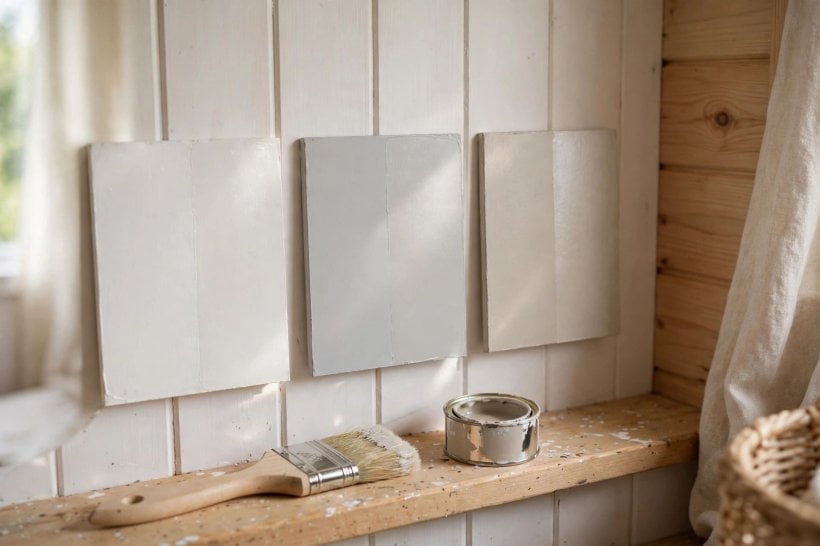
The color questions are answered by that one rule. What color makes a tiny living room look bigger? The light and the warm — whites, warm whites, light grays, pale greige: the light reflects, the eye travels, the room expands, while the dark advances and serves as the accent, not the field. Should the walls be white? The warm white, yes — the tiny house’s best friend; the stark white can feel cold, but the warm white, with yellow undertones, feels expansive and cozy together. And how is a color chosen? From large swatches, observed in all lights, warm undertones preferred — the tiny room shows every undertone, so test bigger than you think. The stripped-back end of this palette is explored in our guide to minimal interior design ideas for tiny houses.
3. The Accent Wall: One Wall, Deep Color
Against the light field, one wall is allowed to go deep. The accent wall is the single — one wall, chosen deliberately, carrying the room’s depth. Its color can be dark, the moody and the cozy, wrapping the seating end of the room like a held breath. Or it can be bold, the personality note, the one place the home states its taste out loud. What it cannot be is plural: the rule is that the accent is the one — the restrained. Two accent walls in a tiny room are not twice the depth; they are a smaller, busier room.
That restraint answers the dark-paint question: can dark paint work in a tiny living room? Yes — as the one accent wall, the cozy nook, the enveloping gesture. Used intentionally, the dark recedes, making the wall disappear rather than advance — which is why a deep wall behind the sofa can make a small room feel deeper, not smaller. The all-dark tiny room exists too: the brave and the beautiful, but a whole-room commitment, chosen on purpose. The room built around this kind of moody, restful corner is the subject of our guide to tiny house lounge design ideas.
4. Paint Techniques and the Two-Tone Room
Flat color is only the beginning; technique is what makes paint look designed. Limewash brings the texture — the European finish whose soft, cloudy movement gives a plain wall plaster’s depth. The color block brings the zones: a block of deeper color painted to define a function — the reading corner, the dining spot — in a room too small for partitions. The half-wall brings the grounded and the architectural, color carried to chair height. And the ceiling, treated next, is the fifth wall — painted, it lifts the whole composition. The rule: the technique adds the interest flat paint alone cannot.
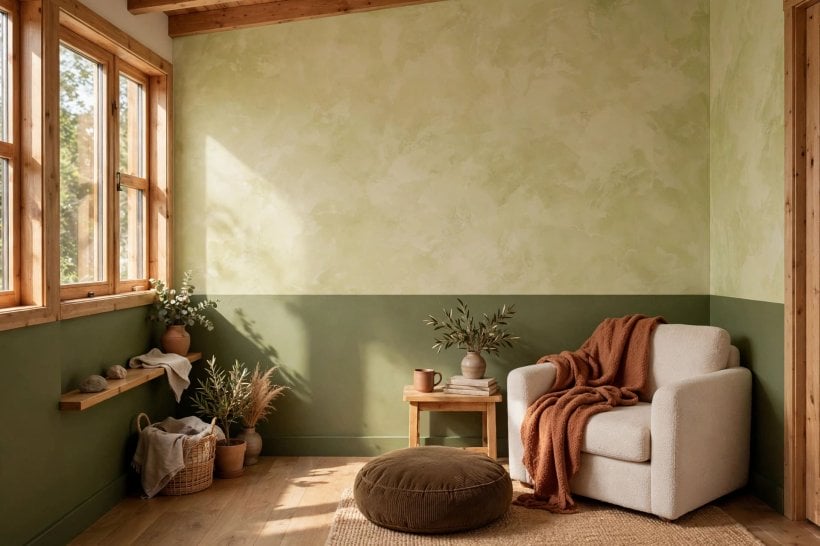
The two-tone room is the technique family applied to the whole space. Its classic form is upper-lower: the wall divided horizontally, the deeper tone below and the light above — the divided, the architectural, grounding the room without darkening its light. Its subtler form is inside-out: the nook painted in its own tone, a room within the room. Both obey the same truth: the two-tone zones the painted — color doing the work walls and furniture do in larger homes.
5. The Ceiling and the Trim
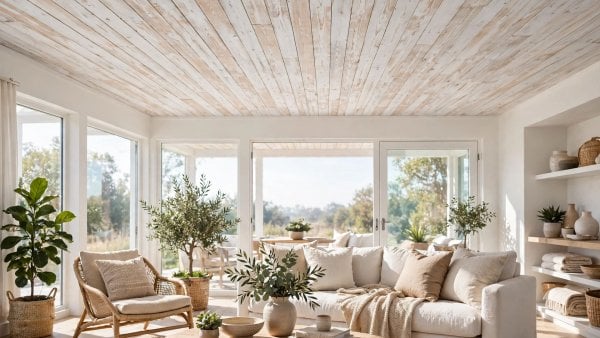
The ceiling is the most-forgotten painted surface and, in a tiny house, one of the most powerful, because it sits close above everything. Painted white, it is the lifted — the standard, and the right default where height is scarce. Painted in color, it becomes the enveloping — the cozy choice that lowers the visual ceiling on purpose and makes the room feel held. Either way, the rule is that the ceiling is the paint — the considered: a decision made, not a surface left over.
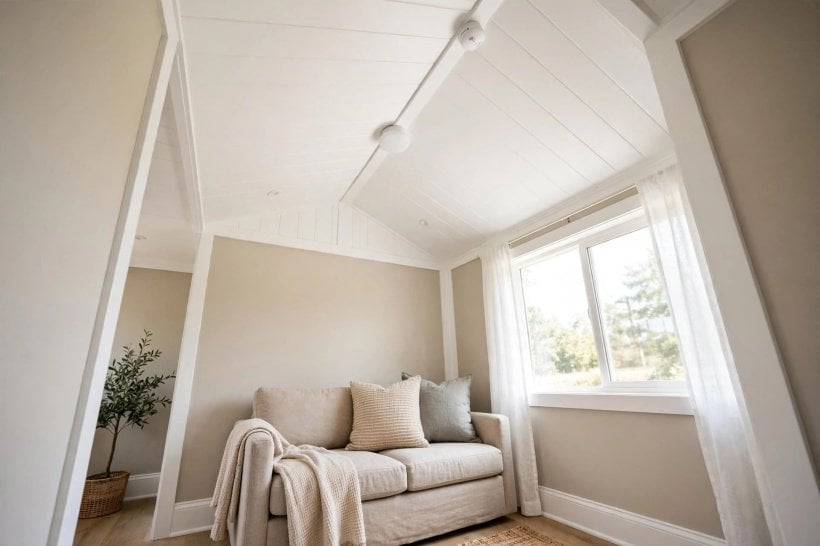
The trim is the frame the painting hangs in. White trim is the crisp classic, the bright edge that makes wall color look intentional. Trim painted the same as the walls is the seamless choice — the modern, unbroken envelope. Dark trim is the dramatic, the framed: a dark line that turns doors and windows into pictures. The rule: the trim finishes the painted. Going deeper, the wider framework is in our tiny house and small-space interior design hub and the room-by-room treatment in our living room interior design ideas for tiny houses.
6. Finishes, the Sheen Guide and the Primer Question
Color is only half the decision; the finish decides how the surface lives. The sheen guide is short and settled. Flat is for the ceiling — the hiding finish, whose matte surface forgives every imperfection above your head. Eggshell is for the walls — the living finish, the standard for lived-in rooms. Satin is for the trim — the wipeable, a touch more sheen where hands and scuffs land. And semi-gloss is for the doors — the durable, the hardest-wearing of the four. The rule: the sheen serves the surface — eggshell on the walls, satin on the trim, flat on the ceiling.
Under the finish sits the primer question, answered by situation. On new drywall, prime — the surface sealed and primed, or the topcoat soaks in unevenly. Going dark-to-light, prime — the old color blocked, or it ghosts through. Paint-plus-primer is the convenient and the adequate, on a sound surface in a similar color. The rule: the primer is the insurance — the cheap. The brand question is answered by tier, not name: the quality tier of the major brands, for coverage, durability and washability. The tiny shows everything — the good paint is the worth it.
7. Beyond Paint: Wallpaper, Shiplap, Murals and the Chalkboard Wall
Some walls earn more than paint, and the alternatives work best where the accent wall works: on the one wall. Wallpaper is the one wall — the pattern, a single patterned surface that gives the room its textile note at full scale. Shiplap is the painted — the texture: boards whose shadow lines add architecture to a plain box, painted in the field color so texture, not a new color, does the work. And limewash returns as the alternative proper — the movement, the depth. The rule holds the family together: the alternatives accent the paint — the exception that proves the field.
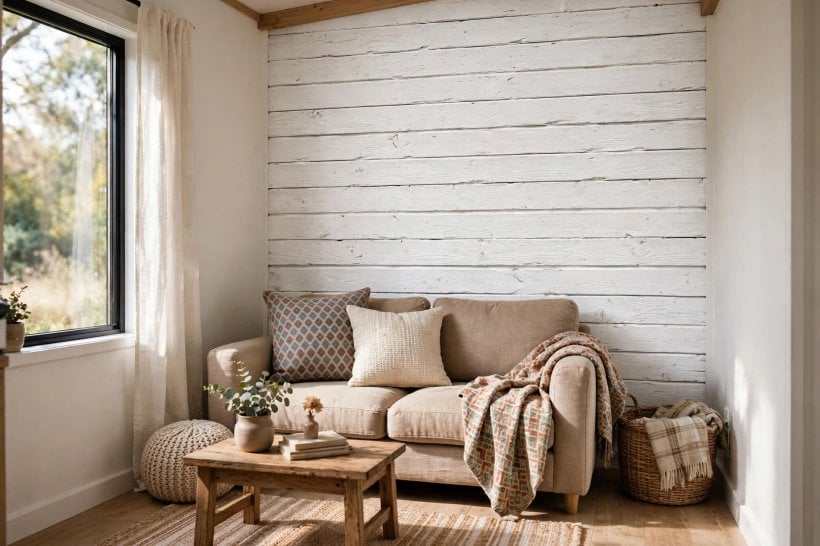
Two statement walls complete the family. The mural wall is the one — the artistic, the statement: a painted landscape whose depth works like a window, opening the smallest wall onto distance; its tiny-house form is the DIY — the stenciled, the personal. The truth: the mural is the art — the wall. The chalkboard wall is its playful opposite: the fun, the changing surface that hosts the lists and the notes and delights the kids, who get a drawing wall that never runs out. The truth: the chalkboard plays — the wall. The finishing layer around all of these is worked through in our guide to tiny house decorating ideas.
8. The 10 Commandments, the Prep and the Application
The whole craft compresses into the ten commandments of tiny paint: test the large swatches; choose the warm undertones; lighten the field; accent the one wall; paint the ceiling considered; finish the trim crisp; prep the surfaces; cut the clean lines; coat the twice; enjoy the transformation. The prep the seventh commandment demands is most of the job: the surfaces cleaned — the washed, the degreased; the holes filled and sanded; the edges taped — the crisp, the protected; the primer sealing it — the sealed, the adhered. The rule: the prep is the paint — the 80%. Four-fifths of a beautiful finish is decided before the color is opened.
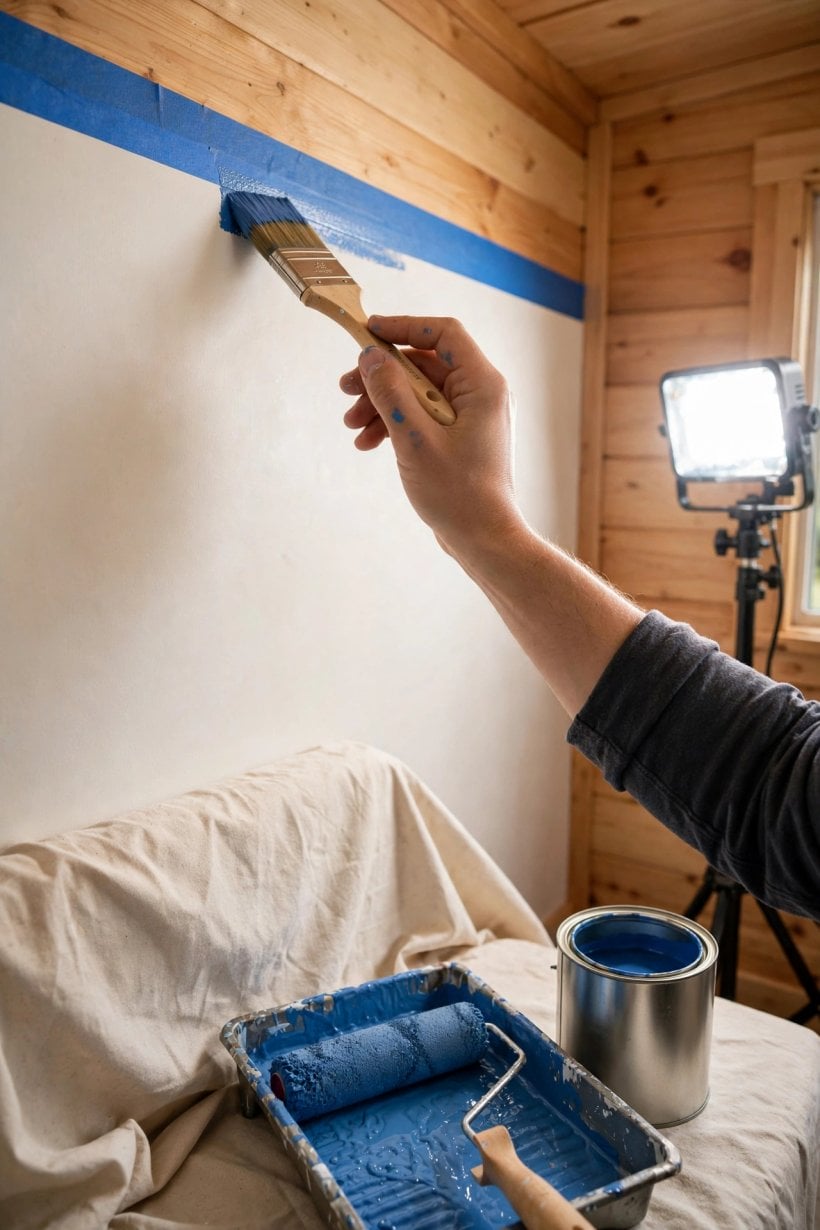
The application is a short, practiced craft. The cut comes first: the edges, brushed in along tape and ceiling line. Then the roll: the walls, rolled even, in sections kept wet. The coats are the two — the full coverage one coat only promises. The dry is the between — the patient pause between coats. The rule: the application is the craft — the practiced. Four questions gather here. How much paint does a tiny living room need? One gallon for two coats of the typical walls; the trim the quart; the ceiling a gallon if painting — the tiny sips paint, so buy the good stuff. Can you paint it yourself? Absolutely — the perfect DIY project: the weekend, the good brush, the careful prep; the self-painted tiny is the loved tiny. Behind heavy furniture? Move what you can, brush behind the rest, and reach with a roller on an extension — the hidden spots show when furniture moves. Mistakes? The sand, the re-prime, the re-coat: the tiny forgives, and the fixed mistake is the learned lesson.
9. Mistakes to Avoid and the Color Psychology
Four mistakes account for nearly every disappointing tiny paint job — each one a rule from this guide, broken. The tiny swatch is the surprise: a color judged from a two-inch chip arrives different at wall scale. The cool white is the stark: a blue-undertone white makes a small room feel colder and smaller. The one coat is the patchy: the skipped second coat shows every roller line. And the no prep is the peeling: paint on unwashed, unfilled walls lets go within the season. The cures are the rules themselves — large swatches, warm whites, two coats, prepped surfaces. The mistakes show — the tiny.
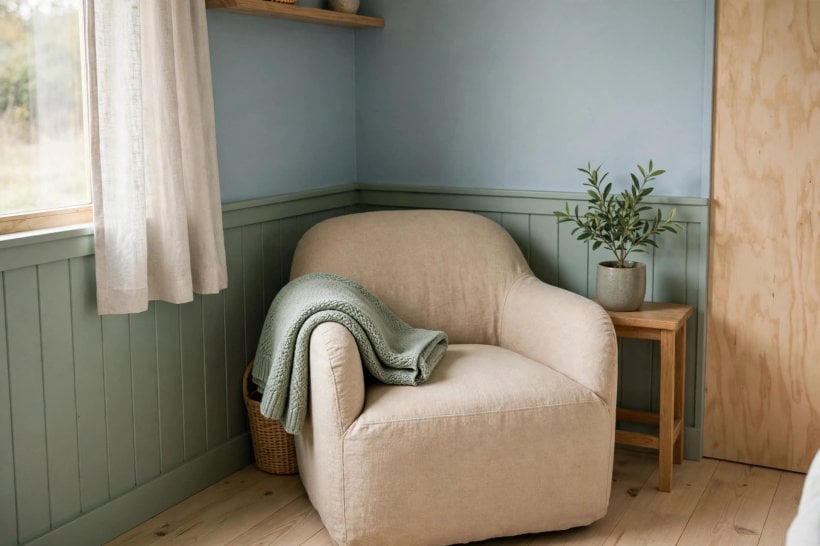
Underneath sits the psychology that makes the choices matter. Blue is the calm — the serene, the color of lowered voices and slow evenings. Green is the nature — the restful, the garden brought indoors. The warm colors are the cozy — the gathering, pulling people and furniture toward each other. The truth: the color feels — the designed. A tiny living room is too small for its mood to be an accident; the palette is chosen the way the calm homes in our guide to zen interior design ideas for tiny houses choose theirs — deliberately, for feeling first.
10. Keeping It Fresh: The Refresh, the Outside and the Payoff
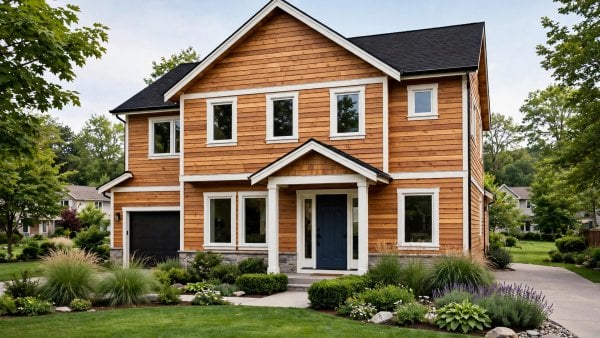
A painted room is not finished; it is maintained — and the tiny house makes maintenance cheap. The seasonal refresh is the accent repainted, one wall or note changed with the season: the room renewed for the price of a quart. The exterior follows the same logic: the siding, protected and beautiful in exterior-grade paint — the durable, the lasting — and the color the welcoming, the character of the house stated at the road. The rule: the exterior protects — the painted.
The front door deserves its own word, because no painted surface works harder per dollar: its color the bold — the welcoming; its cost the quart — the enough, the cheap; its impact the disproportionate — the delightful. The truth: the door is the smile — the house. The payoff is just as outsized: the fresh — the renewed, the loved; the value — the added, the cheap; the joy — the transformed, the daily. The truth: the paint is the renewal — the $50. Choose, prep, paint — the transformation awaits.
Keeping it fresh is a kit and a habit: the leftover paint, labeled and stored; the small brush, ready; the yearly walk, touching what the year has scuffed. The rule: the touched-up stays the fresh. Stored right — sealed airtight, labeled with room and date, kept cool — leftover paint serves touch-ups for years. A full repaint? Every 3–5 years for the fresh, sooner for the scuffed: the tiny shows wear faster, and the touch-up between is the quick and the worth it.
The last hour is its own reward. The cleanup completes the job — brushes washed and kept, rollers rinsed and reused, tape pulled timely, while the edge is fresh — and then the reveal: the crisp edge, the furniture back, the standing back to admire the transformed. The truth: the reveal is the reward — the painted. Next comes the next room: the confidence gained, the bedroom next — the calm — and finally the whole house transformed, because the one room leads the all. Last, the painter’s pride: the done, the proud; the shown, the friends impressed; the lived, the daily, the loved. The painted is the proud — the always. Carrying that confidence through the rest of the home is the work of our guide to interior design home decorating ideas for tiny houses.
Final Considerations
Living room paint ideas are the tiny house’s fastest design tool — the color that expands, the accent that deepens, the finish that refreshes. Choose the warm light field, restrain the accent to one wall, match the sheen to the surface, and prep like the finish depends on it, because it does. The $50 transformation, beautifully applied. Paint it well.

0 Comments