

Green walls turn an ordinary sitting room into the place everyone drifts towards. The trick is pairing the shade with the right sofa, colours and light.
These 75 ideas for rooms with green walls show how to do exactly that, from sage and olive to deep forest tones, with layouts that suit small and generous spaces alike.
1. Rooms With Green Walls at a Glance: Shade, Sofa, Colour and Light
| Decision | Popular options | Quick tip |
|---|---|---|
| Green shade | Sage, olive, eucalyptus, emerald, forest, bottle green | Test the colour in daylight and lamplight before committing |
| Sofa colour | Cream, oatmeal, camel, blush, mustard, ink blue, charcoal | Light upholstery lifts deep greens; dark upholstery deepens pale greens |
| Accent colours | Brass, clay, terracotta, warm white, natural oak, black | Repeat each accent at least twice so it looks deliberate |
| Flooring and rugs | Pale wood, jute, wool rugs in cream or patterned vintage styles | A lighter floor keeps a green room feeling airy |
| Lighting | Ceiling light, floor lamp, table lamps, picture lights | Layer warm light at different heights for evening depth |
| Finishing touches | Plants, art with warm frames, cushions in linen and velvet | Plants against green walls create a calm, tonal garden feel |
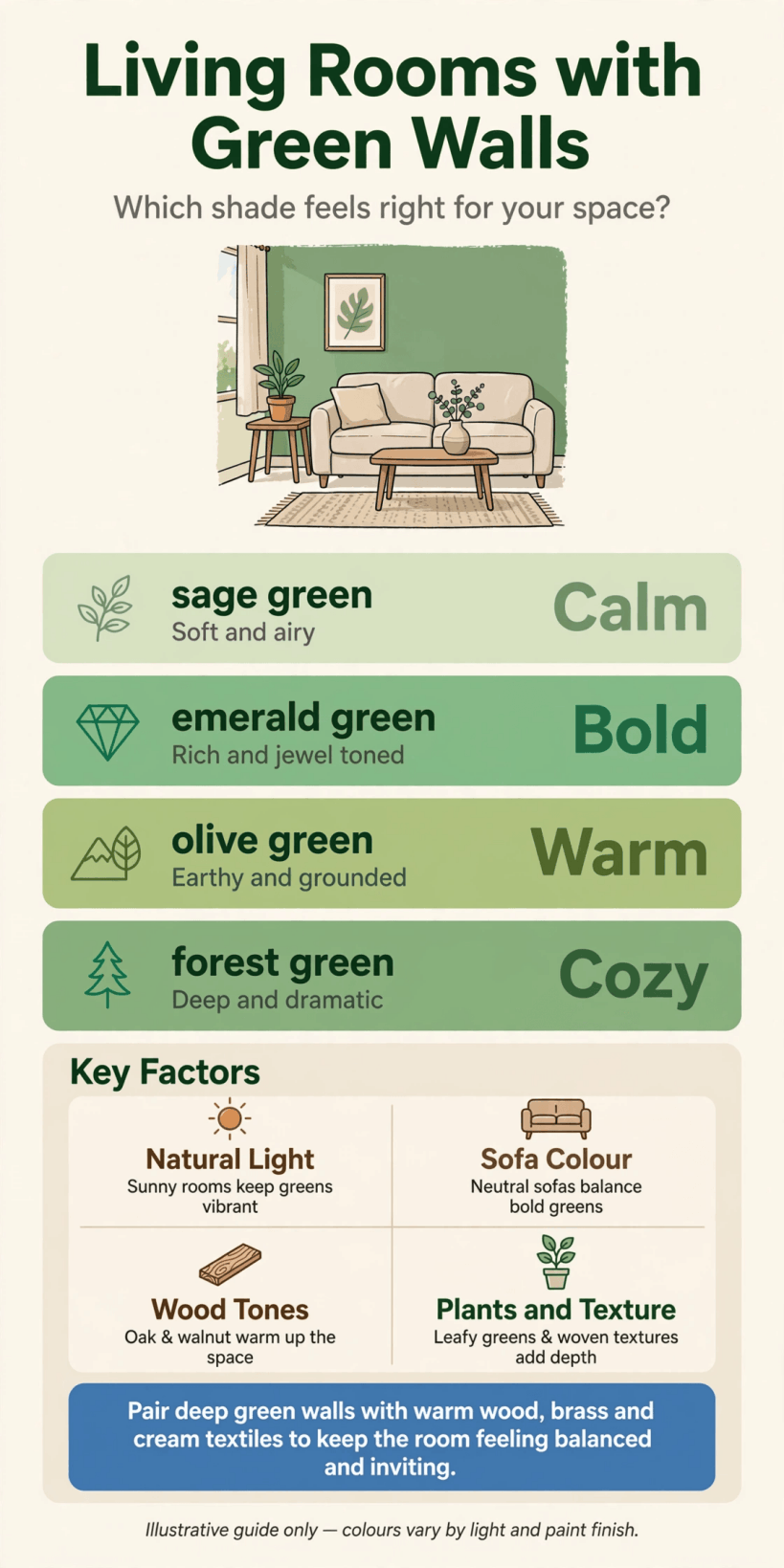
A quick visual guide to matching green walls with sofas, accent colours and layered lighting.
Green is the most forgiving of the strong colours because our eyes read it as nature. It can be a neutral backdrop in its grey-leaning forms, like sage and eucalyptus, or a full-hearted statement in emerald and forest shades. Either way, the wall colour is only the first decision: the sofa in front of it, the colours beside it and the light falling across it decide whether the room feels restful, dramatic or somewhere happily in between.
Before you paint, gather your fixed points. Flooring, the sofa you already own, the direction the windows face and the artwork you love all narrow the right green far better than a paint chart alone. Paint large swatches on more than one wall, live with them through a full day of changing light, and then build the rest of the scheme around the shade that survives both breakfast sunshine and evening lamplight.
2. Choosing Your Green: Shade, Depth and Daylight
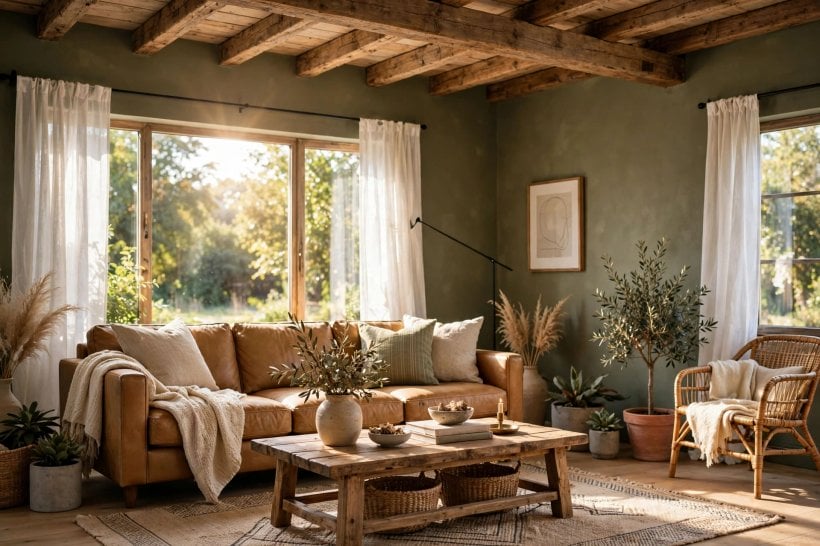
Start with the light your room actually gets, because green is a shapeshifter. In a bright, south-facing space, cool and grey-leaning greens stay calm and sophisticated, while warm, yellow-leaning greens can tip towards lime. In a darker, north-facing room, richer and warmer greens, olive, forest and deep eucalyptus, add the cosiness the daylight withholds, and artificial light will make them glow in the evening.
Depth is the second decision. A single deep feature wall behind the sofa gives drama with an easy exit if you change your mind, while colour drenching, painting walls, woodwork and even the ceiling in the same green, creates a cocoon that makes furniture and art float. Pale greens behave almost like neutrals and suit renters of sunlight as much as owners: they freshen a room without darkening it, and they pair with almost everything you already have.
Test honestly. Paint swatches at least the size of a cushion, look at them beside your sofa fabric and flooring rather than against white, and check them on a grey day as well as a sunny one. Paint brands describe undertones on their charts, and ordering sample pots of your final two is money well spent. For more ways to anchor a scheme, these tiny house living room interior design ideas show how colour choices work in compact spaces.
3. Sofas That Love Green Walls
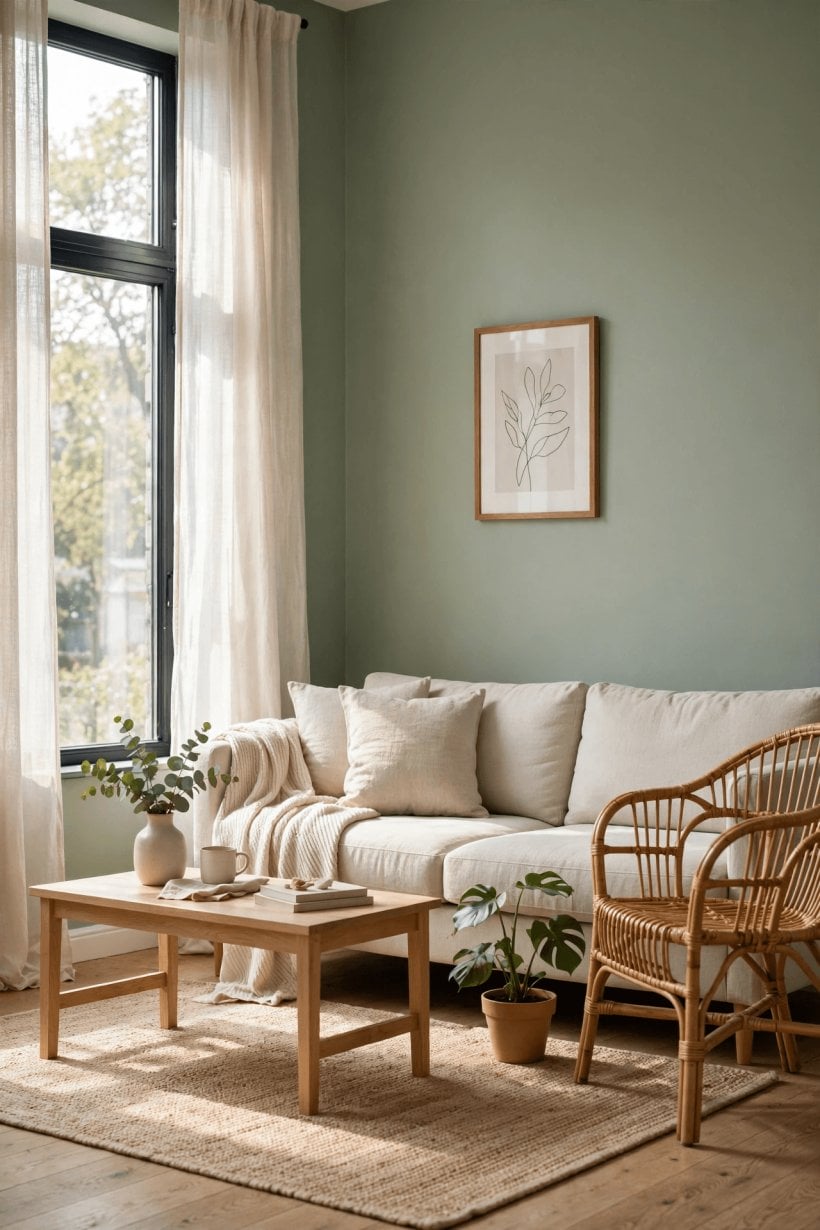
The sofa is the largest block of colour after the walls, so this pairing makes the room. Cream, oatmeal and warm white sofas are the classic partners for deep green: the contrast is crisp, the feel is calm, and patterned cushions can roam freely. Against pale sage walls, the same light upholstery creates a soft, tonal scheme that suits Scandinavian and cottage styles.
For a richer mood, try the tonal route: a velvet sofa in a green a few shades deeper or lighter than the walls, broken up with cushions in cream, ochre or rust. Camel and tan leather are naturals here too, warming green the way a leather chair warms a library, and they age gracefully in family rooms. Mustard and ochre upholstery bring sunshine to bottle green, while ink blue and charcoal create a moody, club-like pairing that suits evening rooms and film nights.
Fabric matters as much as colour. Velvet catches light and deepens green’s jewel quality; linen keeps things breezy and matte; leather adds sheen and practicality where children and dogs rule. Order fabric swatches and tape them to the wall at sofa height, then judge the pairing in lamplight, because that is when the room will do most of its work. If a new sofa is not on the cards, a well-chosen throw and cushion set can re-partner an existing sofa with green walls surprisingly well, a trick used throughout these tiny house living room paint ideas.
4. Colours That Sit Happily Beside Green
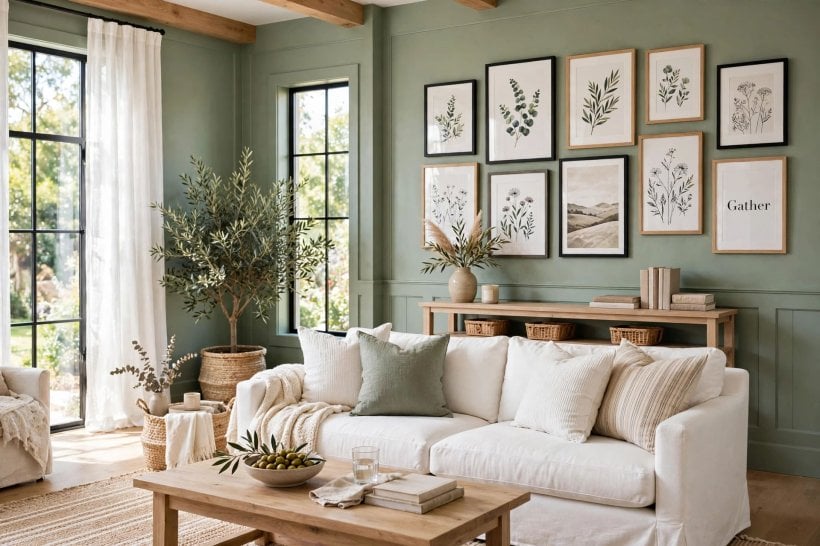
Green sits opposite red on the colour wheel, which is why its warm neighbours, blush pink, terracotta, clay and rust, feel so alive against it. Used in cushions, art and ceramics, these tones stop a green room feeling cold and are especially kind to deep greens in winter. Blush with sage is soft and modern; terracotta with forest green is earthy and grounded.
On the cooler side, blues are green’s family. Ink, navy and teal deepen a scheme without fighting it, lovely for cushions, a patterned rug or a painted bookcase on an adjoining wall. Whites need care: bright blue-whites can look stark and chilly against green, while warm, creamy whites flatter almost every shade. Black, used sparingly in picture frames, lamp bases or a fireplace surround, sharpens the edges of a soft scheme and stops it drifting into sweetness.
The safest way to build a palette is the repeat rule: every accent colour should appear at least twice, ideally three times, in different materials. A rust cushion, a rust-toned artwork and a clay vase will read as a designed scheme, while a single pop of anything reads as an accident. Keep a photo of your room on your phone when shopping, and hold finds against it before buying.
5. Fabrics, Patterns and Texture Layering
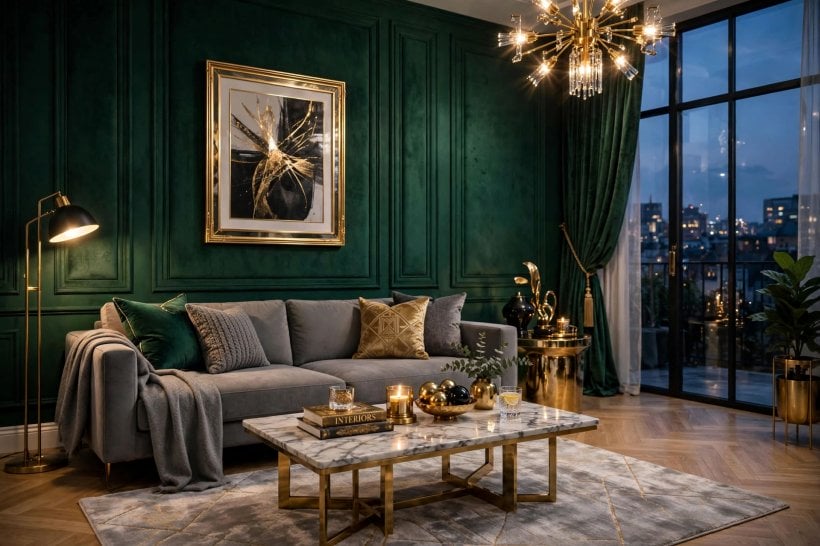
Flat colour needs texture to feel finished, and green walls are the perfect excuse to layer. Start with the big soft surfaces: a wool or jute rug underfoot, linen or cotton curtains at the windows, and a sofa fabric with a visible weave. Then mix cushion fabrics deliberately: velvet against linen, a knitted throw against smooth cotton, so the seating corner feels collected rather than matched.
Pattern loves green because the wall acts like the foliage in a garden, a calm background that lets florals, stripes and geometrics perform. A botanical print cushion on a cream sofa against sage walls is almost foolproof, while a striped throw adds structure to a plain emerald scheme. Keep patterns in the same colour family as your palette, vary their scale, one large print, one medium, one small, and they will layer without shouting over each other.
Do not forget the hard textures. Rattan, cane and woven baskets bring the garden indoors and echo green’s natural roots; smooth ceramics and glass bounce light around; aged leather and raw timber keep the scheme grounded. If you are styling shelves or a media wall as part of the room, the arrangements in these tiny house living room ideas show how texture carries a compact scheme.
6. Furniture, Wood Tones and Metal Finishes
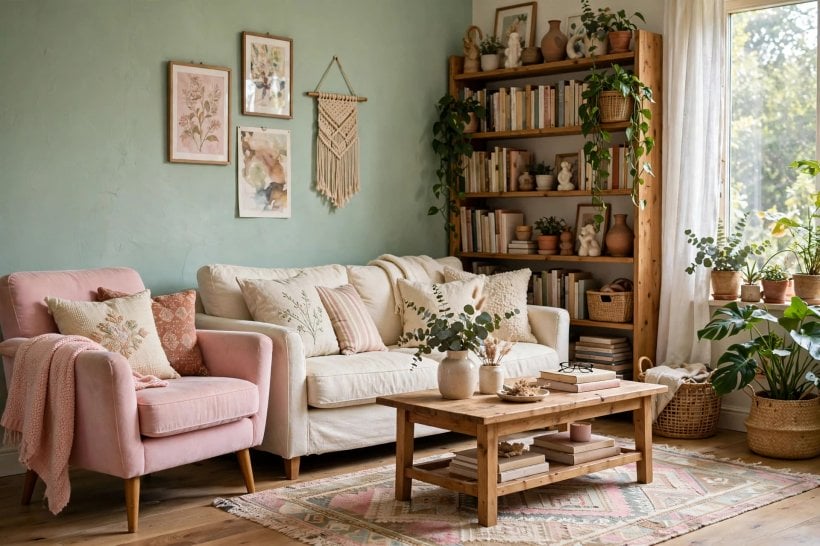
Wood and green are old friends. Pale oak and ash keep sage and eucalyptus rooms feeling Scandinavian and light, while mid-tone walnut and teak bring out the richness of emerald and forest walls. Very dark stained wood can disappear against deep green, which is fine for side tables you want to recede, but lift it with a light rug beneath or a lamp above so the corner does not go flat.
Metal finishes are the jewellery of the scheme. Brass and aged gold are the natural partners for green, warming it the way sunlight warms leaves, and they suit lamp bases, curtain poles, picture frames and cabinet handles. Chrome and polished nickel cool a scheme down and suit grey-greens and modern rooms, while matte black gives crisp definition against pale green. Pick one main metal and one supporting act rather than mixing all three equally, and the room will feel considered.
Layout still matters more than any single piece. Pull the sofa a few centimetres off the green wall so a shadow line separates furniture from paint, angle an armchair to break up long walls, and let one piece of furniture, a pale oak bookcase or a cream boucle chair, act as the light note against the green. More layout thinking lives in these tiny house home design ideas, which translate well to rooms of any size.
7. Windows, Curtains and Natural Light
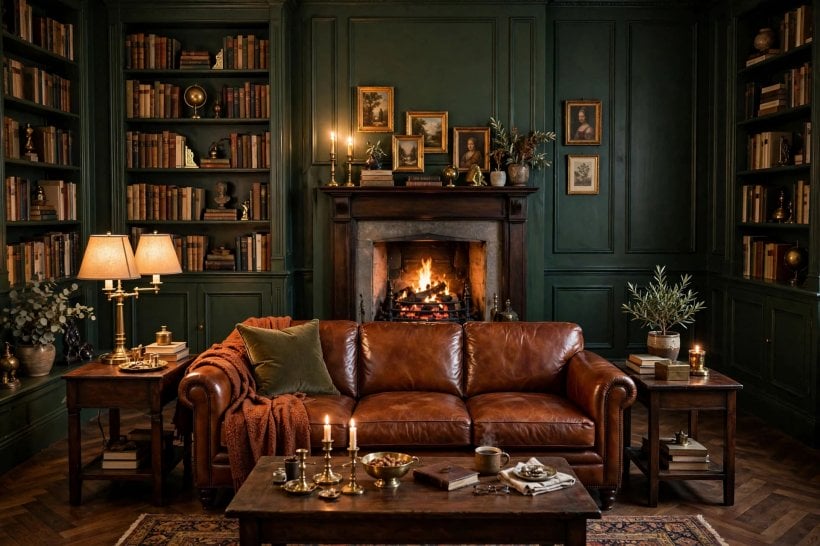
Daylight is green’s best friend and its strictest critic. Watch how your chosen shade behaves at the window wall compared with the wall opposite: the same paint can read fresh beside the glass and moody across the room. That gradient is part of the charm, but it argues for choosing your green in the room’s dimmest corner if you want an even-tempered result.
Window dressings steer the light and the colour story together. Sheer linen curtains soften strong sun and stop deep green fading unevenly, while full-length curtains in a warm neutral or a tonal green add height and theatre. Roman blinds in a botanical print are a neat answer where radiators or sofas sit under the sill. Keep curtain poles in your chosen metal finish, and hang curtains wide of the frame so they frame the glass rather than stealing its light.
Mirrors earn their keep in green rooms, especially deeper schemes. A mirror opposite or beside a window bounces daylight onto the walls and doubles your plants and art. Glass-fronted cabinets and glossy ceramics do similar small favours. In a room that faces away from the sun, these reflective touches, plus a pale rug and ceiling, are what keep a brave green feeling atmospheric rather than cave-like.
8. Layered Lighting for Day and Evening
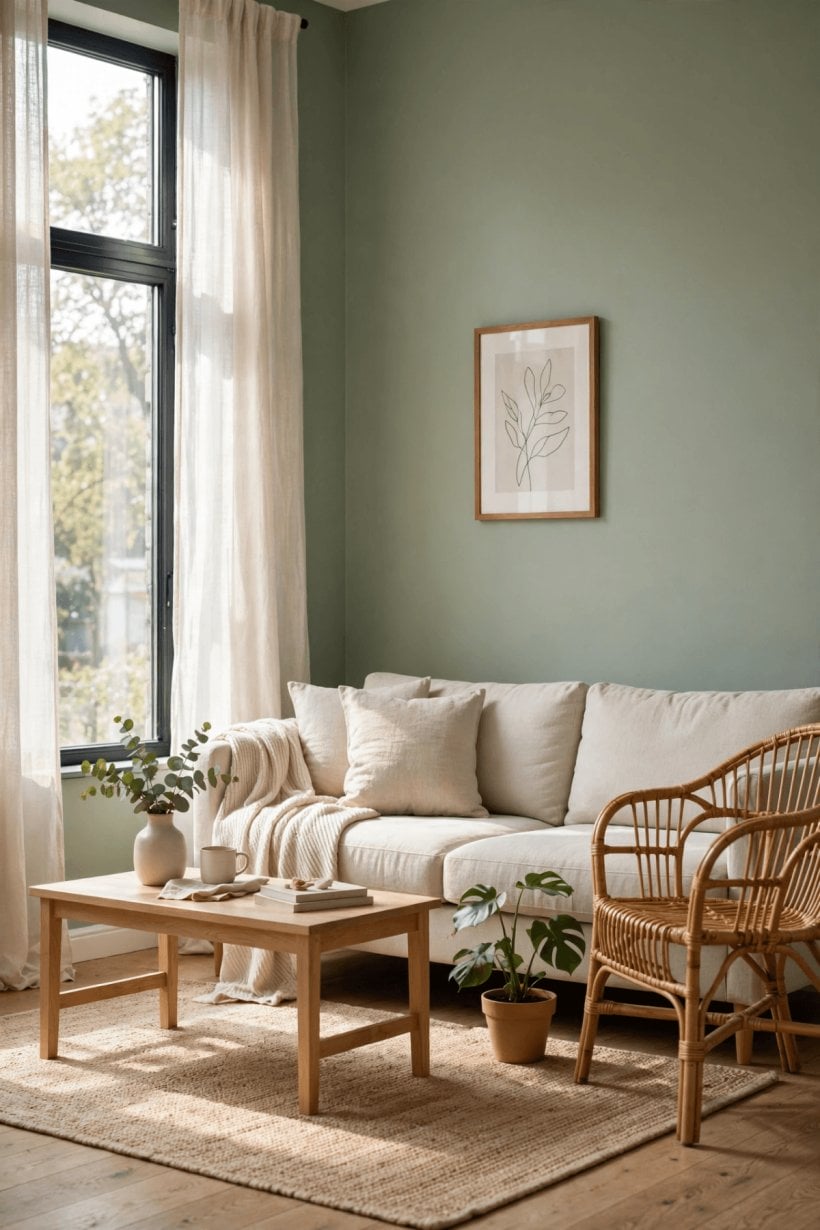
Green walls drink light, so plan for more of it, in more places, than you would with white walls. Work in three layers. Ambient light from a ceiling fitting or discreet downlights gives the base. Task light, a floor lamp arching over the reading chair, a table lamp beside the sofa, does the practical work. Accent light, picture lights over art, a small lamp on a bookcase, candles on the mantel, creates the evening glow that makes green feel luxurious.
Bulb warmth is crucial. Warm-toned bulbs flatter green and skin alike, while cool, blue-leaning light can turn sage grey and emerald icy. Put the main lights on dimmers if you can, because a green room’s party trick is changing mood: bright and fresh for a Sunday morning, low and cocooning for a film night. Matching your lampshades helps too: cream and natural linen shades warm the light further and repeat the soft neutrals in the scheme.
Place lamps where the green is deepest, in corners and alcoves, so no part of the room falls flat after dark. A pair of table lamps flanking a sofa against a green wall is one of the most reliable compositions in this whole collection: symmetry, warm pools of light and a wall that glows like a garden at dusk. For the screen corner of the room, these tiny house home theater ideas show how low light and deep colour work together.
9. Art, Plants and Finishing Touches
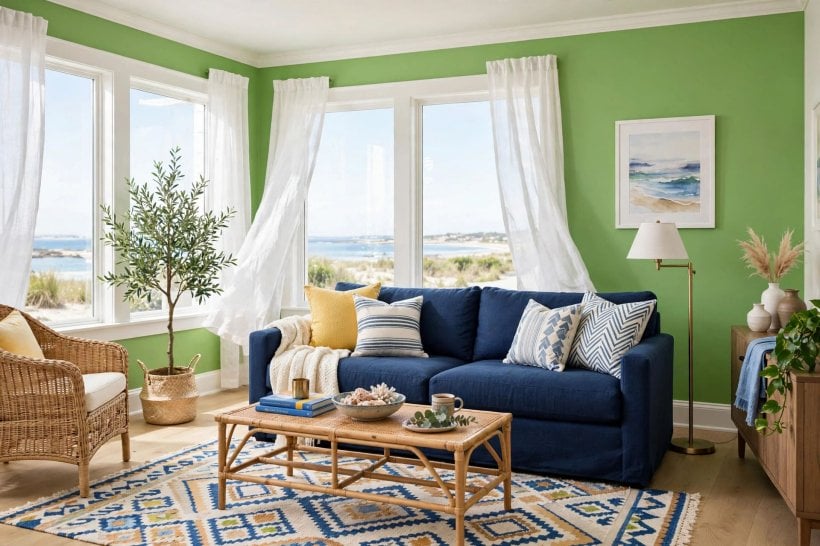
Art changes its personality on green walls. Landscapes and botanical prints feel at home, black and white photography turns crisp and gallery-like, and warm abstract pieces with ochre, rust or cream pull the whole palette together. Frames in brass, pale oak or black all work; the trick is consistency across a wall. Hang a gallery grouping slightly lower than you would on white, because dark walls make art feel more intimate, and light your favourite piece if you can.
Plants are the obvious finishing touch, but they still need arranging. Against green, foliage becomes tonal texture rather than a colour pop, so vary leaf shapes and heights: a tall plant in a corner, a trailing plant on a shelf, a small sculptural one on the coffee table. Pale, stone and terracotta pots give the contrast the leaves no longer provide. If real plants struggle in your light, a single generous faux stem in a beautiful vase beats a crowd of sad specimens.
Finish with the small things that make a room yours: books with warm-toned spines, a folded throw in your accent colour, ceramics collected over time. Green walls are generous hosts; almost everything looks a little more considered against them. The same eye for planting and finishing applies outdoors, as these tiny house landscaping ideas show for the other side of the window.
10. Small Rooms, Rentals and Low-Commitment Greens
Small living rooms are where people fear green most, and where it often works best. A deep green on all four walls blurs the corners and makes a compact room feel like a snug retreat rather than a small box, provided the sofa is light, the rug is pale and the lighting is layered. If that feels brave, paint the wall behind the sofa and keep the rest warm white; the green still does the atmospheric work where you sit.
Renters and the commitment-shy have good options. Peel-and-stick wallpaper in botanical or plain textured green covers a feature wall without touching the paint, and it is worth checking the manufacturer’s removal guidance before you order. A large green rug, green curtains and a green-painted bookcase or media unit can build the same mood on top of neutral walls, and every piece travels with you when you move.
Whatever your constraints, borrow the planning habit from bigger projects: decide the palette, test it in your light, then buy in the order of walls, sofa, textiles, light. The step-by-step mindset in how to make a cheap tiny house applies surprisingly well to a single room refresh: small budget, clear sequence, no wasted purchases.
Final Considerations
Green walls succeed when three things agree: the shade suits your daylight, the sofa and accents are chosen to partner it, and the lighting is layered warmly enough to carry the colour into the evening. Get those right and green stops being a brave choice and becomes the most restful backdrop you have ever lived with.
Test your final shade at scale, live with it for a day, and build outwards from the pieces you already love. Whether you land on whisper-soft sage or full forest drama, your living room will feel calmer, richer and unmistakably yours.


0 Comments