
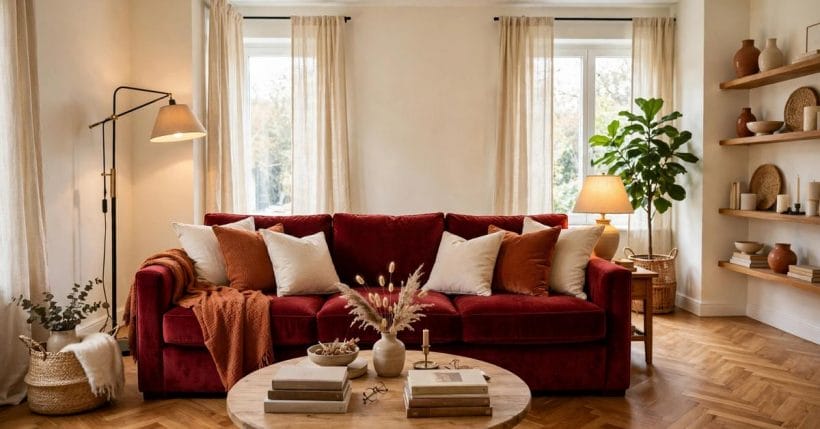
Red brings warmth, energy and confidence to a living room, but it asks for a steady hand. Used boldly on every surface, it can overwhelm a room; used with one clear anchor and calm companions, it makes the room feel welcoming in every season. This guide gathers seventy-five ideas for living rooms where red is the hero, covering layouts, sofas, colours and layered lighting, so you can choose the amount of red that suits your home and your household. Whether you are starting from a single red chair or planning a whole room around a deep red sofa, the ideas below keep the colour liveable, balanced and easy to enjoy. For readers working with a compact home, the same principles shrink gracefully to smaller floor plans, while the companion survey of red living rooms in this guide keeps every idea firmly in the living room, not borrowed from bedrooms or dining rooms.
1. Starting with the Sofa
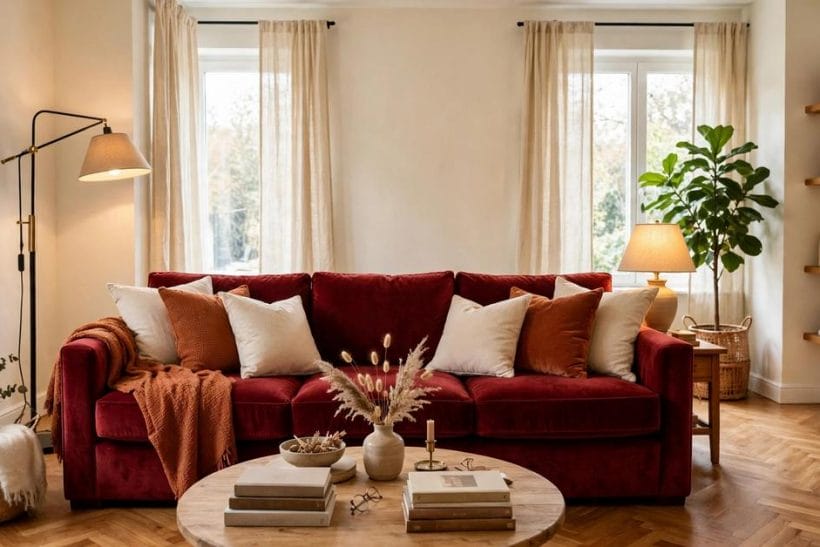
A red room usually starts with one decision: where the red lives. Beginning with the sofa keeps that decision clear, because the largest seat sets the tone for everything around it. The ideas in this section show how a red sofa, loveseat or chair can anchor a room without overwhelming it, and how to test the colour before it becomes permanent. See also our guide to tiny living room ideas for a neighbouring take on the same room.
| Item | What it is |
|---|---|
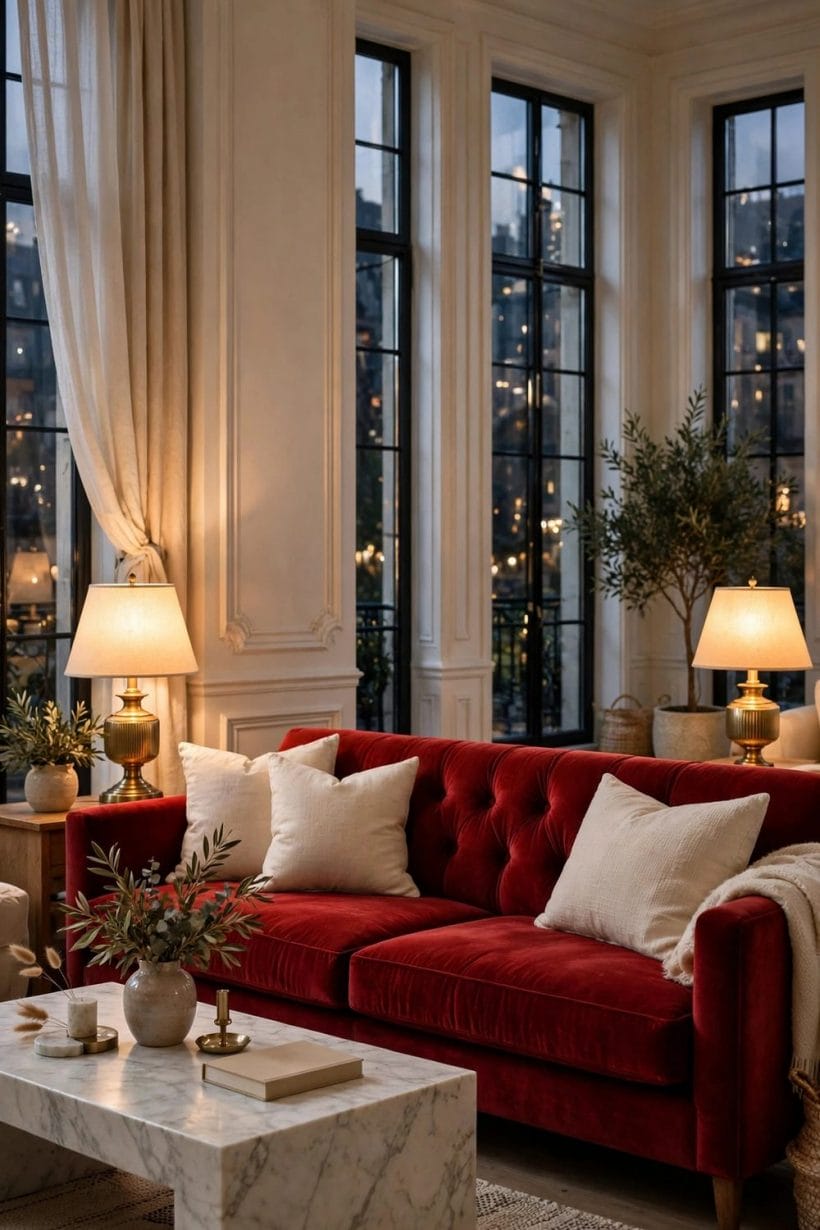
| A deep red sofa as the anchor | Let one deep red sofa carry the room and keep everything else quieter around it. |
| A red sofa against cream walls | Cream walls soften a red sofa without washing it out, and the contrast keeps the seating as the clear focus of the room. |
| A red loveseat for a smaller seating group | A red loveseat gives a smaller room a strong colour note without swallowing the floor plan. |
| Red as the second sofa, not the first | If a neutral sofa already owns the room, let a red chair or loveseat be the second voice rather than a rival. |
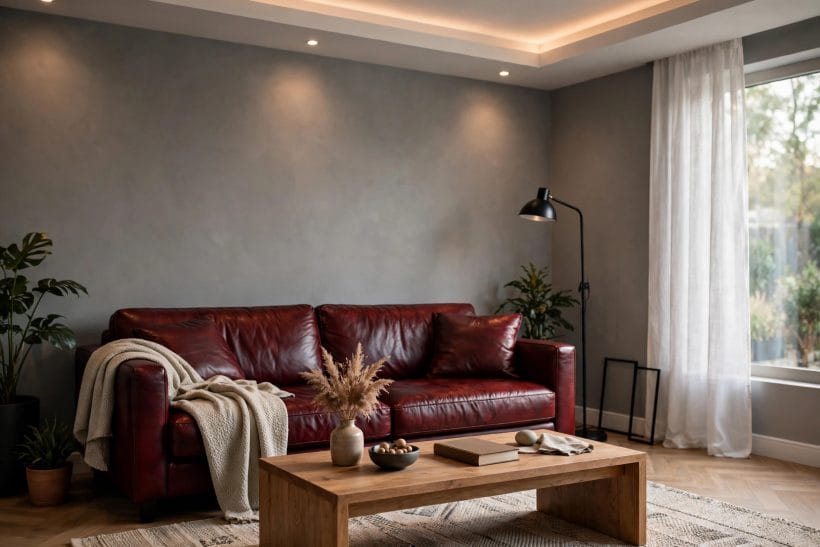
| A leather sofa in a dark red | Dark red leather brings a lived-in warmth that suits wood, brass and soft lamplight, and it ages gracefully with everyday use. |
| A velvet sofa for softness and depth | Velvet gives red a soft, light-catching surface that changes gently through the day as daylight moves across it. |
| Red sofa, neutral rug, warm wood | This simple combination works because each element has a clear job: the sofa supplies the colour, the rug quiets the floor, and warm wood adds natural warmth. |
| Testing a red sofa before committing | Before choosing a red sofa, live with the colour for a while by borrowing its tone in cushions, a throw and a piece of art. |
| One red wall behind the sofa | Painting a single wall red behind the sofa creates a strong backdrop without closing the room in. |
| A red wall in a room with tall windows | Tall windows help a red wall feel bright rather than heavy, because daylight washes across the colour all day. |
| Red panelling for texture, not just colour | Panelling adds shadow and line to a red wall, so the colour gains depth even in a plain room. |
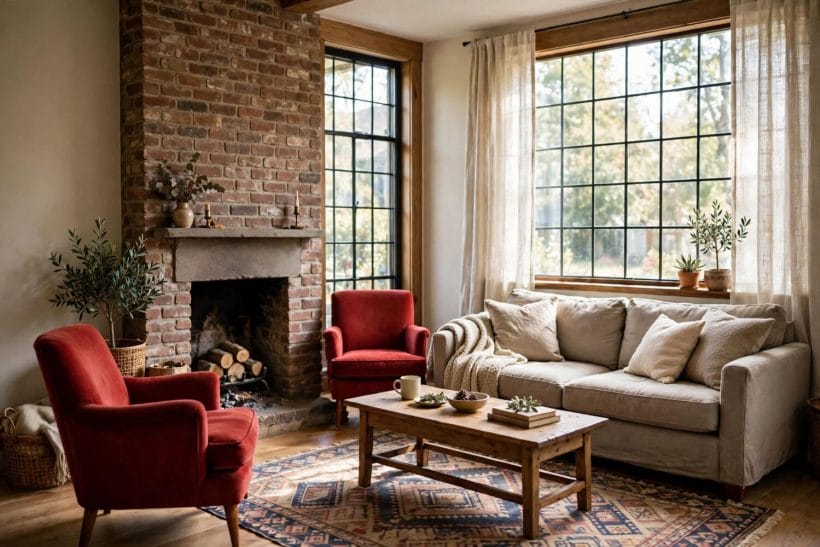
| A brick wall with red tones | A brick wall already carries red in its natural tones, and it suits a living room that leans rustic or relaxed. |
| Red in a hallway-facing living room | Where a living room opens to a hallway, carry red carefully across the threshold so the two spaces feel connected. |
| A soft red wash instead of a bold wall | A softer, muted red on the walls gives warmth without the drama of a deep shade, and it suits rooms that get less daylight. |
| Red above a chair rail, cream below | Splitting a wall at chair-rail height lets red sit above a calm cream lower wall, which keeps the room grounded. |
| When to leave the walls pale | Sometimes the best red room has pale walls, with red carried entirely by furniture and textiles. |
| Facing sofas with red between them | Two sofas facing each other across a coffee table make conversation easy, and red can sit on one side while the other stays neutral. |
| An L-shaped arrangement around a corner | An L-shaped seating plan suits a corner room, with a sofa along one wall and chairs or a chaise along the other. |
| A sofa with its back to the room | In an open-plan space, a sofa with its back to the dining area can quietly divide living from eating without a wall. |
| Chairs angled toward the fireplace | Angling chairs toward a fireplace creates a natural gathering spot, and red chairs make that spot feel warm even when the fire is unlit. |
| A reading corner in red | A single red armchair beside a window, with a floor lamp and a small table, makes a reading corner that invites lingering. |
| Layout for conversation first | Start a red living room layout by placing seats so people can talk easily, with no seat more than a comfortable talking distance from another. |
| Layout for watching together | For a room used mainly for watching, place the main sofa squarely facing the screen and add side chairs that can turn toward it or toward conversation. |
| Leaving empty floor on purpose | Empty floor is not wasted space; it lets a bold colour breathe and makes a room easier to move through and clean. |
| Mixing a red sofa with a patterned chair | A patterned chair can sit happily beside a red sofa if the pattern carries a little red and plenty of neutral ground. |
| A red ottoman as a flexible seat | A red ottoman works as a footrest, an extra seat and a coffee table in turn, which makes it useful in a small room. |
| Two red chairs instead of a red sofa | Two red chairs flanking a fireplace or a window give a room its red note while leaving the main sofa neutral and flexible. |
| A red chaise for lounging | A chaise in red invites long, relaxed sitting, and it suits a room with a window view or a fireplace to face. |
| Slipcovers for a softer red | A slipcovered seat in a soft red or a red-toned stripe gives a relaxed look that suits family rooms and casual homes. |
| A red bench by the window | A bench in red beneath a window makes a sunny perch for reading, talking or simply watching the day. |
| Mixing red with natural rattan and wood | Natural rattan and warm wood soften red beautifully, because their earthy tones sit calmly beside a strong colour. |
| Seating that can be rearranged | Choose seating that moves easily, with chairs light enough to turn toward conversation or a fire, and a sofa that does not dominate the only workable layout. |
| Red and cream, the calm classic | Cream is the kindest partner for red, because it lightens the room without cooling the warmth of the colour. |
| Red and warm grey | Warm grey steadies red in a modern room, especially where floors are pale wood or stone. |
| Red and deep green through plants | Plants bring deep green into a red room naturally, and the pairing feels fresh because it echoes gardens and nature. |
| Red and navy for depth | Navy gives red a deep, grounded partner that suits evening rooms and winter evenings especially well. |
| Red and mustard for warmth | Mustard adds a sunny warmth that lifts red without competing with it, particularly in rooms with warm wood and soft daylight. |
| Red and blush for softness | Blush softens red gently, and the pairing suits rooms that should feel warm but not intense. |
| Keeping red the only strong colour | When red is the only strong colour in a room, every other tone should stay neutral, pale or woody, so nothing fights for attention. |
| A rug that grounds a red sofa | A rug under a red sofa should be large, plain and warm in tone, so it anchors the seating without adding a competing pattern. |
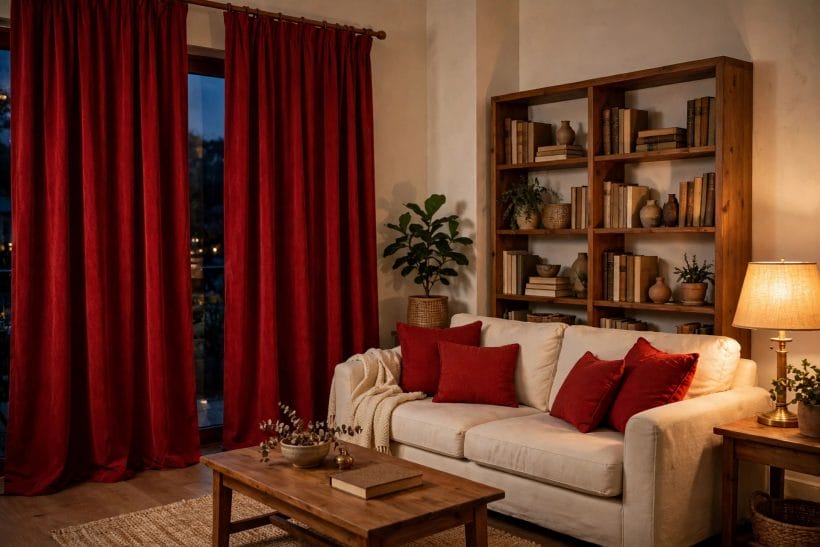
| Red curtains that frame the window | Red curtains frame a window beautifully and carry colour up the wall, which helps a room with a pale sofa gain warmth. |
| Layering throws without clutter | Throws add warmth and a chance to repeat red in a softer form, but too many throws make a sofa look untidy. |
| Cushions in three tones | A cushion scheme in three tones, such as deep red, cream and a warm rust or soft grey, gives a sofa depth without fuss. |
| A patterned rug with a little red | A patterned rug that carries a little red can tie a red sofa to a neutral room, because the pattern repeats the colour at floor level. |
| Sheer curtains for daylight balance | Sheer curtains soften daylight in a red room without hiding the window, and they keep a bold wall or sofa from looking harsh in bright sun. |
| Seasonal textile swaps | Swapping textiles with the seasons keeps a red room fresh: lighter linen and cotton in warm months, and wool and velvet when evenings turn cool. |
| Three layers of light in a red room | A red room needs three layers of light: general light from the ceiling, task light from lamps, and a warm glow from candles or a fire. |
| A ceiling light that does not glare | Choose a ceiling light that spreads light evenly and can be dimmed, so it never glares off a red wall or sofa. |
| Table lamps beside the sofa | Table lamps beside a sofa give close, warm light for reading and conversation, and they flatter red upholstery beautifully. |
| A floor lamp for the reading chair | A floor lamp beside a reading chair puts light exactly where it is needed without lighting the whole room. |
| Wall lights that wash a red wall | Wall lights that wash light up or down a red wall show off its texture and keep the colour glowing after dark. |
| Firelight and candle glow | Firelight and candle glow suit red rooms particularly well, because their warm, moving light deepens red tones naturally. |
| Daylight first, lamps second | Plan a red room around daylight first, by keeping windows clear and furniture low near the glass, and add lamps for the hours after dark. |
| Dimming for evening warmth | Dimmers are the simplest way to make a red room feel warm in the evening, because they let bright general light fall away and leave lamps and glow. |
| A fireplace as the natural focal point | A fireplace naturally draws the eye, and red seating arranged around it feels warm and intentional. |
| A mantel dressed in calm tones | Dress a mantel in calm tones when the seating is red, so the mantel does not compete with the furniture. |
| Shelves that repeat red sparingly | Shelves can repeat red sparingly through book spines, a vase or a small bowl, which ties the room together without painting anything. |
| Art that calms a red room | Art in a red room works best when it carries calm colours and generous empty space, giving the eye somewhere restful to land. |
| A mirror to lift a red room | A mirror lifts a red room by bouncing daylight and lamplight around, which keeps strong colour from feeling heavy. |
| Books as a colour bridge | Books bridge red and neutral tones naturally, because their spines carry many muted colours at once. |
| One focal point at a time | A room with a red sofa, a red wall and a bold fireplace can feel restless, because the eye has nowhere to settle. |
| Red in a small room, used sparingly | Small rooms can carry red well when it is used sparingly: one red chair, a red rug border or red cushions, rather than a red sofa and red walls together. |
| A red accent wall in a compact room | A single red accent wall can actually help a compact room, because it gives depth and a clear focal wall. |
| Furniture that earns its footprint | In a small red room, every piece must earn its footprint, with storage inside ottomans, shelves above seating and tables that fold or nest. |
| Vertical storage to free the floor | Tall shelves and wall-mounted storage free floor space in a small room, which matters even more when the colour is bold. |
| Light colours around red in a small room | Surround red with light colours in a small room: pale walls, a light rug and cream curtains keep the space airy. |
| A small room with a red rug | A red rug can carry the colour in a small room while the furniture stays neutral and flexible. |
| Keeping a small red room tidy | Tidiness matters more in a small red room, because bold colour draws the eye to clutter as well as to beauty. |
| Living with red through the year | Red feels different through the year: cosy in winter, bold in summer, and warm in autumn evenings. |
| Red with children and pets | Red is a forgiving colour for family rooms, because it hides everyday marks better than pale upholstery. |
| Caring for red fabrics | Care for red fabrics by following the maker's instructions, vacuuming upholstery gently and dealing with spills promptly with a clean, damp cloth. |
| When red starts to feel too much | If red starts to feel too much, do not repaint or replace furniture at once; first remove red cushions, fold away red throws and swap red art for a calm print. |
| Adding red gradually to a neutral room | Add red gradually to a neutral room, starting with cushions, then a throw, then a chair, and pausing at each step to live with the change. |
| Red for renters, without paint | Renters can enjoy a red living room without paint, through a red sofa or chairs, red curtains, a red rug and red cushions. |
| A red room that still feels like home | The best red room still feels like home first and a colour scheme second, with comfortable seating, good light, books within reach and space for everyday life. |
1. A deep red sofa as the anchor
Let one deep red sofa carry the room and keep everything else quieter around it. Cream walls, a plain rug and simple curtains give the colour room to breathe, and the sofa reads as a deliberate choice rather than a loud one. Add cushions in cream and warm rust so the red feels layered, not flat, and leave a little empty floor around the seating so the room still feels calm when you walk in.
2. A red sofa against cream walls
Cream walls soften a red sofa without washing it out, and the contrast keeps the seating as the clear focus of the room. Warm wood underfoot and a low coffee table keep the look grounded, while a floor lamp beside the sofa adds evening warmth. Keep wall art simple and large rather than busy, so the eye rests on the sofa first and the room second.
3. A red loveseat for a smaller seating group
A red loveseat gives a smaller room a strong colour note without swallowing the floor plan. Pair it with a neutral armchair and a slim side table, and the seating group feels complete rather than crowded. A plain rug in a warm neutral ties the pieces together, and a single red cushion on the chair repeats the colour without doubling the boldness.
4. Red as the second sofa, not the first
If a neutral sofa already owns the room, let a red chair or loveseat be the second voice rather than a rival. Place it at an angle to the main sofa so conversation flows naturally, and repeat the red once in a cushion or a throw on the main seat. The room keeps its calm base and gains a warm accent that draws the eye without demanding it.
5. A leather sofa in a dark red
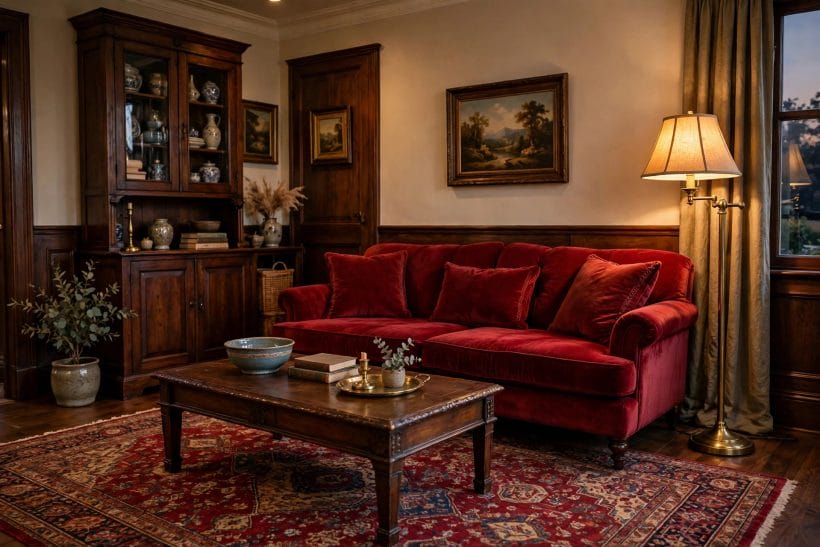
Dark red leather brings a lived-in warmth that suits wood, brass and soft lamplight, and it ages gracefully with everyday use. Keep the surrounding palette warm and simple, with cream cushions to lift the seat and a wooden coffee table to echo the floor. Avoid piling on competing patterns, and let the texture of the leather do most of the talking.
6. A velvet sofa for softness and depth
Velvet gives red a soft, light-catching surface that changes gently through the day as daylight moves across it. A deep red velvet sofa suits plain walls and a simple rug, where its texture can be the main interest. Add cushions in a mix of cream and muted rust, and keep the coffee table low and uncluttered so the sofa keeps its presence.
7. Red sofa, neutral rug, warm wood
This simple combination works because each element has a clear job: the sofa supplies the colour, the rug quiets the floor, and warm wood adds natural warmth. Choose a rug large enough to sit under the front legs of the seating, and let the wood tone of the table and shelves match the floor loosely rather than exactly. The result feels settled and easy to live with.
8. Testing a red sofa before committing
Before choosing a red sofa, live with the colour for a while by borrowing its tone in cushions, a throw and a piece of art. Notice how it looks in morning light, in evening lamplight and beside the colours already in the room. If the trial pieces still please you after a few weeks, the sofa is a sound choice; if they tire you, a smaller red accent may suit the room better.
2. Red Walls, Handled with Restraint
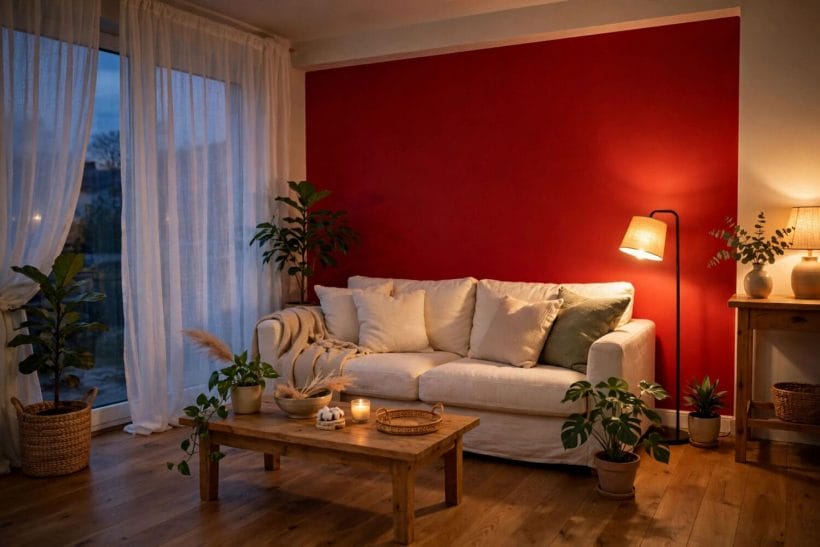
Red walls can be magnificent or overpowering, and the difference is usually restraint. One wall, a soft wash or a panelled surface gives warmth while the rest of the room stays calm. This section looks at wall treatments that let red glow, and at the times when pale walls serve a red room better. A related room to compare is small living room ideas, which treats a different wall colour in the same space.
9. One red wall behind the sofa
Painting a single wall red behind the sofa creates a strong backdrop without closing the room in. Keep the other walls pale and the ceiling light, and the red wall reads as a frame for the seating rather than a box around it. Hang one large piece of art or a mirror on the red wall, and keep the mantel or shelves beside it simple.
10. A red wall in a room with tall windows
Tall windows help a red wall feel bright rather than heavy, because daylight washes across the colour all day. Keep window treatments light and simple so the glass does most of the work, and choose a sofa in cream or soft grey to sit against the red. Plants near the windows add green that calms the warmth of the wall.
11. Red panelling for texture, not just colour
Panelling adds shadow and line to a red wall, so the colour gains depth even in a plain room. Paint the panels and the wall in the same red so the surface reads as one calm field, and keep furniture lines simple beside it. A pale rug and cream cushions stop the panelled wall from feeling too formal.
12. A brick wall with red tones
A brick wall already carries red in its natural tones, and it suits a living room that leans rustic or relaxed. Pair it with a plain sofa, warm wood and soft lighting, and let the brick be the main pattern in the room. Keep other patterns small and quiet, and add plants or woven baskets to soften the hard surface.
13. Red in a hallway-facing living room
Where a living room opens to a hallway, carry red carefully across the threshold so the two spaces feel connected. A red cushion or a piece of art near the opening echoes the living room colour without painting the hallway red too. Keep the hallway pale and well lit, and the living room gains a sense of arrival rather than a sudden colour change.
14. A soft red wash instead of a bold wall
A softer, muted red on the walls gives warmth without the drama of a deep shade, and it suits rooms that get less daylight. Pair it with cream trim, warm wood and simple furniture, and the room feels cosy rather than dark. Test the shade on a large board first, and view it in daylight and lamplight before painting the whole wall.
15. Red above a chair rail, cream below
Splitting a wall at chair-rail height lets red sit above a calm cream lower wall, which keeps the room grounded. The rail line gives the eye a resting place, and furniture placed against the lower wall does not fight the colour. Keep art above the rail simple and well spaced, and let the cream below carry the heavier furniture visually.
16. When to leave the walls pale
Sometimes the best red room has pale walls, with red carried entirely by furniture and textiles. This suits small rooms, rooms with little daylight and rooms where the sofa is already bold. Pale walls bounce light around, make the furniture easier to rearrange, and let a red sofa or rug be changed later without repainting anything.
3. Layouts That Let Red Breathe
Layout decides whether red feels welcoming or crowded, because bold colour needs clear walkways and breathing room. Arranging seats for conversation, for watching together or for quiet reading gives red a purpose in the plan. The layouts here keep the colour in its place and the room easy to move through. For the colour-pairing angle, see blue walls in a living room alongside this section.
17. Facing sofas with red between them
Two sofas facing each other across a coffee table make conversation easy, and red can sit on one side while the other stays neutral. The symmetry keeps the room balanced, and a rug under the whole group ties the two sides together. Add matching lamps at each end so the lighting feels even from both seats.
18. An L-shaped arrangement around a corner
An L-shaped seating plan suits a corner room, with a sofa along one wall and chairs or a chaise along the other. Place the red piece on the longer run so the colour anchors the room, and keep the shorter run neutral. A round coffee table softens the corner, and a floor lamp at the join lights both sides.
19. A sofa with its back to the room
In an open-plan space, a sofa with its back to the dining area can quietly divide living from eating without a wall. Put a slim console behind the sofa with a lamp and a few books, and the back of the sofa becomes a finished edge rather than a barrier. Keep the red on the sofa itself, and the console pale so the division stays light.
20. Chairs angled toward the fireplace
Angling chairs toward a fireplace creates a natural gathering spot, and red chairs make that spot feel warm even when the fire is unlit. Keep the angle gentle so the chairs still face the sofa, and add a small side table between them for cups and books. A rug under the chairs marks the group as its own corner of the room.
21. A reading corner in red
A single red armchair beside a window, with a floor lamp and a small table, makes a reading corner that invites lingering. Keep the chair comfortable above all else, with a cushion that supports the lower back and a throw within reach. A bookshelf nearby completes the corner, and the red chair marks it as a place apart from the main seating.
22. Layout for conversation first
Start a red living room layout by placing seats so people can talk easily, with no seat more than a comfortable talking distance from another. Let the coffee table sit within easy reach of every seat, and keep walkways clear around the group. When conversation drives the plan, the red furniture feels welcoming rather than staged.
23. Layout for watching together
For a room used mainly for watching, place the main sofa squarely facing the screen and add side chairs that can turn toward it or toward conversation. Keep red on the sofa or on cushions, and the screen wall calm and dark enough not to glare. A dimmable lamp beside the sofa lets the room shift from viewing to talking without moving furniture.
24. Leaving empty floor on purpose
Empty floor is not wasted space; it lets a bold colour breathe and makes a room easier to move through and clean. Resist filling every corner, and leave at least one clear stretch of floor near the entrance. The red pieces then stand out against calm, open space, and the room feels larger than its measurements suggest.
4. Sofas, Chairs and Seating Mixes
A red room rarely needs every seat in red; a mix of red and neutral seating usually feels richer and more flexible. Pairing a red sofa with a patterned chair, or two red chairs with a neutral sofa, creates balance and choice. This section explores mixes that feel collected rather than matched.
25. Mixing a red sofa with a patterned chair
A patterned chair can sit happily beside a red sofa if the pattern carries a little red and plenty of neutral ground. Keep the pattern scale modest so it does not compete with the sofa, and repeat one colour from the chair in a cushion on the sofa. The pairing feels collected rather than matched, which suits a lived-in room.
26. A red ottoman as a flexible seat
A red ottoman works as a footrest, an extra seat and a coffee table in turn, which makes it useful in a small room. Top it with a tray when it serves as a table, and move it aside when guests need a seat. Choose a sturdy fabric that handles daily use, and keep its red close to the sofa tone so it reads as part of the group.
27. Two red chairs instead of a red sofa
Two red chairs flanking a fireplace or a window give a room its red note while leaving the main sofa neutral and flexible. The pair creates symmetry, which calms a bold colour, and each chair can be moved for conversation or reading. Add a small table between them, and the pair becomes a destination within the room.
28. A red chaise for lounging
A chaise in red invites long, relaxed sitting, and it suits a room with a window view or a fireplace to face. Place it where daylight falls in the afternoon, and add a small side table for a book and a cup. Keep surrounding furniture low and simple, so the chaise keeps its long, calm line.
29. Slipcovers for a softer red
A slipcovered seat in a soft red or a red-toned stripe gives a relaxed look that suits family rooms and casual homes. Slipcovers can be removed for washing, which makes a lighter red practical with children and pets. Keep the fit neat rather than baggy, and pair the cover with plain cushions so the room stays calm.
30. A red bench by the window
A bench in red beneath a window makes a sunny perch for reading, talking or simply watching the day. Add a cushion in a warm neutral and a throw for cooler evenings, and keep the window treatment simple so daylight reaches the seat. The bench also offers extra seating when guests gather, without adding another armchair to the plan.
31. Mixing red with natural rattan and wood
Natural rattan and warm wood soften red beautifully, because their earthy tones sit calmly beside a strong colour. A rattan chair, a wooden coffee table and a woven basket bring texture that stops red from feeling flat. Keep the wood tones warm rather than dark, and the room gains a relaxed, natural balance.
32. Seating that can be rearranged
Choose seating that moves easily, with chairs light enough to turn toward conversation or a fire, and a sofa that does not dominate the only workable layout. Red pieces that move well let the room adapt to guests, seasons and changing needs. Test a new arrangement for a week before deciding, and keep the rug large enough for more than one layout.
5. Colour Pairings That Calm Red Down
Red needs calm partners, and the right pairing decides whether a room feels warm or loud. Cream, warm grey, deep green, navy, mustard and blush each bring red a different mood. The pairings here keep red as the leading colour while giving it companions that steady it. The same wall-first thinking appears in brick wall bedroom, applied to a bedroom wall.
33. Red and cream, the calm classic
Cream is the kindest partner for red, because it lightens the room without cooling the warmth of the colour. Use cream on walls, large cushions and the rug, and let red hold the sofa, chairs or curtains. The pairing feels timeless, and it leaves room to add seasonal touches without repainting or reupholstering.
34. Red and warm grey
Warm grey steadies red in a modern room, especially where floors are pale wood or stone. Choose a grey with a warm undertone so it does not turn the room cold, and use it on walls or on a second sofa. Add wood and brass accents to keep the palette warm, and the red reads as rich rather than harsh.
35. Red and deep green through plants
Plants bring deep green into a red room naturally, and the pairing feels fresh because it echoes gardens and nature. Place larger plants near windows and smaller ones on shelves and tables, and let their leaves soften hard furniture edges. Keep pots simple in terracotta or cream, so the plants, not the containers, carry the green.
36. Red and navy for depth
Navy gives red a deep, grounded partner that suits evening rooms and winter evenings especially well. Use navy on cushions, a rug border or a single chair, and keep walls pale so the dark tones do not close the room in. Brass or warm wood accents lift the pairing, and the room gains a settled, grown-up feel.
37. Red and mustard for warmth
Mustard adds a sunny warmth that lifts red without competing with it, particularly in rooms with warm wood and soft daylight. Use mustard sparingly, in a cushion, a throw or a piece of art, and let red keep the leading role. The combination suits autumn and winter, when warm colours make a room feel welcoming.
38. Red and blush for softness
Blush softens red gently, and the pairing suits rooms that should feel warm but not intense. Use blush on cushions, curtains or a throw, and keep the red in a deeper tone so the contrast stays clear. Add cream walls and pale wood, and the room feels tender rather than bold, which suits bedrooms that open into living spaces and quiet family rooms.
39. Keeping red the only strong colour
When red is the only strong colour in a room, every other tone should stay neutral, pale or woody, so nothing fights for attention. This restraint makes the room easier to live with and easier to update, because a single accent colour can be changed through cushions and throws. If a second strong colour creeps in, step back and ask whether it earns its place.
6. Rugs, Curtains and Soft Layers
Soft layers carry red gently through a room, from the rug underfoot to the curtains at the window and the cushions on the sofa. Textiles are also the easiest layer to change, which makes them ideal for trying red and for shifting it with the seasons. This section shows how to layer them without clutter. A calm pairing to compare is grey walls with white cabinets, where pale cabinets steady a grey wall.
40. A rug that grounds a red sofa
A rug under a red sofa should be large, plain and warm in tone, so it anchors the seating without adding a competing pattern. Cream, warm grey or a muted natural weave all work, and the rug should extend beyond the sofa on at least two sides. A rug that is too small makes the seating look stranded, while a generous one makes the whole group feel intentional.
41. Red curtains that frame the window
Red curtains frame a window beautifully and carry colour up the wall, which helps a room with a pale sofa gain warmth. Choose a fabric that hangs well and filters light softly, and hang the rod high and wide so the window looks larger. Keep the rest of the window treatment simple, and let the curtains be the main textile statement.
42. Layering throws without clutter
Throws add warmth and a chance to repeat red in a softer form, but too many throws make a sofa look untidy. Keep two at most on the main seating: one in red or a red tone, and one in cream or warm neutral. Fold them neatly over an arm or a basket nearby, so they are ready for use without covering the sofa itself.
43. Cushions in three tones
A cushion scheme in three tones, such as deep red, cream and a warm rust or soft grey, gives a sofa depth without fuss. Vary the textures, with velvet, linen and a woven cover, and keep sizes graduated from large at the ends to smaller at the centre. Odd numbers of cushions usually look more relaxed than strict pairs.
44. A patterned rug with a little red
A patterned rug that carries a little red can tie a red sofa to a neutral room, because the pattern repeats the colour at floor level. Keep the pattern traditional or geometric in muted tones, and let the red in the rug be a thread rather than the dominant colour. The rug then connects the seating to the floor instead of competing with it.
45. Sheer curtains for daylight balance
Sheer curtains soften daylight in a red room without hiding the window, and they keep a bold wall or sofa from looking harsh in bright sun. Layer sheers under heavier curtains so the room can shift from bright day to cosy evening. Choose sheers in warm white rather than stark white, so the light they filter stays gentle.
46. Seasonal textile swaps
Swapping textiles with the seasons keeps a red room fresh: lighter linen and cotton in warm months, and wool and velvet when evenings turn cool. Store the off-season set clean and dry, and change cushions and throws together so the room shifts as a whole. The red furniture stays constant, and the textiles do the seasonal work.
7. Layered Lighting for a Red Room
Light changes red more than any other colour, warming it in the evening and sharpening it in bright daylight. A room lit in layers, from ceiling to table lamp to firelight, lets red glow at every hour. The ideas here build a lighting plan that flatters red and serves reading, conversation and rest.
47. Three layers of light in a red room
A red room needs three layers of light: general light from the ceiling, task light from lamps, and a warm glow from candles or a fire. Each layer has its own job, and together they stop red from looking flat or harsh. Use dimmers where possible, so the layers can be balanced for reading, conversation or quiet evenings.
48. A ceiling light that does not glare
Choose a ceiling light that spreads light evenly and can be dimmed, so it never glares off a red wall or sofa. A simple pendant or a flush fitting in warm white suits most rooms, and a dimmer makes one fitting serve many moods. Avoid bare bulbs in a red room, where harsh light makes strong colour feel harder.
49. Table lamps beside the sofa
Table lamps beside a sofa give close, warm light for reading and conversation, and they flatter red upholstery beautifully. Place one at each end of the sofa where space allows, with shades in cream or warm linen that glow softly. Keep lamp heights similar so the light feels even, and choose bulbs in a warm tone.
50. A floor lamp for the reading chair
A floor lamp beside a reading chair puts light exactly where it is needed without lighting the whole room. An adjustable head lets the reader aim light at the page, and a warm bulb keeps the corner inviting. Position the lamp behind or beside the chair, never in front of it, so the light falls over the shoulder.
51. Wall lights that wash a red wall
Wall lights that wash light up or down a red wall show off its texture and keep the colour glowing after dark. Space them evenly and keep their brightness modest, so the wall glows rather than glares. Wall lights also free table space, which helps in a small room where every surface counts.
52. Firelight and candle glow
Firelight and candle glow suit red rooms particularly well, because their warm, moving light deepens red tones naturally. Use candles safely in sturdy holders away from curtains and soft furnishings, and never leave them burning unattended. Even a small group of candles on a mantel can change the evening mood of the whole room.
53. Daylight first, lamps second
Plan a red room around daylight first, by keeping windows clear and furniture low near the glass, and add lamps for the hours after dark. Daylight shows red truly, while lamplight warms it, and a room planned for both looks good at every hour. Notice how the red changes through the day before choosing wall colours or large textiles.
54. Dimming for evening warmth
Dimmers are the simplest way to make a red room feel warm in the evening, because they let bright general light fall away and leave lamps and glow. Fit dimmers to the main ceiling light and to any wall lights, and keep a low lamp on for a gentle background. The room then shifts from daytime brightness to evening calm without moving a single piece of furniture.
8. Fireplaces, Shelves and Focal Points
Every red room needs a place for the eye to rest, whether that is a fireplace, a piece of art or a well-dressed shelf. When red competes with too many focal points, the room feels restless; when one focus leads, red feels confident. This section keeps focal points calm and supporting. For a style-led contrast, see modern farmhouse style, which keeps its palette just as restrained.
55. A fireplace as the natural focal point
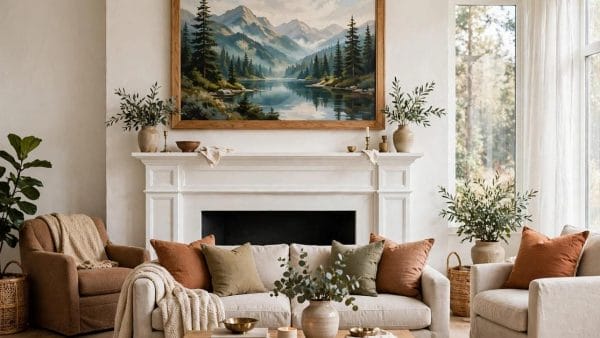
A fireplace naturally draws the eye, and red seating arranged around it feels warm and intentional. Keep the mantel simple, with a mirror or one large piece of art above it, and let the fire or its surround be the focus. Red chairs or a red sofa facing the fire complete a gathering spot that works with or without a flame.
56. A mantel dressed in calm tones
Dress a mantel in calm tones when the seating is red, so the mantel does not compete with the furniture. Cream candles, a simple vase and a small stack of books give the mantel interest without noise. Change the dressing with the seasons, but keep the palette pale and the arrangement spare.
57. Shelves that repeat red sparingly
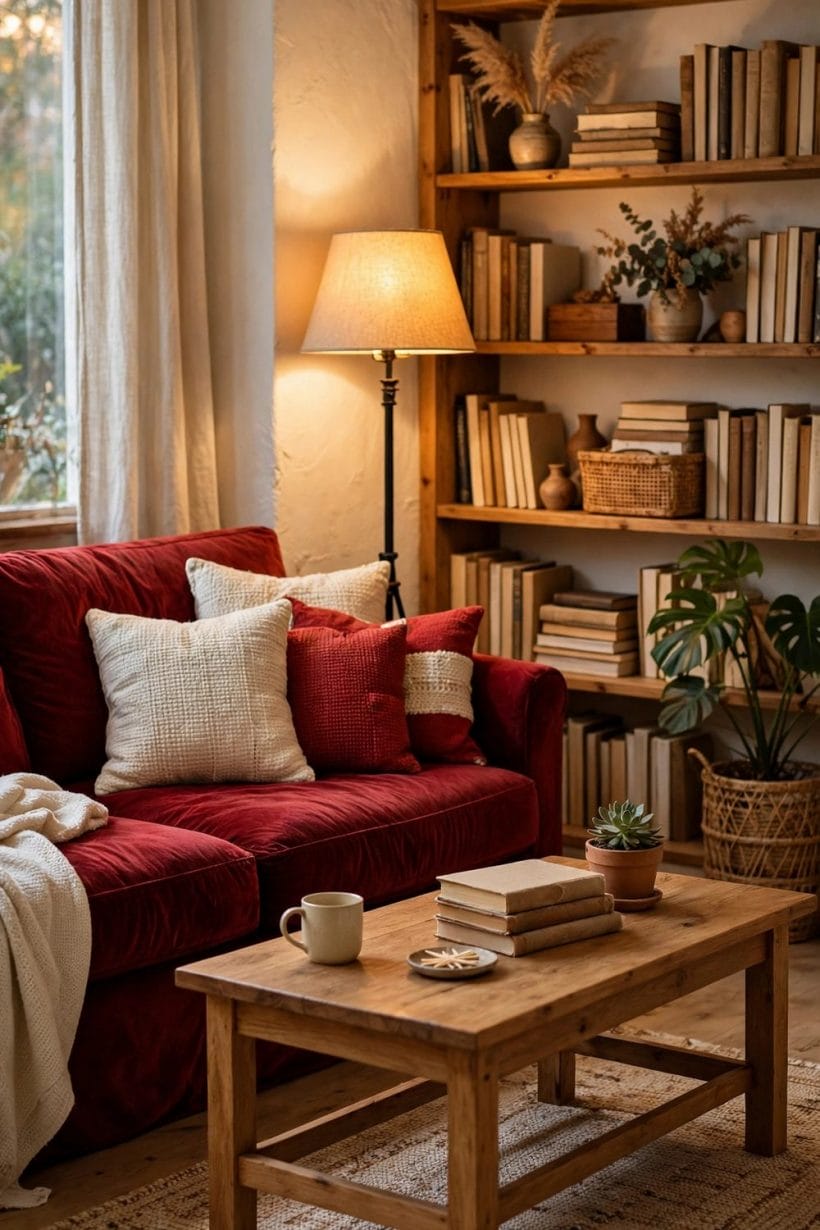
Shelves can repeat red sparingly through book spines, a vase or a small bowl, which ties the room together without painting anything. Group objects in odd numbers and leave empty space between groups, so the shelves look curated rather than crowded. Step back often while arranging, and remove anything that fights the calm of the room.
58. Art that calms a red room
Art in a red room works best when it carries calm colours and generous empty space, giving the eye somewhere restful to land. Large landscapes, abstract pieces in cream and grey, and botanical prints all sit well beside red. Hang art at eye level and give each piece breathing room, rather than filling every wall.
59. A mirror to lift a red room
A mirror lifts a red room by bouncing daylight and lamplight around, which keeps strong colour from feeling heavy. Place it opposite a window or beside a lamp, and choose a simple frame in wood or brass. Avoid hanging a mirror where it reflects clutter, and keep the glass clean so the reflection stays bright.
60. Books as a colour bridge
Books bridge red and neutral tones naturally, because their spines carry many muted colours at once. Arrange books on shelves and tables in relaxed stacks, with a few standing upright, and let their colours soften the room. A stack of books on a coffee table also gives guests something to browse, which makes the room feel welcoming.
61. One focal point at a time
A room with a red sofa, a red wall and a bold fireplace can feel restless, because the eye has nowhere to settle. Choose one focal point, usually the fireplace or the sofa, and let everything else support it quietly. When the room has a single clear focus, red feels confident rather than chaotic.
9. Small Living Rooms in Red
Small rooms and red are not enemies, provided the colour is used sparingly and the floor stays clear. Pale walls, leggy furniture and vertical storage let a small room carry a red note with ease. The ideas here prove that a compact room can be warm without feeling crowded.
62. Red in a small room, used sparingly
Small rooms can carry red well when it is used sparingly: one red chair, a red rug border or red cushions, rather than a red sofa and red walls together. Keep walls pale, floors clear and furniture leggy, so light and air move through the room. A small red note then adds warmth without shrinking the space.
63. A red accent wall in a compact room
A single red accent wall can actually help a compact room, because it gives depth and a clear focal wall. Keep the wall behind the main seating, paint the rest pale, and use a mirror on an opposite wall to bounce light back. Avoid red on the wall with the door, where the colour meets the eye too suddenly on entry.
64. Furniture that earns its footprint
In a small red room, every piece must earn its footprint, with storage inside ottomans, shelves above seating and tables that fold or nest. Choose a sofa that fits the wall with a little room to spare, and chairs that tuck in when not needed. When furniture works hard, the room can afford a bold colour without feeling crowded.
65. Vertical storage to free the floor
Tall shelves and wall-mounted storage free floor space in a small room, which matters even more when the colour is bold. Take storage up to a comfortable reaching height, and keep the top shelf for light, rarely used items. A clear floor makes red furniture look intentional, while a cluttered floor makes it look crowded.
66. Light colours around red in a small room
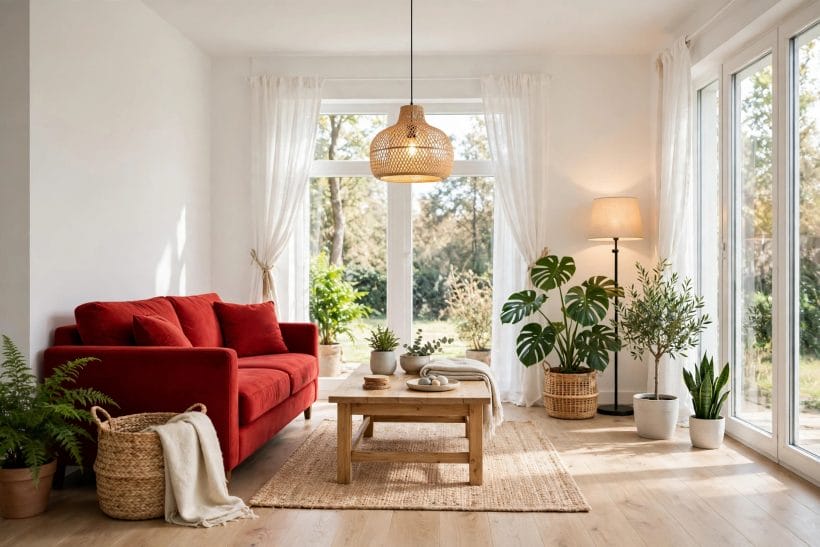
Surround red with light colours in a small room: pale walls, a light rug and cream curtains keep the space airy. The red then reads as a warm accent rather than a weight, and the room feels larger than it is. Add plants for green, and the palette stays fresh rather than heavy.
67. A small room with a red rug
A red rug can carry the colour in a small room while the furniture stays neutral and flexible. Choose a rug with a muted red pattern rather than a flat bright red, so it grounds the seating without dominating it. Keep the rug large enough for the front legs of the seating, and let its border define the living area.
68. Keeping a small red room tidy
Tidiness matters more in a small red room, because bold colour draws the eye to clutter as well as to beauty. Give everything a home, clear surfaces daily, and keep throws folded and books stacked. A tidy small room lets red shine as a design choice, while a cluttered one lets it read as noise.
10. Keeping Red Liveable Through the Seasons
A red room must work for everyday life, through changing seasons, family use and the occasional moment when the colour feels like too much. Care, gradual change and seasonal swaps keep red fresh rather than tiring. This section is about living with red happily for years, not just admiring it for a week. Where space is tight, Murphy bed ideas shows how one piece of furniture can do two jobs.
69. Living with red through the year
Red feels different through the year: cosy in winter, bold in summer, and warm in autumn evenings. Let textiles shift with the seasons while the furniture stays constant, and notice which months the room feels best. A red room that works in every season usually has pale walls, layered light and textiles that can be swapped easily.
70. Red with children and pets
Red is a forgiving colour for family rooms, because it hides everyday marks better than pale upholstery. Choose washable fabrics and removable covers where possible, and keep a throw over the most-used seat. Teach children that the red chair is a favourite seat, not a climbing frame, and the room stays both warm and practical.
71. Caring for red fabrics
Care for red fabrics by following the maker’s instructions, vacuuming upholstery gently and dealing with spills promptly with a clean, damp cloth. Keep red pieces out of strong, direct sun where possible, so the colour fades evenly rather than in patches. Rotate cushions regularly, and the red stays even across the seating.
72. When red starts to feel too much
If red starts to feel too much, do not repaint or replace furniture at once; first remove red cushions, fold away red throws and swap red art for a calm print. Live with the quieter room for a week, and add back only the red pieces you miss. Often one or two pieces are enough, and the room regains its balance.
73. Adding red gradually to a neutral room
Add red gradually to a neutral room, starting with cushions, then a throw, then a chair, and pausing at each step to live with the change. Gradual change lets you find the amount of red that suits the room and the household. Rushing to a red sofa and red walls together can overwhelm a room that would have loved a gentler dose.
74. Red for renters, without paint
Renters can enjoy a red living room without paint, through a red sofa or chairs, red curtains, a red rug and red cushions. These pieces move with the household and leave pale walls untouched, which suits rented homes. Choose pieces that work in more than one layout, so the red collection adapts to the next room as well as this one.
75. A red room that still feels like home
The best red room still feels like home first and a colour scheme second, with comfortable seating, good light, books within reach and space for everyday life. Red should warm the room and welcome guests, not impress them at the cost of comfort. When the room is used daily and loved deeply, the colour has done its job.
Final Considerations
Before you commit, return to the simplest test: does the room still feel comfortable to sit in, to read in and to welcome guests into? Red should add warmth to those moments, not distract from them. Start with one anchor piece, surround it with calm neutrals, layer the light from ceiling to lamp to glow, and let textiles do the seasonal work. If a choice feels too bold, scale it back to a cushion or a throw and live with the smaller dose for a while. A red living room built this way stays inviting for years, and it can evolve with new cushions, new art and new light without ever needing to start again. That is the quiet success of the best red living rooms: colour with confidence, and a room that still feels like home.



0 Comments