
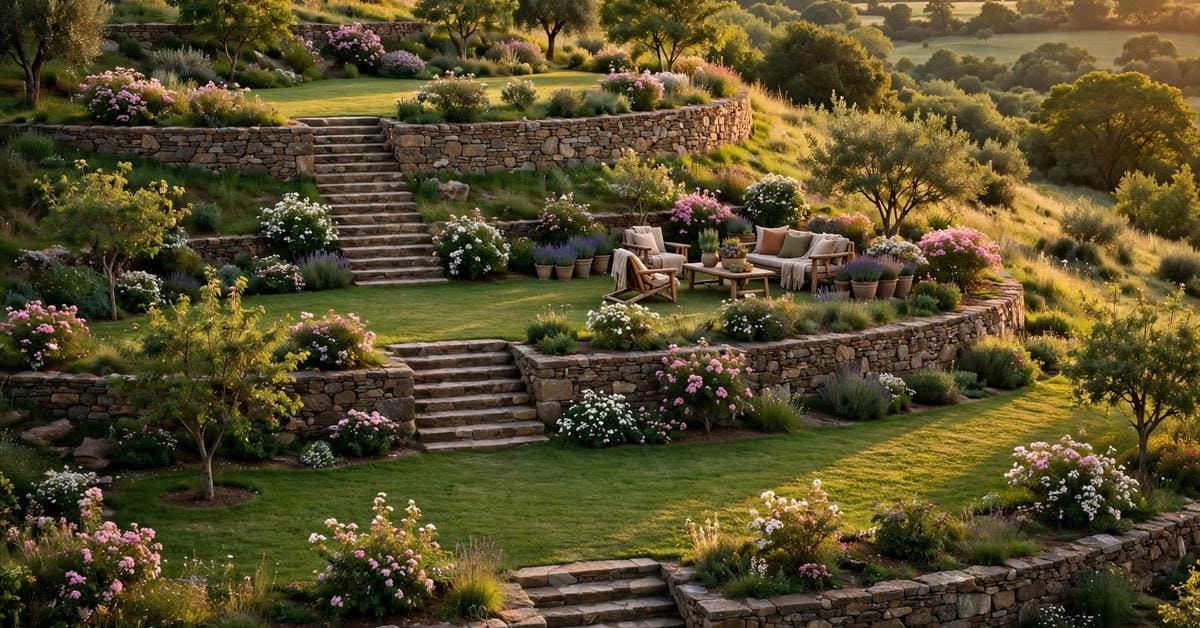
A sloping garden can feel awkward when it is treated as one tilted surface. Paths run steep, beds wash out after rain, and seating never quite sits level. Cut the same slope into a series of flat levels, and the whole place changes character. Each level becomes a small garden in its own right, with its own planting, its own mood and its own use, while the slope itself turns from a problem into the feature that ties them together. That is the quiet appeal of a terrace landscape, and it is why terraced gardens appear in places as different as hillside cottages, city backyards and country estates.
This guide looks at the terraced form on its own terms: the shapes levels can take, the materials that hold them, the colours that suit them, and the practical questions worth settling before anything is changed. It is a survey of looks and layouts, not a building manual. Retaining and structural work on a slope belongs to a qualified professional who can judge the ground, the height of the walls, drainage and the local rules that apply. What follows describes what to look for, what to discuss with that professional, and how the finished levels can be planted and enjoyed.
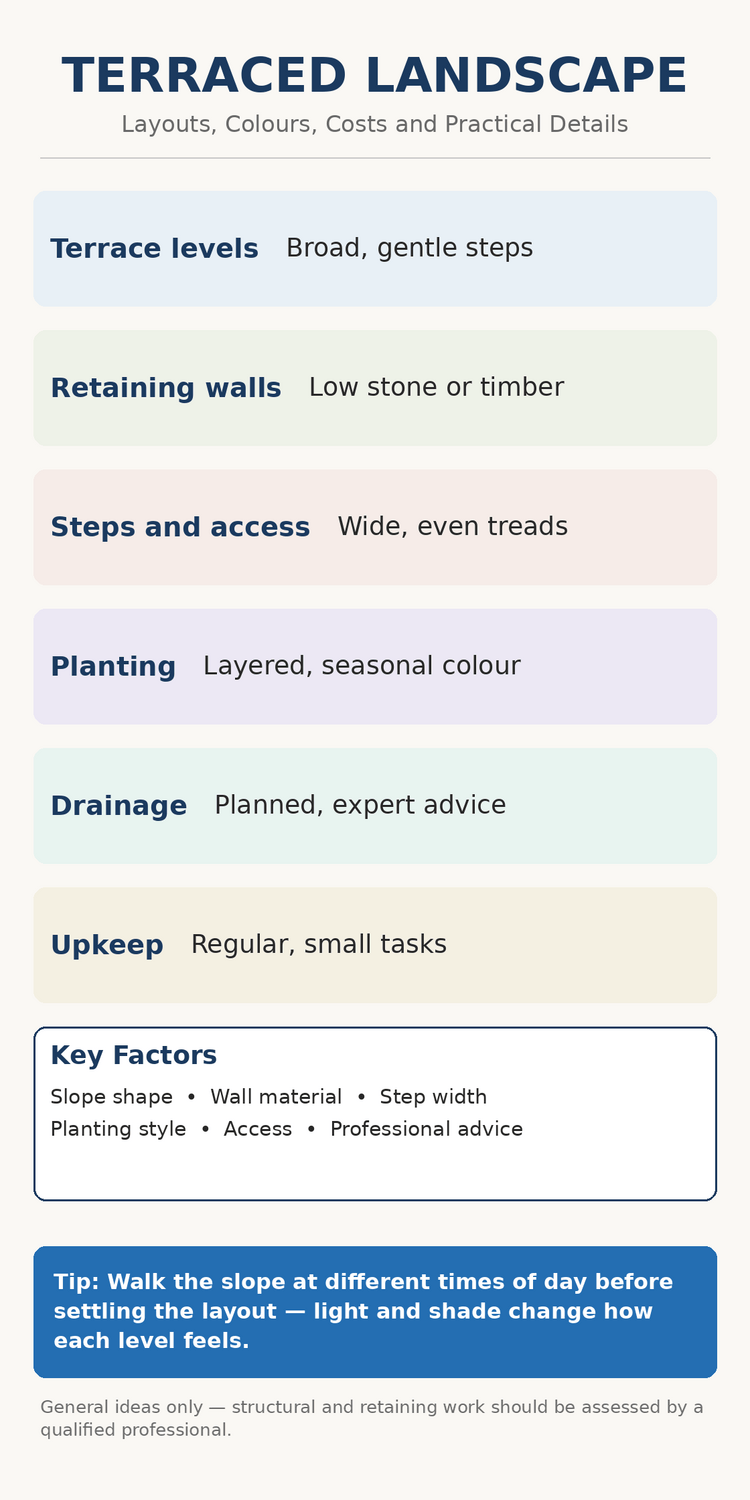
| Item | What it is |
|---|---|
| Why a Slope Suits Terraces | A flat garden asks little of its ground. |
| Reading the Slope Before Anything Changes | Every slope has its own character, and a good terraced design starts by noticing it rather than imposing a pattern on it. |
| Terrace Levels and Their Shapes | Terrace levels can be broad and generous, or narrow and intimate, and the choice shapes how the garden feels. |
| Retaining Walls in Stone, Timber and Render | The wall is the most visible part of a terrace, and its material sets the tone of the whole garden. |
| Steps, Paths and Moving Between Levels | Steps are where a terraced garden succeeds or fails as a place to spend time. |
| Lawns, Beds and Planting Across Levels | Planting is where terraces come alive, because each level can carry a different character. |
| Colour Through the Seasons | A terraced garden has a natural advantage with colour, because its levels can be planned to take turns through the year. |
| Costs in General Terms | The cost of a terraced garden depends on drivers that are easy to list and hard to price without seeing the site. |
| Lighting, Seating and Living on the Levels | Terraces invite people to live outdoors in a way a plain slope rarely does, because each level can be given its own purpose. |
| Small Plots and Gentle Slopes | Terracing is often pictured on grand hillsides, but it can suit small plots just as well, and sometimes better. |
1. Why a Slope Suits Terraces
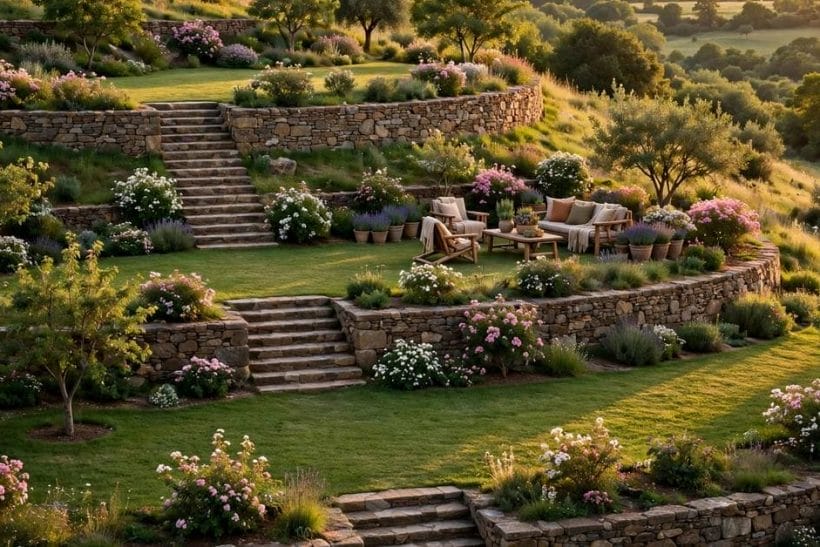
A flat garden asks little of its ground. A sloping garden asks more, and terracing answers by giving the slope a set of level places to rest. Rain that would run down a bank can settle more gently across a flat bed. A chair that would rock on a gradient sits steady on a level patio. A bed that would be hard to reach from above becomes easy to tend from its own level path. None of this removes the slope. It simply works with the slope instead of fighting it, and the result often feels larger than the plot itself, because every level reads as a separate room outdoors.
There is also a visual reward. A slope seen from below shows its planting in layers, like seats in a theatre, so flowers and shrubs on the upper levels are visible rather than hidden behind a bank. Seen from above, the garden opens out in a pattern of edges and levels that gives even a modest plot a sense of design. For a broader look at how outdoor ground can be shaped, backyard landscaping ideas offer a useful starting point, with terraces as one of the strongest ways to give a sloping plot structure.
2. Reading the Slope Before Anything Changes
Every slope has its own character, and a good terraced design starts by noticing it rather than imposing a pattern on it. The steepness of the ground, the direction it faces, the way water moves after heavy rain, and the views from the house and from the street all shape what will suit the place. A gentle slope facing the morning sun invites different planting from a steep bank that stays shaded for much of the day. Soil that drains freely behaves differently from heavy ground that holds water, and both matter when levels and walls are being considered.
This reading stage is also the right time to involve a professional. The height of a retaining wall, the ground behind it and the way water is handled are structural questions, and they deserve an assessment by someone qualified rather than a guess based on a photograph. A professional can also advise on permissions and boundaries, which vary by area and can affect how high a level may be raised or how close a wall may sit to a neighbour. Settling those questions early tends to save far more trouble than it costs in time.
3. Terrace Levels and Their Shapes
Terrace levels can be broad and generous, or narrow and intimate, and the choice shapes how the garden feels. Broad levels suit lawns, seating and generous beds, and they give a garden a calm, open rhythm. Narrower levels suit planting displays, herb beds and collections of pots, where the pleasure is in looking closely rather than in spreading out. Curved levels soften a slope and suit a naturalistic garden, while straight levels suit a formal layout and a crisp modern house. Many gardens mix the two, with a straight terrace near the house giving way to curves further down the slope.
The number of levels matters less than their proportion. Levels that are too narrow can feel cramped and hard to use, while levels that are too deep can waste the slope and leave awkward banks between them. A level that fits its purpose tends to feel right: wide enough for a table and chairs where people will sit, deep enough for a proper bed where plants will grow, and comfortable to step onto from the level above or below. Stone edging often suits these level changes well, and rock landscaping ideas show how stone can be used as a garden material in its own right, not merely as a wall.
4. Retaining Walls in Stone, Timber and Render
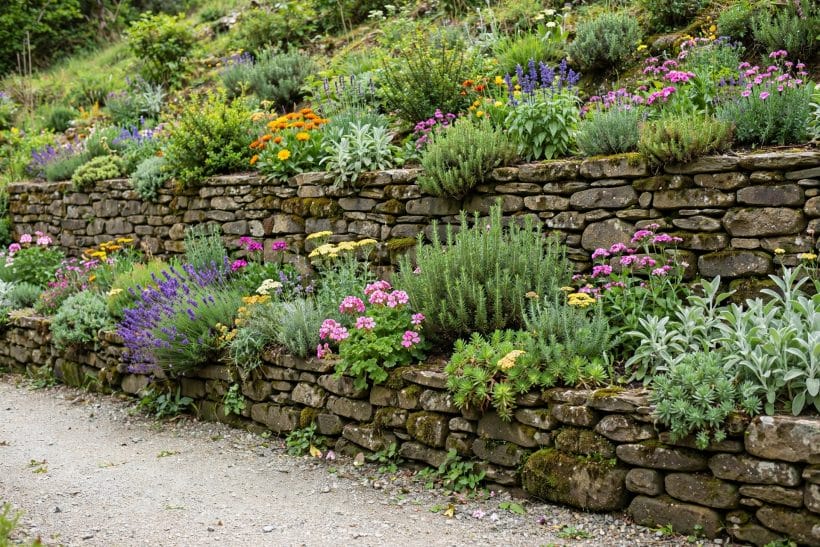
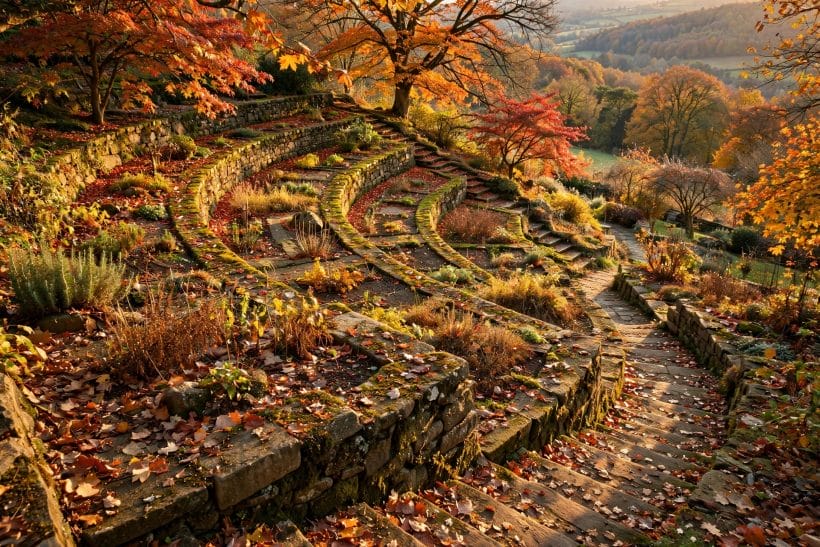
The wall is the most visible part of a terrace, and its material sets the tone of the whole garden. Natural stone suits country gardens and older houses, and its rough texture and varied colour tend to soften with age as mosses and small plants settle into its joints. Timber gives a warmer, more rustic feel and suits vegetable beds and informal plots, though it weathers over time and needs periodic attention. Rendered or block walls suit contemporary houses, where a smooth pale surface can make planting stand out and give the garden a clean architectural line.
Whatever the material, the wall is doing structural work, and that is the part of terracing that should never be improvised. Height, ground conditions, drainage behind the wall and the load it carries all need professional judgement, and a wall that looks sound can still fail if water builds up behind it or the footing is wrong for the ground. Discuss materials with a qualified professional as a design choice, and leave the sizing, footing and drainage design to them. A well-judged wall tends to look effortless precisely because the effort went into its engineering rather than its appearance. Boundaries and fences around a terraced plot deserve the same care, and cedar fence ideas show one warm, natural option for enclosing a sloping garden.
5. Steps, Paths and Moving Between Levels
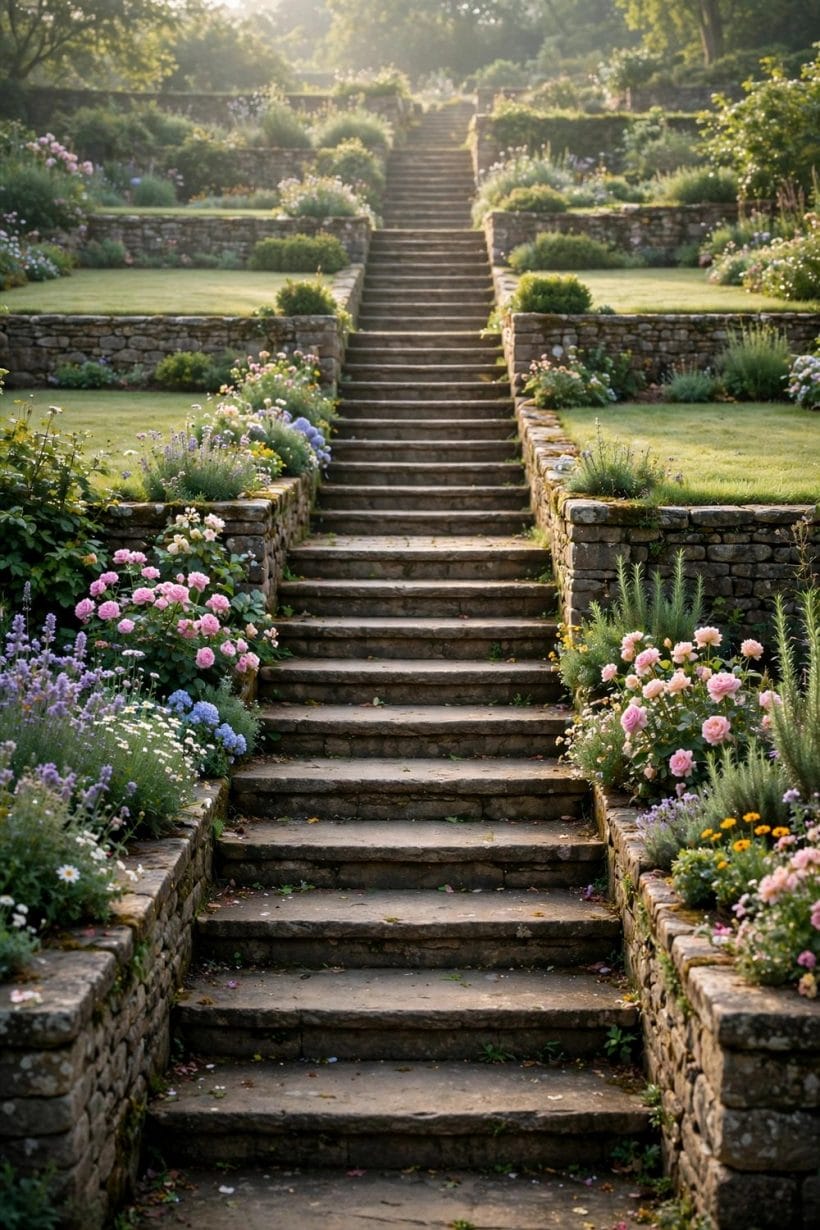
Steps are where a terraced garden succeeds or fails as a place to spend time. Wide, even treads with a comfortable rise feel generous and safe, while narrow or uneven steps discourage people from using the upper levels at all. A generous staircase can become a garden feature in its own right, flanked by planting and wide enough for two people to walk side by side. Smaller side steps suit quiet corners and planting levels that are visited less often, and a winding path can sometimes replace steps altogether on a gentle slope, giving a slower and more meandering route through the garden.
Materials for steps and paths usually echo the walls. Stone steps suit stone walls, timber edges suit timber beds, and gravel paths suit informal planting levels where a softer surface underfoot feels right. Lighting along steps is worth considering from the start, since terraces are often enjoyed in the evening and a lit step is both safer and more inviting. Handrails or a low wall to hold onto can help on steeper flights, and these are details worth settling with a professional when the levels are being planned. In compact plots, where every level must earn its place, tiny backyard ideas show how small outdoor spaces can still offer distinct levels and uses.
6. Lawns, Beds and Planting Across Levels
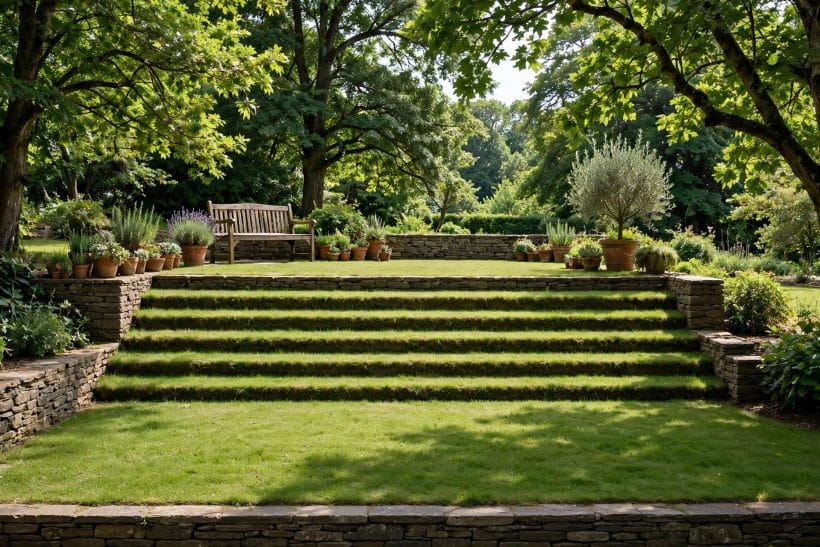
Planting is where terraces come alive, because each level can carry a different character. A lawn level gives space for play and for sitting, and it makes a calm green pause between more richly planted levels. A bed level can carry shrubs, perennials and seasonal flowers, with taller plants at the back of the level and lower ones near the edge so the planting reads well from below. A kitchen-garden level can hold herbs and vegetables in level beds that are easy to reach and tend, which often makes growing more enjoyable than struggling with a sloping bed.
Hedged advice serves planting best, since no plant can be guaranteed to thrive in a spot that has not been seen. Sun, shade, wind and soil all vary from level to level, and a plant that does well on a sunny upper terrace may struggle on a shaded lower one. Local nurseries and experienced gardeners can advise on plants that tend to suit the area, and trying a few plants on a level before filling it entirely can be a wise way to learn what the spot favours. Gentle mounds and raised ground can also shape a garden without full terracing, and berm ideas describe that softer, rolling alternative for plots where a full set of levels would be more than the garden needs.
7. Colour Through the Seasons
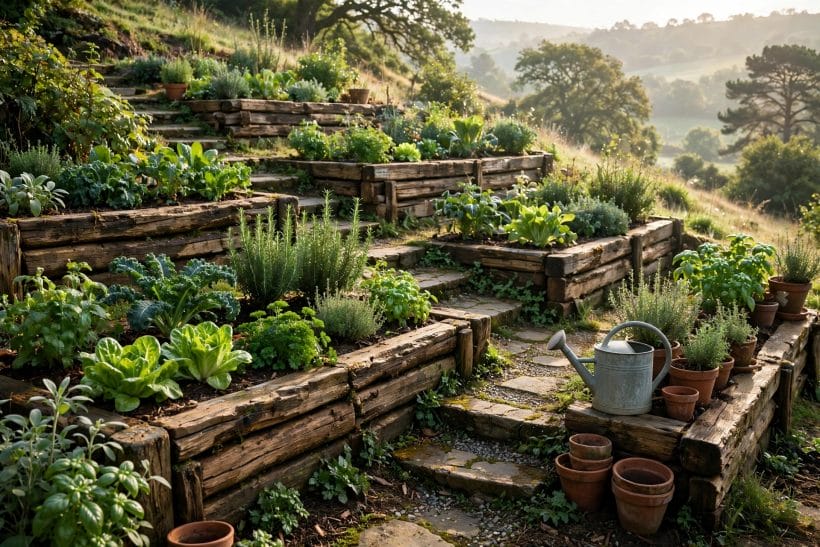
A terraced garden has a natural advantage with colour, because its levels can be planned to take turns through the year. Spring bulbs on an upper level catch the eye while lower beds are still waking up. Summer flowers on a middle terrace can carry the garden through its busiest months, with roses, lavender and perennials giving scent as well as colour. Autumn foliage on trees and shrubs can turn the whole slope into a display, and evergreen structure on the walls and edges keeps the garden from looking bare in winter.
Colour can also be used to shape how the levels feel. Warm colours near a seating level tend to feel welcoming and lively, while cool colours on a distant upper level can make the garden feel deeper than it is. Pale flowers and light foliage show up well in shaded levels, where strong colours might disappear into gloom. The wall material itself adds colour too: warm stone, silvered timber and pale render each change how planting reads against them, so it is worth looking at wall and plant together rather than choosing either in isolation.
8. Costs in General Terms
The cost of a terraced garden depends on drivers that are easy to list and hard to price without seeing the site. The size and steepness of the slope, the height and length of the walls, the material chosen, the amount of ground to be moved, drainage work, steps, paths and professional design and assessment all shape the final figure. A garden with low timber-edged beds on a gentle slope sits at a very different scale from a steep plot needing tall stone walls and extensive drainage, and comparing the two without context can mislead more than it helps.
It is worth asking a professional for a site-based view before settling a budget, since ground conditions that are invisible from the surface can change the scope considerably. Phasing the work can help where a budget is limited: structural levels and drainage first, with planting and finishing details added over time as funds allow. Planting itself can be phased too, with structure plants going in early and seasonal colour added gradually, which often gives a better garden in the end than planting everything at once before the levels have settled.
9. Lighting, Seating and Living on the Levels
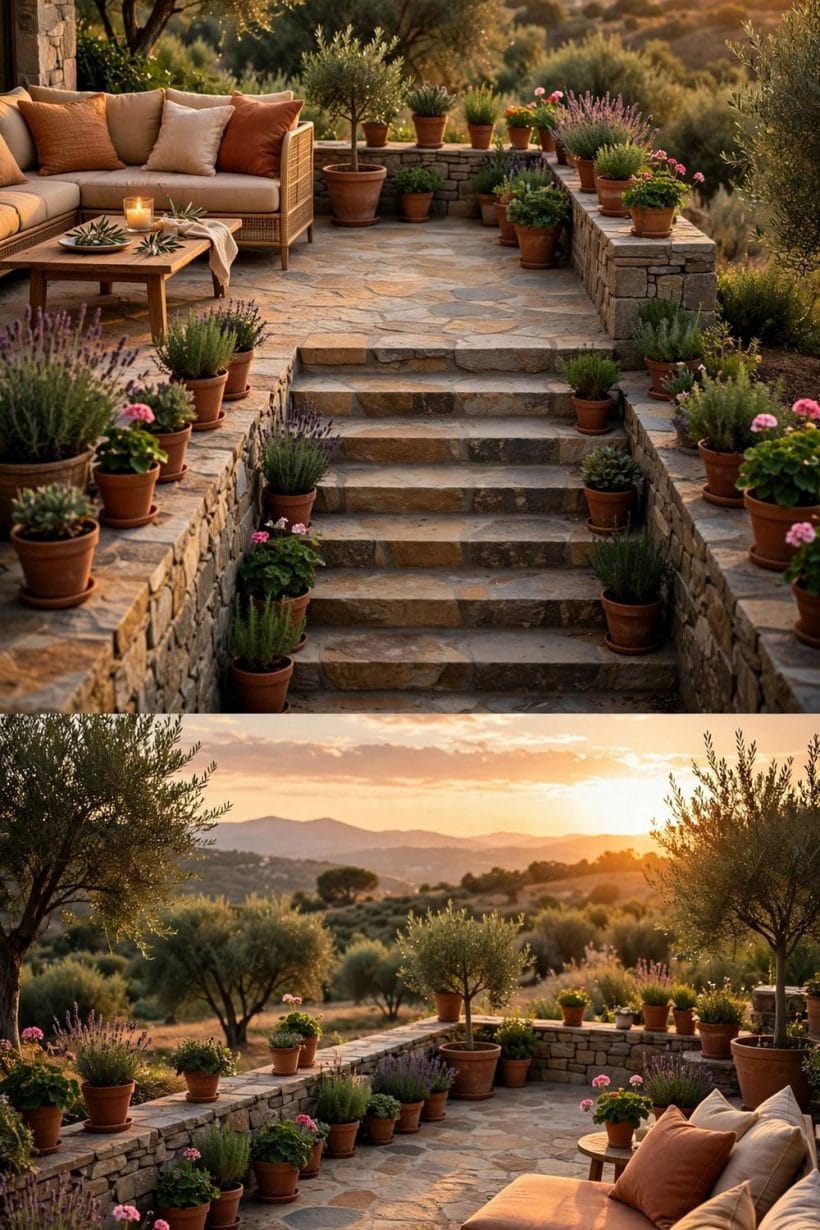
Terraces invite people to live outdoors in a way a plain slope rarely does, because each level can be given its own purpose. A sunny upper level can hold a dining table, a shaded middle level can hold a reading chair, and a lower level near the house can hold a patio for evening meals. Seating built into a wall edge can save space and give a level a finished feel, while loose chairs and tables keep the arrangement flexible and easy to change with the seasons.
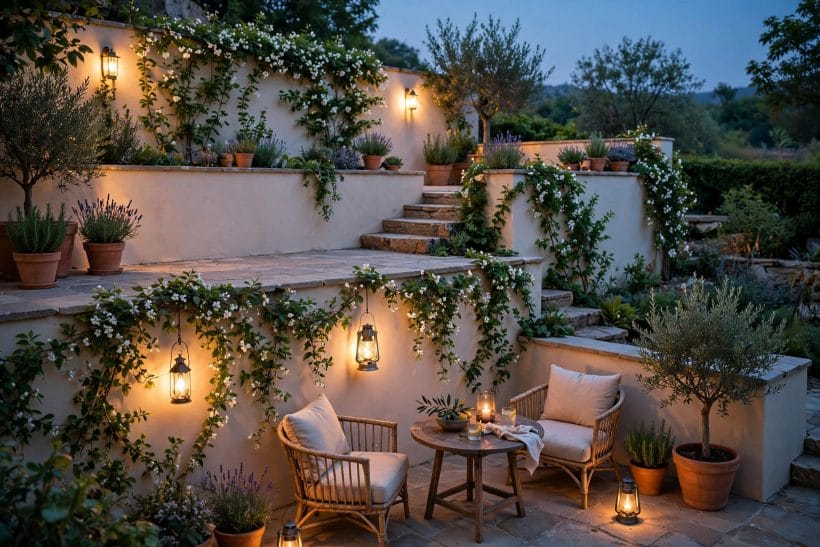
Evening lighting extends the life of the levels well beyond daylight. Low lights along steps help with safety, soft lights in beds pick out planting, and lanterns or festoon lights over a seating level can make an ordinary evening feel like an occasion. Electrical work outdoors should be treated as work for a qualified electrician, with fittings suited to outdoor use and cables properly protected. The outside of the house itself frames all of this, and tiny house exterior ideas show how the house and its garden levels can be read as one composition rather than two separate projects.
10. Small Plots and Gentle Slopes
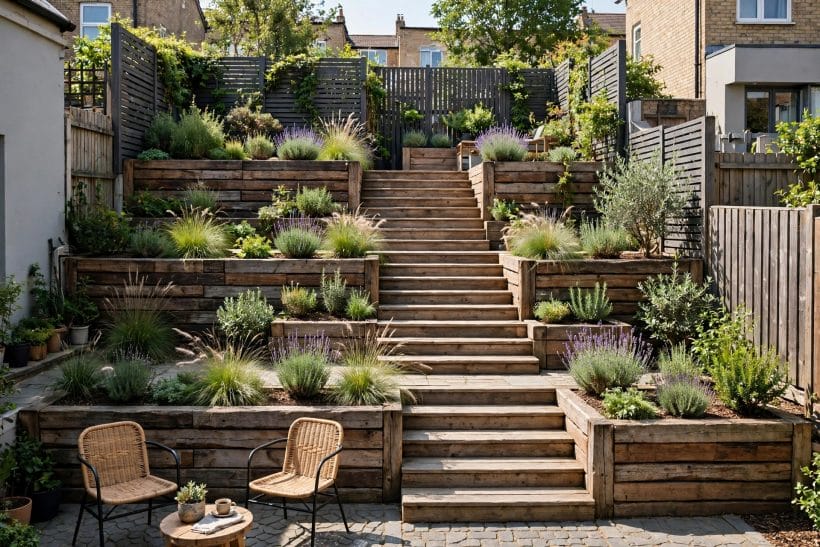
Terracing is often pictured on grand hillsides, but it can suit small plots just as well, and sometimes better. A small garden with a gentle slope can gain a great deal from a couple of low levels: a level patio near the house, a level bed or lawn above it, and steps that make the change feel deliberate rather than accidental. Low levels keep the work modest and the garden feeling open, which matters where neighbours are close and views are shared. Raised beds and low timber edges can give much of the terraced effect without tall walls, and they suit plots where a full structural scheme would overwhelm the space.
A naturalistic approach suits many small terraces, with soft planting spilling over wall edges and curved levels that blur the line between garden and landscape. Grasses, trailing plants and loose shrubs can soften stone and timber, and a level that looks slightly informal often feels more welcoming than one that looks rigidly formal. For gardens leaning that way, natural landscape style ideas offer a broader view of planting and layout that sits comfortably alongside terraced levels.
Final Considerations
A terraced garden rewards patience. Levels settle, planting fills in, and the garden often looks better in its second and third years than it does on the day it is finished. Living with the levels for a while before adding more can reveal which level is used most, which planting suits each spot, and where a seat or a light would make the most difference. Small changes made after that settling period often improve a garden more than a grand scheme imposed all at once.
Before starting, the questions worth answering are simple ones: how steep is the slope, how will water be handled, how high will the walls be, and who will assess the structural work. A qualified professional can answer the structural questions, and a clear brief about how the levels will be used can guide the rest. Done with that care, a terrace landscape can turn a difficult slope into the most loved part of a home, with levels that are pleasant to look at, easy to use, and full of planting that suits each spot it grows in.


0 Comments