
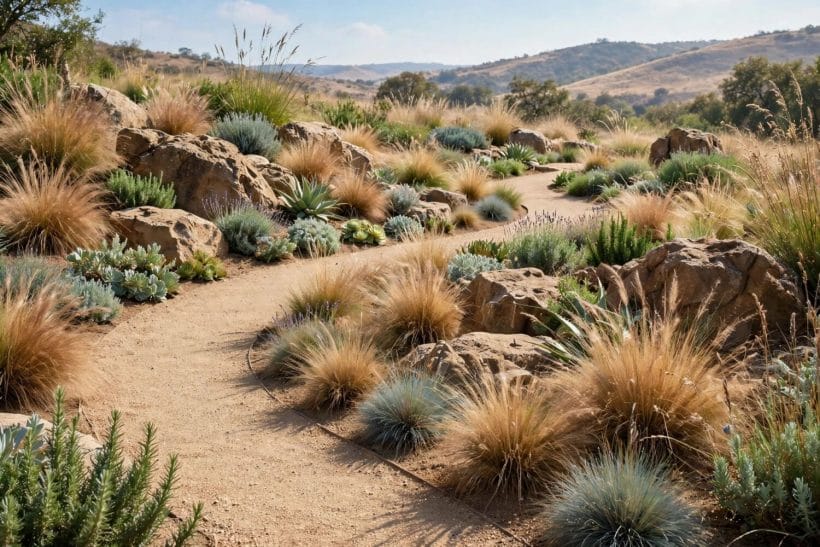
This guide gathers 75 ideas for a decomposed granite landscape, all centred on one surface material and the many ways it can shape paths, patios, beds, drives and dry gardens. Granite of this kind is a fine, naturally weathered stone that packs into a firm, warm-toned ground, and its appeal lies in that combination of a natural look and a practical, everyday footing. The ideas below stay with the surface itself: its tones, its edges, how it is laid and kept, and how it sits with planting, walls and houses.
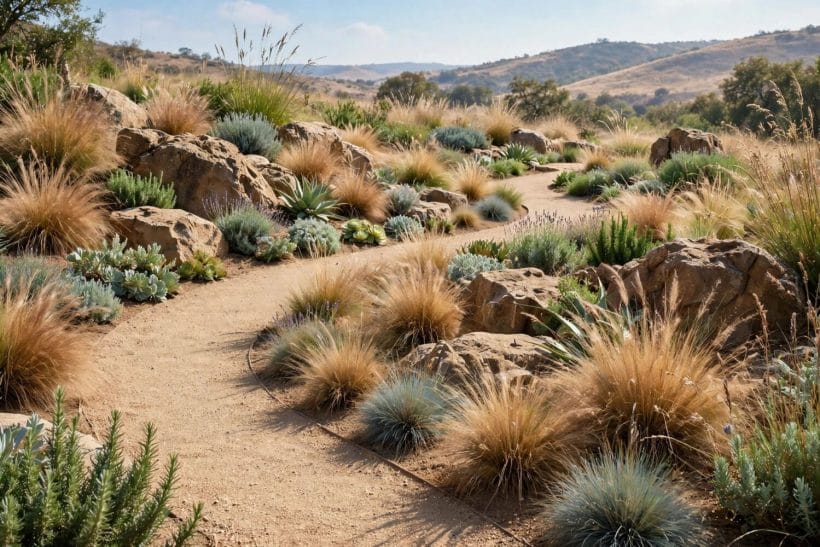
Nothing here promises a particular result in any one garden, because soil, rainfall, shade and climate all shape how a surface behaves, and costs are discussed only in general drivers, such as the area covered, the preparation needed, the edging chosen and access for delivering material. Use the ideas as a starting point, adapt them to your own plot, and seek professional advice where slopes are steep, drainage is significant, or structural work is involved.
1. Paths and Walkways
Paths are where this surface earns its keep, because a walk is used every day and its feel underfoot matters more than any single feature around it. The ideas below stay with the surface itself: its width, its edges, how firmly it is laid, and how it meets the planting on either side.
| Item | What it is |
|---|---|
| A Winding Garden Path | A gently curving path in warm-toned granite can lead the eye through a garden without needing any other feature to carry the scene. |
| A Straight Front Walk | A straight walk from gate to door suits houses with a formal front, and a firm granite surface can give that line a quiet, natural finish. |
| A Side Passage in Granite | Side passages are often forgotten, yet they are walked daily with bins, tools and washing, and a granite surface can make them far more pleasant to use. |
| A Curved Approach to the Door | A soft curve up to the front door can make even a short approach feel considered, and granite gives that curve a smooth, continuous finish. |
| A Path with Stone Stepping Slabs | Large flat slabs set into a granite path can give a walk a stepping rhythm while the granite fills the gaps and keeps the surface even underfoot. |
| A Wide Shared Garden Walk | A generous shared walk suits gardens where several people use the same route, from the house to a studio, a vegetable patch or a seating area. |
| A Narrow Walk Between Beds | Narrow walks between planting beds are working routes as much as display routes, used for watering, pruning and picking, and granite suits them because it stays usable in wet weather and does not turn to mud. |
| A Path That Splits Around a Tree | Where a mature tree stands in the way of a direct route, splitting the path around it can turn an obstacle into a feature, with granite flowing either side of the trunk. |
| A Simple Open Patio | An open patio in granite can feel calm and uncluttered, with the surface itself providing the interest through its natural variation of tone. |
| A Patio Beneath a Pergola | Under a pergola, dappled light plays across a granite surface through the day, and the warm tones of the material can pick up that shifting light beautifully. |
| A Quiet Reading Corner | A small granite pad tucked into a sheltered corner can make a reading spot that feels deliberately made rather than improvised. |
| A Dining Patio | For outdoor dining, a granite patio needs to be firm and level above all, since table legs and chair feet will find any soft spot. |
| A Patio Around a Fire Bowl | A seating area arranged around a fire bowl puts the granite surface at the centre of evening gatherings, and the material suits that role because it is not damaged by ash or sparks in the way some surfaces might be. |
| A Morning Coffee Spot | A small granite apron outside a back door or kitchen window can become the natural place for a morning coffee, catching early sun before the rest of the garden wakes. |
| A Patio with a Low Wall Seat | A low wall beside a granite patio can double as extra seating, and the contrast between the solid wall and the loose-textured surface can be very satisfying. |
| A Small Courtyard Floor | In a small courtyard, a granite floor can unify the whole space, running wall to wall and letting pots, a bench and a single feature plant provide the decoration. |
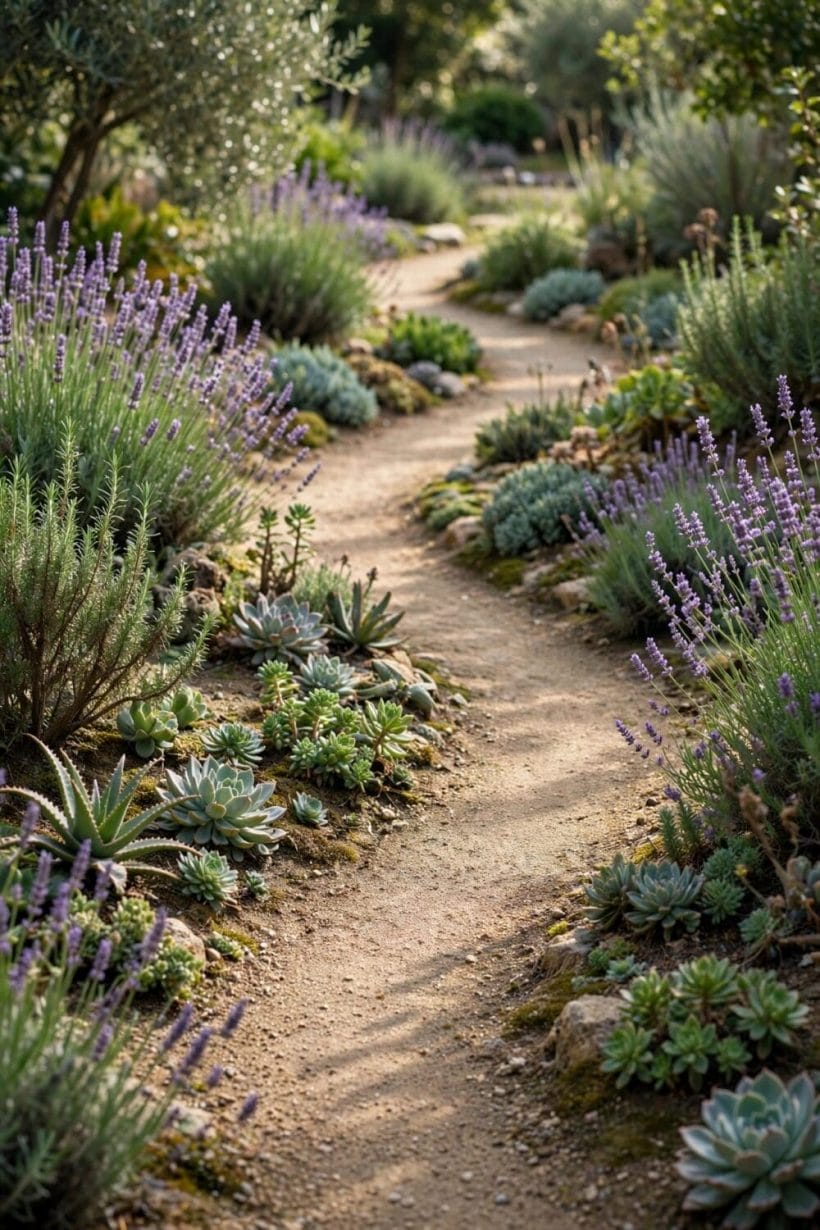
| Granite as a Bed Ground Cover | Spreading granite over the soil between shrubs can give a bed a tidy, finished appearance while still letting the plants take centre stage. |
| A Border Between Lawn and Beds | A band of granite between lawn and planting beds can act as a mowing strip and a visual pause, stopping grass from creeping into beds and giving the bed edge a crisp line. |
| A Surround for Rose Beds | Rose beds can look their best with a calm surface beneath them, and granite in a warm neutral tone can set off rose foliage and flowers without competing with them. |
| Paths Between Herb Beds | Narrow granite paths between herb beds can make a kitchen garden both practical and attractive, giving a firm footing for picking and watering. |
| A Rock Garden Floor | In a rock garden, granite can act as the ground plane that ties boulders, alpine plants and gravel-like textures together into one coherent scene. |
| A Ground Cover for Succulent Beds | Succulent beds often suit a mineral ground cover, and granite can provide that dry, stony look while keeping the bed surface tidy and free-draining in feel. |
| A Surface for Shaded Beds | Shaded beds under trees can be difficult to keep tidy, and a granite surface can give them a calm, even floor that does not depend on sunlight to look good. |
| A Seasonal Bed Edge | A granite edge along a flower bed can carry the bed through the seasons, looking as appropriate in winter as in high summer. |
| Warm Gold Tones | Warm gold granite is the most familiar colour family, and it suits gardens with a sunny, Mediterranean or cottage character. |
| Soft Grey Granite | Soft grey granite suits contemporary gardens and houses with cool-toned walls, giving paths and patios a quiet, understated finish. |
| A Rose-Tinted Blend | A rose-tinted blend can add a gentle warmth to a garden without the strength of a full gold tone, and it suits brick houses and warm stone walls particularly well. |
| A Pale Buff Surface | A pale buff surface can lift a small or shaded garden, reflecting light and making paths and patios feel brighter and more open. |
| Charcoal Accent Strips | Charcoal granite used as an accent strip within a paler field can give a path or patio a designed, contemporary edge without overwhelming the space. |
| A Mixed-Tone Natural Blend | A mixed-tone blend, with gold, grey and buff particles together, can give a surface a natural, variegated look that sits comfortably in almost any garden. |
| Colour Matched to House Walls | Matching the granite tone to the house walls can tie the garden to the building, making paths and patios feel like a natural extension of the house rather than an addition. |
| Colour Matched to Stone Walls | Where a garden already has stone walls, choosing a granite tone close to that stone can make new paths and patios feel as though they have always belonged. |
| A Single-Car Drive Strip | A single-car drive in granite can give a front garden a softer, more natural arrival than a fully paved drive, while still providing a firm surface for daily use. |
| A Full Driveway Surface | A full driveway in granite suits houses where the drive is a major part of the front garden, giving a broad, natural floor that does not dominate the way large areas of paving sometimes can. |
| A Parking Pad Beside the House | A parking pad beside the house can be a practical addition where street parking is limited, and granite gives it a garden-like finish rather than a car-park feel. |
| A Driveway with Planted Joints | A driveway laid with planted joints, where low ground cover grows between granite bands, can soften a large vehicle area and help it read as garden rather than hard standing. |
| A Guest Parking Bay | A guest parking bay in granite can provide occasional parking without committing a large area of the garden to vehicles permanently. |
| A Driveway Apron at the Street | The apron where a driveway meets the street takes the most wear of any part of a drive, as wheels turn and brake on it daily, so a firm granite surface with strong edging can be a practical choice there. |
| A Turnaround Area | A turnaround area in granite can make a long or awkward drive far easier to use, giving vehicles room to turn without reversing onto the street. |
| A Gentle Slope Surface | On a gentle slope, granite can provide a natural-looking surface that follows the fall of the land without the stepped formality of paving. |
| Terraced Levels in Granite | Where a garden falls in stages, each terrace can be surfaced in granite to give a consistent floor across different levels, with steps or ramps linking them. |
| Granite Step Treads | Granite can be used as the tread surface on garden steps, giving a natural finish that matches paths and patios elsewhere in the garden. |
| A Drainage-Friendly Side Path | A side path that also carries rainwater needs a surface that lets water move without washing away, and granite can suit that dual role when it is laid with a gentle fall toward a suitable outlet. |
| A Swale Edge Surface | Where a shallow swale carries water through a garden, granite along its edges can stabilise the banks and give the feature a finished, natural look. |
| A Surround for a Rain Garden | A granite surround can frame a rain garden, giving a firm footing for viewing and maintaining the planted basin without standing on soft ground. |
| A Levelled Terrace on a Bank | A small levelled terrace cut into a bank can create a usable seating or viewing spot where a slope previously offered none, and granite can give that terrace a natural floor. |
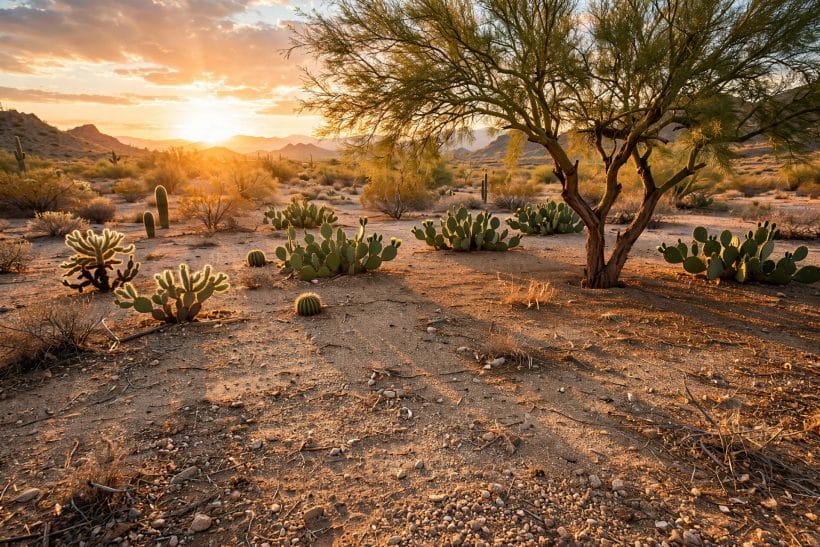
| A Dry Garden Floor | A dry garden floor in granite can give the whole garden a coherent, sun-baked character, with the surface acting as a calm backdrop for grasses, succulents and sculptural shrubs. |
| A Desert-Style Planting Ground | For desert-style planting, granite can provide the stony ground plane that makes cacti, agaves and dry grasses look at home, echoing the natural ground of arid landscapes. |
| Granite Instead of Gravel | Where gravel might once have been the default, granite can offer a finer, more settled alternative, with smaller particles that pack more firmly underfoot. |
| A Cactus Bed Surface | A cactus bed surfaced in granite can look strikingly natural, with the mineral ground setting off the sculptural forms and spines of the plants. |
| A Mediterranean-Style Courtyard | A Mediterranean-style courtyard in granite, with terracotta pots, olive trees and pale walls, can evoke a sunlit southern garden even in a cooler climate. |
| A Low-Water Front Garden | A low-water front garden can be built around a granite surface, with planting kept to drought-tolerant shrubs and grasses and the ground itself providing most of the visual interest. |
| Rock and Grass Combinations | Combining granite with ornamental grasses can give a garden movement and softness, with the fine texture of the surface contrasting against the flowing forms of the grasses. |
| A Dry Creek Bed Crossing | Where a dry creek bed runs through a garden, a granite crossing can give a firm, level way across it, with the surface matching the stony character of the creek itself. |
| A Play Area Surface | A play area surfaced in granite can give children a natural-feeling ground that drains after rain and does not turn to mud, though families should consider softness and suitability for their own children and play equipment before choosing any surface. |
| A Pet-Friendly Run Surface | A pet run in granite can provide a firm, free-draining ground that is easy to keep clean and does not wear into muddy patches the way lawn often does. |
| A Wheelbarrow-Friendly Work Path | A work path in granite can make barrowing soil, compost and plants far easier than a soft or muddy route, provided the surface is firm and level. |
| A Bin Store Apron | A bin store apron in granite can give a practical corner of the garden a tidy, usable floor, making bins easier to wheel in and out and keeping the area from becoming muddy. |
| A Clothesline Area | A clothesline area in granite can provide a clean, dry footing for pegging out washing, without the muddy patches that can mark clothes on a lawn. |
| An Outdoor Shower Base | An outdoor shower base in granite can give a natural, free-draining footing that suits a garden shower far better than a slippery hard surface might. |
| An Everyday Back-Door Apron | A back-door apron in granite can take the daily wear of coming and going, from muddy boots to wet paws, without showing it the way a lawn or bare soil would. |
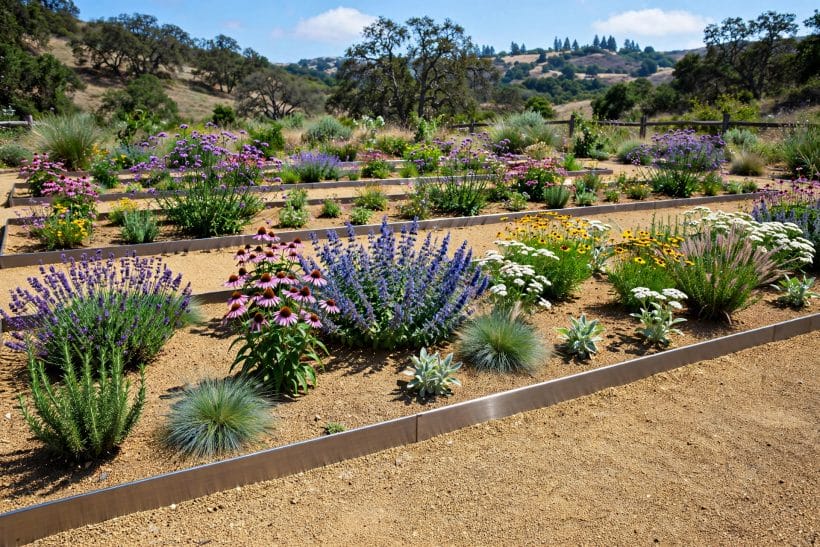
| A Steel Edge Strip | A steel edge strip can give a granite area a crisp, contemporary boundary that is barely visible yet holds the surface firmly in place. |
| A Stone Edging | Stone edging, using blocks or cobbles that match or contrast with the granite, can give a path or patio a traditional, garden-like boundary. |
| Timber Edge Boards | Timber edge boards can give a granite area a warm, informal boundary that suits vegetable gardens, cottage gardens and rustic settings. |
| A Brick Soldier Course Edge | A brick soldier course, with bricks set upright along the edge of a granite area, can give a formal, crafted boundary that suits brick houses and traditional gardens. |
| A Flush Edge with Lawn | A flush edge, where granite meets lawn at the same level, can give a garden a seamless, open feel, with no visible barrier between surface and grass. |
| Joints in Large Areas | Large granite areas can benefit from joints or breaks, using strips of stone, timber or planting to divide the surface into panels that are easier to maintain. |
| Decorative Inlay Strips | Decorative inlay strips, using a contrasting stone or a darker granite tone set into the main surface, can give a path or patio a patterned, bespoke feel. |
1. A Winding Garden Path
A gently curving path in warm-toned granite can lead the eye through a garden without needing any other feature to carry the scene. The curve itself does much of the work, slowing the walk and letting planting appear in stages rather than all at once. Keep the width generous enough for two people to pass comfortably, and let the edges follow the same easy line so the surface reads as one calm ribbon rather than a strip squeezed between beds.
2. A Straight Front Walk
A straight walk from gate to door suits houses with a formal front, and a firm granite surface can give that line a quiet, natural finish. The simplicity of the route puts attention on the surface tone and on the edging, so choose both with care and keep them consistent from end to end. A straight walk also shows uneven spots more readily, so a level, well-compacted finish matters more here than on a winding route.
3. A Side Passage in Granite
Side passages are often forgotten, yet they are walked daily with bins, tools and washing, and a granite surface can make them far more pleasant to use. The material suits narrow spaces because it can be laid wall to wall without joints or cuts, and its pale tones can help a shaded passage feel less closed in. Good drainage along the passage matters, so the surface should fall gently away from the house and toward a suitable outlet.
4. A Curved Approach to the Door
A soft curve up to the front door can make even a short approach feel considered, and granite gives that curve a smooth, continuous finish. The bend can be used to skirt a tree, frame a feature shrub, or simply break up a long straight run from the street. Because the surface has no fixed joints, curves cost no extra cutting, though the edging along a curve needs care to hold its line over time.
5. A Path with Stone Stepping Slabs
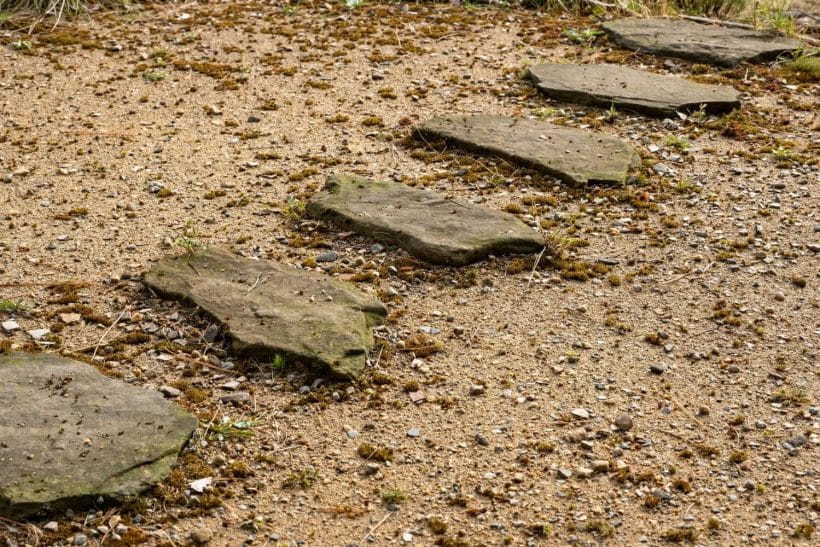
Large flat slabs set into a granite path can give a walk a stepping rhythm while the granite fills the gaps and keeps the surface even underfoot. The contrast between solid stone and loose-textured granite can be very pleasing, especially where the slab tone picks up a colour already present in the house walls. Set the slabs flush with the surrounding surface so there is no trip edge, and keep the gaps narrow enough that the walk still feels like one path.
6. A Wide Shared Garden Walk
A generous shared walk suits gardens where several people use the same route, from the house to a studio, a vegetable patch or a seating area. Granite can carry that shared use well when it is laid firmly and edged securely, and a wider surface also gives planting room to spill slightly over the edges without narrowing the walk. A width that allows two people to stroll side by side is a good starting point for a main garden route.
7. A Narrow Walk Between Beds
Narrow walks between planting beds are working routes as much as display routes, used for watering, pruning and picking, and granite suits them because it stays usable in wet weather and does not turn to mud. Keep the surface slightly proud of the bed soil so water runs off the walk rather than pooling on it, and choose an edging that stops the granite drifting into the beds. A narrow walk in a pale tone can also lift a densely planted area.
8. A Path That Splits Around a Tree
Where a mature tree stands in the way of a direct route, splitting the path around it can turn an obstacle into a feature, with granite flowing either side of the trunk. The surface can be kept clear of the trunk itself, leaving room for the roots and for mulch, while the two arms of the path rejoin beyond the canopy. This arrangement suits trees that are already established, and any work near roots is best kept light and shallow.
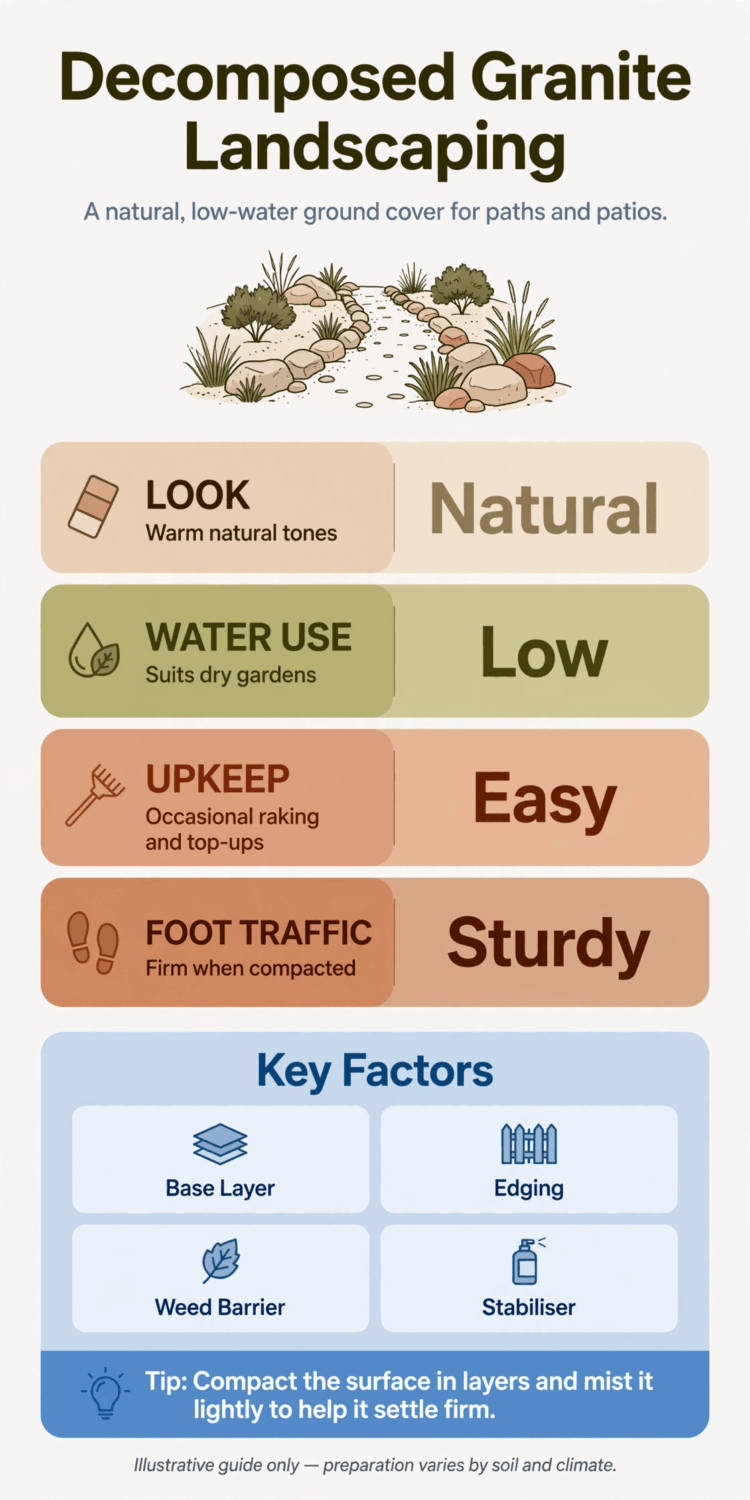
2. Patios and Seating Areas
A patio is a surface people sit on, eat on and linger over, so its texture, tone and firmness matter at close range. Granite can give a patio a relaxed, natural character that suits both timber furniture and metal chairs, and the ideas below look at how the surface behaves beneath different kinds of use.
9. A Simple Open Patio
An open patio in granite can feel calm and uncluttered, with the surface itself providing the interest through its natural variation of tone. Without paving joints to break the eye, the area reads as one generous floor, which can make a small garden feel larger. Furniture sits well on a firmly compacted surface, though very light chairs may need levelling from time to time as the surface settles with use.
10. A Patio Beneath a Pergola
Under a pergola, dappled light plays across a granite surface through the day, and the warm tones of the material can pick up that shifting light beautifully. The surface stays cooler in feel than some hard paving in strong sun, and it drains readily after rain, so the area under the pergola can be usable again soon after a shower. Keep the surface level beneath the pergola posts so furniture does not rock.
11. A Quiet Reading Corner
A small granite pad tucked into a sheltered corner can make a reading spot that feels deliberately made rather than improvised. A single chair, a small table and a patch of firm surface are all that is needed, and the granite helps the corner blend with the planting around it instead of standing apart as a built structure. Choose a tone that sits comfortably with the foliage nearby, and keep the pad large enough for the chair to move without slipping off the edge.
12. A Dining Patio
For outdoor dining, a granite patio needs to be firm and level above all, since table legs and chair feet will find any soft spot. A well-compacted surface can support a dining set well, and its natural texture suits relaxed meals far better than a formal paved floor might. Sweeping crumbs and leaves from the surface is straightforward, and a pale tone can help the dining area feel bright into the evening.
13. A Patio Around a Fire Bowl
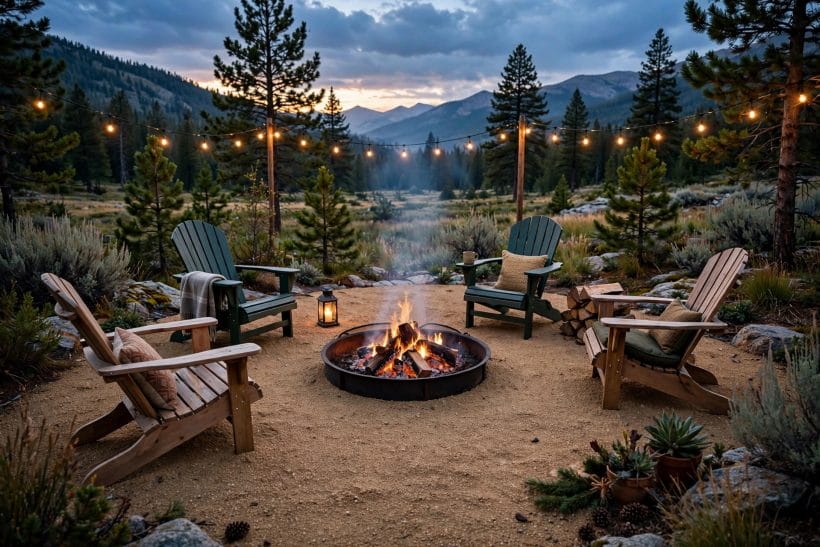
A seating area arranged around a fire bowl puts the granite surface at the centre of evening gatherings, and the material suits that role because it is not damaged by ash or sparks in the way some surfaces might be. Keep the surface generous enough that chairs can be pulled back comfortably from the bowl, and leave the area beneath the bowl itself clear and level. Any fire feature should be used with care and sited with clear space around it, following the guidance that comes with it.
14. A Morning Coffee Spot
A small granite apron outside a back door or kitchen window can become the natural place for a morning coffee, catching early sun before the rest of the garden wakes. The surface needs only to be firm, level and easy to step onto in bare feet, and its natural warmth of tone suits that first-look-of-the-day moment. A single pot or two at the edge can soften the boundary without narrowing the usable surface.
15. A Patio with a Low Wall Seat
A low wall beside a granite patio can double as extra seating, and the contrast between the solid wall and the loose-textured surface can be very satisfying. The wall gives the patio a sense of enclosure without shutting it off from the garden, and it offers a place to perch when chairs are all taken. Keep the wall height comfortable for sitting and the granite level with the wall base so there is no awkward step between them.
16. A Small Courtyard Floor
In a small courtyard, a granite floor can unify the whole space, running wall to wall and letting pots, a bench and a single feature plant provide the decoration. The absence of paving joints helps a tight courtyard feel less busy, and a pale tone can lift a space that gets limited direct sun. Drainage deserves attention in an enclosed courtyard, so the surface should be laid to fall gently toward a suitable outlet.
3. Garden Beds and Borders
Used as a ground cover within beds and along borders, this surface changes how planting reads: it frames shrubs and perennials, keeps soil covered, and gives beds a finished look between plants. The ideas below keep the focus on the surface and its edges, not on planting schemes in general.
17. Granite as a Bed Ground Cover
Spreading granite over the soil between shrubs can give a bed a tidy, finished appearance while still letting the plants take centre stage. The surface layer can help the soil beneath stay more even in moisture, and it can make weeding easier to spot and deal with, though it does not remove the need for weeding altogether. Keep the layer clear of plant stems so air can move around the base of each plant.
18. A Border Between Lawn and Beds
A band of granite between lawn and planting beds can act as a mowing strip and a visual pause, stopping grass from creeping into beds and giving the bed edge a crisp line. The band needs to be wide enough for a mower wheel to run along it comfortably, and its tone can either match the paths nearby or offer a quiet contrast. A firm edge on the lawn side helps the band keep its shape through the seasons.
19. A Surround for Rose Beds
Rose beds can look their best with a calm surface beneath them, and granite in a warm neutral tone can set off rose foliage and flowers without competing with them. The surface also gives a clean footing for pruning and deadheading, which matters when roses need regular attention. Keep the granite clear of the base of each plant and leave room for mulch or feeding routines already in use.
20. Paths Between Herb Beds
Narrow granite paths between herb beds can make a kitchen garden both practical and attractive, giving a firm footing for picking and watering. The surface suits this use because it does not splash soil onto low herbs in the way bare soil might after rain, and it keeps the working area tidy. A pale tone can help the paths read clearly even when herbs grow lush and spill slightly over the edges.
21. A Rock Garden Floor
In a rock garden, granite can act as the ground plane that ties boulders, alpine plants and gravel-like textures together into one coherent scene. The material echoes the stone around it while staying fine enough to walk on, which matters where a rock garden is also a route through the garden. Choose a tone close to the larger rocks so the floor and the boulders read as one family of stone.
22. A Ground Cover for Succulent Beds
Succulent beds often suit a mineral ground cover, and granite can provide that dry, stony look while keeping the bed surface tidy and free-draining in feel. The material sits comfortably with the sculptural forms of succulents and does not hold moisture against their crowns in the way organic mulches sometimes might. Keep the layer shallow around small plants so their forms are not buried.
23. A Surface for Shaded Beds
Shaded beds under trees can be difficult to keep tidy, and a granite surface can give them a calm, even floor that does not depend on sunlight to look good. The material suits shade because its colour does not fade and it does not need sun to dry out after rain in the way lawn might. In deep shade, a paler tone can help the bed feel lighter, though leaf litter will still need clearing regularly.
24. A Seasonal Bed Edge
A granite edge along a flower bed can carry the bed through the seasons, looking as appropriate in winter as in high summer. The surface does not change with the planting, so it gives the garden a constant frame while flowers come and go. Refreshing the edge occasionally, by raking it level and topping up thin spots, can keep the whole bed looking cared for with very little effort.
4. Colours and Tones
Colour is one of the most immediate choices with this surface, because the tone of the ground sets the mood for everything planted above it. The ideas below look at colour families and at how each one tends to sit with houses, walls and planting.
25. Warm Gold Tones
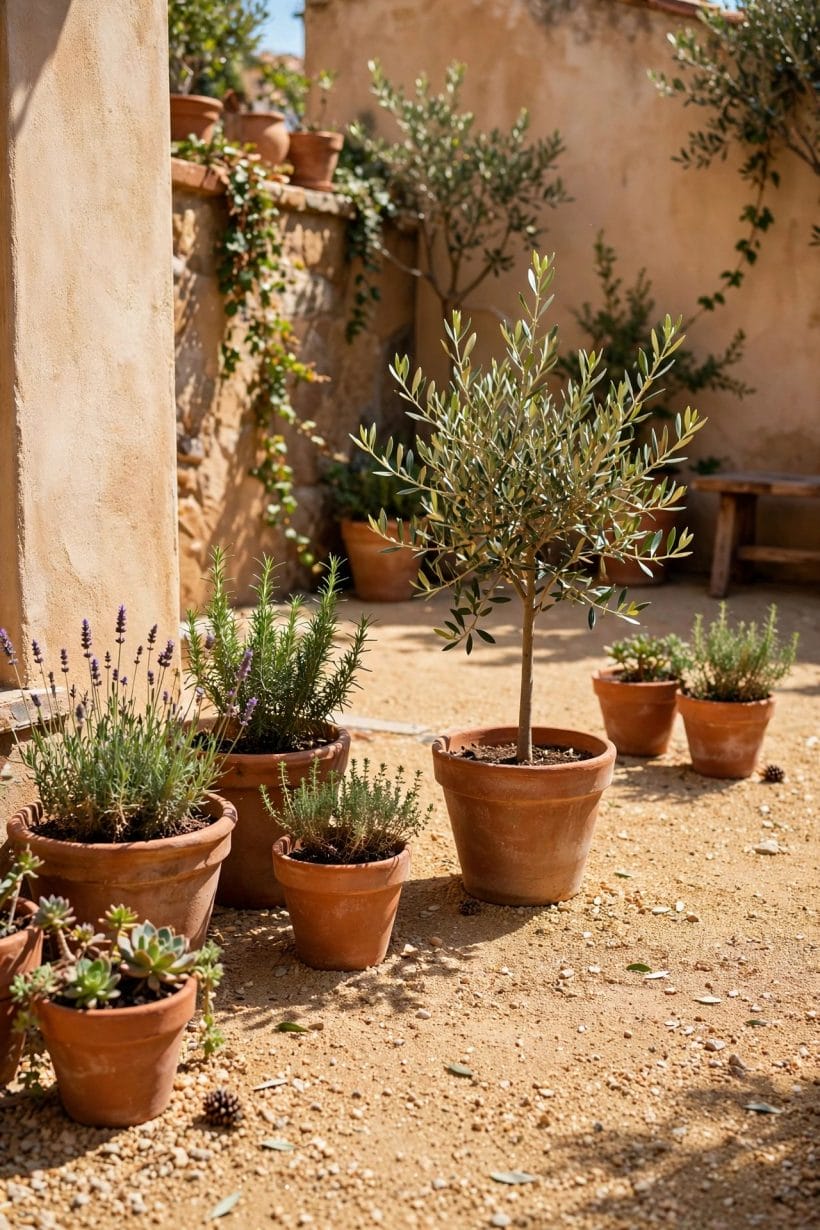
Warm gold granite is the most familiar colour family, and it suits gardens with a sunny, Mediterranean or cottage character. The golden tones can make a garden feel warmer even on a grey day, and they pair naturally with terracotta pots, timber furniture and green foliage. Gold tones also tend to hide dust and fallen leaves better than very pale surfaces, which can be a practical advantage in a busy garden.
26. Soft Grey Granite
Soft grey granite suits contemporary gardens and houses with cool-toned walls, giving paths and patios a quiet, understated finish. Grey tones can make green planting stand out more vividly, since the eye is not drawn to the ground itself, and they pair well with metal furniture and pale stone walls. In shade, grey can feel calm rather than cold, especially where planting brings warmth to the edges.
27. A Rose-Tinted Blend
A rose-tinted blend can add a gentle warmth to a garden without the strength of a full gold tone, and it suits brick houses and warm stone walls particularly well. The pinkish cast can look especially pleasing in evening light, when it picks up the last of the sun, and it pairs naturally with roses, lavender and other warm-toned planting. Rose blends vary a good deal, so viewing a sample in your own garden light is wise before committing.
28. A Pale Buff Surface
A pale buff surface can lift a small or shaded garden, reflecting light and making paths and patios feel brighter and more open. Buff tones suit white-painted houses and light stone walls, and they give a garden a fresh, airy character through the year. Pale surfaces do show soil and leaf stains more readily, so they suit gardens where regular sweeping and occasional raking are part of the routine.
29. Charcoal Accent Strips
Charcoal granite used as an accent strip within a paler field can give a path or patio a designed, contemporary edge without overwhelming the space. A dark strip can mark a route, frame a seating area, or echo a dark feature such as a metal gate or black-painted fence. Used sparingly, the contrast draws the eye along the surface, while used too broadly it can dominate, so restraint tends to work best.
30. A Mixed-Tone Natural Blend
A mixed-tone blend, with gold, grey and buff particles together, can give a surface a natural, variegated look that sits comfortably in almost any garden. The variation helps the surface look less uniform and more like a natural ground, and it can hide minor marks and unevenness better than a single flat tone. Mixed blends also make it easier to match an existing stone wall or house wall, since several tones are present at once.
31. Colour Matched to House Walls
Matching the granite tone to the house walls can tie the garden to the building, making paths and patios feel like a natural extension of the house rather than an addition. Pick up a secondary tone from brick or stone rather than the dominant colour, so the match feels harmonious without being exact. A sample laid against the wall in daylight can reveal whether the pairing works before the full surface is laid.
32. Colour Matched to Stone Walls
Where a garden already has stone walls, choosing a granite tone close to that stone can make new paths and patios feel as though they have always belonged. The surface and the wall then read as one material family, which can be especially pleasing in older gardens. If the wall stone is strongly coloured, a quieter granite tone may sit better than an exact match, letting the wall remain the feature.
5. Driveways and Parking
Driveways ask more of a surface than paths do, carrying vehicles as well as feet, so firmness, edging and drainage all matter more. The ideas below stay with the surface and its behaviour under vehicle use, with cost drivers noted in general terms.
33. A Single-Car Drive Strip
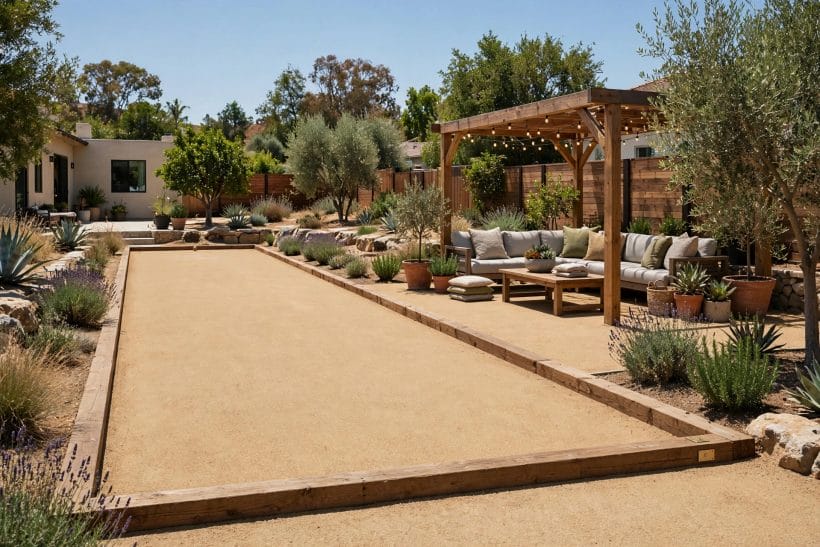
A single-car drive in granite can give a front garden a softer, more natural arrival than a fully paved drive, while still providing a firm surface for daily use. The key is a well-prepared base and secure edging, since vehicle wheels concentrate weight on a narrow track. A single strip also leaves room for planting on either side, which can soften the whole front of the house.
34. A Full Driveway Surface
A full driveway in granite suits houses where the drive is a major part of the front garden, giving a broad, natural floor that does not dominate the way large areas of paving sometimes can. The surface needs to be laid firmly and evenly, with attention to drainage so water does not pool where cars stand. Cost drivers here include the area covered, the preparation needed, the edging chosen and access for delivering the material.
35. A Parking Pad Beside the House
A parking pad beside the house can be a practical addition where street parking is limited, and granite gives it a garden-like finish rather than a car-park feel. The pad should be level and firm, with edging that can withstand wheels turning at its corners, and planting around it can soften its outline. Keeping the pad modest in size helps it sit comfortably within the garden as a whole.
36. A Driveway with Planted Joints
A driveway laid with planted joints, where low ground cover grows between granite bands, can soften a large vehicle area and help it read as garden rather than hard standing. The granite bands carry the wheels while the planting fills the gaps, though the planting will need care to stay low and even. This arrangement suits drives that are used lightly rather than several times a day.
37. A Guest Parking Bay
A guest parking bay in granite can provide occasional parking without committing a large area of the garden to vehicles permanently. The surface can be laid to match the main drive or paths, so the bay reads as part of the garden when empty, and its informal character suits occasional use well. A clear, firm edge helps visitors see where the bay begins and ends.
38. A Driveway Apron at the Street
The apron where a driveway meets the street takes the most wear of any part of a drive, as wheels turn and brake on it daily, so a firm granite surface with strong edging can be a practical choice there. The apron should sit level with the street surface and drain away from the road, and its tone can match the rest of the drive for a continuous look. Any work near a public road should follow local rules and guidance.
39. A Turnaround Area
A turnaround area in granite can make a long or awkward drive far easier to use, giving vehicles room to turn without reversing onto the street. The surface needs to be broad and firmly laid, since turning wheels can disturb a loose surface more than straight driving does. Planting around the turnaround, kept clear of the turning circle, can keep the area feeling like garden rather than roadway.
6. Slopes, Steps and Drainage
Slopes and drainage test a loose-textured surface more than flat ground does, so these ideas focus on how granite behaves on a gradient, on steps, and where water runs. Structural work and drainage design are matters for professional advice where the ground is steep or the water flow is significant.
40. A Gentle Slope Surface
On a gentle slope, granite can provide a natural-looking surface that follows the fall of the land without the stepped formality of paving. The gradient should be kept modest, since a loose surface can migrate downhill over time on steeper ground, and secure edging on the downhill side can help hold the material in place. A slightly coarser texture may grip better on a slope, though the choice depends on the site.
41. Terraced Levels in Granite
Where a garden falls in stages, each terrace can be surfaced in granite to give a consistent floor across different levels, with steps or ramps linking them. The repetition of the same surface can unify a terraced garden, while planting on each level provides the variety. Each terrace should be level in itself, with its own edging and drainage, so water does not run from one level onto the next.
42. Granite Step Treads
Granite can be used as the tread surface on garden steps, giving a natural finish that matches paths and patios elsewhere in the garden. The tread finish should be firm and level, with a clear nosing so each step reads well in low light, and any structural work beneath the steps is best left to a professional. A tone that contrasts slightly with the surrounding surface can help steps stand out safely.
43. A Drainage-Friendly Side Path
A side path that also carries rainwater needs a surface that lets water move without washing away, and granite can suit that dual role when it is laid with a gentle fall toward a suitable outlet. The path should not direct water toward the house or a neighbour, and any drainage arrangement that connects to a larger system should follow local guidance. A firm, well-edged surface is less likely to be disturbed by regular water flow.
44. A Swale Edge Surface
Where a shallow swale carries water through a garden, granite along its edges can stabilise the banks and give the feature a finished, natural look. The surface can help the swale read as a designed garden feature rather than a ditch, especially where planting softens its upper edges. Water flow in a swale can be strong after heavy rain, so the edging and surface along it need to be secure.
45. A Surround for a Rain Garden
A granite surround can frame a rain garden, giving a firm footing for viewing and maintaining the planted basin without standing on soft ground. The surface keeps the edge of the basin tidy and provides access for care, while the basin itself remains a planting feature in its own right. Any rain garden should be planned with drainage in mind, and the granite surround should not block water from reaching the basin.
46. A Levelled Terrace on a Bank
A small levelled terrace cut into a bank can create a usable seating or viewing spot where a slope previously offered none, and granite can give that terrace a natural floor. The terrace surface should be level and well edged, with the bank behind it stable and planted, and any retaining work should be professionally advised where the bank is high or the ground is unstable. A granite floor helps the terrace feel like part of the garden rather than a built platform.
7. Water-Wise and Dry Gardens
In dry gardens, the ground surface does much of the visual work, since planting is often sparse and sculptural. Granite suits that role well, giving a natural, sunlit floor that needs no watering itself and that sets off drought-tolerant planting.
47. A Dry Garden Floor
A dry garden floor in granite can give the whole garden a coherent, sun-baked character, with the surface acting as a calm backdrop for grasses, succulents and sculptural shrubs. The material needs no water and does not compete with plants for attention, which suits gardens designed around low water use. A warm tone can enhance the dry-garden feel, especially where the garden catches strong sun.
48. A Desert-Style Planting Ground
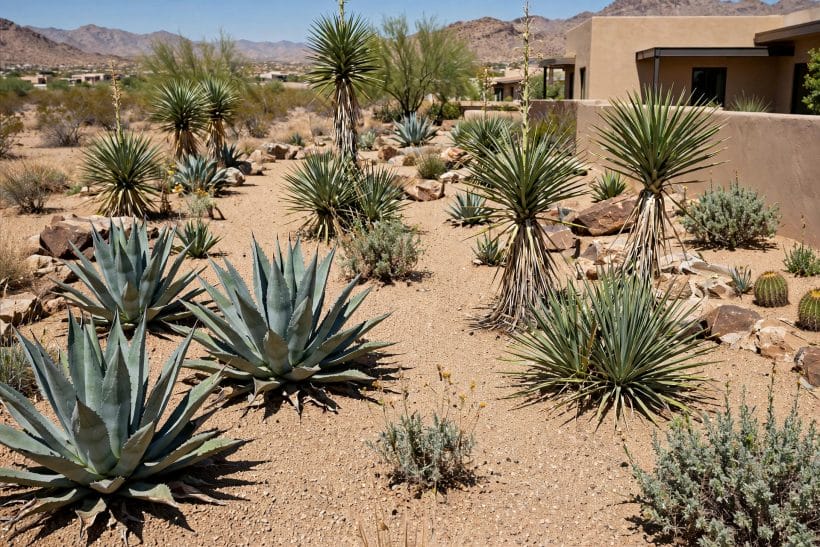
For desert-style planting, granite can provide the stony ground plane that makes cacti, agaves and dry grasses look at home, echoing the natural ground of arid landscapes. The surface should be kept clear of plant crowns so air can circulate, and a pale tone can reflect light and heat in a way that suits sun-loving plants. The overall effect depends on restraint, with open ground doing as much work as the planting.
49. Granite Instead of Gravel
Where gravel might once have been the default, granite can offer a finer, more settled alternative, with smaller particles that pack more firmly underfoot. The finer texture can feel more comfortable to walk on and may stay in place better than larger gravel, though it still needs edging to hold its shape. The choice between the two often comes down to the look wanted and the feel underfoot, rather than any single practical difference.
50. A Cactus Bed Surface
A cactus bed surfaced in granite can look strikingly natural, with the mineral ground setting off the sculptural forms and spines of the plants. The surface helps keep the bed tidy and free-draining in feel, and it does not hold moisture against plant bases in the way organic mulches might. Keep the granite layer shallow and clear of the plants themselves, so their forms remain the focus.
51. A Mediterranean-Style Courtyard
A Mediterranean-style courtyard in granite, with terracotta pots, olive trees and pale walls, can evoke a sunlit southern garden even in a cooler climate. The warm tones of the surface are central to that effect, and the material suits the relaxed, informal character of Mediterranean gardens. A courtyard in this style benefits from a firm, level surface, since it is used as an outdoor room for much of the year.
52. A Low-Water Front Garden
A low-water front garden can be built around a granite surface, with planting kept to drought-tolerant shrubs and grasses and the ground itself providing most of the visual interest. This arrangement can reduce the need for watering and mowing while still looking cared for and attractive from the street. The surface tone should suit the house, since a front garden is seen daily by passers-by as well as residents.
53. Rock and Grass Combinations
Combining granite with ornamental grasses can give a garden movement and softness, with the fine texture of the surface contrasting against the flowing forms of the grasses. The grasses can be planted in drifts that spill slightly over the granite edges, softening the boundary between surface and planting. This combination suits dry gardens particularly well, where both the surface and the grasses thrive with limited water.
54. A Dry Creek Bed Crossing
Where a dry creek bed runs through a garden, a granite crossing can give a firm, level way across it, with the surface matching the stony character of the creek itself. The crossing should sit slightly proud of the creek bed so it stays clear of debris after rain, and its edges should be secure against water flow. A granite crossing can look far more natural than a bridge or boardwalk in a dry-garden setting.
8. Play, Pets and Everyday Use
Everyday use is the real test of any garden surface, from children playing to pets running to bins being wheeled out. The ideas below look at how granite behaves under those daily demands, with suitability always depending on the household and the site.
55. A Play Area Surface
A play area surfaced in granite can give children a natural-feeling ground that drains after rain and does not turn to mud, though families should consider softness and suitability for their own children and play equipment before choosing any surface. The material suits informal play, such as digging and building, better than formal sports, and a level, well-compacted finish helps keep the area usable. Shade and supervision matter more than the surface choice itself.
56. A Pet-Friendly Run Surface
A pet run in granite can provide a firm, free-draining ground that is easy to keep clean and does not wear into muddy patches the way lawn often does. The surface should be laid firmly so paws do not disturb it excessively, and shade and water should be available nearby for the animals using it. Some pets may prefer a softer area for resting, so a run that offers both granite and a softer corner can suit them well.
57. A Wheelbarrow-Friendly Work Path
A work path in granite can make barrowing soil, compost and plants far easier than a soft or muddy route, provided the surface is firm and level. The path should be wide enough for a loaded barrow and edged securely, since barrow wheels can push loose material aside over time. A work path that doubles as a garden walk should be kept tidy, with the surface raked level after heavy use.
58. A Bin Store Apron
A bin store apron in granite can give a practical corner of the garden a tidy, usable floor, making bins easier to wheel in and out and keeping the area from becoming muddy. The surface should be level and firm, with room to manoeuvre bins without catching on edging, and a tone that matches nearby paths can help the apron blend in. Keeping the apron clear of leaves and debris helps it stay pleasant to use.
59. A Clothesline Area
A clothesline area in granite can provide a clean, dry footing for pegging out washing, without the muddy patches that can mark clothes on a lawn. The surface should be level and large enough to walk the length of the line comfortably, and a pale tone can help the area feel bright. A granite footing also means the area stays usable soon after rain, which matters for a daily task.
60. An Outdoor Shower Base
An outdoor shower base in granite can give a natural, free-draining footing that suits a garden shower far better than a slippery hard surface might. The surface should be laid to drain away from the house and toward a suitable outlet, and any plumbing or drainage work should follow local guidance. A granite base also helps the shower area blend with the garden around it, rather than standing out as a built structure.
61. An Everyday Back-Door Apron
A back-door apron in granite can take the daily wear of coming and going, from muddy boots to wet paws, without showing it the way a lawn or bare soil would. The apron should be generous enough to step onto comfortably and to wipe boots before entering the house, and its tone can match the paths beyond for a continuous look. A firm, level finish matters most here, since the apron is used more than any other part of the garden.
9. Edging, Joints and Finishing Details
Edging is what keeps a loose surface in place and looking intentional, and the finishing details are what separate a well-made granite area from a merely adequate one. These ideas stay with edges, joints and inlays rather than with construction methods in general.
62. A Steel Edge Strip
A steel edge strip can give a granite area a crisp, contemporary boundary that is barely visible yet holds the surface firmly in place. Steel suits modern gardens and straight lines particularly well, and it can be bent to follow gentle curves where needed. The strip should sit level with the surface so it does not become a trip edge, and its dark tone can disappear visually against the granite.
63. A Stone Edging
Stone edging, using blocks or cobbles that match or contrast with the granite, can give a path or patio a traditional, garden-like boundary. The edging stones should be set firmly and level, with their tops slightly proud of the granite so the surface is contained, and their tone can either echo the granite or pick up a colour from nearby walls. Stone edging suits cottage and country gardens particularly well.
64. Timber Edge Boards
Timber edge boards can give a granite area a warm, informal boundary that suits vegetable gardens, cottage gardens and rustic settings. The boards should be sturdy and well fixed, since they take knocks from mowers and barrows, and a timber tone that weathers naturally can blend with the garden over time. Timber edging is best kept clear of constantly wet ground, where it may deteriorate sooner.
65. A Brick Soldier Course Edge
A brick soldier course, with bricks set upright along the edge of a granite area, can give a formal, crafted boundary that suits brick houses and traditional gardens. The upright bricks provide a strong, visible edge that holds the surface well, and their colour can echo the house walls or offer a contrast. A soldier course needs a firm footing so the bricks stay level and upright over time.
66. A Flush Edge with Lawn
A flush edge, where granite meets lawn at the same level, can give a garden a seamless, open feel, with no visible barrier between surface and grass. This edge suits contemporary gardens and lawns that are mown regularly, since the mower can run straight across the boundary. A flush edge needs care to keep its line, as grass can creep into the granite and granite can drift onto the lawn without a firm boundary beneath.
67. Joints in Large Areas
Large granite areas can benefit from joints or breaks, using strips of stone, timber or planting to divide the surface into panels that are easier to maintain. Joints can also help a large area feel less monotonous, giving the eye a rhythm to follow across an otherwise uniform floor. The joints should be level with the surface and secure, so they do not become trip edges or collect debris.
68. Decorative Inlay Strips
Decorative inlay strips, using a contrasting stone or a darker granite tone set into the main surface, can give a path or patio a patterned, bespoke feel. Inlays can form lines, borders or simple geometric shapes, and they work best when kept simple and consistent across the area. A single inlay motif, repeated with restraint, can lift an otherwise plain surface without overwhelming it.
10. Upkeep, Repairs and Seasonal Care
Upkeep is part of the appeal of this surface, since most care is simple and can be done with basic tools. The ideas below look at routine care through the year, in general terms, without promising any particular result in any one garden.
69. Raking and Levelling
Regular raking can keep a granite surface level and even, redistributing material that has drifted toward edges or low spots through use. A light rake over the surface, working from the centre outward, can restore a tidy appearance in a short time, and raking also helps reveal weeds or debris that need attention. Raking is best done when the surface is dry, so the material moves freely rather than clumping.
70. Topping Up Thin Spots
Thin spots can appear where traffic is heaviest, such as doorways, gateways and the centre of a path, and topping them up with matching material can restore the surface quickly. Keep a small supply of the same granite tone on hand so top-ups blend invisibly, and rake the new material level with the surrounding surface. Topping up is a small, occasional task rather than a major project, and it can keep a surface looking cared for for years.
71. Weed Care on the Surface
Weeds can appear on any garden surface, and granite is no exception, though a firm, well-laid surface with a suitable base layer can make them easier to deal with. Small weeds can be pulled by hand when the surface is damp, and regular raking can disturb seedlings before they establish. Avoiding chemical treatments keeps the garden safer for pets, wildlife and planting nearby, and hand care is usually enough for a domestic surface.
72. Leaf Clearing in Autumn
Autumn leaves can cover a granite surface quickly, and clearing them regularly keeps the surface looking good and prevents a damp, slippery layer from forming. A leaf blower on a gentle setting or a soft broom can clear leaves without disturbing the surface too much, and fallen leaves can be composted rather than wasted. Clearing leaves also lets you spot thin spots or weeds that need attention before winter.
73. Checks After Heavy Rain
After heavy rain, a quick check of a granite surface can reveal where water has pooled, where material has washed, and where edging needs attention. Small washouts can be raked level and topped up, while repeated washouts in the same spot may suggest a drainage issue worth professional advice. Checking after rain is a simple habit that can prevent small problems from becoming larger ones over time.
74. Winter Care in Cold Climates
In cold climates, a granite surface can be affected by frost and thaw, which may loosen the top layer or shift edging over winter. Keeping the surface clear of debris and avoiding standing water can help, since water that freezes in the surface may disturb it. Any damage from winter is usually superficial and can be raked level and topped up in spring, though repeated frost damage may suggest a base or drainage issue.
75. Refreshing a Tired Surface
A tired granite surface, dulled by years of use and weather, can often be refreshed rather than replaced, by raking it thoroughly, topping up thin areas and clearing the edges. A refresh can restore the colour and texture of the surface and make the whole garden feel cared for again, with far less work and disruption than relaying. If the base beneath has failed, however, a refresh may only be temporary, and professional advice can help judge whether relaying is needed.
Final Considerations
Choosing among these 75 ideas comes down to how your garden is actually used: the routes walked daily, the places where people sit, the areas that need to stay firm under vehicles, and the corners that should simply look cared for. A decomposed granite landscape works best when the surface is chosen for its tone and texture, laid firmly with secure edging, and kept with simple, regular care such as raking, topping up and clearing leaves. Cost drivers to weigh include the area covered, the depth and preparation of the base, the edging material, access for delivery, and any professional help needed for slopes or drainage. Start with one area, see how the surface settles through a season, and extend it only where it proves itself in daily use.
For neighbouring outdoor ideas, see backyard landscaping ideas, cedar fence ideas, ha-ha garden features, garden berms, backyard bridge ideas, natural garden style and garden arbor ideas.

0 Comments