

A garden by the sea lives a harder life than any inland plot: salt on the wind, sand in the soil, storms that arrive sideways and sun reflected off water until the light itself feels doubled. Coastal landscaping is the discipline of making that plot beautiful anyway — by working with the shore’s own plants, materials and shapes instead of importing a garden that the first winter gale will edit.
This page works the beach landscape whole: layout, planting, structure and outdoor living for gardens that face the sea or borrow its character. It links across to the tropical landscaping ideas lane, whose lushness is the coastal garden’s warm-climate cousin, and to the whole-house treatment in the coastal home design ideas survey, whose gardens these are. The rule throughout: the shore is the designer; the gardener is its editor.
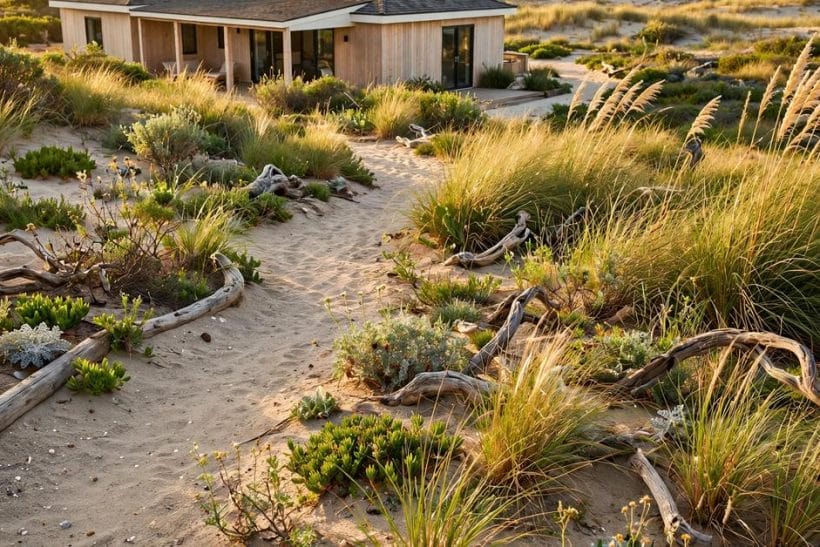
1. Coastal Landscaping Ideas at a Glance
Coastal landscaping — the beach landscape — is garden-making adapted to shore conditions: salt-laden wind, sandy or thin free-draining soil, intense light and exposure, and in many places a slope between the house and the water. Its system has four parts: shelter first (hedges, fences and landform that break the wind before plants are asked to face it); a planting palette of proven shore performers — grasses, grey-leafed shrubs, succulents and salt-tolerant trees — chosen for toughness before flowers; hard materials that weather rather than rot (stone, gravel, weathered timber, galvanised metal); and shapes borrowed from the shore itself — drifts, dunes, curves and drifts of planting like sea grass on sand. Done well it looks inevitable, as if the garden grew there; done badly it looks like an inland garden in intensive care.
| Question | Short answer |
|---|---|
| Why do ordinary gardens fail by the sea? | Three shore facts defeat them: salt spray burns leaves and rusts metal; wind desiccates plants and flattens anything tender; sandy soil holds neither water nor food. The coastal palette and the shelter-first method exist precisely because the inland rulebook — rich soil, calm air, tender favourites — does not survive the first season at the shore. |
| What plants actually thrive in a beach landscape? | The shore’s own: ornamental grasses, sea thrift, lavender and rosemary in milder spots, grey-leafed shrubs, succulents in dry sand, and tough small trees shaped by the wind rather than despite it. The full palette is regional — the honest method is to walk the neighbourhood and copy what is flourishing in gardens more exposed than yours. |
| How do I protect a garden from sea wind? | In layers: a permeable barrier first — a hedge, slatted fence or woven screen that filters the wind rather than fighting it — then shelter planting, then the tender things in the lee. Solid walls create turbulence that damages more than the wind did; filters calm the air for a distance many times their height. |
| What is the biggest coastal-landscaping mistake? | Planting the garden you wanted inland and spending every season apologising for the site: watering sand, replacing burnt shrubs, staking the same tree yearly. The beach landscape begins by accepting the shore’s terms — then discovers the terms produce a garden of unusual beauty, all drift, movement and silver light. |
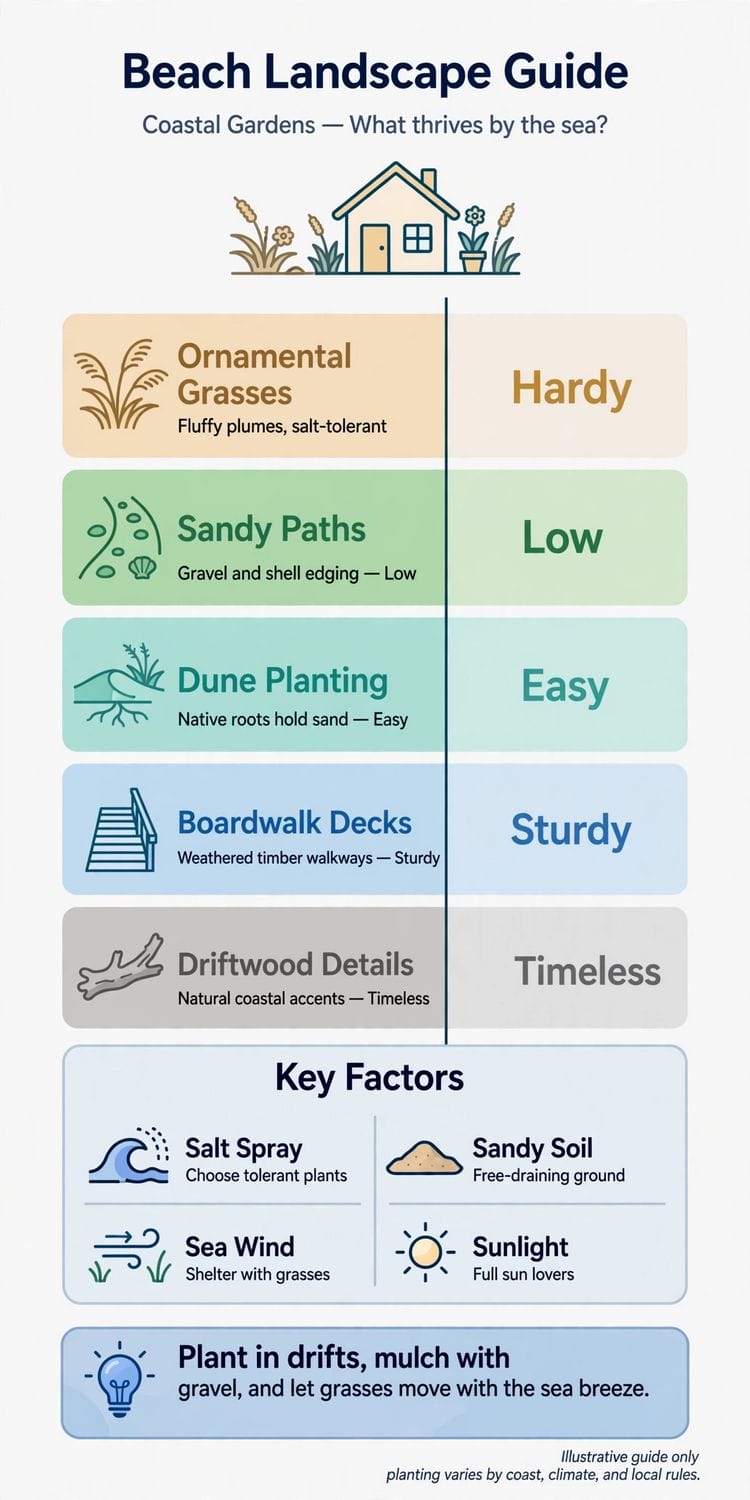
2. Layouts for Shore-Side Gardens
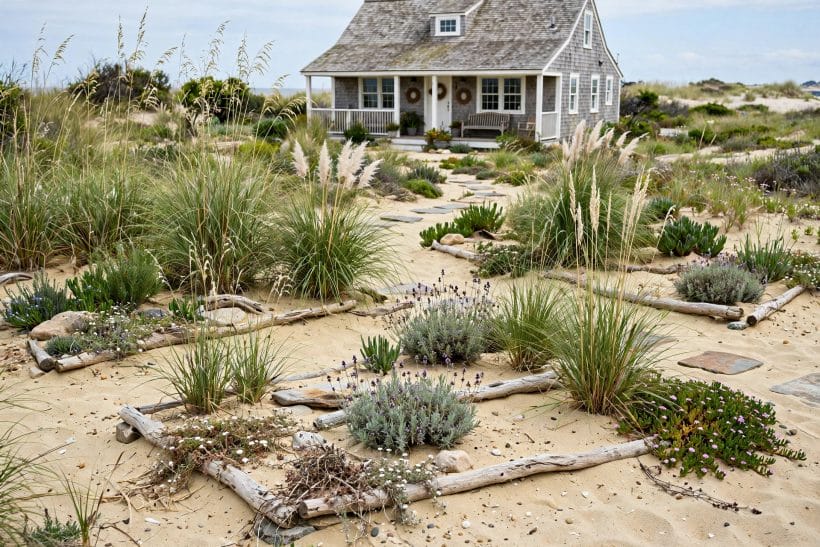
Coastal layout begins with exposure, not aesthetics: where the wind comes from, where the view must be kept, and where people will actually sit when the breeze is up. This section draws the beach garden’s plan, in conversation with the front yard landscaping ideas lane at the street side.
1. Read the wind before drawing anything
Spend time in the plot in rough weather if you can: note where the wind funnels, where it drops its salt, and where the natural calm pockets are.
2. Keep the view and frame it, don’t just expose it
A sea view is the plot’s treasure and its tyrant: gardens arranged as a bare lawn runway to the view feel exposed and empty.
3. Build shelter in sequence: barrier, then belt, then garden
The windward edge takes the filter — hedge, fence or screen; behind it a belt of the toughest shrubs; behind that, the garden proper. Each layer calms the next.
4. Make drifts and sweeps the layout’s geometry
Inland gardens draw in blocks and rows; shore gardens draw in drifts — long, interlocking sweeps of one plant, curved beds like dune lines, paths that wander as the shoreline does.
5. Zone the garden by exposure, honestly
A salt-blasted front strip, a sheltered middle, a calm pocket by the house: plant each zone to its real conditions rather than the gardener’s hopes. The map of zones, once drawn, makes every later plant choice almost automatic.
6. Put the sitting places in the lee with the view across them
The terrace or seat that is used daily sits sheltered, with the sea seen across or along it rather than blasting into it.
7. Let paths curve with the dune logic
Winding paths in gravel or stone, edges soft with grasses, suit the shore’s shapes and slow the walker enjoyably. Straight axial paths belong to formal gardens inland; the beach path should feel found, not imposed.
8. Grade the slope for water and for feet
Shore plots often slope to the water. Terraces, steps and planted banks make the slope usable and stop the sandy soil washing in every storm; unhandled, the same slope delivers the garden to the beach one rain at a time.
9. Give the garden a winter silhouette
Coastal winters are the design’s examination: grasses standing, shrubs’ shapes, stone and timber structure must carry the plot when the flowers are gone.
10. Borrow the beach itself as the garden’s last room
Where the plot meets sand or shore, let the boundary dissolve: dune grasses continued, a gate in a low fence, the path simply arriving.
11. Plan the garden’s growth, because shore plants move fast
Wind-pruned on one side and racing on the other, coastal plants grow asymmetrically, and tough ground covers travel.
3. Planting That Stands Up to Salt and Wind
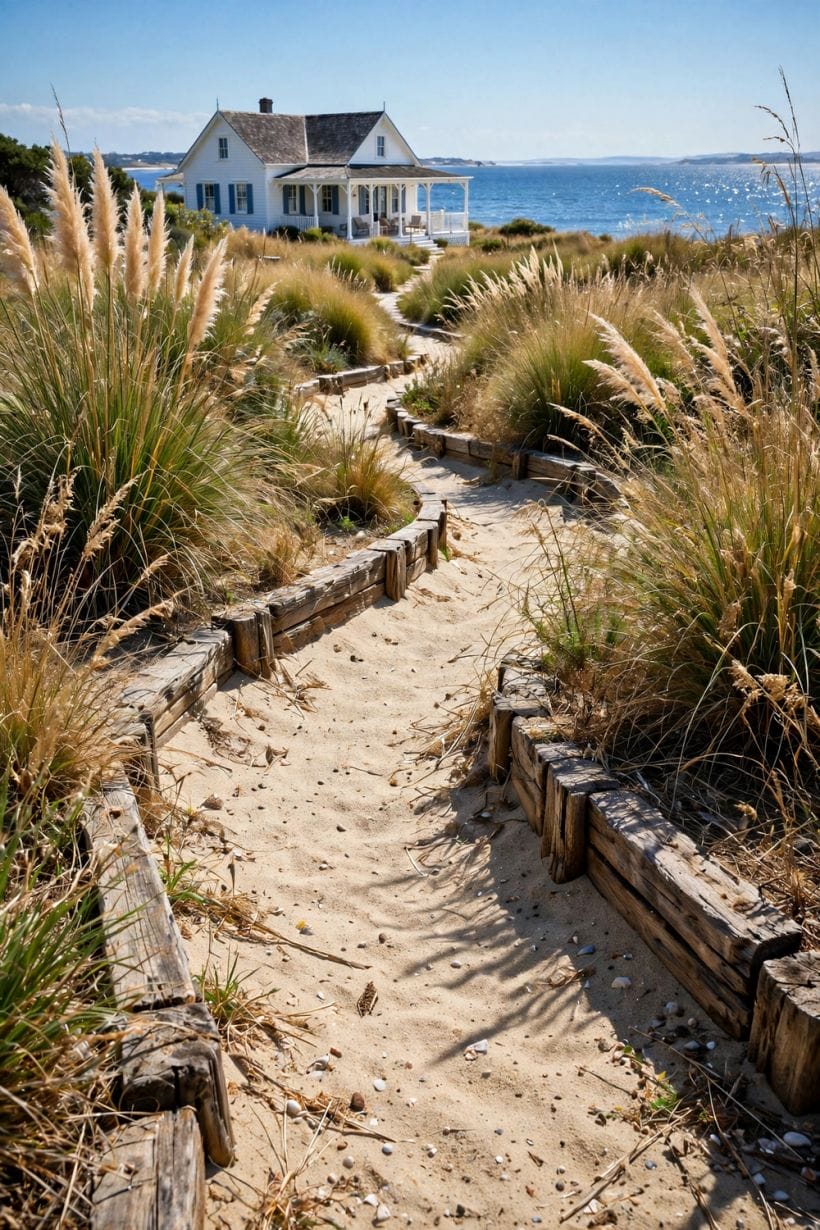
The palette is the beach landscape’s heart: plants chosen for salt tolerance, wind firmness and drought thrift, composed in the drifts the first section drew. This section builds it layer by layer — and it is deliberately general, because the exact cast changes with every coastline’s climate.
12. Start with the grasses — the shore’s own fabric
Ornamental grasses are the coastal garden’s signature: they bow to the wind instead of breaking, shrug off salt, move beautifully and stand through winter.
13. Build the shrub skeleton from grey and leathery leaves
Grey, silver, small or leathery leaves are the shore’s adaptations — they reflect the fierce light and lose little water to the wind.
14. Use succulents and drought plants in the driest sand
Where the soil is pure sand and the rain runs through it, succulents and dry-garden plants turn the plot’s worst patch into its most sculptural.
15. Choose small trees the wind can shape rather than fell
Coastal trees should be tough, deep-rooted and content to be sculpted: planted in the lee of the shelter layers, they grow into the wind-shaped forms that are the shore garden’s sculpture.
16. Plant hedges as the garden’s wind machinery
The shelter hedge is a working plant: dense, salt-proof, and kept to a height that calms the garden behind it.
17. Bring in the flowering shore performers
Sea thrift on the edges, hardy geraniums in the drifts, agapanthus and echiums where the climate is kind, roses of the rugosa kind that laugh at salt: the beach palette flowers generously once its toughness is respected.
18. Use herbs and Mediterranean plants where summers are dry
Lavender, rosemary, santolina and sage — silver, aromatic, drought-proof — bridge the coastal and Mediterranean palettes and scent the terrace’s edge. In wetter shore climates they demand the sharpest drainage in the garden; gravel is their best friend.
19. Ground-cover the sand so it stops travelling
Bare sand in a garden migrates — into paths, lawns and the house. Tough ground covers and gravel mulches pin it, and creeping plants stitch the banks.
20. Irrigate the establishment, then teach thrift
Even shore plants need water while their roots go down — the first seasons’ watering is the investment the whole palette stands on.
21. Feed the soil with organic matter, in place
Sandy soil improves by mulch and compost worked in at planting and renewed on the surface — feeding the soil’s life rather than dosing the plants.
22. Copy the neighbours’ successes shamelessly
The finest coastal-planting research station is the street itself: every flourishing garden windward of yours is a trial already run.
4. Paths, Decks and Garden Structure
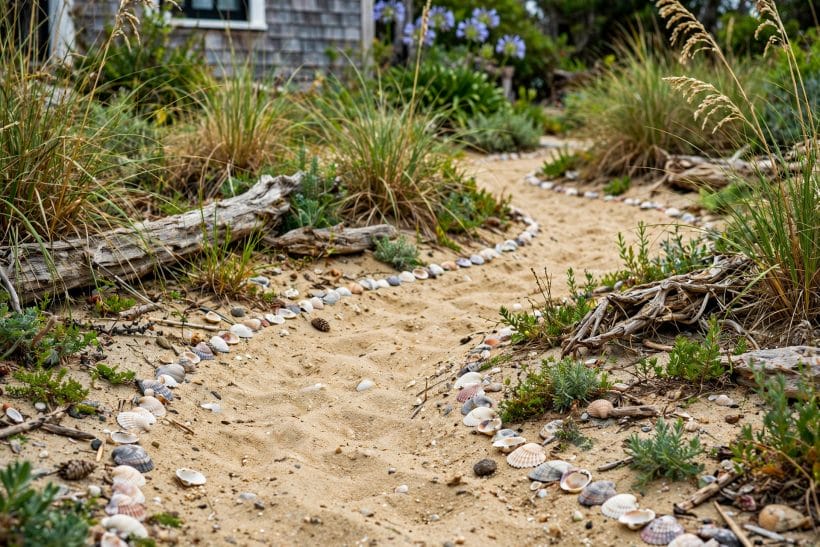
Hard structure in a shore garden must do three things: survive salt air, sit kindly on sand and slope, and look like it belongs to the coast. This section builds it, with the terraced thinking of the hillside landscaping ideas lane applied to the shore’s slopes.
23. Lay paths in gravel, stone or weathered timber
The shore path’s materials are the shore’s own: gravel that drains and crunches, stone flags that shrug off salt, timber boards that silver like driftwood.
24. Build decks as the garden’s outdoor floors
A deck gives level, dry sitting on a sloping, sandy plot and takes the garden’s furniture beautifully.
25. Use retaining edges that plant into themselves
Stone walls, timber sleepers and planted banks hold the slope and give planting its ledges.
26. Fence with slats and filters, not walls of defiance
Slatted timber, woven panels and hit-and-miss boards filter the wind, give privacy in bands, and silver into the garden’s palette.
27. Choose metal that the salt cannot eat
Galvanised, stainless or powder-coated fittings — or none. Ordinary steel and cheap ironwork near the sea have a lifespan measured in seasons. Every hinge, light and railing in the shore garden should be specified for the air it will actually breathe.
28. Anchor everything the wind can interview
Furniture, screens, planters, the parasol: the shore garden’s objects all need weight, fixings or a storm home.
29. Step the slope with landings worth pausing on
Steps between a shore plot’s levels should widen into landings where the view turns or a bench fits, making the climb part of the garden’s pleasure. Narrow, steep flights in sand-slick conditions are the coastal garden’s commonest accident waiting.
30. Light the paths for the walk back from the beach
Low, warm, shielded lights at the path’s edges and the steps’ turns — never floodlit, never glaring at the sea’s darkness. Shore nights are a treasure; the lighting should serve the walk and then disappear.
31. Give the outdoor shower and the sandy-feet station their corner
Beach life imports sand by the bucket. An outdoor shower, a foot tap and a bench by the garden’s entrance keep the house clean and become, in summer, the household’s favourite ritual station.
32. Keep a store for the shore garden’s gear
Cushions, boards, nets, tools, the storm lashings: a weatherproof store near the house end of the garden keeps the plot tidy and the gear alive.
33. Let structure weather rather than fight it
Timber silvers, stone lichens, metal takes its patina: the shore garden’s structure should be chosen to look better weathered, because weathered is what it will certainly be. Finishes that must stay perfect impose a losing war on the whole plot.
5. Outdoor Living at the Shore
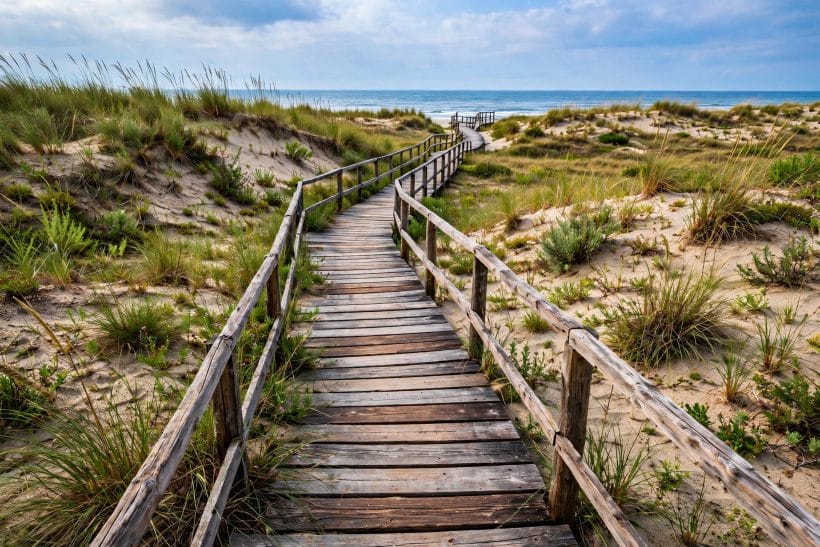
The beach garden exists to be lived in — meals in the lee, evenings above the water, mornings with the whole coast waking. This section furnishes it, in the spirit of the backyard landscaping ideas survey, adapted to wind, salt and sand.
34. Build the main terrace in the garden’s calmest pocket
The principal sitting and eating place belongs in the lee the layout created — sheltered enough for papers and candles, open enough to keep the sea in the conversation. Every other outdoor luxury is secondary to having chosen this spot correctly.
35. Furnish with weight, weave and washable sense
Heavy timber or metal frames that the wind respects, woven seats that dry after a shower of spray, cushions with a storm home nearby. Shore furniture lives outdoors in earnest; buy the kind whose ageing is a complexion, not a collapse.
36. Cook outside where the smoke leaves on the wind
The outdoor kitchen or barbecue belongs downwind of the seats and the house’s open windows, near the kitchen door for the carrying. In the lee of the shelter planting, cooking becomes the terrace’s theatre instead of its smoke machine.
37. Make a fire place for the shore evening
Evenings at the coast cool quickly even in summer.
38. Hang shade that can be struck before a blow
Sails, awnings and parasols are wonderful in the calm and liabilities in the gale.
39. Give children the shore garden’s own territory
Sand keeps children: a dedicated sand corner, the outdoor shower as a toy, paths to run and grasses to hide in make the beach garden a childhood headquarters.
40. Keep a herb and cutting garden by the kitchen door
The cook’s few steps for herbs, salad leaves and flowers for the table are the outdoor life at its most daily.
41. Plan the evening lighting as a second garden
Lanterns on the terrace, a light at the path’s turn, the fire’s glow: the shore garden after dark is smaller, warmer and more sociable than its daytime self.
42. Set a bench where the weather-watching happens
Every coast household has its storm-watchers and sunrise people. One solid bench at the garden’s best vantage — anchored, oriented, with room for two and a flask — becomes the plot’s most used seat per pound spent.
43. Create a reading and morning-coffee corner
Every shore household has one hour and one view that belong together — dawn over the water, the first coffee, the day’s weather arriving.
44. Let the garden host the beach’s overflow gracefully
Boards, wetsuits, buckets, visiting cousins: shore life is bulky and social. Hooks by the door, the outdoor shower, a drying line in the sun and tolerant furniture let the garden absorb the beach’s happy chaos without the house taking the strain.
6. Beach Houses, Dunes and Front Gardens
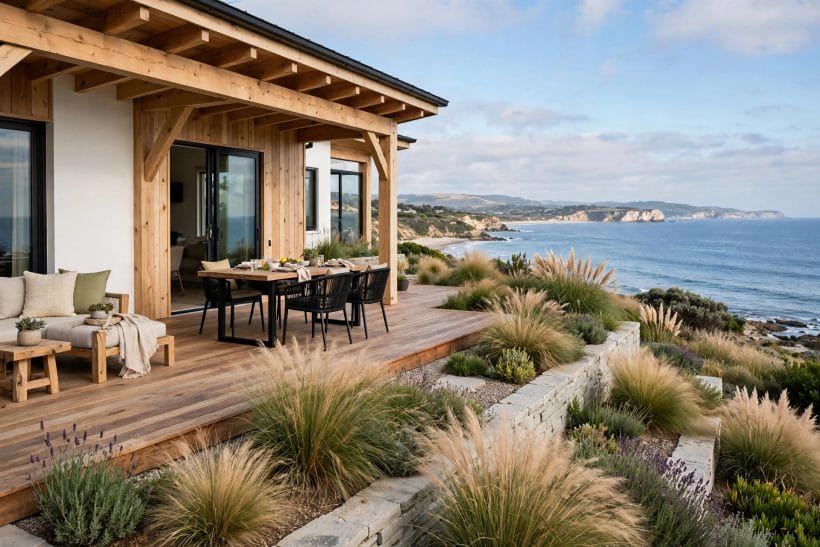
The last section turns to the house’s own setting: the front garden that meets the street and the shore, the care of dunes, and the meeting of building and beach — closing with the planted shade of the pergola ideas lane at the garden’s edge.
45. Treat the front garden as the house’s harbour face
The street side of a shore house takes the worst weather and makes the first impression.
46. Protect real dunes; never garden them flat
Where the plot includes dune, the dune is the house’s sea defence and a protected habitat in many places.
47. Build the house’s apron in stone and gravel
A hard, planted apron around the house — stone flags, gravel with thrift and grasses — keeps sand out, splash off the walls and the building’s feet handsome.
48. Choose the house’s own planting echoes
Repeat the garden’s signature plants at the house walls — grasses at the steps, a silver shrub at the door, climbers on the sheltered face — so building and landscape read as one thought.
49. Screen the parking and the bins in shore language
Cars and bins belong behind the same slatted, planted screens as the garden’s own shelter work, in the plot’s lee.
50. Let the path to the door be the garden’s best metre
Stone or gravel, edged with the toughest prettiness the palette owns — thrift, lavender, grasses bowing over the edge — the entrance path is where the household’s standard shows. It is short; make it perfect.
51. Plant a windbreak tree line where the plot is large
On generous plots, a staggered line of proven coastal trees at the windward boundary is a generation’s gift to the garden behind it.
52. Borrow the wild shore planting at the boundaries
Where the plot meets common shore, let the garden’s drifts graduate into the wild’s own planting without a hard line.
53. Keep freshwater precious and visible in the design
Shore gardens on sand are thirsty gardens in dry summers.
54. Mind the salt at the house’s own fabric
The front garden’s planting is also the house’s bodyguard: shelter planting windward of the walls reduces the salt and driven rain the building itself receives.
55. Finish with the tiny-house lesson: small plots, same principles
The shelter-first method scales down as happily as up — the tiny house landscaping ideas lane works the same shore logic on pocket plots, where one hedge, three grasses and a gravel court can make a complete coastal garden. The principles are the plot’s size-proof inheritance.
7. Water at the Shore: Pools, Ponds and Wet Edges
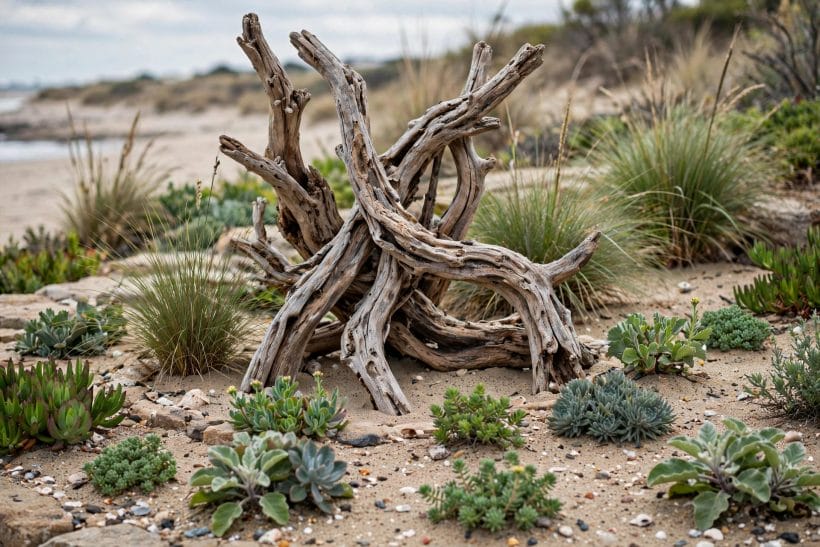
Water is the beach garden’s paradox: surrounded by the sea, short of the fresh kind. This section gives the garden its own water — for bathing, for wildlife and for the eye — managed as carefully as the shore demands.
56. Site a pool in the lee, with the sea beyond it
A pool blasted by the wind loses its heat, its water and its swimmers’ patience.
57. Edge the pool in stone, tile or timber deck
The surround should be the garden’s own materials, warm underfoot and grippy when wet. A pool edge that belongs to the landscape makes the water a garden room; a foreign surround makes the garden a hotel’s annex.
58. Plant the pool’s margins with the toughest green
Splash, spray and reflected heat make the pool surround the garden’s harshest microclimate. Grasses, succulents and the silver cast take it in stride and soften the water’s geometry without dropping leaves into it all summer.
59. Keep a wildlife pond where the plot has a calm corner
Even near the sea, a small freshwater pond is a magnet for birds, dragonflies and frogs that the salt shore cannot serve.
60. Use rain gardens and swales for the storm water
Coastal storms deliver water in buckets, not sips. Shallow planted swales and a rain garden at the plot’s low corner drink the downpour, protect the house’s ground, and turn the garden’s drainage into one of its prettiest, lushest plantings.
61. Give the garden one small sound of its own water
A spout into a trough, a bubbling stone, a rill down the terrace steps: the garden’s own water music underneath the sea’s. Small, recirculated and placed where people sit, it is the beach landscape’s signature sound after the waves themselves.
62. Harvest the roof’s rain for the thirsty zones
Butts and tanks on the house’s downpipes catch the winter plenty for the summer’s need, and the shore garden’s thirsty corner — the herbs, the pots, the new planting — drinks stored weather instead of the mains.
63. Watch salt creep in every water decision
Spray reaches further than gardeners expect: freshwater features near the front line get salted, and tender marginal plants suffer.
64. Make the wet edges safe and slip-free
Decks, stones and tiles by water grow slick in sea air.
65. Winter the water features with a routine
Pumps lifted, lines drained where frost bites, the pond’s ice given its breathing hole: coastal winters are milder than inland ones but quite cold enough. A half hour’s routine in autumn keeps every water feature ready for its spring first day.
8. Keeping the Beach Garden: Care Through the Year
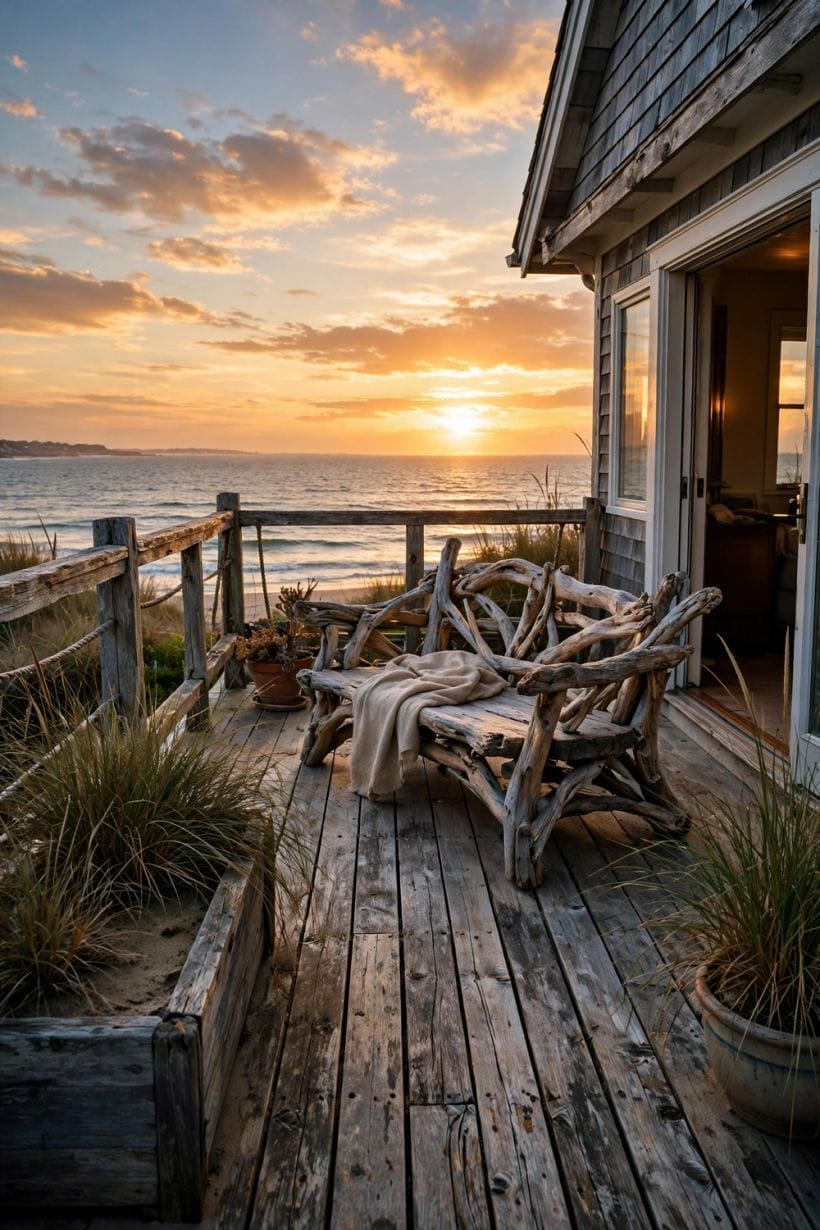
The last section is the keeping of it: the shore garden’s calendar of pruning, feeding, storm repair and patience — the habits that turn a planted beach landscape into a mature one.
66. Prune for the wind, not against it
Coastal shrubs want shaping that works with their wind-trained instincts: dense, rounded, lower on the weather side.
67. Feed in spring, mulch always
One generous feed as growth starts, and mulch renewed wherever soil shows: that is the shore garden’s whole fertility religion. Mulch is also water-keeping, sand-pinning and weed-smothering in one — the hardest-working layer in the coastal gardener’s year.
68. Divide the grasses and drifts before they thin
The palette’s engine plants — grasses, tough perennials, ground covers — renew themselves by division every few years. Spring’s divisions are next season’s free drifts, and the rhythm of lifting and spreading is how a planted beach garden becomes a grown one.
69. Walk the garden after every storm with a notebook
The storm is the coast’s audit: what leaned, what burnt, what drowned, what sang.
70. Replace failures with tougher relations, never the same plant twice
A plant that dies twice in the same spot has filed its report. Replace it with a tougher cousin — the genus’s shore-proven member — and let the palette evolve towards what the plot demonstrably loves.
71. Keep salt off the tender and the young at the worst moments
A rinse of fresh water after the great salt storms, shelter cloth for the newest planting in its first gale: small mercies at the extreme moments carry the vulnerable through.
72. Cut back in the shore garden’s own order
Grasses stand for winter and fall in spring; shrubs shape after flowering; hedges trim when the wind’s worst is past.
73. Watch for the garden’s volunteers and edit kindly
Shore gardens self-seed generously — grasses in the gravel, thrift in the wall, seedlings of everything tough.
74. Refresh the hard edges on a rolling rhythm
Gravel raked and topped, timber oiled or left to silver by decision, stone repointed where the frost has worried it: an hour a month keeps the structure at its best.
75. Let the garden mature — the coast rewards patience
Year one is shelter, year three is shape, year seven is the garden the drawings promised.
9. Checks and Mistakes: Before the First Purchase or the First Stone
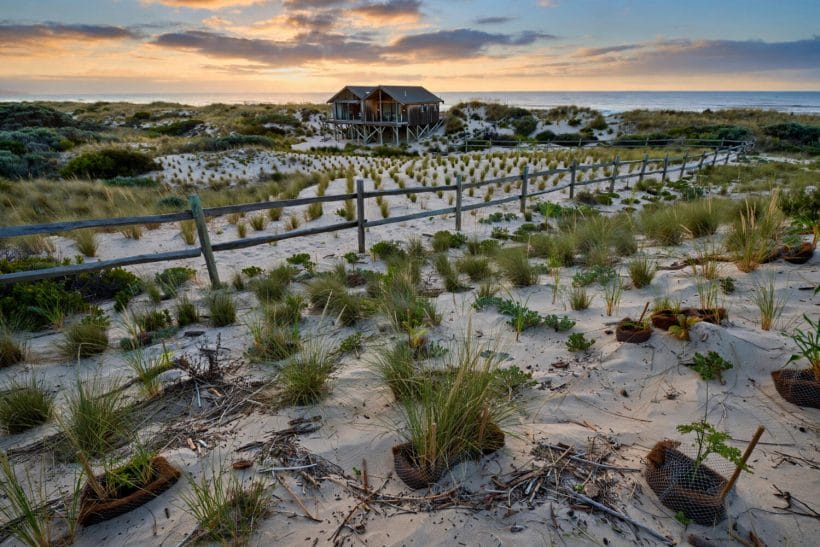
Before planting a beach landscape, run the exposure audit honestly: stand in the plot in the worst weather you can catch, photograph the wind’s effects, and test the soil by hand and by drainage. Every coastal failure begins with an inland assumption; the audit is where the assumptions are replaced by the shore’s own facts.
Second, sequence the build by shelter: barrier and hedge first, structure and paths second, the garden’s tender heart last — even if the sequence means a plain first year. Planting the show before the shelter is planting it twice, and the sea charges full price for the lesson.
Third, the provenance check on every plant and material: is it proven within sight of your plot, tolerant of salt, honest in sand? Local proof beats catalogue promises at the shore by a distance no other garden knows. The same check covers materials — if the harbour wouldn’t build with it, ask why the garden would.
The recurring mistakes are transplants: the lawn that drinks the household’s water budget, the tender border replaced each spring, the solid fence rehearsing its collapse, the rusted gate by its second winter. Each is cured by the same medicine — shelter first, the shore’s own palette, materials that weather — applied without nostalgia for inland gardens.
10. Costs and Pulling It Together
Costs in a coastal garden concentrate in the shelter and the structure: the hedge and screens that calm the wind, the paths, decks and retaining that make the slope civilised, and the soil improvement that gives planting its start. The planting itself is the phased pleasure — drifts can be divided, grasses spread, and the palette extended year by year as the shelter matures and proves what thrives.
Pulling it together: filter the wind, plant the shore’s own in drifts, build in materials that weather, and furnish the lee for long outdoor hours. The result is a garden that could live nowhere else — which is the definition of a sense of place, and the beach landscape’s whole achievement.
Final Considerations
A beach garden succeeds when visitors cannot imagine it anywhere else: when the planting moves like the shore grass, the materials look salvaged from the coast itself, and the sitting places sit exactly where the wind forgets to go. That inevitability is designed, but it is designed by listening first.
Begin with shelter and one drift of grasses. The hedge starts calming the plot the day it is planted, the grasses give the garden its coastal voice within a season, and every later decision — paths, terraces, the tender treasures — becomes easier inside the calm those two have made.




0 Comments