
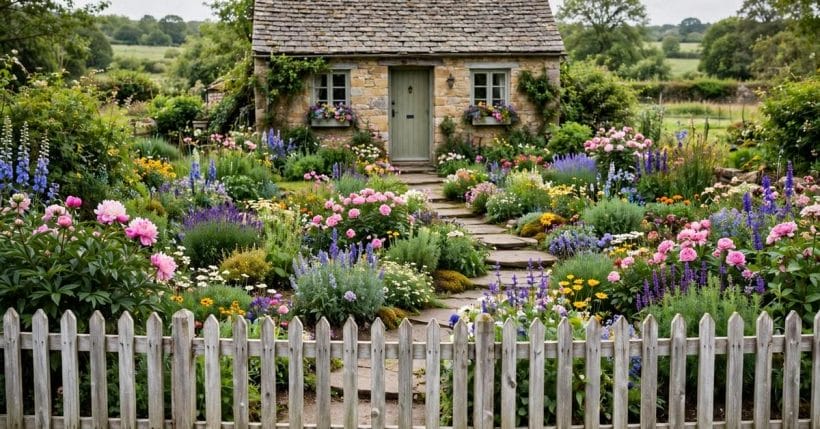
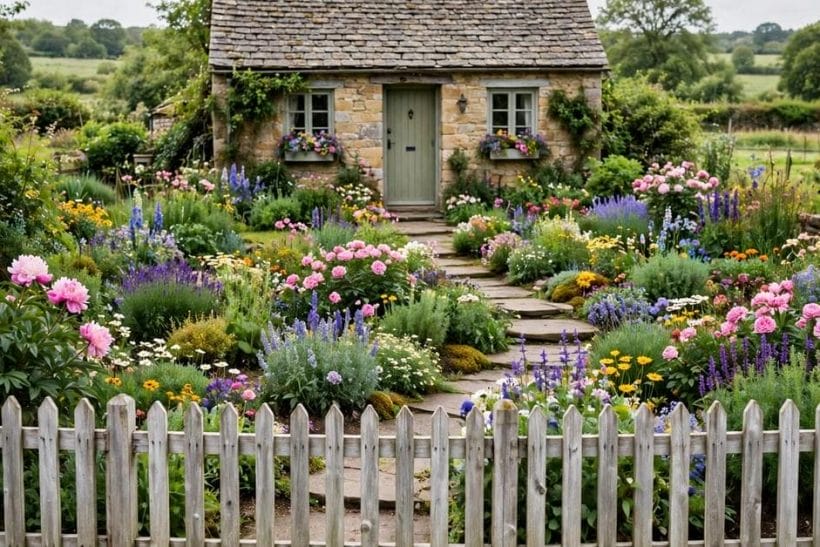
A short fence does a modest job, and it does it well. It marks where a garden begins, it gives a front edge a finished look, and it keeps the space feeling open rather than closed in. It does not hide a garden from view, and it does not try to. That openness is the whole point: a low boundary frames what is behind it instead of shutting it away, so the planting, the path and the house itself stay part of the street scene.
This guide gathers short fence ideas in one place, with layouts, colours and practical details for low boundaries of every common kind. It stays strictly with the short form throughout. Taller screens that block a view, long rustic runs across open land and metal gates as a subject of their own each belong to their own guides, and they are linked where they help rather than repeated here. What follows is only about fences that stay low, sit lightly on a garden, and work with the planting around them.
A short fence suits small plots especially well, because it adds structure without taking light, air or a sense of space away. In a compact front garden it can turn a bare edge into a composed entrance, and in a back garden it can separate beds, paths and lawns without dividing the ground into closed rooms. The sections below work through the main forms, the colours that suit them, the planting that softens them, and the care that keeps them looking their best, so you can judge which low line fits your own garden.
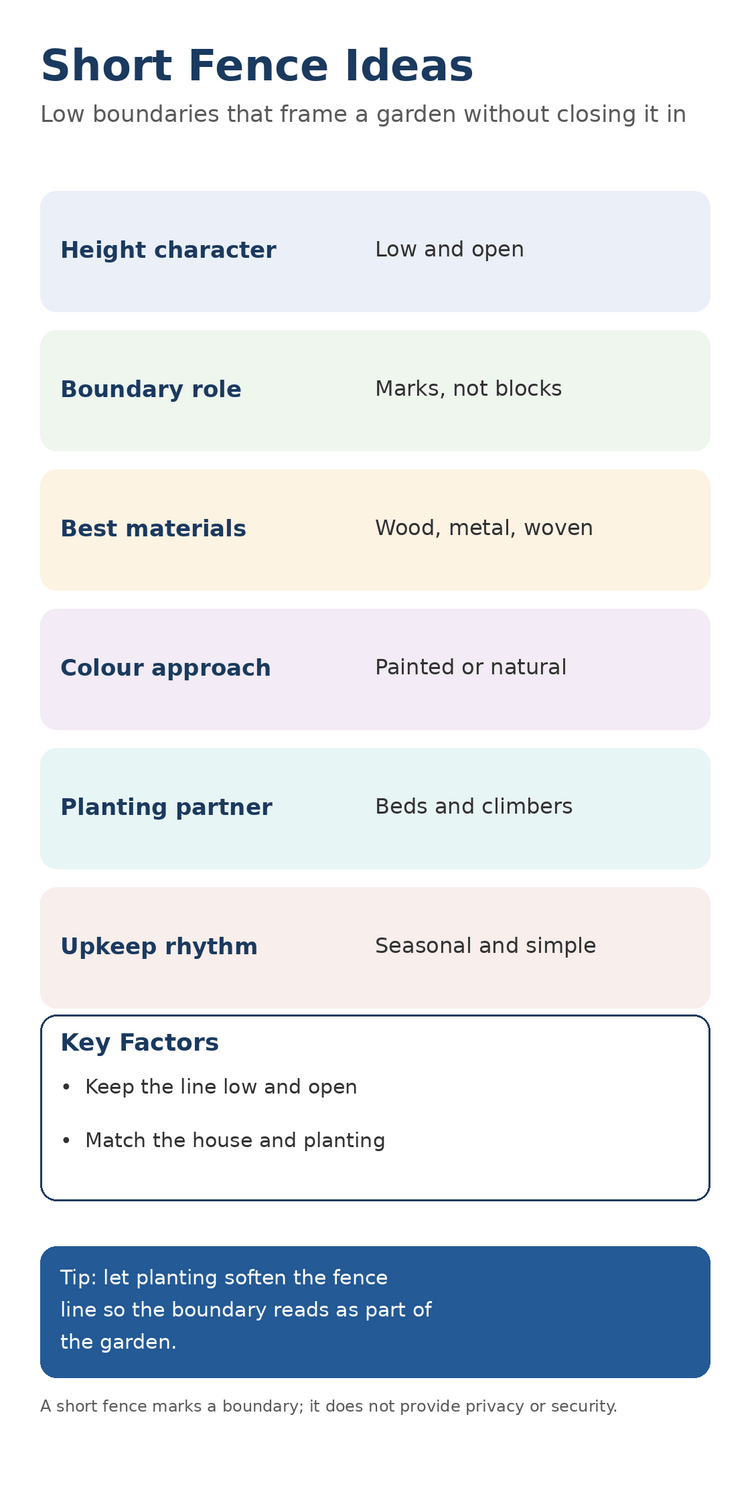
| Item | What it is |
|---|---|
| Picket Fences for a Friendly Front Edge | The picket fence is the classic short fence, and its appeal has never really faded. |
| Horizontal Slats for a Calm Modern Line | Where a picket fence feels traditional, horizontal slats feel calm and contemporary. |
| Painted Colour That Lifts a Small Garden | Colour is where a short fence earns its keep as a design feature rather than a mere boundary. |
| Metal Bars That Keep the View Open | A short metal fence is the most open of all low boundaries. |
| Woven and Natural Edgings for Cottage Gardens | Not every short fence is made of sawn timber or metal. |
1. What a Short Fence Is For
A short fence is a marker before it is a barrier. Its first job is to draw a clear line: this ground is garden, that ground is pavement or lane, and the edge between them is intentional rather than accidental. That clarity matters even when nothing is being kept in or out, because a defined edge makes a garden read as cared for, and it gives beds, lawns and paths a frame to sit inside.
Its second job is visual. A low line leads the eye along a frontage, breaks a long stretch of lawn into pleasing parts, and gives climbing plants, border flowers and shrubs something to play against. Because it stays low, it never competes with the house or the planting behind it. Instead it acts as a foreground, a gentle rhythm of posts and rails or pickets that makes the garden behind it look deeper and more layered.
What a short fence is not matters just as much. It will not give privacy to a seating area, it will not keep out determined intruders, and it will not shelter a garden from wind in the way a tall screen might. Anyone who needs screening, shelter or security should look to the taller forms covered elsewhere, including the white privacy fence guide linked in the final section. Judged on its own terms, though, a short fence is honest work: a boundary that declares itself without pretending to be more than it is.
2. Picket Fences for a Friendly Front Edge
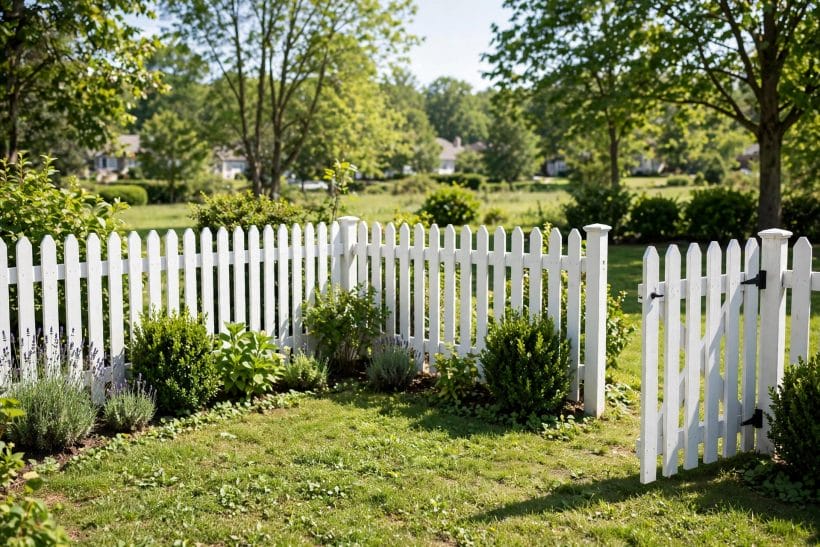
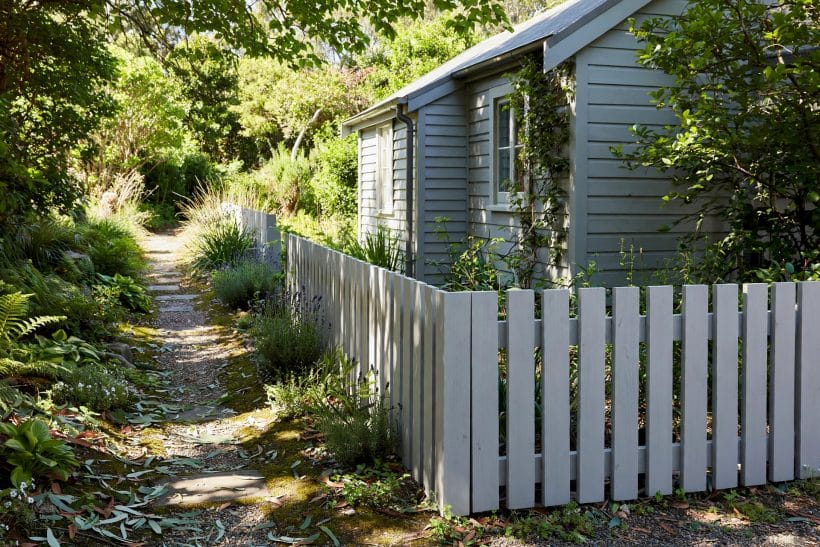
The picket fence is the classic short fence, and its appeal has never really faded. A row of upright pickets with shaped tops, joined by horizontal rails and held by posts, gives a front garden an instantly welcoming character. The gaps between pickets keep the line light and airy, so flowers and lawn show through, and the fence reads as an invitation rather than a warning. Painted white, it suits cottages and village houses; left natural or stained soft grey, it suits plainer modern frontages just as well.
Pickets come in many top shapes, and the choice changes the mood more than most people expect. Pointed tops feel crisp and traditional, flat tops feel quiet and contemporary, and rounded tops feel gentle and slightly rustic. The spacing matters too: closely set pickets give a neater, more formal line, while wider gaps give a looser, more rural feel. Either way, the fence should follow the ground rather than fight it, stepping gently down a slope in short runs instead of leaning awkwardly across it.
A picket line works best where the planting is allowed to meet it. Low shrubs, lavender and border flowers planted just inside the fence soften its base and stop it looking stranded on bare lawn, while a simple gate in the same style completes the entrance. Keep the gate light and easy to swing, with hinges and a latch that suit its size, and the whole frontage will feel composed rather than assembled from separate parts.
3. Horizontal Slats for a Calm Modern Line
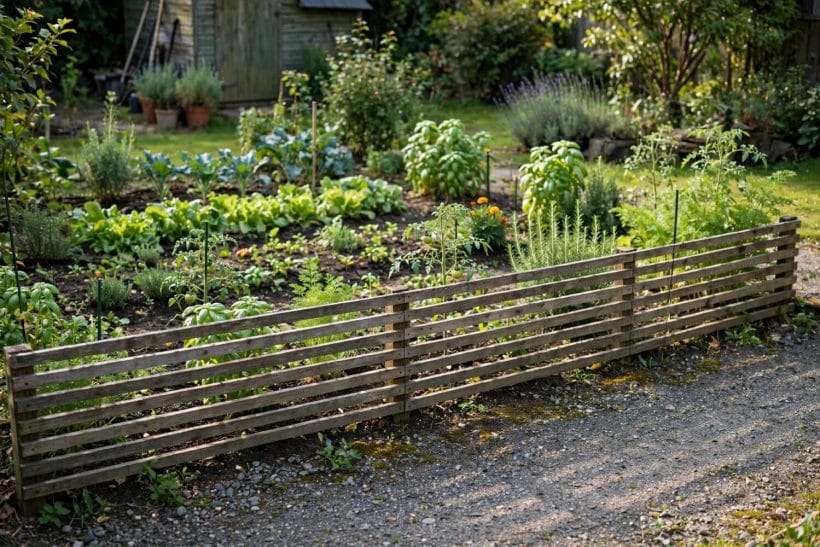
Where a picket fence feels traditional, horizontal slats feel calm and contemporary. Boards run sideways between posts, with narrow gaps between them that let light and air pass while still giving a clear sense of line. The effect is quiet and orderly, a low band of timber that suits modern houses, small courtyards and vegetable gardens alike, and it pairs beautifully with gravel paths, clipped shrubs and grasses.
The character of a slatted fence comes from the width of its boards and the size of its gaps. Wide boards with slim gaps give a solid, composed band that reads almost like a low wall made of wood, while narrower boards with wider gaps give a lighter, more open rhythm that suits planting-heavy gardens. Either version stays low, so the garden behind it remains visible, and the horizontal direction draws the eye sideways along the boundary, which can make a narrow plot feel wider than it is.
Slatted fences also suit internal divisions within a garden. A low slatted run can separate a vegetable patch from a lawn, edge a seating area, or mark the end of a path without closing any part of the garden off. Because the boards are simple and the construction is straightforward in appearance, the finish matters: smooth boards, even gaps and tidy post tops are what lift a slatted fence from plain to polished. Structural posts and any load-bearing work should be left to qualified professionals, as should any fence that must stand up to strong exposure.
4. Painted Colour That Lifts a Small Garden
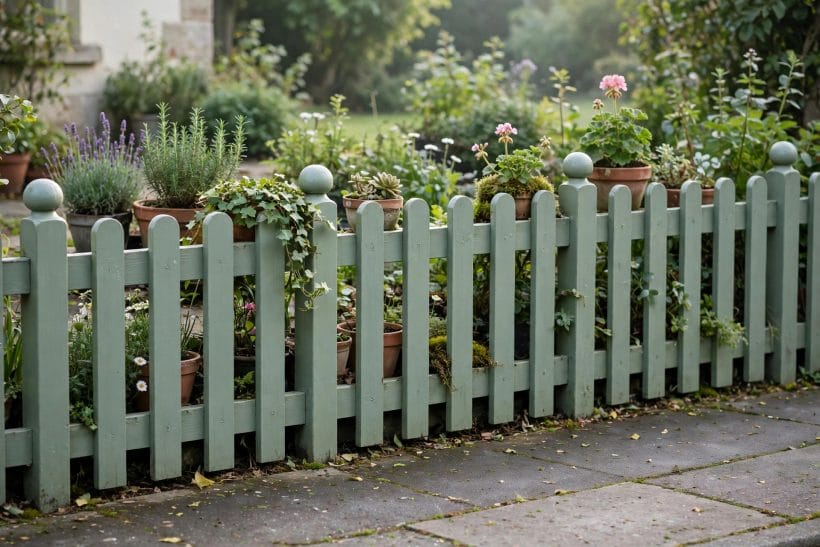
Colour is where a short fence earns its keep as a design feature rather than a mere boundary. Because the fence is low, its colour never dominates the garden, so even a confident shade feels charming rather than overwhelming. White remains the safest and most versatile choice, brightening a shaded frontage and making planting colours sing against it. Soft grey, sage green and pale blue are quieter alternatives that sit happily against brick, stone and render alike.
The rule for painted fences is to choose with the house in mind, not in isolation. A fence painted to echo a door, a window frame or a trim colour will look intentional, while a shade chosen at random can look stranded. In a small garden it usually pays to keep the palette tight: one fence colour, one or two planting colours repeated through the beds, and the house colour as the anchor. That restraint is what makes a painted fence feel designed rather than decorated.
Painted fences also ask for a little routine attention, and that is part of their charm rather than a drawback. A fresh coat now and then keeps the colour true and protects the timber beneath, and the work is small enough to be a pleasant seasonal job rather than a project. When repainting, it is worth considering how the colour will look against the planting in each season, not just on the day of painting, since a shade that sings against summer flowers may sit differently against bare winter stems.
5. Metal Bars That Keep the View Open
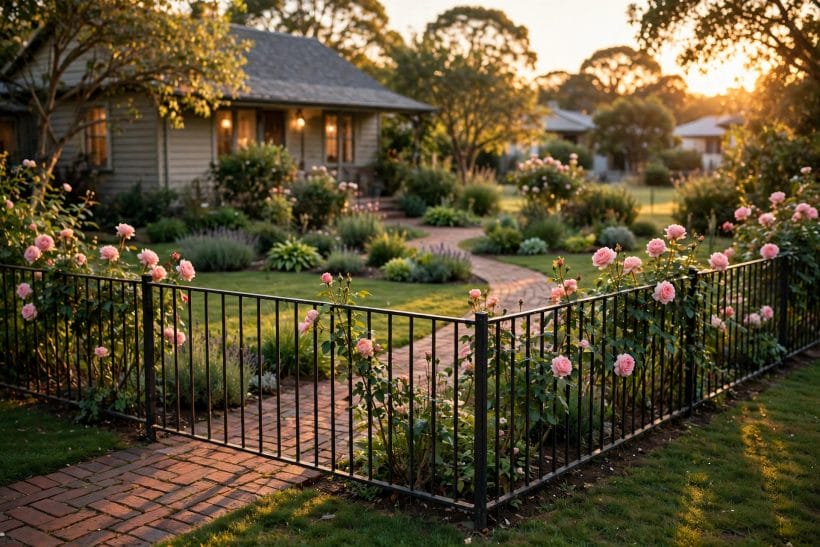
A short metal fence is the most open of all low boundaries. Slim vertical bars between low posts give a clear line without interrupting the view at all, so the garden, the house and the street all remain connected. That openness suits front gardens where the planting deserves to be seen, small urban plots where light is precious, and any boundary where a solid line would feel too heavy for the space.
Metal fences suit a surprising range of houses. Simple straight bars feel neat and contemporary beside a modern house, while bars with gentle finials or curved details feel at home beside older properties. Painted black, the fence almost disappears against planting, letting flowers and foliage take the eye. Painted in a softer shade, it can echo railings, gates and window details elsewhere on the property, tying the frontage together.
Because metal fences are slender, their posts and footings do the quiet structural work, and that work should be handled by qualified professionals where the ground, the fixing or the gate arrangement is at all demanding. A well-fitted metal fence will stand true for a long time with little more than occasional cleaning and touching up of the finish, and its lightness means it rarely needs the heavier maintenance that timber asks for. For the gate itself, the dedicated metal gate guide linked at the end covers gate forms in their own right.
6. Woven and Natural Edgings for Cottage Gardens
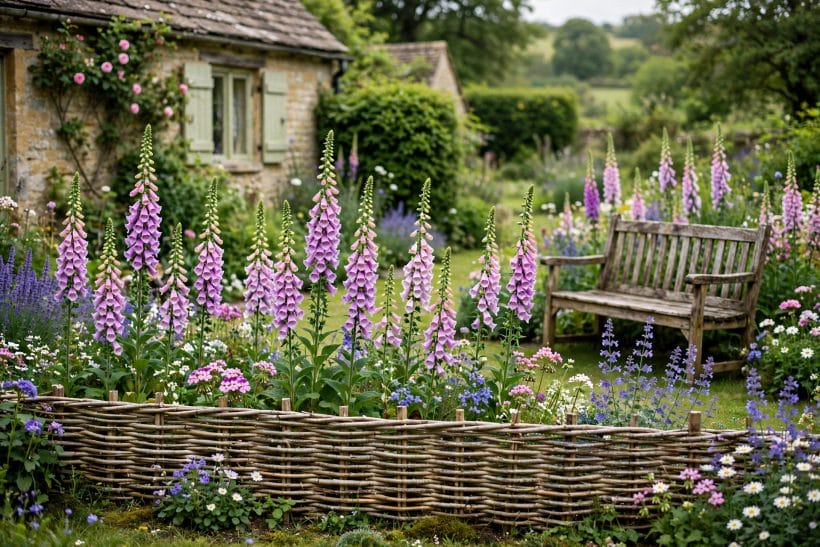
Not every short fence is made of sawn timber or metal. Woven hurdles, made from flexible rods woven between upright stakes, give a cottage garden a soft, handmade character that no machined fence can match. Their texture is their beauty: the weave catches light and shadow through the day, and the natural colour of the rods warms a border in a way that paint never quite does.
Woven edgings suit informal planting best. They look right beside foxgloves, roses and billowing perennials, where their slightly uneven rhythm matches the looseness of the beds. They also work beautifully as low internal dividers, edging a flower border or separating a wild corner from a mown lawn without imposing a hard line. Their height is naturally low, which keeps them firmly in short-fence territory, and their open weave keeps air moving through the planting behind them.
Other natural forms belong in the same family: short runs of rustic poles, low hazel edgings and simple post-and-rail lines in miniature all give a garden a country character. The split rail fence guide linked below covers the full-size rustic form in detail, and it is worth reading before borrowing its look, since a true split rail run is a different scale of boundary from the low woven edging described here. Kept low and simple, though, a natural edging is one of the most charming short fences of all.
7. Gates, Corners and Endings That Finish the Line
A short fence is only as good as its endings. A gate that matches the fence in height, material and colour turns a boundary into an entrance, while a gate that fights the fence makes the whole line look unsettled. The gate should be light enough to swing easily, latched simply, and hung so that it clears the path in all weathers. Where a gate carries weight or must meet a wall, a pier or a slope, its fitting is structural work and belongs with a qualified professional.
Corners deserve the same care. A corner post that is properly set and neatly capped anchors the change of direction, while a corner that simply stops leaves the fence looking unfinished. The same applies at the ends of a run: a fence should meet a house wall, a hedge or a path with a deliberate finish, whether that is a slightly taller end post, a neat cap, or a return into planting that swallows the last post gracefully. These small decisions are what separate a fence that looks placed from one that looks planted.
Steps and slopes need thought too. A short fence on sloping ground should step down in short level runs, each following the ground beneath it, rather than running diagonally and leaving awkward triangular gaps. On a stepped frontage, the fence can follow the steps, rising and falling with them, which gives a pleasing rhythm and keeps every part of the line at a consistent height above the ground it stands on.
8. Planting That Softens a Low Boundary
Planting is the short fence’s best friend. Because the fence is low, plants can rise above it, spill over it and weave through it, and the boundary becomes a living edge rather than a bare line. Low shrubs planted just inside the fence give it a green base, border flowers soften its foot, and climbers trained lightly along its rails add height without adding bulk. The fence and the planting should be planned together, not as two separate jobs.
The planting palette should suit the fence’s character. A white picket fence asks for cottage flowers and soft colours; a slatted fence suits grasses, lavender and clipped shapes; a metal fence suits roses and climbers that can thread through its bars; a woven hurdle suits wildflowers and informal perennials. In each case the planting does half the design work, and a fence that looks bare in its first season will often look perfect once the planting has had time to meet it.
It is worth leaving room for the plants to grow. A border planted hard against a fence will soon hide it completely, which defeats the purpose of choosing a fence at all, while a border with breathing space lets fence and flowers share the scene. Container planting works beautifully alongside short fences too, and the container garden guide linked below is a useful companion for pots and planters that sit against a low boundary. Pruning climbers lightly and keeping growth off hinges and latches will keep both fence and planting in good order.
9. Weathering, Paint and Seasonal Care
Every short fence weathers, and weathering is not failure. Timber silvers, paint chalks gently, metal dulls, and woven rods darken, and each of these changes can suit a garden if it is even and gradual. The care a short fence needs is mostly a matter of noticing: a yearly look along the line, checking posts, rails, fixings and gates, and dealing with small problems before they become large ones.
Painted fences ask for repainting when the finish begins to thin, and the job is small precisely because the fence is short. A wash, a light preparation and a fresh coat will usually restore the colour completely, and it is a good moment to reconsider the shade against the planting as it now stands. Natural timber fences can be left to silver or oiled to hold their warmth, and either choice looks intentional provided it is consistent along the whole run.
Seasonal care follows the garden calendar. Spring is the moment to check for winter movement and to clear soil and mulch away from post bases, summer is the moment to enjoy the fence at its best and to train climbers, autumn is the moment to tidy growth and touch up paint, and winter is the moment to leave the fence alone and let it stand. Gates deserve a check in each season, since a gate that sticks or sags will quickly spoil an otherwise perfect line. Any post that has moved, any rail that has failed, or any footing that has loosened is structural work for a qualified professional rather than a quick fix.
10. When a Short Fence Is Not the Right Boundary
Honesty about limits is part of choosing well, and a short fence has clear limits. It will not screen a seating area from neighbours, it will not contain a determined pet, it will not stop children from wandering, and it will not secure a property. If any of those jobs matters, a short fence is the wrong tool, and choosing it anyway will only lead to disappointment and a second fence later.
In those cases the right answer is a different form, not a taller version of the same idea. Privacy screening, taller boundary fences and full-height gates each have their own guides, and they should be read on their own terms rather than treated as stretched versions of a short fence. A garden that needs privacy at the back can still enjoy a short fence at the front, and the two boundaries can coexist happily, each doing the job it is suited to.
There are also places where no fence is the best answer. A garden that opens directly onto a shared green, a frontage where a hedge already gives the boundary all the structure it needs, or a tiny plot where even a low line would clutter the space may all be better without a fence. A short fence should earn its place by improving the garden, and where it does not, leaving the edge open is a design decision in its own right, not a failure to fence.
Final Considerations
A short fence succeeds when it stays true to its nature: low, open and in partnership with the garden it edges. Choose the form that suits the house, paint it or leave it natural with intent, plant against it generously, and keep its gates, corners and endings tidy. Done that way, a low boundary will quietly improve a garden every day, framing views, leading the eye and giving beds and paths a composed edge.
For related reading, the tiny house designs collection shows how low boundaries sit within compact plots, the tiny backyard ideas collection offers small-garden layouts that pair well with a low line, the container garden ideas guide covers pots and planters for fence-side planting, and the tiny house interiors collection carries the same small-space thinking indoors. For the neighbouring fence forms, see the white privacy fence ideas guide for taller screening, the split rail fence ideas guide for the rustic full-size form, and the metal gate ideas guide for gates in their own right. Structural posts, footings and gate fittings belong with qualified professionals throughout.
Short fence ideas, in the end, are about restraint: a low line, well chosen and well kept, that lets the garden do the talking. Keep the fence low, keep the planting generous, and let the boundary frame the garden without ever closing it in.


0 Comments