
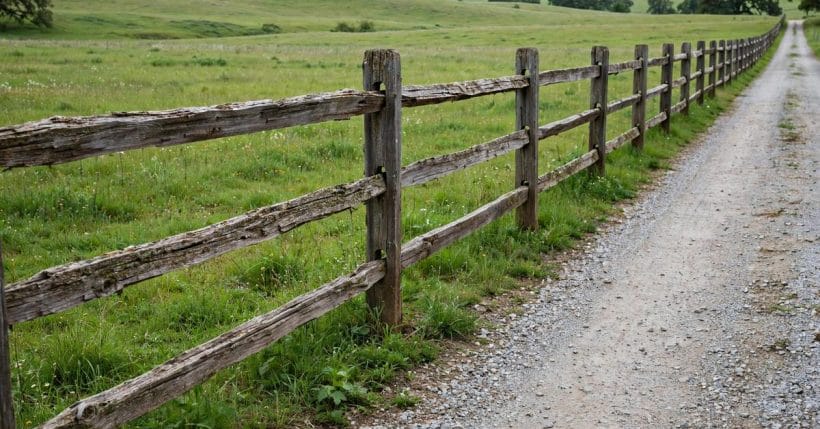
A split rail fence does the opposite of what most garden fences do. Instead of closing a garden in, it marks a boundary and leaves the view open. The eye travels straight through the gaps between the rails to the field, the garden or the lane beyond, and the fence itself becomes part of the landscape rather than a wall against it. That openness is the whole point of this fence type, and it is what every section below is about.
This post keeps to one fence type only. Privacy fences that block views belong to the privacy fence ideas post, and the white privacy form has its own place in the white privacy fence ideas post. General backyard boundaries are covered in the backyard fence ideas post, while cedar, horizontal boards and wire-filled forms each have their own posts too. Here, the fence is always split-rail: rough-hewn horizontal rails carried on timber posts, with daylight between every rail.
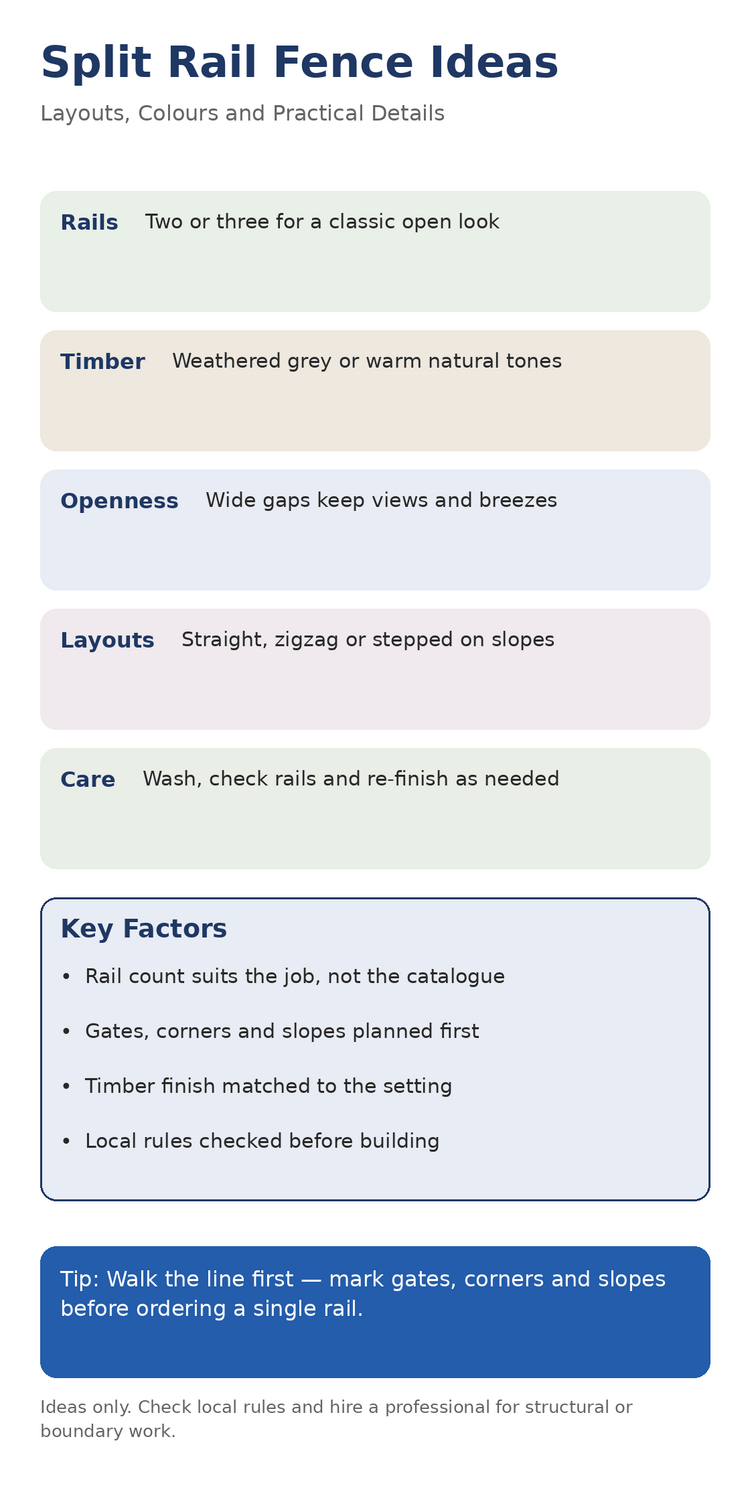
| Item | What it is |
|---|---|
| Layouts That Suit an Open Boundary | The simplest layout is a straight run, and it suits long boundaries best: a drive, a field edge or the side of a large garden where the fence can run without interruption. |
| Rail Counts and the Look They Give | The number of rails on each section is the single choice that most changes how the fence reads. |
| Timber Colours and Weathering | Split-rail timber is usually left to speak for itself, and its colour changes with time in a way that suits this fence particularly well. |
| Slopes, Curves and Long Runs | Flat ground flatters every fence, but split rails earn their keep on ground that is anything but flat. |
1. Split Rail Fences at a Glance
A split rail fence is built from a small set of parts, and naming them makes every later choice easier. The posts stand in the ground and carry the fence. The rails are the long horizontal timbers that run between them, split from logs so that each rail keeps a rough, natural face rather than a sawn, machined edge. The line of the fence is the route it follows across the ground, and the gates, corners and ends are the places where that route changes direction or opens for passage. Everything else in this post is a variation on those parts.
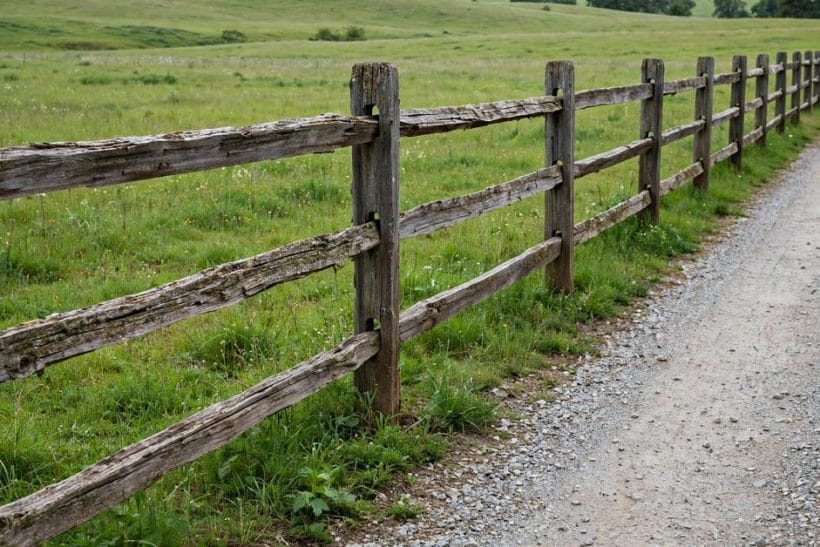
The character of the fence comes from its gaps. Because the rails sit well apart, wind passes through, light passes through and the view passes through, so a garden or a field feels larger with this fence than it would behind a solid screen. That same openness sets the fence’s limits honestly: it marks where one piece of ground ends and another begins, it gives animals and visitors a clear line to respect, and it frames a view rather than hiding anything behind it. This fence is chosen for that bargain, not in spite of it.
2. Layouts That Suit an Open Boundary
The simplest layout is a straight run, and it suits long boundaries best: a drive, a field edge or the side of a large garden where the fence can run without interruption. A straight run shows the fence at its most rhythmic, post after post and rail after rail, and it is the easiest line to keep true across open ground. Where the boundary itself bends, the fence bends with it in short straight sections, each one angled slightly from the last, so the line follows the ground instead of fighting it.
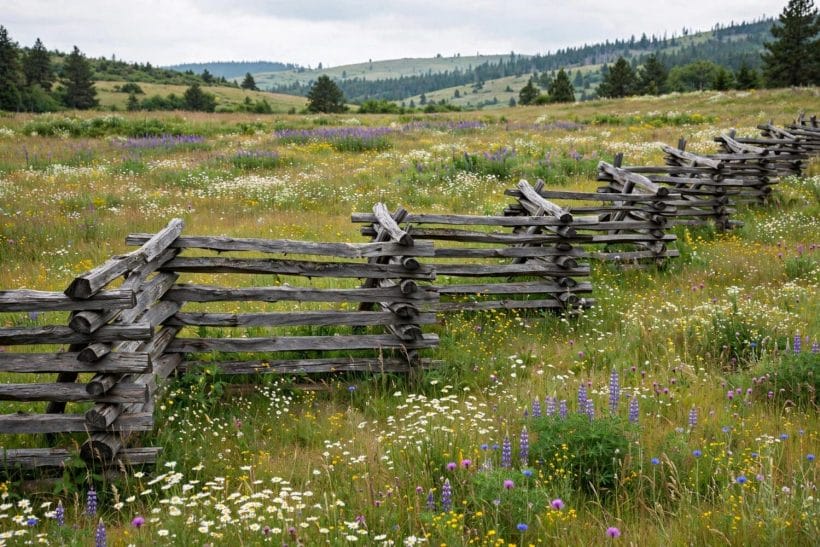
Two other layouts deserve their own mention because they change the fence’s whole look. The zigzag layout stacks its rails in a criss-cross pattern that stands without a line of dug posts, and it belongs to wide open ground where its broad footprint is no drawback and its folk character is the attraction. The enclosed layout turns the fence into a full boundary around a garden or paddock, with corners and at least one gate, and it suits a plot that needs a complete, legible edge rather than a single open run.
3. Rail Counts and the Look They Give
The number of rails on each section is the single choice that most changes how the fence reads. A two-rail fence is the lightest of the family: low, airy and almost a gesture of a boundary, it suits a garden path, a flower border or a place where the fence is there to guide the eye rather than to hold anything back. It keeps the landscape dominant and the fence subordinate, which is exactly right for a cottage garden or a gentle front boundary.
A three-rail fence is the classic form most people picture, and it suits the widest range of ground. It reads as a proper boundary while still leaving generous gaps, it works along drives and field edges, and it gives a garden a finished edge without closing it in. A four-rail fence is the most substantial of the family, taller and more closely spaced, and it suits a working boundary where livestock or a busy lane asks for a firmer line. The choice is not about better or worse; it is about matching the weight of the fence to the job it has to do.
4. Timber Colours and Weathering
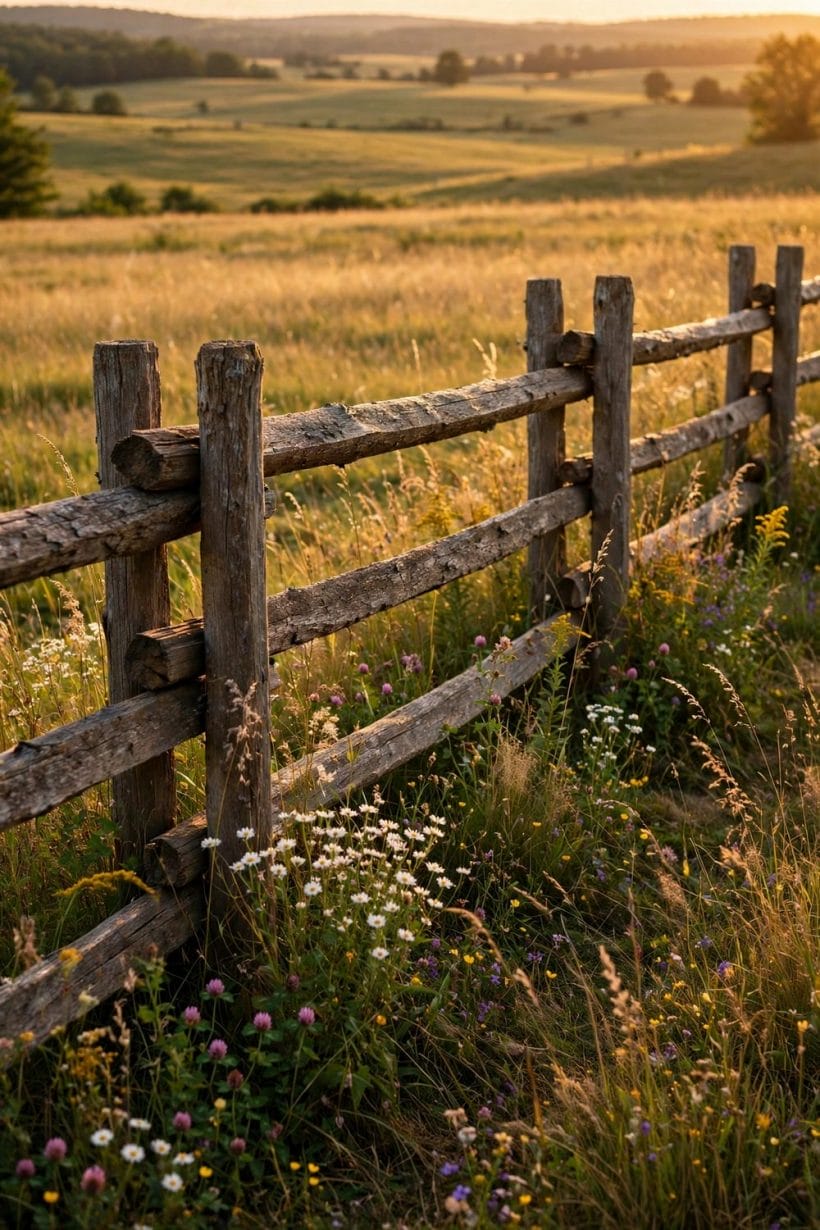
Split-rail timber is usually left to speak for itself, and its colour changes with time in a way that suits this fence particularly well. Fresh timber arrives warm and honeyed, with the grain and the split face clearly visible, and it gives a new fence a mellow, crafted look from the first day. Left unfinished, that warmth slowly silvers to a soft weathered grey, and many owners prefer the grey: it sits more quietly against grass and stone, and it makes the fence look as though it has always belonged to its place.
Finishes can hold the fence at either end of that journey, and the choice is a matter of taste and upkeep rather than right or wrong. A clear finish keeps the warm tones longer and slows the greying, while a stain can deepen the timber toward a richer brown or hold it closer to the colour of a house or an outbuilding. Paint is rarely the right partner for this fence: the rough split face and the open gaps suit natural timber, and a painted rail loses the very texture that makes the fence attractive. Whatever the finish, the fence looks best when every rail on a run is treated alike, so the line reads as one fence rather than a patchwork.
5. Gates, Corners and Ends
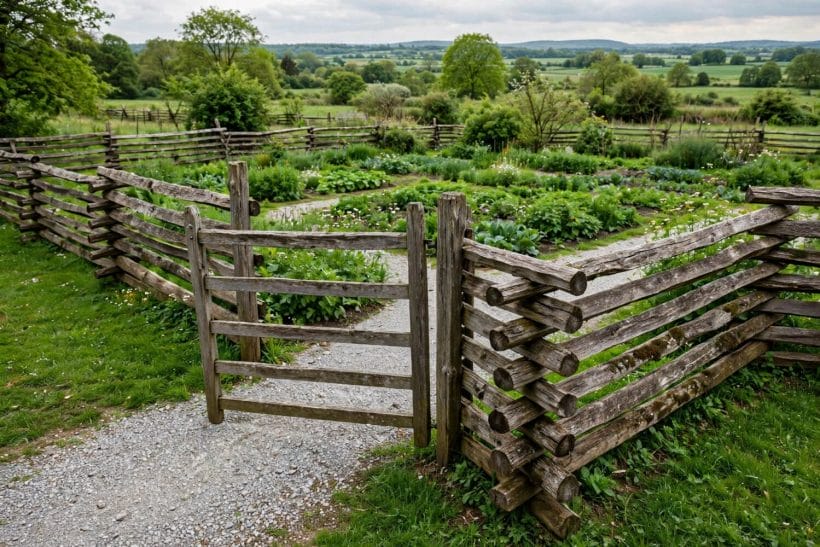
A fence is only as good as its openings, and the gate is where this fence either succeeds or fails. The honest approach is a gate built from the same language as the fence: a simple frame of rails, hung on sturdy posts, that reads as a continuation of the line rather than a foreign object bolted onto it. A gate that matches its fence in timber, rail count and weathering keeps the whole boundary coherent, and a gate that fights its fence draws the eye for all the wrong reasons.
Corners and ends need the same care, because they are the places where a fence line is under the most strain and where a careless finish shows. A corner post should be the strongest post on the run, braced or set to hold the pull of two directions at once, and an end post should close the line cleanly rather than trailing off into uncertainty. Where the fence meets a wall, a hedge or a different fence type, a tidy junction matters more than any flourish: the eye forgives a plain meeting, but it notices a gap or a clash at once. Gate and corner work that carries weight or changes a boundary should be left to a professional, as should any post setting that involves structural groundwork.
6. Planting Along an Open Fence
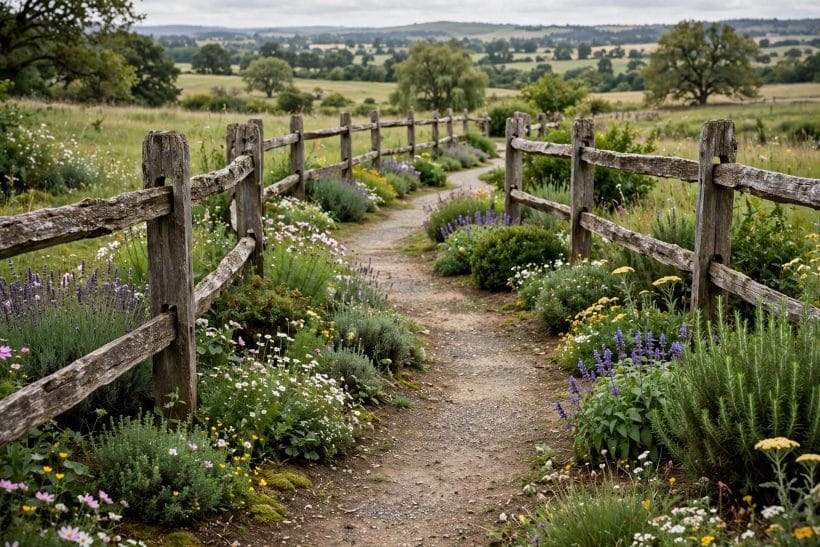
Planting is what turns this fence from a boundary into a garden feature. Because the fence is open, plants can grow through and around it without hiding it, and the best planting respects that balance. Low grasses and wildflowers at the foot of the fence soften the line without swallowing it, while shrubs set a little back from the rails give depth and a backdrop that makes the timber stand out. The fence stays visible, the planting stays generous, and neither crowds the other.
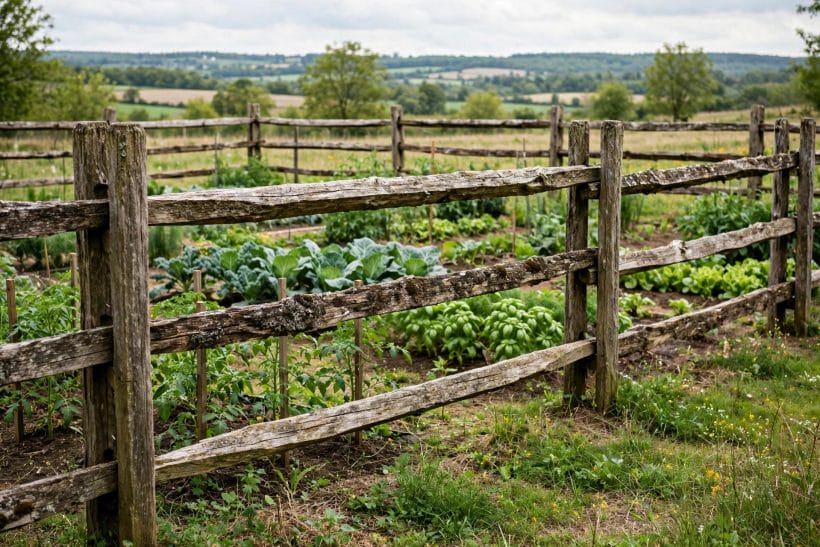
Climbers need a lighter hand here than they do on a solid fence. A vigorous climber will quickly bury this open fence and erase the very openness that justified choosing it, so the plants that suit this fence best are the restrained ones: a light rose, a gentle clematis or a trailing herb that threads through a rail or two and then stops. Fruit and vegetable gardens are a natural partner too, since the fence marks the garden’s edge while letting sun, air and pollinators through, and a kitchen garden enclosed by split rails has a working charm that a solid screen could never give it.
7. Slopes, Curves and Long Runs
Flat ground flatters every fence, but split rails earn their keep on ground that is anything but flat. On a slope, the fence can step down in short level sections, each one dropping slightly from the last, so the line follows the hillside in a staircase of timber that looks deliberate and sits comfortably on the eye. Alternatively the rails can run with the slope itself, rising and falling with the ground in one continuous flow, which suits gentle gradients and gives a softer, more pastoral line.
Curves ask for shorter sections and a little patience. This fence cannot bend like a rope; it turns in a series of small angles, and the gentler each angle, the smoother the curve reads. Long runs bring their own discipline: the posts must stay evenly spaced and upright over a distance where any drift shows, and the rails must keep a consistent line even as the ground changes under them. On a long or steeply sloping boundary, the setting out is work for a professional, since a fence that wanders or leans will announce itself across the whole landscape it was meant to frame.
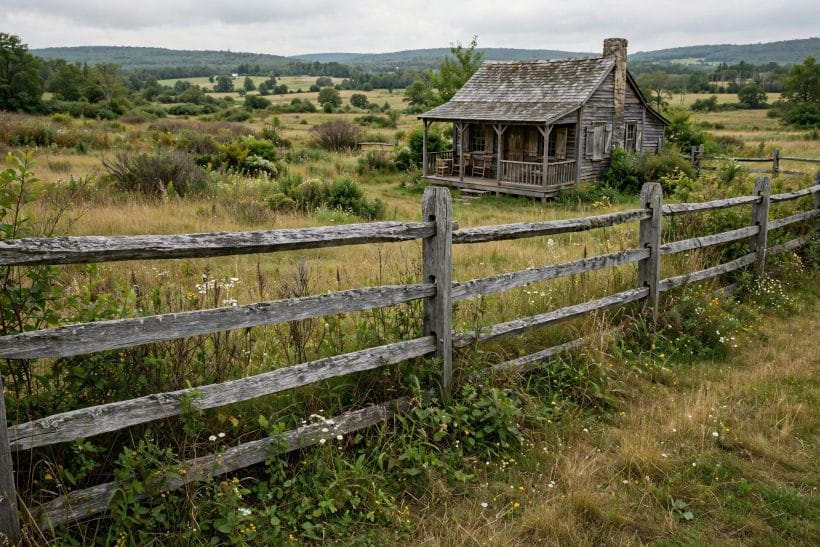
8. Care Through the Seasons
This fence asks for little, but it asks for it regularly. The seasonal round is simple: clear the grass and leaves that gather at the foot of the posts, since damp debris held against timber is what shortens its life; wash the rails when grime dulls them; and walk the line now and then to check that no rail has worked loose and no post has started to lean. A loose rail is a small job when it is caught early and a larger one when it is left to sag, so the walk itself is the most valuable piece of care there is.
Re-finishing, when it is wanted, follows the same unhurried rhythm. A clear finish or stain is renewed when the timber starts to look tired rather than on any fixed calendar, and a fence left to weather grey needs no finish at all beyond cleaning. Damaged rails are replaced like for like, matching the timber and the weathering of their neighbours as closely as possible, so the repair disappears into the line. With that modest attention, the fence settles into its landscape and stays there, growing more at home with every passing season.
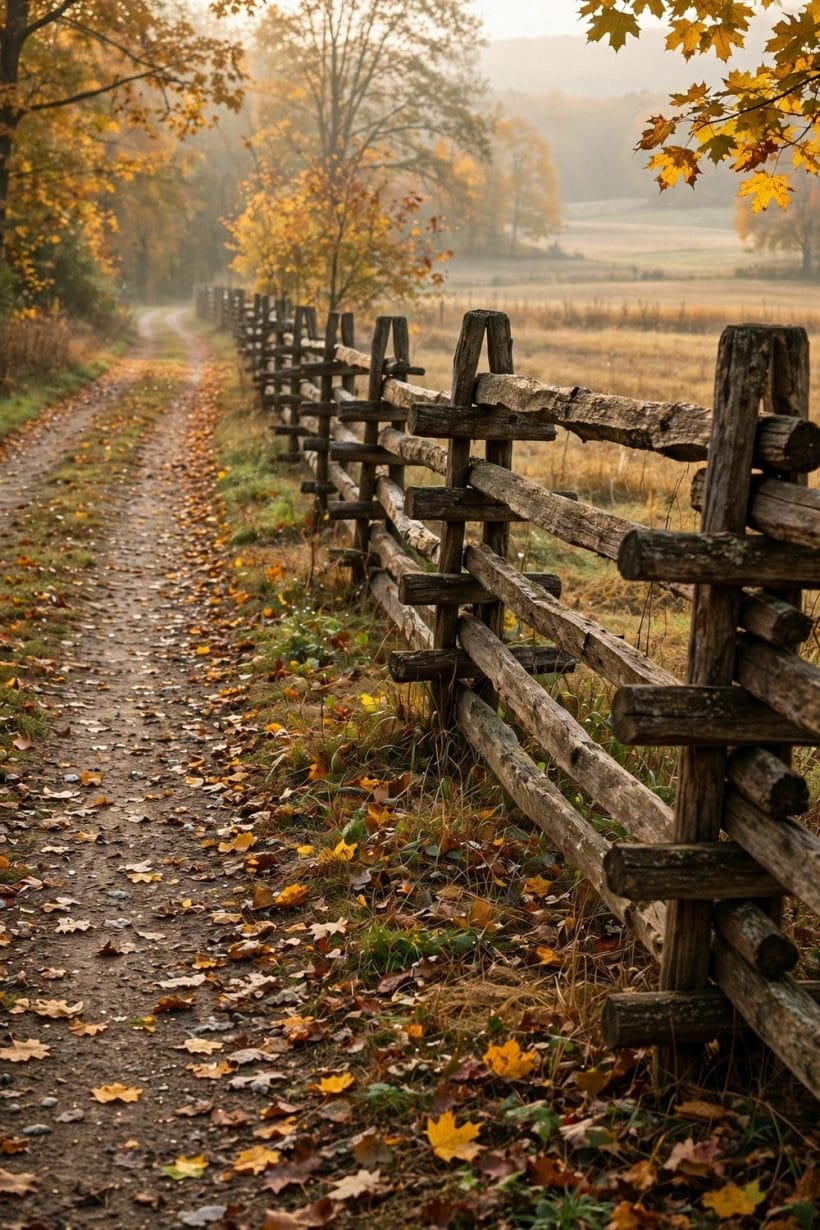
9. Boundaries, Neighbours and Local Rules
Before a single post is set, the boundary itself deserves a careful look. The line a fence follows should be the line that is actually owned or agreed, not the line that looks convenient on the day, and a word with the neighbours on either side prevents more trouble than any other single step. This open fence is a friendly neighbour: it does not block light or views, it does not throw a long shadow across a garden, and it frames a shared landscape rather than walling one garden off from another. Those qualities make it an easy fence to agree on, but they do not remove the need to agree.
Local rules may also have a say, and they vary from place to place in ways that are worth checking before building. Some areas limit fence height near roads or junctions, some have rules for boundaries beside public paths, and some landscapes carry protections that affect what can be built and where. A quick check with the local authority settles the question, and where the boundary is disputed or the groundwork is structural, a professional survey or installation is the sensible route. The fence will stand for years; the hour spent on agreement and permission is what lets it stand without argument.
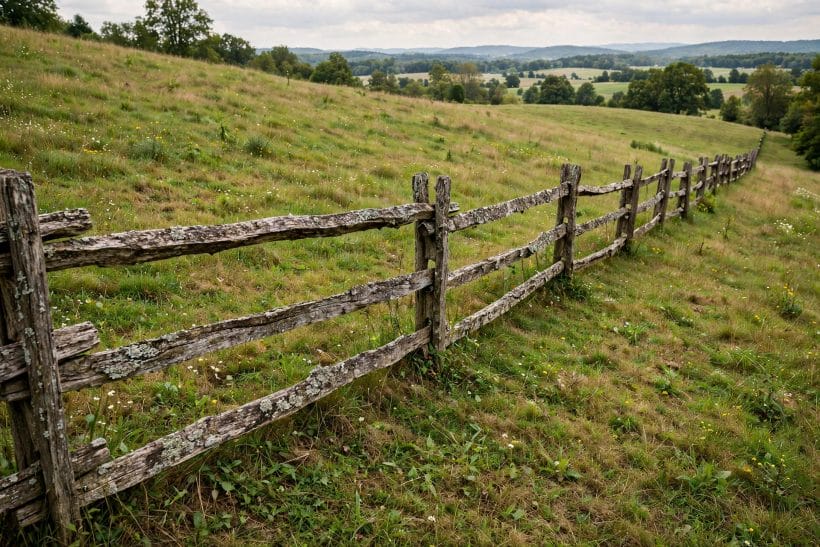
10. Choosing Your Split Rail Fence
Choosing well means working backwards from the ground the fence will stand on. Start with the job: a garden path asks for a light two-rail line, a drive or a field edge asks for the classic three-rail form, and a working boundary asks for the firmer four-rail line. Then look at the ground: flat ground takes any layout, a slope asks for stepped or flowing sections, and a wide open plot may suit the zigzag form that needs no dug posts. The timber finish follows the setting, warm where the house is warm, weathered grey where the landscape is wilder.
Set that choice against the other fence types only long enough to be sure split-rail is the right answer. If privacy is the need, the answer is a solid fence, and the privacy fence ideas post is the place to start, with cedar warmth covered in the cedar fence ideas post and clean horizontal lines in the horizontal wood fence post. If the need is an open mesh that still holds small animals, the hog wire fence ideas post covers that form, and a matching entrance belongs to the metal gate ideas post. When the answer is genuinely split-rail, though, nothing else gives the same open, rustic line, and the sections above give the whole of it: layouts, rail counts, colours, gates, planting, slopes, care and rules.
Final Considerations
A split rail fence succeeds by restraint. It does not try to do everything a fence can do; it marks a boundary, frames a view and lets the landscape through, and it does those few things with a warmth and honesty that no solid screen can match. Choose the rail count for the job, match the timber to the setting, plan the gates and corners before the rails, and let planting soften the line without hiding it. Kept in that spirit, and built with professional help wherever the groundwork is structural or the boundary is shared, a split rail fence is a boundary that feels less like a barrier and more like an invitation to look beyond it.




0 Comments