
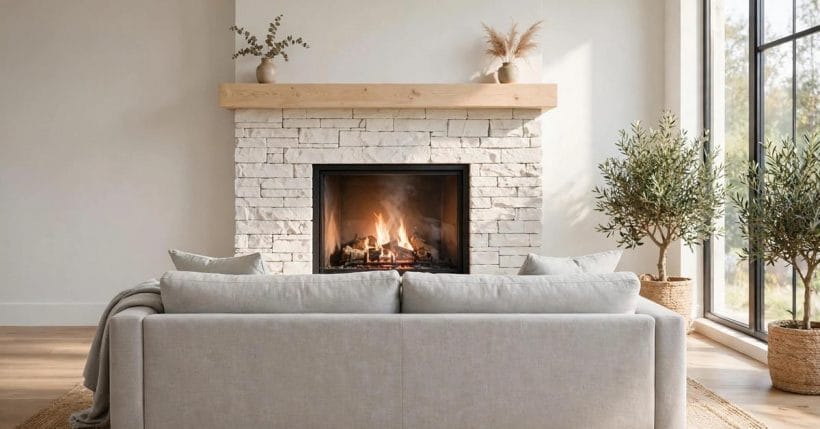
A white fireplace has a particular way of changing a room. Where darker stone can feel heavy and grand, white stone feels light and calm, and it lets the fire itself do the talking. The pale surface catches daylight in the morning and glows softly in the evening, so the hearth feels present through the whole day rather than only when the fire is lit. This guide looks at white stone fireplaces only: the finishes, the heights, the mantel shelves, the hearths and the gentle styling that keep pale stone looking warm rather than stark.
White stone is a narrower subject than stone fireplaces in general, and it deserves its own guide for that reason. Stone fireplaces as a whole cover a wide family of colours, textures and moods, and that broader subject already has its own home among stone fireplace ideas. What follows stays inside the pale end of that family. Every finish, colour and styling choice here is chosen because it suits white stone itself, and nothing here asks you to choose between stone colours in general. If you already know you want the light, calm look, this guide is for you.
A word of care before anything else: this guide is about looks and styling only. It never teaches how to build, alter or repair a fireplace. Any work on the firebox, the flue or the chimney is for qualified professionals, with local rules checked before any change is made. What you can do yourself is choose finishes, colours and soft furnishings, and arrange the room so the white stone is shown at its best. That is plenty, because a white stone fireplace rewards gentle choices more than dramatic ones.
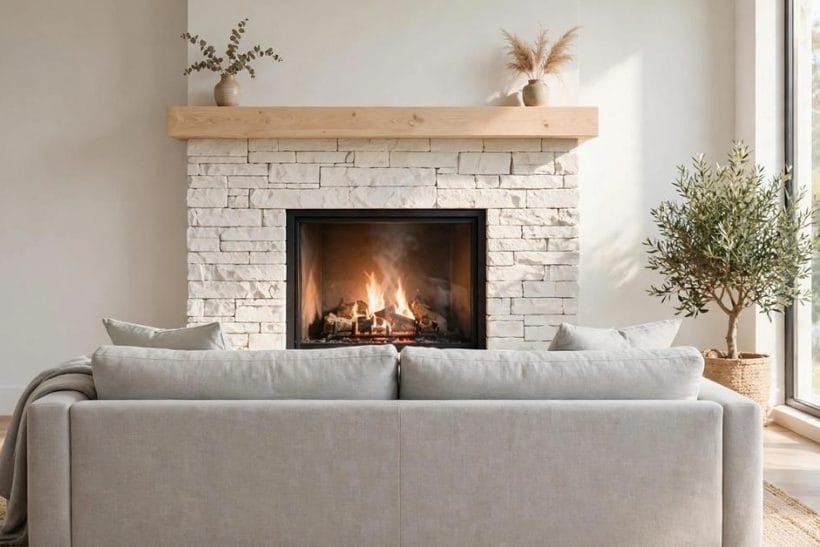
1. Why White Stone Changes the Whole Room
White stone changes a room because it reflects rather than absorbs. A dark surround can anchor a room and draw the eye down toward the hearth, while a white surround lifts the wall and spreads light around it. In a small living room this matters a great deal, because the fireplace wall is often the largest plain surface in the room, and a pale finish keeps that wall from feeling like a weight. The room feels taller, brighter and easier to live in, even when nothing else changes.
The effect is not only about brightness. White stone also softens the contrast between the fire and its frame. Flames against dark stone can look dramatic and theatrical, while flames against pale stone look gentle and domestic, like lamplight rather than stage light. That gentleness suits rooms meant for reading, talking and resting, and it suits homes where the fireplace is part of everyday life rather than a showpiece for special occasions. The fire becomes a companion in the room instead of a performance.
White stone also forgives a plain room. Where a patterned or richly coloured surround demands careful furniture and bold artwork to match it, a white surround asks for very little. Plain sofas, pale rugs and simple timber all sit happily beside it, and the room can stay calm without feeling empty. This is why white stone suits so many homes: it gives the room a clear centre without dictating everything else around it.
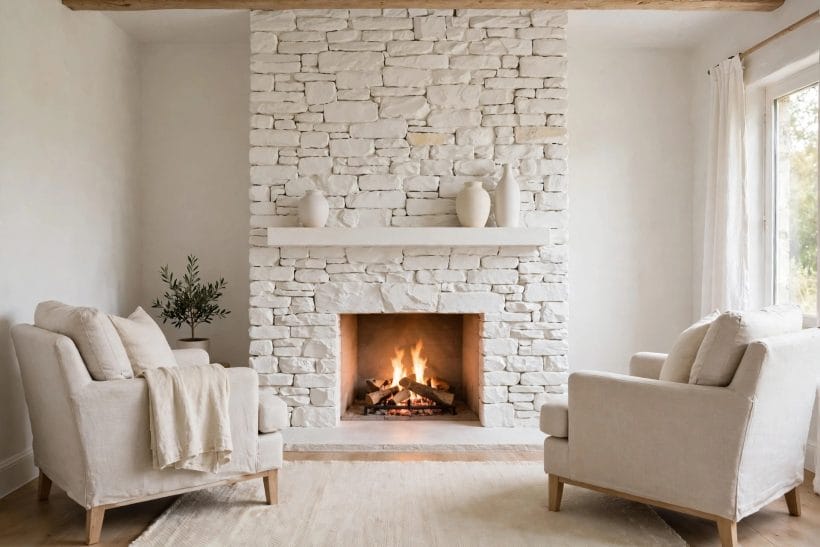
2. Whitewashed Stacked Stone for a Soft Rustic Look
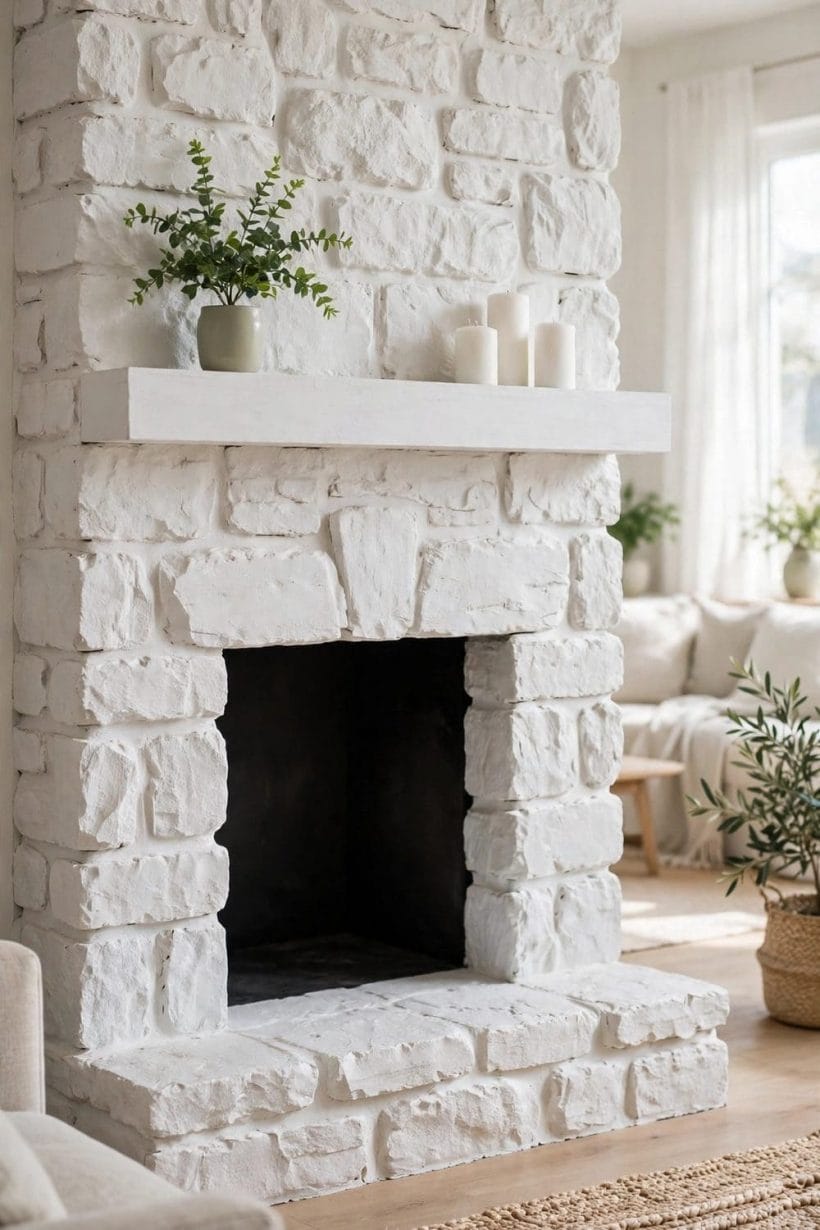
Whitewashed stacked stone is the most forgiving finish in the white stone family, and it is a good place to start. The stones keep their shape and texture, so the wall still reads as real stone, but the whitewash softens every edge and evens out the colour. The result is rustic without being rough, and pale without being flat. It suits cottages and farmhouse rooms, but it also suits modern rooms that want a little warmth without giving up their calm palette.
The texture is the point here. Stacked stone casts small shadows across its own surface, and those shadows stop a white wall from looking blank. In daylight the shadows are subtle, and in firelight they deepen, so the surround seems to change through the day. A smooth white wall cannot do this, and a painted wall cannot either. If your room feels a little plain and you want texture without colour, whitewashed stacked stone gives you texture in its purest form.
Styling a whitewashed surround is best kept simple. A pale timber mantel, a few plain ceramic pieces and a basket of logs are all it needs, because the stone itself already carries the visual interest. Heavy or ornate objects fight the softness of the whitewash, while simple shapes echo it. Let the stone be the decoration, and keep everything on the mantel quiet enough that the eye returns to the texture of the wall itself.
3. Smooth Pale Stone for a Calm Modern Wall
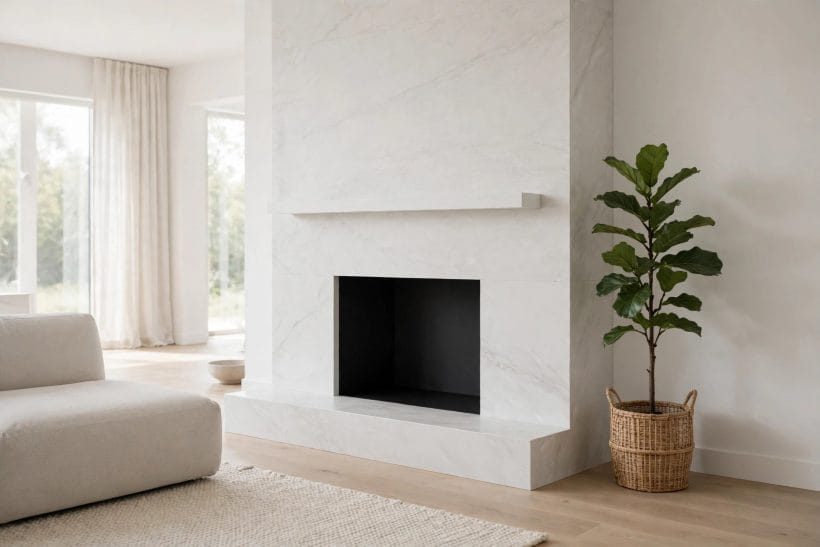
Smooth pale stone sits at the opposite end of the white stone family from whitewashed stacked stone. Where stacked stone celebrates texture, smooth stone celebrates stillness. Large pale slabs or finely finished blocks give the wall a quiet, continuous surface, and the fireplace becomes a calm architectural feature rather than a rustic one. This finish suits modern and minimalist rooms, where the fireplace should feel like part of the wall rather than a separate monument.
The calm of smooth stone comes with a responsibility: every line shows. A mantel shelf must sit level and true, and the joint between stone and wall must be clean, because there is no texture to hide behind. This is work for experienced fitters, and it is worth getting right, because a well-fitted smooth surround looks effortless in a way that no other finish can match. Once fitted, though, it asks for almost nothing. Dusting and gentle care keep it looking new, and its simplicity means it never dates as quickly as a busier finish.
Styling smooth pale stone should follow the same discipline as the stone itself. A slim floating mantel, a single plant and a low sofa are enough, and the room gains its warmth from soft furnishings rather than from objects crowded onto the mantel. The restraint is the style. A smooth white stone wall with too much on it stops looking calm and starts looking cluttered, so the kindest thing you can do for it is to leave it room to breathe.
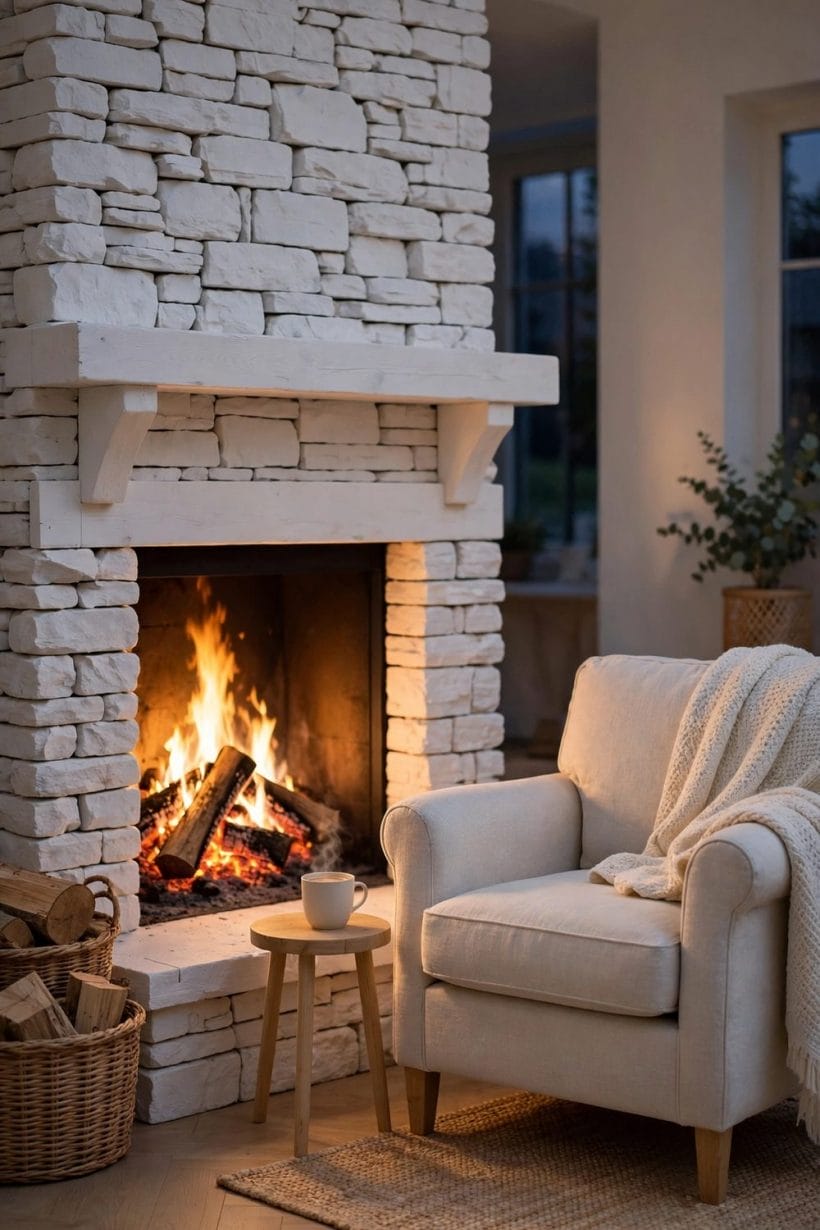
4. Choosing the Height of a White Stone Surround
The height of a white stone surround decides how the whole wall feels. A mantel-height surround frames the fire like a picture, keeping the wall above it free for artwork or plain plaster, and it suits rooms where the fireplace should be one feature among several. A full-height surround runs the stone to the ceiling, and it turns the fireplace wall into the room itself. Neither height is better in general; each suits a different room, and the choice should follow the room you have.
Mantel-height surrounds suit lower rooms and rooms with a lot happening on the walls. Because the stone stops at the mantel, the upper wall stays light and open, and the room keeps its sense of height. Artwork above the mantel can then set the mood of the room, and the stone below it acts as a calm base. This height also suits homes where the fireplace is used gently, as a background warmth rather than the dominant feature of the house.
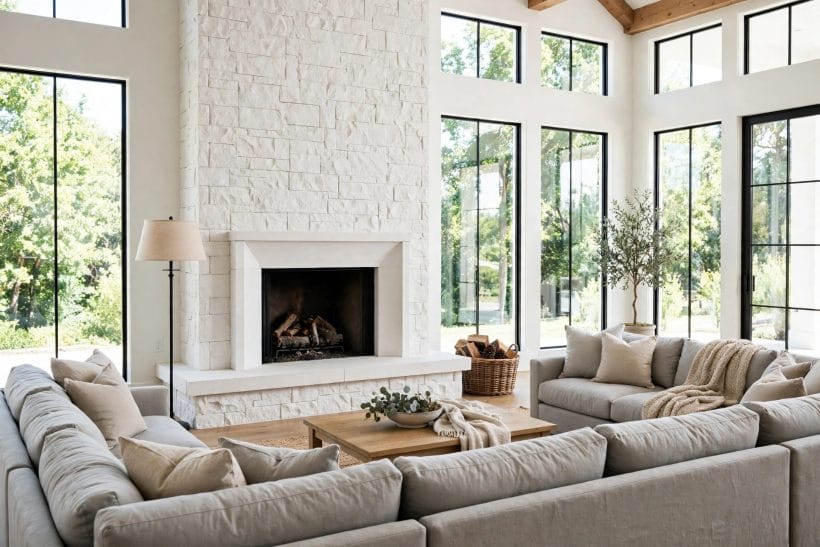
Full-height surrounds suit taller rooms and rooms where the fireplace wall is otherwise plain. Running white stone to the ceiling gives a tall room a spine, and it stops a large blank wall from feeling empty. The eye travels up the stone and the room feels taller for it, which is a gift in a large space. But full height also commits the room: the stone becomes the main event, so the furniture and colours around it should stay calm enough to let it hold that role without competition.
5. Mantel Shelves That Sit Well on White Stone
The mantel shelf is where white stone meets the life of the room, and its material sets the tone. Pale timber is the most natural partner, because its warmth softens the stone without introducing a new colour. A thick whitewashed beam suits rustic stone, while a slim pale shelf suits smooth stone, and in both cases the timber should look like it belongs to the wall rather than competing with it. Painted wood in white or cream can work too, especially where the shelf should disappear and let the stone speak alone.
A stone ledge is the quietest choice of all. When the mantel is cut from the same pale stone as the surround, the whole fireplace reads as one carved piece, and nothing interrupts the surface. This suits modern rooms and smooth stone particularly well, because it keeps the wall continuous. It is also the most permanent choice, so it should be made by experienced fitters who can match the stone and set the ledge true. Once in place, it needs no styling to justify itself.
Whatever material you choose, the shelf should be dressed lightly. A white stone mantel with a crowded shelf loses the calm that made you choose white stone in the first place. A plant, a pair of plain candles or a single small picture is enough, and the gaps between objects matter as much as the objects themselves. The shelf is a resting place for the eye, not a display cabinet, and white stone rewards the restraint of leaving space empty. Broader questions about mantels and the joinery that can flank them belong to their own subject, and the mantel-and-bookcase built-in form is covered separately among fireplace mantel and bookcase built-ins, which this guide does not re-teach.
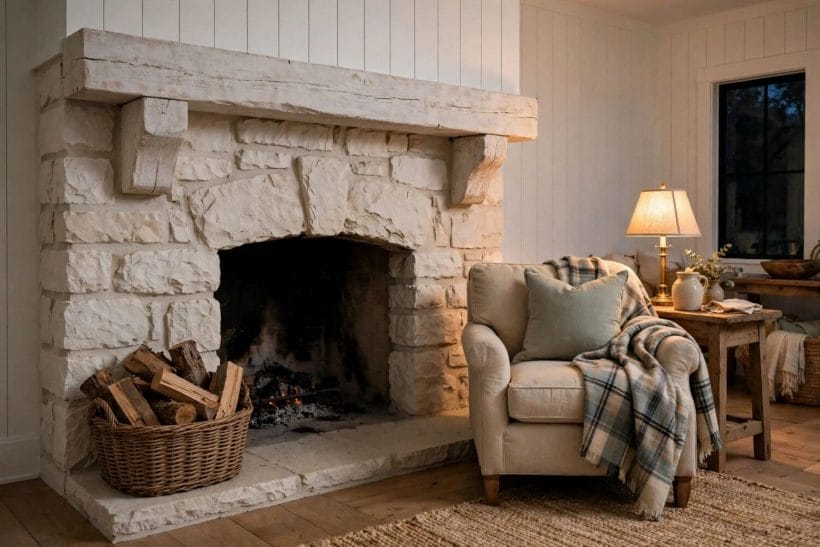
6. The Hearth Ledge and What Belongs on It
The hearth ledge is the base of the whole composition, and on a white stone fireplace it deserves the same calm attention as the mantel. A deep ledge gives the fire room to breathe and gives the room a place for quiet, practical things: a basket of logs, a pair of plain candles, or a small stack of books for fireside reading. The ledge should never become a dumping ground, because clutter at the base of a white surround draws the eye down and breaks the lift that pale stone gives the wall.
Logs belong on or beside the hearth more naturally than almost anything else. Their rough bark and warm colour sit beautifully against white stone, and they tell the truth about what the fireplace is for. A basket of logs is both storage and decoration, and it needs no arranging to look right. Candles offer a similar honesty in rooms where the fire is lit less often: their soft light echoes the fire without pretending to be it, and their plain white wax disappears into the palette of the stone.
What does not belong on a white hearth is anything large, dark or visually noisy. Heavy iron tools, bold patterns and tall objects all fight the paleness of the stone and pull the composition apart. Keep the hearth low, pale and simple, and let the fire itself be the tallest and brightest thing in the arrangement. A hearth that is calm at its base makes the whole fireplace feel taller and lighter, which is exactly what white stone is for.
7. Colours That Keep White Stone Looking Warm
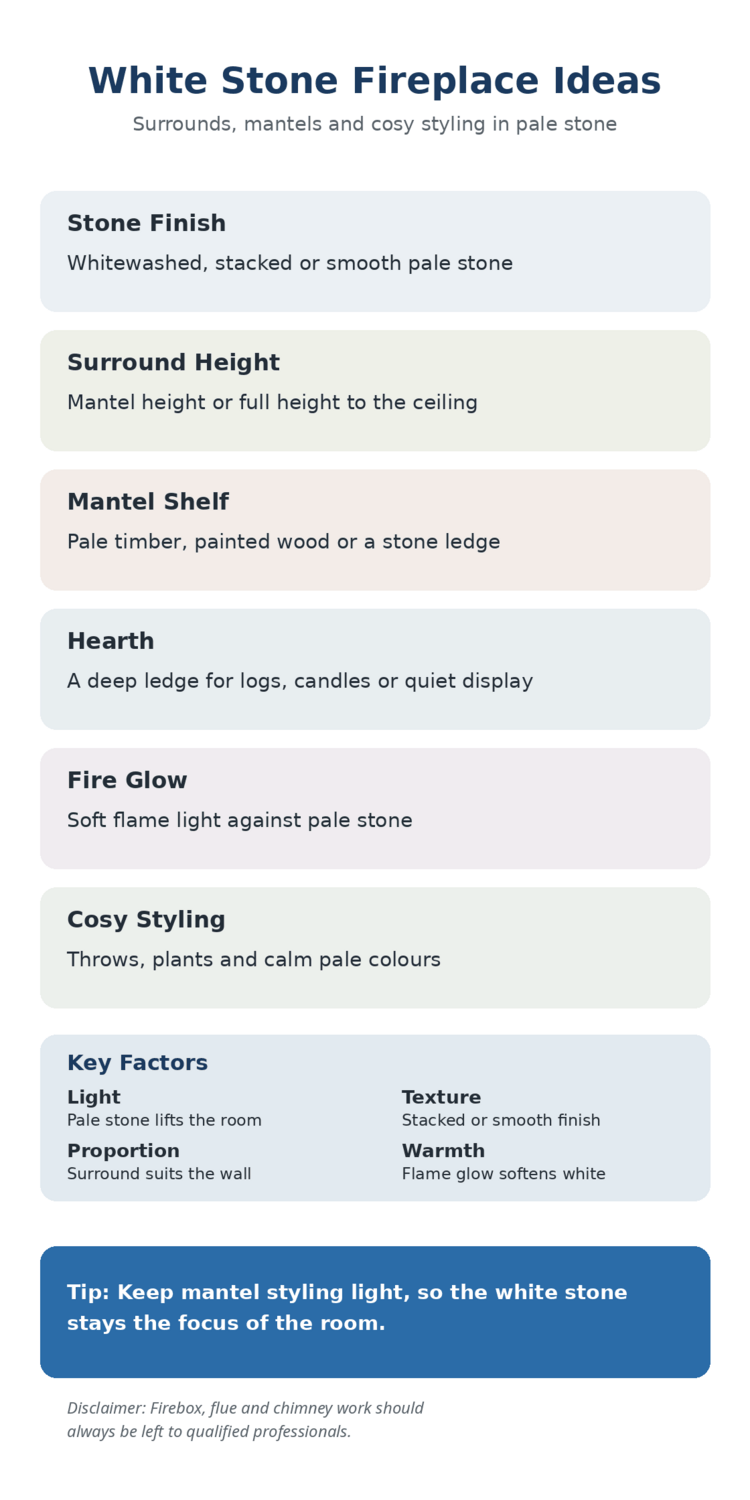
White stone can look cold if the room around it is cold too, so the colours you put beside it matter. The trick is to warm the room without warming the stone: keep the stone itself pale and bring warmth in through timber, textiles and plants. Honey-toned wood, cream linen, soft sage and muted terracotta all sit happily beside white stone, because they echo the natural world without introducing a colour that shouts. The room feels warm, but the stone stays the palest thing in it, which is how it keeps its lift.
Cool colours can work as well, provided they are soft. Pale grey, dusty blue and gentle green all calm a room further, and they suit white stone in homes that want a serene rather than a cosy mood. The danger with cool colours is only when they pile up: an all-grey room with a white stone fireplace can feel washed out rather than calm. A single warm note, such as a timber table or a woven basket, is usually enough to stop the room feeling cold, and it costs the palette nothing.
Strong colours should be used as accents, not as neighbours. A deep green plant, a rust-coloured throw or a dark framed picture can all sharpen a white stone wall beautifully, because the pale stone gives them a clean background. But a whole wall of strong colour beside white stone divides the room into competing halves, and the fireplace stops feeling like part of the house. Let the accents be small and deliberate, and let the white stone hold the room together. Ideas for the wider palette of a pale room can be found among tiny house interiors, where small rooms often pair pale walls with exactly this kind of restrained warmth.
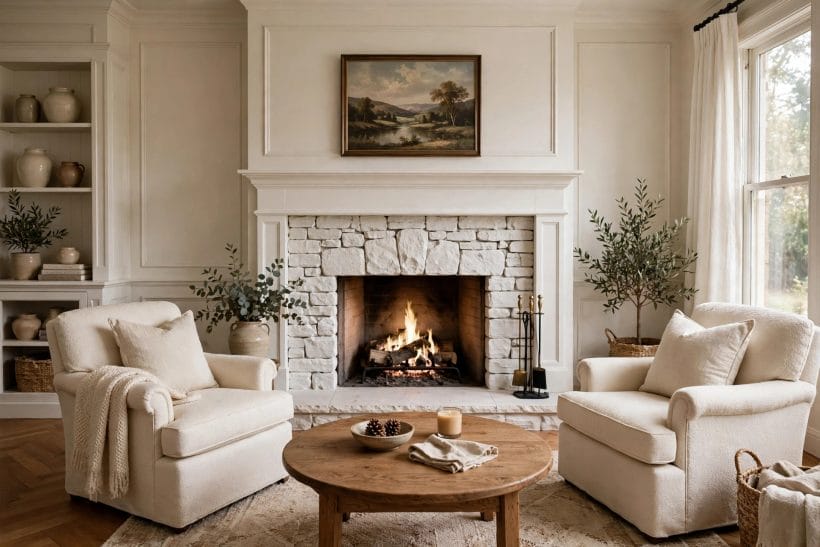
8. Soft Furnishings for a Cosy White Stone Fireplace
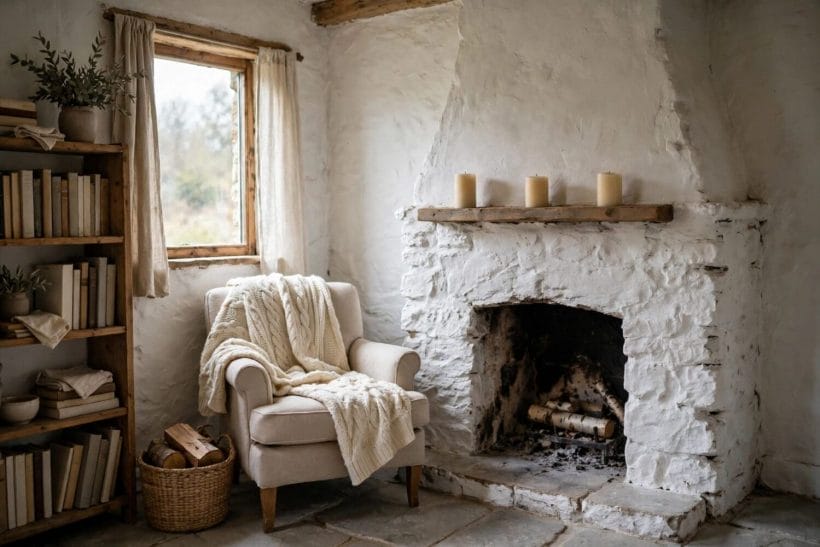
Soft furnishings are what turn a white stone fireplace from beautiful to cosy, because stone itself is hard and cool to the touch. Throws, cushions and rugs bring the softness that stone cannot, and they do it without changing the fireplace at all. A chunky cream throw over an armchair, a woven rug underfoot and linen cushions in pale tones all invite people to settle by the fire, and they make the room feel lived in rather than displayed. The stone provides the structure; the textiles provide the welcome.
The textures matter more than the patterns. White stone already gives the room one strong texture, so the textiles should answer with different ones: wool against stone, linen against stone, woven jute against stone. Patterns should stay quiet, because a bold pattern beside textured stone creates two competing surfaces and the eye does not know where to rest. Plain or subtly woven fabrics let the stone keep its role as the textured centre of the room, while still giving every seat something soft to touch.
Placement of soft furnishings is a separate art from choosing them. How seats are set around a fire, and how a room is arranged for conversation, is covered in its own guide among furniture arrangement around a fireplace, and this guide does not re-teach it. The point that belongs here is simpler: whatever arrangement you choose, dress it softly. A white stone fireplace with hard, bare seating around it looks handsome in a photograph and unwelcoming in real life, while the same fireplace with throws and cushions looks like the heart of a home.
9. Lighting That Flatters Pale Stone in the Evening
White stone behaves differently under every kind of light, and evening light is where it earns its keep. Daylight shows the stone plainly, but lamplight and firelight give it depth, because the texture of the stone catches warm light and throws gentle shadows. A pair of soft lamps at either side of the room, or a single floor lamp near the seating, is usually enough to make a white stone wall glow in the evening. Harsh overhead light, by contrast, flattens the stone and can make it look clinical, so it is worth switching off the brightest light in the room once the fire is lit.
The fire itself is the best light a white stone fireplace will ever have. Flames flicker, and flickering light moves across textured stone in a way that no fixed lamp can copy, so the wall seems alive in the evening. This is one more reason to keep the mantel and hearth lightly dressed: every object on the mantel casts a shadow in firelight, and a crowded mantel throws a crowd of shadows. A few plain objects cast a few soft shadows, and the stone keeps its calm even in moving light.
Candles on the hearth or mantel can extend the same effect on evenings when the fire is unlit. Their light is warm and low, and it flatters white stone for the same reason firelight does. A small group of plain white candles, kept well away from anything that could catch, gives the fireplace a gentle evening presence without any work on the fire itself. The rule throughout is the same: light a white stone fireplace warmly, softly and from low down, and the stone will repay you with a glow that no other finish offers so easily.
10. Keeping White Stone Looking Clean and Bright
White stone asks for a little more care than dark stone, and the care is mostly gentle and regular. Dust settles visibly on pale surfaces, so a soft brush or a dry cloth passed over the surround now and then keeps it looking fresh. The texture of stacked stone can hold dust in its crevices, and a soft brush reaches those places without disturbing the finish. Smooth stone is easier, needing only a wipe, but it shows marks sooner, so it repays the same regular attention.
Marks near the firebox deserve patience rather than force. Soot and smoke can tint pale stone over time, and scrubbing hard can damage the finish or drive the mark deeper. Gentle cleaning with a soft cloth, and advice from experienced fireplace professionals for anything stubborn, is the safe course. Never use harsh chemicals or abrasive pads on white stone, and never experiment with a new cleaner on the most visible part of the surround. Test quietly, in a hidden corner, or not at all, and let professionals handle anything that does not lift easily.
Prevention matters more than cleaning. A well-kept fire, with the flue and chimney cared for by qualified professionals, marks the stone far less than a neglected one, and a mantel kept free of dripping candles and staining objects stays pale far longer. The brightest white stone fireplaces are rarely the newest ones; they are the ones whose owners built gentle care into the routine of the room. A few quiet minutes now and then, and the stone keeps the brightness that made you choose it.
Final Considerations
A white fireplace succeeds when everything around it stays calm enough to let the stone work. Choose the finish that suits your room, whitewashed and textured for warmth or smooth and still for calm, and set the surround at the height your wall can carry. Dress the mantel lightly, keep the hearth low and pale, warm the room with timber and textiles rather than strong colour, and light the stone softly in the evening. Each choice is small on its own, and together they make a fireplace that feels like the natural heart of the home.
Remember what this guide deliberately leaves to others. Stone fireplaces in general, with all their colours and moods, have their own guide, linked at the start of this article. The full survey of fireplace surrounds, in every material and colour, lives among fireplace surround designs, and this guide has not tried to repeat it. Seating placement around the fire has its own guide, linked earlier in this article, as do mantel-and-bookcase built-ins. Each of those subjects has its own home, and this guide stays inside its own: white stone only.
For the wider room, pale and compact living spaces among small living room ideas and the broader family of tiny house designs show how white stone sits inside homes of every size. Take the ideas here, test them against the room you actually live in, and keep the ones that make your evenings by the fire better. A white stone fireplace does not need grandeur to succeed. It needs light, calm and a little regular care, and it will repay those things for years.



0 Comments