
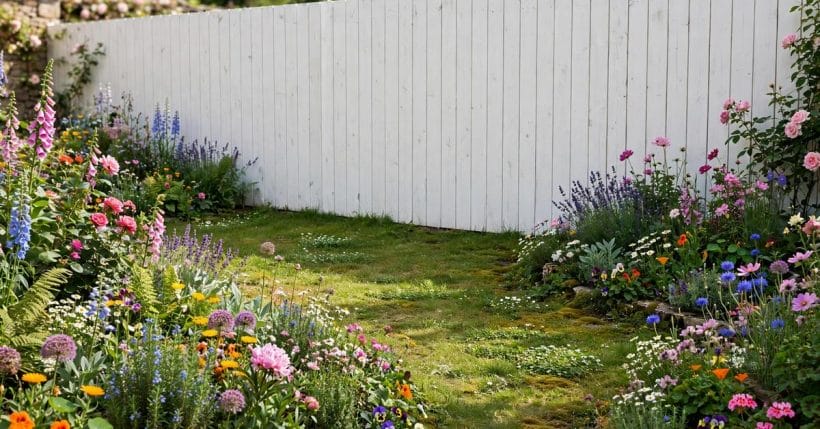
A garden can be fully enclosed and still feel overlooked. The difference is what the boundary does to the view: the moment a solid white screen breaks the sightline from a neighbouring window or the pavement, the garden becomes a room of its own, bright and calm rather than merely fenced in. That is the whole subject of this post — the white fence in its privacy form, and nothing else.
This post keeps one slice of a wide fence family. Privacy fences in general, in every colour and material, belong to the privacy fence ideas post. Metal gates are a different form altogether and live in the metal gate ideas post. Split-rail fences and short fences are separate types again, each covered in its own place, and open mesh boundaries answer a different question entirely. Here, the fence is white, solid, and private, and every section below stays inside that boundary.
1. White Privacy Fences at a Glance
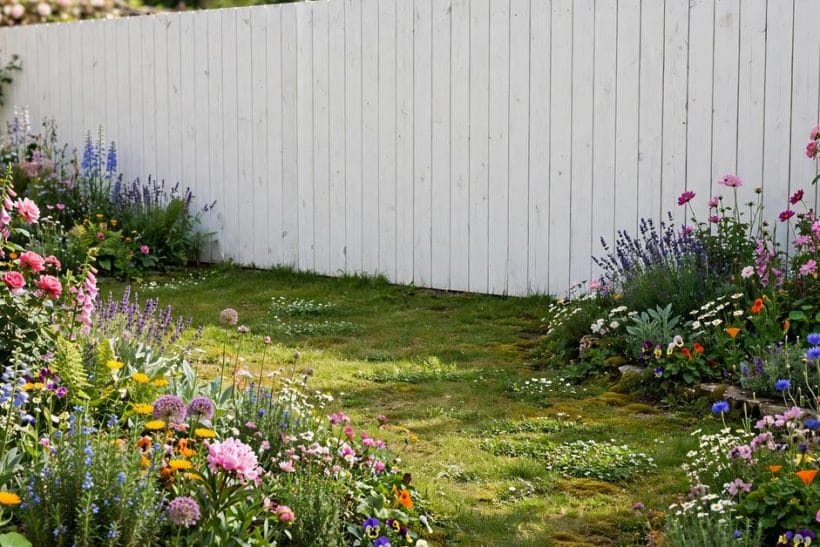
A white privacy fence is a boundary built to block views first and mark the plot second. Its working parts are simple to name: the height against the sightlines that overlook you, the solidity of the panels, the material the boards are made from, the finish that keeps the white bright, and the gates, corners and slopes where a careless run leaks views. Get those parts right and the fence does its job quietly for years; get one wrong and the garden stays overlooked no matter how handsome the boards look from the street.
White changes the character of a private boundary in a way no other colour quite manages. A dark fence recedes and makes a small garden feel enclosed; a white fence bounces light back into the planting, so the same enclosed garden feels larger and brighter. That brightness is also the bargain white asks you to keep: every splash of soil, every patch of algae, every scuff shows, so a white fence is a fence you agree to wash and tend. The sections below take each part in turn — layouts, panel styles, materials, gates and corners, planting, care, cost drivers, neighbours and local rules — and finish with a plain way to choose.
2. Layouts and Sightlines: Blocking the View That Matters
Privacy is geometry before it is joinery. The useful question is never how tall a fence can be in the abstract; it is which window, landing, raised terrace or stretch of pavement can see into the garden, and from what angle. Stand where the overlooking eyes are, look back at your own garden, and the runs that matter reveal themselves at once: often one long side and a corner, while the rest of the boundary barely needs screening at all. A fence planned this way screens where it counts and leaves the remaining boundary lighter, cheaper in effort, and kinder to the neighbours on the quiet sides.
Sightlines also change with the seasons and the hours. A neighbour’s upstairs window overlooks you all year, but a leafless winter hedge or a low summer sun through a gap can open views you forgot in July. Walk the boundary in different light before committing to a layout, and watch where people actually stand: the path to a front door, the top of a shared driveway, the seating area of the house next door. Corners deserve the same attention as straight runs, because a fence that stops short of a corner leaves a diagonal view straight into the seating area. Planting layered on the garden side can close the last slivers of view without another board being added, and it softens the hard white line at the same time.
3. Panel Styles in White
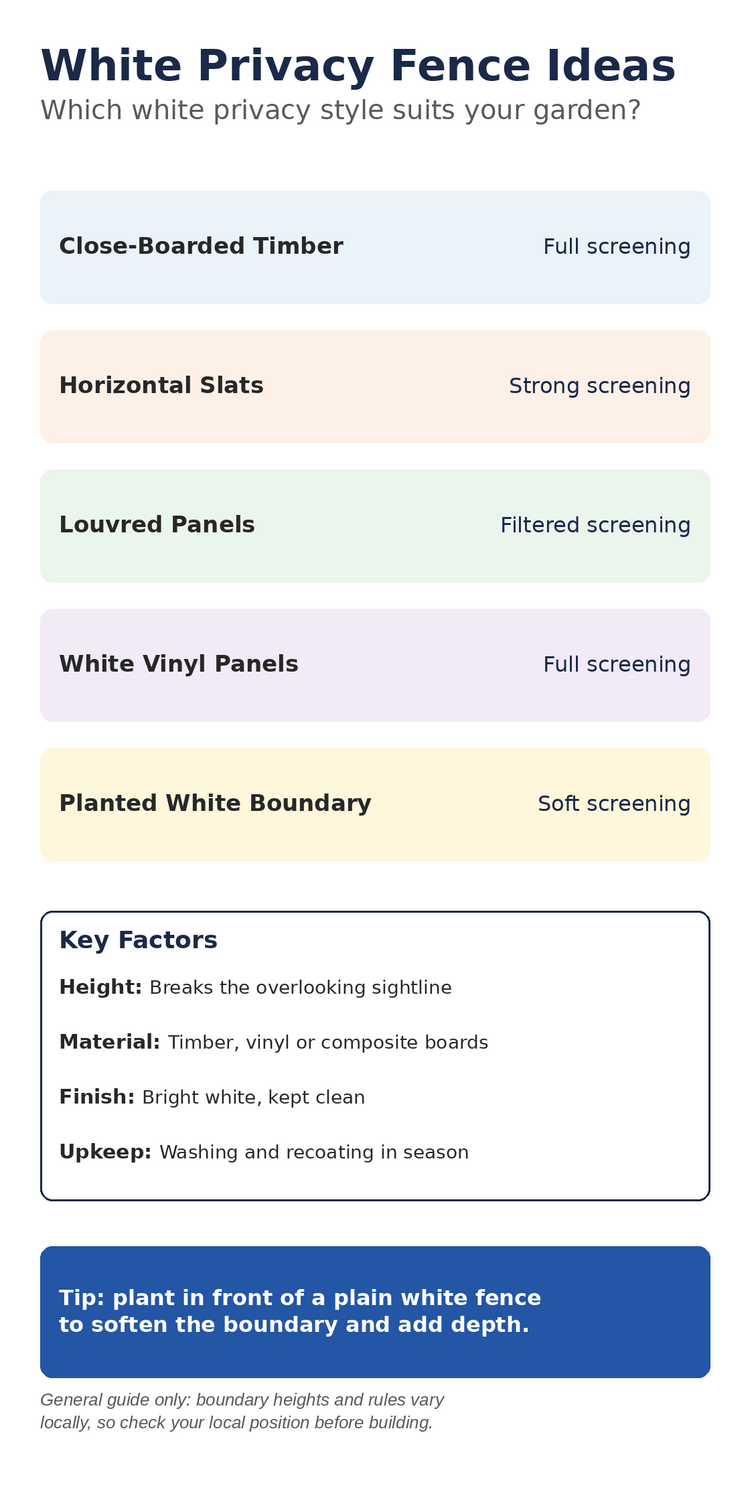
Close-boarded panels are the classic white privacy answer: vertical boards fixed tight together so no eye can pass between them, with a capping rail along the top and a neat finished face. They suit cottage gardens, front boundaries and any plot where the fence must simply disappear into a bright backdrop for planting. Board-on-board is the close cousin, with boards overlapped so the panel stays solid even as timber moves with the seasons; it reads slightly more textured from close up and forgives small shifts that would open a gap in a plain close-boarded run.
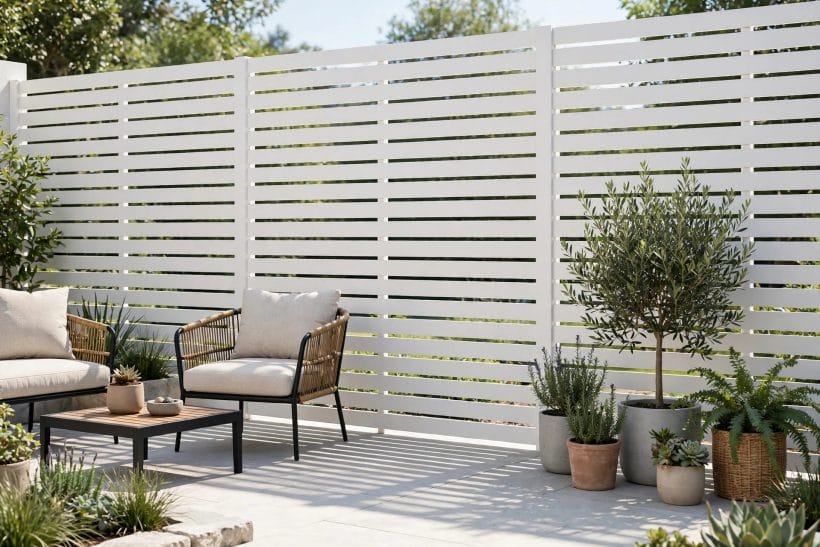
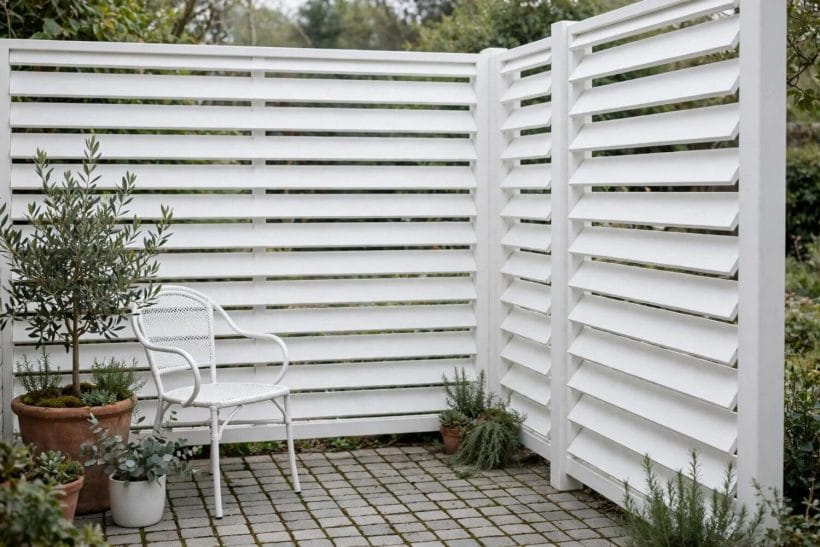
Horizontal slats give the same boundary a modern voice. The boards run sideways, the shadow lines between them draw the eye along the garden, and the fence pairs naturally with paved terraces, rendered walls and contemporary planting. The slats must sit close enough that the screen holds at eye level — wide gaps turn a privacy fence into a decorative screen, which is a different thing and should not be sold to yourself as privacy. Louvred panels angle their boards so air passes while sightlines are cut from most angles; they suit sheltered patios and windy corners where a fully solid panel would catch the weather, but they need checking from the exact angles that overlook you, because a louvre that screens from the pavement may still open to an upstairs window.
Shadowbox panels, with boards alternating on either side of the rails, look finished from both faces and please neighbours who see the far side daily — a real virtue on a shared boundary, where a fence with a handsome face one way and bare rails the other can sour a good relationship. Solid vinyl and composite panels complete the family: smooth, uniform, and white through their whole surface rather than painted over, so a scratch does not show a different colour beneath. Whichever panel style you choose, ask one question of it before anything else: standing where the neighbours stand, can you see into the seating area? If the answer is no from every angle that matters, the style has earned its place.
4. Materials and Finishes: Timber, Vinyl and Composite
Timber is the traditional white privacy material, and its virtues are warmth, easy repair, and a surface that takes paint beautifully. A single damaged board can be replaced without disturbing the run, and the fence can be repainted a different white as tastes change. Its price is upkeep: timber moves with wet and dry seasons, fixings need checking, and the white finish needs recoating on a regular rhythm or the weather will show through. Choose boards that are straight and well seasoned, and be wary of bargain timber that twists once it is up — a twisted board opens a gap, and a gap ends the privacy.
Vinyl panels arrive white and stay white with washing alone, never needing paint, and their smooth faces shed soil and algae more easily than painted timber. They suit households that want the bright boundary without the recoating calendar, and their uniform panels give a crisp, contemporary line. Composite boards sit between the two: made from blended materials, they resist weather and hold their colour well, with a slightly more textured surface than vinyl. Neither vinyl nor composite repairs as simply as timber — a cracked panel is usually replaced whole rather than patched — so check the fixing system and the availability of matching panels before committing, and keep the maker’s care guidance for washing.
The white itself deserves a decision, not a default. A pure brilliant white can glare in strong sun and show every mark; a slightly softer white sits more easily against planting and masonry and still reads unmistakably white from the street. Hold sample boards against your house wall, your paving and your soil in daylight before choosing, and look at them again at dusk, when a cold white can turn blue-grey. The right white is the one that flatters the house it stands beside, not the brightest white on the chart. For the wider question of how white plays across a whole exterior, the white exterior home ideas post gathers shades, styles and trim pairings for the house the fence belongs to.
5. Gates, Corners and Slopes
A privacy fence is only as private as its gate. The gate must match the fence in height and solidity, close firmly, and latch without being lifted or forced by weather — a gate that swings in the wind or sags on its hinges is a gap in the boundary, not a feature of it. Build the gate frame strongly, hang it on posts that are set to carry its weight for years, and check the latch from both sides: a gate that is easy for family and awkward for strangers is doing its job. Where a driveway or wide entrance needs a pair of gates, the meeting point in the middle deserves the same care as the hinges, because the centre gap is where pairs of gates most often leak views.
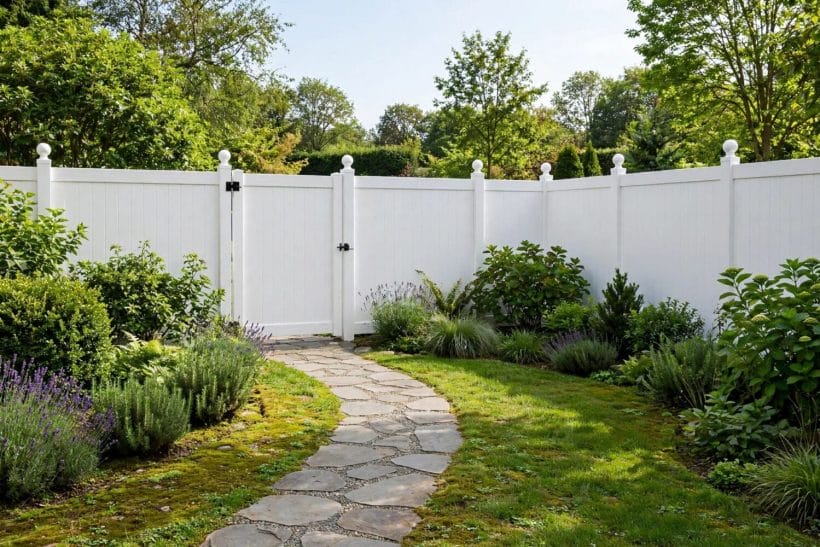
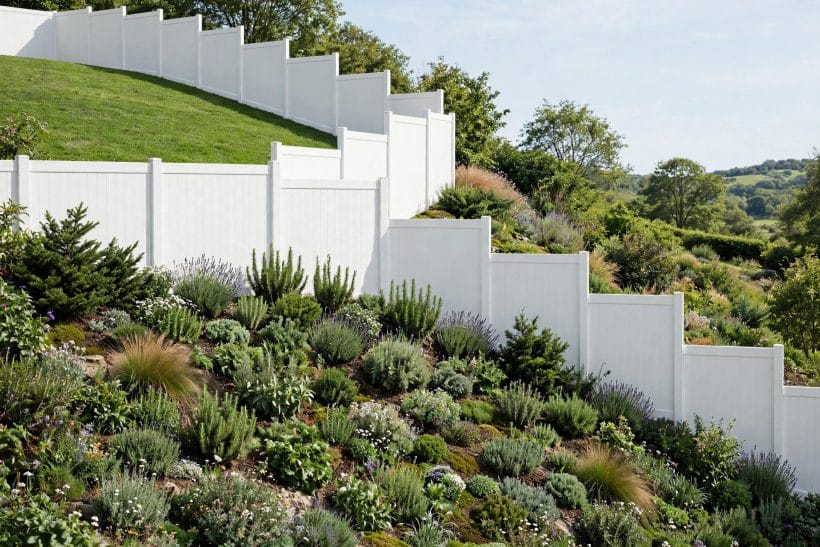
Corners need thinking, not just boards. Two runs meeting at a corner should overlap or cap neatly so no diagonal slit opens between them, and the corner post should be the strongest post on the run — it carries the pull of two directions and the gate if one hangs nearby. Slopes are the other classic leak: a fence that steps down a slope in panels leaves triangular gaps beneath each step unless the panels are cut or the ground is made up, while a fence that follows the slope smoothly needs boards and rails shaped to the fall of the land. Walk a sloping boundary and look uphill as well as along it, because a slope hands the higher neighbour a view over a fence that looks tall enough from below. Where the ground, the structure or the gate is at all ambitious, fitting is work for a professional installer, and the garden gates post gathers entrance styles at garden scale for the gate that will sit in the run.
6. Planting That Softens a White Boundary
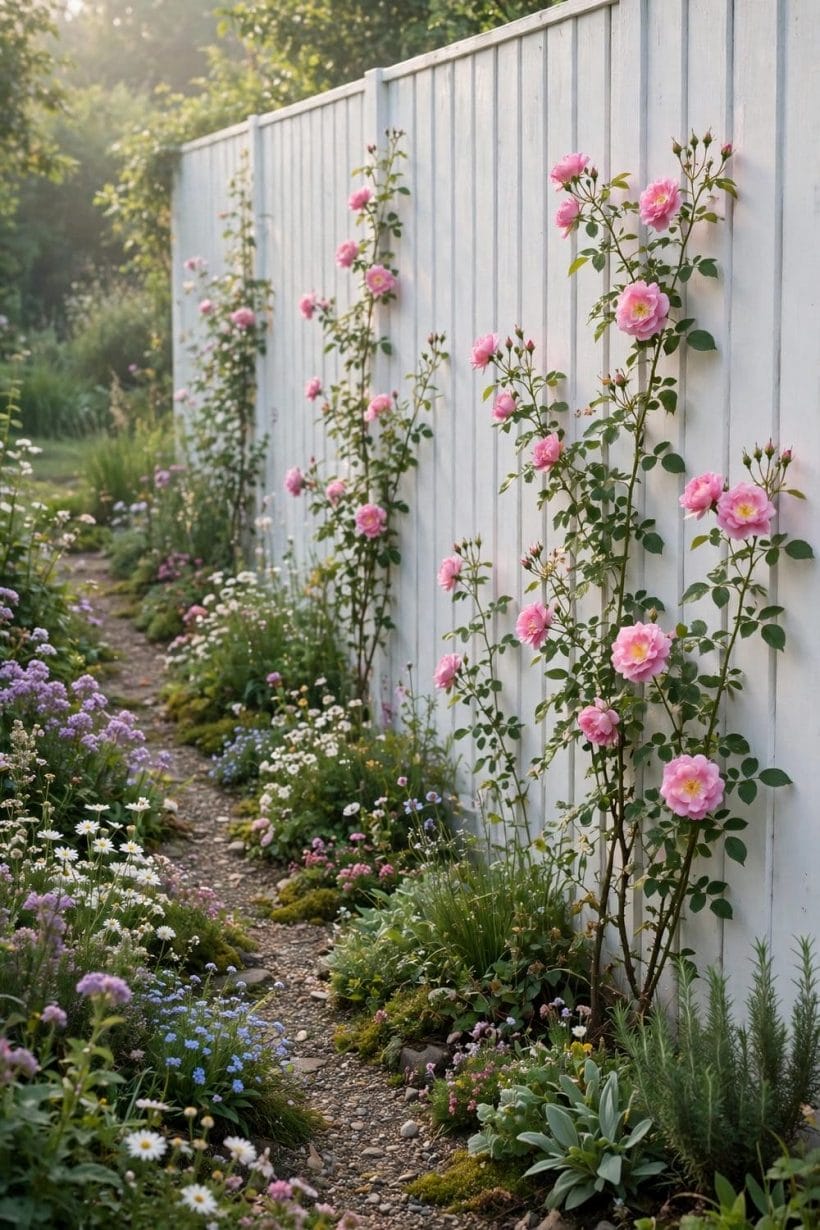
White fencing and planting are natural partners, and the partnership runs both ways: the fence gives climbers and shrubs a bright backdrop that makes green and flower colour sing, and the planting breaks the hard white line so the boundary reads as a garden feature rather than a wall. Climbing roses are the classic pairing — their canes tie easily to rails, their flowers glow against white, and their thorns quietly discourage anyone leaning over. Clematis, jasmine and honeysuckle offer lighter cover and scent, while evergreen climbers keep the softening through winter when deciduous roses are bare stems.
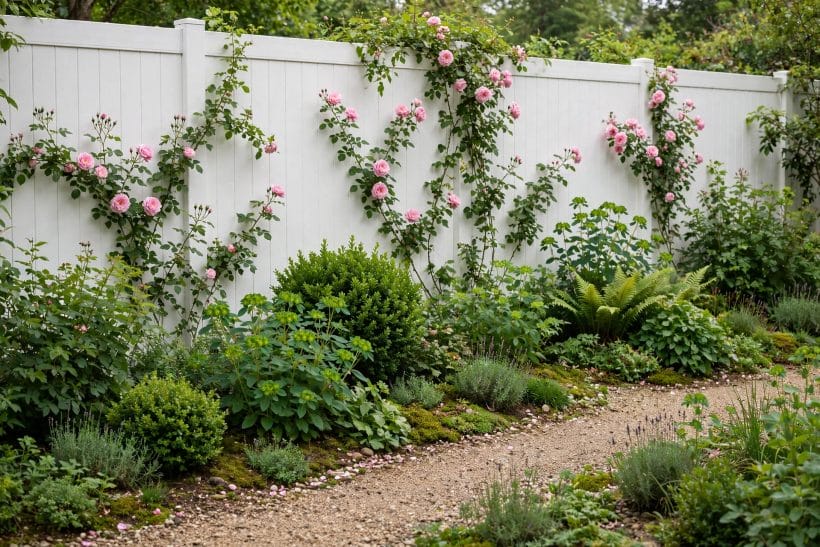
Plant in layers for the kindest effect. Tall shrubs a little way out from the fence give depth, mid-height perennials fill the middle ground, and low edging plants finish the foot of the boundary so bare soil never shows against the white boards. Leave a narrow working gap between planting and fence so you can reach the boards for washing and recoating — a border planted hard against the fence hides the very surface you need to tend, and trapped damp behind dense foliage will stain white faster than open air. Choose plants for your soil and light honestly rather than copying a photograph: a rose that sulks in shade or a shrub that outgrows its space will fight the fence instead of flattering it, and no planting scheme is worth a boundary that cannot be reached, washed or repaired.
7. Keeping White White: Washing and Care
White is a promise, and washing is how you keep it. A gentle wash with water and a soft brush, worked from the top down so dirty water does not streak the clean boards below, lifts most soil, pollen and algae before they stain. Wash in mild weather, rinse thoroughly, and let the fence dry fully before judging the result — a damp board always looks darker than it is. Avoid harsh abrasive pads on painted timber, which thin the finish and invite the next stain to grip harder, and avoid directing a fierce jet of water at close range into joints and fixings, which drives damp where it does not belong.
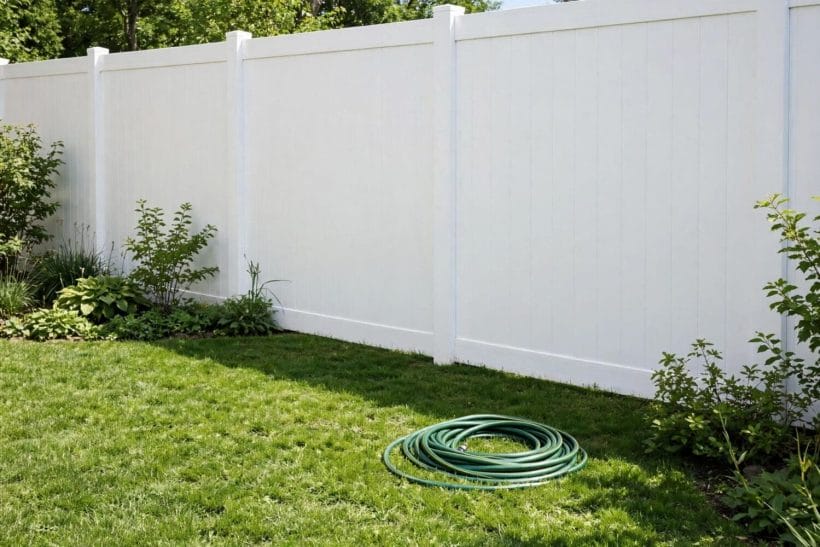
Recoating is the second rhythm of white fence care. Painted timber needs its finish renewed before the old coat fails rather than after: once bare timber shows, weather works fast and the repair becomes preparation, priming and several coats instead of one fresh coat. Note where the fence weathers hardest — the sunniest run, the side nearest a road, the boards behind a sprinkler — and inspect those first each season. Vinyl and composite need no recoating, but they still need washing, and their fixings and post caps deserve the same seasonal glance as timber: a cracked cap lets water into a post, and a loose fixing lets a panel rattle and wear. A short seasonal walk of the whole boundary, eyes open for gaps, leaning posts, sagging gates and staining, catches nearly every white fence problem while it is still small.
8. Cost Drivers in General Terms
The title of this post keeps the word costs, and it keeps it honestly: as drivers, not as figures. No number in this section is a price, and none should be read as one, because the honest drivers of a white privacy fence vary so widely by place, ground and choice that any single figure would mislead. What can be said generally is what moves the total: the length of the run and the height of the screening, which together set how much material and how many posts the job needs; the material itself, with timber, vinyl and composite each carrying different supply and care profiles; and the ground the fence stands in, since soft, rocky, sloping or root-filled ground asks more of posts and footings than level easy soil.
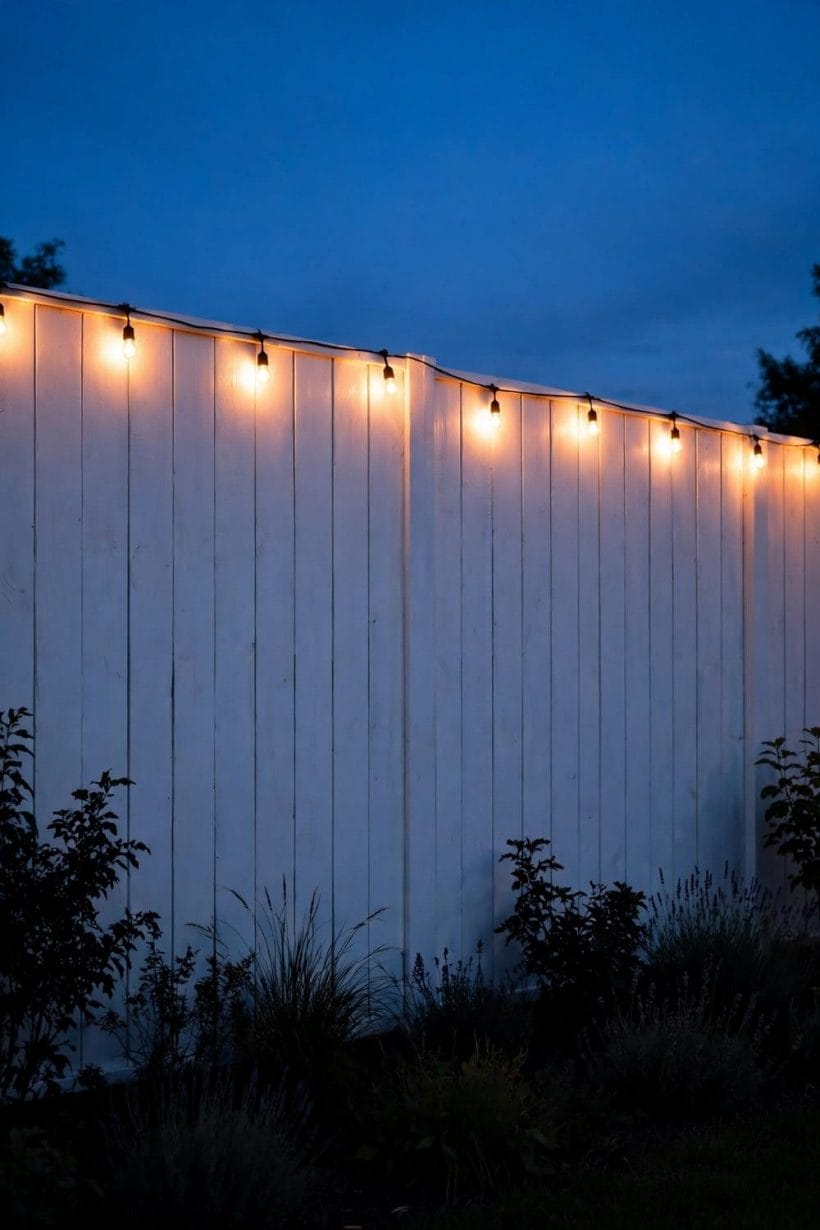
Gates add their own drivers: a pedestrian gate is a smaller job than a wide pair, and hardware, hinges and latches of lasting quality are worth more than their share of attention because they are the moving parts. Removing an old fence, clearing roots or concrete footings, and disposing of the waste add effort before the first new post goes in. Access matters too: a garden reached only through a narrow side passage costs more in labour and patience than one a vehicle can reach. Finally, the finish itself is a driver — a painted timber fence carries the ongoing rhythm of recoating, while a wash-only panel carries almost none — so the cheapest fence to build is not always the cheapest fence to keep white. Compare written quotations that itemise the same scope, and treat any quotation that cannot say what it includes with the caution it deserves.
9. Boundaries, Neighbours and Local Rules
A white privacy fence has two faces, and only one of them is yours to enjoy alone. The outward face is what neighbours and passers-by live with daily, so a finished face outward, honest conversation before building, and planting on your own side keep the boundary friendly as well as private. Talk first where the fence will change a neighbour’s light or view, agree the line where ownership is shared or uncertain, and put anything that matters in writing while everyone is still friendly. A fence built after a conversation is a different object from the same fence built as a surprise, even when every board is identical.
Local rules are the other frame around the job. Boundary heights, positions near pavements and corners, and any permission a taller or front-boundary fence may need are set locally and vary from place to place, so check your local position before building rather than copying a height from a photograph or a post. Shared boundaries, drainage, underground services and sightlines at driveways and corners can all constrain a run, and the time to discover a constraint is before posts go in, not after. Where the boundary is disputed, the ground is difficult, or the structure is at all ambitious, a professional installer and, where needed, proper advice will save more trouble than they cost. The open-mesh world of hog wire fence shows the opposite philosophy — containing animals while keeping the view — and is worth a glance precisely because it clarifies what privacy fencing is not: it closes the view on purpose, and that purpose carries responsibilities to the people on the other side of it.
10. Choosing Your White Privacy Fence
Choosing well means choosing in order. First, map the sightlines: which views must close, from which angles, in which seasons. Second, pick the panel style that closes those views honestly — close-boarded for full screening, slatted for a modern line, louvred where air matters, vinyl or composite where washing alone must do. Third, choose the white against the house, the paving and the soil in real daylight, not from a chart indoors. Fourth, plan the gate, the corners and the slope as carefully as the straight runs, because that is where privacy fences leak. Fifth, cost the whole life of the fence, not just the build: washing, recoating, fixings and repairs across the years it will stand.
The modern boundary world is worth a final glance before you commit, because white privacy fencing sits inside a wider family of gates and fences that solve neighbouring problems differently. The modern gate design post gathers contemporary gates and fences in one place, and the gate ideas post gathers garden, driveway and side gates across the whole family. Comparing their darker, slatted and metal answers with the bright solid fence described here sharpens the choice: if what you want is light, brightness and a garden that feels like a room, white privacy is the right lane, and the other styles are the contrast that proves it. Then step back and look at the whole plot as a visitor would — house, planting, path and boundary together — and choose the fence that makes that picture feel finished rather than merely fenced.
Final Considerations
A white privacy fence succeeds when it is barely noticed as a fence at all: the garden feels private, the light feels generous, the planting glows against the boards, and the boundary simply belongs. That quiet success comes from the unglamorous parts — sightlines mapped before building, panels solid where they must be, gates that latch, corners that close, a white chosen in daylight, and washing kept up as a habit. Keep those parts in order and the fence will repay the effort every time you step into a garden that feels like your own room outdoors. And when the fence is up, live with it a season before judging it: planting softens, light changes, and the white boundary you built for privacy often becomes the backdrop for the garden you actually spend time in.

0 Comments