

Sliding doors are one of the simplest ways to make a closet work harder in a small bedroom. Because the panels glide sideways instead of swinging out, you keep every bit of floor space for furniture, and the front of the wardrobe becomes part of the room’s design.
This guide walks through layouts, materials, colours, measuring, hardware and running costs, so you can choose a setup that fits your opening, your storage habits and your budget with confidence.
1. Sliding Closet Doors at a Glance
Start with the essentials. The table below sums up the decisions that shape every sliding wardrobe door project, from the track system you choose to the finish you will see every morning. If you are short on time, read this section and the measuring notes in section six before you order anything, because those two steps prevent most of the problems people run into later.
| Question | Quick Answer |
|---|---|
| Best for | Bedrooms where a hinged door swing would hit the bed, a dresser or a walkway |
| Main layouts | Bypass panels on double tracks, single-track sliders, and pocket doors that disappear into the wall |
| Popular materials | Mirrored glass, frosted glass, laminate panels, painted MDF and timber veneer |
| Space needed | No swing clearance, but allow overlap between panels and depth for the track |
| Access trade-off | Bypass doors usually open only part of the closet at a time |
| Cost drivers | Panel material, door size, track quality, soft-close hardware and installation labour |
| Maintenance | Vacuum the bottom track, wipe panels, and check rollers once or twice a year |
| DIY friendly? | Surface-mounted kits suit confident DIYers; pocket systems usually need a professional |
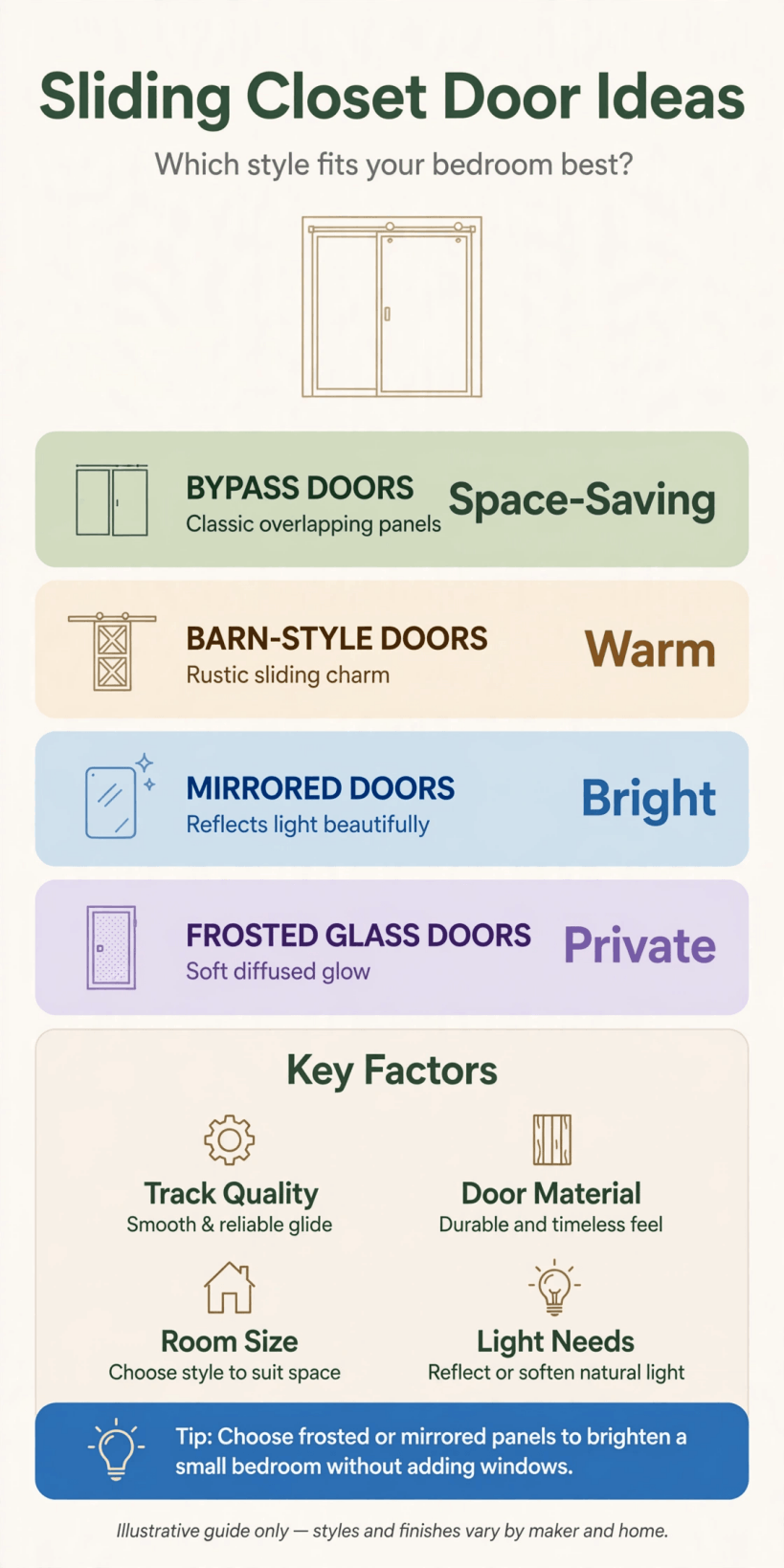
A quick visual summary of sliding door layouts, materials and the checks to make before you buy.
However you furnish the rest of the room, the doors will be one of the largest flat surfaces in it, so treat them as a design feature, not an afterthought. Readers planning a whole small-space scheme may also enjoy our round-up of tiny house bedroom ideas, where storage walls and calm palettes do similar heavy lifting.
2. How Sliding Doors Work and Where They Fit Best
A sliding closet door hangs from, or rolls along, a track fixed at the top of the opening, with a slim guide at the floor to stop the panel swinging. Because the weight is carried by rollers rather than hinges, panels can be wider and heavier than a standard hinged door, which is why sliding systems suit the long wardrobe openings common in built-in closets. There is no arc to keep clear, so a bed, a laundry basket or a dressing stool can sit close to the front without blocking access.
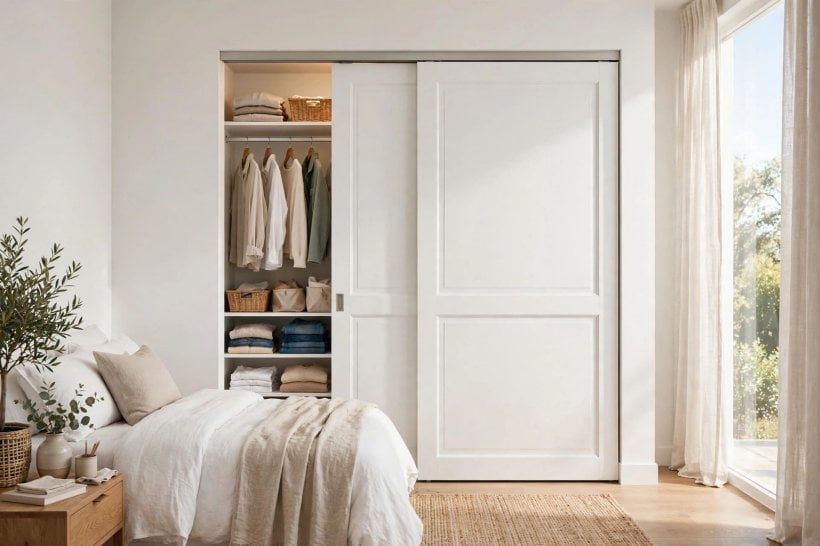
Sliders fit best where the closet runs along one wall and the room is tight on the door side. They are less ideal for a narrow opening where you need the whole closet open at once, such as a shared linen cupboard in daily use, because bypass panels always cover part of the interior. In a walk-in wardrobe with a wide entry, though, a pair of sliders can act almost like a movable wall, hiding shelves when guests arrive and opening the space up again in seconds. Think honestly about how you use the closet each day, not just how it looks in a photo.
3. Bypass, Single-Track and Pocket Layouts Compared
Bypass doors are the most common of all closet door ideas for sliding systems: two or three panels run on parallel tracks and slide past each other. They are relatively forgiving to install because the track mounts to the face of the wall or inside the opening, and they work with most existing closet frames. The compromise is access, since one panel always overlaps another.
A single wide panel on one track suits a smaller opening or a pantry-style closet, sliding to one side against the wall. It gives full access when open but needs a clear stretch of wall beside the opening at least as wide as the panel itself. Pocket doors go a step further and slide into a cavity inside the wall, disappearing completely. They look superb and free up both the floor and the wall face, yet they need structural work, careful planning around wiring and plumbing, and a bigger budget. If you are comparing layouts for a compact home, the planning mindset in our guide to bedroom interior design for tiny houses will help you weigh access against space saved.
4. Materials: Glass, Mirror, Timber and Panel Options
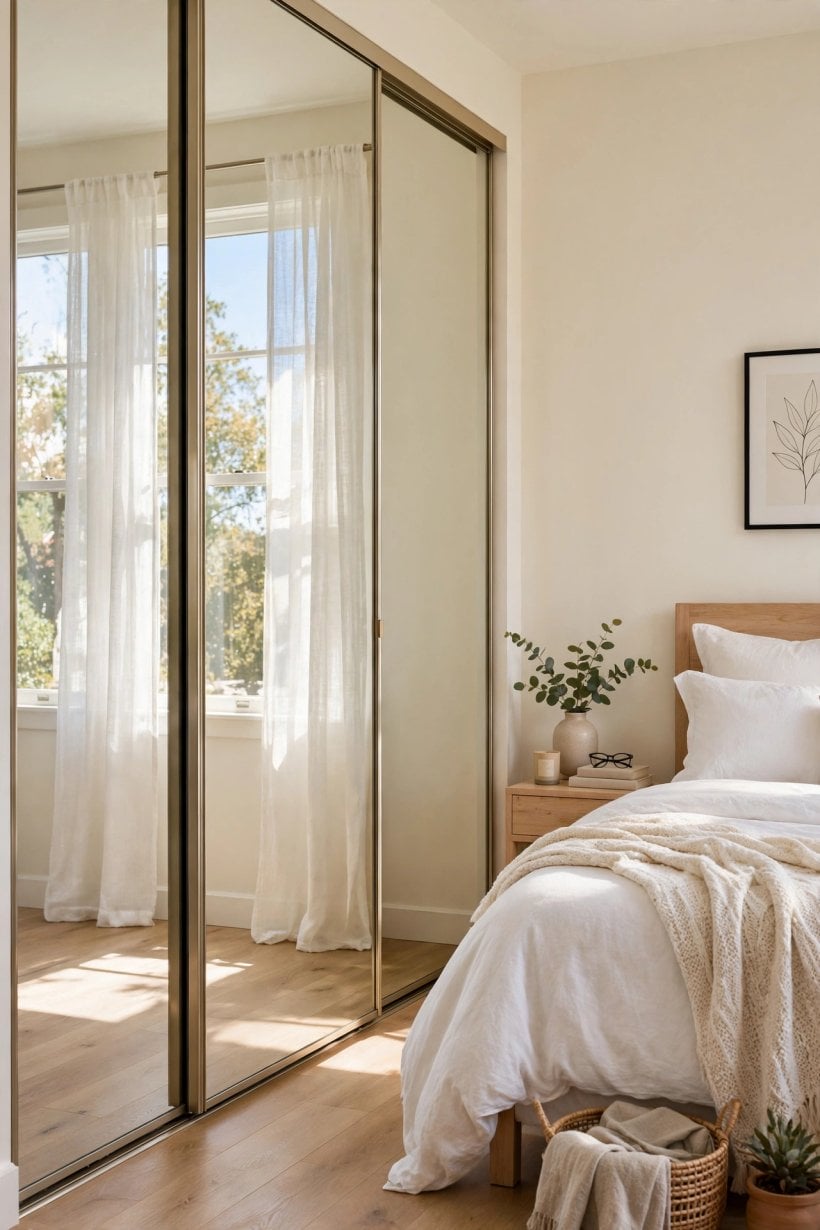
Material decides how the doors look, how much they weigh, how they handle knocks and how much upkeep they need. Mirrored panels are a small-room favourite because they bounce light around and double as a full-length mirror, removing the need for a separate one. Choose safety-backed mirror made for doors, and expect to wipe fingerprints more often, especially at handle height.
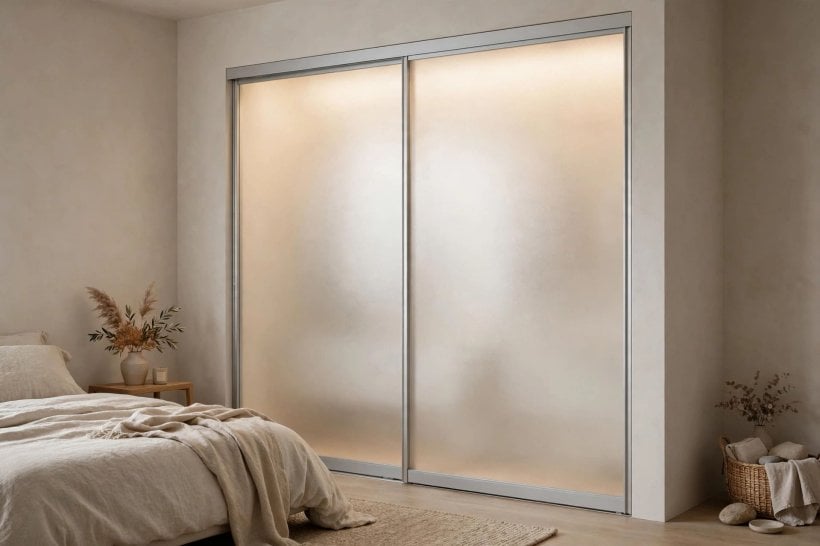
Frosted or fluted glass softens the look and hides the outline of stored clothes while still feeling light; it pairs well with metal frames in black, white or brushed finishes. Laminate and melamine panels are the practical budget option, light, stable and available in plain colours and wood effects, though edges can chip if they are knocked hard. Painted MDF gives a smooth, colour-matched finish for a tailored look, while real timber veneer brings warmth and grain at a higher price and with more weight for the track to carry. Whatever you pick, confirm the panel thickness suits the track and rollers in your kit, and order a sample to check the finish against your flooring and bedding in natural light.
5. Colours and Finishes That Suit Small Rooms
Colour is where sliding doors earn their keep as a design feature. In a small bedroom, pale panels in warm white, soft greige or light oak help the wardrobe wall recede, making the room feel calmer and larger. Matching the panel colour to the wall colour strengthens that effect, and handle-free panels with a discreet finger pull keep the surface looking unbroken.
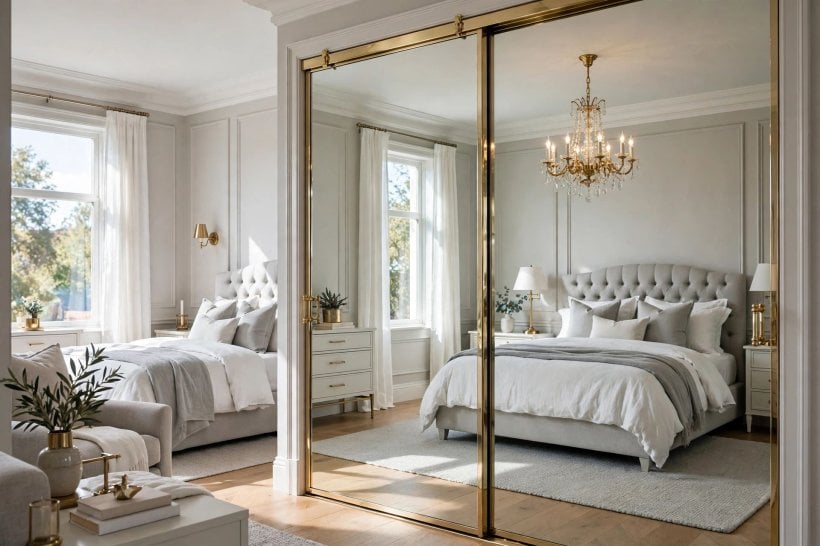
Darker doors can work beautifully too, as long as the rest of the room balances them with lighter bedding, flooring or curtains. Deep green, navy or charcoal panels create a deliberate focal wall and hide scuffs well, which suits busy family homes. Two-tone layouts, such as a coloured lower panel with a lighter upper panel, add interest without pattern, and a mirrored centre panel between two coloured panels is a classic compromise. If you love bolder schemes, browse our colourful tiny house interior ideas for palettes that stay cheerful rather than chaotic, then test your chosen colour on a large board before committing to full-height panels.
6. Measuring Your Opening Accurately
More sliding door problems come from measuring than from the doors themselves. Measure the width of the opening at the top, middle and bottom, because walls and frames are rarely perfectly square, and note the smallest figure. Do the same for height at both sides and the centre. Record the depth of the closet too, since shelves, drawers and hanging clothes need clearance behind the track so nothing rubs the back of the panels as they glide.
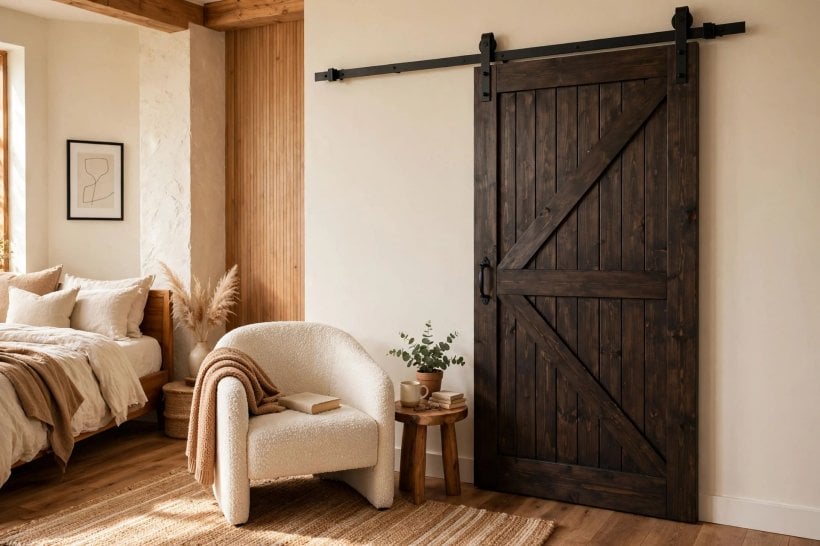
Check whether your floor is level along the opening; a noticeable slope can make panels drift open or closed on their own. Look at skirting boards, coving and any trim that the track or panels must pass, and decide whether the system mounts inside the opening or on the wall face, because that changes the size you order. Manufacturers calculate panel overlap and track deductions differently, so follow the measuring guide for the exact system you are buying rather than a generic rule, and if your figures fall between standard sizes, ask whether panels can be trimmed or whether a made-to-measure service is worth it. Careful measuring is the same habit that pays off across a small home, from the kitchens in our tiny house living room ideas to fitted wardrobes like these.
7. Tracks, Rollers and Hardware Details
Hardware is the part of the system you will feel every day. A sturdy top track with smooth, well-sealed rollers gives a quiet, fingertip glide, while cheap rollers can rumble, wobble and wear quickly under a heavy mirrored or glass panel. Look for rollers rated for the weight of your panels, with adjustment screws so you can level each door after fitting and correct a slight drift later.
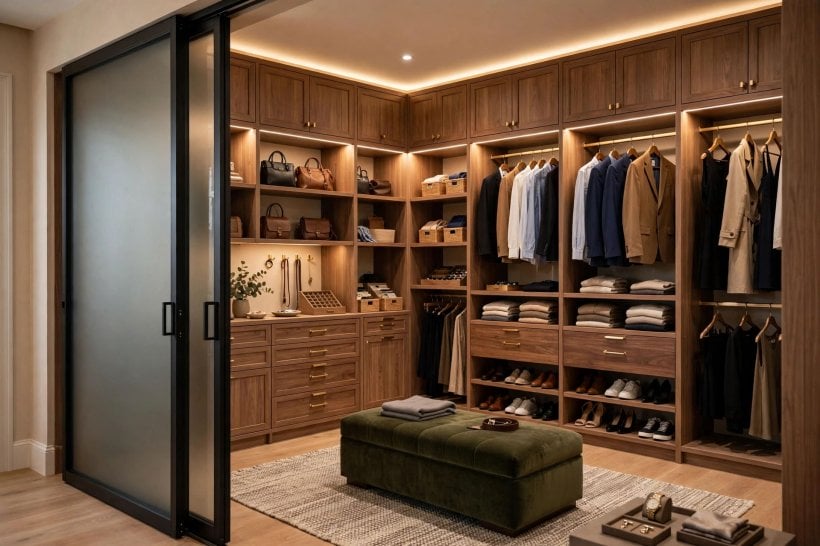
Bottom guides matter as much as the top track. A small floor guide keeps panels aligned without a raised threshold to trip over or trap dust, which is why many systems now use a discreet fin that sits in a groove under the door. Soft-close mechanisms, which catch the panel and ease it shut, are a worthwhile upgrade for family bedrooms and for heavy glass doors that could slam. Handles deserve a thought as well: recessed pulls keep panels able to slide fully past each other, whereas protruding knobs can collide. Finally, check what the kit includes before you buy, because track, guides, stops and screws are not always in the box, and a mid-project hardware run helps nobody.
8. Costs and What Drives the Price
Sliding closet doors span a wide price range, and the biggest driver is the panel material. Plain laminate and melamine panels sit at the affordable end, painted MDF and timber-effect finishes cost more, and mirrored, glass and real veneer panels command the highest prices, especially in large sizes. Made-to-measure doors cost more than standard sizes, and a three-panel system costs more than a two-panel one simply because there is more of everything.
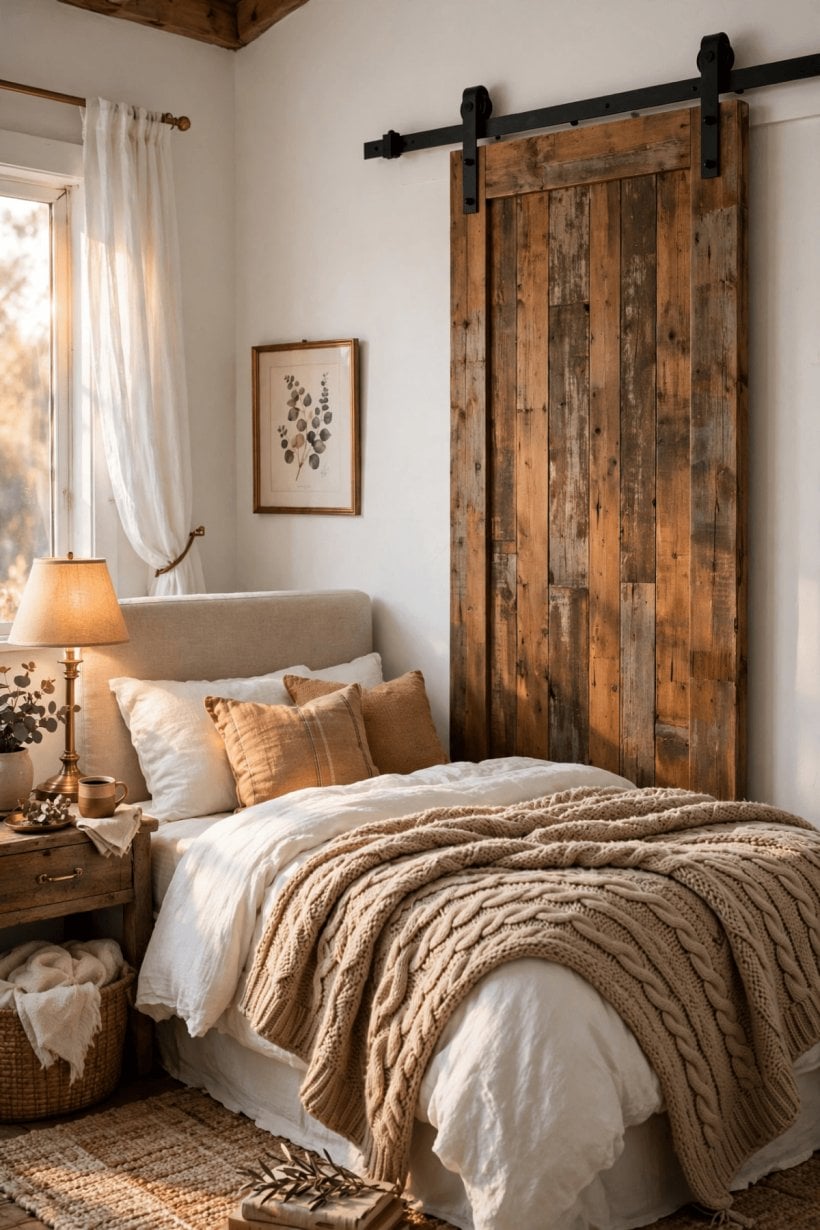
Hardware is the second driver. A basic track kit is inexpensive, but heavier-duty tracks, soft-close units and quality rollers add up, and they are usually money well spent. Then comes installation: a surface-mounted bypass kit fitted in an afternoon is the cheapest route, while a pocket system involves opening the wall and can involve other trades, which changes the budget completely. Remember the finishing costs too, such as making good paintwork, adjusting skirting, and disposing of old doors. The honest way to budget is to get itemised quotes for the exact system you want, fitted, rather than comparing headline panel prices. That same whole-project thinking runs through our guide to building your own tiny house, where small specification choices shape the final bill.
9. Installation Steps and Common Mistakes
Most surface-mounted systems follow the same order of work. Remove the old doors and track, repair the opening, then fix the new top track level and secure, following the maker’s fixing pattern for your wall type. Hang the panels, adjust the rollers so each door sits plumb and parallel, fit the floor guide once the panels hang correctly, and add stops so doors cannot overrun the track ends.
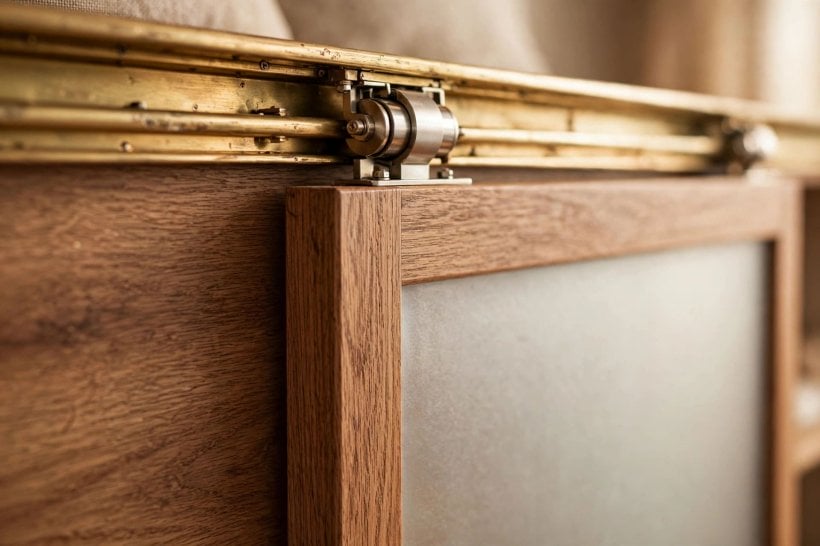
The common mistakes are predictable. Fixing the track to plasterboard alone, without finding studs or using suitable anchors, invites sagging. Skipping the level check leaves panels that creep. Fitting the floor guide before the panels are adjusted locks in a misalignment, and forgetting to check clearance inside the closet means drawers that kiss the back of the doors. Heavy mirrored and glass panels are a two-person lift, so plan help rather than struggling alone. If your opening is badly out of square, or you are set on a pocket system, hiring a carpenter for a day is usually better value than remedying a failed attempt, and the calm, methodical approach in our tiny barn house interior ideas shows how good fitting transforms simple materials.
10. Care, Cleaning and Everyday Practicalities
Sliding doors ask for little, but they do ask regularly. Dust, hair and grit collect in the bottom guide area and around the track, so run a vacuum nozzle along them every few weeks to keep the glide smooth and quiet. Wipe laminate and painted panels with a soft cloth and mild soapy water, clean mirror and glass with a standard glass cleaner and a microfibre cloth, and avoid abrasive pads on any finish.
Once or twice a year, check that roller screws and track fixings are snug, confirm the floor guide has not worked loose, and make sure panels still sit parallel with an even gap. A tiny adjustment at the roller usually cures a door that has started to scrape or drift. In daily life, teach everyone in the house to slide rather than shove, keep stored items clear of the track line inside the closet, and leave a small gap between stored boxes and the back of the panels. In homes with toddlers, finger guards or soft-close hardware reduce trapped-finger risks. These small habits are the difference between doors that glide for years and doors that rattle within months, much like the simple upkeep that keeps the spaces in our tiny house bathroom ideas working well in daily use.
Final Considerations
Sliding closet doors succeed when the layout matches the opening, the panels suit the room, and the hardware is good enough for the weight it carries. Measure carefully, be honest about how much access you need, and spend on tracks and rollers before you spend on decorative upgrades, because you will feel the hardware every single day. Choose a colour you can live with at full height, in morning and evening light, and keep the tracks clean so the glide stays effortless. Do that, and a once-awkward wardrobe wall becomes one of the hardest-working, best-looking parts of the bedroom.

0 Comments